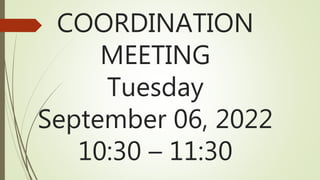
COORDINATION
MEETING
Tuesday
September 06, 2022
10:30 – 11:30
My Mentees
School Year 2022 -
2023
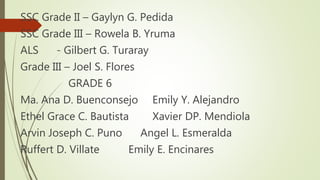
SSC Grade II – Gaylyn G. Pedida
SSC Grade III – Rowela B. Yruma
ALS - Gilbert G. Turaray
Grade III – Joel S. Flores
GRADE 6
Ma. Ana D. Buenconsejo Emily Y. Alejandro
Ethel Grace C. Bautista Xavier DP. Mendiola
Arvin Joseph C. Puno Angel L. Esmeralda
Ruffert D. Villate Emily E. Encinares
Mentees Tasks
1. Weekly Learning Plan
2. Assessment Tool
3. Instructional Material
4. Lesson Exemplar to be used during observation
5. Pre-Observation
6. Observation of Classes Face to Face
7. Coaching and Mentoring
8. Preparation of Rating Sheets
9. Giving of Rating to the learners
10.On time submission of required report.
11. Addressing an intervention to the struggling
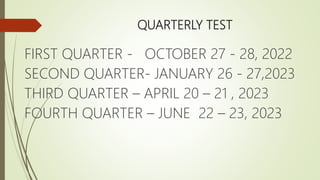
QUARTERLY TEST
FIRST QUARTER - OCTOBER 27 - 28, 2022
SECOND QUARTER- JANUARY 26 - 27,2023
THIRD QUARTER – APRIL 20 – 21 , 2023
FOURTH QUARTER – JUNE 22 – 23, 2023
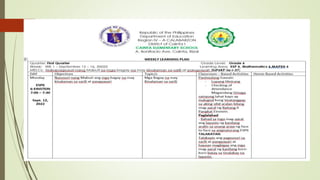
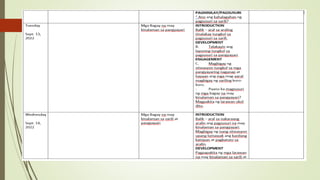
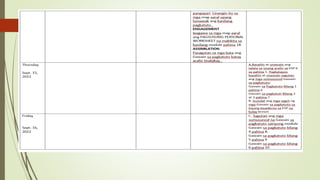
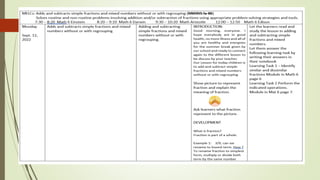
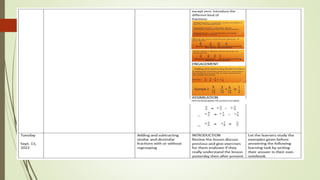
Preparation of Weekly Learning
Plan
Classroom
Observation Tool
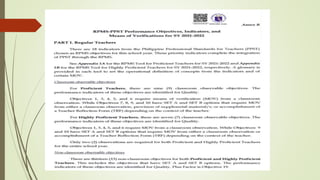
Proficient and Highly Proficient Teachers
Indicators
37 Indicators
IPCRF
INDICATORS
19 INDICATORS
USED
CLASSROOM OBSERVATION
TOOL
9
INDICATORS
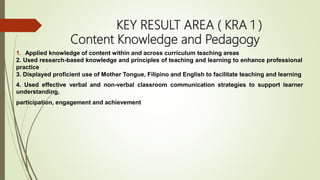
KEY RESULT AREA ( KRA 1 )
Content Knowledge and Pedagogy
1. Applied knowledge of content within and across curriculum teaching areas
2. Used research-based knowledge and principles of teaching and learning to enhance professional
practice
3. Displayed proficient use of Mother Tongue, Filipino and English to facilitate teaching and learning
4. Used effective verbal and non-verbal classroom communication strategies to support learner
understanding,
participation, engagement and achievement
Key Result Area 2 ( KRA 2 )
Learning Environment
5. Established safe and secure learning environments to enhance learning
through the consistent implementation of policies, guidelines and
procedures
6. Maintained learning environments that promote fairness, respect and
care to encourage learning
7. Maintained learning environments that nurture and inspire learners to
participate, cooperate and collaborate in continued learning
8. Applied a range of successful strategies that maintain learning
environments that motivate learners to work productively by assuming
responsibility for their own learning
Key Result Area 3 ( KRA 3 )
Diversity of Learners, Curriculum and
Planning, & Assessment and Reporting
9. Designed, adapted and implemented teaching strategies that are responsive to learners with
disabilities, giftedness
and talents
10. Adapted and used culturally appropriate teaching strategies to address the needs of learners from
indigenous groups
11. Adapted and implemented learning programs that ensure relevance and responsiveness to the
needs of all learners
12. Utilized assessment data to inform the modification of teaching and learning practices and
programs
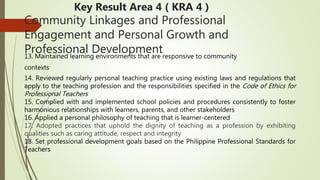
Key Result Area 4 ( KRA 4 )
Community Linkages and Professional
Engagement and Personal Growth and
Professional Development
13. Maintained learning environments that are responsive to community
contexts
14. Reviewed regularly personal teaching practice using existing laws and regulations that
apply to the teaching profession and the responsibilities specified in the Code of Ethics for
Professional Teachers
15. Complied with and implemented school policies and procedures consistently to foster
harmonious relationships with learners, parents, and other stakeholders
16. Applied a personal philosophy of teaching that is learner-centered
17. Adopted practices that uphold the dignity of teaching as a profession by exhibiting
qualities such as caring attitude, respect and integrity
18. Set professional development goals based on the Philippine Professional Standards for
Teachers
Key Result Area 5 ( KRA 5 )
Plus Factor
19. Performed various related works / activities that
contribute to the teaching learning process
MID – YEAR REVIEW
FEBRUARY 2023
30% to 50% of your target based on
19 objectives achieved.
50% CO done
Certification for Objectives 8 and 9 for
Proficient Teacher
CONTENT STANDARD AND
PERFORMANCE STANDARD
 What is a content standard?
 Content Standards describe the knowledge and skills that students
should attain, often called the "what" of "what students should know
and be able to do." They indicate the ways of thinking, working,
communicating, reasoning and investigating the important and enduring
ideas, concepts, issues, dilemmas and knowledge
 What is a performance standard?
 A performance standard is a management-approved expression of the
performance threshold(s), requirement(s), or expectation(s) that
must be met to be appraised at a particular level of performance.
What are MELCs content standards?
The content standards cover a specified scope of
topics which sets the essential knowledge and
understanding that must be learned. The
performance standards describe the abilities and
skills that the learners are expected to demonstrate
in relation to the content standards.
How important are the content and performance
standards in teaching and learning?
Content standards must provide clear
direction to educators responsible for the
design of assessments, professional
development, and curriculum materials.
Content standards must provide clear direction to
teachers and administrators about what they need
to teach to improve student learning.
What is the importance of content standards
performance standards and learning
competencies?
Under each content standard are number of
performance standards. These are the work that a
learner is expected to be able to do.
These demonstrate the achievement,
acquisition, and application of the knowledge
or skill required by the content standard.
Comprising performance standards are learning
competencies.
How should teachers implement standards?
How to Teach the Standards Without Becoming
Standardized
1.Make the standards fit into student interests. ...
2.Teach students to question. ...
3.Focus on the skills and language of learning. ...
4.Be open to many answers. ...
5.Have authentic conversations about motivations. ...
6.Emulate effective risk taking. ...
7.Use professional learning communities.
What is performance standard in education?
Performance standards specify the level of
performance in a skill or area of knowledge that
is considered acceptable (Burger, 1996, 1997).
These measurable expectations for performance,
sometimes termed "benchmarks," are aligned with
both curriculum and content standards in each
subject area.

FIRST-MENTEES-MEETING.pptx

  • 1.
  • 3.
  • 4.
    SSC Grade II– Gaylyn G. Pedida SSC Grade III – Rowela B. Yruma ALS - Gilbert G. Turaray Grade III – Joel S. Flores GRADE 6 Ma. Ana D. Buenconsejo Emily Y. Alejandro Ethel Grace C. Bautista Xavier DP. Mendiola Arvin Joseph C. Puno Angel L. Esmeralda Ruffert D. Villate Emily E. Encinares
  • 5.
    Mentees Tasks 1. WeeklyLearning Plan 2. Assessment Tool 3. Instructional Material 4. Lesson Exemplar to be used during observation 5. Pre-Observation 6. Observation of Classes Face to Face 7. Coaching and Mentoring 8. Preparation of Rating Sheets 9. Giving of Rating to the learners 10.On time submission of required report. 11. Addressing an intervention to the struggling
  • 6.
    QUARTERLY TEST FIRST QUARTER- OCTOBER 27 - 28, 2022 SECOND QUARTER- JANUARY 26 - 27,2023 THIRD QUARTER – APRIL 20 – 21 , 2023 FOURTH QUARTER – JUNE 22 – 23, 2023
  • 9.
    Preparation of WeeklyLearning Plan
  • 16.
  • 18.
    Proficient and HighlyProficient Teachers Indicators 37 Indicators
  • 19.
  • 20.
  • 22.
    KEY RESULT AREA( KRA 1 ) Content Knowledge and Pedagogy 1. Applied knowledge of content within and across curriculum teaching areas 2. Used research-based knowledge and principles of teaching and learning to enhance professional practice 3. Displayed proficient use of Mother Tongue, Filipino and English to facilitate teaching and learning 4. Used effective verbal and non-verbal classroom communication strategies to support learner understanding, participation, engagement and achievement
  • 23.
    Key Result Area2 ( KRA 2 ) Learning Environment 5. Established safe and secure learning environments to enhance learning through the consistent implementation of policies, guidelines and procedures 6. Maintained learning environments that promote fairness, respect and care to encourage learning 7. Maintained learning environments that nurture and inspire learners to participate, cooperate and collaborate in continued learning 8. Applied a range of successful strategies that maintain learning environments that motivate learners to work productively by assuming responsibility for their own learning
  • 24.
    Key Result Area3 ( KRA 3 ) Diversity of Learners, Curriculum and Planning, & Assessment and Reporting 9. Designed, adapted and implemented teaching strategies that are responsive to learners with disabilities, giftedness and talents 10. Adapted and used culturally appropriate teaching strategies to address the needs of learners from indigenous groups 11. Adapted and implemented learning programs that ensure relevance and responsiveness to the needs of all learners 12. Utilized assessment data to inform the modification of teaching and learning practices and programs
  • 25.
    Key Result Area4 ( KRA 4 ) Community Linkages and Professional Engagement and Personal Growth and Professional Development 13. Maintained learning environments that are responsive to community contexts 14. Reviewed regularly personal teaching practice using existing laws and regulations that apply to the teaching profession and the responsibilities specified in the Code of Ethics for Professional Teachers 15. Complied with and implemented school policies and procedures consistently to foster harmonious relationships with learners, parents, and other stakeholders 16. Applied a personal philosophy of teaching that is learner-centered 17. Adopted practices that uphold the dignity of teaching as a profession by exhibiting qualities such as caring attitude, respect and integrity 18. Set professional development goals based on the Philippine Professional Standards for Teachers
  • 26.
    Key Result Area5 ( KRA 5 ) Plus Factor 19. Performed various related works / activities that contribute to the teaching learning process
  • 27.
    MID – YEARREVIEW FEBRUARY 2023 30% to 50% of your target based on 19 objectives achieved. 50% CO done Certification for Objectives 8 and 9 for Proficient Teacher
  • 28.
    CONTENT STANDARD AND PERFORMANCESTANDARD  What is a content standard?  Content Standards describe the knowledge and skills that students should attain, often called the "what" of "what students should know and be able to do." They indicate the ways of thinking, working, communicating, reasoning and investigating the important and enduring ideas, concepts, issues, dilemmas and knowledge  What is a performance standard?  A performance standard is a management-approved expression of the performance threshold(s), requirement(s), or expectation(s) that must be met to be appraised at a particular level of performance.
  • 29.
    What are MELCscontent standards? The content standards cover a specified scope of topics which sets the essential knowledge and understanding that must be learned. The performance standards describe the abilities and skills that the learners are expected to demonstrate in relation to the content standards.
  • 30.
    How important arethe content and performance standards in teaching and learning? Content standards must provide clear direction to educators responsible for the design of assessments, professional development, and curriculum materials. Content standards must provide clear direction to teachers and administrators about what they need to teach to improve student learning.
  • 31.
    What is theimportance of content standards performance standards and learning competencies? Under each content standard are number of performance standards. These are the work that a learner is expected to be able to do. These demonstrate the achievement, acquisition, and application of the knowledge or skill required by the content standard. Comprising performance standards are learning competencies.
  • 32.
    How should teachersimplement standards? How to Teach the Standards Without Becoming Standardized 1.Make the standards fit into student interests. ... 2.Teach students to question. ... 3.Focus on the skills and language of learning. ... 4.Be open to many answers. ... 5.Have authentic conversations about motivations. ... 6.Emulate effective risk taking. ... 7.Use professional learning communities.
  • 33.
    What is performancestandard in education? Performance standards specify the level of performance in a skill or area of knowledge that is considered acceptable (Burger, 1996, 1997). These measurable expectations for performance, sometimes termed "benchmarks," are aligned with both curriculum and content standards in each subject area.