Fire Safety in Buildings
Course Code: BCV306D
Module-1
• Fire: Introduction, Basic concepts of fire protection,
Fire as a process of combustion, planning for fire
protection, fire resistance Ventilation and fuel
controlled fire, process of combustion: flashover
condition, effect of fire on construction material,
design of fire resistance steel structure, concrete
structure
Introduction
• Fire safety is the set of practices intended to reduce the
destruction caused by fire.
• Fire safety measures include those that are intended to prevent
ignition of an uncontrolled fire, and those that are used to limit
the development and effects of a fire after it starts.
fire safety is of paramount importance for the
following reasons:
• Preserving life – Implementing measures helps protect individuals from harm and ensures
their well-being.
• Protecting property – By following fire safety protocols, there’s minimal risk of property loss
and destruction, potentially saving valuable assets and investments.
• Preventing financial losses – Adequate measures reduce the risk of fire-related damages,
avoiding financial burdens associated with property damage, repairs, and insurance claims.
• Safeguarding the environment – Since fires can release toxic gases and pollutants and
destroy natural habitats, fire safety practices can prevent such incidents and minimize harm
to the environment.
Continued…
• Ensuring business continuity – By safeguarding the workplace against
fires, businesses can protect their employees, maintain productivity, and
avoid costly downtime.
• Complying with regulations – Many jurisdictions have specific codes
and regulations that must be followed. Adhering to these ensures legal
compliance and helps avoid penalties or legal consequences.
• Promoting public safety – By prioritizing fire safety, communities can
create a safer environment for everyone, reducing the overall risk of fire-
related accidents and emergencies.
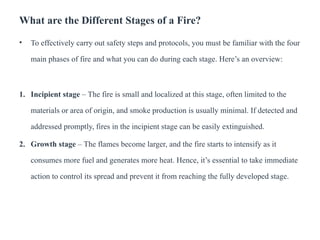
What are the Different Stages of a Fire?
• To effectively carry out safety steps and protocols, you must be familiar with the four
main phases of fire and what you can do during each stage. Here’s an overview:
1. Incipient stage – The fire is small and localized at this stage, often limited to the
materials or area of origin, and smoke production is usually minimal. If detected and
addressed promptly, fires in the incipient stage can be easily extinguished.
2. Growth stage – The flames become larger, and the fire starts to intensify as it
consumes more fuel and generates more heat. Hence, it’s essential to take immediate
action to control its spread and prevent it from reaching the fully developed stage.
Continued…
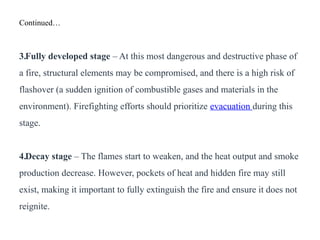
3.Fully developed stage – At this most dangerous and destructive phase of
a fire, structural elements may be compromised, and there is a high risk of
flashover (a sudden ignition of combustible gases and materials in the
environment). Firefighting efforts should prioritize evacuation during this
stage.
4.Decay stage – The flames start to weaken, and the heat output and smoke
production decrease. However, pockets of heat and hidden fire may still
exist, making it important to fully extinguish the fire and ensure it does not
reignite.
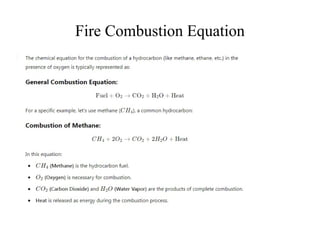
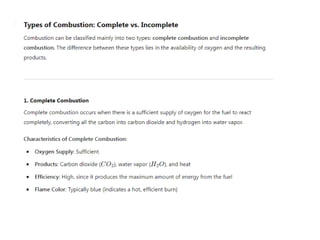
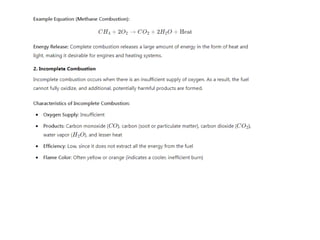
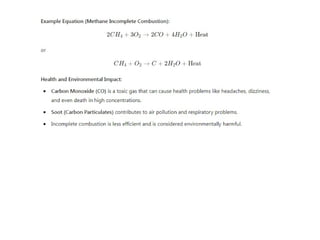
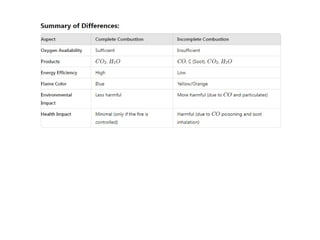
Fire Combustion Equation
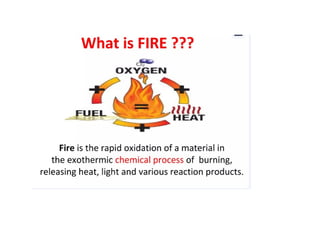
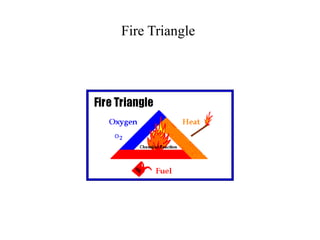
Fire Triangle
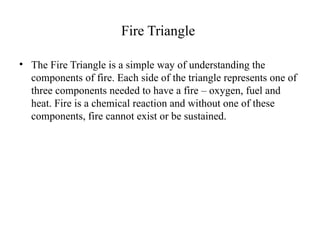
Fire Triangle
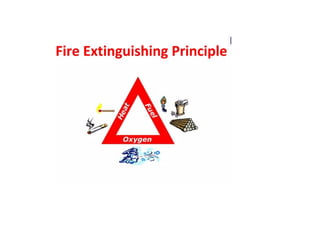
• The Fire Triangle is a simple way of understanding the
components of fire. Each side of the triangle represents one of
three components needed to have a fire – oxygen, fuel and
heat. Fire is a chemical reaction and without one of these
components, fire cannot exist or be sustained.
How to break the fire triangle?
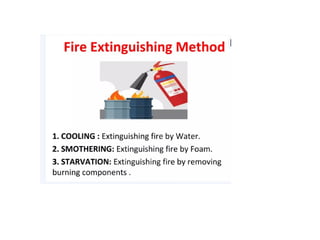
• There are various methods to remove one of the elements from
the fire triangle such as: applying water to remove heat;
smothering with mineral soil to remove oxygen; or
constructing a fuel break ahead of the fire to remove fuels.

fire safety introduction, fire types, ie

  • 1.
    Fire Safety inBuildings Course Code: BCV306D
  • 2.
    Module-1 • Fire: Introduction,Basic concepts of fire protection, Fire as a process of combustion, planning for fire protection, fire resistance Ventilation and fuel controlled fire, process of combustion: flashover condition, effect of fire on construction material, design of fire resistance steel structure, concrete structure
  • 12.
    Introduction • Fire safetyis the set of practices intended to reduce the destruction caused by fire. • Fire safety measures include those that are intended to prevent ignition of an uncontrolled fire, and those that are used to limit the development and effects of a fire after it starts.
  • 13.
    fire safety isof paramount importance for the following reasons: • Preserving life – Implementing measures helps protect individuals from harm and ensures their well-being. • Protecting property – By following fire safety protocols, there’s minimal risk of property loss and destruction, potentially saving valuable assets and investments. • Preventing financial losses – Adequate measures reduce the risk of fire-related damages, avoiding financial burdens associated with property damage, repairs, and insurance claims. • Safeguarding the environment – Since fires can release toxic gases and pollutants and destroy natural habitats, fire safety practices can prevent such incidents and minimize harm to the environment.
  • 14.
    Continued… • Ensuring businesscontinuity – By safeguarding the workplace against fires, businesses can protect their employees, maintain productivity, and avoid costly downtime. • Complying with regulations – Many jurisdictions have specific codes and regulations that must be followed. Adhering to these ensures legal compliance and helps avoid penalties or legal consequences. • Promoting public safety – By prioritizing fire safety, communities can create a safer environment for everyone, reducing the overall risk of fire- related accidents and emergencies.
  • 21.
    What are theDifferent Stages of a Fire? • To effectively carry out safety steps and protocols, you must be familiar with the four main phases of fire and what you can do during each stage. Here’s an overview: 1. Incipient stage – The fire is small and localized at this stage, often limited to the materials or area of origin, and smoke production is usually minimal. If detected and addressed promptly, fires in the incipient stage can be easily extinguished. 2. Growth stage – The flames become larger, and the fire starts to intensify as it consumes more fuel and generates more heat. Hence, it’s essential to take immediate action to control its spread and prevent it from reaching the fully developed stage.
  • 22.
    Continued… 3.Fully developed stage– At this most dangerous and destructive phase of a fire, structural elements may be compromised, and there is a high risk of flashover (a sudden ignition of combustible gases and materials in the environment). Firefighting efforts should prioritize evacuation during this stage. 4.Decay stage – The flames start to weaken, and the heat output and smoke production decrease. However, pockets of heat and hidden fire may still exist, making it important to fully extinguish the fire and ensure it does not reignite.
  • 23.
  • 28.
  • 29.
    Fire Triangle • TheFire Triangle is a simple way of understanding the components of fire. Each side of the triangle represents one of three components needed to have a fire – oxygen, fuel and heat. Fire is a chemical reaction and without one of these components, fire cannot exist or be sustained.
  • 30.
    How to breakthe fire triangle? • There are various methods to remove one of the elements from the fire triangle such as: applying water to remove heat; smothering with mineral soil to remove oxygen; or constructing a fuel break ahead of the fire to remove fuels.