www.rescue1122.org
FIRE OPERATION STRATEGIES
OBJECTIVES
 Define Size Up.
 Describe the importance of Size Up.
 Describe the acronym “COAL WAS WEALTH"
 Define Scene Assessment.
 Describe the role of incident Commander.
 Describe how to Approach the Fire.
 Describe the Monitoring of Operations.
 Describe the Log Down (recording of events) and the Salvage Operations.
 Ladder Handling.
 Effective Communication.
 Departmental liaison
 Ladder Handling
SCENE SIZE-UP
Size-up. Pre-Fire Planning' and ,Incident
Communications-
 Situation Evaluation.
 On and off the fire ground.
 Fire problems,
 potential fire problems.
 Begins with pre-planning.
WHO DOES SIZE-UP?
 Incident Commander.
 Company Officer.
 Firefighter/lead fire rescuer.
WHEN DO WE SIZE-UP? IMPORTANCE OF SIZE-UP
 Before the Incident.
 When call is received.
 On arrival.
 Throughout the incident.
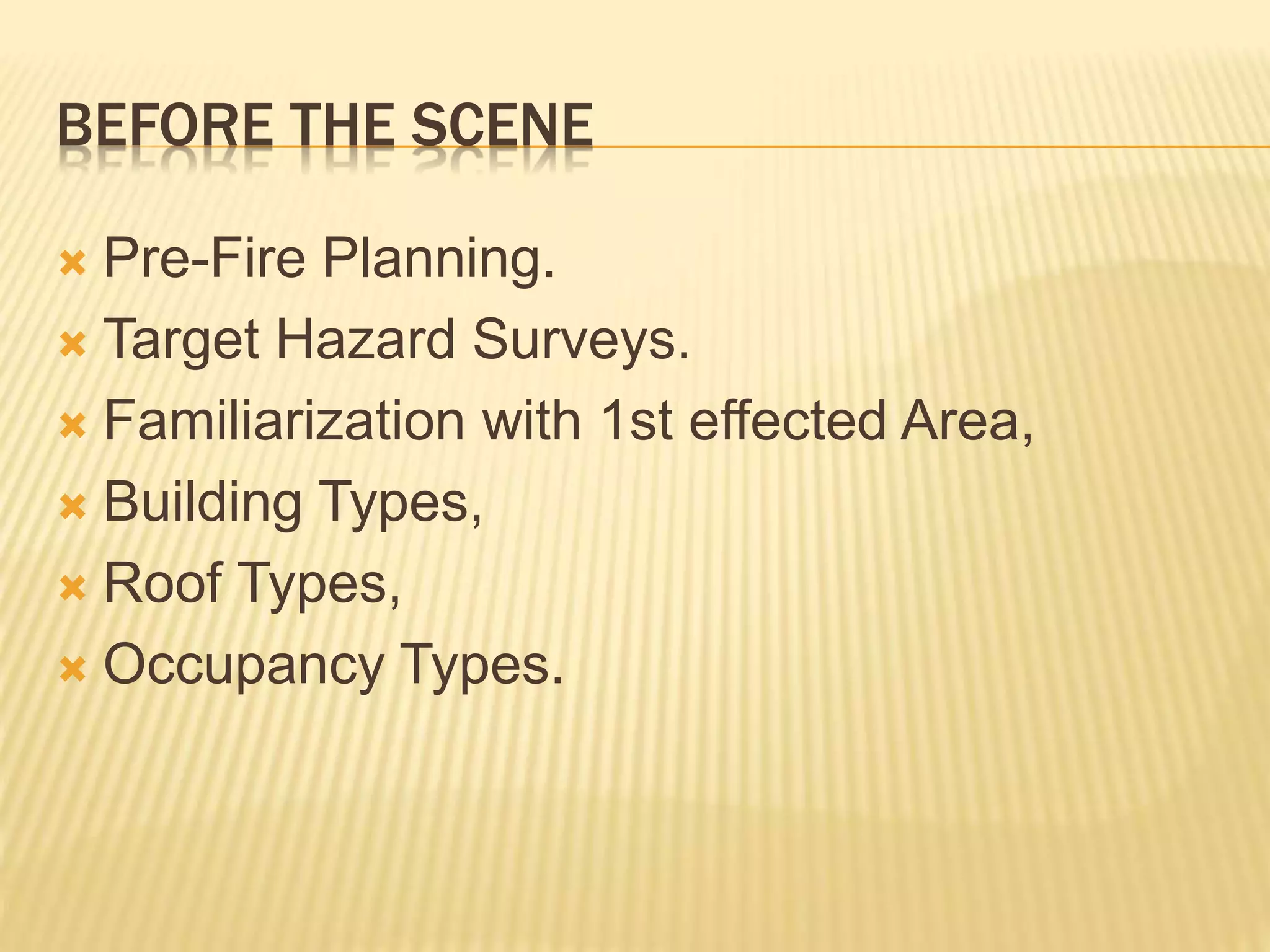
BEFORE THE SCENE
 Pre-Fire Planning.
 Target Hazard Surveys.
 Familiarization with 1st effected Area,
 Building Types,
 Roof Types,
 Occupancy Types.
WHEN THE ALARM IS RECEIVED
 Time & Date.
 Weather.
 Address.
 Call Type.
 What’s Available.
 Other Information.
ON ARRIVAL
Position of Apparatus;
 Three sided view.
Personal Position;
 360 degree inspection,
 Rear view
 Exposures
On Arrival
 Better overall picture
 Easier to match actions to Conditions.
 Easier to match available resources.
BEST INFORMATION OF SCENE SIZE-UP CAN BE
OBTAINED
COAL WAS WEALTH
W - Weather
C- Construction W - Water Supply E - Exposures
O - Occupancy A - Auxiliary
Appliances
A - Area & Height
A - Apparatus and
Personnel
S - Street Conditions L- Locations Extent of
Fire
L - Life Hazard T- Time
H - Hazardous
Material
SCENE ASSESSMENT
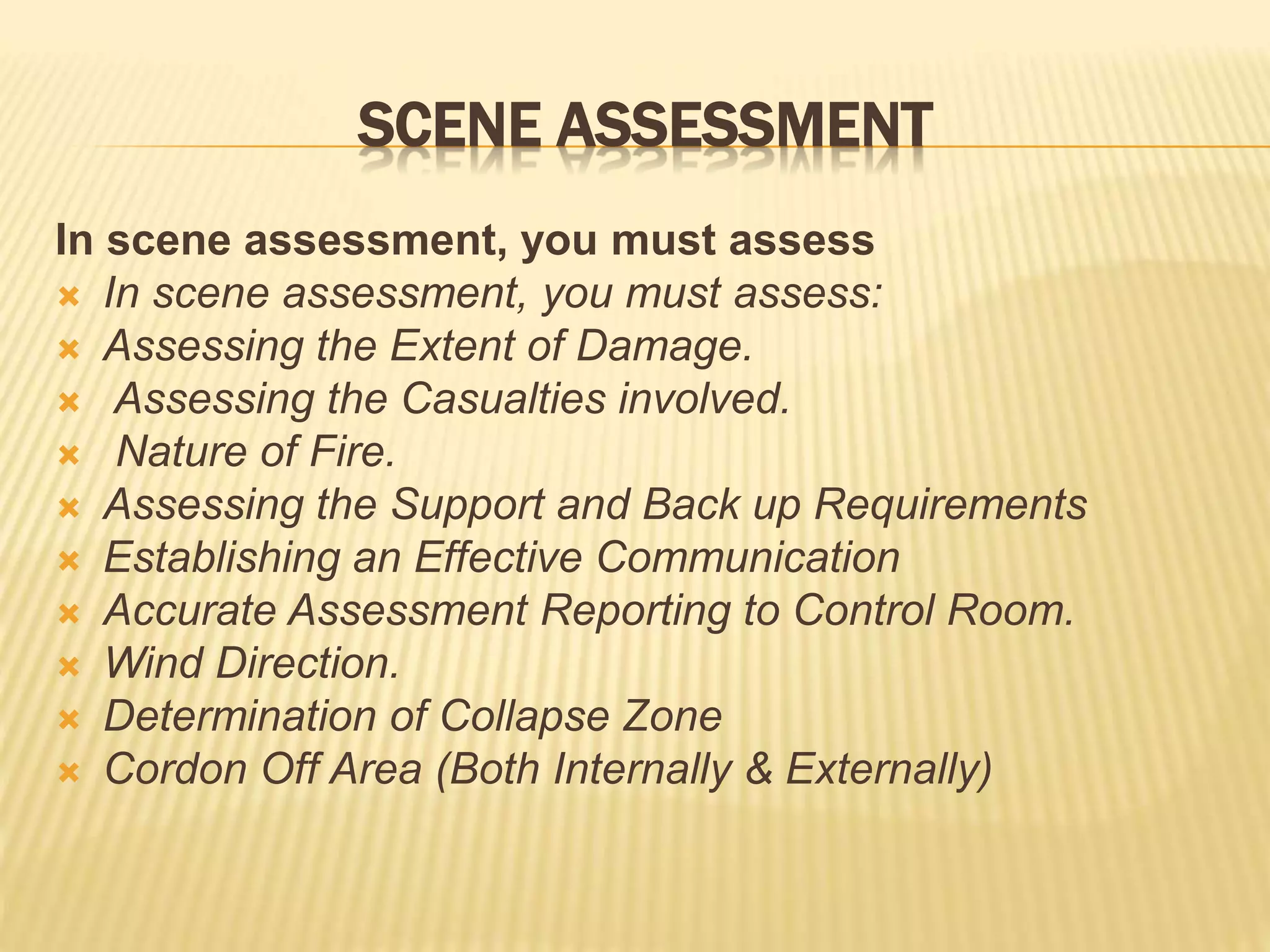
In scene assessment, you must assess
 In scene assessment, you must assess:
 Assessing the Extent of Damage.
 Assessing the Casualties involved.
 Nature of Fire.
 Assessing the Support and Back up Requirements
 Establishing an Effective Communication
 Accurate Assessment Reporting to Control Room.
 Wind Direction.
 Determination of Collapse Zone
 Cordon Off Area (Both Internally & Externally)
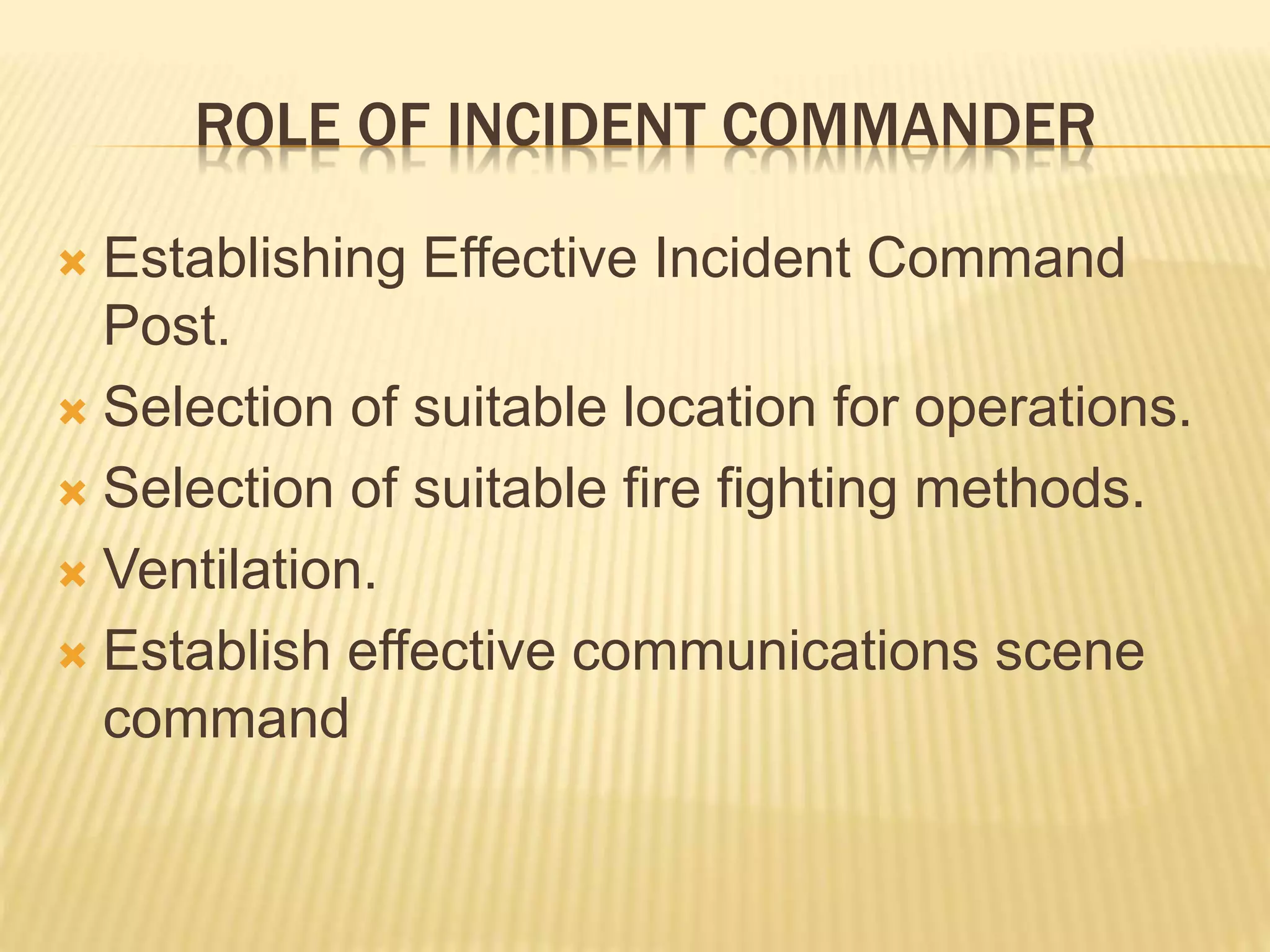
ROLE OF INCIDENT COMMANDER
 Establishing Effective Incident Command
Post.
 Selection of suitable location for operations.
 Selection of suitable fire fighting methods.
 Ventilation.
 Establish effective communications scene
command
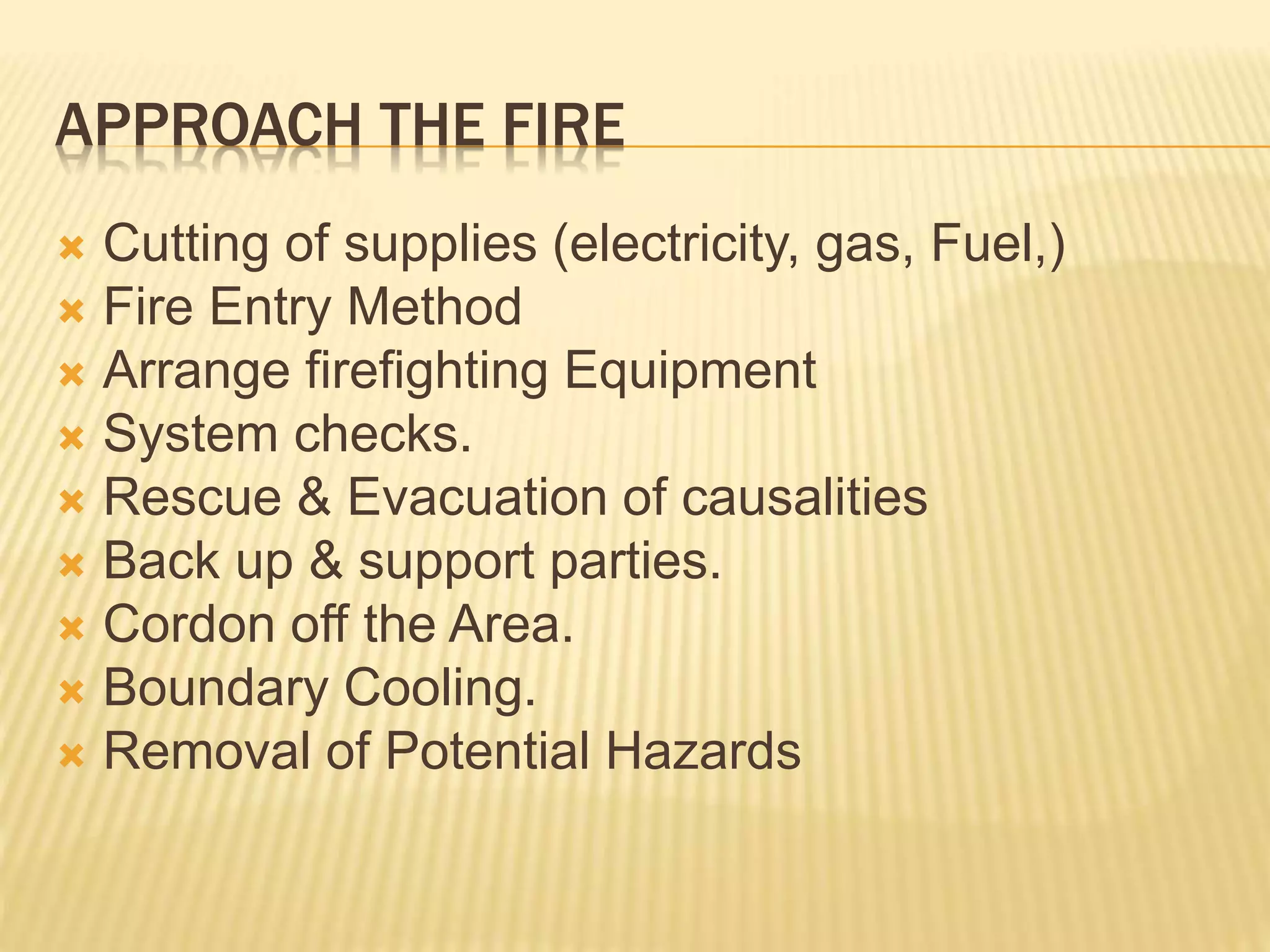
APPROACH THE FIRE
 Cutting of supplies (electricity, gas, Fuel,)
 Fire Entry Method
 Arrange firefighting Equipment
 System checks.
 Rescue & Evacuation of causalities
 Back up & support parties.
 Cordon off the Area.
 Boundary Cooling.
 Removal of Potential Hazards
MONITORING THE OPERATIONS
 Monitor the Spread of Fire (Conduction,
Convection and Radiation).
 Continuous monitoring of changing
conditions during operations.
LOG DOWN (RECORDING OF EVENTS):
Following Steps 11 considered when log down of data:
 Accurate log (record) of all events with
timings.
 Accurate reporting of all logged events.
SALVAGE OPERATIONS
You must considered during salvage operations:
 Salvage the property.
 Minimize the damage.
 Preserve the evidence for investigations.
VENTILATION
LADDER HANDELING
DEPARTMENTAL LIASON
EFFECTIVE COMMUNICATION
FEED BACK
Fire fighting strategies

Fire fighting strategies

  • 1.
  • 2.
  • 3.
    OBJECTIVES  Define SizeUp.  Describe the importance of Size Up.  Describe the acronym “COAL WAS WEALTH"  Define Scene Assessment.  Describe the role of incident Commander.  Describe how to Approach the Fire.  Describe the Monitoring of Operations.  Describe the Log Down (recording of events) and the Salvage Operations.  Ladder Handling.  Effective Communication.  Departmental liaison  Ladder Handling
  • 4.
    SCENE SIZE-UP Size-up. Pre-FirePlanning' and ,Incident Communications-  Situation Evaluation.  On and off the fire ground.  Fire problems,  potential fire problems.  Begins with pre-planning.
  • 5.
    WHO DOES SIZE-UP? Incident Commander.  Company Officer.  Firefighter/lead fire rescuer.
  • 6.
    WHEN DO WESIZE-UP? IMPORTANCE OF SIZE-UP  Before the Incident.  When call is received.  On arrival.  Throughout the incident.
  • 7.
    BEFORE THE SCENE Pre-Fire Planning.  Target Hazard Surveys.  Familiarization with 1st effected Area,  Building Types,  Roof Types,  Occupancy Types.
  • 8.
    WHEN THE ALARMIS RECEIVED  Time & Date.  Weather.  Address.  Call Type.  What’s Available.  Other Information.
  • 9.
    ON ARRIVAL Position ofApparatus;  Three sided view. Personal Position;  360 degree inspection,  Rear view  Exposures On Arrival  Better overall picture  Easier to match actions to Conditions.  Easier to match available resources.
  • 10.
    BEST INFORMATION OFSCENE SIZE-UP CAN BE OBTAINED COAL WAS WEALTH W - Weather C- Construction W - Water Supply E - Exposures O - Occupancy A - Auxiliary Appliances A - Area & Height A - Apparatus and Personnel S - Street Conditions L- Locations Extent of Fire L - Life Hazard T- Time H - Hazardous Material
  • 11.
    SCENE ASSESSMENT In sceneassessment, you must assess  In scene assessment, you must assess:  Assessing the Extent of Damage.  Assessing the Casualties involved.  Nature of Fire.  Assessing the Support and Back up Requirements  Establishing an Effective Communication  Accurate Assessment Reporting to Control Room.  Wind Direction.  Determination of Collapse Zone  Cordon Off Area (Both Internally & Externally)
  • 12.
    ROLE OF INCIDENTCOMMANDER  Establishing Effective Incident Command Post.  Selection of suitable location for operations.  Selection of suitable fire fighting methods.  Ventilation.  Establish effective communications scene command
  • 13.
    APPROACH THE FIRE Cutting of supplies (electricity, gas, Fuel,)  Fire Entry Method  Arrange firefighting Equipment  System checks.  Rescue & Evacuation of causalities  Back up & support parties.  Cordon off the Area.  Boundary Cooling.  Removal of Potential Hazards
  • 14.
    MONITORING THE OPERATIONS Monitor the Spread of Fire (Conduction, Convection and Radiation).  Continuous monitoring of changing conditions during operations.
  • 15.
    LOG DOWN (RECORDINGOF EVENTS): Following Steps 11 considered when log down of data:  Accurate log (record) of all events with timings.  Accurate reporting of all logged events.
  • 16.
    SALVAGE OPERATIONS You mustconsidered during salvage operations:  Salvage the property.  Minimize the damage.  Preserve the evidence for investigations.
  • 17.
  • 18.
  • 19.
  • 20.
  • 21.

Editor's Notes

  • #23 The http://rescue1122.org/ is the learning site for fire medical & Rescue.