Findings from the Knowledge, Attitude,
               Perception (KAP) Analysis
                               Clare Narrod, on behalf of the team

                     IFPRI: M. Tiongco, R. Scott, and W. Collier
                CIMMYT: H. De Groote , J. Hellin, S. Kimenju, B. Munyua
                                   KARI: C. Bett

International Food Policy Research Institute           Uniformed Services University of the Health Sciences
International Center for the Improvement of Maize      ACDI/VOCA/Kenya Maize Development Program
and Wheat                                              Kenya Agricultural Research Institute
International Crops Research Institute for the Semi-   Institut d’Economie Rurale
Arid Tropics                                           The Eastern Africa Grain Council
University of Pittsburgh
   Knowledge: the degree of factual understanding of
    the topic and associated issues.

   Attitude and perceptions: feelings toward the
    subject, including judgment of its importance and
    influence on people’s lives.

   Practices: current actions taken as a result of the
    knowledge, attitude and perception toward the
    issues.
   Evaluate the effectiveness of
    information campaigns – assist
    policymakers in customizing
    educational programs .


                                     Flyer from Eastern Kenya
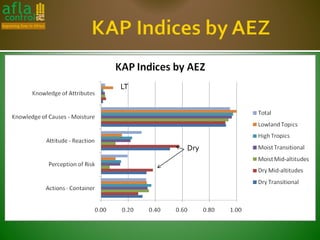
   Knowledge of Attributes of Aflatoxin exposure (i.e. human health
    symptoms such as stomach pain, diarrhea, vomiting, etc.).
   Knowledge of Causes (Moisture) of Aflatoxin exposure (e.g.
    wetness in piles of harvested maize, poor storage condition,
    dampness in storage place, improper drying, etc.).
   Attitude (Reaction) about Aflatoxin safety (i.e. farmers’ attitude
    towards potential outbreaks in their village).
   Perception of Risk (i.e. understanding risks of storing wet maize,
    buying maize from local markets, insect/pest damage, etc.).
   Actions (Container) (i.e. using storage practices that avoid
    Aflatoxin such as maintaining humidity and cleanliness in storage).
LT


     Dry
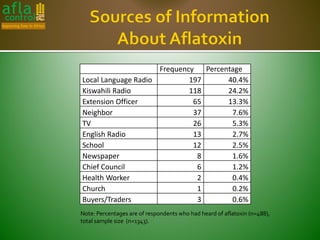
Frequency   Percentage
Local Language Radio         197       40.4%
Kiswahili Radio              118       24.2%
Extension Officer             65       13.3%
Neighbor                      37        7.6%
TV                            26        5.3%
English Radio                 13        2.7%
School                        12        2.5%
Newspaper                      8        1.6%
Chief Council                  6        1.2%
Health Worker                  2        0.4%
Church                         1        0.2%
Buyers/Traders                 3        0.6%
Note: Percentages are of respondents who had heard of aflatoxin (n=488),
total sample size (n=1343).
Knowledge         Knowledge Attitude            Perception Action
VARIABLES               Attributes Afla moisture       Reaction         risk           container
Female                               0.02        -0.45             0.08           0.11      0.004
Education of hh                     -0.28        -0.25        0.66***        0.48***         -0.03
Number of children <5                0.15        -0.09             0.05           0.01        0.1*
Head's prim non-Ag                  -0.23        -0.82             0.04        -0.005        -0.02
Wealth                              -0.01         0.11        0.18***        0.14***        0.002
Land owned                          -0.19       0.013              0.05           0.03       -0.08
HH selling maize                    -0.05        -0.27            -0.06           0.05       -0.13
dry transitional                -2.6***       -5.5***         1.54***        1.18***         -0.26
dry mid-altitudes                 -1.07*     -6.09***         1.84***         1.3***         -0.36
moist mid-altitudes            -1.48***      -5.39***           -0.72*       -0.89**        0.036
moist transitional             -1.32***      -4.82***              0.07          -0.06     -0.089
high tropics                   -1.90***      -4.52***            0.008           -0.06        0.12
Constant                        -1.73**       9.21***        -2.71***       -2.75***      -0.64**
Observations                       1,042        1,042            1,042          1,042       1,042
chi2                               23.56         1440            153.4          182.6       22.07
pval                                 0.02         0.00             0.00           0.00        0.04
Log Lik                              -121       -1032           -630.3         -468.9      -661.3
BIC                                -6992        -7100            -6607          -6790       -6740
AIC                                0.257        2.005            1.235          0.925       1.294
   Higher education has a positive effect on perception of risk associated with
    storing wet maize, buying from local markets as well as farmers’ attitude towards
    potential outbreaks in their village

   Farm size is not correlated with farmers’ actions to prevent and reduce aflatoxin
    risks at the farm level using containers.

   Wealth is positively associated with farmers reaction (attitudes) to aflatoxin in
    their village and perception of risks associated with storing wet maize, buying
    maize from local markets, insect/pest damage.

   In the dry transitional area where the 2004 outbreaks occurred, the effects on the
    perception of risk of aflatoxin and attitudes to aflatoxin safety is expected.

   Number of children under 5 had a positive and significant effect on actions to
    prevent and reduce aflatoxin risks at the farm level.
   Social networks
     What is the effect of social network on knowledge of aflatoxin ?
     Which networks has the most influence in the disseminating knowledge?
     How can networks be useful in turning them to correct actions?

   Aflatoxin prevalence
     Does KAP on aflatoxin influence prevalence levels?

   Future work -Impact of education/radio campaigns
     Randomized controls and see what factors altered KAP indices and aflatoxin
      levels
Findings from the KAP analysis

  • 1.
    Findings from theKnowledge, Attitude, Perception (KAP) Analysis Clare Narrod, on behalf of the team IFPRI: M. Tiongco, R. Scott, and W. Collier CIMMYT: H. De Groote , J. Hellin, S. Kimenju, B. Munyua KARI: C. Bett International Food Policy Research Institute Uniformed Services University of the Health Sciences International Center for the Improvement of Maize ACDI/VOCA/Kenya Maize Development Program and Wheat Kenya Agricultural Research Institute International Crops Research Institute for the Semi- Institut d’Economie Rurale Arid Tropics The Eastern Africa Grain Council University of Pittsburgh
  • 2.
    Knowledge: the degree of factual understanding of the topic and associated issues.  Attitude and perceptions: feelings toward the subject, including judgment of its importance and influence on people’s lives.  Practices: current actions taken as a result of the knowledge, attitude and perception toward the issues.
  • 3.
    Evaluate the effectiveness of information campaigns – assist policymakers in customizing educational programs . Flyer from Eastern Kenya
  • 4.
    Knowledge of Attributes of Aflatoxin exposure (i.e. human health symptoms such as stomach pain, diarrhea, vomiting, etc.).  Knowledge of Causes (Moisture) of Aflatoxin exposure (e.g. wetness in piles of harvested maize, poor storage condition, dampness in storage place, improper drying, etc.).  Attitude (Reaction) about Aflatoxin safety (i.e. farmers’ attitude towards potential outbreaks in their village).  Perception of Risk (i.e. understanding risks of storing wet maize, buying maize from local markets, insect/pest damage, etc.).  Actions (Container) (i.e. using storage practices that avoid Aflatoxin such as maintaining humidity and cleanliness in storage).
  • 5.
    LT Dry
  • 7.
    Frequency Percentage Local Language Radio 197 40.4% Kiswahili Radio 118 24.2% Extension Officer 65 13.3% Neighbor 37 7.6% TV 26 5.3% English Radio 13 2.7% School 12 2.5% Newspaper 8 1.6% Chief Council 6 1.2% Health Worker 2 0.4% Church 1 0.2% Buyers/Traders 3 0.6% Note: Percentages are of respondents who had heard of aflatoxin (n=488), total sample size (n=1343).
  • 9.
    Knowledge Knowledge Attitude Perception Action VARIABLES Attributes Afla moisture Reaction risk container Female 0.02 -0.45 0.08 0.11 0.004 Education of hh -0.28 -0.25 0.66*** 0.48*** -0.03 Number of children <5 0.15 -0.09 0.05 0.01 0.1* Head's prim non-Ag -0.23 -0.82 0.04 -0.005 -0.02 Wealth -0.01 0.11 0.18*** 0.14*** 0.002 Land owned -0.19 0.013 0.05 0.03 -0.08 HH selling maize -0.05 -0.27 -0.06 0.05 -0.13 dry transitional -2.6*** -5.5*** 1.54*** 1.18*** -0.26 dry mid-altitudes -1.07* -6.09*** 1.84*** 1.3*** -0.36 moist mid-altitudes -1.48*** -5.39*** -0.72* -0.89** 0.036 moist transitional -1.32*** -4.82*** 0.07 -0.06 -0.089 high tropics -1.90*** -4.52*** 0.008 -0.06 0.12 Constant -1.73** 9.21*** -2.71*** -2.75*** -0.64** Observations 1,042 1,042 1,042 1,042 1,042 chi2 23.56 1440 153.4 182.6 22.07 pval 0.02 0.00 0.00 0.00 0.04 Log Lik -121 -1032 -630.3 -468.9 -661.3 BIC -6992 -7100 -6607 -6790 -6740 AIC 0.257 2.005 1.235 0.925 1.294
  • 10.
    Higher education has a positive effect on perception of risk associated with storing wet maize, buying from local markets as well as farmers’ attitude towards potential outbreaks in their village  Farm size is not correlated with farmers’ actions to prevent and reduce aflatoxin risks at the farm level using containers.  Wealth is positively associated with farmers reaction (attitudes) to aflatoxin in their village and perception of risks associated with storing wet maize, buying maize from local markets, insect/pest damage.  In the dry transitional area where the 2004 outbreaks occurred, the effects on the perception of risk of aflatoxin and attitudes to aflatoxin safety is expected.  Number of children under 5 had a positive and significant effect on actions to prevent and reduce aflatoxin risks at the farm level.
  • 11.
    Social networks  What is the effect of social network on knowledge of aflatoxin ?  Which networks has the most influence in the disseminating knowledge?  How can networks be useful in turning them to correct actions?  Aflatoxin prevalence  Does KAP on aflatoxin influence prevalence levels?  Future work -Impact of education/radio campaigns  Randomized controls and see what factors altered KAP indices and aflatoxin levels