Empowering Marginalized
Youth Through
Leadership
Dafne Melgar
Your background
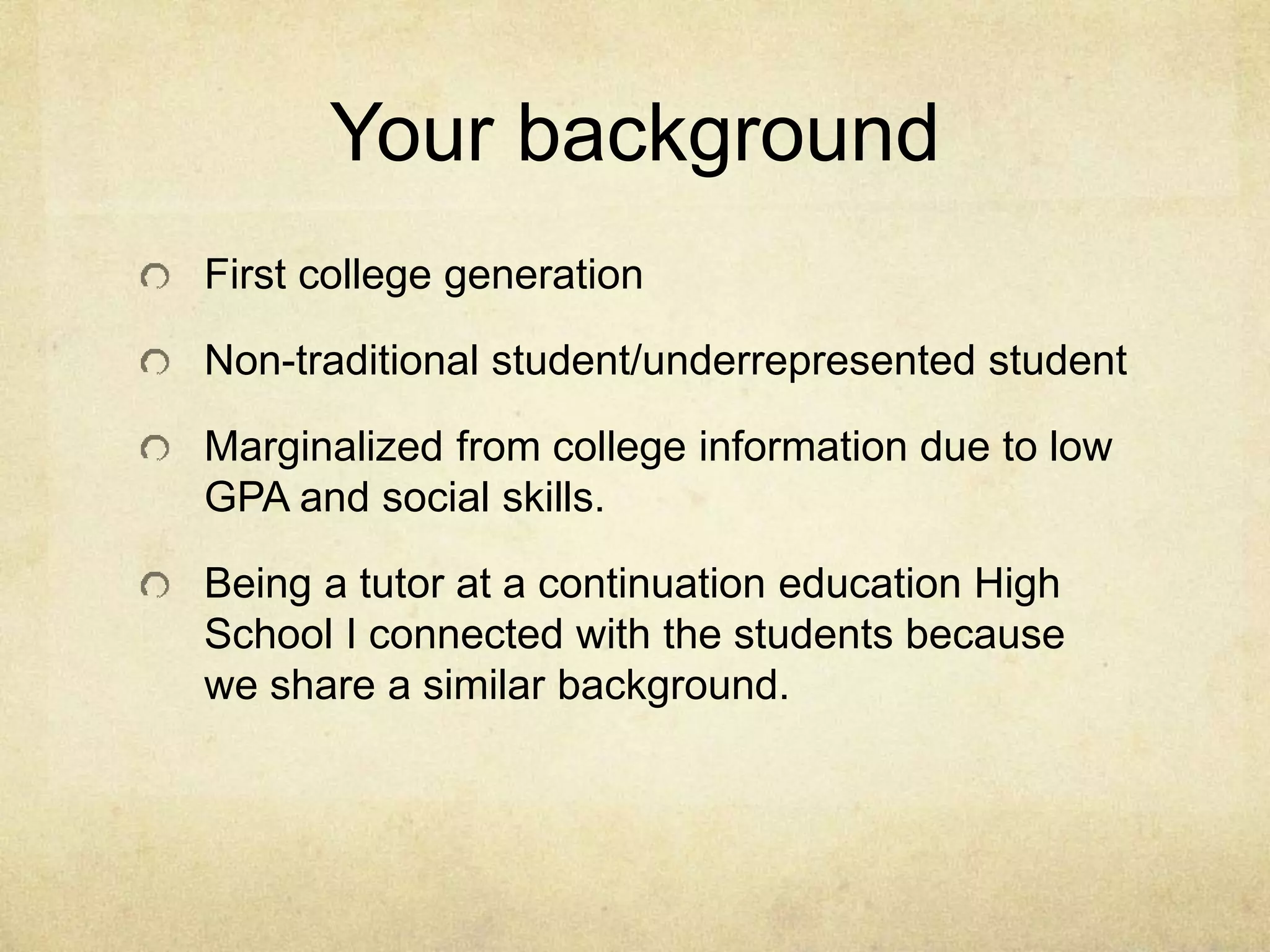
First college generation
Non-traditional student/underrepresented student
Marginalized from college information due to low
GPA and social skills.
Being a tutor at a continuation education High
School I connected with the students because
we share a similar background.
Why is this important
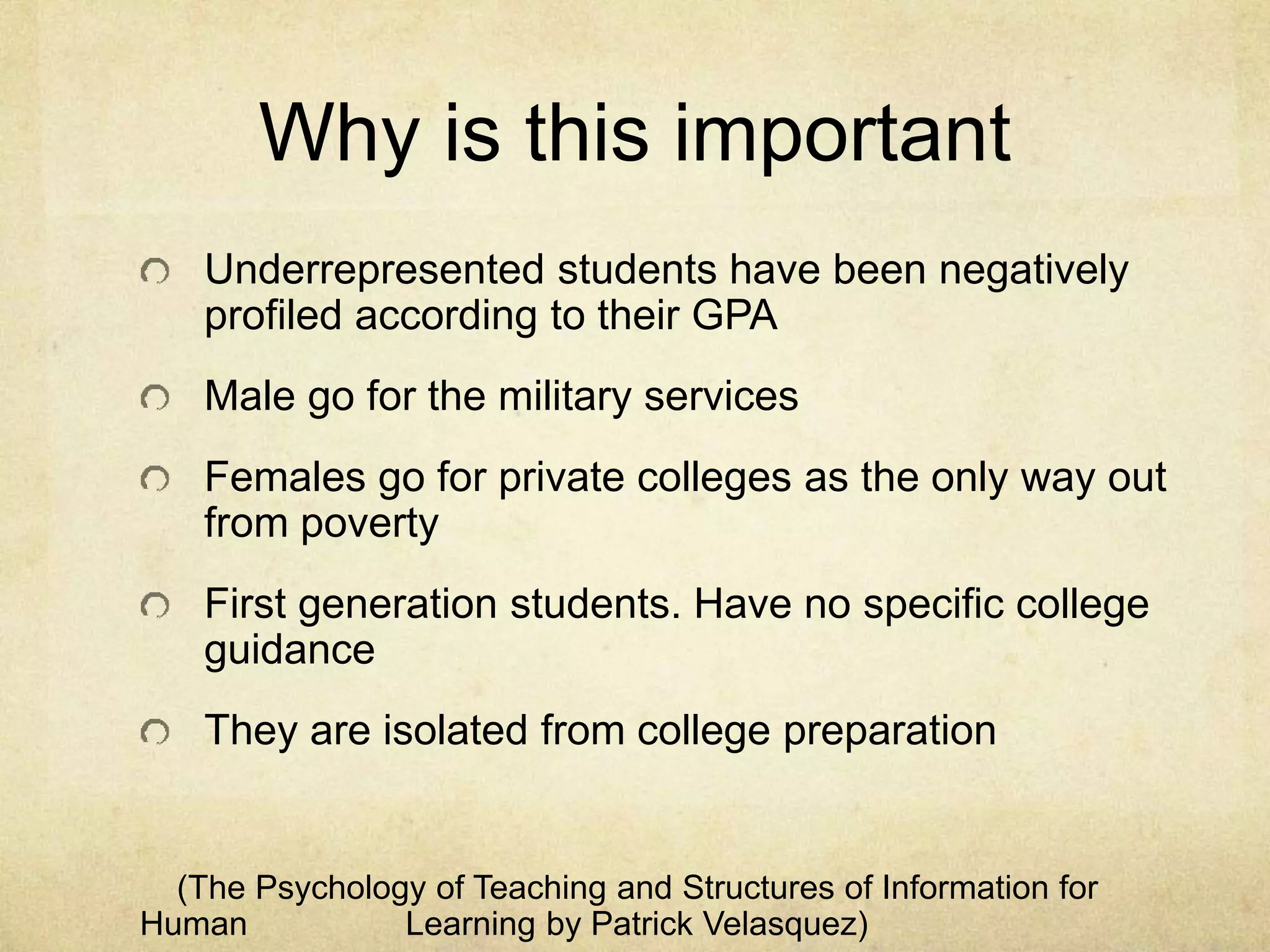
Underrepresented students have been negatively
profiled according to their GPA
Male go for the military services
Females go for private colleges as the only way out
from poverty
First generation students. Have no specific college
guidance
They are isolated from college preparation
(The Psychology of Teaching and Structures of Information for
Human Learning by Patrick Velasquez)
Research question
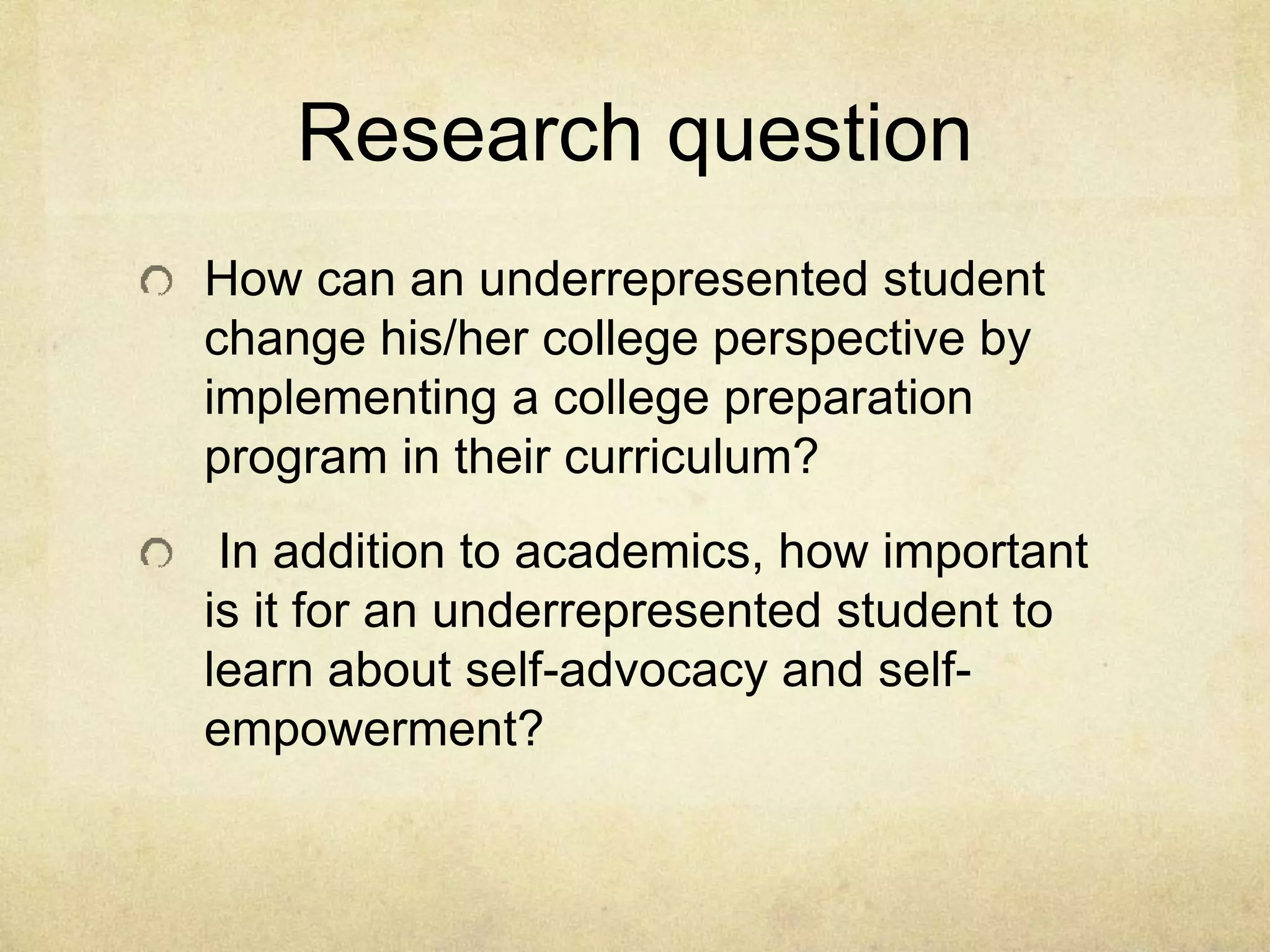
How can an underrepresented student
change his/her college perspective by
implementing a college preparation
program in their curriculum?
In addition to academics, how important
is it for an underrepresented student to
learn about self-advocacy and self-
empowerment?
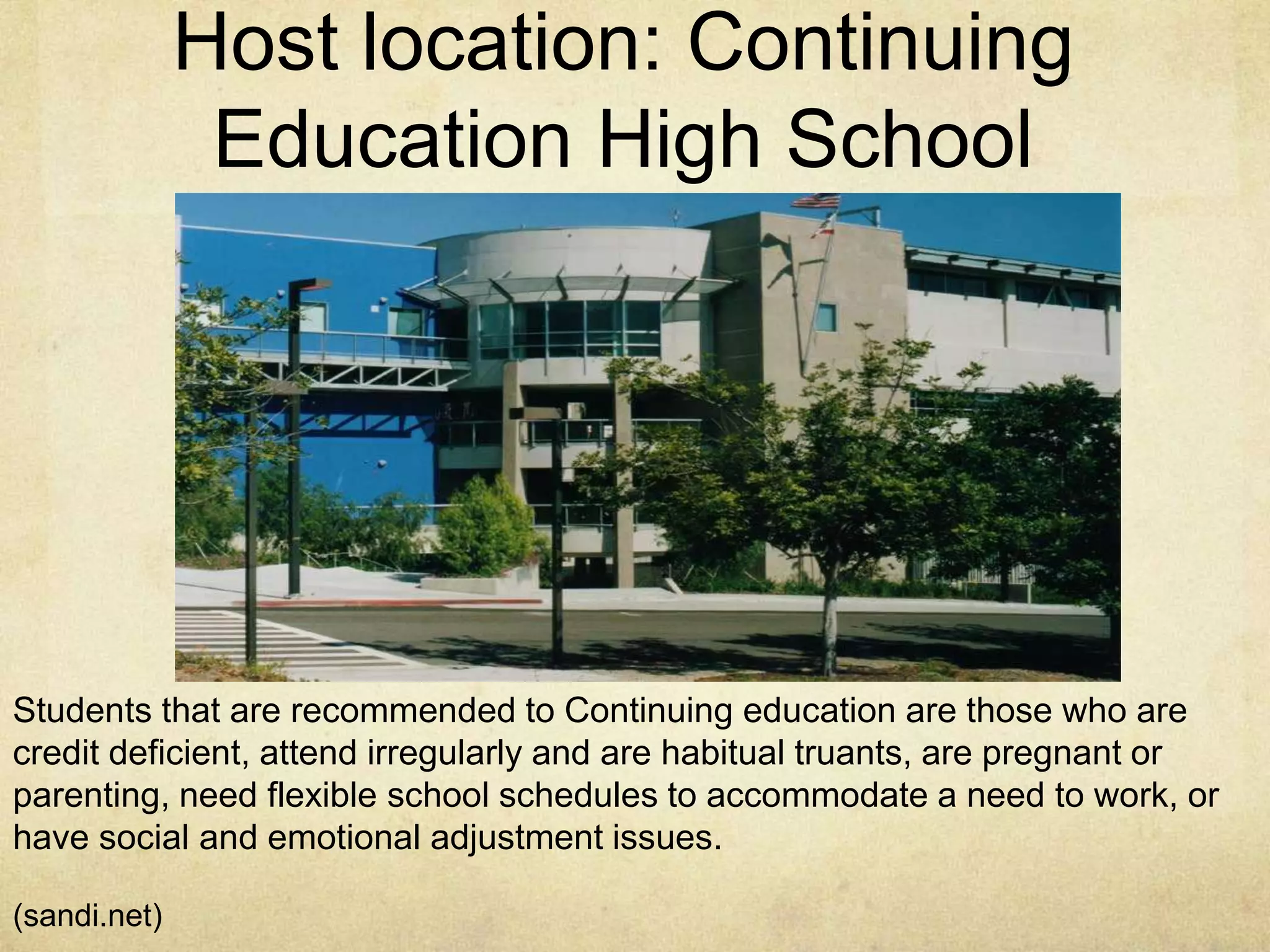
Host location: Continuing
Education High School
Students that are recommended to Continuing education are those who are
credit deficient, attend irregularly and are habitual truants, are pregnant or
parenting, need flexible school schedules to accommodate a need to work, or
have social and emotional adjustment issues.
(sandi.net)
High Risk Students Profile
Feel they do not “belong” at school;
Exhibit disruptive behavior and rebellious attitudes;
Are below expected grade level for their age;
Exhibit language difficulties; Are gifted or talented and perhaps bored with school;
Have poor home–school communications; Are frequently absent or tardy;
Request frequent health referrals; Are invisible dropouts (present in body
but not in mind);
Are parents; or have difficulty relating to authority figures or structured situations.
Have low achievements test scores
Courtesy of Mentoring Partnership of Long Island, The ABC’s of Mentoring, and the HISD Mentoring
Program Mentor Handbook.
Literature
Hope Required When Growing Roses in
Concrete, by Jeffrey M.R Duncan Andrade
Maslow’s Hierarchy of Needs, by Saul McLeod
Reconceptualizing Success for Underserved
Students in Higher Education, by Laura I.
Rendón.
Youth in a suspect Society by Henry A. Giroux
The Psychology of Teaching and Structures of
Information for Human Learning, by Patrick
Velasquez
The Leadership program
Based on the nature of the educational system,
research, and student information, I created a
leadership program where students can
challenge themselves to develop at their own
rate high academic and social skills.
Weekly group meetings
One on one interviews
Pro active field trips to community college
Event at the park with family, friends and
mentors
The program
demographics
13 students: 97% Latinos 2% white 1% Asian
10 males 3 females
98 % First U.S generation
Juniors and Seniors.
Pre-survey : What is your biggest fear? What is
your future dream?
Post-survey: same survey but with an additional
question What have you learned?
Field notes to record student’s testimonials:
Interviews one on one: Personal interest, goals and
challenges
Methodology
Survey
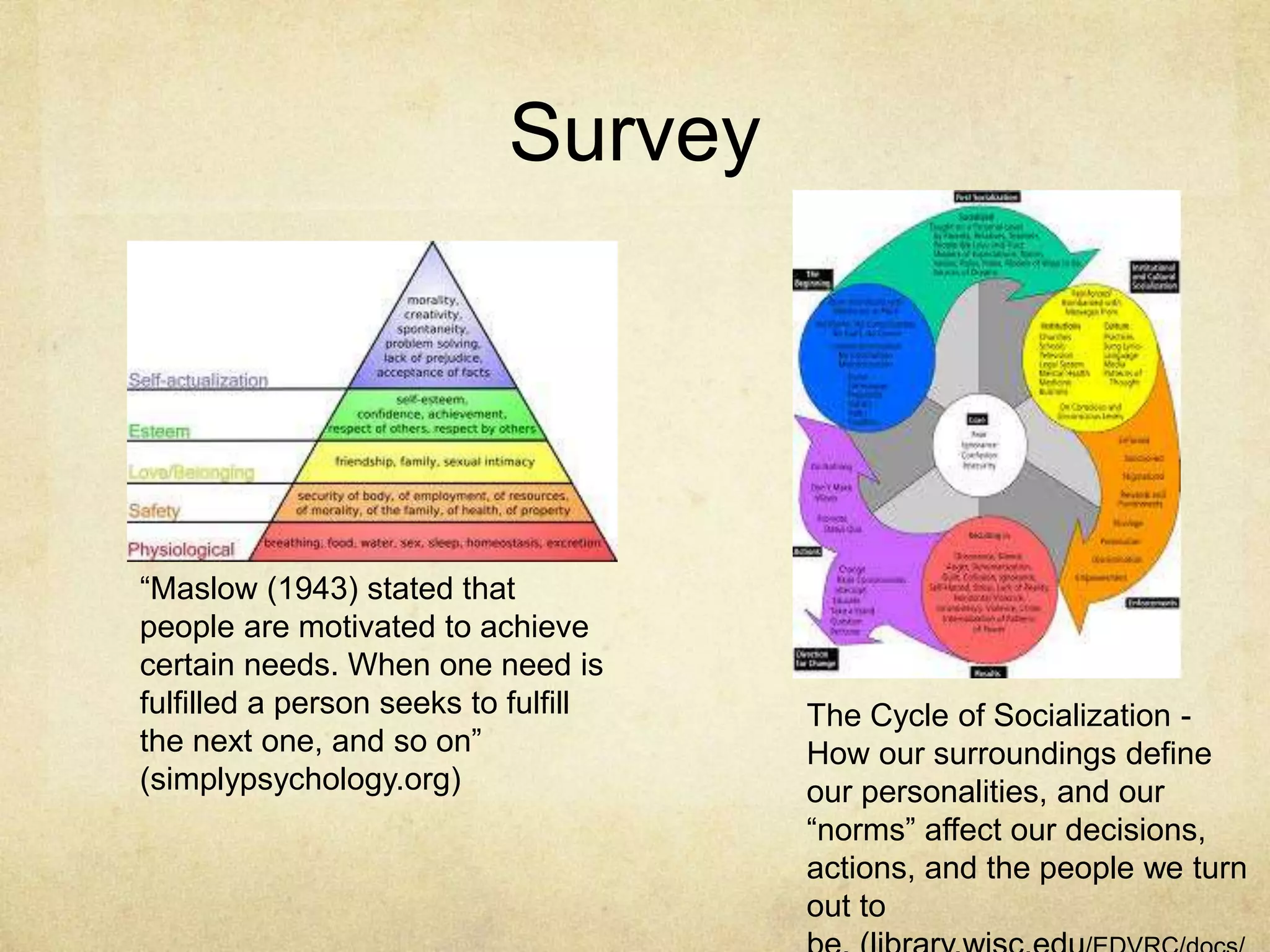
“Maslow (1943) stated that
people are motivated to achieve
certain needs. When one need is
fulfilled a person seeks to fulfill
the next one, and so on”
(simplypsychology.org)
The Cycle of Socialization -
How our surroundings define
our personalities, and our
“norms” affect our decisions,
actions, and the people we turn
out to
Findings
What the students’ survey say: The survey
shows that 98% of the students are afraid to fail
in life, but only 30% have future plans.
In the interviews about 85-90% are afraid of
college expenses rather than academic
challenges.
At the beginning they were shy and quiet . They
have become inquisitive and very active.
Conclusions and
Implications
Students are motivated to learn
They want to be included in a college system
preparation
They are confident/ inquisitive
The program might continue during the summer
Reinforce what they have learned and implement
fundraising activities to create a scholarship fund
Any person can motivate a student regardless of the
student’s academic and social skills
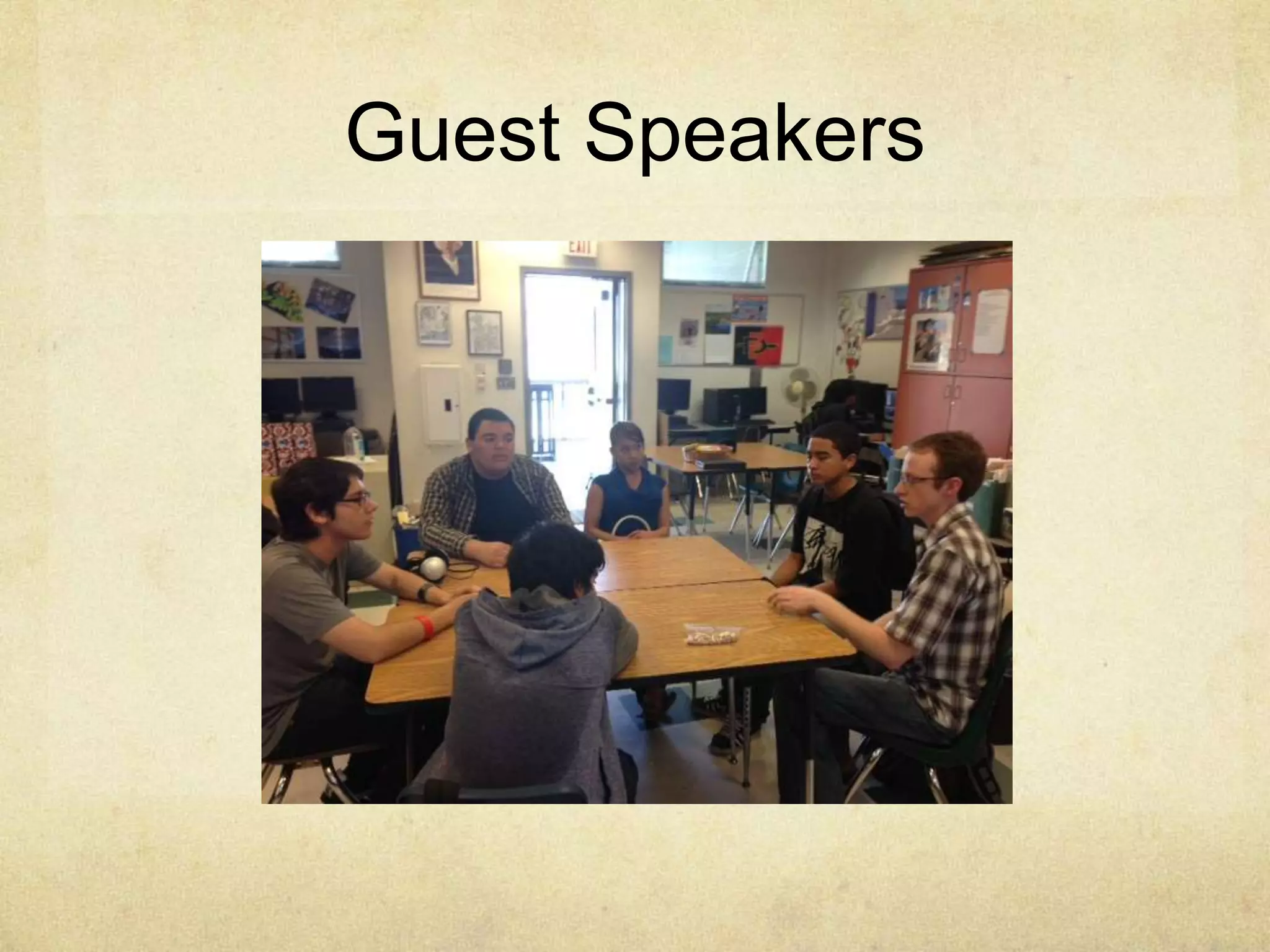
Guest Speakers
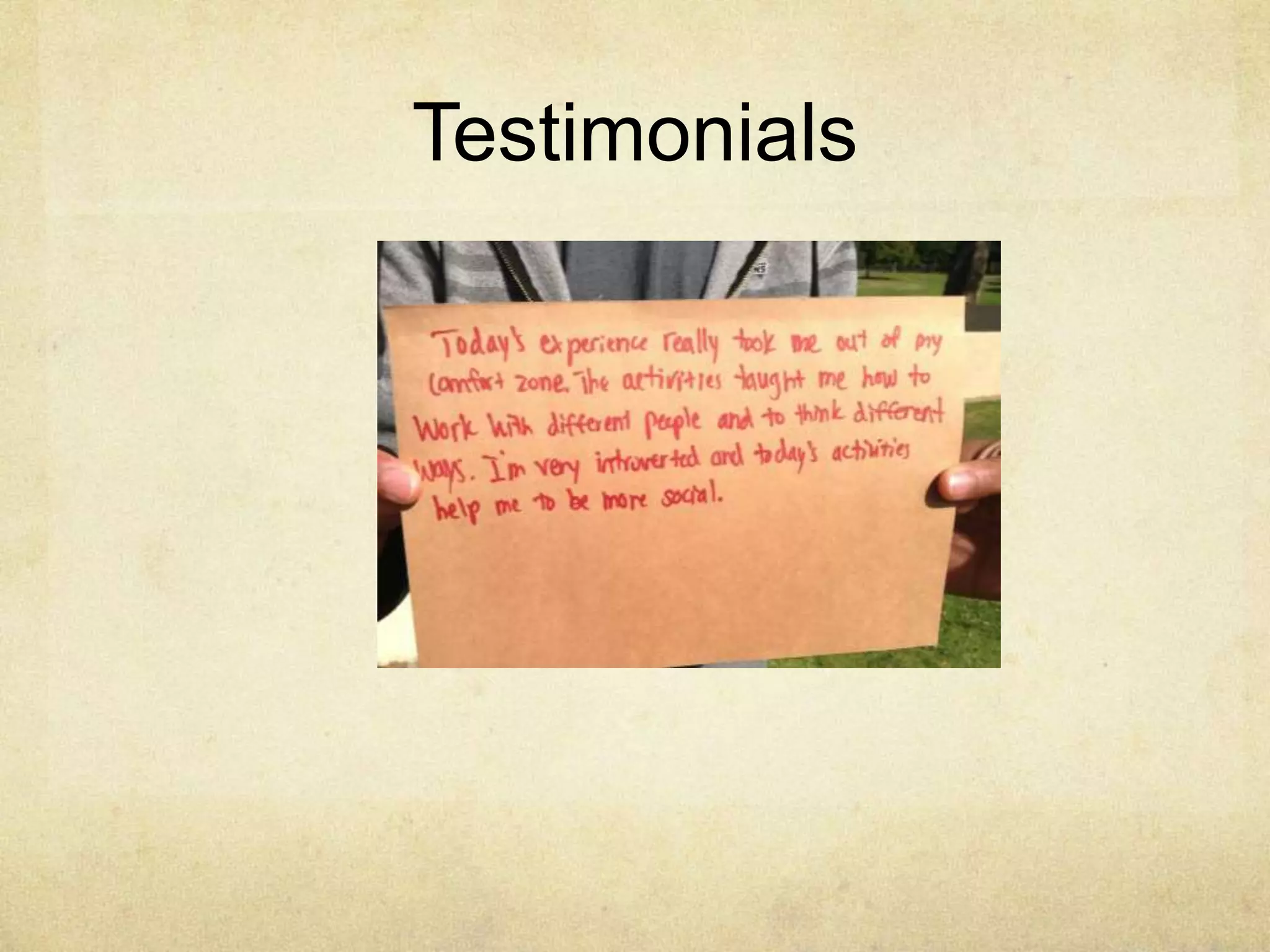
Testimonials
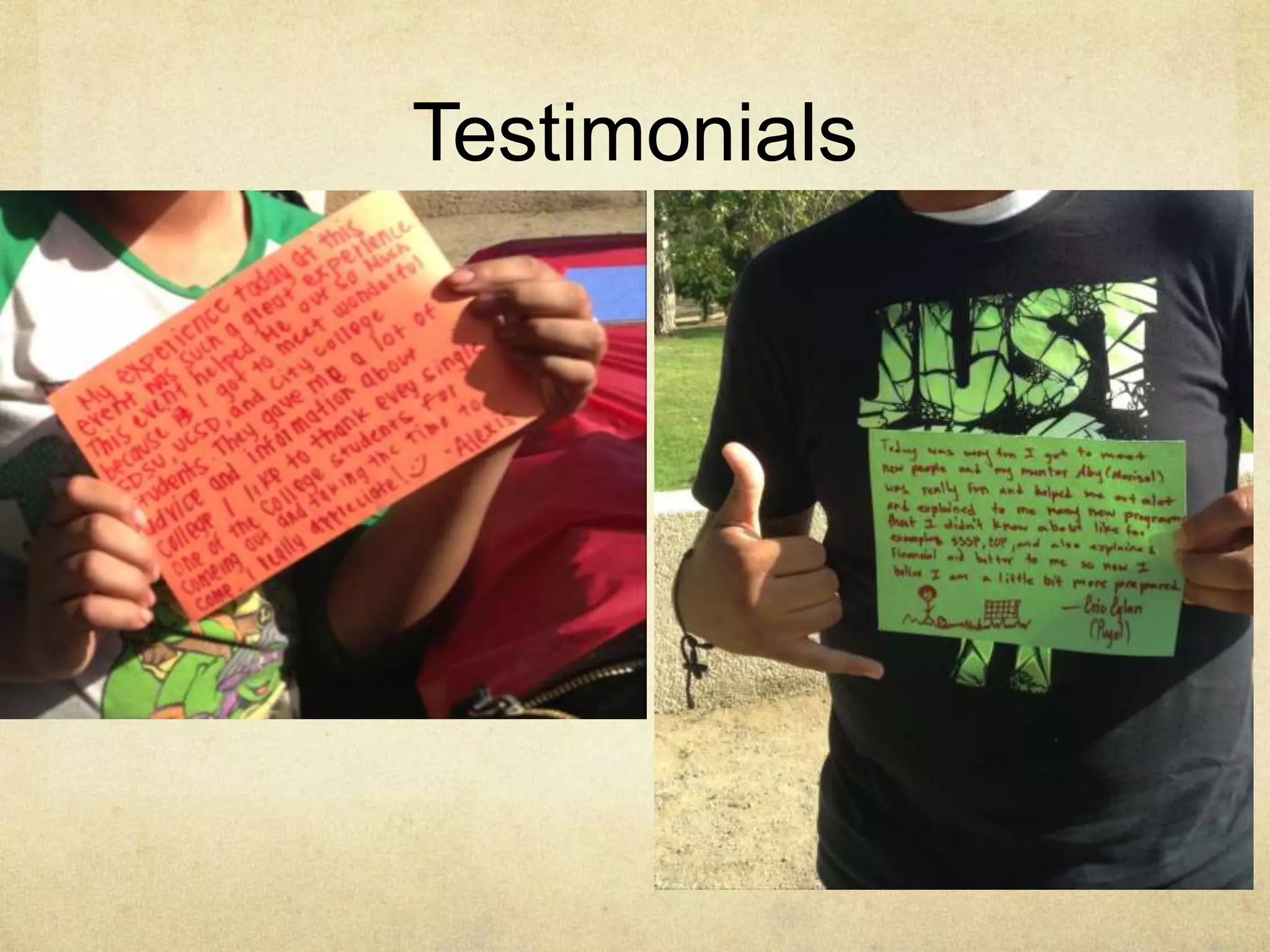
Testimonials
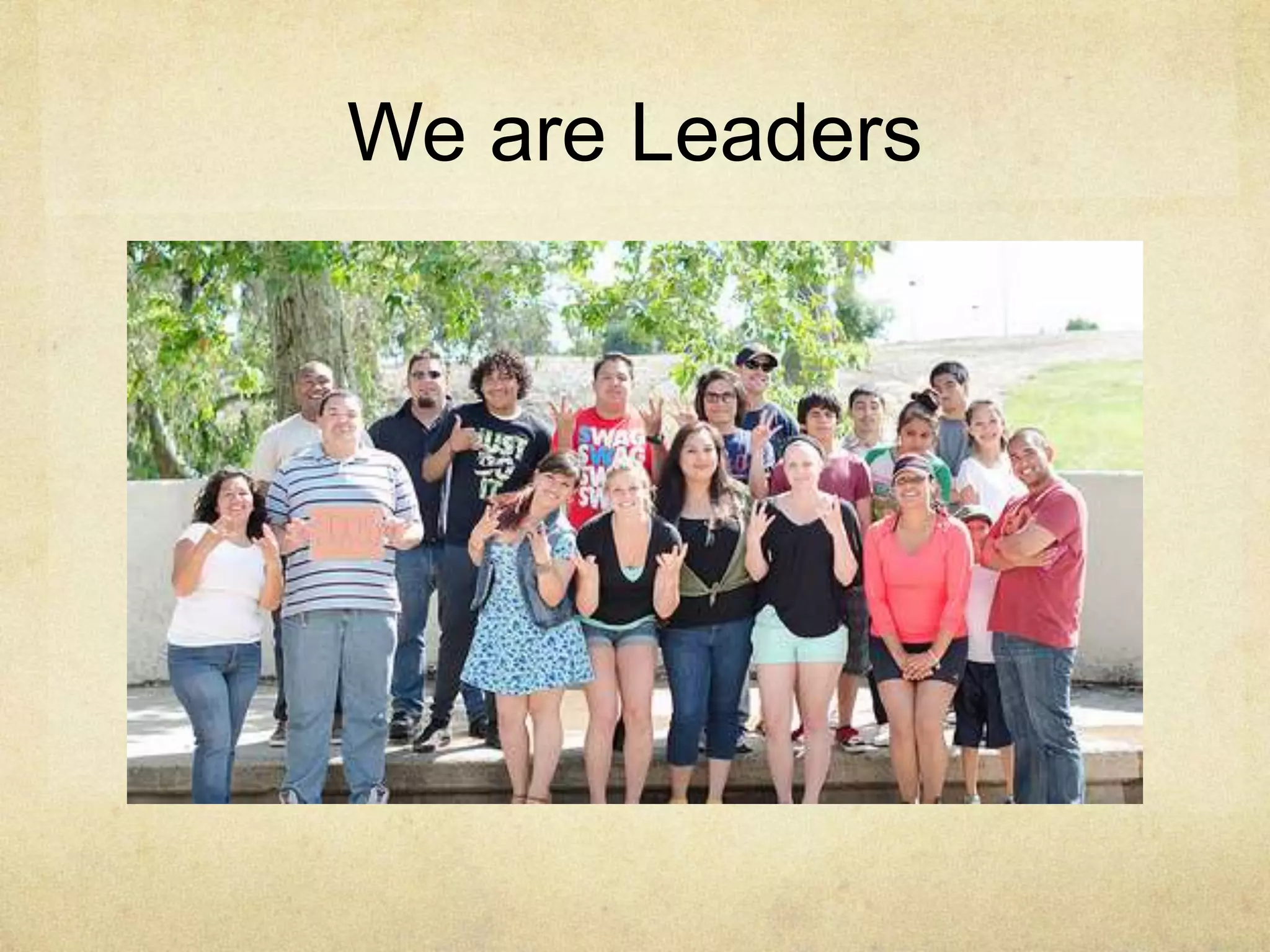
We are Leaders

final mcnair presentation for berkeley

  • 1.
  • 2.
    Your background First collegegeneration Non-traditional student/underrepresented student Marginalized from college information due to low GPA and social skills. Being a tutor at a continuation education High School I connected with the students because we share a similar background.
  • 3.
    Why is thisimportant Underrepresented students have been negatively profiled according to their GPA Male go for the military services Females go for private colleges as the only way out from poverty First generation students. Have no specific college guidance They are isolated from college preparation (The Psychology of Teaching and Structures of Information for Human Learning by Patrick Velasquez)
  • 4.
    Research question How canan underrepresented student change his/her college perspective by implementing a college preparation program in their curriculum? In addition to academics, how important is it for an underrepresented student to learn about self-advocacy and self- empowerment?
  • 5.
    Host location: Continuing EducationHigh School Students that are recommended to Continuing education are those who are credit deficient, attend irregularly and are habitual truants, are pregnant or parenting, need flexible school schedules to accommodate a need to work, or have social and emotional adjustment issues. (sandi.net)
  • 6.
    High Risk StudentsProfile Feel they do not “belong” at school; Exhibit disruptive behavior and rebellious attitudes; Are below expected grade level for their age; Exhibit language difficulties; Are gifted or talented and perhaps bored with school; Have poor home–school communications; Are frequently absent or tardy; Request frequent health referrals; Are invisible dropouts (present in body but not in mind); Are parents; or have difficulty relating to authority figures or structured situations. Have low achievements test scores Courtesy of Mentoring Partnership of Long Island, The ABC’s of Mentoring, and the HISD Mentoring Program Mentor Handbook.
  • 7.
    Literature Hope Required WhenGrowing Roses in Concrete, by Jeffrey M.R Duncan Andrade Maslow’s Hierarchy of Needs, by Saul McLeod Reconceptualizing Success for Underserved Students in Higher Education, by Laura I. Rendón. Youth in a suspect Society by Henry A. Giroux The Psychology of Teaching and Structures of Information for Human Learning, by Patrick Velasquez
  • 8.
    The Leadership program Basedon the nature of the educational system, research, and student information, I created a leadership program where students can challenge themselves to develop at their own rate high academic and social skills. Weekly group meetings One on one interviews Pro active field trips to community college Event at the park with family, friends and mentors
  • 9.
    The program demographics 13 students:97% Latinos 2% white 1% Asian 10 males 3 females 98 % First U.S generation Juniors and Seniors.
  • 10.
    Pre-survey : Whatis your biggest fear? What is your future dream? Post-survey: same survey but with an additional question What have you learned? Field notes to record student’s testimonials: Interviews one on one: Personal interest, goals and challenges Methodology
  • 11.
    Survey “Maslow (1943) statedthat people are motivated to achieve certain needs. When one need is fulfilled a person seeks to fulfill the next one, and so on” (simplypsychology.org) The Cycle of Socialization - How our surroundings define our personalities, and our “norms” affect our decisions, actions, and the people we turn out to
  • 12.
    Findings What the students’survey say: The survey shows that 98% of the students are afraid to fail in life, but only 30% have future plans. In the interviews about 85-90% are afraid of college expenses rather than academic challenges. At the beginning they were shy and quiet . They have become inquisitive and very active.
  • 13.
    Conclusions and Implications Students aremotivated to learn They want to be included in a college system preparation They are confident/ inquisitive The program might continue during the summer Reinforce what they have learned and implement fundraising activities to create a scholarship fund Any person can motivate a student regardless of the student’s academic and social skills
  • 14.
  • 15.
  • 16.
  • 17.

Editor's Notes

  • #12 The program uses a survey before the first meeting to learn about them and their needs. Based on their answers we tailor activities and field trips that target those needs while at the same they learn leadership skills
  • #18 http://www.flickr.com/photos/96534014@N06/