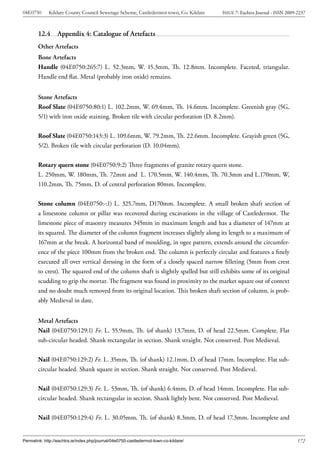
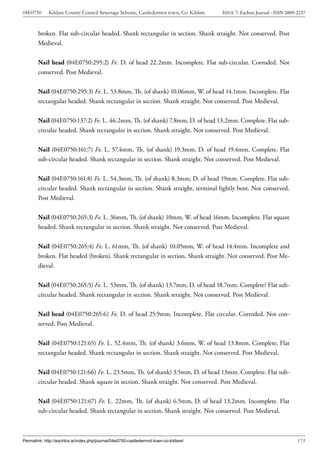
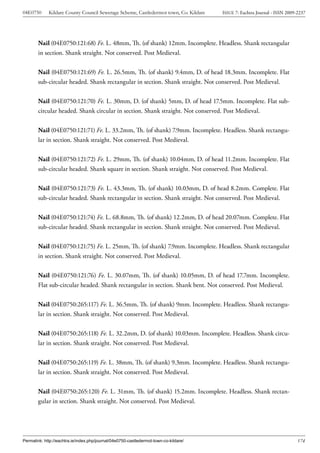
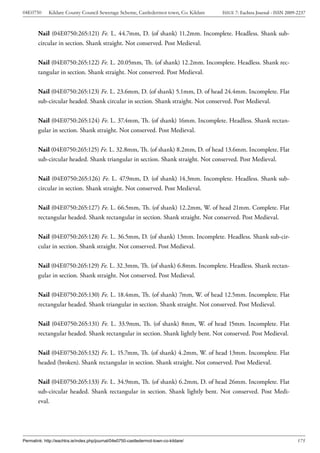
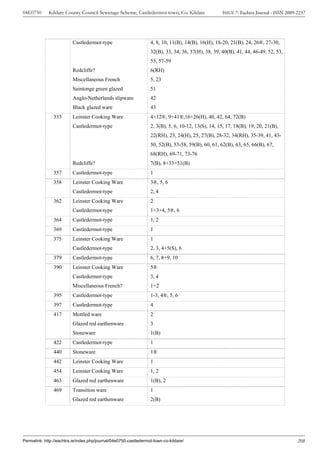
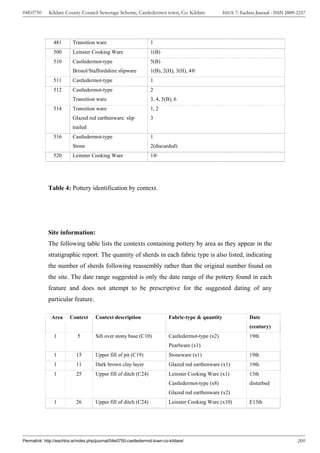
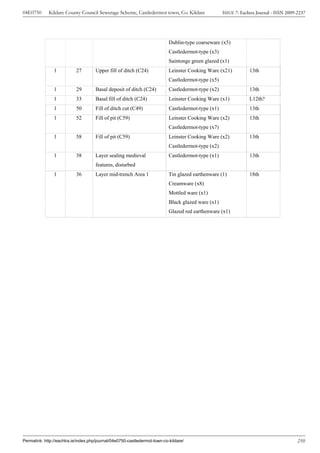
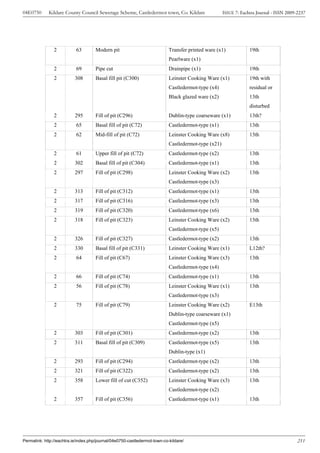
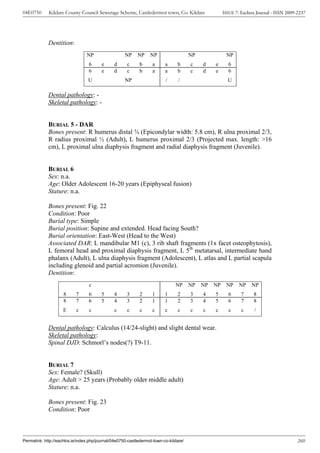
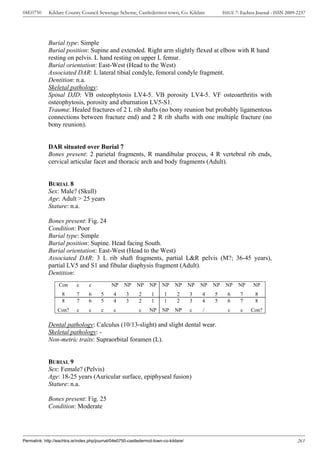
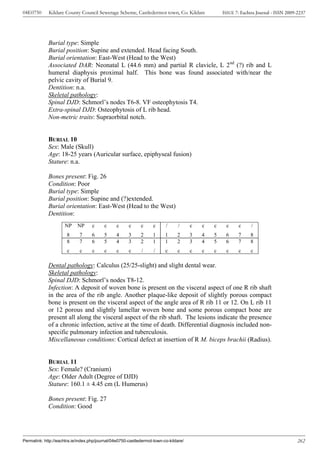
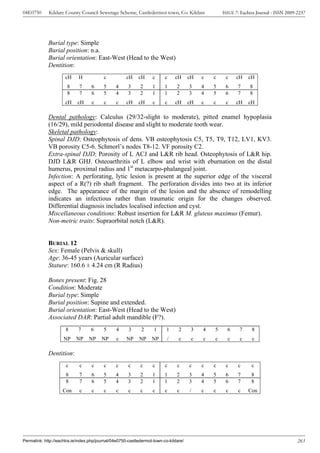
Eachtra Journal

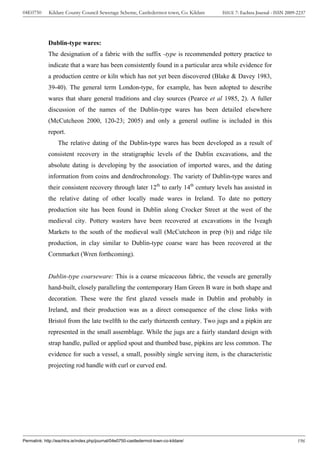
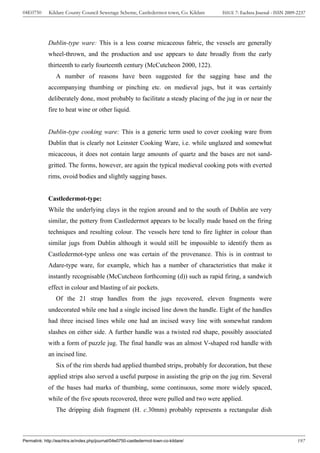
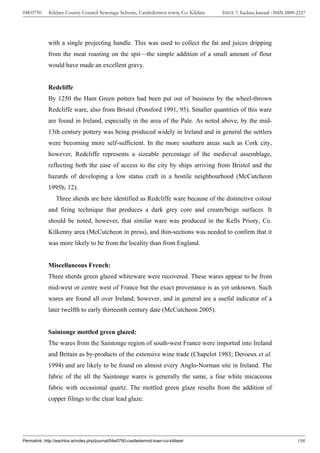
Issue 7                                              [ISSN 2009-2237]


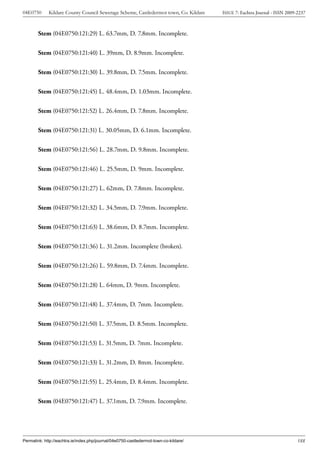
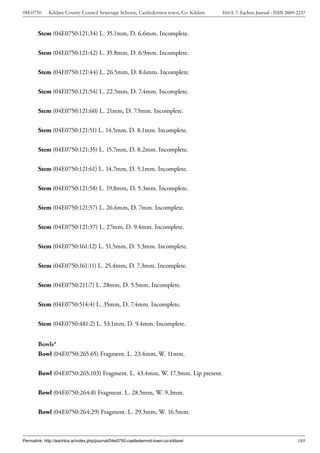
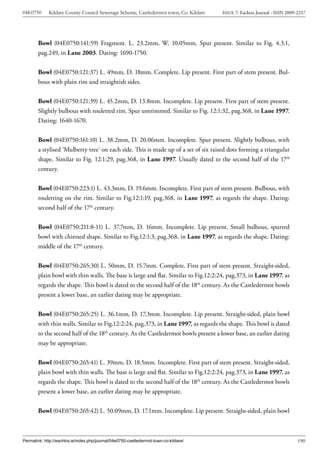
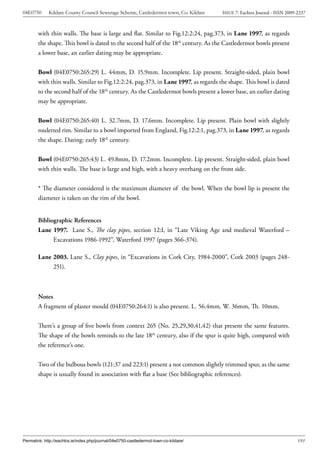
              Archaeological Excavation Report
          04E0750 - Castledermot town, Co. Kildare

               Medieval town walls and cemetery
Archaeological Excavation Report,
Kildare County Council Sewerage Scheme,
Castledermot town,
Co. Kildare.


               August 2010


Client:            Kildare County Council


Licence No.:       04E0750
Licensee:          Aine Richardson


                                                            Contact details:
                                                     Ballycurreen Industrial Estate,
                                                     Kinsale Road, Cork.
Written by:        Aidan Harte and Aine Richardson   Tel.: 021 4915850
                                                     Fax: 021 4975711
                                                     E-mail: info@eachtra.ie
Produced by:       Anluan Dunne                      Web Site: www.eachtra.ie
04E0750         Kildare County Council Sewerage Scheme, Castledermot town, Co. Kildare                                ISSUE 7: Eachtra Journal - ISSN 2009-2237


            Table of Contents Part 1
            i           List of Figures .................................................................................................... iv
            ii          List of Plates .....................................................................................................vii
            iii         Acknowledgements ............................................................................................ ix
            iv          Copyright Notice ............................................................................................... ix
            1           Introduction .......................................................................................................1
            2           Site Location & Topography ...............................................................................1
            3           Archaeological and historical background ...........................................................1
            4           Recent Archaeological Work/Excavations in Castledermot .................................9
            5           Background to the present project ......................................................................9
            6           Methodology ..................................................................................................... 10
            7           Description of Excavation .................................................................................. 11
                  7.1           Area 1 .........................................................................................................12
                  7.2           Area 2 .........................................................................................................15
                  7.3           Area 3 .........................................................................................................20
                  7.4           Area 4 .........................................................................................................25
                  7.5           Area 5 .........................................................................................................31
                  7.6           Area 6 .........................................................................................................36
                  7.7           Area 7 .........................................................................................................44

            8           Discussion .........................................................................................................46
                  8.1           The Later Medieval Period ...........................................................................46
                  8.2           The Post-Medieval Period ............................................................................55
                  8.3           Early Modern and Modern Town ................................................................58

            9           Conclusions ....................................................................................................... 59
            10          Bibliography ......................................................................................................60
            11          Figures ............................................................................................................... 62
            12          Plates ................................................................................................................ 103


Permalink: http://eachtra.ie/index.php/journal/04e0750-castledermot-town-co-kildare/                                                                        iii
04E0750      Kildare County Council Sewerage Scheme, Castledermot town, Co. Kildare                           ISSUE 7: Eachtra Journal - ISSN 2009-2237


             12      Appendices ....................................................................................................... 119
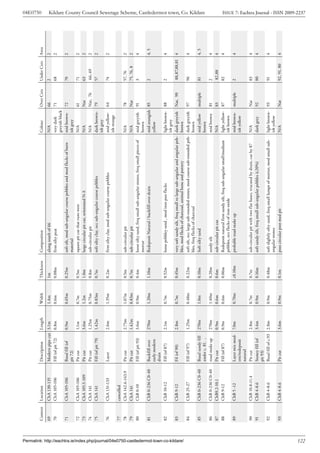
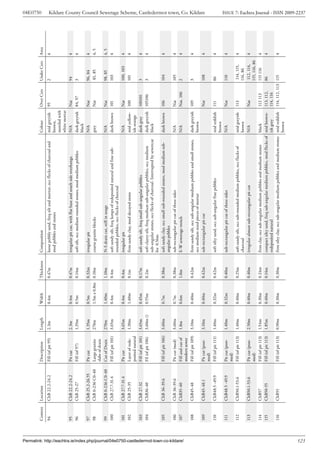
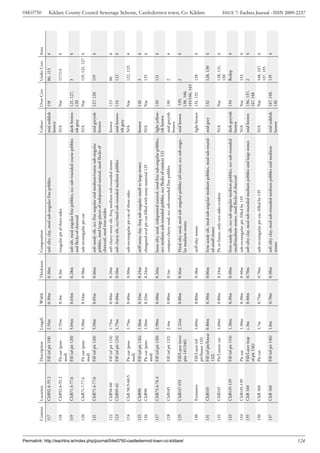
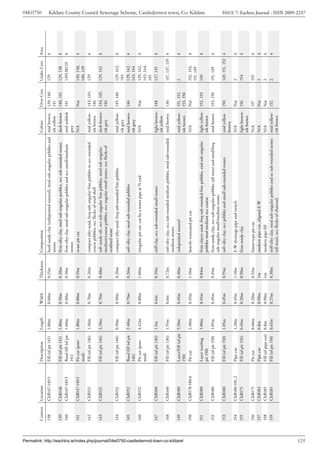
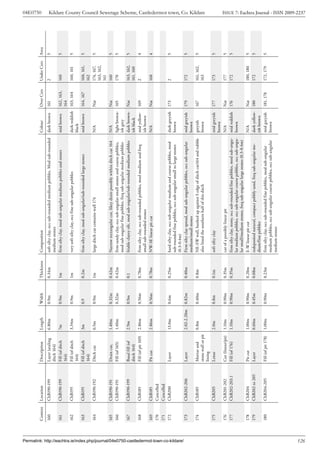
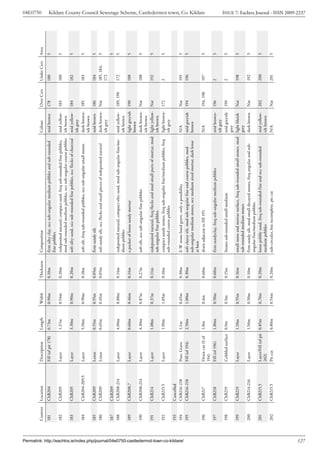
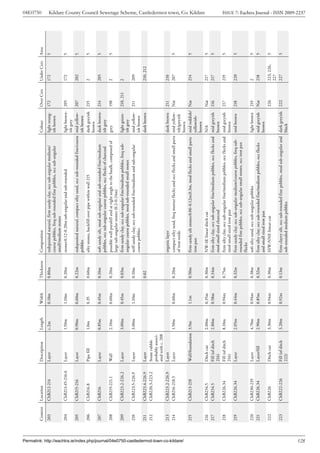
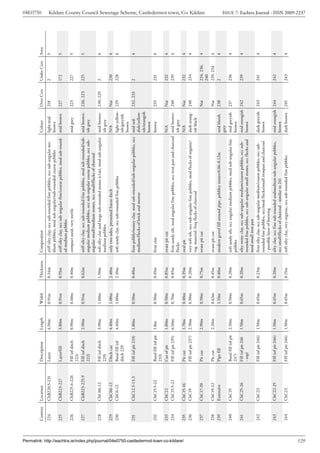
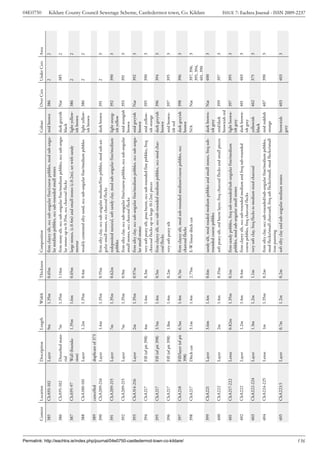
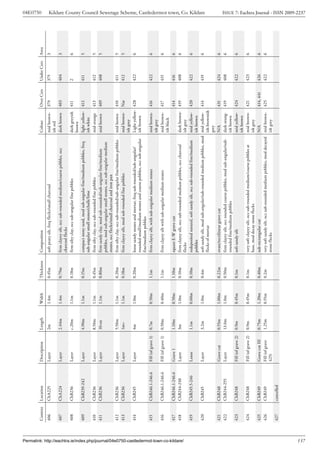
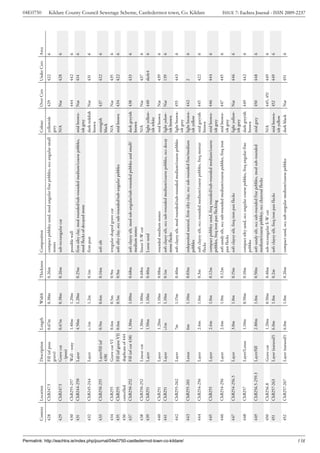
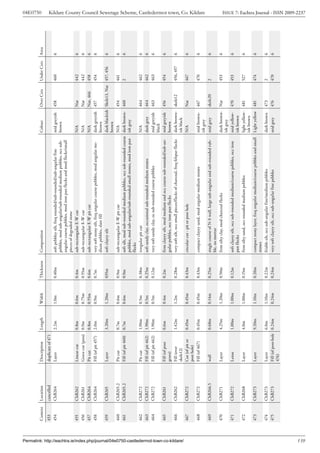
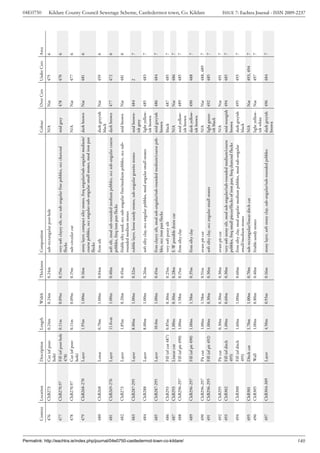
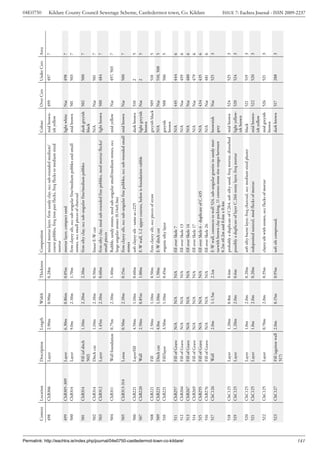
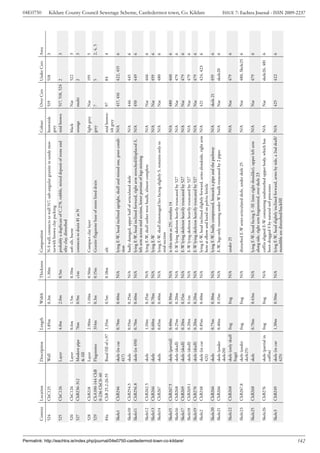
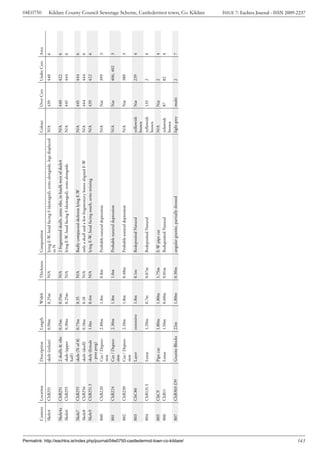
                  12.1       Appendix 1: Context Register .....................................................................119
                  12.2       Appendix 2: Stratigraphic Matrix ...............................................................144
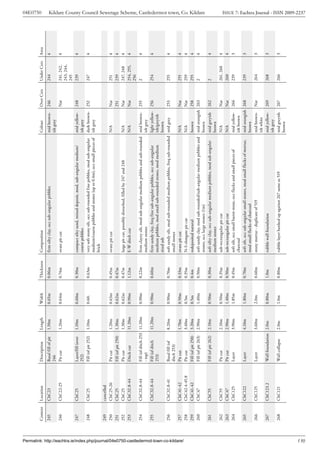
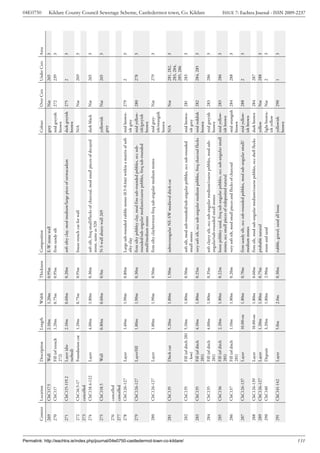
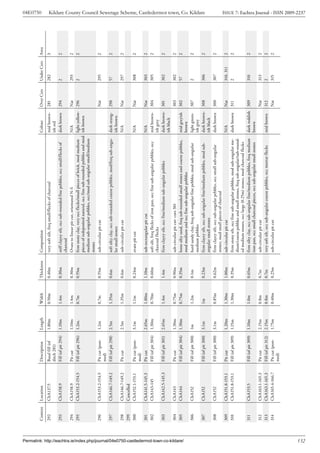
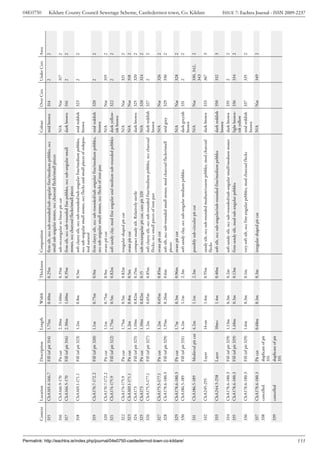
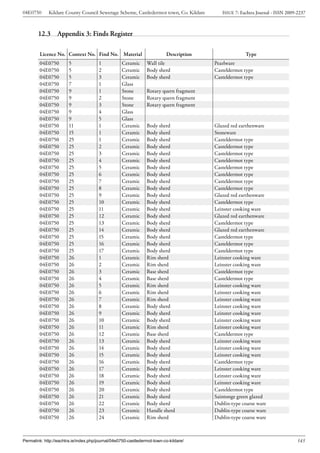
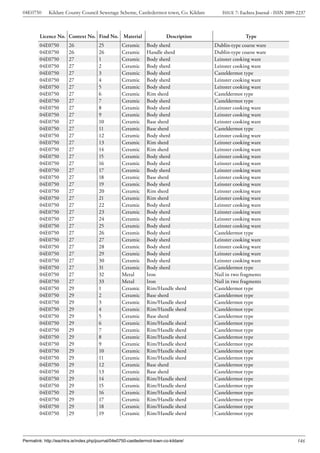
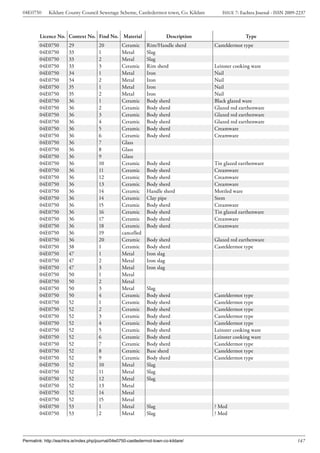
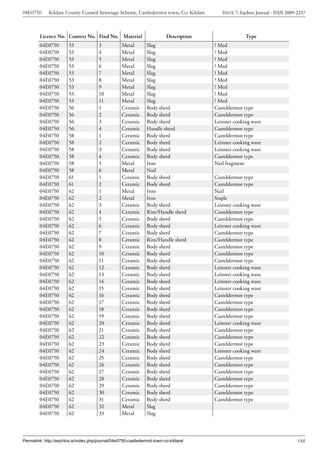
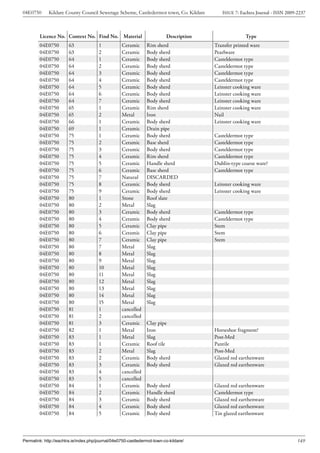
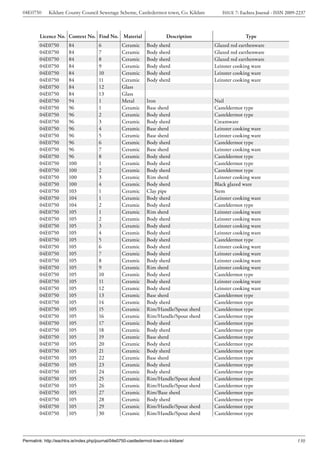
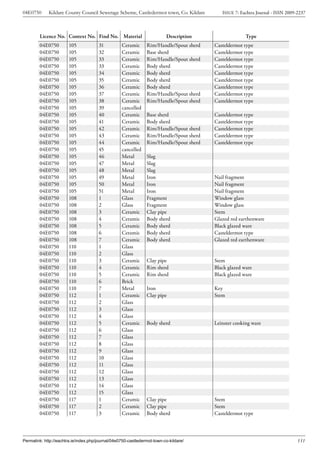
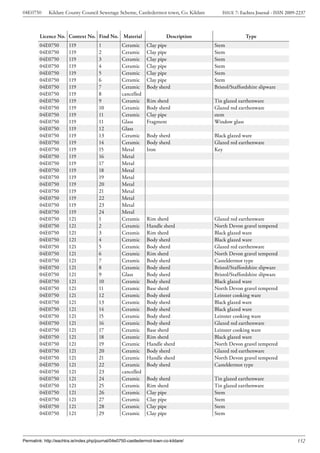
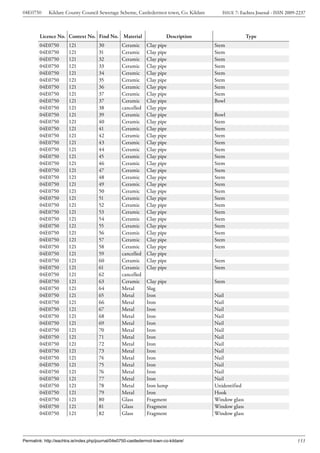
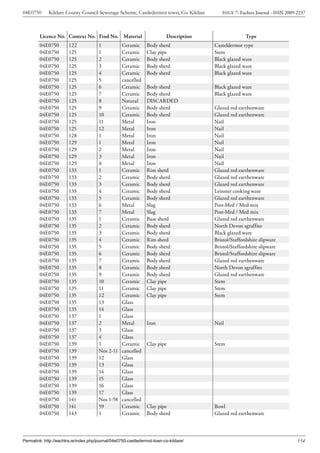
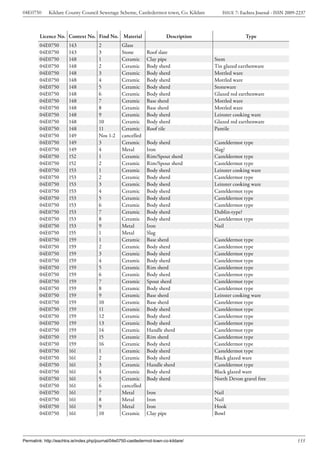
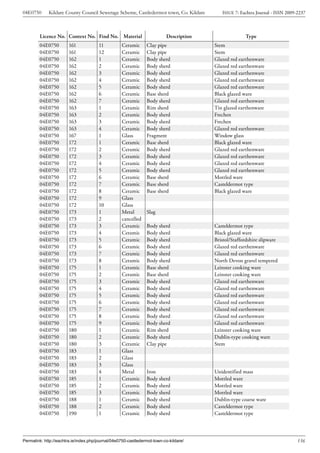
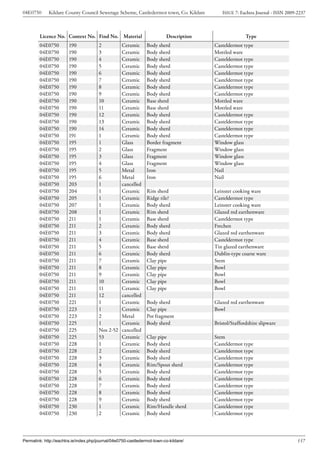
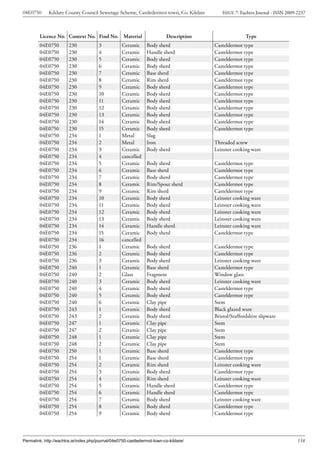
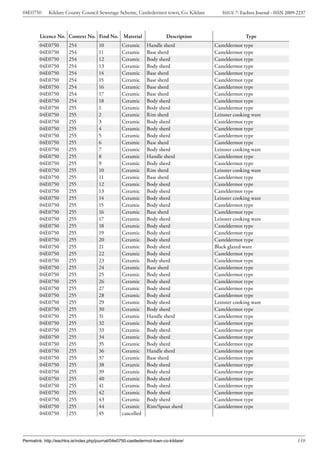
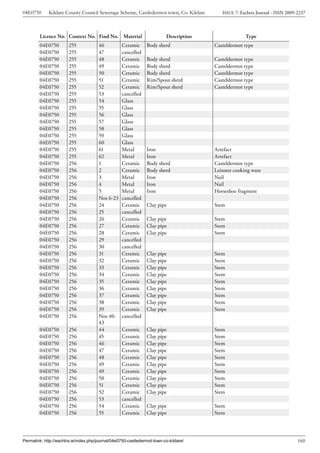
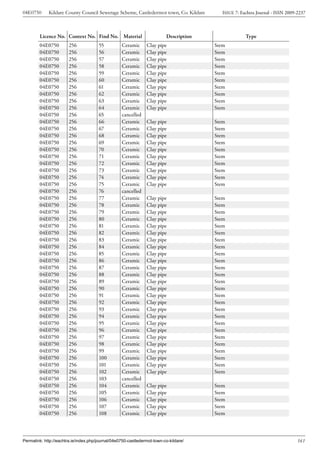
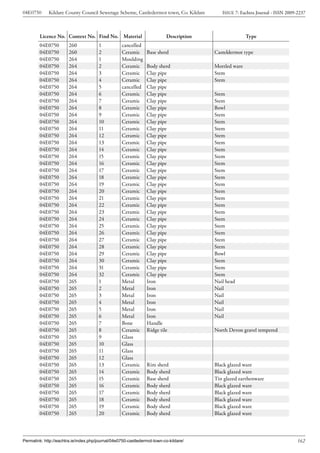
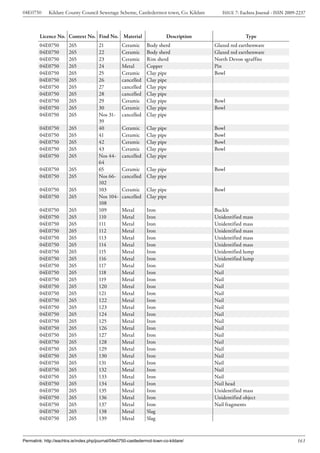
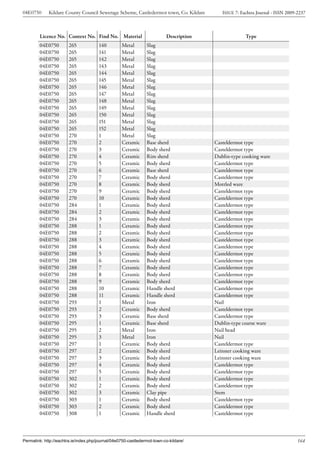
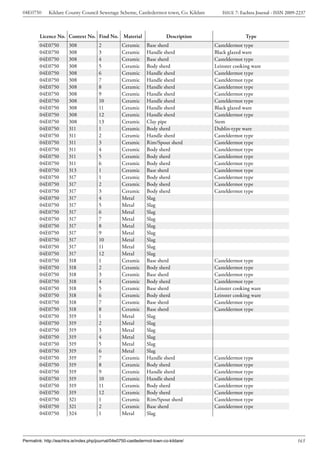
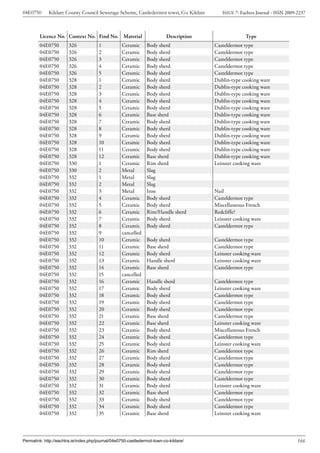
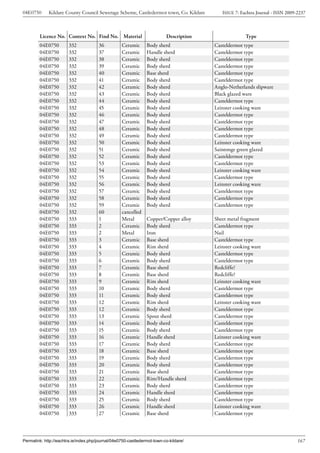
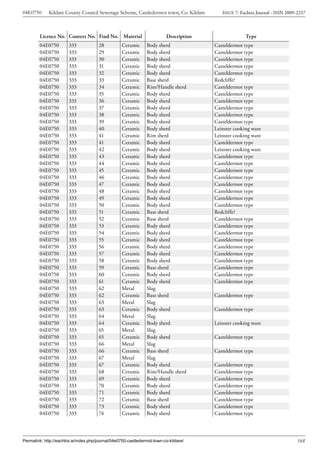
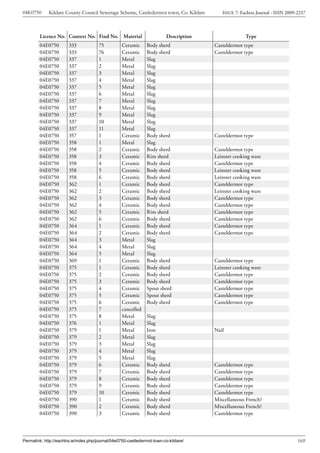
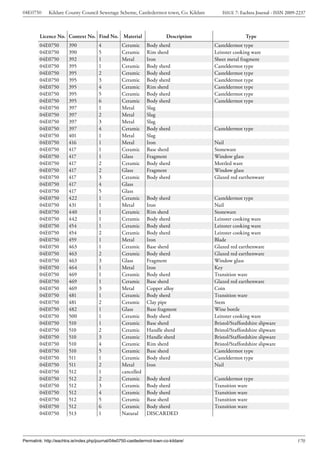
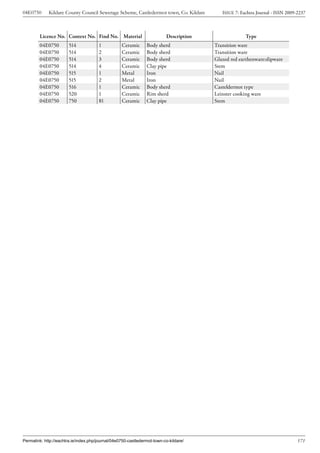
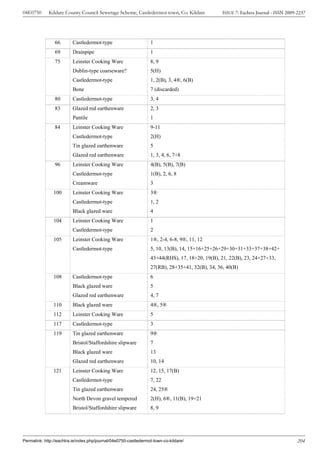
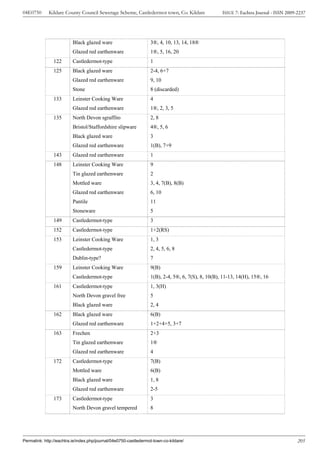
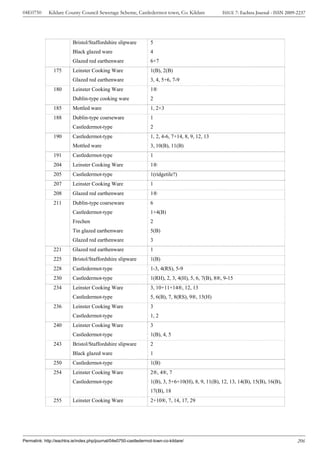
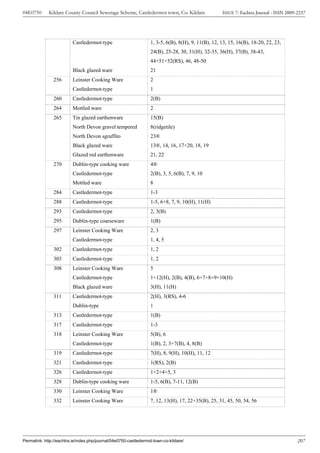
                  12.3       Appendix 3: Finds Register.........................................................................145
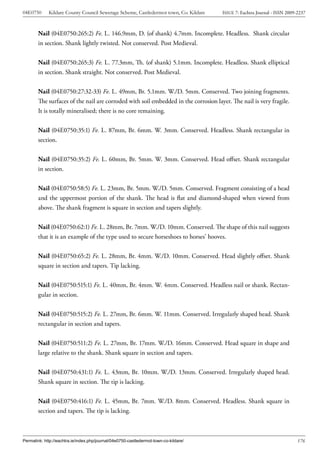
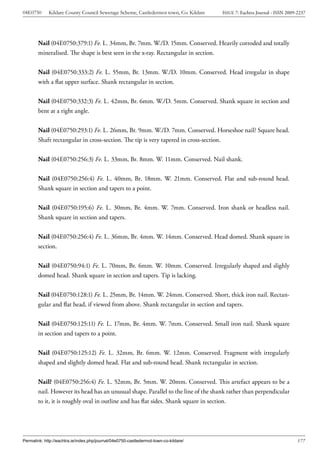
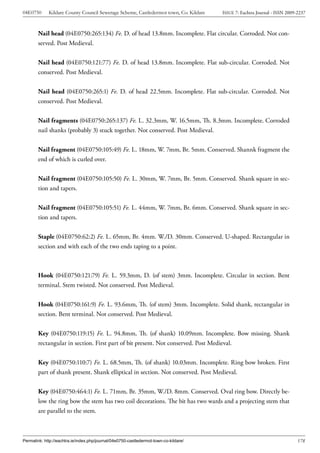
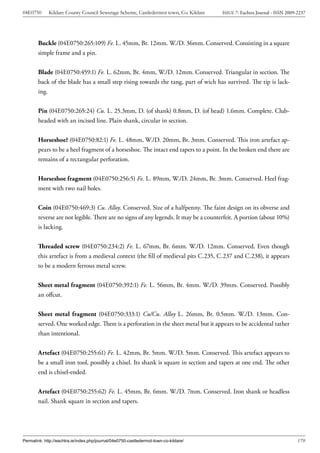
                  12.4       Appendix 4: Catalogue of Artefacts ............................................................172
                  12.5       Appendix 5: Pottery Report ........................................................................192
                  12.6       Appendix 6 Human Remains ....................................................................218
                  12.7       Appendix 7: Faunal Remains ......................................................................295
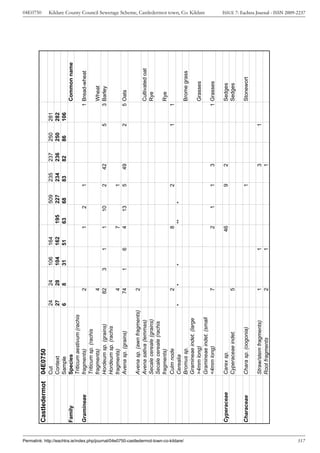
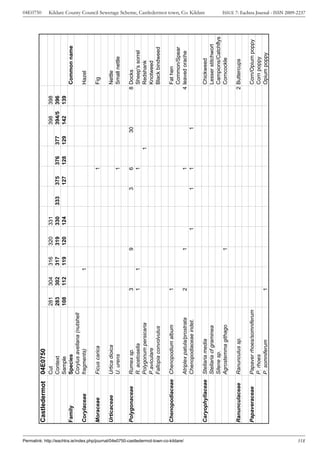
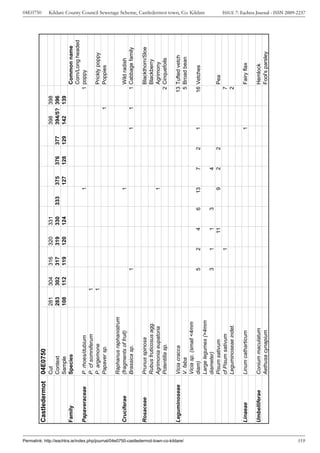
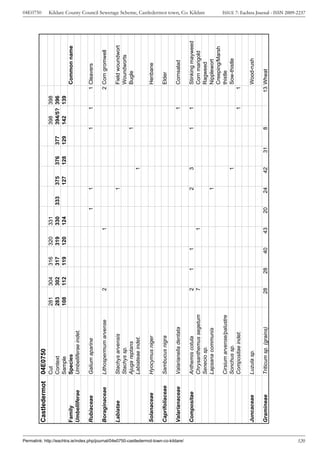
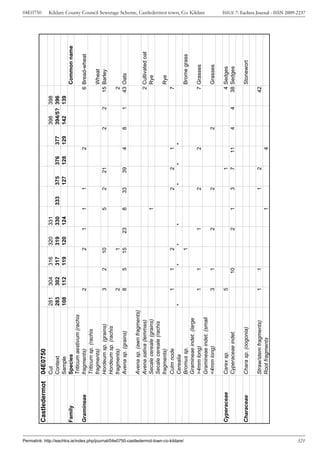
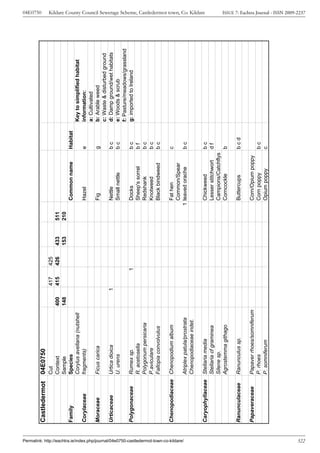
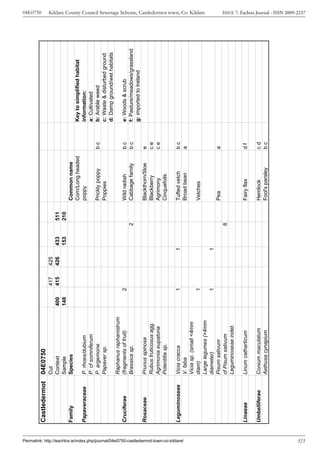
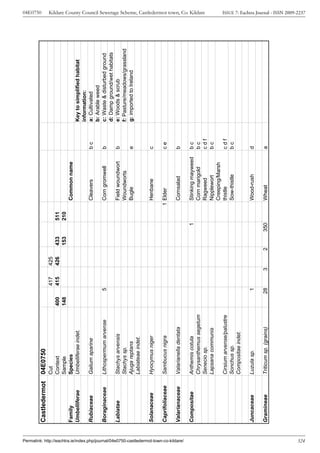
                  12.8       Appendix 8: Archaeobotanical Remains .....................................................304
                  12.9       Appendix 9: Leather Report .......................................................................326
                  12.10      Appendix 10: Glass Report .........................................................................334
                  12.11      Appendix 11: Metal Report ........................................................................338


Permalink: http://eachtra.ie/index.php/journal/04e0750-castledermot-town-co-kildare/                                                                 iv
04E0750      Kildare County Council Sewerage Scheme, Castledermot town, Co. Kildare    ISSUE 7: Eachtra Journal - ISSN 2009-2237


        i         List of Figures
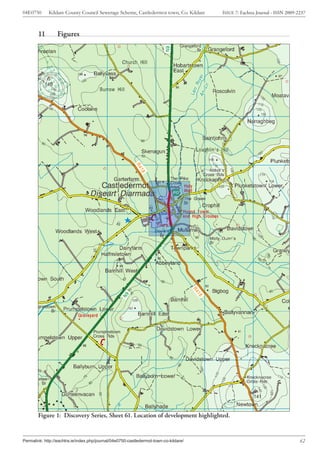
        Figure 1: Discovery Series, Sheet 61. Location of development highlighted.

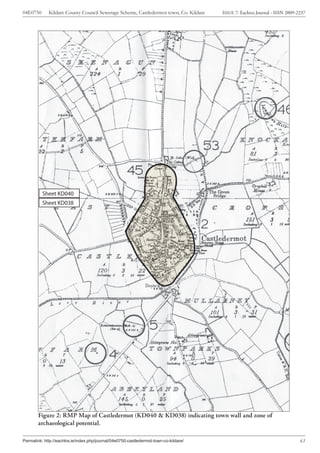
        Figure 2: RMP Map of Castledermot (KD040 & KD038) indicating town wall and zone of
              archaeological potential.

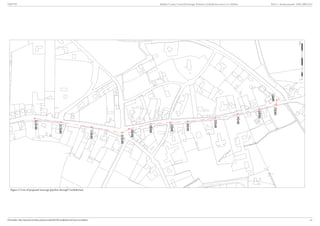
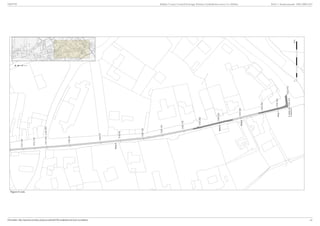
        Figure 3: Line of proposed sewerage pipeline through Castledermot.

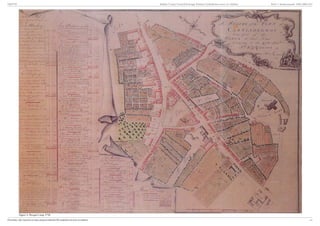
        Figure 4: Rocque’s map 1758.

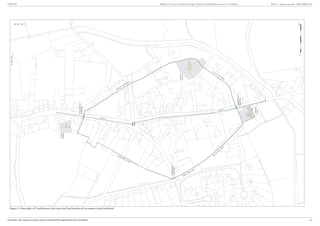
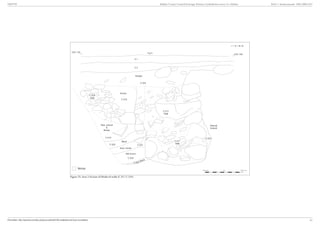
        Figure 5: Town plan of Castledermot with town wall and location of excavation trench indicated.

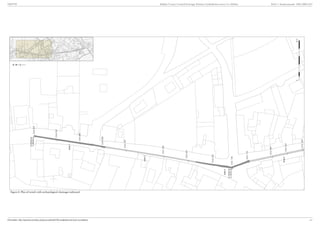
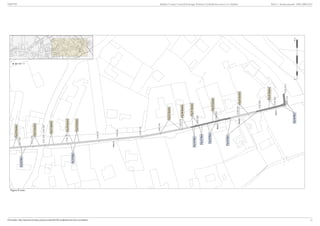
        Figure 6: Plan of trench with archaeological chainages indicated.

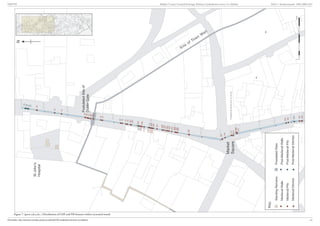
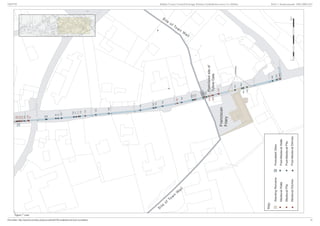
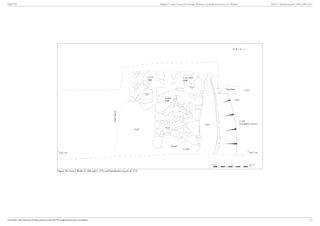
        Figure 7: (parts a and b) Distribution of Post-Medieval and Medieval walls, pits and ditches within
              excavated trench.

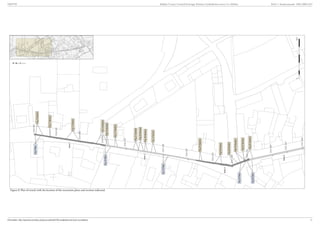
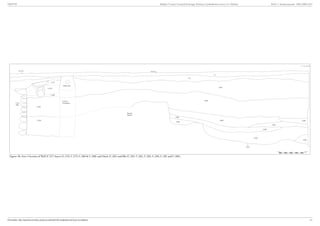
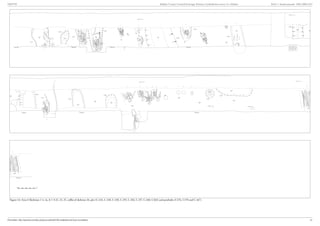
        Figure 8: Plan of trench with the location of the excavation plans and sections indicated.

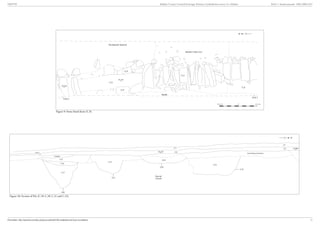
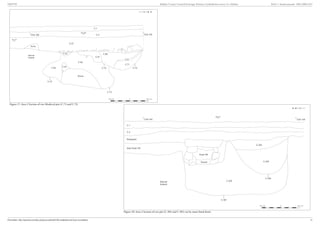
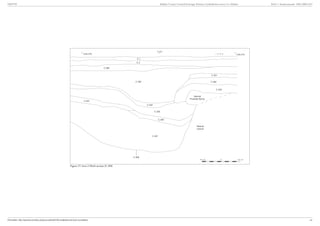
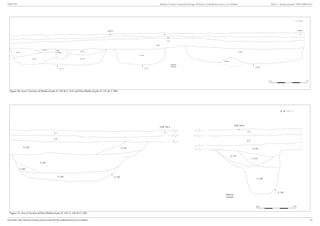
        Figure 9: Area 1 Stone-lined drain (C.8).

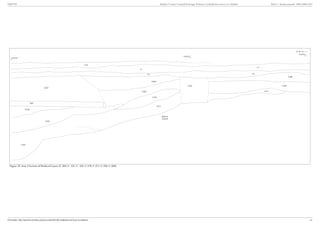
        Figure 10: Area 1 Section of Pits (C.19, C.20, C.21 and C.23).

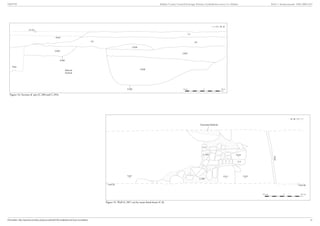
        Figure 11: Area 1 Cross-section of ditch (C.24) northern face.

        Figure 12: Area 1 Section of Ditch (C.51) and Pits (C.55 and C.59) and layers (C.53, C.57 and C.58).

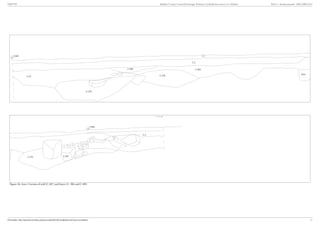
        Figure 13: Area 1 Section of pit (C.43) and layers (C.3, C.35, C.36, C.37 and C.38).

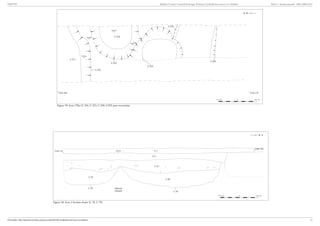
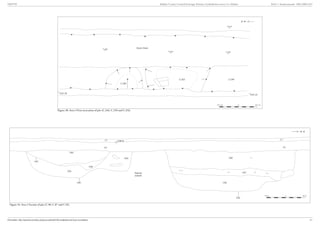
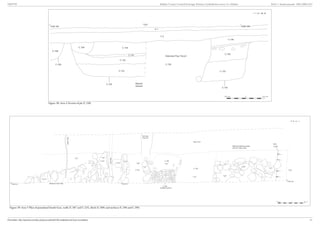
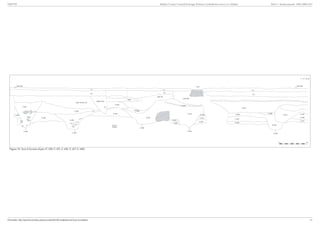
        Figure 14: Area 2 Section of pits (C.300 and C.294).

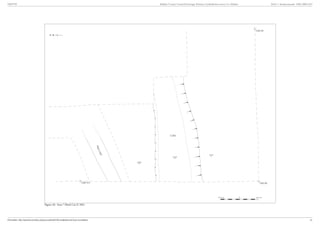
        Figure 15: Area 2 Wall (C.387) cut by stone-lined drain (C.8).

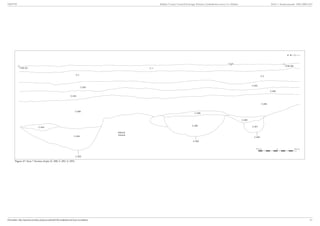
        Figure 16: Area 2 Section of wall (C.387) and layers (C. 386 and C.385)

        Figure 17: Area 2 Section of two Medieval pits (C.72 and C.73)

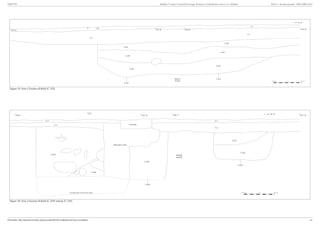
        Figure 18: Area 2 Section of two pits (C.304 and C.301) cut by stone-lined drain.

        Figure 19: Area 2 Pits (C.316, C.323, C.320, C325) post excavation.

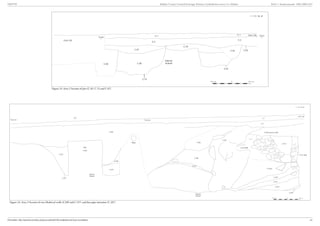
        Figure 20: Area 2 Section of pits (C.78, C.79).

        Figure 21: Area 2 Section of pits (C.63, C.74 and C.67)


Permalink: http://eachtra.ie/index.php/journal/04e0750-castledermot-town-co-kildare/                                          v
04E0750      Kildare County Council Sewerage Scheme, Castledermot town, Co. Kildare    ISSUE 7: Eachtra Journal - ISSN 2009-2237


        List of Figures cont.

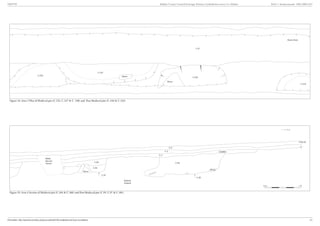
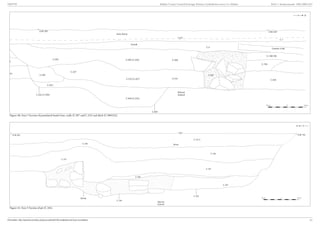
        Figure 22: Area 3 Section of two Medieval walls (C269 and C.517) and late pipe intrusion (C.267)

        Figure 23: Area 3 Interconnected Medieval wall (C.517 and C.524)

        Figure 24: Area 3 Elevation of the south face of wall C.517

        Figure 25: Area 3 Section of Medieval walls (C.517, C.524)

        Figure 26: Area 3 Walls (C.269 and C.275) and foundation trench (C.272)

        Figure 27: Area 3 Ditch section (C.398)

        Figure 28: Area 3 Section of Wall (C.517) layers (C.278, C.279, C.280 & C.288) and Ditch (C.281)
              and fills (C.292, C.282, C.283, C.284, C.285 and C.286).

        Figure 29: Area 3 Section of Medieval Layers (C.369, C. 332, C. 333, C.370, C.371, C.350, C.368).

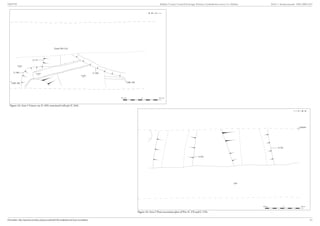
        Figure 30: Area 4 Post-excavation of pits (C.246, C.250 and C.252).

        Figure 31: Area 4 Section of pits (C.90, C.87 and C.93).

        Figure 32: Area 4 Section of ditch (C.253).

        Figure 33: Area 4 Section of ditch (C.229) and pit (C.233).

        Figure 34: Area 4 Plan of Medieval pits (C.235, C.237 & C. 238) and Post-Medieval pits (C.246 &
              C.233)

        Figure 35: Area 4 Section of Medieval pits (C.104 & C.106) and Post-Medieval pits (C.95, C.97 &
              C.101).

        Figure 36: Area 4 Section of Medieval pits (C.118 & C.113) and Post-Medieval pits (C.111 &
              C.109).

        Figure 37: Area 4 Section of Post-Medieval pits (C.141, C.146 & C.136)

        Figure 38: Area 4 Section of pit (C.150).

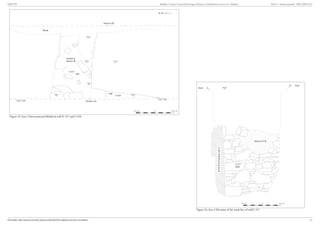
        Figure 39: Area 5 Plan of postulated South Gate, walls (C.507 and C.215), ditch (C.509) and surfaces
              (C.198 and C.199).

        Figure 40: Area 5 Section of postulated South Gate, walls (C.507 and C.215) and ditch (C.509/222).


Permalink: http://eachtra.ie/index.php/journal/04e0750-castledermot-town-co-kildare/                                          vi
04E0750      Kildare County Council Sewerage Scheme, Castledermot town, Co. Kildare    ISSUE 7: Eachtra Journal - ISSN 2009-2237


        List of Figures cont.

        Figure 41: Area 5 Section of pit (C.164).

        Figure 42: Area 5 Linear cut (C.165) associated with pit (C.164).

        Figure 43: Area 5 Post-excavation plan of Pits (C.176 and C.178).

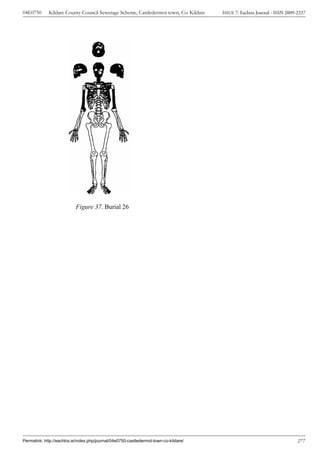
        Figure 44: Area 6 Skeletons 1-4, 4a, 6-7, 9-21, 23, 25, coffin of skeleton 26, pits (C.434, C.438, C.450,
              C.455, C.456, C.457, C.460, C462) and postholes (C476, C478 and C.467).

        Figure 45: Area 6 Section of pits (C.450, C.455, C.456, C.457, C.460).

        Figure 46: Area 7 Ditch Cut (C.502).

        Figure 47: Area 7 Section of pits (C.490, C.492, C.495).

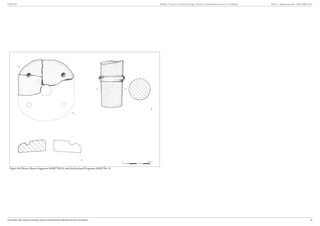
        Figure 48: Rotary Quern fragments (04E0750:9:2) and Architectural Fragment (04E0750:-:1).

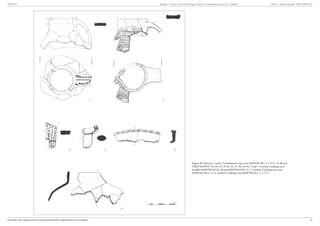
        Figure 49: Pottery: 1 and 2. Castledermot-type ware 04E0750:29:1, 3-7, 9-11, 15-20 and 04E0750:105:15,
              16, 25, 26, 29-31, 33, 37, 38, 42-44. 3 and 4 Leinster Cooking ware handles 04E0750:333:16,
              26 and 04E0750:333:9, 41. 5. Leinster Cooking ware rim 04E0750:333:2, 12. 6. Leinster
              Cooking ware 04E0750:26:1, 2, 5-7, 11.

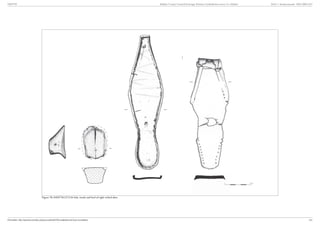
        Figure 50: 04E0750:227:L16 Sole, insole and heel of right welted shoe.

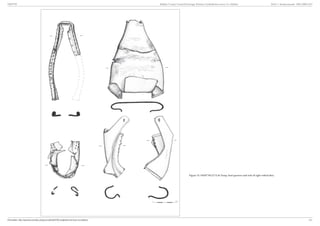
        Figure 51: 04E0750:227:L16 Vamp, heel quarters and welt of right welted shoe.

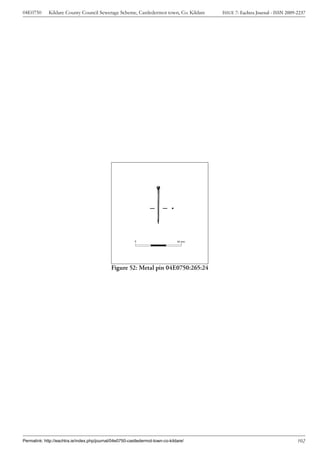
        Figure 52: Metal pin 04E0750:265:24.


Permalink: http://eachtra.ie/index.php/journal/04e0750-castledermot-town-co-kildare/                                         vii
04E0750      Kildare County Council Sewerage Scheme, Castledermot town, Co. Kildare    ISSUE 7: Eachtra Journal - ISSN 2009-2237


        ii        List of Plates
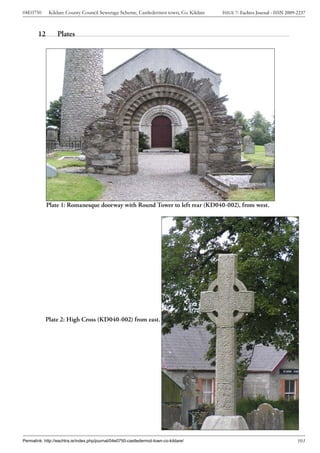
        Plate 1: Romanesque doorway with Round Tower to left rear (KD040-002), from west.


        Plate 2: High Cross (KD040-002) from east.


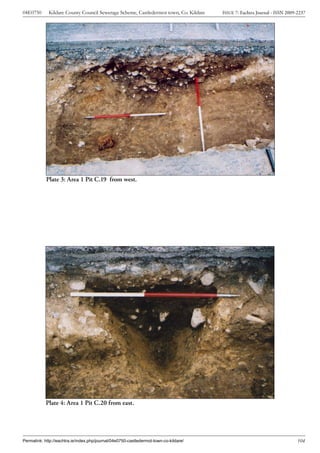
        Plate 3: Area 1 Pit C.19 from west.


        Plate 4: Area 1 Pit C.20 from east.


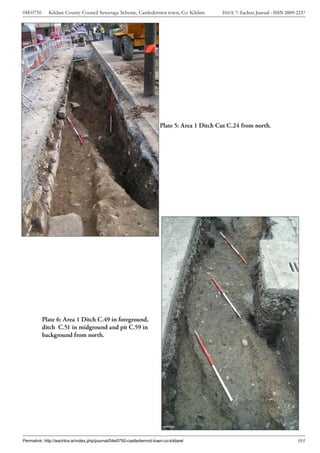
        Plate 5: Area 1 Ditch Cut C.24 from north.


        Plate 6: Area 1 Ditch C.49 in foreground, ditch C.51 in midground and pit C.59 in background from
        north.


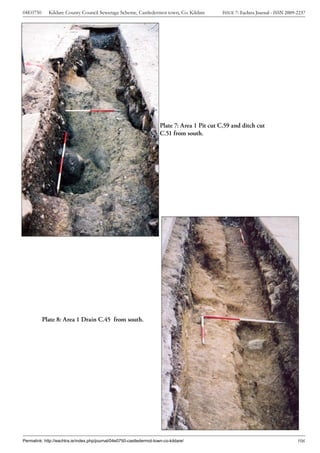
        Plate 7: Area 1 Pit cut C.59 and ditch cut C.51 from south.


        Plate 8: Area 1 Drain C.45 from south.


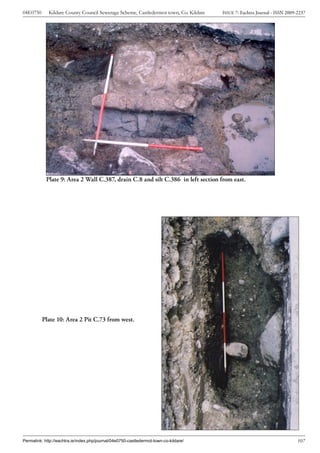
        Plate 9: Area 2 Wall C.387, drain C.8 and silt C.386 in left section from east.


        Plate 10: Area 2 Pit C.73 from west.


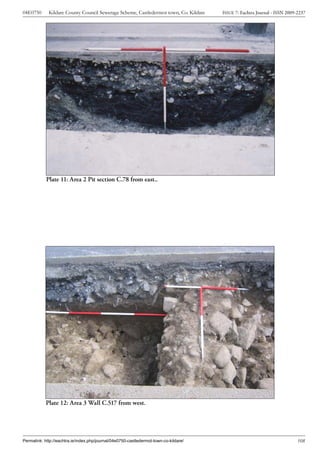
        Plate 11: Area 2 Pit section C.78 from east..


        Plate 12: Area 3 Wall C.517 from west.


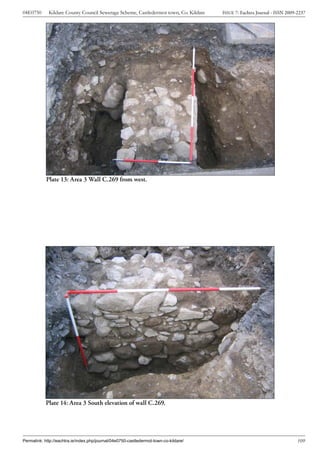
        Plate 13: Area 3 Wall C.269 from west.


        Plate 14: Area 3 South elevation of wall C.269.


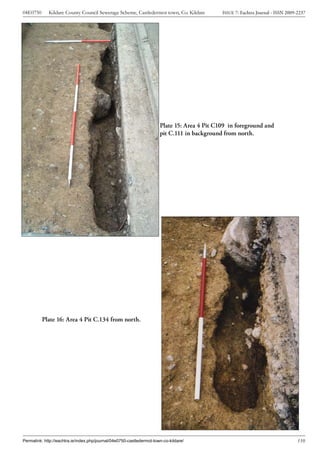
        Plate 15: Area 4 Pit C109 in foreground and pit C.111 in background from north.


        Plate 16: Area 4 Pit C.134 from north.


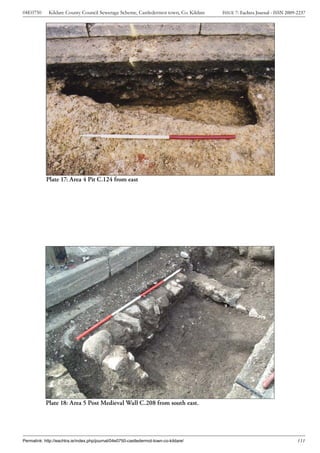
        Plate 17: Area 4 Pit C.124 from east


        Plate 18: Area 5 Post Medieval Wall C.208 from south east.


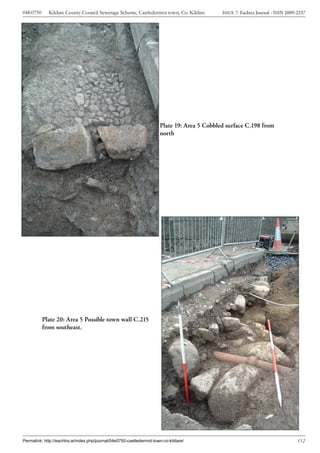
        Plate 19: Area 5 Cobbled surface C.198 from north


Permalink: http://eachtra.ie/index.php/journal/04e0750-castledermot-town-co-kildare/                                         viii
04E0750      Kildare County Council Sewerage Scheme, Castledermot town, Co. Kildare    ISSUE 7: Eachtra Journal - ISSN 2009-2237


        List of Plates cont.

        Plate 20: Area 5 Possible town wall C.215 from southeast.


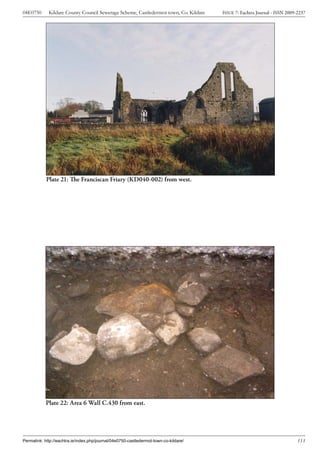
        Plate 21: The Franciscan Friary (KD040-002) from west.


        Plate 22: Area 6 Wall C.430 from east.


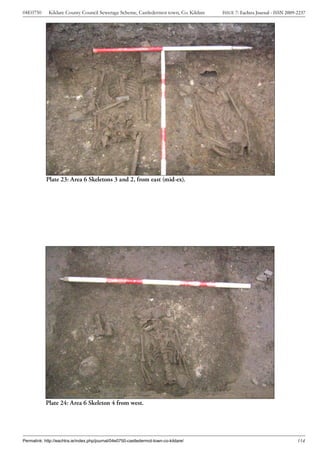
        Plate 23: Area 6 Skeletons 3 and 2, from east (mid-ex).


        Plate 24: Area 6 Skeleton 4 from west.


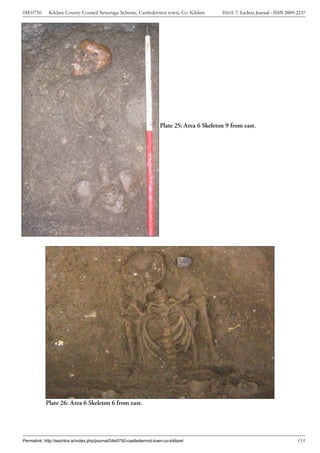
        Plate 25: Area 6 Skeleton 9 from east.


        Plate 26: Area 6 Skeleton 6 from east.


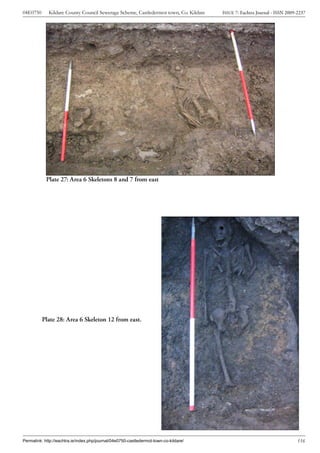
        Plate 27: Area 6 Skeletons 8 and 7 from east


        Plate 28: Area 6 Skeleton 12 from east.


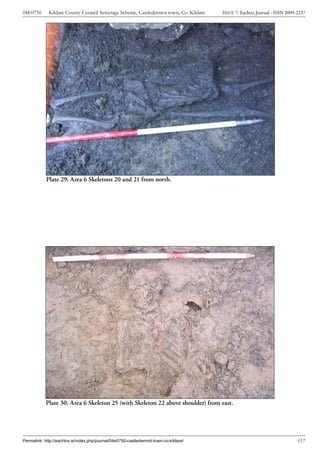
        Plate 29: Area 6 Skeletons 20 and 21 from north.


        Plate 30: Area 6 Skeleton 25 (with Skeleton 22 above shoulder) from east.


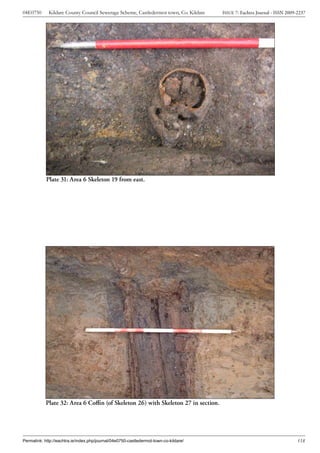
        Plate 31: Area 6 Skeleton 19 from east.


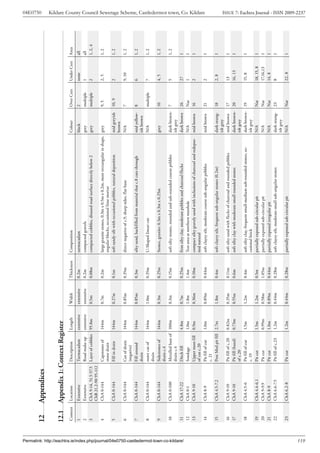
        Plate 32: Area 6 Coffin (of Skeleton 26) with Skeleton 27 in section.


Permalink: http://eachtra.ie/index.php/journal/04e0750-castledermot-town-co-kildare/                                         ix
04E0750       Kildare County Council Sewerage Scheme, Castledermot town, Co. Kildare   ISSUE 7: Eachtra Journal - ISSN 2009-2237


        iii       Acknowledgements

        Eachtra Archaeological Projects would like to acknowledge the following organisations and
        people for their contributions to this project.


        Kildare County Council (John Murphy, Water Services team & Roads team) Nicholas O’Dwyer
        consulting engineers (Tom Killilea, Project Engineer) Denis Moriarty The Kerries Ltd (engineering
        subcontractors) (Colin Scott & Denis Moriarty)
        David Walsh Plant Hire Ltd
        Rob Lynch, I.A.C. Project Archaeologist for Kildare County Council


        The Site Excavation team
        Helen Butler, Eugene Curran, Slawomir Chwalek, Antonia Doolan, Daire Dunne, Tony Galvin,
        Barry Green, Aidan Harte, Michael Killeavy, Ian Magee, Vera Manning, Fiacc Murphy, Julianna
        O’Donoghue, Niall O’Neill, Áine Richardson.


        The Post-Excavation team
        Sara Camplese, Marion Dowd, Anluan Dunne, Fiachra Dunne, Barry Green, Aidan Harte, Fiacc
        Murphy, Enda O’Mahony, Áine Richardson, Robin Turk.


        Archaeological Specialists
        Abigail Brewer, Neil Fairburn, Linda Fibiger, Caitríona Gleeson, Claire McCutcheon, Margaret Mc-
        Carthy, Noël Siver for Margaret Gowan & Company Ltd., Jo Moran.


        iv        Copyright Notice
        Please note that all original information contained within this report, including all original
        drawings, photographs, text and all other printed matter deemed to be the writer’s, remains the
        property of the writer and Eachtra Archaeological Projects and so may not be reproduced or
        used in any form without the written consent of the writer or Eachtra Archaeological Projects.


Permalink: http://eachtra.ie/index.php/journal/04e0750-castledermot-town-co-kildare/                                          x
04E0750      Kildare County Council Sewerage Scheme, Castledermot town, Co. Kildare    ISSUE 7: Eachtra Journal - ISSN 2009-2237


        1         Introduction
        This report comprises the final excavation report related to archaeological excavations undertaken in
        Castledermot village, Co. Kildare. Kildare County Council proposed to upgrade the sewerage system
        through the town (Figure 1) running from the Lerr River to the south along Abbey St. and Main St. to
        Skenagun to the north. The present town contains extensive archaeological remains, both upstanding
        and subsurface, of the earlier Medieval town (KD040-002) (Figure 2). Therefore in 2002, an archaeo-
        logical assessment of the proposed line of the sewerage trench was carried out (Byrne 2000). This was
        followed by a programme of test excavations (Lynch 2002). The results of this work led to a decision
        to archaeologically resolve the line of the proposed pipe trench (Figure 3) in advance of commence-
        ment of construction works. Eachtra Archaeological Projects excavated the line of the proposed trench
        between June and December 2004 under excavation licence number 04E0750. While the excavated
        trench was narrow, it offered a lengthy cross-section of the Medieval and Post-Medieval town. The
        excavation revealed a number of facets of the town during these periods including the Medieval town
        walls and a cemetery. Following archaeological resolution of the trench, it was backfilled to be opened
        at a future date for the insertion of the sewerage pipes.


        2         Site Location & Topography
        Castledermot town (NGR 27800 18475) is situated on the N9 between Carlow and Kilcullen. It is
        located in the townland and parish of the same name and in the barony of Kilkea and Moone, Co.
        Kildare. The town is situated on low-lying ground (circa. 80m O.D.), near the foothills of the Wicklow
        mountains, where a number of tributaries join the Lerr River as it turns south-west to connect with the
        River Barrow. Situated less than 10km north-east of Carlow, Castledermot lies in a central location of
        a broad vale where the bedrock is granite.


        3         Archaeological and historical background
        Castledermot comprised a pre-Norman ecclesiastical site which was converted into an Anglo-Norman
        town. In addition to this, the town was refounded after 1485 – a time which saw little urban growth
        elsewhere in Ireland (Bradley, Halpin and King 1984, 128).


        The modern village of Castledermot owes its origin to the development of the Anglo-Norman town
        of Thristeldermot, which itself was established adjacent to the important pre-Norman ecclesiastical
        settlement of Diseart Diarmada. Castledermot has a rich archaeological legacy from both its Anglo-
        Norman and monastic precursors. A history of urban settlement on the site may be divided into three
        broad phases: the monastic community of Diseart Diarmada, the Anglo-Norman town of Thristelder-
        mot and the post-reformation village of Castle Dermott.


        The only evidence of prehistoric activity from Castledermot comprises an Early Bronze Age flat bronze
        axe (NMI reg.: E186:19) and a Late Bronze Age bronze sword (NMI reg.: 1945:304) both of which are
        located in the National Museum of Ireland (NMI, Topographical Files). However, the nearest possible
        related sites are a distance away; a cist site (KD040:041) is recorded at Knockfield to the southeast of


Permalink: http://eachtra.ie/index.php/journal/04e0750-castledermot-town-co-kildare/                                          1
04E0750      Kildare County Council Sewerage Scheme, Castledermot town, Co. Kildare    ISSUE 7: Eachtra Journal - ISSN 2009-2237


        the village and a standing stone (KD040:040) is located in Ballyraggan townland to the east of Cas-
        tledermot (Byrne 2000, 14).


        The earliest direct antecedent of the present village was the monastic community of Diseart Diarmada,
        founded circa 812 AD by Diarmait or St. Dermot, a grandson of Aed Ron, King of Ulster. The site
        of Diarmait’s church lies beneath the current Church of Ireland church of St. James (KD040-002).
        Whereas Diseart Diarmada may be translated as ‘Dermot’s Hermitage’, its foundation date is quite late
        relative to the hermitage tradition in Ireland (mostly between 400 and 700 AD), typified by such sites
        as Glendalough and Skellig Michael. In addition the ascetic communities which developed at these
        sites did so in a contemplative environment, isolated from the rest of society. Castledermot, however,
        is located in the fertile Barrow valley, in an area with a not inconsiderable volume of extant ringforts,
        indicative of established settlement and land use in and around the 9th century. Thus Diseart Diarmada
        was not a traditional ‘hermitage’ in a temporal or spatial sense. It was however part of a new concept
        of monastic life; the Céile Dé or Culdee movement, of which Diarmait was a leading proponent. The
        Culdees were concerned with the growing materialistic and political obsessions of the 9th century Irish
        church and sought a more devout approach to religious life. This return to traditional monastic values
        can be seen in the name ‘Diseart’, a deliberate association with a more pious past. Perhaps to escape
        the control and influence of the church in his native Ulster, Diarmait headed south and, probably for
        patronage, settled at Castledermot. The choice of location may have been influenced by its proxim-
        ity to Killeen Cormac, 5km to the west, a site with a strong connection to Palladius, the first Roman
        bishop in Ireland. Palladius was believed to have left belongings at Killeen Cormac, including his
        library and a fragment of the true cross. The site itself has yet to be identified on the ground; however
        there are numerous mentions of it in the annals. Also c. 5km to the west of Castledermot was the seat
        of the O’Tooles, modern day Kilkea, and centre of their territory called Hy Muiredhaigh (Comerford
        1896, 367). The ‘Annals of the Four Masters’ records Diarmait’s death in 823, describing him as ‘an
        anchorite, and a distinguished doctor’ (Fitzgerald 1892, 66).


        The importance of the community which Diarmait founded within the psyche of the Irish church is
        testified to in the volume of references to it in the annals. Although the annals offer a rather narrow
        historical insight, they do provide us with an outline of some of the more newsworthy events in the
        monastery’s history. They also allow us to reconstruct a possible chronology of the heads of the church
        at Diseart Diarmada – be they abbots, bishops or both - and their tenure.


                  St. Diarmait, 812-825 (Macairt 1977, 123)
                  St. Moylerrwayn, …-871 (Murphy 1896, 143)
                  Eadach son of Seghini, 871-874 (O’Donovan 1854, vol. II, 521)
                  Maelruain, 874-884 (ibid., 535)
                  Muirgheas, abbot and bishop, 884-895 (ibid., 553)
                  Maedcullan, 895-921 (ibid., 609)
                  Aireachtach, 921-935 (ibid., 635)


Permalink: http://eachtra.ie/index.php/journal/04e0750-castledermot-town-co-kildare/                                          2
04E0750      Kildare County Council Sewerage Scheme, Castledermot town, Co. Kildare    ISSUE 7: Eachtra Journal - ISSN 2009-2237


                  Guaire son of Sealbhach, 935-954 (ibid., 655)
                  Colman, 954-963 (ibid., 687)
                  Muirigen, 963-967 (ibid., 691)
                  H Ua Gabhaidh, bishop …-1038 (ibid., 835)
                  Cuileanan Clean, lector, 1038-1054 (ibid., 865)
                  Cobhtach, 1054-1074 (ibid., 907)


        The somewhat chaotic nature of the church career structure at this time makes it difficult to distin-
        guish between the roles of abbot, anchorite, lector and bishop in the community. However, the pres-
        ence of all the above is indicative of the growth and success of Diarmait’s mission. This success was
        fuelled in part by elite patronage, most likely the O’Toole nobility. Their financial support can best be
        seen today in the round tower and the two well preserved high crosses (KD040-002); status symbols
        for the monastery and their patrons. However, the monks also had strong contacts with other elite
        families. Sneidhuis (died 885) a ‘wise man’ was tutor to Cormac, a future king of Munster, who him-
        self was believed to have been buried at Diseart Diarmada (O’ Donovan 1854, vol. I, 835).
        Two Viking raids early in the community’s development, in 841 (ibid., 463) and 867 (ibid., 511), cor-
        respond to a period of sparse mentions of Diseart Diarmada in the annals, a strong indication that it
        was hit hard by these events. Interestingly, the churchyard of St. James boasts a unique Hiberno-Norse
        monument; a 10th century hogback stone, a grave marker associated in particular with Northumber-
        land (KD040-002). Perhaps it was the grave of a nobleman with Norse pretensions, or indeed a Gae-
        licised Norseman? After the Viking destructions, Diseart Diarmada appears to have enjoyed 230 odd
        years of relative peace, until 1037, when it became embroiled in the blinding and subsequent killing of
        Dunchadh, king of Leinster (O’ Donovann 1854, vol. II, 835). Three years later, amid a period of great
        instability in Leinster, it was plundered by the Ui Ceinnseallaigh and prisoners were taken (ibid., 839).
        The sanctity of Christian sites was rarely upheld universally in times of war and Diseart Diarmada was
        no exception. In 1043 the site was again the scene for more bloodshed as Macraidh, chief of the Ui
        Bairrche and his wife, probably enjoying the hospitality of the monks, were killed here by the Ui Bail-
        lain (ibid., 843). The period around the years 1037-1043 saw a long and bloody power struggle in the
        region which must have had a terrible effect on Diseart Diarmada.
        A generation passed before the community bore witness to further violence. In 1076, the Ua Lorcain
        massacred the people of Gilla Chomgaill, and in a macabre and rather pagan ritual, brought the heads
        of 63 of their victims in procession to a hill south of the church and deposited them there (ibid., 911).
        The final pre-Norman reference to the site in the annals records its destruction by fire in 1106 (Mac-
        Carthy 1892, vol. II, 77). Although it takes almost another 100 years for the Anglo-Normans to arrive,
        the turmoil of the 11th century must have taken its toll on Diseart Diarmada, and we have no further
        references to the community in the annals post 1106. Perhaps patronage dried up; its functions were
        diminished and hence its importance within the wider church had lessened. Whatever the case, the
        prominence it had enjoyed in the 9th and 10th centuries had disappeared. The settlement which de-
        veloped around the church underwent a profound change from the 1170s on, once known as Diseart
        Diarmada it now became Thristeldermot.


Permalink: http://eachtra.ie/index.php/journal/04e0750-castledermot-town-co-kildare/                                          3
04E0750      Kildare County Council Sewerage Scheme, Castledermot town, Co. Kildare    ISSUE 7: Eachtra Journal - ISSN 2009-2237


        The territory of Hy Muiredhaigh, of which Diseart Diarmada had become the focus, was granted to
        Walter de Ridelsford by Richard de Clare (Strongbow) c. 1171 (Comerford 1896, 367), the new over-
        lord of the region following his support for Mac Murchada’s infamous struggle for control of Leinster.
        What de Ridelsford did next with the settlement is difficult to ascertain. We know from the Roll of
        Names attached to the second charter of Dublin c.1172 that there were at least four, and indeed prob-
        ably more, Anglo-Norman families settled here, as indicated by the four burghers mentioned:


                  Reginaldus carnifex [butcher] de Thristeldermod (Gilbert 1870, 31);
                  Henricus de Thristeldermod (ibid., 38);
                  Willelmus albus de Tristeldermod (ibid., 38);
                  Rudulfus de Tristledermod (ibid., 43).


        As the make up of the community began to change, so too did the fortunes of the church. The former
        prestige which Diseart Diarmada once enjoyed was reduced further in 1207 when its control of its
        finances was effectively handed over to the large new convent of St. Mary of Grane (KD040-014)
        which St. Dermot established c. 4km to the east of the village (Sweetman 1895, vol I, 53). That said,
        the church itself was completely rebuilt sometime during this century, the entrance arch of which is
        all that now remains (Harbison 1991, 96-100). Thristeldermot was the only urban settlement in the
        district now known as Omeurthy and inevitably began to grow. In 1210, The Hospitalers of St. John
        established a hospital (KD038-045) on the northern fringe of the village, indicating to some degree
        that the population at this time was sufficient to warrant their presence (Comerford 1896, 364). This
        probable population growth led to a growth in trade and while it is quite likely that the village was
        accustomed to markets before the Normans, de Ridelsford sought to put such things on an official
        footing, obtaining a royal grant to hold a fair there from the 5th to 12th of November annually (Sweet-
        man 1895, vol. I, 211). Indeed Thristeldermot must have attracted more settlers and commerce, for in
        the following years a second grant for a fair, from the 10th to 17th of June, was taken out by the new
        landlords Christina de Mariscis and Ebulo de Geneve in 1248 (ibid., 444). The 1240s also saw the ar-
        rival of the Franciscans into a village which was slowly developing into a town. They received 15 marks
        from the king, no doubt to cover initial construction costs (ibid., 429).


        By the 1280s royal rents from burgage plots in the town were 4l. 36s. 4d., with an additional 1 mark
        from the stallage of horses there (Sweetman 1895, vol. I, 561). Although burgage plots were not men-
        tioned previously, it is quite likely that at some earlier stage in the 13th century the town of Thristel-
        dermot was planned, roads were developed and the typical Norman long, narrow plots apportioned.
        Thus by the 1280s the town of Thristeldermot had become firmly established. It also developed official
        administrative functions during this period. It played host to the mayor and commonality of Ross (Co.
        Wexford), who held an inquisition here in Easter 1286, indicating the presence of some sort of official
        hall or building in the town, plus a sufficient infrastructure to accommodate the event (Sweetman
        1895, vol. III, 95). During this decade the administration of the town began to receive annual subsi-


Permalink: http://eachtra.ie/index.php/journal/04e0750-castledermot-town-co-kildare/                                          4
04E0750      Kildare County Council Sewerage Scheme, Castledermot town, Co. Kildare    ISSUE 7: Eachtra Journal - ISSN 2009-2237


        dies, beginning in 1281 at 40s (Sweetman 1895, vol. II, 385). Such a town could not have developed
        in 13th century Ireland without military protection. However, the first mention of a garrison is in 1287
        when subsidies were paid for the ‘army of Trestledermot’ (ibid., 126). This also indicates that some
        kind of fortification, barracks and stables were built at this time; though when and where are uncer-
        tain. Although O’ Donovan (1854, vol. III, 71) states that Hugh de Lacy built a motte and bailey here
        in 1186, his information may have referred to Kilkea 5km to the northwest, where there is an extant
        motte, and which later became the site of a larger castle (KD037-017).


        The administrative function of Thristeldermot increased on the 28th of April 1297 when regular court
        sessions began to be held here (Mills 1905, 100). Except for one case of banditry involving Gaelic
        Irishmen - theft of a cart - (ibid., 189), all court cases involved primarily small disputes between in-
        dividuals of Anglo-Norman descent. For example, on the 11th of August 1302 William Briskey and
        Geoffrey Bobenham were both on trial for fighting, Bobenham was fined the huge sum of 20 marks
        and gaoled (ibid., 427). Cases involving violence were rare and seemed to be confined within the settler
        community, the worst case of which occurred in 1298 when a group of English settlers from Carlow
        robbed and attempted to kill other Englishmen in Thristeldermot (ibid., 199). By and large, the court
        proceedings reflect a relatively peaceful and law abiding population.


        While the citizens of the town lived in comparative harmony with one another, resentment was con-
        tinually festering amongst the native dispossessed Irish population. Insurrection in the region around
        1295 (Sweetman 1895, vol. VI, 124) was probably the motivating factor in the application by the
        burghers of Thristeldermot for a murage grant from the king in that year. The grant which they re-
        ceived to toll goods passing through the town is itself a fascinating historical document, illustrating
        the volume of trade which must have passed through Thristeldermot in the 13th and 14th centuries as
        illustrated by the following:
        Grant to the bailiffs and good men of Thistildormot in aid of enclosing their vill and for the greater
        security of those parts that from the day of making these presents until the end of 7 years they may
        take in that vill [the following customs] from each seam of corn on sale 1/2d.; each horse and mare,
        ox and cow, 1/2d.; each hide of horse mare, ox or cow, fresh salted or tanned, 1/4d.; each cart bearing
        meat, salt or fresh, three half pence; 5 fat pigs, 1/2d.; each fresh salmon 1/4d.; 10 sheep goats or hogs,
        1/4d;10 fleeces 1d.; each hundred woolfells of sheep or goats, 1/2d.;each hundred skins of lambs, hares,
        rabbits, foxes, cats and squirrels, 1/2d.; each horse load of cloth, 1/2d.; each whole cloth 1/2d.; each
        hundred of linen cloth, canvas, cloth of Ireland, Galeweythe and worsted, 1/2d.;each hogshead of wine
        and cinders, three half pence; each horse load of cinders, 1/2d.; each horse load of honey, 3d.; each
        sack of wool, 4d.; each truss of cloth brought by cart, 2d.; each horse load of cloth and of diverse and
        minute articles, 1/2d.; each cartload of iron, 1d.; each horse load of iron, 1/2d.; each cartload of lead,
        2d.; each cartload of tan, by the week, 1d.; each quarter of woad, 2d.; 2,000 onions, 1/4d.; 8 sheaves of
        garlic, 1/4d.; each 1,00 herrings, 1/4d.; each horse load of sea fish, 1/2d.; each hundred boards, 1/2d.;
        each quarter of salt, 1/4d.; each whey of cheese and butter, 1/2d.; each cart of firewood or coals, by the
        week, 1/2d.; each 1,000 nails, 1/4d.; each hundred horseshoes and clouts for carts, 1/2d.; each quarter


Permalink: http://eachtra.ie/index.php/journal/04e0750-castledermot-town-co-kildare/                                          5
04E0750      Kildare County Council Sewerage Scheme, Castledermot town, Co. Kildare    ISSUE 7: Eachtra Journal - ISSN 2009-2237


        of tan, 1/4d.; each truss of any kind of merchandise coming to the vill an exceeding the value of 2s.,
        1/4d.; each hundred gads of steel, 1/2d.; each hundred of Aderdene, 1d.; each hundred of stock fish,
        1/3d.; 10 pieces of canvas, 1/4d/; 10 gallons of oil, 1/2d.; each millstone 1/2d. On completion of the 7
        years the custom shall cease and be abolished (Sweetman 1895, vol. VI, 106-107).


        The wall was likely to have been completed by 1302, enclosing the town in a lozenge shape. Access
        was via three gates; the Dublin gate to the north (RMP KD038-045), the Carlow gate to the west
        (KD040-002) and the Tullow gate to the south (KD040-002). Nothing substantial of the wall has
        survived, save for a small section that was near the Carlow gate. Along the northwest edge of this
        lozenge shape the town wall protruded outwards across the width of three burgage plots (Thomas
        1992, 50). These properties equate to plots 2 and 3 on Rocque’s map (Figure 4). Thomas (1992) specu-
        lates that this protrusion may have accommodated a tower, but is too large and therefore possibly a
        more substantial defensive structure (50). The wall neither encompassed the Franciscan Friary nor the
        Crouched Friary (St. John’s Hospital), although both were located beside a major gate. The town wall
        did enclose the church site at the east and here the wall ‘zig-zags’ to accommodate it (ibid.). A fourth
        gate may have been located here. If a fourth gate existed it is likely it was on this east side of the town,
        although reference to this only appears in the written record from the late 18th century (ibid.). Never-
        theless, the characteristic shape by which the wall defined the area of the town can still be seen in the
        town plan today.


        The 14th century saw a period of increased growth and importance for the town. The Franciscan friary
        (KD040-002) received a large building grant by Thomas, Lord of Ossary in 1302, which is probably
        the time from which the extant ruins date from. However 15 years later in 1317, the first major de-
        struction of Thristeldermot occurred at the hands of the rampaging Edward de Bruce. The friary was
        certainly sacked and it is unlikely that the rest of the settlement escaped a similar fate. Fortunately for
        the town, it was located in a strategic position on the road from Dublin to Carlow, Kilkenny and Wa-
        terford, and strong desire existed to keep it up and running. Two years after de Bruce, the first King’s
        Council was held here (Sayles 1979, 101, 109, 216). Indeed Thristeldermot was the venue for 11 council
        meetings of various sorts throughout the century and two parliamentary sessions (Sayles 1976, xiv, xxi,
        18, 72, 91, 93-105, 106, 110-117), indicating that it was a relatively secure location with ample provi-
        sion of resources, from accommodation, staff, transport and food, to entertain such events. The 14th
        century, from what can be gathered from the historical sources at least, was very much a continuation
        and perhaps stabilization of the growth enjoyed by the town over the previous 300 years.


        The relative peace enjoyed by two generations of citizens following the destruction by de Bruce ended
        in the 1390s, when the ever constant threat of insurrection by the native Irish again arose, this time as
        a full scale war against the settlers was led by Art MacMurragh, the soi-disant king of Leinster. Two
        hundred archers and men at arms were billeted here in 1392 in the course of operations against the
        Leinstermen (Graves 1877, 42). Anxious that their town may be targeted by MacMurragh, a massive
        ransom of 85 marks was paid out to spare it. However MacMurragh evidently wanted more, and in


Permalink: http://eachtra.ie/index.php/journal/04e0750-castledermot-town-co-kildare/                                          6
04E0750      Kildare County Council Sewerage Scheme, Castledermot town, Co. Kildare    ISSUE 7: Eachtra Journal - ISSN 2009-2237


        1405 the walled towns of Thristeldermot, Carlow and Wexford were burned to the ground (Murphy
        1896, 325). For the next 100 years, constant turmoil and the success of Gaelic attacks severely hindered
        the development of the town. The lack of any references to court sessions, councils or parliaments in
        the years subsequent to MacMurragh’s campaign, strongly indicate that the town had lost it’s major
        administrative functions and that much of the territory surrounding it was under Gaelic Irish control.
        In 1485 Gerald, Earl of Kildare resident in Kilkea Castle and holder of the manor of Thristeldermot,
        obtained a royal grant for the reconstruction of the town’s castle which ‘may be the true means of re-
        covering all the waste lands of the county of Carlow to be populated by the king’s subjects’ (Connolly
        2002, 71-73). It is quite probable that the years 1405-1485 saw Thristeldermot without any permanent
        garrison at all. However, the construction of new fortifications in the town did bring a new measure
        of stability, as some years later in 1499 a parliament was held here (Comerford 1896, 365). There are
        few references to the town during the following 40 years up until Henry VIII’s suppression of religious
        houses, although life quite probably continued as normally as it could; the shops and taverns were
        open, fairs were held, the three religious institutions in the town continued to educate, care for and
        attend the souls of the citizens. It was a life however that was to be forever changed along with the fate
        of the town itself as a result of the events of the 1540s.


        Silken Thomas’s famous rebellion of the 1530s ended in disaster for him personally, but also for the
        Fitzgerald territories which rebelled with him, of which Castle Dermott was one. The town was sacked
        by crown forces, the first occasion the government attacked the settlement, sometime before 1540
        (Comerford 1896, 370). This was a cruel blow to the town which had only just recovered from effects
        of its last destruction. The damage this brought was compounded when the Hospital of St. John, the
        Franciscan Friary and the church were suppressed in 1541. Key elements in the remaining function of
        the town were irreparably damaged. The three religious institutions were fundamental to the identity
        of what had become known as Castle Dermott, following the rebuilding of the castle in 1485. The
        priory bordered the northern edge of the town, the friary - the southern end and the church the eastern
        end, each in their own way defining the space of the town. The majority of references after this time
        are concerned with the distribution of the lands of the religious houses to wealthy men loyal to the
        crown. One solitary description of a court sitting in 1578 is the only mention of any official function of
        the town in the 16th and 17th centuries (Hamilton 1867, 144-145). As we have seen before, times of de-
        struction led to long periods without any references to the town in the sources. Whereas previously the
        town had eventually recovered, it had on those occasions strategic necessity and its function as an ad-
        ministrative and religious centre to propel recovery and reconstruction. This time the success of crown
        forces in re-establishing control of Leinster removed its strategic importance and to the same extent
        its administrative importance. The dissolution of the monasteries was the final act which reduced the
        settlement’s status from a formally prosperous town to a run down ruralised village. Whatever recov-
        ery was made in the 16th century was obliterated when Castle Dermott was burned to the ground by
        Cromwellian forces in 1650. The 1659 census shows the population to have been 240; 68 English and
        172 Irish, quite probably a significant decrease on what it had been during it’s heyday in the 14th cen-
        tury (Petty 1659, 404). From this time on Castledermot does not figure much in historical records, it


Permalink: http://eachtra.ie/index.php/journal/04e0750-castledermot-town-co-kildare/                                          7
04E0750      Kildare County Council Sewerage Scheme, Castledermot town, Co. Kildare    ISSUE 7: Eachtra Journal - ISSN 2009-2237


        had become a village of relatively little importance, and by this time the total conquest of Leinster was
        complete, so at least imminent threats of destruction by Irish or English enemies no longer existed.


        The earliest known cartographic record relating to Castledermot is an estate map drawn up by Thomas
        Emerson in 1690. The town was divided into holdings owned by four property owners, one of which
        was the ‘abbey and church lands’ (Horner 1997, 405). While the market place and town walls are rep-
        resented, there is no reference to a castle within the town on Emerson’s map (ibid.). This was followed
        by another estate map in 1758 created by Rocque under the patronage of the Earl of Kildare (Figure
        4). The lozenge plan of the town is much the same as it is today, but the outline of Medieval burgage
        plots is much more pronounced. Interestingly, the map records one high cross but not the other.


        The built environment of the present village mostly dates to the 19th century, during which time it
        enjoyed the redevelopment it lacked for the previous 300 years. However, remnants of the Medieval
        significance of the town are still visible, most notably the ruins of the three religious houses and the
        street layout of the Medieval town. Main St. and Abbey St., along which the pipe trench ran, were the
        main thoroughfares through the Medieval town. Similarly, the pipe trench ran through the present
        market square which is also almost certainly the location of the Medieval market place. Burgage plots
        would have fronted onto these streets. In 1284, 182 burgages were located in the town with 172 re-
        corded for the year 1311 and 160 for 1418 (Byrne 2000, 8). Only the church survives of the original
        Franciscan friary. The eastern wall of the friary fronts onto Abbey St. In 1540, the church formed part
        of a larger complex including a dormitory, tower, two halls, a kitchen, garden, orchard, a walled carti-
        lage and a water mill (ibid., 10). The Romanesque doorway that relates to the 13th century re-building
        of St. Dermot’s foundation is now free-standing, in situ, in the grounds of the present-day Church of
        Ireland church (Plate 1). The round tower, the top of which was repaired during the 19th century, still
        stands and is joined to the north side of the modern church (Fitzgerald 1892, 66-69). Two impressive
        High Crosses also survive in the grounds of the church (Plate 2). As mentioned above, the hogback
        stone is a Viking age feature and the only known example in Ireland (Lang 1971, 154). This remains
        in the graveyard today where it was found during a clean-up in 1967 (Roe 1967, 179). This obscure
        location raises questions as to the possible links between Castledermot and Hiberno-Norse towns and
        trade routes. Castledermot was certainly known to the Norse, as the recorded Viking raids of 841 and
        867 testify. Hogback stones were decorated grave markers in the 10th and 11th centuries, most common
        to northern England and Demark. Both the morphology and decorative style of the Castledermot ex-
        ample would appear to indicate influences from Cumberland and Yorkshire as opposed to those from
        Scandinavia (Lang 1967, 158). To the north of the town, St. John’s Priory and Hospital, as founded by
        the Crouched Friars in 1210, can still be seen. The up-standing remains consist of a square tower. At
        the south of the town the Franciscan Friary still survives, although in a ruinous state.


Permalink: http://eachtra.ie/index.php/journal/04e0750-castledermot-town-co-kildare/                                          8
04E0750      Kildare County Council Sewerage Scheme, Castledermot town, Co. Kildare    ISSUE 7: Eachtra Journal - ISSN 2009-2237


        4         Recent Archaeological Work/Excavations in Castledermot
        Archaeological excavations in recent years have uncovered further evidence of Medieval and Post-Me-
        dieval Castledermot. In 1990, a stone-lined well of Post-Medieval date was found to the rear of houses
        fronting onto Main Street (O’Brien 1990, 37-8). A greenfield site off Carlow Street revealed a number
        of linear cuts and two key-hole shaped features that probably represent corn drying kilns (Scally
        1991, 25). In 1995 and 1996, 29 pits were excavated to the west of Main Street (Licence 95E265)
        (O’Donovan 1996, 44; O’Donovan 1997, 49-50). At the north of the town, an area west of St. John’s
        Priory and Hospital was tested ahead of development (Licence 96E330) (Connolly 1997, 50). Here,
        disturbed construction materials and sherds of Late Medieval and Post Medieval pottery were found,
        in addition to a possible rough stone foundation and associated mortar surface (ibid.). Further testing
        took place at this location in 2000 (Licence 96E330 ext.) (Byrne 2002b, 161). An excavation on Athy
        Street, at the west of the town, further revealed the line of the town wall inside which linear cuts and
        at least two ditches were found to run roughly parallel to the town wall (Licence 98E0225) (Mullins
        2000, 100-101). A second excavation on Athy Street recovered nothing of archaeological significance
        (Licence 00E0671) (Lynch 2002, 160). To the south of the Franciscan Friary, Abbey Street, testing
        found only what appeared to be 19th century field drains (Licence 00E0418) (Mullins 2002, 160).
        Also in 2000, testing was conducted at St. John’s, to the north of the town but little of archaeological
        significance was found here (Licence 00E0047) (Byrne 2002a, 161).


        5         Background to the present project
        The Castledermot sewerage scheme (Figure 3) involves the construction of a wastewater treatment
        plant, a 375 mm diameter storm sewer and 225 mm gravity sewer, a 300mm water-main, a pumping
        station and a 1000mm diameter rising main. The treatment plant is to be constructed at Dairyfarm to
        the southwest of the present village. The pipeline will run from that location along the southern side
        of the Lerr River before crossing the river to link in with the existing treatment plant. Sewer pipes are
        to be laid from the bridge over the Lerr at the southern end of the town running north through the
        centre of Castledermot along Abbey Street, Market Square and Main Street to Skenagun to the north
        of Castledermot. The proposed storm sewer trench varies from between approximately 1300mm and
        1800mm in width and between 2000mm and 3500mm in depth. Overall, the pipe trench running
        through the town measured 726 linear metres in length by between 1.8m and 1.4m in width. The 12
        manholes on the route measured approximately 2 m².


        A number of areas were identified as of archaeological sensitivity in a desktop assessment carried out by
        Martin Byrne in 2000 (Byrne 2000). In the light of Byrne’s work a recommendation for archaeological
        testing was made and this was carried out by Irish Archaeological Consultancy Ltd at various places
        along the proposed route of the sewerage scheme under Licence 00E0550 (Lynch 2002, 160-61). From
        south to north along the route, these five areas comprise: Franciscan Abbey, Carlow Gate, Dublin
        Gate, Market Square and St John’s Priory and Hospital. The first test trench (Franciscan Abbey) ex-
        cavated produced potential archaeological remains at a depth of 0.40m below Present Ground Level
        (PGL). The total depth of archaeological remains was about 0.80m, 1.20m below PGL. The trench


Permalink: http://eachtra.ie/index.php/journal/04e0750-castledermot-town-co-kildare/                                          9
04E0750      Kildare County Council Sewerage Scheme, Castledermot town, Co. Kildare    ISSUE 7: Eachtra Journal - ISSN 2009-2237


        produced human remains representing at least two individuals (Lynch 2002, 160). At Carlow Gate
        two trenches were excavated. One of these was taken up entirely with the existing sewer trench; the
        other contained no archaeological remains. At Market Square two further trenches were opened and
        both contained substantial amounts of Medieval remains, from a depth of c. 0.80m to 1.35m below
        PGL (ibid., 161). Two more trenches were opened at the postulated site of Dublin Gate. Medieval
        archaeological remains occurred in both trenches, at approximately 0.30m below PGL. The natural
        subsoil occurred at a depth of 1.10m below PGL. The final two test trenches were excavated outside
        St. John’s Priory and Hospital. One of these contained Medieval material at a depth of 0.36m below
        PGL, while the other contained undateable remains at a similar depth (ibid., 161). The results of the
        testing programme supported the historical evidence indicating that Castledermot is rich in Medieval
        archaeological remains.


        In 2000, testing was carried out on the site of the proposed sewage treatment plant at Dairyfarm
        (Licence 02E1323) but nothing of archaeological significance was encountered (Mullins 2002, 160).
        Likewise, the route of the pipeline east of the town was monitored (Licence 02E1558) but no archaeo-
        logical deposits were encountered (Byrne 2002b, 161). Testing also took place to the west (Licence
        02E1080) and on the east of Abbey St. (Licence 02E1558) and surprisingly produced nothing of ar-
        chaeological significance (ibid., 161).


        The project design required that an archaeological excavation be carried out along the line of the pro-
        posed pipeline as it continued uninterrupted through the Medieval town (Figure 5). Due to the nar-
        row width of the trench, rarely was the entirety of an archaeological feature exposed within the limits
        of the trench. This sometimes led to difficulties interpreting archaeological features, as their full extent
        and shape could not be established. Essentially however, the excavations consisted of a narrow linear
        section through the Medieval and Post-Medieval town.


        6     Methodology
        Seventy to eighty metres of the development area was cordoned off at a time. This allowed for the
        positioning of an open trench, a mechanical excavator and a lorry for the removal of spoil. Denis
        Moriarty of The Kerries Ltd was responsible for the management of traffic made necessary by the
        cordoned off area. The excavations began at the northern end of the scheme where the least amount of
        archaeological material was uncovered during the test excavations. Restrictions on working within 100
        m of school boundaries during certain hours during the school term were in place and therefore work
        was rescheduled to take place in these areas outside the school term. Consequently, the excavation did
        not run continuously from the north to the south. The archaeological chainage applied began at the
        north and travelled south (CH A000-A250), but a section was passed over in order to excavate the
        area near the school during holidays. This section was also excavated from north to south and given
        a separate chainage sequence (CH B000-B316). The section which ran between Chainage A in the
        north and Chainage B to the south was labelled sequentially Chainage C (CH C000-C145), and this
        was excavated from the south (or CH B0) to the north. The direction was reversed due to time delays


Permalink: http://eachtra.ie/index.php/journal/04e0750-castledermot-town-co-kildare/                                         10
04E0750      Kildare County Council Sewerage Scheme, Castledermot town, Co. Kildare             ISSUE 7: Eachtra Journal - ISSN 2009-2237


        in relocating water supply valves in the market square. Finally, the most southern trench section which
        was aligned east-west was labelled Chainage D (CH D000-D016) (Figure 6).


        The upper material of the trench was removed by machine using a flat bucket, until the level of archae-
        ology or subsoil was reached. A suitably qualified archaeologist monitored this work. In archaeologi-
        cally sensitive areas the final removal of non-archaeological sediments was conducted manually. The
        archaeological remains were excavated by hand, using a recording system based on scaled drawing,
        written notation and photographs. According to the depth of material uncovered, it was necessary in
        some cases to use appropriate shoring for the sides of the trench.


        When the archaeological remains had been recorded and excavated fully the trenches were backfilled.
        Where archaeological work was not completed on a daily basis the trenches were surrounded by bar-
        riers and traffic lights system remained in place. Where significant and fragile archaeological remains
        were discovered, it was necessary to excavate beyond the limit of the trench. Any such excavation was
        agreed in advance with the client and the licensing authorities.


        When substantial remains such as Medieval walls were uncovered mitigation measures were decided
        in conjunction with the Department of the Environment, Heritage and Local Government Historic
        Monuments Section before proceeding.


        7     Description of Excavation
        The main archaeological features uncovered during excavations comprised ditches, pits, walls and a
        number of burials (Figure 7). Several walls corresponded with those indicated on cartographic sources
        of the Medieval town. Masonry was uncovered at the postulated locations of both the Dublin Gate
        and Tullow Gate.


        For the purpose of this report, the excavations have been divided into seven areas running from the
        northern end of the pipe trench at the northern end of the town to the southern end: Area 1, Area 2,
        Area 3, Area 4, Area 5, Area 6 and Area 7. The breakdown of the trench into seven areas was to facili-
        tate a discussion of the archaeological material encountered. The length of each area and the chainages
        at which it occurred is summarised in Table 1. Each area is discussed chronologically from the Early
        Modern period (years) to the Medieval period (years). Any archaeological features where the date was
        unknown were grouped under ‘Miscellaneous’.

                                            Area               Chainage                Length
                                             1                  A0-A93                  93 m
                                             2                 A93-A210                 117 m
                                             3           A210-A250 & C145-C116          69 m
                                             4             C116-C0 & B0-B190           306 m
                                             5                 B190-B245                55 m
                                             6                 B245-B277                32 m
                                             7            B277-B316 & D0-D15           54.4 m
                             Table 1 Breakdown of seven areas of excavation trench (see Figure 6)


Permalink: http://eachtra.ie/index.php/journal/04e0750-castledermot-town-co-kildare/                                                  11
04E0750       Kildare County Council Sewerage Scheme, Castledermot town, Co. Kildare   ISSUE 7: Eachtra Journal - ISSN 2009-2237


        To further the clarity of the text, primary data has in most cases has been omitted (i.e. dimensions,
        distances). This information is easily cross-referenced, using the context number, in the attached ap-
        pendices. The overall town plan (Figure 6 and 7) may also be used as a spatial reference tool as all ar-
        chaeological features have been displayed in relation to the excavated trench through the town. Levels
        above sea level are present on all plans and sections.

        7.1       Area 1
        (Figures 6-13, Plates 3-8)
        This area is the northernmost section of the archaeological excavations undertaken at Castledermot.
        The trench was orientated north-south, following the western edge of Main Street. The excavated
        trench was 1.4m wide and ran from the northern terminus (Chainage A0) to a point 93m south in
        the direction of the town centre (Chainage A93). A total of 53 contexts (detailed in Appendix 1) were
        recorded throughout Area 1 and produced evidence of archaeological material from a number of peri-
        ods in the form of a stone-lined drain (C.8), eight pits (C.19, C.20, C.21, C.23, C.59 C.43, C.41 and
        C.55), a linear cut (C.45) and three ditches (C.24, C.49, and C.51).


        The overburden consisted of layers and intrusions of the modern period. The uppermost layers of this
        formed the road surface consisting of tar (C.1) and gravel (C.2). Apart from this, four modern pipes,
        supplying water, ran east-west through the trench. A further water pipe ran parallel to the trench in
        the western baulk (C.34). This fully functioning pipe was visible in section for 33m to a depth of 0.4m
        below ground level. These utility services frequently truncated lower archaeological contexts, often to
        the level of natural subsoil.
        7.1.1 Early Modern
        Two distinct features of the Early Modern period were uncovered in this area – a cobbled road surface
        (C.3) (Figure 13) and a stone lined drain (C.8) (Figure 9). The fragmented remains of the cobbled road
        surface (C.3) were discovered immediately below the present road make up. It was only on the extreme
        western side of the trench that this was preserved, probably owing to the original convex profile of the
        road surface. The maximum width of the cobbled road was 0.5m and usually much less.


        The stone-lined drain (C.8) was aligned north-south and followed the full length of Area 1, continuing
        into Area 2 to the south. In places the capstones were found to be 0.3m below the present road surface,
        where disturbed material had been backfilled over and around the drain. This backfill (C.7) comprised
        redeposited natural as well as archaeological material that had been cut through during construction.
        The drain was constructed by first digging a north-south trench (C.8) that followed the natural gradi-
        ent. In this, the side stones of the drain had been placed (C.9) (Figure 9). These consisted of partially
        dressed granite stones, three of which comprised re-used rotary quern stone fragments (Figure 48). The
        capstones (C.4) were angular granite and rectangular in plan (Figure 9). These were larger than the
        side stones on which they rested. Occasionally, mortar was found between the capstones. The base of
        the drain was not stone-lined in this area and internally the drain was 0.35m wide and 0.45m high.


Permalink: http://eachtra.ie/index.php/journal/04e0750-castledermot-town-co-kildare/                                         12
04E0750      Kildare County Council Sewerage Scheme, Castledermot town, Co. Kildare    ISSUE 7: Eachtra Journal - ISSN 2009-2237


        Silt (C.5) had deposited over a soft stony base (C.10). The silt at the base (C.5) contained 19th century
        pottery along with Medieval sherds which presumably originated from the backfilled soil (C.7)
        7.1.2 Post Medieval
        The stone-lined drain (C.8) truncated four pits (C.19, C.20, C.21 and C.23) uncovered within a 6m
        length of trench (Chainage A4-A10 – Figure 10). The largest of these pits (C.19) (Plate 3) contained
        two fills; the upper fill (C.15) produced a single sherd of 19th century stoneware and the basal fill
        (C.18) contained inclusions of brick. Although not fully exposed within the excavated trench, this
        sub-circular pit had an almost linear projecting cut from its south-eastern edge. It can only be specu-
        lated that this represented yet another pit extending east. The upper fill (C.15) of the pit (C.19) was the
        same as that which filled the next nearest pit cut (C.23). To the south lay two closely set pits (C.21 and
        C.20 – Figure 10). One pit (C.21) contained a single fill (C.14) with a single cattle bone. The other pit
        (C.20) contained three fills (C.13, C.16 and C.17), one of which (C.17) contained flecks of charcoal
        and highly degraded bone (Plate 4).


        Dating evidence for these four pits was non-existent, apart from a single sherd of Post-Medieval pot-
        tery (04E0750:15:1). Therefore, due to the similarity of the pit fills and their proximity to one another,
        a general Post-Medieval date was assigned. The four pits, considering their location, fills and cut shape,
        were unlikely to have been utilised for storage of any kind. Furthermore, their function as either cess
        pits or general rubbish pits was improbable for the same reasons. No evidence was found to relate these
        pits to industrial processes. There was no indication of internal lining or re-cutting of the pits. Only
        over pit C.20 does there appear to have been an attempt at sealing the opening which may signify
        purposeful termination of use.


        South of the pits, a layer of compact dark brown clay (C.11) overlay Medieval contexts. It contained a
        single sherd of glazed red earthenware (04E0750:11:1) and may represent the up-cast from the stone-
        lined drain cut (C.8). Alternatively, this was possibly an attempt to seal and stabilise the ground over
        a large Medieval ditch (C.24).
        7.1.3 Medieval
        A total of three ditches (C.24, C.49, and C.51), four pits (C.59 C.43, C.41 and C.55) and five layers
        (C.60, C.38, C.35, C.57 and C.53) were found in Area 1 relating to the Medieval period (Figures 11-
        13). Three ditch cuts (C.24, C.49, and C.51) were found all following a similar alignment.


        The northernmost ditch cut (C.24) was aligned north/northwest - south/southeast and a diagonal
        length of 14m of this ditch was exposed along the trench (Plate 5). The angle of the ditch did not allow
        the full width to be exposed within the trench. This was the most substantial of the Medieval ditches
        in this area and contained nine fills (C.25, C.26, C.27, C.28, C.29, C.30, C.31, C.32 and C.33) (Fig-
        ure 11). The uppermost three fills (C.25, C.26 and C.27) of the ditch were cut by the Early Modern
        stone-lined drain (C.8). The final infill (C.25) contained 11 sherds of Medieval pottery and charcoal
        flecks. Five sherds of Castledermot-type pottery came from this context. A further three sherds of Cas-
        tledermot type could not be refitted and there was also a single sherd of Leinster cooking ware. This


Permalink: http://eachtra.ie/index.php/journal/04e0750-castledermot-town-co-kildare/                                         13
04E0750      Kildare County Council Sewerage Scheme, Castledermot town, Co. Kildare    ISSUE 7: Eachtra Journal - ISSN 2009-2237


        redeposited natural fill (C.25) also contained two sherds of 18th-19th century glazed red earthenware
        but these probably originated from the construction of the stone-lined drain (C.8) and so the fill is a
        disturbed Medieval one. This uppermost ditch fill overlay two fills (C.27 and C.26) which both had
        inclusions of animal bone, Medieval pottery (Figure 48) and iron nails. They collectively produced
        45 sherds of Medieval pottery with a single sherd of Saintoinge ware. This, in conjunction with the
        various Irish wares secured a 13th century date for the deposits (C.26 and C.27). The animal bone
        recovered (C.27 and 26) mostly comprised large mammal bones and where identifiable these were of
        cattle with a smaller percentage of goat bones. The lower of the two fills (C.27) once sieved produced
        an abundance of wheat remains, with lesser amounts of barley and oats, alongside many weeds associ-
        ated with arable agriculture.


        The fill (C.28) beneath was thickest at the sides of the ditch, almost disappearing in the centre. This
        yellow clayey sand probably represented a slump of the ditch edge during a winter season. This slump
        contained no animal bone and insignificant amounts of plant remains. Underlying it, a clay fill (C.29)
        again contained Medieval pottery and animal bone and this seemed to be the earliest intentional
        deposit. The two sherds of local 13th century pottery that were recovered from this fill (C.29) were
        refitted (Figure 48). Cattle bones again dominated the faunal assemblage and part of a human femur
        was also recovered. The silty clay directly below (C.31) was dark but naturally formed and no artefacts
        or bones were recovered from this fill. It overlay two fills, C.30 deposited along the western edge and
        C.32 along the eastern edge. Both fills appeared to be redeposited naturals with only slight differences
        and were probably both a product of winter in-wash or weathering.


        The basal fill (C.33) was formed by the initial silting up of the base of the ditch. This was due to natural
        processes, although a single sherd of Leinster Cooking Ware and two pieces of iron slag were recov-
        ered and this dates the primary phase of the ditch to the late 12th or 13th centuries. Cattle, sheep/goat
        and horse bones were recovered (C.33) in similar proportions to the fills above, but this basal fill also
        produced pig bones.


        A second ditch cut (C.49) was found to the south of the above ditch (C.24). This ditch (C.49) was
        aligned southeast-northwest and a length of 2.7m was exposed (Plate 6). Due to the alignment of
        the ditch within the trench, the complete width was not exposed. It was U-shaped in profile and was
        never very substantial. The ditch was filled with two deposits (C.47 and C.48). The upper fill (C.47)
        contained iron slag and three cattle bones. The basal fill (C.48) comprised soft silt and had formed
        naturally. Approximately 5m south of this, another relatively wide but shallow ditch cut (C.51) was
        discovered aligned southeast-northwest (Plate 7). A length of 4m of the ditch and its full width was
        exposed. The single ditch fill (C.50 – Figure 12) contained a single sherd of 13th century pottery, a
        single piece of iron slag and two metal artefacts.


        Four pits (C.59 C.43, C.41 and C.55) (Figures 12 and 13 - Plate 7) found in Area 1 were assigned to
        the Medieval period of which one could be interpreted as a rubbish pit. This pit (C.59) lay at the south-


Permalink: http://eachtra.ie/index.php/journal/04e0750-castledermot-town-co-kildare/                                         14
04E0750       Kildare County Council Sewerage Scheme, Castledermot town, Co. Kildare   ISSUE 7: Eachtra Journal - ISSN 2009-2237


        ern end of Area 1 (Plate 7). It comprised a large oval cut which contained two fills (C.52 and C.58)
        of sandy silt which collectively produced 13 sherds of Castledermot-type and Leinster cooking wares,
        iron slag, an iron nail, animal bone and shells. The majority of the animal bone assemblage was identi-
        fied and showed equal quantities of cattle, horse and sheep. No function could be associated with the
        remaining three pits (C.43, C.41 and C.55) Two of these (C.43 and C.41) were close to one another
        and contained shallow fills (C.42 and C.40). They were oval (C.41) and sub-rectangular (C.43 – Fig-
        ure 13) in plan. No datable evidence was recovered in either instance. The northern edge of a fourth
        pit (C.55 – Figure 12) had been cut by one of the shallow ditches (C.51). This pit contained a single fill
        that again produced nothing that could determine its function. A Medieval date was assigned to this
        due to its stratigraphic relationship with the ditch.


        Also related to the Medieval period was a possible drainage gully (Plate 8). It comprised a linear cut
        (C.45) which contained two fills (C.44 and C.46) that produced animal bone, but nothing indicative
        of date. Cattle, horse and goat were poorly represented in the assemblage of animal bone recovered,
        but five lamb bones relating to a single individual were found, along with a single bone of domestic
        fowl. The silty nature of the fills, as well as the narrowness of the cut, suggested that this functioned
        as a drain.


        A single Medieval layer (C.60 – Figure 12), at the southern end of Area 1 had been truncated by the
        rubbish pit (C.59) and therefore probably represented the old ground surface at the time the pit was
        dug.


        Several layers (C.38, C.35, C.57 and C.53) that sealed most of the Medieval features were either ar-
        chaeologically sterile or heavily disturbed (Figures 12 and 13). Although a single sherd of 13th century
        pottery was uncovered from one layers (C.38), their designation to the Medieval period is arguable.
        However, the stratigraphic position of the layers supports a Medieval date, particularly in the case of
        layer C.53 which also produced a quantity of iron slag. Another layer (C.35) also produced metal ar-
        tefacts in the form of nails.
        7.1.4 Miscellaneous
        The mid point of the length of trench in Area 1 was characterised by an absence of definable features,
        instead replaced with numerous layers (C.36, C.37 and C.39) of silt and clay (Figure 13). One of these
        layers (C.36) contained an assortment of Early Modern ceramic material a clay pipe stem. These layers
        were seemingly sealed beneath layers (C.38 and C.35) which produced Medieval dates. Therefore, the
        lower layers (C.36, C.37 and C.39) must have been disturbed.

        7.2       Area 2
        (Figures 6-8 & 14-21, Plates 9-11)
        Area 2 lies north of the market square and to the south of Area 1 and is similarly orientated north-
        south (Figure 6). It is defined at its northern end by an east-west wall (C.387) and terminates in the
        south at a substantial ditch (C.398) located in Area 3. The trench was 117m in length (between Chain-


Permalink: http://eachtra.ie/index.php/journal/04e0750-castledermot-town-co-kildare/                                         15
04E0750      Kildare County Council Sewerage Scheme, Castledermot town, Co. Kildare    ISSUE 7: Eachtra Journal - ISSN 2009-2237


        age A93 and A210) and was on average 1.8m wide. A total of 97 contexts were recorded (detailed in
        Appendix I).


        As in Area 1, the overburden consisted of tar and gravels (C.1 and C.2) that formed the road surface
        and this covered the entire trench. There was also a 19th century pit (C.63) with two sherds of pottery
        (Figure 21), a 19th century drainpipe cut (C.69) and a layer (C.348).
        7.2.1 Early Modern
        The only feature relating to this period comprised a continuation of the stone-lined drain and its cut
        (C.8) encountered in Area 1 (Figure 9). The morphology of the drain did not alter in any way apart
        from the addition of angular flags (C.529) to the base (Figure 15). These appear to have substituted the
        stony layer (C.10) which existed in Area 1. The drain ran from the northern end of Area 2 for a length
        of 51m, where it connected with an identical drain which crossed the trench west to east. Therefore,
        the drain (C.8) exited the trench on both the western and eastern baulks.
        7.2.2 Post-Medieval
        A number of layers (C.385, C.388, C.310 and C.361) and two pits (C.300 and C.314) were either
        stratigraphically or artefactually linked to the Post-Medieval period. At the northern end of Area 2,
        two layers (C.385 and C.388), cut by the Early Modern drain (C.8), were deemed to be post-Medi-
        eval, although no artefacts confirmed this. They appear to have been deposited to level or stabilise the
        ground surface and possibly indicated a single phase of deposition. Two further contexts (C.310 and
        C.361) were also assigned to this period. A deposit (C.310) sealing a Medieval pit produced no arte-
        facts but was stratigraphically well placed. Similarly, a layer (C.361) at the southern end of the trench
        produced nothing to imply a date earlier than the post-Medieval period.


        The largest of the two pits in Area 2 was clearly used as a rubbish pit (C.300 – Figure 14). This ovate
        pit contained three fills (C.306, C.307 and C.308). The basal fill (C.308) contained an assortment of
        Medieval and post-Medieval pottery, animal bone, charcoal and a clay pipe fragment. The 13th century
        pottery must be residual from elsewhere. While cattle, sheep and pig bones were recovered in small
        numbers, so too was a single bone from a dog. The purpose of the remaining pit could not be ascer-
        tained. This was a partially exposed pit (C.314) contained a single fill (C.315). This pit was probably
        sub-circular; it was quite shallow and the fill produced no datable evidence or indication of function.
        7.2.3 Medieval
        The Medieval remains in Area 2 comprised a stone wall (C.387), 28 pits (C.72, C.73, C.301, C.304,
        C.312, C.316, C.320, C.323, C.327, C.329, C.337, C.331, C.365, C.366, C.67, C.74, C.78, C.79,
        C.301, C.296, C.309, C.294, C.325, C.322, C.346, C.352, C.354 and C.356) and three layers
        (C.362, C.363 and C.364).


        The stone wall (C.387) (Figures 7, 15 and 16) located in the northern part of Area 2 had been badly
        cut by, and incorporated into, the Early Modern stone-lined drain (C.8). Materials from the wall may
        have been re-used in the construction of the drain. The wall was quite wide but low – only two courses
        survived – and was aligned east-west with a slight orientation to the southeast. Constructed of reason-


Permalink: http://eachtra.ie/index.php/journal/04e0750-castledermot-town-co-kildare/                                         16
04E0750      Kildare County Council Sewerage Scheme, Castledermot town, Co. Kildare    ISSUE 7: Eachtra Journal - ISSN 2009-2237


        ably large stones set with mortar, it probably represents the very lowest courses of the northern part
        of the Medieval town wall. On the southern side of this wall (Plate 9), a layer of dark silt and stone
        (C.386) had built up against it on the western side. This was possibly a surface layer contemporaneous
        with the wall, but no artefactual evidence was found.


        A complex arrangement of 28 Medieval pits (C.72, C.73, C.304, C.298, C.312, C.316, C.320, C.323,
        C.327, C.329, C.337, C.331, C.365, C.366, C.67, C.74, C.78, C.79, C.301, C.296, C.309, C.294,
        C.325, C.322, C.346, C.352, C.354 and C.356) were revealed to the south of the town wall (C.387)
        and north of the market square, although most were only partially exposed (Figure 7). Of the 28 pits,
        only 13 had a recognisable function and these were invariably used as refuse pits. Approximately 10m
        south of the wall, two Medieval rubbish pits (C.72 and C.73) were uncovered (Figure 17). Pit C.72 had
        three fills (C.68, C.70, and C.71). The middle fill (C.70) comprised a thin silty peat and this and the
        basal fill (C.71) were possibly partially removed before the final fill was added. There were no artefacts,
        although the basal fill (C.71) did indicate dumping of burnt material in the form of ash and stone. This
        pit (C.72) cut a larger rubbish pit (C.73) which contained three fills (C.65, C.62 and C.61) of both
        domestic and industrial refuse (Plate 10). A large stone lay at the base of the circular pit (C.73), around
        which the basal fill (C.65) had built up and contained a single mammal bone, one piece of Castleder-
        mot-type pottery and a metal fragment. The middle fill (C.62) was the most substantial and contained
        almost 30 sherds of 13th century pottery of both Castledermot-type and Leinster cooking ware. This
        fill (C.62) also produced two pieces of iron slag, two iron nails, animal bone and shell. The incidence
        of bone was quite low but cattle made up the majority, then sheep, with pig and horse represented each
        by a single bone. The pit was finally sealed with a redeposited natural (C.61) and two sherds of Castle-
        dermot-type pottery were found as inclusions, but these may have been contaminants.


        A pit (C.304) (Figure 18) on the eastern side of the trench contained two fills (C.305 and C.302). The
        substantial basal fill (C.302) contained a cattle bone, an unidentifiable large mammal bone, a piece
        of 13th century pottery and a fragment of a clay pipe. The basal fill also contained botanical remains
        representing both cereal crops and weeds. The low incidence of plant remains and variety of other
        artefacts indicate that this was probably a rubbish pit. This pit (C.304) was cut into the fill (C.303) of
        a large rectangular pit (C.301 – discussed below). A shallow pit (C. 298) lay to the south. This was a
        sub-circular cut containing a fill (C. 297) which produced Medieval pottery and small quantities of
        sheep bone. The pottery here was again of Castledermot-type and Leinster cooking ware. Similarly,
        the Medieval pit (C.312), which was truncated to the north, contained a single fill (C.313) of soft silt
        with animal bone and a single sherd of Medieval pottery. Again, quantities of animal bone were low
        but represented sheep and cattle. The pit cut appeared to have a smaller depression at its centre which
        could potentially have had a purpose but its final function was as a refuse pit. Pit C.316 (Figure 19)
        was a broad, shallow cut filled with dark silt (C.317). It contained small quantities of cattle and sheep
        bones, occasional Medieval pottery and charcoal and plant remains. The plant remains represented the
        usual weed elements alongside wheat, barley, oats and rye. However, this pit (C.316) also contained
        the largest quantity of iron slag recovered from any of these pits – nine pieces reaching a total weight


Permalink: http://eachtra.ie/index.php/journal/04e0750-castledermot-town-co-kildare/                                         17
04E0750      Kildare County Council Sewerage Scheme, Castledermot town, Co. Kildare    ISSUE 7: Eachtra Journal - ISSN 2009-2237


        of 4.9kg – suggesting that its final usage was as an industrial refuse pit.


        A complex of six pits occurred further south in Area 2 (Figure 7). The first of these pits (C.320 - Figure
        19) was ovate with a fill (C.319) that contained animal bone, botanical remains, several sherds of lo-
        cal 13th century pottery and nearly a dozen pieces of iron slag. The plants represented included weeds,
        peas, wheat and oats. The animal bone assemblage was large and 25% was clearly identified as cattle,
        with a further 35% identified as large mammal. The remainder of the animal bone comprised sheep/
        goat bone and suggests that the pit was used primarily for the disposal of domestic waste. This pit cut
        another to the north (C.323 – Figure 19) which was of a similar size and filled with identical mate-
        rial (C.318) as was found in pit C.320. The fill (C.318) did, however contain significantly less animal
        bone with only a single cattle bone and one bone from domestic fowl identifiable. This fill (C.318) also
        contained similar pottery in similar quantities. An ovate pit (C.327) again had a silt fill (C.326) with
        occasional charcoal and Medieval pottery. Two sherds of Castledermot-type pottery were found here
        (C.326). On the east side of the trench, two closely positioned pits (C.329 and C.337) occurred. The
        sub-circular pit (C.329) continued beneath the eastern baulk and contained four fills. The uppermost
        fills (C.334, C.335 and C.336) were varying silts possibly used to seal the pit. The basal fill (C.328)
        comprised mixed silt with charcoal. This had marginally cut a second pit (C.337) which also had a
        silt fill (C.349. These were probably rubbish pits. A large deep and wide sub-circular pit (C.331) lay to
        the south. The uppermost fills (C.342 and C.343) were sterile clays and may have represented a re-cut
        and backfill, or sealing layers. The basal fill (C.330) consisted of a soft dark material a single sherd of
        Leinster cooking ware, some plant remains and iron slag. The basal fill (C.330) therefore places the pit
        as early as the late 12th century. The plant remains here were scarce but signified wheat, barley, oats and
        rye as well as weed elements. At the southern end, the lowest layer (C.364) also produced three pieces
        of iron slag and filled two shallow cuts (C.365 and C.366). The cuts were no more than accentuated
        depressions heavily defined by a large boulder located between them. These may have been utilised for
        the deposition of industrial refuse but equally more perishable domestic refuse.


        The function of the remaining pits in Area 2 (Figures 20 & 21) could not be determined. This was
        possibly in part due to preservation levels but also because some were backfilled with sterile material
        unrelated to their function. The first of these was a Medieval pit (C.67) that had been partially emptied
        and possibly re-cut to accommodate a soft fill (C.64) which contained 7 sherds of Medieval pottery
        and three large mammal bones (Figure 21). The original fill (C.76), which also spread over the edges
        of the pit, consisted of firm sterile clay. This, it would seem, denoted the disuse and not the function of
        the pit. Where this fill/layer spread southwards, it was cut by another pit (C.74 – Figure 21). This deep
        pit contained a single soft fill (C.66) which produced a sherd of Medieval pottery and small numbers
        of cattle and sheep bones but no indication of function. The pit was truncated by modern intrusions
        to the south. Beyond this disturbance were two closely positioned pits (C.78 and C.79) (Figure 20).
        The larger of the two was a sub-circular pit (C.78) with a single fill (C.56) that contained sherds of
        13th century pottery (Plate 11). The fill (C.56) also produced a quantity of animal bone of which most
        could not be identified clearly. Cattle, horse and sheep bones were found in almost equal numbers and


Permalink: http://eachtra.ie/index.php/journal/04e0750-castledermot-town-co-kildare/                                         18
04E0750      Kildare County Council Sewerage Scheme, Castledermot town, Co. Kildare    ISSUE 7: Eachtra Journal - ISSN 2009-2237


        also a single pig bone.


        Immediately to the south, pit C.79 also had a single fill of clay (C.75) that produced Medieval pottery
        and small quantities of bone representing cattle, horse and sheep (Figure 20). The pottery comprised
        three Irish wares which together signify an early 13th century date. A large sub-rectangular pit (C.301)
        (Figure 18) was cut by C304, as well as being utilised in the construction of the Early Modern drain
        junction (C.8). The pit contained a fill (C.303) of dark silt that included only occasional Medieval pot-
        tery which was exclusively13th/14th century. The pit extended eastwards beyond the excavated trench
        and no clear function was evident. Another pit (C.296) had a single fill (C.295) from which a single
        sherd of Dublin-type coarse ware and two fragments of iron nails were recovered. Only the western half
        of this sub-circular pit was exposed within the trench and no function could be assigned. On the east
        side of the trench, a narrow pit (C.309) was partially exposed. It contained two fills (C.310 and C.311)
        and only the basal layer (C.311) was Medieval and included 13th century pottery and charcoal.


        At the mid-point of the trench in Area 2 was a shallow oval pit (C.294) containing a fill (C.293) of
        dumped silt with inclusions of charcoal, a single piece of metal and Medieval pottery (Figure 14).
        This had been compacted and was truncated by a modern pipe at the south. The ground was heavily
        disturbed between this pit and the next pit to the south (C.312 – detailed above). A shallow rectan-
        gular pit (C.325 – Figure 19) was cut by C.320 to the south. This was filled with silt (C.324), which
        contained iron slag and two sheep bones. It cut a second pit (C.322) which had a slightly different fill
        (C.321) with two sherds of Castledermot-type pottery. This area was also very much disturbed by a
        modern pipe running along the western side of the trench. Further to the south, a pit (C.346) cut a
        large rubbish pit (C.331 – detailed above). The fills (C.344 and C.345) within this pit (C.346) were
        also similar to those found at the top of the large rubbish pit (C.342 and C.343); however, no datable
        evidence was found in either of these two pit fills (C.334 and C.345). The pit (C.346) cut through
        layers (C.347 and C.351) extending south. These same layers were also cut through further to the
        south by a large pit (C.352). The cut extended both east and west beyond the limits of the trench but
        the fills suggest that this was a pit. This cut held four fills (C.353, C358, C.359 and C.360). The basal
        fill (C.360) was sealed by a sandy fill (C.359) over which silt (C.358) that contained pottery and one
        small piece of iron slag was deposited. The pottery consisted of three sherds of Leinster cooking ware
        and two sherds of Castledermot type and thus a probable 13th century date. While much of the animal
        bone was unidentifiable, some was classified as cattle and sheep. The uppermost fill (C.353) produced
        no artefacts and possibly acted as a disuse/sealing layer. Pit (C.354) was a sub-rectangular cut that
        contained a pebbly sand fill (C.355). To the south, an oval pit (C.356) had also been cut through by
        the large pit (C.352). The fill (C.357) produced a single sherd of Medieval pottery but was otherwise
        quite sterile.


        Medieval layers were uncovered at the southern end of Area 2. These layers (C.362, C.363 and C.364)
        were deposited horizontally and the middle pebbly/sand layer (C.363) divided the other two which
        were both of clay and contained 13th century pottery. They also both produced faunal remains; upper


Permalink: http://eachtra.ie/index.php/journal/04e0750-castledermot-town-co-kildare/                                         19
04E0750       Kildare County Council Sewerage Scheme, Castledermot town, Co. Kildare   ISSUE 7: Eachtra Journal - ISSN 2009-2237


        clay layer (C.362) contained small numbers of sheep and pig bones while the lower layer (C.364) had
        a single pig bone and three large mammal bones.

        7.3       Area 3
        (Figures 6-8 & 22-29, Plates 12-14)
        Area 3 encompassed the market square, crossing the central point of the town, and was defined ar-
        chaeologically by a large ditch (C.398) at the north end and a substantial wall (C.269) (Figure 6 and
        22) at the south. This section of trench was 69m in length (between Chainage A210 and C116) and an
        average of 1.8m wide. The trench was orientated north-south and a total of 66 contexts were recorded
        (detailed in Appendix I). Many of these represented layers but also four walls (C.269, C.275, C.517
        and C.524), a single pit (C.372) and two ditches (C.398 and C.281) were found (Figure 27). As in
        Areas 1 and 2, the overburden here consisted of the modern road surface (C.1 and C.2) and a number
        of modern layers, pipes and walls (C.368, C.367, C.287, C.525, C.239 and C. 271).
        7.3.1 Early Modern
        Due to the constant use of this area in recent times, few archaeological remains associated with the
        Early Modern period were uncovered. However, in the south of the area (Figure 22), a large intrusion
        (C.267) was found to be the fill over an east-west ceramic pipe. This intrusion consisted of disturbed
        Medieval material which had been backfilled. The pipe backfill (C.267) was of compacted stone, mor-
        tar and clay.


        7.3.2 Post-Medieval
        At the mid-point of Area 3, another large intrusion was found which consisted of a rubble layer (C.291)
        overlying a deep and wide deposit (C.290) of sand and gravel. The base of this was below the required
        invert level, but had cut well into natural subsoil. No datable evidence was found for this intrusion,
        but owing to its size and regularity, the sterile nature of the fill and its absence from the cartographic
        record, it was probably of Post-Medieval date or possibly even later.


        Also dating to this period were layers (C.265 and C.264) located in the south of Area 3, C.265 overlay
        C.264 (Figure 22). These strata were obviously deposited after the Medieval walls (C.269 and C.517
        – Figure 22) had become defunct. The layers (C.265 and C.264) were highly disturbed and contained
        12 sherds of Post-Medieval pottery (18th century), 35 clay pipe fragments and numerous metal arte-
        facts, including 15 pieces of iron slag and a copper pin (Figure 52) and also a bone handle. The clay
        pipe fragments consisted of 27 stem pieces and 11 bowls. Most of the metal pieces were iron nails. In
        addition, large quantities of faunal remains were recovered from the two layers (C.264 and C.265).
        While 37.5% of these could not be identified to species, cattle accounted for 43% and sheep were also
        represented. One of these layers (C.264) produced two bones of domestic fowl along with five fish
        bones (cod). The other layer (C.265) also contained two domestic fowl bones but also five bones of an
        adult cat and a single sawn tip of an antler from red deer. Neither wild animals nor marine fish were
        found in any of the other areas of the excavation and this highlights the diversity found at the market
        place. Further diversity of this location can be identified from a comparison between the archaeologi-


Permalink: http://eachtra.ie/index.php/journal/04e0750-castledermot-town-co-kildare/                                         20
04E0750      Kildare County Council Sewerage Scheme, Castledermot town, Co. Kildare    ISSUE 7: Eachtra Journal - ISSN 2009-2237


        cal test trenches (Lynch 2002) and the pipeline trench evidence. Test trenches 4 and 5 at the west
        of the market square revealed varying stratigraphy and the presence of a metalled surface in trench
        4 (ibid. 10). This surface produced 18th century pottery, but was not found in either trench 5 or the
        excavation covered in this report.
        7.3.3 Medieval
        The Medieval remains from the centre of the town consisted of substantial walls (C.517, C.524, C.269
        and C.275), two ditch cuts (C.398 and C.281), a pit (C.372) in addition to dumped layers and disused
        ground surfaces (C.519, C.520, C.521, C.522, C.526, C.400, C.399, C.403, C.402, C.379, C.406,
        C407, C.405, C.404, C.375, C.377, C.378, C.376, C.380, C.369, C. 332, C. 333, C.370, C.371,
        C.350, C.368, C.288, C.278, C.279 and C.280).


        The Medieval walls were situated in the south of Area 3. The first of these Medieval walls (C.517) was
        orientated east-west and cornered at the west of the trench with a wall (C.524) extending south (Figure
        23, plate 12). This right angled corner was clearly interwoven and both walls were contemporaneous.
        The east-west wall (C.517) comprised a total of 11 courses of granite stone set in sandy mortar (Figure
        24). The stone size varied but was more substantial on the north face and here only six courses were
        apparent. This wall (C.517) was situated on a slight terrace that had been cut into the sloping natural
        subsoil to the north (C.289). Underlying the Medieval layer (C.288), the natural subsoil (C.289) had
        subsequently collapsed southwards, compressing the original cut fill (C.523) against the wall. There-
        fore, this east-west wall (C.517) had partially been beneath the original ground level to the north. The
        connecting north-south wall (C.524) lay mostly outside the exposed area of the trench and tapered
        into the baulk to the southwest, 1.7m from the corner (Figure 22). The upper courses of this wall were
        less disturbed than those of the east-west wall (C.517) and appeared to be slightly finer and well fitted,
        but the full elevation could not be exposed due to layers banked up against it. No trace of a batter was
        evident on either wall. Both walls were very substantial and must have been quite significant during
        the Medieval period. Overlying the walls was a layer of disturbed rubble (C.525) (Figure 22), presum-
        ably originating from the underlying masonry.


        The wall (C.269) in the southern part of Area 3 (Figure 26) was aligned east-west and formed a corner
        with a north-south wall (C.275) on the eastern side. The east-west wall (C.269) was well faced, up to
        six courses high and was constructed with granite stones of various sizes and shapes set with mortar
        (Plates 13 & 14). On the southern side of this wall (C.269), a foundation trench was found (C.272)
        which cut into natural subsoil (Figure 26). This contained a fill (C.270) that produced Medieval pot-
        tery, glass, four cattle bones, a bone from a dog and a single piece of iron slag. This was somewhat dis-
        turbed however, as a single sherd of 18th century mottled ware had found its way into the fill (C.270).
        The other eight sherds were of 13th century date. This was broadly comparable with the fill (C.523) that
        was found between the natural and north face of wall C.517. The north-south wall (C.275) extended
        northwards and was only exposed here as the trench width had been extended to facilitate a proposed
        manhole. The two walls were of similar height but the north-south wall (C.275) appeared to have been
        an addition and was not as neatly constructed. It mostly consisted of sub-rounded granite boulders,


Permalink: http://eachtra.ie/index.php/journal/04e0750-castledermot-town-co-kildare/                                         21
04E0750      Kildare County Council Sewerage Scheme, Castledermot town, Co. Kildare    ISSUE 7: Eachtra Journal - ISSN 2009-2237


        mortared and packed into place and these were not interwoven with the east-west wall. Both of these
        walls (C.269 and C.275) were truncated by modern pipe cuts along both section faces. The walls were
        not excavated and have been preserved in situ (Plates 13 & 14).


        On the south of the walls (C.517 and C.524) in the northern part of the trench a number of layers
        (C.519, C.520, C.521, C.522 and C.526) had built up against the corner, inside the angle created by
        the intersecting walls (Figure 22). The uppermost layer (C.519) consisted of stones with frequent mor-
        tar. Underlying this, a burnt layer (C.520) that contained Medieval pottery and fragments of plaster
        overlay two layers (C.521 and C.522) of silt and redeposited natural that contained mortar. The pottery
        from the burnt layer (C.520) comprised a single sherd of Leinster cooking ware of late 12th century/13th
        century. A lense (C.526) of burnt material occurred below this at the base of the wall (C.517). These
        layers were truncated by the later insertion of a pipe to the south (C.267). Beyond this intrusion, the
        burnt layer (C.520) continued as C.274, getting shallower and then thicker again as it abutted the wall
        to the south (C.269 – Figure 22). The rubble and stone layer (C.519) appeared to continue as debris
        layers (C.268) which also terminated at the southern wall (C.269). Although truncated, the burnt lay-
        ers (C.520 and C.274) appeared to relate to in situ burning between the two east-west walls (C.269
        and C.517) and the presence of plaster seemed to support this. The scarcity of finds would also indicate
        that this may not have been accidental. The overlying rubble debris layers (C.519 and C.268) were also
        contained between the east-west walls (C.269 and C.517). This suggested that the walls (C.517, C.524
        and C.269) were contemporaneous and had probably burned internally before they were demolished.


        At the north end of Area 3 (Figure 7), a large ditch cut (C.398 - Figure 27) aligned east-west was dis-
        covered and a length of 1.8m was exposed as well as its complete width. It contained six fills (C.390,
        C.394, C.395, C.396, C.397 and C.401) all of which consisted of silt except for the uppermost fill
        (C.390) which was possibly a sealing layer and contained four sherds of Medieval pottery, one of which
        came from a French jug. This fill (C.390) also spread to the north and south of the ditch and acted as
        a significant ground levelling layer (Figure 27). One of the middle fills (C.395) produced 6 sherds of
        local Medieval pottery. This fill (C.395/4) indicated various plant remains of weeds along with lower
        incidences of oats and barley. Below this, another fill (C.396) contained plant remains which were
        possible more representative of the economy. Here (C.396), the various weeds were present but also
        abundant oats with less barley and wheat. The basal fill (C.397) of the ditch was similar to the other
        fills in that it contained charcoal flecks and 13th century pottery. This layer also produced iron slag,
        as did the sandy lense below it (C.401). The ditch cut (C.398) was sharpest on the north side where
        layers (C.391, C.392 and C.393) had been deposited to the north while the ditch was partially filled.
        These surface layers (C.391, C.392 and C.393) had in part slumped into the ditch (C.398). Their likely
        purpose was to stabilise the northern ground surface before the deposition of C.390 and were thereby
        contemporaneous with the use of the ditch. Only a single iron artefact was recovered from one of these
        layers (C.392). The southern edge of the ditch cut (C.398) was a gentle slope.


        Forty-three metres to the south of ditch (C.298) another Medieval ditch cut (C.281) was revealed (Fig-


Permalink: http://eachtra.ie/index.php/journal/04e0750-castledermot-town-co-kildare/                                         22
04E0750      Kildare County Council Sewerage Scheme, Castledermot town, Co. Kildare    ISSUE 7: Eachtra Journal - ISSN 2009-2237


        ure 28). Only the southern side of this ditch survived and it was aligned roughly northeast-southwest.
        Just 1.8m of the ditch was exposed and its full width could not be ascertained. The southern side of
        the ditch cut (C.281) appeared to have a stepped element to it. The ditch cut contained six fills (C.292,
        C.282, C.283, C.284, C.285 and C.286) mainly consisting of various soft silts deposited horizontally
        (Figure 28). Two fills (C.282 and C.284) produced animal bone; the uppermost fill (C.284) also
        contained three sherds of Medieval pottery. The animal bones present in the fills (C.282 and C.284)
        comprised largely unidentifiable remains although a single bone of cattle, horse and dog were noted.
        Two layers (C.282 and C.283) produced identifiable plants remains. These comprised mostly of wheat,
        then barley and oats, with associated arable weeds. A single occurrence of rye was noted (C.282).


        Underlying a Medieval layer (C.369) was the only defined pit (C.372) within Area 3, approximately
        half of which was exposed. The pit contained two fills (C.373 and C.374) both of which produced
        flecks of charcoal but insufficient amounts to form any conclusion as to its original function. It is likely
        that the pit was backfilled with relatively sterile material once out of use.


        The remaining layers encountered in Area 3 (C.400, C.399, C.403, C.402, C.379, C.406, C.407,
        C.405, C.404, C.375, C.377, C.378, C.376, C.380, C.369, C. 332, C. 333, C.370, C.371, C.350,
        C.368, C.288, C.278, C.279 and C.280) represented the continuous use of the area during the Me-
        dieval period and provided a backdrop for the more distinguishable features found (Figure 29). The
        northern ditch (C.398) had truncated two earlier layers (C.400 and C.399) to the south. These lay-
        ers produced no datable evidence apart from their stratigraphic position. The uppermost of the two
        (C.400) consisted of a burnt stratum that contained wheat, oats, wild radish and other weeds. These
        layers (C.400 and C.399) appeared to have been dumped into a natural depression (C.800) while
        C.399 extended further south before terminating against layers C.403 and C.402. These layers (C.403
        and C.402) were also banked up against naturals to the south, but it seemed likely that the natural
        depression (C.801) had been cut and redefined at the northern edge. These charcoal flecked layers
        (C.403 and C.402) overlay two other layers (C.379 and C.406). One peaty layer (C.406), which
        contained only occasional flecks of charcoal, had slumped down the southern slope of the natural
        depression (C.801) while the other layer (C.379) produced significant quantities of cattle and sheep
        bones. This layer (C.379) also contained four sherds of 13th century local pottery and also three pieces
        of iron slag and a nail. These layers (C.402, C.403, C.406 and C.379) were in turn associated with
        further deposits (C.407, C404 and C.405). Collectively, the deposition of these layers (C.379, C.404,
        C.407, C.403, C.405, and C.402) probably served to fill the depression (C.801) while simultaneously
        disposing of burnt materials. Stratigraphically, all the layers were Medieval but they did not produce
        datable artefacts.


        One of the deposits (C.379) that had slid into the above natural depression (C.801) and continued
        south below a soft silt layer (C.375 - same as C.390) and both contained Medieval pottery and animal
        bone (see above). The botanical remains from this layer (C.375) also signified wheat, oats and barley
        along with many weed elements. The upper layer C.375 also included a piece of iron slag. Two lenses


Permalink: http://eachtra.ie/index.php/journal/04e0750-castledermot-town-co-kildare/                                         23
04E0750      Kildare County Council Sewerage Scheme, Castledermot town, Co. Kildare    ISSUE 7: Eachtra Journal - ISSN 2009-2237


        (C.377 and C.378) of ash and charcoal were deposited within, and during, the build up of layer C.375,
        highlighting individual deposition events. One of theses lenses (C.377) indicated an abundance of
        dock weed and insignificant amounts of cereal crops. Underlying the substantial layer (C.375), two
        more layers (C.376 and C.380) again filled a natural hollow (C.802) which may have been accentu-
        ated and cut at the northern edge. The lower of these (C.380) was naturally formed silt, while the
        other (C.376) contained charcoal and one piece of iron slag which was presumably dumped. It also
        contained a quantity of wheat, oats and peas and relatively little else.


        To the south, a substantial layer (C.369) occurred that was comparable to the previous sealing lay-
        ers (C.375 and C.390) and contained a sherd of Medieval pottery which is possibly late 12th century
        (Figure 29). Natural subsoil sloped down from this point (Chainage A230) southwards and levelled
        off at about 2.8m below the present ground surface. Here, five layers (C.332, C.333, C.370, C.371
        and C.350) were found between this point and the mid-point of the trench where they had been trun-
        cated by Post-Medieval gravel (C.290). Two of these layers (C.350 and C.333 – Figure 29) contained
        animal bones identified as cattle and sheep. A pipe cut (C.367) had removed much of the higher layers
        (C.368 and C.369). As the natural slope fell away to the south, a layer of redeposited natural (C.370)
        overlay a layer of pebbles and sand (C.371) which had been deposited to stabilise or elevate the ground
        surface (Figure 29). Two brown silty layers (C.332 and C.333) overlay this and stretched southwards.
        Together, these layers (C.332 and C.333) contained 125 sherds of Medieval pottery, eight pieces of iron
        slag, two iron nails and one small copper piece. The lower of the two layers (C.333) produced Leinster
        cooking ware (Figure 49), many sherds of Castledermot-type and two sherds of Redcliffe supplying a
        mid to late 13th century date. This rich layer (C.333) preserved plant remains representing a dominance
        of wheat, then oats and barley. There was occasional evidence of peas and rye along with weeds associ-
        ated with agriculture. The upper layer (C.332) produced 53 sherds. These were the same as were found
        in the lower layer but also Medieval French wares. This layer (C.332) must have been disturbed to
        some degree as two of the pottery sherds were of 18th century date. In addition the two layers contained
        recognisable faunal remains represented pig, cattle and sheep in that order Evidently, the layers were
        somewhat disturbed but appear to represent an active Medieval market place. They overlay a firm clay
        layer (C.350) that contained charcoal and filled the undulations found on the natural surface.


        The southern ditch (C.281 – Figure 28) described above and its fills were sealed by a layer (C.288)
        generally comparable to the previous Medieval sealing layers (C.369, C.375 and C.390). This layer
        contained 10 sherds of Castledermot-type Medieval pottery and occasional flecks of shell. It ran south
        to the north face of the first Medieval wall (C.517) in Area 3. Above C.288, three layers (C.278, C.279
        and C.280) abutted this wall. The uppermost of these layers (C.278) comprised collapse from the wall
        (same as C.525) and this overlay very late deposits of stones and Medieval refuse.


        [N.B. The trench section where the walls were encountered was opened on two separate occasions. They were
        not excavated initially due to the possibility of preservation in situ. When this was deemed impossible, the
        trench was re-opened. To ensure that recording was not compromised, new context numbers were assigned.


Permalink: http://eachtra.ie/index.php/journal/04e0750-castledermot-town-co-kildare/                                         24
04E0750       Kildare County Council Sewerage Scheme, Castledermot town, Co. Kildare   ISSUE 7: Eachtra Journal - ISSN 2009-2237


        Essentially, several contexts received duplicate numbers. The various context numbers were cross-referenced
        at the post-excavation stage. Numbers may therefore appear confusing without consultation with the context
        register (Appendix 1) or Stratigraphic Matrix].

        7.4       Area 4
        (Figures 6-8 & 30-38, Plates 15-17)
        Area 4 was the longest trench section and stretched from the southern wall of Area 3 (C.269) to a
        large pit (C.164) in Area 5. It therefore sampled the southern area of Castledermot town and was
        orientated north-south. It ran a total length of 306m, between Chainage C116 and B190, and was on
        average 1.8m wide (Figure 6). A total of 118 contexts were recorded (detailed in Appendix I) and these
        represented two ditches (C.253 and C.229), 32 pits (C.252, C.246, C.87, C.90, C.95, C.97, C.109,
        C.111, C.118, C.120, C.126, C.134, C.136, C.258, C.233, C.146, C.141, C.169, C.262, C263, C.235,
        C.237, C.238, C.101, C.93, C.106, C.113, C.257, C.250, C.124, C.150 and C.156) and a linear cut
        (C.132). The overburden, as in the other areas, consisted of the road surface tar (C.1) and associated
        bedding gravel (C.2) and these covered the entire length of the trench. Beneath these, further modern
        intrusions in the form of modern pipes (C.239, C.107, C.157 and C.158) were recorded.
        7.4.1 Early Modern
        Two features that related to the Early Modern period were found in Area 4. Both had been noted in
        previous areas. The first of these was a cobble surface (C.3) which probably related to an early road
        surface also found in Areas 1 and 2. As before, this was only preserved on the western side of the trench
        due to the profile of the surface. In Area 4 it was more extensive than before, preserved for lengths of
        69m (Chainage B21 – B90) and 17m (Chainage B95 – 112). The second Early Modern feature in Area
        4 was the stone-lined drain (C.8) which was also exposed in Areas 1 and 2. In Area 4, the drain was
        assigned a different context number (C.81) but all other aspects of the feature remained the same. The
        only exception was that the drain was deeper than before, as would be expected with a gravity drain.
        The drain ran north-south and entered the trench from the western baulk (Chainage C40) but drifted
        across to the eastern side of the trench. It continued into Area 5; over 230m of the drain was encoun-
        tered in Area 4. The capstones (C.4) and the side-stones (C.9) were revealed at a number of locations
        throughout the trench and matched previous descriptions of the drain (see Area 1). The base of the
        drain remained covered with flagstones as had last been recorded in Area 2.
        7.4.2 Post-Medieval
        This period was represented by 18 pits (C.252, C.246, C.87, C.90, C.95, C.97, C.101, C.109, C.111,
        C.120, C.126, C.134, C.136, C.258, C.233, C.146, C.141 and C.169) which began to occur at Chain-
        age C46 (Figures 7, 34-37). The northern portion of Area 4 was very disturbed by a parallel pipe cut
        (C.239), below which redeposited natural (C.803) overlay natural subsoil. This redeposited natural
        could have been deposited during any period and contained no finds. Ordinarily, the features in this
        area were either truncated by the stone-lined drain (C.81) or were only partially exposed within the
        limits of the trench.


        Of the 18 pits examined, 13 could be assigned a specific function and these invariably served as rub-


Permalink: http://eachtra.ie/index.php/journal/04e0750-castledermot-town-co-kildare/                                         25
04E0750      Kildare County Council Sewerage Scheme, Castledermot town, Co. Kildare    ISSUE 7: Eachtra Journal - ISSN 2009-2237


        bish pits. Two pits (C.252 and C.246) of similar size were in close proximity to one another (Figures
        30 and 34). The first pit (C.252) cut the other and contained two fills (C.247 and C.248). Both fills
        produced clay pipe fragments and the lower fill (C.248) had inclusions of brick and stone. The both
        fills (C.247 and C.248) also produced significant quantities of cattle bones and to a lesser extent sheep
        bones. The second pit (C.246) contained four fills (C.242, C.243, C.244 and C.245) and was sealed
        by a fifth (C.241). All of these, including the sealing layer, had been truncated by the previous pit
        (C.252). The sealing layer (C.241) was similar to a lower fill (C.243), which probably also acted as a
        sealing fill. The basal fill (C.245) was also quite sterile. The other fills (C.242 and C.244) were more
        organic and contained inclusions of burnt material. Only one fill (C.243) produced Post-Medieval
        pottery dating to the 18th century and this pit was most likely a refuse pit, possibly for the disposal of
        organic matter (i.e. cess).


        Over 30m to the south, two possible refuse pits occurred (C.90 and C.87 – Figure 31). The first pit
        (C.90) contained a single fill (C.83) and had been re-cut (C.87). The pit fill (C.83) contained charcoal,
        animal bone, two small pieces of iron slag and Post-Medieval pottery. The animal bone comprised
        three cattle bones, a fragment of horse pelvis and eight unidentifiable medium sized mammals. The
        ceramics found were two sherds of 18th century pottery and a roof tile of similar date. The re-cut pit
        (C.87), which truncated C.83, contained two fills (C.82 and C.88) of pebbly sand with metal and
        animal bone over a thin layer of redeposited natural (C.806). One of these fills (C.82) also contained
        cattle bones and the only instance of rabbit bone.


        Further refuse pits (C.95 and C.97) occurred beneath the cobble layer (C.3). The first of these (C.95)
        was an irregular pit cut filled with sand (C.94) that contained mortar, charcoal, a single sheep bone
        and an iron nail. This appeared to have been a general rubbish pit. The second pit (C.97) (Figure 35)
        contained two silt fills (C.96 and C.84) both of which contained cattle bone and an assortment of
        Medieval and Post-Medieval ceramics. The pottery in the upper fill (C.96) was mostly 18th century but
        also included local Medieval wares. The lower layer (C.84) produced three Medieval sherds and only a
        single sherd of black glazed ware. The early pottery would appear to have been residual in this instance.
        The basal fill (C.84) also contained a number of sheep and large unidentified mammal bones. The fills
        indicated its general use as a rubbish pit. The southern part of the pit was truncated by an east-west
        water pipe. Further south, a pit (C.101) (Figure 35) that contained two fills (C.103, C.102 and C.100)
        of sandy silt the lower of which produced assorted post-Medieval and Medieval pottery. Again the pot-
        tery included three sherds of Medieval date and a single sherd of 18th century. This pit also contained
        a clay pipe stem and sparse cattle bone and was probably used as a rubbish pit.


        A further two pits (C.109 and C.111 – Plate 15, Figure 36) lay in close proximity to one another
        beneath a deposit of sandy silt (C.86). The first pit (C.109) was sub-rectangular and contained a fill
        (C.108) that produced mortar, glass, a clay pipe fragment and four sherds of Post-Medieval pottery, but
        also 4 sherds of Medieval pottery. Two glass fragments found with iridescent surfaces and one of these
        (04E0750:108:2) had a raised edge which suggested that the ‘muff’ method had been used in produc-


Permalink: http://eachtra.ie/index.php/journal/04e0750-castledermot-town-co-kildare/                                         26
04E0750      Kildare County Council Sewerage Scheme, Castledermot town, Co. Kildare    ISSUE 7: Eachtra Journal - ISSN 2009-2237


        tion. Therefore, a date of range of late Medieval to Post-Medieval can be applied to this glass. Another
        sub-rectangular pit (C.111) contained a similar fill (C.110) that produced a fragment of clay pipe, glass,
        and two sherds of 18th century pottery, brick and an iron key. These pits were found at approximately
        the same depth and all contained fills easily interpreted as Post-Medieval rubbish.


        Another pit of similar depth (C.120) again lay directly under the cobbles (C.3) and contained three
        fills (C.119, C.121 and C.127). This was truncated in the centre by electricity cables. The two largest
        fills (C.119 and C.121) produced a quantity of animal bone and over 25 domestic and industrial metal
        artefacts dating to the Post-Medieval period. The upper fill (C.119) produced a single glass fragment
        probably of Post-Medieval date (04E0750:119:11) and this was complimented by five sherds of 18th cen-
        tury pottery. It also contained seven clay pipe fragments. The middle fill (C.121) produced 23 sherds
        of pottery, five of which were Medieval and most likely residual. Similarly, the glass was an assortment
        of probable Medieval (04E0750:121:80) and Post-Medieval (04E0750:121:81/82). It also produced 34
        clay pipe stems and two bowls. The faunal remains here (C.121) showed a high incidence of cattle but
        sheep and pig were also represented. The basal fill (C.127) was a sandy redeposited natural. This pit
        was obviously used for the disposal of materials but the middle fill included disturbed material. Where
        the cobbles (C.3) ended, a shallow pit (C.126) lay directly below the road gravels (C.2). This was filled
        with stony clay (C.125) that contained six sherds of Post-Medieval pottery, two iron nails and a clay
        pipe fragment, cattle bones, a single bird bone and was also a rubbish pit.


        Forty five metres to the south, a pit (C.134) with a single fill (C.133) produced animal bone, four
        sherds of Post-Medieval pottery and a single sherd of Medieval pottery, two large pieces of iron slag
        and charcoal (Plate 16). The small quantity of animal bone represented sheep and goat. This was sealed
        by redeposited natural (C.803) which might signify that it served as a domestic rubbish pit. Alterna-
        tively, the redeposited natural may have been thrown up from the drain cut (C.81).


        Approximately 20 metres south, a sub-rectangular pit cut (C.136) (Figure 37) contained four fills
        (C.135, C.137, C.147, and C.148). Only a small portion of this relatively deep pit was exposed in the
        trench. All the fills comprised clay and the top and bottom fills (C.135 and C.148) contained sherds
        of pottery. The top fill (C.135) produced only 18th century pottery and three clay pipe stems while the
        basal fill (C.148) produced one sherd of Medieval pottery and a single clay pipe stem. However, this
        Medieval sherd must have been residual as four other types of pottery and a roof tile were recovered
        dating the fill to the late 18th century. The sealing fill (C.135) contained an abundant faunal assem-
        blage of which most could not be identified to species. Cattle were most frequently represented, then
        sheep, with a single pig bone recognised. Beneath, another fill (C.137) contained three cattle bones
        and an iron nail while the lowest fills (C.147 and C.148) produced insignificant amounts of bone, only
        one of which could be identified as cattle. The fill (C.147) which overlay the basal fill (C.148) may have
        comprised redeposited natural subsoil. This again may suggest that it functioned as a rubbish pit even
        though the fills were not particularly rich.


Permalink: http://eachtra.ie/index.php/journal/04e0750-castledermot-town-co-kildare/                                         27
04E0750      Kildare County Council Sewerage Scheme, Castledermot town, Co. Kildare    ISSUE 7: Eachtra Journal - ISSN 2009-2237


        In all, five pits (C.258, C.233, C.146, C.141 and C.169 – Figures 7, 34 and 37) from the Post-Medieval
        horizon contained fills which denoted disuse as opposed to a specific function. The first of these was a
        pit (C.258) which lay beneath Post-Medieval deposits. This was an elongated shallow cut containing
        a single fill (C.259) of redeposited natural. It produced no datable evidence and implied no specific
        function. An oval pit (C.233 – Figure 33 and 34) contained two fills (C.231 and C.232) both of which
        consisted of clays. Flecks of mortar and brick were evident in the upper fill (C.231) and sparse remains
        of cattle and horse bones evident in the lower fill (C.232) but nothing clearly indicative of date or
        function was recovered.


        A further two pits (C.146 and C.141) (Figure 37) were sealed by the same compact fill (C.129). This
        fill of silty sand (C.129) contained faunal remains and cattle, horse and sheep were identified. It also
        produced four iron nails. The smaller of the two pits (C.141) - which may have been truncated by the
        larger pit - contained three fills (C.138, C.139 and C.140). The fills were unusual in that they com-
        prised redeposited natural over clay fills; the middle fill (C.139) contained a clay pipe stem and a pipe
        bowl. The redeposited natural fill (C.138) implied that it had sealed perishable materials, but this does
        not seemed to have been the case. Pit C.146 possibly cut through the upper layers of the previous pit.
        This was filled by four deposits (C.142, C.144, C.145 and C.143), two of which were sandy fills tipped
        from the sides (C.142 and C.144).One of these fill (C.144) produced a single cattle bone. The basal
        fill (C.145) appeared to have silted up naturally while the thickest fill (C.143) contained only a single
        Post-Medieval pottery sherd and a slate. The fills did not indicate any obvious function. The final pit
        in Area 4 associated with the Post-Medieval period was C.169. This was an oval or linear cut with a
        single fill (C.168) of clay and stones which provided no evidence as to the pit’s function.
        A large proportion of the post-Medieval pits in Area 4 did not possess the preservation levels necessary
        for full interpretation. However, the majority of the pits appear to have been used for the disposal of
        domestic and industrial refuse.
        7.4.3 Medieval
        Evidence relating to the Medieval period was concentrated within a 100m length in the centre of
        Area 4 (Figures 7, 34-36). Medieval remains comprised two ditch cuts (C.253 and C.229) and 13 pits
        (C.262, C263, C.235, C.237, C.238, C.93, C.106, C.118, C.113, C.257, C.250, C.150 and C.124).
        In every instance, features were truncated by the drain (C.81) or only partially exposed within the
        trench.


        The first ditch (C.253) identified in Area 4 was aligned east-west and contained three fills (C.254,
        C.255 and C.256) (Figure 32). The orientation was somewhat uncertain as only a length of 1.15m was
        exposed within the trench, but the full width was traced. The northern edge of the cut was gradual
        but irregular, while the south side was vertical. The upper fill (C.254) contained 16 sherds of Medieval
        pottery. The middle fill (C.255) similarly produced almost 50 sherds of pottery and two iron nails.
        The Medieval pottery was mostly of Castledermot-type but a single sherd of Post-Medieval pottery
        was also recovered from this fill (C.255) and must be considered a contaminant. The basal fill (C.256)
        was softer than those above it (C.255 and C.254) but contained very similar artefacts, including two


Permalink: http://eachtra.ie/index.php/journal/04e0750-castledermot-town-co-kildare/                                         28
04E0750      Kildare County Council Sewerage Scheme, Castledermot town, Co. Kildare    ISSUE 7: Eachtra Journal - ISSN 2009-2237


        sherds of 13th century pottery. This basal fill also produced two iron nails and an unidentifiable piece
        of metal. Clay pipe fragments were also present and are likely contaminants. The three fills (C.254,
        C.255 and C.256) produced abundant faunal remains. Cattle were again most dominant, then sheep,
        pig and horse. One bone from domestic fowl was also recovered from the basal fill (C.256). The func-
        tion of the ditch (C.253) was not obvious, especially owing to the difference between the north and
        south edges and its general location within the town. It was clear however, that the disuse of this ditch
        occurred during the Medieval period and possibly related to enclosing elements developed prior to the
        town walls.


        Less than 30m to the south, another ditch cut (C.229 – Figure 33) was encountered which contained
        two fills (C.228 and C.230). It was heavily truncated by both an east-west drain (C.805) and the
        stone-lined drain (C.81). The ditch cut (C.229) was aligned east-west with vertical sides. Only a length
        of 1m was exposed (east-west) but the full width was visible. Both fills seemed to have been tipped
        in from the northern side and consisted of clays together containing over 20 sherds of 13th century
        Castledermot-type pottery. The upper fill (C.228) also produced animal bone and where preservation
        allowed, these were identified as cattle.


        The majority of the Medieval pits in Area 4 (C.262, C263, C.235, C.237, C.238, C.93, C.106, C.118
        and C.113) appeared to have been used as rubbish pits (Figures 31 and 34-36). Two of these (C.262
        and C.263) were filled with very similar material. The northern pit (C.262) had a fill that contained no
        datable evidence but was comparable to the single fill (C.260) contained in the larger pit (C.263). This
        pit fill (C.260) produced a sherd of Medieval pottery and shell. It also had a lense of organic material
        within the fill and large stones were located at the base. The size, shape and fill of the pit suggested
        it may have functioned as some form of disposal pit. Three pits (C.235, C.237, and C.238) lay to the
        south and all contained the same fill (C.234) (Figure 34). These pits collectively produced 10 sherds of
        13th/14th century Medieval pottery, as well as a single piece of iron slag, a threaded nail, animal bone
        and flora material. The faunal remains found mostly represented cattle with only traces of sheep and
        horse. This general fill (C.234) contained plants remains of almost equal amounts of wheat, barley and
        oats with lesser quantities of weeds represented. The pit in the centre (C.237) contained a further two
        fills (C.236 and C.240) both of which produced small quantities of Medieval pottery. The upper of
        these (C.236) contained blackberry seeds but little else. The basal fill here also contained a glass frag-
        ment of Medieval date (04E0750:240:2) but also a clay pipe fragment. The pits seemed to have been
        filled with dumped material.


        To the south, a pit (C.93 – Figure 31) contained three fills (C.80, C.91, and C.92). The uppermost fill
        (C.80) contained two sherds of Medieval pottery, three clay pipe fragments, 10 small pieces of iron
        slag and a slate (04E0750:80:1). Faunal remains were also recovered and identified as cattle with a
        single pig bone. The lower fills contained stones and flecks of mortar, possibly signifying the disposal
        of construction material.


Permalink: http://eachtra.ie/index.php/journal/04e0750-castledermot-town-co-kildare/                                         29
04E0750      Kildare County Council Sewerage Scheme, Castledermot town, Co. Kildare    ISSUE 7: Eachtra Journal - ISSN 2009-2237


        Further south, a pit (C.106) contained two Medieval fills (C.104 and C.105) of dark silt and brown
        clay (Figure 36). These contained 29 sherds of 13th century pottery (Figure 49), over 1kg of iron slag,
        iron nails and animal bone. Although much of the faunal material could not be identified, the major-
        ity represented sheep, then pig, cattle and horse. Low incidences of cereal crops and weeds were also
        recovered from one of the fills (C.104). The abundance and variety of material recovered from the
        fills would seem to indicate this functioned as a general rubbish pit. To the south of this, a Medieval
        pit (C.118) had cut another pit (C.113) (Figure 35). This cut (C.118) contained a soft clay fill (C.117)
        which produced a single cattle bone and a single sherd of local Medieval pottery. Truncated, the pit
        C.113 contained four fills (C.115, C.116, C.114, and C.112). The upper fills were of clay and sand
        (C.115, C.116 and C.114) and had been tipped over the silt basal fill (C.112) which contained animal
        bone, a sherd of Medieval pottery, and clay pipe fragments. The animal bone consisted of cattle, sheep
        and pig. It appeared to signify a general rubbish pit.


        Only four pits (C.257, C.250, C.150 and C.124) that were assigned to the Medieval period could not
        be interpreted. The first of these was a small pit (C.257) that had been filled by the middle fill (C.255)
        of the ditch (C.253 – Figure 32) and therefore was Medieval in date but no obvious function could be
        assigned. Similarly, a pit (C.250) to the south contained a single fill (C.251) that produced one sherd of
        local Medieval pottery and meagre amounts of wheat, oats and barley. The pit cut was shallow and an
        obvious function could not be assigned. A large pit (C.150 – Figure 38) near the mid point of Area 4
        was heavily truncated by a water mains and the stone-lined drain (C.81). The surviving portion of the
        pit was only 0.7m wide but it contained five fills (C.159, C.149, C.151, C.152 and C.153) to a depth of
        1.1m from its edge. The final fill (C.159) was deposited on the southern side of the pit and contained 16
        sherds of Medieval pottery, one of which was Leinster cooking ware and the remainder Castledermot-
        type pottery, together providing a 13th/14century overlap. The pit was sealed with a layer of redeposited
        natural (C.149) and this contained both a sherd of Castledermot-type pottery and animal bone. The
        animal bone represented cattle, but also horse and sheep. Beneath this, a sterile lens (C.151) covered
        the primary fills (C.152 and C.153) of clay which collectively contained a variety of nine sherds of 13th
        century pottery. These fills mostly consisted of sands and clays with little indication of the pits origi-
        nal use, although the basal fill (C.153) did produce cattle bone, some sheep bone and a metal nail. In
        the south of Area 4, another pit (C.124 – Plate 17) contained two fills (C.122 and C.123). The upper
        stony fill (C.122) produced a single sherd of Medieval pottery and two sheep bones and this sealed silt
        (C.123) which contained a cattle bone.


        The Medieval pits encountered in Area 4 were morphologically similar to those that were deemed Post-
        Medieval in date. However, the Medieval pits did not show the same consistency of depth and the
        fills were slightly more organic in content. The existence of the Early Modern drain (C.81) may have
        impacted upon the level of preservation encountered across the area. Nevertheless, it is highly plausible
        that the majority of the Medieval pits related to the disposal of domestic refuse.
        7.4.4 Miscellaneous
        Two features uncovered could not be assigned a particular period. The first of these was an east-west


Permalink: http://eachtra.ie/index.php/journal/04e0750-castledermot-town-co-kildare/                                         30
04E0750       Kildare County Council Sewerage Scheme, Castledermot town, Co. Kildare   ISSUE 7: Eachtra Journal - ISSN 2009-2237


        linear cut (C.132) that was filled by three deposits (C.128, C.130 and C.131). All fills signified that
        this was a drainage gully and a single metal object and five animal bones, one identified as horse, were
        recovered. The second feature was a pit (C.156) which contained a single fill (C.155) that produced a
        piece of iron slag and three cattle bones. Although heavily truncated, it is likely that this pit was used
        during either the Post-Medieval or later Medieval period.

        7.5       Area 5
        (Figures 6-8 & 39-43, Plates 18-20)
        Area 5 covered a section of trench in the south of the town adjacent to the modern convent. This was
        the general area where it was speculated that the southern expanse of the Medieval town wall would
        be intersected. The trench, orientated north-south, was 55m long (between Chainage B190 and B245)
        and usually 1.8m wide (Figure 6). A total of 72 contexts were recorded and these represented three
        walls (C.208, C.215 and C.507), two ditches (C.216 and C.509), five pits (C.164, C.176, C.178 and
        C.202) a linear feature (C.165) and 33 layers (C.160, C.172, C.203, C.182, C.183, C.204, C.205,
        C.217, C.408, C.409, C.410, C.411, C.412, C.413, C.173, C.175, C.200, C.192, C.506, C.224,
        C.221, C.198, C.199, C.195, C.194, C.528, C.184, C.185, C.186, C.188, C.189, C.190 and C.191).
        The overburden consisted of the road surface tar (C.1) and the associated road make-up (C.2) and
        these covered the entire length of the trench as before. Beneath these layers were a number of modern
        pipes, including a large north-south water drain (C.527). The pipe occupied the same trench space as
        the stone-lined drain (C.8/C.81) once had, replacing the Early Modern drain (C.8/C.81) in 1947 ac-
        cording to local information. This large pipe continued into Areas 6 and 7.
        7.5.1 Early Modern
        The stone-lined drain (C.8/C.81 – Figure 9) continued into Area 5 for 45m (see Area 4 above for de-
        scription). Where this abruptly stopped, it was replaced by the large modern ceramic pipe (C.527).
        7.5.2 Post-Medieval
        In Area 5 (Figure 7), the Post-Medieval period was represented by a wall (C.208), the fills of two
        ditches (C.225, C.227, C.226, C.223 and C.217), three pits (C.164, C.176 and C.202), a linear fea-
        ture (C.165) and 23 layers (C.160, C.172, C.203, C.182, C.183, C.184, C.185, C.186, C.408, C.409,
        C.410, C.411, C.412, C.413, C.173, C.175, C.218, C.219, C.220, C.200, C.192, C.224 and C.221)


        An insubstantial wall (C.208) aligned north-south had right angled protrusions extending east from
        both ends (Plate 18). This wall was mortared and reached a maximum height of two courses. A single
        sherd of Post-Medieval pottery was recovered from the mortar and dated from the 18th century. The
        wall was narrow and it is unlikely that it was ever structural. It overlay a cobbled surface (C.198 – Fig-
        ure 39) that occurred between the two Medieval walls (C.215 and C.507).


        The two ditches (C.509 and C.216) were filled with Post-Medieval material but were not necessarily
        originally cut during this time. The more southern of the two (C.216) was aligned northwest-southeast
        and was relatively wide but very shallow. The clay fill (C.217) contained no datable material and only
        a single sheep bone was found. Therefore, the entire ditch and fill had to be stratigraphically assigned


Permalink: http://eachtra.ie/index.php/journal/04e0750-castledermot-town-co-kildare/                                         31
04E0750      Kildare County Council Sewerage Scheme, Castledermot town, Co. Kildare    ISSUE 7: Eachtra Journal - ISSN 2009-2237


        to the post-Medieval period, although it may be more closely associated to the Medieval period. The
        second ditch (C.509 – Figure 39) located 6m away, was much more substantial. It was aligned east-
        west and ran parallel to the wall (C.507). The southern edge of the ditch was relatively steep while the
        other edge of the ditch was largely defined by the Medieval wall (C.507) (Figure 40). On this northern
        side, the ditch had been cut a short distance south of the wall (C.507) so as not to undermine it. The
        southern edge the ditch had also cut through a post-Medieval layer (C.221). The date of the truncated
        layer (C.221) is dubious however as it was based on a single sherd of pottery. The full width of the
        ditch was exposed and the base was flat. The ditch had been back-filled with Post-Medieval material
        and contained four fills (C.225, C.227, C.226 and C.223). On the southern side, a sterile sand fill
        (C.226) was banked up against the ditch edge and was possibly formed by weathering. This overlay
        the basal fill and suggested that the basal fill (C.223) remained exposed for some time. The basal fill
        (C.223 – Figure 40) comprised dark soft silt with occasional straw and contained clay pipe fragments
        (04E0750:211:7-11 and 04E0750:223:1), a fragment of metal pot, leather and bone. The occasional
        bones recovered were identified as cattle and sheep with two horse bones. The leather from this basal
        layer (C.223) related to welted shoes of mid-16th to late 17th century. Seven soles (partial and complete),
        six upper fragments, an insole, heel covering, two welt fragments and five cut offs were recovered from
        this layer (C.223). An outer sole (04E0750:223:L1) found here had indications of a stacked heel which
        would provide a 17th century date. All of these pieces were positioned closed to the Medieval wall
        and probably represent disposal of waste from a nearby cobbler’s. The overlying fill (C.227) was also
        highly organic and also produced leather shoes and leather off-cuts deposited against the Medieval
        wall (C.509). Within the organic material plants species were mostly of wild weeds, some of which are
        edible (e.g. blackberry and sloe) with small quantities of cereal grains. Two almost complete leather
        shoes (04E0750:510:L16 and L17) were recovered and while worn showed no sign of repair. Both
        shoes were of approximately the same date, mid-late 17th century, and were composite pieces which
        used different hides. Five pot sherds were recovered, one of which was residual Medieval, and the other
        four were 18th century in date (04E0750:510:2-5). The ditch was finally filled with brown clay (C.225)
        which contained four sherds of post-Medieval pottery, a clay pipe stem and a single sheep bone. The
        fill (C.225) also produced two sherds of residual Medieval pottery. The ditch cut (C.216), however, was
        clearly associated with the Medieval wall (C.507) 14m to the north (described below).


        The three pits (C.164, C.176 and C.202) were not uniform and only the final pit could be assigned a
        function (C.202). One of these pits (C.164 – Figure 41) was associated with a linear cut (C.165 - Figure
        42). The pit was large and contained four fills (C.161, C.162, C.163 and C.167 – Figure 41). Stone-lin-
        ing (C.174) occurred on the base at the southern end. This lining (C.174) was in a rubble state, possibly
        due to the insertion of the north-south drain (C8/C.81). As the stone lining reached the south side
        of the pit, it was built-up against the inside of the cut and consisted of flat angular granite set with
        mortar, not unlike a wall construction. Where this stone lining had not remained, a thick fill of silt
        (C.167) lay at the base. This contained animal bone and a piece of glass. The occasional animal bone
        comprised cattle, horse, sheep and pig while the single sherd of glass recovered (04E0750:167:1) had
        a diamond cut edge and so must post date the start of the 16th century. The horse bones represented a


Permalink: http://eachtra.ie/index.php/journal/04e0750-castledermot-town-co-kildare/                                         32
04E0750      Kildare County Council Sewerage Scheme, Castledermot town, Co. Kildare    ISSUE 7: Eachtra Journal - ISSN 2009-2237


        single unbutchered individual, part of which was probably redeposited in this fill. Overlying this was
        a fill (C.163) of clay that contained late 17th/18th century pottery. The fill above (C.162) comprised a
        lens of burnt clay that produced three sherds of 18th century pottery. The fill (C.162) also produced
        floral material representing much weeds and wild plants, with only very limited amounts of cereal
        crops recorded. This was sealed with firm brown clay (C.161). This clay (C.161) produced animal bone,
        assorted pottery, clay pipe fragments and metal including a hook. The pottery sherds signified a late
        17th/18th century date with two residual sherds of Medieval pottery. One of the clay pipe fragments
        also signified a late 17th century date (04E0750:161:10). An odd linear cut which joined at the north
        (C.165) probably acted as a drain which flowed into the large pit (C.164) (Figure 42). This was filled
        with sterile clay (C.166) while the large pit was not yet backfilled. The function of both these features
        was unclear. They were clearly associated for a time and it is likely that the large pit (C.164) had been
        back filled with material unrelated to its original use, as no obvious interpretation presented itself.


        An elongated pit (C.176 – Figure 43) was also found that was filled with sterile clay (C.177) from
        which no datable evidence was recovered. The function was unclear due to an absence of diagnostic
        evidence. The pit was orientated east-west and underlay a clay layer(C.172) which produced Post-Me-
        dieval pottery, with one residual Medieval sherd. The final pit (C.202) also underlay this layer (C.172)
        but overlay the collapsed Medieval wall (C.215). This shallow pit was filled with sand (C.201) that
        produced large and medium mammal bone and underlay silt (C.200) which contained similar bone.
        This pit appeared to have been used for the disposal of refuse.


        Over 20 layers (C.160, C.172, C.203, C.182, C.183, C.184, C.185, C.186, C.408, C.409, C.410,
        C.411, C.412, C.413, C.173, C.175, C.218, C.219, C.220, C.200, C.192, C.224 and C.221) were
        recorded from Area 5 dating to the post-Medieval period. The most significant are outlined here. The
        northern pit (C.164) was sealed by a layer (C.160 – Figure 41) of sterile brown clay. This layer was
        comparable to another clay layer (C.172) further south which contained Post-Medieval pottery. This
        large layer (C.172) produced relatively little animal bone one of which was identified as sheep. A lense
        of redeposited natural (C.203) within the layer produced small quantities of large mammal bone. Un-
        derlying this, a layer of redeposited natural (C.182) overlay grey sand (C.183) that contained metal. Be-
        neath this were further layers (C.184, C.185 and C.186) of silt, the middle of which (C.185) produced
        two 18th century sherds from mottled ware tankards. The large layer (C.172) also covered a greyish
        brown layer (C.173) which contained sheep and horse bone along with an assortment of Post-Medieval
        pottery and a single residual sherd of Medieval pottery. It also contained a single piece of iron slag. This
        in turn overlay C.175, which again contained residual pottery but also 18th century sherds. A sandy
        stone layer (C.192) was also beneath C.172 and covered the pit C.202. Over the ditch fill (C.217) were
        clay layers (C.218, C.219 and C.220) and the lowest and largest of these layers (C.218) overlay a silty
        clay layer (C.221) which produced 18th century pottery and an unusual bone assemblage. Only two (of
        four) bones were identified to species. One bone was of neo-natal pig, the other a clavicle of a human.
        This layer (C.221) was also cut by the ditch (C.222/C.509). A light brown sterile layer overlay C.218.
        A variety of clays (C.408-C.413) extended southward to the end of Area 5, none of which produced


Permalink: http://eachtra.ie/index.php/journal/04e0750-castledermot-town-co-kildare/                                         33
04E0750      Kildare County Council Sewerage Scheme, Castledermot town, Co. Kildare    ISSUE 7: Eachtra Journal - ISSN 2009-2237


        datable material.
        7.5.3 Medieval
        The Medieval period in Area 5 comprised two walls (C.215 and C.507), a pit (C.178) and 13 layers
        (C.204, C.205, C.207, C.214, C.198, C.199, C.195, C.194, C.528, C.188, C.189, C.190 and C.191)
        which lay between, and north of, the two walls.


        The walls (C.215 and C.507) lay approximately 3m from one another; the northern wall aligned
        northwest-southeast and the southern wall was orientated east-west (Figures 7 and 39). These probably
        represented a small portion of a gate or entrance complex within the southern section of the Medieval
        town wall. The first wall (C.215) was cut by two modern pipes as well as the north-south drain (C.81).
        The wall (C.215) itself probably represented the foundation courses as the stones are mostly of large
        sub-rounded granite rubble set within a matrix of sandy mortar (Plate 20). No facing was apparent
        and three courses of the wall survived. This wall (C.215) was obviously effected by the passing of the
        north-south drain (C.81) but the southern end of the wall, while truncated by two pipes, appeared to
        have held its original line. This indicated a possible east-west limit or face to the wall. Banked against
        the eastern side of the wall (C.215) and directly below C.172 was a thin layer of stones (C.204) over-
        lying the redeposited natural (C.205) with unidentifiable animal bone. A later pit (C.202) had been
        cut through these layers. The layers contained Medieval ceramics; C.204 had a single sherd of Lein-
        ster cooking ware, while C.205 contained a sherd of Castledermot-type pottery and a fragment of
        ridge-tile, both of 13th century date. Another two layers (C.207 and C.214) beneath were also banked
        against the wall and contained stones and mortar. One of these layers (C.207) also produced a sherd of
        Leinster cooking ware. These four layers (C.204, C.205, C.207 and C.214) were amongst the stones
        of the wall (C.215) and may relate to construction and subsequent usage.


        Three metres to the south, the second wall (C.507) occurred. This was aligned east-west and may have
        represented the southern part of the gate or entrance complex. While the wall was quite wide, only
        a short length was exposed. The wall consisted of up to four courses. The upper courses consisted of
        large sub-angular granite set with sandy mortar while the remaining courses below comprised large
        rounded granite set within a matrix of silt. In plan (Figure 39), it seemed that there were three linear
        sets of masonry running east-west but only the middle of this wall (C.507) was present to a substantial
        depth (Figure 40). The outer stones may therefore have comprised wall facing, built up around a cen-
        tral core. The northern edge of this wall was almost parallel with the wall edge to the north (C.215).
        The alignment and facing of the walls would therefore present the possibility of a staggered gateway
        and the opening between the two walls might represent the route of the Medieval road. Immediately
        to the south of the southern wall (C.507), a substantial ditch cut (C.509) was revealed (Figure 40). This
        ditch has had to be considered Post-Medieval due its contents. This however, signifies disuse and not
        the original construction of the ditch. The ditch cut (C.509) did appear to truncate a post-Medieval
        layer on the south (C.221) but this date is arrived at from a single sherd of pottery which could possibly
        have been a contaminant.


Permalink: http://eachtra.ie/index.php/journal/04e0750-castledermot-town-co-kildare/                                         34
04E0750      Kildare County Council Sewerage Scheme, Castledermot town, Co. Kildare    ISSUE 7: Eachtra Journal - ISSN 2009-2237


        The ditches (C.216 and C.509 - described above) were most likely cut during the Medieval and were
        clearly associated with the walls encountered.


        The only pit (C.178 – Figure 43) in Area 5 which was of Medieval date lay approximately 0.7m south
        of a Post-Medieval pit (C.176). The pits were similarly elongated. The Medieval pit (C.178) had two
        brown clay fills (C.180 and C.181), the uppermost of which (C.180) contained two sherds of Medieval
        pottery; one sherd of Leinster cooking ware and one sherd of Dublin-type cooking ware, both of 13th
        century date. It also contained a single clay pipe fragment. This pit was orientated east-west and under-
        lay a redeposited natural (C.179) which separated the pit from Post-Medieval layers above (C.172).


        A number of layers occurred between the Medieval walls (C.507 and C.215). The upper layers consist-
        ed of a cobbled surface (C.198 – Plate 19) overlying a mix of mortar and stone (C.199), which clearly
        indicated a surface of some kind. The relationship between this surface and the insubstantial wall
        (C.208) described above was unclear. However, it is highly plausible that the cobbled surface was the
        final road surface between the two larger walls (C.507 and C.215). No evidence was recovered above or
        within the cobbles (C.198) suggested that this was a domestic surface. Underlying the cobbled surface,
        brown silt (C.195) containing glass and metal with animal bones, plant remains and human remains
        (C.194) was encountered. The animal bone recovered showed a high incidence of cattle with small
        amounts of pig. The botanical remains indicate a general insubstantial assortment of weeds, wheat,
        barley, oats and rye. The human remains consisted of skull fragments and a humerous and it is likely
        that these were disturbed from Area 6, immediately to the south. One of the pieces of metal was a key.
        The glass recovered was ‘grisaille’ common in the early gothic period. The four fragments, two deco-
        rated (04E0750:195:1 and 4), therefore date from the late 13th / early 14th century. Underlying this, a
        thick layer of grey clay (C.528) had probably been deposited after the walls had been constructed so as
        to provide stability to the ground surface (Figure 40).


        North of the wall complex, layers (C.188, C.189, C.190 and C.191) had levelled the sloping natural
        ground surface up to the wall (C.215). These consisted of silt (C.190), mortar (C.189) and redeposited
        naturals (C.188 and C.191). The latter layers (C.188 and C.191) contained sherds of 13th century pot-
        tery and the lowest layer (C.190) contained ten sherds of Castledermot-type Medieval pottery, but also
        three sherds of 18th century mottled ware. Due to the relatively tight stratigraphy here, it is likely that
        these three post-Medieval sherds were contaminants from the Early Modern drain (C.8/C.81). This
        lowest silt layer (C.190) also produced faunal remains representing cattle and horse. These layers ran
        along the eastern side of the wall (C.215) to where they were truncated by the drain (C.8/C.81).


        [N.B. The trench section where the two walls were located, was opened on two separate occasions. They were
        not excavated initially due to the possibility of preservation in situ. When this was deemed impossible, the
        trench was re-opened. To ensure that recording was not compromised, new context numbers were assigned.
        Essentially, several contexts received duplicate numbers. The new context numbers were matched with the
        earlier numbering system at the post-excavation stage. A full list of these duplications can be found in the


Permalink: http://eachtra.ie/index.php/journal/04e0750-castledermot-town-co-kildare/                                         35
04E0750       Kildare County Council Sewerage Scheme, Castledermot town, Co. Kildare   ISSUE 7: Eachtra Journal - ISSN 2009-2237


        context register (Appendix 1)].

        7.6       Area 6
        (Figures 6-8 & 44-45, Plates 21-32)
        Area 6, generally orientated north-south, ran adjacent to the eastern gable of the Medieval friary (Plate
        21) and south of the Medieval town walls, between Area 5 to the north and Area 7 to the south. The
        trench was 32m long (between Chainage B245 and B277) and had an average width of 1.8m (Figure
        6). A total of 98 contexts were recorded and these represented a wall (C.469), six pits (C.460, C.462,
        C.429, C.438, C.455, and C.456), three stakeholes (C.467, C.478 and C.476), 29 layers (C.408,
        C.418, C.420, C.481, C.471, C.474, C.472, C.473, C.419, C.482, C.422, C.466, C.444, C.445,
        C.446, C.459, C.447, C.431, C.432, C.414, C.439, C440/C.441, C.447, C.451, C.452, C.448, C.465,
        C.454, and C.470) and 26 human burials (Skeleton 1, Skeleton 2, Skeleton 3, Skeleton 4, Skeleton
        4a, Skeleton 6, Skeleton 7, Skeleton 8, Skeleton 9, Skeleton 10, Skeleton 11, Skeleton 12, Skeleton 13,
        Skeleton 14, Skeleton 15, Skeleton 16, Skeleton 17, Skeleton 18, Skeleton 19, Skeleton 20, Skeleton 21,
        Skeleton 22, Skeleton 23, Skeleton 25, Skeleton 26 and Skeleton 27) (Figure 44).


        As in the previous areas, the overburden in Area 6 comprised road surface tar (C.1) and gravel (C.2)
        overlying a number of east-west water pipes. The largest intrusion consisted of the modern north-south
        drain (C.527) which ran along the entire eastern side of this trench.
        7.6.1 Post-Medieval
        The Post-Medieval period in Area 6 comprised two walls (C.430 and C.469), two pits (C.460 and
        C.462) and eight layers (C.408, C.418, C.420, C.481, C.474, C.472, C.473 and C.419) that sealed
        Medieval deposits.


        The first wall (C.430 – Plate 22) encountered was quite insubstantial. It consisted of large granite rub-
        ble which survived to a maximum height of two courses. This drystone wall was aligned northwest-
        southeast with a projection to the northeast. The projection only consisted of two stones and may have
        been collapse from the main length of wall. The remaining section did not extend far enough to the
        east to have been affected by the north-south drain (C.527). Therefore, from the portion exposed, it is
        likely that this had always been a low, poorly constructed wall and did not appear to correlate with the
        lines of the friary. It is possible that this wall was commissioned in order to demarcate the cemetery
        (see below), which was by then out of use. A second wall (C.469) was discovered when the trench was
        extended westward to uncover all of Skeleton 20. It (C.469) comprised an insubstantial drystone wall,
        orientated north-south and was on average just one course high. Two sherds of pottery found within
        the wall (C.469) dated its construction to the Post-Medieval period, circa 17th/18th century, although
        one sherd was transition ware (15th/16th century). In addition to this a single piece of metal was recov-
        ered from the wall and this is likely to be a coin (04E0750:469:1).


        Neither of the two pits (C.460 and C.462) found in Area 6 could be fully interpreted due to the am-
        biguous nature of their fills. The first pit (C.460 - Figure 44 part c) contained a single silt fill (C.461)


Permalink: http://eachtra.ie/index.php/journal/04e0750-castledermot-town-co-kildare/                                         36
04E0750      Kildare County Council Sewerage Scheme, Castledermot town, Co. Kildare    ISSUE 7: Eachtra Journal - ISSN 2009-2237


        that produced no datable evidence. The second pit (C.462 – Figure 44 part d) contained two fills
        (C.463 and C.464) of grey clay which produced a single sherd of glass and metal. The glass had an
        iridescent surface which signified a late Medieval/ Post-Medieval date. The upper fill (C.463) also con-
        tained two sherds of 18th century pottery. The associated layers (C.408, C.418, C.420, C.481, C.471,
        C.474, C.472, C.473 and C.419) collectively sealed the Medieval cemetery. These layers were quite
        sterile and comprised clay (C.408), silts (C.418, C.420, C.481, C.471 and C.474), sand (C.472), stones
        (C.473) and redeposited natural (C.419). A single sherd of pottery was the only artefact recovered
        throughout these layers and came from C.481. This sherd of pottery was transition ware dated to the
        15th/16th century. The same layer also contained a high incidence of cattle bone and less sheep bone. It
        is likely that the absence of cultural material signified the continued importance or reverence attached
        to the area.
        7.6.2 Medieval
        The entire length of Area 6 exposed part of a Medieval burial ground (Figure 44 parts a-d). A total
        of 26 skeletons were recorded (Skeleton 1, Skeleton 2, Skeleton 3, Skeleton 4, Skeleton 4a, Skeleton
        9, Skeleton 6, Skeleton 7, Skeleton 8, Skeleton 10, Skeleton 11, Skeleton 12, Skeleton 13, Skeleton 14,
        Skeleton 15, Skeleton 16, Skeleton 17, Skeleton 18, Skeleton 19, Skeleton 20, Skeleton 21, Skeleton
        22, Skeleton 23, Skeleton 25, Skeleton 26 and Skeleton 27). Apart from the burials, four pits (C.429,
        C.438, C.455 and C.456) were recorded and three stake-holes (C.467, C.478 and C.476) were evident
        at the southern part of Area 6.


        Two main concentrations of burials were found: occurring between Chainage B246 and B255 and
        between Chainage B262 and B270. The cemetery layout was clearly that of rows which ran north-
        south, parallel to the east gable of the friary. Six individual burials lay within grave cuts. These were
        orientated east-west, head to the east. Skeletal remains that proved too fragmentary to be regarded in
        situ were also recovered. Some of these disarticulated remains probably represent earlier remains which
        were truncated at a later date.


        The first three burials in the northern section of Area 6 (Figure 44 part a) - Skeleton 1, Skeleton 2 and
        Skeleton 3 - were all contained within grave cuts (C.417, C.421 and C.425) which were orientated east-
        west. The remnant of the grave cut (C.417) of Skeleton 1 was just 0.20m deep and contained two fills
        (C.415 and C.416) which had been backfilled. The predominant fill (C.415) was archaeological sterile
        with low incidences of cereal grain and weeds. The underlying fill (C.416) comprised dark silt that
        contained an iron nail, pottery and two fragments of glass. The glass fragments are tinted pale green
        and have grooved edges signifying a Later Medieval date (04E0750:417:1 and 2). The pottery sherds all
        date to the 19th century and must be considered contaminants from the time the early modern drain
        (C.81) was inserted. The nail may represent the presence of a coffin. This fill (C.416) was possibly the
        same as the overlying fill (C.415) but had been altered by the decomposition of the human remains.
        The skeleton (Skeleton 1) was largely disarticulated but the skull and upper torso were in a general east-
        west alignment. The skull had survived in an upright position and the position of the disarticulated
        bone was biased to the southern side of the grave cut, perhaps reflecting the natural slope of the area.


Permalink: http://eachtra.ie/index.php/journal/04e0750-castledermot-town-co-kildare/                                         37
04E0750      Kildare County Council Sewerage Scheme, Castledermot town, Co. Kildare    ISSUE 7: Eachtra Journal - ISSN 2009-2237


        A drain cut (C.527) had severely truncated the lower half of the skeleton. The remains were that of a
        young adult female.


        The second grave cut (C.421) lay 1.5m to the south of Skeleton 1. The cut (C.421) was quite narrow
        and shallow (0.55m and 0.22m respectively). It contained two fills (C.423 and C.424) overlying the
        skeleton (Skeleton 2). The upper fill (C.423) was probably natural subsoil which had been backfilled
        over the skeleton. The underlying fill (C.424) was darker and contained decayed stone and occasional
        corroded iron nails. This fill (C.424) surrounded the skeletal remains (Skeleton 2) and the majority of
        bones between the skull and pelvis were in situ (Plate 23). The skull was inclined slightly forward and
        faced north-east. The left arm lay alongside the torso but the hand portion was absent. The right arm,
        bent at the elbow, rested at the pelvis with finger bones in this general vicinity. The skeleton was that
        of a male of approximately 40 years of age and 1.7m in height. This grave was aligned with those of
        Skeleton 1 and Skeleton 4 and the grave (C.425) of Skeleton 3 lay approximately 0.6m to the south.


        The sub-rectangular grave cut (C.425) of Skeleton 3 was of deeper and wider (0.40m and 0.75m) than
        those described above and a greater length was exposed (1.2m). The trench was extended 0.3m further
        west in order to fully expose the remains (Plate 23). The skull of Skeleton 3 was inclined forward and
        the arms were extended. The grave cut contained a single fill (C.426) overlying and surrounding the
        skeleton which consisted of dark silt oxidised staining possibly indicating the presence of a coffin. It
        also contained very low quantities of plant remains and human remains that did not relate to Skeleton
        3. These backfilled bones included a skull, mandible and femur and occurred over the right shoulder
        of Skeleton 3. The burial remains were that of a male, again approximately 40 years of age and was
        slightly taller (0.02m) in stature than skeleton 2. The natural subsoil underlying both Skeleton 3 and
        Skeleton 2 had been stained to a dark reddish brown.


        The fourth burial (Skeleton 4 – Figure 44 part a) was not contained within a cut, but had been placed
        on a mortar surface (C.439) and covered over with a mantle or layer of brown silt (C.422). This mantle
        of soil (C.422) contained a single sherd of 13th century Castledermot-type pottery. The remains had
        been disturbed by the drain (C.527) to the level of the pelvis (Plate 24). The burial was that of a childs,
        5-6 years old. The body was supine, orientated east-west and the skull had been turned to the side
        and faced south. The arms were extended. The skull was 0.5m from the western baulk of the pipeline
        trench. There was some disturbance and several bones were discovered directly south of Skeleton 4
        which comprised juvenile and adult bones.
        Several human bone fragments were found (Skeleton 4a) in the same stratum near the western trench
        edge (Figure 44 part a). These associated fragments related to a second individual and comprised skull
        and upper body fragments. These equated to a child of about 2 years. Again this occurred in conjunc-
        tion with disarticulated adult remains.


        The burial of a young adult female (Skeleton 9 - Figure 44 part a) was also discovered beneath the same
        mantle or layer of silt (C.422) at the same level as the infant burial (Skeleton 4). The mortar surface


Permalink: http://eachtra.ie/index.php/journal/04e0750-castledermot-town-co-kildare/                                         38
04E0750      Kildare County Council Sewerage Scheme, Castledermot town, Co. Kildare    ISSUE 7: Eachtra Journal - ISSN 2009-2237


        (C.439) on which the infant burial lay had petered out and Skeleton 9 lay on natural subsoil (Plate
        25). The torso of Skeleton 9 was poorly preserved and all skeletal remains below the pelvis had been
        truncated by a drain (C.527). The skull was on its side and faced south. The heavily compressed torso
        comprised scapula, vertebrae, clavicles, ribs and fragments of humerus. The pelvis by contrast was well
        preserved and contained a number of small bones. These were to be identified as neonatal bones. The
        skeleton appeared to have been disturbed to the south, possibly by the cut of a pit (C.438). Skeleton 9
        was aligned with Skeleton 3 and Skeleton 6.


        The grave cut (C.434) that contained Skeleton 6 lay south of the pit (C.438) that appears to have dis-
        turbed Skeleton 9 (Figure 44 part b). Approximately half of the grave was exposed within the trench
        (Plate 26). The grave cut (C.434) was sub-rectangular and aligned east-west and contained a single
        fill (C.435). This fill was soft and contained traces of highly corroded iron nails (04E0750:515:1 and
        2). This was not dissimilar to the overlying layer (C.444). The skeleton (Skeleton 6) had been heavily
        compacted and so preservation was poor. The skull lay on its side and faced south. The upper arms
        were extended alongside the torso and the ribs had been badly compressed. While the sex of the re-
        mains could not be determined it was between 16 and 20 years of age. Disarticulated human bone
        from adult, adolescent and juvenile were all found in association with Skeleton 6.


        Another badly compressed skeleton (Skeleton 7) was located immediately to the south (Figure 44
        part b). This individual had no associated grave cut but was covered by a layer of dark brown clayey
        silt (C.444). The material directly over the skeletal remains (C.511) produced a single sherd of Castle-
        dermot-type pottery of 13th century date and very sparse botanical remains. The skull had collapsed
        inwards. Both arms were extended along either side of the torso but the hand and humerus of the right
        arm were absent (Plate 27). The torso was relatively intact. These remains were probably of a female
        over 25 years old, possibly nearer 40 years. This burial lay upon a layer of pebbly sand (C.445) that
        covered an earlier burial (Skeleton 10).
        This lower burial (Skeleton 10) did not have an associated grave cut but lay on a layer of grey silt
        (C.446). The lower part of this individual had been truncated by the drain (C.527) and only the upper
        part of the body survived. It was severely compacted and because of this, most of the remains were
        fragmented although generally in their correct anatomical position. These skeletal remains were that
        of a young adult male and some of the ribs indicated tuberculosis or a related illness at the time of
        death.
        Another severely truncated burial lay to the south (Skeleton 8 – Figure 44 part b). This had no as-
        sociated grave cut and lay within the same layer (C.444) that covered Skeleton 7 (Plate 27). Aligned
        east-west, Skeleton 8 appeared to be aligned with Skeleton 6, Skeleton 9 and Skeleton 3. This row of
        interments tapered towards the modern drain (C.527) as it travelled south, so only the skull and a few
        fragments of clavicle and vertebrae of Skeleton 8 survived. The skull lay on its side and faced south;
        the upper surface of the skull had collapsed inwards. These remains were of a probable male over 25
        years of age.


Permalink: http://eachtra.ie/index.php/journal/04e0750-castledermot-town-co-kildare/                                         39
04E0750      Kildare County Council Sewerage Scheme, Castledermot town, Co. Kildare    ISSUE 7: Eachtra Journal - ISSN 2009-2237


        In this part of the pipeline trench, the concluding burial (Skeleton 11 – Figure 44 part b) was contained
        within a sub-rectangular grave cut (C.450), 0.4m deep. This burial occurred at a far greater depth than
        the previous burials at 1.5m below the present ground surface (C.1). The grave cut contained a single fill
        (C.449) which also spread south over the edge of the cut (Figure 45). The lowermost 0.2m of the grave
        cut was waterlogged and as a result, the skeletal remains were in a good state of preservation. Skeleton
        11 was partially disarticulated and incomplete as the modern drain (C.527) had truncated the lower
        leg area. However, due to the saturated conditions and the natural break of slope southwards, the arms
        and much of the torso had moved drastically to the south. The skeleton is probably that of a female
        and the degree of joint disease indicated an older adult, perhaps 45 years of age or older. Approximate
        stature of the remains was 1.6m. Skeleton 11 did not correlate with the other burials in this northern
        section of Area 6 (Skeleton 1, Skeleton 2, Skeleton 3, Skeleton 4, Skeleton 4a, Skeleton 9, Skeleton 6,
        Skeleton 7, Skeleton 8, Skeleton 10) and was stratigraphically earlier than those closest to it.


        The southern concentration of burials in Area 6 occurred between Chainage B262 and B270. These
        internments were separated from those described above by a modern pipe and two pits (C.455 and
        C.456 – Figure 44 part c). All these burials were aligned east-west. The first burial (Skeleton 12 – Plate
        28) in the group was not contained in a grave cut but lay on natural subsoil. A mantle of soft black
        silt (C.466 – Figure 45) had been deposited over the individual and this was stratigraphically earlier
        than the adjacent pits (C.456 and C.457 – dated to the 13th century). The pipeline trench had to be
        extended 0.4m west in order to fully expose the skull (Skeleton 12). The skull was inclined slightly to
        the southeast and was well preserved. The remainder of this extended skeleton was largely intact. The
        skeletal remains were of a female, about 40 years old, with a stature of about 1.6m.


        One other burial (Skeleton 13 – Figure 44 part c) occurred in line with Skeleton 12 and was badly
        truncated by a modern drain (C.527). The upper half of Skeleton 13 survived in relatively good con-
        dition covered by a layer of dark silt (C.459). The torso had been compressed and the right arm had
        drifted southwards. The fractured skull was inclined forward slightly and faced southeast. The skull
        contained a single sherd of 13th century Castledermot-type pottery (04E0750:512:1). Four sherds of
        transition ware of 15th/16th century date were also recovered close to – any probably originating from
        – the overlying layer (C.459). The skeleton was that of a female, about 35 years old. A number of loose
        bones were recovered from around Skeleton 13 and may have been disturbed when the modern drain
        (C.527) was inserted. Associated with one of these bone fragments was a small iron blade.


        Immediately to the west of Skeleton 13, further human remains (Skeletons 20 and 21 – Plate 29)
        were discovered and these extended beyond the limits of the pipe trench. Consequently, the trench
        was extended west for 1m x 0.9m to fully expose these extended burials (Figure 44 part c). Skeleton
        20 underlay a modern water pipe and was quite compressed. The layer (C.459) that sealed Skeleton
        13 also covered Skeleton 20, but the latter was probably earlier than Skeleton 13. Only the femora,
        vertebrae, shoulders and upper arms of Skeleton 20 were in situ; the lower legs and feet had probably
        been truncated with the insertion of Skeleton 13 to the east. No skull was present and this was prob-


Permalink: http://eachtra.ie/index.php/journal/04e0750-castledermot-town-co-kildare/                                         40
04E0750      Kildare County Council Sewerage Scheme, Castledermot town, Co. Kildare    ISSUE 7: Eachtra Journal - ISSN 2009-2237


        ably a result of the insertion of Skeleton 21. From the remains available it was assessed that this was
        an adolescent.


        A further burial (Skeleton 21 – Plate 29) was discovered beneath the left shoulder region of Skeleton
        20 to the west. All that survived of Skeleton 21 were the legs and feet. The legs of Skeleton 21 extended
        west where they were heavily truncated by two large modern pipes aligned north-south. These pipes
        were deeper than the burials and it was deemed likely that any investigations beyond these would not
        reveal the remainder of Skeleton 21. Nevertheless, an age of over 25 years was ascertained from the
        remains.


        A group of five burials (Skeleton 15, Skeleton 14, Skeleton 25, Skeleton 23 and Skeleton 22) occurred
        immediately south of Skeleton 13 (Figure 44 part c). None of these were contained in grave cuts and
        all were truncated by a modern drain (C.527) which ran north-south. All the burials were aligned
        east-west.


        Stratigraphically, the latest burial comprised Skeleton 15 which lay within a dark silt (C.480). The skull
        faced south but had collapsed inwards. Most of the torso, the left side of the pelvis and the right arm
        survived. Skeleton 15 was a female over 25 years old.
        Skeleton 15 overlay Skeleton 14 which occurred beneath the dark silt layer (C.480). The skull of Skel-
        eton 14 also faced south and had also collapsed inwards. Most of the upper torso survived in a fragile
        state with the arms extended at either side. The skeleton was identified as male and aged between 18
        and 25 years.


        Less than 0.2m to the south, and at a similar level to Skeleton 15, the remains of Skeleton 25 were
        encountered. Skeleton 25 (Plate 30) overlay natural and had been compressed by a stony layer (C.479).
        Again, the skull faced south and had collapsed inward. The torso was quite fragmentary but both arms
        survived in an extended position. The remains were of a female between the age of 35 and 45.


        The left shoulder of Skeleton 25 and the right arm of Skeleton 15 overlay fragments of Skeleton 22
        (Plate 30). This comprised the disarticulated remains of an adult and a juvenile. The juvenile represent-
        ed in Skeleton 22 probably had some disarticulated remains included with Skeleton 25. These juvenile
        remains are of a 3 to 5 year old but no other information could be gained.


        Skeleton 15 and Skeleton 25 also overlay the disarticulated remains of Skeleton 23 which occurred at
        the east, on the modern drain edge (C.527). The remains were supine and extended. This skeleton was
        of a male, aged between 26 and 35 years old. The stature of the skeleton was estimated at 1.77m.


        This row of burials continued south where four further skeletons (Skeleton 16, Skeleton 17, Skeleton
        18 and Skeleton 19) were uncovered beneath a compacted stony layer (C.479) and overlying natural.
        All four burials were orientated east-west and none had been placed in grave cuts (Figure 44 part d).


Permalink: http://eachtra.ie/index.php/journal/04e0750-castledermot-town-co-kildare/                                         41
04E0750      Kildare County Council Sewerage Scheme, Castledermot town, Co. Kildare    ISSUE 7: Eachtra Journal - ISSN 2009-2237


        As the row of burials was not parallel with the trench or the modern drain (C.527), the skeletal re-
        mains became increasingly more truncated to the south (e.g. Skeleton 19 – Plate 31). Skeleton 16 was
        in extremely poor condition. Only the skull remained in situ and this had collapsed inwards. Some
        fragmented remains of the torso and right arm were also recovered. While two disarticulated ribs here
        related to a juvenile, Skeleton 16 was a young adult (18-25 years old). The sex or stature of the skeleton
        could not be determined.


        To the south (circa. 0.8m), two partial skulls (Skeleton 17 and Skeleton18) were discovered circa 0.1m
        from the modern drain cut (Figure 44 part d). Skeleton 17 was identified as a young dentition indi-
        cated malnutrition from an early age. The fill above Skeleton 17 (C.514) had also been truncated by
        the drain and so disturbed, it contained three sherds of pottery, one of which was transition ware and
        a fragment of clay pipe. The remains of Skeleton 18 were probably that of an adolescent but gender
        could not be established.


        Skeleton 19 (Figure 44 part d) was also only represented by a skull which had been badly truncated by
        the drain (C.527). The remains (Plate 31) were that of a male who died possibly during his thirties.


        Skeleton 26 occurred 6m to the south of the above burials (at Chainage B276) and lay at a similar
        depth to Skeleton 11. Skeleton 26 occurred in a grave that was cut into natural. The coffin was partially
        preserved and comprised primarily two timber planks at the base (Figure 44 part d). The side boards
        had distorted southwards, possibly due to water and soil pressure, but nevertheless indicated and over-
        all hexagonal shape. The coffin (Plate 32) extended 0.1m beneath the baulk where the headboard was
        located and this consisted of two timber boards, one above the other, that overlapped with the side
        boards. The lid of the coffin had decayed but was replaced in places by a thick crust of iron pan. This
        allowed the internal dimensions of the coffin to be recorded (0.14m high x 0.46m wide). The timbers
        of which the coffin was composed (04E0750:26:27-44) showed carpentry techniques such as planning
        had been used. The timbers held partial nails and also nail holes. The coffin was truncated at the east
        by the modern drain (C.527). The skeletal remains consisted of the upper torso and skull. The lower
        half of the skeleton was either disturbed or missing. Disarticulated remains also included 3 bone frag-
        ments relating to a juvenile. Skeleton 26 was male and over 25 at time of death. The grave was sealed
        by a late Medieval/post-Medieval layer (C.481) that had contained a single sherd of transition ware
        (00E0750:481:1) and a clay pipe fragment. However, the fill within and immediately over the skeletal
        remains (C.516) contained a sherd of Castledermot-type pottery of 13th century date. Two disarticu-
        lated skulls were found above the western end of the coffin in backfilled material. The southernmost
        of these skulls was removed as Skeleton 27 (Plate 32). This skull was also that of a male over 25 years
        old. The second skull was recorded in section and was preserved in situ.


        Five pits (C.429, C.438, C.455, C.456 and C.457) were also discovered in Area 6 (Figure 45). One
        pit (C.429) was situated between Skeleton 1 and Skeleton 2 (Figure 44, part a). It consisted of a short
        oblong cut which extended beneath the western baulk. It contained a single fill (C.428) of sterile sand.


Permalink: http://eachtra.ie/index.php/journal/04e0750-castledermot-town-co-kildare/                                         42
04E0750      Kildare County Council Sewerage Scheme, Castledermot town, Co. Kildare    ISSUE 7: Eachtra Journal - ISSN 2009-2237


        Based on its stratigraphic position, this cut (C.429) could be dated to the Medieval period. It was ori-
        entated east-west and could plausibly have been dug to serve as a grave cut for an infant. However, no
        bones or artefacts were recovered from the fill. The pit (C.438) to the south was larger with two sides
        exposed and it was also orientated east-west. Sealed by a Medieval layer (C.422), the pit contained
        two fills (C.437 and C.433) of dark silt. These layers contained disarticulated human bone represent-
        ing both adult and juvenile. As the bone was disarticulated, it probably represents backfill material as
        opposed to burial. For the purpose of recording these remains were labelled ‘Burial 5’. No artefacts
        were found to suggest a function for this pit and whether or not it may have represented a grave cut.
        However, the botanical remains recovered indicated a large quantity of wheat grains (C.433) and
        possibly suggest grain storage as a function. Two metres to the south of Skeleton 11, two pits (C.455
        and C.456) (Figure 44 parts b/c and Figure 45) were uncovered that contained a single fill (C.442).
        One of these pits (C.455) was a poorly defined east-west cut with a shallow channel at the base which
        might have served as a drain. The second pit (C.456) had a well-defined, steep southern edge. The fill
        of both pits (C.442) probably represents backfilled material. A single sherd of Medieval pottery was
        also found in this fill (C.422). The final pit (C.457) contained a single fill (C.458) of silt and slate and
        appeared to function as a waste pit for the deposition of construction materials. It did not contain
        skeletal remains.


        Three stakeholes (C.467, C.478 and C.476) were also found near a Post-Medieval pit (C.462) in the
        southern portion of Area 6 (Figure 44 part d). The largest of the stake-holes (C.467), possibly a post-
        hole, contained a single fill (C.468) of sand that produced no datable evidence. However, its strati-
        graphic position indicates a Medieval date. The remaining two stakeholes (C.476 and C.478) were
        small and both were filled with grey silt (C.475 and C.477). How these stakeholes (C.467, C.478 and
        C.476) relate to the surrounding Medieval graves was not clear.


        Some Medieval layers (C.422, C.466, C.444, C.445, C.446, C.459 and C.482) had been deposited
        to cover burials or partially acted as fills to grave cuts, e.g. C.466 – Figure 45) and these have been
        described above with respect to their associated burials. Overlying the northern concentration of buri-
        als was a thick Medieval layer (C.422). Immediately north of the southern most burial (Skeleton 26),
        a layer/fill (C.482) of brown sand clearly indicated the presence of another grave cut extending west.
        This was not investigated as it lay outside the limits of the trench although some material was recovered
        from section. In total, five bones were retrieved from this area and were identified as two cattle, one
        dog and two large mammal bones.


        A number of other layers (C.431, C.432, C.414, C.439, C440/C.441, C.447, C.451, C.452, C.448,
        C.465, C.454, and C.470) that served a variety of functions were also encountered in Area 6. A layer
        of clay (C.431) sealed a Medieval pit (C.429) and two graves (C.421 and C.425) were cut into this.
        The layer (C.431) contained a single iron nail, probably from one of the burials. A thin layer (C.432) of
        firm peat underlay this to the north. A layer (C.414) of loose stone and mortar overlay the clay (C.431);
        one burial (C.417) had cut into this. Further to the south, a similar mortar layer (C.439) underlay two


Permalink: http://eachtra.ie/index.php/journal/04e0750-castledermot-town-co-kildare/                                         43
04E0750       Kildare County Council Sewerage Scheme, Castledermot town, Co. Kildare   ISSUE 7: Eachtra Journal - ISSN 2009-2237


        burials (Skeleton 4 and Skeleton 9). This overlay probable natural subsoil (C.440/C.441). A 19th/20th
        century sherd recovered from this subsoil was an obvious contaminant from the insertion of the early
        modern drain (C.81). Underlying Skeleton 10, a layer of silt (C.447 – Figure 45) was cut by grave cuts
        in the north (C.438) and south (C.450) and overlay natural. One of these grave cuts (C.450) also cut
        layers of silt and sand (C.451 and C.452) which extended southwards (Figure 45). The lower of these
        two layers (C.452) consisted of black coarse sterile sand and may have been a product of decaying
        stone. Above the fill surrounding Skeleton 11 (C.449), a small lens of silty sand (C.448) filled a depres-
        sion probably caused by the decomposition of the underlying human remains (Figure 45). Similarly, a
        layer of silt (C.465) overlying the pit (C.456) filled a depression within the primary fill (C.442). Above
        this (C.465), a Medieval layer (C.454) sealed the mantle (C.466) over Skeleton 12 and a pit (C.457),
        and contained two sherds of Medieval pottery. At the south of Area 6, a thick layer of dark clay (C.470)
        contained charcoal flecks. This overlay the stakeholes but underlay Skeleton 19.

        7.7       Area 7
        (Figures 6-8 & 46-47)
        Area 7 was the final section of the excavated pipe trench (Figure 6). Commencing at the southern end
        of Area 6, the trench in Area 7 travelled south for 39.4m where it turned east for 15m. This brought the
        trench across the road and parallel with the river. Overall, this section of trench was 54.4m long (be-
        tween Chainage B277 and D15) with an average width of 1.8m. A total of 27 contexts were recorded
        and these represented two walls (C.496 and C.504), a ditch (C.502), 10 layers (C.483, C.484, C.497,
        C498, C.499, C.503, C.500, C382, C.384 and C.381), a linear cut (C.487) and three pits (C.492,
        C.490 and C.495).


        The overburden was similar to that encountered in the previous areas comprising tar (C.1) and gravel
        bedding (C.2). Directly beneath the gravel (C.2) on the approach to the bridge, the road surface was
        steadily raised by the laying of roughly-dressed granite blocks (C.807). The blocks themselves may have
        originated from a building or wall, but were laid down during the 20th century in order to reduce the
        severity of the slope on the bridge. Beneath this, the pipe (C.527) continued south from Area 6. This
        ran for a length of 36m before crossing the trench and exiting to the west. Along the southern section
        of the trench there was modern disturbance of the layer directly below the road build-up (C.383).
        7.7.1 Post-Medieval
        Datable evidence was scarce in Area 7. However, two walls (C.496 and C.504) and six layers (C.483,
        C.484, C.497, C498, C.499 and C.503) were deemed to be of Post-Medieval date. Both walls (C.496
        and C.504) were aligned east-west and were quite low and insubstantial. In both cases, the stones
        rested in a matrix of sandy mortar and were not well laid. They possibly represent the remnants of
        property divisions or perhaps part of an ‘in-field’ system.


        Below the road make-up at the north end, a layer of rubble (C.483) overlay a layer of yellowish brown
        clay (C.484) which comprised redeposited natural (Figure 47). Underlying this and abutting the south
        wall (C.504) were layers (C.497 and C.503) that contained stone and mortar and must have related to


Permalink: http://eachtra.ie/index.php/journal/04e0750-castledermot-town-co-kildare/                                         44
04E0750      Kildare County Council Sewerage Scheme, Castledermot town, Co. Kildare    ISSUE 7: Eachtra Journal - ISSN 2009-2237


        the collapse of the wall. One layer (C.497) continued north and spread over the second wall (C.496).
        Abutting this wall (C.496) on the southern side were further two lower layers (C.498 and C.499)
        which consisted of sand and mortar, again possibly indicating the collapse of the walls.
        7.7.2 Medieval
        The only features of Medieval date encountered in Area 7 were a ditch cut (C.502) and four layers
        (C.500, C382, C.384 and C.381). The ditch (C.502 – Figure 46) was aligned east-west and occurred
        where the trench turned eastwards. A length of 2m was exposed. The ditch was approximately 1.10m
        wide and had a U-shaped profile. It contained a single fill (C.501) of dark silty clay but was sealed by a
        layer (C.500) which produced a single sherd of Medieval pottery. The sterile nature of the fill and the
        size of the ditch cut suggest that it was probably a drain or farm boundary. The base of the ditch had
        also cut into peat which existed below the natural clay at this point.


        Along the southern section of the pipe trench, a layer (C.382) continued east. This overlay sterile silty
        sand (C.384) which had been laid down over, and alongside, a layer of organic material (C.381) with
        abundant semi-decayed brushwood. These could equally originate from the Post-Medieval. This pos-
        sibly represented an early attempt at stabilising the ground here, or may have comprised a pathway.
        The ditch/drain (C.502) suggested that the area was probably prone to flooding due to the nearby river
        and the level of the water table.
        7.7.3 Group V / Miscellaneous
        A linear cut (C.487) and three pits (C.492, C.490 and C.495) (Figure 47) could not be assigned to
        any particular period and none of the features were exposed fully within the trench. The linear cut
        (C.487) was aligned east-west and contained a single fill (C.486) of black peaty silt which produced
        no finds. This was probably a field drain and lay beneath a silt layer (C.485). The silt (C.485) contained
        one identifiable cattle bone. The drain (C.436) was earlier or contemporaneous with the northern wall
        (C.496). Two of the pits (C.492 and C.490) were oval in plan and contained clay fills (C.491, C.488
        and C.489) which produced no datable evidence or indication of function. The third pit (C.495) was
        rectangular and contained two clay fills (C.493 and C.494) (Figure 47) the lower of which produced a
        single fragment of cow mandible. No clear function could be attached to this pit however.


Permalink: http://eachtra.ie/index.php/journal/04e0750-castledermot-town-co-kildare/                                         45
04E0750       Kildare County Council Sewerage Scheme, Castledermot town, Co. Kildare   ISSUE 7: Eachtra Journal - ISSN 2009-2237


        8         Discussion
        Over 725m of pipe trench was excavated through the Medieval town of Castledermot. In terms of
        mitigation it was fortunate that the chosen route for the intended pipeline followed closely the Early
        Modern and Modern drains, where the archaeological evidence had already been compromised to a
        degree. For ease of description, the trench was divided into seven areas (Figure 6). Archaeological de-
        posits recorded in the various areas could be grouped as Early Modern, Post-Medieval and Medieval.
        The distribution of Post-Medieval and Medieval standing remains, walls, pits and ditches are illus-
        trated on Figure 7.


        No evidence for prehistoric activity was found during the course of these excavations. This is not sur-
        prising considering the evidence for intense occupation at later times. Similarly, no excavated feature
        could be attributed solely to the Early Medieval period (400 – 1200 AD) and it is likely that the focus
        of the Early Medieval settlement of Diseart Diarmada lay at the east of the present town. Nevertheless,
        Leinster cooking wares and Dublin-type coarsewares, where found could potentially be of late 12th
        century date. Dublin-type coarseware has a truely transitional date range between the late 12th and
        early 13th century but accounted for less than 2% of the Medieval wares recovered during excavation.

        8.1       The Later Medieval Period
        From the arrival of the Anglo-Normans in the 1170s the Early Medieval settlement was probably
        restructured and re-planned. The positioning of Medieval ditches and walls revealed during these
        excavations could not always be immediately or unequivocally explained as only short sections of the
        excavation trench remained open at any given time. However, the earliest large divisional features were
        the ditches excavated at the north of the town. Three ditches (C.24, C.49 and C51) here were aligned
        northwest-southeast. The northernmost ditch (C.24) probably began to infill during the early 13th
        century, but no datable evidence was recovered from the other two. Nevertheless, these three ditches
        must be dealt with as a unit and their alignment is echoed in the layout of burgage plots which were
        still apparent on Rocque’s estate map of 1758 (Figure 4). A western projection of the outer ditch (C.24)
        would have encompassed the foundation of St. John’s Hospital, while the inner two ditches (C.49 and
        C.51) would have separated St. John’s from the town. Likewise, the Medieval ditch excavated at the
        southern extreme of the town (C.502), encompassed the lands of the Franciscan Friary, while another
        two ditches (C.216 and C.509) traversed the trench immediately north of the Friary, separating it
        from the town. These two ditches (C.509 and C.216) produced difficulties in relation to date. The less
        substantial of the two (C.216) was archaeologically sterile; while the other large ditch (C.509) which
        was immediately outside the town wall was probably maintained and emptied throughout the Later
        Medieval period. The latter was filled with highly organic material which was dated to the Post Me-
        dieval period. The neglect and infill of this ditch may signify a loss of importance after the Medieval
        period. As mentioned, the alignment of the northernmost ditch (C.509) parallels the town wall. The
        outer and inner ditches, in both instances (north and south), were quite wide while the middle ditch
        was not. Furthermore, in each instance the inner ditch and the middle ditch were set comparatively
        close together. The positioning of these ditches therefore implies a certain amount of planning and


Permalink: http://eachtra.ie/index.php/journal/04e0750-castledermot-town-co-kildare/                                         46
04E0750      Kildare County Council Sewerage Scheme, Castledermot town, Co. Kildare    ISSUE 7: Eachtra Journal - ISSN 2009-2237


        they were probably laid out in a single phase of work. The 13th century appears to have been a time of
        significant growth and the foundation of St. John’s Hospital (1210) and the Franciscan Friary (1240s)
        are testimony to this. The period in which the ditches finally fall into disuse (Post Medieval) is there-
        fore indicative of the changes in security and economy of the town.


        Four more Medieval ditches (C. 229, C.253, C.281 and C.398) traversed the excavated trench. These
        were all further into the interior of the town and were generally larger and at greater depths. One
        of these (C.398) ran east-west a short distance north of the market square, while another (C.281)
        ran northeast-southwest through market square. Approximately 100 metres south of this, two more
        ditches (C.253 and C.229) crossed the trench east-west. All were of Medieval date with fills containing
        13th century material. There were also contaminant finds of a later date probably owning to the early
        modern drain (C.81) The function of the ditches within the interior of the town is intriguing and they
        may define the public market place or an early Anglo-Norman defensive measure. Indeed, a motte and
        bailey at this location would not have been implausible (O’ Donovan 1854, 71) or at least the fortifica-
        tions of the garrison noted in 1287. Historical sources indicate the importance of Castledermot in the
        second half of the 13th century with two separate fair grants, an inquisition (1286) and regular courts
        from 1297. This central location, the present market square and the area to the south must therefore
        have been an area of intense activity.


        Four walls (C.269, C.275, C.517 and C.524) were recorded at the southern portion of Market Square.
        These were interpreted as forming a building as a number of distinct layers were contained within
        them. The walls (C.517 and C.269) were substantial and must have been structural external walls.
        The interior space had been deepened to form a ‘basement’ feature to the building. The west wall was
        visible in section at the north end and this too appeared substantial. A possible internal wall (C.275)
        was found to join, but not knit, with the southern wall and so may have been an internal divide. It is
        therefore likely that this structure extends further to the east, but not much further to the west. The
        building’s function is not known but its location, central to the market square, suggests it was of pub-
        lic and possibly administrative importance. The lowest layers within the building seem to relate to its
        construction as they were of redeposited natural with inclusions of mortar. The upper layers relate to
        the destruction of the building. This was almost certainly due to burning as a large burnt layer (C.520)
        was found covered by stones and mortar i.e. structural debris. The burnt layer was relatively sterile, in
        that if this structure was burned accidentally and unexpectedly, one might expect more ceramics and
        metal to remain. The burnt layer produced a late 12th/13th century date from a single sherd of pottery.
        Therefore, other goods may have been removed from this central building and placed elsewhere during
        a time of trouble. It is tempting, for this reason and the fact that the building was burned, to place its
        destruction to Irish insurrection around 1295 or the coming of de Bruce in 1317.


        It was Gaelic unrest at the close of the 13th century that prompted the construction of the town walls.
        It appears that the location of the town wall was a product of the ditches which preceded it and there-
        fore both religious houses (St. John’s and the Franciscans) are situated immediately outside the walls.


Permalink: http://eachtra.ie/index.php/journal/04e0750-castledermot-town-co-kildare/                                         47
04E0750      Kildare County Council Sewerage Scheme, Castledermot town, Co. Kildare    ISSUE 7: Eachtra Journal - ISSN 2009-2237


        Alternatively, the close set ditches were created to aid the defence of the walls. The true sequence here
        can only be speculated but it would seem likely that all of the Medieval ditches predated the walls.
        The tolls which were placed on traders in order to fund the construction of the walls over seven years
        (1295-1302) show a vibrant and controlled market. The ability to collect those tolls would also sug-
        gest that the ditches bounded the town at that time. Where the excavation intersected the town wall
        at the north (C.387), it had already been altered so as to accommodate the later drain. Therefore only
        the lowest foundation stones remained. The southern face suggested a straight inner edge, while the
        northern face when excavated indicated an alignment of northwest-southeast and this correlated with
        the alignment of external ditches. The thickness of the wall at the west of the trench was over 2m
        and broadly comparable to the town wall at the south of the town. This location at the north was the
        postulated position of the Dublin gate and therefore, what was uncovered was most likely the wall just
        to the west of that gate. As only the basal course of the wall remained, it was not possible to strati-
        graphically confirm its origin. The archaeological trench also intersected the postulated location of
        the Tullow gate at the south. In this location two walls were found (C.215 and C.507). The southern
        outer wall was over 2m in thickness and aligned east-west. It appeared to be composed of a strong
        inner core which was then bolstered with neatly fitting stone on each side. North of this, a gap of ap-
        proximately 3m remained and some of this area was cobbled. The area was very badly preserved due
        to a number of modern utility pipes which had been inserted. It was clear however that a substantial
        rubble foundation ran from the baulk in the northwest and terminated with a straight edge parallel
        with the southern wall (C.507). This second angled foundation (C.215) may have stemmed from the
        recorded line of the town wall to the north. The cobbled surface between the two walls supports the
        theory that this was a staggered gateway of which the excavation only uncovered a narrow portion. The
        town walls were attacked and possibly destroyed a number of times to various degrees from the 14th to
        the 17th century. It is likely that they were repaired at least partially each time, with the probable excep-
        tion of the Cromwellian sacking of the town in the mid-17th century. Unlike the ambiguous castle of
        Castledermot, the walls, like the Romanesque church, are still upstanding in parts around the town
        and testimony to its troubled history.


        The importance of the fills contained within the ditches has been mentioned previously, on grounds
        of dating the ditches use but also the economy of the period. The large outer ditch at the north (C.24)
        contained a number of fills. The basal fill appeared to have formed over a lengthy period and could
        have been forming from the late 12th century. It also produced faunal evidence which was varied and
        was possibly a representative sample of the meat diet at this time; cattle, sheep, pig and horse. Within
        the ditch (C.24), two ‘wintering’ episodes were identified and between which a purposeful backfill
        seemed to have occurred (C.29). This fill contained local Medieval ware and a common faunal as-
        semblage with the addition of a single human femur. This may indicate the purposeful redeposition
        of material from elsewhere. The upper fills produced an abundance of local 13th century pottery and
        a single sherd of Saintonge. Interestingly, cattle and sheep from these ditch fills vary in age suggest-
        ing secondary products (milk, wool etc) were also of importance. The only goat remains were of horn
        cores, again indicating horn working, while the basal fill also contained two pieces of iron slag. The


Permalink: http://eachtra.ie/index.php/journal/04e0750-castledermot-town-co-kildare/                                         48
04E0750      Kildare County Council Sewerage Scheme, Castledermot town, Co. Kildare    ISSUE 7: Eachtra Journal - ISSN 2009-2237


        animal bones were representative of both initial butchery and prime meat waste. The ditch (C.24)
        appears to have lost its original function sometime during the 13th or possibly early 14th century. It
        was certainly not being re-cut and by this time was a general purpose dump largely indicative of the
        economy as a whole. On the north side of the town, the two other smaller ditches were filled with
        similar animal bone only the ditch immediately outside the wall could be dated to the 13th century by
        a single pot sherd. Both of these ditches (C.51 and C.49) also contained iron slag. The nature of the fills
        suggests that all three outer ditches at the north fell into disuse at approximately the same time, prob-
        ably mid to late 13thC. The ditches outside the town wall at the south provide an alternative scenario.
        The outer southern ditch (C.502) was sealed by a layer containing 13th century pottery its location at
        the base of the slope towards the river makes this date arguable. Especially since the single fill of the
        ditch was archaeologically sterile. Similarly, the middle ditch (C.216) was devoid of any datable mate-
        rial, producing only a single sheep bone. The innermost ditch (C.509) had cut through a layer on the
        southern edge and the dating of this truncated layer was questionable. The fills of the ditch however
        were clearly post-Medieval. Therefore, these ditches on the south appear to have been maintained until
        the late 17th century. Perhaps the reason for this is an environmental one as these ditches would have
        served as drains, collecting the surface water which would surely have flowed down the main street.
        Flooding from the river would also have been mitigated. The presence of standing water within this
        ditch was supported by the occurrence of Stonewort in the samples. At any rate the outer ditches on
        the south do not provide information as to the Medieval economy of the town.


        The ditches within the interior appear to fall into disuse at approximately the same time as those out-
        side the town wall at the north. The ditch north of the market square (C.398) contained a sequence
        of silt strata with occasional local 13th century pottery. Similarly, the ditch (C.281) which traversed
        the modern market square was filled by silts, produced three sherds of 13th century pottery but also
        included animal bone. The animal bone was not abundant and little could be identified although dog
        and horse were present. The southern two interior ditches (C.253 and C.229) contained more bone,
        primarily cattle and even more local 13th century pottery. The southernmost interior ditch (C.229) had
        been filled quickly and purposefully from the north (C.230) before a final filled levelled the ditch (C.
        228). The final fill also contained a single human femur and therefore this material was most likely
        removed from elsewhere specifically for the purpose of backfilling the ditch. All four internal ditches
        were backfilled during the 13th or possibly early 14th century. As with the external ditches, with the
        town wall in place or under construction, the defensive character of these ditches was also diminished.
        Furthermore, the interior ditches would have restricted the ever growing 13th century market centre.
        Generally, the fills here suggest a less sterile and more domestic environment near the southern ditches.
        This may reflect on the layout of trade and practises within the market square.


        Pits were the most common feature type encountered during the excavations. In such an urban set-
        ting, Medieval pits can usually be regarded as domestic (i.e. cess, refuse, storage etc.) and this appears
        to have been the case in Medieval Castledermot. Medieval pits were found in abundance both north
        and south of the market place and within the town walls. Outside the town walls they were relatively


Permalink: http://eachtra.ie/index.php/journal/04e0750-castledermot-town-co-kildare/                                         49
04E0750      Kildare County Council Sewerage Scheme, Castledermot town, Co. Kildare    ISSUE 7: Eachtra Journal - ISSN 2009-2237


        sparse; four to at the north and five (in the area of the cemetery) to the south of the walls. No Medieval
        cess pit was identified and while storage pits may have been excavated, their contents were removed and
        no indications of storage remained. None of the Medieval pits in Castledermot contained inner lining
        and most were sub-circular and relatively small.


        Outside the town wall at the north four pits (C.41, C.43, C.55 and C.59) were dated to the Medieval,
        and one of these (C.55) was truncated by the inner ditch. Therefore this pit was potentially 12th cen-
        tury but no function could be assigned. Only one of the four pits here could clearly be interpreted as
        a refuse pit (C.59).


        Within the town walls but north of the market square, 28 pits (C.67, C.72, C.73, C.74, C.78, C.79,
        C.294, C.296, C.301, C.304, C.309, C.312, C.316, C.320, C.322, C.323, C.325, C.327, C.329,
        C.337, C.331, C.346, C.352, C.354, C.356, C.365 and C.366) were revealed, almost half of which
        were clearly refuse pits. These pits contained animal bone, 13th century pottery and in nine cases, iron
        slag produced from smelting. The pits to which no function was assigned did produce artefacts and
        ecofacts but not in sufficient quantities to warrant an interpretation. This may relate to differential
        preservation. Nevertheless, this area of the Medieval town was intensely used for domestic, and to a
        lesser extent, industrial processes. Therefore, the line of the excavated trench was not following the
        Medieval thoroughfare along this section. The character of the centre of the town again influenced the
        location of pits here.


        A single pit (C.372) was found in Market Square and the function of this pit was unknown. Most
        of the market square was devoid of pits. Four (C.106, C.262, C.263 and C. 257) were found in the
        vicinity of ditch (C.253) and these contained silt and Medieval pottery. The final one of these (C.257)
        was truncated by the ditch (C.253) and so probably predated the enclosed space at the centre. Between
        the southern two interior ditches (C.229 and C.253), three more pits (C.235, C.237 and C.238) were
        filled with the same refuse of animal bone, iron slag and pottery and this refuse possibly signifies disuse
        as opposed to daily usage. Another Medieval pit was also found here (C.250) but no function could
        be assigned. The rare occurrence of refuse pits is of course to be expected if the market place was to
        represent a public area.


        South of the ditch defined centre of the town, many of the pits were of post-Medieval date. Only six
        were found to be Medieval (C.93, C.113, C.118, C.124, C.150 and C.178) and most of these were
        easily recognisable as refuse pits. They again produced pottery, iron slag and animal bone of cattle,
        sheep, pig and horse. This again signified a domestic area of the town but without the same intensity as
        was apparent at the north. This may be the result of concentrated and intrusive use of the area in later
        times, even perhaps the continued use, or reuse of such pits.


        South of the town walls, pits were once again sparse and some could not be allocated a period (C.492,
        C.490 and C.495). Five pits (C.429, C.438, C.455, C.456 and C.457) which could be dated to the


Permalink: http://eachtra.ie/index.php/journal/04e0750-castledermot-town-co-kildare/                                         50
04E0750      Kildare County Council Sewerage Scheme, Castledermot town, Co. Kildare    ISSUE 7: Eachtra Journal - ISSN 2009-2237


        Medieval were all located within the cemetery immediately to the east of the Franciscan Friary. At least
        two (C.429 and C.438) may have been grave cuts which were unused or where preservation was very
        low. Another pit may have been sectioned through an east-west drain (C.455). Only one pit (C.457)
        appeared to have a definable function. This was filled with slate and held no disturbed bone from the
        cemetery. It is therefore a likely dump of broken or excess slate from construction. Due to the pits
        proximity to the upstanding remains of the friary, it is tempting to associate this material with the
        reconstruction of the friary in 1302. In general, the pits indicate an absence of domestic material and
        instead possibly signify a certain reverence at this location.


        Occasionally insubstantial features were discovered and these were particularly difficult to interpret
        fully owing to the nature of the excavated trench. Drainage channels were often difficult to date due
        to the absence of finds and only one (C.45) north of the town walls was dated securely to the Medieval
        period. As mentioned above, the friary was reconstructed circa. 1302. The buildings relating to the
        original Franciscan foundation are therefore unknown. However two stakeholes and a posthole were
        found to the east of the upstanding remains. These were stratigraphically quite early and probably
        relate to the earlier Franciscan foundation but due to the limited extent exposed during these works in
        addition to the later archaeological intrusions these are impossible to interpret with any certainty.


        Historical sources indicate a vibrate market place in Medieval Castledermot and this was supported by
        the archaeological findings. Much domestic and industrial material was found in pits and ditches but
        also many layers which built up through the period. Not surprisingly, the majority of these layers were
        centred on the market square and much like urban strata found elsewhere, they provide key insights
        into the Medieval economy of a town.
        The historical document relating to the murage grant at the end of the 13th century compliments much
        of what was found in the Medieval faunal assemblage. Large mammal bones, including cattle and
        horse, accounted for the vast majority of animal bone. Both primary butchery and prime meat bones
        of cattle were found and the age of cattle suggested secondary products were also traded. Cattle and
        horse appear high on the order of the documentation relating to toll prices, which notes them for live,
        meat and also secondary products (hides, cheese and butter). Likewise, sheep occurred regularly in fills
        and layers throughout Castledermot. Sheep also varied in age and the historical sources again suggest
        fleeces and wools were of importance. Evidence of goats was less obvious but definitely occurred in the
        large ditch at the north (C.24). The horn cores here were being worked as only horn cores were found.
        Pigs were also quite poorly represented but mentioned in the historical source. The low incidence of
        pig bones is unusual but so too is the high quantity of butchered horse. A small quantity of domestic
        fowl bones were recovered from Medieval contexts. Birds are not an element of the tolls document
        and fowl were probably always kept within the town adding both eggs and meat to the Medieval diet.
        Wild animals were not archaeologically represented until the Post-Medieval nor were fish of any kind,
        yet the Medieval source prices these and they must have been present if only in small numbers. The
        fine nature of fish bones might easily have decayed while shells from shell fish are more durable. It is
        interesting therefore to see that instance where shells were identified as inclusions, than given fill or


Permalink: http://eachtra.ie/index.php/journal/04e0750-castledermot-town-co-kildare/                                         51
04E0750      Kildare County Council Sewerage Scheme, Castledermot town, Co. Kildare    ISSUE 7: Eachtra Journal - ISSN 2009-2237


        layer was always of Medieval date.


        Evidence for secondary animal products in the Medieval did not survive apart from horns cores previ-
        ously mentioned (C.24). No leather or textiles were recovered. The soil samples indicated that cereal
        crops were present within the town. Cereal crops were comprised wheat, barley and oats. Wheat was
        seemingly most common and rare occurrences of rye were also noted. Pits, ditches and layers generally
        held equal quantities of cereals and so no obvious storage or processing areas were identified. Wild
        plants were often present in the record and mostly related to weeds associated with agriculture. How-
        ever, sloes, blackberries and wild radish and cabbage were also noted suggesting that gathering wild
        edible plants was also undertaken but not to any great degree.


        Pottery from the Medieval was the most abundant find type and provided dating evidence for features
        (Figure 49). It appears that a local pottery (called Castledermot-type throughout this report) was the
        most common. It was at least the most disposed type of pottery and accounted for over 70% of all Me-
        dieval sherds found. Most Castledermot-type pottery would have formed jugs. The next most frequent
        pottery recovered was Leinster Cooking ware followed by Dublin types. Dublin-type coarse ware and
        Leinster Cooking ware can be as early as the late 12th century but most of the Medieval pottery centres
        on the 13th century. Just over 1% of pot sherds originated outside of Ireland and therefore trade into
        Castledermot was relatively localised. Medieval urban excavations in the larger coastal cities have pro-
        duced high incidences of French and British wares which indicate direct trade links. At Castledermot,
        threes herds of Redcliffe were retrieved from two adjoining layers in market square. The lower of these
        layers (C.332) also produced two sherds of miscellaneous French ware and a sherd of Saintonge green
        glazed ware. Another layer (C.390), sealing a ditch in the market square also produced a single French
        sherd. The only other piece of Saintonge was recovered from an upper fill (C.26) of the large external
        ditch in the north. Therefore, these rare foreign vessels of the Medieval were concentrated in the Mar-
        ket area and were probably not commonly in domestic use. Furthermore, no toll was placed on ceramic
        goods according to historical record and this implies that much of the pottery was made locally.


        Some level of industry was apparent in the archaeological record. This was primarily from deposits
        of iron slag which occurred to varying degrees in refuse pits and ditches of Medieval date and was
        notably more frequent in the northern half of the town. All slag was in the form of plano convex bot-
        toms, diagnostic of smithing practises. Iron slag was the initial waste product in purifying iron ore
        and so indicates the full process of iron working was carried out within the town walls. Metal arte-
        facts from the excavation mostly consisted of iron nails and amorphous lumps, however copper was
        founding a number of forms. An iron blade was found in association with the backfill over a burial
        (04E0750:459:1) and a single horseshoe was also noteworthy (04E0750:256:5). The murage grant
        document mentions iron and lead but no evidence for the latter was found.


        The Medieval glass which was found came from a single context (C.195). This was a mixed fill between
        the two walls of the southern town gate. The glass fragments are from a gothic window, most likely


Permalink: http://eachtra.ie/index.php/journal/04e0750-castledermot-town-co-kildare/                                         52
04E0750      Kildare County Council Sewerage Scheme, Castledermot town, Co. Kildare    ISSUE 7: Eachtra Journal - ISSN 2009-2237


        the large eastern window of the friary, and are decorated with a floral motif in red/brown paint. These
        have been dated to the late 13th or early 14th century which correlates with the approximate date of
        reconstruction at the Franciscan Friary (1302). The glass is also comparable to window glass found at
        the east gable of Kells priory church (Moran, this report). It is likely therefore, that the large east gable
        window of the friary at Castledermot was of this style which once broken became scattered. It is pos-
        sible that this happened during one of the following attacks from de Bruce (1317), Crown forces (1405)
        or Cromwellian forces (1650).


        Medieval stone implements were not recovered during these excavations. Structural material was
        evident in the form of slates and tiles. A single perforated slate was recovered from a rubbish pit
        (04E0750:80:1) and the other was a Castledermot-type ridge tile found within a layer (C.205) banked
        against the southern gate of the town wall. No other structural fragments were uncovered.


        To the south of the town wall and east of the Franciscan Friary, a total of 26 individual burials were
        recorded and also the disarticulated remains of other several others could be quantified (Figure 44).
        These burials comprised a portion of at least four north-south rows within a cemetery at this loca-
        tion. Some burials comprised grave cuts (e.g. C.425) while others appear to have been covered with a
        mantle of earth (e.g. C.422). There was no clear chronological sequence between the two methods of
        interment although the practicalities of the ‘mantle of earth’ method would suggest that these were the
        earlier in the location in which they occur. Where grave cuts were identified they were relatively shal-
        low and sub-rectangular with poorly defined sides. In only one instance did a coffin survive (Skeleton
        26) and this comprised a number of planks joined mostly without the use of nails. Nails were also
        found in association with other burials (Skeletons 1, 2 and 6), all of which were contained in grave
        cuts. Furthermore, two nails were the most recovered from any one burial and this may indicate the
        more common use of carpentry joints. All skeletal remains were in a supine extended position and
        aligned east-west, with their head at the west. The arms were usually alongside or sometimes bent at
        the elbow and resting on the pelvis (e.g. Skeleton 2). The skull, in some cases, faced forward (east) or
        rested on its side facing south. The skulls that faced south (skeletons 6, 9, 12 etc) probably did so due
        to the slope of ground here. All skeletal remains, particularly those without a recognisable cut, had a
        tendency to displace to the south. This was mostly caused by water flow down slope. The demographics
        of the skeletal remains shows a variety of age groups from neonate to older adult and almost an equal
        number of males and females. Infants and juveniles were present in both parts of the cemetery, but one
        location was particularly interesting. The remains of two infants (skeletons 4 and 4a) were found lying
        on a layer of sandy mortar. They were of a 2 year old which was poorly preserved (4a) and a 5/6year old
        which survived in better condition. Immediately to the south, the skeleton of a young adult female (9)
        was associated with neonatal bones. These were all covered by the same layer (C.422) and it is plausi-
        ble that together these remains represented a young family which could potentially have died from a
        single unknown cause. Another infant was found to be disarticulated with adult bones (skeleton 22)
        further south and aged about 3-5 years. The skull of an adolescent was also found further south. There
        was no organised distribution of males and females and young and old were located evenly. Although


Permalink: http://eachtra.ie/index.php/journal/04e0750-castledermot-town-co-kildare/                                         53
04E0750      Kildare County Council Sewerage Scheme, Castledermot town, Co. Kildare    ISSUE 7: Eachtra Journal - ISSN 2009-2237


        a very limited sample of the overall cemetery, there were no remains which were older than 50 years
        of age at the time of death. The health of the population was variable. Three skeletons (3, 14 and 17)
        indicated malnutrition in early life and an older adult female (skeleton 11) shows generally degenerative
        symptoms. A single young adult male (skeleton 10) probably died of tuberculosis or a related illness.
        The only clear sign of trauma was a mature female (skeleton 7) who had two broken ribs at the time
        of death. Generally however, dental wear and the effects of a strenuous life were apparent as would be
        expected of a Medieval population. The duration of use is difficult to ascertain due to the sterility of a
        Christian graveyard. It was clear that some internments truncated others (skeletons 13, 20 and 21) and
        so it is likely that this area was used over number of generations. A total of six burials associated with
        13th century Castledermot-type pottery and therefore could originate to the original Franciscan Friary.
        However, two of these burials (skeleton 13 and 26) while containing 13th century pottery, were sealed
        by layers containing Transition Ware of the 16th/17th century. The abundance of local 13th century
        pottery was apparent elsewhere and therefore one might expect it to occur in many disturbed/re-cut
        deposits. As a result the earlier pottery can only define a possible commencement of internments. The
        layer sealing skeleton 13 produced 4 sherds of Transition ware (half of the total number recovered) and
        this burial truncated those around it (e.g. skeleton 21). Skeletons 17 and 26 were also below deposits
        containing Transition ware and the wall which was over skeleton 20 similarly contained a single sherd.
        It is tempting therefore, to see Transition ware as broadly defining the termination of use for this part
        of the cemetery. This date would also compliment the historical fact of Henry VIII’s suppression of
        the Friary in the mid 16th century. Therefore the cemetery belongs to the period of the rebuilt gothic
        friary (1302) and was probably in use over 200 year period. The true size of this cemetery cannot be
        accurately calculated, but excavations further east (Mullins 2002, 160) revealed no burial evidence and
        the Medieval thoroughfare must exist between these two excavations. Interestingly, the north-south
        extent of the cemetery does not centre evenly on the friary but is instead biased to the southern side. It
        is likely that the cemetery extends west along the southern side of the church.


        The archaeological excavation revealed a number of facets to the Medieval town of Castledermot. The
        southern town wall was identified at a position which suggests the gateway was of a complex design.
        The cemetery to the south also indicates that the route leading to the town from the south was prob-
        ably further east than at present. This also seems to have been the case at the north gate of the town.
        The many pits within the town point to domestic use and these could not have been on the public
        thoroughfare. Instead, the pits were probably contained within burgage plots that lined the street but
        there was no evidence of boundaries relating to these. The centrally located market was defined early
        in the late Medieval by ditches which quickly diminished in importance. The single structure that
        was revealed in the market square was most likely of administrative or military use and not domestic.
        Furthermore, the position and form of this structure suggested that it extended to the east. In all other
        instances the thoroughfare could have been displace to the east of the archaeological trench, but this
        is unlikely at the market square. The most plausible explanation is that the Medieval streets in Castle-
        dermot were narrow and did not necessarily pass straight through the town. The streetscape evident
        today probably owes much to developments in the Post-Medieval period.


Permalink: http://eachtra.ie/index.php/journal/04e0750-castledermot-town-co-kildare/                                         54
04E0750       Kildare County Council Sewerage Scheme, Castledermot town, Co. Kildare   ISSUE 7: Eachtra Journal - ISSN 2009-2237


        8.2       The Post-Medieval Period
        The archaeological excavations at Castledermot found much evidence relating to this period. The
        turbulent history witnessed in the Medieval came to an end. The defences of the town were dimin-
        ished as was the wider role of the town. It no longer held courts nor had parliaments and its religious
        institutions all but disappeared. The evidence recovered correlate with this in that no major structures
        or divisions were found. Instead, the period is represented by numerous accumulative layers and pits.
        Activity in the Post-Medieval was found more intensely in the southern half of the town. This may
        well be a product of the limitations of the archaeological trench as opposed to any meaningful social
        predilection.


        In the aftermath of the Cromwellian invasion the defences of Castledermot were probably left to re-
        main in a ruinous state. The ditches outside the walls were backfilled. It is likely that the ditch imme-
        diately outside the southern town wall (C.509) was maintained until the mid 17th century. It might be
        speculated that this was a preparation made against Cromwellian forces but all other ditches appeared
        not to have been maintained and so it would seem unlikely reason. The motive in maintaining this
        ditch may have been one of status, adding a certain prestige to the town gate, or more practically, to
        allow for better drainage.


        A total of three walls (C.208, C.430 and C.469) were dated to the Post-Medieval. One of these (C.208)
        was built on the cobbled surface within the southern town gate. The north-south wall was insubstan-
        tial but would have blocked the entrance through Tullow gate. It contained 18th century pottery and
        so the town walls and gates were out of usage by this date. Seemingly, the only other recognisable
        divisions made were to the south of the town where two walls were built over the cemetery. The first
        was the north-south walls above skeleton 20 (C.469). The second was a granite wall over and between
        skeletons 7 and 8 (C.430). Both walls were probably attempts to demarcate the area of the cemetery
        as the road was widening and shifting. The fact that the true location and extent of this cemetery was
        forgotten cannot be disputed.


        The comparatively sparse occurrence of pits at the northern part of the town may also be due to the
        widening or moving of the street in this period. Four pits (C.19, C.20, C.21 and C.23) of no inter-
        pretable function were identified outside the walls to the north. Within the walls north of the market
        square there were two pits (C.300 and C.314) of Post-Medieval date one of which was clearly a refuse
        pit relating to domestic activity. The market square maintained an absence of pits owing to its central
        and public role in the town. The southern area of the town had 21 Post-Medieval pits (C.87, C.90,
        C.95, C.97, C.101, C.109, C.111, C.120, C.126, C.134, C.136, C.141, C.146, C.164 C.169, C.176,
        C.202, C.233, C.246, C.252 and C.258) and many of these could be interpreted as refuse pits. One
        of these pits was possibly a cess pit (C.246) but not certainly so. The refuse pits here contained con-
        struction materials, animal bone, pottery and clay pipe fragments and so were somewhat similar to the
        Medieval pits in that they contained an assortment of material. Seven of the pits could not be inter-
        preted due to the sterile nature of their fills. One of these was a large stone-lined pit (C.164) with an


Permalink: http://eachtra.ie/index.php/journal/04e0750-castledermot-town-co-kildare/                                         55
04E0750      Kildare County Council Sewerage Scheme, Castledermot town, Co. Kildare    ISSUE 7: Eachtra Journal - ISSN 2009-2237


        associated linear running into it. The fills contained various Post-Medieval artefacts and animal bones
        and did not appear to relate to the original function. Furthermore, the linear was backfilled with sterile
        material before the pit itself was used for refuse. Therefore, the linear channel and the large stone-lined
        pit had been utilised together but no evidence pertaining to that use was found. Two pits (C.460 and
        C.462) were also found outside the southern town walls. Neither could be assigned a function and
        both were cut into the Medieval cemetery. One of these pits produced an 18th century date.


        The information about the Post-Medieval economy was recovered from the fills of pits and ditches but
        also the many layers which were deposited in this period. The distribution of these layers is interesting
        as the market square contains large layers (C.264 and C.265) with abundant artefacts and ecofacts.
        Likewise, the area just inside the southern town wall has the deposition of 24 layers. At the north of
        the town four layers occur from this period. Their type and position suggested that they had been de-
        posited in order to stabilise the ground surface over the soft fills of Medieval features. Elsewhere within
        the town, the same horizontal deposition did not occur or were perhaps removed in modern times.
        Outside the town layers were more difficult to date due to a lack of domestic refuse. The layers which
        were deposited over the cemetery were all sterile with a single exception (C.481). This layer was unique
        in that it contained animal bone and transition ware (16th century) and it is tempting to associate this
        with the arrival of Cromwellian forces.


        The faunal remains from outside the town walls in this period reflect the lack of activity at these loca-
        tions. No Post-Medieval animal bones occurred north of the town, while the southern area produced
        only a scattering of cattle and sheep bones with a single incidence of a horse mandible. The fills within
        the ditch (C.509) immediately south of the town wall indicate that cattle and sheep were still domi-
        nant with pig and horse also represented. A human clavicle here must have been disturbed from the
        cemetery. The stone lined pit (C.164) within the town produced a number of horse bones but unlike
        the Medieval horse remains these were unbutchered. The large Post-Medieval deposits within the mar-
        ket square also produced a large quantity of animal bone signifying the continuation of trade at this
        location. Here (C.264 and C.265) the dominant species were again cattle and sheep. These centrally
        located layers also produced the only incidence of fish (cod) and domestic goose. One other bone
        related to domestic fowl. The sawn tip of a deer antler might signify hunting, although because it is
        antler this may not be the case. At any rate, hunting does not appear to have been a major source of
        food. The other oddity in the faunal assemblage was a single femur of a rabbit from a pit (C.87) to the
        south of the market square. North of the market, a Post-Medieval pit produced a normal domesticated
        assemblage with the inclusion of a dog humerus.


        Again, the main domesticates indicated that secondary products were being utilised. Only in in-
        stance had bone been worked and this was a handle recovered from one of the market square layers
        (04E0750:265:7). Furthermore, the influx of agrarian products was highlighted in the archaeobotani-
        cal evidence. Although, the sample was smaller than that achieved for Medieval contexts, the Post-Me-
        dieval flora record indicates no significant change in the species types encountered. It therefore seems


Permalink: http://eachtra.ie/index.php/journal/04e0750-castledermot-town-co-kildare/                                         56
04E0750      Kildare County Council Sewerage Scheme, Castledermot town, Co. Kildare    ISSUE 7: Eachtra Journal - ISSN 2009-2237


        likely that the arable farming practices in the surrounding hinterland continued as before, focusing on
        wheat, barley and oats.


        Leather artefacts had been preserved in the soft waterlogged fills of the ditch outside the southern
        town wall (C.509). Almost half of the leather retrieved was from cattle and the remainder consisted of
        calfskin, sheepskin and goatskin. This again the highlights the apparent lack of importance attached to
        wild animal products. The majority of this leather related to footwear and two almost complete shoes
        were recovered (Figure 50 and 51). Both were of welted construction with composite heels and so date
        to the late 17th Century (04E0750: 227: L16 and L17). They also had no repairs made on them – unu-
        sual for the time – and so signify an amount of wealth on behalf of some of the townspeople.


        The pottery recovered from the Post-Medieval layers and fills was far more diverse than that which
        was found in the Medieval. Over 50% of Post-Medieval pottery was either glazed red earthenware or
        black glazed ware. There is however a vast increase in British wares all through the period. The relative
        peace acquired by the town in the aftermath of the coming of Cromwellian forces must have eased
        distance trade. In addition, Leinster was firmly held as a British colony, allowing trade routes develop
        further inland. As a result, local wares diminished in importance reflecting the loss of self sufficiency
        of the town.


        Clay pipe fragments were a common occurrence in the Post-Medieval contexts. Broken stem pieces
        were found in large numbers from a variety of deposits. The bowls of clay pipes were also found but
        were by no means plentiful. Furthermore, the bowls retrieved were largely undecorated types. From
        the evidence available most seem to date to the 17th/18th century. The trade in tobacco can again be
        taken as an indicator of a growing market and increased wealth.


        The industrial nature of the town appeared to change between the Medieval and Post-Medieval peri-
        ods. The common occurrence of slag within refuse pits decreased and was only apparent in two pits
        (C.83 and C.133). Iron slag was instead found within the large market layers (C.264 and C.265) and
        in a layer to the south (C.173). This was of the same plano convex bottom found throughout the Me-
        dieval.


        Metal artefacts of Post-Medieval date were numerous. While much of these were nails and amorphous
        lumps, iron keys and hooks were found. There was also a single buckle (04E0750:265:109), a pin
        (04E0750:265:24) and a coin/token (04E0750:469:3). Similar to the Medieval there was a single oc-
        currence of a horseshoe.


        Stone implements were not found and only a single perforated roof slate was recovered from a Post-
        Medieval pit. Two other pit fills (C.83 and C.148) contained Pantile roof-tiles and a North Devon
        gravel tempered roof tile was recovered from the market square layers (C.265). Generally, there was a
        lack of structural materials which could clearly be associated with the Post-Medieval. The rotary quern


Permalink: http://eachtra.ie/index.php/journal/04e0750-castledermot-town-co-kildare/                                         57
04E0750       Kildare County Council Sewerage Scheme, Castledermot town, Co. Kildare   ISSUE 7: Eachtra Journal - ISSN 2009-2237


        fragments (04E0750:9:2) which were recovered had been reused in the Early modern drain and so may
        originally date to either the Post-Medieval or Medieval periods. Similarly, a stone fragment (Figure
        48), which was obviously structural, was recovered from later stratigraphy encountered in the market
        square.


        Post-Medieval Castledermot was a town diminished in importance. It had also derived stability within
        a common market which it did not have before. This possibly allowed for more controlled domestic
        life within the town. The archaeological evidence suggests that the street plan and the burgage plots
        probably changed during the period. As a result, some areas within the excavated trench appear to be
        designated depositional areas (most likely within plots), while others were relatively sterile.

        8.3       Early Modern and Modern Town
        The features which related to the modern town were those of drainage and street surfaces. The large
        lintelled drain (C.8/C.81) followed much of the length of the archaeological trench and where the
        cobble surface (C.3) occurred, always indicated the edge of the roadway. Therefore, the evidence re-
        covered from this transect in relation to the early modern period only went to prove that the modern
        streetscape has changed little over 200 years.


Permalink: http://eachtra.ie/index.php/journal/04e0750-castledermot-town-co-kildare/                                         58
04E0750      Kildare County Council Sewerage Scheme, Castledermot town, Co. Kildare    ISSUE 7: Eachtra Journal - ISSN 2009-2237


        9         Conclusions
        This report comprises the Final Report of excavations undertaken by Eachtra Archaeological Projects
        along the line of the proposed Castledermot Sewerage Scheme in 2004. Significant Medieval and
        post-Medieval stratigraphy was encountered along the 726m stretch of pipe trench. These subsurface
        remains provide a valuable contribution of furthering our knowledge and understanding of Medieval
        Castledermot and the extant Medieval architecture that survives in the town. The archaeological re-
        sults highlight the many facets of Medieval and Post-Medieval Castledermot. The defences revealed
        indicated a development from concentric ditches to the addition of town walls with the subsequent
        disuse of the earlier ditches. It is likely that the external ditches and the town wall were contemporane-
        ous for at least some time. The layout of these ditches most likely reflected upon the design of the town
        wall, particularly the location of the gateways. It was well defended and considered strategically impor-
        tant and a centre for administration for the area. Furthermore, the ditches identified both north and
        south of the town wall, appeared to dictate the position of the religious houses. The role of the town
        as a religious centre continued from the Early Medieval period and expanded with two more founda-
        tions. They provided both medical and religious services until the end of the Medieval. The market
        place survives today by name only. However, the variety of goods available indicates a vibrant and busy
        town. As well as the town, the market also reflects on the hinterland which also supplied the market.
        The evidence relating to the economy of Castledermot highlights the importance of self sufficiency in
        the Medieval period. Local pottery and abundant agriculture products indicate this. The trade routes
        appear to have stabilised into the Post-Medieval period with greater quantities and varieties of pot-
        tery. The diet of the townspeople seemingly changed little between the 13th and 17th centuries, relying
        heavily on cattle, sheep, pigs, wheat, barley and oats. Metal, both artefacts and waste from processing,
        again suggests a dependence of local smithing and the evidence of secondary produce from the faunal
        record compliments this. Although the excavated trench was a narrow transect of the Castledermot,
        the information recovered in this investigation has furthered the knowledge of the town during the
        Medieval and Post-Medieval periods and supports the general corpus of knowledge of Irish Medieval
        towns achieved to date. Castledermot was typically an inland, walled Medieval town of moderate
        standing, which fluctuated in importance through time.


Permalink: http://eachtra.ie/index.php/journal/04e0750-castledermot-town-co-kildare/                                         59
04E0750      Kildare County Council Sewerage Scheme, Castledermot town, Co. Kildare    ISSUE 7: Eachtra Journal - ISSN 2009-2237


        10        Bibliography
        Bradley, J., Halpin, A. and King, H. 1984 Urban Archaeological Survey. Part VII

        (i). County Kildare. Unpublished report, Office of Public Works.

        Byrne, M.E. 2000 Proposed sewerage and water improvement schemes, Castledermot, Co. Kildare:
             archaeological assessment. Unpublished report, Byrne, Mullins and Associates, Archaeological
             Consultants.

        Byrne, M. 2002a 472. St Johns, Castledermot. In: I. Bennett (ed.) Excavations 2000, 161, Wordwell.

        Byrne, M. 2002b 473. Skenagun, Castledermot. In: I. Bennett (ed.) Excavations 2000, 161,
             Wordwell.

        Lang J.T. 1971 The Castledermot Hogback. In Journal of the Royal Society of Antiquaries of Ireland.
             Vol.101, 154-158.

        Lynch, R. 2002 471. Main Street, Castledermot. In: I. Bennett (ed.) Excavations 2000, 160-161,
             Wordwell.

        Comerford, M. 1896 Castledermot: its history and antiquities. Journal of the Kildare Archaeological
            Society 1 (6).

        Connolly, P. (ed.) 2002 Statute rolls of the Irish Parliament, Dublin.

        Fitzgerald Lord W. 1892 The Round Tower of Castledermot. In Journal of the Royal Society of Antiquaries
              of Ireland. Vol.XXII, 66-69.

        Gilbert, J.T. 1870 Historic and municipal documents of Ireland 1172 – 1320, London.

        Graves, J. 1877 King’s Councils in Ireland, London.

        Hamilton, H.C. (ed.) 1867 Calendar of State Papers Ireland 1574 – 1585, London.

        Harbison, P. 1991/92 Daniel Grose’s 1798 drawing of Castledermot Church. Journal of the Kildare
             Archaeological Society 18 (1), 96-100.

        Horner, A. 1997. Thomas Emerson’s Kildare Estate Survey 1674-1697. In Journal of the County Kildare
             Archaeological Society 1996-1997. Vol.XVIII (Part III). 399-429.

        MacAirt, S. (ed.) 1977 The Annals of Inisfallen, Dublin.

        MacCarthy, B. (ed.) 1892 (reprint 1998) The Annals of Ulster, Dublin.


Permalink: http://eachtra.ie/index.php/journal/04e0750-castledermot-town-co-kildare/                                         60
04E0750      Kildare County Council Sewerage Scheme, Castledermot town, Co. Kildare    ISSUE 7: Eachtra Journal - ISSN 2009-2237


        Mills, J. (ed.) 1905 Calendar of Justiciary Rolls Ireland 1295 – 1303, Dublin.

        Mullins, C. 2000 299. Athy Road, Castledermot. In: I. Bennett (ed.) Excavations 1998, 100-01,
             Wordwell.

        Mullins, C. 2002 469. Abbey Street, Castledermot. In: I. Bennett (ed.) Excavations 2000, 160,
             Wordwell.

        Murphy, D. (ed.) 1896 The Annals of Clonmacnoise, Dublin.

        O’Donovan, J. (ed.) 1854 (reprint) The Annals of Ireland. Volumes I, II and III, Dublin and New
            York.

        Petty, W. 1939 The census of Ireland 1659, Dublin.

        Roe, H.M. 1967 A Carved Stone at Castledermot, Co. Kildare. In Journal of the Royal Society of
             Antiquaries of Ireland. Vol. 97, 179-180.

        Sayles, G.O. 1976 The parliaments and councils of Medieval Ireland, Dublin.

        Sayles, G.O. 1979 Documents of the affairs of Ireland before the King’s Council, Dublin.

        Sweetman, H.S. 1895 (reprint 1974) Calendar of documents relating to Ireland 1171– 1251. Volumes I
             – VI, London.

        Thomas, A. 1992. The Walled Towns of Ireland. Volume 2. Irish Academic Press, Dublin, 49-51


Permalink: http://eachtra.ie/index.php/journal/04e0750-castledermot-town-co-kildare/                                         61
04E0750      Kildare County Council Sewerage Scheme, Castledermot town, Co. Kildare    ISSUE 7: Eachtra Journal - ISSN 2009-2237


        11        Figures


        Figure 1: Discovery Series, Sheet 61. Location of development highlighted.


Permalink: http://eachtra.ie/index.php/journal/04e0750-castledermot-town-co-kildare/                                         62
04E0750      Kildare County Council Sewerage Scheme, Castledermot town, Co. Kildare    ISSUE 7: Eachtra Journal - ISSN 2009-2237


          Sheet KD040
          Sheet KD038


        Figure 2: RMP Map of Castledermot (KD040 & KD038) indicating town wall and zone of
        archaeological potential.

Permalink: http://eachtra.ie/index.php/journal/04e0750-castledermot-town-co-kildare/                                         63
04E0750      Kildare County Council Sewerage Scheme, Castledermot town, Co. Kildare     ISSUE 7: Eachtra Journal - ISSN 2009-2237


                                                          0                     50 mm


                                              Figure 52: Metal pin 04E0750:265:24


Permalink: http://eachtra.ie/index.php/journal/04e0750-castledermot-town-co-kildare/                                         102
04E0750      Kildare County Council Sewerage Scheme, Castledermot town, Co. Kildare    ISSUE 7: Eachtra Journal - ISSN 2009-2237


        12        Plates


             Plate 1: Romanesque doorway with Round Tower to left rear (KD040-002), from west.


           Plate 2: High Cross (KD040-002) from east.


Permalink: http://eachtra.ie/index.php/journal/04e0750-castledermot-town-co-kildare/                                        103
04E0750      Kildare County Council Sewerage Scheme, Castledermot town, Co. Kildare    ISSUE 7: Eachtra Journal - ISSN 2009-2237


            Plate 3: Area 1 Pit C.19 from west.


            Plate 4: Area 1 Pit C.20 from east.


Permalink: http://eachtra.ie/index.php/journal/04e0750-castledermot-town-co-kildare/                                        104
04E0750      Kildare County Council Sewerage Scheme, Castledermot town, Co. Kildare           ISSUE 7: Eachtra Journal - ISSN 2009-2237


                                                                       Plate 5: Area 1 Ditch Cut C.24 from north.


          Plate 6: Area 1 Ditch C.49 in foreground,
          ditch C.51 in midground and pit C.59 in
          background from north.


Permalink: http://eachtra.ie/index.php/journal/04e0750-castledermot-town-co-kildare/                                               105
04E0750      Kildare County Council Sewerage Scheme, Castledermot town, Co. Kildare             ISSUE 7: Eachtra Journal - ISSN 2009-2237


                                                                       Plate 7: Area 1 Pit cut C.59 and ditch cut
                                                                       C.51 from south.


          Plate 8: Area 1 Drain C.45 from south.


Permalink: http://eachtra.ie/index.php/journal/04e0750-castledermot-town-co-kildare/                                                 106
04E0750      Kildare County Council Sewerage Scheme, Castledermot town, Co. Kildare    ISSUE 7: Eachtra Journal - ISSN 2009-2237


            Plate 9: Area 2 Wall C.387, drain C.8 and silt C.386 in left section from east.


          Plate 10: Area 2 Pit C.73 from west.


Permalink: http://eachtra.ie/index.php/journal/04e0750-castledermot-town-co-kildare/                                        107
04E0750      Kildare County Council Sewerage Scheme, Castledermot town, Co. Kildare    ISSUE 7: Eachtra Journal - ISSN 2009-2237


            Plate 11: Area 2 Pit section C.78 from east..


            Plate 12: Area 3 Wall C.517 from west.


Permalink: http://eachtra.ie/index.php/journal/04e0750-castledermot-town-co-kildare/                                        108
04E0750      Kildare County Council Sewerage Scheme, Castledermot town, Co. Kildare    ISSUE 7: Eachtra Journal - ISSN 2009-2237


            Plate 13: Area 3 Wall C.269 from west.


            Plate 14: Area 3 South elevation of wall C.269.


Permalink: http://eachtra.ie/index.php/journal/04e0750-castledermot-town-co-kildare/                                        109
04E0750      Kildare County Council Sewerage Scheme, Castledermot town, Co. Kildare           ISSUE 7: Eachtra Journal - ISSN 2009-2237


                                                                       Plate 15: Area 4 Pit C109 in foreground and
                                                                       pit C.111 in background from north.


          Plate 16: Area 4 Pit C.134 from north.


Permalink: http://eachtra.ie/index.php/journal/04e0750-castledermot-town-co-kildare/                                               110
04E0750      Kildare County Council Sewerage Scheme, Castledermot town, Co. Kildare    ISSUE 7: Eachtra Journal - ISSN 2009-2237


            Plate 17: Area 4 Pit C.124 from east


            Plate 18: Area 5 Post Medieval Wall C.208 from south east.


Permalink: http://eachtra.ie/index.php/journal/04e0750-castledermot-town-co-kildare/                                        111
04E0750      Kildare County Council Sewerage Scheme, Castledermot town, Co. Kildare           ISSUE 7: Eachtra Journal - ISSN 2009-2237


                                                                       Plate 19: Area 5 Cobbled surface C.198 from
                                                                       north


          Plate 20: Area 5 Possible town wall C.215
          from southeast.


Permalink: http://eachtra.ie/index.php/journal/04e0750-castledermot-town-co-kildare/                                               112
04E0750      Kildare County Council Sewerage Scheme, Castledermot town, Co. Kildare    ISSUE 7: Eachtra Journal - ISSN 2009-2237


            Plate 21: The Franciscan Friary (KD040-002) from west.


            Plate 22: Area 6 Wall C.430 from east.


Permalink: http://eachtra.ie/index.php/journal/04e0750-castledermot-town-co-kildare/                                        113
04E0750      Kildare County Council Sewerage Scheme, Castledermot town, Co. Kildare    ISSUE 7: Eachtra Journal - ISSN 2009-2237


            Plate 23: Area 6 Skeletons 3 and 2, from east (mid-ex).


            Plate 24: Area 6 Skeleton 4 from west.


Permalink: http://eachtra.ie/index.php/journal/04e0750-castledermot-town-co-kildare/                                        114
04E0750      Kildare County Council Sewerage Scheme, Castledermot town, Co. Kildare            ISSUE 7: Eachtra Journal - ISSN 2009-2237


                                                                       Plate 25: Area 6 Skeleton 9 from east.


            Plate 26: Area 6 Skeleton 6 from east.


Permalink: http://eachtra.ie/index.php/journal/04e0750-castledermot-town-co-kildare/                                                115
04E0750      Kildare County Council Sewerage Scheme, Castledermot town, Co. Kildare    ISSUE 7: Eachtra Journal - ISSN 2009-2237


            Plate 27: Area 6 Skeletons 8 and 7 from east


          Plate 28: Area 6 Skeleton 12 from east.


Permalink: http://eachtra.ie/index.php/journal/04e0750-castledermot-town-co-kildare/                                        116
04E0750      Kildare County Council Sewerage Scheme, Castledermot town, Co. Kildare    ISSUE 7: Eachtra Journal - ISSN 2009-2237


            Plate 29: Area 6 Skeletons 20 and 21 from north.


            Plate 30: Area 6 Skeleton 25 (with Skeleton 22 above shoulder) from east.


Permalink: http://eachtra.ie/index.php/journal/04e0750-castledermot-town-co-kildare/                                        117
04E0750      Kildare County Council Sewerage Scheme, Castledermot town, Co. Kildare    ISSUE 7: Eachtra Journal - ISSN 2009-2237


            Plate 31: Area 6 Skeleton 19 from east.


            Plate 32: Area 6 Coffin (of Skeleton 26) with Skeleton 27 in section.


Permalink: http://eachtra.ie/index.php/journal/04e0750-castledermot-town-co-kildare/                                        118
04E0750


                                                                                       12        Appendices

                                                                                       12.1      Appendix 1: Context Register
                                                                                       Context   Location              Description         Length      Width       Thickness   Composition                                                           Colour        Over Cxts   Under Cxts   Area
                                                                                       1         Extensive             Tarmacadam          extensive   extensive   0.2m        tarmacadam                                                            black         2           none         all
                                                                                       2         Extensive             Road make up        extensive   extensive   0.2m        compacted gravels                                                     grey          multiple    1            all
                                                                                       3         ChA 9-14, 51.5-57.5   Layer of cobbles    95.8m       0.5m        0.08m       compacted cobbles, disused road surface directly below 2              grey          multiple    2            1, 2, 4
                                                                                                 ChB 21.2-90 95-112
                                                                                       4         ChA 0-144             Capstones of        144m        0.7m        0.2m        large granite stones, 0.3m x 0.5m x 0.2m, most rectangular in shape, grey           9, 5        2, 5         1, 2
                                                                                                                       stone drain                                             angular blocks, occasional lime mortar
                                                                                       5         ChA 0-144             Fill in drain       144m        0.27m       0.1m        soft sandy silt with occasional pebbles, natural deposition          mid greyish    10, 9       2            1, 2
                                                                                                                                                                                                                                                    brown
                                                                                       6         ChA 0-144             Cut of drain        144m        0.85m       0.35m       direct negative of c.9, sharp sides, flat base                       N/A            7           9, 10        1, 2
                                                                                                                       (negative)
                                                                                       7         ChA 0-144             Fill around         144m        0.85m       0.3m        silty sand, backfilled from material that c.8 cuts through            mid yellow-   8           6            1, 2
                                                                                                                       drain                                                                                                                         ish brown
                                                                                       8         ChA 0-144             outer cut of        144m        1.0m        0.35m       U-Shaped linear cut                                                   N/A           multiple    7            1, 2
                                                                                                                       drain
                                                                                       9         ChA 0-144             Sidestones of       144m        0.3m        0.25m       Stones, granite: 0.3m x 0.3m x 0.25m                                  grey          10          4, 5         1, 2
                                                                                                                       drain c.4
                                                                                       10        ChA 0-100             Metalled base of    100m        0.3m        0.15m       soft silty stones, rounded and sub-rounded coarse pebbles             dark brown-   7           5            1, 2
                                                                                                                       drain c.4                                                                                                                     ish grey


Permalink: http://eachtra.ie/index.php/journal/04e0750-castledermot-town-co-kildare/
                                                                                       11        ChA 17-22             Ditch fill          4.8m        0.7m        0.25m       firm silty clay, moderate pebbles and charcoal flecks                 dark brown    26          27           1
                                                                                       12        ChA 0-1               Sondage             1.0m        1.8m        1.4m        Test area at northern manhole                                         N/A           Nat         1            1
                                                                                       13        ChA 9-10              Upper most fill     0.9m        0.36m       0.10m       compact silty gravely sand with inclusions of charcoal and redepos-   mid brown     16          2            1
                                                                                                                       of cut c.20                                             ited natural
                                                                                                                                                                                                                                                                                                      Kildare County Council Sewerage Scheme, Castledermot town, Co. Kildare


                                                                                       14        ChA 8-9               Pit fill of cut     1.0m        0.89m       0.44m       soft clayey silt, moderate coarse sub-angular pebbles                 mid brown     21          2            1
                                                                                                                       c. 21
                                                                                       15        ChA 4.5-7.2           Post Med pit fill   2.7m        1.8m        0.4m        soft clayey silt, frequent sub-angular stones (0.2m)                  dark orang-   18          2, 8         1
                                                                                                                                                                                                                                                     ish grey
                                                                                       16        ChA 9-10              Pit fill of c.20    0.82m       0.35m       0.11m       soft silty sand with flecks of charcoal and rounded pebbles           mid brown     17          13           1
                                                                                       17        ChA 9-10              Pit fill (basal)    0.73m       0.55m       0.6m        soft silty clay with moderate small rounded stones                    dark brown-   20          16, 13       1
                                                                                                                       of c.20                                                                                                                       ish grey
                                                                                       18        ChA 4.5-6             Pit fill of cut     1.5m        1.2m        0.4m        soft silty clay, frequent small-medium sub-rounded stones, oc-        dark brown-   19          15, 8        1
                                                                                                                       c. 19                                                   casional brick                                                        ish grey
                                                                                       19        ChA 4.4-6.1           Pit cut             1.5m        1.2m        0.5m        partially exposed sub-circular pit                                    N/A           Nat         18, 15, 8    1
                                                                                       20        ChA 9-9.9             Pit cut             0.99m       0.58m       1.05m       partially exposed sub-circular pit                                    N/A           Nat         17,16,13     1
                                                                                       21        ChA 8-9               Pit cut             1.0m        0.89m       0.44m       partially exposed irregular pit                                       N/A           Nat         14, 8        1
                                                                                       22        ChA 6.6-7.5           Pit fill of c.23    1.2m        0.44m       0.28m       soft clayey silt, moderate small sub-angular stones                   dark orang-   23          8            1
                                                                                                                                                                                                                                                     ish grey
                                                                                       23        ChA 6.2-8             Pit cut             1.2m        0.44m       0.28m       partially exposed sub-circular pit                                    N/A           Nat         22, 8        1


119
                                                                                                                                                                                                                                                                                                      ISSUE 7: Eachtra Journal - ISSN 2009-2237
04E0750


                                                                                       Context   Location        Description         Length   Width   Thickness   Composition                                                            Colour        Over Cxts   Under Cxts    Area
                                                                                       24        ChA 24-30       Medieval ditch      14.0m    1.83m   1.1m        NW-SE sub-rectangular ditch cut with a U-shaped profile.               N/A           Nat         33, 32, 31,   1
                                                                                                                 cut                                                                                                                                               30, 29, 28,
                                                                                                                                                                                                                                                                   27, 26, 25,
                                                                                                                                                                                                                                                                   11, 8
                                                                                       25        ChA 18-24       Redeposit          6.0m      0.6m    0.24m       clayey silt with moderate inclusions of sub-angular pebbles and occ. mid brown-      27, 11      34            1
                                                                                                                 natural                                          flecks of charcoal                                                   ish yellow
                                                                                       26        ChA 24-30       Ditch fill (of 24) 4.0m      1.83m   0.25m       clayey silt, soft with mod. inclusions of small angular stones and   dark blackish   28          27            1
                                                                                                                                                                  occ. flecks of charcoal                                              brown
                                                                                       27        ChA 24-30       Ditch fill (of 24) 4.0m      1.83m   0.22m       clayey silt, soft with mod. inclusions of coarse sub-angular pebbles dark greyish    26          25            1
                                                                                                                                                                  and freq small charcoal                                              brown
                                                                                       28        ChA 24-30       Ditch fill (of 24) 4.0m      1.83m   0.14m       clayey sand                                                          mid greyish     29          26            1
                                                                                                                                                                                                                                       yellow
                                                                                       29        ChA 24-30       Ditch fill (of 24) 4.0m      1.83m   0.31m       soft silty clay,occ charcoal flecks                                  mid brown       24          28            1
                                                                                       30        ChA 24-30       Ditch fill (of 24) 4.0m      1.83m   0.40m       redeposited natural, soft silty sand with freq small rounded stones  mottled         31          29            1
                                                                                                                                                                                                                                       mid greyish
                                                                                                                                                                                                                                       yellow
                                                                                       31        ChA 24-30       Ditch fill (of 24) 4.0m      1.83m   0.2m        soft silty clay naturally backfilled                                 mottled mid     32, 30      29            1
                                                                                                                                                                                                                                       orangish
                                                                                                                                                                                                                                       brown
                                                                                       32        ChA 24-30       Ditch fill (of 24) 4.0m      1.83m   0.14m       soft sandy silt with occ sub-rounded stones, prob winter in-wash     mid greyish     30, 33      31            1
                                                                                                                                                                                                                                       yellow
                                                                                       33        ChA 24-30       Basal ditch fill    4.0m     1.83m   0.12m       firm clay with freq rounded medium stones                            mid yellow-     24          32            1
                                                                                                                 (of 24)                                                                                                               ish grey
                                                                                       34        ChA 17-60       Pipe Fill           33.0m    1.4m    0.2m        soft clayey silt surrounding plastic pipe                            dark brown-     11          2             1


Permalink: http://eachtra.ie/index.php/journal/04e0750-castledermot-town-co-kildare/
                                                                                                                                                                                                                                       ish grey
                                                                                       35        ChA 41.5-48.8   Layer               7.3m     1.80m   0.3m        soft sandy clay                                                      dark brown-     36, 39      3             1
                                                                                                                                                                                                                                       ish grey
                                                                                       36        ChA 45-50       Deposit/layer       7m       1.80m   0.20m       soft sandy silt, occ small charcoal, mod medium sub-angular peb-     mid brown-      39, 37      35, 38        1
                                                                                                                                                                                                                                                                                        Kildare County Council Sewerage Scheme, Castledermot town, Co. Kildare


                                                                                                                                                                  bles                                                                 ish grey
                                                                                       37        ChA 47.7-62.6   Deposit/layer       14.9m    1.80m   0.2m        soft sandy silt with occ fine and coarse sub-angular pebbles         mid greyish     39          36            1
                                                                                                                                                                                                                                       brown
                                                                                       38        ChA 50.2-57.2   Deposit             7.0m     1.80m   0.16m       soft sandy clay with occ coarse sub-angular pebbles and freq fine    dark greyish    35          34            1
                                                                                                                                                                  angular pebbles                                                      brown
                                                                                       39        ChA 47.7-62.6   Redeposit           1.25m    1.8m    0.18m       soft sandy silt                                                      mid yellow-     Nat         37, 36        1
                                                                                                                 natural                                                                                                               ish brown
                                                                                       40        ChA 53-54       Pit fill (of c41)   0.7m     0.36m   0.19m       soft silty clay with mod fine rounded pebbles and frew small         mid brown-      41          8             1
                                                                                                                                                                  rounded stones                                                       ish grey
                                                                                       41        ChA 52.7-53.3   Pit cut             0.6m     0.45m   0.18m       Oval pit cut truncated by drain 8                                    N/A             Nat         40            1
                                                                                       42        ChA 44.4-45.8   Pit fill (of 43)    1.4m     0.4m    0.08m       soft clayey silt with mod small rounded stones, occ - mod patches of dark greyish    43          35            1
                                                                                                                                                                  redeposited natural and occ small charcoal                           brown
                                                                                       43        ChA 44.4-45.8   Pit cut             1.4m     0.4m    0.2m        only two sides of a sub-rectangular pit, also partially filled by 36 N/A             Nat         42            1
                                                                                                                                                                  due to compression


120
                                                                                                                                                                                                                                                                                        ISSUE 7: Eachtra Journal - ISSN 2009-2237
04E0750


                                                                                       Context   Location        Description        Length   Width   Thickness   Composition                                                            Colour         Over Cxts    Under Cxts   Area
                                                                                       44        ChA 60.6-64.6   Fill (of 45 linear) 4.0m    0.58m   0.35m       soft clayey silt with freq fine angular pebbles to occ small sub-      dark brown-    45, 46       38, 36       1
                                                                                                                                                                 rounded stone, occ flecks of charcoal.                                 ish grey
                                                                                       45        ChA 60.6-64.6   Linear cut          4.0m    0.58m   0.65m       poss linear drain cut                                                                 Nat          46, 44       1
                                                                                       46        ChA 60.6-64.6   Fill (of 45 linear) 4.0m    0.55m   0.3m        very soft stoney silt with mod small sub-angular stones                dark greyish   45           44, 8        1
                                                                                                                                                                                                                                        black
                                                                                       47        ChA 82.5-83.1   Fill (of ditch 49) 0.6m     0.5m    0.6m        soft silt with freq fine and occ coarse sub-angular pebbles also       mid grey       48           2            1
                                                                                                                                                                 animal teeth and iron slag
                                                                                       48        ChA 83-83.5     Fill (of ditch 49) 0.8m     0.5m    0.2m        very soft sandy silt with pebble inclusions                            mid yellow-    49           47           1
                                                                                                                                                                                                                                        ish brown
                                                                                       49        ChA 82.5-83.5   Ditch cut          1.0m     0.5m    0.8m        ditch cut truncated by earlier test trench                             N/A            Nat          47, 48       1
                                                                                       50        ChA 87-90       Fill (of ditch 50) 3.0m     1.5m    0.65m       soft clayey silt with occ sub-rounded pebbles, occ rounded medium      dark brown-    51           2            1
                                                                                                                                                                 stones, occ flecks of charcoal, freq mica/quartz.                      ish grey
                                                                                       51        ChA 87-90       Ditch cut          3.0m     1.5m    0.65m       sub-rectangular ditch cut truncated by drain 8 at west                 N/A            Nat, 54      50           1
                                                                                       52        ChA 89.5-93.3   Fill (of pit 59)   3.8m     1.0m    1.0m        very soft sandy silt, freq sub-rounded medium pebbles, freq sub-       mid grey       59           58           1
                                                                                                                                                                 rounded medium and large stones up to 0.6m
                                                                                       53        ChA 87-87.5     Mixed Layer        1.35m    1.0m    0.2m        disturbed clayey silt over natural                                     brownish       Nat          57           1
                                                                                                                                                                                                                                        orange
                                                                                       54        ChA 87-87.5     Fill (of pit 55)   0.5m     0.3m    0.2m        very soft sandy silt with mod flecks of charcoal, occ fine sub-angu-   dark greyish   55           51           1
                                                                                                                                                                 lar pebbles                                                            brown
                                                                                       55        ChA 87-87.5     Pit cut            0.5m     0.3m    0.2m        sub-circular pit                                                                      Nat          54           1
                                                                                       56        ChA 138-140     Fill of c.78       2.75m    1.07m   0.2m        silty clay                                                             dark brown-    78           57,76        2
                                                                                                                                                                                                                                        ish grey
                                                                                       57        ChA 87-128.5    Layer (over 53)    41.50m   1,40m   0.3m        firm sandy silt, mod angulr and sub-angulr medium pebbles              mid greyish    Nat          2, 3         1, 2
                                                                                                                                                                                                                                        brown


Permalink: http://eachtra.ie/index.php/journal/04e0750-castledermot-town-co-kildare/
                                                                                       58        ChA 89.5-93.3   Fill (of pit 59)   3.6m     0.8m    0.3m        soft sandy silt, mod medium sub-rounded pebbles                        mid brown-     52, 59       8, 2         1
                                                                                                                                                                                                                                        ish grey
                                                                                       59        ChA 89.5-92.3   Cut of pit         3.8m     1.0m    1.35m       oval pit aligned N-S                                                   N/A            Nat          58           1
                                                                                                                                                                                                                                                                                        Kildare County Council Sewerage Scheme, Castledermot town, Co. Kildare


                                                                                       60        ChA 90-95       Spread             1m       0.4m    0.02m       small spread cut by 59                                                 dark brown     Nat          59           1
                                                                                       61        ChA 105-107     Redeposited        2.3m     1.2m    0.3m        stiff sandy clay, freq sub-rounded coarse pebbles                      light green-   62           72           2
                                                                                                                 natural (over                                                                                                          ish yellow
                                                                                                                 62)
                                                                                       62        ChA 105-107     Fill (of pit 73)   2.6m     1.2m    1.0m        soft silt, mod sub-angular coarse pebbles                              dark grey       65, 73      61           2
                                                                                       63        ChA 130         Modern pit         1.8m     1.5m    0.84m       Rubble and clay mix with inclusions of tarmacadam                      N/A            Nat          2            2
                                                                                       64        ChA 125-135     Fill (of pit 67)   0.57m    0.54m   0.55m       soft sandy silt, mod sub-angular medium pebbles and angular            dark brown-    67            57, 8       2
                                                                                                                                                                 coarse pebbles, occ animal bone                                        ish grey
                                                                                       65        ChA 105-107     Basal fill (of     2.4m     0.8m    0.15m       soft silt, occ fine sub-rounded pebbles                                dark greyish   73           62           2
                                                                                                                 pit 73)                                                                                                                brown
                                                                                       66        ChA 130-135     Fill (of pit 74)   1.25m    0.75m   0.8m        soft silty clay, occ sub-rounded coarse pebles and small stones        dark greyish   74           76, 69       2
                                                                                                                                                                                                                                        brown
                                                                                       67        ChA 131         Pit cut            0.57m    0.54m   0.55m       sub-circular pit with medieval pottery but truncated at north by pit   N/A            Nat          64           2
                                                                                                                                                                 63
                                                                                       68        ChA 105-110     Fill (of pit 72)   1.2m     0.7m    0.2m        soft silt, freq sub-angular coarse pebbles                             dark grey      70, 71, 72   2            2


121
                                                                                                                                                                                                                                                                                        ISSUE 7: Eachtra Journal - ISSN 2009-2237
04E0750


                                                                                       Context   Location          Description          Length   Width   Thickness   Composition                                                             Colour          Over Cxts   Under Cxts   Area
                                                                                       69        ChA 130-135       Modern pipe cut 3.1m          1.4m    1m          along south of 66                                                       N/A             66          2            2
                                                                                       70        ChA 105-106       Fill (of pit 72) 0.8m         0.6m    0.08m       firm silty peat                                                         very dark       71          68           2
                                                                                                                                                                                                                                             greyish black
                                                                                       71        ChA 105-106       Basal fill (of       0.9m     0.65m   0.25m       soft silt, mod sub-angular coarse pebbles and mod flecks of burn        mid brown-      72          70           2
                                                                                                                   pit 72)                                           material                                                                ish grey
                                                                                       72        ChA 105-106       Pit cut              1.1m     0.7m    0.5m        square pit cut that runs west                                           N/A             61          71           2
                                                                                       73        ChA 105.5-109     Pit cut              3.6m     1.2m    1.0m        large circular pit cut, orientated N-S                                  N/A             Nat         63           2
                                                                                       74        ChA 141           Pit cut              1.25m    0.75m   0.8m        sub-circular pit                                                        N/A             Nat, 76      66, 69      2
                                                                                       75        ChA 141           Fill (of pit 79)     1.42m    0.83m   0.7m        soft silty clay, occ sub-angular coarse pebbles                         dark brown-     79          57           2
                                                                                                                                                                                                                                             ish grey
                                                                                       76        ChA 131-133       Layer                2.6m     1.35m   0.2m        firm silty clay, mod sub-angular coarse pebbles                         mid yellow-     64          74           2
                                                                                                                                                                                                                                             ish orange
                                                                                       77        cancelled
                                                                                       78        ChA 142.6-143.9   Pit cut              2.75m    1.07m   0.5m        sub-circular pit                                                        N/A             78          57, 76       2
                                                                                       79        ChA 141           Pit cut              1.42m    0.83m   0.7m        sub-circular pit                                                        N/A             Nat         75, 76, 8    2
                                                                                       80        ChB 0-10          Fill (of pit 93)     3.6m     0.9m    0.4m        loose silty sand, freq small sub-angular stones, freq small pieces of   mid greyish     91          3            4
                                                                                                                                                                     mortar                                                                  brown
                                                                                       81        ChB 0-236 C0-40   Backfill over        270m     1.20m   1.10m       Redeposit Natural / backfill over drain                                 mid orangish    85          2            4, 5
                                                                                                                   early modern                                                                                                              yellow
                                                                                                                   drain
                                                                                       82        ChB 10-12         Fill (of 87)         2.1m     0.7m    0.52m       loose pebbley sand , mod iron pan flecks                               light brown-     88          2            4
                                                                                                                                                                                                                                            ish grey
                                                                                       83        ChB 9-12          Fil (of 90)          2.8m     0.7m    0.45m       very soft sandy silt, freq small to large sub-angular and angular peb- dark greyish     Nat, 90     88,87,88,81 4


Permalink: http://eachtra.ie/index.php/journal/04e0750-castledermot-town-co-kildare/
                                                                                                                                                                     bles, mod flecks of charcoal, animal bone and pottery                  brown
                                                                                       84        ChB 25-27         Fill (of 97)         1.25m    0.48m   0.22m       soft silt, occ large sub-rounded stones, mod coarse sub-rounded peb- dark greyish       97          96           4
                                                                                                                                                                     bles, freq flecks of charcoal                                          brown
                                                                                       85        ChB 0-236 C0-40   Basal sandy fill     270m     1.0m    0.10m       Soft silty sand                                                        mid yellow       multiple    81           4, 5
                                                                                                                                                                                                                                                                                             Kildare County Council Sewerage Scheme, Castledermot town, Co. Kildare


                                                                                                                   under c. 81. ,                                                                                                           brown
                                                                                       86        ChB 0-236 C0-40   road make up         270m     1.40m   0.20m       sandy silt                                                             mid brown        81          2            4
                                                                                       87        ChB9.2-10.1       Pit cut              0.9m     0.6m    0.6m        sub-circular pit cut                                                   N/A              83           82,88       4
                                                                                       88        ChB 9-12          Fill (of 87)         0.9m     0.6m    0.06m       Redeposit natural firm sandy silt, freq sub-angular small/medium       light yellow-    87          82           4
                                                                                                                                                                     pebbles, occ flecks of iron oxide                                      ish brown
                                                                                       89        ChB 5 -12         Layer mix mod-       7.0m     0.70m   c0.10m      probable road make up                                                  mid brown-       multiple    2            4
                                                                                                                   ern/redeposit                                                                                                            ish yellow
                                                                                                                   natural
                                                                                       90        ChB 10.8-11.4     Pit cut              2.8m     0.7m    0.7m        sub-circular pit with two flat bases, trucated by drain, cut by 87      N/A             Nat         83           4
                                                                                       91        ChB 4-8.6         Stoney fill (of      3.4m     0.9m    0.16m       soft sandy silt, freq small sub-angular pebbles (c20%)                  dark grey       92          80           4
                                                                                                                   pit 93)
                                                                                       92        ChB 4-8.6         Basal fill of c.93   2.8m     0.9m    0.48m       soft slightly silty sand, freq small lumps of mortar, mod small sub-    light brown-    93          91           4
                                                                                                                                                                     angular stones                                                          ish yellow
                                                                                       93        ChB 4-8.6         Pit cut              3.6m     0.9m    0.1m        poss circular post med pit                                              N/A             Nat         92, 91, 80   4


122
                                                                                                                                                                                                                                                                                             ISSUE 7: Eachtra Journal - ISSN 2009-2237
04E0750


                                                                                       Context   Location          Description         Length     Width         Thickness   Composition                                                           Colour         Over Cxts    Under Cxts     Area
                                                                                       94        ChB 22.2-24.2     Fill (of pit 95)    2.3m       0.4m          0.47m       loose pebbly sand, freq silt and mortar, occ flecks of charcoal and   mid greyish    95           2              4
                                                                                                                                                                            mod pebbles and stones                                                brown,
                                                                                                                                                                                                                                                  mottled with
                                                                                                                                                                                                                                                  white mortar
                                                                                       95        ChB 22.2-24.2     Pit cut             2.3m       0.4m          0.47m       irregular pit cut, with flat base and south side overhangs.           N/A            Nat          94             4
                                                                                       96        ChB 25-27         Fill (of 97)        1.35m      0.5m          0.14m       soft silt, occ medium rounded stones, mod medium pebbles              dark greyish   84, 97       3              4
                                                                                                                                                                                                                                                  black
                                                                                       97        ChB 25.2-26.55    Pit cut             1.35m      0.5m          0.32m       irregular pit                                                         N/A            Nat          96, 84         4
                                                                                       98        ChB 0-236 C0-40   Large granite       270m       1.5m x 0.8m   0.10m       coarse granite blocks                                                 grey           Nat          81, 85         4, 5
                                                                                                                   slabs of drain
                                                                                       99        ChB 0-236 C0-40   Cut of Drain        270m       1.40m         1.10m       N-S drain cut, still in usage                                         N/A            Nat          98, 85         4, 5
                                                                                       100       ChB 27.7-31.4     Fill (of pit 101)   3.65m      0.4m          0.4m        soft sandy silt, freq lumps of redeposited natural and fine sub-      dark brown     101          103            4
                                                                                                                                                                            rounded pebbles, occ flecks of charcoal
                                                                                       101       ChB 27.7-31.4     Pit cut             3.65m      0.4m          0.4m        irregular pit                                                         N/A            Nat          100, 103       4
                                                                                       102       ChB 25-35         Layer of rede-      1.30m      1.40m         0.1m        firm sandy clay, mod decayed stone                                    mid yellow-    100          101            4
                                                                                                                   posited natural                                                                                                                ish orange
                                                                                       103       ChB 27-32         Fill (of pit 101)   3.65m      0.45m         0.17m       soft sandy silt, freq small sub-angular pebbles                       dark grey      100101       3              4
                                                                                       104       ChB36-40          Fil (of pit 106)    3.60m ()   0.55m         0.2m        soft clayey silt, freq medium sub-angular pebbles, occ medium         dark greyish   105106       3              4
                                                                                                                                                                            sub-angular stones, occ flecks of charcoal. Interrupted by sewercut   black
                                                                                                                                                                            for 0.56m
                                                                                       105       ChB 36-39.6       Fill (of pit 106)   3.60m      0.7m          0.38m       soft sandy clay, occ small sub-rounded stones, mod medium sub-        dark brown     106          104            4
                                                                                                                                                                            angular pebbles
                                                                                       106       ChB 36-39.6       Pit cut (med)       3.60m      0.7m          0.38m       sub-rectangular pit cut of three sides                                N/A            Nat          105            4
                                                                                       107       ChB35-40          Fill and cut of     1.8m       0.6m          1.0m        E-W sewerage trench                                                   N/A            Nat, 106     2              4


Permalink: http://eachtra.ie/index.php/journal/04e0750-castledermot-town-co-kildare/
                                                                                                                   modern sewer
                                                                                       108       ChB45-48          Fill (of pit 109)   3.10m      0.40m         0.42m       firm sandy silt, occ sub-angular medium pebbles and small stones,     dark greyish   109          3              4
                                                                                                                                                                            occ medium sized pieces of mortar                                     brown
                                                                                                                                                                                                                                                                                                    Kildare County Council Sewerage Scheme, Castledermot town, Co. Kildare


                                                                                       109       ChB45-48.1        Pit cut (post-      3.10m      0.40m         0.42m       sub-rectangular pit cut                                                              Nat          108            4
                                                                                                                   med)
                                                                                       110       ChB48.5 -49.9     Fill (of pit 111)   1.40m      0.32m         0.42m       soft silty sand, occ sub-angular fine pebbles                         mid reddish    111          86             4
                                                                                                                                                                                                                                                  brown
                                                                                       111       ChB48.5 -49.9     Pit cut (post-      1.40m      0.32m         0.40m       sub-rectangular pit cut of three sides                                N/A            Nat          110            4
                                                                                                                   med)
                                                                                       112       ChB50.1-53.6      Fill (of pit 113)   1.40m      0.40m         0.25m       soft sandy silt, occ sub-rounded medium pebbles, occ flecks of        mid greyish    113           114, 115,     4
                                                                                                                                                                            charcoal                                                              brown                       116, 86
                                                                                       113       ChB50.1-53.6      Pit cut (post-      2.50m      0.40m         0.40m       irregular almost sub-rectangular pit cut                              N/A            Nat           112, 114,     4
                                                                                                                   med)                                                                                                                                                       115, 116, 86
                                                                                       114       ChB57             Fill (of pit 113)   1.54m      0.30m         0.24m       firm clay, occ sub-angular medium pebbles and medium stones           black          112 113      115 116        4
                                                                                       115       ChB50-55          Fill (of pit 113)   1.85m      0.40m         0.14m       compact silty sand, freq sub-angular medium pebbles, mod flecks of    mid brown-     113, 112,    86             4
                                                                                                                                                                            redeposited natural                                                   ish grey       114, 116
                                                                                       116       ChB55             Fill (of pit 113)   0.90m      0.30m         0.30m       firm silty clay, occ sub-angular medium pebbles and medium stones     mid reddish    114, 112, 113 115           4
                                                                                                                                                                                                                                                  brown


123
                                                                                                                                                                                                                                                                                                    ISSUE 7: Eachtra Journal - ISSN 2009-2237
04E0750


                                                                                       Context   Location        Description         Length   Width   Thickness   Composition                                                            Colour          Over Cxts   Under Cxts   Area
                                                                                       117       ChB52.6-55.2    Fill (of pit 118)   2.55m    0.30m   0.30m       soft silty clay, mod sub-angular fine pebbles                          mid reddish     118         86, 113      4
                                                                                                                                                                                                                                         brown
                                                                                       118       ChB52.6-55.2    Pit cut (post-      2.55m    0.3m    0.3m        irregular pit of three sides                                           N/A             Nat         117113       4
                                                                                                                 med)
                                                                                       119       ChB71.4-77.6    Fill (of pit 120)   5.04m    0.64m   0.28m       soft silt, mod angular fine pebbles, occ sub-rounded coarse pebbles    dark brown-     121, 127,   3            4
                                                                                                                                                                  and flecks of charcoal                                                 ish grey        120
                                                                                       120       ChB71.7-77.4    Pit cut (post-      5.50m    0.54m   0.58m       sub-rectangular pit cut                                                N/A             Nat         119, 121, 127 4
                                                                                                                 med)
                                                                                       121       ChB71.4-77.6    Fill (of pit 120)   5.50m    0.65m   0.46m       soft sandy silt, occ fine angular and medium/coarse sub-angular        mid greyish     127, 120    119          4
                                                                                                                                                                  pebbles, mod large pieces of redeposited natural, mod flecks of        brown
                                                                                                                                                                  charcoal, mod iron oxides
                                                                                       122       ChB58-60        Fill (of pit 124)   1.75m    0.40m   0.20m       soft clayey stony silt, freq medium sub-rounded stones                 brown           123         86           4
                                                                                       123       ChB59-61        Fill (of pit 124)   1.75m    0.40m   0.10m       soft clayey silt, occ/mod sub-rounded medium pebbles                   mid brown-      124         122          4
                                                                                                                                                                                                                                         ish grey
                                                                                       124       ChB 58.9-60.5   Pit cut (poss       1.75m    0.40m   0.30m       sub-rectangular pit cut of three sides                                 N/A             Nat         122, 123     4
                                                                                                                 med)
                                                                                       125       ChB90           Fill (of pit 126)   1.56m    0.33m   0.24m       stiff stony clay, freq sub-angular small to large stones               brown           126         3            4
                                                                                       126       ChB90           Pit cut (post-      1.56m    0.33m   0.24m       elongated oval pit cut filled with stony material 125                  N/A             Nat         125          4
                                                                                                                 med)
                                                                                       127       ChB73.4-76.4    Fill (of pit 120)   2.90m    0.48m   0.26m       loose silty sand, redeposited natural, mod fine sub-angular pebbles,   light yellow-   120         121          4
                                                                                                                                                                  occ medium sub-rounded pebbles, occ flecks of context 121              ish brown
                                                                                       128       ChB145          Fill (of pit 132)   2.4m     0.80m   0.1m        compact clayey sand, occ sub-rounded fine pebbles                      mid greyish     130         2            4
                                                                                                                                                                                                                                         brown
                                                                                       129       ChB147-153      Fill/Layer (over    2.32m    0.80m   0.16m       Hard silty sand, mod sub-angular pebbles (all sizes), occ sub-angu-    mid brown        139,        2           4


Permalink: http://eachtra.ie/index.php/journal/04e0750-castledermot-town-co-kildare/
                                                                                                                 pits 141/146)                                    lar medium stones                                                                      138, 140,
                                                                                                                                                                                                                                                         141/146, 143
                                                                                       130       Extensive       Fill/Layer (of      1.60m    0.80m   0.18m       stiff silty stones                                                     light brown     131, 132     128         4
                                                                                                                 pit/linear 132)
                                                                                                                                                                                                                                                                                         Kildare County Council Sewerage Scheme, Castledermot town, Co. Kildare


                                                                                       131       ChB145          Fill (of pit/linear 0.80m    0.30m   0.06m       firm sandy silt, mod sub-angular medium pebbles, mod sub-round-        mid grey        132         128, 130     4
                                                                                                                 132)                                             ed small stones
                                                                                       132       ChB145          Pit/Linear cut      1.60m    0.80m   0.24m       Pit or linear, only two sides evident                                  N/A             Nat         128, 131,    4
                                                                                                                                                                                                                                                                     130
                                                                                       133       ChB135-139      Fill (of pit 134)   1.30m    0.30m   0.40m       firm sandy silt, occ sub-angular medium pebbles, occ sub-rounded       dark greyish    134         Redep        4
                                                                                                                                                                  small/medium stones, mod flecks of charcoal                            brown
                                                                                       134       ChB135-139      Pit cut             1.30m    0.30m   0.40m       sub-rectangular pit, filled by 133                                     N/A             Nat         133          4
                                                                                       135       ChB 160         Fill/Layer (top     c.3m     0.40m   0.70m       soft silty clay, mod sub-rounded medium pebbles and large stones       mid brown       136, 137,   2            4
                                                                                                                 of pit 136)                                                                                                                             147, 148
                                                                                       136       ChB 160         Pit cut             1.7m     0.75m   0.70m       sub-rectangular pit cut, filled by 135                                 N/A             Nat         148, 147,    4
                                                                                                                                                                                                                                                                     137, 135
                                                                                       137       ChB 160         Fill (of pit 136)   1.0m     0.70m   0.30m       soft silty clay, mod sub-rounded medium pebbles and medium             mid reddish     147, 148,   135          4
                                                                                                                                                                  stones                                                                 brown           136


124
                                                                                                                                                                                                                                                                                         ISSUE 7: Eachtra Journal - ISSN 2009-2237
04E0750


                                                                                       Context   Location       Description          Length   Width   Thickness   Composition                                                           Colour          Over Cxts   Under Cxts   Area
                                                                                       138       ChB147-149.5   Fill (of pit 141)    1.80m    0.60m   0.15m       hard sandy clay (redeposited natural), mod sub-angular pebbles and    mid brown-      139, 140,   129          4
                                                                                                                                                                  stones                                                                ish yellow      141
                                                                                       139       ChB148         Fill (of pit 141)    1.80m    0.50m   0.20m       firm silty clay, mod sub-angular peebles, occ sub-rounded stones      dark brown      140, 141    129, 138     4
                                                                                       140       ChB147-149.5   Basal fill (of pit   1.60m    0.40m   0.10m       firm silty clay, mod sub-angular pebbles and occ small/medium         mid reddish     141         139138129    4
                                                                                                                141)                                              stones                                                                grey
                                                                                       141       ChB147-149.5   Pit cut (post-       1.80m    0.80m   0.55m       ovate pit cut                                                         N/A             Nat         139, 138,    4
                                                                                                                med)                                                                                                                                                140, 129
                                                                                       142       ChB152         Fill (of pit 146)    1.36m    0.70m   0.26m       compact silty sand, freq sub-angular fine pebbles to occ rounded      mid yellow-     143, 145,   129          4
                                                                                                                                                                  coarse pebbles, occ flecks of snail shell                             ish brown       146
                                                                                       143       ChB152         Fill (of pit 146)    3.28m    0.70m   0.48m       soft sandy silt, occ sub-angular fine pebbles, mod sub-angular        dark brown-     144, 145,   129, 142     4
                                                                                                                                                                  medium/coarse pebbles, occ angular small stones, occ flecks of        ish grey        146
                                                                                                                                                                  oxidised stone
                                                                                       144       ChB152         Fill (of pit 146)    0.50m    0.50m   0.26m       compact silty sand, freq sub-rounded fine pebbles                     mid yellow-     145, 146    129, 142,    4
                                                                                                                                                                                                                                        ish grey                    143
                                                                                       145       ChB152         Basal fill (of pit   2.40m    0.70m   0.26m       soft silty clay, mod sub-rounded pebbles                              mid brown-      146         129, 142,    4
                                                                                                                146)                                                                                                                    ish grey                    143, 144
                                                                                       146       ChB152         Pit cut (post-       4.42m    0.80m   1.00m       irregular pit cut, cut by a water pipe at N end                       N/A             Nat         129, 142,    4
                                                                                                                med)                                                                                                                                                143, 144,
                                                                                                                                                                                                                                                                    145
                                                                                       147       ChB160         Fill (of pit 136)    1.5m     0.6m    0.35m       stiff clay, occ sub-rounded small stones                              light brown-    148         137, 135     4
                                                                                                                                                                                                                                        ish yellow
                                                                                       148       ChB160         Fill (of pit 136)    1.55m    0.6m    0.72m       soft silty clay, occ sub-rounded medium pebbles, mod sub-rounded      mid brown       136         147, 137, 135 4
                                                                                                                                                                  medium stones
                                                                                       149       ChB180         Layer/Fill (of pit 5.50m      0.45m   0.40m       redeposited natural                                                   mid yellow-     151, 152,   2            4


Permalink: http://eachtra.ie/index.php/journal/04e0750-castledermot-town-co-kildare/
                                                                                                                150)                                                                                                                    ish brown       153, 150
                                                                                       150       ChB178-180.6   Pit cut            2.40m      0.45m   1.10m       heavily truncated pit cut                                             N/A             Nat         152, 153,    4
                                                                                                                                                                                                                                                                    151, 149
                                                                                       151       ChB180         Layer (sealing       1.00m    0.45m   0.04m       firm clayey sand, freq sub-rounded fine pebbles, and sub-angular      light yellow-   152, 153    149          4
                                                                                                                                                                                                                                                                                        Kildare County Council Sewerage Scheme, Castledermot town, Co. Kildare


                                                                                                                pit 150)                                          pebbles mod medium occ coarse                                         ish brown
                                                                                       152       ChB180         Fill (of pit 150)    1.05m    0.45m   0.45m       firm sandy clay, occ sub-angular pebbles (all sizes) and mod/freq     mid brown       153, 150    151, 149     4
                                                                                                                                                                  sub-angular small/medium stones
                                                                                       153       ChB180         Fill (of pit 150)    1.05m    0.45m   0.55m       soft silty clay, occ pebbles and small sub-rounded stones             mid yellow      150         149, 151, 152 4
                                                                                                                                                                                                                                        brown
                                                                                       154       ChB180-181.2   Pipe cut             1.20m    0.45m   1.10m       E-W drainage pipe and trench                                          N/A             Nat         2            4
                                                                                       155       ChB175         Fill (of pit 156)    0.45m    0.20m   0.50m       firm sandy clay                                                       light brown-    156         154          4
                                                                                                                                                                                                                                        ish brown
                                                                                       156       ChB175         Pit cut              0.60m    0.20m   0.52m       linear-type pit cut                                                   N/A             157         155          4
                                                                                       157       ChB182         Pipe cut             0.8m     0.90m   1m          modern pipe cut, aligned E-W                                          N/A             Nat         2            4
                                                                                       158       ChB185         Fill (of pipe cut)   0.8m     0.90m   1m          modern pipe fill                                                      N/A             Nat         2            4
                                                                                       159       ChB185         Fill (of pit 150)    0.65m    0.25m   0.30m       stiff silty clay, mod sub-angular pebbles and oc sub-rounded stones   mid yellow-     152         2            4
                                                                                                                                                                  (all sizes), occ flecks of charcoal.                                  ish brown


125
                                                                                                                                                                                                                                                                                        ISSUE 7: Eachtra Journal - ISSN 2009-2237
04E0750


                                                                                       Context   Location        Description         Length       Width   Thickness   Composition                                                           Colour         Over Cxts   Under Cxts   Area
                                                                                       160       ChB190-199      Layer (sealing      6.80m        0.9m    0.34m       soft silty clay, occ sub-rounded medium pebbles. Mod sub-rounded      dark brown     161         2            5
                                                                                                                 ditch 164)                                           medium stones
                                                                                       161       ChB190-199      Fill (of ditch      7m           0.9m    1m          firm silty clay, mod sub-angular medium pebbles and stones            mid brown      162, 163,   160          5
                                                                                                                 164)                                                                                                                                      164
                                                                                       162       ChB195          Fill (of ditch      3.34m        0.9m    1m          very soft silty clay, occ fine sub-angular pebbles                    dark reddish   163, 164    160, 161     5
                                                                                                                 164)                                                                                                                       black
                                                                                       163       ChB195          Fill (of ditch      3m           0.9     0.2m        firm silty clay, mod sub-angular/sub-rounded large stones             mid brown      164, 167    160, 161,    5
                                                                                                                 164)                                                                                                                                                  162
                                                                                       164       ChB190-192      Ditch cut           6.5m         0.9m    1m          large ditch cut contains wall 174                                     N/A            Nat         174, 167,    5
                                                                                                                                                                                                                                                                       163, 162,
                                                                                                                                                                                                                                                                       161
                                                                                       165       ChB190-191      Drain cut,          1.40m        0.32m   0.42m       Narrow rectangular cut, likey drain possibly within ditch cut 164     N/A            Nat         160          5
                                                                                       166       ChB190-191      Fill (of 165)       1.40m        0.32m   0.42m       firm sandy clay, occ sub-angular small stones and coarse pebbles,     light brown-   165         170          5
                                                                                                                                                                      mod sub-angular fine pebbles, freq sub-angular medium pebbles         ish grey
                                                                                       167       ChB190-199      Basal fill (of      2.9m         0.9m    0.1         friable clayey silt, mod sub-angular/sub-rounded medium pebbles       dark brown-    Nat         163, 162,    5
                                                                                                                 ditch 164)                                                                                                                 ish black                  161, 160
                                                                                       168       ChB185          Fill (of pit 169)   2.86m        0.56m   0.78m       firm silty clay, occ sub-rounded pebbles, mod medium and freq         mid yellow-    169         2            4
                                                                                                                                                                      small sub-rounded stones                                              ish brown
                                                                                       169       ChB185          Pit cut             2.86m        0.56m   0.78m       NW-SE linear pit cut                                                  N/A            Nat         168          4
                                                                                       170       Cancelled
                                                                                       171       Cancelled
                                                                                       172       ChB200          Layer               13.0m        0.6m    0.25m       hard silty clay, occ sub-angular medium and coarse pebbles, mod       dark greyish   173         2            5
                                                                                                                                                                      sub-rounded fine pebbles, occ sub-angular small to large stones       brown
                                                                                                                                                                      (0.3-0.4m)


Permalink: http://eachtra.ie/index.php/journal/04e0750-castledermot-town-co-kildare/
                                                                                       173       ChB202-206      Layer               2.02-2.20m   0.82m   0.40m       Firm silty clay spread, mod sub-angular pebbles, occ sub-angular      mid greyish    179         172          5
                                                                                                                                                                      medium/small stones                                                   brown
                                                                                       174       ChB185          Mortar and          0.8m         0.40m   0.8m        NE-SW wall, banked up against S edge of ditch cut164 and rubble       greyish        167         161, 162,    5
                                                                                                                                                                                                                                                                                           Kildare County Council Sewerage Scheme, Castledermot town, Co. Kildare


                                                                                                                 stone wall or pit                                    also lined the southern half of this ditch                            brown                      163
                                                                                                                 lining
                                                                                       175       ChB205          Lense               2.0m         0.8m    0.1m        soft silty clay                                                       mid greyish    177         173          5
                                                                                                                                                                                                                                            brown
                                                                                       176       ChB201-202      Cut (linear/pit)    1.10m        0.90m   0.35m       cut of a possibly linear pit                                          N/A            Nat         177          5
                                                                                       177       ChB202-203.1    Fill (of 176)       1.10m        0.90m   0.35m       firm silty clay, stony, occ sub-rounded fine pebbles, mod sub-angu-   mid reddish    176         172          5
                                                                                                                                                                      lar medium pebbles, occ sub-angular coarse pebbles, occ sub-angu-     brown
                                                                                                                                                                      lar small/medium stones, freq sub-angular large stones (0.3-0.4m)
                                                                                       178       ChB204          Pit cut             1.00m        0.90m   0.20m       E-W linear pit cut                                                    N/A            Nat         180, 180     5
                                                                                       179       ChB202 to 205   Layer               0.60m        0.45m   0.08m       redeposited natural, compact pebbly sand, freq sub-angular me-        dark yellow-   180         172          5
                                                                                                                                                                      dium/fine pebbles                                                     ish brown
                                                                                       180       ChB204-205      Fill (of pit 178)   1.00m        0.90m   0.23m       firm silty clay, occ sub-rounded fine pebbles, mod sub-angular        mid greyish    181, 178    172, 179     5
                                                                                                                                                                      medium pebbles, occ sub-angular coarse pebbles, occ sub-angular       brown
                                                                                                                                                                      medium stones


126
                                                                                                                                                                                                                                                                                           ISSUE 7: Eachtra Journal - ISSN 2009-2237
04E0750


                                                                                       Context   Location       Description         Length   Width   Thickness   Composition                                                             Colour         Over Cxts   Under Cxts   Area
                                                                                       181       ChB204         Fill (of pit 178)   0.73m    0.90m   0.10m       firm silty clay, occ sub-angular medium pebbles and sub-rounded         mid brown      178         180          5
                                                                                                                                                                 fine pebbles
                                                                                       182       ChB205         Layer               1.37m    0.54m   0.20m       redeposited natural, compact sand, freq sub-rounded fine pebbles,       mid yellow-    183         180          5
                                                                                                                                                                 mod sub-rounded medium pebbles, occ sub-angular coarse pebbles          ish brown
                                                                                       183       ChB205         Layer               3.30m    0.90m   0.20m       soft silty sand, occ sub-rounded fine pebbles, occ flecks of charcoal   mid yellow-    184         182          5
                                                                                                                                                                                                                                         ish grey
                                                                                       184       ChB204-209.5   Layer               5.50m    0.90m   0.18m       soft silt, freq sub-rounded pebbles, occ sub-angular small stones       dark brown-    185         183          5
                                                                                                                                                                                                                                         ish brown
                                                                                       185       ChB209         Lense               0.55m    0.55m   0.05m       firm sandy silt                                                         mid brown      186         184          5
                                                                                       186       ChB209         Lense               0.65m    0.45m   0.05m       soft sandy silt, occ flecks and small pieces of redeposited natural     dark brown-    Nat         185, 184,    5
                                                                                                                                                                                                                                         ish grey                   172
                                                                                       187       ChB209                                                                                                                                                                          5
                                                                                       188       ChB208-214     Layer               4.00m    0.88m   0.14m       redeposited natural, compact silty sand, mod sub-angular fine/me-   mid yellow-        189, 190    172          5
                                                                                                                                                                 dium pebbles                                                        ish brown
                                                                                       189       ChB208.7       Layer               0.60m    0.46m   0.14m       a pocket of loose sandy mortar                                      light greyish      190         188          5
                                                                                                                                                                                                                                     brown
                                                                                       190       ChB208-214     Layer               4.30m    0.87m   0.27m       soft silt, occ sub-angular fine pebbles                             dark brown-        Nat         188          5
                                                                                                                                                                                                                                     ish brown
                                                                                       191       ChB214         Layer               1.08m    0.37m   0.11m       redeposited natural, freq flecks and mod small parts of mortar, mod light yellow-      Nat         192          5
                                                                                                                                                                 sub-angular fine pebbles                                            ish brown
                                                                                       192       ChB215.5       Layer               1.90m    1.05m   0.10m       compact sandy stones, freq sub-angular fine/medium pebbles, freq    light brown-       172         2            5
                                                                                                                                                                 sub-rounded coarse pebbles                                          ish grey
                                                                                       193       Cancelled
                                                                                       194       ChB216-218     Poss. Grave         1.1m     0.65m   0.30m       E-W stone lined grave, only a possibility                               N/A            Nat         195          5


Permalink: http://eachtra.ie/index.php/journal/04e0750-castledermot-town-co-kildare/
                                                                                       195       ChB216-218     Fill (of 194)       2.50m    1.00m   0.30m       soft clayey silt, mod sub-angular fine and coarse pebbles, mod          mid greyish    194         196          5
                                                                                                                                                                 sub-angular medium stones, occ medium sized mortar, dark lense          brown
                                                                                                                                                                 at base
                                                                                                                                                                                                                                                                                        Kildare County Council Sewerage Scheme, Castledermot town, Co. Kildare


                                                                                       196       ChB217         Drain cut (S of     1.8m     0.4m    0.60m       drain adjacent to fill 195                                              N/A            194, 198    197          5
                                                                                                                194)
                                                                                       197       ChB218         Fill (of 196)       1.80m    0.50m   0.60m       firm sandyclay, freq sub-angular medium pebbles                         mid brown-     196         2            5
                                                                                                                                                                                                                                         ish grey
                                                                                       198       ChB219         Cobbled surface 0.9m         0.5m    0.15m       Stones sub-rounded small-medium                                         mid greyish    199         2            5
                                                                                                                                                                                                                                         grey
                                                                                       199       ChB219         Layer               1.10m    0.55m   0.16m       small stone and mortar surface, freq sub-rounded small stones, mod      light bluish   Nat         198          5
                                                                                                                                                                 sub-rounded medium stones                                               grey
                                                                                       200       ChB214-216     Layer               1.50m    0.50m   0.10m       firm sandy silt, mod small decayed stones, freq angular and sub-        dark brown     Nat         192          5
                                                                                                                                                                 angular fine/medium pebbles
                                                                                       201       ChB215.5       Layer/Fill (of pit 0.85m     0.70m   0.20m       loose pebbly sand, freq sub-rounded fine and occ sub-rounded            mid yellow-    202         200          5
                                                                                                                202)                                             medium pebbles                                                          ish brown
                                                                                       202       ChB215.5       Pit cut            0.80m     0.54m   0.20m       sub-circular, but incomplete, pit cut                                   N/A            Nat         201          5


127
                                                                                                                                                                                                                                                                                        ISSUE 7: Eachtra Journal - ISSN 2009-2237
04E0750


                                                                                       Context   Location          Description      Length   Width   Thickness   Composition                                                         Colour          Over Cxts   Under Cxts   Area
                                                                                       203       ChB212-214        Layer            c.2m     0.18m   0.80m       redeposited natural, firm sandy clay, occ sub-angular medium/       light orang-    172         172          5
                                                                                                                                                                 coarse pebbles, freq sub-rounded fine pebbles, occ sub-angular      ish brown
                                                                                                                                                                 small/medium stones
                                                                                       204       ChB213.45-216.6   Layer            1.50m    1.10m   0.20m       stones:0.12-0.20m sub-angular and sub-rounded                        light brown-   205         172          5
                                                                                                                                                                                                                                      ish grey
                                                                                       205       ChB215-216        Layer            0.90m    0.60m   0.22m       redeposited natural, compact silty sand, occ sub-rounded fine/coarse mid yellow-    207         202          5
                                                                                                                                                                 pebbles                                                              ish brown
                                                                                       206       ChB216.8          Pipe fill        1.0m     0.35    0.60m       silty stones, backfill over pipe within wall 215                     dark greyish   215         2            5
                                                                                                                                                                                                                                      brown
                                                                                       207       ChB216            Layer            0.85m    0.45m   0.10m       soft sandy silt, mod sub-angular and sub-rounded fine/medium         dark brown-    214         205          5
                                                                                                                                                                 pebbles, occ sub-angular coarse pebbles, occ flecks of charcoal      ish grey
                                                                                       208       ChB219-221.1      Wall             2.10m    0.60m   0.20m       possible wall paralell and at right angle to the baulk, composed of  grey           198         2            5
                                                                                                                                                                 large sub-angular stones (0.2-0.24m)
                                                                                       209       ChB223.2-226.2    Layer            3.00m    0.45m   0.03m       firm sandy clay, occ sub-angular fine/medium pebbles, freq sub-      light green-   210, 211    2
                                                                                                                                                                 angular coarse pebbles, mod sub-rounded small stones                 ish grey
                                                                                       210       ChB223.5-226.9    Layer            3.00m    1.10m   0.10m       stiff sandy clay, occ sub-rounded fine/medium and sub-angular        mid yellow-    211         209
                                                                                                                                                                 coarse pebbles                                                       ish brown
                                                                                       211       ChB223.4-226.9    Layer                             0.02                                                                             dark brown                 210, 212
                                                                                       212       ChB220.3-223.2    Stone rubble
                                                                                                                   probably associ-
                                                                                                                   ated with c. 208
                                                                                       213       ChB223.2-226.9    Layer                                         organic layer                                                         dark brown    211         210
                                                                                       214       ChB216-218.5      Layer            1.50m    0.60m   0.20m       compact silty sand, freq mortar flecks and occ flecks and small parts mid yellow-   Nat         207          5
                                                                                                                                                                 of iron oxide                                                         ish/greyish


Permalink: http://eachtra.ie/index.php/journal/04e0750-castledermot-town-co-kildare/
                                                                                                                                                                                                                                       brown
                                                                                       215       ChB213-218        Wall/foundation 3.9m      1.1m    0.50m       firm sandy silt stones:0.06-0.12m;0.3m, mod flecks and small parts mid reddish/     Nat         214          5
                                                                                                                                                                 iron pan                                                              yellowish-
                                                                                                                                                                                                                                       brown
                                                                                                                                                                                                                                                                                     Kildare County Council Sewerage Scheme, Castledermot town, Co. Kildare


                                                                                       216       ChB234.5          Ditch cut        2.00m    0.35m   0.30m       NW-SE linear ditch cut                                                N/A           Nat         217          5
                                                                                       217       ChB234.5          Fill (of ditch   2.80m    0.58m   0.34m       firm silty clay, occ sub-angular fine/medium pebbles, occ flecks and mid greyish    216         217          5
                                                                                                                   216)                                          mod small sized charcoal                                              brown
                                                                                       218       ChB226.34         Fill (of ditch   8.10m    0.94m   0.75m       firm silty clay, occ sub-angular fine/medium pebbles, occ flecks and mid greyish    217         219          5
                                                                                                                   216)                                          mod small sized iron pan                                              brown
                                                                                       219       ChB226.34         Layer            2.05m    0.44m   0.32m       firm sandy clay, occ sub-angular medium/coarse pebbles, freq sub- mid brown         218         220          5
                                                                                                                                                                 rounded fine pebbles, occ sub-angular small stones, occ iron pan
                                                                                                                                                                 flecks
                                                                                       220       ChB230-235        Layer            4.70m    0.94m   0.38m       soft silty sand, occ sub-angular pebbles                              light brown   219         2            5
                                                                                       221       ChB226.34         Layer/fill       2.90m    0.85m   0.32m       firm silty clay, occ sub-rounded fine/medium pebbles, occ flecks      mid greyish   Nat         218          5
                                                                                                                                                                 and small sized iron pan                                              brown
                                                                                       222       ChB226            Ditch cut        3.30m    0.94m   0.30m       SSW-NNE linear cut                                                                  226         223, 226,    5
                                                                                                                                                                                                                                                                 227
                                                                                       223       ChB222-226        Fill (of ditch   3.20m    0.92m   0.13m       firm clayey silt, occ sub-rounded fine pebbles, mod sub-angular and dark greyish    222         227          5
                                                                                                                   222)                                          sub-rounded medium pebbles                                          black


128
                                                                                                                                                                                                                                                                                     ISSUE 7: Eachtra Journal - ISSN 2009-2237
04E0750


                                                                                       Context   Location       Description          Length   Width   Thickness   Composition                                                             Colour          Over Cxts   Under Cxts   Area
                                                                                       224       ChB220.5-231   Layer                4.50m    0.91m   0.34m       stiff silty clay, occ sub-rounded fine pebbles, occ sub-angular me-     light-mid       218         2            5
                                                                                                                                                                  dium pebbles, mod sub-angular/sub-rounded coarse pebbles                brown
                                                                                       225       ChB223-227     Layer/fill           3.80m    0.91m   0.55m       stiff silty clay, occ sub-angular fine/coarse pebbles, mod sub-round-   mid brown       227         172          5
                                                                                                                                                                  ed medium pebbles
                                                                                       226       ChB225.6-226   Fill (of ditch       0.90m    0.60m   0.40m       compact sand, very sterile                                              mid grey        223         227          5
                                                                                                                222)
                                                                                       227       ChB223-225.9   Fill (of ditch       2.90m    0.91m   0.62m       stiff silty clay, occ sub-rounded fine pebbles, mod sub-rounded/sub-    mid brown-      226, 223    225          5
                                                                                                                222)                                              angular medium pebbles, occ sub-angular coarse pebbles, occ sub-        ish grey
                                                                                                                                                                  angular small/medium stones, occ small/flecks of charcoal
                                                                                       228       ChC06-12       Fill (of ditch       3.90m    1.00m   1.50m       soft silty clay and large sub-rounded stones (c1m), mod sub-angular     mid brown-      230, 229    2            4
                                                                                                                229)                                              medium pebbles                                                          ish grey
                                                                                       229       ChC06-12       Ditch cut            4.40m    1.00m   2.40m       only two sides, presumed linear ditch                                   N/A             Nat         230          4
                                                                                       230       ChC6-12        Basal fill (of       4.40m    1.00m   2.10m       soft sandy clay, occ sub-rounded fine pebbles                           light yellow-   229         228          4
                                                                                                                ditch 229                                                                                                                 ish/greyish
                                                                                                                                                                                                                                          brown
                                                                                       231       ChC12.5-13.3   Fill (of pit 233)    1.80m    0.50m   0.40m       firm pebbly/stoney clay, mod sub-rounded/sub-angular pebbles, occ       mid red-        232, 233    2            4
                                                                                                                                                                  medium/flecks of brick and mortar                                       dish/yellow-
                                                                                                                                                                                                                                          ish/orangish
                                                                                                                                                                                                                                          brown
                                                                                       232       ChC15.5-22     Basal fill (of pit   1.8m     0.50m   0.45m       firm clay                                                               brown           233         231          4
                                                                                                                233)
                                                                                       233       ChC12          Cut of pit           1.80m    0.50m   0.85m       ovate pit cut                                                           N/A             Nat         232          4
                                                                                       234       ChC15.5-22     Fill (of pit 235)    6.50m    0.70m   0.85m       firm sandy silt, mod angular fine pebbles, occ iron pan and charcoal    mid brown-      240         239          4
                                                                                                                                                                  flecks                                                                  ish grey


Permalink: http://eachtra.ie/index.php/journal/04e0750-castledermot-town-co-kildare/
                                                                                       235       ChC15-16       Pit cut              1.70m    0.40m   0.35m       oval pit                                                                N/A             Nat         232          4
                                                                                       236       ChC19          Fill (of pit 237)    2.50m    0.50m   0.20m       very soft silt, occ sub-angular fine pebbles, mod flecks of organic/    dark orang-     240         234          4
                                                                                                                                                                  veg. material, freq flecks of charcoal                                  ish black
                                                                                       237       ChC17-20       Pit cut              2.90m    0.50m   0.75m       ovate pit cut                                                                           Nat         234, 236,    4
                                                                                                                                                                                                                                                                                          Kildare County Council Sewerage Scheme, Castledermot town, Co. Kildare


                                                                                                                                                                                                                                                                      240
                                                                                       238       ChC19-22       Pit cut              2.20m    0.63m   0.45m       ovate pit cut                                                                        Nat            239, 234     4
                                                                                       239       Extensive      Pipe fill                     1.10m   0.40m       modern gravel fill around pipe, pebbley stones:0.06-0.12m               mid bluish   238            2            4
                                                                                                                                                                                                                                          grey
                                                                                       240       ChC19          Basal fill (of pit   2.50m    0.50m   0.20m       soft sandy silt, occ angular medium pebbles, mod sub-angular fine       mid greyish 237             236          4
                                                                                                                237)                                              pebbles                                                                 brown
                                                                                       241       ChC25-26       Fill (of pit 246     1.50m    0.65m   0.20m       silty stony clay, occ sub-angular medium/coarse pebbles, occ sub-       mid orangish 242            239          4
                                                                                                                - top)                                            rounded fine pebbles, occ sub-angular small stones, occ flecks and      brown
                                                                                                                                                                  mod small iron pan
                                                                                       242       ChC23          Fill (of pit 246)    1.50m    0.65m   0.23m       firm silty clay, occ sub-angular medium/coarse pebbles, occ sub-        dark greyish    243         241          4
                                                                                                                                                                  rounded fine pebbles, occ/mod flecks/small ironpan and charcoal         brown
                                                                                                                                                                  - possible layer of burning
                                                                                       243       ChC22-25       Fill (of pit 246)    1.50m    0.65m   0.20m       silty clay, occ fine sub-rounded andmedium sub-angular pebbles,         mid orangish 244            242          4
                                                                                                                                                                  occ small/flecks of charcoal - similar to 241                           brown
                                                                                       244       ChC23          Fill (of pit 246)    1.50m    0.65m   0.15m       soft silty clay, very organic, occ sub-rounded fine pebbles             dark brown 245              243          4


129
                                                                                                                                                                                                                                                                                          ISSUE 7: Eachtra Journal - ISSN 2009-2237
04E0750


                                                                                       Context   Location       Description         Length   Width   Thickness   Composition                                                            Colour          Over Cxts   Under Cxts   Area
                                                                                       245       ChC23          Basal fill of pit   1.50m    0.65m   0.06m       firm silty clay, occ sub-angular pebbles                               mid brown-      246         244          4
                                                                                                                246                                                                                                                     ish grey
                                                                                       246       ChC22-25       Pit cut             1.26m    0.64m   0.74m       ovate pit cut                                                                          Nat         241, 242,    4
                                                                                                                                                                                                                                                                    243, 244,
                                                                                                                                                                                                                                                                    245
                                                                                       247       ChC25          Layer/fill (over    1.10m    0.60m   0.30m       compact silty sand, mixed deposit, mod, sub-angular medium/            mid yellow-     248         239          4
                                                                                                                252)                                             coarse pebbles                                                         ish grey
                                                                                       248       ChC25          Fill (of pit 252)   1.10m    0.60.   0.63m       very soft stony silt, occ sub-rounded fine pebbles, mod sub-angular    dark brown-     252         247          4
                                                                                                                                                                 medium/coarse pebbles and stones (up to 0.4m), occ small pieces of     ish grey
                                                                                                                                                                 brick
                                                                                       249       cancelled
                                                                                       250       ChC25-26       Pit cut             1.20m    0.63m   0.45m       ovate pit cut                                                          N/A             Nat         251          4
                                                                                       251       ChC25          Fill (of pit 250)   1.30m    0.62m   0.47m                                                                                              251         239          4
                                                                                       252       ChC25          Pit cut             1.30m    0.62m   0.47m       large pit cut, possibly disturbed, filled by 247 and 248               N/A             Nat         247, 248     4
                                                                                       253       ChC32.8-44     Ditch cut           11.20m   0.90m   1.12m       E-W ditch cut                                                          N/A             Nat         254, 255,    4
                                                                                                                                                                                                                                                                    256
                                                                                       254       ChC32.8-44     Fill (of ditch 253 11.20m    0.90m   0.22m       firm clayey silt, mod sub-angular medium pebbles and sub-rounded       mid brown-      255         2            4
                                                                                                                - top)                                           medium stones                                                          ish grey
                                                                                       255       ChC32.8-44     Fill (of ditch     11.20m    0.90m   0.60m       firm sandy clay, freq fine sub-angular pebbles, occ sub-angular        light yellow-   256         254          4
                                                                                                                253)                                             medium pebbles, mod small sub-rounded stones, mod medium               ish/greyish
                                                                                                                                                                 sized ash                                                              brown
                                                                                       256       ChC32.8-41     Basal fill (of      8.20m    0.90m   0.70m       soft sandy silt, mod sub-rounded medium pebbles, freq sub-rounded      mid grey        253         255          4
                                                                                                                ditch 253)                                       small stones
                                                                                       257       ChC41-42       Pit cut             1.70m    0.50m   0.33m       ovate pit cut                                                          N/A             Nat         255          4


Permalink: http://eachtra.ie/index.php/journal/04e0750-castledermot-town-co-kildare/
                                                                                       258       ChC42.4-45.8   Pit cut             3.40m    0.5m    0.35m       N-S elongate pit cut                                                   N/A             Nat         259          4
                                                                                       259       ChC41-42       Fill (of pit 258)   3.20m    0.5m    0.4m        redeposited natural                                                    brown           258         255          4
                                                                                       260       ChC47          Fill (of pit 263)   2.90m    1.40m   0.50m       soft sandy clay, mod sub-rounded/sub-angular medium pebbles and        mid orangish    263         2            4
                                                                                                                                                                                                                                                                                        Kildare County Council Sewerage Scheme, Castledermot town, Co. Kildare


                                                                                                                                                                 stones, occ large stones (1m)                                          brown
                                                                                       261       ChC55          Fill (of pit 262)   2.10m    0.50m   0.30m       soft silty clay, occ sub-angular medium pebbles, mod sub-angular       mid greyish     262         2            4
                                                                                                                                                                 medium stones                                                          brown
                                                                                       262       ChC55          Pit cut             2.10m    0.50m   0.35m       sub-rectangular pit cut                                                N/A             Nat         261, 260     4
                                                                                       263       ChC47          Pit cut             2.90m    1.40m   0.50m       sub-rectangular pit cut                                                N/A             Nat         260          4
                                                                                       264       ChC125         Layer               3.90m    1.85m   0.45m       soft silt, occ small burnt stone, occ flecks and small pieces of       mid yellow-     266         239          3
                                                                                                                                                                 charcoal                                                               ish brown
                                                                                       265       ChC122         Layer               4.10m    1.80m   0.70m       soft silt, occ sub-angular small stones, mod small flecks of mortar,   mid orangish    268         239          3
                                                                                                                                                                 mod small flecks of charcoal                                           brown
                                                                                       266       ChC125         Layer               3.60m    2.0m    0.60m       stony mortar - duplicate of 519                                        mid brown-      Nat         264          3
                                                                                                                                                                                                                                        ish white
                                                                                       267       ChC123.2       Wall foundation 2.0m         0.80m   1.0m        rubble wall foundation                                                 mid yellow-     269         268          3
                                                                                                                                                                                                                                        ish grey
                                                                                       268       ChC121         Wall collapse       2.0m     1.0m    0.80m       rubble layer banked up against 267 same as 519                         mid greyish     267         266          3
                                                                                                                                                                                                                                        brown


130
                                                                                                                                                                                                                                                                                        ISSUE 7: Eachtra Journal - ISSN 2009-2237
04E0750


                                                                                       Context   Location       Description          Length    Width   Thickness   Composition                                                             Colour         Over Cxts   Under Cxts   Area
                                                                                       269       ChC117.5       Wall                 2.10m     1.20m   0.95m       E-W stone wall                                                          grey           Nat         265          3
                                                                                       270       ChC117         Fill (of trench      1.20m     0.75m   0.95m       firm sandy silt                                                         mid greyish    272         239          3
                                                                                                                272)                                                                                                                       brown
                                                                                       271       ChC115-119.2   Layer (dis-          2.10m     0.60m   0.20m       soft silty clay, mod medium/large pices of tarmacadam                   dark greyish   275         2            3
                                                                                                                turbed)                                                                                                                    brown
                                                                                       272       ChC16.5-17     Foundation cut       1.20m     0.75m   0.95m       linear trench cut for wall                                              N/A            Nat         269          3
                                                                                       273       cancelled
                                                                                       274       ChC118.4-122   Layer                4.00m     1.80m   0.30m       soft silt, freq small/flecks of charcoal, mod small pieces of decayed   dark black     Nat         265          3
                                                                                                                                                                   stone, same as 520
                                                                                       275       ChC118.5       Wall                 0.80m     0.60m   0.9m        N-S wall abutts wall 269                                                yellowish      Nat         265          3
                                                                                                                                                                                                                                           grey
                                                                                       276       cancelled
                                                                                       277       cancelled
                                                                                       278       ChC126-127     Layer                1.40m     1.90m   0.80m       Large sub-rounded rubble stones (0.5-0.6m) within a matrix of soft      mid brown-     279         2            3
                                                                                                                                                                   silty clay                                                              ish grey
                                                                                       279       ChC126-127     Layer/fill           1.80m     1.90m   0.30m       firm silty pebbley clay, mod fine sub-rounded pebbles, occ sub-         mid yellow-    280         278          3
                                                                                                                                                                   rounded/sub-angular medium/coarse pebbles, freq sub-rounded             ish/greyish
                                                                                                                                                                   small/medium stones                                                     brown
                                                                                       280       ChC126-127     Layer                1.80m     1.90m   0.50m       firm silty claybetween freq sub-angular medium stones                   mid grey-      Nat         279          3
                                                                                                                                                                                                                                           ish/orangish
                                                                                                                                                                                                                                           brown
                                                                                       281       ChC135         Ditch cut            5.20m     1.80m   1.50m       subrectangular NE-SW medieval ditch cut                                 N/A            Nat         281, 282,    3
                                                                                                                                                                                                                                                                      283, 284,
                                                                                                                                                                                                                                                                      285, 286


Permalink: http://eachtra.ie/index.php/journal/04e0750-castledermot-town-co-kildare/
                                                                                       282       ChC135         Fill (of ditch 281   5.10m     1.80m   0.50m       soft silt, mod sub-rounded/sub-angular pebbles, occ sub-rounded         mid brown-     281         283          3
                                                                                                                - low)                                             small stones                                                            ish grey
                                                                                       283       ChC135         Fill (of ditch       4.10m     1.80m   0.25m       very soft silt, occ sub-angular medium pebbles, freq charcoal flecks    mid reddish    282         284, 285     3
                                                                                                                                                                                                                                                                                          Kildare County Council Sewerage Scheme, Castledermot town, Co. Kildare


                                                                                                                281)                                                                                                                       brown
                                                                                       284       ChC135         Fill (of ditch       4.00m     1.80m   0.35m       soft clayey silt, occ sub-angular medium/coarse pebbles, mod sub-       mid greyish    283         286          3
                                                                                                                281)                                               angular/sub-rounded small stones                                        brown
                                                                                       285       ChC136         Fill (of ditch       2.20m     1.80m   0.22m       loose pebbley sand, freq sub-angular pebbles, occ sub-angular small     mid yellow-    283         286          3
                                                                                                                281)                                               stones, occ small pieces of redeposited natural                         ish brown
                                                                                       286       ChC137         Fill (of ditch       1.10m     1.80m   0.20m       very soft silt, mod small pieces and flecks of charcoal                 mid orangish   284         288          3
                                                                                                                281)                                                                                                                       brown
                                                                                       287       ChC126-137     Layer                10.00+m   1.80m   0.70m       firm sandy silt, occ sub-rounded pebbles, mod sub-angular small/        mid yellow-    288         2            3
                                                                                                                                                                   medium stones                                                           ish brown
                                                                                       288       ChC126-139     Layer                10.00+m   1.80m   0.60m       firm silt, mod sub-angular medium/coarse pebbles, occ shell flecks      dark brown     284         287
                                                                                       289       ChC126-127     Layer                1.20m     1.80m   0.75m       probable natural                                                        yellow         Nat         288          3
                                                                                       290       ChC140         Deposit              3.20m     1.80m   2.90m       stone and sand                                                          light brown-   Nat         2            3
                                                                                                                                                                                                                                           ish yellow
                                                                                       291       ChC141-142     Layer                5.0m      2.0m    0.30m       rubble, gravel, sand all loose                                          yellowish      290         1            3
                                                                                                                                                                                                                                           brown


131
                                                                                                                                                                                                                                                                                          ISSUE 7: Eachtra Journal - ISSN 2009-2237
04E0750


                                                                                       Context   Location         Description         Length   Width   Thickness   Composition                                                             Colour         Over Cxts   Under Cxts   Area
                                                                                       292       ChA137.5         Basal fill (of      1.80m    0.50m   0.40m       very soft silt, freq small/flecks of charcoal                           mid brown-     281         282          3
                                                                                                                  ditch 281)                                                                                                               ish red
                                                                                       293       ChA158.9         Fill (of pit 294)   1.10m    1.4m    0.30m       stiff clayey silt, occ sub-rounded fine pebbles, occ small/flecks of    dark brown     294         2            2
                                                                                                                                                                   charcoal
                                                                                       294       ChA158.9         Pit cut             1.10m    1.4m    0.30m       Ovate to linear pit cut, orientated N-S                              N/A               Nat         293          2
                                                                                       295       ChA153.2-154.5   Fill (of pit 296)   1.2m.    0.7m    0.55m       firm stony clay, very occ flecks/small pieces of brick, mod medium   light yellow-     296         2            2
                                                                                                                                                                   pieces of redeposited natural, occ fine sub-rounded pebbles and mod ish brown
                                                                                                                                                                   medium sub-angular pebbles, occ/mod sub-angular small/medium
                                                                                                                                                                   stones
                                                                                       296       ChA153.2-154.5   Pit cut (post-      1.2m     0.7m    0.55m       sub-circular pit cut                                                                   Nat         295          2
                                                                                                                  med)
                                                                                       297       ChA146.7-149.2   Fill (of pit 298)   2.5m     1.35m   0.6m        soft silty clay, occ sub-rounded coarse pebbles, mod/freq sub-angu-     dark orang-    298         57           2
                                                                                                                                                                   lar small stones                                                        ish brown
                                                                                       298       ChA146.7-149.2   Pit cut             2.5m     1.35m   0.6m        sub-circular pit cut                                                    N/A            Nat         297          2
                                                                                       299       Cancelled
                                                                                       300       ChA152.1-153.1   Pit cut (post-      3.1m     1.1m    0.24m       ovate pit cut                                                           N/A            Nat         308          2
                                                                                                                  med)
                                                                                       301       ChA141.5-145.3   Pit cut             2.65m    1.80m   1.10m       sub-rectangular pit cut                                                 N/A            Nat         303          2
                                                                                       302       ChA143-145       Fill (of pit 304)   1.30m    0.70m   0.60m       soft silt, freq flecks of iron pan, occ fine sub-angular pebbles, occ   mid brown-     304         305          2
                                                                                                                                                                   charcoal flecks                                                         ish grey
                                                                                       303       ChA142.5-145.3   Fill (of pit 301)   2.65m    1.4m    1.4m        firm clayey silt, occ fine/medium sub-angular pebbles                   dark brown-    301         302          2
                                                                                                                                                                                                                                           ish black
                                                                                       304       ChA143           Pit cut             1.30m    0.75m   0.90m       sub-circular pit cut- cuts 301                                                         303         302          2
                                                                                       305       ChA144           Fill (of pit 304)   1.30m    0.75m   0.35m       loose silty sand, freq sub-rounded small stones and coarse pebbles,     mid greyish    302         57           2


Permalink: http://eachtra.ie/index.php/journal/04e0750-castledermot-town-co-kildare/
                                                                                                                                                                   mod medium and occ fine sub-angular pebbles                             brown
                                                                                       306       ChA152           Fill (of pit 300)   1m       1.2m    0.1m        hard sandy clay, freq sub-angular fine pebbles, mod sub-angular         light green-   307         2            2
                                                                                                                                                                   medium pebbles                                                          ish grey
                                                                                                                                                                                                                                                                                          Kildare County Council Sewerage Scheme, Castledermot town, Co. Kildare


                                                                                       307       ChA152           Fill (of pit 300)   3.1m     1m      0.23m       firm clayey silt, occ sub-angular fine/medium pebbles, mod sub-         dark brown-    308         306          2
                                                                                                                                                                   angular small stones                                                    ish black
                                                                                       308       ChA152           Fill (of pit 300)   3.1m     0.85m   0.62m       firm clayey silt, occ sub-angular pebbles, occ small sub-angular        dark brown     300         307          2
                                                                                                                                                                   stones, mod small pieces of charcoal
                                                                                       309       ChA151.8-153.1   Pit cut             1.20m    1.30m   1.00m       sub-circular pit cut                                                    N/A            Nat         310, 311     2
                                                                                       310       ChA151.8-153.1   Fill (of pit 309)   1.15m    1.30m   0.35m       firm stony silt, occ fine sub-angular pebbles, mod sub-angular me-      dark brown     311         2            2
                                                                                                                                                                   dium/coarse pebbles and small stones, freq sub-angular/sub-round-
                                                                                                                                                                   ed medium stones, occ large (0.25m) stones, mod charcoal flecks
                                                                                       311       ChA153.5         Fill (of pit 309)   1.10m    1.0m    0.65m       firm silty clay, occ sub-angular fine/medium pebbles, freq medium       dark reddish   309         310          2
                                                                                                                                                                   iron pan, occ small charcoal pieces, occ sub-angular small stones       brown
                                                                                       312       ChA163.1-165.3   Pit cut             2.15m    0.8m    0.7m        sub-circular pit cut                                                                   Nat         313          2
                                                                                       313       ChA163.1-165.3   Fill (of pit 312)   2.15m    0.8m    0.7m        very soft silt, occ sub-angular coarse pebbles, occ mortar flecks       mid brown      312         2            2
                                                                                       314       ChA165.4-166.7   Pit cut (post-      1.75m    0.40m   0.25m       sub-circular pit cut                                                                   Nat         315          2
                                                                                                                  med)


132
                                                                                                                                                                                                                                                                                          ISSUE 7: Eachtra Journal - ISSN 2009-2237
04E0750


                                                                                       Context   Location         Description         Length   Width   Thickness   Composition                                                             Colour         Over Cxts   Under Cxts   Area
                                                                                       315       ChA165.4-166.7   Fill (of pit 314)   1.75m    0.40m   0.25m       firm silt, occ sub-rounded/sub-angular fine/medium pebbles, occ         mid brown      314         2            2
                                                                                                                                                                   small sub-angular stones, occ charcoal flecks/small pieces
                                                                                       316       ChA166.9-170     Pit cut             2.30m    1.60m   0.35m       sub-rectangular to linear pit cut                                       N/A            Nat         317          2
                                                                                       317       ChA166.5-170     Fill (of pit 316)   2.30m    1.60m   0.35m       firm silt, occ sub-rounded fine pebbles, occ sub-angular small          dark brown     316         2            2
                                                                                                                                                                   stones, occ charcoal flecks/small pieces
                                                                                       318       ChA169.1-171.1   Fill (of pit 323)   1.2m     0.8m    0.5m        soft clayey silt, occ sub-rounded/sub-angular fine/medium pebbles,      mid reddish    323         2            2
                                                                                                                                                                   occ sub-angular small stones, occ flecks and small pieces of redepos-   brown
                                                                                                                                                                   ited natural
                                                                                       319       ChA170.7-172.2   Fill (of pit 320)   1.1m     0.75m   0.9m        firm clayey silt, occ sub-rounded/sub-angular fine/medium pebbles,      mid reddish    320         2            2
                                                                                                                                                                   occ sub-angular small stones, occ flecks of iron pan                    brown
                                                                                       320       ChA170.7-172.2   Pit cut             1.1m     0.75m   0.9m        ovate pit cut                                                           N/A            Nat         319          2
                                                                                       321       ChA174-175.9     Fill (of pit 322)   1.75m    0.5m    0.82m       soft sandy clay, mod fine angular and medium sub-rounded pebbles        dark yellow-   322         2            2
                                                                                                                                                                                                                                           ish brown
                                                                                       322       ChA174-175.9     Pit cut             1.75m    0.5m    0.82m       irregular shaped pit cut                                                N/A            Nat         321          2
                                                                                       323       ChA169.1-171.1   Pit cut             1.2m     0.8m    0.5m        ovate pit cut                                                           N/A            Nat         318          2
                                                                                       324       ChA173           Fill (of pit 325)   1.10m    0.82m   0.15m       compact snady silt. Relatively sterile                                  dark brown     325         320          2
                                                                                       325       ChA173           Pit cut             1.10m    0.82m   0.15        sub-rectangular pit cut, cuts pit 320                                   N/A            320         324          2
                                                                                       326       ChA175.5-177.1   Fill (of pit 327)   1.2m     0.65m   0.85m       soft clayey silt, occ sub-rounded fine/medium pebbles, occ charcoal     dark reddish   327         2            2
                                                                                                                                                                   flecks, occ small pieces of iron pan                                    brown
                                                                                       327       ChA175.5-177.1   Pit cut             1.2m     0.65m   0.85m       ovate pit cut                                                           N/A            Nat         326          2
                                                                                       328       ChA178.6-180.3   Fill (of pit 329)   1.55m    0.26m   0.6m        soft silt, occ sub-rounded small stones, mod charcoal flecks/small      mid grey       329         336          2
                                                                                                                                                                   pieces
                                                                                       329       ChA178.6-180.3   Pit cut             1.7m     0.3m    0.96m       ovate pit cut                                                           N/A            Nat         328          2


Permalink: http://eachtra.ie/index.php/journal/04e0750-castledermot-town-co-kildare/
                                                                                       330       ChA186.5-189     Fill (of pit 331)   4.2m     1.1m    2.3m        soft sandy clay, occ sub-angular medium pebbles                         dark greyish   331         2            2
                                                                                                                                                                                                                                           brown
                                                                                       331       ChA186.5-189     Medieval pit cut 4.2m        1.1m    2.3m        possibly sub-circular pit cut                                           N/A            Nat         330, 342,    2
                                                                                                                                                                                                                                                                      343
                                                                                                                                                                                                                                                                                          Kildare County Council Sewerage Scheme, Castledermot town, Co. Kildare


                                                                                       332       ChA245-255       Layer               14+m     1.4m    0.55m       sandy silt, occ sub-rounded medium/coarse pebbles, mod charcoal         dark brown     333         367          3
                                                                                                                                                                   flecks
                                                                                       333       ChA244.5-258     Layer               10m+     1.4m    0.40m       soft silt, occ sub-angular/sub-rounded fine/medium pebbles              dark reddish   350         332          3
                                                                                                                                                                                                                                           brown
                                                                                       334       ChA178.6-180.3   Fill (of pit 329)   1.13m    0.3m    0.2m        soft sandy silt, occ sub-rounded/sub-angular small/medium stones        dark brown     335         2            2
                                                                                       335       ChA178.6-180.3   Fill (of pit 329)   1.68m    0.3m    0.13m       firm sandy silt, mod sub-angular pebbles                                light brown-   336         334          2
                                                                                                                                                                                                                                           ish yellow
                                                                                       336       ChA178.6-180.3   Fill (of pit 329)   1.6m     0.3m    0.1m        very soft silt, occ fine angular pebbles, mod charcoal flecks           mid reddish    337         335          2
                                                                                                                                                                                                                                           brown
                                                                                       337       ChA178.6-180.3   Pit cut             0.68m    0.3m    0.3m        irregular shaped pit cut                                                N/A            Nat         349          2
                                                                                       338       cancelled        duplicate of pit
                                                                                                                  331
                                                                                       339       cancelled        duplicate of pit
                                                                                                                  331


133
                                                                                                                                                                                                                                                                                          ISSUE 7: Eachtra Journal - ISSN 2009-2237
04E0750


                                                                                       Context   Location          Description         Length   Width   Thickness   Composition                                                             Colour          Over Cxts   Under Cxts   Area
                                                                                       340       cancelled         duplicate of pit
                                                                                                                   331
                                                                                       341       cancelled         duplicate of pit
                                                                                                                   331
                                                                                       342       ChA180.5-187.2    Fill (of pit 331)   4.2m     0.75m   0.35m       stiff sandy clay, mod sub-angular fine/medium pebbles, occ sub-         light greyish   343         2            2
                                                                                                                                                                    angular medium stones                                                   brown
                                                                                       343       ChA181-187.2      Fill (of pit 331)   3.2m     1.50m   0.40m       firm sandy clay, occ sub-angular medium pebbles, mod sub-angular        mid orangish    330         342          2
                                                                                                                                                                    small stones, occ charcoal flecks                                       brown
                                                                                       344       ChA187-189.6m     Fill (of pit 346)   2.5m     1.50m   0.6m        firm silty clay, mod sub-angular small stones                           dark greyish    345         2            2
                                                                                                                                                                                                                                            brown
                                                                                       345       ChA187.4-189.5m   Fill (of pit 346)   2.4m     1.50m   0.2m        stiff sandy clay, occ sub-rounded small stones                          light yellow-   346         344          2
                                                                                                                                                                                                                                            ish brown
                                                                                       346       ChA187-189.6m     Pit cut             2.40m    1.50m   0.8m        sub-circular pit cut                                                                    Nat         345, 346     2
                                                                                       347       ChA190.5-193      Layer               2.60m    1.50m   0.70m       stiff sandy clay, occ sub-angular medium pebbles, mod sub-angular       mid orangish    Nat         349          2
                                                                                                                                                                    small stones                                                            brown
                                                                                       348       ChA193-209        Modern layer        9.0m     2.0m    0.3m        silty clay and stones                                                   mid yellow-     344         2            2
                                                                                                                                                                                                                                            ish brown
                                                                                       349       ChA178.5-180.3    Fill (of pit 337)   0.65m    0.36m   0.3m        soft clayey silt, mod medium/coarse sub-angular/sub-rounded peb-        dark greyish    Nat         2            2
                                                                                                                                                                    bles, occ medium sized iron slag                                        brown
                                                                                       350       ChA244.5-258.4    Layer               13.9m    1.40m   1.0m        firm silty clay, occ sub-rounded/sub-angular fine/medium pebbles,       dark brown      Nat         333, 332,    3
                                                                                                                                                                    occ charcoal flecks and small pieces                                                                367
                                                                                       351       cancelled         duplicate of pit
                                                                                                                   347
                                                                                       352       ChA194.4-197      Ditch cut           3.5m     1.3m    2.9m        E-W linear ditch cut                                                    N/A             Nat, 354,   353, 348,    2


Permalink: http://eachtra.ie/index.php/journal/04e0750-castledermot-town-co-kildare/
                                                                                                                                                                                                                                                            356         358
                                                                                       353       ChA193-197        Fill (of ditch      4.2m     0.98m   0.4m        soft sandy silt, occ sub-angular medium pebbles, mod sub-rounded        dark brown      358         348          2
                                                                                                                   352)                                             coarse pebbles
                                                                                                                                                                                                                                                                                            Kildare County Council Sewerage Scheme, Castledermot town, Co. Kildare


                                                                                       354       ChA193-194.2      Pit cut             1.3m     0.6m    0.7m        sub-rectangular pit cut                                                 N/A             Nat         353          2
                                                                                       355       ChA194.6-197      Pit fill            1.3m     0.6m    0.7m        firm pebbley sand, mod sub-angular medium/coarse pebbles, freq          mid yellow-     354         348          2
                                                                                                                                                                    fine sub-rounded pebbles and sub-rounded/sub-angular small              ish grey
                                                                                                                                                                    stones, mod sub-angular/sub-rounded medium stones
                                                                                       356       ChA197.2-199.4    Pit cut             4.2m     1.08m   1.7m        ovate pit cut                                                                           Nat         357          2
                                                                                       357       ChA197.2-199.4    Fill (of pit 356)   2.2m     1.08m   1.7m        firm silty clay, mid brownish grey, occ angular small stones            mid brown-      356         348          2
                                                                                                                                                                                                                                            ish grey
                                                                                       358       ChA194.6-197      Fill (of ditch      2.3m     1.3m    0.3m        very soft silt, freq small sub-angular pebbles, occ coarse sub-round-   dark reddish    352         353          2
                                                                                                                   352)                                             ed pebbles, occ pockets of sand from ditch sides                        brown
                                                                                       359       ChA194.6-197      Fill (of ditch      2.20m    1.40m   0.20m       sandy                                                                   grey            360         358          2
                                                                                                                   352)
                                                                                       360       ChA194.6-197      Fill (of ditch      2.15m    1.40m   0.65m       silty clay                                                              light brown     352         359          2
                                                                                                                   352)
                                                                                       361       ChA200.3-204.8    Layer               3.8m     1.3m    0.4m        stiff silty clay, occ sub-angular medium stones                         dark brown      362         2            2


134
                                                                                                                                                                                                                                                                                            ISSUE 7: Eachtra Journal - ISSN 2009-2237
04E0750


                                                                                       Context   Location         Description          Length   Width   Thickness   Composition                                                            Colour        Over Cxts   Under Cxts   Area
                                                                                       362       ChA200.3-204.8   Layer                4m       1.3m    0.3m        stiff sandy clay, occ rounded fine pebbles, mod sub-rounded me-      mid yellow-     363         361          2
                                                                                                                                                                    dium pebbles, occ sub-angular small stones                           ish brown
                                                                                       363       ChA200.3-204.8   Layer                3.8m     1.3m    0.4m        loose pebbley sand, freq sub-angular medium pebbles, freq sub-       light greyish   364         362          2
                                                                                                                                                                    angular medium stones                                                grey
                                                                                       364       ChA200.3-204.8   Fill (of pits 365    3.6m     1.3m    0.6m        stiff silty clay, occ sub-rounded pebbles, occ sub-angular small/me- mid greenish    365         363          2
                                                                                                                  & 366)                                            dium stones                                                          brown
                                                                                       365       ChA200.3-204.8   Pit cut              1.4m     1.3m    0.5m        Pit cut, possibly medieval                                           N/A             Nat         364          2
                                                                                       366       ChA200.3-204.8   Pit cut              1.2m     1.3m    0.45m       Pit cut, possibly medieval                                           N/A             Nat         364          2
                                                                                       367       ChA240-250       Fill (of pipe cut)   14m      1.2m    1m          silty angular pebbles                                                mid greenish    332         2
                                                                                                                                                                                                                                         brown
                                                                                       368       Ch248-234        Layer                14m      1.4m    0.4m        redeposited natural, stiff silty freq sub-angular pebbles            light yellow-   369         2
                                                                                                                                                                                                                                         ish brown
                                                                                       369       Ch247-230        Layer                17m      1.4m    0.5m        soft sandy silt, freq sub-rounded medium.coarse pebbles, freq small dark greyish     370         368
                                                                                                                                                                    decayed stone and flecks of iron pan                                 brown
                                                                                       370       ChA247-244       Layer                1.90m    1m      0.30m       redeposited natural, firm silty pebbles                              mid brown-      371         369
                                                                                                                                                                                                                                         ish yellow
                                                                                       371       ChA247-237       Layer                10m      1.4m    0.3m        compact pebbley sand, freq rounded and sub-rounded medium/           dark brown-     Nat         370          3
                                                                                                                                                                    coarse pebbles                                                       ish grey
                                                                                       372       ChA233-234       Pit cut              1.65m    0.65m   0.55m       ovate pit cut                                                        N/A             Nat         373, 374     3
                                                                                       373       ChA231-233       Fill (of pit 372)    1.65m    0.65m   0.40m       firm silty stony clay, occ sub-rounded fine pebbles, mod sub-angular mid brown       372         374          3
                                                                                                                                                                    medium pebbles and stones, occ small pieces/flecks of charcoal
                                                                                       374       ChA231-233       Fill (of pit 372)    1.75m    0.5m    0.15m       firm silty clay, occ sub-rounded/sub-angular fine/medium pebbles, dark greyish       373         369          3
                                                                                                                                                                    occ sub-angular small syones, mod flecks/small charcoal              brown
                                                                                       375       ChA232-224       Layer                8m       1.4m    0.65m       soft silt, occ rounded fine pebbles, occ angular coarse stones, freq mid reddish     376         368


Permalink: http://eachtra.ie/index.php/journal/04e0750-castledermot-town-co-kildare/
                                                                                                                                                                    small/flecks of charcoal and ash                                     brown
                                                                                       376       ChA230           Layer                0.7m     1.4m    0.4m        soft sandy silt, freq charcoal flecks                                light yellow-   380         375
                                                                                                                                                                                                                                         ish grey
                                                                                                                                                                                                                                                                                         Kildare County Council Sewerage Scheme, Castledermot town, Co. Kildare


                                                                                       377       ChA229           Lense                0.5m     0.5m    0.2m        very soft silt, freq small/flecks of charcoal                        mid brown-      375         375
                                                                                                                                                                                                                                         ish red
                                                                                       378       ChA228-229.6     Layer                1.6m     1.4m    0.15m       firm silt , freq charcoal flecks, mod sub-angular medium/coarse      light grey      379         375          3
                                                                                                                                                                    pebbles
                                                                                       379       ChA226           Layer                         1.4m    0.25m       friable silty stones, freq angular/sub-angular small/medium stones, mid brown        Nat         378          3
                                                                                                                                                                    freq small/flecks iron pan
                                                                                       380       ChA230           Layer                                             soft silt, occ rounded medium pebbles, mod small-large iron pan      mid grey        Nat         377          3
                                                                                       381       ChD0-6           Layer                2.90m    1.7m    0.2m        organic wattle type material                                         dark brown      Nat         384          7
                                                                                       382       ChD0-6           Layer                5.6m     1.7m    06m         soft silty clay                                                      mid bluish      384         383          7
                                                                                                                                                                                                                                         grey
                                                                                       383       ChD0-6           Layer                5.6m     1.7m    0.56m       firm sandy clay, occ angular medium pebbles, mod sub-angular         mid yellow-     382         2            7
                                                                                                                                                                    small stones                                                         ish grey
                                                                                       384       ChD0-6           Layer                2.70m    1.70m   0.3m        strongly cemented silty sand                                         yellowish       Nat         382          7
                                                                                                                                                                                                                                         grey


135
                                                                                                                                                                                                                                                                                         ISSUE 7: Eachtra Journal - ISSN 2009-2237
04E0750


                                                                                       Context   Location     Description          Length   Width   Thickness   Composition                                                               Colour          Over Cxts   Under Cxts   Area
                                                                                       385       ChA93-102    Layer                9m       1.35m   0.65m       firm clayey silt, occ sub-angular fine/coarse pebbles, mod sub-angu-      mid brown       386         2            2
                                                                                                                                                                lar medium pebbles, occ sub-rounded small stones
                                                                                       386       ChA95-102    Disturbed mate- 7m            1.35m   1.14m       firm stony silt, occ sub-angular fine/medium pebbles, occ sub-angu-       dark greyish    Nat         385          2
                                                                                                              rial                                              lar stones up to 0.35m, occ charcoal flecks                               black
                                                                                       387       ChA95-97     Wall (founda-   1.35m         1.6m    0.65m       large stones, (c.0.4m) and small stones (c.0.2m), set with sandy          light yellow-   386         2            2
                                                                                                              tion)                                             mortar                                                                    ish brown
                                                                                       388       ChA100-101   Layer           1.2m          1.35m   0.4m        weakly cemented silty sand, occ sub-angular fine/medium pebbles           light yellow-   386         2            2
                                                                                                                                                                                                                                          ish brown
                                                                                       389       cancelled    duplicate of 373
                                                                                       390       ChA209-216   Layer                1.4m     1.35m   0.55m       firm silty clay, occ sub-angular medium/fine pebbles, mod sub-an-         dark brown      391         2            3
                                                                                                                                                                gular small stones, occ charcoal flecks
                                                                                       391       ChA209-215   Layer                7m       1.35m   0.62m       redeposited natural, soft sandy clay, mod sub-angular fine/medium         light orang-    392         390          3
                                                                                                                                                                pebbles                                                                   ish yellow
                                                                                       392       ChA209-215   Layer                7m       1.35m   0.9m        firm silty clay, occ sub-angular fine/coarse pebbles, occ sub-angular     mid orangish    393         391          3
                                                                                                                                                                small stones, occ charcoal flecks                                         brown
                                                                                       393       ChA314-216   Layer                2m       1.35m   0.97m       firm silty clay, occ sub-angular fine/medium pebbles, occ sub-angu-       mid greyish     Nat         392          3
                                                                                                                                                                lar small stones                                                          brown
                                                                                       394       ChA217       Fill (of pit 398)    4m       1.4m    0.3m        very soft peaty silt, poss burnt, occ sub-rounded fine pebbles, freq      mid yellow-     395         390          3
                                                                                                                                                                charcoal flecks up to large (0.12m) pieces                                ish orange
                                                                                       395       ChA217       Fill (of pit 398)    3.5m     1.4m    0.5m        firm clayey silt, occ sub-rounded medium pebbles, occ-mod char-           dark greyish    396         394          3
                                                                                                                                                                coal flecks                                                               brown
                                                                                       396       ChA217       Fill (of pit 398)    1.8m     1.4m    0.2m        very soft peaty silt                                                      mid brown-      397         395          3
                                                                                                                                                                                                                                          ish red
                                                                                       397       ChA218       Fill/layer (of pit   6.5m     1.4m    0.7m        firm clayey silt, mod sub-rounded medium/coarse pebbles, occ              dark greyish    398         396          3


Permalink: http://eachtra.ie/index.php/journal/04e0750-castledermot-town-co-kildare/
                                                                                                              398)                                              charcoal flecks                                                           brown
                                                                                       398       ChA217       Ditch cut            3.1m     1.4m    2.75m       E-W linear ditch cut                                                      N/A             Nat         397, 396,    3
                                                                                                                                                                                                                                                                      395, 394,
                                                                                                                                                                                                                                                                      401, 390
                                                                                                                                                                                                                                                                                          Kildare County Council Sewerage Scheme, Castledermot town, Co. Kildare


                                                                                       399       ChA221       Layer                3.6m     1.4m    0.6m        sandy silt, mod rouded medium pebbles and small stones, freq sub-         dark brown-     Nat         400          3
                                                                                                                                                                rounded coarse pebbles                                                    ish grey
                                                                                       400       ChA222       Layer                2m       1.4m    0.35m       soft peaty silt, red burnt layer, freq charcoal flecks and small pieces   mid/dark        399         397          3
                                                                                                                                                                                                                                          brownish red
                                                                                       401       ChA217-222   Lense                0.82m    1.35m   0.1m        firm sandy pebbles, freq sub-rounded/sub-angular fine/medium              light brown-    397         395          3
                                                                                                                                                                pebbles, mod sub-angular small stones                                     ish grey
                                                                                       402       ChA222       Layer                1.2m     1.4m    0.4m        firm clayey silt, occ sub-rounded medium and freq sub-rounded             dark brown-     401         403          3
                                                                                                                                                                coarse pebbles, freq charcoal flecks                                      ish grey
                                                                                       403       ChA222-224   Layer                1.3m     1.2m    1.1m        very soft clay, freq flecks to medium sized charcoal                      yellowish       402         375          3
                                                                                                                                                                                                                                          black
                                                                                       404       ChA224-225   Lense                1m       1.35m   0.2m        firm silty clay, occ sub-rounded/sub-angular fine/medium pebbles,         mid reddish     407         390          3
                                                                                                                                                                mod flecks/small charcoall, freq ash flecks/small, mod flecks/small       orange
                                                                                                                                                                iron panning
                                                                                       405       ChA223.5     Layer                0.7m     1.2m    0.2m        soft silty clay and sub-angular medium stones                             brownish        403         403          3
                                                                                                                                                                                                                                          grey


136
                                                                                                                                                                                                                                                                                          ISSUE 7: Eachtra Journal - ISSN 2009-2237
04E0750


                                                                                       Context   Location         Description         Length   Width   Thickness   Composition                                                          Colour          Over Cxts   Under Cxts   Area
                                                                                       406       ChA225           Layer               2m       1.4m    0.45m       soft peaty silt, freq flecks/small charcoal                          mid brown-      379         375          3
                                                                                                                                                                                                                                        ish red
                                                                                       407       ChA224           Layer               2.44m    1.4m    0.79m       firm clayey silt, occ sub-rounded medium/coarse pebbles, occ         dark brown      403         404          3
                                                                                                                                                                   charcoal flecks
                                                                                       408       ChB236           Layer               c.20m    1.1m    0.18m       firm silty clay, occ sub-angular fine pebbles                        dark greyish    411         2            6
                                                                                                                                                                                                                                        brown
                                                                                       409       ChB239-242       Layer               4.90m    1.1m    0.15m       compact stony sand, mod sub-angular fine/medium pebbles, freq        light yellow-   412         411          5
                                                                                                                                                                   sub-angular small stones/chalk/lime                                  ish white
                                                                                       410       ChB236           Layer               8.50m    1.1m    0.45m       firm silty clay, occ sub-rounded fine pebbles                        mid orange      413         412          5
                                                                                       411       ChB236           Layer               10+m     1.1m    0.80m       firm sandy clay, mod sub-rounded/sub-angular fine/medium             mid brown       409         408          5
                                                                                                                                                                   pebbles, mod sub-angular small stones, occ sub-angular medium
                                                                                                                                                                   stones, occ flecks/small charcoal and iron pan
                                                                                       412       ChB236           Layer               5.50m    1.1m    0.20m       firm silty clay, occ sub-rounded/sub-angular fine/medium pebbles     mid brown     410           411          5
                                                                                       413       ChB236           Layer               1m=      1.1m    0.18m       firm clayey silt, mod sub-rounded fine pebbles                       mid brown- Nat              412          5
                                                                                                                                                                                                                                        ish grey
                                                                                       414       ChB245           Layer               4m       1.0m    0.20m       loose sandy stones and mortar, freq sub-rounded/sub-angular/         Light yellow- 428           422          6
                                                                                                                                                                   rounded small/medium stones and coarse pebbles, occ sub-angular      ish brown
                                                                                                                                                                   fine/medium pebbles
                                                                                       415       ChB246.1-246.6   Fill (of grave 1)   0.7m     0.50m   1.1m        firm clayey silt, with sub-angular medium stones                     mid brown-      416         422          6
                                                                                                                                                                                                                                        ish grey
                                                                                       416       ChB246.1-246.6   Fill (of grave 1)   0.50m    0.40m   1.1m        firm clayey silt with sub-angular medium stones                      mid brown-      417         415          6
                                                                                                                                                                                                                                        ish black
                                                                                       417       ChB246.1-246.6   Grave 1             1.10m    0.50m   1.10m       square E-W grave cut                                                                 414         416          6
                                                                                       418       ChB244-248       Layer               3m       1.0m    0.10m       firm clayey silt, occ sub-rounded medium pebbles, occ charcoal       dark brown-     419         408          6


Permalink: http://eachtra.ie/index.php/journal/04e0750-castledermot-town-co-kildare/
                                                                                                                                                                   flecks                                                               ish grey
                                                                                       419       ChB245.5-246     Lense               1.1m     0.60m   0.10m       redeposited natural, soft sandy silt, occ sub-rounded fine/medium    mid yellow-     420         422          6
                                                                                                                                                                   pebbles                                                              ish brown
                                                                                                                                                                                                                                                                                        Kildare County Council Sewerage Scheme, Castledermot town, Co. Kildare


                                                                                       420       ChB245           Layer               3.2m     1.0m    0.4m        soft sandy silt, mod sub-angular/sub-rounded medium pebbles, mod     mid yellow-     414         419          6
                                                                                                                                                                   flecks of mortar                                                     ish-brownish
                                                                                                                                                                                                                                        grey
                                                                                       421       ChB248           Grave cut           0.55m    1.00m   0.22m       ovate/rectilinear grave cut                                          N/A             431         424          6
                                                                                       422       ChB244-255       Layer               13.0m    1.0m    0.50m       firm clayey silt, occ rounded coarse pebbles, mod sub-angular/sub-   dark orang-     419         408          6
                                                                                                                                                                   rounded fine/medium pebbles                                          ish brown
                                                                                       423       ChB248           Fill (of grave 2)   0.9m     0.45m   0.1m        soft sandy silt                                                      mid yellow-     424         422          6
                                                                                                                                                                                                                                        ish brown
                                                                                       424       ChB248           Fill (of grave 2)   0.9m     0.45m   0.1m        very soft clayey silt, occ sub-rounded medium/coarse pebbles at      mid brown-      421         423          6
                                                                                                                                                                   base, mod decay stone flecks                                         ish grey
                                                                                       425       ChB249           Grave cut III       0.75m    1.20m   0.40m       sub-rectangular cut                                                  N/A             414, 441    426          6
                                                                                       426       ChB249           Fill (of grave      1.25m    0.55m   0.2m        very soft sandy silt, occ sub-rounded medium pebbles, mod decayed    mid brown-      425         422          6
                                                                                                                  425)                                             stone flecks                                                         ish grey
                                                                                       427       cancelled


137
                                                                                                                                                                                                                                                                                        ISSUE 7: Eachtra Journal - ISSN 2009-2237
04E0750


                                                                                       Context   Location         Description          Length   Width   Thickness   Composition                                                          Colour          Over Cxts   Under Cxts   Area
                                                                                       428       ChB247.5         Fill (of poss        0.67m    0.38m   0.26m       compact pebbley sand, mod angular fine pebbles, occ angular small    yellowish       429         422          6
                                                                                                                  grave)                                            stones                                                               grey
                                                                                       429       ChB247.5         Grave cut            0.67m    0.38m   0.26m       sub-rectangular cut                                                  N/A             Nat         428          6
                                                                                                                  - (poss)
                                                                                       430       ChB255-257       Wall - tony          1.40m    1.20m               possible wall                                                                        444         442          6
                                                                                       431       ChB244-250       Layer                4.50m    1.20m   0.25m       firm silty clay, mod rounded/sub-rounded medium/coarse pebbles,      mid brown-      Nat         414          6
                                                                                                                                                                    mod flecks of decayed stone                                          ish grey
                                                                                       432       ChB245-244       Layer                c.1m     1.2m    0.1m        firm peat                                                            dark reddish    Nat         431          6
                                                                                                                                                                                                                                         brown
                                                                                       433       ChB250-255       Layer/fill (of       0.9m     0.6m    0.14m       soft silt                                                            orangish        437         422          6
                                                                                                                  438)                                                                                                                   black
                                                                                       434       ChB255           Grave cut VI         0.6m     0.5m    0.9m        irregular shaped grave cut                                           N/A             Nat         435          6
                                                                                       435       ChB255           Fill (of grave VI)   0.6m     0.5m    0.9m        soft silty clay, occ sub-rounded/sub-angular pebbles                 mid brown       434         422          6
                                                                                       436       cancelled        duplicate of 444
                                                                                       437       ChB250-252       Fill (of cut 438)    1.30m    1.00m   0.68m       soft clayey silt, mod sub-angular/sub-rounded pebbles and small/     dark greyish    438         433          6
                                                                                                                                                                    medium stones                                                        brown
                                                                                       438       ChB250-252       Linear cut           1.30m    1.00m   0.68m       linear E-W cut                                                       N/A             Nat         437          6
                                                                                       439       ChB251           Layer                1.50m    1.10m   0.40m       Loose sand                                                           light yellow-   440         skele4       6
                                                                                                                                                                                                                                         ish white
                                                                                       440       ChB251           Layer                1.20m    1.10m   0.08m       rounded medium stones                                                mid brown       Nat         439          6
                                                                                       441       ChB251           Layer                c1m      1.10m   0.1m        soft clayey silt, occ sub-rounded medium/coarse pebbles, occ decay   light yelow-    Nat         139          6
                                                                                                                                                                    stone flecks                                                         ish brown
                                                                                       442       ChB255-262       Layer                7m       1.15m   0.40m       soft clayey silt, mod rounded/sub-rounded medium/coarse pebbles      light brown-    455         443          6


Permalink: http://eachtra.ie/index.php/journal/04e0750-castledermot-town-co-kildare/
                                                                                                                                                                                                                                         ish grey
                                                                                       443       ChB255-261       Lense                6m       1.10m   0.03m       redeposited natural, firm silty clay, occ sub-rounded fine/medium    light brown-    442         2            6
                                                                                                                                                                    pebbles                                                              ish yellow
                                                                                       444       ChB254-256       Layer                2.6m     1.0m    0.3m        soft clayey silt, occ rounded medium/coarse pebbles, freq mortar     mid greyish     445         422          6
                                                                                                                                                                                                                                                                                         Kildare County Council Sewerage Scheme, Castledermot town, Co. Kildare


                                                                                                                                                                    flecks                                                               brown
                                                                                       445       ChB255           Layer                2.6m     1.0m    0.12m       compact pebbley sand, freq rounded/sub-rounded medium/coarse         mid brown-      446         444          6
                                                                                                                                                                    pebbles, freq iron pan flecking                                      ish grey
                                                                                       446       ChB254-256       Layer                2.6m     1.0m    0.12m       soft sandy silt, occ sub-rounded medium/coarse pebbles, freq iron    mid brown-      447         445          6
                                                                                                                                                                    pan flecks                                                           ish grey
                                                                                       447       ChB254-256.5     Layer                3.0m     1.0m    0.15m       soft clayey silt, freq iron pan flecks                               light yellow-   Nat         446          6
                                                                                                                                                                                                                                         ish grey
                                                                                       448       ChB257           Layer/Lense          1.10m    0.50m   0.10m       compact silty sand, occ angular coarse pebbles, freq angular fine    dark greyish    449         442          6
                                                                                                                                                                    pebbles                                                              brown
                                                                                       449       ChB256.5-259.3   Layer/fill           2.80m    1.0m    0.50m       soft sandy silt, occ sub-rounded fine pebbles, mod sub-rounded       mid grey        450         448          6
                                                                                                                                                                    medium/coarse pebbley, occ charcoal flecks
                                                                                       450       ChB256.8         Grave cut            1.20m    0.50m   0.40m       sub-rectangular E-W cut                                              N/A             445, 451    449          6
                                                                                       451       ChB257-263       Layer (natural?)     6.0m     1.0m    0.2m        soft clayey silt, freq iron pan flecks                               mid brown-      452         449          6
                                                                                                                                                                                                                                         ish yellow
                                                                                       452       ChB257-267       Layer (natural?)     6.0m     1.0m    0.26m       compact sand, occ sub-angular medium/coarse pebbles                  dark black      Nat         451          6


138
                                                                                                                                                                                                                                                                                         ISSUE 7: Eachtra Journal - ISSN 2009-2237
04E0750


                                                                                       Context   Location    Description         Length   Width   Thickness   Composition                                                             Colour           Over Cxts    Under Cxts   Area
                                                                                       453       cancelled   duplicate of 471
                                                                                       454       ChB264      Layer               2.2m     1.0m    0.40m       soft pebbley silt, freq rounded/sub-rounded/sub-angular fine            mid greyish      458          460          6
                                                                                                                                                              pebbles, mod sub-angular/sub-rounded medium pebbles, occ sub-           brown
                                                                                                                                                              angular coarse pebbles, mod iron pan flecks and mod flecks/small
                                                                                                                                                              pieces of degraded stone
                                                                                       455       ChB262      Linear cut          0.8m     0.6m    0.4m        sub-rectangular E-W cut                                                  N/A             Nat          442          6
                                                                                       456       ChB261      Grave cut (poss)    0.9m     0.75m   0.55m       sub-rectangular E-W cut                                                  N/A             Nat          442          6
                                                                                       457       ChB264      Pit cut             0.8m     0.55m   0.6m        sub-rectangular E-W pit cut                                              N/A             Nat, 466     458          6
                                                                                       458       ChB264      Fill (of pit 457)   2.0m     0.9m    0.7m        very soft stony silt, freq angular coarse pebbles, mod angular me-       dark greyish    457          454          6
                                                                                                                                                              dium pebbles, slate fill                                                 brown
                                                                                       459       ChB265      Layer               3.20m    1.20m   035m        soft clayey silt                                                         dark blackish   Skele13, Nat 457, 456     6
                                                                                                                                                                                                                                       brown
                                                                                       460       ChB265.2    Pit cut             0.7m     0.6m    0.9m        sub-rectangular E-W pit cut                                              N/A             454          461          6
                                                                                       461       ChB265.2    Fill (of pit 460)   0.7m     0.6m    0.9m        soft silt, mod sub-rounded medium pebbles, occ sub-rounded coarse dark brown-            460          2            6
                                                                                                                                                              pebbles, mod sub-angular/sub-rounded small stones, mod iron pan ish grey
                                                                                                                                                              flecks
                                                                                       462       ChB272      Pit cut             1.90m    0.5m    0.38m       irregular pit cut                                                        N/A             464          462          6
                                                                                       463       ChB272      Fill (of pit 462)   1.90m    0.5m    0.25m       soft sandy clay, occasional sub-rounded medium stones                    dark grey       464          462          6
                                                                                       464       ChB272      Fill (of pit 462)   1.90m    0.5m    0.12m       very soft sandy clay, oc sub-rounded coarse pebbles                      mid greyish     463          463          6
                                                                                                                                                                                                                                       black
                                                                                       465       ChB261      Fill (of poss       0.6m     0.4m    0.2m        firm clayey silt, mod medium and occ coarse sub-rounded/sub-an-          mid greyish     456          454          6
                                                                                                             grave)                                           gular pebbles, occ iron pan flecks                                       brown
                                                                                       466       ChB262      Fill (over          1.42m    1.2m    0.28m       very soft silt, occ small pieces/flecks of charcoal, freq felspar flecks dark brown-     skele12      456, 457     6
                                                                                                             skele12)                                                                                                                  ish black


Permalink: http://eachtra.ie/index.php/journal/04e0750-castledermot-town-co-kildare/
                                                                                       467       ChB272      Cut (of pit or      0.45m    0.45m   0.43m       circular cut - pit or post hole                                          N/A             Nat          467          6
                                                                                                             post hole)
                                                                                       468       ChB272      Fill (of 467)       0.45m    0.45m   0.43m       compact clayey sand, mod angular medium stones                          mid brown-       467          470          6
                                                                                                                                                                                                                                                                                        Kildare County Council Sewerage Scheme, Castledermot town, Co. Kildare


                                                                                                                                                                                                                                      ish grey
                                                                                       469       ChB266.5    wall                0.68m    0.14m   0.25m       single course of N-S wall, large sub-angular and sub-rounded rub-       mid grey         skele20      2            6
                                                                                                                                                              ble, no mortar
                                                                                       470       ChB271      Layer               4.25m    1.20m   0.50m       firm silty clay, mod charcoal flecks                                    dark brown-      Nat          453          6
                                                                                                                                                                                                                                      ish grey
                                                                                       471       ChB272      Lense               1.00m    1.00m   0.12m       soft clayey silt, occ sub-rounded medium/coarse pebbles, occ iron       mid yellow-      470          453          6
                                                                                                                                                              pan flecks                                                              ish brown
                                                                                       472       ChB268      Layer               4.0m     1.00m   0.15m       firm silty sand, occ rounded medium pebbles                             light yellow-    481          527          6
                                                                                                                                                                                                                                      ish brown
                                                                                       473       ChB273      Layer               9.20m    1.10m   0.20m       compact stony layer, freq angular medium/coarse pebbles and small       Light yellow     481          474          6
                                                                                                                                                              stones
                                                                                       474       ChB273      Layer              6.0m      1.10m   0.22m       friable silt, occ sub-angular fine/medium pebbles                       dark brown       473          2            6
                                                                                       475       ChB273      Fill (of post-hole 0.24m     0.24m   0.24m       very soft clayey silt, occ sub-angular fine pebbles                     mid grey         476          470          6
                                                                                                             476)


139
                                                                                                                                                                                                                                                                                        ISSUE 7: Eachtra Journal - ISSN 2009-2237
04E0750


                                                                                       Context   Location     Description          Length   Width   Thickness   Composition                                                         Colour          Over Cxts   Under Cxts   Area
                                                                                       476       ChB273       Cut (of post-        0.24m    0.24m   0.24m       sub-rectangular post-hole                                           N/A             Nat         475          6
                                                                                                              hole)
                                                                                       477       ChB270.97    Fill (of post-hole   0.11m    0.09m   0.15m       very soft clayey silt, occ sub-angular fine pebbles, occ charcoal   mid grey        478         470          6
                                                                                                              478)                                              flecks
                                                                                       478       ChB270.97    Cut (of post-        0.11m    0.09m   0.15m       sub-circular cut                                                    N/A             Nat         477          6
                                                                                                              hole)
                                                                                       479       ChB268-270   Layer                1.95m    1.00m   0.16m       stony layer, compact silty stones, freq angular/sub-angular medium/ dark brown      Nat         481          6
                                                                                                                                                                coarse pebbles, occ angular-sub-angular small stones, mod iron pan
                                                                                                                                                                flecks
                                                                                       480       ChB268       Lense                0.70m    1.00m   0.04m       firm silt                                                           dark greyish    Nat         459          6
                                                                                                                                                                                                                                    black
                                                                                       481       ChB269-276   Layer                11.0+m   1.00m   0.40m       soft silt, mod sub-rounded medium pebbles, occ sub-angular coarse dark brown        477         472          6
                                                                                                                                                                pebbles, freq iron pan flecks
                                                                                       482       ChB273       Layer                1.85m    0.20m   0.45m       friable silty sand, occ sub-angular fine/medium pebbles, occ sub-   mid brown       Nat         481          6
                                                                                                                                                                rounded medium stones
                                                                                       483       ChB287-295   Layer                8.00m    1.00m   0.32m       rubble layer, loose sandy stones, sub-angular granite stones        mid brown-      484         2            7
                                                                                                                                                                                                                                    ish grey
                                                                                       484       ChB288       Layer                8.00m    1.00m   0.26m       soft silty clay, occ angular pebbles, mod angular small stones      light yellow-   485         483          7
                                                                                                                                                                                                                                    ish brown
                                                                                       485       ChB287-295   Layer                10.0m    1.00m   0.45m       firm clayey silt, mod sub-angular/sub-rounded medium/coarse peb- mid greyish        486         484          7
                                                                                                                                                                bles, occ iron pan flecks                                           brown
                                                                                       486       ChB293       Fill (of cut 487)    0.85m    0.30m   0.25m       very soft peaty silt                                                black           487         485          7
                                                                                       487       ChB293       Linear cut           1.00m    0.30m   0.28m       E-W possible drain cut                                              N/A             Nat         486          7
                                                                                       488       ChB296-297   Fill (of pit 490)    1.00m    1.58m   0.15m       firm silty clay                                                     mid yellow-     489         485          7


Permalink: http://eachtra.ie/index.php/journal/04e0750-castledermot-town-co-kildare/
                                                                                                                                                                                                                                    ish brown
                                                                                       489       ChB296-297   Fill (of pit 490)    1.00m    1.58m   0.35m       firm silty clay                                                     dark yellow-    490         488          7
                                                                                                                                                                                                                                    ish brown
                                                                                                                                                                                                                                                                                    Kildare County Council Sewerage Scheme, Castledermot town, Co. Kildare


                                                                                       490       ChB296-297   Pit cut              1.00m    1.58m   0.51m       ovate pit cut                                                       N/A             Nat         488, 489     7
                                                                                       491       ChB296-295   Fill (of pit 492)    1.00m    0.30m   0.30m       soft silty clay, occ angular small stones                           light green-    492         485          7
                                                                                                                                                                                                                                    ish black
                                                                                       492       ChB295       Pit cut              0.30m    0.30m   0.30m       ovate pit cut                                                       N/A             Nat         491          7
                                                                                       493       ChB302       Fill (of ditch       1.00m    0.60m   0.30m       very soft stony silt, mod sub-angular/sub-rounded medium/coarse     mid orangish    494         485          7
                                                                                                              495)                                              pebbles, freq small pieces/flecks of iron pan, freq charcoal flecks brown
                                                                                       494       ChB300       Fill (of ditch       1.60m    1.00m   0.60m       firm silty clay, mod angular medium pebbles, mod sub-angular        dark greyish    495         493          7
                                                                                                              495)                                              small/medium stones                                                 black
                                                                                       495       ChB301       Ditch cut            1.70m    1.00m   0.70m       sub-rectangular/linear ditch cut                                    N/A             Nat         493, 494     7
                                                                                       496       ChB305       Wall                 1.00m    0.80m   0.40m       friable sandy stones                                                light yellow-   Nat         497          7
                                                                                                                                                                                                                                    ish white
                                                                                       497       ChB304-309   Layer                4.50m    0.93m   0.16m       stony layer, soft stony clay, sub-angular/sub-rounded pebbles       dark greyish    496         484          7
                                                                                                                                                                                                                                    brown


140
                                                                                                                                                                                                                                                                                    ISSUE 7: Eachtra Journal - ISSN 2009-2237
04E0750


                                                                                       Context   Location     Description      Length   Width    Thickness   Composition                                                             Colour          Over Cxts   Under Cxts   Area
                                                                                       498       ChB306       Layer            2.90m    0.90m    0.28m       mixed mortar layer, firm sandy clay, occ sub-rounded medium/            mid brown-      499         497          7
                                                                                                                                                             coarse pebbles, freq iron pan flecks, freq flecks to medium sized       ish yellow
                                                                                                                                                             mortar
                                                                                       499       ChB305-309   Layer            6.30m    0.86m    0.05m       mortar layer, compact sand                                              light white     Nat         498          7
                                                                                       500       ChB314       Layer            9.0m     2.10m    1.70m       firm clayey silt, occ sub-angular fine/medium pebbles and small         mid brown       501         503          7
                                                                                                                                                             stones, occ small pieces of charcoal
                                                                                       501       ChB314       Fill (of ditch   1.10m    2.20m    2.10m       firm silty clay, occ sub-angular fine/medium pebbles                    dark greyish    502         500          7
                                                                                                              502)                                                                                                                   black
                                                                                       502       ChB314       Ditch cut        1.10m    2.10m    0.50m       linear E-W cut                                                          N/A             Nat         501          7
                                                                                       503       ChB312       Layer            1.45m    2.10m    0.60m       firm silty clay, mod sub-rounded fine pebbles, mod mortar flecks/       light brown     500         484          7
                                                                                                                                                             small pieces
                                                                                       504       ChB311       Wall foundation 0.75m     2.10m    1.40m       Rubble, sandy stones, mod sub-angular small/medium stones, occ          mid yellow      Nat         497, 503     7
                                                                                                                                                             large angular stones (0.14x0.3m)
                                                                                       505       ChB313-314   Lense            0.50m    2.10m    0.15m       firm clayey silt, occ sub-angular fine pebbles, occ sub-rounded small   mid brown       Nat         500          7
                                                                                                                                                             stones
                                                                                       506       ChB221       Layer/fill       4.50m    1.10m    0.60m       soft clayey silt - same as c225                                         dark brown      510         2            5
                                                                                       507       ChB220       Wall             2.50m    0.85m    1.00m       E-W wall, 1-2 upper courses, below is foundation rubble                 light greyish   Nat         2            5
                                                                                                                                                                                                                                     brown
                                                                                       508       ChB221       Fill             2.50m    1.10m    0.50m       firm clayey silt, occ pieces of straw                                   greyish black   509         510          5
                                                                                       509       ChB221       Ditch cut        4.0m     1.10m    1.50m       E-W ditch cut                                                           N/A             Nat         510, 508     5
                                                                                       510       ChB221       Fill/layer       3.50m    1.10m    0.45m       organic silty layer                                                     greyish         508         506          5
                                                                                                                                                                                                                                     brown
                                                                                       511       ChB257       Fill of Grave    N/A      N/A      N/A         fill over Skele 7                                                       N/A             445         444          6


Permalink: http://eachtra.ie/index.php/journal/04e0750-castledermot-town-co-kildare/
                                                                                       512       ChB266       Fill of Grave    N/A      N/A      N/A         fill over Skele 13                                                      N/A             Nat         459          6
                                                                                       513       ChB267       Fill of Grave    N/A      N/A      N/A         fill over Skele 14                                                      N/A             Nat         480          6
                                                                                       514       ChB269       Fill of Grave    N/A      N/A      N/A         fill over Skele 17                                                      N/A             Nat         479          6
                                                                                       515       ChB255       Fill of Grave    N/A      N/A      N/A         fill over Skele 6 - duplicate of C.435                                  N/A             434         435          6
                                                                                                                                                                                                                                                                                     Kildare County Council Sewerage Scheme, Castledermot town, Co. Kildare


                                                                                       516       ChB276       Fill of Grave    N/A      N/A      N/A         fill over Skele 26                                                      N/A             Nat         481          6
                                                                                       517       ChC126       Wall             2.0m     1-1.5m   2.1m        E-W wall, connects to wall 524, sub-angular granite in sandy mor-       brownish        Nat         525          3
                                                                                                                                                             tarwith brown clay packing, 11 courses stone size ranges between        grey
                                                                                                                                                             0.2m x0.2m and 0.6m x 0.4m
                                                                                       518       ChC125       Layer            1.20m    0.8m     0.6m        probably a duplicate of C264, soft silty sand, freq mortar, disturbed   mid brown       524         525          3
                                                                                       519       ChC125       Layer            1.20m    2.0m     0.6m        possibly a duplicate of layer C.266 stony layer, freq mortar            light yellow-   520         524          3
                                                                                                                                                                                                                                     ish brown
                                                                                       520       ChC125       Layer            1.0m     2.0m     0.20m       soft silty burnt layer, freq charcoal, occ medium sized plaster         black           521         519          3
                                                                                       521       ChC125       Layer            1.0m     2.0m     0.20m       redeposited natural, mod flecks of mortar                               mid brown-      522         520          3
                                                                                                                                                                                                                                     ish yellow
                                                                                       522       ChC125       Layer            0.70m    2.0m     0.35m       clayey silt with stones, occ flecks of mortar                           mid greyish     526         521          3
                                                                                                                                                                                                                                     brown
                                                                                       523       ChC127       Fill (against wall 2.0m   0.15m    0.95m       soft silt compressed.                                                   dark brown      517         288          3
                                                                                                              517)


141
                                                                                                                                                                                                                                                                                     ISSUE 7: Eachtra Journal - ISSN 2009-2237
04E0750


                                                                                       Context   Location         Description         Length   Width   Thickness   Composition                                                            Colour       Over Cxts    Under Cxts     Area
                                                                                       524       ChC125           Wall                1.85m    0.3m    1.30m       N-S wall, connects to wall 517, sub-angular granite in sandy mor-      brownish     519          518            3
                                                                                                                                                                   tarwith brown clay packing                                             grey
                                                                                       525       ChC126           Layer               4.0m     2.0m    0.5m        probably a duplicate of C.278, rubble, mixed deposit of stone and      mid brown    517, 518, 524 2             3
                                                                                                                                                                   silty clay, disturbed
                                                                                       526       ChC126           Layer               0.6m     1.5m    0.10m       soft silt, burnt                                                       black        Nat          522            3
                                                                                       527       ChB236-312       Modern pipe         76m      0.9m    c1m         connects to drain 81 at N                                              orange       multi        2              3
                                                                                                                  & fill
                                                                                       528       ChB218           Layer               2.90m    1.10m   0.50m       Compact clay layer                                                     light grey   Nat          195            5
                                                                                       529       ChA100-144 ChB   Flagstones          314m     0.3m    0.15m       Granite flagstone base of stone lined drain                            grey         7            5              2, 4, 5
                                                                                                 0-236 ChC0-40
                                                                                       84a       ChB 25.2-26.55   Basal fill of c.97 1.35m     0.5m    0.18m       silt                                                                   mid brown-   97           84             4
                                                                                                                                                                                                                                          ish grey
                                                                                       Skele1    ChB246           skele (in cut       0.70m    0.40m   N/A         lying E-W, head inclined upright, skull and mixed one, poor condi-     N/A          417, 416     422, 415       6
                                                                                                                  417)                                             tion
                                                                                       Skele10   ChB254.5         skele               0.55m    0.25m   N/A         badly damged, upper half of articulated skele                          N/A          446          445            6
                                                                                       Skele11   ChB256.8         skele (in 450)      0.70m    0.40m   N/A         lying E-W, head inclined forward, right arm stretched/displaced S,     N/A          450          449            6
                                                                                                                                                                   left arm across mid section, lower portion of legs missing
                                                                                       Skele12   ChB262.5         skele               1.10m    0.35m   N/A         lying E-W, skull unber west baulk, almost complete                     N/A          Nat          466            6
                                                                                       Skele13   ChB266           skele               0.60m    0.70m   N/A         lying E-W                                                              N/A          Nat          459            6
                                                                                       Skele14   ChB267           skele               0.65m    0.40m   N/A         lying E-W, skull dammaged lies facing slightly S, remains only to      N/A          Nat          480            6
                                                                                                                                                                   mid-section
                                                                                       Skele15   ChB267.5         skele (partial)     0.40m    0.30m   N/A         is this same as 25?, overlies 14                                       N/A          480          460            6
                                                                                       Skele16   ChB268           skele (skull)       0.25m    0.20m   N/A         E-W lying skeleton heavily truncated by 527                            N/A          Nat          479            6


Permalink: http://eachtra.ie/index.php/journal/04e0750-castledermot-town-co-kildare/
                                                                                       Skele17   ChB269           skele (skull)       0.20m    0.15m   N/A         E-W lying skeleton heavily truncated by 527                            N/A          Nat          479            6
                                                                                       Skele18   ChB269.1         skele (skull)       0.20m    0.1m    N/A         E-W lying skeleton heavily truncated by 527                            N/A          Nat          479            6
                                                                                       Skele19   ChB270           skele (skull)       0.20m    0.20m   N/A         E-W lying skeleton heavily truncated by 527                            N/A          Nat          479            6
                                                                                       Skele2    ChB248           skele (in cut       0.85m    0.40m   N/A         lying E-W, head inclined slightly forward, arms alondside, right arm   N/A          421          424, 423       6
                                                                                                                                                                                                                                                                                             Kildare County Council Sewerage Scheme, Castledermot town, Co. Kildare


                                                                                                                  421)                                             bent at elbow and hand on pelvis; brittle
                                                                                       Skele20   ChB266           skele               0.75m    0.30m   N/A         lying E-W, badly compressed, beneath a pipe and the pathway            N/A          skele 21     459            6
                                                                                       Skele21   ChB266           skele (under        0.40m    0.15m   N/A         E-W, legs only running under W baulk truncated by 2 pipes              N/A          Nat          skele20        6
                                                                                                                  skele20)
                                                                                       Skele22   ChB268           skele (only skull   frag     frag    N/A         under 25                                                               N/A          Nat          479            6
                                                                                                                  frags)
                                                                                       Skele23   ChB267.8         skele (under        frag     frag    N/A         disturbed E-W semi-articulated skele, under skele 25                   N/A          Nat          480, Skele25 6
                                                                                                                  skele25)
                                                                                       Skele25   ChB268           skele               0.70m    0.43m   N/A         lying E-W, head facing S -SE (into right shoulder), upper left arm    N/A           Nat          479            6
                                                                                                                                                                   along side, right arm fragmented, over skele 23
                                                                                       Skele26   ChB276           skele (partial in   frag     frag    N/A         coffin aligned E-W containing undisturbed upper body, which has N/A                 Nat          skele26, 481   6
                                                                                                                  coffin)                                          been dragged S by natural soil processes
                                                                                       Skele3    ChB249           skele (in cut       1.30m    0.50m   N/A         lying E-W, head slightly inclined forward, arms by side, a 2nd skull/ N/A           425          422            6
                                                                                                                  425)                                             mandible are disturbed/backfill


142
                                                                                                                                                                                                                                                                                             ISSUE 7: Eachtra Journal - ISSN 2009-2237
04E0750


                                                                                       Context   Location    Description       Length      Width   Thickness   Composition                                                          Colour       Over Cxts   Under Cxts   Area
                                                                                       Skele4    ChB251      skele (infant)    0.50m       0.25m   N/A         lying E-W, head facing S (damaged), arms alongside, legs displaced   N/A          439         440          6
                                                                                                                                                               to N
                                                                                       Skele4a   ChB251      2 skulls & ribs   0.15m       0.15m   N/A         2 fragmented skulls, assoc ribs, in baulk west of skele4             N/A          440         422          6
                                                                                       Skele6    ChB255      skele (upper      0.30m       0.25m   N/A         lying E-W, head facing S (damaged), arms alongside                   N/A          445         444          6
                                                                                                             half)
                                                                                       Skele7    ChB255      skele (N of 8)    0.75m       0.35    N/A         Badly compacted skeleton lying E-W                                   N/A          445         444          6
                                                                                       Skele8    ChB256      skele (skull)     0.18m       0.18    N/A         only a skull and a few fragmentary bones aligned E-W                 N/A          444         444          6
                                                                                       Skele9    ChB251.5    skele (female     1.0m        0.4m    N/A         lying E-W, head facing south, arms missing                           N/A          439         422          6
                                                                                                             - poss preg)
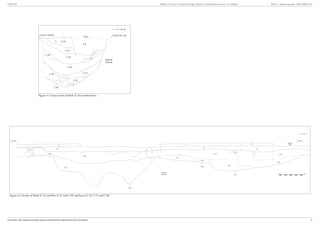
                                                                                       800       ChB220      Cut / Depres-     2.80m       1.8m    0.8m        Probable natural depression                                          N/A          Nat         399          3
                                                                                                             sion
                                                                                       801       ChB224      Cut / Depres-     2.30m       1.8m    1.0m        Probable natural depression                                          N/A          Nat         406, 402     3
                                                                                                             sion
                                                                                       802       ChB230      Cut / Depres-     2.10m       1.8m    0.48m       Probable natural depression                                          N/A          Nat         380          3
                                                                                                             sion
                                                                                       803       ChC80       Layer             extensive   1.8m    0.1m        Redeposited Natural                                                  yellowish    Nat         239          4
                                                                                                                                                                                                                                    brown
                                                                                       804       ChB131.5    Lense             1.20m       0.7m    0.07m       Redeposited Natural                                                  yellowish    133         2            4
                                                                                                                                                                                                                                    brown
                                                                                       805       ChC9        Pipe cut          1.80m       1.80m   1.75m       E-W pipe cut                                                         N/A          Nat         2            4
                                                                                       806       ChB11       Lense             1.50m       0.60m   0.01m       Redeposited Natural                                                  yelowish     87          82           4
                                                                                                                                                                                                                                    brown
                                                                                       807       ChB303-D9   Granite Blocks    22m         1.80m   0.30m       angular granite, partially dressed                                   light grey   multi       2            7


Permalink: http://eachtra.ie/index.php/journal/04e0750-castledermot-town-co-kildare/
                                                                                                                                                                                                                                                                                 Kildare County Council Sewerage Scheme, Castledermot town, Co. Kildare


143
                                                                                                                                                                                                                                                                                 ISSUE 7: Eachtra Journal - ISSN 2009-2237
04E0750      Kildare County Council Sewerage Scheme, Castledermot town, Co. Kildare          ISSUE 7: Eachtra Journal - ISSN 2009-2237


        12.2 Appendix 2: Stratigraphic Matrix


                                           Please see attached CD for stratigraphic matrix


Permalink: http://eachtra.ie/index.php/journal/04e0750-castledermot-town-co-kildare/                                              144
04E0750      Kildare County Council Sewerage Scheme, Castledermot town, Co. Kildare        ISSUE 7: Eachtra Journal - ISSN 2009-2237


        12.3 Appendix 3: Finds Register

        Licence No. Context No. Find No. Material                         Description                 Type
        04E0750         5              1           Ceramic      Wall tile               Pearlware
        04E0750         5              2           Ceramic      Body sherd              Casteldermot type
        04E0750         5              3           Ceramic      Body sherd              Casteldermot type
        04E0750         7              1           Glass
        04E0750         9              1           Stone        Rotary quern fragment
        04E0750         9              2           Stone        Rotary quern fragment
        04E0750         9              3           Stone        Rotary quern fragment
        04E0750         9              4           Glass
        04E0750         9              5           Glass
        04E0750         11             1           Ceramic      Body sherd              Glazed red earthenware
        04E0750         15             1           Ceramic      Body sherd              Stoneware
        04E0750         25             1           Ceramic      Body sherd              Casteldermot type
        04E0750         25             2           Ceramic      Body sherd              Casteldermot type
        04E0750         25             3           Ceramic      Body sherd              Casteldermot type
        04E0750         25             4           Ceramic      Body sherd              Casteldermot type
        04E0750         25             5           Ceramic      Body sherd              Casteldermot type
        04E0750         25             6           Ceramic      Body sherd              Casteldermot type
        04E0750         25             7           Ceramic      Body sherd              Casteldermot type
        04E0750         25             8           Ceramic      Body sherd              Casteldermot type
        04E0750         25             9           Ceramic      Body sherd              Glazed red earthenware
        04E0750         25             10          Ceramic      Body sherd              Casteldermot type
        04E0750         25             11          Ceramic      Body sherd              Leinster cooking ware
        04E0750         25             12          Ceramic      Body sherd              Glazed red earthenware
        04E0750         25             13          Ceramic      Body sherd              Casteldermot type
        04E0750         25             14          Ceramic      Body sherd              Glazed red earthenware
        04E0750         25             15          Ceramic      Body sherd              Casteldermot type
        04E0750         25             16          Ceramic      Body sherd              Casteldermot type
        04E0750         25             17          Ceramic      Body sherd              Casteldermot type
        04E0750         26             1           Ceramic      Rim sherd               Leinster cooking ware
        04E0750         26             2           Ceramic      Rim sherd               Leinster cooking ware
        04E0750         26             3           Ceramic      Base sherd              Casteldermot type
        04E0750         26             4           Ceramic      Base sherd              Casteldermot type
        04E0750         26             5           Ceramic      Rim sherd               Leinster cooking ware
        04E0750         26             6           Ceramic      Rim sherd               Leinster cooking ware
        04E0750         26             7           Ceramic      Rim sherd               Leinster cooking ware
        04E0750         26             8           Ceramic      Body sherd              Leinster cooking ware
        04E0750         26             9           Ceramic      Body sherd              Leinster cooking ware
        04E0750         26             10          Ceramic      Body sherd              Leinster cooking ware
        04E0750         26             11          Ceramic      Rim sherd               Leinster cooking ware
        04E0750         26             12          Ceramic      Base sherd              Casteldermot type
        04E0750         26             13          Ceramic      Body sherd              Leinster cooking ware
        04E0750         26             14          Ceramic      Body sherd              Leinster cooking ware
        04E0750         26             15          Ceramic      Body sherd              Leinster cooking ware
        04E0750         26             16          Ceramic      Body sherd              Casteldermot type
        04E0750         26             17          Ceramic      Body sherd              Leinster cooking ware
        04E0750         26             18          Ceramic      Body sherd              Leinster cooking ware
        04E0750         26             19          Ceramic      Body sherd              Leinster cooking ware
        04E0750         26             20          Ceramic      Body sherd              Casteldermot type
        04E0750         26             21          Ceramic      Body sherd              Saintonge green glazed
        04E0750         26             22          Ceramic      Body sherd              Dublin-type coarse ware
        04E0750         26             23          Ceramic      Handle sherd            Dublin-type coarse ware
        04E0750         26             24          Ceramic      Rim sherd               Dublin-type coarse ware


Permalink: http://eachtra.ie/index.php/journal/04e0750-castledermot-town-co-kildare/                                            145
04E0750      Kildare County Council Sewerage Scheme, Castledermot town, Co. Kildare        ISSUE 7: Eachtra Journal - ISSN 2009-2237


        Licence No. Context No. Find No. Material                         Description                 Type
        04E0750         26             25          Ceramic      Body sherd              Dublin-type coarse ware
        04E0750         26             26          Ceramic      Handle sherd            Dublin-type coarse ware
        04E0750         27             1           Ceramic      Body sherd              Leinster cooking ware
        04E0750         27             2           Ceramic      Body sherd              Leinster cooking ware
        04E0750         27             3           Ceramic      Body sherd              Casteldermot type
        04E0750         27             4           Ceramic      Body sherd              Leinster cooking ware
        04E0750         27             5           Ceramic      Body sherd              Leinster cooking ware
        04E0750         27             6           Ceramic      Rim sherd               Casteldermot type
        04E0750         27             7           Ceramic      Body sherd              Casteldermot type
        04E0750         27             8           Ceramic      Body sherd              Leinster cooking ware
        04E0750         27             9           Ceramic      Body sherd              Leinster cooking ware
        04E0750         27             10          Ceramic      Base sherd              Leinster cooking ware
        04E0750         27             11          Ceramic      Base sherd              Casteldermot type
        04E0750         27             12          Ceramic      Body sherd              Leinster cooking ware
        04E0750         27             13          Ceramic      Rim sherd               Leinster cooking ware
        04E0750         27             14          Ceramic      Rim sherd               Leinster cooking ware
        04E0750         27             15          Ceramic      Body sherd              Leinster cooking ware
        04E0750         27             16          Ceramic      Body sherd              Leinster cooking ware
        04E0750         27             17          Ceramic      Body sherd              Leinster cooking ware
        04E0750         27             18          Ceramic      Base sherd              Leinster cooking ware
        04E0750         27             19          Ceramic      Body sherd              Leinster cooking ware
        04E0750         27             20          Ceramic      Rim sherd               Leinster cooking ware
        04E0750         27             21          Ceramic      Rim sherd               Leinster cooking ware
        04E0750         27             22          Ceramic      Body sherd              Leinster cooking ware
        04E0750         27             23          Ceramic      Body sherd              Leinster cooking ware
        04E0750         27             24          Ceramic      Body sherd              Leinster cooking ware
        04E0750         27             25          Ceramic      Body sherd              Leinster cooking ware
        04E0750         27             26          Ceramic      Body sherd              Casteldermot type
        04E0750         27             27          Ceramic      Body sherd              Leinster cooking ware
        04E0750         27             28          Ceramic      Body sherd              Leinster cooking ware
        04E0750         27             29          Ceramic      Body sherd              Leinster cooking ware
        04E0750         27             30          Ceramic      Body sherd              Leinster cooking ware
        04E0750         27             31          Ceramic      Body sherd              Casteldermot type
        04E0750         27             32          Metal        Iron                    Nail in two fragments
        04E0750         27             33          Metal        Iron                    Nail in two fragments
        04E0750         29             1           Ceramic      Rim/Handle sherd        Casteldermot type
        04E0750         29             2           Ceramic      Base sherd              Casteldermot type
        04E0750         29             3           Ceramic      Rim/Handle sherd        Casteldermot type
        04E0750         29             4           Ceramic      Rim/Handle sherd        Casteldermot type
        04E0750         29             5           Ceramic      Base sherd              Casteldermot type
        04E0750         29             6           Ceramic      Rim/Handle sherd        Casteldermot type
        04E0750         29             7           Ceramic      Rim/Handle sherd        Casteldermot type
        04E0750         29             8           Ceramic      Rim/Handle sherd        Casteldermot type
        04E0750         29             9           Ceramic      Rim/Handle sherd        Casteldermot type
        04E0750         29             10          Ceramic      Rim/Handle sherd        Casteldermot type
        04E0750         29             11          Ceramic      Rim/Handle sherd        Casteldermot type
        04E0750         29             12          Ceramic      Base sherd              Casteldermot type
        04E0750         29             13          Ceramic      Base sherd              Casteldermot type
        04E0750         29             14          Ceramic      Rim/Handle sherd        Casteldermot type
        04E0750         29             15          Ceramic      Rim/Handle sherd        Casteldermot type
        04E0750         29             16          Ceramic      Rim/Handle sherd        Casteldermot type
        04E0750         29             17          Ceramic      Rim/Handle sherd        Casteldermot type
        04E0750         29             18          Ceramic      Rim/Handle sherd        Casteldermot type
        04E0750         29             19          Ceramic      Rim/Handle sherd        Casteldermot type


Permalink: http://eachtra.ie/index.php/journal/04e0750-castledermot-town-co-kildare/                                            146
04E0750      Kildare County Council Sewerage Scheme, Castledermot town, Co. Kildare        ISSUE 7: Eachtra Journal - ISSN 2009-2237


        Licence No. Context No. Find No. Material                         Description                 Type
        04E0750         29             20          Ceramic      Rim/Handle sherd        Casteldermot type
        04E0750         33             1           Metal        Slag
        04E0750         33             2           Metal        Slag
        04E0750         33             3           Ceramic      Rim sherd               Leinster cooking ware
        04E0750         34             1           Metal        Iron                    Nail
        04E0750         34             2           Metal        Iron                    Nail
        04E0750         35             1           Metal        Iron                    Nail
        04E0750         35             2           Metal        Iron                    Nail
        04E0750         36             1           Ceramic      Body sherd              Black glazed ware
        04E0750         36             2           Ceramic      Body sherd              Glazed red earthenware
        04E0750         36             3           Ceramic      Body sherd              Glazed red earthenware
        04E0750         36             4           Ceramic      Body sherd              Glazed red earthenware
        04E0750         36             5           Ceramic      Body sherd              Creamware
        04E0750         36             6           Ceramic      Body sherd              Creamware
        04E0750         36             7           Glass
        04E0750         36             8           Glass
        04E0750         36             9           Glass
        04E0750         36             10          Ceramic      Body sherd              Tin glazed earthenware
        04E0750         36             11          Ceramic      Body sherd              Creamware
        04E0750         36             12          Ceramic      Body sherd              Creamware
        04E0750         36             13          Ceramic      Body sherd              Creamware
        04E0750         36             14          Ceramic      Handle sherd            Mottled ware
        04E0750         36             14          Ceramic      Clay pipe               Stem
        04E0750         36             15          Ceramic      Body sherd              Creamware
        04E0750         36             16          Ceramic      Body sherd              Tin glazed earthenware
        04E0750         36             17          Ceramic      Body sherd              Creamware
        04E0750         36             18          Ceramic      Body sherd              Creamware
        04E0750         36             19          cancelled
        04E0750         36             20          Ceramic      Body sherd              Glazed red earthenware
        04E0750         38             1           Ceramic      Body sherd              Casteldermot type
        04E0750         47             1           Metal        Iron slag
        04E0750         47             2           Metal        Iron slag
        04E0750         47             3           Metal        Iron slag
        04E0750         50             1           Metal
        04E0750         50             2           Metal
        04E0750         50             3           Metal        Slag
        04E0750         50             4           Ceramic      Body sherd              Casteldermot type
        04E0750         52             1           Ceramic      Body sherd              Casteldermot type
        04E0750         52             2           Ceramic      Body sherd              Casteldermot type
        04E0750         52             3           Ceramic      Body sherd              Casteldermot type
        04E0750         52             4           Ceramic      Body sherd              Casteldermot type
        04E0750         52             5           Ceramic      Body sherd              Leinster cooking ware
        04E0750         52             6           Ceramic      Body sherd              Leinster cooking ware
        04E0750         52             7           Ceramic      Body sherd              Casteldermot type
        04E0750         52             8           Ceramic      Base sherd              Casteldermot type
        04E0750         52             9           Ceramic      Body sherd              Casteldermot type
        04E0750         52             10          Metal        Slag
        04E0750         52             11          Metal        Slag
        04E0750         52             12          Metal        Slag
        04E0750         52             13          Metal
        04E0750         52             14          Metal
        04E0750         52             15          Metal
        04E0750         53             1           Metal        Slag                    ? Med
        04E0750         53             2           Metal        Slag                    ? Med


Permalink: http://eachtra.ie/index.php/journal/04e0750-castledermot-town-co-kildare/                                            147
04E0750      Kildare County Council Sewerage Scheme, Castledermot town, Co. Kildare        ISSUE 7: Eachtra Journal - ISSN 2009-2237


        Licence No. Context No. Find No. Material                         Description                 Type
        04E0750         53             3           Metal        Slag                    ? Med
        04E0750         53             4           Metal        Slag                    ? Med
        04E0750         53             5           Metal        Slag                    ? Med
        04E0750         53             6           Metal        Slag                    ? Med
        04E0750         53             7           Metal        Slag                    ? Med
        04E0750         53             8           Metal        Slag                    ? Med
        04E0750         53             9           Metal        Slag                    ? Med
        04E0750         53             10          Metal        Slag                    ? Med
        04E0750         53             11          Metal        Slag                    ? Med
        04E0750         56             1           Ceramic      Body sherd              Casteldermot type
        04E0750         56             2           Ceramic      Body sherd              Casteldermot type
        04E0750         56             3           Ceramic      Body sherd              Leinster cooking ware
        04E0750         56             4           Ceramic      Handle sherd            Casteldermot type
        04E0750         58             1           Ceramic      Body sherd              Casteldermot type
        04E0750         58             2           Ceramic      Body sherd              Leinster cooking ware
        04E0750         58             3           Ceramic      Body sherd              Leinster cooking ware
        04E0750         58             4           Ceramic      Body sherd              Casteldermot type
        04E0750         58             5           Metal        Iron                    Nail fragment
        04E0750         58             6           Metal        Nail
        04E0750         61             1           Ceramic      Body sherd              Casteldermot type
        04E0750         61             2           Ceramic      Body sherd              Casteldermot type
        04E0750         62             1           Metal        Iron                    Nail
        04E0750         62             2           Metal        Iron                    Staple
        04E0750         62             3           Ceramic      Body sherd              Leinster cooking ware
        04E0750         62             4           Ceramic      Rim/Handle sherd        Casteldermot type
        04E0750         62             5           Ceramic      Body sherd              Casteldermot type
        04E0750         62             6           Ceramic      Body sherd              Leinster cooking ware
        04E0750         62             7           Ceramic      Body sherd              Casteldermot type
        04E0750         62             8           Ceramic      Rim/Handle sherd        Casteldermot type
        04E0750         62             9           Ceramic      Body sherd              Casteldermot type
        04E0750         62             10          Ceramic      Body sherd              Casteldermot type
        04E0750         62             11          Ceramic      Body sherd              Casteldermot type
        04E0750         62             12          Ceramic      Body sherd              Leinster cooking ware
        04E0750         62             13          Ceramic      Body sherd              Leinster cooking ware
        04E0750         62             14          Ceramic      Body sherd              Leinster cooking ware
        04E0750         62             15          Ceramic      Body sherd              Leinster cooking ware
        04E0750         62             16          Ceramic      Body sherd              Casteldermot type
        04E0750         62             17          Ceramic      Body sherd              Casteldermot type
        04E0750         62             18          Ceramic      Body sherd              Casteldermot type
        04E0750         62             19          Ceramic      Body sherd              Casteldermot type
        04E0750         62             20          Ceramic      Body sherd              Leinster cooking ware
        04E0750         62             21          Ceramic      Body sherd              Casteldermot type
        04E0750         62             22          Ceramic      Body sherd              Casteldermot type
        04E0750         62             23          Ceramic      Body sherd              Casteldermot type
        04E0750         62             24          Ceramic      Body sherd              Leinster cooking ware
        04E0750         62             25          Ceramic      Body sherd              Casteldermot type
        04E0750         62             26          Ceramic      Body sherd              Casteldermot type
        04E0750         62             27          Ceramic      Body sherd              Casteldermot type
        04E0750         62             28          Ceramic      Body sherd              Casteldermot type
        04E0750         62             29          Ceramic      Body sherd              Casteldermot type
        04E0750         62             30          Ceramic      Body sherd              Casteldermot type
        04E0750         62             31          Ceramic      Body sherd              Casteldermot type
        04E0750         62             32          Metal        Slag
        04E0750         62             33          Metal        Slag


Permalink: http://eachtra.ie/index.php/journal/04e0750-castledermot-town-co-kildare/                                            148
04E0750      Kildare County Council Sewerage Scheme, Castledermot town, Co. Kildare        ISSUE 7: Eachtra Journal - ISSN 2009-2237


        Licence No. Context No. Find No. Material                         Description                 Type
        04E0750         63             1           Ceramic      Rim sherd               Transfer printed ware
        04E0750         63             2           Ceramic      Body sherd              Pearlware
        04E0750         64             1           Ceramic      Body sherd              Casteldermot type
        04E0750         64             2           Ceramic      Body sherd              Casteldermot type
        04E0750         64             3           Ceramic      Body sherd              Casteldermot type
        04E0750         64             4           Ceramic      Body sherd              Casteldermot type
        04E0750         64             5           Ceramic      Body sherd              Leinster cooking ware
        04E0750         64             6           Ceramic      Body sherd              Leinster cooking ware
        04E0750         64             7           Ceramic      Body sherd              Leinster cooking ware
        04E0750         65             1           Ceramic      Rim sherd               Leinster cooking ware
        04E0750         65             2           Metal        Iron                    Nail
        04E0750         66             1           Ceramic      Body sherd              Leinster cooking ware
        04E0750         69             1           Ceramic      Drain pipe
        04E0750         75             1           Ceramic      Body sherd              Casteldermot type
        04E0750         75             2           Ceramic      Base sherd              Casteldermot type
        04E0750         75             3           Ceramic      Body sherd              Casteldermot type
        04E0750         75             4           Ceramic      Rim sherd               Casteldermot type
        04E0750         75             5           Ceramic      Handle sherd            Dublin-type coarse ware?
        04E0750         75             6           Ceramic      Base sherd              Casteldermot type
        04E0750         75             7           Natural      DISCARDED
        04E0750         75             8           Ceramic      Body sherd              Leinster cooking ware
        04E0750         75             9           Ceramic      Body sherd              Leinster cooking ware
        04E0750         80             1           Stone        Roof slate
        04E0750         80             2           Metal        Slag
        04E0750         80             3           Ceramic      Body sherd              Casteldermot type
        04E0750         80             4           Ceramic      Body sherd              Casteldermot type
        04E0750         80             5           Ceramic      Clay pipe               Stem
        04E0750         80             6           Ceramic      Clay pipe               Stem
        04E0750         80             7           Ceramic      Clay pipe               Stem
        04E0750         80             7           Metal        Slag
        04E0750         80             8           Metal        Slag
        04E0750         80             9           Metal        Slag
        04E0750         80             10          Metal        Slag
        04E0750         80             11          Metal        Slag
        04E0750         80             12          Metal        Slag
        04E0750         80             13          Metal        Slag
        04E0750         80             14          Metal        Slag
        04E0750         80             15          Metal        Slag
        04E0750         81             1           cancelled
        04E0750         81             2           cancelled
        04E0750         81             3           Ceramic      Clay pipe
        04E0750         82             1           Metal        Iron                    Horseshoe fragment?
        04E0750         83             1           Metal        Slag                    Post-Med
        04E0750         83             1           Ceramic      Roof tile               Pantile
        04E0750         83             2           Metal        Slag                    Post-Med
        04E0750         83             2           Ceramic      Body sherd              Glazed red earthenware
        04E0750         83             3           Ceramic      Body sherd              Glazed red earthenware
        04E0750         83             4           cancelled
        04E0750         83             5           cancelled
        04E0750         84             1           Ceramic      Body sherd              Glazed red earthenware
        04E0750         84             2           Ceramic      Handle sherd            Casteldermot type
        04E0750         84             3           Ceramic      Body sherd              Glazed red earthenware
        04E0750         84             4           Ceramic      Body sherd              Glazed red earthenware
        04E0750         84             5           Ceramic      Body sherd              Tin glazed earthenware


Permalink: http://eachtra.ie/index.php/journal/04e0750-castledermot-town-co-kildare/                                            149
04E0750      Kildare County Council Sewerage Scheme, Castledermot town, Co. Kildare         ISSUE 7: Eachtra Journal - ISSN 2009-2237


        Licence No. Context No. Find No. Material                         Description                  Type
        04E0750         84             6           Ceramic      Body sherd               Glazed red earthenware
        04E0750         84             7           Ceramic      Body sherd               Glazed red earthenware
        04E0750         84             8           Ceramic      Body sherd               Glazed red earthenware
        04E0750         84             9           Ceramic      Body sherd               Leinster cooking ware
        04E0750         84             10          Ceramic      Body sherd               Leinster cooking ware
        04E0750         84             11          Ceramic      Body sherd               Leinster cooking ware
        04E0750         84             12          Glass
        04E0750         84             13          Glass
        04E0750         94             1           Metal        Iron                     Nail
        04E0750         96             1           Ceramic      Base sherd               Casteldermot type
        04E0750         96             2           Ceramic      Body sherd               Casteldermot type
        04E0750         96             3           Ceramic      Body sherd               Creamware
        04E0750         96             4           Ceramic      Base sherd               Leinster cooking ware
        04E0750         96             5           Ceramic      Base sherd               Leinster cooking ware
        04E0750         96             6           Ceramic      Body sherd               Casteldermot type
        04E0750         96             7           Ceramic      Base sherd               Leinster cooking ware
        04E0750         96             8           Ceramic      Body sherd               Casteldermot type
        04E0750         100            1           Ceramic      Body sherd               Casteldermot type
        04E0750         100            2           Ceramic      Body sherd               Casteldermot type
        04E0750         100            3           Ceramic      Rim sherd                Leinster cooking ware
        04E0750         100            4           Ceramic      Body sherd               Black glazed ware
        04E0750         103            1           Ceramic      Clay pipe                Stem
        04E0750         104            1           Ceramic      Body sherd               Leinster cooking ware
        04E0750         104            2           Ceramic      Body sherd               Casteldermot type
        04E0750         105            1           Ceramic      Rim sherd                Leinster cooking ware
        04E0750         105            2           Ceramic      Body sherd               Leinster cooking ware
        04E0750         105            3           Ceramic      Body sherd               Leinster cooking ware
        04E0750         105            4           Ceramic      Body sherd               Leinster cooking ware
        04E0750         105            5           Ceramic      Body sherd               Casteldermot type
        04E0750         105            6           Ceramic      Body sherd               Leinster cooking ware
        04E0750         105            7           Ceramic      Body sherd               Leinster cooking ware
        04E0750         105            8           Ceramic      Body sherd               Leinster cooking ware
        04E0750         105            9           Ceramic      Rim sherd                Leinster cooking ware
        04E0750         105            10          Ceramic      Body sherd               Casteldermot type
        04E0750         105            11          Ceramic      Body sherd               Leinster cooking ware
        04E0750         105            12          Ceramic      Body sherd               Leinster cooking ware
        04E0750         105            13          Ceramic      Base sherd               Casteldermot type
        04E0750         105            14          Ceramic      Body sherd               Casteldermot type
        04E0750         105            15          Ceramic      Rim/Handle/Spout sherd   Casteldermot type
        04E0750         105            16          Ceramic      Rim/Handle/Spout sherd   Casteldermot type
        04E0750         105            17          Ceramic      Body sherd               Casteldermot type
        04E0750         105            18          Ceramic      Body sherd               Casteldermot type
        04E0750         105            19          Ceramic      Base sherd               Casteldermot type
        04E0750         105            20          Ceramic      Body sherd               Casteldermot type
        04E0750         105            21          Ceramic      Body sherd               Casteldermot type
        04E0750         105            22          Ceramic      Base sherd               Casteldermot type
        04E0750         105            23          Ceramic      Body sherd               Casteldermot type
        04E0750         105            24          Ceramic      Body sherd               Casteldermot type
        04E0750         105            25          Ceramic      Rim/Handle/Spout sherd   Casteldermot type
        04E0750         105            26          Ceramic      Rim/Handle/Spout sherd   Casteldermot type
        04E0750         105            27          Ceramic      Rim/Base sherd           Casteldermot type
        04E0750         105            28          Ceramic      Body sherd               Casteldermot type
        04E0750         105            29          Ceramic      Rim/Handle/Spout sherd   Casteldermot type
        04E0750         105            30          Ceramic      Rim/Handle/Spout sherd   Casteldermot type


Permalink: http://eachtra.ie/index.php/journal/04e0750-castledermot-town-co-kildare/                                             150
04E0750      Kildare County Council Sewerage Scheme, Castledermot town, Co. Kildare         ISSUE 7: Eachtra Journal - ISSN 2009-2237


        Licence No. Context No. Find No. Material                         Description                  Type
        04E0750         105            31          Ceramic      Rim/Handle/Spout sherd   Casteldermot type
        04E0750         105            32          Ceramic      Base sherd               Casteldermot type
        04E0750         105            33          Ceramic      Rim/Handle/Spout sherd   Casteldermot type
        04E0750         105            33          Ceramic      Body sherd               Casteldermot type
        04E0750         105            34          Ceramic      Body sherd               Casteldermot type
        04E0750         105            35          Ceramic      Body sherd               Casteldermot type
        04E0750         105            36          Ceramic      Body sherd               Casteldermot type
        04E0750         105            37          Ceramic      Rim/Handle/Spout sherd   Casteldermot type
        04E0750         105            38          Ceramic      Rim/Handle/Spout sherd   Casteldermot type
        04E0750         105            39          cancelled
        04E0750         105            40          Ceramic      Base sherd               Casteldermot type
        04E0750         105            41          Ceramic      Body sherd               Casteldermot type
        04E0750         105            42          Ceramic      Rim/Handle/Spout sherd   Casteldermot type
        04E0750         105            43          Ceramic      Rim/Handle/Spout sherd   Casteldermot type
        04E0750         105            44          Ceramic      Rim/Handle/Spout sherd   Casteldermot type
        04E0750         105            45          cancelled
        04E0750         105            46          Metal        Slag
        04E0750         105            47          Metal        Slag
        04E0750         105            48          Metal        Slag
        04E0750         105            49          Metal        Iron                     Nail fragment
        04E0750         105            50          Metal        Iron                     Nail fragment
        04E0750         105            51          Metal        Iron                     Nail fragment
        04E0750         108            1           Glass        Fragment                 Window glass
        04E0750         108            2           Glass        Fragment                 Window glass
        04E0750         108            3           Ceramic      Clay pipe                Stem
        04E0750         108            4           Ceramic      Body sherd               Glazed red earthenware
        04E0750         108            5           Ceramic      Body sherd               Black glazed ware
        04E0750         108            6           Ceramic      Body sherd               Casteldermot type
        04E0750         108            7           Ceramic      Body sherd               Glazed red earthenware
        04E0750         110            1           Glass
        04E0750         110            2           Glass
        04E0750         110            3           Ceramic      Clay pipe                Stem
        04E0750         110            4           Ceramic      Rim sherd                Black glazed ware
        04E0750         110            5           Ceramic      Rim sherd                Black glazed ware
        04E0750         110            6           Brick
        04E0750         110            7           Metal        Iron                     Key
        04E0750         112            1           Ceramic      Clay pipe                Stem
        04E0750         112            2           Glass
        04E0750         112            3           Glass
        04E0750         112            4           Glass
        04E0750         112            5           Ceramic      Body sherd               Leinster cooking ware
        04E0750         112            6           Glass
        04E0750         112            7           Glass
        04E0750         112            8           Glass
        04E0750         112            9           Glass
        04E0750         112            10          Glass
        04E0750         112            11          Glass
        04E0750         112            12          Glass
        04E0750         112            13          Glass
        04E0750         112            14          Glass
        04E0750         112            15          Glass
        04E0750         117            1           Ceramic      Clay pipe                Stem
        04E0750         117            2           Ceramic      Clay pipe                Stem
        04E0750         117            3           Ceramic      Body sherd               Casteldermot type


Permalink: http://eachtra.ie/index.php/journal/04e0750-castledermot-town-co-kildare/                                             151
04E0750      Kildare County Council Sewerage Scheme, Castledermot town, Co. Kildare        ISSUE 7: Eachtra Journal - ISSN 2009-2237


        Licence No. Context No. Find No. Material                         Description                  Type
        04E0750         119            1           Ceramic      Clay pipe               Stem
        04E0750         119            2           Ceramic      Clay pipe               Stem
        04E0750         119            3           Ceramic      Clay pipe               Stem
        04E0750         119            4           Ceramic      Clay pipe               Stem
        04E0750         119            5           Ceramic      Clay pipe               Stem
        04E0750         119            6           Ceramic      Clay pipe               Stem
        04E0750         119            7           Ceramic      Body sherd              Bristol/Staffordshire slipware
        04E0750         119            8           cancelled
        04E0750         119            9           Ceramic      Rim sherd               Tin glazed earthenware
        04E0750         119            10          Ceramic      Body sherd              Glazed red earthenware
        04E0750         119            11          Ceramic      Clay pipe               stem
        04E0750         119            11          Glass        Fragment                Window glass
        04E0750         119            12          Glass
        04E0750         119            13          Ceramic      Body sherd              Black glazed ware
        04E0750         119            14          Ceramic      Body sherd              Glazed red earthenware
        04E0750         119            15          Metal        Iron                    Key
        04E0750         119            16          Metal
        04E0750         119            17          Metal
        04E0750         119            18          Metal
        04E0750         119            19          Metal
        04E0750         119            20          Metal
        04E0750         119            21          Metal
        04E0750         119            22          Metal
        04E0750         119            23          Metal
        04E0750         119            24          Metal
        04E0750         121            1           Ceramic      Rim sherd               Glazed red earthenware
        04E0750         121            2           Ceramic      Handle sherd            North Devon gravel tempered
        04E0750         121            3           Ceramic      Rim sherd               Black glazed ware
        04E0750         121            4           Ceramic      Body sherd              Black glazed ware
        04E0750         121            5           Ceramic      Body sherd              Glazed red earthenware
        04E0750         121            6           Ceramic      Rim sherd               North Devon gravel tempered
        04E0750         121            7           Ceramic      Body sherd              Casteldermot type
        04E0750         121            8           Ceramic      Body sherd              Bristol/Staffordshire slipware
        04E0750         121            9           Glass        Body sherd              Bristol/Staffordshire slipware
        04E0750         121            10          Ceramic      Body sherd              Black glazed ware
        04E0750         121            11          Ceramic      Base sherd              North Devon gravel tempered
        04E0750         121            12          Ceramic      Body sherd              Leinster cooking ware
        04E0750         121            13          Ceramic      Body sherd              Black glazed ware
        04E0750         121            14          Ceramic      Body sherd              Black glazed ware
        04E0750         121            15          Ceramic      Body sherd              Leinster cooking ware
        04E0750         121            16          Ceramic      Body sherd              Glazed red earthenware
        04E0750         121            17          Ceramic      Base sherd              Leinster cooking ware
        04E0750         121            18          Ceramic      Rim sherd               Black glazed ware
        04E0750         121            19          Ceramic      Handle sherd            North Devon gravel tempered
        04E0750         121            20          Ceramic      Body sherd              Glazed red earthenware
        04E0750         121            21          Ceramic      Handle sherd            North Devon gravel tempered
        04E0750         121            22          Ceramic      Body sherd              Casteldermot type
        04E0750         121            23          cancelled
        04E0750         121            24          Ceramic      Body sherd              Tin glazed earthenware
        04E0750         121            25          Ceramic      Rim sherd               Tin glazed earthenware
        04E0750         121            26          Ceramic      Clay pipe               Stem
        04E0750         121            27          Ceramic      Clay pipe               Stem
        04E0750         121            28          Ceramic      Clay pipe               Stem
        04E0750         121            29          Ceramic      Clay pipe               Stem


Permalink: http://eachtra.ie/index.php/journal/04e0750-castledermot-town-co-kildare/                                            152
04E0750      Kildare County Council Sewerage Scheme, Castledermot town, Co. Kildare        ISSUE 7: Eachtra Journal - ISSN 2009-2237


        Licence No. Context No. Find No. Material                         Description                  Type
        04E0750         121            30          Ceramic      Clay pipe               Stem
        04E0750         121            31          Ceramic      Clay pipe               Stem
        04E0750         121            32          Ceramic      Clay pipe               Stem
        04E0750         121            33          Ceramic      Clay pipe               Stem
        04E0750         121            34          Ceramic      Clay pipe               Stem
        04E0750         121            35          Ceramic      Clay pipe               Stem
        04E0750         121            36          Ceramic      Clay pipe               Stem
        04E0750         121            37          Ceramic      Clay pipe               Stem
        04E0750         121            37          Ceramic      Clay pipe               Bowl
        04E0750         121            38          cancelled    Clay pipe
        04E0750         121            39          Ceramic      Clay pipe               Bowl
        04E0750         121            40          Ceramic      Clay pipe               Stem
        04E0750         121            41          Ceramic      Clay pipe               Stem
        04E0750         121            42          Ceramic      Clay pipe               Stem
        04E0750         121            43          Ceramic      Clay pipe               Stem
        04E0750         121            44          Ceramic      Clay pipe               Stem
        04E0750         121            45          Ceramic      Clay pipe               Stem
        04E0750         121            46          Ceramic      Clay pipe               Stem
        04E0750         121            47          Ceramic      Clay pipe               Stem
        04E0750         121            48          Ceramic      Clay pipe               Stem
        04E0750         121            49          Ceramic      Clay pipe               Stem
        04E0750         121            50          Ceramic      Clay pipe               Stem
        04E0750         121            51          Ceramic      Clay pipe               Stem
        04E0750         121            52          Ceramic      Clay pipe               Stem
        04E0750         121            53          Ceramic      Clay pipe               Stem
        04E0750         121            54          Ceramic      Clay pipe               Stem
        04E0750         121            55          Ceramic      Clay pipe               Stem
        04E0750         121            56          Ceramic      Clay pipe               Stem
        04E0750         121            57          Ceramic      Clay pipe               Stem
        04E0750         121            58          Ceramic      Clay pipe               Stem
        04E0750         121            59          cancelled    Clay pipe
        04E0750         121            60          Ceramic      Clay pipe               Stem
        04E0750         121            61          Ceramic      Clay pipe               Stem
        04E0750         121            62          cancelled
        04E0750         121            63          Ceramic      Clay pipe               Stem
        04E0750         121            64          Metal        Slag
        04E0750         121            65          Metal        Iron                    Nail
        04E0750         121            66          Metal        Iron                    Nail
        04E0750         121            67          Metal        Iron                    Nail
        04E0750         121            68          Metal        Iron                    Nail
        04E0750         121            69          Metal        Iron                    Nail
        04E0750         121            70          Metal        Iron                    Nail
        04E0750         121            71          Metal        Iron                    Nail
        04E0750         121            72          Metal        Iron                    Nail
        04E0750         121            73          Metal        Iron                    Nail
        04E0750         121            74          Metal        Iron                    Nail
        04E0750         121            75          Metal        Iron                    Nail
        04E0750         121            76          Metal        Iron                    Nail
        04E0750         121            77          Metal        Iron                    Nail
        04E0750         121            78          Metal        Iron lump               Unidentified
        04E0750         121            79          Metal        Iron                    Hook
        04E0750         121            80          Glass        Fragment                Window glass
        04E0750         121            81          Glass        Fragment                Window glass
        04E0750         121            82          Glass        Fragment                Window glass


Permalink: http://eachtra.ie/index.php/journal/04e0750-castledermot-town-co-kildare/                                            153
04E0750      Kildare County Council Sewerage Scheme, Castledermot town, Co. Kildare        ISSUE 7: Eachtra Journal - ISSN 2009-2237


        Licence No. Context No. Find No. Material                         Description                  Type
        04E0750         122            1           Ceramic      Body sherd              Casteldermot type
        04E0750         125            1           Ceramic      Clay pipe               Stem
        04E0750         125            2           Ceramic      Body sherd              Black glazed ware
        04E0750         125            3           Ceramic      Body sherd              Black glazed ware
        04E0750         125            4           Ceramic      Body sherd              Black glazed ware
        04E0750         125            5           cancelled
        04E0750         125            6           Ceramic      Body sherd              Black glazed ware
        04E0750         125            7           Ceramic      Body sherd              Black glazed ware
        04E0750         125            8           Natural      DISCARDED
        04E0750         125            9           Ceramic      Body sherd              Glazed red earthenware
        04E0750         125            10          Ceramic      Body sherd              Glazed red earthenware
        04E0750         125            11          Metal        Iron                    Nail
        04E0750         125            12          Metal        Iron                    Nail
        04E0750         128            1           Metal        Iron                    Nail
        04E0750         129            1           Metal        Iron                    Nail
        04E0750         129            2           Metal        Iron                    Nail
        04E0750         129            3           Metal        Iron                    Nail
        04E0750         129            4           Metal        Iron                    Nail
        04E0750         133            1           Ceramic      Rim sherd               Glazed red earthenware
        04E0750         133            2           Ceramic      Body sherd              Glazed red earthenware
        04E0750         133            3           Ceramic      Body sherd              Glazed red earthenware
        04E0750         133            4           Ceramic      Body sherd              Leinster cooking ware
        04E0750         133            5           Ceramic      Body sherd              Glazed red earthenware
        04E0750         133            6           Metal        Slag                    Post-Med / Med mix
        04E0750         133            7           Metal        Slag                    Post-Med / Med mix
        04E0750         135            1           Ceramic      Base sherd              Glazed red earthenware
        04E0750         135            2           Ceramic      Body sherd              North Devon sgraffito
        04E0750         135            3           Ceramic      Body sherd              Black glazed ware
        04E0750         135            4           Ceramic      Rim sherd               Bristol/Staffordshire slipware
        04E0750         135            5           Ceramic      Body sherd              Bristol/Staffordshire slipware
        04E0750         135            6           Ceramic      Body sherd              Bristol/Staffordshire slipware
        04E0750         135            7           Ceramic      Body sherd              Glazed red earthenware
        04E0750         135            8           Ceramic      Body sherd              North Devon sgraffito
        04E0750         135            9           Ceramic      Body sherd              Glazed red earthenware
        04E0750         135            10          Ceramic      Clay pipe               Stem
        04E0750         135            11          Ceramic      Clay pipe               Stem
        04E0750         135            12          Ceramic      Clay pipe               Stem
        04E0750         135            13          Glass
        04E0750         135            14          Glass
        04E0750         137            1           Glass
        04E0750         137            2           Metal        Iron                    Nail
        04E0750         137            3           Glass
        04E0750         137            4           Glass
        04E0750         139            1           Ceramic      Clay pipe               Stem
        04E0750         139            Nos 2-11    cancelled
        04E0750         139            12          Glass
        04E0750         139            13          Glass
        04E0750         139            14          Glass
        04E0750         139            15          Glass
        04E0750         139            16          Glass
        04E0750         139            17          Glass
        04E0750         141            Nos 1-58    cancelled
        04E0750         141            59          Ceramic      Clay pipe               Bowl
        04E0750         143            1           Ceramic      Body sherd              Glazed red earthenware


Permalink: http://eachtra.ie/index.php/journal/04e0750-castledermot-town-co-kildare/                                            154
04E0750      Kildare County Council Sewerage Scheme, Castledermot town, Co. Kildare        ISSUE 7: Eachtra Journal - ISSN 2009-2237


        Licence No. Context No. Find No. Material                         Description                 Type
        04E0750         143            2           Glass
        04E0750         143            3           Stone        Roof slate
        04E0750         148            1           Ceramic      Clay pipe               Stem
        04E0750         148            2           Ceramic      Body sherd              Tin glazed earthenware
        04E0750         148            3           Ceramic      Body sherd              Mottled ware
        04E0750         148            4           Ceramic      Body sherd              Mottled ware
        04E0750         148            5           Ceramic      Body sherd              Stoneware
        04E0750         148            6           Ceramic      Body sherd              Glazed red earthenware
        04E0750         148            7           Ceramic      Base sherd              Mottled ware
        04E0750         148            8           Ceramic      Base sherd              Mottled ware
        04E0750         148            9           Ceramic      Body sherd              Leinster cooking ware
        04E0750         148            10          Ceramic      Body sherd              Glazed red earthenware
        04E0750         148            11          Ceramic      Roof tile               Pantile
        04E0750         149            Nos 1-2     cancelled
        04E0750         149            3           Ceramic      Body sherd              Casteldermot type
        04E0750         149            4           Metal        Iron                    Slag?
        04E0750         152            1           Ceramic      Rim/Spout sherd         Casteldermot type
        04E0750         152            2           Ceramic      Rim/Spout sherd         Casteldermot type
        04E0750         153            1           Ceramic      Body sherd              Leinster cooking ware
        04E0750         153            2           Ceramic      Body sherd              Casteldermot type
        04E0750         153            3           Ceramic      Body sherd              Leinster cooking ware
        04E0750         153            4           Ceramic      Body sherd              Casteldermot type
        04E0750         153            5           Ceramic      Body sherd              Casteldermot type
        04E0750         153            6           Ceramic      Body sherd              Casteldermot type
        04E0750         153            7           Ceramic      Body sherd              Dublin-type?
        04E0750         153            8           Ceramic      Body sherd              Casteldermot type
        04E0750         153            9           Metal        Iron                    Nail
        04E0750         155            1           Metal        Slag
        04E0750         159            1           Ceramic      Base sherd              Casteldermot type
        04E0750         159            2           Ceramic      Body sherd              Casteldermot type
        04E0750         159            3           Ceramic      Body sherd              Casteldermot type
        04E0750         159            4           Ceramic      Body sherd              Casteldermot type
        04E0750         159            5           Ceramic      Rim sherd               Casteldermot type
        04E0750         159            6           Ceramic      Body sherd              Casteldermot type
        04E0750         159            7           Ceramic      Spout sherd             Casteldermot type
        04E0750         159            8           Ceramic      Body sherd              Casteldermot type
        04E0750         159            9           Ceramic      Base sherd              Leinster cooking ware
        04E0750         159            10          Ceramic      Base sherd              Casteldermot type
        04E0750         159            11          Ceramic      Body sherd              Casteldermot type
        04E0750         159            12          Ceramic      Body sherd              Casteldermot type
        04E0750         159            13          Ceramic      Body sherd              Casteldermot type
        04E0750         159            14          Ceramic      Handle sherd            Casteldermot type
        04E0750         159            15          Ceramic      Rim sherd               Casteldermot type
        04E0750         159            16          Ceramic      Body sherd              Casteldermot type
        04E0750         161            1           Ceramic      Body sherd              Casteldermot type
        04E0750         161            2           Ceramic      Body sherd              Black glazed ware
        04E0750         161            3           Ceramic      Handle sherd            Casteldermot type
        04E0750         161            4           Ceramic      Body sherd              Black glazed ware
        04E0750         161            5           Ceramic      Body sherd              North Devon gravel free
        04E0750         161            6           cancelled
        04E0750         161            7           Metal        Iron                    Nail
        04E0750         161            8           Metal        Iron                    Nail
        04E0750         161            9           Metal        Iron                    Hook
        04E0750         161            10          Ceramic      Clay pipe               Bowl


Permalink: http://eachtra.ie/index.php/journal/04e0750-castledermot-town-co-kildare/                                            155
04E0750      Kildare County Council Sewerage Scheme, Castledermot town, Co. Kildare        ISSUE 7: Eachtra Journal - ISSN 2009-2237


        Licence No. Context No. Find No. Material                         Description                 Type
        04E0750         161            11          Ceramic      Clay pipe               Stem
        04E0750         161            12          Ceramic      Clay pipe               Stem
        04E0750         162            1           Ceramic      Body sherd              Glazed red earthenware
        04E0750         162            2           Ceramic      Body sherd              Glazed red earthenware
        04E0750         162            3           Ceramic      Body sherd              Glazed red earthenware
        04E0750         162            4           Ceramic      Body sherd              Glazed red earthenware
        04E0750         162            5           Ceramic      Body sherd              Glazed red earthenware
        04E0750         162            6           Ceramic      Base sherd              Black glazed ware
        04E0750         162            7           Ceramic      Body sherd              Glazed red earthenware
        04E0750         163            1           Ceramic      Rim sherd               Tin glazed earthenware
        04E0750         163            2           Ceramic      Body sherd              Frechen
        04E0750         163            3           Ceramic      Body sherd              Frechen
        04E0750         163            4           Ceramic      Body sherd              Glazed red earthenware
        04E0750         167            1           Glass        Fragment                Window glass
        04E0750         172            1           Ceramic      Base sherd              Black glazed ware
        04E0750         172            2           Ceramic      Body sherd              Glazed red earthenware
        04E0750         172            3           Ceramic      Body sherd              Glazed red earthenware
        04E0750         172            4           Ceramic      Body sherd              Glazed red earthenware
        04E0750         172            5           Ceramic      Body sherd              Glazed red earthenware
        04E0750         172            6           Ceramic      Base sherd              Mottled ware
        04E0750         172            7           Ceramic      Base sherd              Casteldermot type
        04E0750         172            8           Ceramic      Base sherd              Black glazed ware
        04E0750         172            9           Glass
        04E0750         172            10          Glass
        04E0750         173            1           Metal        Slag
        04E0750         173            2           cancelled
        04E0750         173            3           Ceramic      Body sherd              Casteldermot type
        04E0750         173            4           Ceramic      Body sherd              Black glazed ware
        04E0750         173            5           Ceramic      Body sherd              Bristol/Staffordshire slipware
        04E0750         173            6           Ceramic      Body sherd              Glazed red earthenware
        04E0750         173            7           Ceramic      Body sherd              Glazed red earthenware
        04E0750         173            8           Ceramic      Body sherd              North Devon gravel tempered
        04E0750         175            1           Ceramic      Base sherd              Leinster cooking ware
        04E0750         175            2           Ceramic      Base sherd              Leinster cooking ware
        04E0750         175            3           Ceramic      Body sherd              Glazed red earthenware
        04E0750         175            4           Ceramic      Body sherd              Glazed red earthenware
        04E0750         175            5           Ceramic      Body sherd              Glazed red earthenware
        04E0750         175            6           Ceramic      Body sherd              Glazed red earthenware
        04E0750         175            7           Ceramic      Body sherd              Glazed red earthenware
        04E0750         175            8           Ceramic      Body sherd              Glazed red earthenware
        04E0750         175            9           Ceramic      Body sherd              Glazed red earthenware
        04E0750         180            1           Ceramic      Rim sherd               Leinster cooking ware
        04E0750         180            2           Ceramic      Body sherd              Dublin-type cooking ware
        04E0750         180            3           Ceramic      Clay pipe               Stem
        04E0750         183            1           Glass
        04E0750         183            2           Glass
        04E0750         183            3           Glass
        04E0750         183            4           Metal        Iron                    Unidentified mass
        04E0750         185            1           Ceramic      Body sherd              Mottled ware
        04E0750         185            2           Ceramic      Body sherd              Mottled ware
        04E0750         185            3           Ceramic      Body sherd              Mottled ware
        04E0750         188            1           Ceramic      Body sherd              Dublin-type coarse ware
        04E0750         188            2           Ceramic      Body sherd              Casteldermot type
        04E0750         190            1           Ceramic      Body sherd              Casteldermot type


Permalink: http://eachtra.ie/index.php/journal/04e0750-castledermot-town-co-kildare/                                            156
04E0750      Kildare County Council Sewerage Scheme, Castledermot town, Co. Kildare        ISSUE 7: Eachtra Journal - ISSN 2009-2237


        Licence No. Context No. Find No. Material                         Description                  Type
        04E0750         190            2           Ceramic      Body sherd              Casteldermot type
        04E0750         190            3           Ceramic      Body sherd              Mottled ware
        04E0750         190            4           Ceramic      Body sherd              Casteldermot type
        04E0750         190            5           Ceramic      Body sherd              Casteldermot type
        04E0750         190            6           Ceramic      Body sherd              Casteldermot type
        04E0750         190            7           Ceramic      Body sherd              Casteldermot type
        04E0750         190            8           Ceramic      Body sherd              Casteldermot type
        04E0750         190            9           Ceramic      Body sherd              Casteldermot type
        04E0750         190            10          Ceramic      Base sherd              Mottled ware
        04E0750         190            11          Ceramic      Base sherd              Mottled ware
        04E0750         190            12          Ceramic      Body sherd              Casteldermot type
        04E0750         190            13          Ceramic      Body sherd              Casteldermot type
        04E0750         190            14          Ceramic      Body sherd              Casteldermot type
        04E0750         191            1           Ceramic      Body sherd              Casteldermot type
        04E0750         195            1           Glass        Border fragment         Window glass
        04E0750         195            2           Glass        Fragment                Window glass
        04E0750         195            3           Glass        Fragment                Window glass
        04E0750         195            4           Glass        Fragment                Window glass
        04E0750         195            5           Metal        Iron                    Nail
        04E0750         195            6           Metal        Iron                    Nail
        04E0750         203            1           cancelled
        04E0750         204            1           Ceramic      Rim sherd               Leinster cooking ware
        04E0750         205            1           Ceramic      Ridge tile?             Casteldermot type
        04E0750         207            1           Ceramic      Body sherd              Leinster cooking ware
        04E0750         208            1           Ceramic      Rim sherd               Glazed red earthenware
        04E0750         211            1           Ceramic      Base sherd              Casteldermot type
        04E0750         211            2           Ceramic      Body sherd              Frechen
        04E0750         211            3           Ceramic      Body sherd              Glazed red earthenware
        04E0750         211            4           Ceramic      Base sherd              Casteldermot type
        04E0750         211            5           Ceramic      Base sherd              Tin glazed earthenware
        04E0750         211            6           Ceramic      Body sherd              Dublin-type coarse ware
        04E0750         211            7           Ceramic      Clay pipe               Stem
        04E0750         211            8           Ceramic      Clay pipe               Bowl
        04E0750         211            9           Ceramic      Clay pipe               Bowl
        04E0750         211            10          Ceramic      Clay pipe               Bowl
        04E0750         211            11          Ceramic      Clay pipe               Bowl
        04E0750         211            12          cancelled
        04E0750         221            1           Ceramic      Body sherd              Glazed red earthenware
        04E0750         223            1           Ceramic      Clay pipe               Bowl
        04E0750         223            2           Metal        Pot fragment
        04E0750         225            1           Ceramic      Body sherd              Bristol/Staffordshire slipware
        04E0750         225            Nos 2-52    cancelled
        04E0750         225            53          Ceramic      Clay pipe               Stem
        04E0750         228            1           Ceramic      Body sherd              Casteldermot type
        04E0750         228            2           Ceramic      Body sherd              Casteldermot type
        04E0750         228            3           Ceramic      Body sherd              Casteldermot type
        04E0750         228            4           Ceramic      Rim/Spout sherd         Casteldermot type
        04E0750         228            5           Ceramic      Body sherd              Casteldermot type
        04E0750         228            6           Ceramic      Body sherd              Casteldermot type
        04E0750         228            7           Ceramic      Body sherd              Casteldermot type
        04E0750         228            8           Ceramic      Body sherd              Casteldermot type
        04E0750         228            9           Ceramic      Body sherd              Casteldermot type
        04E0750         230            1           Ceramic      Rim/Handle sherd        Casteldermot type
        04E0750         230            2           Ceramic      Body sherd              Casteldermot type


Permalink: http://eachtra.ie/index.php/journal/04e0750-castledermot-town-co-kildare/                                            157
04E0750      Kildare County Council Sewerage Scheme, Castledermot town, Co. Kildare        ISSUE 7: Eachtra Journal - ISSN 2009-2237


        Licence No. Context No. Find No. Material                         Description                  Type
        04E0750         230            3           Ceramic      Body sherd              Casteldermot type
        04E0750         230            4           Ceramic      Handle sherd            Casteldermot type
        04E0750         230            5           Ceramic      Body sherd              Casteldermot type
        04E0750         230            6           Ceramic      Body sherd              Casteldermot type
        04E0750         230            7           Ceramic      Base sherd              Casteldermot type
        04E0750         230            8           Ceramic      Rim sherd               Casteldermot type
        04E0750         230            9           Ceramic      Body sherd              Casteldermot type
        04E0750         230            10          Ceramic      Body sherd              Casteldermot type
        04E0750         230            11          Ceramic      Body sherd              Casteldermot type
        04E0750         230            12          Ceramic      Body sherd              Casteldermot type
        04E0750         230            13          Ceramic      Body sherd              Casteldermot type
        04E0750         230            14          Ceramic      Body sherd              Casteldermot type
        04E0750         230            15          Ceramic      Body sherd              Casteldermot type
        04E0750         234            1           Metal        Slag
        04E0750         234            2           Metal        Iron                    Threaded screw
        04E0750         234            3           Ceramic      Body sherd              Leinster cooking ware
        04E0750         234            4           cancelled
        04E0750         234            5           Ceramic      Body sherd              Casteldermot type
        04E0750         234            6           Ceramic      Base sherd              Casteldermot type
        04E0750         234            7           Ceramic      Body sherd              Casteldermot type
        04E0750         234            8           Ceramic      Rim/Spout sherd         Casteldermot type
        04E0750         234            9           Ceramic      Rim sherd               Casteldermot type
        04E0750         234            10          Ceramic      Body sherd              Leinster cooking ware
        04E0750         234            11          Ceramic      Body sherd              Leinster cooking ware
        04E0750         234            12          Ceramic      Body sherd              Leinster cooking ware
        04E0750         234            13          Ceramic      Body sherd              Leinster cooking ware
        04E0750         234            14          Ceramic      Handle sherd            Leinster cooking ware
        04E0750         234            15          Ceramic      Body sherd              Casteldermot type
        04E0750         234            16          cancelled
        04E0750         236            1           Ceramic      Body sherd              Casteldermot type
        04E0750         236            2           Ceramic      Body sherd              Casteldermot type
        04E0750         236            3           Ceramic      Body sherd              Leinster cooking ware
        04E0750         240            1           Ceramic      Base sherd              Casteldermot type
        04E0750         240            2           Glass        Fragment                Window glass
        04E0750         240            3           Ceramic      Body sherd              Leinster cooking ware
        04E0750         240            4           Ceramic      Body sherd              Casteldermot type
        04E0750         240            5           Ceramic      Body sherd              Casteldermot type
        04E0750         240            6           Ceramic      Clay pipe               Stem
        04E0750         243            1           Ceramic      Body sherd              Black glazed ware
        04E0750         243            2           Ceramic      Body sherd              Bristol/Staffordshire slipware
        04E0750         247            1           Ceramic      Clay pipe               Stem
        04E0750         247            2           Ceramic      Clay pipe               Stem
        04E0750         248            1           Ceramic      Clay pipe               Stem
        04E0750         248            2           Ceramic      Clay pipe               Stem
        04E0750         250            1           Ceramic      Base sherd              Casteldermot type
        04E0750         254            1           Ceramic      Base sherd              Casteldermot type
        04E0750         254            2           Ceramic      Rim sherd               Leinster cooking ware
        04E0750         254            3           Ceramic      Body sherd              Casteldermot type
        04E0750         254            4           Ceramic      Rim sherd               Leinster cooking ware
        04E0750         254            5           Ceramic      Handle sherd            Casteldermot type
        04E0750         254            6           Ceramic      Handle sherd            Casteldermot type
        04E0750         254            7           Ceramic      Body sherd              Leinster cooking ware
        04E0750         254            8           Ceramic      Body sherd              Casteldermot type
        04E0750         254            9           Ceramic      Body sherd              Casteldermot type


Permalink: http://eachtra.ie/index.php/journal/04e0750-castledermot-town-co-kildare/                                            158
04E0750      Kildare County Council Sewerage Scheme, Castledermot town, Co. Kildare        ISSUE 7: Eachtra Journal - ISSN 2009-2237


        Licence No. Context No. Find No. Material                         Description                 Type
        04E0750         254            10          Ceramic      Handle sherd            Casteldermot type
        04E0750         254            11          Ceramic      Base sherd              Casteldermot type
        04E0750         254            12          Ceramic      Body sherd              Casteldermot type
        04E0750         254            13          Ceramic      Body sherd              Casteldermot type
        04E0750         254            14          Ceramic      Base sherd              Casteldermot type
        04E0750         254            15          Ceramic      Base sherd              Casteldermot type
        04E0750         254            16          Ceramic      Base sherd              Casteldermot type
        04E0750         254            17          Ceramic      Base sherd              Casteldermot type
        04E0750         254            18          Ceramic      Body sherd              Casteldermot type
        04E0750         255            1           Ceramic      Body sherd              Casteldermot type
        04E0750         255            2           Ceramic      Rim sherd               Leinster cooking ware
        04E0750         255            3           Ceramic      Body sherd              Casteldermot type
        04E0750         255            4           Ceramic      Body sherd              Casteldermot type
        04E0750         255            5           Ceramic      Body sherd              Casteldermot type
        04E0750         255            6           Ceramic      Base sherd              Casteldermot type
        04E0750         255            7           Ceramic      Body sherd              Leinster cooking ware
        04E0750         255            8           Ceramic      Handle sherd            Casteldermot type
        04E0750         255            9           Ceramic      Body sherd              Casteldermot type
        04E0750         255            10          Ceramic      Rim sherd               Leinster cooking ware
        04E0750         255            11          Ceramic      Base sherd              Casteldermot type
        04E0750         255            12          Ceramic      Body sherd              Casteldermot type
        04E0750         255            13          Ceramic      Body sherd              Casteldermot type
        04E0750         255            14          Ceramic      Body sherd              Leinster cooking ware
        04E0750         255            15          Ceramic      Body sherd              Casteldermot type
        04E0750         255            16          Ceramic      Base sherd              Casteldermot type
        04E0750         255            17          Ceramic      Body sherd              Leinster cooking ware
        04E0750         255            18          Ceramic      Body sherd              Casteldermot type
        04E0750         255            19          Ceramic      Body sherd              Casteldermot type
        04E0750         255            20          Ceramic      Body sherd              Casteldermot type
        04E0750         255            21          Ceramic      Body sherd              Black glazed ware
        04E0750         255            22          Ceramic      Body sherd              Casteldermot type
        04E0750         255            23          Ceramic      Body sherd              Casteldermot type
        04E0750         255            24          Ceramic      Base sherd              Casteldermot type
        04E0750         255            25          Ceramic      Body sherd              Casteldermot type
        04E0750         255            26          Ceramic      Body sherd              Casteldermot type
        04E0750         255            27          Ceramic      Body sherd              Casteldermot type
        04E0750         255            28          Ceramic      Body sherd              Casteldermot type
        04E0750         255            29          Ceramic      Body sherd              Leinster cooking ware
        04E0750         255            30          Ceramic      Body sherd              Casteldermot type
        04E0750         255            31          Ceramic      Handle sherd            Casteldermot type
        04E0750         255            32          Ceramic      Body sherd              Casteldermot type
        04E0750         255            33          Ceramic      Body sherd              Casteldermot type
        04E0750         255            34          Ceramic      Body sherd              Casteldermot type
        04E0750         255            35          Ceramic      Body sherd              Casteldermot type
        04E0750         255            36          Ceramic      Handle sherd            Casteldermot type
        04E0750         255            37          Ceramic      Base sherd              Casteldermot type
        04E0750         255            38          Ceramic      Body sherd              Casteldermot type
        04E0750         255            39          Ceramic      Body sherd              Casteldermot type
        04E0750         255            40          Ceramic      Body sherd              Casteldermot type
        04E0750         255            41          Ceramic      Body sherd              Casteldermot type
        04E0750         255            42          Ceramic      Body sherd              Casteldermot type
        04E0750         255            43          Ceramic      Body sherd              Casteldermot type
        04E0750         255            44          Ceramic      Rim/Spout sherd         Casteldermot type
        04E0750         255            45          cancelled


Permalink: http://eachtra.ie/index.php/journal/04e0750-castledermot-town-co-kildare/                                            159
04E0750      Kildare County Council Sewerage Scheme, Castledermot town, Co. Kildare        ISSUE 7: Eachtra Journal - ISSN 2009-2237


        Licence No. Context No. Find No. Material                         Description                 Type
        04E0750         255            46          Ceramic      Body sherd              Casteldermot type
        04E0750         255            47          cancelled
        04E0750         255            48          Ceramic      Body sherd              Casteldermot type
        04E0750         255            49          Ceramic      Body sherd              Casteldermot type
        04E0750         255            50          Ceramic      Body sherd              Casteldermot type
        04E0750         255            51          Ceramic      Rim/Spout sherd         Casteldermot type
        04E0750         255            52          Ceramic      Rim/Spout sherd         Casteldermot type
        04E0750         255            53          cancelled
        04E0750         255            54          Glass
        04E0750         255            55          Glass
        04E0750         255            56          Glass
        04E0750         255            57          Glass
        04E0750         255            58          Glass
        04E0750         255            59          Glass
        04E0750         255            60          Glass
        04E0750         255            61          Metal        Iron                    Artefact
        04E0750         255            62          Metal        Iron                    Artefact
        04E0750         256            1           Ceramic      Body sherd              Casteldermot type
        04E0750         256            2           Ceramic      Body sherd              Leinster cooking ware
        04E0750         256            3           Metal        Iron                    Nail
        04E0750         256            4           Metal        Iron                    Nail
        04E0750         256            5           Metal        Iron                    Horseshoe fragment
        04E0750         256            Nos 6-23    cancelled
        04E0750         256            24          Ceramic      Clay pipe               Stem
        04E0750         256            25          cancelled
        04E0750         256            26          Ceramic      Clay pipe               Stem
        04E0750         256            27          Ceramic      Clay pipe               Stem
        04E0750         256            28          Ceramic      Clay pipe               Stem
        04E0750         256            29          cancelled
        04E0750         256            30          cancelled
        04E0750         256            31          Ceramic      Clay pipe               Stem
        04E0750         256            32          Ceramic      Clay pipe               Stem
        04E0750         256            33          Ceramic      Clay pipe               Stem
        04E0750         256            34          Ceramic      Clay pipe               Stem
        04E0750         256            35          Ceramic      Clay pipe               Stem
        04E0750         256            36          Ceramic      Clay pipe               Stem
        04E0750         256            37          Ceramic      Clay pipe               Stem
        04E0750         256            38          Ceramic      Clay pipe               Stem
        04E0750         256            39          Ceramic      Clay pipe               Stem
        04E0750         256            Nos 40-     cancelled
                                       43
        04E0750         256            44          Ceramic      Clay pipe               Stem
        04E0750         256            45          Ceramic      Clay pipe               Stem
        04E0750         256            46          Ceramic      Clay pipe               Stem
        04E0750         256            47          Ceramic      Clay pipe               Stem
        04E0750         256            48          Ceramic      Clay pipe               Stem
        04E0750         256            49          Ceramic      Clay pipe               Stem
        04E0750         256            49          Ceramic      Clay pipe               Stem
        04E0750         256            50          Ceramic      Clay pipe               Stem
        04E0750         256            51          Ceramic      Clay pipe               Stem
        04E0750         256            52          Ceramic      Clay pipe               Stem
        04E0750         256            53          cancelled
        04E0750         256            54          Ceramic      Clay pipe               Stem
        04E0750         256            55          Ceramic      Clay pipe               Stem


Permalink: http://eachtra.ie/index.php/journal/04e0750-castledermot-town-co-kildare/                                            160
04E0750      Kildare County Council Sewerage Scheme, Castledermot town, Co. Kildare        ISSUE 7: Eachtra Journal - ISSN 2009-2237


        Licence No. Context No. Find No. Material                         Description                 Type
        04E0750         256            55          Ceramic      Clay pipe               Stem
        04E0750         256            56          Ceramic      Clay pipe               Stem
        04E0750         256            57          Ceramic      Clay pipe               Stem
        04E0750         256            58          Ceramic      Clay pipe               Stem
        04E0750         256            59          Ceramic      Clay pipe               Stem
        04E0750         256            60          Ceramic      Clay pipe               Stem
        04E0750         256            61          Ceramic      Clay pipe               Stem
        04E0750         256            62          Ceramic      Clay pipe               Stem
        04E0750         256            63          Ceramic      Clay pipe               Stem
        04E0750         256            64          Ceramic      Clay pipe               Stem
        04E0750         256            65          cancelled
        04E0750         256            66          Ceramic      Clay pipe               Stem
        04E0750         256            67          Ceramic      Clay pipe               Stem
        04E0750         256            68          Ceramic      Clay pipe               Stem
        04E0750         256            69          Ceramic      Clay pipe               Stem
        04E0750         256            70          Ceramic      Clay pipe               Stem
        04E0750         256            71          Ceramic      Clay pipe               Stem
        04E0750         256            72          Ceramic      Clay pipe               Stem
        04E0750         256            73          Ceramic      Clay pipe               Stem
        04E0750         256            74          Ceramic      Clay pipe               Stem
        04E0750         256            75          Ceramic      Clay pipe               Stem
        04E0750         256            76          cancelled
        04E0750         256            77          Ceramic      Clay pipe               Stem
        04E0750         256            78          Ceramic      Clay pipe               Stem
        04E0750         256            79          Ceramic      Clay pipe               Stem
        04E0750         256            80          Ceramic      Clay pipe               Stem
        04E0750         256            81          Ceramic      Clay pipe               Stem
        04E0750         256            82          Ceramic      Clay pipe               Stem
        04E0750         256            83          Ceramic      Clay pipe               Stem
        04E0750         256            84          Ceramic      Clay pipe               Stem
        04E0750         256            85          Ceramic      Clay pipe               Stem
        04E0750         256            86          Ceramic      Clay pipe               Stem
        04E0750         256            87          Ceramic      Clay pipe               Stem
        04E0750         256            88          Ceramic      Clay pipe               Stem
        04E0750         256            89          Ceramic      Clay pipe               Stem
        04E0750         256            90          Ceramic      Clay pipe               Stem
        04E0750         256            91          Ceramic      Clay pipe               Stem
        04E0750         256            92          Ceramic      Clay pipe               Stem
        04E0750         256            93          Ceramic      Clay pipe               Stem
        04E0750         256            94          Ceramic      Clay pipe               Stem
        04E0750         256            95          Ceramic      Clay pipe               Stem
        04E0750         256            96          Ceramic      Clay pipe               Stem
        04E0750         256            97          Ceramic      Clay pipe               Stem
        04E0750         256            98          Ceramic      Clay pipe               Stem
        04E0750         256            99          Ceramic      Clay pipe               Stem
        04E0750         256            100         Ceramic      Clay pipe               Stem
        04E0750         256            101         Ceramic      Clay pipe               Stem
        04E0750         256            102         Ceramic      Clay pipe               Stem
        04E0750         256            103         cancelled
        04E0750         256            104         Ceramic      Clay pipe               Stem
        04E0750         256            105         Ceramic      Clay pipe               Stem
        04E0750         256            106         Ceramic      Clay pipe               Stem
        04E0750         256            107         Ceramic      Clay pipe               Stem
        04E0750         256            108         Ceramic      Clay pipe               Stem


Permalink: http://eachtra.ie/index.php/journal/04e0750-castledermot-town-co-kildare/                                            161
04E0750      Kildare County Council Sewerage Scheme, Castledermot town, Co. Kildare        ISSUE 7: Eachtra Journal - ISSN 2009-2237


        Licence No. Context No. Find No. Material                         Description                  Type
        04E0750         260            1           cancelled
        04E0750         260            2           Ceramic      Base sherd              Casteldermot type
        04E0750         264            1           Moulding
        04E0750         264            2           Ceramic      Body sherd              Mottled ware
        04E0750         264            3           Ceramic      Clay pipe               Stem
        04E0750         264            4           Ceramic      Clay pipe               Stem
        04E0750         264            5           cancelled    Clay pipe
        04E0750         264            6           Ceramic      Clay pipe               Stem
        04E0750         264            7           Ceramic      Clay pipe               Stem
        04E0750         264            8           Ceramic      Clay pipe               Bowl
        04E0750         264            9           Ceramic      Clay pipe               Stem
        04E0750         264            10          Ceramic      Clay pipe               Stem
        04E0750         264            11          Ceramic      Clay pipe               Stem
        04E0750         264            12          Ceramic      Clay pipe               Stem
        04E0750         264            13          Ceramic      Clay pipe               Stem
        04E0750         264            14          Ceramic      Clay pipe               Stem
        04E0750         264            15          Ceramic      Clay pipe               Stem
        04E0750         264            16          Ceramic      Clay pipe               Stem
        04E0750         264            17          Ceramic      Clay pipe               Stem
        04E0750         264            18          Ceramic      Clay pipe               Stem
        04E0750         264            19          Ceramic      Clay pipe               Stem
        04E0750         264            20          Ceramic      Clay pipe               Stem
        04E0750         264            21          Ceramic      Clay pipe               Stem
        04E0750         264            22          Ceramic      Clay pipe               Stem
        04E0750         264            23          Ceramic      Clay pipe               Stem
        04E0750         264            24          Ceramic      Clay pipe               Stem
        04E0750         264            25          Ceramic      Clay pipe               Stem
        04E0750         264            26          Ceramic      Clay pipe               Stem
        04E0750         264            27          Ceramic      Clay pipe               Stem
        04E0750         264            28          Ceramic      Clay pipe               Stem
        04E0750         264            29          Ceramic      Clay pipe               Bowl
        04E0750         264            30          Ceramic      Clay pipe               Stem
        04E0750         264            31          Ceramic      Clay pipe               Stem
        04E0750         264            32          Ceramic      Clay pipe               Stem
        04E0750         265            1           Metal        Iron                    Nail head
        04E0750         265            2           Metal        Iron                    Nail
        04E0750         265            3           Metal        Iron                    Nail
        04E0750         265            4           Metal        Iron                    Nail
        04E0750         265            5           Metal        Iron                    Nail
        04E0750         265            6           Metal        Iron                    Nail
        04E0750         265            7           Bone         Handle
        04E0750         265            8           Ceramic      Ridge tile              North Devon gravel tempered
        04E0750         265            9           Glass
        04E0750         265            10          Glass
        04E0750         265            11          Glass
        04E0750         265            12          Glass
        04E0750         265            13          Ceramic      Rim sherd               Black glazed ware
        04E0750         265            14          Ceramic      Body sherd              Black glazed ware
        04E0750         265            15          Ceramic      Base sherd              Tin glazed earthenware
        04E0750         265            16          Ceramic      Body sherd              Black glazed ware
        04E0750         265            17          Ceramic      Body sherd              Black glazed ware
        04E0750         265            18          Ceramic      Body sherd              Black glazed ware
        04E0750         265            19          Ceramic      Body sherd              Black glazed ware
        04E0750         265            20          Ceramic      Body sherd              Black glazed ware


Permalink: http://eachtra.ie/index.php/journal/04e0750-castledermot-town-co-kildare/                                            162
04E0750      Kildare County Council Sewerage Scheme, Castledermot town, Co. Kildare        ISSUE 7: Eachtra Journal - ISSN 2009-2237


        Licence No. Context No. Find No. Material                         Description                 Type
        04E0750         265            21          Ceramic      Body sherd              Glazed red earthenware
        04E0750         265            22          Ceramic      Body sherd              Glazed red earthenware
        04E0750         265            23          Ceramic      Rim sherd               North Devon sgraffito
        04E0750         265            24          Metal        Copper                  Pin
        04E0750         265            25          Ceramic      Clay pipe               Bowl
        04E0750         265            26          cancelled    Clay pipe
        04E0750         265            27          cancelled    Clay pipe
        04E0750         265            28          cancelled    Clay pipe
        04E0750         265            29          Ceramic      Clay pipe               Bowl
        04E0750         265            30          Ceramic      Clay pipe               Bowl
        04E0750         265            Nos 31-     cancelled    Clay pipe
                                       39
        04E0750         265            40          Ceramic      Clay pipe               Bowl
        04E0750         265            41          Ceramic      Clay pipe               Bowl
        04E0750         265            42          Ceramic      Clay pipe               Bowl
        04E0750         265            43          Ceramic      Clay pipe               Bowl
        04E0750         265            Nos 44-     cancelled    Clay pipe
                                       64
        04E0750         265            65          Ceramic      Clay pipe               Bowl
        04E0750         265            Nos 66-     cancelled    Clay pipe
                                       102
        04E0750         265            103         Ceramic      Clay pipe               Bowl
        04E0750         265            Nos 104-    cancelled    Clay pipe
                                       108
        04E0750         265            109         Metal        Iron                    Buckle
        04E0750         265            110         Metal        Iron                    Unidentified mass
        04E0750         265            111         Metal        Iron                    Unidentified mass
        04E0750         265            112         Metal        Iron                    Unidentified mass
        04E0750         265            113         Metal        Iron                    Unidentified mass
        04E0750         265            114         Metal        Iron                    Unidentified mass
        04E0750         265            115         Metal        Iron                    Unidentified lump
        04E0750         265            116         Metal        Iron                    Unidentified lump
        04E0750         265            117         Metal        Iron                    Nail
        04E0750         265            118         Metal        Iron                    Nail
        04E0750         265            119         Metal        Iron                    Nail
        04E0750         265            120         Metal        Iron                    Nail
        04E0750         265            121         Metal        Iron                    Nail
        04E0750         265            122         Metal        Iron                    Nail
        04E0750         265            123         Metal        Iron                    Nail
        04E0750         265            124         Metal        Iron                    Nail
        04E0750         265            125         Metal        Iron                    Nail
        04E0750         265            126         Metal        Iron                    Nail
        04E0750         265            127         Metal        Iron                    Nail
        04E0750         265            128         Metal        Iron                    Nail
        04E0750         265            129         Metal        Iron                    Nail
        04E0750         265            130         Metal        Iron                    Nail
        04E0750         265            131         Metal        Iron                    Nail
        04E0750         265            132         Metal        Iron                    Nail
        04E0750         265            133         Metal        Iron                    Nail
        04E0750         265            134         Metal        Iron                    Nail head
        04E0750         265            135         Metal        Iron                    Unidentified mass
        04E0750         265            136         Metal        Iron                    Unidentified object
        04E0750         265            137         Metal        Iron                    Nail fragments
        04E0750         265            138         Metal        Slag
        04E0750         265            139         Metal        Slag


Permalink: http://eachtra.ie/index.php/journal/04e0750-castledermot-town-co-kildare/                                            163
04E0750      Kildare County Council Sewerage Scheme, Castledermot town, Co. Kildare        ISSUE 7: Eachtra Journal - ISSN 2009-2237


        Licence No. Context No. Find No. Material                         Description                 Type
        04E0750         265            140         Metal        Slag
        04E0750         265            141         Metal        Slag
        04E0750         265            142         Metal        Slag
        04E0750         265            143         Metal        Slag
        04E0750         265            144         Metal        Slag
        04E0750         265            145         Metal        Slag
        04E0750         265            146         Metal        Slag
        04E0750         265            147         Metal        Slag
        04E0750         265            148         Metal        Slag
        04E0750         265            149         Metal        Slag
        04E0750         265            150         Metal        Slag
        04E0750         265            151         Metal        Slag
        04E0750         265            152         Metal        Slag
        04E0750         270            1           Metal        Slag
        04E0750         270            2           Ceramic      Base sherd              Casteldermot type
        04E0750         270            3           Ceramic      Body sherd              Casteldermot type
        04E0750         270            4           Ceramic      Rim sherd               Dublin-type cooking ware
        04E0750         270            5           Ceramic      Body sherd              Casteldermot type
        04E0750         270            6           Ceramic      Base sherd              Casteldermot type
        04E0750         270            7           Ceramic      Body sherd              Casteldermot type
        04E0750         270            8           Ceramic      Body sherd              Mottled ware
        04E0750         270            9           Ceramic      Body sherd              Casteldermot type
        04E0750         270            10          Ceramic      Body sherd              Casteldermot type
        04E0750         284            1           Ceramic      Body sherd              Casteldermot type
        04E0750         284            2           Ceramic      Body sherd              Casteldermot type
        04E0750         284            3           Ceramic      Body sherd              Casteldermot type
        04E0750         288            1           Ceramic      Body sherd              Casteldermot type
        04E0750         288            2           Ceramic      Body sherd              Casteldermot type
        04E0750         288            3           Ceramic      Body sherd              Casteldermot type
        04E0750         288            4           Ceramic      Body sherd              Casteldermot type
        04E0750         288            5           Ceramic      Body sherd              Casteldermot type
        04E0750         288            6           Ceramic      Body sherd              Casteldermot type
        04E0750         288            7           Ceramic      Body sherd              Casteldermot type
        04E0750         288            8           Ceramic      Body sherd              Casteldermot type
        04E0750         288            9           Ceramic      Body sherd              Casteldermot type
        04E0750         288            10          Ceramic      Handle sherd            Casteldermot type
        04E0750         288            11          Ceramic      Handle sherd            Casteldermot type
        04E0750         293            1           Metal        Iron                    Nail
        04E0750         293            2           Ceramic      Body sherd              Casteldermot type
        04E0750         293            3           Ceramic      Base sherd              Casteldermot type
        04E0750         295            1           Ceramic      Base sherd              Dublin-type coarse ware
        04E0750         295            2           Metal        Iron                    Nail head
        04E0750         295            3           Metal        Iron                    Nail
        04E0750         297            1           Ceramic      Body sherd              Casteldermot type
        04E0750         297            2           Ceramic      Body sherd              Leinster cooking ware
        04E0750         297            3           Ceramic      Body sherd              Leinster cooking ware
        04E0750         297            4           Ceramic      Body sherd              Casteldermot type
        04E0750         297            5           Ceramic      Body sherd              Casteldermot type
        04E0750         302            1           Ceramic      Body sherd              Casteldermot type
        04E0750         302            2           Ceramic      Body sherd              Casteldermot type
        04E0750         302            3           Ceramic      Clay pipe               Stem
        04E0750         303            1           Ceramic      Body sherd              Casteldermot type
        04E0750         303            2           Ceramic      Body sherd              Casteldermot type
        04E0750         308            1           Ceramic      Handle sherd            Casteldermot type


Permalink: http://eachtra.ie/index.php/journal/04e0750-castledermot-town-co-kildare/                                            164
04E0750      Kildare County Council Sewerage Scheme, Castledermot town, Co. Kildare        ISSUE 7: Eachtra Journal - ISSN 2009-2237


        Licence No. Context No. Find No. Material                         Description                 Type
        04E0750         308            2           Ceramic      Base sherd              Casteldermot type
        04E0750         308            3           Ceramic      Handle sherd            Black glazed ware
        04E0750         308            4           Ceramic      Base sherd              Casteldermot type
        04E0750         308            5           Ceramic      Body sherd              Leinster cooking ware
        04E0750         308            6           Ceramic      Handle sherd            Casteldermot type
        04E0750         308            7           Ceramic      Handle sherd            Casteldermot type
        04E0750         308            8           Ceramic      Handle sherd            Casteldermot type
        04E0750         308            9           Ceramic      Handle sherd            Casteldermot type
        04E0750         308            10          Ceramic      Handle sherd            Casteldermot type
        04E0750         308            11          Ceramic      Handle sherd            Black glazed ware
        04E0750         308            12          Ceramic      Handle sherd            Casteldermot type
        04E0750         308            13          Ceramic      Clay pipe               Stem
        04E0750         311            1           Ceramic      Body sherd              Dublin-type ware
        04E0750         311            2           Ceramic      Handle sherd            Casteldermot type
        04E0750         311            3           Ceramic      Rim/Spout sherd         Casteldermot type
        04E0750         311            4           Ceramic      Body sherd              Casteldermot type
        04E0750         311            5           Ceramic      Body sherd              Casteldermot type
        04E0750         311            6           Ceramic      Body sherd              Casteldermot type
        04E0750         313            1           Ceramic      Base sherd              Casteldermot type
        04E0750         317            1           Ceramic      Body sherd              Casteldermot type
        04E0750         317            2           Ceramic      Body sherd              Casteldermot type
        04E0750         317            3           Ceramic      Body sherd              Casteldermot type
        04E0750         317            4           Metal        Slag
        04E0750         317            5           Metal        Slag
        04E0750         317            6           Metal        Slag
        04E0750         317            7           Metal        Slag
        04E0750         317            8           Metal        Slag
        04E0750         317            9           Metal        Slag
        04E0750         317            10          Metal        Slag
        04E0750         317            11          Metal        Slag
        04E0750         317            12          Metal        Slag
        04E0750         318            1           Ceramic      Base sherd              Casteldermot type
        04E0750         318            2           Ceramic      Body sherd              Casteldermot type
        04E0750         318            3           Ceramic      Base sherd              Casteldermot type
        04E0750         318            4           Ceramic      Body sherd              Casteldermot type
        04E0750         318            5           Ceramic      Base sherd              Leinster cooking ware
        04E0750         318            6           Ceramic      Body sherd              Leinster cooking ware
        04E0750         318            7           Ceramic      Base sherd              Casteldermot type
        04E0750         318            8           Ceramic      Base sherd              Casteldermot type
        04E0750         319            1           Metal        Slag
        04E0750         319            2           Metal        Slag
        04E0750         319            3           Metal        Slag
        04E0750         319            4           Metal        Slag
        04E0750         319            5           Metal        Slag
        04E0750         319            6           Metal        Slag
        04E0750         319            7           Ceramic      Handle sherd            Casteldermot type
        04E0750         319            8           Ceramic      Body sherd              Casteldermot type
        04E0750         319            9           Ceramic      Handle sherd            Casteldermot type
        04E0750         319            10          Ceramic      Handle sherd            Casteldermot type
        04E0750         319            11          Ceramic      Body sherd              Casteldermot type
        04E0750         319            12          Ceramic      Body sherd              Casteldermot type
        04E0750         321            1           Ceramic      Rim/Spout sherd         Casteldermot type
        04E0750         321            2           Ceramic      Base sherd              Casteldermot type
        04E0750         324            1           Metal        Slag


Permalink: http://eachtra.ie/index.php/journal/04e0750-castledermot-town-co-kildare/                                            165
04E0750      Kildare County Council Sewerage Scheme, Castledermot town, Co. Kildare        ISSUE 7: Eachtra Journal - ISSN 2009-2237


        Licence No. Context No. Find No. Material                         Description                 Type
        04E0750         326            1           Ceramic      Body sherd              Casteldermot type
        04E0750         326            2           Ceramic      Body sherd              Casteldermot type
        04E0750         326            3           Ceramic      Body sherd              Casteldermot type
        04E0750         326            4           Ceramic      Body sherd              Casteldermot type
        04E0750         326            5           Ceramic      Body sherd              Casteldermot type
        04E0750         328            1           Ceramic      Body sherd              Dublin-type cooking ware
        04E0750         328            2           Ceramic      Body sherd              Dublin-type cooking ware
        04E0750         328            3           Ceramic      Body sherd              Dublin-type cooking ware
        04E0750         328            4           Ceramic      Body sherd              Dublin-type cooking ware
        04E0750         328            5           Ceramic      Body sherd              Dublin-type cooking ware
        04E0750         328            6           Ceramic      Base sherd              Dublin-type cooking ware
        04E0750         328            7           Ceramic      Body sherd              Dublin-type cooking ware
        04E0750         328            8           Ceramic      Body sherd              Dublin-type cooking ware
        04E0750         328            9           Ceramic      Body sherd              Dublin-type cooking ware
        04E0750         328            10          Ceramic      Body sherd              Dublin-type cooking ware
        04E0750         328            11          Ceramic      Body sherd              Dublin-type cooking ware
        04E0750         328            12          Ceramic      Base sherd              Dublin-type cooking ware
        04E0750         330            1           Ceramic      Rim sherd               Leinster cooking ware
        04E0750         330            2           Metal        Slag
        04E0750         332            1           Metal        Slag
        04E0750         332            2           Metal        Slag
        04E0750         332            3           Metal        Iron                    Nail
        04E0750         332            4           Ceramic      Body sherd              Casteldermot type
        04E0750         332            5           Ceramic      Body sherd              Miscellaneous French
        04E0750         332            6           Ceramic      Rim/Handle sherd        Redcliffe?
        04E0750         332            7           Ceramic      Body sherd              Leinster cooking ware
        04E0750         332            8           Ceramic      Body sherd              Casteldermot type
        04E0750         332            9           cancelled
        04E0750         332            10          Ceramic      Body sherd              Casteldermot type
        04E0750         332            11          Ceramic      Base sherd              Casteldermot type
        04E0750         332            12          Ceramic      Body sherd              Leinster cooking ware
        04E0750         332            13          Ceramic      Handle sherd            Leinster cooking ware
        04E0750         332            14          Ceramic      Base sherd              Casteldermot type
        04E0750         332            15          cancelled
        04E0750         332            16          Ceramic      Handle sherd            Casteldermot type
        04E0750         332            17          Ceramic      Body sherd              Leinster cooking ware
        04E0750         332            18          Ceramic      Body sherd              Casteldermot type
        04E0750         332            19          Ceramic      Body sherd              Casteldermot type
        04E0750         332            20          Ceramic      Body sherd              Casteldermot type
        04E0750         332            21          Ceramic      Base sherd              Casteldermot type
        04E0750         332            22          Ceramic      Base sherd              Leinster cooking ware
        04E0750         332            23          Ceramic      Body sherd              Miscellaneous French
        04E0750         332            24          Ceramic      Body sherd              Casteldermot type
        04E0750         332            25          Ceramic      Body sherd              Leinster cooking ware
        04E0750         332            26          Ceramic      Rim sherd               Casteldermot type
        04E0750         332            27          Ceramic      Body sherd              Casteldermot type
        04E0750         332            28          Ceramic      Body sherd              Casteldermot type
        04E0750         332            29          Ceramic      Body sherd              Casteldermot type
        04E0750         332            30          Ceramic      Body sherd              Casteldermot type
        04E0750         332            31          Ceramic      Body sherd              Leinster cooking ware
        04E0750         332            32          Ceramic      Base sherd              Casteldermot type
        04E0750         332            33          Ceramic      Body sherd              Casteldermot type
        04E0750         332            34          Ceramic      Body sherd              Casteldermot type
        04E0750         332            35          Ceramic      Base sherd              Leinster cooking ware


Permalink: http://eachtra.ie/index.php/journal/04e0750-castledermot-town-co-kildare/                                            166
04E0750      Kildare County Council Sewerage Scheme, Castledermot town, Co. Kildare        ISSUE 7: Eachtra Journal - ISSN 2009-2237


        Licence No. Context No. Find No. Material                         Description                 Type
        04E0750         332            36          Ceramic      Body sherd              Casteldermot type
        04E0750         332            37          Ceramic      Handle sherd            Casteldermot type
        04E0750         332            38          Ceramic      Body sherd              Casteldermot type
        04E0750         332            39          Ceramic      Body sherd              Casteldermot type
        04E0750         332            40          Ceramic      Base sherd              Casteldermot type
        04E0750         332            41          Ceramic      Body sherd              Casteldermot type
        04E0750         332            42          Ceramic      Body sherd              Anglo-Netherlands slipware
        04E0750         332            43          Ceramic      Body sherd              Black glazed ware
        04E0750         332            44          Ceramic      Body sherd              Casteldermot type
        04E0750         332            45          Ceramic      Body sherd              Leinster cooking ware
        04E0750         332            46          Ceramic      Body sherd              Casteldermot type
        04E0750         332            47          Ceramic      Body sherd              Casteldermot type
        04E0750         332            48          Ceramic      Body sherd              Casteldermot type
        04E0750         332            49          Ceramic      Body sherd              Casteldermot type
        04E0750         332            50          Ceramic      Body sherd              Leinster cooking ware
        04E0750         332            51          Ceramic      Body sherd              Saintonge green glazed
        04E0750         332            52          Ceramic      Body sherd              Casteldermot type
        04E0750         332            53          Ceramic      Body sherd              Casteldermot type
        04E0750         332            54          Ceramic      Body sherd              Leinster cooking ware
        04E0750         332            55          Ceramic      Body sherd              Casteldermot type
        04E0750         332            56          Ceramic      Body sherd              Leinster cooking ware
        04E0750         332            57          Ceramic      Body sherd              Casteldermot type
        04E0750         332            58          Ceramic      Body sherd              Casteldermot type
        04E0750         332            59          Ceramic      Body sherd              Casteldermot type
        04E0750         332            60          cancelled
        04E0750         333            1           Metal        Copper/Copper alloy     Sheet metal fragment
        04E0750         333            2           Ceramic      Body sherd              Casteldermot type
        04E0750         333            2           Metal        Iron                    Nail
        04E0750         333            3           Ceramic      Base sherd              Casteldermot type
        04E0750         333            4           Ceramic      Rim sherd               Leinster cooking ware
        04E0750         333            5           Ceramic      Body sherd              Casteldermot type
        04E0750         333            6           Ceramic      Body sherd              Casteldermot type
        04E0750         333            7           Ceramic      Base sherd              Redcliffe?
        04E0750         333            8           Ceramic      Base sherd              Redcliffe?
        04E0750         333            9           Ceramic      Rim sherd               Leinster cooking ware
        04E0750         333            10          Ceramic      Body sherd              Casteldermot type
        04E0750         333            11          Ceramic      Body sherd              Casteldermot type
        04E0750         333            12          Ceramic      Rim sherd               Leinster cooking ware
        04E0750         333            12          Ceramic      Body sherd              Casteldermot type
        04E0750         333            13          Ceramic      Spout sherd             Casteldermot type
        04E0750         333            14          Ceramic      Body sherd              Casteldermot type
        04E0750         333            15          Ceramic      Body sherd              Casteldermot type
        04E0750         333            16          Ceramic      Handle sherd            Leinster cooking ware
        04E0750         333            17          Ceramic      Body sherd              Casteldermot type
        04E0750         333            18          Ceramic      Base sherd              Casteldermot type
        04E0750         333            19          Ceramic      Body sherd              Casteldermot type
        04E0750         333            20          Ceramic      Body sherd              Casteldermot type
        04E0750         333            21          Ceramic      Base sherd              Casteldermot type
        04E0750         333            22          Ceramic      Rim/Handle sherd        Casteldermot type
        04E0750         333            23          Ceramic      Body sherd              Casteldermot type
        04E0750         333            24          Ceramic      Handle sherd            Casteldermot type
        04E0750         333            25          Ceramic      Body sherd              Casteldermot type
        04E0750         333            26          Ceramic      Handle sherd            Leinster cooking ware
        04E0750         333            27          Ceramic      Base sherd              Casteldermot type


Permalink: http://eachtra.ie/index.php/journal/04e0750-castledermot-town-co-kildare/                                            167
04E0750      Kildare County Council Sewerage Scheme, Castledermot town, Co. Kildare        ISSUE 7: Eachtra Journal - ISSN 2009-2237


        Licence No. Context No. Find No. Material                         Description                 Type
        04E0750         333            28          Ceramic      Body sherd              Casteldermot type
        04E0750         333            29          Ceramic      Body sherd              Casteldermot type
        04E0750         333            30          Ceramic      Body sherd              Casteldermot type
        04E0750         333            31          Ceramic      Body sherd              Casteldermot type
        04E0750         333            32          Ceramic      Body sherd              Casteldermot type
        04E0750         333            33          Ceramic      Base sherd              Redcliffe?
        04E0750         333            34          Ceramic      Rim/Handle sherd        Casteldermot type
        04E0750         333            35          Ceramic      Body sherd              Casteldermot type
        04E0750         333            36          Ceramic      Body sherd              Casteldermot type
        04E0750         333            37          Ceramic      Body sherd              Casteldermot type
        04E0750         333            38          Ceramic      Body sherd              Casteldermot type
        04E0750         333            39          Ceramic      Body sherd              Casteldermot type
        04E0750         333            40          Ceramic      Body sherd              Leinster cooking ware
        04E0750         333            41          Ceramic      Rim sherd               Leinster cooking ware
        04E0750         333            41          Ceramic      Body sherd              Casteldermot type
        04E0750         333            42          Ceramic      Body sherd              Leinster cooking ware
        04E0750         333            43          Ceramic      Body sherd              Casteldermot type
        04E0750         333            44          Ceramic      Body sherd              Casteldermot type
        04E0750         333            45          Ceramic      Body sherd              Casteldermot type
        04E0750         333            46          Ceramic      Body sherd              Casteldermot type
        04E0750         333            47          Ceramic      Body sherd              Casteldermot type
        04E0750         333            48          Ceramic      Body sherd              Casteldermot type
        04E0750         333            49          Ceramic      Body sherd              Casteldermot type
        04E0750         333            50          Ceramic      Body sherd              Casteldermot type
        04E0750         333            51          Ceramic      Base sherd              Redcliffe?
        04E0750         333            52          Ceramic      Base sherd              Casteldermot type
        04E0750         333            53          Ceramic      Body sherd              Casteldermot type
        04E0750         333            54          Ceramic      Body sherd              Casteldermot type
        04E0750         333            55          Ceramic      Body sherd              Casteldermot type
        04E0750         333            56          Ceramic      Body sherd              Casteldermot type
        04E0750         333            57          Ceramic      Body sherd              Casteldermot type
        04E0750         333            58          Ceramic      Body sherd              Casteldermot type
        04E0750         333            59          Ceramic      Base sherd              Casteldermot type
        04E0750         333            60          Ceramic      Body sherd              Casteldermot type
        04E0750         333            61          Ceramic      Body sherd              Casteldermot type
        04E0750         333            62          Metal        Slag
        04E0750         333            62          Ceramic      Base sherd              Casteldermot type
        04E0750         333            63          Metal        Slag
        04E0750         333            63          Ceramic      Body sherd              Casteldermot type
        04E0750         333            64          Metal        Slag
        04E0750         333            64          Ceramic      Body sherd              Leinster cooking ware
        04E0750         333            65          Metal        Slag
        04E0750         333            65          Ceramic      Body sherd              Casteldermot type
        04E0750         333            66          Metal        Slag
        04E0750         333            66          Ceramic      Base sherd              Casteldermot type
        04E0750         333            67          Metal        Slag
        04E0750         333            67          Ceramic      Body sherd              Casteldermot type
        04E0750         333            68          Ceramic      Rim/Handle sherd        Casteldermot type
        04E0750         333            69          Ceramic      Body sherd              Casteldermot type
        04E0750         333            70          Ceramic      Body sherd              Casteldermot type
        04E0750         333            71          Ceramic      Body sherd              Casteldermot type
        04E0750         333            72          Ceramic      Base sherd              Casteldermot type
        04E0750         333            73          Ceramic      Body sherd              Casteldermot type
        04E0750         333            74          Ceramic      Body sherd              Casteldermot type


Permalink: http://eachtra.ie/index.php/journal/04e0750-castledermot-town-co-kildare/                                            168
04E0750      Kildare County Council Sewerage Scheme, Castledermot town, Co. Kildare        ISSUE 7: Eachtra Journal - ISSN 2009-2237


        Licence No. Context No. Find No. Material                         Description                 Type
        04E0750         333            75          Ceramic      Body sherd              Casteldermot type
        04E0750         333            76          Ceramic      Body sherd              Casteldermot type
        04E0750         337            1           Metal        Slag
        04E0750         337            2           Metal        Slag
        04E0750         337            3           Metal        Slag
        04E0750         337            4           Metal        Slag
        04E0750         337            5           Metal        Slag
        04E0750         337            6           Metal        Slag
        04E0750         337            7           Metal        Slag
        04E0750         337            8           Metal        Slag
        04E0750         337            9           Metal        Slag
        04E0750         337            10          Metal        Slag
        04E0750         337            11          Metal        Slag
        04E0750         357            1           Ceramic      Body sherd              Casteldermot type
        04E0750         358            1           Metal        Slag
        04E0750         358            2           Ceramic      Body sherd              Casteldermot type
        04E0750         358            3           Ceramic      Rim sherd               Leinster cooking ware
        04E0750         358            4           Ceramic      Body sherd              Casteldermot type
        04E0750         358            5           Ceramic      Body sherd              Leinster cooking ware
        04E0750         358            6           Ceramic      Body sherd              Leinster cooking ware
        04E0750         362            1           Ceramic      Body sherd              Casteldermot type
        04E0750         362            2           Ceramic      Body sherd              Leinster cooking ware
        04E0750         362            3           Ceramic      Body sherd              Casteldermot type
        04E0750         362            4           Ceramic      Body sherd              Casteldermot type
        04E0750         362            5           Ceramic      Rim sherd               Casteldermot type
        04E0750         362            6           Ceramic      Body sherd              Casteldermot type
        04E0750         364            1           Ceramic      Body sherd              Casteldermot type
        04E0750         364            2           Ceramic      Body sherd              Casteldermot type
        04E0750         364            3           Metal        Slag
        04E0750         364            4           Metal        Slag
        04E0750         364            5           Metal        Slag
        04E0750         369            1           Ceramic      Body sherd              Casteldermot type
        04E0750         375            1           Ceramic      Body sherd              Leinster cooking ware
        04E0750         375            2           Ceramic      Body sherd              Casteldermot type
        04E0750         375            3           Ceramic      Body sherd              Casteldermot type
        04E0750         375            4           Ceramic      Spout sherd             Casteldermot type
        04E0750         375            5           Ceramic      Spout sherd             Casteldermot type
        04E0750         375            6           Ceramic      Body sherd              Casteldermot type
        04E0750         375            7           cancelled
        04E0750         375            8           Metal        Slag
        04E0750         376            1           Metal        Slag
        04E0750         379            1           Metal        Iron                    Nail
        04E0750         379            2           Metal        Slag
        04E0750         379            3           Metal        Slag
        04E0750         379            4           Metal        Slag
        04E0750         379            5           Metal        Slag
        04E0750         379            6           Ceramic      Body sherd              Casteldermot type
        04E0750         379            7           Ceramic      Body sherd              Casteldermot type
        04E0750         379            8           Ceramic      Body sherd              Casteldermot type
        04E0750         379            9           Ceramic      Body sherd              Casteldermot type
        04E0750         379            10          Ceramic      Body sherd              Casteldermot type
        04E0750         390            1           Ceramic      Body sherd              Miscellaneous French?
        04E0750         390            2           Ceramic      Body sherd              Miscellaneous French?
        04E0750         390            3           Ceramic      Body sherd              Casteldermot type


Permalink: http://eachtra.ie/index.php/journal/04e0750-castledermot-town-co-kildare/                                            169
04E0750      Kildare County Council Sewerage Scheme, Castledermot town, Co. Kildare        ISSUE 7: Eachtra Journal - ISSN 2009-2237


        Licence No. Context No. Find No. Material                         Description                  Type
        04E0750         390            4           Ceramic      Body sherd              Casteldermot type
        04E0750         390            5           Ceramic      Rim sherd               Leinster cooking ware
        04E0750         392            1           Metal        Iron                    Sheet metal fragment
        04E0750         395            1           Ceramic      Body sherd              Casteldermot type
        04E0750         395            2           Ceramic      Body sherd              Casteldermot type
        04E0750         395            3           Ceramic      Body sherd              Casteldermot type
        04E0750         395            4           Ceramic      Rim sherd               Casteldermot type
        04E0750         395            5           Ceramic      Body sherd              Casteldermot type
        04E0750         395            6           Ceramic      Body sherd              Casteldermot type
        04E0750         397            1           Metal        Slag
        04E0750         397            2           Metal        Slag
        04E0750         397            3           Metal        Slag
        04E0750         397            4           Ceramic      Body sherd              Casteldermot type
        04E0750         401            1           Metal        Slag
        04E0750         416            1           Metal        Iron                    Nail
        04E0750         417            1           Ceramic      Base sherd              Stoneware
        04E0750         417            1           Glass        Fragment                Window glass
        04E0750         417            2           Ceramic      Body sherd              Mottled ware
        04E0750         417            2           Glass        Fragment                Window glass
        04E0750         417            3           Ceramic      Body sherd              Glazed red earthenware
        04E0750         417            4           Glass
        04E0750         417            5           Glass
        04E0750         422            1           Ceramic      Body sherd              Casteldermot type
        04E0750         431            1           Metal        Iron                    Nail
        04E0750         440            1           Ceramic      Rim sherd               Stoneware
        04E0750         442            1           Ceramic      Body sherd              Leinster cooking ware
        04E0750         454            1           Ceramic      Body sherd              Leinster cooking ware
        04E0750         454            2           Ceramic      Body sherd              Leinster cooking ware
        04E0750         459            1           Metal        Iron                    Blade
        04E0750         463            1           Ceramic      Base sherd              Glazed red earthenware
        04E0750         463            2           Ceramic      Body sherd              Glazed red earthenware
        04E0750         463            3           Glass        Fragment                Window glass
        04E0750         464            1           Metal        Iron                    Key
        04E0750         469            1           Ceramic      Body sherd              Transition ware
        04E0750         469            1           Ceramic      Base sherd              Glazed red earthenware
        04E0750         469            3           Metal        Copper alloy            Coin
        04E0750         481            1           Ceramic      Body sherd              Transition ware
        04E0750         481            2           Ceramic      Clay pipe               Stem
        04E0750         482            1           Glass        Base fragment           Wine bottle
        04E0750         500            1           Ceramic      Body sherd              Leinster cooking ware
        04E0750         510            1           Ceramic      Base sherd              Bristol/Staffordshire slipware
        04E0750         510            2           Ceramic      Handle sherd            Bristol/Staffordshire slipware
        04E0750         510            3           Ceramic      Handle sherd            Bristol/Staffordshire slipware
        04E0750         510            4           Ceramic      Rim sherd               Bristol/Staffordshire slipware
        04E0750         510            5           Ceramic      Base sherd              Casteldermot type
        04E0750         511            1           Ceramic      Body sherd              Casteldermot type
        04E0750         511            2           Metal        Iron                    Nail
        04E0750         512            1           cancelled
        04E0750         512            2           Ceramic      Body sherd              Casteldermot type
        04E0750         512            3           Ceramic      Body sherd              Transition ware
        04E0750         512            4           Ceramic      Body sherd              Transition ware
        04E0750         512            5           Ceramic      Base sherd              Transition ware
        04E0750         512            6           Ceramic      Body sherd              Transition ware
        04E0750         513            1           Natural      DISCARDED


Permalink: http://eachtra.ie/index.php/journal/04e0750-castledermot-town-co-kildare/                                            170
04E0750      Kildare County Council Sewerage Scheme, Castledermot town, Co. Kildare        ISSUE 7: Eachtra Journal - ISSN 2009-2237


        Licence No. Context No. Find No. Material                         Description                 Type
        04E0750         514            1           Ceramic      Body sherd              Transition ware
        04E0750         514            2           Ceramic      Body sherd              Transition ware
        04E0750         514            3           Ceramic      Body sherd              Glazed red earthenware:slipware
        04E0750         514            4           Ceramic      Clay pipe               Stem
        04E0750         515            1           Metal        Iron                    Nail
        04E0750         515            2           Metal        Iron                    Nail
        04E0750         516            1           Ceramic      Body sherd              Casteldermot type
        04E0750         520            1           Ceramic      Rim sherd               Leinster cooking ware
        04E0750         750            81          Ceramic      Clay pipe               Stem


Permalink: http://eachtra.ie/index.php/journal/04e0750-castledermot-town-co-kildare/                                            171
04E0750      Kildare County Council Sewerage Scheme, Castledermot town, Co. Kildare    ISSUE 7: Eachtra Journal - ISSN 2009-2237


        12.4      Appendix 4: Catalogue of Artefacts
        Other Artefacts
        Bone Artefacts
        Handle (04E0750:265:7) L. 52.3mm, W. 15.3mm, Th. 12.8mm. Incomplete. Faceted, triangular.
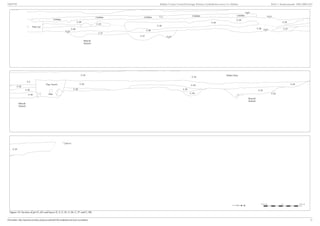
        Handle end flat. Metal (probably iron oxide) remains.


        Stone Artefacts
        Roof Slate (04E0750:80:1) L. 102.2mm, W. 69.4mm, Th. 14.6mm. Incomplete. Greenish gray (5G,
        5/1) with iron oxide staining. Broken tile with circular perforation (D. 8.2mm).


        Roof Slate (04E0750:143:3) L. 109.6mm, W. 79.2mm, Th. 22.6mm. Incomplete. Grayish green (5G,
        5/2). Broken tile with circular perforation (D. 10.04mm).


        Rotary quern stone (04E0750:9:2) Three fragments of granite rotary quern stone.
        L. 250mm, W. 180mm, Th. 72mm and L. 170.5mm, W. 140.4mm, Th. 70.3mm and L.170mm, W,
        110.2mm, Th. 75mm. D. of central perforation 80mm. Incomplete.


        Stone column (04E0750:-:1) L. 325.7mm, D170mm. Incomplete. A small broken shaft section of
        a limestone column or pillar was recovered during excavations in the village of Castledermot. The
        limestone piece of masonry measures 345mm in maximum length and has a diameter of 147mm at
        its squared. The diameter of the column fragment increases slightly along its length to a maximum of
        167mm at the break. A horizontal band of moulding, in ogee pattern, extends around the circumfer-
        ence of the piece 100mm from the broken end. The column is perfectly circular and features a finely
        executed all over vertical dressing in the form of a closely spaced narrow filleting (5mm from crest
        to crest). The squared end of the column shaft is slightly spalled but still exhibits some of its original
        scudding to grip the mortar. The fragment was found in proximity to the market square out of context
        and no doubt much removed from its original location. This broken shaft section of column, is prob-
        ably Medieval in date.


        Metal Artefacts
        Nail (04E0750:129:1) Fe. L. 55.9mm, Th. (of shank) 13.7mm, D. of head 22.5mm. Complete. Flat
        sub-circular headed. Shank rectangular in section. Shank straight. Not conserved. Post Medieval.


        Nail (04E0750:129:2) Fe. L. 35mm, Th. (of shank) 12.1mm, D. of head 17mm. Incomplete. Flat sub-
        circular headed. Shank square in section. Shank straight. Not conserved. Post Medieval.


        Nail (04E0750:129:3) Fe. L. 53mm, Th. (of shank) 6.4mm, D. of head 14mm. Incomplete. Flat sub-
        circular headed. Shank rectangular in section. Shank lightly bent. Not conserved. Post Medieval.


        Nail (04E0750:129:4) Fe. L. 30.05mm, Th. (of shank) 8.3mm, D. of head 17.3mm. Incomplete and


Permalink: http://eachtra.ie/index.php/journal/04e0750-castledermot-town-co-kildare/                                        172
04E0750      Kildare County Council Sewerage Scheme, Castledermot town, Co. Kildare    ISSUE 7: Eachtra Journal - ISSN 2009-2237


        broken. Flat sub-circular headed. Shank rectangular in section. Shank straight. Not conserved. Post
        Medieval.


        Nail head (04E0750:295:2) Fe. D. of head 22.2mm. Incomplete. Flat sub-circular. Corroded. Not
        conserved. Post Medieval.


        Nail (04E0750:295:3) Fe. L. 53.8mm, Th. (of shank) 10.06mm, W. of head 14.1mm. Incomplete. Flat
        rectangular headed. Shank rectangular in section. Shank straight. Not conserved. Post Medieval.


        Nail (04E0750:137:2) Fe. L. 46.2mm, Th. (of shank) 7.8mm, D. of head 13.2mm. Complete. Flat sub-
        circular headed. Shank rectangular in section. Shank straight. Not conserved. Post Medieval.


        Nail (04E0750:161:7) Fe. L. 57.4mm, Th. (of shank) 19.3mm, D. of head 19.4mm. Complete. Flat
        sub-circular headed. Shank rectangular in section. Shank straight. Not conserved. Post Medieval.


        Nail (04E0750:161:8) Fe. L. 54.3mm, Th. (of shank) 8.3mm, D. of head 19mm. Complete. Flat sub-
        circular headed. Shank rectangular in section. Shank straight, terminal lightly bent. Not conserved.
        Post Medieval.


        Nail (04E0750:265:3) Fe. L. 36mm, Th. (of shank) 10mm, W. of head 16mm. Incomplete. Flat square
        headed. Shank rectangular in section. Shank straight. Not conserved. Post Medieval.


        Nail (04E0750:265:4) Fe. L. 61mm, Th. (of shank) 10.05mm, W. of head 14.4mm. Incomplete and
        broken. Flat headed (broken). Shank rectangular in section. Shank straight. Not conserved. Post Me-
        dieval.


        Nail (04E0750:265:5) Fe. L. 53mm, Th. (of shank) 13.7mm, D. of head 18.7mm. Complete? Flat sub-
        circular headed. Shank rectangular in section. Shank straight. Not conserved. Post Medieval.


        Nail head (04E0750:265:6) Fe. D. of head 25.9mm. Incomplete. Flat circular. Corroded. Not con-
        served. Post Medieval.


        Nail (04E0750:121:65) Fe. L. 52.4mm, Th. (of shank) 3.6mm, W. of head 13.8mm. Complete. Flat
        rectangular headed. Shank rectangular in section. Shank straight. Not conserved. Post Medieval.


        Nail (04E0750:121:66) Fe. L. 23.5mm, Th. (of shank) 3.5mm, D. of head 13mm. Complete. Flat sub-
        circular headed. Shank square in section. Shank straight. Not conserved. Post Medieval.


        Nail (04E0750:121:67) Fe. L. 22mm, Th. (of shank) 6.5mm, D. of head 13.2mm. Incomplete. Flat
        sub-circular headed. Shank rectangular in section. Shank straight. Not conserved. Post Medieval.


Permalink: http://eachtra.ie/index.php/journal/04e0750-castledermot-town-co-kildare/                                        173
04E0750      Kildare County Council Sewerage Scheme, Castledermot town, Co. Kildare    ISSUE 7: Eachtra Journal - ISSN 2009-2237


        Nail (04E0750:121:68) Fe. L. 48mm, Th. (of shank) 12mm. Incomplete. Headless. Shank rectangular
        in section. Shank straight. Not conserved. Post Medieval.


        Nail (04E0750:121:69) Fe. L. 26.5mm, Th. (of shank) 9.4mm, D. of head 18.3mm. Incomplete. Flat
        sub-circular headed. Shank rectangular in section. Shank straight. Not conserved. Post Medieval.


        Nail (04E0750:121:70) Fe. L. 30mm, D. (of shank) 5mm, D. of head 17.5mm. Incomplete. Flat sub-
        circular headed. Shank circular in section. Shank straight. Not conserved. Post Medieval.


        Nail (04E0750:121:71) Fe. L. 33.2mm, Th. (of shank) 7.9mm. Incomplete. Headless. Shank rectangu-
        lar in section. Shank straight. Not conserved. Post Medieval.


        Nail (04E0750:121:72) Fe. L. 29mm, Th. (of shank) 10.04mm, D. of head 11.2mm. Incomplete. Flat
        sub-circular headed. Shank square in section. Shank straight. Not conserved. Post Medieval.


        Nail (04E0750:121:73) Fe. L. 43.3mm, Th. (of shank) 10.03mm, D. of head 8.2mm. Complete. Flat
        sub-circular headed. Shank rectangular in section. Shank straight. Not conserved. Post Medieval.


        Nail (04E0750:121:74) Fe. L. 68.8mm, Th. (of shank) 12.2mm, D. of head 20.07mm. Complete. Flat
        sub-circular headed. Shank rectangular in section. Shank straight. Not conserved. Post Medieval.


        Nail (04E0750:121:75) Fe. L. 25mm, Th. (of shank) 7.9mm. Incomplete. Headless. Shank rectangular
        in section. Shank straight. Not conserved. Post Medieval.


        Nail (04E0750:121:76) Fe. L. 30.07mm, Th. (of shank) 10.05mm, D. of head 17.7mm. Incomplete.
        Flat sub-circular headed. Shank rectangular in section. Shank bent. Not conserved. Post Medieval.


        Nail (04E0750:265:117) Fe. L. 36.5mm, Th. (of shank) 9mm. Incomplete. Headless. Shank rectangu-
        lar in section. Shank straight. Not conserved. Post Medieval.


        Nail (04E0750:265:118) Fe. L. 32.2mm, D. (of shank) 10.03mm. Incomplete. Headless. Shank circu-
        lar in section. Shank straight. Not conserved. Post Medieval.


        Nail (04E0750:265:119) Fe. L. 38mm, Th. (of shank) 9.3mm. Incomplete. Headless. Shank rectangu-
        lar in section. Shank straight. Not conserved. Post Medieval.


        Nail (04E0750:265:120) Fe. L. 31mm, Th. (of shank) 15.2mm. Incomplete. Headless. Shank rectan-
        gular in section. Shank straight. Not conserved. Post Medieval.


Permalink: http://eachtra.ie/index.php/journal/04e0750-castledermot-town-co-kildare/                                        174
04E0750      Kildare County Council Sewerage Scheme, Castledermot town, Co. Kildare    ISSUE 7: Eachtra Journal - ISSN 2009-2237


        Nail (04E0750:265:121) Fe. L. 44.7mm, D. (of shank) 11.2mm. Incomplete. Headless. Shank sub-
        circular in section. Shank straight. Not conserved. Post Medieval.


        Nail (04E0750:265:122) Fe. L. 20.05mm, Th. (of shank) 12.2mm. Incomplete. Headless. Shank rec-
        tangular in section. Shank straight. Not conserved. Post Medieval.


        Nail (04E0750:265:123) Fe. L. 23.6mm, D. (of shank) 5.1mm, D. of head 24.4mm. Incomplete. Flat
        sub-circular headed. Shank circular in section. Shank straight. Not conserved. Post Medieval.


        Nail (04E0750:265:124) Fe. L. 37.4mm, Th. (of shank) 16mm. Incomplete. Headless. Shank rectan-
        gular in section. Shank straight. Not conserved. Post Medieval.


        Nail (04E0750:265:125) Fe. L. 32.8mm, Th. (of shank) 8.2mm, D. of head 13.6mm. Incomplete. Flat
        sub-circular headed. Shank triangular in section. Shank straight. Not conserved. Post Medieval.


        Nail (04E0750:265:126) Fe. L. 47.9mm, D. (of shank) 14.3mm. Incomplete. Headless. Shank sub-
        circular in section. Shank straight. Not conserved. Post Medieval.


        Nail (04E0750:265:127) Fe. L. 66.5mm, Th. (of shank) 12.2mm, W. of head 21mm. Complete. Flat
        rectangular headed. Shank rectangular in section. Shank straight. Not conserved. Post Medieval.


        Nail (04E0750:265:128) Fe. L. 36.5mm, D. (of shank) 13mm. Incomplete. Headless. Shank sub-cir-
        cular in section. Shank straight. Not conserved. Post Medieval.


        Nail (04E0750:265:129) Fe. L. 32.3mm, Th. (of shank) 6.8mm. Incomplete. Headless. Shank rectan-
        gular in section. Shank straight. Not conserved. Post Medieval.


        Nail (04E0750:265:130) Fe. L. 18.4mm, Th. (of shank) 7mm, W. of head 12.5mm. Incomplete. Flat
        rectangular headed. Shank triangular in section. Shank straight. Not conserved. Post Medieval.


        Nail (04E0750:265:131) Fe. L. 33.9mm, Th. (of shank) 8mm, W. of head 15mm. Incomplete. Flat
        rectangular headed. Shank rectangular in section. Shank lightly bent. Not conserved. Post Medieval.


        Nail (04E0750:265:132) Fe. L. 15.7mm, Th. (of shank) 4.2mm, W. of head 13mm. Incomplete. Flat
        headed (broken). Shank rectangular in section. Shank straight. Not conserved. Post Medieval.


        Nail (04E0750:265:133) Fe. L. 34.9mm, Th. (of shank) 6.2mm, D. of head 26mm. Incomplete. Flat
        sub-circular headed. Shank rectangular in section. Shank lightly bent. Not conserved. Post Medi-
        eval.


Permalink: http://eachtra.ie/index.php/journal/04e0750-castledermot-town-co-kildare/                                        175
04E0750      Kildare County Council Sewerage Scheme, Castledermot town, Co. Kildare    ISSUE 7: Eachtra Journal - ISSN 2009-2237


        Nail (04E0750:265:2) Fe. L. 146.9mm, D. (of shank) 4.7mm. Incomplete. Headless. Shank circular
        in section. Shank lightly twisted. Not conserved. Post Medieval.


        Nail (04E0750:265:3) Fe. L. 77.3mm, Th. (of shank) 5.1mm. Incomplete. Headless. Shank elliptical
        in section. Shank straight. Not conserved. Post Medieval.


        Nail (04E0750:27:32-33) Fe. L. 49mm, Br. 5.1mm. W./D. 5mm. Conserved. Two joining fragments.
        The surfaces of the nail are corroded with soil embedded in the corrosion layer. The nail is very fragile.
        It is totally mineralised; there is no core remaining.


        Nail (04E0750:35:1) Fe. L. 87mm, Br. 6mm. W. 3mm. Conserved. Headless. Shank rectangular in
        section.


        Nail (04E0750:35:2) Fe. L. 60mm, Br. 5mm. W. 3mm. Conserved. Head offset. Shank rectangular
        in section.


        Nail (04E0750:58:5) Fe. L. 23mm, Br. 5mm. W./D. 5mm. Conserved. Fragment consisting of a head
        and the uppermost portion of the shank. The head is flat and diamond-shaped when viewed from
        above. The shank fragment is square in section and tapers slightly.


        Nail (04E0750:62:1) Fe. L. 28mm, Br. 7mm. W./D. 10mm. Conserved. The shape of this nail suggests
        that it is an example of the type used to secure horseshoes to horses’ hooves.


        Nail (04E0750:65:2) Fe. L. 28mm, Br. 4mm. W./D. 10mm. Conserved. Head slightly offset. Shank
        square in section and tapers. Tip lacking.


        Nail (04E0750:515:1) Fe. L. 40mm, Br. 4mm. W. 4mm. Conserved. Headless nail or shank. Rectan-
        gular in section.


        Nail (04E0750:515:2) Fe. L. 27mm, Br. 6mm. W. 11mm. Conserved. Irregularly shaped head. Shank
        rectangular in section and tapers.


        Nail (04E0750:511:2) Fe. L. 27mm, Br. 17mm. W./D. 16mm. Conserved. Head square in shape and
        large relative to the shank. Shank square in section and tapers.


        Nail (04E0750:431:1) Fe. L. 43mm, Br. 10mm. W./D. 13mm. Conserved. Irregularly shaped head.
        Shank square in section. The tip is lacking.


        Nail (04E0750:416:1) Fe. L. 45mm, Br. 7mm. W./D. 8mm. Conserved. Headless. Shank square in
        section and tapers. The tip is lacking.


Permalink: http://eachtra.ie/index.php/journal/04e0750-castledermot-town-co-kildare/                                        176
04E0750      Kildare County Council Sewerage Scheme, Castledermot town, Co. Kildare    ISSUE 7: Eachtra Journal - ISSN 2009-2237


        Nail (04E0750:379:1) Fe. L. 34mm, Br. 7mm. W./D. 15mm. Conserved. Heavily corroded and totally
        mineralised. The shape is best seen in the x-ray. Rectangular in section.


        Nail (04E0750:333:2) Fe. L. 55mm, Br. 13mm. W./D. 10mm. Conserved. Head irregular in shape
        with a flat upper surface. Shank rectangular in section.


        Nail (04E0750:332:3) Fe. L. 42mm, Br. 6mm. W./D. 5mm. Conserved. Shank square in section and
        bent at a right angle.


        Nail (04E0750:293:1) Fe. L. 26mm, Br. 9mm. W./D. 7mm. Conserved. Horseshoe nail? Square head.
        Shaft rectangular in cross-section. The tip is very tapered in cross-section.


        Nail (04E0750:256:3) Fe. L. 33mm, Br. 8mm. W. 11mm. Conserved. Nail shank.


        Nail (04E0750:256:4) Fe. L. 40mm, Br. 18mm. W. 21mm. Conserved. Flat and sub-round head.
        Shank square in section and tapers to a point.


        Nail (04E0750:195:6) Fe. L. 30mm, Br. 4mm. W. 7mm. Conserved. Iron shank or headless nail.
        Shank square in section and tapers.


        Nail (04E0750:256:4) Fe. L. 36mm, Br. 4mm. W. 14mm. Conserved. Head domed. Shank square in
        section.


        Nail (04E0750:94:1) Fe. L. 70mm, Br. 6mm. W. 10mm. Conserved. Irregularly shaped and slighly
        domed head. Shank square in section and tapers. Tip is lacking.


        Nail (04E0750:128:1) Fe. L. 25mm, Br. 14mm. W. 24mm. Conserved. Short, thick iron nail. Rectan-
        gular and flat head, if viewed from above. Shank rectangular in section and tapers.


        Nail (04E0750:125:11) Fe. L. 17mm, Br. 4mm. W. 7mm. Conserved. Small iron nail. Shank square
        in section and tapers to a point.


        Nail (04E0750:125:12) Fe. L. 32mm, Br. 6mm. W. 12mm. Conserved. Fragment with irregularly
        shaped and slightly domed head. Flat and sub-round head. Shank rectangular in section.


        Nail? (04E0750:256:4) Fe. L. 52mm, Br. 5mm. W. 20mm. Conserved. This artefact appears to be a
        nail. However its head has an unusual shape. Parallel to the line of the shank rather than perpendicular
        to it, it is roughly oval in outline and has flat sides. Shank square in section.


Permalink: http://eachtra.ie/index.php/journal/04e0750-castledermot-town-co-kildare/                                        177
04E0750      Kildare County Council Sewerage Scheme, Castledermot town, Co. Kildare    ISSUE 7: Eachtra Journal - ISSN 2009-2237


        Nail head (04E0750:265:134) Fe. D. of head 13.8mm. Incomplete. Flat circular. Corroded. Not con-
        served. Post Medieval.


        Nail head (04E0750:121:77) Fe. D. of head 13.8mm. Incomplete. Flat sub-circular. Corroded. Not
        conserved. Post Medieval.


        Nail head (04E0750:265:1) Fe. D. of head 22.5mm. Incomplete. Flat sub-circular. Corroded. Not
        conserved. Post Medieval.


        Nail fragments (04E0750:265:137) Fe. L. 32.3mm, W. 16.5mm, Th. 8.3mm. Incomplete. Corroded
        nail shanks (probably 3) stuck together. Not conserved. Post Medieval.


        Nail fragment (04E0750:105:49) Fe. L. 18mm, W. 7mm, Br. 5mm. Conserved. Shannk fragment the
        end of which is curled over.


        Nail fragment (04E0750:105:50) Fe. L. 30mm, W. 7mm, Br. 5mm. Conserved. Shank square in sec-
        tion and tapers.


        Nail fragment (04E0750:105:51) Fe. L. 44mm, W. 7mm, Br. 6mm. Conserved. Shank square in sec-
        tion and tapers.


        Staple (04E0750:62:2) Fe. L. 65mm, Br. 4mm. W./D. 30mm. Conserved. U-shaped. Rectangular in
        section and with each of the two ends taping to a point.


        Hook (04E0750:121:79) Fe. L. 59.3mm, D. (of stem) 3mm. Incomplete. Circular in section. Bent
        terminal. Stem twisted. Not conserved. Post Medieval.


        Hook (04E0750:161:9) Fe. L. 93.6mm, Th. (of stem) 3mm. Incomplete. Solid shank, rectangular in
        section. Bent terminal. Not conserved. Post Medieval.


        Key (04E0750:119:15) Fe. L. 94.8mm, Th. (of shank) 10.09mm. Incomplete. Bow missing. Shank
        rectangular in section. First part of bit present. Not conserved. Post Medieval.


        Key (04E0750:110:7) Fe. L. 68.5mm, Th. (of shank) 10.03mm. Incomplete. Ring bow broken. First
        part of shank present. Shank elliptical in section. Not conserved. Post Medieval.


        Key (04E0750:464:1) Fe. L. 71mm, Br. 35mm, W./D. 8mm. Conserved. Oval ring bow. Directly be-
        low the ring bow the stem has two coil decorations. The bit has two wards and a projecting stem that
        are parallel to the stem.


Permalink: http://eachtra.ie/index.php/journal/04e0750-castledermot-town-co-kildare/                                        178
04E0750      Kildare County Council Sewerage Scheme, Castledermot town, Co. Kildare    ISSUE 7: Eachtra Journal - ISSN 2009-2237


        Buckle (04E0750:265:109) Fe. L. 45mm, Br. 12mm. W./D. 36mm. Conserved. Consisting in a square
        simple frame and a pin.


        Blade (04E0750:459:1) Fe. L. 62mm, Br. 4mm, W./D. 12mm. Conserved. Triangular in section. The
        back of the blade has a small step rising towards the tang, part of wich has survived. The tip is lack-
        ing.


        Pin (04E0750:265:24) Cu. L. 25.3mm, D. (of shank) 0.8mm, D. (of head) 1.6mm. Complete. Club-
        headed with an incised line. Plain shank, circular in section.


        Horseshoe? (04E0750:82:1) Fe. L. 48mm, W./D. 20mm, Br. 3mm. Conserved. This iron artefact ap-
        pears to be a heel fragment of a horseshoe. The intact end tapers to a point. In the broken end there are
        remains of a rectangular perforation.


        Horseshoe fragment (04E0750:256:5) Fe. L. 89mm, W./D. 24mm, Br. 3mm. Conserved. Heel frag-
        ment with two nail holes.


        Coin (04E0750:469:3) Cu. Alloy. Conserved. Size of a halfpenny. The faint design on its obverse and
        reverse are not legible. There are no signs of any legends. It may be a counterfeit. A portion (about 10%)
        is lacking.


        Threaded screw (04E0750:234:2) Fe. L. 67mm, Br. 6mm. W./D. 12mm. Conserved. Even though
        this artefact is from a medieval context (the fill of medieval pits C.235, C.237 and C.238), it appears
        to be a modern ferrous metal screw.


        Sheet metal fragment (04E0750:392:1) Fe. L. 56mm, Br. 4mm. W./D. 39mm. Conserved. Possibly
        an offcut.


        Sheet metal fragment (04E0750:333:1) Cu/Cu. Alloy L. 26mm, Br. 0.5mm. W./D. 13mm. Con-
        served. One worked edge. There is a perforation in the sheet metal but it appears to be accidental rather
        than intentional.


        Artefact (04E0750:255:61) Fe. L. 42mm, Br. 5mm. W./D. 5mm. Conserved. This artefact appears to
        be a small iron tool, possibly a chisel. Its shank is square in section and tapers at one end. The other
        end is chisel-ended.


        Artefact (04E0750:255:62) Fe. L. 45mm, Br. 6mm. W./D. 7mm. Conserved. Iron shank or headless
        nail. Shank square in section and tapers.


Permalink: http://eachtra.ie/index.php/journal/04e0750-castledermot-town-co-kildare/                                        179
04E0750      Kildare County Council Sewerage Scheme, Castledermot town, Co. Kildare    ISSUE 7: Eachtra Journal - ISSN 2009-2237


        Slag? (04E0750:149:4) Fe. This artefact appears to be a lump of slag. It is slightly magnetic.


        Unidentified (04E0750:121:78) Fe. L. 19.8mm, W. 12.3mm, Th. 9.1mm. Incomplete. Corroded
        lump. Sub-circular in section. Not conserved. Post Medieval.


        Unidentified (01E0750:265:110) Fe. L. 66mm, W. 50.04mm, Th. 41.5mm. Incomplete. Corroded
        mass. Sub-circular in section. Not conserved. Post Medieval.


        Unidentified (01E0750:265:111) Fe. L. 35.4mm, W. 29.4mm, Th. 21.5mm. Incomplete. Corroded
        mass. Sub-circular in section. Not conserved. Post Medieval.


        Unidentified (01E0750:265:112) Fe. L. 73.1mm, W. 55mm, Th. 33.4mm. Incomplete. Corroded
        mass. Sub-circular in section. Not conserved. Post Medieval.


        Unidentified (01E0750:265:113) Fe. L. 36.4mm, W. 30.03mm, Th. 23mm. Incomplete and broken.
        Corroded mass. Sub-circular in section. Not conserved. Post Medieval.


        Unidentified (01E0750:265:114) Fe. L. 49.2mm, W. 26mm, Th. 19.3mm. Incomplete. Corroded
        mass. Sub-circular in section. Not conserved. Post Medieval.


        Unidentified (04E0750:265:115) Fe. L. 20.05mm, W. 16mm, Th. 13.7mm. Incomplete. Corroded
        lump. Sub-circular in section. Not conserved. Post Medieval.


        Unidentified (04E0750:265:116) Fe. L. 27.3mm, W. 20mm, Th. 11.2mm. Incomplete. Corroded
        lump. Sub-circular in section. Not conserved. Post Medieval.


        Unidentified (01E0750:265:135) Fe. L. 32.1mm, W. 20.09mm, Th. 12.5mm. Incomplete. Corroded
        mass with animal tooth (probably ovine) stuck. Sub-circular in section. Not conserved. Post Medi-
        eval.


        Unidentified (01E0750:265:136) Fe. L. 36mm, W. 18.2mm, Th. 8.3mm. Incomplete. Corroded flat
        object. Rectangular in section. Not conserved. Post Medieval.


        Unidentified (01E0750:183:4) Fe. L. 50.06mm, W. 32.1mm, Th. 28.8mm. Incomplete. Corroded
        mass. Sub-circular in section. Not conserved. Post Medieval.


Permalink: http://eachtra.ie/index.php/journal/04e0750-castledermot-town-co-kildare/                                        180
04E0750      Kildare County Council Sewerage Scheme, Castledermot town, Co. Kildare    ISSUE 7: Eachtra Journal - ISSN 2009-2237


        Clay Pipes
        Stems
        Stem (04E0750:256:46) L. 50.07mm, D. 6.6mm. Incomplete.


        Stem (04E0750:256:98) L. 51.27mm, D. 7.8mm. Incomplete.


        Stem (04E0750:256:79) L. 55mm, D. 9.2mm. Incomplete.


        Stem (04E0750:256:55) L. 48.2mm, D. 7.9mm. Incomplete.


        Stem (04E0750:256:96) L. 29.4mm, D. 8.7mm. Incomplete.


        Stem (04E0750:256:51) L. 40mm, D. 8.4mm. Incomplete.


        Stem (04E0750:256:78) L. 54.5mm, D. 6.4mm. Incomplete.


        Stem (04E0750:256:92) L. 42.5mm, D. 6.8mm. Incomplete.


        Stem (04E0750:256:73) L. 28.5mm, D. 6mm. Incomplete.


        Stem (04E0750:256:95) L. 16.5mm, D. 8.8mm. Incomplete.


        Stem (04E0750:256:56) L. 77.8mm, D. 9.3mm. Incomplete. Spur present.

        Stem (04E0750:256:52) L. 59.1mm, D. 8.6mm. Incomplete. Spur present.


        Stem (04E0750:256:108) L. 33.4mm, D. 6.4mm. Incomplete.


        Stem (04E0750:256:35) L. 55mm, D. 7.5mm. Incomplete.


        Stem (04E0750:256:104) L. 36.6mm, D. 7.9mm. Incomplete.


        Stem (04E0750:256:48) L. 41mm, D. 7.4mm. Incomplete.


        Stem (04E0750:256:33) L. 82.8mm, D. 8.3mm. Incomplete.


        Stem (04E0750:256:36) L. 57.5mm, D. 8.3mm. Incomplete.


        Stem (04E0750:256:86) L. 42.6mm, D. 7.1mm. Incomplete.


Permalink: http://eachtra.ie/index.php/journal/04e0750-castledermot-town-co-kildare/                                        181
04E0750      Kildare County Council Sewerage Scheme, Castledermot town, Co. Kildare    ISSUE 7: Eachtra Journal - ISSN 2009-2237


        Stem (04E0750:256:66) L. 36.3mm, D. 8.4mm. Incomplete.


        Stem (04E0750:256:26) L. 48.9mm, D. 7.4mm. Incomplete.


        Stem (04E0750:256:27) L. 41.4mm, D. 5.2mm. Incomplete.


        Stem (04E0750:256:106) L. 50mm, D. 6.3mm. Incomplete.


        Stem (04E0750:256:38) L. 45.8mm, D. 7.3mm. Incomplete.


        Stem (04E0750:256:24) L. 39mm, D. 8mm. Incomplete.


        Stem (04E0750:256:63) L. 43.2mm, D. 5mm. Incomplete.


        Stem (04E0750:256:32) L. 36.5mm, D. 6.8mm. Incomplete.


        Stem (04E0750:256:93) L. 27.3mm, D. 8mm. Incomplete.


        Stem (04E0750:256:49) L. 44.2mm, D. 6.4mm. Incomplete.


        Stem (04E0750:256:90) L. 23.2mm, D. 8mm. Incomplete.


        Stem (04E0750:256:37) L. 48mm, D. 6.2mm. Incomplete.


        Stem (04E0750:256:58) L. 39mm, D. 9.2mm. Incomplete.


        Stem (04E0750:256:55) L. 28.5mm, D. 8.2mm. Incomplete.


        Stem (04E0750:256:49) L. 42.8mm, D. 8.1mm. Incomplete.


        Stem (04E0750:256:88) L. 24.8mm, D. 7.5mm. Incomplete.


        Stem (04E0750:256:54) L. 48.5mm, D. 6.5mm. Incomplete.


        Stem (04E0750:256:47) L. 57.8mm, D. 7.3mm. Incomplete.


        Stem (04E0750:256:50) L. 54.7mm, D. 7.6mm. Incomplete.


        Stem (04E0750:256:57) L. 48.6mm, D. 7mm. Incomplete.


Permalink: http://eachtra.ie/index.php/journal/04e0750-castledermot-town-co-kildare/                                        182
04E0750      Kildare County Council Sewerage Scheme, Castledermot town, Co. Kildare    ISSUE 7: Eachtra Journal - ISSN 2009-2237


        Stem (04E0750:256:81) L. 23.6mm, D. 6.7mm. Incomplete.


        Stem (04E0750:256:100) L. 25.5mm, D. 7mm. Incomplete.


        Stem (04E0750:256:72) L. 36.9mm, D. 6.5mm. Incomplete.


        Stem (04E0750:256:62) L. 34.2mm, D. 7.5mm. Incomplete.


        Stem (04E0750:256:28) L. 46mm, D. 7.5mm. Incomplete.


        Stem (04E0750:256:39) L. 57.2mm, D. 5.9mm. Incomplete.


        Stem (04E0750:256:75) L. 25.5mm, D. 7.2mm. Incomplete.


        Stem (04E0750:256:77) L. 34.4mm, D. 5.4mm. Incomplete.


        Stem (04E0750:256:83) L. 20.02mm, D. 5.9mm. Incomplete.


        Stem (04E0750:256:60) L. 42mm, D. 6.9mm. Incomplete.


        Stem (04E0750:256:101) L. 47mm, D. 7.2mm. Incomplete.


        Stem (04E0750:256:91) L. 22.5mm, D. 5.2mm. Incomplete.


        Stem (04E0750:256:84) L. 36.1mm, D. 7.3mm. Incomplete.


        Stem (04E0750:256:105) L. 22.2mm, D. 8.8mm. Incomplete.


        Stem (04E0750:256:44) L. 42.2mm, D. 6.2mm. Incomplete.


        Stem (04E0750:256:59) L. 39.7mm, D. 6.4mm. Incomplete.


        Stem (04E0750:256:31) L. 37.9mm, D. 6.5mm. Incomplete.


        Stem (04E0750:256:85) L. 33.3mm, D. 8.7mm. Incomplete.


        Stem (04E0750:256:34) L. 40.01mm, D. 8mm. Incomplete.


        Stem (04E0750:256:68) L. 57.7mm, D. 68.3mm. Incomplete.


Permalink: http://eachtra.ie/index.php/journal/04e0750-castledermot-town-co-kildare/                                        183
04E0750      Kildare County Council Sewerage Scheme, Castledermot town, Co. Kildare    ISSUE 7: Eachtra Journal - ISSN 2009-2237


        Stem (04E0750:256:61) L. 53.5mm, D. 8mm. Incomplete.


        Stem (04E0750:256:67) L. 25.2mm, D. 6.1mm. Incomplete.


        Stem (04E0750:256:64) L. 43.1mm, D. 8mm. Incomplete.


        Stem (04E0750:256:89) L. 34.3mm, D. 6.9mm. Incomplete.


        Stem (04E0750:256:87) L. 11.7mm, D. 7mm. Incomplete.


        Stem (04E0750:256:94) L. 32.4mm, D. 6.8mm. Incomplete.


        Stem (04E0750:256:107) L. 31.9mm, D. 7.4mm. Incomplete.


        Stem (04E0750:256:80) L. 32.1mm, D. 5.5mm. Incomplete.


        Stem (04E0750:256:71) L. 34.3mm, D. 8.3mm. Incomplete.


        Stem (04E0750:256:97) L. 36.1mm, D. 6.1mm. Incomplete.


        Stem (04E0750:256:102) L. 45.5mm, D. 7.7mm. Incomplete.


        Stem (04E0750:256:69) L. 34.2mm, D. 6.7mm. Incomplete.


        Stem (04E0750:256:70) L. 27.9mm, D. 9.6mm. Incomplete.


        Stem (04E0750:256:82) L. 32.6mm, D. 4.1mm. Incomplete.


        Stem (04E0750:256:45) L. 23.6mm, D. 5mm. Incomplete.


        Stem (04E0750:256:99) L. 31.4mm, D. 6.1mm. Incomplete.


        Stem (04E0750:256:74) L. 25mm, D. 5.7mm. Incomplete.


        Stem (04E0750:750:81) L. 20mm, D. 5.6mm. Incomplete.


        Stem (04E0750:117:1) L. 31mm, D. 9.4mm. Incomplete.


        Stem (04E0750:117:2) L. 27.2mm, D. 7.2mm. Incomplete.


Permalink: http://eachtra.ie/index.php/journal/04e0750-castledermot-town-co-kildare/                                        184
04E0750      Kildare County Council Sewerage Scheme, Castledermot town, Co. Kildare    ISSUE 7: Eachtra Journal - ISSN 2009-2237


        Stem (04E0750:135:11) L. 35.2mm, D. 7.5mm. Incomplete.


        Stem (04E0750:135:12) L. 26.6mm, D. 5.6mm. Incomplete.


        Stem (04E0750:135:10) L. 40.05mm, D. 8.9mm. Incomplete.


        Stem (04E0750:225:53) L. 43mm, D. 5.5mm. Incomplete.


        Stem (04E0750:125:1) L. 14.9mm, D. 9.8mm. Incomplete.


        Stem (04E0750:110:3) L. 32.5mm, D. 7.7mm. Incomplete.


        Stem (04E0750:308:13) L. 38.4mm, D. 7mm. Incomplete.


        Stem (04E0750:36:14) L. 45.2mm, D. 9.5mm. Incomplete.


        Stem (04E0750:302:3) L. 47.5mm, D. 8.9mm. Incomplete.


        Stem (04E0750:180:3) L. 36.5mm, D. 8.2mm. Incomplete.


        Stem (04E0750:112:1) L. 20.09mm, D. 5.2mm. Incomplete.


        Stem (04E0750:108:3) L. 39.3mm, D. 7.4mm. Incomplete.


        Stem (04E0750:247:1) L. 28.3mm, D. 6.1mm. Incomplete.


        Stem (04E0750:247:2) L. 63.6mm, D. 8mm. Incomplete.


        Stem (04E0750:148:1) L. 32.5mm, D. 8.5mm. Incomplete.


        Stem (04E0750:139:1) L. 58.1mm, D. 7.8mm. Incomplete.


        Stem (04E0750:240:6) L. 40.09mm, D. 8.2mm. Incomplete. First part of bowl present.


        Stem (04E0750:248:1) L. 24.9mm, D. 7.9mm. Incomplete.


        Stem (04E0750:248:2) L. 65.6mm, D. 7.8mm. Incomplete.


        Stem (04E0750:103:1) L. 51mm, D. 8mm. Incomplete.


Permalink: http://eachtra.ie/index.php/journal/04e0750-castledermot-town-co-kildare/                                        185
04E0750      Kildare County Council Sewerage Scheme, Castledermot town, Co. Kildare    ISSUE 7: Eachtra Journal - ISSN 2009-2237


        Stem (04E0750:80:5) L. 51.2mm, D. 8.1mm. Incomplete.


        Stem (04E0750:80:6) L. 33mm, D. 9.3mm. Incomplete.


        Stem (04E0750:80:7) L. 45.7mm, D. 7.6mm. Incomplete.


        Stem (04E0750:119:1) L. 28.5mm, D. 7mm. Incomplete.


        Stem (04E0750:119:2) L. 40.02mm, D. 8mm. Incomplete.


        Stem (04E0750:119:3) L. 21mm, D. 7.3mm. Incomplete.


        Stem (04E0750:119:4) L. 39.4mm, D. 7.7mm. Incomplete.


        Stem (04E0750:119:5) L. 17.7mm, D. 9.3mm. Incomplete.


        Stem (04E0750:119:6) L. 15.7mm, D. 6.3mm. Incomplete.


        Stem (04E0750:119:11) Fragment. L. 14.3mm. Incomplete.


        Stem (04E0750:264:17) L. 69mm, D. 8.3mm. Incomplete.


        Stem (04E0750:264:11) L. 65.2mm, D. 7.6mm. Incomplete.


        Stem (04E0750:264:21) L. 53.4mm, D. 7.6mm. Incomplete.


        Stem (04E0750:264:7) L. 47.7mm, D. 6.3mm. Incomplete.


        Stem (04E0750:264:4) L. 60.05mm, D. 7.9mm. Incomplete.


        Stem (04E0750:264:9) L. 44.2mm, D. 7.6mm. Incomplete.


        Stem (04E0750:264:22) L. 42.5mm, D. 6.8mm. Incomplete.


        Stem (04E0750:264:18) L. 47.5mm, D. 7.1mm. Incomplete.


        Stem (04E0750:264:24) L. 21.7mm, D. 8mm. Incomplete.


        Stem (04E0750:264:14) L. 21.4mm, D. 8mm. Incomplete.


Permalink: http://eachtra.ie/index.php/journal/04e0750-castledermot-town-co-kildare/                                        186
04E0750      Kildare County Council Sewerage Scheme, Castledermot town, Co. Kildare    ISSUE 7: Eachtra Journal - ISSN 2009-2237


        Stem (04E0750:264:31) L. 26.5mm, D. 7mm. Incomplete.


        Stem (04E0750:264:23) L. 26.7mm, D. 6.1mm. Incomplete.


        Stem (04E0750:264:13) L. 33.8mm, D. 7.9mm. Incomplete.


        Stem (04E0750:264:25) L. 28.8mm, D. 7.1mm. Incomplete.


        Stem (04E0750:264:19) L. 26.5mm, D. 7.4mm. Incomplete.


        Stem (04E0750:264:27) L. 31.5mm, D. 8.1mm. Incomplete.


        Stem (04E0750:264:16) L. 37.5mm, D. 6.2mm. Incomplete.


        Stem (04E0750:264:6) L. 35.2mm, D. 7.4mm. Incomplete.


        Stem (04E0750:264:28) L. 17.2mm, D. 7.8mm. Incomplete.


        Stem (04E0750:264:15) L. 24.1mm, D. 6.7mm. Incomplete.


        Stem (04E0750:264:20) L. 47mm, D. 8.1mm. Incomplete.


        Stem (04E0750:264:32) L. 32.4mm, D. 6.1mm. Incomplete.


        Stem (04E0750:264:3) L. 47.7mm, D. 7.8mm. Incomplete.


        Stem (04E0750:264:12) L. 32.3mm, D. 5.7mm. Incomplete.


        Stem (04E0750:264:10) L. 34.7mm, D. 5.3mm. Incomplete.


        Stem (04E0750:264:30) L. 26.8mm, D. 8.7mm. Incomplete.


        Stem (04E0750:264:26) L. 25.3mm, D. 7.2mm. Incomplete.


        Stem (04E0750:121:49) L. 17.8mm, D. 8.7mm. Incomplete.


        Stem (04E0750:121:43) L. 53mm, D. 8mm. Incomplete.


        Stem (04E0750:121:41) L. 41.2mm, D. 7.8mm. Incomplete.


Permalink: http://eachtra.ie/index.php/journal/04e0750-castledermot-town-co-kildare/                                        187
04E0750      Kildare County Council Sewerage Scheme, Castledermot town, Co. Kildare    ISSUE 7: Eachtra Journal - ISSN 2009-2237


        Stem (04E0750:121:29) L. 63.7mm, D. 7.8mm. Incomplete.


        Stem (04E0750:121:40) L. 39mm, D. 8.9mm. Incomplete.


        Stem (04E0750:121:30) L. 39.8mm, D. 7.5mm. Incomplete.


        Stem (04E0750:121:45) L. 48.4mm, D. 1.03mm. Incomplete.


        Stem (04E0750:121:52) L. 26.4mm, D. 7.8mm. Incomplete.


        Stem (04E0750:121:31) L. 30.05mm, D. 6.1mm. Incomplete.


        Stem (04E0750:121:56) L. 28.7mm, D. 9.8mm. Incomplete.


        Stem (04E0750:121:46) L. 25.5mm, D. 9mm. Incomplete.


        Stem (04E0750:121:27) L. 62mm, D. 7.8mm. Incomplete.


        Stem (04E0750:121:32) L. 34.5mm, D. 7.9mm. Incomplete.


        Stem (04E0750:121:63) L. 38.6mm, D. 8.7mm. Incomplete.


        Stem (04E0750:121:36) L. 31.2mm. Incomplete (broken).


        Stem (04E0750:121:26) L. 59.8mm, D. 7.4mm. Incomplete.


        Stem (04E0750:121:28) L. 64mm, D. 9mm. Incomplete.


        Stem (04E0750:121:48) L. 37.4mm, D. 7mm. Incomplete.


        Stem (04E0750:121:50) L. 37.5mm, D. 8.5mm. Incomplete.


        Stem (04E0750:121:53) L. 31.5mm, D. 7mm. Incomplete.


        Stem (04E0750:121:33) L. 31.2mm, D. 8mm. Incomplete.


        Stem (04E0750:121:55) L. 25.4mm, D. 8.4mm. Incomplete.


        Stem (04E0750:121:47) L. 37.1mm, D. 7.9mm. Incomplete.


Permalink: http://eachtra.ie/index.php/journal/04e0750-castledermot-town-co-kildare/                                        188
04E0750      Kildare County Council Sewerage Scheme, Castledermot town, Co. Kildare    ISSUE 7: Eachtra Journal - ISSN 2009-2237


        Stem (04E0750:121:34) L. 35.1mm, D. 6.6mm. Incomplete.


        Stem (04E0750:121:42) L. 35.8mm, D. 6.9mm. Incomplete.


        Stem (04E0750:121:44) L. 26.5mm, D. 8.6mm. Incomplete.


        Stem (04E0750:121:54) L. 22.5mm, D. 7.4mm. Incomplete.


        Stem (04E0750:121:60) L. 21mm, D. 7.5mm. Incomplete.


        Stem (04E0750:121:51) L. 14.5mm, D. 8.1mm. Incomplete.


        Stem (04E0750:121:35) L. 15.7mm, D. 8.2mm. Incomplete.


        Stem (04E0750:121:61) L. 14.7mm, D. 5.1mm. Incomplete.


        Stem (04E0750:121:58) L. 19.8mm, D. 5.3mm. Incomplete.


        Stem (04E0750:121:57) L. 26.6mm, D. 7mm. Incomplete.


        Stem (04E0750:121:37) L. 27mm, D. 9.4mm. Incomplete.


        Stem (04E0750:161:12) L. 51.5mm, D. 5.3mm. Incomplete.


        Stem (04E0750:161:11) L. 25.4mm, D. 7.3mm. Incomplete.


        Stem (04E0750:211:7) L. 28mm, D. 5.5mm. Incomplete.


        Stem (04E0750:514:4) L. 35mm, D. 7.4mm. Incomplete.


        Stem (04E0750:481:2) L. 53.1mm, D. 9.4mm. Incomplete.


        Bowls*
        Bowl (04E0750:265:65) Fragment. L. 23.4mm, W. 11mm.


        Bowl (04E0750:265:103) Fragment. L. 43.4mm, W. 17.3mm. Lip present.


        Bowl (04E0750:264:8) Fragment. L. 28.5mm, W. 9.3mm.


        Bowl (04E0750:264:29) Fragment. L. 29.3mm, W. 16.5mm.


Permalink: http://eachtra.ie/index.php/journal/04e0750-castledermot-town-co-kildare/                                        189
04E0750      Kildare County Council Sewerage Scheme, Castledermot town, Co. Kildare    ISSUE 7: Eachtra Journal - ISSN 2009-2237


        Bowl (04E0750:141:59) Fragment. L. 23.2mm, W. 10.05mm. Spur present. Similar to Fig. 4.3.1,
        pag.249, in Lane 2003. Dating: 1690-1750.


        Bowl (04E0750:121:37) L. 49mm, D. 18mm. Complete. Lip present. First part of stem present. Bul-
        bous with plain rim and straightish sides.


        Bowl (04E0750:121:39) L. 45.2mm, D. 13.8mm. Incomplete. Lip present. First part of stem present.
        Slightly bulbous with rouletted rim. Spur untrimmed. Similar to Fig. 12:1:32, pag.368, in Lane 1997.
        Dating: 1640-1670.


        Bowl (04E0750:161:10) L. 38.2mm, D. 20.06mm. Incomplete. Spur present. Slightly bulbous, with
        a stylised ‘Mulberry tree’ on each side. This is made up of a set of six raised dots forming a triangular
        shape. Similar to Fig. 12:1:29, pag.368, in Lane 1997. Usually dated to the second half of the 17th
        century.


        Bowl (04E0750:223:1) L. 43.3mm, D. 19.6mm. Incomplete. First part of stem present. Bulbous, with
        rouletting on the rim. Similar to Fig.12:1:19, pag.368, in Lane 1997, as regards the shape. Dating:
        second half of the 17th century.


        Bowl (04E0750:211:8-11) L. 37.7mm, D. 16mm. Incomplete. Lip present. Small bulbous, spurred
        bowl with chinned shape. Similar to Fig.12:1:3, pag.368, in Lane 1997, as regards the shape. Dating:
        middle of the 17th century.


        Bowl (04E0750:265:30) L. 50mm, D. 15.7mm. Complete. First part of stem present. Straight-sided,
        plain bowl with thin walls. The base is large and flat. Similar to Fig.12:2:24, pag.373, in Lane 1997, as
        regards the shape. This bowl is dated to the second half of the 18th century. As the Castledermot bowls
        present a lower base, an earlier dating may be appropriate.


        Bowl (04E0750:265:25) L. 36.1mm, D. 17.3mm. Incomplete. Lip present. Straight-sided, plain bowl
        with thin walls. Similar to Fig.12:2:24, pag.373, in Lane 1997, as regards the shape. This bowl is dated
        to the second half of the 18th century. As the Castledermot bowls present a lower base, an earlier dating
        may be appropriate.


        Bowl (04E0750:265:41) L. 39mm, D. 18.5mm. Incomplete. First part of stem present. Straight-sided,
        plain bowl with thin walls. The base is large and flat. Similar to Fig.12:2:24, pag.373, in Lane 1997, as
        regards the shape. This bowl is dated to the second half of the 18th century. As the Castledermot bowls
        present a lower base, an earlier dating may be appropriate.


        Bowl (04E0750:265:42) L. 50.09mm, D. 17.1mm. Incomplete. Lip present. Straight-sided, plain bowl


Permalink: http://eachtra.ie/index.php/journal/04e0750-castledermot-town-co-kildare/                                        190
04E0750      Kildare County Council Sewerage Scheme, Castledermot town, Co. Kildare    ISSUE 7: Eachtra Journal - ISSN 2009-2237


        with thin walls. The base is large and flat. Similar to Fig.12:2:24, pag.373, in Lane 1997, as regards
        the shape. This bowl is dated to the second half of the 18th century. As the Castledermot bowls present
        a lower base, an earlier dating may be appropriate.


        Bowl (04E0750:265:29) L. 44mm, D. 15.9mm. Incomplete. Lip present. Straight-sided, plain bowl
        with thin walls. Similar to Fig.12:2:24, pag.373, in Lane 1997, as regards the shape. This bowl is dated
        to the second half of the 18th century. As the Castledermot bowls present a lower base, an earlier dating
        may be appropriate.


        Bowl (04E0750:265:40) L. 32.7mm, D. 17.6mm. Incomplete. Lip present. Plain bowl with slightly
        rouletted rim. Similar to a bowl imported from England, Fig.12:2:1, pag.373, in Lane 1997, as regards
        the shape. Dating: early 18th century.


        Bowl (04E0750:265:43) L. 49.8mm, D. 17.2mm. Incomplete. Lip present. Straight-sided, plain bowl
        with thin walls. The base is large and high, with a heavy overhang on the front side.


        * The diameter considered is the maximum diameter of the bowl. When the bowl lip is present the
        diameter is taken on the rim of the bowl.


        Bibliographic References
        Lane 1997. Lane S., The clay pipes, section 12:I, in “Late Viking Age and medieval Waterford –
              Excavations 1986-1992”, Waterford 1997 (pages 366-374).

        Lane 2003. Lane S., Clay pipes, in “Excavations in Cork City, 1984-2000”, Cork 2003 (pages 248-
             251).


        Notes
        A fragment of plaster mould (04E0750:264:1) is also present. L. 56.4mm, W. 36mm, Th. 10mm.


        There’s a group of five bowls from context 265 (No. 25,29,30,41,42) that present the same features.
        The shape of the bowls reminds to the late 18th century, also if the spur is quite high, compared with
        the reference’s one.


        Two of the bulbous bowls (121:37 and 223:1) present a not common slightly trimmed spur, as the same
        shape is usually found in association with flat a base (See bibliographic references).


Permalink: http://eachtra.ie/index.php/journal/04e0750-castledermot-town-co-kildare/                                        191
04E0750      Kildare County Council Sewerage Scheme, Castledermot town, Co. Kildare    ISSUE 7: Eachtra Journal - ISSN 2009-2237


        12.5      Appendix 5: Pottery Report


                                             The pottery and glass
                                                                    from
                                        Castledermot, Co. Kildare
                                                               (04E0750)

                                              Clare McCutcheon MA MIAI


             A total of 844 sherds of pottery were recovered from the site. Following some
             reassembly within and between contexts this was reduced to 744 sherds of which 585
             (78.65%) are medieval in date. A further six sherds of structural ceramics were also
             recovered and these are listed in Table 3.
                 A single shard of glass, the base of a later 18th century wine bottle, was recovered
             from Area 6, context 482, a layer/fill of brown sand that indicated the presence of a
             further grave cut extending west.


             Quantification:
             The fabric types have been identified visually and the detailed information is
             presented in Table 1 (medieval) and Table 2 (late and post-medieval). The number of
             sherds in each fabric type is listed and the minimum number of vessels (MNV)
             represented by these sherds. This minimum number is based on the presence of
             rim/handle junctions, as this is the most accurate method of determining the presence
             of a jug. As jugs represent the majority of the forms produced, this method of
             quantification ensures at least that the glazed wares can be accurately quantified. It is
             safer and more useful for indicating overall use of pottery at any particular time if
             conservative and consistent numbers can be produced on a site-by-site basis, leading
             to greater use for researchers in the future. The minimum vessels represented (MVR)
             gives a more subjective indication of the possible number of jugs, taking the variety of
             handle, bases and spouts into account. The probable form and the date range of the
             fabric types are also listed in the table. More detailed discussion is included in the
             report with regard to the medieval pottery. The late medieval and post-medieval
             material is widely found in excavations in Ireland cf. Dublin and Cork (McCutcheon
             1995a; 2003), Waterford and Galway (Meenan 1997; 2004).


Permalink: http://eachtra.ie/index.php/journal/04e0750-castledermot-town-co-kildare/                                        192
04E0750      Kildare County Council Sewerage Scheme, Castledermot town, Co. Kildare    ISSUE 7: Eachtra Journal - ISSN 2009-2237


             Table 4 contains the identification of the pottery by context, with the museum finds
             number and, where appropriate, the type of sherd i.e. R, S, B, RH for rim, spout, base
             and rim/handle respectively. The plus sign (+) is used to indicate where two or more
             sherds have been reassembled. Sherd links were noted between two upper fills of the
             ditch in Area 1: 25 and 26.
                 The presence of Dublin-type ware certainly indicates a broadly thirteenth century
             date. The small quantity of the earlier Dublin-type coarseware keeps this broad date
             range within the thirteenth century although the Leinster Cooking Ware has an even
             longer date range from the later twelfth to the mid-fourteenth century. Castledermot
             was an important town in its own right in the medieval period with regular Justiciary
             Courts where cases were heard for a wide area. It was also on the main highway from
             Dublin to Kilkenny and other parts south so it is perhaps somewhat surprising that
             such a small quantity of French wares were recovered with only two sherds of
             Saintonge green glazed ware. Documentary evidence that shows that 'wine was sent to
             TRISTLEDERMOT (Dysert-dermot, or Castledermot), Co. Kildare, for the Lords
             Justices in 1280' (Westropp 1912, 402) and the French wares in particular were
             associated with the wine trade from Bordeaux. It is clear, that Castledermot was not
             reliant on the passing trade to and from Dublin, however, and a local pottery
             production is clearly evidenced, perhaps at Castledermot itself. It may well have been
             made by a pottery from the Dublin area, with its bigger market for the material, as the
             lack of variety in designs and decorative motifs on medieval pottery in Ireland is
             particularly noteworthy. A similar pottery assemblage from west of Main Street,
             Castledermot (E. O'Donovan 1996) also contained a small quantity of Saintonge and
             Dublin-type wares with the balance appearing to be locally made (McCutcheon
             forthcoming (a)). Thin-sections of sherds from that assemblage showed that the
             quartz-rich clays could have been from fairly local but different clay sources
             (McCorry forthcoming).
                 Pottery was made locally in medieval Ireland but local requirements influenced the
             quantity present in any particular area. Given that pottery was almost exclusively used
             in the areas of Anglo-Norman influence, and even there it was not a high status item
             or the most widely used medium for tablewares, its importance can often be over-
             rated in the modern period. Within and around Dublin, the market appears to have
             been largely served by the local production that may well have been associated with
             Crocker Street, Dublin named as such as early as 1190 (Brooks 1936, 22).


Permalink: http://eachtra.ie/index.php/journal/04e0750-castledermot-town-co-kildare/                                        193
04E0750      Kildare County Council Sewerage Scheme, Castledermot town, Co. Kildare    ISSUE 7: Eachtra Journal - ISSN 2009-2237


             Excavations at Maynooth Castle, at High Street, Trim and on the Finglas to Asbourne
             by-pass at Cookstown and Muckerstown/ Wotton townlands have certainly produced
             substantial quantities of pottery identifiable as being within the tradition of the
             Dublin-type wares (McCutcheon forthcoming (b & c); in prep (a & b)). Only at High
             Street, Trim was there evidence of a different clay type, previously designated Trim
             ware (Sweetman 1978). This appears to be similar to and contemporary with the later
             thirteenth and fourteenth century finewares found in Dublin, Kilkenny and Cork
             amongst other centres. In contrast to Dublin, Cork's assemblages may include up to
             70% Saintonge wares in the thirteenth century while Dublin may have the same
             percentage of locally produced wares. The reason for this is not the greater
             sophistication of the Cork people but rather a straightforward case of economics.
             Access to both port cities was considerably different with ships sailing right into Cork
             city and landing material directly onto the market quay while in Dublin, the turbulent
             nature of the river required goods to be unloaded into smaller boats at Dalkey before
             being brought up river. As already noted, pottery was already a low status item, rarely
             mentioned individually in customs dues, and so the return was further lessened with
             over-handling. Also, the countryside extending from Dublin was much more firmly in
             the control of the Anglo-Normans than was the case in Cork. For these reasons, it
             made good economic sense to be as self-sufficient as possible and, as the major centre
             of production, the evidence is mounting that the medieval pottery of Dublin had a
             wide range of distribution.


Permalink: http://eachtra.ie/index.php/journal/04e0750-castledermot-town-co-kildare/                                        194
04E0750      Kildare County Council Sewerage Scheme, Castledermot town, Co. Kildare                  ISSUE 7: Eachtra Journal - ISSN 2009-2237


             Fabric-type                        Sherds       MNV        MVR        Form                      Date

             Leinster Cooking Ware                134          1          >8       2 jugs, >6 cooking pots   L12th-14th
             Dublin-type coarseware                9           1           3       Pipkin, 2 jugs            L12th-E13th
             Dublin-type ware                      2           -           1       Jug                       13th
             Dublin-type cooking ware              14          -           1       Cooking pot               13th
             Castledermot-type                    418          9          >10      Jugs, dripping dish       13th-14th
             Redcliffe?                            3           1           1       Jug                       M13th-14th
             Miscellaneous French                  3           -           1       Jug                       13th
             Saintonge green glazed                2           -           1       Jug                       13th-14th
                           Total medieval         585         12          >26


             Table 1: Medieval pottery from Castledermot (04E750).


             Leinster Cooking Ware:
             'Leinster Cooking Ware is the single most widespread medieval pottery type in
             Leinster' (Ó Floinn 1988, 340). It has been found in varying quantities on both urban
             and rural sites from Dungarvan to Dublin and further north. The fabric contains large
             plates of mica, quartz grits and other inclusions such as decomposed feldspar (ibid
             327).
                 The sherds represent the typical cooking pots with everted rims, ovoid bodies and
             sand-marked bases. The latter are characteristic of this fabric type, the probable result
             of having been placed on a bed of sand during construction (ibid.). In addition, two
             jugs are represented in the assemblage. Based on the large assemblages of Leinster
             Cooking Ware at Carrickmines Castle and Merrion Road excavations (McCutcheon in
             prep (c & d)), these would have been small, with strap handles decorated in a variety
             of designs, with pinched spouts, decorated rims and the typical sand-gritted bases so
             diagnostic of Leinster Cooking Ware. One of the strap handles was undecorated while
             the second was decorated with a series of three lines of stabbing, a fourth line being
             added in at the wider portion of the lower handle.


Permalink: http://eachtra.ie/index.php/journal/04e0750-castledermot-town-co-kildare/                                                      195
04E0750      Kildare County Council Sewerage Scheme, Castledermot town, Co. Kildare    ISSUE 7: Eachtra Journal - ISSN 2009-2237


             Dublin-type wares:
             The designation of a fabric with the suffix -type is recommended pottery practice to
             indicate that a ware has been consistently found in a particular area while evidence for
             a production centre or kiln which has not yet been discovered (Blake & Davey 1983,
             39-40). The general term London-type, for example, has been adopted to describe
             wares that share general traditions and clay sources (Pearce et al 1985, 2). A fuller
             discussion of the names of the Dublin-type wares has been detailed elsewhere
             (McCutcheon 2000, 120-23; 2005) and only a general outline is included in this
             report.
                  The relative dating of the Dublin-type wares has been developed as a result of
             consistent recovery in the stratigraphic levels of the Dublin excavations, and the
             absolute dating is developing by the association of imported wares, and the dating
             information from coins and dendrochronology. The variety of Dublin-type wares and
             their consistent recovery through later 12th to early 14th century levels has assisted in
             the relative dating of other locally made wares in Ireland. To date no pottery
             production site has been found in Dublin along Crocker Street at the west of the
             medieval city. Pottery wasters have been recovered at excavations in the Iveagh
             Markets to the south of the medieval wall (McCutcheon in prep (b)) and ridge tile
             production, in clay similar to Dublin-type coarse ware has been recovered at the
             Cornmarket (Wren forthcoming).


             Dublin-type coarseware: This is a coarse micaceous fabric, the vessels are generally
             hand-built, closely paralleling the contemporary Ham Green B ware in both shape and
             decoration. These were the first glazed vessels made in Dublin and probably in
             Ireland, and their production was as a direct consequence of the close links with
             Bristol from the late twelfth to the early thirteenth century. Two jugs and a pipkin are
             represented in the small assemblage. While the jugs are a fairly standard design with
             strap handle, pulled or applied spout and thumbed base, pipkins are less common. The
             evidence for such a vessel, a small, possibly single serving item, is the characteristic
             projecting rod handle with curl or curved end.


Permalink: http://eachtra.ie/index.php/journal/04e0750-castledermot-town-co-kildare/                                        196
04E0750      Kildare County Council Sewerage Scheme, Castledermot town, Co. Kildare    ISSUE 7: Eachtra Journal - ISSN 2009-2237


             Dublin-type ware: This is a less coarse micaceous fabric, the vessels are generally
             wheel-thrown, and the production and use appears to date broadly from the early
             thirteenth to early fourteenth century (McCutcheon 2000, 122).
                 A number of reasons have been suggested for the sagging base and the
             accompanying thumbing or pinching etc. on medieval jugs, but it was certainly
             deliberately done, most probably to facilitate a steady placing of the jug in or near the
             fire to heat wine or other liquid.


             Dublin-type cooking ware: This is a generic term used to cover cooking ware from
             Dublin that is clearly not Leinster Cooking Ware, i.e. while unglazed and somewhat
             micaceous, it does not contain large amounts of quartz and the bases are not sand-
             gritted. The forms, however, are again the typical medieval cooking pots with everted
             rims, ovoid bodies and slightly sagging bases.


             Castledermot-type:
             While the underlying clays in the region around and to the south of Dublin are very
             similar, the pottery from Castledermot appears to be locally made based on the firing
             techniques and resulting colour. The vessels here tend to fire lighter in colour than
             similar jugs from Dublin although it would still be impossible to identify them as
             Castledermot-type unless one was certain of the provenance. This is in contrast to
             Adare-type ware, for example, which has a number of characteristics that make it
             instantly recognisable (McCutcheon forthcoming (d)) such as rapid firing, a sandwich
             effect in colour and blasting of air pockets.
                 Of the 21 strap handles from the jugs recovered, eleven fragments were
             undecorated while one had a single incised line down the handle. Eight of the handles
             had three incised lines while one had an incised wavy line with somewhat random
             slashes on either side. A further handle was a twisted rod shape, possibly associated
             with a form of puzzle jug. The final handle was an almost V-shaped rod handle with
             an incised line.
                 Six of the rim sherds had applied thumbed strips, probably for decoration, but these
             applied strips also served a useful purpose in assisting the grip on the jug rim. Several
             of the bases had marks of thumbing, some continuous, some more widely spaced,
             while of the five spouts recovered, three were pulled and two were applied.
                 The dripping dish fragment (H. c.30mm) probably represents a rectangular dish


Permalink: http://eachtra.ie/index.php/journal/04e0750-castledermot-town-co-kildare/                                        197
04E0750      Kildare County Council Sewerage Scheme, Castledermot town, Co. Kildare    ISSUE 7: Eachtra Journal - ISSN 2009-2237


             with a single projecting handle. This was used to collect the fat and juices dripping
             from the meat roasting on the spit—the simple addition of a small amount of flour
             would have made an excellent gravy.


             Redcliffe
             By 1250 the Ham Green potters had been put out of business by the wheel-thrown
             Redcliffe ware, also from Bristol (Ponsford 1991, 95). Smaller quantities of this ware
             are found in Ireland, especially in the area of the Pale. As noted above, by the mid-
             13th century pottery was being produced widely in Ireland and in general the settlers
             were becoming more self-sufficient. In the more southern areas such as Cork city,
             however, Redcliffe represents a sizeable percentage of the medieval assemblage,
             reflecting both the ease of access to the city by ships arriving from Bristol and the
             hazards of developing a low status craft in a hostile neighbourhood (McCutcheon
             1995b, 12).
                 Three sherds are here identified as Redcliffe ware because of the distinctive colour
             and firing technique that produces a dark grey core and cream/beige surfaces. It
             should be noted, however, that similar ware was produced in the Kells Priory, Co.
             Kilkenny area (McCutcheon in press), and thin-sections was needed to confirm that it
             was more likely to be from the locality than from England.


             Miscellaneous French:
             Three sherds green glazed whiteware were recovered. These wares appear to be from
             mid-west or centre west of France but the exact provenance is as yet unknown. Such
             wares are found all over Ireland, however, and in general are a useful indicator of a
             later twelfth to early thirteenth century date (McCutcheon 2005).


             Saintonge mottled green glazed:
             The wares from the Saintonge region of south-west France were imported into Ireland
             and Britain as by-products of the extensive wine trade (Chapelot 1983; Deroeux et al.
             1994) and are likely to be found on almost every Anglo-Norman site in Ireland. The
             fabric of the all the Saintonge wares is generally the same, a fine white micaceous
             fabric with occasional quartz. The mottled green glaze results from the addition of
             copper filings to the clear lead glaze.


Permalink: http://eachtra.ie/index.php/journal/04e0750-castledermot-town-co-kildare/                                        198
04E0750      Kildare County Council Sewerage Scheme, Castledermot town, Co. Kildare                  ISSUE 7: Eachtra Journal - ISSN 2009-2237


             Fabric-type                            Sherds       MNV        MVR        Form                      Date

             Transition ware                           8           -           1       Jug?                      16th-17th
             Frechen                                   2           -           1       Jug                       17th
             Tin glazed earthenware                    7           -           1       Bowl                      17th
             Southwark manganese                       2           -           1       Bowl                      17th
             North Devon gravel free                   1           -           1       Bowl                      17th
             North Devon gravel tempered               5           -           1       Bowl                      17th
             North Devon sgraffito                     3           -           1       Plate                     17th
             Bristol/Staffordshire slipware            13          -           1       Cup                       18th
             Mottled ware                             14           -          >2       Tankards                  18th
             Anglo-Netherlands slipware                1           -           1       Plate                     18th
             Creamware                                 9           -           1       Plate                     18th
             Black glazed ware                         34          -          >2       Cup, storage vessel       18th-19th
             Glazed red earthenware                    53          -           4       Plate, pancheon, 2 bowls 18th-19th
             Glazed red earthenware: slip              1           -           1       Jug?                      18th-19th
             trailed
             Pearlware                                 1           -           1       Plate                     19th-20th
             Transfer printed ware                     1           -           1       Plate                     19th-20th
             Stoneware                                 4           -           2       Tankard                   19th-20th
                         Total post-medieval          159          -          >21


             Table 2: Post-medieval pottery from Castledermot (04E750).


Permalink: http://eachtra.ie/index.php/journal/04e0750-castledermot-town-co-kildare/                                                      199
04E0750      Kildare County Council Sewerage Scheme, Castledermot town, Co. Kildare              ISSUE 7: Eachtra Journal - ISSN 2009-2237


                 The term 'Transition ware' is used to describe sherds of glazed red earthenware
             jugs found in Ireland, and probably made in Ireland, that carry evidence of both
             medieval and post-medieval traditions. That is they are glazed on the exterior in the
             manner of the medieval wares but the shape and technique reflects a later
             development without yet being clearly identified with the later seventeenth to
             nineteenth century jugs. It is still a very subjective and rather nebulous working
             description for this shadowy group of ceramics.
                 As noted above, the post-medieval wares are commonly found on excavations in
             Ireland. The types are almost entirely English-made, from the seventeenth century
             North Devon wares to the eighteenth and nineteenth century wares, primarily
             manufactured in the Staffordshire potteries (cf. Jennings 1981; Draper 1984).


             Fabric type                                       Sherds        Form         Date
             Castledermot-type                                     1         Ridge-tile   13th-14th
             North Devon gravel tempered                           1         Ridge-tile   17th
             Pantile                                               2         Roof-tile    L17th-18th
             Pearlware                                             1         Wall tile    19th-20th
             Drainpipe                                             1         Drainpipe    19th-20th
                            Total structural ceramics              6


             Table 3: Structural ceramics from Castledermot (04E750).


Permalink: http://eachtra.ie/index.php/journal/04e0750-castledermot-town-co-kildare/                                                  200
04E0750      Kildare County Council Sewerage Scheme, Castledermot town, Co. Kildare    ISSUE 7: Eachtra Journal - ISSN 2009-2237


             Bibliography
             Blake, H. & Davey, P. 1984 Guidelines for the processing and publication of medieval
                 pottery. London.
             Brooks, E. St. J. 1936 Register of the Hospital of S. John the Baptist without the New Gate,
                 Dublin. Dublin.
             Chapelot, J. 1983 ‘The Saintonge pottery industry in the later Middle Ages’, in P. Davey &
                 R. Hodges (eds), Ceramics and trade. 49-53. Sheffield.
             Deroeux, D. & Dufournier, D. & Herteig, A.E. 1994 'French medieval ceramics from the
                 Bryggen excavations in Bergen, Norway', The Bryggen Papers Supplementary series No.
                 5, 161-208. Bergen.
             Draper, J. 1984 Post-medieval pottery. Princes Risborough.
             Jennings, S. 1981 Eighteen centuries of pottery from Norwich. Norwich.
             McCorry, M. in press ‘Thin-sections of medieval pottery’, C. McCutcheon, ‘The medieval
                 pottery’, in M. Clyne (ed.), Excavations at Kells Priory, Co. Kilkenny. DOEHLG,
                 Dublin.
             McCutcheon, C. 1995a 'The medieval and post-medieval pottery', in L. Simpson,
                 Excavations at Essex Street West, Dublin, 40—54, 59—67. Dublin
             McCutcheon, C. 1995b Cork-type pottery: a medieval urban enterprise, MA Thesis NUI
                  (unpublished).
             McCutcheon, C. 2000 'Medieval pottery in Dublin: new names and some dates', in S. Duffy
                 (ed.), Medieval Dublin 1, 117-25. Dublin.
             McCutcheon, C. 2004 ‘Pottery’, in R.M. Cleary & M.F. Hurley (eds), Excavations in Cork
                 City 1984-2000. 197-235 Cork
             McCutcheon, C. 2005 The medieval pottery from the waterfront excavations at Wood Quay,
                 Dublin. Dublin.
             McCutcheon, C. in press ‘The medieval pottery’, in M. Clyne (ed.), Excavations at Kells
                 Priory, Co. Kilkenny. DOEHLG, Dublin.
             McCutcheon, C. forthcoming (a) 'The pottery' in E. O'Donovan, Excavations at Main Street,
                 Castledermot.
             McCutcheon forthcoming (b) 'The pottery', in A. Hayden, Excavations at Maynooth Castle,
                 Co. Kildare.
             McCutcheon, C. forthcoming (c) 'The pottery', in A. Hayden, Excavations at High Street,
                 Trim, Co. Meath.
             McCutcheon, C. forthcoming (d) ‘The pottery’, in J. Kiely, Excavations at Adare Castle,
                 Co. Limerick.
             McCutcheon, C. in prep (a) 'The medieval pottery', in R. Clutterbuck, Excavations at
                 Cookstown, Co. Meath.


Permalink: http://eachtra.ie/index.php/journal/04e0750-castledermot-town-co-kildare/                                        201
04E0750      Kildare County Council Sewerage Scheme, Castledermot town, Co. Kildare    ISSUE 7: Eachtra Journal - ISSN 2009-2237


             McCutcheon, C. in prep (b) 'The medieval pottery', in D. Fallon, Excavations at
                 Muckerstown/ Wotton, Co. Meath.
             McCutcheon, C. in prep (c) 'The medieval pottery', in M. Clinton, Excavations at
                 Carrickmines Castle, Co. Dublin.
             McCutcheon, C. in prep (d) 'The medieval pottery', in C. Baker, Excavations at Merrion
                 Road, Dublin.
             Meenan, R. 1997 'Post-medieval pottery', in M.F. Hurley & O.M.B. Scully, Late Viking age
                 and medieval Waterford: Excavations 1986-1992. 338-55. Waterford.
             Meenan, R. 2004 'Pottery of the late medieval and post-medieval periods', in E. Fitzpatrick,
                 M. O'Brien & P. Walsh (eds), Archaeological investigations in Galway City, 1987-1998.
                 376-404. Bray.

             Pearce, J.E., Vince, A.G., & Jenner, M.A. 1985 A dated type-series of London medieval
                  pottery Part 2: London-type ware. London.
             Ponsford, M. 1991 'Dendrochronological dates from Dundas Wharf and the dating of Ham
                  Green and other medieval pottery', in E. Lewis (ed.), Custom and ceramics, 81—103.
                Wickham.
             Sweetman, P.D. 1978 'Archaeological excavations at Trim Castle, Co. Meath, 1971-74',
                 Proceedings of the Royal Irish Academy, 78C, 127-98.
             Westropp, T.J. 1912 'Early Italian maps of Ireland from 1300 to 1600, with notes on foreign
                  settlers and trade,' Proceedings of the Royal Irish Academy 30, 361—428.
             Wren, J. forthcoming ‘The roof-tiles’, in A. Hayden, Excavations at the Cornmarket,
                 Dublin.


Permalink: http://eachtra.ie/index.php/journal/04e0750-castledermot-town-co-kildare/                                        202
04E0750      Kildare County Council Sewerage Scheme, Castledermot town, Co. Kildare                ISSUE 7: Eachtra Journal - ISSN 2009-2237


             Context      Sherd type                              Finds number
                 5        Castledermot-type                       2, 3
                          Pearlware                               1(wall tile)
                11        Glazed red earthenware                  1
                15        Stoneware                               1
                25        Leinster Cooking Ware                   11
                          Castledermot-type                       1+4+10+15+17+F26:20, 2, 3+16, 5-8, 13
                          Glazed red earthenware                  9, 12+14
                26        Leinster Cooking Ware                   1+2+5+6+7+11®, 8-10, 13-15, 17-19
                          Dublin-type coarseware                  22, 23(H), 24®, 25, 26(H)
                          Castledermot-type                       3+4+12(B), 16, 20+F25:1+4+10+15+17
                          Saintonge green glazed                  21
                27        Leinster Cooking Ware                   1, 2, 4, 5, 8, 9, 10(B), 12, 13+14+20®, 15-17, 18(B), 19, 21®,
                                                                  22-25, 27, 28+29, 30
                          Castledermot-type                       3+7, 6®, 11(B), 26, 31
                29        Castledermot-type                       1+3+4+6+7+8+9+10+11+14+15+16+17+18+19+20(RH),
                                                                  2+5+12+13(B)
                33        Leinster Cooking Ware                   3®
                36        Tin glazed earthenware                  10+16
                          Creamware                               5, 6, 11, 12, 13®, 15, 17, 18
                          Mottled ware                            14(H)
                          Black glazed ware                       1
                          Glazed red earthenware                  2+3+4+20
                38        Castledermot-type                       1
                50        Castledermot-type                       4
                52        Leinster Cooking Ware                   5, 6
                          Castledermot-type                       1-4, 7, 8(B), 9
                56        Leinster Cooking Ware                   8
                          Castledermot-type                       1, 2, 4(H)
                58        Leinster Cooking Ware                   2, 3
                          Castledermot-type                       1, 4
                61        Castledermot-type                       1, 2
                62        Leinster Cooking Ware                   3, 6, 12-15, 20, 24
                          Castledermot-type                       4(RH), 5, 7, 8(RH), 9-11, 16-19, 21-23, 25-31
                63        Transfer printed ware                   2®
                          Pearlware                               1
                64        Leinster Cooking Ware                   5-7
                          Castledermot-type                       1-4
                65        Castledermot-type                       1®


Permalink: http://eachtra.ie/index.php/journal/04e0750-castledermot-town-co-kildare/                                                    203
04E0750      Kildare County Council Sewerage Scheme, Castledermot town, Co. Kildare              ISSUE 7: Eachtra Journal - ISSN 2009-2237


                66        Castledermot-type                       1
                69        Drainpipe                               1
                75        Leinster Cooking Ware                   8, 9
                          Dublin-type coarseware?                 5(H)
                          Castledermot-type                       1, 2(B), 3, 4®, 6(B)
                          Bone                                    7 (discarded)
                80        Castledermot-type                       3, 4
                83        Glazed red earthenware                  2, 3
                          Pantile                                 1
                84        Leinster Cooking Ware                   9-11
                          Castledermot-type                       2(H)
                          Tin glazed earthenware                  5
                          Glazed red earthenware                  1, 3, 4, 6, 7+8
                96        Leinster Cooking Ware                   4(B), 5(B), 7(B)
                          Castledermot-type                       1(B), 2, 6, 8
                          Creamware                               3
                100       Leinster Cooking Ware                   3®
                          Castledermot-type                       1, 2
                          Black glazed ware                       4
                104       Leinster Cooking Ware                   1
                          Castledermot-type                       2
                105       Leinster Cooking Ware                   1®, 2-4, 6-8, 9®, 11, 12
                          Castledermot-type                       5, 10, 13(B), 14, 15+16+25+26+29+30+31+33+37+38+42+
                                                                  43+44(RHS), 17, 18+20, 19(B), 21, 22(B), 23, 24+27+33,
                                                                  27(RB), 28+35+41, 32(B), 34, 36, 40(B)
                108       Castledermot-type                       6
                          Black glazed ware                       5
                          Glazed red earthenware                  4, 7
                110       Black glazed ware                       4®, 5®
                112       Leinster Cooking Ware                   5
                117       Castledermot-type                       3
                119       Tin glazed earthenware                  9®
                          Bristol/Staffordshire slipware          7
                          Black glazed ware                       13
                          Glazed red earthenware                  10, 14
                121       Leinster Cooking Ware                   12, 15, 17(B)
                          Castledermot-type                       7, 22
                          Tin glazed earthenware                  24, 25®
                          North Devon gravel tempered             2(H), 6®, 11(B), 19+21
                          Bristol/Staffordshire slipware          8, 9


Permalink: http://eachtra.ie/index.php/journal/04e0750-castledermot-town-co-kildare/                                                  204
04E0750      Kildare County Council Sewerage Scheme, Castledermot town, Co. Kildare                ISSUE 7: Eachtra Journal - ISSN 2009-2237


                          Black glazed ware                       3®, 4, 10, 13, 14, 18®
                          Glazed red earthenware                  1®, 5, 16, 20
                122       Castledermot-type                       1
                125       Black glazed ware                       2-4, 6+7
                          Glazed red earthenware                  9, 10
                          Stone                                   8 (discarded)
                133       Leinster Cooking Ware                   4
                          Glazed red earthenware                  1®, 2, 3, 5
                135       North Devon sgraffito                   2, 8
                          Bristol/Staffordshire slipware          4®, 5, 6
                          Black glazed ware                       3
                          Glazed red earthenware                  1(B), 7+9
                143       Glazed red earthenware                  1
                148       Leinster Cooking Ware                   9
                          Tin glazed earthenware                  2
                          Mottled ware                            3, 4, 7(B), 8(B)
                          Glazed red earthenware                  6, 10
                          Pantile                                 11
                          Stoneware                               5
                149       Castledermot-type                       3
                152       Castledermot-type                       1+2(RS)
                153       Leinster Cooking Ware                   1, 3
                          Castledermot-type                       2, 4, 5, 6, 8
                          Dublin-type?                            7
                159       Leinster Cooking Ware                   9(B)
                          Castledermot-type                       1(B), 2-4, 5®, 6, 7(S), 8, 10(B), 11-13, 14(H), 15®, 16
                161       Castledermot-type                       1, 3(H)
                          North Devon gravel free                 5
                          Black glazed ware                       2, 4
                162       Black glazed ware                       6(B)
                          Glazed red earthenware                  1+2+4+5, 3+7
                163       Frechen                                 2+3
                          Tin glazed earthenware                  1®
                          Glazed red earthenware                  4
                172       Castledermot-type                       7(B)
                          Mottled ware                            6(B)
                          Black glazed ware                       1, 8
                          Glazed red earthenware                  2-5
                173       Castledermot-type                       3
                          North Devon gravel tempered             8


Permalink: http://eachtra.ie/index.php/journal/04e0750-castledermot-town-co-kildare/                                                    205
04E0750      Kildare County Council Sewerage Scheme, Castledermot town, Co. Kildare                 ISSUE 7: Eachtra Journal - ISSN 2009-2237


                          Bristol/Staffordshire slipware          5
                          Black glazed ware                       4
                          Glazed red earthenware                  6+7
                175       Leinster Cooking Ware                   1(B), 2(B)
                          Glazed red earthenware                  3, 4, 5+6, 7-9
                180       Leinster Cooking Ware                   1®
                          Dublin-type cooking ware                2
                185       Mottled ware                            1, 2+3
                188       Dublin-type coarseware                  1
                          Castledermot-type                       2
                190       Castledermot-type                       1, 2, 4-6, 7+14, 8, 9, 12, 13
                          Mottled ware                            3, 10(B), 11(B)
                191       Castledermot-type                       1
                204       Leinster Cooking Ware                   1®
                205       Castledermot-type                       1(ridgetile?)
                207       Leinster Cooking Ware                   1
                208       Glazed red earthenware                  1®
                211       Dublin-type coarseware                  6
                          Castledermot-type                       1+4(B)
                          Frechen                                 2
                          Tin glazed earthenware                  5(B)
                          Glazed red earthenware                  3
                221       Glazed red earthenware                  1
                225       Bristol/Staffordshire slipware          1(B)
                228       Castledermot-type                       1-3, 4(RS), 5-9
                230       Castledermot-type                       1(RH), 2, 3, 4(H), 5, 6, 7(B), 8®, 9-15
                234       Leinster Cooking Ware                   3, 10+11+14®, 12, 13
                          Castledermot-type                       5, 6(B), 7, 8(RS), 9®, 15(H)
                236       Leinster Cooking Ware                   3
                          Castledermot-type                       1, 2
                240       Leinster Cooking Ware                   3
                          Castledermot-type                       1(B), 4, 5
                243       Bristol/Staffordshire slipware          2
                          Black glazed ware                       1
                250       Castledermot-type                       1(B)
                254       Leinster Cooking Ware                   2®, 4®, 7
                          Castledermot-type                       1(B), 3, 5+6+10(H), 8, 9, 11(B), 12, 13, 14(B), 15(B), 16(B),
                                                                  17(B), 18
                255       Leinster Cooking Ware                   2+10®, 7, 14, 17, 29


Permalink: http://eachtra.ie/index.php/journal/04e0750-castledermot-town-co-kildare/                                                     206
04E0750      Kildare County Council Sewerage Scheme, Castledermot town, Co. Kildare                 ISSUE 7: Eachtra Journal - ISSN 2009-2237


                          Castledermot-type                       1, 3-5, 6(B), 8(H), 9, 11(B), 12, 13, 15, 16(B), 18-20, 22, 23,
                                                                  24(B), 25-28, 30, 31(H), 32-35, 36(H), 37(B), 38-43,
                                                                  44+51+52(RS), 46, 48-50
                          Black glazed ware                       21
                256       Leinster Cooking Ware                   2
                          Castledermot-type                       1
                260       Castledermot-type                       2(B)
                264       Mottled ware                            2
                265       Tin glazed earthenware                  15(B)
                          North Devon gravel tempered             8(ridgetile)
                          North Devon sgraffito                   23®
                          Black glazed ware                       13®, 14, 16, 17+20, 18, 19
                          Glazed red earthenware                  21, 22
                270       Dublin-type cooking ware                4®
                          Castledermot-type                       2(B), 3, 5, 6(B), 7, 9, 10
                          Mottled ware                            8
                284       Castledermot-type                       1-3
                288       Castledermot-type                       1-5, 6+8, 7, 9, 10(H), 11(H)
                293       Castledermot-type                       2, 3(B)
                295       Dublin-type coarseware                  1(B)
                297       Leinster Cooking Ware                   2, 3
                          Castledermot-type                       1, 4, 5
                302       Castledermot-type                       1, 2
                303       Castledermot-type                       1, 2
                308       Leinster Cooking Ware                   5
                          Castledermot-type                       1+12(H), 2(B), 4(B), 6+7+8+9+10(H)
                          Black glazed ware                       3(H), 11(H)
                311       Castledermot-type                       2(H), 3(RS), 4-6
                          Dublin-type                             1
                313       Castledermot-type                       1(B)
                317       Castledermot-type                       1-3
                318       Leinster Cooking Ware                   5(B), 6
                          Castledermot-type                       1(B), 2, 3+7(B), 4, 8(B)
                319       Castledermot-type                       7(H), 8, 9(H), 10(H), 11, 12
                321       Castledermot-type                       1(RS), 2(B)
                326       Castledermot-type                       1+2+4+5, 3
                328       Dublin-type cooking ware                1-5, 6(B), 7-11, 12(B)
                330       Leinster Cooking Ware                   1®
                332       Leinster Cooking Ware                   7, 12, 13(H), 17, 22+35(B), 25, 31, 45, 50, 54, 56


Permalink: http://eachtra.ie/index.php/journal/04e0750-castledermot-town-co-kildare/                                                     207
04E0750      Kildare County Council Sewerage Scheme, Castledermot town, Co. Kildare                 ISSUE 7: Eachtra Journal - ISSN 2009-2237


                          Castledermot-type                       4, 8, 10, 11(B), 14(B), 16(H), 18-20, 21(B), 24, 26®, 27-30,
                                                                  32(B), 33, 34, 36, 37(H), 38, 39, 40(B), 41, 44, 46-49, 52, 53,
                                                                  55, 57-59
                          Redcliffe?                              6(RH)
                          Miscellaneous French                    5, 23
                          Saintonge green glazed                  51
                          Anglo-Netherlands slipware              42
                          Black glazed ware                       43
                333       Leinster Cooking Ware                   4+12®, 9+41®,16+26(H), 40, 42, 64, 72(B)
                          Castledermot-type                       2, 3(B), 5, 6, 10-12, 13(S), 14, 15, 17, 18(B), 19, 20, 21(B),
                                                                  22(RH), 23, 24(H), 25, 27(B), 28-32, 34(RH), 35-39, 41, 43-
                                                                  50, 52(B), 53-58, 59(B), 60, 61, 62(B), 63, 65, 66(B), 67,
                                                                  68(RH), 69-71, 73-76
                          Redcliffe?                              7(B), 8+33+51(B)
                357       Castledermot-type                       1
                358       Leinster Cooking Ware                   3®, 5, 6
                          Castledermot-type                       2, 4
                362       Leinster Cooking Ware                   2
                          Castledermot-type                       1+3+4, 5®, 6
                364       Castledermot-type                       1, 2
                369       Castledermot-type                       1
                375       Leinster Cooking Ware                   1
                          Castledermot-type                       2, 3, 4+5(S), 6
                379       Castledermot-type                       6, 7, 8+9, 10
                390       Leinster Cooking Ware                   5®
                          Castledermot-type                       3, 4
                          Miscellaneous French?                   1+2
                395       Castledermot-type                       1-3, 4®, 5, 6
                397       Castledermot-type                       4
                417       Mottled ware                            2
                          Glazed red earthenware                  3
                          Stoneware                               1(B)
                422       Castledermot-type                       1
                440       Stoneware                               1®
                442       Leinster Cooking Ware                   1
                454       Leinster Cooking Ware                   1, 2
                463       Glazed red earthenware                  1(B), 2
                469       Transition ware                         1
                          Glazed red earthenware                  2(B)


Permalink: http://eachtra.ie/index.php/journal/04e0750-castledermot-town-co-kildare/                                                     208
04E0750      Kildare County Council Sewerage Scheme, Castledermot town, Co. Kildare                  ISSUE 7: Eachtra Journal - ISSN 2009-2237


                481       Transition ware                         1
                500       Leinster Cooking Ware                   1(B)
                510       Castledermot-type                       5(B)
                          Bristol/Staffordshire slipware          1(B), 2(H), 3(H), 4®
                511       Castledermot-type                       1
                512       Castledermot-type                       2
                          Transition ware                         3, 4, 5(B), 6
                514       Transition ware                         1, 2
                          Glazed red earthenware: slip            3
                          trailed
                516       Castledermot-type                       1
                          Stone                                   2(discarded)
                520       Leinster Cooking Ware                   1®


             Table 4: Pottery identification by context.


             Site information:
             The following table lists the contexts containing pottery by area as they appear in the
             stratigraphic report. The quantity of sherds in each fabric type is also listed, indicating
             the number of sherds following reassembly rather than the original number found on
             the site. The date range suggested is only the date range of the pottery found in each
             feature and does not attempt to be prescriptive for the suggested dating of any
             particular feature.

              Area      Context       Context description                   Fabric-type & quantity                Date
                                                                                                                  (century)
                1           5         Silt over stony base (C10)            Castledermot-type (x2)                19th
                                                                            Pearlware (x1)
                1          15         Upper fill of pit (C19)               Stoneware (x1)                        19th
                1          11         Dark brown clay layer                 Glazed red earthenware (x1)           19th
                1          25         Upper fill of ditch (C24)             Leinster Cooking Ware (x1)            13th
                                                                            Castledermot-type (x8)                disturbed
                                                                            Glazed red earthenware (x2)
                1          26         Upper fill of ditch (C24)             Leinster Cooking Ware (x10)           E13th


Permalink: http://eachtra.ie/index.php/journal/04e0750-castledermot-town-co-kildare/                                                      209
04E0750      Kildare County Council Sewerage Scheme, Castledermot town, Co. Kildare                  ISSUE 7: Eachtra Journal - ISSN 2009-2237


                                                                            Dublin-type coarseware (x5)
                                                                            Castledermot-type (x3)
                                                                            Saintonge green glazed (x1)
                1          27         Upper fill of ditch (C24)             Leinster Cooking Ware (x21)           13th
                                                                            Castledermot-type (x5)
                1          29         Basal deposit of ditch (C24)          Castledermot-type (x2)                13th
                1          33         Basal fill of ditch (C24)             Leinster Cooking Ware (x1)            L12th?
                1          50         Fill of ditch cut (C49)               Castledermot-type (x1)                13th
                1          52         Fill of pit (C59)                     Leinster Cooking Ware (x2)            13th
                                                                            Castledermot-type (x7)
                1          58         Fill of pit (C59)                     Leinster Cooking Ware (x2)            13th
                                                                            Castledermot-type (x2)
                1          38         Layer sealing medieval                Castledermot-type (x1)                13th
                                      features, disturbed
                1          36         Layer mid-trench Area 1               Tin glazed earthenware (1)            18th
                                                                            Creamware (x8)
                                                                            Mottled ware (x1)
                                                                            Black glazed ware (x1)
                                                                            Glazed red earthenware (x1)


Permalink: http://eachtra.ie/index.php/journal/04e0750-castledermot-town-co-kildare/                                                      210
04E0750      Kildare County Council Sewerage Scheme, Castledermot town, Co. Kildare                   ISSUE 7: Eachtra Journal - ISSN 2009-2237


                2          63         Modern pit                            Transfer printed ware (x1)             19th
                                                                            Pearlware (x1)
                2          69         Pipe cut                              Drainpipe (x1)                         19th
                2          308        Basal fill pit (C300)                 Leinster Cooking Ware (x1)             19th with
                                                                            Castledermot-type (x4)                 residual or
                                                                            Black glazed ware (x2)                 13th
                                                                                                                   disturbed
                2          295        Fill of pit (C296)                    Dublin-type coarseware (x1)            13th?
                2          65         Basal fill of pit (C72)               Castledermot-type (x1)                 13th
                2          62         Mid-fill of pit (C72)                 Leinster Cooking Ware (x8)             13th
                                                                            Castledermot-type (x21)
                2          61         Upper fill of pit (C72)               Castledermot-type (x2)                 13th
                2          302        Basal fill of pit (C304)              Castledermot-type (x1)                 13th
                2          297        Fill of pit (C298)                    Leinster Cooking Ware (x2)             13th
                                                                            Castledermot-type (x3)
                2          313        Fill of pit (C312)                    Castledermot-type (x1)                 13th
                2          317        Fill of pit (C316)                    Castledermot-type (x3)                 13th
                2          319        Fill of pit (C320)                    Castledermot-type (x6)                 13th
                2          318        Fill of pit (C323)                    Leinster Cooking Ware (x2)             13th
                                                                            Castledermot-type (x5)
                2          326        Fill of pit (C327)                    Castledermot-type (x2)                 13th
                2          330        Basal fill of pit (C331)              Leinster Cooking Ware (x1)             L12th?
                2          64         Fill of pit (C67)                     Leinster Cooking Ware (x3)             13th
                                                                            Castledermot-type (x4)
                2          66         Fill of pit (C74)                     Castledermot-type (x1)                 13th
                2          56         Fill of pit (C78)                     Leinster Cooking Ware (x1)             13th
                                                                            Castledermot-type (x3)
                2          75         Fill of pit (C79)                     Leinster Cooking Ware (x2)             E13th
                                                                            Dublin-type coarseware (x1)
                                                                            Castledermot-type (x5)
                2          303        Fill of pit (C301)                    Castledermot-type (x2)                 13th
                2          311        Basal fill of pit (C309)              Castledermot-type (x5)                 13th
                                                                            Dublin-type (x1)
                2          293        Fill of pit (C294)                    Castledermot-type (x2)                 13th
                2          321        Fill of pit (C322)                    Castledermot-type (x2)                 13th
                2          358        Lower fill of cut (C352)              Leinster Cooking Ware (x3)             13th
                                                                            Castledermot-type (x2)
                2          357        Fill of pit (C356)                    Castledermot-type (x1)                 13th


Permalink: http://eachtra.ie/index.php/journal/04e0750-castledermot-town-co-kildare/                                                       211
04E0750      Kildare County Council Sewerage Scheme, Castledermot town, Co. Kildare                   ISSUE 7: Eachtra Journal - ISSN 2009-2237


                2          362        Layer                                 Leinster Cooking Ware (x1)             13th
                                                                            Castledermot-type (x3)
                2          364        Layer                                 Castledermot-type (x2)                 13th
                3          265        Layer                                 Tin glazed earthenware (x1)            18th
                                                                            North Devon gravel tempered (x1)
                                                                            North Devon sgraffito (x1)
                                                                            Black glazed ware (x6)
                                                                            Glazed red earthenware (x2)
                3          264        Layer                                 Mottled ware (x1)                      18th
                3          270        Fill of foundation trench             Dublin-type cooking ware (x1)          13th
                                      (C272)                                Castledermot-type (x7)                 disturbed
                                                                            Mottled ware (x1)
                3          520        Burnt layer                           Leinster Cooking Ware (x1)             L12th?
                3          390        Upper fill of ditch cut (C398)        Leinster Cooking Ware (x1)             13th
                                                                            Castledermot-type (x2)
                                                                            Miscellaneous French (x1)
                3          395        Fill of ditch cut (C398)              Castledermot-type (x6)                 13th
                3          397        Basal fill of ditch cut (C398)        Castledermot-type (x1)                 13th
                3          284        Fill of ditch (C281)                  Castledermot-type (x3)                 13th
                3          379        Layer                                 Castledermot-type (x4)                 13th
                3          375        Layer                                 Castledermot-type (x1)                 13th
                3          369        Layer                                 Leinster Cooking Ware (x1)             L12th?
                3          288        Layer                                 Castledermot-type (x10)                13th
                3          333        Brown silty layer                     Leinster Cooking Ware (x7)             M-L13th
                                                                            Castledermot-type (x63)
                                                                            Redcliffe? (x2)
                3          332        Brown silty layer                     Leinster Cooking Ware (x11)            M-L13th
                                                                            Castledermot-type (x36)                disturbed
                                                                            Redcliffe? (x1)
                                                                            Miscellaneous French (x2)
                                                                            Saintonge green glazed (x1)
                                                                            Anglo-Netherlands slipware (x1)
                                                                            Black glazed ware (x1)


Permalink: http://eachtra.ie/index.php/journal/04e0750-castledermot-town-co-kildare/                                                       212
04E0750      Kildare County Council Sewerage Scheme, Castledermot town, Co. Kildare                  ISSUE 7: Eachtra Journal - ISSN 2009-2237


                4          243        Lower fill of pit (C246)              Bristol/Staffordshire slipware (x1)   18th
                                                                            Black glazed ware (x1)
                4          83         Fill of pit (C90)                     Glazed red earthenware (x2)           18th
                                                                            Pantile (x1)
                4          96         Fill of pit (C97)                     Leinster Cooking Ware (x3)            13th
                                                                            Castledermot-type (x4)                disturbed or
                                                                            Creamware (x1)                        18th with
                                                                                                                  residual
                4          84         Fill of pit (C97)                     Leinster Cooking Ware (x3)            13th
                                                                            Castledermot-type (x1)                disturbed or
                                                                            Tin glazed earthenware (x1)           18th with
                                                                            Glazed red earthenware (x5)           residual
                4          100        Lower fill of pit (C101)              Leinster Cooking Ware (x1)            13th
                                                                            Castledermot-type (x2)                disturbed or
                                                                            Black glazed ware (x1)                18th with
                                                                                                                  residual
                4          108        Fill of pit (C109)                    Castledermot-type (x1)                13th
                                                                            Black glazed ware (x1)                disturbed or
                                                                            Glazed red earthenware (x2)           18th with
                                                                                                                  residual
                4          110        Fill of pit (C111)                    Black glazed ware (x2)                18th
                4          117        Clay fill of pit (C118)               Castledermot-type (x1)                13th
                4          119        Upper fill of pit (C120)              Tin glazed earthenware (x1)           18th
                                                                            Bristol/Staffordshire slipware (x1)
                                                                            Black glazed ware (x1)
                                                                            Glazed red earthenware (x2)
                4          121        Middle fill of pit (C120)             Leinster Cooking Ware (x3)            18th
                                                                            Castledermot-type (x2)
                                                                            Tin glazed earthenware (x2)
                                                                            North Devon gravel tempered (x4)
                                                                            Bristol/Staffordshire slipware (x2)
                                                                            Black glazed ware (x6)
                                                                            Glazed red earthenware (x4)


Permalink: http://eachtra.ie/index.php/journal/04e0750-castledermot-town-co-kildare/                                                      213
04E0750      Kildare County Council Sewerage Scheme, Castledermot town, Co. Kildare                   ISSUE 7: Eachtra Journal - ISSN 2009-2237


                4          125        Stony clay fill of pit (C126)         Black glazed ware (x4)                 18th
                                                                            Glazed red earthenware (x2)
                4          133        Fill of pit (C134)                    Leinster Cooking Ware (x1)             18th
                                                                            Glazed red earthenware (x4)
                4          135        Upper fill of pit (C136)              North Devon sgraffito (x2)             18th
                                                                            Bristol/Staffordshire slipware (x3)
                                                                            Black glazed ware (x1)
                                                                            Glazed red earthenware (x2)
                4          148        Basal fill of pit (C136)              Leinster Cooking Ware (x1)             L18th/19th
                                                                            Tin glazed earthenware (x1)
                                                                            Mottled ware (x4)
                                                                            Glazed red earthenware (x2)
                                                                            Stoneware (x1)
                                                                            Pantile (x1)
                4          143        Fill of pit (C146)                    Glazed red earthenware (x1)            18th
                4          254        Upper fill of ditch (C253)            Leinster Cooking Ware (x3)             13th
                                                                            Castledermot-type (x13)
                4          255        Middle fill of ditch (C253)           Leinster Cooking Ware (x5)             13th
                                                                            Castledermot-type (x41)                disturbed
                                                                            Black glazed ware (x1)
                4          256        Basal fill of ditch (C253)            Leinster Cooking Ware (x1)             13th
                                                                            Castledermot-type (x1)
                4          228        Upper fill of ditch cut (C229)        Castledermot-type (x9)                 13th
                4          230        Basal fill of ditch cut (C229)        Castledermot-type (x15)                13th
                4          260        Fill of pit (C263)                    Castledermot-type (x1)                 13th
                4          234        Fill of pits (C235, C237 &            Leinster Cooking Ware (x4)             13th
                                      C238)                                 Castledermot-type (x6)
                4          236        Fill of pit (C237)                    Leinster Cooking Ware (x1)             13th
                                                                            Castledermot-type (x2)
                4          240        Fill of pit (C237)                    Leinster Cooking Ware (x1)             13th
                                                                            Castledermot-type (x3)
                4          80         Upper fill of pit (C93)               Castledermot-type (x2)                 13th


Permalink: http://eachtra.ie/index.php/journal/04e0750-castledermot-town-co-kildare/                                                       214
04E0750      Kildare County Council Sewerage Scheme, Castledermot town, Co. Kildare                   ISSUE 7: Eachtra Journal - ISSN 2009-2237


                4          104        Fill of pit (C106)                    Leinster Cooking Ware (x1)             13th
                                                                            Castledermot-type (x1)
                4          105        Fill of pit (C106)                    Leinster Cooking Ware (x10)            13th
                                                                            Castledermot-type (x17)
                4          112        Basal fill of pit (C113)              Leinster Cooking Ware (x1)             13th
                4          250        Pit                                   Castledermot-type (x1)                 13th
                4          159        Upper fill of pit (C150)              Leinster Cooking Ware (x1)             13th
                                                                            Castledermot-type (x15)
                4          149        Sealing fill of pit (C150)            Castledermot-type (x1)                 13th
                4          152        Primary fill of pit (C150)            Castledermot-type (x1)                 13th
                4          153        Primary fill of pit (C150)            Leinster Cooking Ware (x2)             13th
                                                                            Castledermot-type (x5)
                                                                            Dublin-type ware (x1)
                4          122        Upper stony fill of pit (C124)        Castledermot-type (x1)                 13th


                5          211        Lenticular deposit built up           Dublin-type coarseware (x1)            17th/18th?
                                      against wall (C208)                   Castledermot-type (x1)
                                                                            Frechen (x1)
                                                                            Tin glazed earthenware (x1)
                                                                            Glazed red earthenware (x1)
                5       510=227       Upper fill of ditch (C509)            Castledermot-type (x1)                 18th
                                                                            Bristol/Staffordshire slipware (x4)
                5          163        Lower fill of pit (C164)              Frechen (x1)                           17th/18th
                                                                            Tin glazed earthenware (x1)
                                                                            Glazed red earthenware (x1)
                5          162        Mid-fill of pit (C164)                Black glazed ware (x1)                 18th
                                                                            Glazed red earthenware (x2)
                5          161        Upper fill of pit (C164)              Castledermot-type (x2)                 L17th/18th
                                                                            North Devon gravel free (x1)
                                                                            Black glazed ware (x2)


Permalink: http://eachtra.ie/index.php/journal/04e0750-castledermot-town-co-kildare/                                                       215
04E0750      Kildare County Council Sewerage Scheme, Castledermot town, Co. Kildare                  ISSUE 7: Eachtra Journal - ISSN 2009-2237


                5          172        Clay layer over pit (C176)            Castledermot-type (x1)                18th
                                                                            Mottled ware (x1)
                                                                            Black glazed ware (x2)
                                                                            Glazed red earthenware (x4)
                5          173        Layer                                 Castledermot-type (x1)                18th
                                                                            North Devon gravel tempered (x1)
                                                                            Bristol/Staffordshire slipware (x1)
                                                                            Black glazed ware (x1)
                                                                            Glazed red earthenware (x1)
                5          175        Layer                                 Leinster Cooking Ware (x2)            18th
                                                                            Glazed red earthenware (x6)
                5          221        Layer                                 Glazed red earthenware (x1)           481
                5          204        Layer of stones under (C172)          Leinster Cooking Ware (x1)            L12th?
                5          205        Redeposited natural under             Castledermot-type (x1 Ridge-tile)     13th
                                      (C204)
                5          185        Layer of silt in clay layer           Mottled ware (x2)                     18th
                                      (C160)
                5          207        Layer overlying wall (C215)           Leinster Cooking Ware (x1)            L12th?
                5          225        Back-fill of ditch (C509)             Bristol/Staffordshire slipware (x1)   18th
                5          180        Upper fill of pit (C178)              Leinster Cooking Ware (x1)            13th
                                                                            Dublin-type cooking ware (x1)
                5          208        Wall                                  Glazed red earthenware (x1)           18th
                5          188        Redeposited layer at wall             Dublin-type coarseware (x1)           13th
                                      (C215)                                Castledermot-type (x1)
                5          191        Redeposited layer at wall             Castledermot-type (x1)                13th
                                      (C215)
                5          190        Lowest layer at wall (C215)           Castledermot-type ware (x10)          13th
                                                                            Mottled ware (x3)                     disturbed


Permalink: http://eachtra.ie/index.php/journal/04e0750-castledermot-town-co-kildare/                                                      216
04E0750      Kildare County Council Sewerage Scheme, Castledermot town, Co. Kildare                  ISSUE 7: Eachtra Journal - ISSN 2009-2237


                6          469        Wall                                  Transition ware (x1)                  17th/18th
                                                                            Glazed red earthenware (x1)
                6          463        Fill of pit (C462)                    Glazed red earthenware (x2)           18th
                6          481        Silt layer sealing cemetery           Transition ware (x1)                  15th/16th?
                6          417        Grave cut Skeleton 1                  Mottled ware (x1)                     19th
                                                                            Glazed red earthenware (x1)
                                                                            Stoneware (x1)
                6          422        Layer of brown silt over              Castledermot-type(x1)                 13th
                                      Skeleton 4
                6          442        Fill of pits (C455 & C456)            Leinster Cooking Ware (x1)            13th
                6          440        Natural subsoil                       Stoneware (x1)                        19th/20th
                6          511        Fill around skeleton 7/13?            Castledermot-type (x1)                13th
                6          512        Fill around skeleton 13               Castledermot-type (x1)                15th/16th
                                                                            Transition ware (x4)
                6          514        Fill around skeleton 17               Transition ware (x2)                  17th/18th
                                                                            Glazed red earthenware: slip
                                                                            trailed (x1)
                6          454        Layer sealing mantle (C466)           Leinster Cooking Ware (x2)            13th
                                      over Skeleton 12
                6          516        Fill around skeleton 26               Castledermot-type (x1)                13th
                7          500        Layer sealing ditch (C502)            Leinster Cooking Ware (x1)            L12th?


Permalink: http://eachtra.ie/index.php/journal/04e0750-castledermot-town-co-kildare/                                                      217
04E0750      Kildare County Council Sewerage Scheme, Castledermot town, Co. Kildare    ISSUE 7: Eachtra Journal - ISSN 2009-2237


        12.6 Appendix 6 Human Remains


                    Report on Human Remains from Castledermot


                                                      By: Linda Fibiger


Permalink: http://eachtra.ie/index.php/journal/04e0750-castledermot-town-co-kildare/                                        218
04E0750      Kildare County Council Sewerage Scheme, Castledermot town, Co. Kildare         ISSUE 7: Eachtra Journal - ISSN 2009-2237


             1. INTRODUCTION


             1.1 Summary of Archaeological Work
             Archaeological excavations along a 720 m long service trench in Castledermot, Co.
             Kildare, carried out by Eachtra Archaeological Projects, revealed the presence of
             human skeletal remains. These were located within a 32 m long stretch of the trench
             South of Castledermot, an area which appeared to be located outside the medieval
             town (A. Harte pers. comm.). 25 partial burials, including 20 adults, three adolescents
             and two juveniles, as well as a quantity of disarticulated remains, were hand-
             excavated and recorded. On the basis of associated finds, all individuals were dated
             to the later medieval period (M. Dowd pers. comm.).


             1.2 Preservation, Post-Excavation Processing and Burial Rite
             An inventory of the bones present and an assessment of the state of preservation for
             each individual are given in the catalogue. Preservation of the skeletal remains ranged
             from good and poor, but the majority of remains were either moderately (44%) or
             poorly (48%) preserved, with only 8 % of burials in good condition (Fig. 1). This was
             the result of a combination of the limited extent of the excavation and therefore
             incomplete retrieval of the skeletal remains as well as post-depositional degradation
             processes, soil conditions, excavation damage and post-excavation processing.
             Cranial remains were frequently fragmented or incomplete, and fragmentation of the
             postcranial skeleton was widespread.                        Elements consisting predominantly of
             trabecular bone (ribs, vertebrae and pelvis) were generally incomplete or broken.


             In addition to assessing the general condition of the human bone, a minimum number
             of individuals (MNI) represented by all the skeletal remains from Castledermot was
             calculated based on the overall number of major bones and joints of the skeleton
             present. This will be discussed further in Section 2.2.3. During post-excavation
             processing, all bones were carefully cleaned using water, sponges and soft brushes,
             air-dried and stored in re-sealable polythene bags.


Permalink: http://eachtra.ie/index.php/journal/04e0750-castledermot-town-co-kildare/                                             219
04E0750      Kildare County Council Sewerage Scheme, Castledermot town, Co. Kildare               ISSUE 7: Eachtra Journal - ISSN 2009-2237


                                                                            Good
                                                                             8%


                                            Poor
                                            48%

                                                                                       Moderate
                                                                                         44%


                                                    Figure 1. Skeletal Preservation


             All articulated remains were oriented east-west with the head at the western end of the
             grave, which is characteristic for Christian burials. Traces of coffins in the form of
             nails or timber fragments survived in four cases. All articulated remains appeared to
             have been interred in an extended and supine position, with both arms extended by the
             side of the body.


             1.3 Aims and Objectives
             The nature of the excavations at Castledermot, consisting of a single long trench
             measuring between 1.4 m and 1.8 m in maximum depth, resulted in a relatively
             random and incomplete skeletal assemblage. Partial skeletal remains will often result
             in a reduced amount of biological and bio-cultural data available for analysis, and the
             lack of contextual information regarding cemetery size and layout made it impossible
             to assess how representative this sample is for the rest of the cemetery population.
             The basic aim of the osteological analysis therefore was to record as much biological
             and palaeopathological data as possible with a view of possibly shedding further light
             on the nature of the sample, i.e. whether the remains were part of the medieval parish
             cemetery or represented a particular population group.


Permalink: http://eachtra.ie/index.php/journal/04e0750-castledermot-town-co-kildare/                                                   220
04E0750      Kildare County Council Sewerage Scheme, Castledermot town, Co. Kildare                ISSUE 7: Eachtra Journal - ISSN 2009-2237


             In view of the future use of this report for comparative purposes, particular emphasis
             was placed on outlining the analytical criteria employed for sex assessment, ageing,
             metric analysis and palaeopathological diagnosis and including primary data in the
             form of tables and appendices whenever possible. The osteological analysis was
             based on standards outlined in the Heritage Council Publication ‘Human remains in
             Irish archaeology. Legal, scientific, planning and ethical considerations’ (O’Sullivan
             et al. 2002) and the BABAO/IFA Paper ‘Guidelines to the standards for recording
             human remains’ (Brickley & McKinley 2004).


             2. ANALYSIS


             2.1 Burial Position
             As all remains were incomplete and mostly consisted of the upper body or skull only,
             a detailed analysis of burial positions within the assemblage was not possible.
             Generally, the majority of remains appeared to have been interred in a supine and
             extended position. In three cases, the left or right arm was slightly flexed at the elbow
             with the hand or lower arm resting on the pelvis (Fig. 2).


             Figure 2. Burial 2.                                                       © Eachtra Archaeological Projects


Permalink: http://eachtra.ie/index.php/journal/04e0750-castledermot-town-co-kildare/                                                    221
04E0750      Kildare County Council Sewerage Scheme, Castledermot town, Co. Kildare    ISSUE 7: Eachtra Journal - ISSN 2009-2237


             Another variation included a number of individuals whose heads faced sideways
             rather than being in a completely supine position; however, this could be accidental or
             post-depositional rather than deliberate positioning.


             2.2. Demography
             Demographic analysis of the human skeletal remains from Castledermot involved
             establishing the minimum number of individuals present (MNI) as well as age and sex
             assessment.


             2.2.1 Sex Assessment
             Recognisable sexually dimorphic features or differences in size and shape between
             male and female skeletons originate in hormonal differences, mainly the presence of
             testosterone in the male body. These morphological differences between males and
             females are most pronounced in the pelvis due to the biological requirements of
             childbirth, followed by the cranium and mandible. If all of these skeletal elements are
             available for analysis, accuracy for sex assessment can be as high as 97 % (Meindl et
             al. 1985).


             Metric methods for sex assessment, based on size differences between males and
             females, are available. These differences in size, however, can vary considerably
             between populations.               Discriminate functions therefore are, by their nature,
             population-specific, and available standards are generally based on modern
             anatomical collections which are far removed in time and space from the
             archaeological remains under study (Roberts & Cox 2003: 30). It was therefore
             decided not to apply any complex metric sexing method. Occasionally, femoral or
             humeral head size of poorly preserved remains was compared to that of better-
             preserved, already sexed individuals to aid sex assessment.


             Sex assessment is reliable for adult skeletal remains only. Testosterone levels in males
             rise for a short time just before birth, resulting in slight morphological differences
             between male and female neonates. The more visible expression of these differences,
             however, does not start to develop until the onset of puberty with its more marked rise
             of testosterone levels in the male body at this stage, reaching its final expression with
             skeletal maturity in the early to mid twenties (Mays 1998: 38).


Permalink: http://eachtra.ie/index.php/journal/04e0750-castledermot-town-co-kildare/                                        222
04E0750      Kildare County Council Sewerage Scheme, Castledermot town, Co. Kildare                     ISSUE 7: Eachtra Journal - ISSN 2009-2237


             Ten morphological features of the pelvis and thirteen morphological features of the
             skull and mandible were compiled for sex assessment and scored as male, possibly
             male, female, possibly female or indeterminate (Table 1). Due to the incompleteness
             of the remains, however, only a much smaller number of traits could be examined on
             each individual.          This resulted in a final composite score (male, possibly male,
             female, possibly female, indeterminate) based on all observable traits. A total of 20
             adults were present at Castledermot, including nine males, eight females and three
             unsexed adults (Fig. 3).


             Table 1. Adult Sexing: Morphological Features of the Pelvis and Skull (M=Male, F=Female)
                                     Pelvis                                                     Skull
                            Sub-pubic angle                                        Supraorbital margins
                             (Greater in F)                                       (M-rounded; F-sharp)
                              Sciatic notch                                         Supraorbital ridges
                  (M-narrow, deep; F-wide, shallow)                             (More pronounced in M)
                               Ventral arc                                               Glabella
                          (Present on F only)                                   (More pronounced in M)
                               Pelvic inlet                                         Frontal eminences
                     (M-heart-shaped; F-circular)                             (F more pronounced than M)
                            Sacral curvature                                        Parietal eminences
                        (M-more pronounced)                                   (F more pronounced than M)
                                  Ilium                                              Zygomatic root
                (M-high, vertical; F-laterally divergent)              (M-extends beyond external auditory meatus)
                           Ischiopubic ramus                                           Nuchal crest
                 (M-slightly everted/thick; F-strongly                       (More pronounced/rugose in M)
                              everted/thin)
                          Obturator foramen                                              Mastoid processes
                 (M-large/ovoid; F-smaller/triangular)                                     (Larger in M)
                              Acetabulum                                               Depth of digastric fossa
                    (M-large/laterally divergent; F-                                     (M deeper than F)
                  smaller/anterior-laterally divergent)
                          Pre-auricular sulcus                                Palate
                       (Higher frequency in F)              (M-larger, u-shaped; F-smaller, parabolical)
                                                                       Gonial flare/rugosity
                                                                     (More pronounced in M)
                                                                           Gonial angle
                                                                 (M-approximately 90°; F- >90°)
                                                                          Mental tubercles
                                                                         (M-often bilateral)
             (After Herrmann et al. 1990: 73ff; Buikstra & Ubelaker 1994: 16ff)


Permalink: http://eachtra.ie/index.php/journal/04e0750-castledermot-town-co-kildare/                                                         223
04E0750      Kildare County Council Sewerage Scheme, Castledermot town, Co. Kildare                 ISSUE 7: Eachtra Journal - ISSN 2009-2237


                                       Adult-Unsexed (3)


                                                                                         Male (6)


                                Female? (3)


                                                                                       Male? (3)
                                               Female (5)


                                                   Figure 3. Adult Sex Distribution


             2.2.2 Age Assessment
             Age-related changes observable on the skeleton during childhood and early adulthood
             are the result of growth and maturation. With skeletal maturity in the mid-twenties,
             age-assessment is mostly based on degenerative changes. Age categories used in this
             report are as follows:
                                           Neonate                        Around the time of birth (≤ 1 month)
                                           Infant                         < 1 year
                                           Juvenile                       1-12 years
                                           Adolescent                     13-17 years
                                           Young Adult                    18-25 years
                                           Young Middle Adult 26-35 years
                                           Old Middle Adult              36-45 years
                                           Mature Adult                   45+ years


             Methods used for skeletal age assessment are more precise for juvenile and adolescent
             individuals, as the development of bones and teeth during the early stages of life
             progress in a well-documented manner. In this report, neonatal/infant remains were
             aged by recording long bone length (Scheuer et al. 1980), whereas ageing of juveniles
             was based on observing dental calcification, growth and eruption (Smith 1991;


Permalink: http://eachtra.ie/index.php/journal/04e0750-castledermot-town-co-kildare/                                                     224
04E0750      Kildare County Council Sewerage Scheme, Castledermot town, Co. Kildare                 ISSUE 7: Eachtra Journal - ISSN 2009-2237


             Ubelaker 1989: Fig. 71). This was supplemented by recording the appearance of
             epiphyses and degree of epiphyseal fusion or by recording long bone length in older
             juveniles, adolescents and where teeth were not available (Scheuer & Black 2000).


             Adult age assessment was based on observing the final stages of epiphyseal fusion in
             early adulthood as well as recording degenerative changes throughout life. The stages
             of fusion of the medial clavicle, iliac crest (Webb & Suchey 1985) and 1st and 2nd
             sacral body (Scheuer & Black 2000) were observed to distinguish young adults from
             older individuals, whereas middle adult and mature individuals were aged based on
             morphological changes of the pubic symphysis (Brooks & Suchey 1990) and the
             auricular surface of the ilium (Lovejoy et al. 1985). If preservation was insufficient,
             individuals were only classified as skeletally mature (> 25) where possible or simply
             as ‘Adult’.


             The total 25 articulated burials analysed for this report included 2 juveniles, 3
             adolescents and 20 adults (Fig. 4).


                                                     Juvenile (2)


                                   Adolescent (3)


                                                                                       Adult (20)


                                                       Figure 4. Age Distribution


             The two juvenile individuals present were aged approximately 2 years and between 5
             and 6 years respectively. It should be noted that the only infant remains recovered


Permalink: http://eachtra.ie/index.php/journal/04e0750-castledermot-town-co-kildare/                                                     225
04E0750      Kildare County Council Sewerage Scheme, Castledermot town, Co. Kildare            ISSUE 7: Eachtra Journal - ISSN 2009-2237


             were the neonatal left and right clavicle, left humerus and left rib associated with
             Burial 9. These were not recorded as articulated remains, and it is impossible to
             determine their exact relationship with Burial 9. It should be noted that the ratio of
             adult versus juvenile individuals at Castledermot does not correspond to the age
             distribution expected for community cemeteries of the period, where high infant and
             child mortality would be expected to result in a much higher percentage (up to 50 %)
             of juveniles present. This distribution, however, is most likely to be the result of the
             limited extent of the excavation.


             In the adult group, six individuals were aged between 18 and 25 years, one was aged
             between 26 and 35 years, four were aged between 36 and 45 years and nine could
             only be broadly classified as ‘Adult’, including two individuals that were probably
             aged over 30 years. The ‘Young Adult’ category included two males, 2 females and
             two unsexed adults. In the ‘Young Middle Adult’ category, one male was present,
             whereas two males and two females were part of the ‘Old Middle Adult’ category.
             Four males, four females and one unsexed individuals could only be broadly
             classified as ‘Adult’ (Table 2).

             Table 2. Adult Age Distribution
                               18-25 years         26-35 years         36-45 years     45+ years      Adult >17 yrs
                 Male                2                    1                   1            -                 2
                 Male?                -                   -                   1            -                 2
                Female               1                    -                   2            -                 2
               Female?               1                    -                   -            -                 2
                 Adult               2                    -                   -            -                 1
                 Total               6                    1                   4            -                 9


             2.2.3 Minimum Number of Individuals
             To calculate the minimum number of individuals (MNI) represented by the articulated
             and disarticulated skeletal remains from Castledermot, an inventory of the main bones
             and joints of the skeleton present was completed for all infant, juvenile/adolescent and
             adult remains (Tables 3, 4 and 5).


Permalink: http://eachtra.ie/index.php/journal/04e0750-castledermot-town-co-kildare/                                                226
04E0750      Kildare County Council Sewerage Scheme, Castledermot town, Co. Kildare             ISSUE 7: Eachtra Journal - ISSN 2009-2237


             Table 3. MNI Adult Burials (Highest number in each group highlighted)
                                                                        Male/Male?     Female/Female?            Adult
                                                                        L       R        L       R          L            R
                                    Frontal                             4       5        6       6
                                   Occipital                                7                8                    3
                              Petrous Temporal                          7       7        7       7          3            3
                                   Maxilla                              6       8        5       5          2            2
                                   Mandible                             9       9        6       6          2            2
                               Medial Clavicle                          3       5        6       6                       1
                               Lateral Clavicle                         4       4        4       4                       1
                                   Glenoid                              6       5        6       5                       1
                              Proximal Humerus                          4       4        5       4                       1
                               Distal Humerus                           4       5        3
                               Proximal Radius                          3       4        1       3
                                 Distal Radius                          2       4        1       2
                                Proximal Ulna                           4       4        3       3                       1
                                  Distal Ulna                           2       3        2       2
                               Proximal Femur                           1       1        2       4          1            1
                                 Distal Femur                                                               1            1
                                Proximal Tibia                                                              1            1
                                 Distal Tibia                                                               1            1
                               Proximal Fibula
                                 Distal Fibula                                                              1            1
                                  Calcaneus                                                                 1
                                     Talus                                                                  1            1


             Table 4. MNI Adolescent, Juvenile and Infant Burials (Highest number in each group
             highlighted)
                                                                       Juvenile/Adolescent              Infant
                                                                         L             R          L                R
                                   Frontal                                             1
                                  Occipital                                      3
                             Petrous Temporal                            2             1
                                  Maxilla                                              2
                                  Mandible                               2             3
                              Medial Clavicle                            1             1
                              Lateral Clavicle                           1             1
                                  Glenoid                                3             3
                             Proximal Humerus                            2             3
                              Distal Humerus                             2             3
                              Proximal Radius                            2             3
                                Distal Radius                            2             2
                               Proximal Ulna                             1             2
                                 Distal Ulna                             2             2
                              Proximal Femur                             1             2
                                Distal Femur                                           1
                               Proximal Tibia
                                 Distal Tibia
                              Proximal Fibula
                                Distal Fibula
                                 Calcaneus
                                    Talus
                                Pars basilaris
                                    Ilium
                                  Ischium
                                    Pubis


Permalink: http://eachtra.ie/index.php/journal/04e0750-castledermot-town-co-kildare/                                                 227
04E0750      Kildare County Council Sewerage Scheme, Castledermot town, Co. Kildare                 ISSUE 7: Eachtra Journal - ISSN 2009-2237


             Table 5. MNI Disarticulated Remains (Highest number in each group highlighted)
                                                       Adults               Juveniles/Adolescents           Infants
                                                  L              R             L            R           L             R
                       Frontal                    1              1
                      Occipital                           2                            1
                 Petrous Temporal                 1              1              1           1
                      Maxilla                     1              1                          1
                      Mandible                    3              3
                  Medial Clavicle                                               1           1           1             1
                  Lateral Clavicle                1                                                     1
                      Glenoid                     2              1              2
                 Proximal Humerus                 1              1              2                       1
                  Distal Humerus                  1              2                          1
                  Proximal Radius                                2
                    Distal Radius                 1              1
                   Proximal Ulna                  1              1
                     Distal Ulna                  1
                  Proximal Femur                  2
                    Distal Femur                  2
                   Proximal Tibia                                               1
                    Distal Tibia                  1
                  Proximal Fibula
                    Distal Fibula
                     Calcaneus                    1
                        Talus
                   Pars Basilaris
                        Ilium                                                   1           1
                      Ischium
                        Pubis


             Considering the MNI of the articulated and disarticulated remains together, the overall
             MNI for the remains from Castledermot included 20 adults (left mandible), five
             adolescents and juveniles (left glenoid) and one infant (left medial clavicle).


             2.3 Metric Summary and Adult Stature
             In order to record the physical characteristics of the skeletal remains from
             Castledermot and to calculate adult stature, sets of measurements based on the
             standards in Buikstra & Ubelaker (1994) were taken on the bones of each individual
             whenever preservation was sufficient. This included 22 measurements of the cranium
             and mandible and 28 post-cranial measurements for adults, twelve post-cranial
             measurements for juveniles and adolescents and four measurements of the cranium
             and mandible and 16 post-cranial measurements for neonates and infants.                                      All
             measurements are listed in Appendices 6.3 and 6.4, and a summary for the adult
             metric data is given in Tables 6 and 7.


Permalink: http://eachtra.ie/index.php/journal/04e0750-castledermot-town-co-kildare/                                                     228
04E0750      Kildare County Council Sewerage Scheme, Castledermot town, Co. Kildare             ISSUE 7: Eachtra Journal - ISSN 2009-2237


             Table 6. Summary of Male and Female Cranial Measurements in cm
                        Measurement                            Males/Males                    Females/Females?
                                                       n       min    max        mean     n      min     max mean
              Cranial Length                                                              2     18.3     18.7     18.5
              Cranial Breadth                                                             2     14.1     14.9     14.5
              Bizygomatic diameter                                                        1     13.2
              Basion-Bregma height                                                        1     13.2
              Cranial base length                                                         2     9.7       9.9     9.8
              Biauricular breadth                      2       12.2     13.7       12.9   2     11.6     12.2     11.9
              Minimum frontal breadth                                                     1     10.2
              Upper facial height                                                         1      12
              Upper facial breadth                                                        1     10.5
              Nasal height                                                                1       5
              Nasal breadth                                                               1     2.1
              L orbital breadth                                                           1       4
              R orbital breadth
              L orbital height                                                            1      3.3
              R orbital height
              Maxillo-alveolar breadth                 1       6.5                        3     6.1       6.5      6.3
              Maxillo-alveolar height                  1       5.5                        2     5.3       5.5      5.4
              Frontal chord                                                               1     11.2
              Parietal chord                           3       11.3     12.5       11.7   1     12.5
              Occipital chord                          3       9.5      9.8        9.6    4      8.4      9.6     9.1
              Chin height                              3       3.6      3.6        3.6    5      2.5      3.2     2.8
              Bigonial width                           2       9.6      10.5        10    6     9.3      10.3     9.7
              Bicondylar breadth                       1       12.5                       5     10.8     11.9     11.4
              Minimum ramus breadth L                  4       2.8       3.4       3.1    5      2.8      3.1     2.9
              Minimum ramus breadth R                  1        3                         1      2.6
             n=numbers available for measurement, min=minimum, max=maximum


Permalink: http://eachtra.ie/index.php/journal/04e0750-castledermot-town-co-kildare/                                                 229
04E0750      Kildare County Council Sewerage Scheme, Castledermot town, Co. Kildare              ISSUE 7: Eachtra Journal - ISSN 2009-2237


             Table 7. Summary of Male and Female Post-Cranial Measurements in cm
                        Measurement                            Males/Males?                   Females/Females?
                                                       n       min    max         mean    n     min    max     mean
              L Clavicle length                        3       14.6     16.9       15.8   3     13.5    16.1     14.8
              L Clavicle mid-circumf                   3       3.6      4.4        4.0    3     3.6      4       3.8
              L Scapula height
              L Scapula breadth                                                           1      10
              L Glenoid length                         4       3.7      4.3        3.9    3      3.5     4       3.7
              L Glenoid width                          3       2.5      2.9        2.7    2      2.7    3.2      2.9
              L Humerus length                         2       33.1     34.6       33.8   1     30.4
              L Humerus epicondylar width              3        6       6.9        6.4    2      6.3    6.7      6.5
              L Humerus head diameter                  2       4.5      4.7        4.6    2       4     4.4      4.2
              L Humerus min circumf midshaft           2       6.8       7         6.9    1      6.4
              L Radius length                          1       25.5                       1     23.7
              L Ulna length                            1       26.5                       1     25.8
              Sacrum ant length
              Sacrum ant sup breadth                                                      1     11.5
              L Os coxae height                                                           1     22.8
              L Femur length
              L Femur oblique length
              L Femur epicondyl breadth
              L Femur midshaft circumf
              L Femur head diameter                    1       4.7                        2     4.2     4.2
              L Femur A-P subtrochan diameter          1       2.9                        2     2.6     2.7      2.6
              L Femur M-L subtrochan diameter          1       3.2                        2      3      3.2      3.1
              L Tibia length
              L Tibia prox epiphys breadth
              L Tibia dist epiphys breadth
              L Tibia A-P diameter
              L Tibia M-L diamter
              L Fibula length
              R Clavicle length                        2       15.1     15.1              3     12.8    15.7     14.3
              R Clavicle mid-circumf                   3       3.6      4.2      3.8333   3      3.6     4.1     3.8
              R Scapula height                         1       17.3
              R Scapula breadth                        1       10.1
              R Glenoid length                         3        4        4.2     4.0667   3     3.5     4.1      3.8
              R Glenoid width                          3       2.6       3.1       2.9    2     2.8     3.2       3
              R Humerus length                         1       33.9
              R Humerus epicondylar width              2       6.2       6.6       6.4
              R Humerus head diameter                  1       4.7                        2      4      4.4      4.2
              R Humerus min circumf midshaft           1       7.2
              R Radius length                          3       23.8     25.6       24.5   1     22.3
              R Ulna length                            2       26.9     28.2      27.55   1     25.8
              R Os coxae height                                                           1     19.5
              R Femur length
              R Femur oblique length
              R Femur epicondyl breadth
              R Femur midshaft circumf
              R Femur head diameter                    1       4.7                        4     3.8     4.2      4.1
              R Femur A-P subtrochan diameter                                             3     2.4     2.6      2.5
              R Femur M-L subtrochan diameter                                             3     2.9     3.2       3
              R Tibia length
              R Tibia prox epiphys breadth
              R Tibia dist epiphys breadth
              R Tibia A-P diameter
              R Tibia M-L diameter
              R Fibula length
             n=numbers available for measurement, min=minimum, max=maximum


Permalink: http://eachtra.ie/index.php/journal/04e0750-castledermot-town-co-kildare/                                                  230
04E0750      Kildare County Council Sewerage Scheme, Castledermot town, Co. Kildare               ISSUE 7: Eachtra Journal - ISSN 2009-2237


             Stature of the sexed adult individuals from Castledermot was calculated based on the
             regression formulae developed by Trotter (1970).                            Although this method was
             developed on American anatomical collections, at present it is the most widely used
             formula for stature calculation applied to archaeological populations and therefore at
             least allows a degree of comparability with other reports. All primary data has been
             listed in Appendix 6.3 for further comparisons.


             Where possible, the left femur and/or tibia were used for calculating stature, and if
             these bones were not available, the right femur and/or tibia, the left humerus or radius
             or the right humerus or radius were used. Standard error ranges for each individual
             are given in the catalogue.


             Only three adult males and two adult females had sufficiently preserved long bones
             available for stature calculation (Fig. 5). Average female stature at Castledermot was
             160.3 cm and average male stature 173.2 cm.


                                     180
                                                                                                  177

                                     175                                         172.3
                                                               170.3

                                     170
                      Height in cm


                                     165

                                                       160.1
                                     160                                 160.6


                                      155


                                      150


                                            Figure 5. Adult Male (Blue) and Adult Female (Pink) Stature


Permalink: http://eachtra.ie/index.php/journal/04e0750-castledermot-town-co-kildare/                                                   231
04E0750      Kildare County Council Sewerage Scheme, Castledermot town, Co. Kildare           ISSUE 7: Eachtra Journal - ISSN 2009-2237


             Stature and body proportions are influenced by hereditary and environmental as well
             as social factors. To put the Castledermot stature calculations into context, they were
             compared to results from other Irish populations of Medieval and Post-Medieval date
             (Table 8).        This shows that the Castledermot results are above average Medieval
             values for both sexes.

             Table 8. Adult Stature Comparison
                               Site                       Male                 Female            Reference
                                                          Mean          n       Mean     n
                                                         Stature               Stature
                 Castledermot, Co. Kildare                173.2         3       160.3    2      This Report
                         (Medieval)
                    Ratoath, Co. Meath                   164.9          9       155.8    9      Fibiger 2005
                      (5th-9th century)
                  Mt. Gamble, Co. Dublin                 168.3         50       157.6    65     Geber 2005
                      (AD 550-1160)
                  Johnstown 1, Co. Meath                 169.7         47       158.6    57     Fibiger 2004
                    (5th - 17th century )
                       Waterford City                    168.2         26       158.3    14     Power 1995
                (mid 13th-early 17th century)
                   St. Mary’s Cathedral,                   175        17         156     6      Power 1995
                          Limerick
                      (Post-Medieval)


             2.4 Dental Health and Disease
             A total of 20 partial or complete dentitions from articulated burials were available for
             observation.         This included nine males, six females, two unsexed adults, one
             adolescent and two juveniles. For each individual, the number of teeth present, the
             number of teeth lost ante-mortem or post-mortem as well as any dental diseases or
             anomalies were recorded and data for each age group was summarised. In addition,
             percentage frequencies for ante-mortem tooth loss, caries, abscesses, calculus and
             enamel hypoplasia in the sexed adult group were calculated based on the number of
             observable tooth positions or teeth present as well as on the number of individuals
             affected.


             2.4.1 Dental Wear
             Attrition or dental wear is the wearing away of tooth enamel as a result of chewing or
             grinding.       In an Irish context, it is more pronounced in prehistoric and pre-
             industrialised populations with coarser diets or non-mechanised milling techniques.


Permalink: http://eachtra.ie/index.php/journal/04e0750-castledermot-town-co-kildare/                                               232
04E0750      Kildare County Council Sewerage Scheme, Castledermot town, Co. Kildare    ISSUE 7: Eachtra Journal - ISSN 2009-2237


             The latter allow for the presence of residual grit and larger particles in bread-flour,
             which results in greater tooth wear. Overall tooth wear for each individual was
             recorded as slight, moderate or severe based on the scoring system of Brothwell
             (1981: 72).


             2.4.2 Calculus
             Calculus is a mineralised plaque deposit commonly occurring in archaeological
             populations. It can range from small flecks to substantial lumps (Fig. 6) and generally
             builds up faster with a sucrose-rich diet (Roberts & Manchester 1995: 55). Although
             its occurrence is usually painless, it can contribute to the development of other dental
             conditions, such as infections and periodontal disease.


             Figure 6. Burial 13. Mandibular teeth with calculus deposits.                            L. Fibiger


             2.4.3 Periodontal Disease
             Periodontal disease is essentially an inflammation of the soft tissues surrounding the
             teeth, initially affecting the edges of the gums (gingival margins) but in its advanced
             stages also impacting on the underlying bone. It is only the latter stage of the
             condition that can be diagnosed on skeletal remains and presents as visible resorption


Permalink: http://eachtra.ie/index.php/journal/04e0750-castledermot-town-co-kildare/                                        233
04E0750      Kildare County Council Sewerage Scheme, Castledermot town, Co. Kildare    ISSUE 7: Eachtra Journal - ISSN 2009-2237


             of the alveolar process. At the same time, the usually snug fit of the tooth root in the
             alveolus becomes increasingly loosened. Plaque, calculus, abscesses and metabolic
             diseases can all contribute to the development of the condition (Ortner & Putschar
             1985: 442). The presence of periodontal disease was recorded as mild, moderate or
             severe (Brothwell 1981: 155).


             2.4.4 Caries
             Caries lesions can vary in appearance from discolorations of the enamel surface to
             substantial cavities in the tooth crown or root (Fig. 7). They are the result of a
             combination of bacterial activity and the presence of carbohydrate.                During the
             fermentation of food sugars, the bacteria create acids which demineralise teeth and
             eventually result in macroscopic defects (Roberts & Manchester 1995: 46). Any
             naturally occurring fissures or cavities on the tooth increase the risk for developing
             caries, as they allow for the accumulation of food debris and plaque and therefore
             increase bacterial activity. The presence or absence of caries was recorded for each
             tooth.


             Figure 7. Burial 14. First right mandibular molar with caries (cavity).                  L. Fibiger


             2.4.5 Dental Abscesses
             Dental abscesses are usually diagnosed through the presence of draining sinuses in the
             alveolar bone of the maxillae or mandible (Fig. 8). They are caused by infection as a
             result of exposure of the pulp cavity or root of the tooth to bacterial attack, or where


Permalink: http://eachtra.ie/index.php/journal/04e0750-castledermot-town-co-kildare/                                        234
04E0750      Kildare County Council Sewerage Scheme, Castledermot town, Co. Kildare        ISSUE 7: Eachtra Journal - ISSN 2009-2237


             severe periodontal disease leads to an accumulation of plaque between the teeth and
             the gums. In the course of the infection, pus starts to build up within the chamber in
             the bone, which results in increasing pressure and eventually a sinus (hole) develops
             to allow the pus to drain out (Roberts & Manchester 1995: 50). The presence of a
             dental abscess was scored when a draining sinus was present.


                                                                                           L. Fibiger


                              Figure 8. Burial 13. Maxillary sinus as result of dental abscess.


             2.4.6 Ante-Mortem Tooth Loss
             Ante-mortem tooth loss was diagnosed when an observable tooth socket had been
             filled in by new bone formation. Tooth loss can be the result of continued eruption of
             teeth due to severe tooth wear or occurs secondary to periodontal disease, caries or
             dental abscesses.


             2.4.7 Dental Enamel Hypoplasia
             Enamel hypoplasia manifests itself in the form of lines, grooves or pits on the enamel
             surface of the tooth crown (Fig. 9). It is the result of a systemic disturbance during
             tooth formation, such as nutritional stress or disease (Hillson 1996: 165).


Permalink: http://eachtra.ie/index.php/journal/04e0750-castledermot-town-co-kildare/                                            235
04E0750      Kildare County Council Sewerage Scheme, Castledermot town, Co. Kildare     ISSUE 7: Eachtra Journal - ISSN 2009-2237


                Figure 9. Burial 14. Right mandibular teeth with hypoplastic defects.               L. Fibiger


             As crown formation of the permanent teeth is complete by approximately the seventh
             year, dental hypoplasia only indicates systemic disturbances during foetal
             development and early childhood (Holst & Coughlan 2000:83).


             2.4.8 Adult Dental Disease
             A total of 473 tooth positions and 415 teeth from 17 articulated adult individuals were
             available for observation (Table 9).


             Figure 10 demonstrates that the percentage frequencies for different conditions based
             on the number of teeth or tooth positions are generally very low (except for calculus,
             which is a frequent occurrence in most archaeological populations). In contrast,
             percentage frequencies based on the number of individuals affected are noticeably
             higher (Fig. 11).


Permalink: http://eachtra.ie/index.php/journal/04e0750-castledermot-town-co-kildare/                                         236
04E0750      Kildare County Council Sewerage Scheme, Castledermot town, Co. Kildare                            ISSUE 7: Eachtra Journal - ISSN 2009-2237


             Table 9. Adult Dental Disease (Articulated Burials)
                                            Male/Male?                    Female/Female?               Adult                       Total
                                         n-Teeth n-Indiv.                n-Teeth n-Indiv.         n-Teeth n-Indiv.           n-Teeth n-Indiv.
                 Observable                235       9                     176       6              62        2                473       17
               tooth positions
                Ante-mortem                   8              2             10                3        1           1             19        6
                 tooth loss
                Post-mortem                  21              8              9                4        2           2             32       14
                 tooth loss
                 Unerupted                    -               -             1                1        -           -             1         1

                Congenitally                  5              3              2                1        -           -             7         4
                   absent
                Teeth present                201             9             155               6        59          2             415      17

                   Calculus                  171             9             144               6        37          2             352      17

                      Caries                  6              4              3                2        4           2             13        8

                  Abscesses                  10              4              9                3        1           1             20        8

                   Enamel                    32              2             16                1        28          1             76        4
                 hypoplasia
                 Periodontal                  -              2              -                3        -           1              -        6
                   disease


               100
                                                                                                  92.9
                               Male                           Unsexed Adult
                               Female                         Total                              85        84.8

                 80


                                                                                                          62
                 60
                                                                                                                             47.4

                 40


                                                                                                                      18.7       18.3
                 20
                                                                                                                         10.3
                                                             6.7
                         3.4 5.6   1.6
                                         4         3.5 1.9         3.1     4.2 5.1
                                                                                     1.6
                                                                                           4.2
                  0
                        AM Tooth Loss                 Caries                Abscesses             Calculus              Enamel
                                                                                                                       Hypoplasia


                                   Figure 10. Adult Dental Disease Percentages (Teeth Affected)


Permalink: http://eachtra.ie/index.php/journal/04e0750-castledermot-town-co-kildare/                                                                237
04E0750      Kildare County Council Sewerage Scheme, Castledermot town, Co. Kildare                 ISSUE 7: Eachtra Journal - ISSN 2009-2237


               100
                                                     100                               100 100
                               Male                                                       100 100
                               Female
                 80
                               Unsexed Adult
                               Total

                 60
                             50 50                                    50 50                                     50
                                                           47               47
                                             44.4                 44.4
                 40                  35          33.3

                        22.2                                                                            22.2       23.5
                 20                                                                                        16.6


                  0
                       AM Tooth Loss             Caries             Abscesses           Calculus           Enamel
                                                                                                          Hypoplasia


                               Figure 11. Adult Dental Disease Percentages (Individuals Affected)


             Within the sexed sample, all dental conditions were present in both the male and
             female group, and there were no striking differences in the percentage frequencies
             between the two sexes based on the number of teeth and tooth positions. Although
             the sample is small, it is notable that almost half of the adult sample was affected by
             advanced dental conditions like caries and dental abscesses, and that about a third had
             lost teeth during life. Even when keeping the limitations of such a small sample in
             mind, it still appears that dental health in the group appeared to have been moderate to
             poor. The only dental condition noted in the juvenile/adolescent sample was calculus.


             Where comparative data for other archaeological populations was available, it was
             generally, with the exception of caries rates, based on the number of individuals
             present rather than the number of teeth available. In addition, results for males and
             females were grouped together in many reports, making it necessary to treat all adults
             at Castledermot as one group for comparative purposes. Studies based on samples
             made up of adult as well as juvenile individuals were not included.                                Table 10
             compares the occurrence of dental disease at Castledermot with contemporary
             populations from Ireland and Britain as well as with later Irish populations, indicating
             that frequencies for the different dental diseases at Castledermot are within the range
             recorded for other medieval assemblages.


Permalink: http://eachtra.ie/index.php/journal/04e0750-castledermot-town-co-kildare/                                                     238
04E0750      Kildare County Council Sewerage Scheme, Castledermot town, Co. Kildare                  ISSUE 7: Eachtra Journal - ISSN 2009-2237


             Table 10. Adult Dental Disease Comparison (Percentage of Individuals Affected)
                            Site                   AM tooth          Calculus                Caries           Abscesses       Periodontal
                                                     loss                               Teeth     Indiv.                        disease
               Castledermot, Co. Kildare
                       (Medieval)                    35 %             100 %            3.1 %      47 %          47 %            35.2 %
                      This Report
                Johnstown 1, Co. Meath
                       (Medieval)                    45 %             93.5 %           4.5 %      37.6 %       46.8 %           11.7 %
                      Fibiger 2004
                      Great Britain
                    (c.1050-c.1550)                 36.4 %            59.1 %           5.5 %      52.6 %       26.2 %           37.5 %
                  Roberts & Cox 2003
                   Dominican Priory,
                        Drogheda                     30 %             100 %            6.5 %      46.6 %        30 %             20 %
                   (13th-14th century)
                Halpin & Buckley 1995
                    Fishergate, York
                  (Late 10th-12th cent.)             3.2 %              n.a.           4.3 %       38 %         1.9 %             n.a.
                 Stroud & Kemp 1993
                    Creagh Junction,
                       Ballinasloe                  91.6 %             75 %            35.9 %     83.3 %        50 %            91.6 %
                    (Post-Medieval)
                      Fibiger 2002


             2.4.9 Dental Anomalies
             The only dental anomaly noted at Castledermot was congenitally absent 3rd molars in
             four individuals (Burials 2, 8, 12 and 26). Late eruption or non-development of third
             molars is a familial trait, and third molars are absent or rudimentary in between 7 and
             26 % of modern white populations. It is clear from twin and family studies that there
             is a strong hereditary component in tooth numbers, although it is unlikely to be a
             simple Mendelian system (Goose & Appleton 1982: 185).


             2.5 Joint Disease
             Joint degeneration is the inevitable result of general wear and tear the human body is
             subjected to throughout life, therefore degenerative joint disease is probably the most
             frequently occurring pathological condition recorded on archaeological skeletal
             remains. Although primarily a degenerative condition and to a large extent age-
             related, a small number of cases can have infectious origins or develop secondary to
             trauma or other pathological conditions. An accurate assessment of its pattern of
             occurrence within a population group depends on the degree of survival of observable
             joint surfaces. It should be remembered that preservation at Castledermot was often


Permalink: http://eachtra.ie/index.php/journal/04e0750-castledermot-town-co-kildare/                                                      239
04E0750      Kildare County Council Sewerage Scheme, Castledermot town, Co. Kildare    ISSUE 7: Eachtra Journal - ISSN 2009-2237


             poor and incomplete, and none of the burials presented with a complete set of
             observable joint surfaces.


             The changes which are visible on the skeleton are the immediate result of wear and
             tear of the joint or joint cartilage, which acts as a buffer between the bony elements of
             a joint during life. The main diagnostic features include osteophyte formation (bony
             growth around the joint margin), porosity (characterised by pitting of the joint
             surface) and eburnation (polishing of the joint surface as result of bone-to-bone
             contact) (Fig. 12). The latter is pathognomonic of osteoarthritis (Rogers & Waldron
             1995: 36), but unless it was present, the more general term degenerative joint disease
             (DJD) was used and indicated that at least two joint changes other than eburnation
             were present. Intervertebral joints can also be affected by Schmorl’s Nodes, small
             depressions in the superior or inferior surface of the vertebral body that are caused by
             herniation of disc material into the adjacent vertebral body. They are considered to be
             a result of considerable (compressive) strain on the spine during heavy labour or
             lifting, especially during the second and third decade of life. Other indicators of joint
             degeneration can be new bone formation on the joint surface or changes in the size or
             shape of the joint (joint contour change).


                                                                                                  L. Fibiger


                 Figure 12. Burial 11. Osteoarthritis of left elbow with eburnation on humeral capitulum.


Permalink: http://eachtra.ie/index.php/journal/04e0750-castledermot-town-co-kildare/                                        240
04E0750      Kildare County Council Sewerage Scheme, Castledermot town, Co. Kildare                   ISSUE 7: Eachtra Journal - ISSN 2009-2237


             2.5.1 Spinal Joint Disease
             Nine males and eight females had partial or complete spines available for observation.
             Table 11 summarises the number of spinal joints that were examined (as number of
             observable vertebrae), including vertebral bodies and vertebral articular facets. In
             cases where the vertebral bodies had eroded or damaged anterior margins, an accurate
             assessment of the presence of osteophytosis could not be completed and only changes
             on the superior and inferior body surface were recorded. As a result, the count of
             observable vertebral bodies has been subdivided into an overall count (A) and one
             excluding those with incompletely preserved anterior margins (B). Tables 12 and 13
             summarise the number of vertebral elements affected by degenerative joint disease.
             This included six males and six females with degenerative changes of vertebral bodies
             and one male and four females with degenerative changes of vertebral articular facets.


             Table 11. Observable Vertebral Bodies and Articular Facets Present
                                                  Male/Male?             Female/Female?                Total
                                                 A         B               A       B              A            B
                 Cervical bodies                 51        50              41      39             92           89
                 Thoracic bodies                 61             55          52         51        113           106
                 Lumbar bodies                   21             21          20         14         41           35
                     S1 Body                     2              2            4          3         6             5
                Anterior Atlanto-                9           n.a.            6         n.a.       15           n.a.
                  Axial Joint
                 Cervical facets                 51          n.a.           38         n.a.       89           n.a.
                 Thoracic facets                 59          n.a.           52         n.a.      111           n.a.
                  Lumbar facets                  22          n.a.           21         n.a.       43           n.a.
                     S1 Facet                    2           n.a.            3         n.a.       5            n.a.
             *A-All vertebral bodies; B-Vertebral bodies with intact anterior margins only

             Table 12. Spinal Joint Disease: Vertebral Bodies*
                    Spinal                            Males/Males?                            Females/Females?
                   Segment                  OP            PO              SN            OP           PO        SN
                Cervical bodies              1              -              -             1            2         -

                Thoracic bodies             10              -              12            7             -              13

                Lumbar bodies                3              -              3             9             2              1

                        S1                   -              -               -            1             -              -

             *OP=Osteophytes; PO=Porosity; SN=Schmorl’s Nodes


Permalink: http://eachtra.ie/index.php/journal/04e0750-castledermot-town-co-kildare/                                                       241
04E0750      Kildare County Council Sewerage Scheme, Castledermot town, Co. Kildare                      ISSUE 7: Eachtra Journal - ISSN 2009-2237


             Table 13. Spinal Joint Disease: Vertebral Articular Facets*
                    Spinal                             Males/Males?                                Females/Females?
                   Segment                  OP             PO              EB                 OP         PO         EB
               Anterior Atlanto-             1              -               -                  3           -         -
                 Axial Joint
                Cervical facets              -              -                  -              2           1             2

                Thoracic facets              1              2                  -              1           -              -

                 Lumbar facets               -              -                  -              1           1             1

                        S1                   -              -                  -              1           1             1

              *OP=Osteophytes; PO=Porosity; EB=Eburnation


             Percentage frequencies of spinal joint disease are illustrated in Figures 13 & 14.
             Although the sample from Castledermot is very small, some general trends can be
             observed.         Schmorl’s nodes in the lumbar region appear to be noticeably more
             frequent in the male sample (Fig. 13), whereas antlanto-axial osteophytosis seems to
             be more common in females (Fig. 14).


                        100
                                      Male
                                      Female
                         80
                                                                                       64.2
                         60


                         40                                                                                             33.3
                                                                          25
                                                         18.1      19.6
                         20                                 13.7                   14.2                  14.2
                                                                                                    10
                                                 4.8                                                            5
                                2 2.5
                           0
                                                          es


                                                          ity


                                                          es


                                                          ity
                                                          es


                                                         es


                                                          es
                                                         es
                                                       os


                                                       os
                                                       yt


                                                       yt
                                                       yt


                                                       yt
                                                      od


                                                      od
                                                    ph


                                                    ph


                                                    ph


                                                    ph
                                                    or


                                                    or
                                                    N


                                                    N
                                               lP
                                                eo


                                              rP
                                                eo


                                                eo


                                                eo
                                               l' s


                                               l's
                                             st


                                             st


                                             st


                                             st
                                            ca


                                            or


                                            or
                                          ba
                       O


                                          O


                                       rO


                                          O
                                       hm


                                         m
                                         vi


                                       m


                                     ch
                                     er
                    al


                                      ic


                                    S1
                                    Lu
                                    ba
                                   Sc
                                   ac
                    c


                                   C


                                 rS
                 vi


                                 m
                                or


                                ic
               er


                              ba
                              Lu
                            Th


                             ac
              C


                            m
                          or


                         Lu
                        Th


                        Figure 13. Percentage Frequencies of Spinal Joint Disease: Vertebral Bodies


Permalink: http://eachtra.ie/index.php/journal/04e0750-castledermot-town-co-kildare/                                                          242
04E0750      Kildare County Council Sewerage Scheme, Castledermot town, Co. Kildare                      ISSUE 7: Eachtra Journal - ISSN 2009-2237


                              100
                                            Male
                                            Female
                               80


                               60
                                       50

                               40
                                                                                                           33.3 33.3 33.3

                               20 11.1
                                              5.2     2.6     5.2          3.3         4.7   4.7   4.7
                                                                    1.61.9
                                0
                                                 es


                                                   n
                                                 ity


                                                   n
                                                 es


                                                   n
                                                 es


                                                 ity
                                                 es


                                                  ty
                                                  ty


                                                 es


                                               tio
                                                io


                                                io


                                               si
                                               si
                                              os


                                             os
                                              yt


                                              yt
                                              yt


                                              yt


                                              yt
                                             at


                                             at
                                            ro


                                            ro

                                           na
                                           ph

                                           ph


                                           ph


                                           ph


                                          ph
                                           or


                                           or
                                          rn


                                          rn


                                         Po
                                         Po


                                         ur
                                       lP


                                      rP
                                        eo


                                        eo


                                        eo


                                        eo


                                        eo
                                       bu


                                       bu


                                     Eb
                                    S1
                                     ic
                                     st

                                     st


                                     st
                                     st


                                     st
                                    ca

                                  lE


                                  rE
                                  ba
                                 ac
                                lO

                                lO


                               rO
                                  O


                                  O


                               S1
                                 vi


                               m
                               ca


                              ba
                              or
                             er


                            S1
                              ic
                             ia

                            ca


                           Lu
                           ba
                            vi


                           m
                         Th
                          ac
                          C
                        Ax


                         er
                         vi


                        m


                       Lu
                       or
                      er


                      C
                      o-


                    Lu
                   Th
                   C
                   nt
                 tla
              An


                  Figure 14. Percentage Frequencies of Spinal Joint Disease: Vertebral Articular Facets


             The lumbar spine is the weight-bearing segment of the vertebral column and
             Schmorl’s nodes develop as a result of compressive strain placed on the spine during
             the second and third decade of life, thus probably pointing towards differences in
             activity patterns between males and females during this period of life. This might
             also be apparent in the higher frequency of females showing changes in the upper
             cervical spine, indicating frequent rotation of the head. It should be borne in mind,
             though, that these general observations are based on a very small sample.


             Another degenerative change observed on one female thoracic vertebral body was
             intervertebral osteochondrosis, a crescent-shaped lesion with an irregular surface
             disrupting the anterior to lateral margin of the superior or inferior vertebral body
             (Kelley 1982). Like Schmorl’s Nodes, these are the result of changes in the adjacent
             intervertebral disc, related to functional wear and degeneration of the disc.


             2.5.2 Extra-Spinal Joint Disease
             Nine males, eight females and three unsexed adults had extra-spinal joints available
             for observation. Table 14 summarises the number of joints showing degenerative
             changes out of the total number that could be observed. One male and three females


Permalink: http://eachtra.ie/index.php/journal/04e0750-castledermot-town-co-kildare/                                                          243
04E0750      Kildare County Council Sewerage Scheme, Castledermot town, Co. Kildare                 ISSUE 7: Eachtra Journal - ISSN 2009-2237


             were affected by degenerative joint disease, presenting with at least two of the
             indicators of joint disease discussed above. The only notable feature is the prevalence
             of degenerative joint disease of the shoulder in the female group, but as the overall
             sample of preserved joints was very small, no further interpretations were attempted


             Table 14. Extra-Spinal Joint Disease (Number Affected/Number Present)
                            Joint                   Male/Male?          Female/Female?       Adult (Unsexed)
                                                     L     R              L        R           L        R
                  Temporomandibular                 0/8     8            0/7      0/6         0/2      0/2
                   Acromioclavicular                0/4         3         0/5          0/3     -          0/1
                     Sternoclavicular               0/4         6         0/6          0/5     -          0/1
                      Glenohumeral                  0/5         5         3/5          2/5     -          0/1
                            Ribs                    1/6        1/6        0/8          0/8     -          0/1
                           Elbow                    0/4         5         1/1          0/3     -          0/1
                           Wrist                    0/2         3          ½           0/2     -            -
                           Hand                     0/2         2         0/2          0/4     -            -
                            Hip                     0/2         2         0/5          0/5    0/1         0/1
                           Knee                       -         -           -           -     0/1         0/1
                           Ankle                      -         -           -           -     0/1         0/1
                            Foot                      -         -           -           -     0/1         0/1


             2.6. Metabolic Disorders
             Cribra orbitalia
             Cribra orbitalia is characterised by increased porosity and thinning of the outer table
             of the skull with a simultaneous increase in the diploë layer. The lesion can be found
             on the roof of the orbits and was traditionally believed to be an indicator of acquired
             iron deficiency or anaemia. As a response, the body would attempt to increase iron-
             production, which results in a thinning of the outer surfaces of the bone and
             corresponding expansion of the diploë or marrow-containing middle layer,
             characterised by the porotic appearance of the orbits. Factors that can contribute to
             iron deficiency anaemia are numerous, however, and diet is only one of a group of
             potential causes also including physiological processes within the body causing
             inadequate iron absorption, excessive bleeding and gastrointestinal infections (Ortner
             2003: 369; Stuart-Macadam 1991: 105). The term cribra orbitalia should therefore


Permalink: http://eachtra.ie/index.php/journal/04e0750-castledermot-town-co-kildare/                                                     244
04E0750      Kildare County Council Sewerage Scheme, Castledermot town, Co. Kildare               ISSUE 7: Eachtra Journal - ISSN 2009-2237


             be used as a descriptive, rather than a diagnostic term (Ortner, pers. comm.). Scoring
             of cribra orbitalia lesions was based on the system of Stuart-Macadam (1991: Fig.
             9.3.a). Only one case was present at Castledermot (Table 15), observed on the right
             orbit of Burial 18, an adolescent.


             Table 15. Cribra Orbitalia (Affected Orbits/ Total Number Present)
                        Male                        Female                       Adult           Juvenile/Adolescent
                   L            R             L              R               L            R         L          R
                  0/5           0/3           0/5            0/4             -            -         -          1/1


             2.7 Infectious Disease
             Infectious diseases were one of the major causes of death in the past, as they still are
             today. These diseases, however, often kill an individual quickly and therefore do not
             leave any visible signs on the skeleton. What we observe in skeletal material are
             more chronic conditions that the affected individual survived for months or even
             years. In addition, different infectious diseases can result in very similar changes to
             the bone and proliferative lesions (where new bone is laid down) are common with
             but not exclusive to many infectious diseases.                            Infections might also develop
             secondary to other conditions, such as trauma. It is therefore not always possible to
             ascribe observed skeletal changes to a particular disease.


             Infections identified on skeletal remains can be roughly divided into specific and non-
             specific, i.e. those conditions attributed to a specific infective agent and others that
             could be caused by a number of organisms such as staphylococcus or streptococcus
             bacteria or a range of viruses, fungi and parasites (Ortner 2003: 179ff).


             Pulmonary Infection
             One case of pulmonary infection was noted at Castledermot. Burial 10 was a young
             adult male aged between 18 and 25 years. A deposit of woven bone was present on
             the visceral aspect of one right rib shaft. Another plaque-like deposit of slightly
             porous compact bone was present on the visceral aspect of right rib 11 or 12. On the
             11th or 12th left rib, porous and slightly lamellar woven bone and some porous
             compact bone were noted all along the visceral aspect of the rib shaft (Fig. 15). The


Permalink: http://eachtra.ie/index.php/journal/04e0750-castledermot-town-co-kildare/                                                   245
04E0750      Kildare County Council Sewerage Scheme, Castledermot town, Co. Kildare    ISSUE 7: Eachtra Journal - ISSN 2009-2237


             lesions indicate the presence of a chronic infection, active at the time of death.
             Differential diagnosis included non-specific pulmonary infection and tuberculosis.


               Figure 15. Burial 10. Left 11th or 12th rib with woven bone deposit.                  L. Fibiger


             Transmission of tuberculosis between humans results from infected droplets carrying
             microbacterium tuberculosis.                  In addition, the bovine form of the disease,
             microbacterium bovis, is transmitted from animals to humans mainly through infected
             animal products such as milk (Ortner 2003: 227; Roberts & Buikstra 2003: 4-5).
             Initially, the disease develops in the lungs or gastrointestinal tract respectively, and
             dormant periods and re-infection at a later point can occur.              The main factors
             influencing transmission are crowded living conditions, close contact with animals,
             ingestion of infected animal products and more individual immune status.                     In a
             clinical context, only between three and five percent of infected patients develop
             skeletal lesions, and it should therefore be borne in mind that diagnosis of the disease
             in an archaeological assemblage probably indicates a much higher rate of infection
             within the population than indicated skeletally. The most frequently affected part of
             the skeleton is the spine, followed by the hip and knee, though new bone formation on
             the ribs, as observed on Burial 10, appears to be relatively common as well (Roberts
             et al. 1994; Roberts & Buikstra 2003: 89). The latter changes, however, can also
             occur as a result of other pulmonary conditions, such as pneumonia and pleuracy,
             (Mays et al. 2002), which all have to be considered as possible causes for the lesions
             seen on Burial 10.


Permalink: http://eachtra.ie/index.php/journal/04e0750-castledermot-town-co-kildare/                                        246
04E0750      Kildare County Council Sewerage Scheme, Castledermot town, Co. Kildare                ISSUE 7: Eachtra Journal - ISSN 2009-2237


             Another Burial, an older adult female (Burial 11) presented with an isolated
             perforating lesion on right rib shaft. The nature of its edges and the lack of bony
             remodelling appear to exclude a fracture as the cause of the lesion. Although specific
             conditions such as tuberculosis can result in similar changes, the isolated nature of the
             lesion does not allow for such an advanced diagnosis. The changes could be the result
             of a localised condition, such as a cyst or a localised infection.


             2.8 Trauma
             Fractures
             The number and type of fractures observed in a population is closely related to a
             number of biological and socio-cultural factors, such as age, sex and activity-patterns
             (Lovell 1997). Fractures can occur either as primary injuries, secondary to
             pathological conditions that reduce the mechanical strength of a bone or as stress
             fractures after periods of repetitive mechanical stress.


             At Castledermot, two adult individuals presented with healed fractures (Table 16).


             Table 16. Fractures
               Burial No.              Age & Sex                                       Fracture Present
                 Burial 2         Male?, 36-45 years           Spondylolysis lumbar vertebra 5, unilateral (left), partly
                                                                                      reunited
                 Burial 7        Female?, > 25 years               Healed fracture of 2 left and 2 right rib shafts


             Spondylolysis is a stress fracture of the pars interarticularis of the vertebral arch, the
             segment of bone between the superior and inferior articular facets of a vertebra
             (Standaert & Herring 2000: 415), usually affecting the lower lumbar region of the
             spine. One case was present at Castledermot, affecting the 5th lumbar vertebra of
             Burial 2, an adult male aged between 36 and 45 years (Fig. 16). Clinically, the
             condition has been shown to occur in families (Fredrickson et al. 1984), but its high
             frequency among athletes points towards a significant role of habitual and strenuous
             movement for its occurrence. A recent study of British skeletal populations has
             established a link between the incidence of spondylolysis and a higher number of
             other traumatic lesions among those with the condition, pointing towards a ‘high-risk-


Permalink: http://eachtra.ie/index.php/journal/04e0750-castledermot-town-co-kildare/                                                    247
04E0750      Kildare County Council Sewerage Scheme, Castledermot town, Co. Kildare    ISSUE 7: Eachtra Journal - ISSN 2009-2237


             life-style which predisposes the individuals to suffering accidental injuries as well as
             stress fractures of the lower spine (Fibiger 2001).


                        Figure 16. Burial 2. Spondylolysis of 5th lumbar vertebra.          L. Fibiger


             One adult female (Burial 7) presented with five healed rib fractures. Rib fractures are
             most likely to occur either as the result of inter-personal violence or a fall, though in
             this case it is not possible to ascribe the lesions to one particular cause.


             Os Acromiale
             Os acromiale is a condition characterised by incomplete fusion of the acromion
             process of the scapula, which usually fuses with the main part of the acromion by
             approximately 20 years (Liberson 1937; Scheuer & Black 2000: 270). Traditionally,
             os acromiale is thought to have developmental origins, but its high frequency among
             the soldiers recovered from the Mary Rose and among those involved in the Battle of
             Towton during the War of the Roses, indicates that its occurrence in some individuals
             at least might be an activity-related skeletal adaption (Knüsel 2000: 115; Stirland
             2000: 121ff). Non-fusion of the joint would allow for a greater range of shoulder
             movements, and the aetiology of the condition would then be very similar to that of an
             avulsion fracture.


Permalink: http://eachtra.ie/index.php/journal/04e0750-castledermot-town-co-kildare/                                        248
04E0750      Kildare County Council Sewerage Scheme, Castledermot town, Co. Kildare    ISSUE 7: Eachtra Journal - ISSN 2009-2237


             One case of os acromiale was present at Castledermot, affecting the left shoulder of
             an adult female aged between 36 and 45 years. Although the right scapula was poorly
             preserved, there was some indication that the condition might have affected both
             shoulders.


             Soft Tissue Trauma
             Syndesmophytes and enthesophytes occur at sites of insertions for ligaments and
             tendons respectively and are the result of repetitive irritation, inflammation or
             microtrauma (Pavlov 1995: 3246). One enthesophyte was noted at Castledermot, on
             the left lateral humerus of Burial 3, an adult male aged between 36 and 45 years. The
             lesion occurred in the area of insertion for M. brachioradialis, involved in flexion of
             the forearm.


             Enthesopathies and Cortical Defects
             Enthesopathies (characterised by bony growth) and cortical defects (characterised by
             depressions in cortical bone) occur at insertion sites of tendons and ligaments to bone.
             They both result from continuous micro-trauma or stresses exerted on these areas
             during muscular activity (Knüsel 2000: 113ff). Their occurrence was noted and
             included in the catalogue.


             2.9 Congenital Anomalies, Developmental Defects and Non-metric Traits
             Congenital anomalies affect approximately 4.5 % of newborn infants. 90 % of these
             defects are genetic and they can range in severity from small variants with no
             functional consequence to the individual, to severe defects not compatible with life
             (Aufderheide & Rodríguez-Martin 1998: 51).


             Four cases of congenital or developmental anomalies were noted in the assemblage
             (Table 17). This included cleft neural arches of the cervical spine and one additional
             lumbar vertebra, all of which would not have had any notable consequences for the
             affected individual.


Permalink: http://eachtra.ie/index.php/journal/04e0750-castledermot-town-co-kildare/                                        249
04E0750      Kildare County Council Sewerage Scheme, Castledermot town, Co. Kildare                    ISSUE 7: Eachtra Journal - ISSN 2009-2237


             Table 17. Congenital and Developmental Anomalies
                   Burial No.                 Age & Sex                                   Anomaly present
                     Burial 3             Male, 36-45 years           Cleft neural arch of Atlas; 6 lumbar vertebra present
                    Burial 12           Female, 36-45 years                            Cleft neural arch of atlas
                    Burial 15            Female, > 25 years                            Cleft neural arch of atlas
              Sample 156-DAR                     Adult                                 Cleft neural arch of atlas


             Non-metric traits are anatomical variants and their origin is a combination of
             biological (genetic) and environmental (non-genetic) factors.                                 Although their
             occurrence has been applied to the study of population relationships (Hallgrímsson et
             al. 2004), the validity of this approach is subject to ongoing discussions (Saunders
             1989; Tyrell 2000). More large-scale multi-disciplinary population studies are needed
             to establish the scientific value of scoring a large number of these traits, especially as
             no comprehensive list of the potentially most useful traits has been developed to date.
             A small selection of traits was scored for each adult individual from Castledermot
             (Table 18) and the results have been included in the catalogue.


             Table 18. Non-Metric Traits Scored for Each Adult Burial
                                      Trait                                        Affected Skeletal Element
                                Metopic suture                                               Frontal
                              Supraorbital notch                                             Frontal
                            Supraorbital foramen                                             Frontal
                                Parietal foramen                                             Parietals
                                Coronal ossicle                                         Frontal/Parietals
                                Saggital ossicle                                             Parietals
                              Lambdoid ossicle                                          Parietal/Occipital
                         Divided hypoglossal canal                                          Occipital
                                Palatine taurus                                              Maxilla
                              Mandibular taurus                                             Mandible
                                Septal aperture                                             Humerus
                                 Vastus notch                                                Patella
                                Squatting facet                                               Tibia


Permalink: http://eachtra.ie/index.php/journal/04e0750-castledermot-town-co-kildare/                                                        250
04E0750      Kildare County Council Sewerage Scheme, Castledermot town, Co. Kildare    ISSUE 7: Eachtra Journal - ISSN 2009-2237


             3. DISCUSSION AND CONCLUSION


             The osteological analysis of the human skeletal remains from Castledermot indicated
             the presence of a population group that included adults, juveniles and infants, which
             were probably part of a community cemetery. Although the assemblage was small
             and overall preservation was incomplete and relatively poor, a number of conditions
             such as dental disease, degenerative joint disease, trauma, infection and congenital
             anomalies were recorded. Almost as many adult females as adult males were present,
             and age distribution centred on the Young Adult (18-25 years) and Old Middle Adult
             (36-45 years) age groups. The ratio of adult versus juvenile did not correspond to the
             pattern expected for the period, i.e. the proportion on non-adults remained below the
             expected 30-50 %. It is not possible to assess whether this is a reflection of the
             cemetery population as a whole and related to differential burial practice for juveniles,
             or simply the result of the limited extent of the excavation. Average adult stature of
             both sexes was higher than in other Medieval populations, though it should be borne
             in mind that the Castledermot sample was rather small.


Permalink: http://eachtra.ie/index.php/journal/04e0750-castledermot-town-co-kildare/                                        251
04E0750      Kildare County Council Sewerage Scheme, Castledermot town, Co. Kildare    ISSUE 7: Eachtra Journal - ISSN 2009-2237


             4. BIBLIOGRAPHY

             Aufderheide, A.C. & C. Rodríguez-Martin 1998. The Cambridge encyclopaedia of
                human paleopathology. Cambridge: Cambridge University Press.

             Brickley, M. & J.I. McKinley (eds.) 2004. Guidelines to the standards for recording
                 human remains. IFA Paper No. 7. Southhampton/Reading: BABAO and IFA.

             Brooks, S. & J.M. Suchey 1990. Skeletal age determination based on the os pubis: A
                comparison of the Acsádi-Nemeskéri and Suchey-Brooks methods. Journal of
                Human Evolution 5: 227-238.

             Brothwell, D.R. 1981. Digging up bones (3rd edn.). Ithaca: Cornell University Press.

             Buikstra, J.E & D.H. Ubelaker (eds.) 1994. Standards for the data collection from
                human skeletal remains. Arkansas Archaeological Survey Research Series 44.
                Fayetteville: Arkansas Archaeological Survey.

             Fibiger, L. 2001. Back in action – A study of lumbar spondylolysis as activity-related
                 lower back trauma. Unpublished MSc Dissertation, University of Bradford.

             Fibiger, L. 2002. Report on the human skeletal remains from Creagh Junction,
                 Ballinasloe, County Galway (Excavation No. 01E1180 Ext.). Unpublished
                 Skeletal Report.

             Fibiger, L. 2004. Report on the human skeletal remains from Johnstown 1, Co. Meath
                 (Excavation No. 02E0462). Unpublished Skeletal Report.

             Fibiger, L. 2005. Report on the human skeletal remains from Ratoath, Co. Meath
                 (Excavation No. 03E1781). Unpublished Skeletal Report.

             Fredrickson, B.E., D. Baker, W.J. McHolick, H.A. Yuan & J.P. Lubicky 1984. The
                natural history of spondylolysis and spondylolisthesis. Journal of Bone and Joint
                Surgery 66A(5): 699-707.

             Geber, J. 2005. Osteological report on the human skeletal material. Mount Gamble,
                Townparks, Swords, Co. Dublin. Unpublished Skeletal Report, Margaret Gowen
                & Company Ltd..

             Goose, D.H. & J. Appleton 1982. Human dentofacial growth. Cambridge: Pergamon.

             Halpin, A. & L. Buckley 1995. Archaeological excavations at the Dominican priory,
                Drogheda, Co. Louth. Proceedings of the Royal Irish Academy 95C: 175-253.


Permalink: http://eachtra.ie/index.php/journal/04e0750-castledermot-town-co-kildare/                                        252
04E0750      Kildare County Council Sewerage Scheme, Castledermot town, Co. Kildare    ISSUE 7: Eachtra Journal - ISSN 2009-2237


             Hallgrímsson, B., B. Ó Donnabháin, G.B. Walters, D.M.L. Cooper, D. Guðbjartsson
                & K. Stefánsson 2004. Composition of the founding population of Iceland:
                Biological distance and morphological variation in early historic Atlantic Europe.
                American Journal of Physical Anthropology 124: 257-274.


             Herrmann, B., G. Grupe, S. Hummel, H. Piepenbrink & H. Schutkowski 1990.
                Prähistorische Anthropologie. Berlin: Springer-Verlag.

             Hillson, S. 1996. Dental anthropology. Cambridge: Cambridge University Press.

             Holst, M. & J. Coughlan 2000. Dental health and disease. In V. Fiorato, A. Boylston
                & C. Knüsel (eds.) Blood red roses. The archaeology of a mass grave from the
                battle of Towton: 77-89. Oxford: Oxbow Books.

             Kelley, M. 1982. Intervertebral osteochondrosis in ancient and modern populations.
                American Journal of Physical Anthropology 59: 271-279.

             Knüsel, C. 2000. Activity-related skeletal change. In V. Fiorato, A. Boylston & C.
                Knüsel (eds.) Blood red roses. The archaeology of a mass grave from the battle of
                Towton: 103-118. Oxford: Oxbow Books.

             Liberson, F. 1937. Os acromiale - A contested anomaly. Journal of Bone and Joint
                Surgery 19: 683-689.

             Lovejoy, C.O., R.S. Meindl, T.R. Pryzbeck & R.P. Mensforth 1985. Chronological
                metamorphosis of the auricular surface of the ilium: A new method for the
                determination of age at death. American Journal of Physical Anthropology 68: 15-
                28.

             Lovell, N.C. 1997. Trauma analysis in paleopathology. Yearbook of Physical
                Anthropology 40: 139-170.

             Mays, S. 1998. The archaeology of human bones. London: Routledge

             Mays, S., E. Fysh & G.M. Taylor 2002. Investigations of the link between visceral rib
               lesions and tuberculosis in a medieval skeletal series from England using ancient
               DNA. American Journal of Physical Anthropology 119: 27-36.

             Meindl, R.S., C.O. Lovejoy, R.P. Mensforth & L.D. Carlos 1985. Accuracy and
                direction of error in the sexing of the skeleton. American Journal of Physical
                Anthropology 68: 79-85.

             Ortner, D. J. 2003. Identification of pathological conditions in human skeletal
                remains (2nd edn.). San Diego: Academic Press.

             Ortner, D. & W.G.J. Putschar 1985. Identification of pathological conditions in
                human skeletal remains. Smithsonian Contributions to Anthropology 28.
                Washington: Smithsonian Institution Press.


Permalink: http://eachtra.ie/index.php/journal/04e0750-castledermot-town-co-kildare/                                        253
04E0750      Kildare County Council Sewerage Scheme, Castledermot town, Co. Kildare    ISSUE 7: Eachtra Journal - ISSN 2009-2237


             O’Sullivan, J, M. Hallissey & J. Roberts 2002. Human remains in Irish archaeology.
                Legal, scientific, planning and ethical implications. The Heritage Council of
                Ireland Series.

             Pavlov, H. 1995. Physical injury: Sports related abnormalities. In D. Resnick (ed.)
                Diagnosis of bone and joint disorders (Volume 5, 3rd edn.): 3229-3263. London:
                W.B. Saunders.


             Power, C. 1995. A Medieval demographic sample. In R.M. Cleary (ed.) Excavations
                at the Dominican Priory, St. Mary of the Isle, Crosse’s Green, Cork: 66-83. Cork:
                Cork University Press.


             Roberts, C.A., D. Lucy & K. Manchester 1994. Inflammatory lesions of ribs: An
                analysis of the Terry Collection. American Journal of Physical Anthropology 85:
                169-182.


             Roberts, C. & K. Manchester 1995. The archaeology of disease (2nd edn.). Stroud:
                Sutton Publishing.


             Roberts, C.A. & J.E. Buikstra 2003. The bioarchaeology of tuberculosis. A global
                view of a reemerging disease. Gainsville: University Press of Florida.


             Roberts, C. & M. Cox 2003. Health and disease in Britain. From prehistory to the
                present day. Stroud: Sutton Publishing.


             Rogers, J. & T. Waldron 1995. A field guide to joint disease in archaeology.
                Chichester: John Wiley & Sons.


             Saunders, S.R. 1989. Nonmetric skeletal variation. In Y.M. Işcan & K. Kennedy
                (eds.) Reconstruction of life from the skeleton: 95-108. New York: Alan R. Liss.


             Scheuer, J.L., J.H. Musgrave & S.P. Evans 1980. The estimation of late fetal and
                perinatal age from limb bone length by linear and logarithmic regression. Annals
                of Human Biology 7: 257-265.


             Scheuer, L. & S. Black 2000. Developmental juvenile osteology. London: Academic
                Press.


             Smith, B. H. 1991. Standards of human tooth formation and dental age assessment. In
                M.A. Kelley & C.S. Larsen (eds.) Advances in dental anthropology: 143-168.
                New York: Wiley-Liss.


Permalink: http://eachtra.ie/index.php/journal/04e0750-castledermot-town-co-kildare/                                        254
04E0750      Kildare County Council Sewerage Scheme, Castledermot town, Co. Kildare    ISSUE 7: Eachtra Journal - ISSN 2009-2237


             Standaert, C.J. & S.A. Herring 2000. Spondylolysis: A critical review. British Journal
                of Sports Medicine 34(6): 415-422.

             Stirland, A.J. 200. Raising the dead. The skeleton crew of King Henry VIII’s great
                 ship, the Mary Rose. Chichester: John Wiley & Sons.

             Stroud, G. & R.L. Kemp 1993. Cemeteries of the church and priory of St Andrew,
                 Fishergate. York: Council for British Archaeology.

             Stuart-Macadam, P. 1991. Anaemia in Roman Britain: Poundbury Camp. In H. Bush
                & M. Zvelebil (eds.) Health in past societies. Biocultural interpretations of human
                skeletal remains in archaeological context: 101-113. BAR British Series 567.
                Oxford: Archaeopress.

             Trotter, M. 1970. Estimation of stature from long bone limbs. In T.D. Stewart (ed.)
                Personal identification in mass disasters: 71-119. Washington: National Museum
                of Natural History, Smithsonian Institution.

             Tyrell, A. 2000. Skeletal non-metric traits and the assessment of inter- and intra-
                population diversity: Past problems and future potential. In M. Cox & S. Mays
                (eds.) Human osteology in archaeology and forensic science: 289-306. London:
                Greenwich Medical Media.

             Ubelaker, D. 1989. Human skeletal remains: Excavation, analysis, interpretation (2nd
                edn.). Washington, D.C.: Taraxacum.

             van Beek, G.C. 1983. Dental Morphology. An illustrated guide. Oxford: Wright.

             Webb, P.A.O. & J.M. Suchey 1985. Epiphyseal union of the anterior iliac crest and
               medial clavicle in a modern multiracial sample of American males and females.
               American Journal of Physical Anthropology 68: 457-466.


Permalink: http://eachtra.ie/index.php/journal/04e0750-castledermot-town-co-kildare/                                        255
04E0750      Kildare County Council Sewerage Scheme, Castledermot town, Co. Kildare                             ISSUE 7: Eachtra Journal - ISSN 2009-2237


             5. CATALOGUE


             ABBREVIATIONS

             Dental                                                             General
             AMTL Ante-mortem tooth loss                                    VB               Vertebral body
             U           Unerupted                                          VF               Vertebral facet
             x           Tooth lost ante-mortem                             C                Cervical vertebra
             /           Tooth lost post-mortem                             T                Thoracic vertebra
             C           Caries                                                 LV           Lumbar vertebra
             A           Abscess                                                S            Sacral vertebra
             c           Calculus                                               R            Right
             R           Root only                                          L                Left
             E           Erupting                                           EB               Eburnation
             H           Hypoplasia                                             TMJ          Temporomandibular joint
             NP          Not present (unobservable)                             ACJ          Acromioclavicular joint
             B           Broken post-mortem                                 SCJ              Sternoclavicular
             Con         Congenitally absent                                    GHJ          Glenohumeral joint
                                                                                JCC          Joint contour change
                                                                                DJD          Degenerative joint disease
                                                                                VB           Vertebral body
                                                                                VF           Vertebral articular facet
                                                                                n.a.         Not available

             Permanent Dentition
             Right Maxilla                                                                                               Left Maxilla
                     8      7      6    5       4       3       2   1           1        2       3     4    5       6     7    8
                     8      7      6    5       4       3       2   1           1        2       3     4    5       6     7    8
             Right Mandible                                                                                             Left Mandible


             Deciduous Dentition
             Right Maxilla                                                                           Left Maxilla
                                  e    d    c       b       a           a   b        c       d     e
                                  e    d    c       b       a           a   b        c       d     e
             Right Mandible                                                                      Left Mandible

             Anatomical elements used for sex and age assessment and stature calculations are given in
             brackets where available.


Permalink: http://eachtra.ie/index.php/journal/04e0750-castledermot-town-co-kildare/                                                                 256
04E0750      Kildare County Council Sewerage Scheme, Castledermot town, Co. Kildare                  ISSUE 7: Eachtra Journal - ISSN 2009-2237


             BURIAL 1
             Sex: Female (Skull)
             Age: 18-25 years (Epiphyseal fusion, auricular surface)
             Stature: n.a.

             Bones present: Fig. 17
             Condition: Poor
             Burial type: Wooden coffin? (Possible coffin nails present)
             Burial position: Supine and (?)extended.
             Burial orientation: East-West (Head to the West)
             Associated DAR: Right maxillary 1st and 2nd premolar (Adult).
             Dentition:
                     c      c     c      c     c      c      c     c      c      c      c    c   c     c      c     c
                     8      7     6      5     4      3      2     1      1      2     3    4    5     6      7     8
                     8      7     6      5     4      3      2     1      1      2     3    4    5     6      7     8
                     U      c     c      c     c      c      c     c      c      c      c    c   c     c      c


             Dental pathology: Calculus (30/31-slight to moderate).
             Skeletal pathology: -
             Non-metric traits: Supraorbital foramen (R).


             BURIAL 2
             Sex: Male? (Pelvis, skull)
             Age: 36-45 years (Auricular surface, pubic symphysis)
             Stature: 170.3 ± 4.32 cm (R radius)

             Bones present: Fig. 18
             Condition: Moderate
             Burial type: Wooden coffin?
             Burial position: Supine and extended. R arm slightly flexed at elbow and R hand
             resting on pelvis. L arm slightly flexed at elbow.
             Burial orientation: East-West (Head to the West)
             Associated DAR: 1st and 2nd lumbar vertebra, 2 thoracic vertebral arches and R 2nd and
             3rd metacarpal (Adult).
             Dentition:
                   NP     NP    NP     NP      /     c      c    NP      c             cA   cA   R    RA    NP     NP
                    8      7     6      5      4     3      2      1     1      2      3    4    5     6     7      8
                    8      7     6      5      4     3      2      1     1      2      3    4    5     6     7      8
                   NP     NP      c     c      c     c      /      c     c      /      cA   c    c    cC     c    Con


             Dental pathology: Caries (1/17-occlusal), abscess (4/22), calculus (16/17-slight) and
             severe dental wear.
             Skeletal pathology:
             Spinal DJD: Osteophytosis dens facet. VB osteophytosis C4, T6-11. VB
             osteophytosis T9. VF porosity T8-9.
             Extra-spinal DJD: Porosity of L&R SCJ and L rib facet. OP of R rib facet.


Permalink: http://eachtra.ie/index.php/journal/04e0750-castledermot-town-co-kildare/                                                      257
04E0750      Kildare County Council Sewerage Scheme, Castledermot town, Co. Kildare                   ISSUE 7: Eachtra Journal - ISSN 2009-2237


             Trauma: Unilateral (left) spondylolysis of LV5, partially reunited, no olisthesis.


             DAR associated with Burial 2 and 3
             Bones present: 2 R rib shaft fragments, partial L ilium, L humerus proximal ¾ (Head
             diameter: 4.0 cm), distal humeral diaphysis fragment, R radius proximal ¾ and L
             femoral diaphysis fragment (Adult).


             BURIAL 3
             Sex: Male (Pelvis, skull)
             Age: 36-45 years (Auricular surface)
             Stature: 172.3 ± 4.05 cm (L Humerus)

             Bones present: Fig. 19
             Condition: Moderate
             Burial type: Wooden coffin?
             Burial position: Supine and extended.
             Burial orientation: East-West (Head to the West)
             Associated DAR: Partial cranium including frontal, occipital, L&R temporal, L&R
             Zygomatic and sphenoid greater wing fragments (Male), R mandibular ramus and
             condyle (M?), mandibular R medial and lateral incisor, canine, 1st premolar, M1-M3
             and L mandibular M1 (all with calculus deposits slight dental wear), L acromion and
             partial scapular spine, 1 L and 5 R vertebral rib ends, upper thoracic body and partial
             arch, L pubic symphysis, acetabular fragment, fragmented L ulna (Max. length: ~27
             cm), L distal radial fragment, fragmented L femur (Head diameter: 4.8 cm; epicondyl.
             breadth: 8.0 cm; AP diameter: 3 cm; ML diameter: 3.2 cm), R greater trochanter and
             femoral diaphysis fragments, L 1st, 2nd, 4th and 5th metacarpal, 1st proximal hand
             phalanx, 1st distal hand phalanx, R 3rd metatarsal (Adult), partial occipital, partial R
             clavicle (Projected max. length: ~7 cm), 1 R and 1 L vertebral rib end, partial R
             humeral diaphysis (Projected max. length: ~ 10 cm), L humeral mid-diaphysis
             fragment and R radial diaphysis fragment (Juvenile).
             Dentition:
                     c      c    xA     cH     c      c      c     c      c      c     c    cH   cH     c      c     c
                     8      7     6      5     4      3      2     1      1      2     3    4    5      6      7     8
                     8      7     6      5     4      3      2     1      1      2     3    4    5      6      7     8
                     c      c    xA     xA    cH     cH      c     c      c      c     cH   cH   cH     c      x     c


             Dental pathology: AMTL (4/32), abscess (3/32), linear dental enamel hypoplasia
             (8/30), calculus (28/28-slight to moderate) and slight to moderate dental wear.
             Skeletal pathology:
             Spinal DJD: VB osteophytosis T3-4, T6, T8, LV1-3. Schmorl’s nodes T6-12, LV1-3.
             VF ostephytosis T5. L lateral compression of VB T8.
             Extra-spinal DJD: Osteophytosis of L&R TMJ and hip. DJD L&R rib head and facet.
             Trauma: Small exostosis at L lateral supracondylar ridge (humerus).
             Congenital anomalies: 6th lumbar vertebra present. Cleft neural arch of C1.
             Miscellaneous conditions: Robust insertion for L&R M. deltoid (Humerus).


Permalink: http://eachtra.ie/index.php/journal/04e0750-castledermot-town-co-kildare/                                                       258
04E0750      Kildare County Council Sewerage Scheme, Castledermot town, Co. Kildare                                       ISSUE 7: Eachtra Journal - ISSN 2009-2237


             BURIAL 4
             Sex: n.a.
             Age: 5-6 years (Teeth)
             Bones present: Fig. 20
             Condition: Moderate
             Burial type: Simple
             Burial position: Supine and extended. Head facing South.
             Burial orientation: East-West (Head to the West)
             Associated DAR: Mandible (see below), rib shaft fragment, L 5th metacarpal, proximal
             hand phalanx, R navicular (Adult), clavicular shaft fragment, partial manubrium, 4 L
             vertebral rib ends, 6 rib shaft fragments, L humeral diaphysis proximal 2/3 (Projected
             max. length: >11 cm), L tibial diaphysis proximal 2/3 and distal fragment and L&R
             fibular diaphysis fragments (Juvenile).

             Adult Mandible
                   8      7       6       5       4       3       2       1       1       2       3       4       5        6        7        8
                          /       x       /       /       /       x       x       /       /       /       /       x        x       xA?      Con?


             Dentition:
                              U               c       c       /   /?      NP      NP      NP          c       c   NP       NP       NP
                              7       6       e       d       c       b       a       a       b       c       d       e        6    7
                              7       6       e       d       c       b       1       1       b       c       d       e        6    7
                              U               c       c   NP          c       E       E       /       /       c       c                 /

             Dental pathology: Calculus (9/14-slight to moderate) and very slight dental wear.
             Skeletal pathology: -


             BURIAL 4A
             Sex: n.a.
             Age: 2 years (Teeth)

             Bones present: Fig. 21
             Condition: Poor
             Burial type: Simple
             Burial position: Supine and (?)extended.
             Burial orientation: East-West (Head to the West)
             Associated DAR: Partial L maxilla (see below), partial occipital, L parietal and L
             Zygomatic, L(?) clavicular shaft fragment, L rib shaft fragment (Adult).
             Adult L Maxilla:
                                                      /       /       c       c                       /   NP
                                                      1       2       3       4       5       6       7       8


Permalink: http://eachtra.ie/index.php/journal/04e0750-castledermot-town-co-kildare/                                                                           259
04E0750      Kildare County Council Sewerage Scheme, Castledermot town, Co. Kildare                   ISSUE 7: Eachtra Journal - ISSN 2009-2237


             Dentition:
                                 NP                  NP    NP     NP                   NP              NP
                                  6      e     d      c      b     a      a     b      c    d    e      6
                                  6      e     d      c      b     a      a     b      c    d    e      6
                                  U                  NP                   /      /                      U

             Dental pathology: -
             Skeletal pathology: -


             BURIAL 5 - DAR
             Bones present: R humerus distal ¾ (Epicondylar width: 5.8 cm), R ulna proximal 2/3,
             R radius proximal ½ (Adult), L humerus proximal 2/3 (Projected max. length: >16
             cm), L proximal ulna diaphysis fragment and radial diaphysis fragment (Juvenile).


             BURIAL 6
             Sex: n.a.
             Age: Older Adolescent 16-20 years (Epiphyseal fusion)
             Stature: n.a.

             Bones present: Fig. 22
             Condition: Poor
             Burial type: Simple
             Burial position: Supine and extended. Head facing South?
             Burial orientation: East-West (Head to the West)
             Associated DAR: L mandibular M1 (c), 3 rib shaft fragments (1x facet osteophytosis),
             L femoral head and proximal diaphysis fragment, L 5th metatarsal, intermediate hand
             phalanx (Adult), L ulna diaphysis fragment (Adolescent), L atlas and L partial scapula
             including glenoid and partial acromion (Juvenile).
             Dentition:
                                  c                                            NP      NP   NP   NP    NP     NP    NP
                     8     7      6      5     4      3      2     1      1     2      3    4    5      6      7     8
                     8     7      6      5     4      3      2     1      1     2      3    4    5      6      7     8
                     E     c      c            c      c      c     c      c     c      c    c    c       c     c     /


             Dental pathology: Calculus (14/24-slight) and slight dental wear.
             Skeletal pathology:
             Spinal DJD: Schmorl’s nodes(?) T9-11.


             BURIAL 7
             Sex: Female? (Skull)
             Age: Adult > 25 years (Probably older middle adult)
             Stature: n.a.

             Bones present: Fig. 23
             Condition: Poor


Permalink: http://eachtra.ie/index.php/journal/04e0750-castledermot-town-co-kildare/                                                       260
04E0750      Kildare County Council Sewerage Scheme, Castledermot town, Co. Kildare                   ISSUE 7: Eachtra Journal - ISSN 2009-2237


             Burial type: Simple
             Burial position: Supine and extended. Right arm slightly flexed at elbow with R hand
             resting on pelvis. L hand resting on upper L femur.
             Burial orientation: East-West (Head to the West)
             Associated DAR: L lateral tibial condyle, femoral condyle fragment.
             Dentition: n.a.
             Skeletal pathology:
             Spinal DJD: VB osteophytosis LV4-5. VB porosity LV4-5. VF osteoarthritis with
             osteophytosis, porosity and eburnation LV5-S1.
             Trauma: Healed fractures of 2 L rib shafts (no bony reunion but probably ligamentous
             connections between fracture end) and 2 R rib shafts with one multiple fracture (no
             bony reunion).


             DAR situated over Burial 7
             Bones present: 2 parietal fragments, R mandibular process, 4 R vertebral rib ends,
             cervical articular facet and thoracic arch and body fragments (Adult).


             BURIAL 8
             Sex: Male? (Skull)
             Age: Adult > 25 years
             Stature: n.a.

             Bones present: Fig. 24
             Condition: Poor
             Burial type: Simple
             Burial position: Supine. Head facing South.
             Burial orientation: East-West (Head to the West)
             Associated DAR: 3 L rib shaft fragments, partial L&R pelvis (M?; 36-45 years),
             partial LV5 and S1 and fibular diaphysis fragment (Adult).
             Dentition:
                  Con       c     c           NP    NP     NP     NP    NP     NP      NP   NP   NP    NP    NP      NP
                    8       7     6     5      4      3     2      1     1      2      3    4    5      6     7       8
                    8       7     6     5      4      3     2      1     1      2      3    4    5      6     7       8
                  Con?      c     c     c      c            c     NP    NP     NP      c    /           c     c     Con?

             Dental pathology: Calculus (10/13-slight) and slight dental wear.
             Skeletal pathology: -
             Non-metric traits: Supraorbital foramen (L).


             BURIAL 9
             Sex: Female? (Pelvis)
             Age: 18-25 years (Auricular surface, epiphyseal fusion)
             Stature: n.a.

             Bones present: Fig. 25
             Condition: Moderate


Permalink: http://eachtra.ie/index.php/journal/04e0750-castledermot-town-co-kildare/                                                       261
04E0750      Kildare County Council Sewerage Scheme, Castledermot town, Co. Kildare                ISSUE 7: Eachtra Journal - ISSN 2009-2237


             Burial type: Simple
             Burial position: Supine and extended. Head facing South.
             Burial orientation: East-West (Head to the West)
             Associated DAR: Neonatal L (44.6 mm) and partial R clavicle, L 2nd (?) rib and L
             humeral diaphysis proximal half. This bone was found associated with/near the
             pelvic cavity of Burial 9.
             Dentition: n.a.
             Skeletal pathology:
             Spinal DJD: Schmorl’s nodes T6-8. VF osteophytosis T4.
             Extra-spinal DJD: Osteophytosis of L rib head.
             Non-metric traits: Supraorbital notch.


             BURIAL 10
             Sex: Male (Skull)
             Age: 18-25 years (Auricular surface, epiphyseal fusion)
             Stature: n.a.

             Bones present: Fig. 26
             Condition: Poor
             Burial type: Simple
             Burial position: Supine and (?)extended.
             Burial orientation: East-West (Head to the West)
             Dentition:
                     NP     NP      c     c     c      c     c      c     /      /     c   c   c    c     c      /
                       8     7      6     5     4      3     2      1     1     2      3   4   5    6     7     8
                       8     7      6     5     4      3     2      1     1     2      3   4   5    6     7     8
                       c     c      c     c     c      c     /      /     c     c      c   c   c    c     c      c

             Dental pathology: Calculus (25/25-slight) and slight dental wear.
             Skeletal pathology:
             Spinal DJD: Schmorl’s nodes T8-12.
             Infection: A deposit of woven bone is present on the visceral aspect of one R rib shaft
             in the area of the rib angle. Another plaque-like deposit of slightly porous compact
             bone is present on the visceral aspect of the angle area of R rib 11 or 12. On L rib 11
             or 12 porous and slightly lamellar woven bone and some porous compact bone are
             present all along the visceral aspect of the rib shaft. The lesions indicate the presence
             of a chronic infection, active at the time of death. Differential diagnosis included non-
             specific pulmonary infection and tuberculosis.
             Miscellaneous conditions: Cortical defect at insertion of R M. biceps brachii (Radius).


             BURIAL 11
             Sex: Female? (Cranium)
             Age: Older Adult (Degree of DJD)
             Stature: 160.1 ± 4.45 cm (L Humerus)

             Bones present: Fig. 27
             Condition: Good


Permalink: http://eachtra.ie/index.php/journal/04e0750-castledermot-town-co-kildare/                                                    262
04E0750      Kildare County Council Sewerage Scheme, Castledermot town, Co. Kildare                 ISSUE 7: Eachtra Journal - ISSN 2009-2237


             Burial type: Simple
             Burial position: n.a.
             Burial orientation: East-West (Head to the West)
             Dentition:
                      cH     H            c           cH    cH     c      c    cH      cH   c   c    c    cH    cH
                       8     7     6      5     4      3     2     1      1     2      3    4   5    6     7     8
                       8     7     6      5     4      3     2     1      1     2      3    4   5    6     7     8
                      cH    cH     c      c     c     cH    cH     c      c    cH      cH   c   c    c    cH    cH

             Dental pathology: Calculus (29/32-slight to moderate), pitted enamel hypoplasia
             (16/29), mild periodontal disease and slight to moderate tooth wear.
             Skeletal pathology:
             Spinal DJD: Osteophytosis of dens. VB osteophytosis C5, T5, T9, T12, LV1, KV3.
             VB porosity C5-6. Schmorl’s nodes T8-12. VF porosity C2.
             Extra-spinal DJD: Porosity of L ACJ and L&R rib head. Osteophytosis of L&R hip.
             DJD L&R GHJ. Osteoarthritis of L elbow and wrist with eburnation on the distal
             humerus, proximal radius and 1st metacarpo-phalangeal joint.
             Infection: A perforating, lytic lesion is present at the superior edge of the visceral
             aspect of a R(?) rib shaft fragment. The perforation divides into two at its inferior
             edge. The appearance of the margin of the lesion and the absence of remodelling
             indicates an infectious rather than traumatic origin for the changes observed.
             Differential diagnosis includes localised infection and cyst.
             Miscellaneous conditions: Robust insertion for L&R M. gluteus maximus (Femur).
             Non-metric traits: Supraorbital notch (L&R).


             BURIAL 12
             Sex: Female (Pelvis & skull)
             Age: 36-45 years (Auricular surface)
             Stature: 160.6 ± 4.24 cm (R Radius)

             Bones present: Fig. 28
             Condition: Moderate
             Burial type: Simple
             Burial position: Supine and extended.
             Burial orientation: East-West (Head to the West)
             Associated DAR: Partial adult mandible (F?).
                      8      7     6      5     4      3     2      1      1     2      3   4   5     6     7     8
                     NP    NP     NP     NP     c     NP    NP     NP      /     c      c   c   c     c     c     c

             Dentition:
                      c      c      c     c     c      c     c     c      c     c      c    c   c    c     c      c
                      8      7     6      5     4      3     2     1      1     2      3    4   5    6     7      8
                      8      7     6      5     4      3     2     1      1     2      3    4   5    6     7      8
                    Con      c      c     c     c      c     c     c      c     c      /    c   c    c     c    Con


Permalink: http://eachtra.ie/index.php/journal/04e0750-castledermot-town-co-kildare/                                                     263
04E0750      Kildare County Council Sewerage Scheme, Castledermot town, Co. Kildare                ISSUE 7: Eachtra Journal - ISSN 2009-2237


             Dental pathology: Calculus (29/29-slight to moderate) and slight to moderate dental
             wear.
             Skeletal pathology:
             Spinal DJD: VB osteophytosis T7, T9-10, LV3-5. Intervertebral osteochondrosis T9.
             Slight lateral L compression of VB LV3.
             Extra-spinal DJD: Osteophytosis of R hip. DJD L&R GHJ.
             Trauma: Os acromiale L scapula. R acromion damaged post-mortem, but defect was
             possibly bilateral.
             Congenital anomalies: Cleft neural arch C1.
             Miscellaneous conditions: Pronounced sternal body curvature. Enthesopathy at
             insertion of R M. gluteus maximus (Femur). Robust R linea aspera (Femur). Robust
             insertions for L&R M. pectoralis major and M. teres major (Humerus) and L&R ilio-
             femoral ligament (Femur).


             BURIAL 13
             Sex: Female (Skull)
             Age: Older Middle Adult (Degree of DJD)
             Stature: n.a.

             Bones present: Fig. 29
             Condition: Moderate
             Burial type: Simple
             Burial position: Supine and extended.
             Burial orientation: East-West (Head to the West)
             Dentition:
                                                c     c      c     c     c      c      c   c   c   RA     C      /
                      8      7     6      5     4     3      2     1     1      2      3   4   5    6     7     8
                      8      7     6      5     4     3      2     1     1      2      3   4   5    6     7     8
                      c      c     x      x     c     c      c     c     c      c      c   c   x    c      c     c

             Dental pathology: AMTL (3/32), caries (1/27-occlusal), abscess (1/32), calculus
             (22/27), mild to moderate periodontal disease and slight to severe dental wear.
             Skeletal pathology:
             Spinal DJD: Osteophytosis of dens and dens facet of axis. VB osteophytosis T10.
             Schmor’s nodes T7-11. VF ostephytosis C2-3. VF eburnation C2-3. Lateral R
             compression of VB T9.
             Extra-spinal DJD: DJD L GHJ.


             BURIAL 14
             Sex: Male (Skull)
             Age: 18-25 years (Epiphyseal fusion)
             Stature: n.a.

             Bones present: Fig. 30
             Condition: Moderate
             Burial type: Simple
             Burial position: Supine and extended.


Permalink: http://eachtra.ie/index.php/journal/04e0750-castledermot-town-co-kildare/                                                    264
04E0750      Kildare County Council Sewerage Scheme, Castledermot town, Co. Kildare                                      ISSUE 7: Eachtra Journal - ISSN 2009-2237


             Burial orientation: East-West (Head to the West)
             Dentition:
                   E       H       cH   c       c       cH      cH      cH       cH      cH      cH                        H       H          /
                   8       7       6    5       4       3       2       1        1       2       3       4       5         6          7       8
                   8       7       6    5       4       3       2       1        1       2       3       4       5         6          7       8
                           H       CH   cH      cH      cH      cH      cH       cH      cH      cH      cH      cH      CA?H      cH         /


             Dental pathology: Caries (2/30-occlusal and proximal), abscess (1/32), severe linear
             and pitted dental enamel hypoplasia (24/30), calculus (20/30-slight) and mild dental
             wear.
             Skeletal pathology:
             Spinal DJD: Schmorl’s nodes T9-12, LV2-3.
             Extra-spinal DJD: Porosity of R GHJ.
             Miscellaneous conditions: Cortical defect at insertion of R costoclavicular ligament
             (Clavicle), R M. pectoralis major (Humerus) and R M. deltoid (Clavicle).
             Non-metric traits: Supraorbital foramen (R).


             BURIAL 15
             Sex: Female (Skull)
             Age: > 25 years
             Stature: n.a.

             Bones present: Fig. 31
             Condition: Poor
             Burial type: Simple
             Burial position: Supine and extended.
             Burial orientation: East-West (Head to the West)
             Dentition:
                       /       c   xA   cA?         c       c       c       c        c       c       c       c       c     xA    xA       xA
                       8       7    6       5       4       3       2       1        1       2       3       4       5      6     7       8
                       8       7    6       5       4       3       2       1        1       2       3       4       5      6     7       8
                    cC         c   xA       c       c       c       c        /       c       c       c       c       c      c     c       cC


             Dental pathology: AMTL (5/32), caries (2/25-occlusal), abscess (6/32), calculus
             (25/25-slight to moderate), mild periodontal disease and slight dental wear
             Skeletal pathology:
             Spinal DJD: VB osteophytosis T11, LV1-2, S1.
             Extra-spinal DJD: Osteophytosis of L&R rib facet.
             Congenital anomalies: Cleft neural arch C1.


             BURIAL 16
             Sex: ?
             Age: 18-25 years (Epiphyseal fusion)
             Stature: n.a.


Permalink: http://eachtra.ie/index.php/journal/04e0750-castledermot-town-co-kildare/                                                                          265
04E0750      Kildare County Council Sewerage Scheme, Castledermot town, Co. Kildare                      ISSUE 7: Eachtra Journal - ISSN 2009-2237


             Bones present: Fig. 32
             Condition: Poor
             Burial type: Simple
             Burial position: Supine?
             Burial orientation: East-West? (Head to the West)
             Associated DAR: 2 rib shaft fragments (Juvenile).
             Dentition:
                           c     NP                   c            c      c      c      c       c    c     C     cC     c
                     8     7      6      5      4     3      2     1      1      2      3    4       5     6      7     8
                     8     7      6      5      4     3      2     1      1      2      3    4       5     6      7     8
                                 CA             c     c      c      c     c      c      /       c    c     x      c     c


             Dental pathology: AMTL (1/31), caries (3/29-occlusal and distal), abscess (1/31),
             calculus (20/29-slight to moderate), mild periodontal disease and slight to moderate
             dental wear.
             Skeletal pathology:
             Spinal DJD: Schmorl’s node on 1 mid-thoracic VB.
             Miscellaneous conditions: Cortical defect at insertion of R costoclavicular ligament
             (Clavicle).


             BURIAL 17
             Sex: ?
             Age: 18-25 years (Epiphyseal fusion & teeth)
             Stature: n.a.

             Bones present: Highly fragmented adult cranium and mandible.
             Condition: Poor
             Burial type: Simple
             Burial position: Supine?
             Burial orientation: East-West? (Head to the West)
             Associated DAR: Partial adult mandible.
                     8      7     6      5     4      3      2     1      1      2      3    4       5     6      7     8
                    NP    NP     NP     NP    NP     NP      /      /     /      /      /       /    /     c      c     /


             Dentition:
                   EH     H      H      H     H     cH     cH    cH     cH     cH      cH   cH      cH    CH     H     EcH
                    8      7     6      5      4     3      2     1      1      2      3    4       5      6     7      8
                    8      7     6      5      4     3      2     1      1      2      3    4       5      6     7      8
                   EH     H      H      H     H     cH     cH    cH     cH     cH      cH   /       NP    cH    cH      H


             Dental pathology: Caries (1/30-occlusal), severe pitted and linear dental enamel
             hypoplasia (30/30), calculus (17/30-slight to moderate) and slight to moderate dental
             wear.
             Skeletal pathology: n.a.


Permalink: http://eachtra.ie/index.php/journal/04e0750-castledermot-town-co-kildare/                                                          266
04E0750      Kildare County Council Sewerage Scheme, Castledermot town, Co. Kildare                ISSUE 7: Eachtra Journal - ISSN 2009-2237


             BURIAL 18
             Sex: ?
             Age: Adolescent (Robusticity/size)
             Stature: n.a.

             Bones present: Highly fragmented cranial vault, L mandibular ramus and condyle, R
             mandibular condyle and partial atlas and axis.
             Condition: Poor
             Burial type: Simple
             Burial position: n.a.
             Burial orientation: East-West? (Head to the West)
             Dentition: n.a.
             Skeletal pathology:
             Miscellaneous conditions: Cribra orbitalia R orbit (Type IV).


             BURIAL 19
             Sex: Male? (Skull)
             Age: Middle Adult
             Stature: n.a.

             Bones present: Fragmented cranium and mandible, hyoid, C2-3 and L clavicular shaft
             fragment.
             Condition: Moderate
             Burial type: Simple
             Burial position: Supine
             Burial orientation: East-West? (Head to the West)
             Dentition:
                    c      x     x      R      c     c     NP    NP     NP     NP      c   R   R     x    cCA     cA
                    8      7     6      5      4     3      2     1      1      2      3   4   5     6      7      8
                    8      7     6      5      4     3      2     1      1      2      3   4   5     6      7      8
                    c      c     x      c      c     c      c     c      /      c      c   c   c   RC      NP     NP


             Dental pathology: AMTL (4/26), caries (2/17-occlusal), abscess (2/26), calculus
             (17/17-moderate), mild to moderate periodontal disease and moderate dental wear.
             Increase porosity of palate - probably related to dental abscesses.
             Skeletal pathology: n.a.


             BURIAL 20
             Sex: n.a.
             Age: 16-20 years (Epiphyseal fusion)
             Stature: n.a.

             Bones present: Fig. 33
             Condition: Moderate
             Burial type: Simple
             Burial position: Supine and extended. L arm flexed and elbow with lower arm resting
             on pelvis.


Permalink: http://eachtra.ie/index.php/journal/04e0750-castledermot-town-co-kildare/                                                    267
04E0750      Kildare County Council Sewerage Scheme, Castledermot town, Co. Kildare        ISSUE 7: Eachtra Journal - ISSN 2009-2237


             Burial orientation: East-West (Head to the West)
             Dentition: n.a.
             Skeletal pathology:
             Miscellaneous conditions: Cortical defect at insertion of R costoclavicular ligament
             (Clavicle).


             BURIAL 21
             Sex: ?
             Age: > 25 years (Epiphyseal fusion)
             Stature: n.a.

             Bones present: Fig. 34
             Condition: Good
             Burial type: Simple
             Burial position: Supine and extended.
             Burial orientation: East-West (Head to the West)
             Dentition: n.a.
             Skeletal pathology:
             Miscellaneous conditions: Cortical defect at insertion of L M. soleus (Tibia).


             DAR Associated with Burials 22, 23 & 25
             Bones present: L glenoid (Glenoid length: 3.7 cm), 3 L rib shaft fragments, L
             clavicular shaft fragment, humeral head fragment (Adult), partial maxilla (see below),
             9 cranial fragments including parietal, frontal and maxilla, 2 L rib shaft fragments, 1
             R rib shaft fragment, humeral(?) diaphysis fragment, 4 lumbar and 1 sacral vertebral
             body (Juvenile).
             Partial Juvenile Maxilla (2-3 years old based on dental development):
                                                      e      d     c      b     a      a
                                                      E            /      /     /      /


             BURIAL 22 - DAR under Burial 25
             Bones present: L clavicle lateral ¾, L rib shaft fragment, L humeral diaphysis distal
             ¼, proximal ulna fragment (Adult), 26 cranial vault fragments including frontal,
             parietal, occipital and L temporal, incomplete L scapula, 8 L and 5 R rib shaft
             fragments, 4 thoracic vertebral arches, 1 lumbar vertebral arch, 2 lumbar VB
             fragments (Juvenile).
             Comment: The juvenile remains are probably part of the same juvenile DAR
             associated with Burial 25 (~3-4 years old).


             BURIAL 23
             Sex: Male (Pelvis, skull)
             Age: 26-35 years (Auricular surface)
             Stature: 177 ± 4.05 cm (L Humerus)

             Bones present: Fig. 35


Permalink: http://eachtra.ie/index.php/journal/04e0750-castledermot-town-co-kildare/                                            268
04E0750      Kildare County Council Sewerage Scheme, Castledermot town, Co. Kildare                   ISSUE 7: Eachtra Journal - ISSN 2009-2237


             Condition: Moderate
             Burial type: Simple?
             Burial position: Supine and extended.
             Burial orientation: East-West (Head to the West)
             Associated DAR: Parietal fragment, tibial condyle fragment, femoral(?) diaphysis
             fragment (Adult), cranial vault fragment, R ilium and partial L ilium (Juvenile).
             Dentition:
                     c     c      c      c     c      c      c     /     NP    NP      NP   NP   NP    NP     NP    NP
                     8     7      6      5     4      3      2     1      1     2      3    4    5      6      7     8
                     8     7      6      5     4      3      2     1      1     2      3    4    5      6      7     8
                     c     c      c      c     c      c      c     c      c     c      c    c    c       c     c     c
             Dental pathology: Calculus (23/23-slight), mild to moderate periodontal disease and
             slight to moderate dental wear.
             Skeletal pathology:
             Spinal DJD: VB osteophytosis LV3-5. Schmorl’s nodes T10-12, LV1, LV3-4. Slight
             lateral L compression of VB LV3.
             Extra-spinal DJD: Porosity of R ACJ. Osteophytosis of R GHJ.
             Miscellaneous conditions: Cortical defect at insertion of L&R M. pectoralis major
             (Humerus).


             BURIAL 25
             Sex: Female (Pelvis, skull)
             Age: 36-45 years (Auricular surface)
             Stature: n.a.

             Bones present: Fig. 36
             Condition: Poor
             Burial type: Simple
             Burial position: Supine and extended.
             Burial orientation: East-West (Head to the West)
             Associated DAR: R rib shaft fragment, partial R ulna diaphysis (Projected max.
             length: 11-12 cm) and R radial diaphysis fragment (Juvenile). Probably part of the
             same juvenile DAR as in Burial 22.
             Dentition:
                   NP     NP     NP     NP     NP    NP     NP     NP    NP     NP     NP   NP   NP     NP    NP    NP
                    8      7      6      5      4     3      2      1     1      2     3    4    5       6     7     8
                    8      7      6      5      4     3      2      1     1      2     3    4    5       6     7     8
                    c      c    cA?      c      c     c      /      /      /     /      /   c    c      xA     c     x


             Dental pathology: AMTL (2/16), abscess (2/16), calculus (9/9-slight to moderate) and
             slight to moderate dental wear.
             Skeletal pathology:
             Spinal DJD: Osteophytosis of dens and dens facet of axis.


Permalink: http://eachtra.ie/index.php/journal/04e0750-castledermot-town-co-kildare/                                                       269
04E0750      Kildare County Council Sewerage Scheme, Castledermot town, Co. Kildare                   ISSUE 7: Eachtra Journal - ISSN 2009-2237


             BURIAL 26
             Sex: Male (Skull)
             Age: > 25 years
             Stature: n.a.

             Bones present: Fig. 37
             Condition: Poor
             Burial type: Wooden coffin (Coffin timbers and nails present)
             Burial position: Supine and extended.
             Burial orientation: East-West (Head to the West)
             Associated DAR: R Zygomatic, partial R maxilla including canine and 1st and 2nd
             premolar, partial L glenoid and lateral scapular border, L clavicular shaft fragment, 5
             L rib shaft fragments, C6-7, partial T1, ilial fragment, R humeral diaphysis distal ½
             (Adult), 2 rib shaft fragments, L ulna diaphysis fragment (Juvenile).
             Also present are an adult L patella and L 1st metatarsal, which are probably part of
             Burial 26.
             Dentition:
                   Con                  RC      /      c      /     /    NP     NP     NP   NP   NP     NP    NP     NP
                     8      7     6      5      4      3     2      1     1      2     3    4    5       6     7      8
                     8      7     6      5      4      3     2      1     1      2     3    4    5       6     7      8
                     /                   c      c      /     /      /     c      c                                    c


             Dental pathology: Caries (1/16-occlusal?), calculus (6/16-slight) and slight dental
             wear. Maxillary R M3 appears to be congenitally absent.
             Skeletal pathology:
             Spinal DJD: Schmorl’s nodes T4-7.
             Miscellaneous conditions: Cortical defect at insertion of L&R costclavicular ligament
             (Clavicle).


             BURIAL 27
             Sex: Male (Skull)
             Age: Adult > 25 years
             Stature: n.a.

             Bones present: Fragmented cranium and mandible, C1-6, hyoid body and rib shaft
             fragment.
             Condition: Moderate
             Burial type: Simple?
             Burial position: n.a.
             Burial orientation: n.a.
             Dentition:
                     /      c     c     NP    NP     NP     NP    NP      c      c     c    c    c      c      c     c
                     8      7     6      5     4      3      2     1      1      2     3    4    5      6      7     8
                     8      7     6      5     4      3      2     1      1      2     3    4    5      6      7     8
                     c      c     c      c     c      c      c     c      c      c     c    c    c      c      c     c


Permalink: http://eachtra.ie/index.php/journal/04e0750-castledermot-town-co-kildare/                                                       270
04E0750      Kildare County Council Sewerage Scheme, Castledermot town, Co. Kildare    ISSUE 7: Eachtra Journal - ISSN 2009-2237


             Dental pathology: Calculus (26/26-slight to moderate).
             Skeletal pathology: -


Permalink: http://eachtra.ie/index.php/journal/04e0750-castledermot-town-co-kildare/                                        271
04E0750      Kildare County Council Sewerage Scheme, Castledermot town, Co. Kildare               ISSUE 7: Eachtra Journal - ISSN 2009-2237


                            Figure 17. Burial 1                                        Figure 18. Burial 2


                           Figure 19. Burial 3                                            Figure 20. Burial 4


Permalink: http://eachtra.ie/index.php/journal/04e0750-castledermot-town-co-kildare/                                                   272
04E0750      Kildare County Council Sewerage Scheme, Castledermot town, Co. Kildare                ISSUE 7: Eachtra Journal - ISSN 2009-2237


                    Figure 21. Burial 4A                                               Figure 22. Burial 6


                           Figure 23. Burial 7                                         Figure 24. Burial 8


Permalink: http://eachtra.ie/index.php/journal/04e0750-castledermot-town-co-kildare/                                                    273
04E0750      Kildare County Council Sewerage Scheme, Castledermot town, Co. Kildare                ISSUE 7: Eachtra Journal - ISSN 2009-2237


                            Figure 25. Burial 9                                        Figure 26. Burial 10


                           Figure 27. Burial 11                                        Figure 28. Burial 12


Permalink: http://eachtra.ie/index.php/journal/04e0750-castledermot-town-co-kildare/                                                    274
04E0750      Kildare County Council Sewerage Scheme, Castledermot town, Co. Kildare                ISSUE 7: Eachtra Journal - ISSN 2009-2237


                           Figure 29. Burial 13                                        Figure 30. Burial 14


                           Figure 31. Burial 15                                        Figure 32. Burial 16


Permalink: http://eachtra.ie/index.php/journal/04e0750-castledermot-town-co-kildare/                                                    275
04E0750      Kildare County Council Sewerage Scheme, Castledermot town, Co. Kildare                ISSUE 7: Eachtra Journal - ISSN 2009-2237


                           Figure 33. Burial 20                                        Figure 34. Burial 21


                           Figure 35. Burial 23                                        Figure 36. Burial 25


Permalink: http://eachtra.ie/index.php/journal/04e0750-castledermot-town-co-kildare/                                                    276
04E0750      Kildare County Council Sewerage Scheme, Castledermot town, Co. Kildare    ISSUE 7: Eachtra Journal - ISSN 2009-2237


                           Figure 37. Burial 26


Permalink: http://eachtra.ie/index.php/journal/04e0750-castledermot-town-co-kildare/                                        277
04E0750      Kildare County Council Sewerage Scheme, Castledermot town, Co. Kildare    ISSUE 7: Eachtra Journal - ISSN 2009-2237


             DISARTICULATED REMAINS

             Unknown context
             Adult bones present: Partial L&R parietal, R patella, partial L patella and partial R 3rd
             metatarsal.

             Juvenile bones present: Rib shaft fragment and tibial diaphysis fragment.


             Sample 150 - C417
             Adult bones present: Partial thoracic VB, partial lumbar VB (with Schmorl’s node),
             lumbar VB fragment and partial proximal(?) hand phalanx

             Juvenile bones present: 2 Femoral(?) diaphysis fragments.


             Sample 151 - C411
             Adult bones present: Tibial diaphysis fragment.


             Sample 156 - C437
             Adult bones present: 2x partial frontal, parietal fragment, L maxillary canine (c), R
             acromion fragment, partial atlas (cleft neural arch), 6 R vertebral rib ends, 7 R rib
             shaft fragments, 1 L vertebral rib end, T2, T4, partial lumbar VB, partial S1, 1st
             coccyxgeal vertebra, partial R acetabulum and sciatic (M?), R radius distal ½, L
             radius distal ½, L radial diaphysis, L femoral diaphysis, R femoral diaphysis, distal L
             femur, L tibia distal ¾, R 2nd and 5th metacarpal, proximal hand phalanx, L 5th
             metatarsal and partial L calcaneus.

             Adolescent bones present: 3 cranial vault fragments including frontal, L clavicle
             medial ½ (Cortical defect at insertion for costoclavicular ligament), R humeral
             diaphysis distal 1/3 and tibial diaphysis fragment.

             Juvenile bones present: 2 cranial vault fragments.


             Sample 157 - C431
             Adult bones present: Partial R mandibular ramus and alveolus including M1 and M2
             (both c), R acromion and scapular spine, R ulnar diaphysis fragment, R humeral
             diaphysis fragment, L(?) femoral diaphysis fragment and R 3rd metatarsal
             (Osteoarthritis of tarso-metatarsal joint with eburnation, porosity and joint contour
             change).

             Juvenile bones present: 9 cranial vault fragments including occipital and parietal,
             femoral diaphysis fragment and metaphyseal surface fragment.


Permalink: http://eachtra.ie/index.php/journal/04e0750-castledermot-town-co-kildare/                                        278
04E0750      Kildare County Council Sewerage Scheme, Castledermot town, Co. Kildare    ISSUE 7: Eachtra Journal - ISSN 2009-2237


             Sample 163 - Bone over Burial 6
             Adult bones present: 7 cranial vault fragments, tooth enamel fragment, 3 long bone
             fragments, L 2nd metacarpal, proximal hand phalanx, R medial cuneiform, partial
             cuboid and L 1st metatarsal.

             Juvenile bones present: R Petrous temporal, R mandibular condyle and partial
             mandibular ramus and humeral(?) diaphysis fragment.


             Sample 196
             Adult bones present: Cranial vault fragment, R glenoid and lateral scapular border
             (Glenoid width: 2.9 cm), rib shaft fragment, 3 humeral diaphysis fragments and
             partial R(?) humeral head.


             Sample 197 - C459 (Disturbed bone)
             Adult bones present: L temporal, cranial vault fragment, R humeral diaphysis
             fragment, fibular diaphysis fragment and metacarpal diaphysis.

             Juvenile bones present: Rib shaft fragment.


             Sample 199 - C455
             Adult bones present: R mandibular M1, rib shaft fragment, fibular diaphysis fragment
             and proximal foot phalanx.


             Sample 214 - C463
             Adult bones present: Cranial vault fragment.


Permalink: http://eachtra.ie/index.php/journal/04e0750-castledermot-town-co-kildare/                                        279
04E0750      Kildare County Council Sewerage Scheme, Castledermot town, Co. Kildare    ISSUE 7: Eachtra Journal - ISSN 2009-2237


             APPENDIX 6.1                  BONES AND DENTITION OF THE HUMAN SKELETON


Permalink: http://eachtra.ie/index.php/journal/04e0750-castledermot-town-co-kildare/                                        280
04E0750      Kildare County Council Sewerage Scheme, Castledermot town, Co. Kildare                    ISSUE 7: Eachtra Journal - ISSN 2009-2237


                                              BONES OF THE ADULT SKELETON


                                                                                       Cranium


                                                                                        Mandible
                                                                                            Clavicle

                              Sternum                                                             Scapula

                                                                                                  Humerus
                                   Ribs


                    Vertebrae

                 Os Coxae                                                                            Ulna

                    Sacrum                                                                              Radius

                                                                                                            Carpals

                                                                                                             Metacarpals

                                                                                                                Phalanges


                                                                                          Femur
                                                                                          Patella

                                                                                          Tibia


                                                                                        Fibula

                                                                                        Tarsals
                                                                                            Metatarsals

                                                                                            Phalanges


Permalink: http://eachtra.ie/index.php/journal/04e0750-castledermot-town-co-kildare/                                                        281
04E0750      Kildare County Council Sewerage Scheme, Castledermot town, Co. Kildare                  ISSUE 7: Eachtra Journal - ISSN 2009-2237


                                            BONES AND SUTURES OF THE SKULL


                            Coronal Suture

                                                                    Parietal
                                                  Frontal
                                                                                                      Squamosal Suture
                         Sphenoid
                                                                                                           Lambdoid Suture
                                                                  Temporal
                         Nasal
                                                                                         Occipital
                                                Zygomatic
                                           Maxilla


                                                Mandible


                                                                Lateral View


                                                                                   Occipital


                                                                                                 Sagittal Suture

                                                                            Parietal
                                                     Parietal


                                                                                                     Coronal Suture


                                                                  Frontal


                                                             Superior View


Permalink: http://eachtra.ie/index.php/journal/04e0750-castledermot-town-co-kildare/                                                      282
04E0750      Kildare County Council Sewerage Scheme, Castledermot town, Co. Kildare                       ISSUE 7: Eachtra Journal - ISSN 2009-2237


                                                         PERMANENT DENTITION


                                                                             Maxilla


                                                                         2      1
                                                                 3

                                                         4

                                                     5

                                                     6


                                                 7

                                                 8

                                                                         1 = Medial Incisor
                                                                         2 = Lateral Incisor
                                                                         3 = Canine
                                                                         4 = First Premolar
                                                                         5 = Second Premolar
                                                                         6 = First Molar
                                                                         7 = Second Molar
                                                                         8 = Third Molar
                                                8


                                                 7


                                                     6


                                                         5
                                                             4
                                                                     3
                                                                          2 1


                                                                             Mandible


                                                                                           (After van Beek 1983: Figs. 29 and 30)


Permalink: http://eachtra.ie/index.php/journal/04e0750-castledermot-town-co-kildare/                                                           283
04E0750      Kildare County Council Sewerage Scheme, Castledermot town, Co. Kildare                    ISSUE 7: Eachtra Journal - ISSN 2009-2237


                                                            DECIDUOUS DENTITION


                                                                         Maxilla


                                                                          a
                                                                b
                                                    c


                                                    d


                                                e


                                                                    a = Medial Incisor
                                                                    b = Lateral Incisor
                                                                    c = Canine
                                                                    d = First Molar
                                                                    e = Second Molar


                                                        e


                                                            d

                                                                c
                                                                     b
                                                                          a


                                                                         Mandible


                                                                                          (After van Beek 1983: Figs. 7 and 8)


Permalink: http://eachtra.ie/index.php/journal/04e0750-castledermot-town-co-kildare/                                                        284
04E0750      Kildare County Council Sewerage Scheme, Castledermot town, Co. Kildare    ISSUE 7: Eachtra Journal - ISSN 2009-2237


             APPENDIX 6.2                  GLOSSARY OF OSTEOLOGICAL TERMS


Permalink: http://eachtra.ie/index.php/journal/04e0750-castledermot-town-co-kildare/                                        285
04E0750      Kildare County Council Sewerage Scheme, Castledermot town, Co. Kildare         ISSUE 7: Eachtra Journal - ISSN 2009-2237


             Terms of Direction
             Anterior                      Towards the front of the body
             Posterior                     Towards the back of the body
             Superior                      Towards the head
             Inferior                      Towards the feet
             Medial                        Towards the midline of the body
             Lateral                       Away from the midline of the body
             Proximal                      Closer to the trunk (most frequently used for long bones)
             Distal                        Further from the body


             Anatomical Features
             Articulation                  Area of joint between bones
             Capitulum                     Rounded area of articulation on distal humerus
             Condyle                       A rounded prominence, usually articular
             Cortical bone                 Dense outer layer of bone, thickest in long bone shafts
             Diaphysis                     Shaft of a long bone
             Epicondyle                    Projection near a condyle
             Epiphysis                     End of a long bone
             Facet                         Small, flat articular surface
             Metaphysis                    Growth area between epiphysis and diaphysis
             Process                       A thin projection
             Sinus                         A void
             Trabecular bone               Less dense bone with honeycomb structure (e.g. ends of long
                                           bone)
             Tuberosity                    Raised, roughened area, often site of ligamentous or tendinous
                                           Attachment

             Visceral                      The surface of the rib that is facing the lung

             M. biceps brachii             Name of muscle


             Pathological Terms
             Lesion                        Change to bone as result of disease or trauma


Permalink: http://eachtra.ie/index.php/journal/04e0750-castledermot-town-co-kildare/                                             286
04E0750      Kildare County Council Sewerage Scheme, Castledermot town, Co. Kildare    ISSUE 7: Eachtra Journal - ISSN 2009-2237


             APPENDIX 6.3                   ADULT METRIC DATA


Permalink: http://eachtra.ie/index.php/journal/04e0750-castledermot-town-co-kildare/                                        287
04E0750      Kildare County Council Sewerage Scheme, Castledermot town, Co. Kildare                  ISSUE 7: Eachtra Journal - ISSN 2009-2237


             Male Cranial Measurements (cm)

                                                      B2       B3        B8       B10        B23
              Cranial Length
              Cranial Breadth
              Bizygomatic diameter
              Basion-Bregma height
              Cranial base length
              Biauricular breadth                              13.7                          12.2
              Minimum frontal breadth
              Upper facial height
              Upper facial breadth
              Nasal height
              Nasal breadth
              L orbital breadth
              R orbital breadth
              L orbital height
              R orbital height
              Maxillo-alveolar breadth                         6.5
              Maxillo-alveolar height                          5.5
              Frontal chord
              Parietal chord                         11.3      12.5                          11.5
              Occipital chord                        9.6       9.8                           9.5
              Chin height                                      3.6                 3.6       3.6
              Bigonial width                                   9.6                           10.5
              Bicondylar breadth                                                             12.5
              Minimum ramus breadth L                2.8       3.4                 3.2        3
              Minimum ramus breadth R                                     3


             Female Cranial Measurements (cm)

                                                      B1       B11       B12      B13        B15    B25
              Cranial Length                                   18.7               18.3
              Cranial Breadth                                  14.9               14.1
              Bizygomatic diameter                                                13.2
              Basion-Bregma height                              13.2
              Cranial base length                                9.7                9.9
              Biauricular breadth                               11.6               12.2
              Minimum frontal breadth                           10.2
              Upper facial height                                                    12
              Upper facial breadth                                                 10.5
              Nasal height                                                            5
              Nasal breadth                                                2.1
              L orbital breadth                                                          4
              R orbital breadth
              L orbital height                                                         3.3
              R orbital height
              Maxillo-alveolar breadth                           6.3       6.1         6.5
              Maxillo-alveolar height                                      5.5         5.3
              Frontal chord                                     11.2
              Parietal chord                                    12.5
              Occipital chord                          8.4       9.6      9.6         9
              Chin height                              2.5         3      2.7       3.2       2.6
              Bigonial width                           9.3      10.2     10.3       9.5       9.5    9.8
              Bicondylar breadth                      11.3      11.9     11.5      11.7      10.8
              Minimum ramus breadth L                    3                2.8         3       2.8    3.1
              Minimum ramus breadth R                            2.6


Permalink: http://eachtra.ie/index.php/journal/04e0750-castledermot-town-co-kildare/                                                      288
04E0750      Kildare County Council Sewerage Scheme, Castledermot town, Co. Kildare    ISSUE 7: Eachtra Journal - ISSN 2009-2237


             Adult Cranial Measurements (cm)

                                                     B16
              Cranial Length
              Cranial Breadth
              Bizygomatic diameter
              Basion-Bregma height
              Cranial base length
              Biauricular breadth
              Minimum frontal breadth
              Upper facial height
              Upper facial breadth
              Nasal height
              Nasal breadth
              L orbital breadth
              R orbital breadth
              L orbital height
              R orbital height
              Maxillo-alveolar breadth
              Maxillo-alveolar height
              Frontal chord
              Parietal chord
              Occipital chord
              Chin height
              Bigonial width                         9.1
              Bicondylar breadth
              Minimum ramus breadth L                  3
              Minimum ramus breadth R


Permalink: http://eachtra.ie/index.php/journal/04e0750-castledermot-town-co-kildare/                                        289
04E0750      Kildare County Council Sewerage Scheme, Castledermot town, Co. Kildare      ISSUE 7: Eachtra Journal - ISSN 2009-2237


             Male Postcranial Measurement (cm)

                                                      B2        B3       B14      B23
              L Clavicle length                      14.6      16.1               16.9
              L Clavicle mid-circumf                 3.6       4.1                4.4
              L Scapula height
              L Scapula breadth                                                   11.6
              L Glenoid length                       3.7       3.8       3.9      4.3
              L Glenoid width                                  2.8       2.5      2.9
              L Humerus length                                 33.1               34.6
              L Humerus epicondylar width              6                 6.3      6.9
              L Humerus head diameter                          4.5                4.7
              L Humerus min circumf midshaft                    7                 6.8
              L Radius length                                                     25.5
              L Ulna length                          26.5
              Sacrum ant length
              Sacrum ant sup breadth
              L Os coxae height
              L Femur length
              L Femur oblique length
              L Femur epicondyl breadth
              L Femur midshaft circumf
              L Femur head diameter                            4.7
              L Femur A-P subtrochan diameter                  2.9
              L Femur M-L subtrochan diameter                  3.2
              L Tibia length
              L Tibia prox epiphys breadth
              L Tibia dist epiphys breadth
              L Tibia A-P diameter
              L Tibia M-L diamter
              L Fibula length
              R Clavicle length                      15.1      15.1
              R Clavicle mid-circumf                 3.7       4.2       3.6
              R Scapula height                                 17.3
              R Scapula breadth                                10.1
              R Glenoid length                                  4         4        4.2
              R Glenoid width                                   3        2.6       3.1
              R Humerus length                                 33.9
              R Humerus epicondylar width            6.2       6.6
              R Humerus head diameter                          4.7
              R Humerus min circumf midshaft                   7.2
              R Radius length                        24.1      23.8               25.6
              R Ulna length                          26.9                         28.2
              R Os coxae height
              R Femur length
              R Femur oblique length
              R Femur epicondyl breadth
              R Femur midshaft circumf
              R Femur head diameter                            4.7
              R Femur A-P subtrochan diameter
              R Femur M-L subtrochan diameter
              R Tibia length
              R Tibia prox epiphys breadth
              R Tibia dist epiphys breadth
              R Tibia A-P diameter
              R Tibia M-L diameter
              R Fibula length


Permalink: http://eachtra.ie/index.php/journal/04e0750-castledermot-town-co-kildare/                                          290
04E0750      Kildare County Council Sewerage Scheme, Castledermot town, Co. Kildare                  ISSUE 7: Eachtra Journal - ISSN 2009-2237


             Female Postcranial Measurements (cm)

                                                      B1       B7        B9       B11        B12    B13
              L Clavicle length                                          16.1     14.9       13.5
              L Clavicle mid-circumf                                        4      3.9        3.6
              L Scapula height
              L Scapula breadth                                                                       10
              L Glenoid length                                                      3.7       3.5      4
              L Glenoid width                                                       2.7              3.2
              L Humerus length                                                     30.4
              L Humerus epicondylar width                                           6.7              6.3
              L Humerus head diameter                                               4.4         4
              L Humerus min circumf midshaft                                        6.4
              L Radius length                                                      23.7
              L Ulna length                                                        25.8
              Sacrum ant length
              Sacrum ant sup breadth                                     11.5
              L Os coxae height                                          22.8
              L Femur length
              L Femur oblique length
              L Femur epicondyl breadth
              L Femur midshaft circumf
              L Femur head diameter                                                    4.2    4.2
              L Femur A-P subtrochan diameter                                          2.7    2.6
              L Femur M-L subtrochan diameter                                          3.2      3
              L Tibia length
              L Tibia prox epiphys breadth
              L Tibia dist epiphys breadth
              L Tibia A-P diameter
              L Tibia M-L diamter
              L Fibula length
              R Clavicle length                                          15.7      14.6      12.8
              R Clavicle mid-circumf                                      4.1       3.9       3.6
              R Scapula height
              R Scapula breadth
              R Glenoid length                                             3.8                3.5    4.1
              R Glenoid width                                              2.8                       3.2
              R Humerus length
              R Humerus epicondylar width
              R Humerus head diameter                                      4.4                  4
              R Humerus min circumf midshaft
              R Radius length                                                                22.3
              R Ulna length                                                        25.8
              R Os coxae height                                                              19.5
              R Femur length
              R Femur oblique length
              R Femur epicondyl breadth
              R Femur midshaft circumf
              R Femur head diameter                    3.8       4.2                   4.2    4.2
              R Femur A-P subtrochan diameter          2.4                             2.6    2.5
              R Femur M-L subtrochan diameter          2.9                             3.2      3
              R Tibia length
              R Tibia prox epiphys breadth
              R Tibia dist epiphys breadth
              R Tibia A-P diameter
              R Tibia M-L diameter
              R Fibula length


Permalink: http://eachtra.ie/index.php/journal/04e0750-castledermot-town-co-kildare/                                                      291
04E0750      Kildare County Council Sewerage Scheme, Castledermot town, Co. Kildare    ISSUE 7: Eachtra Journal - ISSN 2009-2237


             Adult Postcranial Measurements (cm)

                                                     B21
              L Clavicle length
              L Clavicle mid-circumf
              L Scapula height
              L Scapula breadth
              L Glenoid length
              L Glenoid width
              L Humerus length
              L Humerus epicondylar width
              L Humerus head diameter
              L Humerus min circumf midshaft
              L Radius length
              L Ulna length
              Sacrum ant length
              Sacrum ant sup breadth
              L Os coxae height
              L Femur length                         44.2
              L Femur oblique length                  44
              L Femur epicondyl breadth              7.6
              L Femur midshaft circumf               8.9
              L Femur head diameter                  4.3
              L Femur A-P subtrochan diameter        2.6
              L Femur M-L subtrochan diameter          3
              L Tibia length                         36.4
              L Tibia prox epiphys breadth           7.1
              L Tibia dist epiphys breadth           5.1
              L Tibia A-P diameter                   3.4
              L Tibia M-L diamter                    2.4
              L Fibula length
              R Clavicle length
              R Clavicle mid-circumf
              R Scapula height
              R Scapula breadth
              R Glenoid length
              R Glenoid width
              R Humerus length
              R Humerus epicondylar width
              R Humerus head diameter
              R Humerus min circumf midshaft
              R Radius length
              R Ulna length
              R Os coxae height
              R Femur length                         44.5
              R Femur oblique length                 44.3
              R Femur epicondyl breadth              7.6
              R Femur midshaft circumf               8.9
              R Femur head diameter                  4.3
              R Femur A-P subtrochan diameter        2.7
              R Femur M-L subtrochan diameter        3.3
              R Tibia length                         36.6
              R Tibia prox epiphys breadth           7.1
              R Tibia dist epiphys breadth           5.1
              R Tibia A-P diameter                   3.2
              R Tibia M-L diameter                   2.2
              R Fibula length


Permalink: http://eachtra.ie/index.php/journal/04e0750-castledermot-town-co-kildare/                                        292
04E0750      Kildare County Council Sewerage Scheme, Castledermot town, Co. Kildare    ISSUE 7: Eachtra Journal - ISSN 2009-2237


             APPENDIX 6.4                  ADOLESCENT AND JUVENILE METRIC DATA


Permalink: http://eachtra.ie/index.php/journal/04e0750-castledermot-town-co-kildare/                                        293
04E0750      Kildare County Council Sewerage Scheme, Castledermot town, Co. Kildare    ISSUE 7: Eachtra Journal - ISSN 2009-2237


             Adolescent Postcranial Measurements (cm)

                                                        B20
              L Clavicle length
              L Humerus diaphyseal length
              L Humerus max midshaft diameter
              L Radius diaphyseal length
              L Ulna diaphyseal length
              L Femur diaphyseal length
              L Femur A-P subtrochan diameter           2.6
              L Femur M-L subtrochan diameter           2.8
              L Tibia diaphyseal length
              L Tibia M-L diameter
              L Tibia A-P diameter
              L Fibula diaphyseal length
              R Clavicle length
              R Humerus diaphyseal length               33*
              R Humerus max midshaft diameter
              R Radius diaphyseal length                23.1
              R Ulna diaphyseal length                  25.5
              R Femur diaphyseal length                 40.5
              R Femur A-P subtrochan diameter           2.6
              R Femur M-L subtrochan diameter           2.8
              R Tibia diaphyseal length
              R Tibia M-L diameter
              R Tibia A-P diameter
              R Fibula diaphyseal length
             *Proximal and distal epiphyses fused


             Juvenile Postcranial Measurements (cm)

                                                         B4
              L Clavicle length
              L Humerus diaphyseal length                15.8
              L Humerus max midshaft diameter               1
              L Radius diaphyseal length
              L Ulna diaphyseal length                   13.1
              L Femur diaphyseal length
              L Femur A-P subtrochan diameter
              L Femur M-L subtrochan diameter
              L Tibia diaphyseal length
              L Tibia M-L diameter
              L Tibia A-P diameter
              L Fibula diaphyseal length
              R Clavicle length
              R Humerus diaphyseal length                15.6
              R Humerus max midshaft diameter               1
              R Radius diaphyseal length
              R Ulna diaphyseal length                   13.1
              R Femur diaphyseal length
              R Femur A-P subtrochan diameter
              R Femur M-L subtrochan diameter
              R Tibia diaphyseal length
              R Tibia M-L diameter
              R Tibia A-P diameter
              R Fibula diaphyseal length


Permalink: http://eachtra.ie/index.php/journal/04e0750-castledermot-town-co-kildare/                                        294
04E0750      Kildare County Council Sewerage Scheme, Castledermot town, Co. Kildare    ISSUE 7: Eachtra Journal - ISSN 2009-2237


        12.7      Appendix 7: Faunal Remains


             INTRODUCTION
             Archaeological excavations at seven different locations during pipelaying work in
             Castledermot produced small samples of animal bones. The remains were found in
             association with a range of ceramics dating from the medieval to the post-medieval
             periods and derived mostly from partially exposed pits and ditches within the narrow
             pipe trenches. The negligible amount of bone in many of the pits together with the
             overall shallow depth of these features indicates that their primary function was not
             for refuse disposal. Some of the pits have been interpreted as being used to contain
             domestic refuse but the scarcity of bones indicates that they were rarely used for
             discarding meat waste. Sample sizes in general were small and were dispersed across
             a wide area of the town. The quantities involved do not allow for a detailed
             assessment of diet and economy in either of the two periods represented.
                       The animal remains were hand collected and consisted almost entirely of
             mammal bone. A handful of fish and bird bones were recovered in some contexts but
             not in sufficient quantities to comment on the fowling and fishing activities of the
             occupants of the town. The physical condition of the bone was considered good which
             is consistent with the primary deposition of organic debris. Fragmentation rates
             throughout were high resulting in large numbers of bones that could only be classified
             as large and medium mammal remains (Table 1). The well preserved nature of the
             assemblage indicates that the high fragmentation rate should be linked to butchering
             and food preparation techniques and it would seem that the preferred cooking method
             in both the medieval and post-medieval periods was by boiling. None of the bones
             exhibited signs of charring associated with roasting.
                       The bone specimens were initially examined according to the contexts in
             which they were found and the data were then combined for each of the excavation
             divisions (Areas 1-7). All fragments were identified to species, or as nearly as
             possible, using the modern comparative collections of mammals in the Department of
             Archaeology, University College Cork. Data were recorded onto the Archaeological
             Services Unit's faunal sheets, which include categories for butchery, ageing and
             sexing as well as species and element identification. Identifications were taken to
             species where possible while those fragments for which specific identification could
             not be made were classed in terms of size and morphological character. The material


Permalink: http://eachtra.ie/index.php/journal/04e0750-castledermot-town-co-kildare/                                        295
04E0750      Kildare County Council Sewerage Scheme, Castledermot town, Co. Kildare    ISSUE 7: Eachtra Journal - ISSN 2009-2237


             recorded as 'large mammal' in Table 1 for instance is likely to belong to cattle but was
             too small to eliminate the possibility of horse whose remains are relatively well
             represented in the samples. Similarly, specimens that in all probability were sheep but
             which may also have originated from goat, pig or large dog were recorded as 'medium
             mammal'. The separation of ovicaprid material relied on comparison with reference
             material and to the discussion in Boessneck (1969). There were no specific
             identifications of goat and those postcranial bones which allow for discrimination
             between the two species were all identified to sheep. Ageing data were determined
             using procedures outlined by Silver (1971) for longbones and Grant (1975) for
             mandibles. The relative proportion of the different species was assessed using the
             fragments total and the minimum number of individuals represented.


             ANALYSIS
             Although animal bones were recovered from the seven main areas of investigation,
             the quantities involved varied considerably between each area. The largest samples
             were recovered from Areas 2, 3 and 4 and the material from here was dated to
             medieval and post-medieval phases of activity. Faunal material from Area 1 at the
             northern end of the town was dated entirely to the medieval period. Area 5, at the
             southern end of the town, produced small quantities of bone from both medieval and
             post-medieval contexts while Area 6 contained just 21 bones, all of post-medieval
             date. Finally, a single bone was recovered from a layer of unknown date in Area 7.
                       In all, 883 fragments were examined resulting in the identification to species
             of 571 bones. The numbers of both identified and unidentified fragments are shown in
             Table 1 for each area of excavation. The animal bones were recorded by phase and
             examined according to the contexts in which they were found. Material from
             disturbed contexts and from features that could not be phased to a particular period of
             activity was separated at the initial stage of investigation and the data from these
             features was not included in the overall analysis. The results are described below by
             the seven main areas of investigation.


             Area 1
             This excavation trench was located at the northern end of the town and the bone-
             producing contexts were all medieval in date. A total of 111 bones were recovered and
             77% of these came from four fills of a ditch (C24). Another ditch (C49) yielded just


Permalink: http://eachtra.ie/index.php/journal/04e0750-castledermot-town-co-kildare/                                        296
04E0750      Kildare County Council Sewerage Scheme, Castledermot town, Co. Kildare    ISSUE 7: Eachtra Journal - ISSN 2009-2237


             nine bones and two pits (C21, C59) contained 12 bones. Ten fragments of bone were
             recovered from a drainage gully (C45). The distal end of a human femur was
             recovered from C29, one of the fills of the main bone-producing ditch (C24).
                       Identification of the bones indicated that the three main livestock species were
             all represented. Cattle dominated the samples from all features and their remains
             accounted for 59% of the identifiable sample. Most of the identified skeletal elements
             represented prime meat-bearing bones from the upper regions of the body but there
             were sufficient quantities of peripheral elements to indicate that the sample of cattle
             bones represents the remains of complete carcasses, not prepared meat joints. Cattle
             were therefore slaughtered within the town during the medieval period and the primary
             waste from the initial stages of butchery was dumped into the ditches along with the
             eventual waste from the table. Ageing evidence came mostly from the upper limb
             bones and these mostly represented individuals over two years old at slaughter. Over
             65% of the bones had fused epiphyses suggesting that most cattle were killed at an age
             when they may also have been exploited for their secondary products. Cut and chop
             marks occurred on several cattle bones including tibia, scapulae and skulls. A larger
             implement has been used in some cases, especially on vertebrae which were chopped
             medially during the division of the carcass into two halves.
                       Sheep were the next most commonly represented species in Area 1 and their
             remains accounted for 16% of the identified assemblage. At least two individuals were
             represented based on tibia fragments. Most of the bones were very fragmentary and it
             was difficult to assess the ratio of sheep to goat. The only identified goat bones were
             nine horn cores from the ditch (C24) and these are interpreted as representing waste
             from hornworking activities. The horn cores indicated the selection of both male and
             female elements for industrial use. The post-cranial sample of sheep bones was
             dominated by meat-bearing upper limb bones including humerus, radius, pelvis and
             ulna. As with cattle, the ageing data indicated that there was a high incidence of adult
             animals consistent with the keeping of sheep for both meat, wool and woolfells. One
             of the fills (C46) of the drainage gully contained five lamb bones representing an
             individual less than six months of age at slaughter. Some of the bones bore fine knife
             marks associated with skinning and the removal of meat from the shoulder bone.
                       Pig was the least frequently occurring of the three main livestock animals with
             just three bones being identified to this species. All belonged to an individual less than
             a year old and a distal tibia bore fine knife marks associated with meat removal. Horse


Permalink: http://eachtra.ie/index.php/journal/04e0750-castledermot-town-co-kildare/                                        297
04E0750      Kildare County Council Sewerage Scheme, Castledermot town, Co. Kildare    ISSUE 7: Eachtra Journal - ISSN 2009-2237


             bones were relatively common and there was some evidence in the form of chop
             marks to indicate that the carcass had been dismembered. A metacarpus of a small
             pony was identified from the ditch (C24) and this feature also contained two teeth
             from a larger equid. The distal end of a radius from a drainage gully (C45) was split
             medially in an apparent attempt to extract marrow. This feature also yielded the
             proximal portion of a metacarpus which was crudely fractured midshaft also perhaps
             to gain access to the marrow.
                       The only other species present in Area 1 was domestic fowl, identified from
             the distal end of a tibio-tarsus in the fill of the drainage gully (F45).


             Area 2
             This section of the pipe trench was located between Area 1 and the centre of the town.
             Animal bones were found in various contexts dating to the medieval and the post-
             medieval periods but by far the greatest quantity of bone was found in 13 pits dated to
             the medieval period. These produced a total of 119 bones with 61% of the remains
             coming from just two pits (C78 & C319). Less than ten specimens were recovered
             from each of the other pits and it would seem unlikely that these were dug specifically
             for the disposal of meat waste. A ditch (C352) contained 12 bones and five bones were
             recovered from a surface layer (C362).
                       Cattle and sheep dominated the identifiable medieval sample with pig and
             horse also being identified. The total sample of cattle remains consisted of 33
             fragments and the most numerous elements were loose teeth, upper limb bones and
             scapulae. Other parts of the skeleton were sufficiently represented to indicate, as was
             demonstrated in Area 1, local slaughter and consumption of the animals. Many of the
             bones showed signs of having been butchered and all skulls had been smashed open,
             presumably to extract the brains. There were 28 sheep bones and the sample included
             elements from all parts of the skeleton. There were more vertebrae than any other
             element and many of these were chopped laterally along the midline of the body.
             Evidence of butchering was not extensive and the only long bones to show traces of
             utilisation were tibiae and pelves.
                       The two other identified species, horse and pig, were present in significantly
             smaller numbers than cattle or sheep. There were 11 identifiable pig bones
             representing at least two individuals. Epiphyseal fusion data indicated that both were
             less than two years old at slaughter. Butchery evidence included superficial knife


Permalink: http://eachtra.ie/index.php/journal/04e0750-castledermot-town-co-kildare/                                        298
04E0750      Kildare County Council Sewerage Scheme, Castledermot town, Co. Kildare    ISSUE 7: Eachtra Journal - ISSN 2009-2237


             marks on the longbones and a mandible was chopped along the horizontal ramus
             probably to gain access to marrow. Horse bones occurred in small numbers in two
             medieval pits. One (C78) contained three teeth from an adult individual. The proximal
             portion of a radius in C73 was chopped horizontally with a heavy butchering
             implement, again pointing to the occasional consumption of horseflesh in
             Castledermot during the medieval period. Also recovered from the medieval pits was a
             lower leg bone of a domestic fowl.
                       The post-medieval sample consisted of just 28 bones all of which were
             recovered from the fill of a pit (C300). Cattle, sheep and pig were represented in small
             numbers and the distal midshaft portion of a humerus was identified as dog.


             Area 3
             This area was located in the market square in the centre of the town and the
             archaeological features mostly consisted of extensive medieval and post-medieval
             layers. A total of 210 animal bones were recovered and the bulk of these were from
             two post-medieval layers (C264, C265).
                       A total of 68 animal bones were phased to the medieval period and the bulk of
             these were found in layers (C333, C350 & C379). Smaller amounts of bone were
             present in the fills of a ditch (C281) and a linear trench (C270). Cattle contributed the
             largest sample of bones and there were equal amounts of pig and sheep remains. The
             proximal portion of a horse ulna was found in the fill of one of the ditches (C281). An
             ulna of an adult dog was identified in a trench (C272) and the distal end of a scapula
             from another dog came from the ditch, C281.
                       Faunal material dating to the post-medieval period came from two layers
             (C264, C265). The samples were dominated by cattle remains (76) representing at
             least four individuals. Most parts of the body were present indicating local slaughter of
             the animals. There were considerable quantities of vertebrae in C265 and seven were
             chopped axially along the midline of the body. Several of the longs bones were
             chopped and split and there were many instances of clean axial division for the
             extraction of marrow. The mandibular tooth wear pattern and epiphyseal fusion data
             indicated that 58% of the cattle were over three years of age at death, indicating that
             meat provisioning and the secondary products of cattle were considered of equal
             economic value. There were 18 sheep bones representing at least two adult
             individuals. At least one pig was present based on the recovery of the midshaft portion


Permalink: http://eachtra.ie/index.php/journal/04e0750-castledermot-town-co-kildare/                                        299
04E0750      Kildare County Council Sewerage Scheme, Castledermot town, Co. Kildare    ISSUE 7: Eachtra Journal - ISSN 2009-2237


             of a fibula from a layer (C264). The layer (C265) provided evidence for hunting wild
             game through the recovery of a sawn tip of an antler tine from a red deer, Cervus
             elpaphus. The presence of waste antler does not necessarily imply the hunting of these
             animals for their flesh as antler may have been collected in a shed form in late Spring
             for artifact manufacture. Five cat bones from an adult individual were recovered from
             C265 and this layer also produced two bones each of domestic fowl and domestic
             goose. The other post-medieval layer (C264) yielded the fragmented remains of a
             ceratohyal (head bone) of a cod, Gadus morhua. This layer provided the only evidence
             for marine fish resources in the entire Castledermot assemblage.


             Area 4
             This area extended from the market square towards the southern end of the town.
             Archaeological evidence here mostly took the form of post-medieval pits and a
             number of layers and ditches relating to the same period also produced bone.
                       Lesser quantities of bone were found in features of medieval date and these
             were found exclusively in pits and ditches. Horse, cattle, sheep and pig made up the
             identified sample and of these cattle and sheep were the most dominant. At least two
             cattle were represented based on the presence of the proximal ends of metacarpals.
             Most of the fragments were from individuals that were slaughtered over four years of
             age and the provisioning of secondary products seemed significant. Cut marks to the
             cranial surface of thoracic vertebrae were interpreted as transverse chops associated
             with decapitation. Sheep were the second most numerous amongst the finds
             contributing a total of 15 bones to the identifiable sample. Most parts of the skeleton
             were present although peripheral elements such as teeth, skull fragments and lower
             limb bones predominated. Some of the upper limbs bones bore chop marks associated
             with carcass division and meat consumption. Other domestic species present in the pit
             samples were pig and horse. Pig remains were relatively scarce but at least one
             individual was represented in the sample of four bones. The horse bones were all from
             a single pit (C106) and included two butchered specimens, the cranial portion of a
             pelvis and a spirally fractured radius. A human femur was also identified in a sample
             of bones from a ditch (C229).
                       Post-medieval activity contributed the greatest quantity of material to the bone
             assemblage. Most of the remains (198 specimens) were found in pits and two of these
             (C120 & C136) yielded sufficient amounts of bone to indicate that they were used


Permalink: http://eachtra.ie/index.php/journal/04e0750-castledermot-town-co-kildare/                                        300
04E0750      Kildare County Council Sewerage Scheme, Castledermot town, Co. Kildare    ISSUE 7: Eachtra Journal - ISSN 2009-2237


             specifically for the disposal of meat waste. Other samples of bone were recovered
             from two layers (C247 & C248) and various fills of a ditch (C253). Many of the bones
             were unidentifiable and a large proportion of the sample could only be classified into
             the two main size groupings described in the introduction (Table 1). Cattle, sheep, pig
             and horse were all identified with cattle and sheep predictably being the most
             common. A minimum of four cattle were estimated and all of these belonged to adult
             individuals. Many cattle metapodia were split down the midline for the extraction of
             marrow and skulls were split open presumably to gain access to the brains. The
             sample of sheep bones represented at least two individuals and the remains consisted
             mostly of meat-bearing upper limb bones. There were twelve pig bones, all from a
             single individual that was less than a year old at slaughter. Five horse bones from an
             adult individual were recovered from a ditch (C253) and a fragment of a horse pelvis
             from a pit (C90) was chopped repetitively along the illium, presumably during the
             removal of meat. A tibio-tarsus of a domestic fowl survived in a pit (C126) and two
             additional fowl bones were recovered from a layer (C262). One of the pits (C87)
             produced the only lagomorph bone in the entire assemblage, a single femur of a
             rabbit.


             Area 5
             Excavations in the presumed location of the gateway to the medieval town uncovered
             various medieval and post-medieval features including pits, ditches and layers. A
             number of features of unknown date were also exposed including a possible grave
             (C194) containing 35 animal bones. Human skull fragments and a humerus were
             identified in the animal bone sample from this feature.
                       The excavated medieval features produced a total of just 16 bones; eight from
             a layer (C203) and the remainder from the fill of a ditch (C222). Cattle, sheep and
             horse were all identified and the remainder of the sample consisted of three large
             mammal fragments and five medium mammal remains mostly representing ribs and
             vertebrae. The horse bones, fragments of a metatarsus and a humerus, came from the
             ditch (C222).
                       The bulk of the stratified animal bone originated from various ditch fills and
             layers of post-medieval date. A total of 66 bones was recovered and 47 of these were
             identified to species. The bones were either specific to domestic mammals or to small
             fragments derived from them. Horse bones were relatively common and the recovered


Permalink: http://eachtra.ie/index.php/journal/04e0750-castledermot-town-co-kildare/                                        301
04E0750      Kildare County Council Sewerage Scheme, Castledermot town, Co. Kildare    ISSUE 7: Eachtra Journal - ISSN 2009-2237


             bones represented the unbutchered remains of a single adult individual. Six of the nine
             bones were recovered from a ditch (C164) and these included fragments of a pelvis,
             scapula, tibia, humerus, atlas and molar. The bones, though broken, did not bear any
             traces of butchery and the poor condition of the individual fragments would seem to
             indicate that the carcass was buried elsewhere and a portion of the skeleton
             redeposited into the ditch during its backfilling The sample of cattle bones consisted
             of 31 fragments mostly from the upper regions of both the fore and hind limbs.
             Butchery marks were common and consisted mostly of chop marks associated with
             dismemberment. The two other species identified were sheep and pig, the latter from
             just a single neo-natal bone in a layer (C221). A human clavicle was also recovered
             from this layer.


             Area 6
             Excavation in this area focused mostly on the removal of 22 inhumations associated
             with the medieval friary. Animal bones were found in a layer (C481) relating to post-
             medieval activity at the site. A total of 21 bones were recovered and the only
             identifiable species were cattle and sheep with cattle being numerically dominant
             (Table 1). The remainder of the sample consisted of rib and long bone fragments,
             eight belonging to a large-sized animal and two to a medium-sized individual. Some
             of the cattle bones were noticeably eroded and weathered indicating that they were
             left scattered about the occupation surface for a while before being sealed.


             Area 7
             The fill of a ditch (C495) of unknown date in this area south of the cemetery produced
             a fragment of a cow mandible.


             CONCLUSIONS
             The faunal samples from Castledermot are characteristic of domestic refuse consisting
             of bone fragments from the slaughter, dismemberment and consumption of animals
             within the town. The material was recovered mostly from various ditch fills and pits,
             although the individual samples recovered from the pits were generally too small to
             suggest that they had been dug to contain food waste. By far the largest quantities of


Permalink: http://eachtra.ie/index.php/journal/04e0750-castledermot-town-co-kildare/                                        302
04E0750      Kildare County Council Sewerage Scheme, Castledermot town, Co. Kildare    ISSUE 7: Eachtra Journal - ISSN 2009-2237


             bones were recovered from the ditches and it would seem that there was a deliberate
             policy by the townspeople to use these deep features for refuse disposal. The sample
             sizes from all the excavated areas were small but if an estimate of the type of
             economy can be made from the quantity of material available, then it would seem that
             meat acquisition relied almost exclusively on the exploitation of domestic animals, in
             particular cattle and sheep. The age profile of the livestock indicted that cattle and
             sheep were slaughtered well into maturity and the data reflect a farming system that
             was aimed at the production of both meat and the secondary products of animals. All
             parts of the carcass were represented indicating that live animals were driven into the
             town from the surrounding countryside and slaughtered within the vicinity of the
             houses.
                       Goat, horse, pig, cat and dog completed the domestic mammal content of the
             samples. Arguably the most noteworthy features of the assemblage were the presence
             of relatively large quantities of butchered horse bone and the low representation of
             pigs. The data suggest that horseflesh was occasionally eaten by the medieval
             occupants of the town and a variety of chop marks were recorded on the main meat-
             producing bones. Domestic fowl and geese were also kept but the quantities involved
             are negligible and it is not possible to comment on the exploitation of avifauna. The
             contribution of wild game to the diet was apparently not significant and the only
             evidence for red deer was through the recovery of an antler tine from a post-medieval
             pit in Area 3. The only other evidence for the exploitation of wild animals was
             through the recovery of a single rabbit bone in a post-medieval pit in Area 4.
             Evidence for the exploitation of coastal resources was minimal though the lack of
             fishing evidence may not be unusual given the inland location of the town.


             BIBLIOGRAPHY
             Boessneck, J. 1969 'Osteological differences between sheep and goat' In D.R.
             Brothwell and E. Higgs (eds), Science in Archaeology, a survey of progress and
             research. Bristol.
             Grant, A. 1975 'The Animal Bones' and 'Appendix B: The use of tooth wear as a
             guide to the age of domestic animals' In: B. Cunliffe (ed), Excavations at Portchester
             Castle, Vol. 1: Roman. 378-408, 437-50. London.
             McCarthy, M. 1988 Animals in the economy of medieval and post-medieval Cork.
             Unpublished MA thesis. NUI.
             Silver, I.A. 1971 'The Ageing of domestic animals' In: In D.R. Brothwell and E. Higgs
             (eds), Science in Archaeology, a survey of progress and research. Bristol.


Permalink: http://eachtra.ie/index.php/journal/04e0750-castledermot-town-co-kildare/                                        303
04E0750      Kildare County Council Sewerage Scheme, Castledermot town, Co. Kildare    ISSUE 7: Eachtra Journal - ISSN 2009-2237


        12.8 Appendix 8: Archaeobotanical Remains


                                 Plant Remains Report for Castledermot, 04E0750


                                                          By: Abigail Brewer


Permalink: http://eachtra.ie/index.php/journal/04e0750-castledermot-town-co-kildare/                                        304
04E0750      Kildare County Council Sewerage Scheme, Castledermot town, Co. Kildare    ISSUE 7: Eachtra Journal - ISSN 2009-2237


            Introduction
            Twenty-six samples from the site at Castledermot produced plant macro-remains. The
            archaeobotanical material provides evidence for activities carried out on site, the
            environment of the site, diet, crop processing and farming methods.


            Methodology
            Twenty-six soil samples from 04E0750 were sieved for plant remains. The samples were
            hand sieved using a simple wash-over technique and sieves with apertures of 1mm,
            500μm and 250μm. The samples were then scanned using a binocular microscope at x10
            to x40 magnification and identified using a combination of modern reference material
            and seed identification manuals.


            Wherever possible the seeds were identified to species, however intermediate terms were
            also used, such as Ranunculus sp. (Buttercups) or Cyperaceae indet. (Sedges). Fragments
            of cereal grain were not counted but their frequency was recorded as occasional,
            moderate, frequent or abundant and this is indicated in the species list with one
            (occasional) to four (abundant) asterisks. In some samples not all species were counted.
            Frequently occurring species were recorded in the same way as fragments of cereal grain.


            Contexts
            The samples from 04E0750 contained both waterlogged and charred plant material.
            Charred remains were found in all samples but only six samples contained waterlogged
            remains.

            Medieval pits
            Ten of the samples came from medieval pits. The majority of the remains from the pits
            were charred and consisted of a mixture of cereal grains, arable weeds, chaff and straw
            fragments. There is a high proportion of weed seeds and chaff to cereal grains in these
            samples indicating that these samples represent crop processing waste rather than a
            cleaned crop product. The waterlogged remains in the pits indicate that nettles (Urtica
            dioica), sedges (Carex sp. Cyperaceae indet.), blackberry (Rubus fruticosus agg.), orache


Permalink: http://eachtra.ie/index.php/journal/04e0750-castledermot-town-co-kildare/                                        305
04E0750      Kildare County Council Sewerage Scheme, Castledermot town, Co. Kildare    ISSUE 7: Eachtra Journal - ISSN 2009-2237


            (Atriplex patula/prostrata), cinquefoil (Potentilla sp.) and poppy (Papaver sp.) were
            present in the area when the pits were filled.


            Ditches
            Four of the samples were taken from the fills of two medieval ditches, cut C24 and C281.
            They contained a mix of charred cereal grains, cornfield weeds and chaff similar to that
            from the medieval pit fill samples. Waterlogged remains in C283, fill of C281, indicate
            corn marigold (Chrysanthemum segetum), fat hen (Chenopodium album), docks (Rumex
            sp.) and poppies, including opium poppy (Papaver somniferum), grew in the area.


            Samples from two post-medieval ditches, C164 and C509, contained charred cereal
            grains, weeds seeds and chaff plant remains similar to the medieval ditch fill samples.
            The post-medieval samples also contained large amounts of waterlogged seeds
            representing urban weeds and plants of damp habitats, including orache, knotgrass
            (Polygonum aviculare), docks, nettles (Urtica dioica, U. urens), cornsalad (Valarianella
            dentate), henbane (Hyocymus niger), common poppies (Papaver rhoes), stinking
            mayweed (Anthemis cotula), hemlock (Conium maculatum) and fool’s parsley (Aethusa
            cynapium).


            Layers
            Five samples from medieval layers were found to contain a mix of charred cereal grains,
            arable weeds and chaff. The sample from C433, a medieval to post-medieval transitional
            layer over the cemetery, also contained charred cereal grains, arable weeds and chaff.


            Graves
            Samples from three grave fills contained fewer remains than samples from other contexts.
            The charred grains, weed seeds and chaff in these samples were presumably accidentally
            included when the graves were backfilled. The elder (Sambucus nigra) seed in C511 is
            probably a result of elder growing nearby as elder is common in graveyards.


Permalink: http://eachtra.ie/index.php/journal/04e0750-castledermot-town-co-kildare/                                        306
04E0750      Kildare County Council Sewerage Scheme, Castledermot town, Co. Kildare    ISSUE 7: Eachtra Journal - ISSN 2009-2237


            Discussion
            Cereals
            Cereal remains were found in samples from all contexts except C236 S82. The majority
            of cereal remains consisted of grains, however rachis fragments, culm nodes and
            fragments of straw were frequent. Awn fragments and lemmas were found less
            frequently. Wheat (Triticum sp.) was the most common cereal at the site as it was
            recorded as present in 23 samples and dominant in 15 samples. Oats (Avena sp.) were
            present in 25 samples and dominant in five, barley (Hordeum sp.) was present in 22
            samples and dominant in two and rye (Secale cereale) was present in only two samples
            and dominant in none. Bread wheat (Triticum aestivum) rachis fragments occurred quite
            frequently in the samples and the wheat grains generally conformed to bread wheat grain
            morphology. Two oat lemmas in a medieval pit C396 indicate the presence of common
            cultivated oat (Avena sativa).


            Wheat was found to be the most common cereal occurring in thirteenth to fourteenth
            century contexts at 26 and 33, Patrick’s Street, Kilkenny (Brewer 2001, 89). In medieval
            Waterford and Cork, however, oats were the most common cereal (Tierney and Hannon
            1997, 890; McClatchie 2003, 398). The cultivation of wheat seems to have become more
            common in Ireland subsequent to the arrival of the Anglo-Normans (Monk 1985/6, 34).
            McClatchie (2003) has discussed the cultural significance of wheat and oats in medieval
            Ireland. Wheat requires better soils and a greater amount of labour than oat. It would
            have been considered to be a high status grain in medieval Ireland and may have been
            particularly associated with the Anglo-Normans (McClatchie 2003, 398). Wheat is the
            dominant cereal at some Irish medieval sites such as 26 and 33 Patrick’s Street, Kilkenny
            (Brewer 2001), Kilferagh, Co. Kilkenny (Monk 1987, 98) and Adare Castle, Co.
            Limerick (Brewer unpublished) but these sites tend to be in the east or south-east of the
            country, or in areas of strong Anglo-Norman influence. The dominance of wheat at
            Castledermot is probably due to its location in an area of strong Anglo-Norman influence.


Permalink: http://eachtra.ie/index.php/journal/04e0750-castledermot-town-co-kildare/                                        307
04E0750      Kildare County Council Sewerage Scheme, Castledermot town, Co. Kildare    ISSUE 7: Eachtra Journal - ISSN 2009-2237


            Cultivated legumes
            Both broad beans (Vicia faba) and peas (Pisum sativum) were recorded from 04E0750.
            Fragments of large legumes, which could not be identified to species due to
            fragmentation or loss of the helium, were also common in the samples and in many cases
            these were probably also broad beans or peas. Cultivated legumes appear to be less
            common in the post-medieval samples than medieval samples. Cultivated legumes have
            also been recovered from Kilferagh, Co. Kilkenny (Monk 1987, 98), 26 and 33, Patrick’s
            Street, Kilkenny (Brewer 2001, 90). Legumes are an essential part of the three-field
            rotation system of agriculture as peas and beans fix nitrogen in the soil and make it more
            fertile. The cultivation of peas and broad beans appear to become more common in the
            medieval period, probably due to the introduction of the three-field rotation system by
            new monastic orders and the Anglo-Normans.


            Arable weeds

            The charred seeds of arable weeds occurred commonly in the samples. The most
            frequently occurring arable weed species in the samples were vetches (Vicia spp.), docks
            (Rumex sp.), stinking mayweed (Anthemis cotula), cleavers (Galium aparine), sedges
            (Carex spp. and Cyperaceae indet.), wild grasses (Gramineae indet.), Brassica sp, fat hen
            (Chenopodium album) and orache (Atriplex patula/prostrata). Knotgrass (Polygonum
            aviculare), wild radish (Raphanus raphanistrum), corn marigold (Chrysanthemum
            segetum), corn gromwell (Lithospermum arvense) and nipplewort (Lapsana communis)
            were also common. Redshank (Polygonum persicaria), poppy (Papaver sp.), buttercup
            (Ranunculus sp.), black bindweed (Fallopia convolvulus), campion (Silene sp.),
            chickweed (Stellaria media), corncockle (Agrostemma githago), corn salad (Valarianella
            dentata), fairy flax (Linum catharticum), creeping/marsh thistle (Senecio
            arvense/palustre), sow-thistle (Sonchus sp.) and agrimony (Agrimonia eupatoria)
            occurred occasionally. Charred sedge nutlets were frequently found in the samples. These
            may represent weeds growing in damp areas or arable fields but they could be the
            remains of plants used for flooring, bedding or roofing material.


Permalink: http://eachtra.ie/index.php/journal/04e0750-castledermot-town-co-kildare/                                        308
04E0750      Kildare County Council Sewerage Scheme, Castledermot town, Co. Kildare    ISSUE 7: Eachtra Journal - ISSN 2009-2237


            Corncockle, stinking mayweed, corn gromwell, and vetches are among the most common
            arable weeds in medieval archaeobotanical assemblages (Greig 1998, 190). Some of
            these species, such as corncockle and stinking mayweed, increase in the medieval period
            due to a change from ard cultivation to deeper ploughing (Jones 1988, 90). Sedges also
            seem to occur more frequently with arable weeds and cereals in medieval samples than
            those from earlier periods. This may be due to an expansion of agriculture with damper
            areas being brought under cultivation.


            Fruits, nuts and gathered plants
            Occasional evidence of edible fruits and nuts was found in the samples. Hazelnut shell
            was recovered from three contexts; a medieval ditch and two medieval pits, and
            blackberry seeds from three contexts; two post-medieval ditch fills and a medieval pit.
            Hazelnut shells and blackberry seeds are both common in medieval archaeobotanical
            assemblages. Hazelnuts would have been collected from the town hinterland.
            Blackberries would also have been collected for food but briars would also have grown in
            the town.


            Elderberry seeds were found in two contexts; C227, a late seventeenth century ditch fill
            and C511, a medieval grave fill. Although elderberries have been used in the past for
            wine, jam and condiments as well as medicinal uses (Mabey 1998,100), it is a species
            that grows on fertile disturbed ground and graveyards and this is likely to be the reason
            for its occurrence at the site. In folklore elder was considered to be a malevolent plant but
            could also be used to protect against evil and, planted near houses, could keep witches
            away (Mac Coitir 2003, 110). A sloe stone was also found in C227, the fill of a post-
            medieval ditch. Sloes have been found at post-medieval sites in Cork. A seventeenth
            century garderobe fill at Gratten Street contained sloe and other fruit remains; blackberry,
            apple and elder (McClatchie 2003, 396). A fig (Ficus carica) seed was recovered from a
            medieval layer C327. There is documentary evidence of figs being imported to Ireland
            (McClatchie 2003, 396) and fig seeds have been found in a thirteenth century drain at
            Tuckey Street, Cork (ibid.), thirteenth century drains in Dublin (Mitchell 1987, 25) and a
            later medieval oven in Waterford (Tierney and Hannon 1997, 879).


Permalink: http://eachtra.ie/index.php/journal/04e0750-castledermot-town-co-kildare/                                        309
04E0750      Kildare County Council Sewerage Scheme, Castledermot town, Co. Kildare    ISSUE 7: Eachtra Journal - ISSN 2009-2237


            Sedges were present in 17 of the 26 samples examined. Many of these were charred and
            associated with charred cereal grains, arable weeds and chaff, which would imply the
            sedges grew as cornfield weeds. Sedges were also present in samples with waterlogged
            remains. Sedges may have grown in the damp environment of the ditches where they
            would have provided a resource for the town inhabitants. They may also have been
            collected from outside the town for use as flooring, roofing or bedding material.


            Urban Weeds
            The plant species that occur frequently in the samples and which are waterlogged are
            probably the remains of urban weeds that grew around the town. Some of these species
            still grow in urban areas or waste ground today, for example docks, nettles, knotgrass,
            hemlock, fool’s parsley, orache, fat hen and poppies. Other species, such as henbane,
            stinking mayweed, cornsalad and cornflower, which appears to have been common in the
            medieval town, are now rare and do not usually grow in urban areas. Stinking mayweed,
            cornsalad and cornflower would also have grown as arable weeds and were probably
            introduced to the urban environment with cereals.


            Many of the urban weeds are potentially useful plants which could have been utilised by
            the inhabitants of Castledermot. Blackberry seeds recovered from the site could represent
            briars growing in the town but they would also have been eaten. Henbane and opium
            poppy could have been used medicinally for their powerful analgesic and narcotic
            properties.


            Stonewort was present in two samples. This species is an alga that grows in still, nutrient
            poor waters. It was recorded in the sample from C.227, the fill of ditch C.509, which
            dates to the late 17th century. This species indicates that the ditch contained standing
            water at this time. Ditch C509 and ditch C164 also contained other species that grow in
            damp habitats such as hemlock and sedges. Stonewort was also recovered from the C.400
            a medieval layer at the market.


Permalink: http://eachtra.ie/index.php/journal/04e0750-castledermot-town-co-kildare/                                        310
04E0750      Kildare County Council Sewerage Scheme, Castledermot town, Co. Kildare    ISSUE 7: Eachtra Journal - ISSN 2009-2237


            Crop processing
            The charred cereal grains, arable weeds and chaff found at the site appear to be crop
            processing waste. After harvesting the cereals would have been winnowed, threshed,
            sieved and hand sorted to remove weed seeds, glumes, lemmas, rachis, awns, straw and
            other waste from the crop (Hillman 1981, 130). After removal these by-products of crop
            processing could have been burnt as waste. There seems to be a high proportion of weed
            seeds and chaff to grain at Castledermot. Several samples contained more weed seeds
            than cereals and chaff and straw or stem fragments were present in most of the samples,
            despite the fact that these parts are less likely to survive the charring process than heavier
            grains and seeds. The substantial numbers of arable weeds, chaff, culm nodes and straw
            suggests that crop processing was carried out in the town. Many of the weed seeds are
            species with large seeds, such as cleavers (Galium aparine), tufted vetch (Vicia cracca),
            brome grass (Bromus sp.) and corn gromwell (Lithospermum arvense), which would have
            been removed in the final stages of crop processing (Hillman 1981, 132). Cereal crops
            may have been brought to the town partially cleaned and the remaining work could have
            been carried out in the town. Crop processing seems to have been carried out within the
            city wall of medieval Cork also as significant amounts of arable weeds and chaff were
            recovered from several sites there (McClatchie 2003, 400).


            Conclusion
            The plant remains recovered from Castledermot provide evidence for the cultivation of
            bread wheat, common cultivated oats, barley, rye, peas and broad beans. The dominance
            of wheat in the cereal remains differs from medieval Waterford and Cork and may be due
            to the location of Castledermot in the east of the country in an area of strong Anglo-
            Norman influence. The plant macro-remains also show that the environment of the town
            provided a habitat for species of damp, disturbed and waste ground and some of these
            species may have been utilised for food, medicinal and other purposes. There is evidence
            of gathered natural resources from the town hinterland too; sloes, hazelnut, blackberries
            and sedges may have been brought to the town for food, bedding and flooring. Food
            plants were also imported from outside the country as indicated by the presence of fig at


Permalink: http://eachtra.ie/index.php/journal/04e0750-castledermot-town-co-kildare/                                        311
04E0750      Kildare County Council Sewerage Scheme, Castledermot town, Co. Kildare    ISSUE 7: Eachtra Journal - ISSN 2009-2237


            the site. The plant assemblage also show that crop processing was carried out in
            Castledermot in both the medieval and post-medieval periods.


            Bibliography
            Brewer, A. 2001 The Plant Remains from 26 and 33 Patrick’s Street, Kilkenny and
            Ballysimon, Co. Limerick. Unpublished MA thesis, University College Cork.
            Greig, J. 1988 ‘Traditional cornfield weeds-where are they now?’, Plants Today 183,
            183-91


            Hillman, G. 1981 ‘Reconstructing Crop Husbandry Practices from Charred Remains of
            Crops’, in R. Mercer (ed.), Farming in British Prehistory, 123-62. Edinburgh University
            Press, Edinburgh.


            Jones, M. 1988 ‘The arable field a botanical battleground’, in; M. Jones (ed.)
            Archaeology and the flora of the British Isles, 86-92 Oxford University Press, Oxford.


            Mabey, R. 1998 Flora Britannica Book of Wild Herbs. Chatto & Windus, London.


            MacCoitir, N. 2003 Irish Trees Myths Legends and Folklore. Collins, Cork.


            McClatchie, M. 2003 ‘The Plant Remains’, in; R.M. Cleary and M. F. Hurley (eds) Cork
            City Excavation 1984-2000, 391-413 Cork City Council, Cork.


            Mitchell, G.F. 1987 Archaeology and Environment in Early Dublin. Royal Irish
            Academy, Dublin.


            Monk, M.A. 1985/6 ‘Evidence from macroscopic plant remains for crop husbandry in
            prehistoric and early historic Ireland: a review’, The Journal of Irish Archaeology 3, 31-6


Permalink: http://eachtra.ie/index.php/journal/04e0750-castledermot-town-co-kildare/                                        312
04E0750      Kildare County Council Sewerage Scheme, Castledermot town, Co. Kildare    ISSUE 7: Eachtra Journal - ISSN 2009-2237


            Monk, M.A. 1987 ‘Charred seed and plant remains’, in; R.M. Cleary, M.F. Hurley and
            E.A. Twohig (eds) Archaeological Excavations on the Cork-Dublin Gas Pipeline (1981-
            82), 98-9. University College Cork, Cork.


            Tierney, J. and Hannon, M. 1997 ‘Plant Remains’, in; M. Hurley and O.M.B. Scully, Late
            Viking and Medieval Waterford Excavations 1986-1992, 854-93. Waterford Corporation,
            Waterford.


Permalink: http://eachtra.ie/index.php/journal/04e0750-castledermot-town-co-kildare/                                        313
04E0750


                                                                                       Castledermot      04E0750
                                                                                                         Cut                          24       24       106       164                  509         235       237       250   281
                                                                                                         Context                      27       28       104       162        195       227         234       236       251   282
                                                                                                         Sample                       6        8        31        51         63        68          83        82        86    106
                                                                                       Family            Species                                                                                                                   Common name
                                                                                                         Corylus avellana (nutshell
                                                                                       Corylaceae        fragments)                        2                                                             3                         Hazel

                                                                                       Moraceae          Ficus carica                                                                                                              Fig

                                                                                       Urticaceae        Urtica dioica                                                  30             ****              1         1               Nettle
                                                                                                         U. urens                                                        5                    10                                   Small nettle

                                                                                       Polygonaceae      Rumex sp.                         2        1         1         10                    58         4                         Docks
                                                                                                         R. acetosella                     1                  1          1                               1                         Sheep's sorrel
                                                                                                         Polygonum persicaria                                                                  3                                   Redshank
                                                                                                         P.aviculare                                                     6         1          15                                   Knotweed
                                                                                                         Fallopia convolvulus                                 1          2                                                         Black bindweed

                                                                                       Chenopodiaceae Chenopodium album                                                  4         1           2                                   Fat hen
                                                                                                                                                                                                                                   Common/Spear


Permalink: http://eachtra.ie/index.php/journal/04e0750-castledermot-town-co-kildare/
                                                                                                         Atriplex patula/prostrata                                      16                    15                   1               leaved orache
                                                                                                         Chenopodiaceae indet.                                                                 1         1
                                                                                                                                                                                                                                                        Kildare County Council Sewerage Scheme, Castledermot town, Co. Kildare


                                                                                       Caryophyllaceae Stellaria media                                                   5                     1                                   Chickweed
                                                                                                       Stellaria cf graminea                                                                   1                                   Lesser stitchwort
                                                                                                       Silene sp.                                                                              8                                   Campions/Catchflys
                                                                                                       Agrostemma githago                                                                                                          Corncockle

                                                                                       Ranunculaceae     Ranunculus sp.                                                  3                     2                                   Buttercups

                                                                                       Papaveraceae      Papaver rhoes/somniferum                                                              1                                   Corn/Opium poppy
                                                                                                         P. rhoes                                                                      ***                                         Corn poppy
                                                                                                         P. somniferum                                                                                                             Opium poppy


314
                                                                                                                                                                                                                                                        ISSUE 7: Eachtra Journal - ISSN 2009-2237
04E0750


                                                                                       Castledermot   04E0750
                                                                                                      Cut                     24        24       106       164                 509       235       237       250   281
                                                                                                      Context                 27        28       104       162       195       227       234       236       250   282
                                                                                                      Sample                  6         8        31        51        63        68        83        82        86    106
                                                                                       Family         Species                                                                                                                Common name
                                                                                                                                                                                                                             Corn/Long headed
                                                                                       Papaveraceae   P. rhoes/dubium                                                                                                        poppy
                                                                                                      P. cf somniferum
                                                                                                      P. argemone                                                                                                            Prickly poppy
                                                                                                      Papaver sp.                                                                                                            Poppies

                                                                                                      Raphanus raphanistrum
                                                                                       Cruciferae     (fragments of fruit)          2                                                                                        Wild radish
                                                                                                      Brassica sp.                                               5                   1                                       Cabbage family

                                                                                       Rosaceae       Prunus spinosa                                                                 1                                       Blackthorn/Sloe
                                                                                                      Rubus fruticosus agg.                                      4                   7                   8                   Blackberry
                                                                                                      Agrimonia eupatoria                                                                                                    Agrimony
                                                                                                      Potentilla sp.                                                                 7                   1                   Cinquefoils

                                                                                       Leguminoseae   Vicia cracca                                                                                                           Tufted vetch


Permalink: http://eachtra.ie/index.php/journal/04e0750-castledermot-town-co-kildare/
                                                                                                      V. faba                       4                  1                                                                     Broad bean
                                                                                                      Vicia sp. (small <4mm
                                                                                                      diam)                        28        3         1         3         1         1         6                             Vetches
                                                                                                                                                                                                                                                Kildare County Council Sewerage Scheme, Castledermot town, Co. Kildare


                                                                                                      Large legumes (>4mm
                                                                                                      diameter)                                        3                   1                   7                         1
                                                                                                      Pisum sativum                 6                                                                                        Pea
                                                                                                      cf Pisum sativum                       1                   2
                                                                                                      Leguminoseae indet.

                                                                                       Linaeae        Linum catharticum                                                                                                      Fairy flax

                                                                                       Umbelliferae   Conium maculatum                                           1                   4                                       Hemlock
                                                                                                      Aethusa cynapium                                           1                   2                                       Fool's parsley


315
                                                                                                                                                                                                                                                ISSUE 7: Eachtra Journal - ISSN 2009-2237
04E0750


                                                                                       Castledermot     04E0750
                                                                                                        Cut                        24         24       106       164                  509        235        237   250       281
                                                                                                        Context                    27         28       104       162        195       227        234        236   250       282
                                                                                                        Sample                     6          8        31        51         63        68         83         82    86        106
                                                                                       Family           Species                                                                                                                     Common name
                                                                                       Umbelliferae     Umbelliferae indet.                                                                  4

                                                                                       Rubiaceae        Galium aparine                    2                             1                    1                                      Cleavers

                                                                                       Boraginaceae     Lithospermum arvense                                                                                                       1 Corn gromwell

                                                                                       Labiatae         Stachys arvensis                                                                                                            Field woundwort
                                                                                                        Stachys sp.                                                                          1                                      Woundworts
                                                                                                        Ajuga reptans                                                                                                               Bugle
                                                                                                        Labiateae indet.                                                1

                                                                                       Solanaceae       Hyocymus niger                                                  1                   17                                      Henbane

                                                                                       Caprifoliaceae   Sambucus nigra                                                                       1                                      Elder

                                                                                       Valarianaceae    Valarianella dentata                                            6             **                                            Cornsalad


Permalink: http://eachtra.ie/index.php/journal/04e0750-castledermot-town-co-kildare/
                                                                                       Compositae       Anthemis cotula                 15                             25             **               3                             Stinking mayweed
                                                                                                        Chrysanthemus segetum            4         1                                         2                                     1 Corn marigold
                                                                                                                                                                                                                                                        Kildare County Council Sewerage Scheme, Castledermot town, Co. Kildare


                                                                                                        Senecio sp.                      1                                                                                           Ragweed
                                                                                                        Lapsana communis                                                6                               1                            Nipplewort
                                                                                                                                                                                                                                     Creeping/Marsh
                                                                                                        Cirsium arvense/palustre                                                             3                                       thistle
                                                                                                        Sonchus sp.                                                                                                                  Sow-thistle
                                                                                                        Compositae indet.

                                                                                       Juncaceae        Luzula sp.                                                                                                                  Wood-rush

                                                                                       Gramineae        Triticum sp. (grains)           238        4         6         17         7          6         56               4         23 Wheat


316
                                                                                                                                                                                                                                                        ISSUE 7: Eachtra Journal - ISSN 2009-2237
04E0750


                                                                                       Castledermot   04E0750
                                                                                                      Cut                         24        24       106       164                   509       235        237   250       281
                                                                                                      Context                     27        28       104       162        195        227       234        236   250       282
                                                                                                      Sample                      6         8        31        51         63         68        83         82    86        106
                                                                                       Family         Species                                                                                                                       Common name
                                                                                                      Triticum aestivum (rachis
                                                                                       Gramineae      fragments)                        2                             1          2         1                                    1 Bread-wheat
                                                                                                      Triticum sp. (rachis
                                                                                                      fragments)                        4                                                                                         Wheat
                                                                                                      Hordeum sp. (grains)             82        3         1          1         10         2         42               5         3 Barley
                                                                                                      Hordeum sp. (rachis
                                                                                                      fragments)                        4                            7                     1
                                                                                                      Avena sp. (grains)               74        1         6         4          13         5         49               2         5 Oats

                                                                                                      Avena sp. (awn fragments)         2
                                                                                                      Avena sativa (lemmas)                                                                                                         Cultivated oat
                                                                                                      Secale cereale (grains)                                                                                                       Rye
                                                                                                      Secale cereale (rachis
                                                                                                      fragments)                                                                                                                    Rye
                                                                                                      Culm node                         2                             8                    2                          1         1
                                                                                                      Cerealia                  *           *        *                    **         *


Permalink: http://eachtra.ie/index.php/journal/04e0750-castledermot-town-co-kildare/
                                                                                                      Bromus sp.                                                                                                                    Brome grass
                                                                                                      Gramineae indet. (large
                                                                                                      >4mm long)                                                                                                                    Grasses
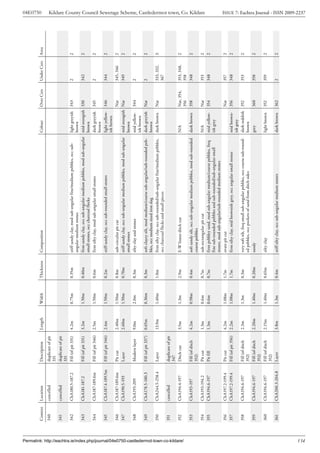
                                                                                                                                                                                                                                                     Kildare County Council Sewerage Scheme, Castledermot town, Co. Kildare


                                                                                                      Gramineae indet. (small
                                                                                                      <4mm long)                        7                             2          1         1          3                         1 Grasses
                                                                                       Cyperaceae     Carex sp.                                                      46                    9          2                             Sedges
                                                                                                      Cyperaceae indet.                 5                                                                                           Sedges

                                                                                       Characeae      Chara sp. (oogonia)                                                                  1                                        Stonewort

                                                                                                      Straw/stem fragments)             1                  1                                          3               1
                                                                                                      Root fragments                    2                  1                                          1


317
                                                                                                                                                                                                                                                     ISSUE 7: Eachtra Journal - ISSN 2009-2237
04E0750


                                                                                       Castledermot      04E0750
                                                                                                         Cut                          281       304       316       320       331                                            398     398
                                                                                                         Context                      283       302       317       319       330   333       375       376       377        394/5   396
                                                                                                         Sample                       108       112       119       120       124             127       128       129        142     139
                                                                                       Family            Species                                                                                                                            Common name
                                                                                                         Corylus avellana (nutshell
                                                                                       Corylaceae        fragments)                                   1                                                                                     Hazel

                                                                                       Moraceae          Ficus carica                                                                               1                                       Fig

                                                                                       Urticaceae        Urtica dioica                                                                                                                      Nettle
                                                                                                         U. urens                                                                                   1                                       Small nettle

                                                                                       Polygonaceae      Rumex sp.                          3                   9                         3         6                   30                 8 Docks
                                                                                                         R. acetosella                      1         1                                             1                                        Sheep's sorrel
                                                                                                         Polygonum persicaria                                                                                 1                              Redshank
                                                                                                         P.aviculare                                                                                                                         Knotweed
                                                                                                         Fallopia convolvulus                                                                                                                Black bindweed

                                                                                       Chenopodiaceae Chenopodium album                     1                                                                                                Fat hen
                                                                                                                                                                                                                                             Common/Spear


Permalink: http://eachtra.ie/index.php/journal/04e0750-castledermot-town-co-kildare/
                                                                                                         Atriplex patula/prostrata          2                   1                                   1                                      4 leaved orache
                                                                                                         Chenopodiaceae indet.                                            1               1         1                    1
                                                                                                                                                                                                                                                                 Kildare County Council Sewerage Scheme, Castledermot town, Co. Kildare


                                                                                       Caryophyllaceae Stellaria media                                                                                                                      Chickweed
                                                                                                       Stellaria cf graminea                                                                                                                Lesser stitchwort
                                                                                                       Silene sp.                                                                                                                           Campions/Catchflys
                                                                                                       Agrostemma githago                                       1                                                                           Corncockle

                                                                                       Ranunculaceae     Ranunculus sp.                                                                                                                    2 Buttercups

                                                                                       Papaveraceae      Papaver rhoes/somniferum                                                                                                           Corn/Opium poppy
                                                                                                         P. rhoes                                                                                                                           Corn poppy
                                                                                                         P. somniferum                      1                                                                                               Opium poppy


318
                                                                                                                                                                                                                                                                 ISSUE 7: Eachtra Journal - ISSN 2009-2237
04E0750


                                                                                       Castledermot   04E0750
                                                                                                      Cut                     281       304       316       320        331                                                398    398
                                                                                                      Context                 283       302       317       319        330       333        375       376       377       394/5? 396
                                                                                                      Sample                  108       112       119       120        124                  127       128       129       142    139
                                                                                       Family         Species                                                                                                                             Common name
                                                                                                                                                                                                                                          Corn/Long headed
                                                                                       Papaveraceae   P. rhoes/dubium                                                                   1                                               1 poppy
                                                                                                      P. cf somniferum              1
                                                                                                      P. argemone                   1                                                                                                       Prickly poppy
                                                                                                      Papaver sp.                                                                                                              1            Poppies

                                                                                                      Raphanus raphanistrum
                                                                                       Cruciferae     (fragments of fruit)                                                              1                                                 Wild radish
                                                                                                      Brassica sp.                            1                                                                       1        1        1 Cabbage family

                                                                                       Rosaceae       Prunus spinosa                                                                                                                      Blackthorn/Sloe
                                                                                                      Rubus fruticosus agg.                                                                                                               Blackberry
                                                                                                      Agrimonia eupatoria                                                               1                                                 Agrimony
                                                                                                      Potentilla sp.                                                                                                                    2 Cinquefoils

                                                                                       Leguminoseae   Vicia cracca                                                                                                                     13 Tufted vetch


Permalink: http://eachtra.ie/index.php/journal/04e0750-castledermot-town-co-kildare/
                                                                                                      V. faba                                                                                                                           5 Broad bean
                                                                                                      Vicia sp. (small <4mm
                                                                                                      diam)                                   5         2          4         6         13         7         2         1                16 Vetches
                                                                                                                                                                                                                                                             Kildare County Council Sewerage Scheme, Castledermot town, Co. Kildare


                                                                                                      Large legumes (>4mm
                                                                                                      diameter)                               3         1          1         3                    4
                                                                                                      Pisum sativum                                               11                    9         2         2                               Pea
                                                                                                      cf Pisum sativum                                  1                                                                               7
                                                                                                      Leguminoseae indet.                                                                                                               2

                                                                                       Linaeae        Linum catharticum                                                                                               1                     Fairy flax

                                                                                       Umbelliferae   Conium maculatum                                                                                                                      Hemlock
                                                                                                      Aethusa cynapium                                                                                                                      Fool's parsley


319
                                                                                                                                                                                                                                                             ISSUE 7: Eachtra Journal - ISSN 2009-2237
04E0750


                                                                                       Castledermot     04E0750
                                                                                                        Cut                        281        304        316        320        331                                                   398    398
                                                                                                        Context                    283        302        317        319        330        333        375        376        377       394/5? 396
                                                                                                        Sample                     108        112        119        120        124                   127        128        129       142    139
                                                                                       Family           Species                                                                                                                                        Common name
                                                                                       Umbelliferae     Umbelliferae indet.

                                                                                       Rubiaceae        Galium aparine                                                                1          1                               1        1        1 Cleavers

                                                                                       Boraginaceae     Lithospermum arvense              2                                1                                                                       2 Corn gromwell

                                                                                       Labiatae         Stachys arvensis                                                                         1                                                     Field woundwort
                                                                                                        Stachys sp.                                                                                                                                    Woundworts
                                                                                                        Ajuga reptans                                                                                                            1                     Bugle
                                                                                                        Labiateae indet.                                                                                    1

                                                                                       Solanaceae       Hyocymus niger                                                                                                                                 Henbane

                                                                                       Caprifoliaceae   Sambucus nigra                                                                                                                                 Elder

                                                                                       Valarianaceae    Valarianella dentata                                                                                                              1            Cornsalad


Permalink: http://eachtra.ie/index.php/journal/04e0750-castledermot-town-co-kildare/
                                                                                       Compositae       Anthemis cotula                   2          1          1                                2          3                    1        1            Stinking mayweed
                                                                                                        Chrysanthemus segetum             7                                1                                                                           Corn marigold
                                                                                                                                                                                                                                                                          Kildare County Council Sewerage Scheme, Castledermot town, Co. Kildare


                                                                                                        Senecio sp.                                                                                                                                    Ragweed
                                                                                                        Lapsana communis                                                                         1                                                     Nipplewort
                                                                                                                                                                                                                                                       Creeping/Marsh
                                                                                                        Cirsium arvense/palustre                                                                                                                       thistle
                                                                                                        Sonchus sp.                                                                                         1                                          Sow-thistle
                                                                                                        Compositae indet.                                                                                                                 1        1

                                                                                       Juncaceae        Luzula sp.                                                                                                                                     Wood-rush

                                                                                       Gramineae        Triticum sp. (grains)            28         28         40         43         20         24         42         31         8                13 Wheat


320
                                                                                                                                                                                                                                                                          ISSUE 7: Eachtra Journal - ISSN 2009-2237
04E0750


                                                                                       Castledermot   04E0750
                                                                                                      Cut                         281       304        316        320        331                                                  398    398
                                                                                                      Context                     283       302        317        319        330       333        375        376        377       394/5? 396
                                                                                                      Sample                      108       112        119        120        124                  127        128        129       142    139
                                                                                       Family         Species                                                                                                                                       Common name
                                                                                                      Triticum aestivum (rachis
                                                                                       Gramineae      fragments)                        2                     2          1         1          1                     2                           6 Bread-wheat
                                                                                                      Triticum sp. (rachis
                                                                                                      fragments)                                                                                                                                  Wheat
                                                                                                      Hordeum sp. (grains)              3         2          10                    5          2         21                    2        2       15 Barley
                                                                                                      Hordeum sp. (rachis
                                                                                                      fragments)                        2                     1                                                                                 2
                                                                                                      Avena sp. (grains)                8         5          15         23         8         33         39         4          8        1       43 Oats

                                                                                                      Avena sp. (awn fragments)
                                                                                                      Avena sativa (lemmas)                                                                                                                     2 Cultivated oat
                                                                                                      Secale cereale (grains)                                                      1                                                              Rye
                                                                                                      Secale cereale (rachis
                                                                                                      fragments)                                                                                                                                    Rye
                                                                                                      Culm node                         1         1           2                               2          2          1                           7
                                                                                                      Cerealia                  *                      *          *          *                    *          *          *


Permalink: http://eachtra.ie/index.php/journal/04e0750-castledermot-town-co-kildare/
                                                                                                      Bromus sp.                                              1                                                                                     Brome grass
                                                                                                      Gramineae indet. (large
                                                                                                      >4mm long)                        1         1                      1                    2                     2                           7 Grasses
                                                                                                                                                                                                                                                                   Kildare County Council Sewerage Scheme, Castledermot town, Co. Kildare


                                                                                                      Gramineae indet. (small
                                                                                                      <4mm long)                        3         1                      2                    2                               2                     Grasses

                                                                                       Cyperaceae     Carex sp.                         5                                                                1                                      4 Sedges
                                                                                                      Cyperaceae indet.                           10                     2         1          3          7         11         4        4       38 Sedges

                                                                                       Characeae      Chara sp. (oogonia)                                                                                                                           Stonewort

                                                                                                      Straw/stem fragments)             1          1                                          1          2                                     42
                                                                                                      Root fragments                                                               1                                4


321
                                                                                                                                                                                                                                                                   ISSUE 7: Eachtra Journal - ISSN 2009-2237
04E0750


                                                                                       Castledermot      04E0750
                                                                                                         Cut                                    417       425
                                                                                                         Context                      400       415       426   433   511
                                                                                                         Sample                       148                       153   210
                                                                                       Family            Species                                                             Common name        Habitat
                                                                                                         Corylus avellana (nutshell                                                                       Key to simplified habitat
                                                                                       Corylaceae        fragments)                                                          Hazel              e         information:
                                                                                                                                                                                                          a: Cultivated
                                                                                       Moraceae          Ficus carica                                                        Fig                g         b: Arable weed
                                                                                                                                                                                                          c: Waste & disturbed ground
                                                                                       Urticaceae        Urtica dioica                      1                                Nettle             bc        d: Damp ground/wet habitats
                                                                                                         U. urens                                                            Small nettle       bc        e: Woods & scrub
                                                                                                                                                                                                          f: Pasture/meadows/grassland
                                                                                       Polygonaceae      Rumex sp.                                    1                      Docks              bc        g: imported to Ireland
                                                                                                         R. acetosella                                                       Sheep's sorrel     bf
                                                                                                         Polygonum persicaria                                                Redshank           bc
                                                                                                         P.aviculare                                                         Knotweed           bc
                                                                                                         Fallopia convolvulus                                                Black bindweed     bc

                                                                                       Chenopodiaceae Chenopodium album                                                       Fat hen           c
                                                                                                                                                                              Common/Spear


Permalink: http://eachtra.ie/index.php/journal/04e0750-castledermot-town-co-kildare/
                                                                                                         Atriplex patula/prostrata                                          1 leaved orache     bc
                                                                                                         Chenopodiaceae indet.
                                                                                                                                                                                                                                         Kildare County Council Sewerage Scheme, Castledermot town, Co. Kildare


                                                                                       Caryophyllaceae Stellaria media                                                       Chickweed          bc
                                                                                                       Stellaria cf graminea                                                 Lesser stitchwort  df
                                                                                                       Silene sp.                                                            Campions/Catchflys
                                                                                                       Agrostemma githago                                                    Corncockle         b

                                                                                       Ranunculaceae     Ranunculus sp.                                                      Buttercups         bcd

                                                                                       Papaveraceae      Papaver rhoes/somniferum                                            Corn/Opium poppy
                                                                                                         P. rhoes                                                            Corn poppy         bc
                                                                                                         P. somniferum                                                       Opium poppy        c


322
                                                                                                                                                                                                                                         ISSUE 7: Eachtra Journal - ISSN 2009-2237
04E0750


                                                                                       Castledermot   04E0750
                                                                                                      Cut                               417   425
                                                                                                      Context                 400       415   426       433       511
                                                                                                      Sample                  148                       153       210
                                                                                       Family         Species                                                           Common name
                                                                                                                                                                        Corn/Long headed        Key to simplified habitat
                                                                                       Papaveraceae   P. rhoes/dubium                                                   poppy                   information:
                                                                                                      P. cf somniferum                                                                          a: Cultivated
                                                                                                      P. argemone                                                       Prickly poppy      bc   b: Arable weed
                                                                                                      Papaver sp.                                                       Poppies                 c: Waste & disturbed ground
                                                                                                                                                                                                d: Damp ground/wet habitats
                                                                                                      Raphanus raphanistrum
                                                                                       Cruciferae     (fragments of fruit)          2                                   Wild radish        bc   e: Woods & scrub
                                                                                                      Brassica sp.                                            2         Cabbage family     bc   f: Pasture/meadows/grassland
                                                                                                                                                                                                g: imported to Ireland
                                                                                       Rosaceae       Prunus spinosa                                                    Blackthorn/Sloe    e
                                                                                                      Rubus fruticosus agg.                                             Blackberry         ce
                                                                                                      Agrimonia eupatoria                                               Agrimony           ce
                                                                                                      Potentilla sp.                                                    Cinquefoils

                                                                                       Leguminoseae   Vicia cracca                  1               1                   Tufted vetch       bc


Permalink: http://eachtra.ie/index.php/journal/04e0750-castledermot-town-co-kildare/
                                                                                                      V. faba                                                           Broad bean         a
                                                                                                      Vicia sp. (small <4mm
                                                                                                      diam)                         1                                   Vetches
                                                                                                                                                                                                                               Kildare County Council Sewerage Scheme, Castledermot town, Co. Kildare


                                                                                                      Large legumes (>4mm
                                                                                                      diameter)                     1               1
                                                                                                      Pisum sativum                                                     Pea                a
                                                                                                      cf Pisum sativum                                        8
                                                                                                      Leguminoseae indet.

                                                                                       Linaeae        Linum catharticum                                                 Fairy flax         df

                                                                                       Umbelliferae   Conium maculatum                                                  Hemlock            cd
                                                                                                      Aethusa cynapium                                                  Fool's parsley     bc


323
                                                                                                                                                                                                                               ISSUE 7: Eachtra Journal - ISSN 2009-2237
04E0750


                                                                                       Castledermot     04E0750
                                                                                                        Cut                                   417       425
                                                                                                        Context                    400        415       426       433         511
                                                                                                        Sample                     148                            153         210
                                                                                       Family           Species                                                                       Common name
                                                                                       Umbelliferae     Umbelliferae indet.                                                                                    Key to simplified habitat
                                                                                                                                                                                                               information:
                                                                                       Rubiaceae        Galium aparine                                                                Cleavers           bc    a: Cultivated
                                                                                                                                                                                                               b: Arable weed
                                                                                       Boraginaceae     Lithospermum arvense              5                                           Corn gromwell      b     c: Waste & disturbed ground
                                                                                                                                                                                                               d: Damp ground/wet habitats
                                                                                       Labiatae         Stachys arvensis                                                              Field woundwort    b     e: Woods & scrub
                                                                                                        Stachys sp.                                                                   Woundworts               f: Pasture/meadows/grassland
                                                                                                        Ajuga reptans                                                                 Bugle              e     g: imported to Ireland
                                                                                                        Labiateae indet.

                                                                                       Solanaceae       Hyocymus niger                                                                Henbane            c

                                                                                       Caprifoliaceae   Sambucus nigra                                                              1 Elder              ce

                                                                                       Valarianaceae    Valarianella dentata                                                          Cornsalad          b


Permalink: http://eachtra.ie/index.php/journal/04e0750-castledermot-town-co-kildare/
                                                                                       Compositae       Anthemis cotula                                                  1            Stinking mayweed   bc
                                                                                                        Chrysanthemus segetum                                                         Corn marigold      bc
                                                                                                                                                                                                                                              Kildare County Council Sewerage Scheme, Castledermot town, Co. Kildare


                                                                                                        Senecio sp.                                                                   Ragweed            cdf
                                                                                                        Lapsana communis                                                              Nipplewort         bc
                                                                                                                                                                                      Creeping/Marsh
                                                                                                        Cirsium arvense/palustre                                                      thistle            cdf
                                                                                                        Sonchus sp.                                                                   Sow-thistle        bc
                                                                                                        Compositae indet.

                                                                                       Juncaceae        Luzula sp.                       1                                            Wood-rush          d

                                                                                       Gramineae        Triticum sp. (grains)            28         3         2         350           Wheat              a


324
                                                                                                                                                                                                                                              ISSUE 7: Eachtra Journal - ISSN 2009-2237
04E0750


                                                                                       Castledermot   04E0750
                                                                                                      Cut                                    417       425
                                                                                                      Context                     400        415       426       433        511
                                                                                                      Sample                      148                            153        210
                                                                                       Family         Species                                                                         Common name
                                                                                                      Triticum aestivum (rachis                                                                              Key to simplified habitat
                                                                                       Gramineae      fragments)                         1                                            Bread-wheat      a     information:
                                                                                                      Triticum sp. (rachis
                                                                                                      fragments)                                                        2             Wheat            a     a: Cultivated
                                                                                                      Hordeum sp. (grains)                         6         2         18             Barley           a     b: Arable weed
                                                                                                      Hordeum sp. (rachis
                                                                                                      fragments)                                                                                       a     c: Waste & disturbed ground
                                                                                                      Avena sp. (grains)                21         7         4         2              Oats             a     d: Damp ground/wet habitats

                                                                                                      Avena sp. (awn fragments)                                                   1                    a     e: Woods & scrub
                                                                                                      Avena sativa (lemmas)                                                           Cultivated oat   a     f: Pasture/meadows/grassland
                                                                                                      Secale cereale (grains)                                                         Rye              a     g: imported to Ireland
                                                                                                      Secale cereale (rachis
                                                                                                      fragments)                                                                  1 Rye                a
                                                                                                      Culm node                          2                              4
                                                                                                      Cerealia                                         **


Permalink: http://eachtra.ie/index.php/journal/04e0750-castledermot-town-co-kildare/
                                                                                                      Bromus sp.                                                                      Brome grass      bcf
                                                                                                      Gramineae indet. (large
                                                                                                      >4mm long)                         1                                            Grasses
                                                                                                                                                                                                                                            Kildare County Council Sewerage Scheme, Castledermot town, Co. Kildare


                                                                                                      Gramineae indet. (small
                                                                                                      <4mm long)                                                                      Grasses

                                                                                       Cyperaceae     Carex sp.                          6                                            Sedges           d
                                                                                                      Cyperaceae indet.                                      1          1             Sedges           d

                                                                                       Characeae      Chara sp. (oogonia)                1                                            Stonewort        d

                                                                                                      Straw/stem fragments)             8                              2
                                                                                                      Root fragments                    8


325
                                                                                                                                                                                                                                            ISSUE 7: Eachtra Journal - ISSN 2009-2237
04E0750      Kildare County Council Sewerage Scheme, Castledermot town, Co. Kildare    ISSUE 7: Eachtra Journal - ISSN 2009-2237


        12.9      Appendix 9: Leather Report


             The Leather, Castledermot - 04E0750


                                             By Caitríona Gleeson MA


Permalink: http://eachtra.ie/index.php/journal/04e0750-castledermot-town-co-kildare/                                        326
04E0750      Kildare County Council Sewerage Scheme, Castledermot town, Co. Kildare     ISSUE 7: Eachtra Journal - ISSN 2009-2237


             Introduction

             Twenty-two fragments of leather and two almost complete welted shoes were excavated from
             two post-medieval layers, C. 223 and C. 227, respectively the basal and overlying fill of a
             ditch. Both contexts were highly organic in composition and comprised dark soft silt. All of
             the leather objects most likely relate to footwear. The shoe styles in the Castledermot leather
             are consistent with those from other post-medieval urban centres in Ireland as is the high
             proportion of scrap and off-cut material. Most of the finds are off-cut pieces of leather
             consisting mainly of fragments that had been removed from pre-existing objects (probably
             shoes). Scrap leather was recovered from both of the contexts that yielded leather finds which
             implies that cobbling activity was taking place in the vicinity of the site. The study of scrap
             leather from medieval and post-medieval Cork has revealed that shoes often appear to have
             been repaired in and around the home (Gleeson 2000). It is likely that this domestic practice
             was largely related to the repair of footwear and that professional cobbling/repair
             encompassed a range of objects from footwear to artefacts such as belts, scabbards and horse
             equipment. All of the individual sole fragments were incomplete suggesting that they were
             dumped when they were beyond repair, and the comparative lack of complete uppers
             perhaps indicates that they were cut up for reuse by cobblers. The fragmentary condition of
             many of the fragments demonstrates the high level of organic preservation within the layers.

             The Artefacts

             With the exception of five scrap fragments all remaining leather objects could be confidently
             identified as relating to footwear.

             Footwear

             Five of the six diagnostic leather artefacts excavated from Castledermot relate to footwear and
             all pieces were made in the welted technique whereby a strip of leather (the welt) with two
             parallel rows of grain/flesh stitches was attached to the lasting margin of the upper leaving a
             protruding edge to which the sole was attached. Unlike earlier medieval Turnshoes, no
             turning of the shoe was involved in the manufacture of welted shoe. According to Thornton
             (1975, 8) it is possible to determine the difference between a turnshoe sole seam or a welted
             sole seam by measuring the stitch-length from centre of hole to centre of hole along the
             lasting seam. In medieval turnshoes, this usually measures between c. 5mm - 7 mm whereas
             in a welted sole the stitch length is between 6 mm and 10 mm.

             The welted method of shoe manufacture is thought to have originated around 1500 AD
             (Thornton 1990, 592). In later examples (late 16th – 17th century) this type of shoe
             construction was characterised by a composite shoe comprising a built up sole composed of
             an insole, middle sole, sole and stacked/wooden heel and a upper formed from a vamp,
             quarters, latchets and often a separate toe piece or puff (Gleeson and O’ Rourke 2004, 541).
             Heels became the norm in footwear from the 16th century onward and either comprised a
             series of leather pieces (called lifts or jumps) stacked together using wooden pegs or nails (the
             use of nails is considered to be late 17th century in date (O’Rourke 1997, 177)) or wooden
             blocks which were protected by a leather cover. Both types of heel were noted in the
             Castledermot assemblage.


             Glossary of terms used when describing footwear


Permalink: http://eachtra.ie/index.php/journal/04e0750-castledermot-town-co-kildare/                                         327
04E0750      Kildare County Council Sewerage Scheme, Castledermot town, Co. Kildare                ISSUE 7: Eachtra Journal - ISSN 2009-2237


                                                                            Latchet: Pieces of leather that extend from,
             Butted seam: Seam made by butting                              or are butt-seamed onto the quarters of a
             together the edges of two pieces of leather                    shoe. These latchets overlay at the vamp-
             and closing them with an edge flesh seam                       tongue, where the end of one usually ends
             (see below).                                                   in a pair of slits (like buttonholes) and the
                                                                            end of the other latchet is threaded with
             Delamination: The process by which the                         thongs or toggles which pass through the
             leather separates into flesh and grain                         opposite slits to fasten the shoe.
             layers, usually occurs post-deposition due
             to the incomplete penetration of the                           Quarters: The sides and heels of a shoe
             tanning liquors.                                               upper.

             Edge/flesh seam: The stitching holes are                       Tread: The part of the sole on which the
             pierced from the edge of the section of                        forepart of the foot rests.
             leather to the flesh side.
                                                                            Tunnel Stitch: A type of stitch that does
             Flesh side: Inner face of leather.                             not penetrate the full section of the leather;
                                                                            the stitch holes are pierced (usually from
             Forepart: Front section of sole or shoe.                       the flesh side) and emerge from the same
                                                                            side after running through the thickness of
             Grain side: Outer surface of leather which                     the leather.
             bore the wool, fur or hair.
                                                                            Vamp: Front section of shoe upper.
             Heel-seat: Rear end of sole.
                                                                            Vamp-wing: Side of the vamp that extends
             Lasting margin: The bottom edge of the                         to the quarters.
             shoe upper which was turned under a last
             and secured to the sole.                                       Waist: Narrowest part of sole, usually at
                                                                            the centre.

             Soles

             The remains of three soles and three sole fragments were identified in the Castledermot
             leather assemblage. All pieces are from welted shoes and have a date range extending from
             the mid 16th to late 17th century. The soles included one outer sole (04E0750: 223:L1) with
             corrosion stains at the seat possibly indicative of a stacked and nailed heel which suggests a
             17th century date for the piece. Two insoles were recovered, one of which (04E0750: 223:L2)
             showed a zig-zag imprint of stitching from the lasting process on the flesh side of the sole.
             No. 04E0750: 223:L5 was a small trapezoidal piece of cattle hide which comprised a toe piece
             from a welted shoe which would have been sewn over the innermost sole and attached to the
             upper. This added extra definition and reinforcement to the toe. None of the sole fragments
             showed evidence of cobbling in the form of repair.


Permalink: http://eachtra.ie/index.php/journal/04e0750-castledermot-town-co-kildare/                                                    328
04E0750      Kildare County Council Sewerage Scheme, Castledermot town, Co. Kildare    ISSUE 7: Eachtra Journal - ISSN 2009-2237


             Uppers and Shoes

             All of the uppers and the complete shoes uncovered from the excavations at Castledermot
             were of welted construction. Both the upper fragments and the complete shoes display
             similar method of fastening. Latchets with perforations at their ends either extended from the
             quarters of the shoe or were attached (butt-seamed) to the quarters. A thong was then
             threaded through the perforations and often through corresponding holes in the vamp
             tongue to fasten the shoe at the front over the instep. A similar style of upper (ascribed a
             sixteenth or seventeenth century date) was noted in shoe assemblages from excavations at
             Carrickfergus Castle (Gleeson, unpublished report), Galway City (Gleeson and O’ Rourke
             2004, 541) and at Dublin Castle, Patrick Street, Nicholas Street and Winetavern Street, Dublin
             (O Rourke 1997, 177).

             The remains of two almost complete shoes were excavated from C. 227; Nos 0750: 510: L16 &
             L17. Both were quite well worn and had holes in the outer soles and split and torn vamps.
             Neither shoe showed evidence of cobbling in the form of repair or displayed evidence that
             fragments had been removed for the purpose of re-using the leather. The lack of repair on the
             shoe may indicate a moderate degree of personal wealth in the owners and perhaps the
             occupants of the area adjacent to the site. A fragment of sheep-hide, broadly square in shape
             with crude grain/ flesh stitching along all edges was recovered with 04E0750: 223: L17. The
             crudeness of the stitching suggests that this piece may have been fastened to the interior of
             the shoe by the wearer to render it more comfortable and to ensure a better fit.

             Scrap

             Five fragments of scrap leather (04E0750:223:L15) were identified in the Castledermot leather
             assemblage. Some of the scrap leather is badly delaminated and abraided and may comprise
             pieces that were removed from shoes or re-used scraps of leather. No evidence of stitching
             was apparent of any of the fragments categorised as ‘scrap leather’ as part of this analysis.

             Catalogue of Leather finds

             04E0750: 223: L1
             Sole, cattlehide. Sole from welted heeled shoe, grain/flesh stitching along edge. Torn across
             toe. Folded at base of waist to abut a heel. Corrosion stains at the seat possible indicative of
             stacked and nailed heel.
             L. 152 mm, Tread 67 mm, Waist 42 mm, Th. 4 mm.

             04E0750: 223: L2
             Possible insole from welted shoe, cattle hide. Torn across toe. Edge/flesh stitching along edge.
             Zig-zag imprint of stitching from lasting process apparent on flesh side of sole.
             L. 182 mm, Tread 67 mm, Waist 34mm, Seat 43 mm, Th. 3 mm.

             04E0750: 223: L3
             Upper- vamp fragment, goat hide. Vamp from welted shoe. Torn across toe. Grain/flesh
             lasting seam along edge. Vamp tongue extends from instep and end in a ‘M’ shape. No
             evidence for fastening at tongue i.e. perforations etc. Butt seam along vamp-wing to which
             quarter would have been attached. Torn at remaining edges.
             L. 164mm, W. 149 mm, Th. 1.6 mm


Permalink: http://eachtra.ie/index.php/journal/04e0750-castledermot-town-co-kildare/                                        329
04E0750      Kildare County Council Sewerage Scheme, Castledermot town, Co. Kildare    ISSUE 7: Eachtra Journal - ISSN 2009-2237


             04E0750: 223: L4
             Possible heel covering, sheep hide. Possible covering for wooden heel of welted shoe.
             Grain/flesh lasting seam along one edge with traces of butt seam at two shorter edges/ends.
             Torn at remaining edges.
             L. 168 mm, Max. W. 36 mm, Th. 1.6 mm

             04E0750: 223: L5
             Sole fragment, cattle hide. Toe piece from sole of welted shoe which would have been sewn
             over the inner sole and attached to the upper. Trapezoidal in shape which corresponds to
             style of all uppers and soles in the assemblage. Edge/flesh seam along all sides.
             L. 98 mm, W. at top 20mm, W. at base 35mm, Th. 3.6 mm.

             04E0750: 223: L6
             Upper fragment – Heel Quarter, goat hide. Heel quarter from welted shoe. Grain/flesh
             lasting seam along base, fragment bears curve where it fitted around the ankle of the wearer.
             Butt-seams along two upright edges, latchet extends from the side that would have attached
             to the vamp-wing. Perforation at end of latchet through which a thong would have been
             threaded and used to fasten the shoe.
             L. 118 mm, Height at Quarter 66 mm, Th. 1.8 m.

             04E0750: 223: L7
             Upper fragment – Heel Quarter, cattle hide. Heel quarter insert from welted shoe.
             Grain/flesh lasting seam along base, butt seamed along two upright edges, one of which
             displays two separate seams, one originally attached to the vamp-wing and a latchet would
             have been sewn onto the other.
             L. 108 mm, Height at Quarter 70 mm, Th. 3 mm.

             04E0750: 223: L8
             Upper fragment, calf hide. Torn vamp-tongue and throat fragment from possible child’s
             welted shoe. Portion of lasting seam (grain/flesh) and vamp-wing (butt seam) survives.
             Tongue extends in a broadly semi-circular shape from instep of shoe.
             L. 82 mm, W. 94 mm, Th. 1.4 mm.

             04E0750: 223: L9
             Possible sole/insole fragment, cattle hide. Sole fragment from welted shoe. Roughly cut
             fragment of cattle-hide, broadly triangular in shape, crude gain/flesh stitching apparent
             along all edges. Possible insole insert for widest part of sole across tread.
             L. 92 mm, W. 94 mm, Th. 3 mm.

             04E0750: 223: L10
             Possible upper fragment, sheep hide. Possible heel-quarter fragment from welted shoe
             upper. Grain/flesh lasting seam at base of piece, torn on remaining edges with trace of butt
             seam remaining where latchet may have been attached.
             L. 102 mm, W. 43 mm, Th. 2.6 mm.

             04E0750: 223: L11
             Upper fragment, goat hide. Fragment from vamp of welted shoe. No seams remain and piece
             is torn along all edges. One perforation apparent in possible vamp throat through which a
             thong would have been threaded to facilitate fastening the shoe.
             L. 91mm, W. 62 mm, Th. 2 mm.


Permalink: http://eachtra.ie/index.php/journal/04e0750-castledermot-town-co-kildare/                                        330
04E0750      Kildare County Council Sewerage Scheme, Castledermot town, Co. Kildare    ISSUE 7: Eachtra Journal - ISSN 2009-2237


             04E0750: 223: L12a-c
             Sole fragments, cattle hide. Three delaminated and abraided sole fragments from welted
             shoes. All have grain/flesh seam extant along at least one edge.
             (a)     From seat of sole, L. 61 mm, W. 34 mm, Th. 1mm.
             (b)     Indeterminate, L. 73 mm, W. 40 mm, Th. 0.5-2 mm.
             (c)     Indeterminate, L. 44 mm, W. 24 mm, Th. 1 mm.

             04E0750: 223: L13
             Welt fragment, cattle hide. Strip of leather, one edge folded over on itself with grain/flesh
             seam along fold-line and another at the edge of the fold. Crude grain/flesh stitching at other
             long side, possibly from lasting process.
             L. 118 mm, W. 24 mm, Th. 1.2 mm.

             04E0750: 223: L14
             Welt fragment, cattle hide. Strip of leather, one edge folded over on itself with grain/flesh
             seam along fold-line and another at the edge of the fold. Crude grain/flesh stitching at other
             long side, possibly from lasting process.
             L. 83 mm, W. 17 mm, Th. 1.7 mm

             04E0750: 223: L15
             Scrap, 2 cattle hide, 1 goat hide, 1sheep hide, 1 sheep/goat hide. Five irregularly shaped
             fragments of scrap/off cut leather. No apparent stitching, all pieces both cut and torn along
             edges.

             04E0750: 227: L16
             Welted Shoe, right foot. Vamp- cattle hide, Heel quarters - calf hide, Toe piece – sheep hide,
             Insole - sheep hide, Sole – cattle hide.
             Fragments include sole, insole, wooden heel, two heel quarters, welt, toe piece and possible
             heel covering. Wear hole in lower sole which is folded back at the base of the waist to abut
             the heel. Vamp is split across toe, tongue extends from vamp-throat. Butt seams along vamp
             wings which correspond to heel quarters. Latchets extend from quarters with one perforation
             at the end of each. No corresponding hole at tongue.
             Upper: L 260 mm, W. of in situ upper 105mm, Th. 2.7 mm, Height at quarter 61 mm.
             Sole: L 257 mm, Tread 66 mm, Waist 32 mm, Seat 44 mm, Th. of complete sole 5.5 mm.

             04E0750: 227: L17
             Welted Shoe, right foot. Vamp – goat hide, 1 heel quarter – goat hide, 1 heel quarter – sheep
             hide, Inner sole – goat, 2 outer soles – cattle hide.
             Fragments include tri-partite composite sole with stacked leather heel, upper (vamp), two
             heel quarters and one worked fragment. Heel comprises 5 stacked pieces of leather, one metal
             peg through heel from top, seven small iron nails at the base of the heel. Vamp badly
             abraided and torn along left vamp with trace of butt seam remaining, completely torn at right
             vamp-wing. Four holes at instep/ vamp-throat through which a thong would have been
             threaded and run through corresponding latchet holes. A latchet extends from the right
             quarter and the left quarter displays butt seam where latchet would have been attached. Butt
             seams at the back/heel end of the quarters.
             A fragment of sheep-hide was recovered with the shoe. This is broadly square in shape with
             crude grain/flesh stitching along all edges. This piece may have been fastened to the interior
             of the shoe by the wearer to make it more comfortable.
             Upper: L. 248 mm, W. 116 mm, Height at quarter 73 mm, Th. 2 mm.
             Sole: L 221 mm, Tread 64 mm, Waist 41 mm, Seat 51 mm, Th. 7. Heel height 30 mm.


Permalink: http://eachtra.ie/index.php/journal/04e0750-castledermot-town-co-kildare/                                        331
04E0750      Kildare County Council Sewerage Scheme, Castledermot town, Co. Kildare       ISSUE 7: Eachtra Journal - ISSN 2009-2237


             04E0750: 227: L18
             Possible shoe upper fragment, goat hide. Cut along three edges, torn across remaining edge,
             possible trace of butt seam remains across one edge, irregular crude grain/flesh stitching at
             one corner of the fragment. May be from vamp wing or quarter of welted shoe.
             L. 87 mm, W. 46 mm, Th. 2.6 mm.

             Species of animal identified in the Leather

             Of the leather, cattle-hide was used in the manufacture of 47% of leather items, calfskin in 9%,
             sheepskin in 18%, goatskin in 23% of instances and sheep/goatskin accounted for 3% of finds.
             During the course of species analysis all leather fragments were granted equal weighting and
             it is worth noting that a number of the fragments positively identified as cattle or calf-hide
             may have been from the same original objects. Nonetheless, it is not unusual for a post
             medieval footwear assemblage to feature cattle-hide to such a significant extant. This was the
             strongest animal hide available and would have offered maximum protection for the foot.
             The welt served as a sturdy binding and sealing device; it had to made of a resilient raw
             material and cow hide was again used. Cattle and calf-hides accounted for 84% of medieval
             footwear from Nicholas, Winetavern and Patrick Streets, Dublin (O’Rourke 1997, 164). The
             proliferation of cattle and calf-hides in the leather assemblage may indicate a thriving dairy
             economy in the area surrounding contemporary Castledermot.

             Regarding shoe uppers, goatskin was the preferred hide and the majority of positively
             identified upper fragments were manufactured from this material. Most shoe uppers from
             this period were constructed from calf, sheep and goatskins and their selection reflected the
             fact that these light, flexible leathers would have made comfortable shoes.

             The type of leather used in the production of a particular object can often assist in its
             classification as an artefact type. This is especially useful in the case of miscellaneous worked
             fragments and the attempts made to link them to a diagnostic object type. If a leather object
             looks and feels like a specific artefact, then the identification of the type of leather used in its
             manufacture may resolve the question of its original function. The fact that much of the scrap
             material was quite worn and came from cattle, sheep and goat hides may indicate that they
             represented undiagnostic shoe upper fragments.

             Conclusion

             Although limited in number, the leather artefacts recovered from Castledermot are broadly
             consistent with those previously excavated from post-medieval sites in Ireland and Britain
             and more than likely constitute domestic refuse. This concurs with the nature of the contexts
             from which they were recovered which probably comprised post-medieval refuse layers. The
             majority of the finds represent footwear and all were manufactured using the welted
             technique. The fact that evidence of nailed shoes with multiple soles were amongst the leather
             assemblage from both contexts excavated at Castledermot suggests a mid to late 17th century
             date for the finds.


Permalink: http://eachtra.ie/index.php/journal/04e0750-castledermot-town-co-kildare/                                           332
04E0750      Kildare County Council Sewerage Scheme, Castledermot town, Co. Kildare    ISSUE 7: Eachtra Journal - ISSN 2009-2237


             References

             Gleeson, C. 2000 A study of the leather form the 1998/1999 Cork Main Drainage Scheme
             Excavations. Unpublished MA Thesis, University College Cork.

             Gleeson, C. (unpublished report) Leather from Carrickfergus Castle.

             Gleeson, C. and O’ Rourke, D. 2004 ‘Leather’ in Fitzpatrick, E., O’Brien, M. and Walsh, P.
             (eds) Archaeological Investigations in Galway City, 1987-1998 Wordwell, Wicklow.

             O’ Rourke, D. 1997 ‘Leather Artefacts’ in C. Walsh (ed) Archaeological Excavations at Patrick,
             Nicholas and Winetavern streets, Dublin. Bandon Press, Dingle, 163-178.

             Thornton, J. 1975 ‘The examination of early shoes to 1600’ in Doughty, P.S. (ed)Transactions of
             the Museum Assistants Group 12. Museum Assistant Group at Ulster Museum, Belfast, 2-13.

             Thornton, J. 1990 ‘Shoes, Boots an Shoe repairs’ in Biddle, M. (ed) Object and Economy of
             Medieval Winchester. Oxford University Press, Oxford, 591-621.


Permalink: http://eachtra.ie/index.php/journal/04e0750-castledermot-town-co-kildare/                                        333
04E0750      Kildare County Council Sewerage Scheme, Castledermot town, Co. Kildare    ISSUE 7: Eachtra Journal - ISSN 2009-2237


        12.10 Appendix 10: Glass Report


             Window Glass from Excavations at Castledermot,
                    Co. Kildare. Licence no.04E0750.


                                           by Jo Moran


Permalink: http://eachtra.ie/index.php/journal/04e0750-castledermot-town-co-kildare/                                        334
04E0750      Kildare County Council Sewerage Scheme, Castledermot town, Co. Kildare    ISSUE 7: Eachtra Journal - ISSN 2009-2237


     Medieval window glass has not survived in Irish window frames. The glass we do have has
     mainly come from archaeological excavations. Large collections of painted and stained glass
     have been recovered from excavations at Kells Priory, Co. Kilkenny (Moran forthcoming) , St.
     Saviour’s Priory, Limerick and St. Canice’s Cathedral, Co. Kilkenny (Graves and Prim, 1857,
     70-75). Many other excavations have produced small collections of window glass.

     The window glass from excavations at Castledermot include four fragments of 13th- early 14th
     century ‘grisaille’ potash glass, two with a painted pattern and two without any decoration. Ten
     fragments of possibly late medieval window glass and one post-medieval fragment without any
     paint or decoration were also recovered. The potash glass has a brown/black enamel-like
     weathering as a result of prolonged burial in the ground, but the painted pattern is still
     discernible. The pitting on the back of the glass is due to weathering while still in its window
     frame. Potash glass was very prone to corrosion due to its high alkali content from using beech-
     ash in its manufacture.

     The painted glass fragments come from a ‘grisaille’ window popular in the early gothic period.
     Grisaille glass consisted of white glass (generally with a green tint) onto which intricate ‘stiff-
     leaf’ foliate or floral patterns were painted in a red/brown paint. Cross-hatching was used on
     backgrounds in the early 13th century but this was dropped in the second half of the century. The
     painted patterns became more naturalistic in the late 13th /early 14th century.. The Castledermot
     grisaille appears to be late 13thC or early 14th century. The cross-hatching is absent and the
     floral pattern on fragment 04E0750:194:4 is naturalistic in style. The pattern is similar to the vine
     leaf pattern on fragments recovered from the east end of Kells priory church dated to the late
     13th century (Moran, forthcoming).


     Fig.1. Fragments of late 13th-early 14th century glass.

     The eleven fragments of later medieval/post-medieval glass (with the iridescent surface) are
     white glass without any painted decoration. Fragment (04E0750:108:2) has one raised edge
     which suggests the glass was manufactured by the ‘muff ‘ method (also known as cylinder). The
     rounded or raised edges are those cut in opening out the cylinder and subsequently melted when
     the cylinder was placed in an oven for flattening out. Three fragments have one grozed or
     nibbled edge (04E0750;240:2, 04E0750:417:1, 04E0750:417:20) after the medieval fashion.
     These fragments are likely to be no later than the 16thC when the diamond came into use for
     cutting glass (Brown and O’ Connor,1991, 56) Fragment (04E0750:167:1) has a diamond cut
     edge and is therefore likely to post-date the start of the 16th century.


Permalink: http://eachtra.ie/index.php/journal/04e0750-castledermot-town-co-kildare/                                        335
04E0750      Kildare County Council Sewerage Scheme, Castledermot town, Co. Kildare    ISSUE 7: Eachtra Journal - ISSN 2009-2237


     Bibliography.

     Brown, S and O’ Connor, D. 1991. Medieval Craftsmen: Glass-Painters. London.
     Graves, J and Prim, J G A. 1857. History, Architecture, and Antiquities of the Cathedral
                                       Church of St. Canice, Kilkenny. Dublin.
     Moran, J. forthcoming. ‘Painted and stained window glass from Kells Priory, Co. Kilkenny’
                             in Miriam Clyne (ed), Excavations at Kells Priory, Co. Kilkenny.
                                  NMS forthcoming.


Permalink: http://eachtra.ie/index.php/journal/04e0750-castledermot-town-co-kildare/                                        336
04E0750      Kildare County Council Sewerage Scheme, Castledermot town, Co. Kildare    ISSUE 7: Eachtra Journal - ISSN 2009-2237


     Catalogue

     04E0750:108:1: fragment: ‘white’ glass with an iridescent surface. Th.2mm.
     04E0750:108: 2: fragment: ‘white’ glass with an iridescent surface, one muff edge,
                             Th.2mm.

     04E0750:119:11: fragment: ‘white’ glass, with an iridescent surface. Th.1.2mm

     04E0750:121:80: fragment: translucent ‘white’ glass with a pale green tint. Th.1.5mm.

     04E0750:121:81: fragment: ‘white’ glass with an iridescent surface. Th.1mm.
     04E0750:121:82: fragment: with an iridescent surface. Th. 2mm.

     04E0750:167:1: fragment: with an iridescent surface, one diamond cut edge. Th.1mm.


     04E0750:195:1: border fragment: painted with a curvilinear pattern. Glass has an
                 enamel-like weathering, brownish-black in colour and pitting on the outside,
                 opaque. 3 grozed edges. Th. 3mm. 13th/14th century.

     04E0750:195:2: fragment: with an enamel-like weathering, brownish-black in colour,
                   opaque. 1 grozed edge. Th.3mm
     04E0750:195:3: fragment: with an enamel-like weathering, brownish-black in colour, pitting
           on the outside, opaque. 1 grozed edge. Th.3mm
     04E0750:195:4: fragment: painted with part of a floral pattern (very faint). The glass has an
                  enamel-like weathering varying from white to brownish-black. Th.2.5mm.
                                       13th/14th century.
     04E0750:240:2: fragment: ’white’ glass with an iridescent surface. 1 grozed edge. Th.2mm.

     04E0750:417:1: fragment: ‘white’ glass (pale green tint) with an iridescent surface, 1
                  grozed edge. Th. 2mm.
     04E0750:417:2: fragment: ‘white’ glass (pale green tint) with an iridescent surface, 1
                  grozed edge. Th. 2mm.

     04E0750:463:3: fragment with an iridescent surface. Th. 2mm.


Permalink: http://eachtra.ie/index.php/journal/04e0750-castledermot-town-co-kildare/                                        337
04E0750      Kildare County Council Sewerage Scheme, Castledermot town, Co. Kildare    ISSUE 7: Eachtra Journal - ISSN 2009-2237


        12.11 Appendix 11: Metal Report


                                  Assessment of Industrial Residues


                                                       By Neil Fairburn


Permalink: http://eachtra.ie/index.php/journal/04e0750-castledermot-town-co-kildare/                                        338
04E0750      Kildare County Council Sewerage Scheme, Castledermot town, Co. Kildare    ISSUE 7: Eachtra Journal - ISSN 2009-2237


             Summary

             The excavations at Castle Dermot, Co. Carlow have produced a small, but unusual
             collection of industrial residues.


             In total c.30kg of industrial residues were recovered from the archaeological
             excavation. The industrial residues consisted of material associated with iron
             smithing, the working of the iron. The material consisted primarily of iron smithing
             PCB’s (Plano Convex Bottoms from Smithing Hearths) and amorphous slag, which
             was probably associated with the smithing activity. Two small pieces of copper matte,
             the product of copper smelting were also recovered, as were a few small off cuts of
             bar iron, probably the result of cold chiselling an iron bar.


             Introduction
             Excavations at Castle Dermot recovered a small quantity material that was associated
             with metalworking and this was submitted for assessment and analysis. All items were
             examined visually by a x30 hand lense and where appropriate by a binocular
             microscope to x70. To appreciate where the industrial residues fit into the process of
             iron production, it is necessary to start the report with an explanation of the iron
             working process


             Iron Working Background
             When an archaeologist excavates a site that has the remains of iron production, the
             assemblage of finds will mainly consist of burnt ore, charcoal, slag and fired clay. The
             charcoal, slag and clay form integral and inseparable parts of the metallurgical
             process. This inevitably means that to understand the site; first it is necessary to
             identify and interpret the slag and burnt clay remains; and second one has to
             understand the basic technology of iron production that has produced the assemblage.


             The manufacture of an iron artefact from iron ore can be separated into three distinct
             processes. The smelting of the ore in a furnace, which will produce a bloom of iron as
             well as fayaltic slag residues; the primary smithing consolidation of the iron bloom
             into a billet; and finally secondary smithing - the shaping of the billet into an object.
             Each of these processes will produce a range of residues.


Permalink: http://eachtra.ie/index.php/journal/04e0750-castledermot-town-co-kildare/                                        339
04E0750      Kildare County Council Sewerage Scheme, Castledermot town, Co. Kildare    ISSUE 7: Eachtra Journal - ISSN 2009-2237


             Work by Brian Scott (1991) has indicated the range of material that might be found on
             early ironworking sites in Ireland, and recent work by Peter Crew and Thilo Rehren
             on material from the excavations at Ráith Na Ríg, Tara, Co. Meath has highlighted the
             types of industrial residues that are diagnostic of both iron smithing and non-ferrous
             metalworking (Crew and Rehren 2002). However, aside from this recently published
             work, very little analytical work has been carried out on early Irish ironworking sites.
             Edwards (1996) notes that in past excavations in Ireland the slag was often not
             recorded systematically or rarely analysed to provide additional information about the
             activity that produced it.


             Experimental and analytical work on iron production and iron working residues in
             Britain, particularly work by Peter Crew, Snowdonia National Park, at Bryn y Castell,
             Crawcwellt and Llwyn Du, Wales, (Crew 1986, 1989, 1990, 1991, 1998, Crew and
             Crew 1995) and Gerry McDonnell, Bradford University (1988), along with work in
             Europe by Radomír Pleiner (Pleiner 2000), has clearly shown the nature of the
             archaeological evidence for iron production and for secondary smithing, and
             archaeologists can now identify the range of metalworking activity on sites in Ireland
             and Britain more confidently.


             The Ironworking Process
             The base material for making iron is ore. Any iron ore needs to have a sufficient
             concentration of iron minerals for conversion to metallic iron, but the reducibility and
             availability of ore will influence the willingness to use lower-grade ores. Therefore it
             is reasonable to accept that mineral composition, both of the iron mineral, the location
             and availability of ores had the most influence over the production of iron.


             The commonest iron ores in a geological sense are hematites, limonates and
             carbonates. The largest concentration of these iron ores in Ireland is in County
             Wicklow (Scott 1991, 153-154). However, one of the major sources of iron ore and
             the most likely to have been used for iron smelting in Ireland, was bog ore. A
             relatively easy ore to extract once it had been located. In theory there are plenty of
             sources of bog ore around Ireland, but this aspect has not been studied but is often


Permalink: http://eachtra.ie/index.php/journal/04e0750-castledermot-town-co-kildare/                                        340
04E0750      Kildare County Council Sewerage Scheme, Castledermot town, Co. Kildare    ISSUE 7: Eachtra Journal - ISSN 2009-2237


             cited. An analysis of the iron working slags recovered from the rath at Mullaghbane,
             Co Tyrone (Harper 1972) and the ringfort at Cush, Co Limerick (O’Riordain 1940)
             showed that bog ore was used on these sites for the manufacture of iron.


             Before it was smelted, it was necessary for the mineral ore to be broken into smaller
             fragments and roasted to drive off excess water and also to change the ore to an iron
             oxide. On most sites, the roasting of the ore would have taken place in a simple
             bonfire on to which was heaped the iron ore and a bonfire erected around it. This may
             have taken place close to the furnace, but equally may have taken place near to the ore
             source.


             Ore and fuel, usually charcoal, are fired in a furnace in a reducing atmosphere to
             remove unwanted material (the slag) and produce raw iron. The furnaces were either a
             shaft furnace or a bowl furnace. The air-supply for the burning fuel is provided by
             forcing the air through blowing holes in the sides of the furnace with use of bellows,
             or by natural draught as has been proposed for the medieval furnaces at Stanley
             Grange, Derbyshire (Challis 2002).


             Shaft furnaces could have been up to 1.5m tall and some 0.30m in diameter and were
             built with clay. Considerable quantities of clay would have been used in the
             construction of furnaces and it could have been an important aspect in the location of
             a site. It is the large quantity of the vitrified remains of the furnace superstructure that
             helps to identify the remains of a shaft furnace.


             At the base of the majority of the shaft furnaces was a small arch that enabled the slag
             to be removed. The efficiency of the shaft furnace improved in Britain with the arrival
             of the Romans, who went on to industrialise iron producing areas like the Weald
             (Cleere and Crossley 1986), using efficient large furnaces similar to the one found at
             Laxton (Jackson and Tylecote 1988 and Crew 1998a). For example, the known
             Roman sites in the Weald produced tens of thousands cubic metres of slag and tonnes
             of iron (Cleere and Crossley 1986).


Permalink: http://eachtra.ie/index.php/journal/04e0750-castledermot-town-co-kildare/                                        341
04E0750      Kildare County Council Sewerage Scheme, Castledermot town, Co. Kildare    ISSUE 7: Eachtra Journal - ISSN 2009-2237


             The Post Roman period in Britain has produced no evidence to suggest great centres
             of smelting comparable with the Roman occupation (Cleere and Crossley 1986, 87).
             The evidence that can be gathered suggests that the Roman metallurgical techniques
             for smelting iron were not passed onto the native population of Britain (Tylecote
             1986, 179). Instead the evidence suggests that the native population returned to a pre-
             Roman Iron Age tradition of producing iron probably with smaller shaft furnaces.
             The two possible explanations Tylecote (1986) give for this are that the old techniques
             were reintroduced by the migration of peoples from north east Europe and more
             likely- the economic conditions did not warrant the same large scale production as the
             Roman period did. The main notable development, however, in the medieval period
             in terms of iron production, comes later with the introduction of waterpower in the
             fourteenth century (Cleere and Crossley 1986,106).


             The shaft furnace was loaded from the top with alternate layers of iron ore and
             charcoal. Molten slag was drawn off through an arched opening at the bottom and ran
             away in channels in which it solidified. The arched opening allowed air to be drawn
             into the shaft but bellows could also be used. Shaft furnaces achieved a higher
             temperature, so increasing the carbon content of the iron and also could produce
             larger amounts of iron.


             During smelting the iron minerals are reduced and broken up by reaction with the
             burning charcoal. The unwanted minerals and elements, of which silicon is the most
             important, react with part of the iron oxides from the ore and with the clay and fuel
             ash form a liquid slag that falls to the bottom of the furnace. The clay used in
             construction of the furnace and possible air-pipes is subjected to the high furnace
             temperatures as well. If sufficiently heated it may melt, resulting in vitrified clay, or is
             even dissolved into the slag.


             The final product of smelting, besides the residues of ash and slag, is called a bloom.
             This is a rough, often spongy mass, containing metallic iron flakes and nodules that
             lhave sintered together, mixed with bits of slag, partially reduced ore, charcoal and
             parts of the furnace clay. The bloom gives the early production technology its name of
             “the bloomery process”.


Permalink: http://eachtra.ie/index.php/journal/04e0750-castledermot-town-co-kildare/                                        342
04E0750      Kildare County Council Sewerage Scheme, Castledermot town, Co. Kildare    ISSUE 7: Eachtra Journal - ISSN 2009-2237


             The bloom has then to be refined. This is done by hammering the bloom into a smaller
             piece, consolidating the iron particles and this is part of the primary smithing process.


             Primary smithing requires that the iron bloom is heated again until red-hot and soft,
             and subsequently hammered to squeeze out remaining slag and consolidate the
             fragment into a workable shape. This piece of iron, called a billet, can then be worked
             on again and made into an artefact. The slag that is squeezed out during the primary
             smithing of the bloom will end up in the bottom of the hearth, and it differs from
             smelting slag in that it is more or less magnetic and less fluid. These slags forming
             just above the bottom of the hearth are very characteristic and are often described as
             smithing hearth cakes or more frequently as Plano Convex Bottoms (PCB’s). These
             slags are sub-circular convex-convex shaped and usually magnetic. The smithing
             process hardly changed from the Prehistoric period through to the medieval period,
             leaving similar residues.


             The smithing of the bloom can be done anywhere. Quite often this primary smithing
             was carried out on the smelting site. The bloom is heated in a hearth or forge. The
             hearth doesn’t need a purpose built structure but would require a shelter from the
             elements for the smith and also so as to provide low light for the smith to be able to
             judge the temperature of iron. Early ironworking hearths were situated at ground
             level, while some Roman, and later, medieval, hearths were positioned at waist height.
             The anvils, positioned close to the hearth, to strike the red hot bloom quite often
             utilised a large flat topped stone or a large wooden block.


             The hammering of the metal bloom produces further waste products; slag spheres,
             solid balls or vesicular balls of slag that can fly for a considerable distance; hammer
             scale, small flat and thin pieces of magnetic metal. Hammer scale is usually a prime
             indicator of smithing and can be used to locate where the process was taking place.
             However hammer scale can also be produced during the consolidation of the bloom,


             If a large amount of smithing has taken place, the residues from this process can
             become trampled in to the floor around smithing area and form a cemented smithing


Permalink: http://eachtra.ie/index.php/journal/04e0750-castledermot-town-co-kildare/                                        343
04E0750      Kildare County Council Sewerage Scheme, Castledermot town, Co. Kildare    ISSUE 7: Eachtra Journal - ISSN 2009-2237


             pan. The pan is a conglomerate of highly magnetic material, dust, hammer scale, slag
             spheres and some other non related material.


             Secondary smithing is the process that turns a refined billet into an artefact or
             implement and is carried out in the same way as the primary smithing and leaves the
             same sort of residues described above. This is the sort of small scale smithing work is
             the sort of work that would be expected to be undertaken within the small nucleated
             farmsteads and enclosures. It has been suggested that many people were using basic
             iron technology to make and repair simple artefacts (secondary smithing), but the
             actual production of iron and manufacture of complex iron artefacts were still being
             produced by specialised smiths (Mytum 1992). Documentary evidence from the Irish
             Annals suggests that the blacksmith was held in high esteem and that the forge was a
             central part of the community (Scott 1987, Edwards 1996, 86).

             Results
             The majority of the material of that was recovered was either amorphous slag or
             Smithing PCB’s. Amongst the material were a small quantity of low density slags,
             four off cut pieces of bar iron, three corroded iron objects and two pieces of copper
             matte.

             Amorphous slag
             As with most assemblages there is a quantity of material that is difficult to classify
             and is termed ‘amorphous’. Amorphous slags do not have any distinguishing
             characteristics and are amorphous in shape and are often small. They could be from
             either the smelting or the smithing process. In this case as large majority of the
             material that was recovered were PCB’s and therefore the amorphous slag can be
             considered to be part of the smithing process.


             Smithing Hearth PCB
             Smithing PCB’s or Plano Convex Bottoms (PCB’s) are diagnostic of the smithing
             process. The smithing process produces as well as hammer scale and small slag
             spheres, residues that consolidate in the bottom of the hearth as PCB’s as fayaltic slag
             lumps. These fayalitic slags are similar in composition to furnace slags but are
             distinguishable by their shape, a curved base and a level contorted surface. Their


Permalink: http://eachtra.ie/index.php/journal/04e0750-castledermot-town-co-kildare/                                        344
04E0750      Kildare County Council Sewerage Scheme, Castledermot town, Co. Kildare    ISSUE 7: Eachtra Journal - ISSN 2009-2237


             production is still poorly understood but the process that produces them is well
             documented.


             A large number of The Castle Dermot PCB’s were covered in a calcined material,
             suggesting that a limestone flux or gypsum flux had either been used in the smithing
             process or when the iron was smelted. It is more likely that the flux had been used in
             the smelting process as it would be considered unusual, but not unheard of, for these
             type of fluxes to be in smithing. Gypsum is the more likely source of the flux as
             number of pieces had sulphur powder residues on their surfaces.


             Low Density Fluxed Lining Slags
             The low density (fluxed lining) slag is usually described as fuel ash, but in fact it is
             the result of high temperatures which have caused the clay to become molten and drop
             away from the rest of the lining, forming the low density slag. They are not diagnostic
             of any particular process for they can result from any high temperature activity. This
             type of slag is characterised by its low density and vitreous and vesicular material that
             is very friable and easily fragmented. The fragmentary nature of the slag would
             account for the low quantity that was recovered.


             Low density fuel ash slag can be produced in any high temperature activity in which
             silicates (clay) and alkalis (burnt plant ashes) come into contact. It is therefore not
             always indicative of a metalworking process.


             Bar Iron
             Four small off cut pieces of corroded bar iron were recovered from the excavations. It
             is suggested that they were possibly cold chiselled from a length of bar iron, as the
             end cuts are flattened. They appear to have been discarded and not reforged,
             suggesting that the smith had plenty of iron to work with.


             Copper Matte
             Two pieces of copper matte and dribble of fluid slag were recovered from the
             excavation. The copper matte comes from smelting of copper sulphide ores. The
             process leaves a cake of copper sulphide minus the gangue (silica impurities) and


Permalink: http://eachtra.ie/index.php/journal/04e0750-castledermot-town-co-kildare/                                        345
04E0750      Kildare County Council Sewerage Scheme, Castledermot town, Co. Kildare    ISSUE 7: Eachtra Journal - ISSN 2009-2237


             some iron sulphide in the base of a small furnace. The matte is then roasted to form a
             copper oxide (losing the sulphur) and then re-smelted in the furnace leaving a copper
             cake with a thin layer of slag adhering to its surface.
             The matter that was recovered from the excavation appears to be from the surface of a
             cake, as it contains both slag and mixture of copper.

             Discussion
             The only certain indications for an iron smelting site are primarily the presence of
             ores and tap slags and also the presence of pieces of the furnace superstructure.
             Without either of the two reliable indicators, a site should be considered to be an iron
             smithing site. Slag is not datable in itself, but it is an important indicator of the site
             activities.


             At Castle Dermot only a relatively small amount of slag was recovered from the
             features on the site and all of the material was associated with the secondary process
             of iron smithing and not the production of iron. It is interesting to note that while a
             large number of PCB’s were recovered along with lumps of amorphous slag, no lining
             material from the smithing hearths or any hammer scale was recovered. This may
             suggest that all of the material was dumped away from the actual smithing site. Slag
             is, after all, a waste product.


             The small quantity of material found at Castle Dermot would not be indicative of
             large scale smithing associated with trading, as there are insufficient quantities of
             slag, but would probably be considered normal for a small Medieval smithing iron
             repair workshop. However it is possible that further deposits of slag and iron working
             features lie in the area beyond the excavation.


             The iron smithing material is consistent with the manufacture of iron in the medieval,
             but remains unusual as the process that produced the iron used a limestone or gypsum
             flux. The use of this type of flux has not been recorded or reported on any Irish site as
             yet. It would be interesting to locate the source of the iron production. It is also
             worthy of note, that the use of this type of flux would not be possible in the so called
             bowl furnaces which are believed to be the sole method of iron production in Ireland.


Permalink: http://eachtra.ie/index.php/journal/04e0750-castledermot-town-co-kildare/                                        346
04E0750      Kildare County Council Sewerage Scheme, Castledermot town, Co. Kildare    ISSUE 7: Eachtra Journal - ISSN 2009-2237


             The flux can only have been used in a shaft furnace as this type of furnace will only
             produce the necessary reducing conditions for the flux to be effective.


             Matte - copper smelting slag
             The copper matte is an interesting and exciting find and once again indicates that the
             smelting of copper ore has been undertaken away from the source of the ore. This is
             discussed further below. The matte unsurprisingly indicates that both ferrous and non
             ferrous metalworking activities were taking place in close proximity to one another in
             the Medieval period.


             Copper Smelting in Ireland and Britain
             Very little physical evidence for copper smelting before the industrial revolution has
             been found in Ireland and Britain, even though clearly identifiable debris would have
             been produced. This is in spite of an increasing amount of evidence of Prehistoric and
             later copper mining activity on a number of sites. There has been much debate about
             this lack of evidence of copper production. Until recently, no primary copper smelting
             site has been found on any Bronze Age settlement site in Ireland or Britain or even
             from any later periods. However, recent excavations in 1998 along the N25 at
             Kilmacthomas, County Waterford located an Early Medieval copper smelting site
             (Tierney 2000 and Fairburn 2002) and excavations in 1996 on a housing development
             in Scrahane, County Kerry also uncovered some as yet undated but assumed to be
             early Christian, smelting of copper ( Kiely 1996 and Fairburn forthcoming). A more
             recent excavation in 2002 at Ballydowny, near to Ross Island by Eachtra Archaeology
             recovered a small quantity of slag from a secure context with a radiocarbon date of
             2030 to 1870 Cal BC and examination of this slag showed that it was the copper
             smelting slag (Kiely 2003 and Fairburn 2003).


             Evidence for refining of the metal and subsequent casting and finishing of objects has
             been found on number of sites in Ireland and Britain for most periods. For example in
             Ireland, in the Bronze Age at Lough Gur, Co. Limerick where crucibles and moulds
             were discovered (O’Riordain 1954) and in the Iron Age at Tara, where crucibles and
             moulds were also found (Roche 2002). Later sites like Clogher and Lagore (Hencken
             1950) also have similar casting evidence, but not smelting evidence.


Permalink: http://eachtra.ie/index.php/journal/04e0750-castledermot-town-co-kildare/                                        347
04E0750      Kildare County Council Sewerage Scheme, Castledermot town, Co. Kildare    ISSUE 7: Eachtra Journal - ISSN 2009-2237


             One would expect that the smelting took place in the near vicinity of the source of the
             ore to reduce transport problems, but as yet, careful excavation and surveys around
             the copper mining sites in Ireland or Great Britain has failed to find any slags from an
             early context. This has led to a view by Paul Craddock and others that the ore may
             have been smelted away from the site.


             It has also been suggested however, (O’Brien 1996) that alternatively, it is extremely
             likely that the copper smelting probably took place around the source of the ore, as
             transporting the ore would have been an unnecessary use of manpower, no copper
             mining site in Ireland and Britain has produced the necessary smelting evidence for
             any period. The excavations at Treacy’s Hill, Kilmacthomas, raised the rather
             intriguing possibility that the smelting was not undertaken at the mine sites possibly
             because the other resources required for smelting, charcoal, clay and water were not
             nearby or readily available. Excavations at Citi Car Park, Cork and Liffey Street
             Dublin have also provided further evidence and support to an argument that some
             smelting of copper was undertaken well away from the source of the copper ore in the
             later Medieval Period (Fairburn 2005a and 2005b). It is even more exciting now that
             we have further evidence for this period at Castle Dermot for the smelting of copper
             away from the mining sites.


             In Ireland there are early references which date back to the 7th and 8th centuries AD
             that refer to extracting metal resources, but it has not been possible as yet to identify
             any of these workings or until the excavations at Kilmacthomas and Scrahane, find
             evidence of the smelting processes. It would be reasonable to expect some later
             Medieval evidence of mining and smelting from around the large ore sources in the
             Cork and Kerry regions, but until the recent excavations in Cork and Dublin, nothing
             had been found. The only evidence from these later periods had been for the melting
             and casting of objects. Castle Dermot, along with Liffey Street Dublin and South
             Main Street, Cork now shows that the smelting of copper was undertaken away from
             the ore sources


Permalink: http://eachtra.ie/index.php/journal/04e0750-castledermot-town-co-kildare/                                        348
04E0750      Kildare County Council Sewerage Scheme, Castledermot town, Co. Kildare    ISSUE 7: Eachtra Journal - ISSN 2009-2237


             At Treacys hill, Kilmacthomas, the evidence recovered from part of the site consists
             of one large rock of ore (probably a sulphide ore, chalcopyrite), a large quantity of
             highly fired clay fragments, that may have been either heath lining or large crucibles
             for smelting copper ore, a small number of unfired unidentifiable mould fragments
             and a quantity of non magnetic copper smelting slag (7kg) (Tierney 2000).


             It wasn’t until the industrial revolution that copper was mined on a large scale in
             Ireland and Britain. At Ross Island like the Great Orme and Parys Mountain, North
             Wales and other sites, the 18th and 19th century miners found older workings, which
             are now known to be Bronze Age, and attributed them to be Old Mens Workings or in
             Ireland they were also known as well as Danes Mines. An erroneous reference to
             possible mining by the Hiberno Norse.


             Copper Sources in Ireland
             Copper occurs naturally in Ireland and Britain, predominately as the minerals
             tetrahedrite, chalcopyrite (the sulphide ores), malachite and azurite (the oxidised
             ores). In Ireland it is mainly the sulphide copper ores that have been found.
             Analysis of Prehistoric and later copper working sources in Ireland has tended to
             concentrate on the larger sulphide ore sources in South West Ireland in Counties Cork
             and Kerry (O’Brien 1987, 1990, 1994, 1995), ignoring other sources like Bunmahon,
             Co. Waterford and Avoca Mines, Co. Wicklow. This has been partly due to the
             assumption that the South West mines were the prime source for the ore of the Copper
             Age industries in Prehistoric Ireland and Britain. Recent Analysis has questioned this,
             and the Cork and Kerry region is now seen as one of several areas in Ireland and
             Britain that was supplying copper ore in Prehistory.


             Conclusion
             The excavations at Castle Dermot have produced a small amount of industrial
             residues from the iron working smithing process. The largest amount material
             recovered from the excavation were smithing PCB’s. The calcine deposits which
             adhered to the surfaces of the PCB’s indicate, unusually for Irish ironworking, that a
             limestone or gypsum flux was used during the production of the iron prior to
             smithing. The source of the iron production is unknown.


Permalink: http://eachtra.ie/index.php/journal/04e0750-castledermot-town-co-kildare/                                        349
04E0750      Kildare County Council Sewerage Scheme, Castledermot town, Co. Kildare           ISSUE 7: Eachtra Journal - ISSN 2009-2237


             The presence of a small quantity of copper matte from the smelting of copper supports
             a theory that a large amount of the copper smelting was undertaken away from the
             source of the copper ore. Castle Dermot now can be added to the two other known
             Medieval sites where this has occurred, Liffey Street, Dublin and South Street, Cork.


             It is clear that this site will eventually make a contribution to our understanding of the
             cultural sequence of the metalworking in the region and in the country in the
             Medieval period. The well stratified nature of the deposits and, indeed, the presence
             of directly datable residues with the ironworking slag will allow this assemblage to be
             used by researchers in the future in a much more meaningful way than has previously
             been possible.

             Recommendations

             Further follow up work at Castle Dermot would be useful in attempting to pinpoint
             the extent of the metalworking site, if there is one, and to look for the characteristic
             dump of waste slag. This ideally should be done with a combination of non-invasive
             geophysics augmented with trial trenching. Work by Peter Crew et al has shown the
             benefits of using geophysics to pinpoint metalworking sites and also to obtain
             archaeomagnetic dates from them (Crew 2002 and Crew, Smekalova and Bevan
             2002).

             Acknowledgements
             Thanks to Peter Crew and Michael Chorlton for discussions on Irish iron working and metalworking in
             general.

             Thanks to all the staff at Eachtra Archaeological Projects Ltd for their help in dealing with my
             numerous questions, particularly Jacinta Kiely. A special thanks is also due to the directors of Eachtra
             Ltd for their continued support for the assessment and analysis of metalworking residues. Slag really is
             interesting and it can tell you so much about a site.


Permalink: http://eachtra.ie/index.php/journal/04e0750-castledermot-town-co-kildare/                                               350
04E0750      Kildare County Council Sewerage Scheme, Castledermot town, Co. Kildare    ISSUE 7: Eachtra Journal - ISSN 2009-2237


             Bibliography

             Challis, K. 2002, A Medieval iron smelting site at Stanley Grange, Derbyshire,
                     Historical Metallurgy Vol 36, pp.24-32.

             Cleere, H. and Crossley, D. 1986, The Iron Industry of the Weald, Leicester
                    University Press.

             Craddock, P.T. 1990 Copper Smelting in the Bronze Age in Crew, P. and Crew, S.
                   (eds) Early Mining in the British Isles, Proceedings of the Early Mining
                   Workshop at Plas Tan y Bwlch, Snowdonia National Park Centre, 17-19
                   November 1989, pp.69-71, Plas Tan y Bwlch Occasional Paper 1.

             Craddock, P.T. 1995 Early Metal Mining and Production, London.

             Crew, P. 1986, Bryn y Castell Hillfort - a late prehistoric iron working settlement in
                   North-West Wales. In: Scott, B.G. and Cleere, H.(eds) The Crafts of the
                   Ancient Blacksmith, Proceedings of the 1984 Symposium of the UISPP Comite
                   pour la Siderurgie Ancienne, Belfast.

             Crew, P. 1989, Excavations at Crawcwellt West, Merioneth, 1986-1989, Archaeology
                   in Wales 29, 11-16.

             Crew, P. 1990, Excavations at Crawcwellt West, Merioneth, 1990, Archaeology in
                   Wales 30, 46-47.

             Crew, P. 1991, The experimental production of prehistoric bar iron, Historical
                   Metallurgy 25.1, 21-36.

             Crew, P. 1998a, Laxton Revisited: a first report on the 1998 excavations, Historical
                   Metallurgy Vol 32.2, pp.49-53

             Crew, P. 1998, Excavations at Crawcwellt West, Merioneth, 1990-1998: A late
                   prehistoric upland iron-working settlement, Archaeology in Wales 38, 22-35.

             Crew, P. 2002, Magnetic mapping and dating of prehistoric and Medieval iron-
                   working sites in North-West Wales, Archaeological Prospection 9, pp.163-
                   182.

             Crew, P. and Crew, S. 1995, Medieval bloomeries in North-West Wales. In:
                   Magnuson, G. (ed), The importance of ironmaking: technical innovation and
                   social change, 43-50, Jernkontorets Berghistorika Utskott.

             Crew, P. and Rehren, T. 2002, Appendix1: High Temperature Workshop Residues
                   from Tara: Iron, Bronze and Glass, in Roche, H. (ed) Excavations at Raith Na
                   Rig, Tara, Co. Meath 1997, Discovery Programme Reports: 6, Royal Irish
                   Academy/Discovery Programme, Dublin


Permalink: http://eachtra.ie/index.php/journal/04e0750-castledermot-town-co-kildare/                                        351
04E0750      Kildare County Council Sewerage Scheme, Castledermot town, Co. Kildare    ISSUE 7: Eachtra Journal - ISSN 2009-2237


             Crew, P., Smekalova, T. and Bevan, B. 2002, High resolution magnetic surveys of
                   prehistoric and Medieval iron smelting furnaces in North-West Wales. In:
                   Norbach, L. and Voss, O. (eds) Prehistoric and Medieval direct smelting in
                   Scandanavia and Europe: aspects of technology and society, 209-222, Aarhus
                   University Press.

             Edwards, N. 1996, The Archaeology of Early Medieval Ireland, London.


             Fairburn, N. 2002, Assessment of the Metalurgical Residues from the archaeological
                    investigations at Treacy’s Hill, Kilmacthomas, County Waterford,
                    Unpublished report for Eachtra Archaeological Services.

             Fairburn, N. 2003, Assessment of the Metalurgical Residues from the archaeological
                    investigations at Ballydowney, County Kerry, Unpublished report for Eachtra
                    Archaeological Services.

             Fairburn, N. 2005a, Assessment of Industrial Residues from Excavations at 48-50
                    South Main Street Cork, Unpublished report for Sheila Lane Associates.

             Fairburn, N. 2005b, The industrial residues from excavations at Liffey Street,
                    Unpublished report for Archtech Ltd.

             Fairburn, N, Forthcoming Assessment of the Metalurgical Residues from the
                    archaeological investigations at Scrahane, County Kerry, report for Eachtra
                    Archaeological Services.

             Hencken, H.O’N. 1950, Lagore crannog: an Irish royal residence of the seventh to
                   tenth centuries AD, Proceedings of the Royal Irish Academy 53C, pp.1-247.

             Jackson, D.J. and Tylecote, R.F. 1988, Two new Romano-British ironworking sites in
                    Northamptonshire – A new type of furnace, Britannia 19, pp.275-298.

             Kiely, J. 1996 Report of Excavations at Scrahane, Unpublished report for Eachtra
                    Archaeological Services.

             Kiely, J. 2003, Report on the archaeological investigations at Ballydowney, County
                    Kerry, Unpublished report for Eachtra Archaeological Services.

             Livens, R.G. 1971 A fragment of Copper Ingot found at Parc Newydd, Llanbedrgoch,
                    Transactions of the Anglesey Antiquarian Society.

             McDonnald, J.G. 1988, Ore to artefact – a study of early ironworking technology in
                  Slater. In: E.A. and Tate, J.O. (eds) Science and Archaeology, 283-93. British
                  Archaeological Reports, British Series 196.

             Mytum, H. 1992, The Origins of Early Christian Ireland, Routledge, London.


Permalink: http://eachtra.ie/index.php/journal/04e0750-castledermot-town-co-kildare/                                        352
04E0750      Kildare County Council Sewerage Scheme, Castledermot town, Co. Kildare    ISSUE 7: Eachtra Journal - ISSN 2009-2237


             O’Brien, W. 1987 The Dating of the Mount Gabriel type copper mines of West Cork,
                   Journal of the Cork Historical and Archaeological Society 92, pp.50-70.

             O’Brien, W. 1990 Prehistoric Copper Mining in South West Ireland: The Mount
                   Gabriel Type Mines, Proceedings of the Prehistoric Society 56, pp.269-290.

             O’Brien, W. 1994 Mount Gabriel: Bronze Age Mining in Ireland, Galway University
                   PressO’Brien, W. 1995 Ross Island and the Origins of Irish-British Bronze
                   Age in Waddell, J. and Shee Twohig, E. (eds) Ireland in the Bronze Age,
                   Proceedings of the Dublin Conference April 1995, pp.38-48, Dublin.

             O’Brien, W. 1996 Bronze Age Copper Mining in Britain and Ireland, Shire
                   Archaeology.

             O’Riordain, S.P. 1940, Excavations at Cush, Co. Limerick, Proceedings of the Royal
                   Irish Academy 45C, pp.83-181.

             Pleiner, R. 2000, Iron in Archaeology: The European Bloomery Smelters, Prague.

             Roche, H. 2002, Excavations at Raith Na Rig, Tara, Co. Meath 1997, Discovery
                   Programme Reports: 6, Royal Irish Academy/Discovery Programme, Dublin.

             Scott, B.G. 1987, The Status of the Blacksmith in Early Ireland, in Scott, B.G. and
                    Cleere, H.(eds) The Crafts of the Ancient Blacksmith, Proceedings of the 1984
                    Symposium of the UISPP Comite pour la Siderurgie Ancienne, Belfast.

             Scott, B.G. 1991, Early Irish ironworking, Belfast.

             Tierney, M 2000 Excavations at Treacy’s Hill, Kilmacthomas, Co. Waterford,
                    Unpublished report for Eachtra Archaeological Services.

             Tylecote, R.F. 1986, The Prehistory of Metallurgy in the British Isles, The Institute of
                    Metals, London.


Permalink: http://eachtra.ie/index.php/journal/04e0750-castledermot-town-co-kildare/                                        353

Archaeological Report - Castledermot Town, Co. Kildare (Ireland)

  • 1.
    Eachtra Journal Issue 7 [ISSN 2009-2237] Archaeological Excavation Report 04E0750 - Castledermot town, Co. Kildare Medieval town walls and cemetery
  • 2.
    Archaeological Excavation Report, KildareCounty Council Sewerage Scheme, Castledermot town, Co. Kildare. August 2010 Client: Kildare County Council Licence No.: 04E0750 Licensee: Aine Richardson Contact details: Ballycurreen Industrial Estate, Kinsale Road, Cork. Written by: Aidan Harte and Aine Richardson Tel.: 021 4915850 Fax: 021 4975711 E-mail: info@eachtra.ie Produced by: Anluan Dunne Web Site: www.eachtra.ie
  • 3.
    04E0750 Kildare County Council Sewerage Scheme, Castledermot town, Co. Kildare ISSUE 7: Eachtra Journal - ISSN 2009-2237 Table of Contents Part 1 i List of Figures .................................................................................................... iv ii List of Plates .....................................................................................................vii iii Acknowledgements ............................................................................................ ix iv Copyright Notice ............................................................................................... ix 1 Introduction .......................................................................................................1 2 Site Location & Topography ...............................................................................1 3 Archaeological and historical background ...........................................................1 4 Recent Archaeological Work/Excavations in Castledermot .................................9 5 Background to the present project ......................................................................9 6 Methodology ..................................................................................................... 10 7 Description of Excavation .................................................................................. 11 7.1 Area 1 .........................................................................................................12 7.2 Area 2 .........................................................................................................15 7.3 Area 3 .........................................................................................................20 7.4 Area 4 .........................................................................................................25 7.5 Area 5 .........................................................................................................31 7.6 Area 6 .........................................................................................................36 7.7 Area 7 .........................................................................................................44 8 Discussion .........................................................................................................46 8.1 The Later Medieval Period ...........................................................................46 8.2 The Post-Medieval Period ............................................................................55 8.3 Early Modern and Modern Town ................................................................58 9 Conclusions ....................................................................................................... 59 10 Bibliography ......................................................................................................60 11 Figures ............................................................................................................... 62 12 Plates ................................................................................................................ 103 Permalink: http://eachtra.ie/index.php/journal/04e0750-castledermot-town-co-kildare/ iii
  • 4.
    04E0750 Kildare County Council Sewerage Scheme, Castledermot town, Co. Kildare ISSUE 7: Eachtra Journal - ISSN 2009-2237 12 Appendices ....................................................................................................... 119 12.1 Appendix 1: Context Register .....................................................................119 12.2 Appendix 2: Stratigraphic Matrix ...............................................................144 12.3 Appendix 3: Finds Register.........................................................................145 12.4 Appendix 4: Catalogue of Artefacts ............................................................172 12.5 Appendix 5: Pottery Report ........................................................................192 12.6 Appendix 6 Human Remains ....................................................................218 12.7 Appendix 7: Faunal Remains ......................................................................295 12.8 Appendix 8: Archaeobotanical Remains .....................................................304 12.9 Appendix 9: Leather Report .......................................................................326 12.10 Appendix 10: Glass Report .........................................................................334 12.11 Appendix 11: Metal Report ........................................................................338 Permalink: http://eachtra.ie/index.php/journal/04e0750-castledermot-town-co-kildare/ iv
  • 5.
    04E0750 Kildare County Council Sewerage Scheme, Castledermot town, Co. Kildare ISSUE 7: Eachtra Journal - ISSN 2009-2237 i List of Figures Figure 1: Discovery Series, Sheet 61. Location of development highlighted. Figure 2: RMP Map of Castledermot (KD040 & KD038) indicating town wall and zone of archaeological potential. Figure 3: Line of proposed sewerage pipeline through Castledermot. Figure 4: Rocque’s map 1758. Figure 5: Town plan of Castledermot with town wall and location of excavation trench indicated. Figure 6: Plan of trench with archaeological chainages indicated. Figure 7: (parts a and b) Distribution of Post-Medieval and Medieval walls, pits and ditches within excavated trench. Figure 8: Plan of trench with the location of the excavation plans and sections indicated. Figure 9: Area 1 Stone-lined drain (C.8). Figure 10: Area 1 Section of Pits (C.19, C.20, C.21 and C.23). Figure 11: Area 1 Cross-section of ditch (C.24) northern face. Figure 12: Area 1 Section of Ditch (C.51) and Pits (C.55 and C.59) and layers (C.53, C.57 and C.58). Figure 13: Area 1 Section of pit (C.43) and layers (C.3, C.35, C.36, C.37 and C.38). Figure 14: Area 2 Section of pits (C.300 and C.294). Figure 15: Area 2 Wall (C.387) cut by stone-lined drain (C.8). Figure 16: Area 2 Section of wall (C.387) and layers (C. 386 and C.385) Figure 17: Area 2 Section of two Medieval pits (C.72 and C.73) Figure 18: Area 2 Section of two pits (C.304 and C.301) cut by stone-lined drain. Figure 19: Area 2 Pits (C.316, C.323, C.320, C325) post excavation. Figure 20: Area 2 Section of pits (C.78, C.79). Figure 21: Area 2 Section of pits (C.63, C.74 and C.67) Permalink: http://eachtra.ie/index.php/journal/04e0750-castledermot-town-co-kildare/ v
  • 6.
    04E0750 Kildare County Council Sewerage Scheme, Castledermot town, Co. Kildare ISSUE 7: Eachtra Journal - ISSN 2009-2237 List of Figures cont. Figure 22: Area 3 Section of two Medieval walls (C269 and C.517) and late pipe intrusion (C.267) Figure 23: Area 3 Interconnected Medieval wall (C.517 and C.524) Figure 24: Area 3 Elevation of the south face of wall C.517 Figure 25: Area 3 Section of Medieval walls (C.517, C.524) Figure 26: Area 3 Walls (C.269 and C.275) and foundation trench (C.272) Figure 27: Area 3 Ditch section (C.398) Figure 28: Area 3 Section of Wall (C.517) layers (C.278, C.279, C.280 & C.288) and Ditch (C.281) and fills (C.292, C.282, C.283, C.284, C.285 and C.286). Figure 29: Area 3 Section of Medieval Layers (C.369, C. 332, C. 333, C.370, C.371, C.350, C.368). Figure 30: Area 4 Post-excavation of pits (C.246, C.250 and C.252). Figure 31: Area 4 Section of pits (C.90, C.87 and C.93). Figure 32: Area 4 Section of ditch (C.253). Figure 33: Area 4 Section of ditch (C.229) and pit (C.233). Figure 34: Area 4 Plan of Medieval pits (C.235, C.237 & C. 238) and Post-Medieval pits (C.246 & C.233) Figure 35: Area 4 Section of Medieval pits (C.104 & C.106) and Post-Medieval pits (C.95, C.97 & C.101). Figure 36: Area 4 Section of Medieval pits (C.118 & C.113) and Post-Medieval pits (C.111 & C.109). Figure 37: Area 4 Section of Post-Medieval pits (C.141, C.146 & C.136) Figure 38: Area 4 Section of pit (C.150). Figure 39: Area 5 Plan of postulated South Gate, walls (C.507 and C.215), ditch (C.509) and surfaces (C.198 and C.199). Figure 40: Area 5 Section of postulated South Gate, walls (C.507 and C.215) and ditch (C.509/222). Permalink: http://eachtra.ie/index.php/journal/04e0750-castledermot-town-co-kildare/ vi
  • 7.
    04E0750 Kildare County Council Sewerage Scheme, Castledermot town, Co. Kildare ISSUE 7: Eachtra Journal - ISSN 2009-2237 List of Figures cont. Figure 41: Area 5 Section of pit (C.164). Figure 42: Area 5 Linear cut (C.165) associated with pit (C.164). Figure 43: Area 5 Post-excavation plan of Pits (C.176 and C.178). Figure 44: Area 6 Skeletons 1-4, 4a, 6-7, 9-21, 23, 25, coffin of skeleton 26, pits (C.434, C.438, C.450, C.455, C.456, C.457, C.460, C462) and postholes (C476, C478 and C.467). Figure 45: Area 6 Section of pits (C.450, C.455, C.456, C.457, C.460). Figure 46: Area 7 Ditch Cut (C.502). Figure 47: Area 7 Section of pits (C.490, C.492, C.495). Figure 48: Rotary Quern fragments (04E0750:9:2) and Architectural Fragment (04E0750:-:1). Figure 49: Pottery: 1 and 2. Castledermot-type ware 04E0750:29:1, 3-7, 9-11, 15-20 and 04E0750:105:15, 16, 25, 26, 29-31, 33, 37, 38, 42-44. 3 and 4 Leinster Cooking ware handles 04E0750:333:16, 26 and 04E0750:333:9, 41. 5. Leinster Cooking ware rim 04E0750:333:2, 12. 6. Leinster Cooking ware 04E0750:26:1, 2, 5-7, 11. Figure 50: 04E0750:227:L16 Sole, insole and heel of right welted shoe. Figure 51: 04E0750:227:L16 Vamp, heel quarters and welt of right welted shoe. Figure 52: Metal pin 04E0750:265:24. Permalink: http://eachtra.ie/index.php/journal/04e0750-castledermot-town-co-kildare/ vii
  • 8.
    04E0750 Kildare County Council Sewerage Scheme, Castledermot town, Co. Kildare ISSUE 7: Eachtra Journal - ISSN 2009-2237 ii List of Plates Plate 1: Romanesque doorway with Round Tower to left rear (KD040-002), from west. Plate 2: High Cross (KD040-002) from east. Plate 3: Area 1 Pit C.19 from west. Plate 4: Area 1 Pit C.20 from east. Plate 5: Area 1 Ditch Cut C.24 from north. Plate 6: Area 1 Ditch C.49 in foreground, ditch C.51 in midground and pit C.59 in background from north. Plate 7: Area 1 Pit cut C.59 and ditch cut C.51 from south. Plate 8: Area 1 Drain C.45 from south. Plate 9: Area 2 Wall C.387, drain C.8 and silt C.386 in left section from east. Plate 10: Area 2 Pit C.73 from west. Plate 11: Area 2 Pit section C.78 from east.. Plate 12: Area 3 Wall C.517 from west. Plate 13: Area 3 Wall C.269 from west. Plate 14: Area 3 South elevation of wall C.269. Plate 15: Area 4 Pit C109 in foreground and pit C.111 in background from north. Plate 16: Area 4 Pit C.134 from north. Plate 17: Area 4 Pit C.124 from east Plate 18: Area 5 Post Medieval Wall C.208 from south east. Plate 19: Area 5 Cobbled surface C.198 from north Permalink: http://eachtra.ie/index.php/journal/04e0750-castledermot-town-co-kildare/ viii
  • 9.
    04E0750 Kildare County Council Sewerage Scheme, Castledermot town, Co. Kildare ISSUE 7: Eachtra Journal - ISSN 2009-2237 List of Plates cont. Plate 20: Area 5 Possible town wall C.215 from southeast. Plate 21: The Franciscan Friary (KD040-002) from west. Plate 22: Area 6 Wall C.430 from east. Plate 23: Area 6 Skeletons 3 and 2, from east (mid-ex). Plate 24: Area 6 Skeleton 4 from west. Plate 25: Area 6 Skeleton 9 from east. Plate 26: Area 6 Skeleton 6 from east. Plate 27: Area 6 Skeletons 8 and 7 from east Plate 28: Area 6 Skeleton 12 from east. Plate 29: Area 6 Skeletons 20 and 21 from north. Plate 30: Area 6 Skeleton 25 (with Skeleton 22 above shoulder) from east. Plate 31: Area 6 Skeleton 19 from east. Plate 32: Area 6 Coffin (of Skeleton 26) with Skeleton 27 in section. Permalink: http://eachtra.ie/index.php/journal/04e0750-castledermot-town-co-kildare/ ix
  • 10.
    04E0750 Kildare County Council Sewerage Scheme, Castledermot town, Co. Kildare ISSUE 7: Eachtra Journal - ISSN 2009-2237 iii Acknowledgements Eachtra Archaeological Projects would like to acknowledge the following organisations and people for their contributions to this project. Kildare County Council (John Murphy, Water Services team & Roads team) Nicholas O’Dwyer consulting engineers (Tom Killilea, Project Engineer) Denis Moriarty The Kerries Ltd (engineering subcontractors) (Colin Scott & Denis Moriarty) David Walsh Plant Hire Ltd Rob Lynch, I.A.C. Project Archaeologist for Kildare County Council The Site Excavation team Helen Butler, Eugene Curran, Slawomir Chwalek, Antonia Doolan, Daire Dunne, Tony Galvin, Barry Green, Aidan Harte, Michael Killeavy, Ian Magee, Vera Manning, Fiacc Murphy, Julianna O’Donoghue, Niall O’Neill, Áine Richardson. The Post-Excavation team Sara Camplese, Marion Dowd, Anluan Dunne, Fiachra Dunne, Barry Green, Aidan Harte, Fiacc Murphy, Enda O’Mahony, Áine Richardson, Robin Turk. Archaeological Specialists Abigail Brewer, Neil Fairburn, Linda Fibiger, Caitríona Gleeson, Claire McCutcheon, Margaret Mc- Carthy, Noël Siver for Margaret Gowan & Company Ltd., Jo Moran. iv Copyright Notice Please note that all original information contained within this report, including all original drawings, photographs, text and all other printed matter deemed to be the writer’s, remains the property of the writer and Eachtra Archaeological Projects and so may not be reproduced or used in any form without the written consent of the writer or Eachtra Archaeological Projects. Permalink: http://eachtra.ie/index.php/journal/04e0750-castledermot-town-co-kildare/ x
  • 11.
    04E0750 Kildare County Council Sewerage Scheme, Castledermot town, Co. Kildare ISSUE 7: Eachtra Journal - ISSN 2009-2237 1 Introduction This report comprises the final excavation report related to archaeological excavations undertaken in Castledermot village, Co. Kildare. Kildare County Council proposed to upgrade the sewerage system through the town (Figure 1) running from the Lerr River to the south along Abbey St. and Main St. to Skenagun to the north. The present town contains extensive archaeological remains, both upstanding and subsurface, of the earlier Medieval town (KD040-002) (Figure 2). Therefore in 2002, an archaeo- logical assessment of the proposed line of the sewerage trench was carried out (Byrne 2000). This was followed by a programme of test excavations (Lynch 2002). The results of this work led to a decision to archaeologically resolve the line of the proposed pipe trench (Figure 3) in advance of commence- ment of construction works. Eachtra Archaeological Projects excavated the line of the proposed trench between June and December 2004 under excavation licence number 04E0750. While the excavated trench was narrow, it offered a lengthy cross-section of the Medieval and Post-Medieval town. The excavation revealed a number of facets of the town during these periods including the Medieval town walls and a cemetery. Following archaeological resolution of the trench, it was backfilled to be opened at a future date for the insertion of the sewerage pipes. 2 Site Location & Topography Castledermot town (NGR 27800 18475) is situated on the N9 between Carlow and Kilcullen. It is located in the townland and parish of the same name and in the barony of Kilkea and Moone, Co. Kildare. The town is situated on low-lying ground (circa. 80m O.D.), near the foothills of the Wicklow mountains, where a number of tributaries join the Lerr River as it turns south-west to connect with the River Barrow. Situated less than 10km north-east of Carlow, Castledermot lies in a central location of a broad vale where the bedrock is granite. 3 Archaeological and historical background Castledermot comprised a pre-Norman ecclesiastical site which was converted into an Anglo-Norman town. In addition to this, the town was refounded after 1485 – a time which saw little urban growth elsewhere in Ireland (Bradley, Halpin and King 1984, 128). The modern village of Castledermot owes its origin to the development of the Anglo-Norman town of Thristeldermot, which itself was established adjacent to the important pre-Norman ecclesiastical settlement of Diseart Diarmada. Castledermot has a rich archaeological legacy from both its Anglo- Norman and monastic precursors. A history of urban settlement on the site may be divided into three broad phases: the monastic community of Diseart Diarmada, the Anglo-Norman town of Thristelder- mot and the post-reformation village of Castle Dermott. The only evidence of prehistoric activity from Castledermot comprises an Early Bronze Age flat bronze axe (NMI reg.: E186:19) and a Late Bronze Age bronze sword (NMI reg.: 1945:304) both of which are located in the National Museum of Ireland (NMI, Topographical Files). However, the nearest possible related sites are a distance away; a cist site (KD040:041) is recorded at Knockfield to the southeast of Permalink: http://eachtra.ie/index.php/journal/04e0750-castledermot-town-co-kildare/ 1
  • 12.
    04E0750 Kildare County Council Sewerage Scheme, Castledermot town, Co. Kildare ISSUE 7: Eachtra Journal - ISSN 2009-2237 the village and a standing stone (KD040:040) is located in Ballyraggan townland to the east of Cas- tledermot (Byrne 2000, 14). The earliest direct antecedent of the present village was the monastic community of Diseart Diarmada, founded circa 812 AD by Diarmait or St. Dermot, a grandson of Aed Ron, King of Ulster. The site of Diarmait’s church lies beneath the current Church of Ireland church of St. James (KD040-002). Whereas Diseart Diarmada may be translated as ‘Dermot’s Hermitage’, its foundation date is quite late relative to the hermitage tradition in Ireland (mostly between 400 and 700 AD), typified by such sites as Glendalough and Skellig Michael. In addition the ascetic communities which developed at these sites did so in a contemplative environment, isolated from the rest of society. Castledermot, however, is located in the fertile Barrow valley, in an area with a not inconsiderable volume of extant ringforts, indicative of established settlement and land use in and around the 9th century. Thus Diseart Diarmada was not a traditional ‘hermitage’ in a temporal or spatial sense. It was however part of a new concept of monastic life; the Céile Dé or Culdee movement, of which Diarmait was a leading proponent. The Culdees were concerned with the growing materialistic and political obsessions of the 9th century Irish church and sought a more devout approach to religious life. This return to traditional monastic values can be seen in the name ‘Diseart’, a deliberate association with a more pious past. Perhaps to escape the control and influence of the church in his native Ulster, Diarmait headed south and, probably for patronage, settled at Castledermot. The choice of location may have been influenced by its proxim- ity to Killeen Cormac, 5km to the west, a site with a strong connection to Palladius, the first Roman bishop in Ireland. Palladius was believed to have left belongings at Killeen Cormac, including his library and a fragment of the true cross. The site itself has yet to be identified on the ground; however there are numerous mentions of it in the annals. Also c. 5km to the west of Castledermot was the seat of the O’Tooles, modern day Kilkea, and centre of their territory called Hy Muiredhaigh (Comerford 1896, 367). The ‘Annals of the Four Masters’ records Diarmait’s death in 823, describing him as ‘an anchorite, and a distinguished doctor’ (Fitzgerald 1892, 66). The importance of the community which Diarmait founded within the psyche of the Irish church is testified to in the volume of references to it in the annals. Although the annals offer a rather narrow historical insight, they do provide us with an outline of some of the more newsworthy events in the monastery’s history. They also allow us to reconstruct a possible chronology of the heads of the church at Diseart Diarmada – be they abbots, bishops or both - and their tenure. St. Diarmait, 812-825 (Macairt 1977, 123) St. Moylerrwayn, …-871 (Murphy 1896, 143) Eadach son of Seghini, 871-874 (O’Donovan 1854, vol. II, 521) Maelruain, 874-884 (ibid., 535) Muirgheas, abbot and bishop, 884-895 (ibid., 553) Maedcullan, 895-921 (ibid., 609) Aireachtach, 921-935 (ibid., 635) Permalink: http://eachtra.ie/index.php/journal/04e0750-castledermot-town-co-kildare/ 2
  • 13.
    04E0750 Kildare County Council Sewerage Scheme, Castledermot town, Co. Kildare ISSUE 7: Eachtra Journal - ISSN 2009-2237 Guaire son of Sealbhach, 935-954 (ibid., 655) Colman, 954-963 (ibid., 687) Muirigen, 963-967 (ibid., 691) H Ua Gabhaidh, bishop …-1038 (ibid., 835) Cuileanan Clean, lector, 1038-1054 (ibid., 865) Cobhtach, 1054-1074 (ibid., 907) The somewhat chaotic nature of the church career structure at this time makes it difficult to distin- guish between the roles of abbot, anchorite, lector and bishop in the community. However, the pres- ence of all the above is indicative of the growth and success of Diarmait’s mission. This success was fuelled in part by elite patronage, most likely the O’Toole nobility. Their financial support can best be seen today in the round tower and the two well preserved high crosses (KD040-002); status symbols for the monastery and their patrons. However, the monks also had strong contacts with other elite families. Sneidhuis (died 885) a ‘wise man’ was tutor to Cormac, a future king of Munster, who him- self was believed to have been buried at Diseart Diarmada (O’ Donovan 1854, vol. I, 835). Two Viking raids early in the community’s development, in 841 (ibid., 463) and 867 (ibid., 511), cor- respond to a period of sparse mentions of Diseart Diarmada in the annals, a strong indication that it was hit hard by these events. Interestingly, the churchyard of St. James boasts a unique Hiberno-Norse monument; a 10th century hogback stone, a grave marker associated in particular with Northumber- land (KD040-002). Perhaps it was the grave of a nobleman with Norse pretensions, or indeed a Gae- licised Norseman? After the Viking destructions, Diseart Diarmada appears to have enjoyed 230 odd years of relative peace, until 1037, when it became embroiled in the blinding and subsequent killing of Dunchadh, king of Leinster (O’ Donovann 1854, vol. II, 835). Three years later, amid a period of great instability in Leinster, it was plundered by the Ui Ceinnseallaigh and prisoners were taken (ibid., 839). The sanctity of Christian sites was rarely upheld universally in times of war and Diseart Diarmada was no exception. In 1043 the site was again the scene for more bloodshed as Macraidh, chief of the Ui Bairrche and his wife, probably enjoying the hospitality of the monks, were killed here by the Ui Bail- lain (ibid., 843). The period around the years 1037-1043 saw a long and bloody power struggle in the region which must have had a terrible effect on Diseart Diarmada. A generation passed before the community bore witness to further violence. In 1076, the Ua Lorcain massacred the people of Gilla Chomgaill, and in a macabre and rather pagan ritual, brought the heads of 63 of their victims in procession to a hill south of the church and deposited them there (ibid., 911). The final pre-Norman reference to the site in the annals records its destruction by fire in 1106 (Mac- Carthy 1892, vol. II, 77). Although it takes almost another 100 years for the Anglo-Normans to arrive, the turmoil of the 11th century must have taken its toll on Diseart Diarmada, and we have no further references to the community in the annals post 1106. Perhaps patronage dried up; its functions were diminished and hence its importance within the wider church had lessened. Whatever the case, the prominence it had enjoyed in the 9th and 10th centuries had disappeared. The settlement which de- veloped around the church underwent a profound change from the 1170s on, once known as Diseart Diarmada it now became Thristeldermot. Permalink: http://eachtra.ie/index.php/journal/04e0750-castledermot-town-co-kildare/ 3
  • 14.
    04E0750 Kildare County Council Sewerage Scheme, Castledermot town, Co. Kildare ISSUE 7: Eachtra Journal - ISSN 2009-2237 The territory of Hy Muiredhaigh, of which Diseart Diarmada had become the focus, was granted to Walter de Ridelsford by Richard de Clare (Strongbow) c. 1171 (Comerford 1896, 367), the new over- lord of the region following his support for Mac Murchada’s infamous struggle for control of Leinster. What de Ridelsford did next with the settlement is difficult to ascertain. We know from the Roll of Names attached to the second charter of Dublin c.1172 that there were at least four, and indeed prob- ably more, Anglo-Norman families settled here, as indicated by the four burghers mentioned: Reginaldus carnifex [butcher] de Thristeldermod (Gilbert 1870, 31); Henricus de Thristeldermod (ibid., 38); Willelmus albus de Tristeldermod (ibid., 38); Rudulfus de Tristledermod (ibid., 43). As the make up of the community began to change, so too did the fortunes of the church. The former prestige which Diseart Diarmada once enjoyed was reduced further in 1207 when its control of its finances was effectively handed over to the large new convent of St. Mary of Grane (KD040-014) which St. Dermot established c. 4km to the east of the village (Sweetman 1895, vol I, 53). That said, the church itself was completely rebuilt sometime during this century, the entrance arch of which is all that now remains (Harbison 1991, 96-100). Thristeldermot was the only urban settlement in the district now known as Omeurthy and inevitably began to grow. In 1210, The Hospitalers of St. John established a hospital (KD038-045) on the northern fringe of the village, indicating to some degree that the population at this time was sufficient to warrant their presence (Comerford 1896, 364). This probable population growth led to a growth in trade and while it is quite likely that the village was accustomed to markets before the Normans, de Ridelsford sought to put such things on an official footing, obtaining a royal grant to hold a fair there from the 5th to 12th of November annually (Sweet- man 1895, vol. I, 211). Indeed Thristeldermot must have attracted more settlers and commerce, for in the following years a second grant for a fair, from the 10th to 17th of June, was taken out by the new landlords Christina de Mariscis and Ebulo de Geneve in 1248 (ibid., 444). The 1240s also saw the ar- rival of the Franciscans into a village which was slowly developing into a town. They received 15 marks from the king, no doubt to cover initial construction costs (ibid., 429). By the 1280s royal rents from burgage plots in the town were 4l. 36s. 4d., with an additional 1 mark from the stallage of horses there (Sweetman 1895, vol. I, 561). Although burgage plots were not men- tioned previously, it is quite likely that at some earlier stage in the 13th century the town of Thristel- dermot was planned, roads were developed and the typical Norman long, narrow plots apportioned. Thus by the 1280s the town of Thristeldermot had become firmly established. It also developed official administrative functions during this period. It played host to the mayor and commonality of Ross (Co. Wexford), who held an inquisition here in Easter 1286, indicating the presence of some sort of official hall or building in the town, plus a sufficient infrastructure to accommodate the event (Sweetman 1895, vol. III, 95). During this decade the administration of the town began to receive annual subsi- Permalink: http://eachtra.ie/index.php/journal/04e0750-castledermot-town-co-kildare/ 4
  • 15.
    04E0750 Kildare County Council Sewerage Scheme, Castledermot town, Co. Kildare ISSUE 7: Eachtra Journal - ISSN 2009-2237 dies, beginning in 1281 at 40s (Sweetman 1895, vol. II, 385). Such a town could not have developed in 13th century Ireland without military protection. However, the first mention of a garrison is in 1287 when subsidies were paid for the ‘army of Trestledermot’ (ibid., 126). This also indicates that some kind of fortification, barracks and stables were built at this time; though when and where are uncer- tain. Although O’ Donovan (1854, vol. III, 71) states that Hugh de Lacy built a motte and bailey here in 1186, his information may have referred to Kilkea 5km to the northwest, where there is an extant motte, and which later became the site of a larger castle (KD037-017). The administrative function of Thristeldermot increased on the 28th of April 1297 when regular court sessions began to be held here (Mills 1905, 100). Except for one case of banditry involving Gaelic Irishmen - theft of a cart - (ibid., 189), all court cases involved primarily small disputes between in- dividuals of Anglo-Norman descent. For example, on the 11th of August 1302 William Briskey and Geoffrey Bobenham were both on trial for fighting, Bobenham was fined the huge sum of 20 marks and gaoled (ibid., 427). Cases involving violence were rare and seemed to be confined within the settler community, the worst case of which occurred in 1298 when a group of English settlers from Carlow robbed and attempted to kill other Englishmen in Thristeldermot (ibid., 199). By and large, the court proceedings reflect a relatively peaceful and law abiding population. While the citizens of the town lived in comparative harmony with one another, resentment was con- tinually festering amongst the native dispossessed Irish population. Insurrection in the region around 1295 (Sweetman 1895, vol. VI, 124) was probably the motivating factor in the application by the burghers of Thristeldermot for a murage grant from the king in that year. The grant which they re- ceived to toll goods passing through the town is itself a fascinating historical document, illustrating the volume of trade which must have passed through Thristeldermot in the 13th and 14th centuries as illustrated by the following: Grant to the bailiffs and good men of Thistildormot in aid of enclosing their vill and for the greater security of those parts that from the day of making these presents until the end of 7 years they may take in that vill [the following customs] from each seam of corn on sale 1/2d.; each horse and mare, ox and cow, 1/2d.; each hide of horse mare, ox or cow, fresh salted or tanned, 1/4d.; each cart bearing meat, salt or fresh, three half pence; 5 fat pigs, 1/2d.; each fresh salmon 1/4d.; 10 sheep goats or hogs, 1/4d;10 fleeces 1d.; each hundred woolfells of sheep or goats, 1/2d.;each hundred skins of lambs, hares, rabbits, foxes, cats and squirrels, 1/2d.; each horse load of cloth, 1/2d.; each whole cloth 1/2d.; each hundred of linen cloth, canvas, cloth of Ireland, Galeweythe and worsted, 1/2d.;each hogshead of wine and cinders, three half pence; each horse load of cinders, 1/2d.; each horse load of honey, 3d.; each sack of wool, 4d.; each truss of cloth brought by cart, 2d.; each horse load of cloth and of diverse and minute articles, 1/2d.; each cartload of iron, 1d.; each horse load of iron, 1/2d.; each cartload of lead, 2d.; each cartload of tan, by the week, 1d.; each quarter of woad, 2d.; 2,000 onions, 1/4d.; 8 sheaves of garlic, 1/4d.; each 1,00 herrings, 1/4d.; each horse load of sea fish, 1/2d.; each hundred boards, 1/2d.; each quarter of salt, 1/4d.; each whey of cheese and butter, 1/2d.; each cart of firewood or coals, by the week, 1/2d.; each 1,000 nails, 1/4d.; each hundred horseshoes and clouts for carts, 1/2d.; each quarter Permalink: http://eachtra.ie/index.php/journal/04e0750-castledermot-town-co-kildare/ 5
  • 16.
    04E0750 Kildare County Council Sewerage Scheme, Castledermot town, Co. Kildare ISSUE 7: Eachtra Journal - ISSN 2009-2237 of tan, 1/4d.; each truss of any kind of merchandise coming to the vill an exceeding the value of 2s., 1/4d.; each hundred gads of steel, 1/2d.; each hundred of Aderdene, 1d.; each hundred of stock fish, 1/3d.; 10 pieces of canvas, 1/4d/; 10 gallons of oil, 1/2d.; each millstone 1/2d. On completion of the 7 years the custom shall cease and be abolished (Sweetman 1895, vol. VI, 106-107). The wall was likely to have been completed by 1302, enclosing the town in a lozenge shape. Access was via three gates; the Dublin gate to the north (RMP KD038-045), the Carlow gate to the west (KD040-002) and the Tullow gate to the south (KD040-002). Nothing substantial of the wall has survived, save for a small section that was near the Carlow gate. Along the northwest edge of this lozenge shape the town wall protruded outwards across the width of three burgage plots (Thomas 1992, 50). These properties equate to plots 2 and 3 on Rocque’s map (Figure 4). Thomas (1992) specu- lates that this protrusion may have accommodated a tower, but is too large and therefore possibly a more substantial defensive structure (50). The wall neither encompassed the Franciscan Friary nor the Crouched Friary (St. John’s Hospital), although both were located beside a major gate. The town wall did enclose the church site at the east and here the wall ‘zig-zags’ to accommodate it (ibid.). A fourth gate may have been located here. If a fourth gate existed it is likely it was on this east side of the town, although reference to this only appears in the written record from the late 18th century (ibid.). Never- theless, the characteristic shape by which the wall defined the area of the town can still be seen in the town plan today. The 14th century saw a period of increased growth and importance for the town. The Franciscan friary (KD040-002) received a large building grant by Thomas, Lord of Ossary in 1302, which is probably the time from which the extant ruins date from. However 15 years later in 1317, the first major de- struction of Thristeldermot occurred at the hands of the rampaging Edward de Bruce. The friary was certainly sacked and it is unlikely that the rest of the settlement escaped a similar fate. Fortunately for the town, it was located in a strategic position on the road from Dublin to Carlow, Kilkenny and Wa- terford, and strong desire existed to keep it up and running. Two years after de Bruce, the first King’s Council was held here (Sayles 1979, 101, 109, 216). Indeed Thristeldermot was the venue for 11 council meetings of various sorts throughout the century and two parliamentary sessions (Sayles 1976, xiv, xxi, 18, 72, 91, 93-105, 106, 110-117), indicating that it was a relatively secure location with ample provi- sion of resources, from accommodation, staff, transport and food, to entertain such events. The 14th century, from what can be gathered from the historical sources at least, was very much a continuation and perhaps stabilization of the growth enjoyed by the town over the previous 300 years. The relative peace enjoyed by two generations of citizens following the destruction by de Bruce ended in the 1390s, when the ever constant threat of insurrection by the native Irish again arose, this time as a full scale war against the settlers was led by Art MacMurragh, the soi-disant king of Leinster. Two hundred archers and men at arms were billeted here in 1392 in the course of operations against the Leinstermen (Graves 1877, 42). Anxious that their town may be targeted by MacMurragh, a massive ransom of 85 marks was paid out to spare it. However MacMurragh evidently wanted more, and in Permalink: http://eachtra.ie/index.php/journal/04e0750-castledermot-town-co-kildare/ 6
  • 17.
    04E0750 Kildare County Council Sewerage Scheme, Castledermot town, Co. Kildare ISSUE 7: Eachtra Journal - ISSN 2009-2237 1405 the walled towns of Thristeldermot, Carlow and Wexford were burned to the ground (Murphy 1896, 325). For the next 100 years, constant turmoil and the success of Gaelic attacks severely hindered the development of the town. The lack of any references to court sessions, councils or parliaments in the years subsequent to MacMurragh’s campaign, strongly indicate that the town had lost it’s major administrative functions and that much of the territory surrounding it was under Gaelic Irish control. In 1485 Gerald, Earl of Kildare resident in Kilkea Castle and holder of the manor of Thristeldermot, obtained a royal grant for the reconstruction of the town’s castle which ‘may be the true means of re- covering all the waste lands of the county of Carlow to be populated by the king’s subjects’ (Connolly 2002, 71-73). It is quite probable that the years 1405-1485 saw Thristeldermot without any permanent garrison at all. However, the construction of new fortifications in the town did bring a new measure of stability, as some years later in 1499 a parliament was held here (Comerford 1896, 365). There are few references to the town during the following 40 years up until Henry VIII’s suppression of religious houses, although life quite probably continued as normally as it could; the shops and taverns were open, fairs were held, the three religious institutions in the town continued to educate, care for and attend the souls of the citizens. It was a life however that was to be forever changed along with the fate of the town itself as a result of the events of the 1540s. Silken Thomas’s famous rebellion of the 1530s ended in disaster for him personally, but also for the Fitzgerald territories which rebelled with him, of which Castle Dermott was one. The town was sacked by crown forces, the first occasion the government attacked the settlement, sometime before 1540 (Comerford 1896, 370). This was a cruel blow to the town which had only just recovered from effects of its last destruction. The damage this brought was compounded when the Hospital of St. John, the Franciscan Friary and the church were suppressed in 1541. Key elements in the remaining function of the town were irreparably damaged. The three religious institutions were fundamental to the identity of what had become known as Castle Dermott, following the rebuilding of the castle in 1485. The priory bordered the northern edge of the town, the friary - the southern end and the church the eastern end, each in their own way defining the space of the town. The majority of references after this time are concerned with the distribution of the lands of the religious houses to wealthy men loyal to the crown. One solitary description of a court sitting in 1578 is the only mention of any official function of the town in the 16th and 17th centuries (Hamilton 1867, 144-145). As we have seen before, times of de- struction led to long periods without any references to the town in the sources. Whereas previously the town had eventually recovered, it had on those occasions strategic necessity and its function as an ad- ministrative and religious centre to propel recovery and reconstruction. This time the success of crown forces in re-establishing control of Leinster removed its strategic importance and to the same extent its administrative importance. The dissolution of the monasteries was the final act which reduced the settlement’s status from a formally prosperous town to a run down ruralised village. Whatever recov- ery was made in the 16th century was obliterated when Castle Dermott was burned to the ground by Cromwellian forces in 1650. The 1659 census shows the population to have been 240; 68 English and 172 Irish, quite probably a significant decrease on what it had been during it’s heyday in the 14th cen- tury (Petty 1659, 404). From this time on Castledermot does not figure much in historical records, it Permalink: http://eachtra.ie/index.php/journal/04e0750-castledermot-town-co-kildare/ 7
  • 18.
    04E0750 Kildare County Council Sewerage Scheme, Castledermot town, Co. Kildare ISSUE 7: Eachtra Journal - ISSN 2009-2237 had become a village of relatively little importance, and by this time the total conquest of Leinster was complete, so at least imminent threats of destruction by Irish or English enemies no longer existed. The earliest known cartographic record relating to Castledermot is an estate map drawn up by Thomas Emerson in 1690. The town was divided into holdings owned by four property owners, one of which was the ‘abbey and church lands’ (Horner 1997, 405). While the market place and town walls are rep- resented, there is no reference to a castle within the town on Emerson’s map (ibid.). This was followed by another estate map in 1758 created by Rocque under the patronage of the Earl of Kildare (Figure 4). The lozenge plan of the town is much the same as it is today, but the outline of Medieval burgage plots is much more pronounced. Interestingly, the map records one high cross but not the other. The built environment of the present village mostly dates to the 19th century, during which time it enjoyed the redevelopment it lacked for the previous 300 years. However, remnants of the Medieval significance of the town are still visible, most notably the ruins of the three religious houses and the street layout of the Medieval town. Main St. and Abbey St., along which the pipe trench ran, were the main thoroughfares through the Medieval town. Similarly, the pipe trench ran through the present market square which is also almost certainly the location of the Medieval market place. Burgage plots would have fronted onto these streets. In 1284, 182 burgages were located in the town with 172 re- corded for the year 1311 and 160 for 1418 (Byrne 2000, 8). Only the church survives of the original Franciscan friary. The eastern wall of the friary fronts onto Abbey St. In 1540, the church formed part of a larger complex including a dormitory, tower, two halls, a kitchen, garden, orchard, a walled carti- lage and a water mill (ibid., 10). The Romanesque doorway that relates to the 13th century re-building of St. Dermot’s foundation is now free-standing, in situ, in the grounds of the present-day Church of Ireland church (Plate 1). The round tower, the top of which was repaired during the 19th century, still stands and is joined to the north side of the modern church (Fitzgerald 1892, 66-69). Two impressive High Crosses also survive in the grounds of the church (Plate 2). As mentioned above, the hogback stone is a Viking age feature and the only known example in Ireland (Lang 1971, 154). This remains in the graveyard today where it was found during a clean-up in 1967 (Roe 1967, 179). This obscure location raises questions as to the possible links between Castledermot and Hiberno-Norse towns and trade routes. Castledermot was certainly known to the Norse, as the recorded Viking raids of 841 and 867 testify. Hogback stones were decorated grave markers in the 10th and 11th centuries, most common to northern England and Demark. Both the morphology and decorative style of the Castledermot ex- ample would appear to indicate influences from Cumberland and Yorkshire as opposed to those from Scandinavia (Lang 1967, 158). To the north of the town, St. John’s Priory and Hospital, as founded by the Crouched Friars in 1210, can still be seen. The up-standing remains consist of a square tower. At the south of the town the Franciscan Friary still survives, although in a ruinous state. Permalink: http://eachtra.ie/index.php/journal/04e0750-castledermot-town-co-kildare/ 8
  • 19.
    04E0750 Kildare County Council Sewerage Scheme, Castledermot town, Co. Kildare ISSUE 7: Eachtra Journal - ISSN 2009-2237 4 Recent Archaeological Work/Excavations in Castledermot Archaeological excavations in recent years have uncovered further evidence of Medieval and Post-Me- dieval Castledermot. In 1990, a stone-lined well of Post-Medieval date was found to the rear of houses fronting onto Main Street (O’Brien 1990, 37-8). A greenfield site off Carlow Street revealed a number of linear cuts and two key-hole shaped features that probably represent corn drying kilns (Scally 1991, 25). In 1995 and 1996, 29 pits were excavated to the west of Main Street (Licence 95E265) (O’Donovan 1996, 44; O’Donovan 1997, 49-50). At the north of the town, an area west of St. John’s Priory and Hospital was tested ahead of development (Licence 96E330) (Connolly 1997, 50). Here, disturbed construction materials and sherds of Late Medieval and Post Medieval pottery were found, in addition to a possible rough stone foundation and associated mortar surface (ibid.). Further testing took place at this location in 2000 (Licence 96E330 ext.) (Byrne 2002b, 161). An excavation on Athy Street, at the west of the town, further revealed the line of the town wall inside which linear cuts and at least two ditches were found to run roughly parallel to the town wall (Licence 98E0225) (Mullins 2000, 100-101). A second excavation on Athy Street recovered nothing of archaeological significance (Licence 00E0671) (Lynch 2002, 160). To the south of the Franciscan Friary, Abbey Street, testing found only what appeared to be 19th century field drains (Licence 00E0418) (Mullins 2002, 160). Also in 2000, testing was conducted at St. John’s, to the north of the town but little of archaeological significance was found here (Licence 00E0047) (Byrne 2002a, 161). 5 Background to the present project The Castledermot sewerage scheme (Figure 3) involves the construction of a wastewater treatment plant, a 375 mm diameter storm sewer and 225 mm gravity sewer, a 300mm water-main, a pumping station and a 1000mm diameter rising main. The treatment plant is to be constructed at Dairyfarm to the southwest of the present village. The pipeline will run from that location along the southern side of the Lerr River before crossing the river to link in with the existing treatment plant. Sewer pipes are to be laid from the bridge over the Lerr at the southern end of the town running north through the centre of Castledermot along Abbey Street, Market Square and Main Street to Skenagun to the north of Castledermot. The proposed storm sewer trench varies from between approximately 1300mm and 1800mm in width and between 2000mm and 3500mm in depth. Overall, the pipe trench running through the town measured 726 linear metres in length by between 1.8m and 1.4m in width. The 12 manholes on the route measured approximately 2 m². A number of areas were identified as of archaeological sensitivity in a desktop assessment carried out by Martin Byrne in 2000 (Byrne 2000). In the light of Byrne’s work a recommendation for archaeological testing was made and this was carried out by Irish Archaeological Consultancy Ltd at various places along the proposed route of the sewerage scheme under Licence 00E0550 (Lynch 2002, 160-61). From south to north along the route, these five areas comprise: Franciscan Abbey, Carlow Gate, Dublin Gate, Market Square and St John’s Priory and Hospital. The first test trench (Franciscan Abbey) ex- cavated produced potential archaeological remains at a depth of 0.40m below Present Ground Level (PGL). The total depth of archaeological remains was about 0.80m, 1.20m below PGL. The trench Permalink: http://eachtra.ie/index.php/journal/04e0750-castledermot-town-co-kildare/ 9
  • 20.
    04E0750 Kildare County Council Sewerage Scheme, Castledermot town, Co. Kildare ISSUE 7: Eachtra Journal - ISSN 2009-2237 produced human remains representing at least two individuals (Lynch 2002, 160). At Carlow Gate two trenches were excavated. One of these was taken up entirely with the existing sewer trench; the other contained no archaeological remains. At Market Square two further trenches were opened and both contained substantial amounts of Medieval remains, from a depth of c. 0.80m to 1.35m below PGL (ibid., 161). Two more trenches were opened at the postulated site of Dublin Gate. Medieval archaeological remains occurred in both trenches, at approximately 0.30m below PGL. The natural subsoil occurred at a depth of 1.10m below PGL. The final two test trenches were excavated outside St. John’s Priory and Hospital. One of these contained Medieval material at a depth of 0.36m below PGL, while the other contained undateable remains at a similar depth (ibid., 161). The results of the testing programme supported the historical evidence indicating that Castledermot is rich in Medieval archaeological remains. In 2000, testing was carried out on the site of the proposed sewage treatment plant at Dairyfarm (Licence 02E1323) but nothing of archaeological significance was encountered (Mullins 2002, 160). Likewise, the route of the pipeline east of the town was monitored (Licence 02E1558) but no archaeo- logical deposits were encountered (Byrne 2002b, 161). Testing also took place to the west (Licence 02E1080) and on the east of Abbey St. (Licence 02E1558) and surprisingly produced nothing of ar- chaeological significance (ibid., 161). The project design required that an archaeological excavation be carried out along the line of the pro- posed pipeline as it continued uninterrupted through the Medieval town (Figure 5). Due to the nar- row width of the trench, rarely was the entirety of an archaeological feature exposed within the limits of the trench. This sometimes led to difficulties interpreting archaeological features, as their full extent and shape could not be established. Essentially however, the excavations consisted of a narrow linear section through the Medieval and Post-Medieval town. 6 Methodology Seventy to eighty metres of the development area was cordoned off at a time. This allowed for the positioning of an open trench, a mechanical excavator and a lorry for the removal of spoil. Denis Moriarty of The Kerries Ltd was responsible for the management of traffic made necessary by the cordoned off area. The excavations began at the northern end of the scheme where the least amount of archaeological material was uncovered during the test excavations. Restrictions on working within 100 m of school boundaries during certain hours during the school term were in place and therefore work was rescheduled to take place in these areas outside the school term. Consequently, the excavation did not run continuously from the north to the south. The archaeological chainage applied began at the north and travelled south (CH A000-A250), but a section was passed over in order to excavate the area near the school during holidays. This section was also excavated from north to south and given a separate chainage sequence (CH B000-B316). The section which ran between Chainage A in the north and Chainage B to the south was labelled sequentially Chainage C (CH C000-C145), and this was excavated from the south (or CH B0) to the north. The direction was reversed due to time delays Permalink: http://eachtra.ie/index.php/journal/04e0750-castledermot-town-co-kildare/ 10
  • 21.
    04E0750 Kildare County Council Sewerage Scheme, Castledermot town, Co. Kildare ISSUE 7: Eachtra Journal - ISSN 2009-2237 in relocating water supply valves in the market square. Finally, the most southern trench section which was aligned east-west was labelled Chainage D (CH D000-D016) (Figure 6). The upper material of the trench was removed by machine using a flat bucket, until the level of archae- ology or subsoil was reached. A suitably qualified archaeologist monitored this work. In archaeologi- cally sensitive areas the final removal of non-archaeological sediments was conducted manually. The archaeological remains were excavated by hand, using a recording system based on scaled drawing, written notation and photographs. According to the depth of material uncovered, it was necessary in some cases to use appropriate shoring for the sides of the trench. When the archaeological remains had been recorded and excavated fully the trenches were backfilled. Where archaeological work was not completed on a daily basis the trenches were surrounded by bar- riers and traffic lights system remained in place. Where significant and fragile archaeological remains were discovered, it was necessary to excavate beyond the limit of the trench. Any such excavation was agreed in advance with the client and the licensing authorities. When substantial remains such as Medieval walls were uncovered mitigation measures were decided in conjunction with the Department of the Environment, Heritage and Local Government Historic Monuments Section before proceeding. 7 Description of Excavation The main archaeological features uncovered during excavations comprised ditches, pits, walls and a number of burials (Figure 7). Several walls corresponded with those indicated on cartographic sources of the Medieval town. Masonry was uncovered at the postulated locations of both the Dublin Gate and Tullow Gate. For the purpose of this report, the excavations have been divided into seven areas running from the northern end of the pipe trench at the northern end of the town to the southern end: Area 1, Area 2, Area 3, Area 4, Area 5, Area 6 and Area 7. The breakdown of the trench into seven areas was to facili- tate a discussion of the archaeological material encountered. The length of each area and the chainages at which it occurred is summarised in Table 1. Each area is discussed chronologically from the Early Modern period (years) to the Medieval period (years). Any archaeological features where the date was unknown were grouped under ‘Miscellaneous’. Area Chainage Length 1 A0-A93 93 m 2 A93-A210 117 m 3 A210-A250 & C145-C116 69 m 4 C116-C0 & B0-B190 306 m 5 B190-B245 55 m 6 B245-B277 32 m 7 B277-B316 & D0-D15 54.4 m Table 1 Breakdown of seven areas of excavation trench (see Figure 6) Permalink: http://eachtra.ie/index.php/journal/04e0750-castledermot-town-co-kildare/ 11
  • 22.
    04E0750 Kildare County Council Sewerage Scheme, Castledermot town, Co. Kildare ISSUE 7: Eachtra Journal - ISSN 2009-2237 To further the clarity of the text, primary data has in most cases has been omitted (i.e. dimensions, distances). This information is easily cross-referenced, using the context number, in the attached ap- pendices. The overall town plan (Figure 6 and 7) may also be used as a spatial reference tool as all ar- chaeological features have been displayed in relation to the excavated trench through the town. Levels above sea level are present on all plans and sections. 7.1 Area 1 (Figures 6-13, Plates 3-8) This area is the northernmost section of the archaeological excavations undertaken at Castledermot. The trench was orientated north-south, following the western edge of Main Street. The excavated trench was 1.4m wide and ran from the northern terminus (Chainage A0) to a point 93m south in the direction of the town centre (Chainage A93). A total of 53 contexts (detailed in Appendix 1) were recorded throughout Area 1 and produced evidence of archaeological material from a number of peri- ods in the form of a stone-lined drain (C.8), eight pits (C.19, C.20, C.21, C.23, C.59 C.43, C.41 and C.55), a linear cut (C.45) and three ditches (C.24, C.49, and C.51). The overburden consisted of layers and intrusions of the modern period. The uppermost layers of this formed the road surface consisting of tar (C.1) and gravel (C.2). Apart from this, four modern pipes, supplying water, ran east-west through the trench. A further water pipe ran parallel to the trench in the western baulk (C.34). This fully functioning pipe was visible in section for 33m to a depth of 0.4m below ground level. These utility services frequently truncated lower archaeological contexts, often to the level of natural subsoil. 7.1.1 Early Modern Two distinct features of the Early Modern period were uncovered in this area – a cobbled road surface (C.3) (Figure 13) and a stone lined drain (C.8) (Figure 9). The fragmented remains of the cobbled road surface (C.3) were discovered immediately below the present road make up. It was only on the extreme western side of the trench that this was preserved, probably owing to the original convex profile of the road surface. The maximum width of the cobbled road was 0.5m and usually much less. The stone-lined drain (C.8) was aligned north-south and followed the full length of Area 1, continuing into Area 2 to the south. In places the capstones were found to be 0.3m below the present road surface, where disturbed material had been backfilled over and around the drain. This backfill (C.7) comprised redeposited natural as well as archaeological material that had been cut through during construction. The drain was constructed by first digging a north-south trench (C.8) that followed the natural gradi- ent. In this, the side stones of the drain had been placed (C.9) (Figure 9). These consisted of partially dressed granite stones, three of which comprised re-used rotary quern stone fragments (Figure 48). The capstones (C.4) were angular granite and rectangular in plan (Figure 9). These were larger than the side stones on which they rested. Occasionally, mortar was found between the capstones. The base of the drain was not stone-lined in this area and internally the drain was 0.35m wide and 0.45m high. Permalink: http://eachtra.ie/index.php/journal/04e0750-castledermot-town-co-kildare/ 12
  • 23.
    04E0750 Kildare County Council Sewerage Scheme, Castledermot town, Co. Kildare ISSUE 7: Eachtra Journal - ISSN 2009-2237 Silt (C.5) had deposited over a soft stony base (C.10). The silt at the base (C.5) contained 19th century pottery along with Medieval sherds which presumably originated from the backfilled soil (C.7) 7.1.2 Post Medieval The stone-lined drain (C.8) truncated four pits (C.19, C.20, C.21 and C.23) uncovered within a 6m length of trench (Chainage A4-A10 – Figure 10). The largest of these pits (C.19) (Plate 3) contained two fills; the upper fill (C.15) produced a single sherd of 19th century stoneware and the basal fill (C.18) contained inclusions of brick. Although not fully exposed within the excavated trench, this sub-circular pit had an almost linear projecting cut from its south-eastern edge. It can only be specu- lated that this represented yet another pit extending east. The upper fill (C.15) of the pit (C.19) was the same as that which filled the next nearest pit cut (C.23). To the south lay two closely set pits (C.21 and C.20 – Figure 10). One pit (C.21) contained a single fill (C.14) with a single cattle bone. The other pit (C.20) contained three fills (C.13, C.16 and C.17), one of which (C.17) contained flecks of charcoal and highly degraded bone (Plate 4). Dating evidence for these four pits was non-existent, apart from a single sherd of Post-Medieval pot- tery (04E0750:15:1). Therefore, due to the similarity of the pit fills and their proximity to one another, a general Post-Medieval date was assigned. The four pits, considering their location, fills and cut shape, were unlikely to have been utilised for storage of any kind. Furthermore, their function as either cess pits or general rubbish pits was improbable for the same reasons. No evidence was found to relate these pits to industrial processes. There was no indication of internal lining or re-cutting of the pits. Only over pit C.20 does there appear to have been an attempt at sealing the opening which may signify purposeful termination of use. South of the pits, a layer of compact dark brown clay (C.11) overlay Medieval contexts. It contained a single sherd of glazed red earthenware (04E0750:11:1) and may represent the up-cast from the stone- lined drain cut (C.8). Alternatively, this was possibly an attempt to seal and stabilise the ground over a large Medieval ditch (C.24). 7.1.3 Medieval A total of three ditches (C.24, C.49, and C.51), four pits (C.59 C.43, C.41 and C.55) and five layers (C.60, C.38, C.35, C.57 and C.53) were found in Area 1 relating to the Medieval period (Figures 11- 13). Three ditch cuts (C.24, C.49, and C.51) were found all following a similar alignment. The northernmost ditch cut (C.24) was aligned north/northwest - south/southeast and a diagonal length of 14m of this ditch was exposed along the trench (Plate 5). The angle of the ditch did not allow the full width to be exposed within the trench. This was the most substantial of the Medieval ditches in this area and contained nine fills (C.25, C.26, C.27, C.28, C.29, C.30, C.31, C.32 and C.33) (Fig- ure 11). The uppermost three fills (C.25, C.26 and C.27) of the ditch were cut by the Early Modern stone-lined drain (C.8). The final infill (C.25) contained 11 sherds of Medieval pottery and charcoal flecks. Five sherds of Castledermot-type pottery came from this context. A further three sherds of Cas- tledermot type could not be refitted and there was also a single sherd of Leinster cooking ware. This Permalink: http://eachtra.ie/index.php/journal/04e0750-castledermot-town-co-kildare/ 13
  • 24.
    04E0750 Kildare County Council Sewerage Scheme, Castledermot town, Co. Kildare ISSUE 7: Eachtra Journal - ISSN 2009-2237 redeposited natural fill (C.25) also contained two sherds of 18th-19th century glazed red earthenware but these probably originated from the construction of the stone-lined drain (C.8) and so the fill is a disturbed Medieval one. This uppermost ditch fill overlay two fills (C.27 and C.26) which both had inclusions of animal bone, Medieval pottery (Figure 48) and iron nails. They collectively produced 45 sherds of Medieval pottery with a single sherd of Saintoinge ware. This, in conjunction with the various Irish wares secured a 13th century date for the deposits (C.26 and C.27). The animal bone recovered (C.27 and 26) mostly comprised large mammal bones and where identifiable these were of cattle with a smaller percentage of goat bones. The lower of the two fills (C.27) once sieved produced an abundance of wheat remains, with lesser amounts of barley and oats, alongside many weeds associ- ated with arable agriculture. The fill (C.28) beneath was thickest at the sides of the ditch, almost disappearing in the centre. This yellow clayey sand probably represented a slump of the ditch edge during a winter season. This slump contained no animal bone and insignificant amounts of plant remains. Underlying it, a clay fill (C.29) again contained Medieval pottery and animal bone and this seemed to be the earliest intentional deposit. The two sherds of local 13th century pottery that were recovered from this fill (C.29) were refitted (Figure 48). Cattle bones again dominated the faunal assemblage and part of a human femur was also recovered. The silty clay directly below (C.31) was dark but naturally formed and no artefacts or bones were recovered from this fill. It overlay two fills, C.30 deposited along the western edge and C.32 along the eastern edge. Both fills appeared to be redeposited naturals with only slight differences and were probably both a product of winter in-wash or weathering. The basal fill (C.33) was formed by the initial silting up of the base of the ditch. This was due to natural processes, although a single sherd of Leinster Cooking Ware and two pieces of iron slag were recov- ered and this dates the primary phase of the ditch to the late 12th or 13th centuries. Cattle, sheep/goat and horse bones were recovered (C.33) in similar proportions to the fills above, but this basal fill also produced pig bones. A second ditch cut (C.49) was found to the south of the above ditch (C.24). This ditch (C.49) was aligned southeast-northwest and a length of 2.7m was exposed (Plate 6). Due to the alignment of the ditch within the trench, the complete width was not exposed. It was U-shaped in profile and was never very substantial. The ditch was filled with two deposits (C.47 and C.48). The upper fill (C.47) contained iron slag and three cattle bones. The basal fill (C.48) comprised soft silt and had formed naturally. Approximately 5m south of this, another relatively wide but shallow ditch cut (C.51) was discovered aligned southeast-northwest (Plate 7). A length of 4m of the ditch and its full width was exposed. The single ditch fill (C.50 – Figure 12) contained a single sherd of 13th century pottery, a single piece of iron slag and two metal artefacts. Four pits (C.59 C.43, C.41 and C.55) (Figures 12 and 13 - Plate 7) found in Area 1 were assigned to the Medieval period of which one could be interpreted as a rubbish pit. This pit (C.59) lay at the south- Permalink: http://eachtra.ie/index.php/journal/04e0750-castledermot-town-co-kildare/ 14
  • 25.
    04E0750 Kildare County Council Sewerage Scheme, Castledermot town, Co. Kildare ISSUE 7: Eachtra Journal - ISSN 2009-2237 ern end of Area 1 (Plate 7). It comprised a large oval cut which contained two fills (C.52 and C.58) of sandy silt which collectively produced 13 sherds of Castledermot-type and Leinster cooking wares, iron slag, an iron nail, animal bone and shells. The majority of the animal bone assemblage was identi- fied and showed equal quantities of cattle, horse and sheep. No function could be associated with the remaining three pits (C.43, C.41 and C.55) Two of these (C.43 and C.41) were close to one another and contained shallow fills (C.42 and C.40). They were oval (C.41) and sub-rectangular (C.43 – Fig- ure 13) in plan. No datable evidence was recovered in either instance. The northern edge of a fourth pit (C.55 – Figure 12) had been cut by one of the shallow ditches (C.51). This pit contained a single fill that again produced nothing that could determine its function. A Medieval date was assigned to this due to its stratigraphic relationship with the ditch. Also related to the Medieval period was a possible drainage gully (Plate 8). It comprised a linear cut (C.45) which contained two fills (C.44 and C.46) that produced animal bone, but nothing indicative of date. Cattle, horse and goat were poorly represented in the assemblage of animal bone recovered, but five lamb bones relating to a single individual were found, along with a single bone of domestic fowl. The silty nature of the fills, as well as the narrowness of the cut, suggested that this functioned as a drain. A single Medieval layer (C.60 – Figure 12), at the southern end of Area 1 had been truncated by the rubbish pit (C.59) and therefore probably represented the old ground surface at the time the pit was dug. Several layers (C.38, C.35, C.57 and C.53) that sealed most of the Medieval features were either ar- chaeologically sterile or heavily disturbed (Figures 12 and 13). Although a single sherd of 13th century pottery was uncovered from one layers (C.38), their designation to the Medieval period is arguable. However, the stratigraphic position of the layers supports a Medieval date, particularly in the case of layer C.53 which also produced a quantity of iron slag. Another layer (C.35) also produced metal ar- tefacts in the form of nails. 7.1.4 Miscellaneous The mid point of the length of trench in Area 1 was characterised by an absence of definable features, instead replaced with numerous layers (C.36, C.37 and C.39) of silt and clay (Figure 13). One of these layers (C.36) contained an assortment of Early Modern ceramic material a clay pipe stem. These layers were seemingly sealed beneath layers (C.38 and C.35) which produced Medieval dates. Therefore, the lower layers (C.36, C.37 and C.39) must have been disturbed. 7.2 Area 2 (Figures 6-8 & 14-21, Plates 9-11) Area 2 lies north of the market square and to the south of Area 1 and is similarly orientated north- south (Figure 6). It is defined at its northern end by an east-west wall (C.387) and terminates in the south at a substantial ditch (C.398) located in Area 3. The trench was 117m in length (between Chain- Permalink: http://eachtra.ie/index.php/journal/04e0750-castledermot-town-co-kildare/ 15
  • 26.
    04E0750 Kildare County Council Sewerage Scheme, Castledermot town, Co. Kildare ISSUE 7: Eachtra Journal - ISSN 2009-2237 age A93 and A210) and was on average 1.8m wide. A total of 97 contexts were recorded (detailed in Appendix I). As in Area 1, the overburden consisted of tar and gravels (C.1 and C.2) that formed the road surface and this covered the entire trench. There was also a 19th century pit (C.63) with two sherds of pottery (Figure 21), a 19th century drainpipe cut (C.69) and a layer (C.348). 7.2.1 Early Modern The only feature relating to this period comprised a continuation of the stone-lined drain and its cut (C.8) encountered in Area 1 (Figure 9). The morphology of the drain did not alter in any way apart from the addition of angular flags (C.529) to the base (Figure 15). These appear to have substituted the stony layer (C.10) which existed in Area 1. The drain ran from the northern end of Area 2 for a length of 51m, where it connected with an identical drain which crossed the trench west to east. Therefore, the drain (C.8) exited the trench on both the western and eastern baulks. 7.2.2 Post-Medieval A number of layers (C.385, C.388, C.310 and C.361) and two pits (C.300 and C.314) were either stratigraphically or artefactually linked to the Post-Medieval period. At the northern end of Area 2, two layers (C.385 and C.388), cut by the Early Modern drain (C.8), were deemed to be post-Medi- eval, although no artefacts confirmed this. They appear to have been deposited to level or stabilise the ground surface and possibly indicated a single phase of deposition. Two further contexts (C.310 and C.361) were also assigned to this period. A deposit (C.310) sealing a Medieval pit produced no arte- facts but was stratigraphically well placed. Similarly, a layer (C.361) at the southern end of the trench produced nothing to imply a date earlier than the post-Medieval period. The largest of the two pits in Area 2 was clearly used as a rubbish pit (C.300 – Figure 14). This ovate pit contained three fills (C.306, C.307 and C.308). The basal fill (C.308) contained an assortment of Medieval and post-Medieval pottery, animal bone, charcoal and a clay pipe fragment. The 13th century pottery must be residual from elsewhere. While cattle, sheep and pig bones were recovered in small numbers, so too was a single bone from a dog. The purpose of the remaining pit could not be ascer- tained. This was a partially exposed pit (C.314) contained a single fill (C.315). This pit was probably sub-circular; it was quite shallow and the fill produced no datable evidence or indication of function. 7.2.3 Medieval The Medieval remains in Area 2 comprised a stone wall (C.387), 28 pits (C.72, C.73, C.301, C.304, C.312, C.316, C.320, C.323, C.327, C.329, C.337, C.331, C.365, C.366, C.67, C.74, C.78, C.79, C.301, C.296, C.309, C.294, C.325, C.322, C.346, C.352, C.354 and C.356) and three layers (C.362, C.363 and C.364). The stone wall (C.387) (Figures 7, 15 and 16) located in the northern part of Area 2 had been badly cut by, and incorporated into, the Early Modern stone-lined drain (C.8). Materials from the wall may have been re-used in the construction of the drain. The wall was quite wide but low – only two courses survived – and was aligned east-west with a slight orientation to the southeast. Constructed of reason- Permalink: http://eachtra.ie/index.php/journal/04e0750-castledermot-town-co-kildare/ 16
  • 27.
    04E0750 Kildare County Council Sewerage Scheme, Castledermot town, Co. Kildare ISSUE 7: Eachtra Journal - ISSN 2009-2237 ably large stones set with mortar, it probably represents the very lowest courses of the northern part of the Medieval town wall. On the southern side of this wall (Plate 9), a layer of dark silt and stone (C.386) had built up against it on the western side. This was possibly a surface layer contemporaneous with the wall, but no artefactual evidence was found. A complex arrangement of 28 Medieval pits (C.72, C.73, C.304, C.298, C.312, C.316, C.320, C.323, C.327, C.329, C.337, C.331, C.365, C.366, C.67, C.74, C.78, C.79, C.301, C.296, C.309, C.294, C.325, C.322, C.346, C.352, C.354 and C.356) were revealed to the south of the town wall (C.387) and north of the market square, although most were only partially exposed (Figure 7). Of the 28 pits, only 13 had a recognisable function and these were invariably used as refuse pits. Approximately 10m south of the wall, two Medieval rubbish pits (C.72 and C.73) were uncovered (Figure 17). Pit C.72 had three fills (C.68, C.70, and C.71). The middle fill (C.70) comprised a thin silty peat and this and the basal fill (C.71) were possibly partially removed before the final fill was added. There were no artefacts, although the basal fill (C.71) did indicate dumping of burnt material in the form of ash and stone. This pit (C.72) cut a larger rubbish pit (C.73) which contained three fills (C.65, C.62 and C.61) of both domestic and industrial refuse (Plate 10). A large stone lay at the base of the circular pit (C.73), around which the basal fill (C.65) had built up and contained a single mammal bone, one piece of Castleder- mot-type pottery and a metal fragment. The middle fill (C.62) was the most substantial and contained almost 30 sherds of 13th century pottery of both Castledermot-type and Leinster cooking ware. This fill (C.62) also produced two pieces of iron slag, two iron nails, animal bone and shell. The incidence of bone was quite low but cattle made up the majority, then sheep, with pig and horse represented each by a single bone. The pit was finally sealed with a redeposited natural (C.61) and two sherds of Castle- dermot-type pottery were found as inclusions, but these may have been contaminants. A pit (C.304) (Figure 18) on the eastern side of the trench contained two fills (C.305 and C.302). The substantial basal fill (C.302) contained a cattle bone, an unidentifiable large mammal bone, a piece of 13th century pottery and a fragment of a clay pipe. The basal fill also contained botanical remains representing both cereal crops and weeds. The low incidence of plant remains and variety of other artefacts indicate that this was probably a rubbish pit. This pit (C.304) was cut into the fill (C.303) of a large rectangular pit (C.301 – discussed below). A shallow pit (C. 298) lay to the south. This was a sub-circular cut containing a fill (C. 297) which produced Medieval pottery and small quantities of sheep bone. The pottery here was again of Castledermot-type and Leinster cooking ware. Similarly, the Medieval pit (C.312), which was truncated to the north, contained a single fill (C.313) of soft silt with animal bone and a single sherd of Medieval pottery. Again, quantities of animal bone were low but represented sheep and cattle. The pit cut appeared to have a smaller depression at its centre which could potentially have had a purpose but its final function was as a refuse pit. Pit C.316 (Figure 19) was a broad, shallow cut filled with dark silt (C.317). It contained small quantities of cattle and sheep bones, occasional Medieval pottery and charcoal and plant remains. The plant remains represented the usual weed elements alongside wheat, barley, oats and rye. However, this pit (C.316) also contained the largest quantity of iron slag recovered from any of these pits – nine pieces reaching a total weight Permalink: http://eachtra.ie/index.php/journal/04e0750-castledermot-town-co-kildare/ 17
  • 28.
    04E0750 Kildare County Council Sewerage Scheme, Castledermot town, Co. Kildare ISSUE 7: Eachtra Journal - ISSN 2009-2237 of 4.9kg – suggesting that its final usage was as an industrial refuse pit. A complex of six pits occurred further south in Area 2 (Figure 7). The first of these pits (C.320 - Figure 19) was ovate with a fill (C.319) that contained animal bone, botanical remains, several sherds of lo- cal 13th century pottery and nearly a dozen pieces of iron slag. The plants represented included weeds, peas, wheat and oats. The animal bone assemblage was large and 25% was clearly identified as cattle, with a further 35% identified as large mammal. The remainder of the animal bone comprised sheep/ goat bone and suggests that the pit was used primarily for the disposal of domestic waste. This pit cut another to the north (C.323 – Figure 19) which was of a similar size and filled with identical mate- rial (C.318) as was found in pit C.320. The fill (C.318) did, however contain significantly less animal bone with only a single cattle bone and one bone from domestic fowl identifiable. This fill (C.318) also contained similar pottery in similar quantities. An ovate pit (C.327) again had a silt fill (C.326) with occasional charcoal and Medieval pottery. Two sherds of Castledermot-type pottery were found here (C.326). On the east side of the trench, two closely positioned pits (C.329 and C.337) occurred. The sub-circular pit (C.329) continued beneath the eastern baulk and contained four fills. The uppermost fills (C.334, C.335 and C.336) were varying silts possibly used to seal the pit. The basal fill (C.328) comprised mixed silt with charcoal. This had marginally cut a second pit (C.337) which also had a silt fill (C.349. These were probably rubbish pits. A large deep and wide sub-circular pit (C.331) lay to the south. The uppermost fills (C.342 and C.343) were sterile clays and may have represented a re-cut and backfill, or sealing layers. The basal fill (C.330) consisted of a soft dark material a single sherd of Leinster cooking ware, some plant remains and iron slag. The basal fill (C.330) therefore places the pit as early as the late 12th century. The plant remains here were scarce but signified wheat, barley, oats and rye as well as weed elements. At the southern end, the lowest layer (C.364) also produced three pieces of iron slag and filled two shallow cuts (C.365 and C.366). The cuts were no more than accentuated depressions heavily defined by a large boulder located between them. These may have been utilised for the deposition of industrial refuse but equally more perishable domestic refuse. The function of the remaining pits in Area 2 (Figures 20 & 21) could not be determined. This was possibly in part due to preservation levels but also because some were backfilled with sterile material unrelated to their function. The first of these was a Medieval pit (C.67) that had been partially emptied and possibly re-cut to accommodate a soft fill (C.64) which contained 7 sherds of Medieval pottery and three large mammal bones (Figure 21). The original fill (C.76), which also spread over the edges of the pit, consisted of firm sterile clay. This, it would seem, denoted the disuse and not the function of the pit. Where this fill/layer spread southwards, it was cut by another pit (C.74 – Figure 21). This deep pit contained a single soft fill (C.66) which produced a sherd of Medieval pottery and small numbers of cattle and sheep bones but no indication of function. The pit was truncated by modern intrusions to the south. Beyond this disturbance were two closely positioned pits (C.78 and C.79) (Figure 20). The larger of the two was a sub-circular pit (C.78) with a single fill (C.56) that contained sherds of 13th century pottery (Plate 11). The fill (C.56) also produced a quantity of animal bone of which most could not be identified clearly. Cattle, horse and sheep bones were found in almost equal numbers and Permalink: http://eachtra.ie/index.php/journal/04e0750-castledermot-town-co-kildare/ 18
  • 29.
    04E0750 Kildare County Council Sewerage Scheme, Castledermot town, Co. Kildare ISSUE 7: Eachtra Journal - ISSN 2009-2237 also a single pig bone. Immediately to the south, pit C.79 also had a single fill of clay (C.75) that produced Medieval pottery and small quantities of bone representing cattle, horse and sheep (Figure 20). The pottery comprised three Irish wares which together signify an early 13th century date. A large sub-rectangular pit (C.301) (Figure 18) was cut by C304, as well as being utilised in the construction of the Early Modern drain junction (C.8). The pit contained a fill (C.303) of dark silt that included only occasional Medieval pot- tery which was exclusively13th/14th century. The pit extended eastwards beyond the excavated trench and no clear function was evident. Another pit (C.296) had a single fill (C.295) from which a single sherd of Dublin-type coarse ware and two fragments of iron nails were recovered. Only the western half of this sub-circular pit was exposed within the trench and no function could be assigned. On the east side of the trench, a narrow pit (C.309) was partially exposed. It contained two fills (C.310 and C.311) and only the basal layer (C.311) was Medieval and included 13th century pottery and charcoal. At the mid-point of the trench in Area 2 was a shallow oval pit (C.294) containing a fill (C.293) of dumped silt with inclusions of charcoal, a single piece of metal and Medieval pottery (Figure 14). This had been compacted and was truncated by a modern pipe at the south. The ground was heavily disturbed between this pit and the next pit to the south (C.312 – detailed above). A shallow rectan- gular pit (C.325 – Figure 19) was cut by C.320 to the south. This was filled with silt (C.324), which contained iron slag and two sheep bones. It cut a second pit (C.322) which had a slightly different fill (C.321) with two sherds of Castledermot-type pottery. This area was also very much disturbed by a modern pipe running along the western side of the trench. Further to the south, a pit (C.346) cut a large rubbish pit (C.331 – detailed above). The fills (C.344 and C.345) within this pit (C.346) were also similar to those found at the top of the large rubbish pit (C.342 and C.343); however, no datable evidence was found in either of these two pit fills (C.334 and C.345). The pit (C.346) cut through layers (C.347 and C.351) extending south. These same layers were also cut through further to the south by a large pit (C.352). The cut extended both east and west beyond the limits of the trench but the fills suggest that this was a pit. This cut held four fills (C.353, C358, C.359 and C.360). The basal fill (C.360) was sealed by a sandy fill (C.359) over which silt (C.358) that contained pottery and one small piece of iron slag was deposited. The pottery consisted of three sherds of Leinster cooking ware and two sherds of Castledermot type and thus a probable 13th century date. While much of the animal bone was unidentifiable, some was classified as cattle and sheep. The uppermost fill (C.353) produced no artefacts and possibly acted as a disuse/sealing layer. Pit (C.354) was a sub-rectangular cut that contained a pebbly sand fill (C.355). To the south, an oval pit (C.356) had also been cut through by the large pit (C.352). The fill (C.357) produced a single sherd of Medieval pottery but was otherwise quite sterile. Medieval layers were uncovered at the southern end of Area 2. These layers (C.362, C.363 and C.364) were deposited horizontally and the middle pebbly/sand layer (C.363) divided the other two which were both of clay and contained 13th century pottery. They also both produced faunal remains; upper Permalink: http://eachtra.ie/index.php/journal/04e0750-castledermot-town-co-kildare/ 19
  • 30.
    04E0750 Kildare County Council Sewerage Scheme, Castledermot town, Co. Kildare ISSUE 7: Eachtra Journal - ISSN 2009-2237 clay layer (C.362) contained small numbers of sheep and pig bones while the lower layer (C.364) had a single pig bone and three large mammal bones. 7.3 Area 3 (Figures 6-8 & 22-29, Plates 12-14) Area 3 encompassed the market square, crossing the central point of the town, and was defined ar- chaeologically by a large ditch (C.398) at the north end and a substantial wall (C.269) (Figure 6 and 22) at the south. This section of trench was 69m in length (between Chainage A210 and C116) and an average of 1.8m wide. The trench was orientated north-south and a total of 66 contexts were recorded (detailed in Appendix I). Many of these represented layers but also four walls (C.269, C.275, C.517 and C.524), a single pit (C.372) and two ditches (C.398 and C.281) were found (Figure 27). As in Areas 1 and 2, the overburden here consisted of the modern road surface (C.1 and C.2) and a number of modern layers, pipes and walls (C.368, C.367, C.287, C.525, C.239 and C. 271). 7.3.1 Early Modern Due to the constant use of this area in recent times, few archaeological remains associated with the Early Modern period were uncovered. However, in the south of the area (Figure 22), a large intrusion (C.267) was found to be the fill over an east-west ceramic pipe. This intrusion consisted of disturbed Medieval material which had been backfilled. The pipe backfill (C.267) was of compacted stone, mor- tar and clay. 7.3.2 Post-Medieval At the mid-point of Area 3, another large intrusion was found which consisted of a rubble layer (C.291) overlying a deep and wide deposit (C.290) of sand and gravel. The base of this was below the required invert level, but had cut well into natural subsoil. No datable evidence was found for this intrusion, but owing to its size and regularity, the sterile nature of the fill and its absence from the cartographic record, it was probably of Post-Medieval date or possibly even later. Also dating to this period were layers (C.265 and C.264) located in the south of Area 3, C.265 overlay C.264 (Figure 22). These strata were obviously deposited after the Medieval walls (C.269 and C.517 – Figure 22) had become defunct. The layers (C.265 and C.264) were highly disturbed and contained 12 sherds of Post-Medieval pottery (18th century), 35 clay pipe fragments and numerous metal arte- facts, including 15 pieces of iron slag and a copper pin (Figure 52) and also a bone handle. The clay pipe fragments consisted of 27 stem pieces and 11 bowls. Most of the metal pieces were iron nails. In addition, large quantities of faunal remains were recovered from the two layers (C.264 and C.265). While 37.5% of these could not be identified to species, cattle accounted for 43% and sheep were also represented. One of these layers (C.264) produced two bones of domestic fowl along with five fish bones (cod). The other layer (C.265) also contained two domestic fowl bones but also five bones of an adult cat and a single sawn tip of an antler from red deer. Neither wild animals nor marine fish were found in any of the other areas of the excavation and this highlights the diversity found at the market place. Further diversity of this location can be identified from a comparison between the archaeologi- Permalink: http://eachtra.ie/index.php/journal/04e0750-castledermot-town-co-kildare/ 20
  • 31.
    04E0750 Kildare County Council Sewerage Scheme, Castledermot town, Co. Kildare ISSUE 7: Eachtra Journal - ISSN 2009-2237 cal test trenches (Lynch 2002) and the pipeline trench evidence. Test trenches 4 and 5 at the west of the market square revealed varying stratigraphy and the presence of a metalled surface in trench 4 (ibid. 10). This surface produced 18th century pottery, but was not found in either trench 5 or the excavation covered in this report. 7.3.3 Medieval The Medieval remains from the centre of the town consisted of substantial walls (C.517, C.524, C.269 and C.275), two ditch cuts (C.398 and C.281), a pit (C.372) in addition to dumped layers and disused ground surfaces (C.519, C.520, C.521, C.522, C.526, C.400, C.399, C.403, C.402, C.379, C.406, C407, C.405, C.404, C.375, C.377, C.378, C.376, C.380, C.369, C. 332, C. 333, C.370, C.371, C.350, C.368, C.288, C.278, C.279 and C.280). The Medieval walls were situated in the south of Area 3. The first of these Medieval walls (C.517) was orientated east-west and cornered at the west of the trench with a wall (C.524) extending south (Figure 23, plate 12). This right angled corner was clearly interwoven and both walls were contemporaneous. The east-west wall (C.517) comprised a total of 11 courses of granite stone set in sandy mortar (Figure 24). The stone size varied but was more substantial on the north face and here only six courses were apparent. This wall (C.517) was situated on a slight terrace that had been cut into the sloping natural subsoil to the north (C.289). Underlying the Medieval layer (C.288), the natural subsoil (C.289) had subsequently collapsed southwards, compressing the original cut fill (C.523) against the wall. There- fore, this east-west wall (C.517) had partially been beneath the original ground level to the north. The connecting north-south wall (C.524) lay mostly outside the exposed area of the trench and tapered into the baulk to the southwest, 1.7m from the corner (Figure 22). The upper courses of this wall were less disturbed than those of the east-west wall (C.517) and appeared to be slightly finer and well fitted, but the full elevation could not be exposed due to layers banked up against it. No trace of a batter was evident on either wall. Both walls were very substantial and must have been quite significant during the Medieval period. Overlying the walls was a layer of disturbed rubble (C.525) (Figure 22), presum- ably originating from the underlying masonry. The wall (C.269) in the southern part of Area 3 (Figure 26) was aligned east-west and formed a corner with a north-south wall (C.275) on the eastern side. The east-west wall (C.269) was well faced, up to six courses high and was constructed with granite stones of various sizes and shapes set with mortar (Plates 13 & 14). On the southern side of this wall (C.269), a foundation trench was found (C.272) which cut into natural subsoil (Figure 26). This contained a fill (C.270) that produced Medieval pot- tery, glass, four cattle bones, a bone from a dog and a single piece of iron slag. This was somewhat dis- turbed however, as a single sherd of 18th century mottled ware had found its way into the fill (C.270). The other eight sherds were of 13th century date. This was broadly comparable with the fill (C.523) that was found between the natural and north face of wall C.517. The north-south wall (C.275) extended northwards and was only exposed here as the trench width had been extended to facilitate a proposed manhole. The two walls were of similar height but the north-south wall (C.275) appeared to have been an addition and was not as neatly constructed. It mostly consisted of sub-rounded granite boulders, Permalink: http://eachtra.ie/index.php/journal/04e0750-castledermot-town-co-kildare/ 21
  • 32.
    04E0750 Kildare County Council Sewerage Scheme, Castledermot town, Co. Kildare ISSUE 7: Eachtra Journal - ISSN 2009-2237 mortared and packed into place and these were not interwoven with the east-west wall. Both of these walls (C.269 and C.275) were truncated by modern pipe cuts along both section faces. The walls were not excavated and have been preserved in situ (Plates 13 & 14). On the south of the walls (C.517 and C.524) in the northern part of the trench a number of layers (C.519, C.520, C.521, C.522 and C.526) had built up against the corner, inside the angle created by the intersecting walls (Figure 22). The uppermost layer (C.519) consisted of stones with frequent mor- tar. Underlying this, a burnt layer (C.520) that contained Medieval pottery and fragments of plaster overlay two layers (C.521 and C.522) of silt and redeposited natural that contained mortar. The pottery from the burnt layer (C.520) comprised a single sherd of Leinster cooking ware of late 12th century/13th century. A lense (C.526) of burnt material occurred below this at the base of the wall (C.517). These layers were truncated by the later insertion of a pipe to the south (C.267). Beyond this intrusion, the burnt layer (C.520) continued as C.274, getting shallower and then thicker again as it abutted the wall to the south (C.269 – Figure 22). The rubble and stone layer (C.519) appeared to continue as debris layers (C.268) which also terminated at the southern wall (C.269). Although truncated, the burnt lay- ers (C.520 and C.274) appeared to relate to in situ burning between the two east-west walls (C.269 and C.517) and the presence of plaster seemed to support this. The scarcity of finds would also indicate that this may not have been accidental. The overlying rubble debris layers (C.519 and C.268) were also contained between the east-west walls (C.269 and C.517). This suggested that the walls (C.517, C.524 and C.269) were contemporaneous and had probably burned internally before they were demolished. At the north end of Area 3 (Figure 7), a large ditch cut (C.398 - Figure 27) aligned east-west was dis- covered and a length of 1.8m was exposed as well as its complete width. It contained six fills (C.390, C.394, C.395, C.396, C.397 and C.401) all of which consisted of silt except for the uppermost fill (C.390) which was possibly a sealing layer and contained four sherds of Medieval pottery, one of which came from a French jug. This fill (C.390) also spread to the north and south of the ditch and acted as a significant ground levelling layer (Figure 27). One of the middle fills (C.395) produced 6 sherds of local Medieval pottery. This fill (C.395/4) indicated various plant remains of weeds along with lower incidences of oats and barley. Below this, another fill (C.396) contained plant remains which were possible more representative of the economy. Here (C.396), the various weeds were present but also abundant oats with less barley and wheat. The basal fill (C.397) of the ditch was similar to the other fills in that it contained charcoal flecks and 13th century pottery. This layer also produced iron slag, as did the sandy lense below it (C.401). The ditch cut (C.398) was sharpest on the north side where layers (C.391, C.392 and C.393) had been deposited to the north while the ditch was partially filled. These surface layers (C.391, C.392 and C.393) had in part slumped into the ditch (C.398). Their likely purpose was to stabilise the northern ground surface before the deposition of C.390 and were thereby contemporaneous with the use of the ditch. Only a single iron artefact was recovered from one of these layers (C.392). The southern edge of the ditch cut (C.398) was a gentle slope. Forty-three metres to the south of ditch (C.298) another Medieval ditch cut (C.281) was revealed (Fig- Permalink: http://eachtra.ie/index.php/journal/04e0750-castledermot-town-co-kildare/ 22
  • 33.
    04E0750 Kildare County Council Sewerage Scheme, Castledermot town, Co. Kildare ISSUE 7: Eachtra Journal - ISSN 2009-2237 ure 28). Only the southern side of this ditch survived and it was aligned roughly northeast-southwest. Just 1.8m of the ditch was exposed and its full width could not be ascertained. The southern side of the ditch cut (C.281) appeared to have a stepped element to it. The ditch cut contained six fills (C.292, C.282, C.283, C.284, C.285 and C.286) mainly consisting of various soft silts deposited horizontally (Figure 28). Two fills (C.282 and C.284) produced animal bone; the uppermost fill (C.284) also contained three sherds of Medieval pottery. The animal bones present in the fills (C.282 and C.284) comprised largely unidentifiable remains although a single bone of cattle, horse and dog were noted. Two layers (C.282 and C.283) produced identifiable plants remains. These comprised mostly of wheat, then barley and oats, with associated arable weeds. A single occurrence of rye was noted (C.282). Underlying a Medieval layer (C.369) was the only defined pit (C.372) within Area 3, approximately half of which was exposed. The pit contained two fills (C.373 and C.374) both of which produced flecks of charcoal but insufficient amounts to form any conclusion as to its original function. It is likely that the pit was backfilled with relatively sterile material once out of use. The remaining layers encountered in Area 3 (C.400, C.399, C.403, C.402, C.379, C.406, C.407, C.405, C.404, C.375, C.377, C.378, C.376, C.380, C.369, C. 332, C. 333, C.370, C.371, C.350, C.368, C.288, C.278, C.279 and C.280) represented the continuous use of the area during the Me- dieval period and provided a backdrop for the more distinguishable features found (Figure 29). The northern ditch (C.398) had truncated two earlier layers (C.400 and C.399) to the south. These lay- ers produced no datable evidence apart from their stratigraphic position. The uppermost of the two (C.400) consisted of a burnt stratum that contained wheat, oats, wild radish and other weeds. These layers (C.400 and C.399) appeared to have been dumped into a natural depression (C.800) while C.399 extended further south before terminating against layers C.403 and C.402. These layers (C.403 and C.402) were also banked up against naturals to the south, but it seemed likely that the natural depression (C.801) had been cut and redefined at the northern edge. These charcoal flecked layers (C.403 and C.402) overlay two other layers (C.379 and C.406). One peaty layer (C.406), which contained only occasional flecks of charcoal, had slumped down the southern slope of the natural depression (C.801) while the other layer (C.379) produced significant quantities of cattle and sheep bones. This layer (C.379) also contained four sherds of 13th century local pottery and also three pieces of iron slag and a nail. These layers (C.402, C.403, C.406 and C.379) were in turn associated with further deposits (C.407, C404 and C.405). Collectively, the deposition of these layers (C.379, C.404, C.407, C.403, C.405, and C.402) probably served to fill the depression (C.801) while simultaneously disposing of burnt materials. Stratigraphically, all the layers were Medieval but they did not produce datable artefacts. One of the deposits (C.379) that had slid into the above natural depression (C.801) and continued south below a soft silt layer (C.375 - same as C.390) and both contained Medieval pottery and animal bone (see above). The botanical remains from this layer (C.375) also signified wheat, oats and barley along with many weed elements. The upper layer C.375 also included a piece of iron slag. Two lenses Permalink: http://eachtra.ie/index.php/journal/04e0750-castledermot-town-co-kildare/ 23
  • 34.
    04E0750 Kildare County Council Sewerage Scheme, Castledermot town, Co. Kildare ISSUE 7: Eachtra Journal - ISSN 2009-2237 (C.377 and C.378) of ash and charcoal were deposited within, and during, the build up of layer C.375, highlighting individual deposition events. One of theses lenses (C.377) indicated an abundance of dock weed and insignificant amounts of cereal crops. Underlying the substantial layer (C.375), two more layers (C.376 and C.380) again filled a natural hollow (C.802) which may have been accentu- ated and cut at the northern edge. The lower of these (C.380) was naturally formed silt, while the other (C.376) contained charcoal and one piece of iron slag which was presumably dumped. It also contained a quantity of wheat, oats and peas and relatively little else. To the south, a substantial layer (C.369) occurred that was comparable to the previous sealing lay- ers (C.375 and C.390) and contained a sherd of Medieval pottery which is possibly late 12th century (Figure 29). Natural subsoil sloped down from this point (Chainage A230) southwards and levelled off at about 2.8m below the present ground surface. Here, five layers (C.332, C.333, C.370, C.371 and C.350) were found between this point and the mid-point of the trench where they had been trun- cated by Post-Medieval gravel (C.290). Two of these layers (C.350 and C.333 – Figure 29) contained animal bones identified as cattle and sheep. A pipe cut (C.367) had removed much of the higher layers (C.368 and C.369). As the natural slope fell away to the south, a layer of redeposited natural (C.370) overlay a layer of pebbles and sand (C.371) which had been deposited to stabilise or elevate the ground surface (Figure 29). Two brown silty layers (C.332 and C.333) overlay this and stretched southwards. Together, these layers (C.332 and C.333) contained 125 sherds of Medieval pottery, eight pieces of iron slag, two iron nails and one small copper piece. The lower of the two layers (C.333) produced Leinster cooking ware (Figure 49), many sherds of Castledermot-type and two sherds of Redcliffe supplying a mid to late 13th century date. This rich layer (C.333) preserved plant remains representing a dominance of wheat, then oats and barley. There was occasional evidence of peas and rye along with weeds associ- ated with agriculture. The upper layer (C.332) produced 53 sherds. These were the same as were found in the lower layer but also Medieval French wares. This layer (C.332) must have been disturbed to some degree as two of the pottery sherds were of 18th century date. In addition the two layers contained recognisable faunal remains represented pig, cattle and sheep in that order Evidently, the layers were somewhat disturbed but appear to represent an active Medieval market place. They overlay a firm clay layer (C.350) that contained charcoal and filled the undulations found on the natural surface. The southern ditch (C.281 – Figure 28) described above and its fills were sealed by a layer (C.288) generally comparable to the previous Medieval sealing layers (C.369, C.375 and C.390). This layer contained 10 sherds of Castledermot-type Medieval pottery and occasional flecks of shell. It ran south to the north face of the first Medieval wall (C.517) in Area 3. Above C.288, three layers (C.278, C.279 and C.280) abutted this wall. The uppermost of these layers (C.278) comprised collapse from the wall (same as C.525) and this overlay very late deposits of stones and Medieval refuse. [N.B. The trench section where the walls were encountered was opened on two separate occasions. They were not excavated initially due to the possibility of preservation in situ. When this was deemed impossible, the trench was re-opened. To ensure that recording was not compromised, new context numbers were assigned. Permalink: http://eachtra.ie/index.php/journal/04e0750-castledermot-town-co-kildare/ 24
  • 35.
    04E0750 Kildare County Council Sewerage Scheme, Castledermot town, Co. Kildare ISSUE 7: Eachtra Journal - ISSN 2009-2237 Essentially, several contexts received duplicate numbers. The various context numbers were cross-referenced at the post-excavation stage. Numbers may therefore appear confusing without consultation with the context register (Appendix 1) or Stratigraphic Matrix]. 7.4 Area 4 (Figures 6-8 & 30-38, Plates 15-17) Area 4 was the longest trench section and stretched from the southern wall of Area 3 (C.269) to a large pit (C.164) in Area 5. It therefore sampled the southern area of Castledermot town and was orientated north-south. It ran a total length of 306m, between Chainage C116 and B190, and was on average 1.8m wide (Figure 6). A total of 118 contexts were recorded (detailed in Appendix I) and these represented two ditches (C.253 and C.229), 32 pits (C.252, C.246, C.87, C.90, C.95, C.97, C.109, C.111, C.118, C.120, C.126, C.134, C.136, C.258, C.233, C.146, C.141, C.169, C.262, C263, C.235, C.237, C.238, C.101, C.93, C.106, C.113, C.257, C.250, C.124, C.150 and C.156) and a linear cut (C.132). The overburden, as in the other areas, consisted of the road surface tar (C.1) and associated bedding gravel (C.2) and these covered the entire length of the trench. Beneath these, further modern intrusions in the form of modern pipes (C.239, C.107, C.157 and C.158) were recorded. 7.4.1 Early Modern Two features that related to the Early Modern period were found in Area 4. Both had been noted in previous areas. The first of these was a cobble surface (C.3) which probably related to an early road surface also found in Areas 1 and 2. As before, this was only preserved on the western side of the trench due to the profile of the surface. In Area 4 it was more extensive than before, preserved for lengths of 69m (Chainage B21 – B90) and 17m (Chainage B95 – 112). The second Early Modern feature in Area 4 was the stone-lined drain (C.8) which was also exposed in Areas 1 and 2. In Area 4, the drain was assigned a different context number (C.81) but all other aspects of the feature remained the same. The only exception was that the drain was deeper than before, as would be expected with a gravity drain. The drain ran north-south and entered the trench from the western baulk (Chainage C40) but drifted across to the eastern side of the trench. It continued into Area 5; over 230m of the drain was encoun- tered in Area 4. The capstones (C.4) and the side-stones (C.9) were revealed at a number of locations throughout the trench and matched previous descriptions of the drain (see Area 1). The base of the drain remained covered with flagstones as had last been recorded in Area 2. 7.4.2 Post-Medieval This period was represented by 18 pits (C.252, C.246, C.87, C.90, C.95, C.97, C.101, C.109, C.111, C.120, C.126, C.134, C.136, C.258, C.233, C.146, C.141 and C.169) which began to occur at Chain- age C46 (Figures 7, 34-37). The northern portion of Area 4 was very disturbed by a parallel pipe cut (C.239), below which redeposited natural (C.803) overlay natural subsoil. This redeposited natural could have been deposited during any period and contained no finds. Ordinarily, the features in this area were either truncated by the stone-lined drain (C.81) or were only partially exposed within the limits of the trench. Of the 18 pits examined, 13 could be assigned a specific function and these invariably served as rub- Permalink: http://eachtra.ie/index.php/journal/04e0750-castledermot-town-co-kildare/ 25
  • 36.
    04E0750 Kildare County Council Sewerage Scheme, Castledermot town, Co. Kildare ISSUE 7: Eachtra Journal - ISSN 2009-2237 bish pits. Two pits (C.252 and C.246) of similar size were in close proximity to one another (Figures 30 and 34). The first pit (C.252) cut the other and contained two fills (C.247 and C.248). Both fills produced clay pipe fragments and the lower fill (C.248) had inclusions of brick and stone. The both fills (C.247 and C.248) also produced significant quantities of cattle bones and to a lesser extent sheep bones. The second pit (C.246) contained four fills (C.242, C.243, C.244 and C.245) and was sealed by a fifth (C.241). All of these, including the sealing layer, had been truncated by the previous pit (C.252). The sealing layer (C.241) was similar to a lower fill (C.243), which probably also acted as a sealing fill. The basal fill (C.245) was also quite sterile. The other fills (C.242 and C.244) were more organic and contained inclusions of burnt material. Only one fill (C.243) produced Post-Medieval pottery dating to the 18th century and this pit was most likely a refuse pit, possibly for the disposal of organic matter (i.e. cess). Over 30m to the south, two possible refuse pits occurred (C.90 and C.87 – Figure 31). The first pit (C.90) contained a single fill (C.83) and had been re-cut (C.87). The pit fill (C.83) contained charcoal, animal bone, two small pieces of iron slag and Post-Medieval pottery. The animal bone comprised three cattle bones, a fragment of horse pelvis and eight unidentifiable medium sized mammals. The ceramics found were two sherds of 18th century pottery and a roof tile of similar date. The re-cut pit (C.87), which truncated C.83, contained two fills (C.82 and C.88) of pebbly sand with metal and animal bone over a thin layer of redeposited natural (C.806). One of these fills (C.82) also contained cattle bones and the only instance of rabbit bone. Further refuse pits (C.95 and C.97) occurred beneath the cobble layer (C.3). The first of these (C.95) was an irregular pit cut filled with sand (C.94) that contained mortar, charcoal, a single sheep bone and an iron nail. This appeared to have been a general rubbish pit. The second pit (C.97) (Figure 35) contained two silt fills (C.96 and C.84) both of which contained cattle bone and an assortment of Medieval and Post-Medieval ceramics. The pottery in the upper fill (C.96) was mostly 18th century but also included local Medieval wares. The lower layer (C.84) produced three Medieval sherds and only a single sherd of black glazed ware. The early pottery would appear to have been residual in this instance. The basal fill (C.84) also contained a number of sheep and large unidentified mammal bones. The fills indicated its general use as a rubbish pit. The southern part of the pit was truncated by an east-west water pipe. Further south, a pit (C.101) (Figure 35) that contained two fills (C.103, C.102 and C.100) of sandy silt the lower of which produced assorted post-Medieval and Medieval pottery. Again the pot- tery included three sherds of Medieval date and a single sherd of 18th century. This pit also contained a clay pipe stem and sparse cattle bone and was probably used as a rubbish pit. A further two pits (C.109 and C.111 – Plate 15, Figure 36) lay in close proximity to one another beneath a deposit of sandy silt (C.86). The first pit (C.109) was sub-rectangular and contained a fill (C.108) that produced mortar, glass, a clay pipe fragment and four sherds of Post-Medieval pottery, but also 4 sherds of Medieval pottery. Two glass fragments found with iridescent surfaces and one of these (04E0750:108:2) had a raised edge which suggested that the ‘muff’ method had been used in produc- Permalink: http://eachtra.ie/index.php/journal/04e0750-castledermot-town-co-kildare/ 26
  • 37.
    04E0750 Kildare County Council Sewerage Scheme, Castledermot town, Co. Kildare ISSUE 7: Eachtra Journal - ISSN 2009-2237 tion. Therefore, a date of range of late Medieval to Post-Medieval can be applied to this glass. Another sub-rectangular pit (C.111) contained a similar fill (C.110) that produced a fragment of clay pipe, glass, and two sherds of 18th century pottery, brick and an iron key. These pits were found at approximately the same depth and all contained fills easily interpreted as Post-Medieval rubbish. Another pit of similar depth (C.120) again lay directly under the cobbles (C.3) and contained three fills (C.119, C.121 and C.127). This was truncated in the centre by electricity cables. The two largest fills (C.119 and C.121) produced a quantity of animal bone and over 25 domestic and industrial metal artefacts dating to the Post-Medieval period. The upper fill (C.119) produced a single glass fragment probably of Post-Medieval date (04E0750:119:11) and this was complimented by five sherds of 18th cen- tury pottery. It also contained seven clay pipe fragments. The middle fill (C.121) produced 23 sherds of pottery, five of which were Medieval and most likely residual. Similarly, the glass was an assortment of probable Medieval (04E0750:121:80) and Post-Medieval (04E0750:121:81/82). It also produced 34 clay pipe stems and two bowls. The faunal remains here (C.121) showed a high incidence of cattle but sheep and pig were also represented. The basal fill (C.127) was a sandy redeposited natural. This pit was obviously used for the disposal of materials but the middle fill included disturbed material. Where the cobbles (C.3) ended, a shallow pit (C.126) lay directly below the road gravels (C.2). This was filled with stony clay (C.125) that contained six sherds of Post-Medieval pottery, two iron nails and a clay pipe fragment, cattle bones, a single bird bone and was also a rubbish pit. Forty five metres to the south, a pit (C.134) with a single fill (C.133) produced animal bone, four sherds of Post-Medieval pottery and a single sherd of Medieval pottery, two large pieces of iron slag and charcoal (Plate 16). The small quantity of animal bone represented sheep and goat. This was sealed by redeposited natural (C.803) which might signify that it served as a domestic rubbish pit. Alterna- tively, the redeposited natural may have been thrown up from the drain cut (C.81). Approximately 20 metres south, a sub-rectangular pit cut (C.136) (Figure 37) contained four fills (C.135, C.137, C.147, and C.148). Only a small portion of this relatively deep pit was exposed in the trench. All the fills comprised clay and the top and bottom fills (C.135 and C.148) contained sherds of pottery. The top fill (C.135) produced only 18th century pottery and three clay pipe stems while the basal fill (C.148) produced one sherd of Medieval pottery and a single clay pipe stem. However, this Medieval sherd must have been residual as four other types of pottery and a roof tile were recovered dating the fill to the late 18th century. The sealing fill (C.135) contained an abundant faunal assem- blage of which most could not be identified to species. Cattle were most frequently represented, then sheep, with a single pig bone recognised. Beneath, another fill (C.137) contained three cattle bones and an iron nail while the lowest fills (C.147 and C.148) produced insignificant amounts of bone, only one of which could be identified as cattle. The fill (C.147) which overlay the basal fill (C.148) may have comprised redeposited natural subsoil. This again may suggest that it functioned as a rubbish pit even though the fills were not particularly rich. Permalink: http://eachtra.ie/index.php/journal/04e0750-castledermot-town-co-kildare/ 27
  • 38.
    04E0750 Kildare County Council Sewerage Scheme, Castledermot town, Co. Kildare ISSUE 7: Eachtra Journal - ISSN 2009-2237 In all, five pits (C.258, C.233, C.146, C.141 and C.169 – Figures 7, 34 and 37) from the Post-Medieval horizon contained fills which denoted disuse as opposed to a specific function. The first of these was a pit (C.258) which lay beneath Post-Medieval deposits. This was an elongated shallow cut containing a single fill (C.259) of redeposited natural. It produced no datable evidence and implied no specific function. An oval pit (C.233 – Figure 33 and 34) contained two fills (C.231 and C.232) both of which consisted of clays. Flecks of mortar and brick were evident in the upper fill (C.231) and sparse remains of cattle and horse bones evident in the lower fill (C.232) but nothing clearly indicative of date or function was recovered. A further two pits (C.146 and C.141) (Figure 37) were sealed by the same compact fill (C.129). This fill of silty sand (C.129) contained faunal remains and cattle, horse and sheep were identified. It also produced four iron nails. The smaller of the two pits (C.141) - which may have been truncated by the larger pit - contained three fills (C.138, C.139 and C.140). The fills were unusual in that they com- prised redeposited natural over clay fills; the middle fill (C.139) contained a clay pipe stem and a pipe bowl. The redeposited natural fill (C.138) implied that it had sealed perishable materials, but this does not seemed to have been the case. Pit C.146 possibly cut through the upper layers of the previous pit. This was filled by four deposits (C.142, C.144, C.145 and C.143), two of which were sandy fills tipped from the sides (C.142 and C.144).One of these fill (C.144) produced a single cattle bone. The basal fill (C.145) appeared to have silted up naturally while the thickest fill (C.143) contained only a single Post-Medieval pottery sherd and a slate. The fills did not indicate any obvious function. The final pit in Area 4 associated with the Post-Medieval period was C.169. This was an oval or linear cut with a single fill (C.168) of clay and stones which provided no evidence as to the pit’s function. A large proportion of the post-Medieval pits in Area 4 did not possess the preservation levels necessary for full interpretation. However, the majority of the pits appear to have been used for the disposal of domestic and industrial refuse. 7.4.3 Medieval Evidence relating to the Medieval period was concentrated within a 100m length in the centre of Area 4 (Figures 7, 34-36). Medieval remains comprised two ditch cuts (C.253 and C.229) and 13 pits (C.262, C263, C.235, C.237, C.238, C.93, C.106, C.118, C.113, C.257, C.250, C.150 and C.124). In every instance, features were truncated by the drain (C.81) or only partially exposed within the trench. The first ditch (C.253) identified in Area 4 was aligned east-west and contained three fills (C.254, C.255 and C.256) (Figure 32). The orientation was somewhat uncertain as only a length of 1.15m was exposed within the trench, but the full width was traced. The northern edge of the cut was gradual but irregular, while the south side was vertical. The upper fill (C.254) contained 16 sherds of Medieval pottery. The middle fill (C.255) similarly produced almost 50 sherds of pottery and two iron nails. The Medieval pottery was mostly of Castledermot-type but a single sherd of Post-Medieval pottery was also recovered from this fill (C.255) and must be considered a contaminant. The basal fill (C.256) was softer than those above it (C.255 and C.254) but contained very similar artefacts, including two Permalink: http://eachtra.ie/index.php/journal/04e0750-castledermot-town-co-kildare/ 28
  • 39.
    04E0750 Kildare County Council Sewerage Scheme, Castledermot town, Co. Kildare ISSUE 7: Eachtra Journal - ISSN 2009-2237 sherds of 13th century pottery. This basal fill also produced two iron nails and an unidentifiable piece of metal. Clay pipe fragments were also present and are likely contaminants. The three fills (C.254, C.255 and C.256) produced abundant faunal remains. Cattle were again most dominant, then sheep, pig and horse. One bone from domestic fowl was also recovered from the basal fill (C.256). The func- tion of the ditch (C.253) was not obvious, especially owing to the difference between the north and south edges and its general location within the town. It was clear however, that the disuse of this ditch occurred during the Medieval period and possibly related to enclosing elements developed prior to the town walls. Less than 30m to the south, another ditch cut (C.229 – Figure 33) was encountered which contained two fills (C.228 and C.230). It was heavily truncated by both an east-west drain (C.805) and the stone-lined drain (C.81). The ditch cut (C.229) was aligned east-west with vertical sides. Only a length of 1m was exposed (east-west) but the full width was visible. Both fills seemed to have been tipped in from the northern side and consisted of clays together containing over 20 sherds of 13th century Castledermot-type pottery. The upper fill (C.228) also produced animal bone and where preservation allowed, these were identified as cattle. The majority of the Medieval pits in Area 4 (C.262, C263, C.235, C.237, C.238, C.93, C.106, C.118 and C.113) appeared to have been used as rubbish pits (Figures 31 and 34-36). Two of these (C.262 and C.263) were filled with very similar material. The northern pit (C.262) had a fill that contained no datable evidence but was comparable to the single fill (C.260) contained in the larger pit (C.263). This pit fill (C.260) produced a sherd of Medieval pottery and shell. It also had a lense of organic material within the fill and large stones were located at the base. The size, shape and fill of the pit suggested it may have functioned as some form of disposal pit. Three pits (C.235, C.237, and C.238) lay to the south and all contained the same fill (C.234) (Figure 34). These pits collectively produced 10 sherds of 13th/14th century Medieval pottery, as well as a single piece of iron slag, a threaded nail, animal bone and flora material. The faunal remains found mostly represented cattle with only traces of sheep and horse. This general fill (C.234) contained plants remains of almost equal amounts of wheat, barley and oats with lesser quantities of weeds represented. The pit in the centre (C.237) contained a further two fills (C.236 and C.240) both of which produced small quantities of Medieval pottery. The upper of these (C.236) contained blackberry seeds but little else. The basal fill here also contained a glass frag- ment of Medieval date (04E0750:240:2) but also a clay pipe fragment. The pits seemed to have been filled with dumped material. To the south, a pit (C.93 – Figure 31) contained three fills (C.80, C.91, and C.92). The uppermost fill (C.80) contained two sherds of Medieval pottery, three clay pipe fragments, 10 small pieces of iron slag and a slate (04E0750:80:1). Faunal remains were also recovered and identified as cattle with a single pig bone. The lower fills contained stones and flecks of mortar, possibly signifying the disposal of construction material. Permalink: http://eachtra.ie/index.php/journal/04e0750-castledermot-town-co-kildare/ 29
  • 40.
    04E0750 Kildare County Council Sewerage Scheme, Castledermot town, Co. Kildare ISSUE 7: Eachtra Journal - ISSN 2009-2237 Further south, a pit (C.106) contained two Medieval fills (C.104 and C.105) of dark silt and brown clay (Figure 36). These contained 29 sherds of 13th century pottery (Figure 49), over 1kg of iron slag, iron nails and animal bone. Although much of the faunal material could not be identified, the major- ity represented sheep, then pig, cattle and horse. Low incidences of cereal crops and weeds were also recovered from one of the fills (C.104). The abundance and variety of material recovered from the fills would seem to indicate this functioned as a general rubbish pit. To the south of this, a Medieval pit (C.118) had cut another pit (C.113) (Figure 35). This cut (C.118) contained a soft clay fill (C.117) which produced a single cattle bone and a single sherd of local Medieval pottery. Truncated, the pit C.113 contained four fills (C.115, C.116, C.114, and C.112). The upper fills were of clay and sand (C.115, C.116 and C.114) and had been tipped over the silt basal fill (C.112) which contained animal bone, a sherd of Medieval pottery, and clay pipe fragments. The animal bone consisted of cattle, sheep and pig. It appeared to signify a general rubbish pit. Only four pits (C.257, C.250, C.150 and C.124) that were assigned to the Medieval period could not be interpreted. The first of these was a small pit (C.257) that had been filled by the middle fill (C.255) of the ditch (C.253 – Figure 32) and therefore was Medieval in date but no obvious function could be assigned. Similarly, a pit (C.250) to the south contained a single fill (C.251) that produced one sherd of local Medieval pottery and meagre amounts of wheat, oats and barley. The pit cut was shallow and an obvious function could not be assigned. A large pit (C.150 – Figure 38) near the mid point of Area 4 was heavily truncated by a water mains and the stone-lined drain (C.81). The surviving portion of the pit was only 0.7m wide but it contained five fills (C.159, C.149, C.151, C.152 and C.153) to a depth of 1.1m from its edge. The final fill (C.159) was deposited on the southern side of the pit and contained 16 sherds of Medieval pottery, one of which was Leinster cooking ware and the remainder Castledermot- type pottery, together providing a 13th/14century overlap. The pit was sealed with a layer of redeposited natural (C.149) and this contained both a sherd of Castledermot-type pottery and animal bone. The animal bone represented cattle, but also horse and sheep. Beneath this, a sterile lens (C.151) covered the primary fills (C.152 and C.153) of clay which collectively contained a variety of nine sherds of 13th century pottery. These fills mostly consisted of sands and clays with little indication of the pits origi- nal use, although the basal fill (C.153) did produce cattle bone, some sheep bone and a metal nail. In the south of Area 4, another pit (C.124 – Plate 17) contained two fills (C.122 and C.123). The upper stony fill (C.122) produced a single sherd of Medieval pottery and two sheep bones and this sealed silt (C.123) which contained a cattle bone. The Medieval pits encountered in Area 4 were morphologically similar to those that were deemed Post- Medieval in date. However, the Medieval pits did not show the same consistency of depth and the fills were slightly more organic in content. The existence of the Early Modern drain (C.81) may have impacted upon the level of preservation encountered across the area. Nevertheless, it is highly plausible that the majority of the Medieval pits related to the disposal of domestic refuse. 7.4.4 Miscellaneous Two features uncovered could not be assigned a particular period. The first of these was an east-west Permalink: http://eachtra.ie/index.php/journal/04e0750-castledermot-town-co-kildare/ 30
  • 41.
    04E0750 Kildare County Council Sewerage Scheme, Castledermot town, Co. Kildare ISSUE 7: Eachtra Journal - ISSN 2009-2237 linear cut (C.132) that was filled by three deposits (C.128, C.130 and C.131). All fills signified that this was a drainage gully and a single metal object and five animal bones, one identified as horse, were recovered. The second feature was a pit (C.156) which contained a single fill (C.155) that produced a piece of iron slag and three cattle bones. Although heavily truncated, it is likely that this pit was used during either the Post-Medieval or later Medieval period. 7.5 Area 5 (Figures 6-8 & 39-43, Plates 18-20) Area 5 covered a section of trench in the south of the town adjacent to the modern convent. This was the general area where it was speculated that the southern expanse of the Medieval town wall would be intersected. The trench, orientated north-south, was 55m long (between Chainage B190 and B245) and usually 1.8m wide (Figure 6). A total of 72 contexts were recorded and these represented three walls (C.208, C.215 and C.507), two ditches (C.216 and C.509), five pits (C.164, C.176, C.178 and C.202) a linear feature (C.165) and 33 layers (C.160, C.172, C.203, C.182, C.183, C.204, C.205, C.217, C.408, C.409, C.410, C.411, C.412, C.413, C.173, C.175, C.200, C.192, C.506, C.224, C.221, C.198, C.199, C.195, C.194, C.528, C.184, C.185, C.186, C.188, C.189, C.190 and C.191). The overburden consisted of the road surface tar (C.1) and the associated road make-up (C.2) and these covered the entire length of the trench as before. Beneath these layers were a number of modern pipes, including a large north-south water drain (C.527). The pipe occupied the same trench space as the stone-lined drain (C.8/C.81) once had, replacing the Early Modern drain (C.8/C.81) in 1947 ac- cording to local information. This large pipe continued into Areas 6 and 7. 7.5.1 Early Modern The stone-lined drain (C.8/C.81 – Figure 9) continued into Area 5 for 45m (see Area 4 above for de- scription). Where this abruptly stopped, it was replaced by the large modern ceramic pipe (C.527). 7.5.2 Post-Medieval In Area 5 (Figure 7), the Post-Medieval period was represented by a wall (C.208), the fills of two ditches (C.225, C.227, C.226, C.223 and C.217), three pits (C.164, C.176 and C.202), a linear fea- ture (C.165) and 23 layers (C.160, C.172, C.203, C.182, C.183, C.184, C.185, C.186, C.408, C.409, C.410, C.411, C.412, C.413, C.173, C.175, C.218, C.219, C.220, C.200, C.192, C.224 and C.221) An insubstantial wall (C.208) aligned north-south had right angled protrusions extending east from both ends (Plate 18). This wall was mortared and reached a maximum height of two courses. A single sherd of Post-Medieval pottery was recovered from the mortar and dated from the 18th century. The wall was narrow and it is unlikely that it was ever structural. It overlay a cobbled surface (C.198 – Fig- ure 39) that occurred between the two Medieval walls (C.215 and C.507). The two ditches (C.509 and C.216) were filled with Post-Medieval material but were not necessarily originally cut during this time. The more southern of the two (C.216) was aligned northwest-southeast and was relatively wide but very shallow. The clay fill (C.217) contained no datable material and only a single sheep bone was found. Therefore, the entire ditch and fill had to be stratigraphically assigned Permalink: http://eachtra.ie/index.php/journal/04e0750-castledermot-town-co-kildare/ 31
  • 42.
    04E0750 Kildare County Council Sewerage Scheme, Castledermot town, Co. Kildare ISSUE 7: Eachtra Journal - ISSN 2009-2237 to the post-Medieval period, although it may be more closely associated to the Medieval period. The second ditch (C.509 – Figure 39) located 6m away, was much more substantial. It was aligned east- west and ran parallel to the wall (C.507). The southern edge of the ditch was relatively steep while the other edge of the ditch was largely defined by the Medieval wall (C.507) (Figure 40). On this northern side, the ditch had been cut a short distance south of the wall (C.507) so as not to undermine it. The southern edge the ditch had also cut through a post-Medieval layer (C.221). The date of the truncated layer (C.221) is dubious however as it was based on a single sherd of pottery. The full width of the ditch was exposed and the base was flat. The ditch had been back-filled with Post-Medieval material and contained four fills (C.225, C.227, C.226 and C.223). On the southern side, a sterile sand fill (C.226) was banked up against the ditch edge and was possibly formed by weathering. This overlay the basal fill and suggested that the basal fill (C.223) remained exposed for some time. The basal fill (C.223 – Figure 40) comprised dark soft silt with occasional straw and contained clay pipe fragments (04E0750:211:7-11 and 04E0750:223:1), a fragment of metal pot, leather and bone. The occasional bones recovered were identified as cattle and sheep with two horse bones. The leather from this basal layer (C.223) related to welted shoes of mid-16th to late 17th century. Seven soles (partial and complete), six upper fragments, an insole, heel covering, two welt fragments and five cut offs were recovered from this layer (C.223). An outer sole (04E0750:223:L1) found here had indications of a stacked heel which would provide a 17th century date. All of these pieces were positioned closed to the Medieval wall and probably represent disposal of waste from a nearby cobbler’s. The overlying fill (C.227) was also highly organic and also produced leather shoes and leather off-cuts deposited against the Medieval wall (C.509). Within the organic material plants species were mostly of wild weeds, some of which are edible (e.g. blackberry and sloe) with small quantities of cereal grains. Two almost complete leather shoes (04E0750:510:L16 and L17) were recovered and while worn showed no sign of repair. Both shoes were of approximately the same date, mid-late 17th century, and were composite pieces which used different hides. Five pot sherds were recovered, one of which was residual Medieval, and the other four were 18th century in date (04E0750:510:2-5). The ditch was finally filled with brown clay (C.225) which contained four sherds of post-Medieval pottery, a clay pipe stem and a single sheep bone. The fill (C.225) also produced two sherds of residual Medieval pottery. The ditch cut (C.216), however, was clearly associated with the Medieval wall (C.507) 14m to the north (described below). The three pits (C.164, C.176 and C.202) were not uniform and only the final pit could be assigned a function (C.202). One of these pits (C.164 – Figure 41) was associated with a linear cut (C.165 - Figure 42). The pit was large and contained four fills (C.161, C.162, C.163 and C.167 – Figure 41). Stone-lin- ing (C.174) occurred on the base at the southern end. This lining (C.174) was in a rubble state, possibly due to the insertion of the north-south drain (C8/C.81). As the stone lining reached the south side of the pit, it was built-up against the inside of the cut and consisted of flat angular granite set with mortar, not unlike a wall construction. Where this stone lining had not remained, a thick fill of silt (C.167) lay at the base. This contained animal bone and a piece of glass. The occasional animal bone comprised cattle, horse, sheep and pig while the single sherd of glass recovered (04E0750:167:1) had a diamond cut edge and so must post date the start of the 16th century. The horse bones represented a Permalink: http://eachtra.ie/index.php/journal/04e0750-castledermot-town-co-kildare/ 32
  • 43.
    04E0750 Kildare County Council Sewerage Scheme, Castledermot town, Co. Kildare ISSUE 7: Eachtra Journal - ISSN 2009-2237 single unbutchered individual, part of which was probably redeposited in this fill. Overlying this was a fill (C.163) of clay that contained late 17th/18th century pottery. The fill above (C.162) comprised a lens of burnt clay that produced three sherds of 18th century pottery. The fill (C.162) also produced floral material representing much weeds and wild plants, with only very limited amounts of cereal crops recorded. This was sealed with firm brown clay (C.161). This clay (C.161) produced animal bone, assorted pottery, clay pipe fragments and metal including a hook. The pottery sherds signified a late 17th/18th century date with two residual sherds of Medieval pottery. One of the clay pipe fragments also signified a late 17th century date (04E0750:161:10). An odd linear cut which joined at the north (C.165) probably acted as a drain which flowed into the large pit (C.164) (Figure 42). This was filled with sterile clay (C.166) while the large pit was not yet backfilled. The function of both these features was unclear. They were clearly associated for a time and it is likely that the large pit (C.164) had been back filled with material unrelated to its original use, as no obvious interpretation presented itself. An elongated pit (C.176 – Figure 43) was also found that was filled with sterile clay (C.177) from which no datable evidence was recovered. The function was unclear due to an absence of diagnostic evidence. The pit was orientated east-west and underlay a clay layer(C.172) which produced Post-Me- dieval pottery, with one residual Medieval sherd. The final pit (C.202) also underlay this layer (C.172) but overlay the collapsed Medieval wall (C.215). This shallow pit was filled with sand (C.201) that produced large and medium mammal bone and underlay silt (C.200) which contained similar bone. This pit appeared to have been used for the disposal of refuse. Over 20 layers (C.160, C.172, C.203, C.182, C.183, C.184, C.185, C.186, C.408, C.409, C.410, C.411, C.412, C.413, C.173, C.175, C.218, C.219, C.220, C.200, C.192, C.224 and C.221) were recorded from Area 5 dating to the post-Medieval period. The most significant are outlined here. The northern pit (C.164) was sealed by a layer (C.160 – Figure 41) of sterile brown clay. This layer was comparable to another clay layer (C.172) further south which contained Post-Medieval pottery. This large layer (C.172) produced relatively little animal bone one of which was identified as sheep. A lense of redeposited natural (C.203) within the layer produced small quantities of large mammal bone. Un- derlying this, a layer of redeposited natural (C.182) overlay grey sand (C.183) that contained metal. Be- neath this were further layers (C.184, C.185 and C.186) of silt, the middle of which (C.185) produced two 18th century sherds from mottled ware tankards. The large layer (C.172) also covered a greyish brown layer (C.173) which contained sheep and horse bone along with an assortment of Post-Medieval pottery and a single residual sherd of Medieval pottery. It also contained a single piece of iron slag. This in turn overlay C.175, which again contained residual pottery but also 18th century sherds. A sandy stone layer (C.192) was also beneath C.172 and covered the pit C.202. Over the ditch fill (C.217) were clay layers (C.218, C.219 and C.220) and the lowest and largest of these layers (C.218) overlay a silty clay layer (C.221) which produced 18th century pottery and an unusual bone assemblage. Only two (of four) bones were identified to species. One bone was of neo-natal pig, the other a clavicle of a human. This layer (C.221) was also cut by the ditch (C.222/C.509). A light brown sterile layer overlay C.218. A variety of clays (C.408-C.413) extended southward to the end of Area 5, none of which produced Permalink: http://eachtra.ie/index.php/journal/04e0750-castledermot-town-co-kildare/ 33
  • 44.
    04E0750 Kildare County Council Sewerage Scheme, Castledermot town, Co. Kildare ISSUE 7: Eachtra Journal - ISSN 2009-2237 datable material. 7.5.3 Medieval The Medieval period in Area 5 comprised two walls (C.215 and C.507), a pit (C.178) and 13 layers (C.204, C.205, C.207, C.214, C.198, C.199, C.195, C.194, C.528, C.188, C.189, C.190 and C.191) which lay between, and north of, the two walls. The walls (C.215 and C.507) lay approximately 3m from one another; the northern wall aligned northwest-southeast and the southern wall was orientated east-west (Figures 7 and 39). These probably represented a small portion of a gate or entrance complex within the southern section of the Medieval town wall. The first wall (C.215) was cut by two modern pipes as well as the north-south drain (C.81). The wall (C.215) itself probably represented the foundation courses as the stones are mostly of large sub-rounded granite rubble set within a matrix of sandy mortar (Plate 20). No facing was apparent and three courses of the wall survived. This wall (C.215) was obviously effected by the passing of the north-south drain (C.81) but the southern end of the wall, while truncated by two pipes, appeared to have held its original line. This indicated a possible east-west limit or face to the wall. Banked against the eastern side of the wall (C.215) and directly below C.172 was a thin layer of stones (C.204) over- lying the redeposited natural (C.205) with unidentifiable animal bone. A later pit (C.202) had been cut through these layers. The layers contained Medieval ceramics; C.204 had a single sherd of Lein- ster cooking ware, while C.205 contained a sherd of Castledermot-type pottery and a fragment of ridge-tile, both of 13th century date. Another two layers (C.207 and C.214) beneath were also banked against the wall and contained stones and mortar. One of these layers (C.207) also produced a sherd of Leinster cooking ware. These four layers (C.204, C.205, C.207 and C.214) were amongst the stones of the wall (C.215) and may relate to construction and subsequent usage. Three metres to the south, the second wall (C.507) occurred. This was aligned east-west and may have represented the southern part of the gate or entrance complex. While the wall was quite wide, only a short length was exposed. The wall consisted of up to four courses. The upper courses consisted of large sub-angular granite set with sandy mortar while the remaining courses below comprised large rounded granite set within a matrix of silt. In plan (Figure 39), it seemed that there were three linear sets of masonry running east-west but only the middle of this wall (C.507) was present to a substantial depth (Figure 40). The outer stones may therefore have comprised wall facing, built up around a cen- tral core. The northern edge of this wall was almost parallel with the wall edge to the north (C.215). The alignment and facing of the walls would therefore present the possibility of a staggered gateway and the opening between the two walls might represent the route of the Medieval road. Immediately to the south of the southern wall (C.507), a substantial ditch cut (C.509) was revealed (Figure 40). This ditch has had to be considered Post-Medieval due its contents. This however, signifies disuse and not the original construction of the ditch. The ditch cut (C.509) did appear to truncate a post-Medieval layer on the south (C.221) but this date is arrived at from a single sherd of pottery which could possibly have been a contaminant. Permalink: http://eachtra.ie/index.php/journal/04e0750-castledermot-town-co-kildare/ 34
  • 45.
    04E0750 Kildare County Council Sewerage Scheme, Castledermot town, Co. Kildare ISSUE 7: Eachtra Journal - ISSN 2009-2237 The ditches (C.216 and C.509 - described above) were most likely cut during the Medieval and were clearly associated with the walls encountered. The only pit (C.178 – Figure 43) in Area 5 which was of Medieval date lay approximately 0.7m south of a Post-Medieval pit (C.176). The pits were similarly elongated. The Medieval pit (C.178) had two brown clay fills (C.180 and C.181), the uppermost of which (C.180) contained two sherds of Medieval pottery; one sherd of Leinster cooking ware and one sherd of Dublin-type cooking ware, both of 13th century date. It also contained a single clay pipe fragment. This pit was orientated east-west and under- lay a redeposited natural (C.179) which separated the pit from Post-Medieval layers above (C.172). A number of layers occurred between the Medieval walls (C.507 and C.215). The upper layers consist- ed of a cobbled surface (C.198 – Plate 19) overlying a mix of mortar and stone (C.199), which clearly indicated a surface of some kind. The relationship between this surface and the insubstantial wall (C.208) described above was unclear. However, it is highly plausible that the cobbled surface was the final road surface between the two larger walls (C.507 and C.215). No evidence was recovered above or within the cobbles (C.198) suggested that this was a domestic surface. Underlying the cobbled surface, brown silt (C.195) containing glass and metal with animal bones, plant remains and human remains (C.194) was encountered. The animal bone recovered showed a high incidence of cattle with small amounts of pig. The botanical remains indicate a general insubstantial assortment of weeds, wheat, barley, oats and rye. The human remains consisted of skull fragments and a humerous and it is likely that these were disturbed from Area 6, immediately to the south. One of the pieces of metal was a key. The glass recovered was ‘grisaille’ common in the early gothic period. The four fragments, two deco- rated (04E0750:195:1 and 4), therefore date from the late 13th / early 14th century. Underlying this, a thick layer of grey clay (C.528) had probably been deposited after the walls had been constructed so as to provide stability to the ground surface (Figure 40). North of the wall complex, layers (C.188, C.189, C.190 and C.191) had levelled the sloping natural ground surface up to the wall (C.215). These consisted of silt (C.190), mortar (C.189) and redeposited naturals (C.188 and C.191). The latter layers (C.188 and C.191) contained sherds of 13th century pot- tery and the lowest layer (C.190) contained ten sherds of Castledermot-type Medieval pottery, but also three sherds of 18th century mottled ware. Due to the relatively tight stratigraphy here, it is likely that these three post-Medieval sherds were contaminants from the Early Modern drain (C.8/C.81). This lowest silt layer (C.190) also produced faunal remains representing cattle and horse. These layers ran along the eastern side of the wall (C.215) to where they were truncated by the drain (C.8/C.81). [N.B. The trench section where the two walls were located, was opened on two separate occasions. They were not excavated initially due to the possibility of preservation in situ. When this was deemed impossible, the trench was re-opened. To ensure that recording was not compromised, new context numbers were assigned. Essentially, several contexts received duplicate numbers. The new context numbers were matched with the earlier numbering system at the post-excavation stage. A full list of these duplications can be found in the Permalink: http://eachtra.ie/index.php/journal/04e0750-castledermot-town-co-kildare/ 35
  • 46.
    04E0750 Kildare County Council Sewerage Scheme, Castledermot town, Co. Kildare ISSUE 7: Eachtra Journal - ISSN 2009-2237 context register (Appendix 1)]. 7.6 Area 6 (Figures 6-8 & 44-45, Plates 21-32) Area 6, generally orientated north-south, ran adjacent to the eastern gable of the Medieval friary (Plate 21) and south of the Medieval town walls, between Area 5 to the north and Area 7 to the south. The trench was 32m long (between Chainage B245 and B277) and had an average width of 1.8m (Figure 6). A total of 98 contexts were recorded and these represented a wall (C.469), six pits (C.460, C.462, C.429, C.438, C.455, and C.456), three stakeholes (C.467, C.478 and C.476), 29 layers (C.408, C.418, C.420, C.481, C.471, C.474, C.472, C.473, C.419, C.482, C.422, C.466, C.444, C.445, C.446, C.459, C.447, C.431, C.432, C.414, C.439, C440/C.441, C.447, C.451, C.452, C.448, C.465, C.454, and C.470) and 26 human burials (Skeleton 1, Skeleton 2, Skeleton 3, Skeleton 4, Skeleton 4a, Skeleton 6, Skeleton 7, Skeleton 8, Skeleton 9, Skeleton 10, Skeleton 11, Skeleton 12, Skeleton 13, Skeleton 14, Skeleton 15, Skeleton 16, Skeleton 17, Skeleton 18, Skeleton 19, Skeleton 20, Skeleton 21, Skeleton 22, Skeleton 23, Skeleton 25, Skeleton 26 and Skeleton 27) (Figure 44). As in the previous areas, the overburden in Area 6 comprised road surface tar (C.1) and gravel (C.2) overlying a number of east-west water pipes. The largest intrusion consisted of the modern north-south drain (C.527) which ran along the entire eastern side of this trench. 7.6.1 Post-Medieval The Post-Medieval period in Area 6 comprised two walls (C.430 and C.469), two pits (C.460 and C.462) and eight layers (C.408, C.418, C.420, C.481, C.474, C.472, C.473 and C.419) that sealed Medieval deposits. The first wall (C.430 – Plate 22) encountered was quite insubstantial. It consisted of large granite rub- ble which survived to a maximum height of two courses. This drystone wall was aligned northwest- southeast with a projection to the northeast. The projection only consisted of two stones and may have been collapse from the main length of wall. The remaining section did not extend far enough to the east to have been affected by the north-south drain (C.527). Therefore, from the portion exposed, it is likely that this had always been a low, poorly constructed wall and did not appear to correlate with the lines of the friary. It is possible that this wall was commissioned in order to demarcate the cemetery (see below), which was by then out of use. A second wall (C.469) was discovered when the trench was extended westward to uncover all of Skeleton 20. It (C.469) comprised an insubstantial drystone wall, orientated north-south and was on average just one course high. Two sherds of pottery found within the wall (C.469) dated its construction to the Post-Medieval period, circa 17th/18th century, although one sherd was transition ware (15th/16th century). In addition to this a single piece of metal was recov- ered from the wall and this is likely to be a coin (04E0750:469:1). Neither of the two pits (C.460 and C.462) found in Area 6 could be fully interpreted due to the am- biguous nature of their fills. The first pit (C.460 - Figure 44 part c) contained a single silt fill (C.461) Permalink: http://eachtra.ie/index.php/journal/04e0750-castledermot-town-co-kildare/ 36
  • 47.
    04E0750 Kildare County Council Sewerage Scheme, Castledermot town, Co. Kildare ISSUE 7: Eachtra Journal - ISSN 2009-2237 that produced no datable evidence. The second pit (C.462 – Figure 44 part d) contained two fills (C.463 and C.464) of grey clay which produced a single sherd of glass and metal. The glass had an iridescent surface which signified a late Medieval/ Post-Medieval date. The upper fill (C.463) also con- tained two sherds of 18th century pottery. The associated layers (C.408, C.418, C.420, C.481, C.471, C.474, C.472, C.473 and C.419) collectively sealed the Medieval cemetery. These layers were quite sterile and comprised clay (C.408), silts (C.418, C.420, C.481, C.471 and C.474), sand (C.472), stones (C.473) and redeposited natural (C.419). A single sherd of pottery was the only artefact recovered throughout these layers and came from C.481. This sherd of pottery was transition ware dated to the 15th/16th century. The same layer also contained a high incidence of cattle bone and less sheep bone. It is likely that the absence of cultural material signified the continued importance or reverence attached to the area. 7.6.2 Medieval The entire length of Area 6 exposed part of a Medieval burial ground (Figure 44 parts a-d). A total of 26 skeletons were recorded (Skeleton 1, Skeleton 2, Skeleton 3, Skeleton 4, Skeleton 4a, Skeleton 9, Skeleton 6, Skeleton 7, Skeleton 8, Skeleton 10, Skeleton 11, Skeleton 12, Skeleton 13, Skeleton 14, Skeleton 15, Skeleton 16, Skeleton 17, Skeleton 18, Skeleton 19, Skeleton 20, Skeleton 21, Skeleton 22, Skeleton 23, Skeleton 25, Skeleton 26 and Skeleton 27). Apart from the burials, four pits (C.429, C.438, C.455 and C.456) were recorded and three stake-holes (C.467, C.478 and C.476) were evident at the southern part of Area 6. Two main concentrations of burials were found: occurring between Chainage B246 and B255 and between Chainage B262 and B270. The cemetery layout was clearly that of rows which ran north- south, parallel to the east gable of the friary. Six individual burials lay within grave cuts. These were orientated east-west, head to the east. Skeletal remains that proved too fragmentary to be regarded in situ were also recovered. Some of these disarticulated remains probably represent earlier remains which were truncated at a later date. The first three burials in the northern section of Area 6 (Figure 44 part a) - Skeleton 1, Skeleton 2 and Skeleton 3 - were all contained within grave cuts (C.417, C.421 and C.425) which were orientated east- west. The remnant of the grave cut (C.417) of Skeleton 1 was just 0.20m deep and contained two fills (C.415 and C.416) which had been backfilled. The predominant fill (C.415) was archaeological sterile with low incidences of cereal grain and weeds. The underlying fill (C.416) comprised dark silt that contained an iron nail, pottery and two fragments of glass. The glass fragments are tinted pale green and have grooved edges signifying a Later Medieval date (04E0750:417:1 and 2). The pottery sherds all date to the 19th century and must be considered contaminants from the time the early modern drain (C.81) was inserted. The nail may represent the presence of a coffin. This fill (C.416) was possibly the same as the overlying fill (C.415) but had been altered by the decomposition of the human remains. The skeleton (Skeleton 1) was largely disarticulated but the skull and upper torso were in a general east- west alignment. The skull had survived in an upright position and the position of the disarticulated bone was biased to the southern side of the grave cut, perhaps reflecting the natural slope of the area. Permalink: http://eachtra.ie/index.php/journal/04e0750-castledermot-town-co-kildare/ 37
  • 48.
    04E0750 Kildare County Council Sewerage Scheme, Castledermot town, Co. Kildare ISSUE 7: Eachtra Journal - ISSN 2009-2237 A drain cut (C.527) had severely truncated the lower half of the skeleton. The remains were that of a young adult female. The second grave cut (C.421) lay 1.5m to the south of Skeleton 1. The cut (C.421) was quite narrow and shallow (0.55m and 0.22m respectively). It contained two fills (C.423 and C.424) overlying the skeleton (Skeleton 2). The upper fill (C.423) was probably natural subsoil which had been backfilled over the skeleton. The underlying fill (C.424) was darker and contained decayed stone and occasional corroded iron nails. This fill (C.424) surrounded the skeletal remains (Skeleton 2) and the majority of bones between the skull and pelvis were in situ (Plate 23). The skull was inclined slightly forward and faced north-east. The left arm lay alongside the torso but the hand portion was absent. The right arm, bent at the elbow, rested at the pelvis with finger bones in this general vicinity. The skeleton was that of a male of approximately 40 years of age and 1.7m in height. This grave was aligned with those of Skeleton 1 and Skeleton 4 and the grave (C.425) of Skeleton 3 lay approximately 0.6m to the south. The sub-rectangular grave cut (C.425) of Skeleton 3 was of deeper and wider (0.40m and 0.75m) than those described above and a greater length was exposed (1.2m). The trench was extended 0.3m further west in order to fully expose the remains (Plate 23). The skull of Skeleton 3 was inclined forward and the arms were extended. The grave cut contained a single fill (C.426) overlying and surrounding the skeleton which consisted of dark silt oxidised staining possibly indicating the presence of a coffin. It also contained very low quantities of plant remains and human remains that did not relate to Skeleton 3. These backfilled bones included a skull, mandible and femur and occurred over the right shoulder of Skeleton 3. The burial remains were that of a male, again approximately 40 years of age and was slightly taller (0.02m) in stature than skeleton 2. The natural subsoil underlying both Skeleton 3 and Skeleton 2 had been stained to a dark reddish brown. The fourth burial (Skeleton 4 – Figure 44 part a) was not contained within a cut, but had been placed on a mortar surface (C.439) and covered over with a mantle or layer of brown silt (C.422). This mantle of soil (C.422) contained a single sherd of 13th century Castledermot-type pottery. The remains had been disturbed by the drain (C.527) to the level of the pelvis (Plate 24). The burial was that of a childs, 5-6 years old. The body was supine, orientated east-west and the skull had been turned to the side and faced south. The arms were extended. The skull was 0.5m from the western baulk of the pipeline trench. There was some disturbance and several bones were discovered directly south of Skeleton 4 which comprised juvenile and adult bones. Several human bone fragments were found (Skeleton 4a) in the same stratum near the western trench edge (Figure 44 part a). These associated fragments related to a second individual and comprised skull and upper body fragments. These equated to a child of about 2 years. Again this occurred in conjunc- tion with disarticulated adult remains. The burial of a young adult female (Skeleton 9 - Figure 44 part a) was also discovered beneath the same mantle or layer of silt (C.422) at the same level as the infant burial (Skeleton 4). The mortar surface Permalink: http://eachtra.ie/index.php/journal/04e0750-castledermot-town-co-kildare/ 38
  • 49.
    04E0750 Kildare County Council Sewerage Scheme, Castledermot town, Co. Kildare ISSUE 7: Eachtra Journal - ISSN 2009-2237 (C.439) on which the infant burial lay had petered out and Skeleton 9 lay on natural subsoil (Plate 25). The torso of Skeleton 9 was poorly preserved and all skeletal remains below the pelvis had been truncated by a drain (C.527). The skull was on its side and faced south. The heavily compressed torso comprised scapula, vertebrae, clavicles, ribs and fragments of humerus. The pelvis by contrast was well preserved and contained a number of small bones. These were to be identified as neonatal bones. The skeleton appeared to have been disturbed to the south, possibly by the cut of a pit (C.438). Skeleton 9 was aligned with Skeleton 3 and Skeleton 6. The grave cut (C.434) that contained Skeleton 6 lay south of the pit (C.438) that appears to have dis- turbed Skeleton 9 (Figure 44 part b). Approximately half of the grave was exposed within the trench (Plate 26). The grave cut (C.434) was sub-rectangular and aligned east-west and contained a single fill (C.435). This fill was soft and contained traces of highly corroded iron nails (04E0750:515:1 and 2). This was not dissimilar to the overlying layer (C.444). The skeleton (Skeleton 6) had been heavily compacted and so preservation was poor. The skull lay on its side and faced south. The upper arms were extended alongside the torso and the ribs had been badly compressed. While the sex of the re- mains could not be determined it was between 16 and 20 years of age. Disarticulated human bone from adult, adolescent and juvenile were all found in association with Skeleton 6. Another badly compressed skeleton (Skeleton 7) was located immediately to the south (Figure 44 part b). This individual had no associated grave cut but was covered by a layer of dark brown clayey silt (C.444). The material directly over the skeletal remains (C.511) produced a single sherd of Castle- dermot-type pottery of 13th century date and very sparse botanical remains. The skull had collapsed inwards. Both arms were extended along either side of the torso but the hand and humerus of the right arm were absent (Plate 27). The torso was relatively intact. These remains were probably of a female over 25 years old, possibly nearer 40 years. This burial lay upon a layer of pebbly sand (C.445) that covered an earlier burial (Skeleton 10). This lower burial (Skeleton 10) did not have an associated grave cut but lay on a layer of grey silt (C.446). The lower part of this individual had been truncated by the drain (C.527) and only the upper part of the body survived. It was severely compacted and because of this, most of the remains were fragmented although generally in their correct anatomical position. These skeletal remains were that of a young adult male and some of the ribs indicated tuberculosis or a related illness at the time of death. Another severely truncated burial lay to the south (Skeleton 8 – Figure 44 part b). This had no as- sociated grave cut and lay within the same layer (C.444) that covered Skeleton 7 (Plate 27). Aligned east-west, Skeleton 8 appeared to be aligned with Skeleton 6, Skeleton 9 and Skeleton 3. This row of interments tapered towards the modern drain (C.527) as it travelled south, so only the skull and a few fragments of clavicle and vertebrae of Skeleton 8 survived. The skull lay on its side and faced south; the upper surface of the skull had collapsed inwards. These remains were of a probable male over 25 years of age. Permalink: http://eachtra.ie/index.php/journal/04e0750-castledermot-town-co-kildare/ 39
  • 50.
    04E0750 Kildare County Council Sewerage Scheme, Castledermot town, Co. Kildare ISSUE 7: Eachtra Journal - ISSN 2009-2237 In this part of the pipeline trench, the concluding burial (Skeleton 11 – Figure 44 part b) was contained within a sub-rectangular grave cut (C.450), 0.4m deep. This burial occurred at a far greater depth than the previous burials at 1.5m below the present ground surface (C.1). The grave cut contained a single fill (C.449) which also spread south over the edge of the cut (Figure 45). The lowermost 0.2m of the grave cut was waterlogged and as a result, the skeletal remains were in a good state of preservation. Skeleton 11 was partially disarticulated and incomplete as the modern drain (C.527) had truncated the lower leg area. However, due to the saturated conditions and the natural break of slope southwards, the arms and much of the torso had moved drastically to the south. The skeleton is probably that of a female and the degree of joint disease indicated an older adult, perhaps 45 years of age or older. Approximate stature of the remains was 1.6m. Skeleton 11 did not correlate with the other burials in this northern section of Area 6 (Skeleton 1, Skeleton 2, Skeleton 3, Skeleton 4, Skeleton 4a, Skeleton 9, Skeleton 6, Skeleton 7, Skeleton 8, Skeleton 10) and was stratigraphically earlier than those closest to it. The southern concentration of burials in Area 6 occurred between Chainage B262 and B270. These internments were separated from those described above by a modern pipe and two pits (C.455 and C.456 – Figure 44 part c). All these burials were aligned east-west. The first burial (Skeleton 12 – Plate 28) in the group was not contained in a grave cut but lay on natural subsoil. A mantle of soft black silt (C.466 – Figure 45) had been deposited over the individual and this was stratigraphically earlier than the adjacent pits (C.456 and C.457 – dated to the 13th century). The pipeline trench had to be extended 0.4m west in order to fully expose the skull (Skeleton 12). The skull was inclined slightly to the southeast and was well preserved. The remainder of this extended skeleton was largely intact. The skeletal remains were of a female, about 40 years old, with a stature of about 1.6m. One other burial (Skeleton 13 – Figure 44 part c) occurred in line with Skeleton 12 and was badly truncated by a modern drain (C.527). The upper half of Skeleton 13 survived in relatively good con- dition covered by a layer of dark silt (C.459). The torso had been compressed and the right arm had drifted southwards. The fractured skull was inclined forward slightly and faced southeast. The skull contained a single sherd of 13th century Castledermot-type pottery (04E0750:512:1). Four sherds of transition ware of 15th/16th century date were also recovered close to – any probably originating from – the overlying layer (C.459). The skeleton was that of a female, about 35 years old. A number of loose bones were recovered from around Skeleton 13 and may have been disturbed when the modern drain (C.527) was inserted. Associated with one of these bone fragments was a small iron blade. Immediately to the west of Skeleton 13, further human remains (Skeletons 20 and 21 – Plate 29) were discovered and these extended beyond the limits of the pipe trench. Consequently, the trench was extended west for 1m x 0.9m to fully expose these extended burials (Figure 44 part c). Skeleton 20 underlay a modern water pipe and was quite compressed. The layer (C.459) that sealed Skeleton 13 also covered Skeleton 20, but the latter was probably earlier than Skeleton 13. Only the femora, vertebrae, shoulders and upper arms of Skeleton 20 were in situ; the lower legs and feet had probably been truncated with the insertion of Skeleton 13 to the east. No skull was present and this was prob- Permalink: http://eachtra.ie/index.php/journal/04e0750-castledermot-town-co-kildare/ 40
  • 51.
    04E0750 Kildare County Council Sewerage Scheme, Castledermot town, Co. Kildare ISSUE 7: Eachtra Journal - ISSN 2009-2237 ably a result of the insertion of Skeleton 21. From the remains available it was assessed that this was an adolescent. A further burial (Skeleton 21 – Plate 29) was discovered beneath the left shoulder region of Skeleton 20 to the west. All that survived of Skeleton 21 were the legs and feet. The legs of Skeleton 21 extended west where they were heavily truncated by two large modern pipes aligned north-south. These pipes were deeper than the burials and it was deemed likely that any investigations beyond these would not reveal the remainder of Skeleton 21. Nevertheless, an age of over 25 years was ascertained from the remains. A group of five burials (Skeleton 15, Skeleton 14, Skeleton 25, Skeleton 23 and Skeleton 22) occurred immediately south of Skeleton 13 (Figure 44 part c). None of these were contained in grave cuts and all were truncated by a modern drain (C.527) which ran north-south. All the burials were aligned east-west. Stratigraphically, the latest burial comprised Skeleton 15 which lay within a dark silt (C.480). The skull faced south but had collapsed inwards. Most of the torso, the left side of the pelvis and the right arm survived. Skeleton 15 was a female over 25 years old. Skeleton 15 overlay Skeleton 14 which occurred beneath the dark silt layer (C.480). The skull of Skel- eton 14 also faced south and had also collapsed inwards. Most of the upper torso survived in a fragile state with the arms extended at either side. The skeleton was identified as male and aged between 18 and 25 years. Less than 0.2m to the south, and at a similar level to Skeleton 15, the remains of Skeleton 25 were encountered. Skeleton 25 (Plate 30) overlay natural and had been compressed by a stony layer (C.479). Again, the skull faced south and had collapsed inward. The torso was quite fragmentary but both arms survived in an extended position. The remains were of a female between the age of 35 and 45. The left shoulder of Skeleton 25 and the right arm of Skeleton 15 overlay fragments of Skeleton 22 (Plate 30). This comprised the disarticulated remains of an adult and a juvenile. The juvenile represent- ed in Skeleton 22 probably had some disarticulated remains included with Skeleton 25. These juvenile remains are of a 3 to 5 year old but no other information could be gained. Skeleton 15 and Skeleton 25 also overlay the disarticulated remains of Skeleton 23 which occurred at the east, on the modern drain edge (C.527). The remains were supine and extended. This skeleton was of a male, aged between 26 and 35 years old. The stature of the skeleton was estimated at 1.77m. This row of burials continued south where four further skeletons (Skeleton 16, Skeleton 17, Skeleton 18 and Skeleton 19) were uncovered beneath a compacted stony layer (C.479) and overlying natural. All four burials were orientated east-west and none had been placed in grave cuts (Figure 44 part d). Permalink: http://eachtra.ie/index.php/journal/04e0750-castledermot-town-co-kildare/ 41
  • 52.
    04E0750 Kildare County Council Sewerage Scheme, Castledermot town, Co. Kildare ISSUE 7: Eachtra Journal - ISSN 2009-2237 As the row of burials was not parallel with the trench or the modern drain (C.527), the skeletal re- mains became increasingly more truncated to the south (e.g. Skeleton 19 – Plate 31). Skeleton 16 was in extremely poor condition. Only the skull remained in situ and this had collapsed inwards. Some fragmented remains of the torso and right arm were also recovered. While two disarticulated ribs here related to a juvenile, Skeleton 16 was a young adult (18-25 years old). The sex or stature of the skeleton could not be determined. To the south (circa. 0.8m), two partial skulls (Skeleton 17 and Skeleton18) were discovered circa 0.1m from the modern drain cut (Figure 44 part d). Skeleton 17 was identified as a young dentition indi- cated malnutrition from an early age. The fill above Skeleton 17 (C.514) had also been truncated by the drain and so disturbed, it contained three sherds of pottery, one of which was transition ware and a fragment of clay pipe. The remains of Skeleton 18 were probably that of an adolescent but gender could not be established. Skeleton 19 (Figure 44 part d) was also only represented by a skull which had been badly truncated by the drain (C.527). The remains (Plate 31) were that of a male who died possibly during his thirties. Skeleton 26 occurred 6m to the south of the above burials (at Chainage B276) and lay at a similar depth to Skeleton 11. Skeleton 26 occurred in a grave that was cut into natural. The coffin was partially preserved and comprised primarily two timber planks at the base (Figure 44 part d). The side boards had distorted southwards, possibly due to water and soil pressure, but nevertheless indicated and over- all hexagonal shape. The coffin (Plate 32) extended 0.1m beneath the baulk where the headboard was located and this consisted of two timber boards, one above the other, that overlapped with the side boards. The lid of the coffin had decayed but was replaced in places by a thick crust of iron pan. This allowed the internal dimensions of the coffin to be recorded (0.14m high x 0.46m wide). The timbers of which the coffin was composed (04E0750:26:27-44) showed carpentry techniques such as planning had been used. The timbers held partial nails and also nail holes. The coffin was truncated at the east by the modern drain (C.527). The skeletal remains consisted of the upper torso and skull. The lower half of the skeleton was either disturbed or missing. Disarticulated remains also included 3 bone frag- ments relating to a juvenile. Skeleton 26 was male and over 25 at time of death. The grave was sealed by a late Medieval/post-Medieval layer (C.481) that had contained a single sherd of transition ware (00E0750:481:1) and a clay pipe fragment. However, the fill within and immediately over the skeletal remains (C.516) contained a sherd of Castledermot-type pottery of 13th century date. Two disarticu- lated skulls were found above the western end of the coffin in backfilled material. The southernmost of these skulls was removed as Skeleton 27 (Plate 32). This skull was also that of a male over 25 years old. The second skull was recorded in section and was preserved in situ. Five pits (C.429, C.438, C.455, C.456 and C.457) were also discovered in Area 6 (Figure 45). One pit (C.429) was situated between Skeleton 1 and Skeleton 2 (Figure 44, part a). It consisted of a short oblong cut which extended beneath the western baulk. It contained a single fill (C.428) of sterile sand. Permalink: http://eachtra.ie/index.php/journal/04e0750-castledermot-town-co-kildare/ 42
  • 53.
    04E0750 Kildare County Council Sewerage Scheme, Castledermot town, Co. Kildare ISSUE 7: Eachtra Journal - ISSN 2009-2237 Based on its stratigraphic position, this cut (C.429) could be dated to the Medieval period. It was ori- entated east-west and could plausibly have been dug to serve as a grave cut for an infant. However, no bones or artefacts were recovered from the fill. The pit (C.438) to the south was larger with two sides exposed and it was also orientated east-west. Sealed by a Medieval layer (C.422), the pit contained two fills (C.437 and C.433) of dark silt. These layers contained disarticulated human bone represent- ing both adult and juvenile. As the bone was disarticulated, it probably represents backfill material as opposed to burial. For the purpose of recording these remains were labelled ‘Burial 5’. No artefacts were found to suggest a function for this pit and whether or not it may have represented a grave cut. However, the botanical remains recovered indicated a large quantity of wheat grains (C.433) and possibly suggest grain storage as a function. Two metres to the south of Skeleton 11, two pits (C.455 and C.456) (Figure 44 parts b/c and Figure 45) were uncovered that contained a single fill (C.442). One of these pits (C.455) was a poorly defined east-west cut with a shallow channel at the base which might have served as a drain. The second pit (C.456) had a well-defined, steep southern edge. The fill of both pits (C.442) probably represents backfilled material. A single sherd of Medieval pottery was also found in this fill (C.422). The final pit (C.457) contained a single fill (C.458) of silt and slate and appeared to function as a waste pit for the deposition of construction materials. It did not contain skeletal remains. Three stakeholes (C.467, C.478 and C.476) were also found near a Post-Medieval pit (C.462) in the southern portion of Area 6 (Figure 44 part d). The largest of the stake-holes (C.467), possibly a post- hole, contained a single fill (C.468) of sand that produced no datable evidence. However, its strati- graphic position indicates a Medieval date. The remaining two stakeholes (C.476 and C.478) were small and both were filled with grey silt (C.475 and C.477). How these stakeholes (C.467, C.478 and C.476) relate to the surrounding Medieval graves was not clear. Some Medieval layers (C.422, C.466, C.444, C.445, C.446, C.459 and C.482) had been deposited to cover burials or partially acted as fills to grave cuts, e.g. C.466 – Figure 45) and these have been described above with respect to their associated burials. Overlying the northern concentration of buri- als was a thick Medieval layer (C.422). Immediately north of the southern most burial (Skeleton 26), a layer/fill (C.482) of brown sand clearly indicated the presence of another grave cut extending west. This was not investigated as it lay outside the limits of the trench although some material was recovered from section. In total, five bones were retrieved from this area and were identified as two cattle, one dog and two large mammal bones. A number of other layers (C.431, C.432, C.414, C.439, C440/C.441, C.447, C.451, C.452, C.448, C.465, C.454, and C.470) that served a variety of functions were also encountered in Area 6. A layer of clay (C.431) sealed a Medieval pit (C.429) and two graves (C.421 and C.425) were cut into this. The layer (C.431) contained a single iron nail, probably from one of the burials. A thin layer (C.432) of firm peat underlay this to the north. A layer (C.414) of loose stone and mortar overlay the clay (C.431); one burial (C.417) had cut into this. Further to the south, a similar mortar layer (C.439) underlay two Permalink: http://eachtra.ie/index.php/journal/04e0750-castledermot-town-co-kildare/ 43
  • 54.
    04E0750 Kildare County Council Sewerage Scheme, Castledermot town, Co. Kildare ISSUE 7: Eachtra Journal - ISSN 2009-2237 burials (Skeleton 4 and Skeleton 9). This overlay probable natural subsoil (C.440/C.441). A 19th/20th century sherd recovered from this subsoil was an obvious contaminant from the insertion of the early modern drain (C.81). Underlying Skeleton 10, a layer of silt (C.447 – Figure 45) was cut by grave cuts in the north (C.438) and south (C.450) and overlay natural. One of these grave cuts (C.450) also cut layers of silt and sand (C.451 and C.452) which extended southwards (Figure 45). The lower of these two layers (C.452) consisted of black coarse sterile sand and may have been a product of decaying stone. Above the fill surrounding Skeleton 11 (C.449), a small lens of silty sand (C.448) filled a depres- sion probably caused by the decomposition of the underlying human remains (Figure 45). Similarly, a layer of silt (C.465) overlying the pit (C.456) filled a depression within the primary fill (C.442). Above this (C.465), a Medieval layer (C.454) sealed the mantle (C.466) over Skeleton 12 and a pit (C.457), and contained two sherds of Medieval pottery. At the south of Area 6, a thick layer of dark clay (C.470) contained charcoal flecks. This overlay the stakeholes but underlay Skeleton 19. 7.7 Area 7 (Figures 6-8 & 46-47) Area 7 was the final section of the excavated pipe trench (Figure 6). Commencing at the southern end of Area 6, the trench in Area 7 travelled south for 39.4m where it turned east for 15m. This brought the trench across the road and parallel with the river. Overall, this section of trench was 54.4m long (be- tween Chainage B277 and D15) with an average width of 1.8m. A total of 27 contexts were recorded and these represented two walls (C.496 and C.504), a ditch (C.502), 10 layers (C.483, C.484, C.497, C498, C.499, C.503, C.500, C382, C.384 and C.381), a linear cut (C.487) and three pits (C.492, C.490 and C.495). The overburden was similar to that encountered in the previous areas comprising tar (C.1) and gravel bedding (C.2). Directly beneath the gravel (C.2) on the approach to the bridge, the road surface was steadily raised by the laying of roughly-dressed granite blocks (C.807). The blocks themselves may have originated from a building or wall, but were laid down during the 20th century in order to reduce the severity of the slope on the bridge. Beneath this, the pipe (C.527) continued south from Area 6. This ran for a length of 36m before crossing the trench and exiting to the west. Along the southern section of the trench there was modern disturbance of the layer directly below the road build-up (C.383). 7.7.1 Post-Medieval Datable evidence was scarce in Area 7. However, two walls (C.496 and C.504) and six layers (C.483, C.484, C.497, C498, C.499 and C.503) were deemed to be of Post-Medieval date. Both walls (C.496 and C.504) were aligned east-west and were quite low and insubstantial. In both cases, the stones rested in a matrix of sandy mortar and were not well laid. They possibly represent the remnants of property divisions or perhaps part of an ‘in-field’ system. Below the road make-up at the north end, a layer of rubble (C.483) overlay a layer of yellowish brown clay (C.484) which comprised redeposited natural (Figure 47). Underlying this and abutting the south wall (C.504) were layers (C.497 and C.503) that contained stone and mortar and must have related to Permalink: http://eachtra.ie/index.php/journal/04e0750-castledermot-town-co-kildare/ 44
  • 55.
    04E0750 Kildare County Council Sewerage Scheme, Castledermot town, Co. Kildare ISSUE 7: Eachtra Journal - ISSN 2009-2237 the collapse of the wall. One layer (C.497) continued north and spread over the second wall (C.496). Abutting this wall (C.496) on the southern side were further two lower layers (C.498 and C.499) which consisted of sand and mortar, again possibly indicating the collapse of the walls. 7.7.2 Medieval The only features of Medieval date encountered in Area 7 were a ditch cut (C.502) and four layers (C.500, C382, C.384 and C.381). The ditch (C.502 – Figure 46) was aligned east-west and occurred where the trench turned eastwards. A length of 2m was exposed. The ditch was approximately 1.10m wide and had a U-shaped profile. It contained a single fill (C.501) of dark silty clay but was sealed by a layer (C.500) which produced a single sherd of Medieval pottery. The sterile nature of the fill and the size of the ditch cut suggest that it was probably a drain or farm boundary. The base of the ditch had also cut into peat which existed below the natural clay at this point. Along the southern section of the pipe trench, a layer (C.382) continued east. This overlay sterile silty sand (C.384) which had been laid down over, and alongside, a layer of organic material (C.381) with abundant semi-decayed brushwood. These could equally originate from the Post-Medieval. This pos- sibly represented an early attempt at stabilising the ground here, or may have comprised a pathway. The ditch/drain (C.502) suggested that the area was probably prone to flooding due to the nearby river and the level of the water table. 7.7.3 Group V / Miscellaneous A linear cut (C.487) and three pits (C.492, C.490 and C.495) (Figure 47) could not be assigned to any particular period and none of the features were exposed fully within the trench. The linear cut (C.487) was aligned east-west and contained a single fill (C.486) of black peaty silt which produced no finds. This was probably a field drain and lay beneath a silt layer (C.485). The silt (C.485) contained one identifiable cattle bone. The drain (C.436) was earlier or contemporaneous with the northern wall (C.496). Two of the pits (C.492 and C.490) were oval in plan and contained clay fills (C.491, C.488 and C.489) which produced no datable evidence or indication of function. The third pit (C.495) was rectangular and contained two clay fills (C.493 and C.494) (Figure 47) the lower of which produced a single fragment of cow mandible. No clear function could be attached to this pit however. Permalink: http://eachtra.ie/index.php/journal/04e0750-castledermot-town-co-kildare/ 45
  • 56.
    04E0750 Kildare County Council Sewerage Scheme, Castledermot town, Co. Kildare ISSUE 7: Eachtra Journal - ISSN 2009-2237 8 Discussion Over 725m of pipe trench was excavated through the Medieval town of Castledermot. In terms of mitigation it was fortunate that the chosen route for the intended pipeline followed closely the Early Modern and Modern drains, where the archaeological evidence had already been compromised to a degree. For ease of description, the trench was divided into seven areas (Figure 6). Archaeological de- posits recorded in the various areas could be grouped as Early Modern, Post-Medieval and Medieval. The distribution of Post-Medieval and Medieval standing remains, walls, pits and ditches are illus- trated on Figure 7. No evidence for prehistoric activity was found during the course of these excavations. This is not sur- prising considering the evidence for intense occupation at later times. Similarly, no excavated feature could be attributed solely to the Early Medieval period (400 – 1200 AD) and it is likely that the focus of the Early Medieval settlement of Diseart Diarmada lay at the east of the present town. Nevertheless, Leinster cooking wares and Dublin-type coarsewares, where found could potentially be of late 12th century date. Dublin-type coarseware has a truely transitional date range between the late 12th and early 13th century but accounted for less than 2% of the Medieval wares recovered during excavation. 8.1 The Later Medieval Period From the arrival of the Anglo-Normans in the 1170s the Early Medieval settlement was probably restructured and re-planned. The positioning of Medieval ditches and walls revealed during these excavations could not always be immediately or unequivocally explained as only short sections of the excavation trench remained open at any given time. However, the earliest large divisional features were the ditches excavated at the north of the town. Three ditches (C.24, C.49 and C51) here were aligned northwest-southeast. The northernmost ditch (C.24) probably began to infill during the early 13th century, but no datable evidence was recovered from the other two. Nevertheless, these three ditches must be dealt with as a unit and their alignment is echoed in the layout of burgage plots which were still apparent on Rocque’s estate map of 1758 (Figure 4). A western projection of the outer ditch (C.24) would have encompassed the foundation of St. John’s Hospital, while the inner two ditches (C.49 and C.51) would have separated St. John’s from the town. Likewise, the Medieval ditch excavated at the southern extreme of the town (C.502), encompassed the lands of the Franciscan Friary, while another two ditches (C.216 and C.509) traversed the trench immediately north of the Friary, separating it from the town. These two ditches (C.509 and C.216) produced difficulties in relation to date. The less substantial of the two (C.216) was archaeologically sterile; while the other large ditch (C.509) which was immediately outside the town wall was probably maintained and emptied throughout the Later Medieval period. The latter was filled with highly organic material which was dated to the Post Me- dieval period. The neglect and infill of this ditch may signify a loss of importance after the Medieval period. As mentioned, the alignment of the northernmost ditch (C.509) parallels the town wall. The outer and inner ditches, in both instances (north and south), were quite wide while the middle ditch was not. Furthermore, in each instance the inner ditch and the middle ditch were set comparatively close together. The positioning of these ditches therefore implies a certain amount of planning and Permalink: http://eachtra.ie/index.php/journal/04e0750-castledermot-town-co-kildare/ 46
  • 57.
    04E0750 Kildare County Council Sewerage Scheme, Castledermot town, Co. Kildare ISSUE 7: Eachtra Journal - ISSN 2009-2237 they were probably laid out in a single phase of work. The 13th century appears to have been a time of significant growth and the foundation of St. John’s Hospital (1210) and the Franciscan Friary (1240s) are testimony to this. The period in which the ditches finally fall into disuse (Post Medieval) is there- fore indicative of the changes in security and economy of the town. Four more Medieval ditches (C. 229, C.253, C.281 and C.398) traversed the excavated trench. These were all further into the interior of the town and were generally larger and at greater depths. One of these (C.398) ran east-west a short distance north of the market square, while another (C.281) ran northeast-southwest through market square. Approximately 100 metres south of this, two more ditches (C.253 and C.229) crossed the trench east-west. All were of Medieval date with fills containing 13th century material. There were also contaminant finds of a later date probably owning to the early modern drain (C.81) The function of the ditches within the interior of the town is intriguing and they may define the public market place or an early Anglo-Norman defensive measure. Indeed, a motte and bailey at this location would not have been implausible (O’ Donovan 1854, 71) or at least the fortifica- tions of the garrison noted in 1287. Historical sources indicate the importance of Castledermot in the second half of the 13th century with two separate fair grants, an inquisition (1286) and regular courts from 1297. This central location, the present market square and the area to the south must therefore have been an area of intense activity. Four walls (C.269, C.275, C.517 and C.524) were recorded at the southern portion of Market Square. These were interpreted as forming a building as a number of distinct layers were contained within them. The walls (C.517 and C.269) were substantial and must have been structural external walls. The interior space had been deepened to form a ‘basement’ feature to the building. The west wall was visible in section at the north end and this too appeared substantial. A possible internal wall (C.275) was found to join, but not knit, with the southern wall and so may have been an internal divide. It is therefore likely that this structure extends further to the east, but not much further to the west. The building’s function is not known but its location, central to the market square, suggests it was of pub- lic and possibly administrative importance. The lowest layers within the building seem to relate to its construction as they were of redeposited natural with inclusions of mortar. The upper layers relate to the destruction of the building. This was almost certainly due to burning as a large burnt layer (C.520) was found covered by stones and mortar i.e. structural debris. The burnt layer was relatively sterile, in that if this structure was burned accidentally and unexpectedly, one might expect more ceramics and metal to remain. The burnt layer produced a late 12th/13th century date from a single sherd of pottery. Therefore, other goods may have been removed from this central building and placed elsewhere during a time of trouble. It is tempting, for this reason and the fact that the building was burned, to place its destruction to Irish insurrection around 1295 or the coming of de Bruce in 1317. It was Gaelic unrest at the close of the 13th century that prompted the construction of the town walls. It appears that the location of the town wall was a product of the ditches which preceded it and there- fore both religious houses (St. John’s and the Franciscans) are situated immediately outside the walls. Permalink: http://eachtra.ie/index.php/journal/04e0750-castledermot-town-co-kildare/ 47
  • 58.
    04E0750 Kildare County Council Sewerage Scheme, Castledermot town, Co. Kildare ISSUE 7: Eachtra Journal - ISSN 2009-2237 Alternatively, the close set ditches were created to aid the defence of the walls. The true sequence here can only be speculated but it would seem likely that all of the Medieval ditches predated the walls. The tolls which were placed on traders in order to fund the construction of the walls over seven years (1295-1302) show a vibrant and controlled market. The ability to collect those tolls would also sug- gest that the ditches bounded the town at that time. Where the excavation intersected the town wall at the north (C.387), it had already been altered so as to accommodate the later drain. Therefore only the lowest foundation stones remained. The southern face suggested a straight inner edge, while the northern face when excavated indicated an alignment of northwest-southeast and this correlated with the alignment of external ditches. The thickness of the wall at the west of the trench was over 2m and broadly comparable to the town wall at the south of the town. This location at the north was the postulated position of the Dublin gate and therefore, what was uncovered was most likely the wall just to the west of that gate. As only the basal course of the wall remained, it was not possible to strati- graphically confirm its origin. The archaeological trench also intersected the postulated location of the Tullow gate at the south. In this location two walls were found (C.215 and C.507). The southern outer wall was over 2m in thickness and aligned east-west. It appeared to be composed of a strong inner core which was then bolstered with neatly fitting stone on each side. North of this, a gap of ap- proximately 3m remained and some of this area was cobbled. The area was very badly preserved due to a number of modern utility pipes which had been inserted. It was clear however that a substantial rubble foundation ran from the baulk in the northwest and terminated with a straight edge parallel with the southern wall (C.507). This second angled foundation (C.215) may have stemmed from the recorded line of the town wall to the north. The cobbled surface between the two walls supports the theory that this was a staggered gateway of which the excavation only uncovered a narrow portion. The town walls were attacked and possibly destroyed a number of times to various degrees from the 14th to the 17th century. It is likely that they were repaired at least partially each time, with the probable excep- tion of the Cromwellian sacking of the town in the mid-17th century. Unlike the ambiguous castle of Castledermot, the walls, like the Romanesque church, are still upstanding in parts around the town and testimony to its troubled history. The importance of the fills contained within the ditches has been mentioned previously, on grounds of dating the ditches use but also the economy of the period. The large outer ditch at the north (C.24) contained a number of fills. The basal fill appeared to have formed over a lengthy period and could have been forming from the late 12th century. It also produced faunal evidence which was varied and was possibly a representative sample of the meat diet at this time; cattle, sheep, pig and horse. Within the ditch (C.24), two ‘wintering’ episodes were identified and between which a purposeful backfill seemed to have occurred (C.29). This fill contained local Medieval ware and a common faunal as- semblage with the addition of a single human femur. This may indicate the purposeful redeposition of material from elsewhere. The upper fills produced an abundance of local 13th century pottery and a single sherd of Saintonge. Interestingly, cattle and sheep from these ditch fills vary in age suggest- ing secondary products (milk, wool etc) were also of importance. The only goat remains were of horn cores, again indicating horn working, while the basal fill also contained two pieces of iron slag. The Permalink: http://eachtra.ie/index.php/journal/04e0750-castledermot-town-co-kildare/ 48
  • 59.
    04E0750 Kildare County Council Sewerage Scheme, Castledermot town, Co. Kildare ISSUE 7: Eachtra Journal - ISSN 2009-2237 animal bones were representative of both initial butchery and prime meat waste. The ditch (C.24) appears to have lost its original function sometime during the 13th or possibly early 14th century. It was certainly not being re-cut and by this time was a general purpose dump largely indicative of the economy as a whole. On the north side of the town, the two other smaller ditches were filled with similar animal bone only the ditch immediately outside the wall could be dated to the 13th century by a single pot sherd. Both of these ditches (C.51 and C.49) also contained iron slag. The nature of the fills suggests that all three outer ditches at the north fell into disuse at approximately the same time, prob- ably mid to late 13thC. The ditches outside the town wall at the south provide an alternative scenario. The outer southern ditch (C.502) was sealed by a layer containing 13th century pottery its location at the base of the slope towards the river makes this date arguable. Especially since the single fill of the ditch was archaeologically sterile. Similarly, the middle ditch (C.216) was devoid of any datable mate- rial, producing only a single sheep bone. The innermost ditch (C.509) had cut through a layer on the southern edge and the dating of this truncated layer was questionable. The fills of the ditch however were clearly post-Medieval. Therefore, these ditches on the south appear to have been maintained until the late 17th century. Perhaps the reason for this is an environmental one as these ditches would have served as drains, collecting the surface water which would surely have flowed down the main street. Flooding from the river would also have been mitigated. The presence of standing water within this ditch was supported by the occurrence of Stonewort in the samples. At any rate the outer ditches on the south do not provide information as to the Medieval economy of the town. The ditches within the interior appear to fall into disuse at approximately the same time as those out- side the town wall at the north. The ditch north of the market square (C.398) contained a sequence of silt strata with occasional local 13th century pottery. Similarly, the ditch (C.281) which traversed the modern market square was filled by silts, produced three sherds of 13th century pottery but also included animal bone. The animal bone was not abundant and little could be identified although dog and horse were present. The southern two interior ditches (C.253 and C.229) contained more bone, primarily cattle and even more local 13th century pottery. The southernmost interior ditch (C.229) had been filled quickly and purposefully from the north (C.230) before a final filled levelled the ditch (C. 228). The final fill also contained a single human femur and therefore this material was most likely removed from elsewhere specifically for the purpose of backfilling the ditch. All four internal ditches were backfilled during the 13th or possibly early 14th century. As with the external ditches, with the town wall in place or under construction, the defensive character of these ditches was also diminished. Furthermore, the interior ditches would have restricted the ever growing 13th century market centre. Generally, the fills here suggest a less sterile and more domestic environment near the southern ditches. This may reflect on the layout of trade and practises within the market square. Pits were the most common feature type encountered during the excavations. In such an urban set- ting, Medieval pits can usually be regarded as domestic (i.e. cess, refuse, storage etc.) and this appears to have been the case in Medieval Castledermot. Medieval pits were found in abundance both north and south of the market place and within the town walls. Outside the town walls they were relatively Permalink: http://eachtra.ie/index.php/journal/04e0750-castledermot-town-co-kildare/ 49
  • 60.
    04E0750 Kildare County Council Sewerage Scheme, Castledermot town, Co. Kildare ISSUE 7: Eachtra Journal - ISSN 2009-2237 sparse; four to at the north and five (in the area of the cemetery) to the south of the walls. No Medieval cess pit was identified and while storage pits may have been excavated, their contents were removed and no indications of storage remained. None of the Medieval pits in Castledermot contained inner lining and most were sub-circular and relatively small. Outside the town wall at the north four pits (C.41, C.43, C.55 and C.59) were dated to the Medieval, and one of these (C.55) was truncated by the inner ditch. Therefore this pit was potentially 12th cen- tury but no function could be assigned. Only one of the four pits here could clearly be interpreted as a refuse pit (C.59). Within the town walls but north of the market square, 28 pits (C.67, C.72, C.73, C.74, C.78, C.79, C.294, C.296, C.301, C.304, C.309, C.312, C.316, C.320, C.322, C.323, C.325, C.327, C.329, C.337, C.331, C.346, C.352, C.354, C.356, C.365 and C.366) were revealed, almost half of which were clearly refuse pits. These pits contained animal bone, 13th century pottery and in nine cases, iron slag produced from smelting. The pits to which no function was assigned did produce artefacts and ecofacts but not in sufficient quantities to warrant an interpretation. This may relate to differential preservation. Nevertheless, this area of the Medieval town was intensely used for domestic, and to a lesser extent, industrial processes. Therefore, the line of the excavated trench was not following the Medieval thoroughfare along this section. The character of the centre of the town again influenced the location of pits here. A single pit (C.372) was found in Market Square and the function of this pit was unknown. Most of the market square was devoid of pits. Four (C.106, C.262, C.263 and C. 257) were found in the vicinity of ditch (C.253) and these contained silt and Medieval pottery. The final one of these (C.257) was truncated by the ditch (C.253) and so probably predated the enclosed space at the centre. Between the southern two interior ditches (C.229 and C.253), three more pits (C.235, C.237 and C.238) were filled with the same refuse of animal bone, iron slag and pottery and this refuse possibly signifies disuse as opposed to daily usage. Another Medieval pit was also found here (C.250) but no function could be assigned. The rare occurrence of refuse pits is of course to be expected if the market place was to represent a public area. South of the ditch defined centre of the town, many of the pits were of post-Medieval date. Only six were found to be Medieval (C.93, C.113, C.118, C.124, C.150 and C.178) and most of these were easily recognisable as refuse pits. They again produced pottery, iron slag and animal bone of cattle, sheep, pig and horse. This again signified a domestic area of the town but without the same intensity as was apparent at the north. This may be the result of concentrated and intrusive use of the area in later times, even perhaps the continued use, or reuse of such pits. South of the town walls, pits were once again sparse and some could not be allocated a period (C.492, C.490 and C.495). Five pits (C.429, C.438, C.455, C.456 and C.457) which could be dated to the Permalink: http://eachtra.ie/index.php/journal/04e0750-castledermot-town-co-kildare/ 50
  • 61.
    04E0750 Kildare County Council Sewerage Scheme, Castledermot town, Co. Kildare ISSUE 7: Eachtra Journal - ISSN 2009-2237 Medieval were all located within the cemetery immediately to the east of the Franciscan Friary. At least two (C.429 and C.438) may have been grave cuts which were unused or where preservation was very low. Another pit may have been sectioned through an east-west drain (C.455). Only one pit (C.457) appeared to have a definable function. This was filled with slate and held no disturbed bone from the cemetery. It is therefore a likely dump of broken or excess slate from construction. Due to the pits proximity to the upstanding remains of the friary, it is tempting to associate this material with the reconstruction of the friary in 1302. In general, the pits indicate an absence of domestic material and instead possibly signify a certain reverence at this location. Occasionally insubstantial features were discovered and these were particularly difficult to interpret fully owing to the nature of the excavated trench. Drainage channels were often difficult to date due to the absence of finds and only one (C.45) north of the town walls was dated securely to the Medieval period. As mentioned above, the friary was reconstructed circa. 1302. The buildings relating to the original Franciscan foundation are therefore unknown. However two stakeholes and a posthole were found to the east of the upstanding remains. These were stratigraphically quite early and probably relate to the earlier Franciscan foundation but due to the limited extent exposed during these works in addition to the later archaeological intrusions these are impossible to interpret with any certainty. Historical sources indicate a vibrate market place in Medieval Castledermot and this was supported by the archaeological findings. Much domestic and industrial material was found in pits and ditches but also many layers which built up through the period. Not surprisingly, the majority of these layers were centred on the market square and much like urban strata found elsewhere, they provide key insights into the Medieval economy of a town. The historical document relating to the murage grant at the end of the 13th century compliments much of what was found in the Medieval faunal assemblage. Large mammal bones, including cattle and horse, accounted for the vast majority of animal bone. Both primary butchery and prime meat bones of cattle were found and the age of cattle suggested secondary products were also traded. Cattle and horse appear high on the order of the documentation relating to toll prices, which notes them for live, meat and also secondary products (hides, cheese and butter). Likewise, sheep occurred regularly in fills and layers throughout Castledermot. Sheep also varied in age and the historical sources again suggest fleeces and wools were of importance. Evidence of goats was less obvious but definitely occurred in the large ditch at the north (C.24). The horn cores here were being worked as only horn cores were found. Pigs were also quite poorly represented but mentioned in the historical source. The low incidence of pig bones is unusual but so too is the high quantity of butchered horse. A small quantity of domestic fowl bones were recovered from Medieval contexts. Birds are not an element of the tolls document and fowl were probably always kept within the town adding both eggs and meat to the Medieval diet. Wild animals were not archaeologically represented until the Post-Medieval nor were fish of any kind, yet the Medieval source prices these and they must have been present if only in small numbers. The fine nature of fish bones might easily have decayed while shells from shell fish are more durable. It is interesting therefore to see that instance where shells were identified as inclusions, than given fill or Permalink: http://eachtra.ie/index.php/journal/04e0750-castledermot-town-co-kildare/ 51
  • 62.
    04E0750 Kildare County Council Sewerage Scheme, Castledermot town, Co. Kildare ISSUE 7: Eachtra Journal - ISSN 2009-2237 layer was always of Medieval date. Evidence for secondary animal products in the Medieval did not survive apart from horns cores previ- ously mentioned (C.24). No leather or textiles were recovered. The soil samples indicated that cereal crops were present within the town. Cereal crops were comprised wheat, barley and oats. Wheat was seemingly most common and rare occurrences of rye were also noted. Pits, ditches and layers generally held equal quantities of cereals and so no obvious storage or processing areas were identified. Wild plants were often present in the record and mostly related to weeds associated with agriculture. How- ever, sloes, blackberries and wild radish and cabbage were also noted suggesting that gathering wild edible plants was also undertaken but not to any great degree. Pottery from the Medieval was the most abundant find type and provided dating evidence for features (Figure 49). It appears that a local pottery (called Castledermot-type throughout this report) was the most common. It was at least the most disposed type of pottery and accounted for over 70% of all Me- dieval sherds found. Most Castledermot-type pottery would have formed jugs. The next most frequent pottery recovered was Leinster Cooking ware followed by Dublin types. Dublin-type coarse ware and Leinster Cooking ware can be as early as the late 12th century but most of the Medieval pottery centres on the 13th century. Just over 1% of pot sherds originated outside of Ireland and therefore trade into Castledermot was relatively localised. Medieval urban excavations in the larger coastal cities have pro- duced high incidences of French and British wares which indicate direct trade links. At Castledermot, threes herds of Redcliffe were retrieved from two adjoining layers in market square. The lower of these layers (C.332) also produced two sherds of miscellaneous French ware and a sherd of Saintonge green glazed ware. Another layer (C.390), sealing a ditch in the market square also produced a single French sherd. The only other piece of Saintonge was recovered from an upper fill (C.26) of the large external ditch in the north. Therefore, these rare foreign vessels of the Medieval were concentrated in the Mar- ket area and were probably not commonly in domestic use. Furthermore, no toll was placed on ceramic goods according to historical record and this implies that much of the pottery was made locally. Some level of industry was apparent in the archaeological record. This was primarily from deposits of iron slag which occurred to varying degrees in refuse pits and ditches of Medieval date and was notably more frequent in the northern half of the town. All slag was in the form of plano convex bot- toms, diagnostic of smithing practises. Iron slag was the initial waste product in purifying iron ore and so indicates the full process of iron working was carried out within the town walls. Metal arte- facts from the excavation mostly consisted of iron nails and amorphous lumps, however copper was founding a number of forms. An iron blade was found in association with the backfill over a burial (04E0750:459:1) and a single horseshoe was also noteworthy (04E0750:256:5). The murage grant document mentions iron and lead but no evidence for the latter was found. The Medieval glass which was found came from a single context (C.195). This was a mixed fill between the two walls of the southern town gate. The glass fragments are from a gothic window, most likely Permalink: http://eachtra.ie/index.php/journal/04e0750-castledermot-town-co-kildare/ 52
  • 63.
    04E0750 Kildare County Council Sewerage Scheme, Castledermot town, Co. Kildare ISSUE 7: Eachtra Journal - ISSN 2009-2237 the large eastern window of the friary, and are decorated with a floral motif in red/brown paint. These have been dated to the late 13th or early 14th century which correlates with the approximate date of reconstruction at the Franciscan Friary (1302). The glass is also comparable to window glass found at the east gable of Kells priory church (Moran, this report). It is likely therefore, that the large east gable window of the friary at Castledermot was of this style which once broken became scattered. It is pos- sible that this happened during one of the following attacks from de Bruce (1317), Crown forces (1405) or Cromwellian forces (1650). Medieval stone implements were not recovered during these excavations. Structural material was evident in the form of slates and tiles. A single perforated slate was recovered from a rubbish pit (04E0750:80:1) and the other was a Castledermot-type ridge tile found within a layer (C.205) banked against the southern gate of the town wall. No other structural fragments were uncovered. To the south of the town wall and east of the Franciscan Friary, a total of 26 individual burials were recorded and also the disarticulated remains of other several others could be quantified (Figure 44). These burials comprised a portion of at least four north-south rows within a cemetery at this loca- tion. Some burials comprised grave cuts (e.g. C.425) while others appear to have been covered with a mantle of earth (e.g. C.422). There was no clear chronological sequence between the two methods of interment although the practicalities of the ‘mantle of earth’ method would suggest that these were the earlier in the location in which they occur. Where grave cuts were identified they were relatively shal- low and sub-rectangular with poorly defined sides. In only one instance did a coffin survive (Skeleton 26) and this comprised a number of planks joined mostly without the use of nails. Nails were also found in association with other burials (Skeletons 1, 2 and 6), all of which were contained in grave cuts. Furthermore, two nails were the most recovered from any one burial and this may indicate the more common use of carpentry joints. All skeletal remains were in a supine extended position and aligned east-west, with their head at the west. The arms were usually alongside or sometimes bent at the elbow and resting on the pelvis (e.g. Skeleton 2). The skull, in some cases, faced forward (east) or rested on its side facing south. The skulls that faced south (skeletons 6, 9, 12 etc) probably did so due to the slope of ground here. All skeletal remains, particularly those without a recognisable cut, had a tendency to displace to the south. This was mostly caused by water flow down slope. The demographics of the skeletal remains shows a variety of age groups from neonate to older adult and almost an equal number of males and females. Infants and juveniles were present in both parts of the cemetery, but one location was particularly interesting. The remains of two infants (skeletons 4 and 4a) were found lying on a layer of sandy mortar. They were of a 2 year old which was poorly preserved (4a) and a 5/6year old which survived in better condition. Immediately to the south, the skeleton of a young adult female (9) was associated with neonatal bones. These were all covered by the same layer (C.422) and it is plausi- ble that together these remains represented a young family which could potentially have died from a single unknown cause. Another infant was found to be disarticulated with adult bones (skeleton 22) further south and aged about 3-5 years. The skull of an adolescent was also found further south. There was no organised distribution of males and females and young and old were located evenly. Although Permalink: http://eachtra.ie/index.php/journal/04e0750-castledermot-town-co-kildare/ 53
  • 64.
    04E0750 Kildare County Council Sewerage Scheme, Castledermot town, Co. Kildare ISSUE 7: Eachtra Journal - ISSN 2009-2237 a very limited sample of the overall cemetery, there were no remains which were older than 50 years of age at the time of death. The health of the population was variable. Three skeletons (3, 14 and 17) indicated malnutrition in early life and an older adult female (skeleton 11) shows generally degenerative symptoms. A single young adult male (skeleton 10) probably died of tuberculosis or a related illness. The only clear sign of trauma was a mature female (skeleton 7) who had two broken ribs at the time of death. Generally however, dental wear and the effects of a strenuous life were apparent as would be expected of a Medieval population. The duration of use is difficult to ascertain due to the sterility of a Christian graveyard. It was clear that some internments truncated others (skeletons 13, 20 and 21) and so it is likely that this area was used over number of generations. A total of six burials associated with 13th century Castledermot-type pottery and therefore could originate to the original Franciscan Friary. However, two of these burials (skeleton 13 and 26) while containing 13th century pottery, were sealed by layers containing Transition Ware of the 16th/17th century. The abundance of local 13th century pottery was apparent elsewhere and therefore one might expect it to occur in many disturbed/re-cut deposits. As a result the earlier pottery can only define a possible commencement of internments. The layer sealing skeleton 13 produced 4 sherds of Transition ware (half of the total number recovered) and this burial truncated those around it (e.g. skeleton 21). Skeletons 17 and 26 were also below deposits containing Transition ware and the wall which was over skeleton 20 similarly contained a single sherd. It is tempting therefore, to see Transition ware as broadly defining the termination of use for this part of the cemetery. This date would also compliment the historical fact of Henry VIII’s suppression of the Friary in the mid 16th century. Therefore the cemetery belongs to the period of the rebuilt gothic friary (1302) and was probably in use over 200 year period. The true size of this cemetery cannot be accurately calculated, but excavations further east (Mullins 2002, 160) revealed no burial evidence and the Medieval thoroughfare must exist between these two excavations. Interestingly, the north-south extent of the cemetery does not centre evenly on the friary but is instead biased to the southern side. It is likely that the cemetery extends west along the southern side of the church. The archaeological excavation revealed a number of facets to the Medieval town of Castledermot. The southern town wall was identified at a position which suggests the gateway was of a complex design. The cemetery to the south also indicates that the route leading to the town from the south was prob- ably further east than at present. This also seems to have been the case at the north gate of the town. The many pits within the town point to domestic use and these could not have been on the public thoroughfare. Instead, the pits were probably contained within burgage plots that lined the street but there was no evidence of boundaries relating to these. The centrally located market was defined early in the late Medieval by ditches which quickly diminished in importance. The single structure that was revealed in the market square was most likely of administrative or military use and not domestic. Furthermore, the position and form of this structure suggested that it extended to the east. In all other instances the thoroughfare could have been displace to the east of the archaeological trench, but this is unlikely at the market square. The most plausible explanation is that the Medieval streets in Castle- dermot were narrow and did not necessarily pass straight through the town. The streetscape evident today probably owes much to developments in the Post-Medieval period. Permalink: http://eachtra.ie/index.php/journal/04e0750-castledermot-town-co-kildare/ 54
  • 65.
    04E0750 Kildare County Council Sewerage Scheme, Castledermot town, Co. Kildare ISSUE 7: Eachtra Journal - ISSN 2009-2237 8.2 The Post-Medieval Period The archaeological excavations at Castledermot found much evidence relating to this period. The turbulent history witnessed in the Medieval came to an end. The defences of the town were dimin- ished as was the wider role of the town. It no longer held courts nor had parliaments and its religious institutions all but disappeared. The evidence recovered correlate with this in that no major structures or divisions were found. Instead, the period is represented by numerous accumulative layers and pits. Activity in the Post-Medieval was found more intensely in the southern half of the town. This may well be a product of the limitations of the archaeological trench as opposed to any meaningful social predilection. In the aftermath of the Cromwellian invasion the defences of Castledermot were probably left to re- main in a ruinous state. The ditches outside the walls were backfilled. It is likely that the ditch imme- diately outside the southern town wall (C.509) was maintained until the mid 17th century. It might be speculated that this was a preparation made against Cromwellian forces but all other ditches appeared not to have been maintained and so it would seem unlikely reason. The motive in maintaining this ditch may have been one of status, adding a certain prestige to the town gate, or more practically, to allow for better drainage. A total of three walls (C.208, C.430 and C.469) were dated to the Post-Medieval. One of these (C.208) was built on the cobbled surface within the southern town gate. The north-south wall was insubstan- tial but would have blocked the entrance through Tullow gate. It contained 18th century pottery and so the town walls and gates were out of usage by this date. Seemingly, the only other recognisable divisions made were to the south of the town where two walls were built over the cemetery. The first was the north-south walls above skeleton 20 (C.469). The second was a granite wall over and between skeletons 7 and 8 (C.430). Both walls were probably attempts to demarcate the area of the cemetery as the road was widening and shifting. The fact that the true location and extent of this cemetery was forgotten cannot be disputed. The comparatively sparse occurrence of pits at the northern part of the town may also be due to the widening or moving of the street in this period. Four pits (C.19, C.20, C.21 and C.23) of no inter- pretable function were identified outside the walls to the north. Within the walls north of the market square there were two pits (C.300 and C.314) of Post-Medieval date one of which was clearly a refuse pit relating to domestic activity. The market square maintained an absence of pits owing to its central and public role in the town. The southern area of the town had 21 Post-Medieval pits (C.87, C.90, C.95, C.97, C.101, C.109, C.111, C.120, C.126, C.134, C.136, C.141, C.146, C.164 C.169, C.176, C.202, C.233, C.246, C.252 and C.258) and many of these could be interpreted as refuse pits. One of these pits was possibly a cess pit (C.246) but not certainly so. The refuse pits here contained con- struction materials, animal bone, pottery and clay pipe fragments and so were somewhat similar to the Medieval pits in that they contained an assortment of material. Seven of the pits could not be inter- preted due to the sterile nature of their fills. One of these was a large stone-lined pit (C.164) with an Permalink: http://eachtra.ie/index.php/journal/04e0750-castledermot-town-co-kildare/ 55
  • 66.
    04E0750 Kildare County Council Sewerage Scheme, Castledermot town, Co. Kildare ISSUE 7: Eachtra Journal - ISSN 2009-2237 associated linear running into it. The fills contained various Post-Medieval artefacts and animal bones and did not appear to relate to the original function. Furthermore, the linear was backfilled with sterile material before the pit itself was used for refuse. Therefore, the linear channel and the large stone-lined pit had been utilised together but no evidence pertaining to that use was found. Two pits (C.460 and C.462) were also found outside the southern town walls. Neither could be assigned a function and both were cut into the Medieval cemetery. One of these pits produced an 18th century date. The information about the Post-Medieval economy was recovered from the fills of pits and ditches but also the many layers which were deposited in this period. The distribution of these layers is interesting as the market square contains large layers (C.264 and C.265) with abundant artefacts and ecofacts. Likewise, the area just inside the southern town wall has the deposition of 24 layers. At the north of the town four layers occur from this period. Their type and position suggested that they had been de- posited in order to stabilise the ground surface over the soft fills of Medieval features. Elsewhere within the town, the same horizontal deposition did not occur or were perhaps removed in modern times. Outside the town layers were more difficult to date due to a lack of domestic refuse. The layers which were deposited over the cemetery were all sterile with a single exception (C.481). This layer was unique in that it contained animal bone and transition ware (16th century) and it is tempting to associate this with the arrival of Cromwellian forces. The faunal remains from outside the town walls in this period reflect the lack of activity at these loca- tions. No Post-Medieval animal bones occurred north of the town, while the southern area produced only a scattering of cattle and sheep bones with a single incidence of a horse mandible. The fills within the ditch (C.509) immediately south of the town wall indicate that cattle and sheep were still domi- nant with pig and horse also represented. A human clavicle here must have been disturbed from the cemetery. The stone lined pit (C.164) within the town produced a number of horse bones but unlike the Medieval horse remains these were unbutchered. The large Post-Medieval deposits within the mar- ket square also produced a large quantity of animal bone signifying the continuation of trade at this location. Here (C.264 and C.265) the dominant species were again cattle and sheep. These centrally located layers also produced the only incidence of fish (cod) and domestic goose. One other bone related to domestic fowl. The sawn tip of a deer antler might signify hunting, although because it is antler this may not be the case. At any rate, hunting does not appear to have been a major source of food. The other oddity in the faunal assemblage was a single femur of a rabbit from a pit (C.87) to the south of the market square. North of the market, a Post-Medieval pit produced a normal domesticated assemblage with the inclusion of a dog humerus. Again, the main domesticates indicated that secondary products were being utilised. Only in in- stance had bone been worked and this was a handle recovered from one of the market square layers (04E0750:265:7). Furthermore, the influx of agrarian products was highlighted in the archaeobotani- cal evidence. Although, the sample was smaller than that achieved for Medieval contexts, the Post-Me- dieval flora record indicates no significant change in the species types encountered. It therefore seems Permalink: http://eachtra.ie/index.php/journal/04e0750-castledermot-town-co-kildare/ 56
  • 67.
    04E0750 Kildare County Council Sewerage Scheme, Castledermot town, Co. Kildare ISSUE 7: Eachtra Journal - ISSN 2009-2237 likely that the arable farming practices in the surrounding hinterland continued as before, focusing on wheat, barley and oats. Leather artefacts had been preserved in the soft waterlogged fills of the ditch outside the southern town wall (C.509). Almost half of the leather retrieved was from cattle and the remainder consisted of calfskin, sheepskin and goatskin. This again the highlights the apparent lack of importance attached to wild animal products. The majority of this leather related to footwear and two almost complete shoes were recovered (Figure 50 and 51). Both were of welted construction with composite heels and so date to the late 17th Century (04E0750: 227: L16 and L17). They also had no repairs made on them – unu- sual for the time – and so signify an amount of wealth on behalf of some of the townspeople. The pottery recovered from the Post-Medieval layers and fills was far more diverse than that which was found in the Medieval. Over 50% of Post-Medieval pottery was either glazed red earthenware or black glazed ware. There is however a vast increase in British wares all through the period. The relative peace acquired by the town in the aftermath of the coming of Cromwellian forces must have eased distance trade. In addition, Leinster was firmly held as a British colony, allowing trade routes develop further inland. As a result, local wares diminished in importance reflecting the loss of self sufficiency of the town. Clay pipe fragments were a common occurrence in the Post-Medieval contexts. Broken stem pieces were found in large numbers from a variety of deposits. The bowls of clay pipes were also found but were by no means plentiful. Furthermore, the bowls retrieved were largely undecorated types. From the evidence available most seem to date to the 17th/18th century. The trade in tobacco can again be taken as an indicator of a growing market and increased wealth. The industrial nature of the town appeared to change between the Medieval and Post-Medieval peri- ods. The common occurrence of slag within refuse pits decreased and was only apparent in two pits (C.83 and C.133). Iron slag was instead found within the large market layers (C.264 and C.265) and in a layer to the south (C.173). This was of the same plano convex bottom found throughout the Me- dieval. Metal artefacts of Post-Medieval date were numerous. While much of these were nails and amorphous lumps, iron keys and hooks were found. There was also a single buckle (04E0750:265:109), a pin (04E0750:265:24) and a coin/token (04E0750:469:3). Similar to the Medieval there was a single oc- currence of a horseshoe. Stone implements were not found and only a single perforated roof slate was recovered from a Post- Medieval pit. Two other pit fills (C.83 and C.148) contained Pantile roof-tiles and a North Devon gravel tempered roof tile was recovered from the market square layers (C.265). Generally, there was a lack of structural materials which could clearly be associated with the Post-Medieval. The rotary quern Permalink: http://eachtra.ie/index.php/journal/04e0750-castledermot-town-co-kildare/ 57
  • 68.
    04E0750 Kildare County Council Sewerage Scheme, Castledermot town, Co. Kildare ISSUE 7: Eachtra Journal - ISSN 2009-2237 fragments (04E0750:9:2) which were recovered had been reused in the Early modern drain and so may originally date to either the Post-Medieval or Medieval periods. Similarly, a stone fragment (Figure 48), which was obviously structural, was recovered from later stratigraphy encountered in the market square. Post-Medieval Castledermot was a town diminished in importance. It had also derived stability within a common market which it did not have before. This possibly allowed for more controlled domestic life within the town. The archaeological evidence suggests that the street plan and the burgage plots probably changed during the period. As a result, some areas within the excavated trench appear to be designated depositional areas (most likely within plots), while others were relatively sterile. 8.3 Early Modern and Modern Town The features which related to the modern town were those of drainage and street surfaces. The large lintelled drain (C.8/C.81) followed much of the length of the archaeological trench and where the cobble surface (C.3) occurred, always indicated the edge of the roadway. Therefore, the evidence re- covered from this transect in relation to the early modern period only went to prove that the modern streetscape has changed little over 200 years. Permalink: http://eachtra.ie/index.php/journal/04e0750-castledermot-town-co-kildare/ 58
  • 69.
    04E0750 Kildare County Council Sewerage Scheme, Castledermot town, Co. Kildare ISSUE 7: Eachtra Journal - ISSN 2009-2237 9 Conclusions This report comprises the Final Report of excavations undertaken by Eachtra Archaeological Projects along the line of the proposed Castledermot Sewerage Scheme in 2004. Significant Medieval and post-Medieval stratigraphy was encountered along the 726m stretch of pipe trench. These subsurface remains provide a valuable contribution of furthering our knowledge and understanding of Medieval Castledermot and the extant Medieval architecture that survives in the town. The archaeological re- sults highlight the many facets of Medieval and Post-Medieval Castledermot. The defences revealed indicated a development from concentric ditches to the addition of town walls with the subsequent disuse of the earlier ditches. It is likely that the external ditches and the town wall were contemporane- ous for at least some time. The layout of these ditches most likely reflected upon the design of the town wall, particularly the location of the gateways. It was well defended and considered strategically impor- tant and a centre for administration for the area. Furthermore, the ditches identified both north and south of the town wall, appeared to dictate the position of the religious houses. The role of the town as a religious centre continued from the Early Medieval period and expanded with two more founda- tions. They provided both medical and religious services until the end of the Medieval. The market place survives today by name only. However, the variety of goods available indicates a vibrant and busy town. As well as the town, the market also reflects on the hinterland which also supplied the market. The evidence relating to the economy of Castledermot highlights the importance of self sufficiency in the Medieval period. Local pottery and abundant agriculture products indicate this. The trade routes appear to have stabilised into the Post-Medieval period with greater quantities and varieties of pot- tery. The diet of the townspeople seemingly changed little between the 13th and 17th centuries, relying heavily on cattle, sheep, pigs, wheat, barley and oats. Metal, both artefacts and waste from processing, again suggests a dependence of local smithing and the evidence of secondary produce from the faunal record compliments this. Although the excavated trench was a narrow transect of the Castledermot, the information recovered in this investigation has furthered the knowledge of the town during the Medieval and Post-Medieval periods and supports the general corpus of knowledge of Irish Medieval towns achieved to date. Castledermot was typically an inland, walled Medieval town of moderate standing, which fluctuated in importance through time. Permalink: http://eachtra.ie/index.php/journal/04e0750-castledermot-town-co-kildare/ 59
  • 70.
    04E0750 Kildare County Council Sewerage Scheme, Castledermot town, Co. Kildare ISSUE 7: Eachtra Journal - ISSN 2009-2237 10 Bibliography Bradley, J., Halpin, A. and King, H. 1984 Urban Archaeological Survey. Part VII (i). County Kildare. Unpublished report, Office of Public Works. Byrne, M.E. 2000 Proposed sewerage and water improvement schemes, Castledermot, Co. Kildare: archaeological assessment. Unpublished report, Byrne, Mullins and Associates, Archaeological Consultants. Byrne, M. 2002a 472. St Johns, Castledermot. In: I. Bennett (ed.) Excavations 2000, 161, Wordwell. Byrne, M. 2002b 473. Skenagun, Castledermot. In: I. Bennett (ed.) Excavations 2000, 161, Wordwell. Lang J.T. 1971 The Castledermot Hogback. In Journal of the Royal Society of Antiquaries of Ireland. Vol.101, 154-158. Lynch, R. 2002 471. Main Street, Castledermot. In: I. Bennett (ed.) Excavations 2000, 160-161, Wordwell. Comerford, M. 1896 Castledermot: its history and antiquities. Journal of the Kildare Archaeological Society 1 (6). Connolly, P. (ed.) 2002 Statute rolls of the Irish Parliament, Dublin. Fitzgerald Lord W. 1892 The Round Tower of Castledermot. In Journal of the Royal Society of Antiquaries of Ireland. Vol.XXII, 66-69. Gilbert, J.T. 1870 Historic and municipal documents of Ireland 1172 – 1320, London. Graves, J. 1877 King’s Councils in Ireland, London. Hamilton, H.C. (ed.) 1867 Calendar of State Papers Ireland 1574 – 1585, London. Harbison, P. 1991/92 Daniel Grose’s 1798 drawing of Castledermot Church. Journal of the Kildare Archaeological Society 18 (1), 96-100. Horner, A. 1997. Thomas Emerson’s Kildare Estate Survey 1674-1697. In Journal of the County Kildare Archaeological Society 1996-1997. Vol.XVIII (Part III). 399-429. MacAirt, S. (ed.) 1977 The Annals of Inisfallen, Dublin. MacCarthy, B. (ed.) 1892 (reprint 1998) The Annals of Ulster, Dublin. Permalink: http://eachtra.ie/index.php/journal/04e0750-castledermot-town-co-kildare/ 60
  • 71.
    04E0750 Kildare County Council Sewerage Scheme, Castledermot town, Co. Kildare ISSUE 7: Eachtra Journal - ISSN 2009-2237 Mills, J. (ed.) 1905 Calendar of Justiciary Rolls Ireland 1295 – 1303, Dublin. Mullins, C. 2000 299. Athy Road, Castledermot. In: I. Bennett (ed.) Excavations 1998, 100-01, Wordwell. Mullins, C. 2002 469. Abbey Street, Castledermot. In: I. Bennett (ed.) Excavations 2000, 160, Wordwell. Murphy, D. (ed.) 1896 The Annals of Clonmacnoise, Dublin. O’Donovan, J. (ed.) 1854 (reprint) The Annals of Ireland. Volumes I, II and III, Dublin and New York. Petty, W. 1939 The census of Ireland 1659, Dublin. Roe, H.M. 1967 A Carved Stone at Castledermot, Co. Kildare. In Journal of the Royal Society of Antiquaries of Ireland. Vol. 97, 179-180. Sayles, G.O. 1976 The parliaments and councils of Medieval Ireland, Dublin. Sayles, G.O. 1979 Documents of the affairs of Ireland before the King’s Council, Dublin. Sweetman, H.S. 1895 (reprint 1974) Calendar of documents relating to Ireland 1171– 1251. Volumes I – VI, London. Thomas, A. 1992. The Walled Towns of Ireland. Volume 2. Irish Academic Press, Dublin, 49-51 Permalink: http://eachtra.ie/index.php/journal/04e0750-castledermot-town-co-kildare/ 61
  • 72.
    04E0750 Kildare County Council Sewerage Scheme, Castledermot town, Co. Kildare ISSUE 7: Eachtra Journal - ISSN 2009-2237 11 Figures Figure 1: Discovery Series, Sheet 61. Location of development highlighted. Permalink: http://eachtra.ie/index.php/journal/04e0750-castledermot-town-co-kildare/ 62
  • 73.
    04E0750 Kildare County Council Sewerage Scheme, Castledermot town, Co. Kildare ISSUE 7: Eachtra Journal - ISSN 2009-2237 Sheet KD040 Sheet KD038 Figure 2: RMP Map of Castledermot (KD040 & KD038) indicating town wall and zone of archaeological potential. Permalink: http://eachtra.ie/index.php/journal/04e0750-castledermot-town-co-kildare/ 63
  • 112.
    04E0750 Kildare County Council Sewerage Scheme, Castledermot town, Co. Kildare ISSUE 7: Eachtra Journal - ISSN 2009-2237 0 50 mm Figure 52: Metal pin 04E0750:265:24 Permalink: http://eachtra.ie/index.php/journal/04e0750-castledermot-town-co-kildare/ 102
  • 113.
    04E0750 Kildare County Council Sewerage Scheme, Castledermot town, Co. Kildare ISSUE 7: Eachtra Journal - ISSN 2009-2237 12 Plates Plate 1: Romanesque doorway with Round Tower to left rear (KD040-002), from west. Plate 2: High Cross (KD040-002) from east. Permalink: http://eachtra.ie/index.php/journal/04e0750-castledermot-town-co-kildare/ 103
  • 114.
    04E0750 Kildare County Council Sewerage Scheme, Castledermot town, Co. Kildare ISSUE 7: Eachtra Journal - ISSN 2009-2237 Plate 3: Area 1 Pit C.19 from west. Plate 4: Area 1 Pit C.20 from east. Permalink: http://eachtra.ie/index.php/journal/04e0750-castledermot-town-co-kildare/ 104
  • 115.
    04E0750 Kildare County Council Sewerage Scheme, Castledermot town, Co. Kildare ISSUE 7: Eachtra Journal - ISSN 2009-2237 Plate 5: Area 1 Ditch Cut C.24 from north. Plate 6: Area 1 Ditch C.49 in foreground, ditch C.51 in midground and pit C.59 in background from north. Permalink: http://eachtra.ie/index.php/journal/04e0750-castledermot-town-co-kildare/ 105
  • 116.
    04E0750 Kildare County Council Sewerage Scheme, Castledermot town, Co. Kildare ISSUE 7: Eachtra Journal - ISSN 2009-2237 Plate 7: Area 1 Pit cut C.59 and ditch cut C.51 from south. Plate 8: Area 1 Drain C.45 from south. Permalink: http://eachtra.ie/index.php/journal/04e0750-castledermot-town-co-kildare/ 106
  • 117.
    04E0750 Kildare County Council Sewerage Scheme, Castledermot town, Co. Kildare ISSUE 7: Eachtra Journal - ISSN 2009-2237 Plate 9: Area 2 Wall C.387, drain C.8 and silt C.386 in left section from east. Plate 10: Area 2 Pit C.73 from west. Permalink: http://eachtra.ie/index.php/journal/04e0750-castledermot-town-co-kildare/ 107
  • 118.
    04E0750 Kildare County Council Sewerage Scheme, Castledermot town, Co. Kildare ISSUE 7: Eachtra Journal - ISSN 2009-2237 Plate 11: Area 2 Pit section C.78 from east.. Plate 12: Area 3 Wall C.517 from west. Permalink: http://eachtra.ie/index.php/journal/04e0750-castledermot-town-co-kildare/ 108
  • 119.
    04E0750 Kildare County Council Sewerage Scheme, Castledermot town, Co. Kildare ISSUE 7: Eachtra Journal - ISSN 2009-2237 Plate 13: Area 3 Wall C.269 from west. Plate 14: Area 3 South elevation of wall C.269. Permalink: http://eachtra.ie/index.php/journal/04e0750-castledermot-town-co-kildare/ 109
  • 120.
    04E0750 Kildare County Council Sewerage Scheme, Castledermot town, Co. Kildare ISSUE 7: Eachtra Journal - ISSN 2009-2237 Plate 15: Area 4 Pit C109 in foreground and pit C.111 in background from north. Plate 16: Area 4 Pit C.134 from north. Permalink: http://eachtra.ie/index.php/journal/04e0750-castledermot-town-co-kildare/ 110
  • 121.
    04E0750 Kildare County Council Sewerage Scheme, Castledermot town, Co. Kildare ISSUE 7: Eachtra Journal - ISSN 2009-2237 Plate 17: Area 4 Pit C.124 from east Plate 18: Area 5 Post Medieval Wall C.208 from south east. Permalink: http://eachtra.ie/index.php/journal/04e0750-castledermot-town-co-kildare/ 111
  • 122.
    04E0750 Kildare County Council Sewerage Scheme, Castledermot town, Co. Kildare ISSUE 7: Eachtra Journal - ISSN 2009-2237 Plate 19: Area 5 Cobbled surface C.198 from north Plate 20: Area 5 Possible town wall C.215 from southeast. Permalink: http://eachtra.ie/index.php/journal/04e0750-castledermot-town-co-kildare/ 112
  • 123.
    04E0750 Kildare County Council Sewerage Scheme, Castledermot town, Co. Kildare ISSUE 7: Eachtra Journal - ISSN 2009-2237 Plate 21: The Franciscan Friary (KD040-002) from west. Plate 22: Area 6 Wall C.430 from east. Permalink: http://eachtra.ie/index.php/journal/04e0750-castledermot-town-co-kildare/ 113
  • 124.
    04E0750 Kildare County Council Sewerage Scheme, Castledermot town, Co. Kildare ISSUE 7: Eachtra Journal - ISSN 2009-2237 Plate 23: Area 6 Skeletons 3 and 2, from east (mid-ex). Plate 24: Area 6 Skeleton 4 from west. Permalink: http://eachtra.ie/index.php/journal/04e0750-castledermot-town-co-kildare/ 114
  • 125.
    04E0750 Kildare County Council Sewerage Scheme, Castledermot town, Co. Kildare ISSUE 7: Eachtra Journal - ISSN 2009-2237 Plate 25: Area 6 Skeleton 9 from east. Plate 26: Area 6 Skeleton 6 from east. Permalink: http://eachtra.ie/index.php/journal/04e0750-castledermot-town-co-kildare/ 115
  • 126.
    04E0750 Kildare County Council Sewerage Scheme, Castledermot town, Co. Kildare ISSUE 7: Eachtra Journal - ISSN 2009-2237 Plate 27: Area 6 Skeletons 8 and 7 from east Plate 28: Area 6 Skeleton 12 from east. Permalink: http://eachtra.ie/index.php/journal/04e0750-castledermot-town-co-kildare/ 116
  • 127.
    04E0750 Kildare County Council Sewerage Scheme, Castledermot town, Co. Kildare ISSUE 7: Eachtra Journal - ISSN 2009-2237 Plate 29: Area 6 Skeletons 20 and 21 from north. Plate 30: Area 6 Skeleton 25 (with Skeleton 22 above shoulder) from east. Permalink: http://eachtra.ie/index.php/journal/04e0750-castledermot-town-co-kildare/ 117
  • 128.
    04E0750 Kildare County Council Sewerage Scheme, Castledermot town, Co. Kildare ISSUE 7: Eachtra Journal - ISSN 2009-2237 Plate 31: Area 6 Skeleton 19 from east. Plate 32: Area 6 Coffin (of Skeleton 26) with Skeleton 27 in section. Permalink: http://eachtra.ie/index.php/journal/04e0750-castledermot-town-co-kildare/ 118
  • 129.
    04E0750 12 Appendices 12.1 Appendix 1: Context Register Context Location Description Length Width Thickness Composition Colour Over Cxts Under Cxts Area 1 Extensive Tarmacadam extensive extensive 0.2m tarmacadam black 2 none all 2 Extensive Road make up extensive extensive 0.2m compacted gravels grey multiple 1 all 3 ChA 9-14, 51.5-57.5 Layer of cobbles 95.8m 0.5m 0.08m compacted cobbles, disused road surface directly below 2 grey multiple 2 1, 2, 4 ChB 21.2-90 95-112 4 ChA 0-144 Capstones of 144m 0.7m 0.2m large granite stones, 0.3m x 0.5m x 0.2m, most rectangular in shape, grey 9, 5 2, 5 1, 2 stone drain angular blocks, occasional lime mortar 5 ChA 0-144 Fill in drain 144m 0.27m 0.1m soft sandy silt with occasional pebbles, natural deposition mid greyish 10, 9 2 1, 2 brown 6 ChA 0-144 Cut of drain 144m 0.85m 0.35m direct negative of c.9, sharp sides, flat base N/A 7 9, 10 1, 2 (negative) 7 ChA 0-144 Fill around 144m 0.85m 0.3m silty sand, backfilled from material that c.8 cuts through mid yellow- 8 6 1, 2 drain ish brown 8 ChA 0-144 outer cut of 144m 1.0m 0.35m U-Shaped linear cut N/A multiple 7 1, 2 drain 9 ChA 0-144 Sidestones of 144m 0.3m 0.25m Stones, granite: 0.3m x 0.3m x 0.25m grey 10 4, 5 1, 2 drain c.4 10 ChA 0-100 Metalled base of 100m 0.3m 0.15m soft silty stones, rounded and sub-rounded coarse pebbles dark brown- 7 5 1, 2 drain c.4 ish grey Permalink: http://eachtra.ie/index.php/journal/04e0750-castledermot-town-co-kildare/ 11 ChA 17-22 Ditch fill 4.8m 0.7m 0.25m firm silty clay, moderate pebbles and charcoal flecks dark brown 26 27 1 12 ChA 0-1 Sondage 1.0m 1.8m 1.4m Test area at northern manhole N/A Nat 1 1 13 ChA 9-10 Upper most fill 0.9m 0.36m 0.10m compact silty gravely sand with inclusions of charcoal and redepos- mid brown 16 2 1 of cut c.20 ited natural Kildare County Council Sewerage Scheme, Castledermot town, Co. Kildare 14 ChA 8-9 Pit fill of cut 1.0m 0.89m 0.44m soft clayey silt, moderate coarse sub-angular pebbles mid brown 21 2 1 c. 21 15 ChA 4.5-7.2 Post Med pit fill 2.7m 1.8m 0.4m soft clayey silt, frequent sub-angular stones (0.2m) dark orang- 18 2, 8 1 ish grey 16 ChA 9-10 Pit fill of c.20 0.82m 0.35m 0.11m soft silty sand with flecks of charcoal and rounded pebbles mid brown 17 13 1 17 ChA 9-10 Pit fill (basal) 0.73m 0.55m 0.6m soft silty clay with moderate small rounded stones dark brown- 20 16, 13 1 of c.20 ish grey 18 ChA 4.5-6 Pit fill of cut 1.5m 1.2m 0.4m soft silty clay, frequent small-medium sub-rounded stones, oc- dark brown- 19 15, 8 1 c. 19 casional brick ish grey 19 ChA 4.4-6.1 Pit cut 1.5m 1.2m 0.5m partially exposed sub-circular pit N/A Nat 18, 15, 8 1 20 ChA 9-9.9 Pit cut 0.99m 0.58m 1.05m partially exposed sub-circular pit N/A Nat 17,16,13 1 21 ChA 8-9 Pit cut 1.0m 0.89m 0.44m partially exposed irregular pit N/A Nat 14, 8 1 22 ChA 6.6-7.5 Pit fill of c.23 1.2m 0.44m 0.28m soft clayey silt, moderate small sub-angular stones dark orang- 23 8 1 ish grey 23 ChA 6.2-8 Pit cut 1.2m 0.44m 0.28m partially exposed sub-circular pit N/A Nat 22, 8 1 119 ISSUE 7: Eachtra Journal - ISSN 2009-2237
  • 130.
    04E0750 Context Location Description Length Width Thickness Composition Colour Over Cxts Under Cxts Area 24 ChA 24-30 Medieval ditch 14.0m 1.83m 1.1m NW-SE sub-rectangular ditch cut with a U-shaped profile. N/A Nat 33, 32, 31, 1 cut 30, 29, 28, 27, 26, 25, 11, 8 25 ChA 18-24 Redeposit 6.0m 0.6m 0.24m clayey silt with moderate inclusions of sub-angular pebbles and occ. mid brown- 27, 11 34 1 natural flecks of charcoal ish yellow 26 ChA 24-30 Ditch fill (of 24) 4.0m 1.83m 0.25m clayey silt, soft with mod. inclusions of small angular stones and dark blackish 28 27 1 occ. flecks of charcoal brown 27 ChA 24-30 Ditch fill (of 24) 4.0m 1.83m 0.22m clayey silt, soft with mod. inclusions of coarse sub-angular pebbles dark greyish 26 25 1 and freq small charcoal brown 28 ChA 24-30 Ditch fill (of 24) 4.0m 1.83m 0.14m clayey sand mid greyish 29 26 1 yellow 29 ChA 24-30 Ditch fill (of 24) 4.0m 1.83m 0.31m soft silty clay,occ charcoal flecks mid brown 24 28 1 30 ChA 24-30 Ditch fill (of 24) 4.0m 1.83m 0.40m redeposited natural, soft silty sand with freq small rounded stones mottled 31 29 1 mid greyish yellow 31 ChA 24-30 Ditch fill (of 24) 4.0m 1.83m 0.2m soft silty clay naturally backfilled mottled mid 32, 30 29 1 orangish brown 32 ChA 24-30 Ditch fill (of 24) 4.0m 1.83m 0.14m soft sandy silt with occ sub-rounded stones, prob winter in-wash mid greyish 30, 33 31 1 yellow 33 ChA 24-30 Basal ditch fill 4.0m 1.83m 0.12m firm clay with freq rounded medium stones mid yellow- 24 32 1 (of 24) ish grey 34 ChA 17-60 Pipe Fill 33.0m 1.4m 0.2m soft clayey silt surrounding plastic pipe dark brown- 11 2 1 Permalink: http://eachtra.ie/index.php/journal/04e0750-castledermot-town-co-kildare/ ish grey 35 ChA 41.5-48.8 Layer 7.3m 1.80m 0.3m soft sandy clay dark brown- 36, 39 3 1 ish grey 36 ChA 45-50 Deposit/layer 7m 1.80m 0.20m soft sandy silt, occ small charcoal, mod medium sub-angular peb- mid brown- 39, 37 35, 38 1 Kildare County Council Sewerage Scheme, Castledermot town, Co. Kildare bles ish grey 37 ChA 47.7-62.6 Deposit/layer 14.9m 1.80m 0.2m soft sandy silt with occ fine and coarse sub-angular pebbles mid greyish 39 36 1 brown 38 ChA 50.2-57.2 Deposit 7.0m 1.80m 0.16m soft sandy clay with occ coarse sub-angular pebbles and freq fine dark greyish 35 34 1 angular pebbles brown 39 ChA 47.7-62.6 Redeposit 1.25m 1.8m 0.18m soft sandy silt mid yellow- Nat 37, 36 1 natural ish brown 40 ChA 53-54 Pit fill (of c41) 0.7m 0.36m 0.19m soft silty clay with mod fine rounded pebbles and frew small mid brown- 41 8 1 rounded stones ish grey 41 ChA 52.7-53.3 Pit cut 0.6m 0.45m 0.18m Oval pit cut truncated by drain 8 N/A Nat 40 1 42 ChA 44.4-45.8 Pit fill (of 43) 1.4m 0.4m 0.08m soft clayey silt with mod small rounded stones, occ - mod patches of dark greyish 43 35 1 redeposited natural and occ small charcoal brown 43 ChA 44.4-45.8 Pit cut 1.4m 0.4m 0.2m only two sides of a sub-rectangular pit, also partially filled by 36 N/A Nat 42 1 due to compression 120 ISSUE 7: Eachtra Journal - ISSN 2009-2237
  • 131.
    04E0750 Context Location Description Length Width Thickness Composition Colour Over Cxts Under Cxts Area 44 ChA 60.6-64.6 Fill (of 45 linear) 4.0m 0.58m 0.35m soft clayey silt with freq fine angular pebbles to occ small sub- dark brown- 45, 46 38, 36 1 rounded stone, occ flecks of charcoal. ish grey 45 ChA 60.6-64.6 Linear cut 4.0m 0.58m 0.65m poss linear drain cut Nat 46, 44 1 46 ChA 60.6-64.6 Fill (of 45 linear) 4.0m 0.55m 0.3m very soft stoney silt with mod small sub-angular stones dark greyish 45 44, 8 1 black 47 ChA 82.5-83.1 Fill (of ditch 49) 0.6m 0.5m 0.6m soft silt with freq fine and occ coarse sub-angular pebbles also mid grey 48 2 1 animal teeth and iron slag 48 ChA 83-83.5 Fill (of ditch 49) 0.8m 0.5m 0.2m very soft sandy silt with pebble inclusions mid yellow- 49 47 1 ish brown 49 ChA 82.5-83.5 Ditch cut 1.0m 0.5m 0.8m ditch cut truncated by earlier test trench N/A Nat 47, 48 1 50 ChA 87-90 Fill (of ditch 50) 3.0m 1.5m 0.65m soft clayey silt with occ sub-rounded pebbles, occ rounded medium dark brown- 51 2 1 stones, occ flecks of charcoal, freq mica/quartz. ish grey 51 ChA 87-90 Ditch cut 3.0m 1.5m 0.65m sub-rectangular ditch cut truncated by drain 8 at west N/A Nat, 54 50 1 52 ChA 89.5-93.3 Fill (of pit 59) 3.8m 1.0m 1.0m very soft sandy silt, freq sub-rounded medium pebbles, freq sub- mid grey 59 58 1 rounded medium and large stones up to 0.6m 53 ChA 87-87.5 Mixed Layer 1.35m 1.0m 0.2m disturbed clayey silt over natural brownish Nat 57 1 orange 54 ChA 87-87.5 Fill (of pit 55) 0.5m 0.3m 0.2m very soft sandy silt with mod flecks of charcoal, occ fine sub-angu- dark greyish 55 51 1 lar pebbles brown 55 ChA 87-87.5 Pit cut 0.5m 0.3m 0.2m sub-circular pit Nat 54 1 56 ChA 138-140 Fill of c.78 2.75m 1.07m 0.2m silty clay dark brown- 78 57,76 2 ish grey 57 ChA 87-128.5 Layer (over 53) 41.50m 1,40m 0.3m firm sandy silt, mod angulr and sub-angulr medium pebbles mid greyish Nat 2, 3 1, 2 brown Permalink: http://eachtra.ie/index.php/journal/04e0750-castledermot-town-co-kildare/ 58 ChA 89.5-93.3 Fill (of pit 59) 3.6m 0.8m 0.3m soft sandy silt, mod medium sub-rounded pebbles mid brown- 52, 59 8, 2 1 ish grey 59 ChA 89.5-92.3 Cut of pit 3.8m 1.0m 1.35m oval pit aligned N-S N/A Nat 58 1 Kildare County Council Sewerage Scheme, Castledermot town, Co. Kildare 60 ChA 90-95 Spread 1m 0.4m 0.02m small spread cut by 59 dark brown Nat 59 1 61 ChA 105-107 Redeposited 2.3m 1.2m 0.3m stiff sandy clay, freq sub-rounded coarse pebbles light green- 62 72 2 natural (over ish yellow 62) 62 ChA 105-107 Fill (of pit 73) 2.6m 1.2m 1.0m soft silt, mod sub-angular coarse pebbles dark grey 65, 73 61 2 63 ChA 130 Modern pit 1.8m 1.5m 0.84m Rubble and clay mix with inclusions of tarmacadam N/A Nat 2 2 64 ChA 125-135 Fill (of pit 67) 0.57m 0.54m 0.55m soft sandy silt, mod sub-angular medium pebbles and angular dark brown- 67 57, 8 2 coarse pebbles, occ animal bone ish grey 65 ChA 105-107 Basal fill (of 2.4m 0.8m 0.15m soft silt, occ fine sub-rounded pebbles dark greyish 73 62 2 pit 73) brown 66 ChA 130-135 Fill (of pit 74) 1.25m 0.75m 0.8m soft silty clay, occ sub-rounded coarse pebles and small stones dark greyish 74 76, 69 2 brown 67 ChA 131 Pit cut 0.57m 0.54m 0.55m sub-circular pit with medieval pottery but truncated at north by pit N/A Nat 64 2 63 68 ChA 105-110 Fill (of pit 72) 1.2m 0.7m 0.2m soft silt, freq sub-angular coarse pebbles dark grey 70, 71, 72 2 2 121 ISSUE 7: Eachtra Journal - ISSN 2009-2237
  • 132.
    04E0750 Context Location Description Length Width Thickness Composition Colour Over Cxts Under Cxts Area 69 ChA 130-135 Modern pipe cut 3.1m 1.4m 1m along south of 66 N/A 66 2 2 70 ChA 105-106 Fill (of pit 72) 0.8m 0.6m 0.08m firm silty peat very dark 71 68 2 greyish black 71 ChA 105-106 Basal fill (of 0.9m 0.65m 0.25m soft silt, mod sub-angular coarse pebbles and mod flecks of burn mid brown- 72 70 2 pit 72) material ish grey 72 ChA 105-106 Pit cut 1.1m 0.7m 0.5m square pit cut that runs west N/A 61 71 2 73 ChA 105.5-109 Pit cut 3.6m 1.2m 1.0m large circular pit cut, orientated N-S N/A Nat 63 2 74 ChA 141 Pit cut 1.25m 0.75m 0.8m sub-circular pit N/A Nat, 76 66, 69 2 75 ChA 141 Fill (of pit 79) 1.42m 0.83m 0.7m soft silty clay, occ sub-angular coarse pebbles dark brown- 79 57 2 ish grey 76 ChA 131-133 Layer 2.6m 1.35m 0.2m firm silty clay, mod sub-angular coarse pebbles mid yellow- 64 74 2 ish orange 77 cancelled 78 ChA 142.6-143.9 Pit cut 2.75m 1.07m 0.5m sub-circular pit N/A 78 57, 76 2 79 ChA 141 Pit cut 1.42m 0.83m 0.7m sub-circular pit N/A Nat 75, 76, 8 2 80 ChB 0-10 Fill (of pit 93) 3.6m 0.9m 0.4m loose silty sand, freq small sub-angular stones, freq small pieces of mid greyish 91 3 4 mortar brown 81 ChB 0-236 C0-40 Backfill over 270m 1.20m 1.10m Redeposit Natural / backfill over drain mid orangish 85 2 4, 5 early modern yellow drain 82 ChB 10-12 Fill (of 87) 2.1m 0.7m 0.52m loose pebbley sand , mod iron pan flecks light brown- 88 2 4 ish grey 83 ChB 9-12 Fil (of 90) 2.8m 0.7m 0.45m very soft sandy silt, freq small to large sub-angular and angular peb- dark greyish Nat, 90 88,87,88,81 4 Permalink: http://eachtra.ie/index.php/journal/04e0750-castledermot-town-co-kildare/ bles, mod flecks of charcoal, animal bone and pottery brown 84 ChB 25-27 Fill (of 97) 1.25m 0.48m 0.22m soft silt, occ large sub-rounded stones, mod coarse sub-rounded peb- dark greyish 97 96 4 bles, freq flecks of charcoal brown 85 ChB 0-236 C0-40 Basal sandy fill 270m 1.0m 0.10m Soft silty sand mid yellow multiple 81 4, 5 Kildare County Council Sewerage Scheme, Castledermot town, Co. Kildare under c. 81. , brown 86 ChB 0-236 C0-40 road make up 270m 1.40m 0.20m sandy silt mid brown 81 2 4 87 ChB9.2-10.1 Pit cut 0.9m 0.6m 0.6m sub-circular pit cut N/A 83 82,88 4 88 ChB 9-12 Fill (of 87) 0.9m 0.6m 0.06m Redeposit natural firm sandy silt, freq sub-angular small/medium light yellow- 87 82 4 pebbles, occ flecks of iron oxide ish brown 89 ChB 5 -12 Layer mix mod- 7.0m 0.70m c0.10m probable road make up mid brown- multiple 2 4 ern/redeposit ish yellow natural 90 ChB 10.8-11.4 Pit cut 2.8m 0.7m 0.7m sub-circular pit with two flat bases, trucated by drain, cut by 87 N/A Nat 83 4 91 ChB 4-8.6 Stoney fill (of 3.4m 0.9m 0.16m soft sandy silt, freq small sub-angular pebbles (c20%) dark grey 92 80 4 pit 93) 92 ChB 4-8.6 Basal fill of c.93 2.8m 0.9m 0.48m soft slightly silty sand, freq small lumps of mortar, mod small sub- light brown- 93 91 4 angular stones ish yellow 93 ChB 4-8.6 Pit cut 3.6m 0.9m 0.1m poss circular post med pit N/A Nat 92, 91, 80 4 122 ISSUE 7: Eachtra Journal - ISSN 2009-2237
  • 133.
    04E0750 Context Location Description Length Width Thickness Composition Colour Over Cxts Under Cxts Area 94 ChB 22.2-24.2 Fill (of pit 95) 2.3m 0.4m 0.47m loose pebbly sand, freq silt and mortar, occ flecks of charcoal and mid greyish 95 2 4 mod pebbles and stones brown, mottled with white mortar 95 ChB 22.2-24.2 Pit cut 2.3m 0.4m 0.47m irregular pit cut, with flat base and south side overhangs. N/A Nat 94 4 96 ChB 25-27 Fill (of 97) 1.35m 0.5m 0.14m soft silt, occ medium rounded stones, mod medium pebbles dark greyish 84, 97 3 4 black 97 ChB 25.2-26.55 Pit cut 1.35m 0.5m 0.32m irregular pit N/A Nat 96, 84 4 98 ChB 0-236 C0-40 Large granite 270m 1.5m x 0.8m 0.10m coarse granite blocks grey Nat 81, 85 4, 5 slabs of drain 99 ChB 0-236 C0-40 Cut of Drain 270m 1.40m 1.10m N-S drain cut, still in usage N/A Nat 98, 85 4, 5 100 ChB 27.7-31.4 Fill (of pit 101) 3.65m 0.4m 0.4m soft sandy silt, freq lumps of redeposited natural and fine sub- dark brown 101 103 4 rounded pebbles, occ flecks of charcoal 101 ChB 27.7-31.4 Pit cut 3.65m 0.4m 0.4m irregular pit N/A Nat 100, 103 4 102 ChB 25-35 Layer of rede- 1.30m 1.40m 0.1m firm sandy clay, mod decayed stone mid yellow- 100 101 4 posited natural ish orange 103 ChB 27-32 Fill (of pit 101) 3.65m 0.45m 0.17m soft sandy silt, freq small sub-angular pebbles dark grey 100101 3 4 104 ChB36-40 Fil (of pit 106) 3.60m () 0.55m 0.2m soft clayey silt, freq medium sub-angular pebbles, occ medium dark greyish 105106 3 4 sub-angular stones, occ flecks of charcoal. Interrupted by sewercut black for 0.56m 105 ChB 36-39.6 Fill (of pit 106) 3.60m 0.7m 0.38m soft sandy clay, occ small sub-rounded stones, mod medium sub- dark brown 106 104 4 angular pebbles 106 ChB 36-39.6 Pit cut (med) 3.60m 0.7m 0.38m sub-rectangular pit cut of three sides N/A Nat 105 4 107 ChB35-40 Fill and cut of 1.8m 0.6m 1.0m E-W sewerage trench N/A Nat, 106 2 4 Permalink: http://eachtra.ie/index.php/journal/04e0750-castledermot-town-co-kildare/ modern sewer 108 ChB45-48 Fill (of pit 109) 3.10m 0.40m 0.42m firm sandy silt, occ sub-angular medium pebbles and small stones, dark greyish 109 3 4 occ medium sized pieces of mortar brown Kildare County Council Sewerage Scheme, Castledermot town, Co. Kildare 109 ChB45-48.1 Pit cut (post- 3.10m 0.40m 0.42m sub-rectangular pit cut Nat 108 4 med) 110 ChB48.5 -49.9 Fill (of pit 111) 1.40m 0.32m 0.42m soft silty sand, occ sub-angular fine pebbles mid reddish 111 86 4 brown 111 ChB48.5 -49.9 Pit cut (post- 1.40m 0.32m 0.40m sub-rectangular pit cut of three sides N/A Nat 110 4 med) 112 ChB50.1-53.6 Fill (of pit 113) 1.40m 0.40m 0.25m soft sandy silt, occ sub-rounded medium pebbles, occ flecks of mid greyish 113 114, 115, 4 charcoal brown 116, 86 113 ChB50.1-53.6 Pit cut (post- 2.50m 0.40m 0.40m irregular almost sub-rectangular pit cut N/A Nat 112, 114, 4 med) 115, 116, 86 114 ChB57 Fill (of pit 113) 1.54m 0.30m 0.24m firm clay, occ sub-angular medium pebbles and medium stones black 112 113 115 116 4 115 ChB50-55 Fill (of pit 113) 1.85m 0.40m 0.14m compact silty sand, freq sub-angular medium pebbles, mod flecks of mid brown- 113, 112, 86 4 redeposited natural ish grey 114, 116 116 ChB55 Fill (of pit 113) 0.90m 0.30m 0.30m firm silty clay, occ sub-angular medium pebbles and medium stones mid reddish 114, 112, 113 115 4 brown 123 ISSUE 7: Eachtra Journal - ISSN 2009-2237
  • 134.
    04E0750 Context Location Description Length Width Thickness Composition Colour Over Cxts Under Cxts Area 117 ChB52.6-55.2 Fill (of pit 118) 2.55m 0.30m 0.30m soft silty clay, mod sub-angular fine pebbles mid reddish 118 86, 113 4 brown 118 ChB52.6-55.2 Pit cut (post- 2.55m 0.3m 0.3m irregular pit of three sides N/A Nat 117113 4 med) 119 ChB71.4-77.6 Fill (of pit 120) 5.04m 0.64m 0.28m soft silt, mod angular fine pebbles, occ sub-rounded coarse pebbles dark brown- 121, 127, 3 4 and flecks of charcoal ish grey 120 120 ChB71.7-77.4 Pit cut (post- 5.50m 0.54m 0.58m sub-rectangular pit cut N/A Nat 119, 121, 127 4 med) 121 ChB71.4-77.6 Fill (of pit 120) 5.50m 0.65m 0.46m soft sandy silt, occ fine angular and medium/coarse sub-angular mid greyish 127, 120 119 4 pebbles, mod large pieces of redeposited natural, mod flecks of brown charcoal, mod iron oxides 122 ChB58-60 Fill (of pit 124) 1.75m 0.40m 0.20m soft clayey stony silt, freq medium sub-rounded stones brown 123 86 4 123 ChB59-61 Fill (of pit 124) 1.75m 0.40m 0.10m soft clayey silt, occ/mod sub-rounded medium pebbles mid brown- 124 122 4 ish grey 124 ChB 58.9-60.5 Pit cut (poss 1.75m 0.40m 0.30m sub-rectangular pit cut of three sides N/A Nat 122, 123 4 med) 125 ChB90 Fill (of pit 126) 1.56m 0.33m 0.24m stiff stony clay, freq sub-angular small to large stones brown 126 3 4 126 ChB90 Pit cut (post- 1.56m 0.33m 0.24m elongated oval pit cut filled with stony material 125 N/A Nat 125 4 med) 127 ChB73.4-76.4 Fill (of pit 120) 2.90m 0.48m 0.26m loose silty sand, redeposited natural, mod fine sub-angular pebbles, light yellow- 120 121 4 occ medium sub-rounded pebbles, occ flecks of context 121 ish brown 128 ChB145 Fill (of pit 132) 2.4m 0.80m 0.1m compact clayey sand, occ sub-rounded fine pebbles mid greyish 130 2 4 brown 129 ChB147-153 Fill/Layer (over 2.32m 0.80m 0.16m Hard silty sand, mod sub-angular pebbles (all sizes), occ sub-angu- mid brown 139, 2 4 Permalink: http://eachtra.ie/index.php/journal/04e0750-castledermot-town-co-kildare/ pits 141/146) lar medium stones 138, 140, 141/146, 143 130 Extensive Fill/Layer (of 1.60m 0.80m 0.18m stiff silty stones light brown 131, 132 128 4 pit/linear 132) Kildare County Council Sewerage Scheme, Castledermot town, Co. Kildare 131 ChB145 Fill (of pit/linear 0.80m 0.30m 0.06m firm sandy silt, mod sub-angular medium pebbles, mod sub-round- mid grey 132 128, 130 4 132) ed small stones 132 ChB145 Pit/Linear cut 1.60m 0.80m 0.24m Pit or linear, only two sides evident N/A Nat 128, 131, 4 130 133 ChB135-139 Fill (of pit 134) 1.30m 0.30m 0.40m firm sandy silt, occ sub-angular medium pebbles, occ sub-rounded dark greyish 134 Redep 4 small/medium stones, mod flecks of charcoal brown 134 ChB135-139 Pit cut 1.30m 0.30m 0.40m sub-rectangular pit, filled by 133 N/A Nat 133 4 135 ChB 160 Fill/Layer (top c.3m 0.40m 0.70m soft silty clay, mod sub-rounded medium pebbles and large stones mid brown 136, 137, 2 4 of pit 136) 147, 148 136 ChB 160 Pit cut 1.7m 0.75m 0.70m sub-rectangular pit cut, filled by 135 N/A Nat 148, 147, 4 137, 135 137 ChB 160 Fill (of pit 136) 1.0m 0.70m 0.30m soft silty clay, mod sub-rounded medium pebbles and medium mid reddish 147, 148, 135 4 stones brown 136 124 ISSUE 7: Eachtra Journal - ISSN 2009-2237
  • 135.
    04E0750 Context Location Description Length Width Thickness Composition Colour Over Cxts Under Cxts Area 138 ChB147-149.5 Fill (of pit 141) 1.80m 0.60m 0.15m hard sandy clay (redeposited natural), mod sub-angular pebbles and mid brown- 139, 140, 129 4 stones ish yellow 141 139 ChB148 Fill (of pit 141) 1.80m 0.50m 0.20m firm silty clay, mod sub-angular peebles, occ sub-rounded stones dark brown 140, 141 129, 138 4 140 ChB147-149.5 Basal fill (of pit 1.60m 0.40m 0.10m firm silty clay, mod sub-angular pebbles and occ small/medium mid reddish 141 139138129 4 141) stones grey 141 ChB147-149.5 Pit cut (post- 1.80m 0.80m 0.55m ovate pit cut N/A Nat 139, 138, 4 med) 140, 129 142 ChB152 Fill (of pit 146) 1.36m 0.70m 0.26m compact silty sand, freq sub-angular fine pebbles to occ rounded mid yellow- 143, 145, 129 4 coarse pebbles, occ flecks of snail shell ish brown 146 143 ChB152 Fill (of pit 146) 3.28m 0.70m 0.48m soft sandy silt, occ sub-angular fine pebbles, mod sub-angular dark brown- 144, 145, 129, 142 4 medium/coarse pebbles, occ angular small stones, occ flecks of ish grey 146 oxidised stone 144 ChB152 Fill (of pit 146) 0.50m 0.50m 0.26m compact silty sand, freq sub-rounded fine pebbles mid yellow- 145, 146 129, 142, 4 ish grey 143 145 ChB152 Basal fill (of pit 2.40m 0.70m 0.26m soft silty clay, mod sub-rounded pebbles mid brown- 146 129, 142, 4 146) ish grey 143, 144 146 ChB152 Pit cut (post- 4.42m 0.80m 1.00m irregular pit cut, cut by a water pipe at N end N/A Nat 129, 142, 4 med) 143, 144, 145 147 ChB160 Fill (of pit 136) 1.5m 0.6m 0.35m stiff clay, occ sub-rounded small stones light brown- 148 137, 135 4 ish yellow 148 ChB160 Fill (of pit 136) 1.55m 0.6m 0.72m soft silty clay, occ sub-rounded medium pebbles, mod sub-rounded mid brown 136 147, 137, 135 4 medium stones 149 ChB180 Layer/Fill (of pit 5.50m 0.45m 0.40m redeposited natural mid yellow- 151, 152, 2 4 Permalink: http://eachtra.ie/index.php/journal/04e0750-castledermot-town-co-kildare/ 150) ish brown 153, 150 150 ChB178-180.6 Pit cut 2.40m 0.45m 1.10m heavily truncated pit cut N/A Nat 152, 153, 4 151, 149 151 ChB180 Layer (sealing 1.00m 0.45m 0.04m firm clayey sand, freq sub-rounded fine pebbles, and sub-angular light yellow- 152, 153 149 4 Kildare County Council Sewerage Scheme, Castledermot town, Co. Kildare pit 150) pebbles mod medium occ coarse ish brown 152 ChB180 Fill (of pit 150) 1.05m 0.45m 0.45m firm sandy clay, occ sub-angular pebbles (all sizes) and mod/freq mid brown 153, 150 151, 149 4 sub-angular small/medium stones 153 ChB180 Fill (of pit 150) 1.05m 0.45m 0.55m soft silty clay, occ pebbles and small sub-rounded stones mid yellow 150 149, 151, 152 4 brown 154 ChB180-181.2 Pipe cut 1.20m 0.45m 1.10m E-W drainage pipe and trench N/A Nat 2 4 155 ChB175 Fill (of pit 156) 0.45m 0.20m 0.50m firm sandy clay light brown- 156 154 4 ish brown 156 ChB175 Pit cut 0.60m 0.20m 0.52m linear-type pit cut N/A 157 155 4 157 ChB182 Pipe cut 0.8m 0.90m 1m modern pipe cut, aligned E-W N/A Nat 2 4 158 ChB185 Fill (of pipe cut) 0.8m 0.90m 1m modern pipe fill N/A Nat 2 4 159 ChB185 Fill (of pit 150) 0.65m 0.25m 0.30m stiff silty clay, mod sub-angular pebbles and oc sub-rounded stones mid yellow- 152 2 4 (all sizes), occ flecks of charcoal. ish brown 125 ISSUE 7: Eachtra Journal - ISSN 2009-2237
  • 136.
    04E0750 Context Location Description Length Width Thickness Composition Colour Over Cxts Under Cxts Area 160 ChB190-199 Layer (sealing 6.80m 0.9m 0.34m soft silty clay, occ sub-rounded medium pebbles. Mod sub-rounded dark brown 161 2 5 ditch 164) medium stones 161 ChB190-199 Fill (of ditch 7m 0.9m 1m firm silty clay, mod sub-angular medium pebbles and stones mid brown 162, 163, 160 5 164) 164 162 ChB195 Fill (of ditch 3.34m 0.9m 1m very soft silty clay, occ fine sub-angular pebbles dark reddish 163, 164 160, 161 5 164) black 163 ChB195 Fill (of ditch 3m 0.9 0.2m firm silty clay, mod sub-angular/sub-rounded large stones mid brown 164, 167 160, 161, 5 164) 162 164 ChB190-192 Ditch cut 6.5m 0.9m 1m large ditch cut contains wall 174 N/A Nat 174, 167, 5 163, 162, 161 165 ChB190-191 Drain cut, 1.40m 0.32m 0.42m Narrow rectangular cut, likey drain possibly within ditch cut 164 N/A Nat 160 5 166 ChB190-191 Fill (of 165) 1.40m 0.32m 0.42m firm sandy clay, occ sub-angular small stones and coarse pebbles, light brown- 165 170 5 mod sub-angular fine pebbles, freq sub-angular medium pebbles ish grey 167 ChB190-199 Basal fill (of 2.9m 0.9m 0.1 friable clayey silt, mod sub-angular/sub-rounded medium pebbles dark brown- Nat 163, 162, 5 ditch 164) ish black 161, 160 168 ChB185 Fill (of pit 169) 2.86m 0.56m 0.78m firm silty clay, occ sub-rounded pebbles, mod medium and freq mid yellow- 169 2 4 small sub-rounded stones ish brown 169 ChB185 Pit cut 2.86m 0.56m 0.78m NW-SE linear pit cut N/A Nat 168 4 170 Cancelled 171 Cancelled 172 ChB200 Layer 13.0m 0.6m 0.25m hard silty clay, occ sub-angular medium and coarse pebbles, mod dark greyish 173 2 5 sub-rounded fine pebbles, occ sub-angular small to large stones brown (0.3-0.4m) Permalink: http://eachtra.ie/index.php/journal/04e0750-castledermot-town-co-kildare/ 173 ChB202-206 Layer 2.02-2.20m 0.82m 0.40m Firm silty clay spread, mod sub-angular pebbles, occ sub-angular mid greyish 179 172 5 medium/small stones brown 174 ChB185 Mortar and 0.8m 0.40m 0.8m NE-SW wall, banked up against S edge of ditch cut164 and rubble greyish 167 161, 162, 5 Kildare County Council Sewerage Scheme, Castledermot town, Co. Kildare stone wall or pit also lined the southern half of this ditch brown 163 lining 175 ChB205 Lense 2.0m 0.8m 0.1m soft silty clay mid greyish 177 173 5 brown 176 ChB201-202 Cut (linear/pit) 1.10m 0.90m 0.35m cut of a possibly linear pit N/A Nat 177 5 177 ChB202-203.1 Fill (of 176) 1.10m 0.90m 0.35m firm silty clay, stony, occ sub-rounded fine pebbles, mod sub-angu- mid reddish 176 172 5 lar medium pebbles, occ sub-angular coarse pebbles, occ sub-angu- brown lar small/medium stones, freq sub-angular large stones (0.3-0.4m) 178 ChB204 Pit cut 1.00m 0.90m 0.20m E-W linear pit cut N/A Nat 180, 180 5 179 ChB202 to 205 Layer 0.60m 0.45m 0.08m redeposited natural, compact pebbly sand, freq sub-angular me- dark yellow- 180 172 5 dium/fine pebbles ish brown 180 ChB204-205 Fill (of pit 178) 1.00m 0.90m 0.23m firm silty clay, occ sub-rounded fine pebbles, mod sub-angular mid greyish 181, 178 172, 179 5 medium pebbles, occ sub-angular coarse pebbles, occ sub-angular brown medium stones 126 ISSUE 7: Eachtra Journal - ISSN 2009-2237
  • 137.
    04E0750 Context Location Description Length Width Thickness Composition Colour Over Cxts Under Cxts Area 181 ChB204 Fill (of pit 178) 0.73m 0.90m 0.10m firm silty clay, occ sub-angular medium pebbles and sub-rounded mid brown 178 180 5 fine pebbles 182 ChB205 Layer 1.37m 0.54m 0.20m redeposited natural, compact sand, freq sub-rounded fine pebbles, mid yellow- 183 180 5 mod sub-rounded medium pebbles, occ sub-angular coarse pebbles ish brown 183 ChB205 Layer 3.30m 0.90m 0.20m soft silty sand, occ sub-rounded fine pebbles, occ flecks of charcoal mid yellow- 184 182 5 ish grey 184 ChB204-209.5 Layer 5.50m 0.90m 0.18m soft silt, freq sub-rounded pebbles, occ sub-angular small stones dark brown- 185 183 5 ish brown 185 ChB209 Lense 0.55m 0.55m 0.05m firm sandy silt mid brown 186 184 5 186 ChB209 Lense 0.65m 0.45m 0.05m soft sandy silt, occ flecks and small pieces of redeposited natural dark brown- Nat 185, 184, 5 ish grey 172 187 ChB209 5 188 ChB208-214 Layer 4.00m 0.88m 0.14m redeposited natural, compact silty sand, mod sub-angular fine/me- mid yellow- 189, 190 172 5 dium pebbles ish brown 189 ChB208.7 Layer 0.60m 0.46m 0.14m a pocket of loose sandy mortar light greyish 190 188 5 brown 190 ChB208-214 Layer 4.30m 0.87m 0.27m soft silt, occ sub-angular fine pebbles dark brown- Nat 188 5 ish brown 191 ChB214 Layer 1.08m 0.37m 0.11m redeposited natural, freq flecks and mod small parts of mortar, mod light yellow- Nat 192 5 sub-angular fine pebbles ish brown 192 ChB215.5 Layer 1.90m 1.05m 0.10m compact sandy stones, freq sub-angular fine/medium pebbles, freq light brown- 172 2 5 sub-rounded coarse pebbles ish grey 193 Cancelled 194 ChB216-218 Poss. Grave 1.1m 0.65m 0.30m E-W stone lined grave, only a possibility N/A Nat 195 5 Permalink: http://eachtra.ie/index.php/journal/04e0750-castledermot-town-co-kildare/ 195 ChB216-218 Fill (of 194) 2.50m 1.00m 0.30m soft clayey silt, mod sub-angular fine and coarse pebbles, mod mid greyish 194 196 5 sub-angular medium stones, occ medium sized mortar, dark lense brown at base Kildare County Council Sewerage Scheme, Castledermot town, Co. Kildare 196 ChB217 Drain cut (S of 1.8m 0.4m 0.60m drain adjacent to fill 195 N/A 194, 198 197 5 194) 197 ChB218 Fill (of 196) 1.80m 0.50m 0.60m firm sandyclay, freq sub-angular medium pebbles mid brown- 196 2 5 ish grey 198 ChB219 Cobbled surface 0.9m 0.5m 0.15m Stones sub-rounded small-medium mid greyish 199 2 5 grey 199 ChB219 Layer 1.10m 0.55m 0.16m small stone and mortar surface, freq sub-rounded small stones, mod light bluish Nat 198 5 sub-rounded medium stones grey 200 ChB214-216 Layer 1.50m 0.50m 0.10m firm sandy silt, mod small decayed stones, freq angular and sub- dark brown Nat 192 5 angular fine/medium pebbles 201 ChB215.5 Layer/Fill (of pit 0.85m 0.70m 0.20m loose pebbly sand, freq sub-rounded fine and occ sub-rounded mid yellow- 202 200 5 202) medium pebbles ish brown 202 ChB215.5 Pit cut 0.80m 0.54m 0.20m sub-circular, but incomplete, pit cut N/A Nat 201 5 127 ISSUE 7: Eachtra Journal - ISSN 2009-2237
  • 138.
    04E0750 Context Location Description Length Width Thickness Composition Colour Over Cxts Under Cxts Area 203 ChB212-214 Layer c.2m 0.18m 0.80m redeposited natural, firm sandy clay, occ sub-angular medium/ light orang- 172 172 5 coarse pebbles, freq sub-rounded fine pebbles, occ sub-angular ish brown small/medium stones 204 ChB213.45-216.6 Layer 1.50m 1.10m 0.20m stones:0.12-0.20m sub-angular and sub-rounded light brown- 205 172 5 ish grey 205 ChB215-216 Layer 0.90m 0.60m 0.22m redeposited natural, compact silty sand, occ sub-rounded fine/coarse mid yellow- 207 202 5 pebbles ish brown 206 ChB216.8 Pipe fill 1.0m 0.35 0.60m silty stones, backfill over pipe within wall 215 dark greyish 215 2 5 brown 207 ChB216 Layer 0.85m 0.45m 0.10m soft sandy silt, mod sub-angular and sub-rounded fine/medium dark brown- 214 205 5 pebbles, occ sub-angular coarse pebbles, occ flecks of charcoal ish grey 208 ChB219-221.1 Wall 2.10m 0.60m 0.20m possible wall paralell and at right angle to the baulk, composed of grey 198 2 5 large sub-angular stones (0.2-0.24m) 209 ChB223.2-226.2 Layer 3.00m 0.45m 0.03m firm sandy clay, occ sub-angular fine/medium pebbles, freq sub- light green- 210, 211 2 angular coarse pebbles, mod sub-rounded small stones ish grey 210 ChB223.5-226.9 Layer 3.00m 1.10m 0.10m stiff sandy clay, occ sub-rounded fine/medium and sub-angular mid yellow- 211 209 coarse pebbles ish brown 211 ChB223.4-226.9 Layer 0.02 dark brown 210, 212 212 ChB220.3-223.2 Stone rubble probably associ- ated with c. 208 213 ChB223.2-226.9 Layer organic layer dark brown 211 210 214 ChB216-218.5 Layer 1.50m 0.60m 0.20m compact silty sand, freq mortar flecks and occ flecks and small parts mid yellow- Nat 207 5 of iron oxide ish/greyish Permalink: http://eachtra.ie/index.php/journal/04e0750-castledermot-town-co-kildare/ brown 215 ChB213-218 Wall/foundation 3.9m 1.1m 0.50m firm sandy silt stones:0.06-0.12m;0.3m, mod flecks and small parts mid reddish/ Nat 214 5 iron pan yellowish- brown Kildare County Council Sewerage Scheme, Castledermot town, Co. Kildare 216 ChB234.5 Ditch cut 2.00m 0.35m 0.30m NW-SE linear ditch cut N/A Nat 217 5 217 ChB234.5 Fill (of ditch 2.80m 0.58m 0.34m firm silty clay, occ sub-angular fine/medium pebbles, occ flecks and mid greyish 216 217 5 216) mod small sized charcoal brown 218 ChB226.34 Fill (of ditch 8.10m 0.94m 0.75m firm silty clay, occ sub-angular fine/medium pebbles, occ flecks and mid greyish 217 219 5 216) mod small sized iron pan brown 219 ChB226.34 Layer 2.05m 0.44m 0.32m firm sandy clay, occ sub-angular medium/coarse pebbles, freq sub- mid brown 218 220 5 rounded fine pebbles, occ sub-angular small stones, occ iron pan flecks 220 ChB230-235 Layer 4.70m 0.94m 0.38m soft silty sand, occ sub-angular pebbles light brown 219 2 5 221 ChB226.34 Layer/fill 2.90m 0.85m 0.32m firm silty clay, occ sub-rounded fine/medium pebbles, occ flecks mid greyish Nat 218 5 and small sized iron pan brown 222 ChB226 Ditch cut 3.30m 0.94m 0.30m SSW-NNE linear cut 226 223, 226, 5 227 223 ChB222-226 Fill (of ditch 3.20m 0.92m 0.13m firm clayey silt, occ sub-rounded fine pebbles, mod sub-angular and dark greyish 222 227 5 222) sub-rounded medium pebbles black 128 ISSUE 7: Eachtra Journal - ISSN 2009-2237
  • 139.
    04E0750 Context Location Description Length Width Thickness Composition Colour Over Cxts Under Cxts Area 224 ChB220.5-231 Layer 4.50m 0.91m 0.34m stiff silty clay, occ sub-rounded fine pebbles, occ sub-angular me- light-mid 218 2 5 dium pebbles, mod sub-angular/sub-rounded coarse pebbles brown 225 ChB223-227 Layer/fill 3.80m 0.91m 0.55m stiff silty clay, occ sub-angular fine/coarse pebbles, mod sub-round- mid brown 227 172 5 ed medium pebbles 226 ChB225.6-226 Fill (of ditch 0.90m 0.60m 0.40m compact sand, very sterile mid grey 223 227 5 222) 227 ChB223-225.9 Fill (of ditch 2.90m 0.91m 0.62m stiff silty clay, occ sub-rounded fine pebbles, mod sub-rounded/sub- mid brown- 226, 223 225 5 222) angular medium pebbles, occ sub-angular coarse pebbles, occ sub- ish grey angular small/medium stones, occ small/flecks of charcoal 228 ChC06-12 Fill (of ditch 3.90m 1.00m 1.50m soft silty clay and large sub-rounded stones (c1m), mod sub-angular mid brown- 230, 229 2 4 229) medium pebbles ish grey 229 ChC06-12 Ditch cut 4.40m 1.00m 2.40m only two sides, presumed linear ditch N/A Nat 230 4 230 ChC6-12 Basal fill (of 4.40m 1.00m 2.10m soft sandy clay, occ sub-rounded fine pebbles light yellow- 229 228 4 ditch 229 ish/greyish brown 231 ChC12.5-13.3 Fill (of pit 233) 1.80m 0.50m 0.40m firm pebbly/stoney clay, mod sub-rounded/sub-angular pebbles, occ mid red- 232, 233 2 4 medium/flecks of brick and mortar dish/yellow- ish/orangish brown 232 ChC15.5-22 Basal fill (of pit 1.8m 0.50m 0.45m firm clay brown 233 231 4 233) 233 ChC12 Cut of pit 1.80m 0.50m 0.85m ovate pit cut N/A Nat 232 4 234 ChC15.5-22 Fill (of pit 235) 6.50m 0.70m 0.85m firm sandy silt, mod angular fine pebbles, occ iron pan and charcoal mid brown- 240 239 4 flecks ish grey Permalink: http://eachtra.ie/index.php/journal/04e0750-castledermot-town-co-kildare/ 235 ChC15-16 Pit cut 1.70m 0.40m 0.35m oval pit N/A Nat 232 4 236 ChC19 Fill (of pit 237) 2.50m 0.50m 0.20m very soft silt, occ sub-angular fine pebbles, mod flecks of organic/ dark orang- 240 234 4 veg. material, freq flecks of charcoal ish black 237 ChC17-20 Pit cut 2.90m 0.50m 0.75m ovate pit cut Nat 234, 236, 4 Kildare County Council Sewerage Scheme, Castledermot town, Co. Kildare 240 238 ChC19-22 Pit cut 2.20m 0.63m 0.45m ovate pit cut Nat 239, 234 4 239 Extensive Pipe fill 1.10m 0.40m modern gravel fill around pipe, pebbley stones:0.06-0.12m mid bluish 238 2 4 grey 240 ChC19 Basal fill (of pit 2.50m 0.50m 0.20m soft sandy silt, occ angular medium pebbles, mod sub-angular fine mid greyish 237 236 4 237) pebbles brown 241 ChC25-26 Fill (of pit 246 1.50m 0.65m 0.20m silty stony clay, occ sub-angular medium/coarse pebbles, occ sub- mid orangish 242 239 4 - top) rounded fine pebbles, occ sub-angular small stones, occ flecks and brown mod small iron pan 242 ChC23 Fill (of pit 246) 1.50m 0.65m 0.23m firm silty clay, occ sub-angular medium/coarse pebbles, occ sub- dark greyish 243 241 4 rounded fine pebbles, occ/mod flecks/small ironpan and charcoal brown - possible layer of burning 243 ChC22-25 Fill (of pit 246) 1.50m 0.65m 0.20m silty clay, occ fine sub-rounded andmedium sub-angular pebbles, mid orangish 244 242 4 occ small/flecks of charcoal - similar to 241 brown 244 ChC23 Fill (of pit 246) 1.50m 0.65m 0.15m soft silty clay, very organic, occ sub-rounded fine pebbles dark brown 245 243 4 129 ISSUE 7: Eachtra Journal - ISSN 2009-2237
  • 140.
    04E0750 Context Location Description Length Width Thickness Composition Colour Over Cxts Under Cxts Area 245 ChC23 Basal fill of pit 1.50m 0.65m 0.06m firm silty clay, occ sub-angular pebbles mid brown- 246 244 4 246 ish grey 246 ChC22-25 Pit cut 1.26m 0.64m 0.74m ovate pit cut Nat 241, 242, 4 243, 244, 245 247 ChC25 Layer/fill (over 1.10m 0.60m 0.30m compact silty sand, mixed deposit, mod, sub-angular medium/ mid yellow- 248 239 4 252) coarse pebbles ish grey 248 ChC25 Fill (of pit 252) 1.10m 0.60. 0.63m very soft stony silt, occ sub-rounded fine pebbles, mod sub-angular dark brown- 252 247 4 medium/coarse pebbles and stones (up to 0.4m), occ small pieces of ish grey brick 249 cancelled 250 ChC25-26 Pit cut 1.20m 0.63m 0.45m ovate pit cut N/A Nat 251 4 251 ChC25 Fill (of pit 250) 1.30m 0.62m 0.47m 251 239 4 252 ChC25 Pit cut 1.30m 0.62m 0.47m large pit cut, possibly disturbed, filled by 247 and 248 N/A Nat 247, 248 4 253 ChC32.8-44 Ditch cut 11.20m 0.90m 1.12m E-W ditch cut N/A Nat 254, 255, 4 256 254 ChC32.8-44 Fill (of ditch 253 11.20m 0.90m 0.22m firm clayey silt, mod sub-angular medium pebbles and sub-rounded mid brown- 255 2 4 - top) medium stones ish grey 255 ChC32.8-44 Fill (of ditch 11.20m 0.90m 0.60m firm sandy clay, freq fine sub-angular pebbles, occ sub-angular light yellow- 256 254 4 253) medium pebbles, mod small sub-rounded stones, mod medium ish/greyish sized ash brown 256 ChC32.8-41 Basal fill (of 8.20m 0.90m 0.70m soft sandy silt, mod sub-rounded medium pebbles, freq sub-rounded mid grey 253 255 4 ditch 253) small stones 257 ChC41-42 Pit cut 1.70m 0.50m 0.33m ovate pit cut N/A Nat 255 4 Permalink: http://eachtra.ie/index.php/journal/04e0750-castledermot-town-co-kildare/ 258 ChC42.4-45.8 Pit cut 3.40m 0.5m 0.35m N-S elongate pit cut N/A Nat 259 4 259 ChC41-42 Fill (of pit 258) 3.20m 0.5m 0.4m redeposited natural brown 258 255 4 260 ChC47 Fill (of pit 263) 2.90m 1.40m 0.50m soft sandy clay, mod sub-rounded/sub-angular medium pebbles and mid orangish 263 2 4 Kildare County Council Sewerage Scheme, Castledermot town, Co. Kildare stones, occ large stones (1m) brown 261 ChC55 Fill (of pit 262) 2.10m 0.50m 0.30m soft silty clay, occ sub-angular medium pebbles, mod sub-angular mid greyish 262 2 4 medium stones brown 262 ChC55 Pit cut 2.10m 0.50m 0.35m sub-rectangular pit cut N/A Nat 261, 260 4 263 ChC47 Pit cut 2.90m 1.40m 0.50m sub-rectangular pit cut N/A Nat 260 4 264 ChC125 Layer 3.90m 1.85m 0.45m soft silt, occ small burnt stone, occ flecks and small pieces of mid yellow- 266 239 3 charcoal ish brown 265 ChC122 Layer 4.10m 1.80m 0.70m soft silt, occ sub-angular small stones, mod small flecks of mortar, mid orangish 268 239 3 mod small flecks of charcoal brown 266 ChC125 Layer 3.60m 2.0m 0.60m stony mortar - duplicate of 519 mid brown- Nat 264 3 ish white 267 ChC123.2 Wall foundation 2.0m 0.80m 1.0m rubble wall foundation mid yellow- 269 268 3 ish grey 268 ChC121 Wall collapse 2.0m 1.0m 0.80m rubble layer banked up against 267 same as 519 mid greyish 267 266 3 brown 130 ISSUE 7: Eachtra Journal - ISSN 2009-2237
  • 141.
    04E0750 Context Location Description Length Width Thickness Composition Colour Over Cxts Under Cxts Area 269 ChC117.5 Wall 2.10m 1.20m 0.95m E-W stone wall grey Nat 265 3 270 ChC117 Fill (of trench 1.20m 0.75m 0.95m firm sandy silt mid greyish 272 239 3 272) brown 271 ChC115-119.2 Layer (dis- 2.10m 0.60m 0.20m soft silty clay, mod medium/large pices of tarmacadam dark greyish 275 2 3 turbed) brown 272 ChC16.5-17 Foundation cut 1.20m 0.75m 0.95m linear trench cut for wall N/A Nat 269 3 273 cancelled 274 ChC118.4-122 Layer 4.00m 1.80m 0.30m soft silt, freq small/flecks of charcoal, mod small pieces of decayed dark black Nat 265 3 stone, same as 520 275 ChC118.5 Wall 0.80m 0.60m 0.9m N-S wall abutts wall 269 yellowish Nat 265 3 grey 276 cancelled 277 cancelled 278 ChC126-127 Layer 1.40m 1.90m 0.80m Large sub-rounded rubble stones (0.5-0.6m) within a matrix of soft mid brown- 279 2 3 silty clay ish grey 279 ChC126-127 Layer/fill 1.80m 1.90m 0.30m firm silty pebbley clay, mod fine sub-rounded pebbles, occ sub- mid yellow- 280 278 3 rounded/sub-angular medium/coarse pebbles, freq sub-rounded ish/greyish small/medium stones brown 280 ChC126-127 Layer 1.80m 1.90m 0.50m firm silty claybetween freq sub-angular medium stones mid grey- Nat 279 3 ish/orangish brown 281 ChC135 Ditch cut 5.20m 1.80m 1.50m subrectangular NE-SW medieval ditch cut N/A Nat 281, 282, 3 283, 284, 285, 286 Permalink: http://eachtra.ie/index.php/journal/04e0750-castledermot-town-co-kildare/ 282 ChC135 Fill (of ditch 281 5.10m 1.80m 0.50m soft silt, mod sub-rounded/sub-angular pebbles, occ sub-rounded mid brown- 281 283 3 - low) small stones ish grey 283 ChC135 Fill (of ditch 4.10m 1.80m 0.25m very soft silt, occ sub-angular medium pebbles, freq charcoal flecks mid reddish 282 284, 285 3 Kildare County Council Sewerage Scheme, Castledermot town, Co. Kildare 281) brown 284 ChC135 Fill (of ditch 4.00m 1.80m 0.35m soft clayey silt, occ sub-angular medium/coarse pebbles, mod sub- mid greyish 283 286 3 281) angular/sub-rounded small stones brown 285 ChC136 Fill (of ditch 2.20m 1.80m 0.22m loose pebbley sand, freq sub-angular pebbles, occ sub-angular small mid yellow- 283 286 3 281) stones, occ small pieces of redeposited natural ish brown 286 ChC137 Fill (of ditch 1.10m 1.80m 0.20m very soft silt, mod small pieces and flecks of charcoal mid orangish 284 288 3 281) brown 287 ChC126-137 Layer 10.00+m 1.80m 0.70m firm sandy silt, occ sub-rounded pebbles, mod sub-angular small/ mid yellow- 288 2 3 medium stones ish brown 288 ChC126-139 Layer 10.00+m 1.80m 0.60m firm silt, mod sub-angular medium/coarse pebbles, occ shell flecks dark brown 284 287 289 ChC126-127 Layer 1.20m 1.80m 0.75m probable natural yellow Nat 288 3 290 ChC140 Deposit 3.20m 1.80m 2.90m stone and sand light brown- Nat 2 3 ish yellow 291 ChC141-142 Layer 5.0m 2.0m 0.30m rubble, gravel, sand all loose yellowish 290 1 3 brown 131 ISSUE 7: Eachtra Journal - ISSN 2009-2237
  • 142.
    04E0750 Context Location Description Length Width Thickness Composition Colour Over Cxts Under Cxts Area 292 ChA137.5 Basal fill (of 1.80m 0.50m 0.40m very soft silt, freq small/flecks of charcoal mid brown- 281 282 3 ditch 281) ish red 293 ChA158.9 Fill (of pit 294) 1.10m 1.4m 0.30m stiff clayey silt, occ sub-rounded fine pebbles, occ small/flecks of dark brown 294 2 2 charcoal 294 ChA158.9 Pit cut 1.10m 1.4m 0.30m Ovate to linear pit cut, orientated N-S N/A Nat 293 2 295 ChA153.2-154.5 Fill (of pit 296) 1.2m. 0.7m 0.55m firm stony clay, very occ flecks/small pieces of brick, mod medium light yellow- 296 2 2 pieces of redeposited natural, occ fine sub-rounded pebbles and mod ish brown medium sub-angular pebbles, occ/mod sub-angular small/medium stones 296 ChA153.2-154.5 Pit cut (post- 1.2m 0.7m 0.55m sub-circular pit cut Nat 295 2 med) 297 ChA146.7-149.2 Fill (of pit 298) 2.5m 1.35m 0.6m soft silty clay, occ sub-rounded coarse pebbles, mod/freq sub-angu- dark orang- 298 57 2 lar small stones ish brown 298 ChA146.7-149.2 Pit cut 2.5m 1.35m 0.6m sub-circular pit cut N/A Nat 297 2 299 Cancelled 300 ChA152.1-153.1 Pit cut (post- 3.1m 1.1m 0.24m ovate pit cut N/A Nat 308 2 med) 301 ChA141.5-145.3 Pit cut 2.65m 1.80m 1.10m sub-rectangular pit cut N/A Nat 303 2 302 ChA143-145 Fill (of pit 304) 1.30m 0.70m 0.60m soft silt, freq flecks of iron pan, occ fine sub-angular pebbles, occ mid brown- 304 305 2 charcoal flecks ish grey 303 ChA142.5-145.3 Fill (of pit 301) 2.65m 1.4m 1.4m firm clayey silt, occ fine/medium sub-angular pebbles dark brown- 301 302 2 ish black 304 ChA143 Pit cut 1.30m 0.75m 0.90m sub-circular pit cut- cuts 301 303 302 2 305 ChA144 Fill (of pit 304) 1.30m 0.75m 0.35m loose silty sand, freq sub-rounded small stones and coarse pebbles, mid greyish 302 57 2 Permalink: http://eachtra.ie/index.php/journal/04e0750-castledermot-town-co-kildare/ mod medium and occ fine sub-angular pebbles brown 306 ChA152 Fill (of pit 300) 1m 1.2m 0.1m hard sandy clay, freq sub-angular fine pebbles, mod sub-angular light green- 307 2 2 medium pebbles ish grey Kildare County Council Sewerage Scheme, Castledermot town, Co. Kildare 307 ChA152 Fill (of pit 300) 3.1m 1m 0.23m firm clayey silt, occ sub-angular fine/medium pebbles, mod sub- dark brown- 308 306 2 angular small stones ish black 308 ChA152 Fill (of pit 300) 3.1m 0.85m 0.62m firm clayey silt, occ sub-angular pebbles, occ small sub-angular dark brown 300 307 2 stones, mod small pieces of charcoal 309 ChA151.8-153.1 Pit cut 1.20m 1.30m 1.00m sub-circular pit cut N/A Nat 310, 311 2 310 ChA151.8-153.1 Fill (of pit 309) 1.15m 1.30m 0.35m firm stony silt, occ fine sub-angular pebbles, mod sub-angular me- dark brown 311 2 2 dium/coarse pebbles and small stones, freq sub-angular/sub-round- ed medium stones, occ large (0.25m) stones, mod charcoal flecks 311 ChA153.5 Fill (of pit 309) 1.10m 1.0m 0.65m firm silty clay, occ sub-angular fine/medium pebbles, freq medium dark reddish 309 310 2 iron pan, occ small charcoal pieces, occ sub-angular small stones brown 312 ChA163.1-165.3 Pit cut 2.15m 0.8m 0.7m sub-circular pit cut Nat 313 2 313 ChA163.1-165.3 Fill (of pit 312) 2.15m 0.8m 0.7m very soft silt, occ sub-angular coarse pebbles, occ mortar flecks mid brown 312 2 2 314 ChA165.4-166.7 Pit cut (post- 1.75m 0.40m 0.25m sub-circular pit cut Nat 315 2 med) 132 ISSUE 7: Eachtra Journal - ISSN 2009-2237
  • 143.
    04E0750 Context Location Description Length Width Thickness Composition Colour Over Cxts Under Cxts Area 315 ChA165.4-166.7 Fill (of pit 314) 1.75m 0.40m 0.25m firm silt, occ sub-rounded/sub-angular fine/medium pebbles, occ mid brown 314 2 2 small sub-angular stones, occ charcoal flecks/small pieces 316 ChA166.9-170 Pit cut 2.30m 1.60m 0.35m sub-rectangular to linear pit cut N/A Nat 317 2 317 ChA166.5-170 Fill (of pit 316) 2.30m 1.60m 0.35m firm silt, occ sub-rounded fine pebbles, occ sub-angular small dark brown 316 2 2 stones, occ charcoal flecks/small pieces 318 ChA169.1-171.1 Fill (of pit 323) 1.2m 0.8m 0.5m soft clayey silt, occ sub-rounded/sub-angular fine/medium pebbles, mid reddish 323 2 2 occ sub-angular small stones, occ flecks and small pieces of redepos- brown ited natural 319 ChA170.7-172.2 Fill (of pit 320) 1.1m 0.75m 0.9m firm clayey silt, occ sub-rounded/sub-angular fine/medium pebbles, mid reddish 320 2 2 occ sub-angular small stones, occ flecks of iron pan brown 320 ChA170.7-172.2 Pit cut 1.1m 0.75m 0.9m ovate pit cut N/A Nat 319 2 321 ChA174-175.9 Fill (of pit 322) 1.75m 0.5m 0.82m soft sandy clay, mod fine angular and medium sub-rounded pebbles dark yellow- 322 2 2 ish brown 322 ChA174-175.9 Pit cut 1.75m 0.5m 0.82m irregular shaped pit cut N/A Nat 321 2 323 ChA169.1-171.1 Pit cut 1.2m 0.8m 0.5m ovate pit cut N/A Nat 318 2 324 ChA173 Fill (of pit 325) 1.10m 0.82m 0.15m compact snady silt. Relatively sterile dark brown 325 320 2 325 ChA173 Pit cut 1.10m 0.82m 0.15 sub-rectangular pit cut, cuts pit 320 N/A 320 324 2 326 ChA175.5-177.1 Fill (of pit 327) 1.2m 0.65m 0.85m soft clayey silt, occ sub-rounded fine/medium pebbles, occ charcoal dark reddish 327 2 2 flecks, occ small pieces of iron pan brown 327 ChA175.5-177.1 Pit cut 1.2m 0.65m 0.85m ovate pit cut N/A Nat 326 2 328 ChA178.6-180.3 Fill (of pit 329) 1.55m 0.26m 0.6m soft silt, occ sub-rounded small stones, mod charcoal flecks/small mid grey 329 336 2 pieces 329 ChA178.6-180.3 Pit cut 1.7m 0.3m 0.96m ovate pit cut N/A Nat 328 2 Permalink: http://eachtra.ie/index.php/journal/04e0750-castledermot-town-co-kildare/ 330 ChA186.5-189 Fill (of pit 331) 4.2m 1.1m 2.3m soft sandy clay, occ sub-angular medium pebbles dark greyish 331 2 2 brown 331 ChA186.5-189 Medieval pit cut 4.2m 1.1m 2.3m possibly sub-circular pit cut N/A Nat 330, 342, 2 343 Kildare County Council Sewerage Scheme, Castledermot town, Co. Kildare 332 ChA245-255 Layer 14+m 1.4m 0.55m sandy silt, occ sub-rounded medium/coarse pebbles, mod charcoal dark brown 333 367 3 flecks 333 ChA244.5-258 Layer 10m+ 1.4m 0.40m soft silt, occ sub-angular/sub-rounded fine/medium pebbles dark reddish 350 332 3 brown 334 ChA178.6-180.3 Fill (of pit 329) 1.13m 0.3m 0.2m soft sandy silt, occ sub-rounded/sub-angular small/medium stones dark brown 335 2 2 335 ChA178.6-180.3 Fill (of pit 329) 1.68m 0.3m 0.13m firm sandy silt, mod sub-angular pebbles light brown- 336 334 2 ish yellow 336 ChA178.6-180.3 Fill (of pit 329) 1.6m 0.3m 0.1m very soft silt, occ fine angular pebbles, mod charcoal flecks mid reddish 337 335 2 brown 337 ChA178.6-180.3 Pit cut 0.68m 0.3m 0.3m irregular shaped pit cut N/A Nat 349 2 338 cancelled duplicate of pit 331 339 cancelled duplicate of pit 331 133 ISSUE 7: Eachtra Journal - ISSN 2009-2237
  • 144.
    04E0750 Context Location Description Length Width Thickness Composition Colour Over Cxts Under Cxts Area 340 cancelled duplicate of pit 331 341 cancelled duplicate of pit 331 342 ChA180.5-187.2 Fill (of pit 331) 4.2m 0.75m 0.35m stiff sandy clay, mod sub-angular fine/medium pebbles, occ sub- light greyish 343 2 2 angular medium stones brown 343 ChA181-187.2 Fill (of pit 331) 3.2m 1.50m 0.40m firm sandy clay, occ sub-angular medium pebbles, mod sub-angular mid orangish 330 342 2 small stones, occ charcoal flecks brown 344 ChA187-189.6m Fill (of pit 346) 2.5m 1.50m 0.6m firm silty clay, mod sub-angular small stones dark greyish 345 2 2 brown 345 ChA187.4-189.5m Fill (of pit 346) 2.4m 1.50m 0.2m stiff sandy clay, occ sub-rounded small stones light yellow- 346 344 2 ish brown 346 ChA187-189.6m Pit cut 2.40m 1.50m 0.8m sub-circular pit cut Nat 345, 346 2 347 ChA190.5-193 Layer 2.60m 1.50m 0.70m stiff sandy clay, occ sub-angular medium pebbles, mod sub-angular mid orangish Nat 349 2 small stones brown 348 ChA193-209 Modern layer 9.0m 2.0m 0.3m silty clay and stones mid yellow- 344 2 2 ish brown 349 ChA178.5-180.3 Fill (of pit 337) 0.65m 0.36m 0.3m soft clayey silt, mod medium/coarse sub-angular/sub-rounded peb- dark greyish Nat 2 2 bles, occ medium sized iron slag brown 350 ChA244.5-258.4 Layer 13.9m 1.40m 1.0m firm silty clay, occ sub-rounded/sub-angular fine/medium pebbles, dark brown Nat 333, 332, 3 occ charcoal flecks and small pieces 367 351 cancelled duplicate of pit 347 352 ChA194.4-197 Ditch cut 3.5m 1.3m 2.9m E-W linear ditch cut N/A Nat, 354, 353, 348, 2 Permalink: http://eachtra.ie/index.php/journal/04e0750-castledermot-town-co-kildare/ 356 358 353 ChA193-197 Fill (of ditch 4.2m 0.98m 0.4m soft sandy silt, occ sub-angular medium pebbles, mod sub-rounded dark brown 358 348 2 352) coarse pebbles Kildare County Council Sewerage Scheme, Castledermot town, Co. Kildare 354 ChA193-194.2 Pit cut 1.3m 0.6m 0.7m sub-rectangular pit cut N/A Nat 353 2 355 ChA194.6-197 Pit fill 1.3m 0.6m 0.7m firm pebbley sand, mod sub-angular medium/coarse pebbles, freq mid yellow- 354 348 2 fine sub-rounded pebbles and sub-rounded/sub-angular small ish grey stones, mod sub-angular/sub-rounded medium stones 356 ChA197.2-199.4 Pit cut 4.2m 1.08m 1.7m ovate pit cut Nat 357 2 357 ChA197.2-199.4 Fill (of pit 356) 2.2m 1.08m 1.7m firm silty clay, mid brownish grey, occ angular small stones mid brown- 356 348 2 ish grey 358 ChA194.6-197 Fill (of ditch 2.3m 1.3m 0.3m very soft silt, freq small sub-angular pebbles, occ coarse sub-round- dark reddish 352 353 2 352) ed pebbles, occ pockets of sand from ditch sides brown 359 ChA194.6-197 Fill (of ditch 2.20m 1.40m 0.20m sandy grey 360 358 2 352) 360 ChA194.6-197 Fill (of ditch 2.15m 1.40m 0.65m silty clay light brown 352 359 2 352) 361 ChA200.3-204.8 Layer 3.8m 1.3m 0.4m stiff silty clay, occ sub-angular medium stones dark brown 362 2 2 134 ISSUE 7: Eachtra Journal - ISSN 2009-2237
  • 145.
    04E0750 Context Location Description Length Width Thickness Composition Colour Over Cxts Under Cxts Area 362 ChA200.3-204.8 Layer 4m 1.3m 0.3m stiff sandy clay, occ rounded fine pebbles, mod sub-rounded me- mid yellow- 363 361 2 dium pebbles, occ sub-angular small stones ish brown 363 ChA200.3-204.8 Layer 3.8m 1.3m 0.4m loose pebbley sand, freq sub-angular medium pebbles, freq sub- light greyish 364 362 2 angular medium stones grey 364 ChA200.3-204.8 Fill (of pits 365 3.6m 1.3m 0.6m stiff silty clay, occ sub-rounded pebbles, occ sub-angular small/me- mid greenish 365 363 2 & 366) dium stones brown 365 ChA200.3-204.8 Pit cut 1.4m 1.3m 0.5m Pit cut, possibly medieval N/A Nat 364 2 366 ChA200.3-204.8 Pit cut 1.2m 1.3m 0.45m Pit cut, possibly medieval N/A Nat 364 2 367 ChA240-250 Fill (of pipe cut) 14m 1.2m 1m silty angular pebbles mid greenish 332 2 brown 368 Ch248-234 Layer 14m 1.4m 0.4m redeposited natural, stiff silty freq sub-angular pebbles light yellow- 369 2 ish brown 369 Ch247-230 Layer 17m 1.4m 0.5m soft sandy silt, freq sub-rounded medium.coarse pebbles, freq small dark greyish 370 368 decayed stone and flecks of iron pan brown 370 ChA247-244 Layer 1.90m 1m 0.30m redeposited natural, firm silty pebbles mid brown- 371 369 ish yellow 371 ChA247-237 Layer 10m 1.4m 0.3m compact pebbley sand, freq rounded and sub-rounded medium/ dark brown- Nat 370 3 coarse pebbles ish grey 372 ChA233-234 Pit cut 1.65m 0.65m 0.55m ovate pit cut N/A Nat 373, 374 3 373 ChA231-233 Fill (of pit 372) 1.65m 0.65m 0.40m firm silty stony clay, occ sub-rounded fine pebbles, mod sub-angular mid brown 372 374 3 medium pebbles and stones, occ small pieces/flecks of charcoal 374 ChA231-233 Fill (of pit 372) 1.75m 0.5m 0.15m firm silty clay, occ sub-rounded/sub-angular fine/medium pebbles, dark greyish 373 369 3 occ sub-angular small syones, mod flecks/small charcoal brown 375 ChA232-224 Layer 8m 1.4m 0.65m soft silt, occ rounded fine pebbles, occ angular coarse stones, freq mid reddish 376 368 Permalink: http://eachtra.ie/index.php/journal/04e0750-castledermot-town-co-kildare/ small/flecks of charcoal and ash brown 376 ChA230 Layer 0.7m 1.4m 0.4m soft sandy silt, freq charcoal flecks light yellow- 380 375 ish grey Kildare County Council Sewerage Scheme, Castledermot town, Co. Kildare 377 ChA229 Lense 0.5m 0.5m 0.2m very soft silt, freq small/flecks of charcoal mid brown- 375 375 ish red 378 ChA228-229.6 Layer 1.6m 1.4m 0.15m firm silt , freq charcoal flecks, mod sub-angular medium/coarse light grey 379 375 3 pebbles 379 ChA226 Layer 1.4m 0.25m friable silty stones, freq angular/sub-angular small/medium stones, mid brown Nat 378 3 freq small/flecks iron pan 380 ChA230 Layer soft silt, occ rounded medium pebbles, mod small-large iron pan mid grey Nat 377 3 381 ChD0-6 Layer 2.90m 1.7m 0.2m organic wattle type material dark brown Nat 384 7 382 ChD0-6 Layer 5.6m 1.7m 06m soft silty clay mid bluish 384 383 7 grey 383 ChD0-6 Layer 5.6m 1.7m 0.56m firm sandy clay, occ angular medium pebbles, mod sub-angular mid yellow- 382 2 7 small stones ish grey 384 ChD0-6 Layer 2.70m 1.70m 0.3m strongly cemented silty sand yellowish Nat 382 7 grey 135 ISSUE 7: Eachtra Journal - ISSN 2009-2237
  • 146.
    04E0750 Context Location Description Length Width Thickness Composition Colour Over Cxts Under Cxts Area 385 ChA93-102 Layer 9m 1.35m 0.65m firm clayey silt, occ sub-angular fine/coarse pebbles, mod sub-angu- mid brown 386 2 2 lar medium pebbles, occ sub-rounded small stones 386 ChA95-102 Disturbed mate- 7m 1.35m 1.14m firm stony silt, occ sub-angular fine/medium pebbles, occ sub-angu- dark greyish Nat 385 2 rial lar stones up to 0.35m, occ charcoal flecks black 387 ChA95-97 Wall (founda- 1.35m 1.6m 0.65m large stones, (c.0.4m) and small stones (c.0.2m), set with sandy light yellow- 386 2 2 tion) mortar ish brown 388 ChA100-101 Layer 1.2m 1.35m 0.4m weakly cemented silty sand, occ sub-angular fine/medium pebbles light yellow- 386 2 2 ish brown 389 cancelled duplicate of 373 390 ChA209-216 Layer 1.4m 1.35m 0.55m firm silty clay, occ sub-angular medium/fine pebbles, mod sub-an- dark brown 391 2 3 gular small stones, occ charcoal flecks 391 ChA209-215 Layer 7m 1.35m 0.62m redeposited natural, soft sandy clay, mod sub-angular fine/medium light orang- 392 390 3 pebbles ish yellow 392 ChA209-215 Layer 7m 1.35m 0.9m firm silty clay, occ sub-angular fine/coarse pebbles, occ sub-angular mid orangish 393 391 3 small stones, occ charcoal flecks brown 393 ChA314-216 Layer 2m 1.35m 0.97m firm silty clay, occ sub-angular fine/medium pebbles, occ sub-angu- mid greyish Nat 392 3 lar small stones brown 394 ChA217 Fill (of pit 398) 4m 1.4m 0.3m very soft peaty silt, poss burnt, occ sub-rounded fine pebbles, freq mid yellow- 395 390 3 charcoal flecks up to large (0.12m) pieces ish orange 395 ChA217 Fill (of pit 398) 3.5m 1.4m 0.5m firm clayey silt, occ sub-rounded medium pebbles, occ-mod char- dark greyish 396 394 3 coal flecks brown 396 ChA217 Fill (of pit 398) 1.8m 1.4m 0.2m very soft peaty silt mid brown- 397 395 3 ish red 397 ChA218 Fill/layer (of pit 6.5m 1.4m 0.7m firm clayey silt, mod sub-rounded medium/coarse pebbles, occ dark greyish 398 396 3 Permalink: http://eachtra.ie/index.php/journal/04e0750-castledermot-town-co-kildare/ 398) charcoal flecks brown 398 ChA217 Ditch cut 3.1m 1.4m 2.75m E-W linear ditch cut N/A Nat 397, 396, 3 395, 394, 401, 390 Kildare County Council Sewerage Scheme, Castledermot town, Co. Kildare 399 ChA221 Layer 3.6m 1.4m 0.6m sandy silt, mod rouded medium pebbles and small stones, freq sub- dark brown- Nat 400 3 rounded coarse pebbles ish grey 400 ChA222 Layer 2m 1.4m 0.35m soft peaty silt, red burnt layer, freq charcoal flecks and small pieces mid/dark 399 397 3 brownish red 401 ChA217-222 Lense 0.82m 1.35m 0.1m firm sandy pebbles, freq sub-rounded/sub-angular fine/medium light brown- 397 395 3 pebbles, mod sub-angular small stones ish grey 402 ChA222 Layer 1.2m 1.4m 0.4m firm clayey silt, occ sub-rounded medium and freq sub-rounded dark brown- 401 403 3 coarse pebbles, freq charcoal flecks ish grey 403 ChA222-224 Layer 1.3m 1.2m 1.1m very soft clay, freq flecks to medium sized charcoal yellowish 402 375 3 black 404 ChA224-225 Lense 1m 1.35m 0.2m firm silty clay, occ sub-rounded/sub-angular fine/medium pebbles, mid reddish 407 390 3 mod flecks/small charcoall, freq ash flecks/small, mod flecks/small orange iron panning 405 ChA223.5 Layer 0.7m 1.2m 0.2m soft silty clay and sub-angular medium stones brownish 403 403 3 grey 136 ISSUE 7: Eachtra Journal - ISSN 2009-2237
  • 147.
    04E0750 Context Location Description Length Width Thickness Composition Colour Over Cxts Under Cxts Area 406 ChA225 Layer 2m 1.4m 0.45m soft peaty silt, freq flecks/small charcoal mid brown- 379 375 3 ish red 407 ChA224 Layer 2.44m 1.4m 0.79m firm clayey silt, occ sub-rounded medium/coarse pebbles, occ dark brown 403 404 3 charcoal flecks 408 ChB236 Layer c.20m 1.1m 0.18m firm silty clay, occ sub-angular fine pebbles dark greyish 411 2 6 brown 409 ChB239-242 Layer 4.90m 1.1m 0.15m compact stony sand, mod sub-angular fine/medium pebbles, freq light yellow- 412 411 5 sub-angular small stones/chalk/lime ish white 410 ChB236 Layer 8.50m 1.1m 0.45m firm silty clay, occ sub-rounded fine pebbles mid orange 413 412 5 411 ChB236 Layer 10+m 1.1m 0.80m firm sandy clay, mod sub-rounded/sub-angular fine/medium mid brown 409 408 5 pebbles, mod sub-angular small stones, occ sub-angular medium stones, occ flecks/small charcoal and iron pan 412 ChB236 Layer 5.50m 1.1m 0.20m firm silty clay, occ sub-rounded/sub-angular fine/medium pebbles mid brown 410 411 5 413 ChB236 Layer 1m= 1.1m 0.18m firm clayey silt, mod sub-rounded fine pebbles mid brown- Nat 412 5 ish grey 414 ChB245 Layer 4m 1.0m 0.20m loose sandy stones and mortar, freq sub-rounded/sub-angular/ Light yellow- 428 422 6 rounded small/medium stones and coarse pebbles, occ sub-angular ish brown fine/medium pebbles 415 ChB246.1-246.6 Fill (of grave 1) 0.7m 0.50m 1.1m firm clayey silt, with sub-angular medium stones mid brown- 416 422 6 ish grey 416 ChB246.1-246.6 Fill (of grave 1) 0.50m 0.40m 1.1m firm clayey silt with sub-angular medium stones mid brown- 417 415 6 ish black 417 ChB246.1-246.6 Grave 1 1.10m 0.50m 1.10m square E-W grave cut 414 416 6 418 ChB244-248 Layer 3m 1.0m 0.10m firm clayey silt, occ sub-rounded medium pebbles, occ charcoal dark brown- 419 408 6 Permalink: http://eachtra.ie/index.php/journal/04e0750-castledermot-town-co-kildare/ flecks ish grey 419 ChB245.5-246 Lense 1.1m 0.60m 0.10m redeposited natural, soft sandy silt, occ sub-rounded fine/medium mid yellow- 420 422 6 pebbles ish brown Kildare County Council Sewerage Scheme, Castledermot town, Co. Kildare 420 ChB245 Layer 3.2m 1.0m 0.4m soft sandy silt, mod sub-angular/sub-rounded medium pebbles, mod mid yellow- 414 419 6 flecks of mortar ish-brownish grey 421 ChB248 Grave cut 0.55m 1.00m 0.22m ovate/rectilinear grave cut N/A 431 424 6 422 ChB244-255 Layer 13.0m 1.0m 0.50m firm clayey silt, occ rounded coarse pebbles, mod sub-angular/sub- dark orang- 419 408 6 rounded fine/medium pebbles ish brown 423 ChB248 Fill (of grave 2) 0.9m 0.45m 0.1m soft sandy silt mid yellow- 424 422 6 ish brown 424 ChB248 Fill (of grave 2) 0.9m 0.45m 0.1m very soft clayey silt, occ sub-rounded medium/coarse pebbles at mid brown- 421 423 6 base, mod decay stone flecks ish grey 425 ChB249 Grave cut III 0.75m 1.20m 0.40m sub-rectangular cut N/A 414, 441 426 6 426 ChB249 Fill (of grave 1.25m 0.55m 0.2m very soft sandy silt, occ sub-rounded medium pebbles, mod decayed mid brown- 425 422 6 425) stone flecks ish grey 427 cancelled 137 ISSUE 7: Eachtra Journal - ISSN 2009-2237
  • 148.
    04E0750 Context Location Description Length Width Thickness Composition Colour Over Cxts Under Cxts Area 428 ChB247.5 Fill (of poss 0.67m 0.38m 0.26m compact pebbley sand, mod angular fine pebbles, occ angular small yellowish 429 422 6 grave) stones grey 429 ChB247.5 Grave cut 0.67m 0.38m 0.26m sub-rectangular cut N/A Nat 428 6 - (poss) 430 ChB255-257 Wall - tony 1.40m 1.20m possible wall 444 442 6 431 ChB244-250 Layer 4.50m 1.20m 0.25m firm silty clay, mod rounded/sub-rounded medium/coarse pebbles, mid brown- Nat 414 6 mod flecks of decayed stone ish grey 432 ChB245-244 Layer c.1m 1.2m 0.1m firm peat dark reddish Nat 431 6 brown 433 ChB250-255 Layer/fill (of 0.9m 0.6m 0.14m soft silt orangish 437 422 6 438) black 434 ChB255 Grave cut VI 0.6m 0.5m 0.9m irregular shaped grave cut N/A Nat 435 6 435 ChB255 Fill (of grave VI) 0.6m 0.5m 0.9m soft silty clay, occ sub-rounded/sub-angular pebbles mid brown 434 422 6 436 cancelled duplicate of 444 437 ChB250-252 Fill (of cut 438) 1.30m 1.00m 0.68m soft clayey silt, mod sub-angular/sub-rounded pebbles and small/ dark greyish 438 433 6 medium stones brown 438 ChB250-252 Linear cut 1.30m 1.00m 0.68m linear E-W cut N/A Nat 437 6 439 ChB251 Layer 1.50m 1.10m 0.40m Loose sand light yellow- 440 skele4 6 ish white 440 ChB251 Layer 1.20m 1.10m 0.08m rounded medium stones mid brown Nat 439 6 441 ChB251 Layer c1m 1.10m 0.1m soft clayey silt, occ sub-rounded medium/coarse pebbles, occ decay light yelow- Nat 139 6 stone flecks ish brown 442 ChB255-262 Layer 7m 1.15m 0.40m soft clayey silt, mod rounded/sub-rounded medium/coarse pebbles light brown- 455 443 6 Permalink: http://eachtra.ie/index.php/journal/04e0750-castledermot-town-co-kildare/ ish grey 443 ChB255-261 Lense 6m 1.10m 0.03m redeposited natural, firm silty clay, occ sub-rounded fine/medium light brown- 442 2 6 pebbles ish yellow 444 ChB254-256 Layer 2.6m 1.0m 0.3m soft clayey silt, occ rounded medium/coarse pebbles, freq mortar mid greyish 445 422 6 Kildare County Council Sewerage Scheme, Castledermot town, Co. Kildare flecks brown 445 ChB255 Layer 2.6m 1.0m 0.12m compact pebbley sand, freq rounded/sub-rounded medium/coarse mid brown- 446 444 6 pebbles, freq iron pan flecking ish grey 446 ChB254-256 Layer 2.6m 1.0m 0.12m soft sandy silt, occ sub-rounded medium/coarse pebbles, freq iron mid brown- 447 445 6 pan flecks ish grey 447 ChB254-256.5 Layer 3.0m 1.0m 0.15m soft clayey silt, freq iron pan flecks light yellow- Nat 446 6 ish grey 448 ChB257 Layer/Lense 1.10m 0.50m 0.10m compact silty sand, occ angular coarse pebbles, freq angular fine dark greyish 449 442 6 pebbles brown 449 ChB256.5-259.3 Layer/fill 2.80m 1.0m 0.50m soft sandy silt, occ sub-rounded fine pebbles, mod sub-rounded mid grey 450 448 6 medium/coarse pebbley, occ charcoal flecks 450 ChB256.8 Grave cut 1.20m 0.50m 0.40m sub-rectangular E-W cut N/A 445, 451 449 6 451 ChB257-263 Layer (natural?) 6.0m 1.0m 0.2m soft clayey silt, freq iron pan flecks mid brown- 452 449 6 ish yellow 452 ChB257-267 Layer (natural?) 6.0m 1.0m 0.26m compact sand, occ sub-angular medium/coarse pebbles dark black Nat 451 6 138 ISSUE 7: Eachtra Journal - ISSN 2009-2237
  • 149.
    04E0750 Context Location Description Length Width Thickness Composition Colour Over Cxts Under Cxts Area 453 cancelled duplicate of 471 454 ChB264 Layer 2.2m 1.0m 0.40m soft pebbley silt, freq rounded/sub-rounded/sub-angular fine mid greyish 458 460 6 pebbles, mod sub-angular/sub-rounded medium pebbles, occ sub- brown angular coarse pebbles, mod iron pan flecks and mod flecks/small pieces of degraded stone 455 ChB262 Linear cut 0.8m 0.6m 0.4m sub-rectangular E-W cut N/A Nat 442 6 456 ChB261 Grave cut (poss) 0.9m 0.75m 0.55m sub-rectangular E-W cut N/A Nat 442 6 457 ChB264 Pit cut 0.8m 0.55m 0.6m sub-rectangular E-W pit cut N/A Nat, 466 458 6 458 ChB264 Fill (of pit 457) 2.0m 0.9m 0.7m very soft stony silt, freq angular coarse pebbles, mod angular me- dark greyish 457 454 6 dium pebbles, slate fill brown 459 ChB265 Layer 3.20m 1.20m 035m soft clayey silt dark blackish Skele13, Nat 457, 456 6 brown 460 ChB265.2 Pit cut 0.7m 0.6m 0.9m sub-rectangular E-W pit cut N/A 454 461 6 461 ChB265.2 Fill (of pit 460) 0.7m 0.6m 0.9m soft silt, mod sub-rounded medium pebbles, occ sub-rounded coarse dark brown- 460 2 6 pebbles, mod sub-angular/sub-rounded small stones, mod iron pan ish grey flecks 462 ChB272 Pit cut 1.90m 0.5m 0.38m irregular pit cut N/A 464 462 6 463 ChB272 Fill (of pit 462) 1.90m 0.5m 0.25m soft sandy clay, occasional sub-rounded medium stones dark grey 464 462 6 464 ChB272 Fill (of pit 462) 1.90m 0.5m 0.12m very soft sandy clay, oc sub-rounded coarse pebbles mid greyish 463 463 6 black 465 ChB261 Fill (of poss 0.6m 0.4m 0.2m firm clayey silt, mod medium and occ coarse sub-rounded/sub-an- mid greyish 456 454 6 grave) gular pebbles, occ iron pan flecks brown 466 ChB262 Fill (over 1.42m 1.2m 0.28m very soft silt, occ small pieces/flecks of charcoal, freq felspar flecks dark brown- skele12 456, 457 6 skele12) ish black Permalink: http://eachtra.ie/index.php/journal/04e0750-castledermot-town-co-kildare/ 467 ChB272 Cut (of pit or 0.45m 0.45m 0.43m circular cut - pit or post hole N/A Nat 467 6 post hole) 468 ChB272 Fill (of 467) 0.45m 0.45m 0.43m compact clayey sand, mod angular medium stones mid brown- 467 470 6 Kildare County Council Sewerage Scheme, Castledermot town, Co. Kildare ish grey 469 ChB266.5 wall 0.68m 0.14m 0.25m single course of N-S wall, large sub-angular and sub-rounded rub- mid grey skele20 2 6 ble, no mortar 470 ChB271 Layer 4.25m 1.20m 0.50m firm silty clay, mod charcoal flecks dark brown- Nat 453 6 ish grey 471 ChB272 Lense 1.00m 1.00m 0.12m soft clayey silt, occ sub-rounded medium/coarse pebbles, occ iron mid yellow- 470 453 6 pan flecks ish brown 472 ChB268 Layer 4.0m 1.00m 0.15m firm silty sand, occ rounded medium pebbles light yellow- 481 527 6 ish brown 473 ChB273 Layer 9.20m 1.10m 0.20m compact stony layer, freq angular medium/coarse pebbles and small Light yellow 481 474 6 stones 474 ChB273 Layer 6.0m 1.10m 0.22m friable silt, occ sub-angular fine/medium pebbles dark brown 473 2 6 475 ChB273 Fill (of post-hole 0.24m 0.24m 0.24m very soft clayey silt, occ sub-angular fine pebbles mid grey 476 470 6 476) 139 ISSUE 7: Eachtra Journal - ISSN 2009-2237
  • 150.
    04E0750 Context Location Description Length Width Thickness Composition Colour Over Cxts Under Cxts Area 476 ChB273 Cut (of post- 0.24m 0.24m 0.24m sub-rectangular post-hole N/A Nat 475 6 hole) 477 ChB270.97 Fill (of post-hole 0.11m 0.09m 0.15m very soft clayey silt, occ sub-angular fine pebbles, occ charcoal mid grey 478 470 6 478) flecks 478 ChB270.97 Cut (of post- 0.11m 0.09m 0.15m sub-circular cut N/A Nat 477 6 hole) 479 ChB268-270 Layer 1.95m 1.00m 0.16m stony layer, compact silty stones, freq angular/sub-angular medium/ dark brown Nat 481 6 coarse pebbles, occ angular-sub-angular small stones, mod iron pan flecks 480 ChB268 Lense 0.70m 1.00m 0.04m firm silt dark greyish Nat 459 6 black 481 ChB269-276 Layer 11.0+m 1.00m 0.40m soft silt, mod sub-rounded medium pebbles, occ sub-angular coarse dark brown 477 472 6 pebbles, freq iron pan flecks 482 ChB273 Layer 1.85m 0.20m 0.45m friable silty sand, occ sub-angular fine/medium pebbles, occ sub- mid brown Nat 481 6 rounded medium stones 483 ChB287-295 Layer 8.00m 1.00m 0.32m rubble layer, loose sandy stones, sub-angular granite stones mid brown- 484 2 7 ish grey 484 ChB288 Layer 8.00m 1.00m 0.26m soft silty clay, occ angular pebbles, mod angular small stones light yellow- 485 483 7 ish brown 485 ChB287-295 Layer 10.0m 1.00m 0.45m firm clayey silt, mod sub-angular/sub-rounded medium/coarse peb- mid greyish 486 484 7 bles, occ iron pan flecks brown 486 ChB293 Fill (of cut 487) 0.85m 0.30m 0.25m very soft peaty silt black 487 485 7 487 ChB293 Linear cut 1.00m 0.30m 0.28m E-W possible drain cut N/A Nat 486 7 488 ChB296-297 Fill (of pit 490) 1.00m 1.58m 0.15m firm silty clay mid yellow- 489 485 7 Permalink: http://eachtra.ie/index.php/journal/04e0750-castledermot-town-co-kildare/ ish brown 489 ChB296-297 Fill (of pit 490) 1.00m 1.58m 0.35m firm silty clay dark yellow- 490 488 7 ish brown Kildare County Council Sewerage Scheme, Castledermot town, Co. Kildare 490 ChB296-297 Pit cut 1.00m 1.58m 0.51m ovate pit cut N/A Nat 488, 489 7 491 ChB296-295 Fill (of pit 492) 1.00m 0.30m 0.30m soft silty clay, occ angular small stones light green- 492 485 7 ish black 492 ChB295 Pit cut 0.30m 0.30m 0.30m ovate pit cut N/A Nat 491 7 493 ChB302 Fill (of ditch 1.00m 0.60m 0.30m very soft stony silt, mod sub-angular/sub-rounded medium/coarse mid orangish 494 485 7 495) pebbles, freq small pieces/flecks of iron pan, freq charcoal flecks brown 494 ChB300 Fill (of ditch 1.60m 1.00m 0.60m firm silty clay, mod angular medium pebbles, mod sub-angular dark greyish 495 493 7 495) small/medium stones black 495 ChB301 Ditch cut 1.70m 1.00m 0.70m sub-rectangular/linear ditch cut N/A Nat 493, 494 7 496 ChB305 Wall 1.00m 0.80m 0.40m friable sandy stones light yellow- Nat 497 7 ish white 497 ChB304-309 Layer 4.50m 0.93m 0.16m stony layer, soft stony clay, sub-angular/sub-rounded pebbles dark greyish 496 484 7 brown 140 ISSUE 7: Eachtra Journal - ISSN 2009-2237
  • 151.
    04E0750 Context Location Description Length Width Thickness Composition Colour Over Cxts Under Cxts Area 498 ChB306 Layer 2.90m 0.90m 0.28m mixed mortar layer, firm sandy clay, occ sub-rounded medium/ mid brown- 499 497 7 coarse pebbles, freq iron pan flecks, freq flecks to medium sized ish yellow mortar 499 ChB305-309 Layer 6.30m 0.86m 0.05m mortar layer, compact sand light white Nat 498 7 500 ChB314 Layer 9.0m 2.10m 1.70m firm clayey silt, occ sub-angular fine/medium pebbles and small mid brown 501 503 7 stones, occ small pieces of charcoal 501 ChB314 Fill (of ditch 1.10m 2.20m 2.10m firm silty clay, occ sub-angular fine/medium pebbles dark greyish 502 500 7 502) black 502 ChB314 Ditch cut 1.10m 2.10m 0.50m linear E-W cut N/A Nat 501 7 503 ChB312 Layer 1.45m 2.10m 0.60m firm silty clay, mod sub-rounded fine pebbles, mod mortar flecks/ light brown 500 484 7 small pieces 504 ChB311 Wall foundation 0.75m 2.10m 1.40m Rubble, sandy stones, mod sub-angular small/medium stones, occ mid yellow Nat 497, 503 7 large angular stones (0.14x0.3m) 505 ChB313-314 Lense 0.50m 2.10m 0.15m firm clayey silt, occ sub-angular fine pebbles, occ sub-rounded small mid brown Nat 500 7 stones 506 ChB221 Layer/fill 4.50m 1.10m 0.60m soft clayey silt - same as c225 dark brown 510 2 5 507 ChB220 Wall 2.50m 0.85m 1.00m E-W wall, 1-2 upper courses, below is foundation rubble light greyish Nat 2 5 brown 508 ChB221 Fill 2.50m 1.10m 0.50m firm clayey silt, occ pieces of straw greyish black 509 510 5 509 ChB221 Ditch cut 4.0m 1.10m 1.50m E-W ditch cut N/A Nat 510, 508 5 510 ChB221 Fill/layer 3.50m 1.10m 0.45m organic silty layer greyish 508 506 5 brown 511 ChB257 Fill of Grave N/A N/A N/A fill over Skele 7 N/A 445 444 6 Permalink: http://eachtra.ie/index.php/journal/04e0750-castledermot-town-co-kildare/ 512 ChB266 Fill of Grave N/A N/A N/A fill over Skele 13 N/A Nat 459 6 513 ChB267 Fill of Grave N/A N/A N/A fill over Skele 14 N/A Nat 480 6 514 ChB269 Fill of Grave N/A N/A N/A fill over Skele 17 N/A Nat 479 6 515 ChB255 Fill of Grave N/A N/A N/A fill over Skele 6 - duplicate of C.435 N/A 434 435 6 Kildare County Council Sewerage Scheme, Castledermot town, Co. Kildare 516 ChB276 Fill of Grave N/A N/A N/A fill over Skele 26 N/A Nat 481 6 517 ChC126 Wall 2.0m 1-1.5m 2.1m E-W wall, connects to wall 524, sub-angular granite in sandy mor- brownish Nat 525 3 tarwith brown clay packing, 11 courses stone size ranges between grey 0.2m x0.2m and 0.6m x 0.4m 518 ChC125 Layer 1.20m 0.8m 0.6m probably a duplicate of C264, soft silty sand, freq mortar, disturbed mid brown 524 525 3 519 ChC125 Layer 1.20m 2.0m 0.6m possibly a duplicate of layer C.266 stony layer, freq mortar light yellow- 520 524 3 ish brown 520 ChC125 Layer 1.0m 2.0m 0.20m soft silty burnt layer, freq charcoal, occ medium sized plaster black 521 519 3 521 ChC125 Layer 1.0m 2.0m 0.20m redeposited natural, mod flecks of mortar mid brown- 522 520 3 ish yellow 522 ChC125 Layer 0.70m 2.0m 0.35m clayey silt with stones, occ flecks of mortar mid greyish 526 521 3 brown 523 ChC127 Fill (against wall 2.0m 0.15m 0.95m soft silt compressed. dark brown 517 288 3 517) 141 ISSUE 7: Eachtra Journal - ISSN 2009-2237
  • 152.
    04E0750 Context Location Description Length Width Thickness Composition Colour Over Cxts Under Cxts Area 524 ChC125 Wall 1.85m 0.3m 1.30m N-S wall, connects to wall 517, sub-angular granite in sandy mor- brownish 519 518 3 tarwith brown clay packing grey 525 ChC126 Layer 4.0m 2.0m 0.5m probably a duplicate of C.278, rubble, mixed deposit of stone and mid brown 517, 518, 524 2 3 silty clay, disturbed 526 ChC126 Layer 0.6m 1.5m 0.10m soft silt, burnt black Nat 522 3 527 ChB236-312 Modern pipe 76m 0.9m c1m connects to drain 81 at N orange multi 2 3 & fill 528 ChB218 Layer 2.90m 1.10m 0.50m Compact clay layer light grey Nat 195 5 529 ChA100-144 ChB Flagstones 314m 0.3m 0.15m Granite flagstone base of stone lined drain grey 7 5 2, 4, 5 0-236 ChC0-40 84a ChB 25.2-26.55 Basal fill of c.97 1.35m 0.5m 0.18m silt mid brown- 97 84 4 ish grey Skele1 ChB246 skele (in cut 0.70m 0.40m N/A lying E-W, head inclined upright, skull and mixed one, poor condi- N/A 417, 416 422, 415 6 417) tion Skele10 ChB254.5 skele 0.55m 0.25m N/A badly damged, upper half of articulated skele N/A 446 445 6 Skele11 ChB256.8 skele (in 450) 0.70m 0.40m N/A lying E-W, head inclined forward, right arm stretched/displaced S, N/A 450 449 6 left arm across mid section, lower portion of legs missing Skele12 ChB262.5 skele 1.10m 0.35m N/A lying E-W, skull unber west baulk, almost complete N/A Nat 466 6 Skele13 ChB266 skele 0.60m 0.70m N/A lying E-W N/A Nat 459 6 Skele14 ChB267 skele 0.65m 0.40m N/A lying E-W, skull dammaged lies facing slightly S, remains only to N/A Nat 480 6 mid-section Skele15 ChB267.5 skele (partial) 0.40m 0.30m N/A is this same as 25?, overlies 14 N/A 480 460 6 Skele16 ChB268 skele (skull) 0.25m 0.20m N/A E-W lying skeleton heavily truncated by 527 N/A Nat 479 6 Permalink: http://eachtra.ie/index.php/journal/04e0750-castledermot-town-co-kildare/ Skele17 ChB269 skele (skull) 0.20m 0.15m N/A E-W lying skeleton heavily truncated by 527 N/A Nat 479 6 Skele18 ChB269.1 skele (skull) 0.20m 0.1m N/A E-W lying skeleton heavily truncated by 527 N/A Nat 479 6 Skele19 ChB270 skele (skull) 0.20m 0.20m N/A E-W lying skeleton heavily truncated by 527 N/A Nat 479 6 Skele2 ChB248 skele (in cut 0.85m 0.40m N/A lying E-W, head inclined slightly forward, arms alondside, right arm N/A 421 424, 423 6 Kildare County Council Sewerage Scheme, Castledermot town, Co. Kildare 421) bent at elbow and hand on pelvis; brittle Skele20 ChB266 skele 0.75m 0.30m N/A lying E-W, badly compressed, beneath a pipe and the pathway N/A skele 21 459 6 Skele21 ChB266 skele (under 0.40m 0.15m N/A E-W, legs only running under W baulk truncated by 2 pipes N/A Nat skele20 6 skele20) Skele22 ChB268 skele (only skull frag frag N/A under 25 N/A Nat 479 6 frags) Skele23 ChB267.8 skele (under frag frag N/A disturbed E-W semi-articulated skele, under skele 25 N/A Nat 480, Skele25 6 skele25) Skele25 ChB268 skele 0.70m 0.43m N/A lying E-W, head facing S -SE (into right shoulder), upper left arm N/A Nat 479 6 along side, right arm fragmented, over skele 23 Skele26 ChB276 skele (partial in frag frag N/A coffin aligned E-W containing undisturbed upper body, which has N/A Nat skele26, 481 6 coffin) been dragged S by natural soil processes Skele3 ChB249 skele (in cut 1.30m 0.50m N/A lying E-W, head slightly inclined forward, arms by side, a 2nd skull/ N/A 425 422 6 425) mandible are disturbed/backfill 142 ISSUE 7: Eachtra Journal - ISSN 2009-2237
  • 153.
    04E0750 Context Location Description Length Width Thickness Composition Colour Over Cxts Under Cxts Area Skele4 ChB251 skele (infant) 0.50m 0.25m N/A lying E-W, head facing S (damaged), arms alongside, legs displaced N/A 439 440 6 to N Skele4a ChB251 2 skulls & ribs 0.15m 0.15m N/A 2 fragmented skulls, assoc ribs, in baulk west of skele4 N/A 440 422 6 Skele6 ChB255 skele (upper 0.30m 0.25m N/A lying E-W, head facing S (damaged), arms alongside N/A 445 444 6 half) Skele7 ChB255 skele (N of 8) 0.75m 0.35 N/A Badly compacted skeleton lying E-W N/A 445 444 6 Skele8 ChB256 skele (skull) 0.18m 0.18 N/A only a skull and a few fragmentary bones aligned E-W N/A 444 444 6 Skele9 ChB251.5 skele (female 1.0m 0.4m N/A lying E-W, head facing south, arms missing N/A 439 422 6 - poss preg) 800 ChB220 Cut / Depres- 2.80m 1.8m 0.8m Probable natural depression N/A Nat 399 3 sion 801 ChB224 Cut / Depres- 2.30m 1.8m 1.0m Probable natural depression N/A Nat 406, 402 3 sion 802 ChB230 Cut / Depres- 2.10m 1.8m 0.48m Probable natural depression N/A Nat 380 3 sion 803 ChC80 Layer extensive 1.8m 0.1m Redeposited Natural yellowish Nat 239 4 brown 804 ChB131.5 Lense 1.20m 0.7m 0.07m Redeposited Natural yellowish 133 2 4 brown 805 ChC9 Pipe cut 1.80m 1.80m 1.75m E-W pipe cut N/A Nat 2 4 806 ChB11 Lense 1.50m 0.60m 0.01m Redeposited Natural yelowish 87 82 4 brown 807 ChB303-D9 Granite Blocks 22m 1.80m 0.30m angular granite, partially dressed light grey multi 2 7 Permalink: http://eachtra.ie/index.php/journal/04e0750-castledermot-town-co-kildare/ Kildare County Council Sewerage Scheme, Castledermot town, Co. Kildare 143 ISSUE 7: Eachtra Journal - ISSN 2009-2237
  • 154.
    04E0750 Kildare County Council Sewerage Scheme, Castledermot town, Co. Kildare ISSUE 7: Eachtra Journal - ISSN 2009-2237 12.2 Appendix 2: Stratigraphic Matrix Please see attached CD for stratigraphic matrix Permalink: http://eachtra.ie/index.php/journal/04e0750-castledermot-town-co-kildare/ 144
  • 155.
    04E0750 Kildare County Council Sewerage Scheme, Castledermot town, Co. Kildare ISSUE 7: Eachtra Journal - ISSN 2009-2237 12.3 Appendix 3: Finds Register Licence No. Context No. Find No. Material Description Type 04E0750 5 1 Ceramic Wall tile Pearlware 04E0750 5 2 Ceramic Body sherd Casteldermot type 04E0750 5 3 Ceramic Body sherd Casteldermot type 04E0750 7 1 Glass 04E0750 9 1 Stone Rotary quern fragment 04E0750 9 2 Stone Rotary quern fragment 04E0750 9 3 Stone Rotary quern fragment 04E0750 9 4 Glass 04E0750 9 5 Glass 04E0750 11 1 Ceramic Body sherd Glazed red earthenware 04E0750 15 1 Ceramic Body sherd Stoneware 04E0750 25 1 Ceramic Body sherd Casteldermot type 04E0750 25 2 Ceramic Body sherd Casteldermot type 04E0750 25 3 Ceramic Body sherd Casteldermot type 04E0750 25 4 Ceramic Body sherd Casteldermot type 04E0750 25 5 Ceramic Body sherd Casteldermot type 04E0750 25 6 Ceramic Body sherd Casteldermot type 04E0750 25 7 Ceramic Body sherd Casteldermot type 04E0750 25 8 Ceramic Body sherd Casteldermot type 04E0750 25 9 Ceramic Body sherd Glazed red earthenware 04E0750 25 10 Ceramic Body sherd Casteldermot type 04E0750 25 11 Ceramic Body sherd Leinster cooking ware 04E0750 25 12 Ceramic Body sherd Glazed red earthenware 04E0750 25 13 Ceramic Body sherd Casteldermot type 04E0750 25 14 Ceramic Body sherd Glazed red earthenware 04E0750 25 15 Ceramic Body sherd Casteldermot type 04E0750 25 16 Ceramic Body sherd Casteldermot type 04E0750 25 17 Ceramic Body sherd Casteldermot type 04E0750 26 1 Ceramic Rim sherd Leinster cooking ware 04E0750 26 2 Ceramic Rim sherd Leinster cooking ware 04E0750 26 3 Ceramic Base sherd Casteldermot type 04E0750 26 4 Ceramic Base sherd Casteldermot type 04E0750 26 5 Ceramic Rim sherd Leinster cooking ware 04E0750 26 6 Ceramic Rim sherd Leinster cooking ware 04E0750 26 7 Ceramic Rim sherd Leinster cooking ware 04E0750 26 8 Ceramic Body sherd Leinster cooking ware 04E0750 26 9 Ceramic Body sherd Leinster cooking ware 04E0750 26 10 Ceramic Body sherd Leinster cooking ware 04E0750 26 11 Ceramic Rim sherd Leinster cooking ware 04E0750 26 12 Ceramic Base sherd Casteldermot type 04E0750 26 13 Ceramic Body sherd Leinster cooking ware 04E0750 26 14 Ceramic Body sherd Leinster cooking ware 04E0750 26 15 Ceramic Body sherd Leinster cooking ware 04E0750 26 16 Ceramic Body sherd Casteldermot type 04E0750 26 17 Ceramic Body sherd Leinster cooking ware 04E0750 26 18 Ceramic Body sherd Leinster cooking ware 04E0750 26 19 Ceramic Body sherd Leinster cooking ware 04E0750 26 20 Ceramic Body sherd Casteldermot type 04E0750 26 21 Ceramic Body sherd Saintonge green glazed 04E0750 26 22 Ceramic Body sherd Dublin-type coarse ware 04E0750 26 23 Ceramic Handle sherd Dublin-type coarse ware 04E0750 26 24 Ceramic Rim sherd Dublin-type coarse ware Permalink: http://eachtra.ie/index.php/journal/04e0750-castledermot-town-co-kildare/ 145
  • 156.
    04E0750 Kildare County Council Sewerage Scheme, Castledermot town, Co. Kildare ISSUE 7: Eachtra Journal - ISSN 2009-2237 Licence No. Context No. Find No. Material Description Type 04E0750 26 25 Ceramic Body sherd Dublin-type coarse ware 04E0750 26 26 Ceramic Handle sherd Dublin-type coarse ware 04E0750 27 1 Ceramic Body sherd Leinster cooking ware 04E0750 27 2 Ceramic Body sherd Leinster cooking ware 04E0750 27 3 Ceramic Body sherd Casteldermot type 04E0750 27 4 Ceramic Body sherd Leinster cooking ware 04E0750 27 5 Ceramic Body sherd Leinster cooking ware 04E0750 27 6 Ceramic Rim sherd Casteldermot type 04E0750 27 7 Ceramic Body sherd Casteldermot type 04E0750 27 8 Ceramic Body sherd Leinster cooking ware 04E0750 27 9 Ceramic Body sherd Leinster cooking ware 04E0750 27 10 Ceramic Base sherd Leinster cooking ware 04E0750 27 11 Ceramic Base sherd Casteldermot type 04E0750 27 12 Ceramic Body sherd Leinster cooking ware 04E0750 27 13 Ceramic Rim sherd Leinster cooking ware 04E0750 27 14 Ceramic Rim sherd Leinster cooking ware 04E0750 27 15 Ceramic Body sherd Leinster cooking ware 04E0750 27 16 Ceramic Body sherd Leinster cooking ware 04E0750 27 17 Ceramic Body sherd Leinster cooking ware 04E0750 27 18 Ceramic Base sherd Leinster cooking ware 04E0750 27 19 Ceramic Body sherd Leinster cooking ware 04E0750 27 20 Ceramic Rim sherd Leinster cooking ware 04E0750 27 21 Ceramic Rim sherd Leinster cooking ware 04E0750 27 22 Ceramic Body sherd Leinster cooking ware 04E0750 27 23 Ceramic Body sherd Leinster cooking ware 04E0750 27 24 Ceramic Body sherd Leinster cooking ware 04E0750 27 25 Ceramic Body sherd Leinster cooking ware 04E0750 27 26 Ceramic Body sherd Casteldermot type 04E0750 27 27 Ceramic Body sherd Leinster cooking ware 04E0750 27 28 Ceramic Body sherd Leinster cooking ware 04E0750 27 29 Ceramic Body sherd Leinster cooking ware 04E0750 27 30 Ceramic Body sherd Leinster cooking ware 04E0750 27 31 Ceramic Body sherd Casteldermot type 04E0750 27 32 Metal Iron Nail in two fragments 04E0750 27 33 Metal Iron Nail in two fragments 04E0750 29 1 Ceramic Rim/Handle sherd Casteldermot type 04E0750 29 2 Ceramic Base sherd Casteldermot type 04E0750 29 3 Ceramic Rim/Handle sherd Casteldermot type 04E0750 29 4 Ceramic Rim/Handle sherd Casteldermot type 04E0750 29 5 Ceramic Base sherd Casteldermot type 04E0750 29 6 Ceramic Rim/Handle sherd Casteldermot type 04E0750 29 7 Ceramic Rim/Handle sherd Casteldermot type 04E0750 29 8 Ceramic Rim/Handle sherd Casteldermot type 04E0750 29 9 Ceramic Rim/Handle sherd Casteldermot type 04E0750 29 10 Ceramic Rim/Handle sherd Casteldermot type 04E0750 29 11 Ceramic Rim/Handle sherd Casteldermot type 04E0750 29 12 Ceramic Base sherd Casteldermot type 04E0750 29 13 Ceramic Base sherd Casteldermot type 04E0750 29 14 Ceramic Rim/Handle sherd Casteldermot type 04E0750 29 15 Ceramic Rim/Handle sherd Casteldermot type 04E0750 29 16 Ceramic Rim/Handle sherd Casteldermot type 04E0750 29 17 Ceramic Rim/Handle sherd Casteldermot type 04E0750 29 18 Ceramic Rim/Handle sherd Casteldermot type 04E0750 29 19 Ceramic Rim/Handle sherd Casteldermot type Permalink: http://eachtra.ie/index.php/journal/04e0750-castledermot-town-co-kildare/ 146
  • 157.
    04E0750 Kildare County Council Sewerage Scheme, Castledermot town, Co. Kildare ISSUE 7: Eachtra Journal - ISSN 2009-2237 Licence No. Context No. Find No. Material Description Type 04E0750 29 20 Ceramic Rim/Handle sherd Casteldermot type 04E0750 33 1 Metal Slag 04E0750 33 2 Metal Slag 04E0750 33 3 Ceramic Rim sherd Leinster cooking ware 04E0750 34 1 Metal Iron Nail 04E0750 34 2 Metal Iron Nail 04E0750 35 1 Metal Iron Nail 04E0750 35 2 Metal Iron Nail 04E0750 36 1 Ceramic Body sherd Black glazed ware 04E0750 36 2 Ceramic Body sherd Glazed red earthenware 04E0750 36 3 Ceramic Body sherd Glazed red earthenware 04E0750 36 4 Ceramic Body sherd Glazed red earthenware 04E0750 36 5 Ceramic Body sherd Creamware 04E0750 36 6 Ceramic Body sherd Creamware 04E0750 36 7 Glass 04E0750 36 8 Glass 04E0750 36 9 Glass 04E0750 36 10 Ceramic Body sherd Tin glazed earthenware 04E0750 36 11 Ceramic Body sherd Creamware 04E0750 36 12 Ceramic Body sherd Creamware 04E0750 36 13 Ceramic Body sherd Creamware 04E0750 36 14 Ceramic Handle sherd Mottled ware 04E0750 36 14 Ceramic Clay pipe Stem 04E0750 36 15 Ceramic Body sherd Creamware 04E0750 36 16 Ceramic Body sherd Tin glazed earthenware 04E0750 36 17 Ceramic Body sherd Creamware 04E0750 36 18 Ceramic Body sherd Creamware 04E0750 36 19 cancelled 04E0750 36 20 Ceramic Body sherd Glazed red earthenware 04E0750 38 1 Ceramic Body sherd Casteldermot type 04E0750 47 1 Metal Iron slag 04E0750 47 2 Metal Iron slag 04E0750 47 3 Metal Iron slag 04E0750 50 1 Metal 04E0750 50 2 Metal 04E0750 50 3 Metal Slag 04E0750 50 4 Ceramic Body sherd Casteldermot type 04E0750 52 1 Ceramic Body sherd Casteldermot type 04E0750 52 2 Ceramic Body sherd Casteldermot type 04E0750 52 3 Ceramic Body sherd Casteldermot type 04E0750 52 4 Ceramic Body sherd Casteldermot type 04E0750 52 5 Ceramic Body sherd Leinster cooking ware 04E0750 52 6 Ceramic Body sherd Leinster cooking ware 04E0750 52 7 Ceramic Body sherd Casteldermot type 04E0750 52 8 Ceramic Base sherd Casteldermot type 04E0750 52 9 Ceramic Body sherd Casteldermot type 04E0750 52 10 Metal Slag 04E0750 52 11 Metal Slag 04E0750 52 12 Metal Slag 04E0750 52 13 Metal 04E0750 52 14 Metal 04E0750 52 15 Metal 04E0750 53 1 Metal Slag ? Med 04E0750 53 2 Metal Slag ? Med Permalink: http://eachtra.ie/index.php/journal/04e0750-castledermot-town-co-kildare/ 147
  • 158.
    04E0750 Kildare County Council Sewerage Scheme, Castledermot town, Co. Kildare ISSUE 7: Eachtra Journal - ISSN 2009-2237 Licence No. Context No. Find No. Material Description Type 04E0750 53 3 Metal Slag ? Med 04E0750 53 4 Metal Slag ? Med 04E0750 53 5 Metal Slag ? Med 04E0750 53 6 Metal Slag ? Med 04E0750 53 7 Metal Slag ? Med 04E0750 53 8 Metal Slag ? Med 04E0750 53 9 Metal Slag ? Med 04E0750 53 10 Metal Slag ? Med 04E0750 53 11 Metal Slag ? Med 04E0750 56 1 Ceramic Body sherd Casteldermot type 04E0750 56 2 Ceramic Body sherd Casteldermot type 04E0750 56 3 Ceramic Body sherd Leinster cooking ware 04E0750 56 4 Ceramic Handle sherd Casteldermot type 04E0750 58 1 Ceramic Body sherd Casteldermot type 04E0750 58 2 Ceramic Body sherd Leinster cooking ware 04E0750 58 3 Ceramic Body sherd Leinster cooking ware 04E0750 58 4 Ceramic Body sherd Casteldermot type 04E0750 58 5 Metal Iron Nail fragment 04E0750 58 6 Metal Nail 04E0750 61 1 Ceramic Body sherd Casteldermot type 04E0750 61 2 Ceramic Body sherd Casteldermot type 04E0750 62 1 Metal Iron Nail 04E0750 62 2 Metal Iron Staple 04E0750 62 3 Ceramic Body sherd Leinster cooking ware 04E0750 62 4 Ceramic Rim/Handle sherd Casteldermot type 04E0750 62 5 Ceramic Body sherd Casteldermot type 04E0750 62 6 Ceramic Body sherd Leinster cooking ware 04E0750 62 7 Ceramic Body sherd Casteldermot type 04E0750 62 8 Ceramic Rim/Handle sherd Casteldermot type 04E0750 62 9 Ceramic Body sherd Casteldermot type 04E0750 62 10 Ceramic Body sherd Casteldermot type 04E0750 62 11 Ceramic Body sherd Casteldermot type 04E0750 62 12 Ceramic Body sherd Leinster cooking ware 04E0750 62 13 Ceramic Body sherd Leinster cooking ware 04E0750 62 14 Ceramic Body sherd Leinster cooking ware 04E0750 62 15 Ceramic Body sherd Leinster cooking ware 04E0750 62 16 Ceramic Body sherd Casteldermot type 04E0750 62 17 Ceramic Body sherd Casteldermot type 04E0750 62 18 Ceramic Body sherd Casteldermot type 04E0750 62 19 Ceramic Body sherd Casteldermot type 04E0750 62 20 Ceramic Body sherd Leinster cooking ware 04E0750 62 21 Ceramic Body sherd Casteldermot type 04E0750 62 22 Ceramic Body sherd Casteldermot type 04E0750 62 23 Ceramic Body sherd Casteldermot type 04E0750 62 24 Ceramic Body sherd Leinster cooking ware 04E0750 62 25 Ceramic Body sherd Casteldermot type 04E0750 62 26 Ceramic Body sherd Casteldermot type 04E0750 62 27 Ceramic Body sherd Casteldermot type 04E0750 62 28 Ceramic Body sherd Casteldermot type 04E0750 62 29 Ceramic Body sherd Casteldermot type 04E0750 62 30 Ceramic Body sherd Casteldermot type 04E0750 62 31 Ceramic Body sherd Casteldermot type 04E0750 62 32 Metal Slag 04E0750 62 33 Metal Slag Permalink: http://eachtra.ie/index.php/journal/04e0750-castledermot-town-co-kildare/ 148
  • 159.
    04E0750 Kildare County Council Sewerage Scheme, Castledermot town, Co. Kildare ISSUE 7: Eachtra Journal - ISSN 2009-2237 Licence No. Context No. Find No. Material Description Type 04E0750 63 1 Ceramic Rim sherd Transfer printed ware 04E0750 63 2 Ceramic Body sherd Pearlware 04E0750 64 1 Ceramic Body sherd Casteldermot type 04E0750 64 2 Ceramic Body sherd Casteldermot type 04E0750 64 3 Ceramic Body sherd Casteldermot type 04E0750 64 4 Ceramic Body sherd Casteldermot type 04E0750 64 5 Ceramic Body sherd Leinster cooking ware 04E0750 64 6 Ceramic Body sherd Leinster cooking ware 04E0750 64 7 Ceramic Body sherd Leinster cooking ware 04E0750 65 1 Ceramic Rim sherd Leinster cooking ware 04E0750 65 2 Metal Iron Nail 04E0750 66 1 Ceramic Body sherd Leinster cooking ware 04E0750 69 1 Ceramic Drain pipe 04E0750 75 1 Ceramic Body sherd Casteldermot type 04E0750 75 2 Ceramic Base sherd Casteldermot type 04E0750 75 3 Ceramic Body sherd Casteldermot type 04E0750 75 4 Ceramic Rim sherd Casteldermot type 04E0750 75 5 Ceramic Handle sherd Dublin-type coarse ware? 04E0750 75 6 Ceramic Base sherd Casteldermot type 04E0750 75 7 Natural DISCARDED 04E0750 75 8 Ceramic Body sherd Leinster cooking ware 04E0750 75 9 Ceramic Body sherd Leinster cooking ware 04E0750 80 1 Stone Roof slate 04E0750 80 2 Metal Slag 04E0750 80 3 Ceramic Body sherd Casteldermot type 04E0750 80 4 Ceramic Body sherd Casteldermot type 04E0750 80 5 Ceramic Clay pipe Stem 04E0750 80 6 Ceramic Clay pipe Stem 04E0750 80 7 Ceramic Clay pipe Stem 04E0750 80 7 Metal Slag 04E0750 80 8 Metal Slag 04E0750 80 9 Metal Slag 04E0750 80 10 Metal Slag 04E0750 80 11 Metal Slag 04E0750 80 12 Metal Slag 04E0750 80 13 Metal Slag 04E0750 80 14 Metal Slag 04E0750 80 15 Metal Slag 04E0750 81 1 cancelled 04E0750 81 2 cancelled 04E0750 81 3 Ceramic Clay pipe 04E0750 82 1 Metal Iron Horseshoe fragment? 04E0750 83 1 Metal Slag Post-Med 04E0750 83 1 Ceramic Roof tile Pantile 04E0750 83 2 Metal Slag Post-Med 04E0750 83 2 Ceramic Body sherd Glazed red earthenware 04E0750 83 3 Ceramic Body sherd Glazed red earthenware 04E0750 83 4 cancelled 04E0750 83 5 cancelled 04E0750 84 1 Ceramic Body sherd Glazed red earthenware 04E0750 84 2 Ceramic Handle sherd Casteldermot type 04E0750 84 3 Ceramic Body sherd Glazed red earthenware 04E0750 84 4 Ceramic Body sherd Glazed red earthenware 04E0750 84 5 Ceramic Body sherd Tin glazed earthenware Permalink: http://eachtra.ie/index.php/journal/04e0750-castledermot-town-co-kildare/ 149
  • 160.
    04E0750 Kildare County Council Sewerage Scheme, Castledermot town, Co. Kildare ISSUE 7: Eachtra Journal - ISSN 2009-2237 Licence No. Context No. Find No. Material Description Type 04E0750 84 6 Ceramic Body sherd Glazed red earthenware 04E0750 84 7 Ceramic Body sherd Glazed red earthenware 04E0750 84 8 Ceramic Body sherd Glazed red earthenware 04E0750 84 9 Ceramic Body sherd Leinster cooking ware 04E0750 84 10 Ceramic Body sherd Leinster cooking ware 04E0750 84 11 Ceramic Body sherd Leinster cooking ware 04E0750 84 12 Glass 04E0750 84 13 Glass 04E0750 94 1 Metal Iron Nail 04E0750 96 1 Ceramic Base sherd Casteldermot type 04E0750 96 2 Ceramic Body sherd Casteldermot type 04E0750 96 3 Ceramic Body sherd Creamware 04E0750 96 4 Ceramic Base sherd Leinster cooking ware 04E0750 96 5 Ceramic Base sherd Leinster cooking ware 04E0750 96 6 Ceramic Body sherd Casteldermot type 04E0750 96 7 Ceramic Base sherd Leinster cooking ware 04E0750 96 8 Ceramic Body sherd Casteldermot type 04E0750 100 1 Ceramic Body sherd Casteldermot type 04E0750 100 2 Ceramic Body sherd Casteldermot type 04E0750 100 3 Ceramic Rim sherd Leinster cooking ware 04E0750 100 4 Ceramic Body sherd Black glazed ware 04E0750 103 1 Ceramic Clay pipe Stem 04E0750 104 1 Ceramic Body sherd Leinster cooking ware 04E0750 104 2 Ceramic Body sherd Casteldermot type 04E0750 105 1 Ceramic Rim sherd Leinster cooking ware 04E0750 105 2 Ceramic Body sherd Leinster cooking ware 04E0750 105 3 Ceramic Body sherd Leinster cooking ware 04E0750 105 4 Ceramic Body sherd Leinster cooking ware 04E0750 105 5 Ceramic Body sherd Casteldermot type 04E0750 105 6 Ceramic Body sherd Leinster cooking ware 04E0750 105 7 Ceramic Body sherd Leinster cooking ware 04E0750 105 8 Ceramic Body sherd Leinster cooking ware 04E0750 105 9 Ceramic Rim sherd Leinster cooking ware 04E0750 105 10 Ceramic Body sherd Casteldermot type 04E0750 105 11 Ceramic Body sherd Leinster cooking ware 04E0750 105 12 Ceramic Body sherd Leinster cooking ware 04E0750 105 13 Ceramic Base sherd Casteldermot type 04E0750 105 14 Ceramic Body sherd Casteldermot type 04E0750 105 15 Ceramic Rim/Handle/Spout sherd Casteldermot type 04E0750 105 16 Ceramic Rim/Handle/Spout sherd Casteldermot type 04E0750 105 17 Ceramic Body sherd Casteldermot type 04E0750 105 18 Ceramic Body sherd Casteldermot type 04E0750 105 19 Ceramic Base sherd Casteldermot type 04E0750 105 20 Ceramic Body sherd Casteldermot type 04E0750 105 21 Ceramic Body sherd Casteldermot type 04E0750 105 22 Ceramic Base sherd Casteldermot type 04E0750 105 23 Ceramic Body sherd Casteldermot type 04E0750 105 24 Ceramic Body sherd Casteldermot type 04E0750 105 25 Ceramic Rim/Handle/Spout sherd Casteldermot type 04E0750 105 26 Ceramic Rim/Handle/Spout sherd Casteldermot type 04E0750 105 27 Ceramic Rim/Base sherd Casteldermot type 04E0750 105 28 Ceramic Body sherd Casteldermot type 04E0750 105 29 Ceramic Rim/Handle/Spout sherd Casteldermot type 04E0750 105 30 Ceramic Rim/Handle/Spout sherd Casteldermot type Permalink: http://eachtra.ie/index.php/journal/04e0750-castledermot-town-co-kildare/ 150
  • 161.
    04E0750 Kildare County Council Sewerage Scheme, Castledermot town, Co. Kildare ISSUE 7: Eachtra Journal - ISSN 2009-2237 Licence No. Context No. Find No. Material Description Type 04E0750 105 31 Ceramic Rim/Handle/Spout sherd Casteldermot type 04E0750 105 32 Ceramic Base sherd Casteldermot type 04E0750 105 33 Ceramic Rim/Handle/Spout sherd Casteldermot type 04E0750 105 33 Ceramic Body sherd Casteldermot type 04E0750 105 34 Ceramic Body sherd Casteldermot type 04E0750 105 35 Ceramic Body sherd Casteldermot type 04E0750 105 36 Ceramic Body sherd Casteldermot type 04E0750 105 37 Ceramic Rim/Handle/Spout sherd Casteldermot type 04E0750 105 38 Ceramic Rim/Handle/Spout sherd Casteldermot type 04E0750 105 39 cancelled 04E0750 105 40 Ceramic Base sherd Casteldermot type 04E0750 105 41 Ceramic Body sherd Casteldermot type 04E0750 105 42 Ceramic Rim/Handle/Spout sherd Casteldermot type 04E0750 105 43 Ceramic Rim/Handle/Spout sherd Casteldermot type 04E0750 105 44 Ceramic Rim/Handle/Spout sherd Casteldermot type 04E0750 105 45 cancelled 04E0750 105 46 Metal Slag 04E0750 105 47 Metal Slag 04E0750 105 48 Metal Slag 04E0750 105 49 Metal Iron Nail fragment 04E0750 105 50 Metal Iron Nail fragment 04E0750 105 51 Metal Iron Nail fragment 04E0750 108 1 Glass Fragment Window glass 04E0750 108 2 Glass Fragment Window glass 04E0750 108 3 Ceramic Clay pipe Stem 04E0750 108 4 Ceramic Body sherd Glazed red earthenware 04E0750 108 5 Ceramic Body sherd Black glazed ware 04E0750 108 6 Ceramic Body sherd Casteldermot type 04E0750 108 7 Ceramic Body sherd Glazed red earthenware 04E0750 110 1 Glass 04E0750 110 2 Glass 04E0750 110 3 Ceramic Clay pipe Stem 04E0750 110 4 Ceramic Rim sherd Black glazed ware 04E0750 110 5 Ceramic Rim sherd Black glazed ware 04E0750 110 6 Brick 04E0750 110 7 Metal Iron Key 04E0750 112 1 Ceramic Clay pipe Stem 04E0750 112 2 Glass 04E0750 112 3 Glass 04E0750 112 4 Glass 04E0750 112 5 Ceramic Body sherd Leinster cooking ware 04E0750 112 6 Glass 04E0750 112 7 Glass 04E0750 112 8 Glass 04E0750 112 9 Glass 04E0750 112 10 Glass 04E0750 112 11 Glass 04E0750 112 12 Glass 04E0750 112 13 Glass 04E0750 112 14 Glass 04E0750 112 15 Glass 04E0750 117 1 Ceramic Clay pipe Stem 04E0750 117 2 Ceramic Clay pipe Stem 04E0750 117 3 Ceramic Body sherd Casteldermot type Permalink: http://eachtra.ie/index.php/journal/04e0750-castledermot-town-co-kildare/ 151
  • 162.
    04E0750 Kildare County Council Sewerage Scheme, Castledermot town, Co. Kildare ISSUE 7: Eachtra Journal - ISSN 2009-2237 Licence No. Context No. Find No. Material Description Type 04E0750 119 1 Ceramic Clay pipe Stem 04E0750 119 2 Ceramic Clay pipe Stem 04E0750 119 3 Ceramic Clay pipe Stem 04E0750 119 4 Ceramic Clay pipe Stem 04E0750 119 5 Ceramic Clay pipe Stem 04E0750 119 6 Ceramic Clay pipe Stem 04E0750 119 7 Ceramic Body sherd Bristol/Staffordshire slipware 04E0750 119 8 cancelled 04E0750 119 9 Ceramic Rim sherd Tin glazed earthenware 04E0750 119 10 Ceramic Body sherd Glazed red earthenware 04E0750 119 11 Ceramic Clay pipe stem 04E0750 119 11 Glass Fragment Window glass 04E0750 119 12 Glass 04E0750 119 13 Ceramic Body sherd Black glazed ware 04E0750 119 14 Ceramic Body sherd Glazed red earthenware 04E0750 119 15 Metal Iron Key 04E0750 119 16 Metal 04E0750 119 17 Metal 04E0750 119 18 Metal 04E0750 119 19 Metal 04E0750 119 20 Metal 04E0750 119 21 Metal 04E0750 119 22 Metal 04E0750 119 23 Metal 04E0750 119 24 Metal 04E0750 121 1 Ceramic Rim sherd Glazed red earthenware 04E0750 121 2 Ceramic Handle sherd North Devon gravel tempered 04E0750 121 3 Ceramic Rim sherd Black glazed ware 04E0750 121 4 Ceramic Body sherd Black glazed ware 04E0750 121 5 Ceramic Body sherd Glazed red earthenware 04E0750 121 6 Ceramic Rim sherd North Devon gravel tempered 04E0750 121 7 Ceramic Body sherd Casteldermot type 04E0750 121 8 Ceramic Body sherd Bristol/Staffordshire slipware 04E0750 121 9 Glass Body sherd Bristol/Staffordshire slipware 04E0750 121 10 Ceramic Body sherd Black glazed ware 04E0750 121 11 Ceramic Base sherd North Devon gravel tempered 04E0750 121 12 Ceramic Body sherd Leinster cooking ware 04E0750 121 13 Ceramic Body sherd Black glazed ware 04E0750 121 14 Ceramic Body sherd Black glazed ware 04E0750 121 15 Ceramic Body sherd Leinster cooking ware 04E0750 121 16 Ceramic Body sherd Glazed red earthenware 04E0750 121 17 Ceramic Base sherd Leinster cooking ware 04E0750 121 18 Ceramic Rim sherd Black glazed ware 04E0750 121 19 Ceramic Handle sherd North Devon gravel tempered 04E0750 121 20 Ceramic Body sherd Glazed red earthenware 04E0750 121 21 Ceramic Handle sherd North Devon gravel tempered 04E0750 121 22 Ceramic Body sherd Casteldermot type 04E0750 121 23 cancelled 04E0750 121 24 Ceramic Body sherd Tin glazed earthenware 04E0750 121 25 Ceramic Rim sherd Tin glazed earthenware 04E0750 121 26 Ceramic Clay pipe Stem 04E0750 121 27 Ceramic Clay pipe Stem 04E0750 121 28 Ceramic Clay pipe Stem 04E0750 121 29 Ceramic Clay pipe Stem Permalink: http://eachtra.ie/index.php/journal/04e0750-castledermot-town-co-kildare/ 152
  • 163.
    04E0750 Kildare County Council Sewerage Scheme, Castledermot town, Co. Kildare ISSUE 7: Eachtra Journal - ISSN 2009-2237 Licence No. Context No. Find No. Material Description Type 04E0750 121 30 Ceramic Clay pipe Stem 04E0750 121 31 Ceramic Clay pipe Stem 04E0750 121 32 Ceramic Clay pipe Stem 04E0750 121 33 Ceramic Clay pipe Stem 04E0750 121 34 Ceramic Clay pipe Stem 04E0750 121 35 Ceramic Clay pipe Stem 04E0750 121 36 Ceramic Clay pipe Stem 04E0750 121 37 Ceramic Clay pipe Stem 04E0750 121 37 Ceramic Clay pipe Bowl 04E0750 121 38 cancelled Clay pipe 04E0750 121 39 Ceramic Clay pipe Bowl 04E0750 121 40 Ceramic Clay pipe Stem 04E0750 121 41 Ceramic Clay pipe Stem 04E0750 121 42 Ceramic Clay pipe Stem 04E0750 121 43 Ceramic Clay pipe Stem 04E0750 121 44 Ceramic Clay pipe Stem 04E0750 121 45 Ceramic Clay pipe Stem 04E0750 121 46 Ceramic Clay pipe Stem 04E0750 121 47 Ceramic Clay pipe Stem 04E0750 121 48 Ceramic Clay pipe Stem 04E0750 121 49 Ceramic Clay pipe Stem 04E0750 121 50 Ceramic Clay pipe Stem 04E0750 121 51 Ceramic Clay pipe Stem 04E0750 121 52 Ceramic Clay pipe Stem 04E0750 121 53 Ceramic Clay pipe Stem 04E0750 121 54 Ceramic Clay pipe Stem 04E0750 121 55 Ceramic Clay pipe Stem 04E0750 121 56 Ceramic Clay pipe Stem 04E0750 121 57 Ceramic Clay pipe Stem 04E0750 121 58 Ceramic Clay pipe Stem 04E0750 121 59 cancelled Clay pipe 04E0750 121 60 Ceramic Clay pipe Stem 04E0750 121 61 Ceramic Clay pipe Stem 04E0750 121 62 cancelled 04E0750 121 63 Ceramic Clay pipe Stem 04E0750 121 64 Metal Slag 04E0750 121 65 Metal Iron Nail 04E0750 121 66 Metal Iron Nail 04E0750 121 67 Metal Iron Nail 04E0750 121 68 Metal Iron Nail 04E0750 121 69 Metal Iron Nail 04E0750 121 70 Metal Iron Nail 04E0750 121 71 Metal Iron Nail 04E0750 121 72 Metal Iron Nail 04E0750 121 73 Metal Iron Nail 04E0750 121 74 Metal Iron Nail 04E0750 121 75 Metal Iron Nail 04E0750 121 76 Metal Iron Nail 04E0750 121 77 Metal Iron Nail 04E0750 121 78 Metal Iron lump Unidentified 04E0750 121 79 Metal Iron Hook 04E0750 121 80 Glass Fragment Window glass 04E0750 121 81 Glass Fragment Window glass 04E0750 121 82 Glass Fragment Window glass Permalink: http://eachtra.ie/index.php/journal/04e0750-castledermot-town-co-kildare/ 153
  • 164.
    04E0750 Kildare County Council Sewerage Scheme, Castledermot town, Co. Kildare ISSUE 7: Eachtra Journal - ISSN 2009-2237 Licence No. Context No. Find No. Material Description Type 04E0750 122 1 Ceramic Body sherd Casteldermot type 04E0750 125 1 Ceramic Clay pipe Stem 04E0750 125 2 Ceramic Body sherd Black glazed ware 04E0750 125 3 Ceramic Body sherd Black glazed ware 04E0750 125 4 Ceramic Body sherd Black glazed ware 04E0750 125 5 cancelled 04E0750 125 6 Ceramic Body sherd Black glazed ware 04E0750 125 7 Ceramic Body sherd Black glazed ware 04E0750 125 8 Natural DISCARDED 04E0750 125 9 Ceramic Body sherd Glazed red earthenware 04E0750 125 10 Ceramic Body sherd Glazed red earthenware 04E0750 125 11 Metal Iron Nail 04E0750 125 12 Metal Iron Nail 04E0750 128 1 Metal Iron Nail 04E0750 129 1 Metal Iron Nail 04E0750 129 2 Metal Iron Nail 04E0750 129 3 Metal Iron Nail 04E0750 129 4 Metal Iron Nail 04E0750 133 1 Ceramic Rim sherd Glazed red earthenware 04E0750 133 2 Ceramic Body sherd Glazed red earthenware 04E0750 133 3 Ceramic Body sherd Glazed red earthenware 04E0750 133 4 Ceramic Body sherd Leinster cooking ware 04E0750 133 5 Ceramic Body sherd Glazed red earthenware 04E0750 133 6 Metal Slag Post-Med / Med mix 04E0750 133 7 Metal Slag Post-Med / Med mix 04E0750 135 1 Ceramic Base sherd Glazed red earthenware 04E0750 135 2 Ceramic Body sherd North Devon sgraffito 04E0750 135 3 Ceramic Body sherd Black glazed ware 04E0750 135 4 Ceramic Rim sherd Bristol/Staffordshire slipware 04E0750 135 5 Ceramic Body sherd Bristol/Staffordshire slipware 04E0750 135 6 Ceramic Body sherd Bristol/Staffordshire slipware 04E0750 135 7 Ceramic Body sherd Glazed red earthenware 04E0750 135 8 Ceramic Body sherd North Devon sgraffito 04E0750 135 9 Ceramic Body sherd Glazed red earthenware 04E0750 135 10 Ceramic Clay pipe Stem 04E0750 135 11 Ceramic Clay pipe Stem 04E0750 135 12 Ceramic Clay pipe Stem 04E0750 135 13 Glass 04E0750 135 14 Glass 04E0750 137 1 Glass 04E0750 137 2 Metal Iron Nail 04E0750 137 3 Glass 04E0750 137 4 Glass 04E0750 139 1 Ceramic Clay pipe Stem 04E0750 139 Nos 2-11 cancelled 04E0750 139 12 Glass 04E0750 139 13 Glass 04E0750 139 14 Glass 04E0750 139 15 Glass 04E0750 139 16 Glass 04E0750 139 17 Glass 04E0750 141 Nos 1-58 cancelled 04E0750 141 59 Ceramic Clay pipe Bowl 04E0750 143 1 Ceramic Body sherd Glazed red earthenware Permalink: http://eachtra.ie/index.php/journal/04e0750-castledermot-town-co-kildare/ 154
  • 165.
    04E0750 Kildare County Council Sewerage Scheme, Castledermot town, Co. Kildare ISSUE 7: Eachtra Journal - ISSN 2009-2237 Licence No. Context No. Find No. Material Description Type 04E0750 143 2 Glass 04E0750 143 3 Stone Roof slate 04E0750 148 1 Ceramic Clay pipe Stem 04E0750 148 2 Ceramic Body sherd Tin glazed earthenware 04E0750 148 3 Ceramic Body sherd Mottled ware 04E0750 148 4 Ceramic Body sherd Mottled ware 04E0750 148 5 Ceramic Body sherd Stoneware 04E0750 148 6 Ceramic Body sherd Glazed red earthenware 04E0750 148 7 Ceramic Base sherd Mottled ware 04E0750 148 8 Ceramic Base sherd Mottled ware 04E0750 148 9 Ceramic Body sherd Leinster cooking ware 04E0750 148 10 Ceramic Body sherd Glazed red earthenware 04E0750 148 11 Ceramic Roof tile Pantile 04E0750 149 Nos 1-2 cancelled 04E0750 149 3 Ceramic Body sherd Casteldermot type 04E0750 149 4 Metal Iron Slag? 04E0750 152 1 Ceramic Rim/Spout sherd Casteldermot type 04E0750 152 2 Ceramic Rim/Spout sherd Casteldermot type 04E0750 153 1 Ceramic Body sherd Leinster cooking ware 04E0750 153 2 Ceramic Body sherd Casteldermot type 04E0750 153 3 Ceramic Body sherd Leinster cooking ware 04E0750 153 4 Ceramic Body sherd Casteldermot type 04E0750 153 5 Ceramic Body sherd Casteldermot type 04E0750 153 6 Ceramic Body sherd Casteldermot type 04E0750 153 7 Ceramic Body sherd Dublin-type? 04E0750 153 8 Ceramic Body sherd Casteldermot type 04E0750 153 9 Metal Iron Nail 04E0750 155 1 Metal Slag 04E0750 159 1 Ceramic Base sherd Casteldermot type 04E0750 159 2 Ceramic Body sherd Casteldermot type 04E0750 159 3 Ceramic Body sherd Casteldermot type 04E0750 159 4 Ceramic Body sherd Casteldermot type 04E0750 159 5 Ceramic Rim sherd Casteldermot type 04E0750 159 6 Ceramic Body sherd Casteldermot type 04E0750 159 7 Ceramic Spout sherd Casteldermot type 04E0750 159 8 Ceramic Body sherd Casteldermot type 04E0750 159 9 Ceramic Base sherd Leinster cooking ware 04E0750 159 10 Ceramic Base sherd Casteldermot type 04E0750 159 11 Ceramic Body sherd Casteldermot type 04E0750 159 12 Ceramic Body sherd Casteldermot type 04E0750 159 13 Ceramic Body sherd Casteldermot type 04E0750 159 14 Ceramic Handle sherd Casteldermot type 04E0750 159 15 Ceramic Rim sherd Casteldermot type 04E0750 159 16 Ceramic Body sherd Casteldermot type 04E0750 161 1 Ceramic Body sherd Casteldermot type 04E0750 161 2 Ceramic Body sherd Black glazed ware 04E0750 161 3 Ceramic Handle sherd Casteldermot type 04E0750 161 4 Ceramic Body sherd Black glazed ware 04E0750 161 5 Ceramic Body sherd North Devon gravel free 04E0750 161 6 cancelled 04E0750 161 7 Metal Iron Nail 04E0750 161 8 Metal Iron Nail 04E0750 161 9 Metal Iron Hook 04E0750 161 10 Ceramic Clay pipe Bowl Permalink: http://eachtra.ie/index.php/journal/04e0750-castledermot-town-co-kildare/ 155
  • 166.
    04E0750 Kildare County Council Sewerage Scheme, Castledermot town, Co. Kildare ISSUE 7: Eachtra Journal - ISSN 2009-2237 Licence No. Context No. Find No. Material Description Type 04E0750 161 11 Ceramic Clay pipe Stem 04E0750 161 12 Ceramic Clay pipe Stem 04E0750 162 1 Ceramic Body sherd Glazed red earthenware 04E0750 162 2 Ceramic Body sherd Glazed red earthenware 04E0750 162 3 Ceramic Body sherd Glazed red earthenware 04E0750 162 4 Ceramic Body sherd Glazed red earthenware 04E0750 162 5 Ceramic Body sherd Glazed red earthenware 04E0750 162 6 Ceramic Base sherd Black glazed ware 04E0750 162 7 Ceramic Body sherd Glazed red earthenware 04E0750 163 1 Ceramic Rim sherd Tin glazed earthenware 04E0750 163 2 Ceramic Body sherd Frechen 04E0750 163 3 Ceramic Body sherd Frechen 04E0750 163 4 Ceramic Body sherd Glazed red earthenware 04E0750 167 1 Glass Fragment Window glass 04E0750 172 1 Ceramic Base sherd Black glazed ware 04E0750 172 2 Ceramic Body sherd Glazed red earthenware 04E0750 172 3 Ceramic Body sherd Glazed red earthenware 04E0750 172 4 Ceramic Body sherd Glazed red earthenware 04E0750 172 5 Ceramic Body sherd Glazed red earthenware 04E0750 172 6 Ceramic Base sherd Mottled ware 04E0750 172 7 Ceramic Base sherd Casteldermot type 04E0750 172 8 Ceramic Base sherd Black glazed ware 04E0750 172 9 Glass 04E0750 172 10 Glass 04E0750 173 1 Metal Slag 04E0750 173 2 cancelled 04E0750 173 3 Ceramic Body sherd Casteldermot type 04E0750 173 4 Ceramic Body sherd Black glazed ware 04E0750 173 5 Ceramic Body sherd Bristol/Staffordshire slipware 04E0750 173 6 Ceramic Body sherd Glazed red earthenware 04E0750 173 7 Ceramic Body sherd Glazed red earthenware 04E0750 173 8 Ceramic Body sherd North Devon gravel tempered 04E0750 175 1 Ceramic Base sherd Leinster cooking ware 04E0750 175 2 Ceramic Base sherd Leinster cooking ware 04E0750 175 3 Ceramic Body sherd Glazed red earthenware 04E0750 175 4 Ceramic Body sherd Glazed red earthenware 04E0750 175 5 Ceramic Body sherd Glazed red earthenware 04E0750 175 6 Ceramic Body sherd Glazed red earthenware 04E0750 175 7 Ceramic Body sherd Glazed red earthenware 04E0750 175 8 Ceramic Body sherd Glazed red earthenware 04E0750 175 9 Ceramic Body sherd Glazed red earthenware 04E0750 180 1 Ceramic Rim sherd Leinster cooking ware 04E0750 180 2 Ceramic Body sherd Dublin-type cooking ware 04E0750 180 3 Ceramic Clay pipe Stem 04E0750 183 1 Glass 04E0750 183 2 Glass 04E0750 183 3 Glass 04E0750 183 4 Metal Iron Unidentified mass 04E0750 185 1 Ceramic Body sherd Mottled ware 04E0750 185 2 Ceramic Body sherd Mottled ware 04E0750 185 3 Ceramic Body sherd Mottled ware 04E0750 188 1 Ceramic Body sherd Dublin-type coarse ware 04E0750 188 2 Ceramic Body sherd Casteldermot type 04E0750 190 1 Ceramic Body sherd Casteldermot type Permalink: http://eachtra.ie/index.php/journal/04e0750-castledermot-town-co-kildare/ 156
  • 167.
    04E0750 Kildare County Council Sewerage Scheme, Castledermot town, Co. Kildare ISSUE 7: Eachtra Journal - ISSN 2009-2237 Licence No. Context No. Find No. Material Description Type 04E0750 190 2 Ceramic Body sherd Casteldermot type 04E0750 190 3 Ceramic Body sherd Mottled ware 04E0750 190 4 Ceramic Body sherd Casteldermot type 04E0750 190 5 Ceramic Body sherd Casteldermot type 04E0750 190 6 Ceramic Body sherd Casteldermot type 04E0750 190 7 Ceramic Body sherd Casteldermot type 04E0750 190 8 Ceramic Body sherd Casteldermot type 04E0750 190 9 Ceramic Body sherd Casteldermot type 04E0750 190 10 Ceramic Base sherd Mottled ware 04E0750 190 11 Ceramic Base sherd Mottled ware 04E0750 190 12 Ceramic Body sherd Casteldermot type 04E0750 190 13 Ceramic Body sherd Casteldermot type 04E0750 190 14 Ceramic Body sherd Casteldermot type 04E0750 191 1 Ceramic Body sherd Casteldermot type 04E0750 195 1 Glass Border fragment Window glass 04E0750 195 2 Glass Fragment Window glass 04E0750 195 3 Glass Fragment Window glass 04E0750 195 4 Glass Fragment Window glass 04E0750 195 5 Metal Iron Nail 04E0750 195 6 Metal Iron Nail 04E0750 203 1 cancelled 04E0750 204 1 Ceramic Rim sherd Leinster cooking ware 04E0750 205 1 Ceramic Ridge tile? Casteldermot type 04E0750 207 1 Ceramic Body sherd Leinster cooking ware 04E0750 208 1 Ceramic Rim sherd Glazed red earthenware 04E0750 211 1 Ceramic Base sherd Casteldermot type 04E0750 211 2 Ceramic Body sherd Frechen 04E0750 211 3 Ceramic Body sherd Glazed red earthenware 04E0750 211 4 Ceramic Base sherd Casteldermot type 04E0750 211 5 Ceramic Base sherd Tin glazed earthenware 04E0750 211 6 Ceramic Body sherd Dublin-type coarse ware 04E0750 211 7 Ceramic Clay pipe Stem 04E0750 211 8 Ceramic Clay pipe Bowl 04E0750 211 9 Ceramic Clay pipe Bowl 04E0750 211 10 Ceramic Clay pipe Bowl 04E0750 211 11 Ceramic Clay pipe Bowl 04E0750 211 12 cancelled 04E0750 221 1 Ceramic Body sherd Glazed red earthenware 04E0750 223 1 Ceramic Clay pipe Bowl 04E0750 223 2 Metal Pot fragment 04E0750 225 1 Ceramic Body sherd Bristol/Staffordshire slipware 04E0750 225 Nos 2-52 cancelled 04E0750 225 53 Ceramic Clay pipe Stem 04E0750 228 1 Ceramic Body sherd Casteldermot type 04E0750 228 2 Ceramic Body sherd Casteldermot type 04E0750 228 3 Ceramic Body sherd Casteldermot type 04E0750 228 4 Ceramic Rim/Spout sherd Casteldermot type 04E0750 228 5 Ceramic Body sherd Casteldermot type 04E0750 228 6 Ceramic Body sherd Casteldermot type 04E0750 228 7 Ceramic Body sherd Casteldermot type 04E0750 228 8 Ceramic Body sherd Casteldermot type 04E0750 228 9 Ceramic Body sherd Casteldermot type 04E0750 230 1 Ceramic Rim/Handle sherd Casteldermot type 04E0750 230 2 Ceramic Body sherd Casteldermot type Permalink: http://eachtra.ie/index.php/journal/04e0750-castledermot-town-co-kildare/ 157
  • 168.
    04E0750 Kildare County Council Sewerage Scheme, Castledermot town, Co. Kildare ISSUE 7: Eachtra Journal - ISSN 2009-2237 Licence No. Context No. Find No. Material Description Type 04E0750 230 3 Ceramic Body sherd Casteldermot type 04E0750 230 4 Ceramic Handle sherd Casteldermot type 04E0750 230 5 Ceramic Body sherd Casteldermot type 04E0750 230 6 Ceramic Body sherd Casteldermot type 04E0750 230 7 Ceramic Base sherd Casteldermot type 04E0750 230 8 Ceramic Rim sherd Casteldermot type 04E0750 230 9 Ceramic Body sherd Casteldermot type 04E0750 230 10 Ceramic Body sherd Casteldermot type 04E0750 230 11 Ceramic Body sherd Casteldermot type 04E0750 230 12 Ceramic Body sherd Casteldermot type 04E0750 230 13 Ceramic Body sherd Casteldermot type 04E0750 230 14 Ceramic Body sherd Casteldermot type 04E0750 230 15 Ceramic Body sherd Casteldermot type 04E0750 234 1 Metal Slag 04E0750 234 2 Metal Iron Threaded screw 04E0750 234 3 Ceramic Body sherd Leinster cooking ware 04E0750 234 4 cancelled 04E0750 234 5 Ceramic Body sherd Casteldermot type 04E0750 234 6 Ceramic Base sherd Casteldermot type 04E0750 234 7 Ceramic Body sherd Casteldermot type 04E0750 234 8 Ceramic Rim/Spout sherd Casteldermot type 04E0750 234 9 Ceramic Rim sherd Casteldermot type 04E0750 234 10 Ceramic Body sherd Leinster cooking ware 04E0750 234 11 Ceramic Body sherd Leinster cooking ware 04E0750 234 12 Ceramic Body sherd Leinster cooking ware 04E0750 234 13 Ceramic Body sherd Leinster cooking ware 04E0750 234 14 Ceramic Handle sherd Leinster cooking ware 04E0750 234 15 Ceramic Body sherd Casteldermot type 04E0750 234 16 cancelled 04E0750 236 1 Ceramic Body sherd Casteldermot type 04E0750 236 2 Ceramic Body sherd Casteldermot type 04E0750 236 3 Ceramic Body sherd Leinster cooking ware 04E0750 240 1 Ceramic Base sherd Casteldermot type 04E0750 240 2 Glass Fragment Window glass 04E0750 240 3 Ceramic Body sherd Leinster cooking ware 04E0750 240 4 Ceramic Body sherd Casteldermot type 04E0750 240 5 Ceramic Body sherd Casteldermot type 04E0750 240 6 Ceramic Clay pipe Stem 04E0750 243 1 Ceramic Body sherd Black glazed ware 04E0750 243 2 Ceramic Body sherd Bristol/Staffordshire slipware 04E0750 247 1 Ceramic Clay pipe Stem 04E0750 247 2 Ceramic Clay pipe Stem 04E0750 248 1 Ceramic Clay pipe Stem 04E0750 248 2 Ceramic Clay pipe Stem 04E0750 250 1 Ceramic Base sherd Casteldermot type 04E0750 254 1 Ceramic Base sherd Casteldermot type 04E0750 254 2 Ceramic Rim sherd Leinster cooking ware 04E0750 254 3 Ceramic Body sherd Casteldermot type 04E0750 254 4 Ceramic Rim sherd Leinster cooking ware 04E0750 254 5 Ceramic Handle sherd Casteldermot type 04E0750 254 6 Ceramic Handle sherd Casteldermot type 04E0750 254 7 Ceramic Body sherd Leinster cooking ware 04E0750 254 8 Ceramic Body sherd Casteldermot type 04E0750 254 9 Ceramic Body sherd Casteldermot type Permalink: http://eachtra.ie/index.php/journal/04e0750-castledermot-town-co-kildare/ 158
  • 169.
    04E0750 Kildare County Council Sewerage Scheme, Castledermot town, Co. Kildare ISSUE 7: Eachtra Journal - ISSN 2009-2237 Licence No. Context No. Find No. Material Description Type 04E0750 254 10 Ceramic Handle sherd Casteldermot type 04E0750 254 11 Ceramic Base sherd Casteldermot type 04E0750 254 12 Ceramic Body sherd Casteldermot type 04E0750 254 13 Ceramic Body sherd Casteldermot type 04E0750 254 14 Ceramic Base sherd Casteldermot type 04E0750 254 15 Ceramic Base sherd Casteldermot type 04E0750 254 16 Ceramic Base sherd Casteldermot type 04E0750 254 17 Ceramic Base sherd Casteldermot type 04E0750 254 18 Ceramic Body sherd Casteldermot type 04E0750 255 1 Ceramic Body sherd Casteldermot type 04E0750 255 2 Ceramic Rim sherd Leinster cooking ware 04E0750 255 3 Ceramic Body sherd Casteldermot type 04E0750 255 4 Ceramic Body sherd Casteldermot type 04E0750 255 5 Ceramic Body sherd Casteldermot type 04E0750 255 6 Ceramic Base sherd Casteldermot type 04E0750 255 7 Ceramic Body sherd Leinster cooking ware 04E0750 255 8 Ceramic Handle sherd Casteldermot type 04E0750 255 9 Ceramic Body sherd Casteldermot type 04E0750 255 10 Ceramic Rim sherd Leinster cooking ware 04E0750 255 11 Ceramic Base sherd Casteldermot type 04E0750 255 12 Ceramic Body sherd Casteldermot type 04E0750 255 13 Ceramic Body sherd Casteldermot type 04E0750 255 14 Ceramic Body sherd Leinster cooking ware 04E0750 255 15 Ceramic Body sherd Casteldermot type 04E0750 255 16 Ceramic Base sherd Casteldermot type 04E0750 255 17 Ceramic Body sherd Leinster cooking ware 04E0750 255 18 Ceramic Body sherd Casteldermot type 04E0750 255 19 Ceramic Body sherd Casteldermot type 04E0750 255 20 Ceramic Body sherd Casteldermot type 04E0750 255 21 Ceramic Body sherd Black glazed ware 04E0750 255 22 Ceramic Body sherd Casteldermot type 04E0750 255 23 Ceramic Body sherd Casteldermot type 04E0750 255 24 Ceramic Base sherd Casteldermot type 04E0750 255 25 Ceramic Body sherd Casteldermot type 04E0750 255 26 Ceramic Body sherd Casteldermot type 04E0750 255 27 Ceramic Body sherd Casteldermot type 04E0750 255 28 Ceramic Body sherd Casteldermot type 04E0750 255 29 Ceramic Body sherd Leinster cooking ware 04E0750 255 30 Ceramic Body sherd Casteldermot type 04E0750 255 31 Ceramic Handle sherd Casteldermot type 04E0750 255 32 Ceramic Body sherd Casteldermot type 04E0750 255 33 Ceramic Body sherd Casteldermot type 04E0750 255 34 Ceramic Body sherd Casteldermot type 04E0750 255 35 Ceramic Body sherd Casteldermot type 04E0750 255 36 Ceramic Handle sherd Casteldermot type 04E0750 255 37 Ceramic Base sherd Casteldermot type 04E0750 255 38 Ceramic Body sherd Casteldermot type 04E0750 255 39 Ceramic Body sherd Casteldermot type 04E0750 255 40 Ceramic Body sherd Casteldermot type 04E0750 255 41 Ceramic Body sherd Casteldermot type 04E0750 255 42 Ceramic Body sherd Casteldermot type 04E0750 255 43 Ceramic Body sherd Casteldermot type 04E0750 255 44 Ceramic Rim/Spout sherd Casteldermot type 04E0750 255 45 cancelled Permalink: http://eachtra.ie/index.php/journal/04e0750-castledermot-town-co-kildare/ 159
  • 170.
    04E0750 Kildare County Council Sewerage Scheme, Castledermot town, Co. Kildare ISSUE 7: Eachtra Journal - ISSN 2009-2237 Licence No. Context No. Find No. Material Description Type 04E0750 255 46 Ceramic Body sherd Casteldermot type 04E0750 255 47 cancelled 04E0750 255 48 Ceramic Body sherd Casteldermot type 04E0750 255 49 Ceramic Body sherd Casteldermot type 04E0750 255 50 Ceramic Body sherd Casteldermot type 04E0750 255 51 Ceramic Rim/Spout sherd Casteldermot type 04E0750 255 52 Ceramic Rim/Spout sherd Casteldermot type 04E0750 255 53 cancelled 04E0750 255 54 Glass 04E0750 255 55 Glass 04E0750 255 56 Glass 04E0750 255 57 Glass 04E0750 255 58 Glass 04E0750 255 59 Glass 04E0750 255 60 Glass 04E0750 255 61 Metal Iron Artefact 04E0750 255 62 Metal Iron Artefact 04E0750 256 1 Ceramic Body sherd Casteldermot type 04E0750 256 2 Ceramic Body sherd Leinster cooking ware 04E0750 256 3 Metal Iron Nail 04E0750 256 4 Metal Iron Nail 04E0750 256 5 Metal Iron Horseshoe fragment 04E0750 256 Nos 6-23 cancelled 04E0750 256 24 Ceramic Clay pipe Stem 04E0750 256 25 cancelled 04E0750 256 26 Ceramic Clay pipe Stem 04E0750 256 27 Ceramic Clay pipe Stem 04E0750 256 28 Ceramic Clay pipe Stem 04E0750 256 29 cancelled 04E0750 256 30 cancelled 04E0750 256 31 Ceramic Clay pipe Stem 04E0750 256 32 Ceramic Clay pipe Stem 04E0750 256 33 Ceramic Clay pipe Stem 04E0750 256 34 Ceramic Clay pipe Stem 04E0750 256 35 Ceramic Clay pipe Stem 04E0750 256 36 Ceramic Clay pipe Stem 04E0750 256 37 Ceramic Clay pipe Stem 04E0750 256 38 Ceramic Clay pipe Stem 04E0750 256 39 Ceramic Clay pipe Stem 04E0750 256 Nos 40- cancelled 43 04E0750 256 44 Ceramic Clay pipe Stem 04E0750 256 45 Ceramic Clay pipe Stem 04E0750 256 46 Ceramic Clay pipe Stem 04E0750 256 47 Ceramic Clay pipe Stem 04E0750 256 48 Ceramic Clay pipe Stem 04E0750 256 49 Ceramic Clay pipe Stem 04E0750 256 49 Ceramic Clay pipe Stem 04E0750 256 50 Ceramic Clay pipe Stem 04E0750 256 51 Ceramic Clay pipe Stem 04E0750 256 52 Ceramic Clay pipe Stem 04E0750 256 53 cancelled 04E0750 256 54 Ceramic Clay pipe Stem 04E0750 256 55 Ceramic Clay pipe Stem Permalink: http://eachtra.ie/index.php/journal/04e0750-castledermot-town-co-kildare/ 160
  • 171.
    04E0750 Kildare County Council Sewerage Scheme, Castledermot town, Co. Kildare ISSUE 7: Eachtra Journal - ISSN 2009-2237 Licence No. Context No. Find No. Material Description Type 04E0750 256 55 Ceramic Clay pipe Stem 04E0750 256 56 Ceramic Clay pipe Stem 04E0750 256 57 Ceramic Clay pipe Stem 04E0750 256 58 Ceramic Clay pipe Stem 04E0750 256 59 Ceramic Clay pipe Stem 04E0750 256 60 Ceramic Clay pipe Stem 04E0750 256 61 Ceramic Clay pipe Stem 04E0750 256 62 Ceramic Clay pipe Stem 04E0750 256 63 Ceramic Clay pipe Stem 04E0750 256 64 Ceramic Clay pipe Stem 04E0750 256 65 cancelled 04E0750 256 66 Ceramic Clay pipe Stem 04E0750 256 67 Ceramic Clay pipe Stem 04E0750 256 68 Ceramic Clay pipe Stem 04E0750 256 69 Ceramic Clay pipe Stem 04E0750 256 70 Ceramic Clay pipe Stem 04E0750 256 71 Ceramic Clay pipe Stem 04E0750 256 72 Ceramic Clay pipe Stem 04E0750 256 73 Ceramic Clay pipe Stem 04E0750 256 74 Ceramic Clay pipe Stem 04E0750 256 75 Ceramic Clay pipe Stem 04E0750 256 76 cancelled 04E0750 256 77 Ceramic Clay pipe Stem 04E0750 256 78 Ceramic Clay pipe Stem 04E0750 256 79 Ceramic Clay pipe Stem 04E0750 256 80 Ceramic Clay pipe Stem 04E0750 256 81 Ceramic Clay pipe Stem 04E0750 256 82 Ceramic Clay pipe Stem 04E0750 256 83 Ceramic Clay pipe Stem 04E0750 256 84 Ceramic Clay pipe Stem 04E0750 256 85 Ceramic Clay pipe Stem 04E0750 256 86 Ceramic Clay pipe Stem 04E0750 256 87 Ceramic Clay pipe Stem 04E0750 256 88 Ceramic Clay pipe Stem 04E0750 256 89 Ceramic Clay pipe Stem 04E0750 256 90 Ceramic Clay pipe Stem 04E0750 256 91 Ceramic Clay pipe Stem 04E0750 256 92 Ceramic Clay pipe Stem 04E0750 256 93 Ceramic Clay pipe Stem 04E0750 256 94 Ceramic Clay pipe Stem 04E0750 256 95 Ceramic Clay pipe Stem 04E0750 256 96 Ceramic Clay pipe Stem 04E0750 256 97 Ceramic Clay pipe Stem 04E0750 256 98 Ceramic Clay pipe Stem 04E0750 256 99 Ceramic Clay pipe Stem 04E0750 256 100 Ceramic Clay pipe Stem 04E0750 256 101 Ceramic Clay pipe Stem 04E0750 256 102 Ceramic Clay pipe Stem 04E0750 256 103 cancelled 04E0750 256 104 Ceramic Clay pipe Stem 04E0750 256 105 Ceramic Clay pipe Stem 04E0750 256 106 Ceramic Clay pipe Stem 04E0750 256 107 Ceramic Clay pipe Stem 04E0750 256 108 Ceramic Clay pipe Stem Permalink: http://eachtra.ie/index.php/journal/04e0750-castledermot-town-co-kildare/ 161
  • 172.
    04E0750 Kildare County Council Sewerage Scheme, Castledermot town, Co. Kildare ISSUE 7: Eachtra Journal - ISSN 2009-2237 Licence No. Context No. Find No. Material Description Type 04E0750 260 1 cancelled 04E0750 260 2 Ceramic Base sherd Casteldermot type 04E0750 264 1 Moulding 04E0750 264 2 Ceramic Body sherd Mottled ware 04E0750 264 3 Ceramic Clay pipe Stem 04E0750 264 4 Ceramic Clay pipe Stem 04E0750 264 5 cancelled Clay pipe 04E0750 264 6 Ceramic Clay pipe Stem 04E0750 264 7 Ceramic Clay pipe Stem 04E0750 264 8 Ceramic Clay pipe Bowl 04E0750 264 9 Ceramic Clay pipe Stem 04E0750 264 10 Ceramic Clay pipe Stem 04E0750 264 11 Ceramic Clay pipe Stem 04E0750 264 12 Ceramic Clay pipe Stem 04E0750 264 13 Ceramic Clay pipe Stem 04E0750 264 14 Ceramic Clay pipe Stem 04E0750 264 15 Ceramic Clay pipe Stem 04E0750 264 16 Ceramic Clay pipe Stem 04E0750 264 17 Ceramic Clay pipe Stem 04E0750 264 18 Ceramic Clay pipe Stem 04E0750 264 19 Ceramic Clay pipe Stem 04E0750 264 20 Ceramic Clay pipe Stem 04E0750 264 21 Ceramic Clay pipe Stem 04E0750 264 22 Ceramic Clay pipe Stem 04E0750 264 23 Ceramic Clay pipe Stem 04E0750 264 24 Ceramic Clay pipe Stem 04E0750 264 25 Ceramic Clay pipe Stem 04E0750 264 26 Ceramic Clay pipe Stem 04E0750 264 27 Ceramic Clay pipe Stem 04E0750 264 28 Ceramic Clay pipe Stem 04E0750 264 29 Ceramic Clay pipe Bowl 04E0750 264 30 Ceramic Clay pipe Stem 04E0750 264 31 Ceramic Clay pipe Stem 04E0750 264 32 Ceramic Clay pipe Stem 04E0750 265 1 Metal Iron Nail head 04E0750 265 2 Metal Iron Nail 04E0750 265 3 Metal Iron Nail 04E0750 265 4 Metal Iron Nail 04E0750 265 5 Metal Iron Nail 04E0750 265 6 Metal Iron Nail 04E0750 265 7 Bone Handle 04E0750 265 8 Ceramic Ridge tile North Devon gravel tempered 04E0750 265 9 Glass 04E0750 265 10 Glass 04E0750 265 11 Glass 04E0750 265 12 Glass 04E0750 265 13 Ceramic Rim sherd Black glazed ware 04E0750 265 14 Ceramic Body sherd Black glazed ware 04E0750 265 15 Ceramic Base sherd Tin glazed earthenware 04E0750 265 16 Ceramic Body sherd Black glazed ware 04E0750 265 17 Ceramic Body sherd Black glazed ware 04E0750 265 18 Ceramic Body sherd Black glazed ware 04E0750 265 19 Ceramic Body sherd Black glazed ware 04E0750 265 20 Ceramic Body sherd Black glazed ware Permalink: http://eachtra.ie/index.php/journal/04e0750-castledermot-town-co-kildare/ 162
  • 173.
    04E0750 Kildare County Council Sewerage Scheme, Castledermot town, Co. Kildare ISSUE 7: Eachtra Journal - ISSN 2009-2237 Licence No. Context No. Find No. Material Description Type 04E0750 265 21 Ceramic Body sherd Glazed red earthenware 04E0750 265 22 Ceramic Body sherd Glazed red earthenware 04E0750 265 23 Ceramic Rim sherd North Devon sgraffito 04E0750 265 24 Metal Copper Pin 04E0750 265 25 Ceramic Clay pipe Bowl 04E0750 265 26 cancelled Clay pipe 04E0750 265 27 cancelled Clay pipe 04E0750 265 28 cancelled Clay pipe 04E0750 265 29 Ceramic Clay pipe Bowl 04E0750 265 30 Ceramic Clay pipe Bowl 04E0750 265 Nos 31- cancelled Clay pipe 39 04E0750 265 40 Ceramic Clay pipe Bowl 04E0750 265 41 Ceramic Clay pipe Bowl 04E0750 265 42 Ceramic Clay pipe Bowl 04E0750 265 43 Ceramic Clay pipe Bowl 04E0750 265 Nos 44- cancelled Clay pipe 64 04E0750 265 65 Ceramic Clay pipe Bowl 04E0750 265 Nos 66- cancelled Clay pipe 102 04E0750 265 103 Ceramic Clay pipe Bowl 04E0750 265 Nos 104- cancelled Clay pipe 108 04E0750 265 109 Metal Iron Buckle 04E0750 265 110 Metal Iron Unidentified mass 04E0750 265 111 Metal Iron Unidentified mass 04E0750 265 112 Metal Iron Unidentified mass 04E0750 265 113 Metal Iron Unidentified mass 04E0750 265 114 Metal Iron Unidentified mass 04E0750 265 115 Metal Iron Unidentified lump 04E0750 265 116 Metal Iron Unidentified lump 04E0750 265 117 Metal Iron Nail 04E0750 265 118 Metal Iron Nail 04E0750 265 119 Metal Iron Nail 04E0750 265 120 Metal Iron Nail 04E0750 265 121 Metal Iron Nail 04E0750 265 122 Metal Iron Nail 04E0750 265 123 Metal Iron Nail 04E0750 265 124 Metal Iron Nail 04E0750 265 125 Metal Iron Nail 04E0750 265 126 Metal Iron Nail 04E0750 265 127 Metal Iron Nail 04E0750 265 128 Metal Iron Nail 04E0750 265 129 Metal Iron Nail 04E0750 265 130 Metal Iron Nail 04E0750 265 131 Metal Iron Nail 04E0750 265 132 Metal Iron Nail 04E0750 265 133 Metal Iron Nail 04E0750 265 134 Metal Iron Nail head 04E0750 265 135 Metal Iron Unidentified mass 04E0750 265 136 Metal Iron Unidentified object 04E0750 265 137 Metal Iron Nail fragments 04E0750 265 138 Metal Slag 04E0750 265 139 Metal Slag Permalink: http://eachtra.ie/index.php/journal/04e0750-castledermot-town-co-kildare/ 163
  • 174.
    04E0750 Kildare County Council Sewerage Scheme, Castledermot town, Co. Kildare ISSUE 7: Eachtra Journal - ISSN 2009-2237 Licence No. Context No. Find No. Material Description Type 04E0750 265 140 Metal Slag 04E0750 265 141 Metal Slag 04E0750 265 142 Metal Slag 04E0750 265 143 Metal Slag 04E0750 265 144 Metal Slag 04E0750 265 145 Metal Slag 04E0750 265 146 Metal Slag 04E0750 265 147 Metal Slag 04E0750 265 148 Metal Slag 04E0750 265 149 Metal Slag 04E0750 265 150 Metal Slag 04E0750 265 151 Metal Slag 04E0750 265 152 Metal Slag 04E0750 270 1 Metal Slag 04E0750 270 2 Ceramic Base sherd Casteldermot type 04E0750 270 3 Ceramic Body sherd Casteldermot type 04E0750 270 4 Ceramic Rim sherd Dublin-type cooking ware 04E0750 270 5 Ceramic Body sherd Casteldermot type 04E0750 270 6 Ceramic Base sherd Casteldermot type 04E0750 270 7 Ceramic Body sherd Casteldermot type 04E0750 270 8 Ceramic Body sherd Mottled ware 04E0750 270 9 Ceramic Body sherd Casteldermot type 04E0750 270 10 Ceramic Body sherd Casteldermot type 04E0750 284 1 Ceramic Body sherd Casteldermot type 04E0750 284 2 Ceramic Body sherd Casteldermot type 04E0750 284 3 Ceramic Body sherd Casteldermot type 04E0750 288 1 Ceramic Body sherd Casteldermot type 04E0750 288 2 Ceramic Body sherd Casteldermot type 04E0750 288 3 Ceramic Body sherd Casteldermot type 04E0750 288 4 Ceramic Body sherd Casteldermot type 04E0750 288 5 Ceramic Body sherd Casteldermot type 04E0750 288 6 Ceramic Body sherd Casteldermot type 04E0750 288 7 Ceramic Body sherd Casteldermot type 04E0750 288 8 Ceramic Body sherd Casteldermot type 04E0750 288 9 Ceramic Body sherd Casteldermot type 04E0750 288 10 Ceramic Handle sherd Casteldermot type 04E0750 288 11 Ceramic Handle sherd Casteldermot type 04E0750 293 1 Metal Iron Nail 04E0750 293 2 Ceramic Body sherd Casteldermot type 04E0750 293 3 Ceramic Base sherd Casteldermot type 04E0750 295 1 Ceramic Base sherd Dublin-type coarse ware 04E0750 295 2 Metal Iron Nail head 04E0750 295 3 Metal Iron Nail 04E0750 297 1 Ceramic Body sherd Casteldermot type 04E0750 297 2 Ceramic Body sherd Leinster cooking ware 04E0750 297 3 Ceramic Body sherd Leinster cooking ware 04E0750 297 4 Ceramic Body sherd Casteldermot type 04E0750 297 5 Ceramic Body sherd Casteldermot type 04E0750 302 1 Ceramic Body sherd Casteldermot type 04E0750 302 2 Ceramic Body sherd Casteldermot type 04E0750 302 3 Ceramic Clay pipe Stem 04E0750 303 1 Ceramic Body sherd Casteldermot type 04E0750 303 2 Ceramic Body sherd Casteldermot type 04E0750 308 1 Ceramic Handle sherd Casteldermot type Permalink: http://eachtra.ie/index.php/journal/04e0750-castledermot-town-co-kildare/ 164
  • 175.
    04E0750 Kildare County Council Sewerage Scheme, Castledermot town, Co. Kildare ISSUE 7: Eachtra Journal - ISSN 2009-2237 Licence No. Context No. Find No. Material Description Type 04E0750 308 2 Ceramic Base sherd Casteldermot type 04E0750 308 3 Ceramic Handle sherd Black glazed ware 04E0750 308 4 Ceramic Base sherd Casteldermot type 04E0750 308 5 Ceramic Body sherd Leinster cooking ware 04E0750 308 6 Ceramic Handle sherd Casteldermot type 04E0750 308 7 Ceramic Handle sherd Casteldermot type 04E0750 308 8 Ceramic Handle sherd Casteldermot type 04E0750 308 9 Ceramic Handle sherd Casteldermot type 04E0750 308 10 Ceramic Handle sherd Casteldermot type 04E0750 308 11 Ceramic Handle sherd Black glazed ware 04E0750 308 12 Ceramic Handle sherd Casteldermot type 04E0750 308 13 Ceramic Clay pipe Stem 04E0750 311 1 Ceramic Body sherd Dublin-type ware 04E0750 311 2 Ceramic Handle sherd Casteldermot type 04E0750 311 3 Ceramic Rim/Spout sherd Casteldermot type 04E0750 311 4 Ceramic Body sherd Casteldermot type 04E0750 311 5 Ceramic Body sherd Casteldermot type 04E0750 311 6 Ceramic Body sherd Casteldermot type 04E0750 313 1 Ceramic Base sherd Casteldermot type 04E0750 317 1 Ceramic Body sherd Casteldermot type 04E0750 317 2 Ceramic Body sherd Casteldermot type 04E0750 317 3 Ceramic Body sherd Casteldermot type 04E0750 317 4 Metal Slag 04E0750 317 5 Metal Slag 04E0750 317 6 Metal Slag 04E0750 317 7 Metal Slag 04E0750 317 8 Metal Slag 04E0750 317 9 Metal Slag 04E0750 317 10 Metal Slag 04E0750 317 11 Metal Slag 04E0750 317 12 Metal Slag 04E0750 318 1 Ceramic Base sherd Casteldermot type 04E0750 318 2 Ceramic Body sherd Casteldermot type 04E0750 318 3 Ceramic Base sherd Casteldermot type 04E0750 318 4 Ceramic Body sherd Casteldermot type 04E0750 318 5 Ceramic Base sherd Leinster cooking ware 04E0750 318 6 Ceramic Body sherd Leinster cooking ware 04E0750 318 7 Ceramic Base sherd Casteldermot type 04E0750 318 8 Ceramic Base sherd Casteldermot type 04E0750 319 1 Metal Slag 04E0750 319 2 Metal Slag 04E0750 319 3 Metal Slag 04E0750 319 4 Metal Slag 04E0750 319 5 Metal Slag 04E0750 319 6 Metal Slag 04E0750 319 7 Ceramic Handle sherd Casteldermot type 04E0750 319 8 Ceramic Body sherd Casteldermot type 04E0750 319 9 Ceramic Handle sherd Casteldermot type 04E0750 319 10 Ceramic Handle sherd Casteldermot type 04E0750 319 11 Ceramic Body sherd Casteldermot type 04E0750 319 12 Ceramic Body sherd Casteldermot type 04E0750 321 1 Ceramic Rim/Spout sherd Casteldermot type 04E0750 321 2 Ceramic Base sherd Casteldermot type 04E0750 324 1 Metal Slag Permalink: http://eachtra.ie/index.php/journal/04e0750-castledermot-town-co-kildare/ 165
  • 176.
    04E0750 Kildare County Council Sewerage Scheme, Castledermot town, Co. Kildare ISSUE 7: Eachtra Journal - ISSN 2009-2237 Licence No. Context No. Find No. Material Description Type 04E0750 326 1 Ceramic Body sherd Casteldermot type 04E0750 326 2 Ceramic Body sherd Casteldermot type 04E0750 326 3 Ceramic Body sherd Casteldermot type 04E0750 326 4 Ceramic Body sherd Casteldermot type 04E0750 326 5 Ceramic Body sherd Casteldermot type 04E0750 328 1 Ceramic Body sherd Dublin-type cooking ware 04E0750 328 2 Ceramic Body sherd Dublin-type cooking ware 04E0750 328 3 Ceramic Body sherd Dublin-type cooking ware 04E0750 328 4 Ceramic Body sherd Dublin-type cooking ware 04E0750 328 5 Ceramic Body sherd Dublin-type cooking ware 04E0750 328 6 Ceramic Base sherd Dublin-type cooking ware 04E0750 328 7 Ceramic Body sherd Dublin-type cooking ware 04E0750 328 8 Ceramic Body sherd Dublin-type cooking ware 04E0750 328 9 Ceramic Body sherd Dublin-type cooking ware 04E0750 328 10 Ceramic Body sherd Dublin-type cooking ware 04E0750 328 11 Ceramic Body sherd Dublin-type cooking ware 04E0750 328 12 Ceramic Base sherd Dublin-type cooking ware 04E0750 330 1 Ceramic Rim sherd Leinster cooking ware 04E0750 330 2 Metal Slag 04E0750 332 1 Metal Slag 04E0750 332 2 Metal Slag 04E0750 332 3 Metal Iron Nail 04E0750 332 4 Ceramic Body sherd Casteldermot type 04E0750 332 5 Ceramic Body sherd Miscellaneous French 04E0750 332 6 Ceramic Rim/Handle sherd Redcliffe? 04E0750 332 7 Ceramic Body sherd Leinster cooking ware 04E0750 332 8 Ceramic Body sherd Casteldermot type 04E0750 332 9 cancelled 04E0750 332 10 Ceramic Body sherd Casteldermot type 04E0750 332 11 Ceramic Base sherd Casteldermot type 04E0750 332 12 Ceramic Body sherd Leinster cooking ware 04E0750 332 13 Ceramic Handle sherd Leinster cooking ware 04E0750 332 14 Ceramic Base sherd Casteldermot type 04E0750 332 15 cancelled 04E0750 332 16 Ceramic Handle sherd Casteldermot type 04E0750 332 17 Ceramic Body sherd Leinster cooking ware 04E0750 332 18 Ceramic Body sherd Casteldermot type 04E0750 332 19 Ceramic Body sherd Casteldermot type 04E0750 332 20 Ceramic Body sherd Casteldermot type 04E0750 332 21 Ceramic Base sherd Casteldermot type 04E0750 332 22 Ceramic Base sherd Leinster cooking ware 04E0750 332 23 Ceramic Body sherd Miscellaneous French 04E0750 332 24 Ceramic Body sherd Casteldermot type 04E0750 332 25 Ceramic Body sherd Leinster cooking ware 04E0750 332 26 Ceramic Rim sherd Casteldermot type 04E0750 332 27 Ceramic Body sherd Casteldermot type 04E0750 332 28 Ceramic Body sherd Casteldermot type 04E0750 332 29 Ceramic Body sherd Casteldermot type 04E0750 332 30 Ceramic Body sherd Casteldermot type 04E0750 332 31 Ceramic Body sherd Leinster cooking ware 04E0750 332 32 Ceramic Base sherd Casteldermot type 04E0750 332 33 Ceramic Body sherd Casteldermot type 04E0750 332 34 Ceramic Body sherd Casteldermot type 04E0750 332 35 Ceramic Base sherd Leinster cooking ware Permalink: http://eachtra.ie/index.php/journal/04e0750-castledermot-town-co-kildare/ 166
  • 177.
    04E0750 Kildare County Council Sewerage Scheme, Castledermot town, Co. Kildare ISSUE 7: Eachtra Journal - ISSN 2009-2237 Licence No. Context No. Find No. Material Description Type 04E0750 332 36 Ceramic Body sherd Casteldermot type 04E0750 332 37 Ceramic Handle sherd Casteldermot type 04E0750 332 38 Ceramic Body sherd Casteldermot type 04E0750 332 39 Ceramic Body sherd Casteldermot type 04E0750 332 40 Ceramic Base sherd Casteldermot type 04E0750 332 41 Ceramic Body sherd Casteldermot type 04E0750 332 42 Ceramic Body sherd Anglo-Netherlands slipware 04E0750 332 43 Ceramic Body sherd Black glazed ware 04E0750 332 44 Ceramic Body sherd Casteldermot type 04E0750 332 45 Ceramic Body sherd Leinster cooking ware 04E0750 332 46 Ceramic Body sherd Casteldermot type 04E0750 332 47 Ceramic Body sherd Casteldermot type 04E0750 332 48 Ceramic Body sherd Casteldermot type 04E0750 332 49 Ceramic Body sherd Casteldermot type 04E0750 332 50 Ceramic Body sherd Leinster cooking ware 04E0750 332 51 Ceramic Body sherd Saintonge green glazed 04E0750 332 52 Ceramic Body sherd Casteldermot type 04E0750 332 53 Ceramic Body sherd Casteldermot type 04E0750 332 54 Ceramic Body sherd Leinster cooking ware 04E0750 332 55 Ceramic Body sherd Casteldermot type 04E0750 332 56 Ceramic Body sherd Leinster cooking ware 04E0750 332 57 Ceramic Body sherd Casteldermot type 04E0750 332 58 Ceramic Body sherd Casteldermot type 04E0750 332 59 Ceramic Body sherd Casteldermot type 04E0750 332 60 cancelled 04E0750 333 1 Metal Copper/Copper alloy Sheet metal fragment 04E0750 333 2 Ceramic Body sherd Casteldermot type 04E0750 333 2 Metal Iron Nail 04E0750 333 3 Ceramic Base sherd Casteldermot type 04E0750 333 4 Ceramic Rim sherd Leinster cooking ware 04E0750 333 5 Ceramic Body sherd Casteldermot type 04E0750 333 6 Ceramic Body sherd Casteldermot type 04E0750 333 7 Ceramic Base sherd Redcliffe? 04E0750 333 8 Ceramic Base sherd Redcliffe? 04E0750 333 9 Ceramic Rim sherd Leinster cooking ware 04E0750 333 10 Ceramic Body sherd Casteldermot type 04E0750 333 11 Ceramic Body sherd Casteldermot type 04E0750 333 12 Ceramic Rim sherd Leinster cooking ware 04E0750 333 12 Ceramic Body sherd Casteldermot type 04E0750 333 13 Ceramic Spout sherd Casteldermot type 04E0750 333 14 Ceramic Body sherd Casteldermot type 04E0750 333 15 Ceramic Body sherd Casteldermot type 04E0750 333 16 Ceramic Handle sherd Leinster cooking ware 04E0750 333 17 Ceramic Body sherd Casteldermot type 04E0750 333 18 Ceramic Base sherd Casteldermot type 04E0750 333 19 Ceramic Body sherd Casteldermot type 04E0750 333 20 Ceramic Body sherd Casteldermot type 04E0750 333 21 Ceramic Base sherd Casteldermot type 04E0750 333 22 Ceramic Rim/Handle sherd Casteldermot type 04E0750 333 23 Ceramic Body sherd Casteldermot type 04E0750 333 24 Ceramic Handle sherd Casteldermot type 04E0750 333 25 Ceramic Body sherd Casteldermot type 04E0750 333 26 Ceramic Handle sherd Leinster cooking ware 04E0750 333 27 Ceramic Base sherd Casteldermot type Permalink: http://eachtra.ie/index.php/journal/04e0750-castledermot-town-co-kildare/ 167
  • 178.
    04E0750 Kildare County Council Sewerage Scheme, Castledermot town, Co. Kildare ISSUE 7: Eachtra Journal - ISSN 2009-2237 Licence No. Context No. Find No. Material Description Type 04E0750 333 28 Ceramic Body sherd Casteldermot type 04E0750 333 29 Ceramic Body sherd Casteldermot type 04E0750 333 30 Ceramic Body sherd Casteldermot type 04E0750 333 31 Ceramic Body sherd Casteldermot type 04E0750 333 32 Ceramic Body sherd Casteldermot type 04E0750 333 33 Ceramic Base sherd Redcliffe? 04E0750 333 34 Ceramic Rim/Handle sherd Casteldermot type 04E0750 333 35 Ceramic Body sherd Casteldermot type 04E0750 333 36 Ceramic Body sherd Casteldermot type 04E0750 333 37 Ceramic Body sherd Casteldermot type 04E0750 333 38 Ceramic Body sherd Casteldermot type 04E0750 333 39 Ceramic Body sherd Casteldermot type 04E0750 333 40 Ceramic Body sherd Leinster cooking ware 04E0750 333 41 Ceramic Rim sherd Leinster cooking ware 04E0750 333 41 Ceramic Body sherd Casteldermot type 04E0750 333 42 Ceramic Body sherd Leinster cooking ware 04E0750 333 43 Ceramic Body sherd Casteldermot type 04E0750 333 44 Ceramic Body sherd Casteldermot type 04E0750 333 45 Ceramic Body sherd Casteldermot type 04E0750 333 46 Ceramic Body sherd Casteldermot type 04E0750 333 47 Ceramic Body sherd Casteldermot type 04E0750 333 48 Ceramic Body sherd Casteldermot type 04E0750 333 49 Ceramic Body sherd Casteldermot type 04E0750 333 50 Ceramic Body sherd Casteldermot type 04E0750 333 51 Ceramic Base sherd Redcliffe? 04E0750 333 52 Ceramic Base sherd Casteldermot type 04E0750 333 53 Ceramic Body sherd Casteldermot type 04E0750 333 54 Ceramic Body sherd Casteldermot type 04E0750 333 55 Ceramic Body sherd Casteldermot type 04E0750 333 56 Ceramic Body sherd Casteldermot type 04E0750 333 57 Ceramic Body sherd Casteldermot type 04E0750 333 58 Ceramic Body sherd Casteldermot type 04E0750 333 59 Ceramic Base sherd Casteldermot type 04E0750 333 60 Ceramic Body sherd Casteldermot type 04E0750 333 61 Ceramic Body sherd Casteldermot type 04E0750 333 62 Metal Slag 04E0750 333 62 Ceramic Base sherd Casteldermot type 04E0750 333 63 Metal Slag 04E0750 333 63 Ceramic Body sherd Casteldermot type 04E0750 333 64 Metal Slag 04E0750 333 64 Ceramic Body sherd Leinster cooking ware 04E0750 333 65 Metal Slag 04E0750 333 65 Ceramic Body sherd Casteldermot type 04E0750 333 66 Metal Slag 04E0750 333 66 Ceramic Base sherd Casteldermot type 04E0750 333 67 Metal Slag 04E0750 333 67 Ceramic Body sherd Casteldermot type 04E0750 333 68 Ceramic Rim/Handle sherd Casteldermot type 04E0750 333 69 Ceramic Body sherd Casteldermot type 04E0750 333 70 Ceramic Body sherd Casteldermot type 04E0750 333 71 Ceramic Body sherd Casteldermot type 04E0750 333 72 Ceramic Base sherd Casteldermot type 04E0750 333 73 Ceramic Body sherd Casteldermot type 04E0750 333 74 Ceramic Body sherd Casteldermot type Permalink: http://eachtra.ie/index.php/journal/04e0750-castledermot-town-co-kildare/ 168
  • 179.
    04E0750 Kildare County Council Sewerage Scheme, Castledermot town, Co. Kildare ISSUE 7: Eachtra Journal - ISSN 2009-2237 Licence No. Context No. Find No. Material Description Type 04E0750 333 75 Ceramic Body sherd Casteldermot type 04E0750 333 76 Ceramic Body sherd Casteldermot type 04E0750 337 1 Metal Slag 04E0750 337 2 Metal Slag 04E0750 337 3 Metal Slag 04E0750 337 4 Metal Slag 04E0750 337 5 Metal Slag 04E0750 337 6 Metal Slag 04E0750 337 7 Metal Slag 04E0750 337 8 Metal Slag 04E0750 337 9 Metal Slag 04E0750 337 10 Metal Slag 04E0750 337 11 Metal Slag 04E0750 357 1 Ceramic Body sherd Casteldermot type 04E0750 358 1 Metal Slag 04E0750 358 2 Ceramic Body sherd Casteldermot type 04E0750 358 3 Ceramic Rim sherd Leinster cooking ware 04E0750 358 4 Ceramic Body sherd Casteldermot type 04E0750 358 5 Ceramic Body sherd Leinster cooking ware 04E0750 358 6 Ceramic Body sherd Leinster cooking ware 04E0750 362 1 Ceramic Body sherd Casteldermot type 04E0750 362 2 Ceramic Body sherd Leinster cooking ware 04E0750 362 3 Ceramic Body sherd Casteldermot type 04E0750 362 4 Ceramic Body sherd Casteldermot type 04E0750 362 5 Ceramic Rim sherd Casteldermot type 04E0750 362 6 Ceramic Body sherd Casteldermot type 04E0750 364 1 Ceramic Body sherd Casteldermot type 04E0750 364 2 Ceramic Body sherd Casteldermot type 04E0750 364 3 Metal Slag 04E0750 364 4 Metal Slag 04E0750 364 5 Metal Slag 04E0750 369 1 Ceramic Body sherd Casteldermot type 04E0750 375 1 Ceramic Body sherd Leinster cooking ware 04E0750 375 2 Ceramic Body sherd Casteldermot type 04E0750 375 3 Ceramic Body sherd Casteldermot type 04E0750 375 4 Ceramic Spout sherd Casteldermot type 04E0750 375 5 Ceramic Spout sherd Casteldermot type 04E0750 375 6 Ceramic Body sherd Casteldermot type 04E0750 375 7 cancelled 04E0750 375 8 Metal Slag 04E0750 376 1 Metal Slag 04E0750 379 1 Metal Iron Nail 04E0750 379 2 Metal Slag 04E0750 379 3 Metal Slag 04E0750 379 4 Metal Slag 04E0750 379 5 Metal Slag 04E0750 379 6 Ceramic Body sherd Casteldermot type 04E0750 379 7 Ceramic Body sherd Casteldermot type 04E0750 379 8 Ceramic Body sherd Casteldermot type 04E0750 379 9 Ceramic Body sherd Casteldermot type 04E0750 379 10 Ceramic Body sherd Casteldermot type 04E0750 390 1 Ceramic Body sherd Miscellaneous French? 04E0750 390 2 Ceramic Body sherd Miscellaneous French? 04E0750 390 3 Ceramic Body sherd Casteldermot type Permalink: http://eachtra.ie/index.php/journal/04e0750-castledermot-town-co-kildare/ 169
  • 180.
    04E0750 Kildare County Council Sewerage Scheme, Castledermot town, Co. Kildare ISSUE 7: Eachtra Journal - ISSN 2009-2237 Licence No. Context No. Find No. Material Description Type 04E0750 390 4 Ceramic Body sherd Casteldermot type 04E0750 390 5 Ceramic Rim sherd Leinster cooking ware 04E0750 392 1 Metal Iron Sheet metal fragment 04E0750 395 1 Ceramic Body sherd Casteldermot type 04E0750 395 2 Ceramic Body sherd Casteldermot type 04E0750 395 3 Ceramic Body sherd Casteldermot type 04E0750 395 4 Ceramic Rim sherd Casteldermot type 04E0750 395 5 Ceramic Body sherd Casteldermot type 04E0750 395 6 Ceramic Body sherd Casteldermot type 04E0750 397 1 Metal Slag 04E0750 397 2 Metal Slag 04E0750 397 3 Metal Slag 04E0750 397 4 Ceramic Body sherd Casteldermot type 04E0750 401 1 Metal Slag 04E0750 416 1 Metal Iron Nail 04E0750 417 1 Ceramic Base sherd Stoneware 04E0750 417 1 Glass Fragment Window glass 04E0750 417 2 Ceramic Body sherd Mottled ware 04E0750 417 2 Glass Fragment Window glass 04E0750 417 3 Ceramic Body sherd Glazed red earthenware 04E0750 417 4 Glass 04E0750 417 5 Glass 04E0750 422 1 Ceramic Body sherd Casteldermot type 04E0750 431 1 Metal Iron Nail 04E0750 440 1 Ceramic Rim sherd Stoneware 04E0750 442 1 Ceramic Body sherd Leinster cooking ware 04E0750 454 1 Ceramic Body sherd Leinster cooking ware 04E0750 454 2 Ceramic Body sherd Leinster cooking ware 04E0750 459 1 Metal Iron Blade 04E0750 463 1 Ceramic Base sherd Glazed red earthenware 04E0750 463 2 Ceramic Body sherd Glazed red earthenware 04E0750 463 3 Glass Fragment Window glass 04E0750 464 1 Metal Iron Key 04E0750 469 1 Ceramic Body sherd Transition ware 04E0750 469 1 Ceramic Base sherd Glazed red earthenware 04E0750 469 3 Metal Copper alloy Coin 04E0750 481 1 Ceramic Body sherd Transition ware 04E0750 481 2 Ceramic Clay pipe Stem 04E0750 482 1 Glass Base fragment Wine bottle 04E0750 500 1 Ceramic Body sherd Leinster cooking ware 04E0750 510 1 Ceramic Base sherd Bristol/Staffordshire slipware 04E0750 510 2 Ceramic Handle sherd Bristol/Staffordshire slipware 04E0750 510 3 Ceramic Handle sherd Bristol/Staffordshire slipware 04E0750 510 4 Ceramic Rim sherd Bristol/Staffordshire slipware 04E0750 510 5 Ceramic Base sherd Casteldermot type 04E0750 511 1 Ceramic Body sherd Casteldermot type 04E0750 511 2 Metal Iron Nail 04E0750 512 1 cancelled 04E0750 512 2 Ceramic Body sherd Casteldermot type 04E0750 512 3 Ceramic Body sherd Transition ware 04E0750 512 4 Ceramic Body sherd Transition ware 04E0750 512 5 Ceramic Base sherd Transition ware 04E0750 512 6 Ceramic Body sherd Transition ware 04E0750 513 1 Natural DISCARDED Permalink: http://eachtra.ie/index.php/journal/04e0750-castledermot-town-co-kildare/ 170
  • 181.
    04E0750 Kildare County Council Sewerage Scheme, Castledermot town, Co. Kildare ISSUE 7: Eachtra Journal - ISSN 2009-2237 Licence No. Context No. Find No. Material Description Type 04E0750 514 1 Ceramic Body sherd Transition ware 04E0750 514 2 Ceramic Body sherd Transition ware 04E0750 514 3 Ceramic Body sherd Glazed red earthenware:slipware 04E0750 514 4 Ceramic Clay pipe Stem 04E0750 515 1 Metal Iron Nail 04E0750 515 2 Metal Iron Nail 04E0750 516 1 Ceramic Body sherd Casteldermot type 04E0750 520 1 Ceramic Rim sherd Leinster cooking ware 04E0750 750 81 Ceramic Clay pipe Stem Permalink: http://eachtra.ie/index.php/journal/04e0750-castledermot-town-co-kildare/ 171
  • 182.
    04E0750 Kildare County Council Sewerage Scheme, Castledermot town, Co. Kildare ISSUE 7: Eachtra Journal - ISSN 2009-2237 12.4 Appendix 4: Catalogue of Artefacts Other Artefacts Bone Artefacts Handle (04E0750:265:7) L. 52.3mm, W. 15.3mm, Th. 12.8mm. Incomplete. Faceted, triangular. Handle end flat. Metal (probably iron oxide) remains. Stone Artefacts Roof Slate (04E0750:80:1) L. 102.2mm, W. 69.4mm, Th. 14.6mm. Incomplete. Greenish gray (5G, 5/1) with iron oxide staining. Broken tile with circular perforation (D. 8.2mm). Roof Slate (04E0750:143:3) L. 109.6mm, W. 79.2mm, Th. 22.6mm. Incomplete. Grayish green (5G, 5/2). Broken tile with circular perforation (D. 10.04mm). Rotary quern stone (04E0750:9:2) Three fragments of granite rotary quern stone. L. 250mm, W. 180mm, Th. 72mm and L. 170.5mm, W. 140.4mm, Th. 70.3mm and L.170mm, W, 110.2mm, Th. 75mm. D. of central perforation 80mm. Incomplete. Stone column (04E0750:-:1) L. 325.7mm, D170mm. Incomplete. A small broken shaft section of a limestone column or pillar was recovered during excavations in the village of Castledermot. The limestone piece of masonry measures 345mm in maximum length and has a diameter of 147mm at its squared. The diameter of the column fragment increases slightly along its length to a maximum of 167mm at the break. A horizontal band of moulding, in ogee pattern, extends around the circumfer- ence of the piece 100mm from the broken end. The column is perfectly circular and features a finely executed all over vertical dressing in the form of a closely spaced narrow filleting (5mm from crest to crest). The squared end of the column shaft is slightly spalled but still exhibits some of its original scudding to grip the mortar. The fragment was found in proximity to the market square out of context and no doubt much removed from its original location. This broken shaft section of column, is prob- ably Medieval in date. Metal Artefacts Nail (04E0750:129:1) Fe. L. 55.9mm, Th. (of shank) 13.7mm, D. of head 22.5mm. Complete. Flat sub-circular headed. Shank rectangular in section. Shank straight. Not conserved. Post Medieval. Nail (04E0750:129:2) Fe. L. 35mm, Th. (of shank) 12.1mm, D. of head 17mm. Incomplete. Flat sub- circular headed. Shank square in section. Shank straight. Not conserved. Post Medieval. Nail (04E0750:129:3) Fe. L. 53mm, Th. (of shank) 6.4mm, D. of head 14mm. Incomplete. Flat sub- circular headed. Shank rectangular in section. Shank lightly bent. Not conserved. Post Medieval. Nail (04E0750:129:4) Fe. L. 30.05mm, Th. (of shank) 8.3mm, D. of head 17.3mm. Incomplete and Permalink: http://eachtra.ie/index.php/journal/04e0750-castledermot-town-co-kildare/ 172
  • 183.
    04E0750 Kildare County Council Sewerage Scheme, Castledermot town, Co. Kildare ISSUE 7: Eachtra Journal - ISSN 2009-2237 broken. Flat sub-circular headed. Shank rectangular in section. Shank straight. Not conserved. Post Medieval. Nail head (04E0750:295:2) Fe. D. of head 22.2mm. Incomplete. Flat sub-circular. Corroded. Not conserved. Post Medieval. Nail (04E0750:295:3) Fe. L. 53.8mm, Th. (of shank) 10.06mm, W. of head 14.1mm. Incomplete. Flat rectangular headed. Shank rectangular in section. Shank straight. Not conserved. Post Medieval. Nail (04E0750:137:2) Fe. L. 46.2mm, Th. (of shank) 7.8mm, D. of head 13.2mm. Complete. Flat sub- circular headed. Shank rectangular in section. Shank straight. Not conserved. Post Medieval. Nail (04E0750:161:7) Fe. L. 57.4mm, Th. (of shank) 19.3mm, D. of head 19.4mm. Complete. Flat sub-circular headed. Shank rectangular in section. Shank straight. Not conserved. Post Medieval. Nail (04E0750:161:8) Fe. L. 54.3mm, Th. (of shank) 8.3mm, D. of head 19mm. Complete. Flat sub- circular headed. Shank rectangular in section. Shank straight, terminal lightly bent. Not conserved. Post Medieval. Nail (04E0750:265:3) Fe. L. 36mm, Th. (of shank) 10mm, W. of head 16mm. Incomplete. Flat square headed. Shank rectangular in section. Shank straight. Not conserved. Post Medieval. Nail (04E0750:265:4) Fe. L. 61mm, Th. (of shank) 10.05mm, W. of head 14.4mm. Incomplete and broken. Flat headed (broken). Shank rectangular in section. Shank straight. Not conserved. Post Me- dieval. Nail (04E0750:265:5) Fe. L. 53mm, Th. (of shank) 13.7mm, D. of head 18.7mm. Complete? Flat sub- circular headed. Shank rectangular in section. Shank straight. Not conserved. Post Medieval. Nail head (04E0750:265:6) Fe. D. of head 25.9mm. Incomplete. Flat circular. Corroded. Not con- served. Post Medieval. Nail (04E0750:121:65) Fe. L. 52.4mm, Th. (of shank) 3.6mm, W. of head 13.8mm. Complete. Flat rectangular headed. Shank rectangular in section. Shank straight. Not conserved. Post Medieval. Nail (04E0750:121:66) Fe. L. 23.5mm, Th. (of shank) 3.5mm, D. of head 13mm. Complete. Flat sub- circular headed. Shank square in section. Shank straight. Not conserved. Post Medieval. Nail (04E0750:121:67) Fe. L. 22mm, Th. (of shank) 6.5mm, D. of head 13.2mm. Incomplete. Flat sub-circular headed. Shank rectangular in section. Shank straight. Not conserved. Post Medieval. Permalink: http://eachtra.ie/index.php/journal/04e0750-castledermot-town-co-kildare/ 173
  • 184.
    04E0750 Kildare County Council Sewerage Scheme, Castledermot town, Co. Kildare ISSUE 7: Eachtra Journal - ISSN 2009-2237 Nail (04E0750:121:68) Fe. L. 48mm, Th. (of shank) 12mm. Incomplete. Headless. Shank rectangular in section. Shank straight. Not conserved. Post Medieval. Nail (04E0750:121:69) Fe. L. 26.5mm, Th. (of shank) 9.4mm, D. of head 18.3mm. Incomplete. Flat sub-circular headed. Shank rectangular in section. Shank straight. Not conserved. Post Medieval. Nail (04E0750:121:70) Fe. L. 30mm, D. (of shank) 5mm, D. of head 17.5mm. Incomplete. Flat sub- circular headed. Shank circular in section. Shank straight. Not conserved. Post Medieval. Nail (04E0750:121:71) Fe. L. 33.2mm, Th. (of shank) 7.9mm. Incomplete. Headless. Shank rectangu- lar in section. Shank straight. Not conserved. Post Medieval. Nail (04E0750:121:72) Fe. L. 29mm, Th. (of shank) 10.04mm, D. of head 11.2mm. Incomplete. Flat sub-circular headed. Shank square in section. Shank straight. Not conserved. Post Medieval. Nail (04E0750:121:73) Fe. L. 43.3mm, Th. (of shank) 10.03mm, D. of head 8.2mm. Complete. Flat sub-circular headed. Shank rectangular in section. Shank straight. Not conserved. Post Medieval. Nail (04E0750:121:74) Fe. L. 68.8mm, Th. (of shank) 12.2mm, D. of head 20.07mm. Complete. Flat sub-circular headed. Shank rectangular in section. Shank straight. Not conserved. Post Medieval. Nail (04E0750:121:75) Fe. L. 25mm, Th. (of shank) 7.9mm. Incomplete. Headless. Shank rectangular in section. Shank straight. Not conserved. Post Medieval. Nail (04E0750:121:76) Fe. L. 30.07mm, Th. (of shank) 10.05mm, D. of head 17.7mm. Incomplete. Flat sub-circular headed. Shank rectangular in section. Shank bent. Not conserved. Post Medieval. Nail (04E0750:265:117) Fe. L. 36.5mm, Th. (of shank) 9mm. Incomplete. Headless. Shank rectangu- lar in section. Shank straight. Not conserved. Post Medieval. Nail (04E0750:265:118) Fe. L. 32.2mm, D. (of shank) 10.03mm. Incomplete. Headless. Shank circu- lar in section. Shank straight. Not conserved. Post Medieval. Nail (04E0750:265:119) Fe. L. 38mm, Th. (of shank) 9.3mm. Incomplete. Headless. Shank rectangu- lar in section. Shank straight. Not conserved. Post Medieval. Nail (04E0750:265:120) Fe. L. 31mm, Th. (of shank) 15.2mm. Incomplete. Headless. Shank rectan- gular in section. Shank straight. Not conserved. Post Medieval. Permalink: http://eachtra.ie/index.php/journal/04e0750-castledermot-town-co-kildare/ 174
  • 185.
    04E0750 Kildare County Council Sewerage Scheme, Castledermot town, Co. Kildare ISSUE 7: Eachtra Journal - ISSN 2009-2237 Nail (04E0750:265:121) Fe. L. 44.7mm, D. (of shank) 11.2mm. Incomplete. Headless. Shank sub- circular in section. Shank straight. Not conserved. Post Medieval. Nail (04E0750:265:122) Fe. L. 20.05mm, Th. (of shank) 12.2mm. Incomplete. Headless. Shank rec- tangular in section. Shank straight. Not conserved. Post Medieval. Nail (04E0750:265:123) Fe. L. 23.6mm, D. (of shank) 5.1mm, D. of head 24.4mm. Incomplete. Flat sub-circular headed. Shank circular in section. Shank straight. Not conserved. Post Medieval. Nail (04E0750:265:124) Fe. L. 37.4mm, Th. (of shank) 16mm. Incomplete. Headless. Shank rectan- gular in section. Shank straight. Not conserved. Post Medieval. Nail (04E0750:265:125) Fe. L. 32.8mm, Th. (of shank) 8.2mm, D. of head 13.6mm. Incomplete. Flat sub-circular headed. Shank triangular in section. Shank straight. Not conserved. Post Medieval. Nail (04E0750:265:126) Fe. L. 47.9mm, D. (of shank) 14.3mm. Incomplete. Headless. Shank sub- circular in section. Shank straight. Not conserved. Post Medieval. Nail (04E0750:265:127) Fe. L. 66.5mm, Th. (of shank) 12.2mm, W. of head 21mm. Complete. Flat rectangular headed. Shank rectangular in section. Shank straight. Not conserved. Post Medieval. Nail (04E0750:265:128) Fe. L. 36.5mm, D. (of shank) 13mm. Incomplete. Headless. Shank sub-cir- cular in section. Shank straight. Not conserved. Post Medieval. Nail (04E0750:265:129) Fe. L. 32.3mm, Th. (of shank) 6.8mm. Incomplete. Headless. Shank rectan- gular in section. Shank straight. Not conserved. Post Medieval. Nail (04E0750:265:130) Fe. L. 18.4mm, Th. (of shank) 7mm, W. of head 12.5mm. Incomplete. Flat rectangular headed. Shank triangular in section. Shank straight. Not conserved. Post Medieval. Nail (04E0750:265:131) Fe. L. 33.9mm, Th. (of shank) 8mm, W. of head 15mm. Incomplete. Flat rectangular headed. Shank rectangular in section. Shank lightly bent. Not conserved. Post Medieval. Nail (04E0750:265:132) Fe. L. 15.7mm, Th. (of shank) 4.2mm, W. of head 13mm. Incomplete. Flat headed (broken). Shank rectangular in section. Shank straight. Not conserved. Post Medieval. Nail (04E0750:265:133) Fe. L. 34.9mm, Th. (of shank) 6.2mm, D. of head 26mm. Incomplete. Flat sub-circular headed. Shank rectangular in section. Shank lightly bent. Not conserved. Post Medi- eval. Permalink: http://eachtra.ie/index.php/journal/04e0750-castledermot-town-co-kildare/ 175
  • 186.
    04E0750 Kildare County Council Sewerage Scheme, Castledermot town, Co. Kildare ISSUE 7: Eachtra Journal - ISSN 2009-2237 Nail (04E0750:265:2) Fe. L. 146.9mm, D. (of shank) 4.7mm. Incomplete. Headless. Shank circular in section. Shank lightly twisted. Not conserved. Post Medieval. Nail (04E0750:265:3) Fe. L. 77.3mm, Th. (of shank) 5.1mm. Incomplete. Headless. Shank elliptical in section. Shank straight. Not conserved. Post Medieval. Nail (04E0750:27:32-33) Fe. L. 49mm, Br. 5.1mm. W./D. 5mm. Conserved. Two joining fragments. The surfaces of the nail are corroded with soil embedded in the corrosion layer. The nail is very fragile. It is totally mineralised; there is no core remaining. Nail (04E0750:35:1) Fe. L. 87mm, Br. 6mm. W. 3mm. Conserved. Headless. Shank rectangular in section. Nail (04E0750:35:2) Fe. L. 60mm, Br. 5mm. W. 3mm. Conserved. Head offset. Shank rectangular in section. Nail (04E0750:58:5) Fe. L. 23mm, Br. 5mm. W./D. 5mm. Conserved. Fragment consisting of a head and the uppermost portion of the shank. The head is flat and diamond-shaped when viewed from above. The shank fragment is square in section and tapers slightly. Nail (04E0750:62:1) Fe. L. 28mm, Br. 7mm. W./D. 10mm. Conserved. The shape of this nail suggests that it is an example of the type used to secure horseshoes to horses’ hooves. Nail (04E0750:65:2) Fe. L. 28mm, Br. 4mm. W./D. 10mm. Conserved. Head slightly offset. Shank square in section and tapers. Tip lacking. Nail (04E0750:515:1) Fe. L. 40mm, Br. 4mm. W. 4mm. Conserved. Headless nail or shank. Rectan- gular in section. Nail (04E0750:515:2) Fe. L. 27mm, Br. 6mm. W. 11mm. Conserved. Irregularly shaped head. Shank rectangular in section and tapers. Nail (04E0750:511:2) Fe. L. 27mm, Br. 17mm. W./D. 16mm. Conserved. Head square in shape and large relative to the shank. Shank square in section and tapers. Nail (04E0750:431:1) Fe. L. 43mm, Br. 10mm. W./D. 13mm. Conserved. Irregularly shaped head. Shank square in section. The tip is lacking. Nail (04E0750:416:1) Fe. L. 45mm, Br. 7mm. W./D. 8mm. Conserved. Headless. Shank square in section and tapers. The tip is lacking. Permalink: http://eachtra.ie/index.php/journal/04e0750-castledermot-town-co-kildare/ 176
  • 187.
    04E0750 Kildare County Council Sewerage Scheme, Castledermot town, Co. Kildare ISSUE 7: Eachtra Journal - ISSN 2009-2237 Nail (04E0750:379:1) Fe. L. 34mm, Br. 7mm. W./D. 15mm. Conserved. Heavily corroded and totally mineralised. The shape is best seen in the x-ray. Rectangular in section. Nail (04E0750:333:2) Fe. L. 55mm, Br. 13mm. W./D. 10mm. Conserved. Head irregular in shape with a flat upper surface. Shank rectangular in section. Nail (04E0750:332:3) Fe. L. 42mm, Br. 6mm. W./D. 5mm. Conserved. Shank square in section and bent at a right angle. Nail (04E0750:293:1) Fe. L. 26mm, Br. 9mm. W./D. 7mm. Conserved. Horseshoe nail? Square head. Shaft rectangular in cross-section. The tip is very tapered in cross-section. Nail (04E0750:256:3) Fe. L. 33mm, Br. 8mm. W. 11mm. Conserved. Nail shank. Nail (04E0750:256:4) Fe. L. 40mm, Br. 18mm. W. 21mm. Conserved. Flat and sub-round head. Shank square in section and tapers to a point. Nail (04E0750:195:6) Fe. L. 30mm, Br. 4mm. W. 7mm. Conserved. Iron shank or headless nail. Shank square in section and tapers. Nail (04E0750:256:4) Fe. L. 36mm, Br. 4mm. W. 14mm. Conserved. Head domed. Shank square in section. Nail (04E0750:94:1) Fe. L. 70mm, Br. 6mm. W. 10mm. Conserved. Irregularly shaped and slighly domed head. Shank square in section and tapers. Tip is lacking. Nail (04E0750:128:1) Fe. L. 25mm, Br. 14mm. W. 24mm. Conserved. Short, thick iron nail. Rectan- gular and flat head, if viewed from above. Shank rectangular in section and tapers. Nail (04E0750:125:11) Fe. L. 17mm, Br. 4mm. W. 7mm. Conserved. Small iron nail. Shank square in section and tapers to a point. Nail (04E0750:125:12) Fe. L. 32mm, Br. 6mm. W. 12mm. Conserved. Fragment with irregularly shaped and slightly domed head. Flat and sub-round head. Shank rectangular in section. Nail? (04E0750:256:4) Fe. L. 52mm, Br. 5mm. W. 20mm. Conserved. This artefact appears to be a nail. However its head has an unusual shape. Parallel to the line of the shank rather than perpendicular to it, it is roughly oval in outline and has flat sides. Shank square in section. Permalink: http://eachtra.ie/index.php/journal/04e0750-castledermot-town-co-kildare/ 177
  • 188.
    04E0750 Kildare County Council Sewerage Scheme, Castledermot town, Co. Kildare ISSUE 7: Eachtra Journal - ISSN 2009-2237 Nail head (04E0750:265:134) Fe. D. of head 13.8mm. Incomplete. Flat circular. Corroded. Not con- served. Post Medieval. Nail head (04E0750:121:77) Fe. D. of head 13.8mm. Incomplete. Flat sub-circular. Corroded. Not conserved. Post Medieval. Nail head (04E0750:265:1) Fe. D. of head 22.5mm. Incomplete. Flat sub-circular. Corroded. Not conserved. Post Medieval. Nail fragments (04E0750:265:137) Fe. L. 32.3mm, W. 16.5mm, Th. 8.3mm. Incomplete. Corroded nail shanks (probably 3) stuck together. Not conserved. Post Medieval. Nail fragment (04E0750:105:49) Fe. L. 18mm, W. 7mm, Br. 5mm. Conserved. Shannk fragment the end of which is curled over. Nail fragment (04E0750:105:50) Fe. L. 30mm, W. 7mm, Br. 5mm. Conserved. Shank square in sec- tion and tapers. Nail fragment (04E0750:105:51) Fe. L. 44mm, W. 7mm, Br. 6mm. Conserved. Shank square in sec- tion and tapers. Staple (04E0750:62:2) Fe. L. 65mm, Br. 4mm. W./D. 30mm. Conserved. U-shaped. Rectangular in section and with each of the two ends taping to a point. Hook (04E0750:121:79) Fe. L. 59.3mm, D. (of stem) 3mm. Incomplete. Circular in section. Bent terminal. Stem twisted. Not conserved. Post Medieval. Hook (04E0750:161:9) Fe. L. 93.6mm, Th. (of stem) 3mm. Incomplete. Solid shank, rectangular in section. Bent terminal. Not conserved. Post Medieval. Key (04E0750:119:15) Fe. L. 94.8mm, Th. (of shank) 10.09mm. Incomplete. Bow missing. Shank rectangular in section. First part of bit present. Not conserved. Post Medieval. Key (04E0750:110:7) Fe. L. 68.5mm, Th. (of shank) 10.03mm. Incomplete. Ring bow broken. First part of shank present. Shank elliptical in section. Not conserved. Post Medieval. Key (04E0750:464:1) Fe. L. 71mm, Br. 35mm, W./D. 8mm. Conserved. Oval ring bow. Directly be- low the ring bow the stem has two coil decorations. The bit has two wards and a projecting stem that are parallel to the stem. Permalink: http://eachtra.ie/index.php/journal/04e0750-castledermot-town-co-kildare/ 178
  • 189.
    04E0750 Kildare County Council Sewerage Scheme, Castledermot town, Co. Kildare ISSUE 7: Eachtra Journal - ISSN 2009-2237 Buckle (04E0750:265:109) Fe. L. 45mm, Br. 12mm. W./D. 36mm. Conserved. Consisting in a square simple frame and a pin. Blade (04E0750:459:1) Fe. L. 62mm, Br. 4mm, W./D. 12mm. Conserved. Triangular in section. The back of the blade has a small step rising towards the tang, part of wich has survived. The tip is lack- ing. Pin (04E0750:265:24) Cu. L. 25.3mm, D. (of shank) 0.8mm, D. (of head) 1.6mm. Complete. Club- headed with an incised line. Plain shank, circular in section. Horseshoe? (04E0750:82:1) Fe. L. 48mm, W./D. 20mm, Br. 3mm. Conserved. This iron artefact ap- pears to be a heel fragment of a horseshoe. The intact end tapers to a point. In the broken end there are remains of a rectangular perforation. Horseshoe fragment (04E0750:256:5) Fe. L. 89mm, W./D. 24mm, Br. 3mm. Conserved. Heel frag- ment with two nail holes. Coin (04E0750:469:3) Cu. Alloy. Conserved. Size of a halfpenny. The faint design on its obverse and reverse are not legible. There are no signs of any legends. It may be a counterfeit. A portion (about 10%) is lacking. Threaded screw (04E0750:234:2) Fe. L. 67mm, Br. 6mm. W./D. 12mm. Conserved. Even though this artefact is from a medieval context (the fill of medieval pits C.235, C.237 and C.238), it appears to be a modern ferrous metal screw. Sheet metal fragment (04E0750:392:1) Fe. L. 56mm, Br. 4mm. W./D. 39mm. Conserved. Possibly an offcut. Sheet metal fragment (04E0750:333:1) Cu/Cu. Alloy L. 26mm, Br. 0.5mm. W./D. 13mm. Con- served. One worked edge. There is a perforation in the sheet metal but it appears to be accidental rather than intentional. Artefact (04E0750:255:61) Fe. L. 42mm, Br. 5mm. W./D. 5mm. Conserved. This artefact appears to be a small iron tool, possibly a chisel. Its shank is square in section and tapers at one end. The other end is chisel-ended. Artefact (04E0750:255:62) Fe. L. 45mm, Br. 6mm. W./D. 7mm. Conserved. Iron shank or headless nail. Shank square in section and tapers. Permalink: http://eachtra.ie/index.php/journal/04e0750-castledermot-town-co-kildare/ 179
  • 190.
    04E0750 Kildare County Council Sewerage Scheme, Castledermot town, Co. Kildare ISSUE 7: Eachtra Journal - ISSN 2009-2237 Slag? (04E0750:149:4) Fe. This artefact appears to be a lump of slag. It is slightly magnetic. Unidentified (04E0750:121:78) Fe. L. 19.8mm, W. 12.3mm, Th. 9.1mm. Incomplete. Corroded lump. Sub-circular in section. Not conserved. Post Medieval. Unidentified (01E0750:265:110) Fe. L. 66mm, W. 50.04mm, Th. 41.5mm. Incomplete. Corroded mass. Sub-circular in section. Not conserved. Post Medieval. Unidentified (01E0750:265:111) Fe. L. 35.4mm, W. 29.4mm, Th. 21.5mm. Incomplete. Corroded mass. Sub-circular in section. Not conserved. Post Medieval. Unidentified (01E0750:265:112) Fe. L. 73.1mm, W. 55mm, Th. 33.4mm. Incomplete. Corroded mass. Sub-circular in section. Not conserved. Post Medieval. Unidentified (01E0750:265:113) Fe. L. 36.4mm, W. 30.03mm, Th. 23mm. Incomplete and broken. Corroded mass. Sub-circular in section. Not conserved. Post Medieval. Unidentified (01E0750:265:114) Fe. L. 49.2mm, W. 26mm, Th. 19.3mm. Incomplete. Corroded mass. Sub-circular in section. Not conserved. Post Medieval. Unidentified (04E0750:265:115) Fe. L. 20.05mm, W. 16mm, Th. 13.7mm. Incomplete. Corroded lump. Sub-circular in section. Not conserved. Post Medieval. Unidentified (04E0750:265:116) Fe. L. 27.3mm, W. 20mm, Th. 11.2mm. Incomplete. Corroded lump. Sub-circular in section. Not conserved. Post Medieval. Unidentified (01E0750:265:135) Fe. L. 32.1mm, W. 20.09mm, Th. 12.5mm. Incomplete. Corroded mass with animal tooth (probably ovine) stuck. Sub-circular in section. Not conserved. Post Medi- eval. Unidentified (01E0750:265:136) Fe. L. 36mm, W. 18.2mm, Th. 8.3mm. Incomplete. Corroded flat object. Rectangular in section. Not conserved. Post Medieval. Unidentified (01E0750:183:4) Fe. L. 50.06mm, W. 32.1mm, Th. 28.8mm. Incomplete. Corroded mass. Sub-circular in section. Not conserved. Post Medieval. Permalink: http://eachtra.ie/index.php/journal/04e0750-castledermot-town-co-kildare/ 180
  • 191.
    04E0750 Kildare County Council Sewerage Scheme, Castledermot town, Co. Kildare ISSUE 7: Eachtra Journal - ISSN 2009-2237 Clay Pipes Stems Stem (04E0750:256:46) L. 50.07mm, D. 6.6mm. Incomplete. Stem (04E0750:256:98) L. 51.27mm, D. 7.8mm. Incomplete. Stem (04E0750:256:79) L. 55mm, D. 9.2mm. Incomplete. Stem (04E0750:256:55) L. 48.2mm, D. 7.9mm. Incomplete. Stem (04E0750:256:96) L. 29.4mm, D. 8.7mm. Incomplete. Stem (04E0750:256:51) L. 40mm, D. 8.4mm. Incomplete. Stem (04E0750:256:78) L. 54.5mm, D. 6.4mm. Incomplete. Stem (04E0750:256:92) L. 42.5mm, D. 6.8mm. Incomplete. Stem (04E0750:256:73) L. 28.5mm, D. 6mm. Incomplete. Stem (04E0750:256:95) L. 16.5mm, D. 8.8mm. Incomplete. Stem (04E0750:256:56) L. 77.8mm, D. 9.3mm. Incomplete. Spur present. Stem (04E0750:256:52) L. 59.1mm, D. 8.6mm. Incomplete. Spur present. Stem (04E0750:256:108) L. 33.4mm, D. 6.4mm. Incomplete. Stem (04E0750:256:35) L. 55mm, D. 7.5mm. Incomplete. Stem (04E0750:256:104) L. 36.6mm, D. 7.9mm. Incomplete. Stem (04E0750:256:48) L. 41mm, D. 7.4mm. Incomplete. Stem (04E0750:256:33) L. 82.8mm, D. 8.3mm. Incomplete. Stem (04E0750:256:36) L. 57.5mm, D. 8.3mm. Incomplete. Stem (04E0750:256:86) L. 42.6mm, D. 7.1mm. Incomplete. Permalink: http://eachtra.ie/index.php/journal/04e0750-castledermot-town-co-kildare/ 181
  • 192.
    04E0750 Kildare County Council Sewerage Scheme, Castledermot town, Co. Kildare ISSUE 7: Eachtra Journal - ISSN 2009-2237 Stem (04E0750:256:66) L. 36.3mm, D. 8.4mm. Incomplete. Stem (04E0750:256:26) L. 48.9mm, D. 7.4mm. Incomplete. Stem (04E0750:256:27) L. 41.4mm, D. 5.2mm. Incomplete. Stem (04E0750:256:106) L. 50mm, D. 6.3mm. Incomplete. Stem (04E0750:256:38) L. 45.8mm, D. 7.3mm. Incomplete. Stem (04E0750:256:24) L. 39mm, D. 8mm. Incomplete. Stem (04E0750:256:63) L. 43.2mm, D. 5mm. Incomplete. Stem (04E0750:256:32) L. 36.5mm, D. 6.8mm. Incomplete. Stem (04E0750:256:93) L. 27.3mm, D. 8mm. Incomplete. Stem (04E0750:256:49) L. 44.2mm, D. 6.4mm. Incomplete. Stem (04E0750:256:90) L. 23.2mm, D. 8mm. Incomplete. Stem (04E0750:256:37) L. 48mm, D. 6.2mm. Incomplete. Stem (04E0750:256:58) L. 39mm, D. 9.2mm. Incomplete. Stem (04E0750:256:55) L. 28.5mm, D. 8.2mm. Incomplete. Stem (04E0750:256:49) L. 42.8mm, D. 8.1mm. Incomplete. Stem (04E0750:256:88) L. 24.8mm, D. 7.5mm. Incomplete. Stem (04E0750:256:54) L. 48.5mm, D. 6.5mm. Incomplete. Stem (04E0750:256:47) L. 57.8mm, D. 7.3mm. Incomplete. Stem (04E0750:256:50) L. 54.7mm, D. 7.6mm. Incomplete. Stem (04E0750:256:57) L. 48.6mm, D. 7mm. Incomplete. Permalink: http://eachtra.ie/index.php/journal/04e0750-castledermot-town-co-kildare/ 182
  • 193.
    04E0750 Kildare County Council Sewerage Scheme, Castledermot town, Co. Kildare ISSUE 7: Eachtra Journal - ISSN 2009-2237 Stem (04E0750:256:81) L. 23.6mm, D. 6.7mm. Incomplete. Stem (04E0750:256:100) L. 25.5mm, D. 7mm. Incomplete. Stem (04E0750:256:72) L. 36.9mm, D. 6.5mm. Incomplete. Stem (04E0750:256:62) L. 34.2mm, D. 7.5mm. Incomplete. Stem (04E0750:256:28) L. 46mm, D. 7.5mm. Incomplete. Stem (04E0750:256:39) L. 57.2mm, D. 5.9mm. Incomplete. Stem (04E0750:256:75) L. 25.5mm, D. 7.2mm. Incomplete. Stem (04E0750:256:77) L. 34.4mm, D. 5.4mm. Incomplete. Stem (04E0750:256:83) L. 20.02mm, D. 5.9mm. Incomplete. Stem (04E0750:256:60) L. 42mm, D. 6.9mm. Incomplete. Stem (04E0750:256:101) L. 47mm, D. 7.2mm. Incomplete. Stem (04E0750:256:91) L. 22.5mm, D. 5.2mm. Incomplete. Stem (04E0750:256:84) L. 36.1mm, D. 7.3mm. Incomplete. Stem (04E0750:256:105) L. 22.2mm, D. 8.8mm. Incomplete. Stem (04E0750:256:44) L. 42.2mm, D. 6.2mm. Incomplete. Stem (04E0750:256:59) L. 39.7mm, D. 6.4mm. Incomplete. Stem (04E0750:256:31) L. 37.9mm, D. 6.5mm. Incomplete. Stem (04E0750:256:85) L. 33.3mm, D. 8.7mm. Incomplete. Stem (04E0750:256:34) L. 40.01mm, D. 8mm. Incomplete. Stem (04E0750:256:68) L. 57.7mm, D. 68.3mm. Incomplete. Permalink: http://eachtra.ie/index.php/journal/04e0750-castledermot-town-co-kildare/ 183
  • 194.
    04E0750 Kildare County Council Sewerage Scheme, Castledermot town, Co. Kildare ISSUE 7: Eachtra Journal - ISSN 2009-2237 Stem (04E0750:256:61) L. 53.5mm, D. 8mm. Incomplete. Stem (04E0750:256:67) L. 25.2mm, D. 6.1mm. Incomplete. Stem (04E0750:256:64) L. 43.1mm, D. 8mm. Incomplete. Stem (04E0750:256:89) L. 34.3mm, D. 6.9mm. Incomplete. Stem (04E0750:256:87) L. 11.7mm, D. 7mm. Incomplete. Stem (04E0750:256:94) L. 32.4mm, D. 6.8mm. Incomplete. Stem (04E0750:256:107) L. 31.9mm, D. 7.4mm. Incomplete. Stem (04E0750:256:80) L. 32.1mm, D. 5.5mm. Incomplete. Stem (04E0750:256:71) L. 34.3mm, D. 8.3mm. Incomplete. Stem (04E0750:256:97) L. 36.1mm, D. 6.1mm. Incomplete. Stem (04E0750:256:102) L. 45.5mm, D. 7.7mm. Incomplete. Stem (04E0750:256:69) L. 34.2mm, D. 6.7mm. Incomplete. Stem (04E0750:256:70) L. 27.9mm, D. 9.6mm. Incomplete. Stem (04E0750:256:82) L. 32.6mm, D. 4.1mm. Incomplete. Stem (04E0750:256:45) L. 23.6mm, D. 5mm. Incomplete. Stem (04E0750:256:99) L. 31.4mm, D. 6.1mm. Incomplete. Stem (04E0750:256:74) L. 25mm, D. 5.7mm. Incomplete. Stem (04E0750:750:81) L. 20mm, D. 5.6mm. Incomplete. Stem (04E0750:117:1) L. 31mm, D. 9.4mm. Incomplete. Stem (04E0750:117:2) L. 27.2mm, D. 7.2mm. Incomplete. Permalink: http://eachtra.ie/index.php/journal/04e0750-castledermot-town-co-kildare/ 184
  • 195.
    04E0750 Kildare County Council Sewerage Scheme, Castledermot town, Co. Kildare ISSUE 7: Eachtra Journal - ISSN 2009-2237 Stem (04E0750:135:11) L. 35.2mm, D. 7.5mm. Incomplete. Stem (04E0750:135:12) L. 26.6mm, D. 5.6mm. Incomplete. Stem (04E0750:135:10) L. 40.05mm, D. 8.9mm. Incomplete. Stem (04E0750:225:53) L. 43mm, D. 5.5mm. Incomplete. Stem (04E0750:125:1) L. 14.9mm, D. 9.8mm. Incomplete. Stem (04E0750:110:3) L. 32.5mm, D. 7.7mm. Incomplete. Stem (04E0750:308:13) L. 38.4mm, D. 7mm. Incomplete. Stem (04E0750:36:14) L. 45.2mm, D. 9.5mm. Incomplete. Stem (04E0750:302:3) L. 47.5mm, D. 8.9mm. Incomplete. Stem (04E0750:180:3) L. 36.5mm, D. 8.2mm. Incomplete. Stem (04E0750:112:1) L. 20.09mm, D. 5.2mm. Incomplete. Stem (04E0750:108:3) L. 39.3mm, D. 7.4mm. Incomplete. Stem (04E0750:247:1) L. 28.3mm, D. 6.1mm. Incomplete. Stem (04E0750:247:2) L. 63.6mm, D. 8mm. Incomplete. Stem (04E0750:148:1) L. 32.5mm, D. 8.5mm. Incomplete. Stem (04E0750:139:1) L. 58.1mm, D. 7.8mm. Incomplete. Stem (04E0750:240:6) L. 40.09mm, D. 8.2mm. Incomplete. First part of bowl present. Stem (04E0750:248:1) L. 24.9mm, D. 7.9mm. Incomplete. Stem (04E0750:248:2) L. 65.6mm, D. 7.8mm. Incomplete. Stem (04E0750:103:1) L. 51mm, D. 8mm. Incomplete. Permalink: http://eachtra.ie/index.php/journal/04e0750-castledermot-town-co-kildare/ 185
  • 196.
    04E0750 Kildare County Council Sewerage Scheme, Castledermot town, Co. Kildare ISSUE 7: Eachtra Journal - ISSN 2009-2237 Stem (04E0750:80:5) L. 51.2mm, D. 8.1mm. Incomplete. Stem (04E0750:80:6) L. 33mm, D. 9.3mm. Incomplete. Stem (04E0750:80:7) L. 45.7mm, D. 7.6mm. Incomplete. Stem (04E0750:119:1) L. 28.5mm, D. 7mm. Incomplete. Stem (04E0750:119:2) L. 40.02mm, D. 8mm. Incomplete. Stem (04E0750:119:3) L. 21mm, D. 7.3mm. Incomplete. Stem (04E0750:119:4) L. 39.4mm, D. 7.7mm. Incomplete. Stem (04E0750:119:5) L. 17.7mm, D. 9.3mm. Incomplete. Stem (04E0750:119:6) L. 15.7mm, D. 6.3mm. Incomplete. Stem (04E0750:119:11) Fragment. L. 14.3mm. Incomplete. Stem (04E0750:264:17) L. 69mm, D. 8.3mm. Incomplete. Stem (04E0750:264:11) L. 65.2mm, D. 7.6mm. Incomplete. Stem (04E0750:264:21) L. 53.4mm, D. 7.6mm. Incomplete. Stem (04E0750:264:7) L. 47.7mm, D. 6.3mm. Incomplete. Stem (04E0750:264:4) L. 60.05mm, D. 7.9mm. Incomplete. Stem (04E0750:264:9) L. 44.2mm, D. 7.6mm. Incomplete. Stem (04E0750:264:22) L. 42.5mm, D. 6.8mm. Incomplete. Stem (04E0750:264:18) L. 47.5mm, D. 7.1mm. Incomplete. Stem (04E0750:264:24) L. 21.7mm, D. 8mm. Incomplete. Stem (04E0750:264:14) L. 21.4mm, D. 8mm. Incomplete. Permalink: http://eachtra.ie/index.php/journal/04e0750-castledermot-town-co-kildare/ 186
  • 197.
    04E0750 Kildare County Council Sewerage Scheme, Castledermot town, Co. Kildare ISSUE 7: Eachtra Journal - ISSN 2009-2237 Stem (04E0750:264:31) L. 26.5mm, D. 7mm. Incomplete. Stem (04E0750:264:23) L. 26.7mm, D. 6.1mm. Incomplete. Stem (04E0750:264:13) L. 33.8mm, D. 7.9mm. Incomplete. Stem (04E0750:264:25) L. 28.8mm, D. 7.1mm. Incomplete. Stem (04E0750:264:19) L. 26.5mm, D. 7.4mm. Incomplete. Stem (04E0750:264:27) L. 31.5mm, D. 8.1mm. Incomplete. Stem (04E0750:264:16) L. 37.5mm, D. 6.2mm. Incomplete. Stem (04E0750:264:6) L. 35.2mm, D. 7.4mm. Incomplete. Stem (04E0750:264:28) L. 17.2mm, D. 7.8mm. Incomplete. Stem (04E0750:264:15) L. 24.1mm, D. 6.7mm. Incomplete. Stem (04E0750:264:20) L. 47mm, D. 8.1mm. Incomplete. Stem (04E0750:264:32) L. 32.4mm, D. 6.1mm. Incomplete. Stem (04E0750:264:3) L. 47.7mm, D. 7.8mm. Incomplete. Stem (04E0750:264:12) L. 32.3mm, D. 5.7mm. Incomplete. Stem (04E0750:264:10) L. 34.7mm, D. 5.3mm. Incomplete. Stem (04E0750:264:30) L. 26.8mm, D. 8.7mm. Incomplete. Stem (04E0750:264:26) L. 25.3mm, D. 7.2mm. Incomplete. Stem (04E0750:121:49) L. 17.8mm, D. 8.7mm. Incomplete. Stem (04E0750:121:43) L. 53mm, D. 8mm. Incomplete. Stem (04E0750:121:41) L. 41.2mm, D. 7.8mm. Incomplete. Permalink: http://eachtra.ie/index.php/journal/04e0750-castledermot-town-co-kildare/ 187
  • 198.
    04E0750 Kildare County Council Sewerage Scheme, Castledermot town, Co. Kildare ISSUE 7: Eachtra Journal - ISSN 2009-2237 Stem (04E0750:121:29) L. 63.7mm, D. 7.8mm. Incomplete. Stem (04E0750:121:40) L. 39mm, D. 8.9mm. Incomplete. Stem (04E0750:121:30) L. 39.8mm, D. 7.5mm. Incomplete. Stem (04E0750:121:45) L. 48.4mm, D. 1.03mm. Incomplete. Stem (04E0750:121:52) L. 26.4mm, D. 7.8mm. Incomplete. Stem (04E0750:121:31) L. 30.05mm, D. 6.1mm. Incomplete. Stem (04E0750:121:56) L. 28.7mm, D. 9.8mm. Incomplete. Stem (04E0750:121:46) L. 25.5mm, D. 9mm. Incomplete. Stem (04E0750:121:27) L. 62mm, D. 7.8mm. Incomplete. Stem (04E0750:121:32) L. 34.5mm, D. 7.9mm. Incomplete. Stem (04E0750:121:63) L. 38.6mm, D. 8.7mm. Incomplete. Stem (04E0750:121:36) L. 31.2mm. Incomplete (broken). Stem (04E0750:121:26) L. 59.8mm, D. 7.4mm. Incomplete. Stem (04E0750:121:28) L. 64mm, D. 9mm. Incomplete. Stem (04E0750:121:48) L. 37.4mm, D. 7mm. Incomplete. Stem (04E0750:121:50) L. 37.5mm, D. 8.5mm. Incomplete. Stem (04E0750:121:53) L. 31.5mm, D. 7mm. Incomplete. Stem (04E0750:121:33) L. 31.2mm, D. 8mm. Incomplete. Stem (04E0750:121:55) L. 25.4mm, D. 8.4mm. Incomplete. Stem (04E0750:121:47) L. 37.1mm, D. 7.9mm. Incomplete. Permalink: http://eachtra.ie/index.php/journal/04e0750-castledermot-town-co-kildare/ 188
  • 199.
    04E0750 Kildare County Council Sewerage Scheme, Castledermot town, Co. Kildare ISSUE 7: Eachtra Journal - ISSN 2009-2237 Stem (04E0750:121:34) L. 35.1mm, D. 6.6mm. Incomplete. Stem (04E0750:121:42) L. 35.8mm, D. 6.9mm. Incomplete. Stem (04E0750:121:44) L. 26.5mm, D. 8.6mm. Incomplete. Stem (04E0750:121:54) L. 22.5mm, D. 7.4mm. Incomplete. Stem (04E0750:121:60) L. 21mm, D. 7.5mm. Incomplete. Stem (04E0750:121:51) L. 14.5mm, D. 8.1mm. Incomplete. Stem (04E0750:121:35) L. 15.7mm, D. 8.2mm. Incomplete. Stem (04E0750:121:61) L. 14.7mm, D. 5.1mm. Incomplete. Stem (04E0750:121:58) L. 19.8mm, D. 5.3mm. Incomplete. Stem (04E0750:121:57) L. 26.6mm, D. 7mm. Incomplete. Stem (04E0750:121:37) L. 27mm, D. 9.4mm. Incomplete. Stem (04E0750:161:12) L. 51.5mm, D. 5.3mm. Incomplete. Stem (04E0750:161:11) L. 25.4mm, D. 7.3mm. Incomplete. Stem (04E0750:211:7) L. 28mm, D. 5.5mm. Incomplete. Stem (04E0750:514:4) L. 35mm, D. 7.4mm. Incomplete. Stem (04E0750:481:2) L. 53.1mm, D. 9.4mm. Incomplete. Bowls* Bowl (04E0750:265:65) Fragment. L. 23.4mm, W. 11mm. Bowl (04E0750:265:103) Fragment. L. 43.4mm, W. 17.3mm. Lip present. Bowl (04E0750:264:8) Fragment. L. 28.5mm, W. 9.3mm. Bowl (04E0750:264:29) Fragment. L. 29.3mm, W. 16.5mm. Permalink: http://eachtra.ie/index.php/journal/04e0750-castledermot-town-co-kildare/ 189
  • 200.
    04E0750 Kildare County Council Sewerage Scheme, Castledermot town, Co. Kildare ISSUE 7: Eachtra Journal - ISSN 2009-2237 Bowl (04E0750:141:59) Fragment. L. 23.2mm, W. 10.05mm. Spur present. Similar to Fig. 4.3.1, pag.249, in Lane 2003. Dating: 1690-1750. Bowl (04E0750:121:37) L. 49mm, D. 18mm. Complete. Lip present. First part of stem present. Bul- bous with plain rim and straightish sides. Bowl (04E0750:121:39) L. 45.2mm, D. 13.8mm. Incomplete. Lip present. First part of stem present. Slightly bulbous with rouletted rim. Spur untrimmed. Similar to Fig. 12:1:32, pag.368, in Lane 1997. Dating: 1640-1670. Bowl (04E0750:161:10) L. 38.2mm, D. 20.06mm. Incomplete. Spur present. Slightly bulbous, with a stylised ‘Mulberry tree’ on each side. This is made up of a set of six raised dots forming a triangular shape. Similar to Fig. 12:1:29, pag.368, in Lane 1997. Usually dated to the second half of the 17th century. Bowl (04E0750:223:1) L. 43.3mm, D. 19.6mm. Incomplete. First part of stem present. Bulbous, with rouletting on the rim. Similar to Fig.12:1:19, pag.368, in Lane 1997, as regards the shape. Dating: second half of the 17th century. Bowl (04E0750:211:8-11) L. 37.7mm, D. 16mm. Incomplete. Lip present. Small bulbous, spurred bowl with chinned shape. Similar to Fig.12:1:3, pag.368, in Lane 1997, as regards the shape. Dating: middle of the 17th century. Bowl (04E0750:265:30) L. 50mm, D. 15.7mm. Complete. First part of stem present. Straight-sided, plain bowl with thin walls. The base is large and flat. Similar to Fig.12:2:24, pag.373, in Lane 1997, as regards the shape. This bowl is dated to the second half of the 18th century. As the Castledermot bowls present a lower base, an earlier dating may be appropriate. Bowl (04E0750:265:25) L. 36.1mm, D. 17.3mm. Incomplete. Lip present. Straight-sided, plain bowl with thin walls. Similar to Fig.12:2:24, pag.373, in Lane 1997, as regards the shape. This bowl is dated to the second half of the 18th century. As the Castledermot bowls present a lower base, an earlier dating may be appropriate. Bowl (04E0750:265:41) L. 39mm, D. 18.5mm. Incomplete. First part of stem present. Straight-sided, plain bowl with thin walls. The base is large and flat. Similar to Fig.12:2:24, pag.373, in Lane 1997, as regards the shape. This bowl is dated to the second half of the 18th century. As the Castledermot bowls present a lower base, an earlier dating may be appropriate. Bowl (04E0750:265:42) L. 50.09mm, D. 17.1mm. Incomplete. Lip present. Straight-sided, plain bowl Permalink: http://eachtra.ie/index.php/journal/04e0750-castledermot-town-co-kildare/ 190
  • 201.
    04E0750 Kildare County Council Sewerage Scheme, Castledermot town, Co. Kildare ISSUE 7: Eachtra Journal - ISSN 2009-2237 with thin walls. The base is large and flat. Similar to Fig.12:2:24, pag.373, in Lane 1997, as regards the shape. This bowl is dated to the second half of the 18th century. As the Castledermot bowls present a lower base, an earlier dating may be appropriate. Bowl (04E0750:265:29) L. 44mm, D. 15.9mm. Incomplete. Lip present. Straight-sided, plain bowl with thin walls. Similar to Fig.12:2:24, pag.373, in Lane 1997, as regards the shape. This bowl is dated to the second half of the 18th century. As the Castledermot bowls present a lower base, an earlier dating may be appropriate. Bowl (04E0750:265:40) L. 32.7mm, D. 17.6mm. Incomplete. Lip present. Plain bowl with slightly rouletted rim. Similar to a bowl imported from England, Fig.12:2:1, pag.373, in Lane 1997, as regards the shape. Dating: early 18th century. Bowl (04E0750:265:43) L. 49.8mm, D. 17.2mm. Incomplete. Lip present. Straight-sided, plain bowl with thin walls. The base is large and high, with a heavy overhang on the front side. * The diameter considered is the maximum diameter of the bowl. When the bowl lip is present the diameter is taken on the rim of the bowl. Bibliographic References Lane 1997. Lane S., The clay pipes, section 12:I, in “Late Viking Age and medieval Waterford – Excavations 1986-1992”, Waterford 1997 (pages 366-374). Lane 2003. Lane S., Clay pipes, in “Excavations in Cork City, 1984-2000”, Cork 2003 (pages 248- 251). Notes A fragment of plaster mould (04E0750:264:1) is also present. L. 56.4mm, W. 36mm, Th. 10mm. There’s a group of five bowls from context 265 (No. 25,29,30,41,42) that present the same features. The shape of the bowls reminds to the late 18th century, also if the spur is quite high, compared with the reference’s one. Two of the bulbous bowls (121:37 and 223:1) present a not common slightly trimmed spur, as the same shape is usually found in association with flat a base (See bibliographic references). Permalink: http://eachtra.ie/index.php/journal/04e0750-castledermot-town-co-kildare/ 191
  • 202.
    04E0750 Kildare County Council Sewerage Scheme, Castledermot town, Co. Kildare ISSUE 7: Eachtra Journal - ISSN 2009-2237 12.5 Appendix 5: Pottery Report The pottery and glass from Castledermot, Co. Kildare (04E0750) Clare McCutcheon MA MIAI A total of 844 sherds of pottery were recovered from the site. Following some reassembly within and between contexts this was reduced to 744 sherds of which 585 (78.65%) are medieval in date. A further six sherds of structural ceramics were also recovered and these are listed in Table 3. A single shard of glass, the base of a later 18th century wine bottle, was recovered from Area 6, context 482, a layer/fill of brown sand that indicated the presence of a further grave cut extending west. Quantification: The fabric types have been identified visually and the detailed information is presented in Table 1 (medieval) and Table 2 (late and post-medieval). The number of sherds in each fabric type is listed and the minimum number of vessels (MNV) represented by these sherds. This minimum number is based on the presence of rim/handle junctions, as this is the most accurate method of determining the presence of a jug. As jugs represent the majority of the forms produced, this method of quantification ensures at least that the glazed wares can be accurately quantified. It is safer and more useful for indicating overall use of pottery at any particular time if conservative and consistent numbers can be produced on a site-by-site basis, leading to greater use for researchers in the future. The minimum vessels represented (MVR) gives a more subjective indication of the possible number of jugs, taking the variety of handle, bases and spouts into account. The probable form and the date range of the fabric types are also listed in the table. More detailed discussion is included in the report with regard to the medieval pottery. The late medieval and post-medieval material is widely found in excavations in Ireland cf. Dublin and Cork (McCutcheon 1995a; 2003), Waterford and Galway (Meenan 1997; 2004). Permalink: http://eachtra.ie/index.php/journal/04e0750-castledermot-town-co-kildare/ 192
  • 203.
    04E0750 Kildare County Council Sewerage Scheme, Castledermot town, Co. Kildare ISSUE 7: Eachtra Journal - ISSN 2009-2237 Table 4 contains the identification of the pottery by context, with the museum finds number and, where appropriate, the type of sherd i.e. R, S, B, RH for rim, spout, base and rim/handle respectively. The plus sign (+) is used to indicate where two or more sherds have been reassembled. Sherd links were noted between two upper fills of the ditch in Area 1: 25 and 26. The presence of Dublin-type ware certainly indicates a broadly thirteenth century date. The small quantity of the earlier Dublin-type coarseware keeps this broad date range within the thirteenth century although the Leinster Cooking Ware has an even longer date range from the later twelfth to the mid-fourteenth century. Castledermot was an important town in its own right in the medieval period with regular Justiciary Courts where cases were heard for a wide area. It was also on the main highway from Dublin to Kilkenny and other parts south so it is perhaps somewhat surprising that such a small quantity of French wares were recovered with only two sherds of Saintonge green glazed ware. Documentary evidence that shows that 'wine was sent to TRISTLEDERMOT (Dysert-dermot, or Castledermot), Co. Kildare, for the Lords Justices in 1280' (Westropp 1912, 402) and the French wares in particular were associated with the wine trade from Bordeaux. It is clear, that Castledermot was not reliant on the passing trade to and from Dublin, however, and a local pottery production is clearly evidenced, perhaps at Castledermot itself. It may well have been made by a pottery from the Dublin area, with its bigger market for the material, as the lack of variety in designs and decorative motifs on medieval pottery in Ireland is particularly noteworthy. A similar pottery assemblage from west of Main Street, Castledermot (E. O'Donovan 1996) also contained a small quantity of Saintonge and Dublin-type wares with the balance appearing to be locally made (McCutcheon forthcoming (a)). Thin-sections of sherds from that assemblage showed that the quartz-rich clays could have been from fairly local but different clay sources (McCorry forthcoming). Pottery was made locally in medieval Ireland but local requirements influenced the quantity present in any particular area. Given that pottery was almost exclusively used in the areas of Anglo-Norman influence, and even there it was not a high status item or the most widely used medium for tablewares, its importance can often be over- rated in the modern period. Within and around Dublin, the market appears to have been largely served by the local production that may well have been associated with Crocker Street, Dublin named as such as early as 1190 (Brooks 1936, 22). Permalink: http://eachtra.ie/index.php/journal/04e0750-castledermot-town-co-kildare/ 193
  • 204.
    04E0750 Kildare County Council Sewerage Scheme, Castledermot town, Co. Kildare ISSUE 7: Eachtra Journal - ISSN 2009-2237 Excavations at Maynooth Castle, at High Street, Trim and on the Finglas to Asbourne by-pass at Cookstown and Muckerstown/ Wotton townlands have certainly produced substantial quantities of pottery identifiable as being within the tradition of the Dublin-type wares (McCutcheon forthcoming (b & c); in prep (a & b)). Only at High Street, Trim was there evidence of a different clay type, previously designated Trim ware (Sweetman 1978). This appears to be similar to and contemporary with the later thirteenth and fourteenth century finewares found in Dublin, Kilkenny and Cork amongst other centres. In contrast to Dublin, Cork's assemblages may include up to 70% Saintonge wares in the thirteenth century while Dublin may have the same percentage of locally produced wares. The reason for this is not the greater sophistication of the Cork people but rather a straightforward case of economics. Access to both port cities was considerably different with ships sailing right into Cork city and landing material directly onto the market quay while in Dublin, the turbulent nature of the river required goods to be unloaded into smaller boats at Dalkey before being brought up river. As already noted, pottery was already a low status item, rarely mentioned individually in customs dues, and so the return was further lessened with over-handling. Also, the countryside extending from Dublin was much more firmly in the control of the Anglo-Normans than was the case in Cork. For these reasons, it made good economic sense to be as self-sufficient as possible and, as the major centre of production, the evidence is mounting that the medieval pottery of Dublin had a wide range of distribution. Permalink: http://eachtra.ie/index.php/journal/04e0750-castledermot-town-co-kildare/ 194
  • 205.
    04E0750 Kildare County Council Sewerage Scheme, Castledermot town, Co. Kildare ISSUE 7: Eachtra Journal - ISSN 2009-2237 Fabric-type Sherds MNV MVR Form Date Leinster Cooking Ware 134 1 >8 2 jugs, >6 cooking pots L12th-14th Dublin-type coarseware 9 1 3 Pipkin, 2 jugs L12th-E13th Dublin-type ware 2 - 1 Jug 13th Dublin-type cooking ware 14 - 1 Cooking pot 13th Castledermot-type 418 9 >10 Jugs, dripping dish 13th-14th Redcliffe? 3 1 1 Jug M13th-14th Miscellaneous French 3 - 1 Jug 13th Saintonge green glazed 2 - 1 Jug 13th-14th Total medieval 585 12 >26 Table 1: Medieval pottery from Castledermot (04E750). Leinster Cooking Ware: 'Leinster Cooking Ware is the single most widespread medieval pottery type in Leinster' (Ó Floinn 1988, 340). It has been found in varying quantities on both urban and rural sites from Dungarvan to Dublin and further north. The fabric contains large plates of mica, quartz grits and other inclusions such as decomposed feldspar (ibid 327). The sherds represent the typical cooking pots with everted rims, ovoid bodies and sand-marked bases. The latter are characteristic of this fabric type, the probable result of having been placed on a bed of sand during construction (ibid.). In addition, two jugs are represented in the assemblage. Based on the large assemblages of Leinster Cooking Ware at Carrickmines Castle and Merrion Road excavations (McCutcheon in prep (c & d)), these would have been small, with strap handles decorated in a variety of designs, with pinched spouts, decorated rims and the typical sand-gritted bases so diagnostic of Leinster Cooking Ware. One of the strap handles was undecorated while the second was decorated with a series of three lines of stabbing, a fourth line being added in at the wider portion of the lower handle. Permalink: http://eachtra.ie/index.php/journal/04e0750-castledermot-town-co-kildare/ 195
  • 206.
    04E0750 Kildare County Council Sewerage Scheme, Castledermot town, Co. Kildare ISSUE 7: Eachtra Journal - ISSN 2009-2237 Dublin-type wares: The designation of a fabric with the suffix -type is recommended pottery practice to indicate that a ware has been consistently found in a particular area while evidence for a production centre or kiln which has not yet been discovered (Blake & Davey 1983, 39-40). The general term London-type, for example, has been adopted to describe wares that share general traditions and clay sources (Pearce et al 1985, 2). A fuller discussion of the names of the Dublin-type wares has been detailed elsewhere (McCutcheon 2000, 120-23; 2005) and only a general outline is included in this report. The relative dating of the Dublin-type wares has been developed as a result of consistent recovery in the stratigraphic levels of the Dublin excavations, and the absolute dating is developing by the association of imported wares, and the dating information from coins and dendrochronology. The variety of Dublin-type wares and their consistent recovery through later 12th to early 14th century levels has assisted in the relative dating of other locally made wares in Ireland. To date no pottery production site has been found in Dublin along Crocker Street at the west of the medieval city. Pottery wasters have been recovered at excavations in the Iveagh Markets to the south of the medieval wall (McCutcheon in prep (b)) and ridge tile production, in clay similar to Dublin-type coarse ware has been recovered at the Cornmarket (Wren forthcoming). Dublin-type coarseware: This is a coarse micaceous fabric, the vessels are generally hand-built, closely paralleling the contemporary Ham Green B ware in both shape and decoration. These were the first glazed vessels made in Dublin and probably in Ireland, and their production was as a direct consequence of the close links with Bristol from the late twelfth to the early thirteenth century. Two jugs and a pipkin are represented in the small assemblage. While the jugs are a fairly standard design with strap handle, pulled or applied spout and thumbed base, pipkins are less common. The evidence for such a vessel, a small, possibly single serving item, is the characteristic projecting rod handle with curl or curved end. Permalink: http://eachtra.ie/index.php/journal/04e0750-castledermot-town-co-kildare/ 196
  • 207.
    04E0750 Kildare County Council Sewerage Scheme, Castledermot town, Co. Kildare ISSUE 7: Eachtra Journal - ISSN 2009-2237 Dublin-type ware: This is a less coarse micaceous fabric, the vessels are generally wheel-thrown, and the production and use appears to date broadly from the early thirteenth to early fourteenth century (McCutcheon 2000, 122). A number of reasons have been suggested for the sagging base and the accompanying thumbing or pinching etc. on medieval jugs, but it was certainly deliberately done, most probably to facilitate a steady placing of the jug in or near the fire to heat wine or other liquid. Dublin-type cooking ware: This is a generic term used to cover cooking ware from Dublin that is clearly not Leinster Cooking Ware, i.e. while unglazed and somewhat micaceous, it does not contain large amounts of quartz and the bases are not sand- gritted. The forms, however, are again the typical medieval cooking pots with everted rims, ovoid bodies and slightly sagging bases. Castledermot-type: While the underlying clays in the region around and to the south of Dublin are very similar, the pottery from Castledermot appears to be locally made based on the firing techniques and resulting colour. The vessels here tend to fire lighter in colour than similar jugs from Dublin although it would still be impossible to identify them as Castledermot-type unless one was certain of the provenance. This is in contrast to Adare-type ware, for example, which has a number of characteristics that make it instantly recognisable (McCutcheon forthcoming (d)) such as rapid firing, a sandwich effect in colour and blasting of air pockets. Of the 21 strap handles from the jugs recovered, eleven fragments were undecorated while one had a single incised line down the handle. Eight of the handles had three incised lines while one had an incised wavy line with somewhat random slashes on either side. A further handle was a twisted rod shape, possibly associated with a form of puzzle jug. The final handle was an almost V-shaped rod handle with an incised line. Six of the rim sherds had applied thumbed strips, probably for decoration, but these applied strips also served a useful purpose in assisting the grip on the jug rim. Several of the bases had marks of thumbing, some continuous, some more widely spaced, while of the five spouts recovered, three were pulled and two were applied. The dripping dish fragment (H. c.30mm) probably represents a rectangular dish Permalink: http://eachtra.ie/index.php/journal/04e0750-castledermot-town-co-kildare/ 197
  • 208.
    04E0750 Kildare County Council Sewerage Scheme, Castledermot town, Co. Kildare ISSUE 7: Eachtra Journal - ISSN 2009-2237 with a single projecting handle. This was used to collect the fat and juices dripping from the meat roasting on the spit—the simple addition of a small amount of flour would have made an excellent gravy. Redcliffe By 1250 the Ham Green potters had been put out of business by the wheel-thrown Redcliffe ware, also from Bristol (Ponsford 1991, 95). Smaller quantities of this ware are found in Ireland, especially in the area of the Pale. As noted above, by the mid- 13th century pottery was being produced widely in Ireland and in general the settlers were becoming more self-sufficient. In the more southern areas such as Cork city, however, Redcliffe represents a sizeable percentage of the medieval assemblage, reflecting both the ease of access to the city by ships arriving from Bristol and the hazards of developing a low status craft in a hostile neighbourhood (McCutcheon 1995b, 12). Three sherds are here identified as Redcliffe ware because of the distinctive colour and firing technique that produces a dark grey core and cream/beige surfaces. It should be noted, however, that similar ware was produced in the Kells Priory, Co. Kilkenny area (McCutcheon in press), and thin-sections was needed to confirm that it was more likely to be from the locality than from England. Miscellaneous French: Three sherds green glazed whiteware were recovered. These wares appear to be from mid-west or centre west of France but the exact provenance is as yet unknown. Such wares are found all over Ireland, however, and in general are a useful indicator of a later twelfth to early thirteenth century date (McCutcheon 2005). Saintonge mottled green glazed: The wares from the Saintonge region of south-west France were imported into Ireland and Britain as by-products of the extensive wine trade (Chapelot 1983; Deroeux et al. 1994) and are likely to be found on almost every Anglo-Norman site in Ireland. The fabric of the all the Saintonge wares is generally the same, a fine white micaceous fabric with occasional quartz. The mottled green glaze results from the addition of copper filings to the clear lead glaze. Permalink: http://eachtra.ie/index.php/journal/04e0750-castledermot-town-co-kildare/ 198
  • 209.
    04E0750 Kildare County Council Sewerage Scheme, Castledermot town, Co. Kildare ISSUE 7: Eachtra Journal - ISSN 2009-2237 Fabric-type Sherds MNV MVR Form Date Transition ware 8 - 1 Jug? 16th-17th Frechen 2 - 1 Jug 17th Tin glazed earthenware 7 - 1 Bowl 17th Southwark manganese 2 - 1 Bowl 17th North Devon gravel free 1 - 1 Bowl 17th North Devon gravel tempered 5 - 1 Bowl 17th North Devon sgraffito 3 - 1 Plate 17th Bristol/Staffordshire slipware 13 - 1 Cup 18th Mottled ware 14 - >2 Tankards 18th Anglo-Netherlands slipware 1 - 1 Plate 18th Creamware 9 - 1 Plate 18th Black glazed ware 34 - >2 Cup, storage vessel 18th-19th Glazed red earthenware 53 - 4 Plate, pancheon, 2 bowls 18th-19th Glazed red earthenware: slip 1 - 1 Jug? 18th-19th trailed Pearlware 1 - 1 Plate 19th-20th Transfer printed ware 1 - 1 Plate 19th-20th Stoneware 4 - 2 Tankard 19th-20th Total post-medieval 159 - >21 Table 2: Post-medieval pottery from Castledermot (04E750). Permalink: http://eachtra.ie/index.php/journal/04e0750-castledermot-town-co-kildare/ 199
  • 210.
    04E0750 Kildare County Council Sewerage Scheme, Castledermot town, Co. Kildare ISSUE 7: Eachtra Journal - ISSN 2009-2237 The term 'Transition ware' is used to describe sherds of glazed red earthenware jugs found in Ireland, and probably made in Ireland, that carry evidence of both medieval and post-medieval traditions. That is they are glazed on the exterior in the manner of the medieval wares but the shape and technique reflects a later development without yet being clearly identified with the later seventeenth to nineteenth century jugs. It is still a very subjective and rather nebulous working description for this shadowy group of ceramics. As noted above, the post-medieval wares are commonly found on excavations in Ireland. The types are almost entirely English-made, from the seventeenth century North Devon wares to the eighteenth and nineteenth century wares, primarily manufactured in the Staffordshire potteries (cf. Jennings 1981; Draper 1984). Fabric type Sherds Form Date Castledermot-type 1 Ridge-tile 13th-14th North Devon gravel tempered 1 Ridge-tile 17th Pantile 2 Roof-tile L17th-18th Pearlware 1 Wall tile 19th-20th Drainpipe 1 Drainpipe 19th-20th Total structural ceramics 6 Table 3: Structural ceramics from Castledermot (04E750). Permalink: http://eachtra.ie/index.php/journal/04e0750-castledermot-town-co-kildare/ 200
  • 211.
    04E0750 Kildare County Council Sewerage Scheme, Castledermot town, Co. Kildare ISSUE 7: Eachtra Journal - ISSN 2009-2237 Bibliography Blake, H. & Davey, P. 1984 Guidelines for the processing and publication of medieval pottery. London. Brooks, E. St. J. 1936 Register of the Hospital of S. John the Baptist without the New Gate, Dublin. Dublin. Chapelot, J. 1983 ‘The Saintonge pottery industry in the later Middle Ages’, in P. Davey & R. Hodges (eds), Ceramics and trade. 49-53. Sheffield. Deroeux, D. & Dufournier, D. & Herteig, A.E. 1994 'French medieval ceramics from the Bryggen excavations in Bergen, Norway', The Bryggen Papers Supplementary series No. 5, 161-208. Bergen. Draper, J. 1984 Post-medieval pottery. Princes Risborough. Jennings, S. 1981 Eighteen centuries of pottery from Norwich. Norwich. McCorry, M. in press ‘Thin-sections of medieval pottery’, C. McCutcheon, ‘The medieval pottery’, in M. Clyne (ed.), Excavations at Kells Priory, Co. Kilkenny. DOEHLG, Dublin. McCutcheon, C. 1995a 'The medieval and post-medieval pottery', in L. Simpson, Excavations at Essex Street West, Dublin, 40—54, 59—67. Dublin McCutcheon, C. 1995b Cork-type pottery: a medieval urban enterprise, MA Thesis NUI (unpublished). McCutcheon, C. 2000 'Medieval pottery in Dublin: new names and some dates', in S. Duffy (ed.), Medieval Dublin 1, 117-25. Dublin. McCutcheon, C. 2004 ‘Pottery’, in R.M. Cleary & M.F. Hurley (eds), Excavations in Cork City 1984-2000. 197-235 Cork McCutcheon, C. 2005 The medieval pottery from the waterfront excavations at Wood Quay, Dublin. Dublin. McCutcheon, C. in press ‘The medieval pottery’, in M. Clyne (ed.), Excavations at Kells Priory, Co. Kilkenny. DOEHLG, Dublin. McCutcheon, C. forthcoming (a) 'The pottery' in E. O'Donovan, Excavations at Main Street, Castledermot. McCutcheon forthcoming (b) 'The pottery', in A. Hayden, Excavations at Maynooth Castle, Co. Kildare. McCutcheon, C. forthcoming (c) 'The pottery', in A. Hayden, Excavations at High Street, Trim, Co. Meath. McCutcheon, C. forthcoming (d) ‘The pottery’, in J. Kiely, Excavations at Adare Castle, Co. Limerick. McCutcheon, C. in prep (a) 'The medieval pottery', in R. Clutterbuck, Excavations at Cookstown, Co. Meath. Permalink: http://eachtra.ie/index.php/journal/04e0750-castledermot-town-co-kildare/ 201
  • 212.
    04E0750 Kildare County Council Sewerage Scheme, Castledermot town, Co. Kildare ISSUE 7: Eachtra Journal - ISSN 2009-2237 McCutcheon, C. in prep (b) 'The medieval pottery', in D. Fallon, Excavations at Muckerstown/ Wotton, Co. Meath. McCutcheon, C. in prep (c) 'The medieval pottery', in M. Clinton, Excavations at Carrickmines Castle, Co. Dublin. McCutcheon, C. in prep (d) 'The medieval pottery', in C. Baker, Excavations at Merrion Road, Dublin. Meenan, R. 1997 'Post-medieval pottery', in M.F. Hurley & O.M.B. Scully, Late Viking age and medieval Waterford: Excavations 1986-1992. 338-55. Waterford. Meenan, R. 2004 'Pottery of the late medieval and post-medieval periods', in E. Fitzpatrick, M. O'Brien & P. Walsh (eds), Archaeological investigations in Galway City, 1987-1998. 376-404. Bray. Pearce, J.E., Vince, A.G., & Jenner, M.A. 1985 A dated type-series of London medieval pottery Part 2: London-type ware. London. Ponsford, M. 1991 'Dendrochronological dates from Dundas Wharf and the dating of Ham Green and other medieval pottery', in E. Lewis (ed.), Custom and ceramics, 81—103. Wickham. Sweetman, P.D. 1978 'Archaeological excavations at Trim Castle, Co. Meath, 1971-74', Proceedings of the Royal Irish Academy, 78C, 127-98. Westropp, T.J. 1912 'Early Italian maps of Ireland from 1300 to 1600, with notes on foreign settlers and trade,' Proceedings of the Royal Irish Academy 30, 361—428. Wren, J. forthcoming ‘The roof-tiles’, in A. Hayden, Excavations at the Cornmarket, Dublin. Permalink: http://eachtra.ie/index.php/journal/04e0750-castledermot-town-co-kildare/ 202
  • 213.
    04E0750 Kildare County Council Sewerage Scheme, Castledermot town, Co. Kildare ISSUE 7: Eachtra Journal - ISSN 2009-2237 Context Sherd type Finds number 5 Castledermot-type 2, 3 Pearlware 1(wall tile) 11 Glazed red earthenware 1 15 Stoneware 1 25 Leinster Cooking Ware 11 Castledermot-type 1+4+10+15+17+F26:20, 2, 3+16, 5-8, 13 Glazed red earthenware 9, 12+14 26 Leinster Cooking Ware 1+2+5+6+7+11®, 8-10, 13-15, 17-19 Dublin-type coarseware 22, 23(H), 24®, 25, 26(H) Castledermot-type 3+4+12(B), 16, 20+F25:1+4+10+15+17 Saintonge green glazed 21 27 Leinster Cooking Ware 1, 2, 4, 5, 8, 9, 10(B), 12, 13+14+20®, 15-17, 18(B), 19, 21®, 22-25, 27, 28+29, 30 Castledermot-type 3+7, 6®, 11(B), 26, 31 29 Castledermot-type 1+3+4+6+7+8+9+10+11+14+15+16+17+18+19+20(RH), 2+5+12+13(B) 33 Leinster Cooking Ware 3® 36 Tin glazed earthenware 10+16 Creamware 5, 6, 11, 12, 13®, 15, 17, 18 Mottled ware 14(H) Black glazed ware 1 Glazed red earthenware 2+3+4+20 38 Castledermot-type 1 50 Castledermot-type 4 52 Leinster Cooking Ware 5, 6 Castledermot-type 1-4, 7, 8(B), 9 56 Leinster Cooking Ware 8 Castledermot-type 1, 2, 4(H) 58 Leinster Cooking Ware 2, 3 Castledermot-type 1, 4 61 Castledermot-type 1, 2 62 Leinster Cooking Ware 3, 6, 12-15, 20, 24 Castledermot-type 4(RH), 5, 7, 8(RH), 9-11, 16-19, 21-23, 25-31 63 Transfer printed ware 2® Pearlware 1 64 Leinster Cooking Ware 5-7 Castledermot-type 1-4 65 Castledermot-type 1® Permalink: http://eachtra.ie/index.php/journal/04e0750-castledermot-town-co-kildare/ 203
  • 214.
    04E0750 Kildare County Council Sewerage Scheme, Castledermot town, Co. Kildare ISSUE 7: Eachtra Journal - ISSN 2009-2237 66 Castledermot-type 1 69 Drainpipe 1 75 Leinster Cooking Ware 8, 9 Dublin-type coarseware? 5(H) Castledermot-type 1, 2(B), 3, 4®, 6(B) Bone 7 (discarded) 80 Castledermot-type 3, 4 83 Glazed red earthenware 2, 3 Pantile 1 84 Leinster Cooking Ware 9-11 Castledermot-type 2(H) Tin glazed earthenware 5 Glazed red earthenware 1, 3, 4, 6, 7+8 96 Leinster Cooking Ware 4(B), 5(B), 7(B) Castledermot-type 1(B), 2, 6, 8 Creamware 3 100 Leinster Cooking Ware 3® Castledermot-type 1, 2 Black glazed ware 4 104 Leinster Cooking Ware 1 Castledermot-type 2 105 Leinster Cooking Ware 1®, 2-4, 6-8, 9®, 11, 12 Castledermot-type 5, 10, 13(B), 14, 15+16+25+26+29+30+31+33+37+38+42+ 43+44(RHS), 17, 18+20, 19(B), 21, 22(B), 23, 24+27+33, 27(RB), 28+35+41, 32(B), 34, 36, 40(B) 108 Castledermot-type 6 Black glazed ware 5 Glazed red earthenware 4, 7 110 Black glazed ware 4®, 5® 112 Leinster Cooking Ware 5 117 Castledermot-type 3 119 Tin glazed earthenware 9® Bristol/Staffordshire slipware 7 Black glazed ware 13 Glazed red earthenware 10, 14 121 Leinster Cooking Ware 12, 15, 17(B) Castledermot-type 7, 22 Tin glazed earthenware 24, 25® North Devon gravel tempered 2(H), 6®, 11(B), 19+21 Bristol/Staffordshire slipware 8, 9 Permalink: http://eachtra.ie/index.php/journal/04e0750-castledermot-town-co-kildare/ 204
  • 215.
    04E0750 Kildare County Council Sewerage Scheme, Castledermot town, Co. Kildare ISSUE 7: Eachtra Journal - ISSN 2009-2237 Black glazed ware 3®, 4, 10, 13, 14, 18® Glazed red earthenware 1®, 5, 16, 20 122 Castledermot-type 1 125 Black glazed ware 2-4, 6+7 Glazed red earthenware 9, 10 Stone 8 (discarded) 133 Leinster Cooking Ware 4 Glazed red earthenware 1®, 2, 3, 5 135 North Devon sgraffito 2, 8 Bristol/Staffordshire slipware 4®, 5, 6 Black glazed ware 3 Glazed red earthenware 1(B), 7+9 143 Glazed red earthenware 1 148 Leinster Cooking Ware 9 Tin glazed earthenware 2 Mottled ware 3, 4, 7(B), 8(B) Glazed red earthenware 6, 10 Pantile 11 Stoneware 5 149 Castledermot-type 3 152 Castledermot-type 1+2(RS) 153 Leinster Cooking Ware 1, 3 Castledermot-type 2, 4, 5, 6, 8 Dublin-type? 7 159 Leinster Cooking Ware 9(B) Castledermot-type 1(B), 2-4, 5®, 6, 7(S), 8, 10(B), 11-13, 14(H), 15®, 16 161 Castledermot-type 1, 3(H) North Devon gravel free 5 Black glazed ware 2, 4 162 Black glazed ware 6(B) Glazed red earthenware 1+2+4+5, 3+7 163 Frechen 2+3 Tin glazed earthenware 1® Glazed red earthenware 4 172 Castledermot-type 7(B) Mottled ware 6(B) Black glazed ware 1, 8 Glazed red earthenware 2-5 173 Castledermot-type 3 North Devon gravel tempered 8 Permalink: http://eachtra.ie/index.php/journal/04e0750-castledermot-town-co-kildare/ 205
  • 216.
    04E0750 Kildare County Council Sewerage Scheme, Castledermot town, Co. Kildare ISSUE 7: Eachtra Journal - ISSN 2009-2237 Bristol/Staffordshire slipware 5 Black glazed ware 4 Glazed red earthenware 6+7 175 Leinster Cooking Ware 1(B), 2(B) Glazed red earthenware 3, 4, 5+6, 7-9 180 Leinster Cooking Ware 1® Dublin-type cooking ware 2 185 Mottled ware 1, 2+3 188 Dublin-type coarseware 1 Castledermot-type 2 190 Castledermot-type 1, 2, 4-6, 7+14, 8, 9, 12, 13 Mottled ware 3, 10(B), 11(B) 191 Castledermot-type 1 204 Leinster Cooking Ware 1® 205 Castledermot-type 1(ridgetile?) 207 Leinster Cooking Ware 1 208 Glazed red earthenware 1® 211 Dublin-type coarseware 6 Castledermot-type 1+4(B) Frechen 2 Tin glazed earthenware 5(B) Glazed red earthenware 3 221 Glazed red earthenware 1 225 Bristol/Staffordshire slipware 1(B) 228 Castledermot-type 1-3, 4(RS), 5-9 230 Castledermot-type 1(RH), 2, 3, 4(H), 5, 6, 7(B), 8®, 9-15 234 Leinster Cooking Ware 3, 10+11+14®, 12, 13 Castledermot-type 5, 6(B), 7, 8(RS), 9®, 15(H) 236 Leinster Cooking Ware 3 Castledermot-type 1, 2 240 Leinster Cooking Ware 3 Castledermot-type 1(B), 4, 5 243 Bristol/Staffordshire slipware 2 Black glazed ware 1 250 Castledermot-type 1(B) 254 Leinster Cooking Ware 2®, 4®, 7 Castledermot-type 1(B), 3, 5+6+10(H), 8, 9, 11(B), 12, 13, 14(B), 15(B), 16(B), 17(B), 18 255 Leinster Cooking Ware 2+10®, 7, 14, 17, 29 Permalink: http://eachtra.ie/index.php/journal/04e0750-castledermot-town-co-kildare/ 206
  • 217.
    04E0750 Kildare County Council Sewerage Scheme, Castledermot town, Co. Kildare ISSUE 7: Eachtra Journal - ISSN 2009-2237 Castledermot-type 1, 3-5, 6(B), 8(H), 9, 11(B), 12, 13, 15, 16(B), 18-20, 22, 23, 24(B), 25-28, 30, 31(H), 32-35, 36(H), 37(B), 38-43, 44+51+52(RS), 46, 48-50 Black glazed ware 21 256 Leinster Cooking Ware 2 Castledermot-type 1 260 Castledermot-type 2(B) 264 Mottled ware 2 265 Tin glazed earthenware 15(B) North Devon gravel tempered 8(ridgetile) North Devon sgraffito 23® Black glazed ware 13®, 14, 16, 17+20, 18, 19 Glazed red earthenware 21, 22 270 Dublin-type cooking ware 4® Castledermot-type 2(B), 3, 5, 6(B), 7, 9, 10 Mottled ware 8 284 Castledermot-type 1-3 288 Castledermot-type 1-5, 6+8, 7, 9, 10(H), 11(H) 293 Castledermot-type 2, 3(B) 295 Dublin-type coarseware 1(B) 297 Leinster Cooking Ware 2, 3 Castledermot-type 1, 4, 5 302 Castledermot-type 1, 2 303 Castledermot-type 1, 2 308 Leinster Cooking Ware 5 Castledermot-type 1+12(H), 2(B), 4(B), 6+7+8+9+10(H) Black glazed ware 3(H), 11(H) 311 Castledermot-type 2(H), 3(RS), 4-6 Dublin-type 1 313 Castledermot-type 1(B) 317 Castledermot-type 1-3 318 Leinster Cooking Ware 5(B), 6 Castledermot-type 1(B), 2, 3+7(B), 4, 8(B) 319 Castledermot-type 7(H), 8, 9(H), 10(H), 11, 12 321 Castledermot-type 1(RS), 2(B) 326 Castledermot-type 1+2+4+5, 3 328 Dublin-type cooking ware 1-5, 6(B), 7-11, 12(B) 330 Leinster Cooking Ware 1® 332 Leinster Cooking Ware 7, 12, 13(H), 17, 22+35(B), 25, 31, 45, 50, 54, 56 Permalink: http://eachtra.ie/index.php/journal/04e0750-castledermot-town-co-kildare/ 207
  • 218.
    04E0750 Kildare County Council Sewerage Scheme, Castledermot town, Co. Kildare ISSUE 7: Eachtra Journal - ISSN 2009-2237 Castledermot-type 4, 8, 10, 11(B), 14(B), 16(H), 18-20, 21(B), 24, 26®, 27-30, 32(B), 33, 34, 36, 37(H), 38, 39, 40(B), 41, 44, 46-49, 52, 53, 55, 57-59 Redcliffe? 6(RH) Miscellaneous French 5, 23 Saintonge green glazed 51 Anglo-Netherlands slipware 42 Black glazed ware 43 333 Leinster Cooking Ware 4+12®, 9+41®,16+26(H), 40, 42, 64, 72(B) Castledermot-type 2, 3(B), 5, 6, 10-12, 13(S), 14, 15, 17, 18(B), 19, 20, 21(B), 22(RH), 23, 24(H), 25, 27(B), 28-32, 34(RH), 35-39, 41, 43- 50, 52(B), 53-58, 59(B), 60, 61, 62(B), 63, 65, 66(B), 67, 68(RH), 69-71, 73-76 Redcliffe? 7(B), 8+33+51(B) 357 Castledermot-type 1 358 Leinster Cooking Ware 3®, 5, 6 Castledermot-type 2, 4 362 Leinster Cooking Ware 2 Castledermot-type 1+3+4, 5®, 6 364 Castledermot-type 1, 2 369 Castledermot-type 1 375 Leinster Cooking Ware 1 Castledermot-type 2, 3, 4+5(S), 6 379 Castledermot-type 6, 7, 8+9, 10 390 Leinster Cooking Ware 5® Castledermot-type 3, 4 Miscellaneous French? 1+2 395 Castledermot-type 1-3, 4®, 5, 6 397 Castledermot-type 4 417 Mottled ware 2 Glazed red earthenware 3 Stoneware 1(B) 422 Castledermot-type 1 440 Stoneware 1® 442 Leinster Cooking Ware 1 454 Leinster Cooking Ware 1, 2 463 Glazed red earthenware 1(B), 2 469 Transition ware 1 Glazed red earthenware 2(B) Permalink: http://eachtra.ie/index.php/journal/04e0750-castledermot-town-co-kildare/ 208
  • 219.
    04E0750 Kildare County Council Sewerage Scheme, Castledermot town, Co. Kildare ISSUE 7: Eachtra Journal - ISSN 2009-2237 481 Transition ware 1 500 Leinster Cooking Ware 1(B) 510 Castledermot-type 5(B) Bristol/Staffordshire slipware 1(B), 2(H), 3(H), 4® 511 Castledermot-type 1 512 Castledermot-type 2 Transition ware 3, 4, 5(B), 6 514 Transition ware 1, 2 Glazed red earthenware: slip 3 trailed 516 Castledermot-type 1 Stone 2(discarded) 520 Leinster Cooking Ware 1® Table 4: Pottery identification by context. Site information: The following table lists the contexts containing pottery by area as they appear in the stratigraphic report. The quantity of sherds in each fabric type is also listed, indicating the number of sherds following reassembly rather than the original number found on the site. The date range suggested is only the date range of the pottery found in each feature and does not attempt to be prescriptive for the suggested dating of any particular feature. Area Context Context description Fabric-type & quantity Date (century) 1 5 Silt over stony base (C10) Castledermot-type (x2) 19th Pearlware (x1) 1 15 Upper fill of pit (C19) Stoneware (x1) 19th 1 11 Dark brown clay layer Glazed red earthenware (x1) 19th 1 25 Upper fill of ditch (C24) Leinster Cooking Ware (x1) 13th Castledermot-type (x8) disturbed Glazed red earthenware (x2) 1 26 Upper fill of ditch (C24) Leinster Cooking Ware (x10) E13th Permalink: http://eachtra.ie/index.php/journal/04e0750-castledermot-town-co-kildare/ 209
  • 220.
    04E0750 Kildare County Council Sewerage Scheme, Castledermot town, Co. Kildare ISSUE 7: Eachtra Journal - ISSN 2009-2237 Dublin-type coarseware (x5) Castledermot-type (x3) Saintonge green glazed (x1) 1 27 Upper fill of ditch (C24) Leinster Cooking Ware (x21) 13th Castledermot-type (x5) 1 29 Basal deposit of ditch (C24) Castledermot-type (x2) 13th 1 33 Basal fill of ditch (C24) Leinster Cooking Ware (x1) L12th? 1 50 Fill of ditch cut (C49) Castledermot-type (x1) 13th 1 52 Fill of pit (C59) Leinster Cooking Ware (x2) 13th Castledermot-type (x7) 1 58 Fill of pit (C59) Leinster Cooking Ware (x2) 13th Castledermot-type (x2) 1 38 Layer sealing medieval Castledermot-type (x1) 13th features, disturbed 1 36 Layer mid-trench Area 1 Tin glazed earthenware (1) 18th Creamware (x8) Mottled ware (x1) Black glazed ware (x1) Glazed red earthenware (x1) Permalink: http://eachtra.ie/index.php/journal/04e0750-castledermot-town-co-kildare/ 210
  • 221.
    04E0750 Kildare County Council Sewerage Scheme, Castledermot town, Co. Kildare ISSUE 7: Eachtra Journal - ISSN 2009-2237 2 63 Modern pit Transfer printed ware (x1) 19th Pearlware (x1) 2 69 Pipe cut Drainpipe (x1) 19th 2 308 Basal fill pit (C300) Leinster Cooking Ware (x1) 19th with Castledermot-type (x4) residual or Black glazed ware (x2) 13th disturbed 2 295 Fill of pit (C296) Dublin-type coarseware (x1) 13th? 2 65 Basal fill of pit (C72) Castledermot-type (x1) 13th 2 62 Mid-fill of pit (C72) Leinster Cooking Ware (x8) 13th Castledermot-type (x21) 2 61 Upper fill of pit (C72) Castledermot-type (x2) 13th 2 302 Basal fill of pit (C304) Castledermot-type (x1) 13th 2 297 Fill of pit (C298) Leinster Cooking Ware (x2) 13th Castledermot-type (x3) 2 313 Fill of pit (C312) Castledermot-type (x1) 13th 2 317 Fill of pit (C316) Castledermot-type (x3) 13th 2 319 Fill of pit (C320) Castledermot-type (x6) 13th 2 318 Fill of pit (C323) Leinster Cooking Ware (x2) 13th Castledermot-type (x5) 2 326 Fill of pit (C327) Castledermot-type (x2) 13th 2 330 Basal fill of pit (C331) Leinster Cooking Ware (x1) L12th? 2 64 Fill of pit (C67) Leinster Cooking Ware (x3) 13th Castledermot-type (x4) 2 66 Fill of pit (C74) Castledermot-type (x1) 13th 2 56 Fill of pit (C78) Leinster Cooking Ware (x1) 13th Castledermot-type (x3) 2 75 Fill of pit (C79) Leinster Cooking Ware (x2) E13th Dublin-type coarseware (x1) Castledermot-type (x5) 2 303 Fill of pit (C301) Castledermot-type (x2) 13th 2 311 Basal fill of pit (C309) Castledermot-type (x5) 13th Dublin-type (x1) 2 293 Fill of pit (C294) Castledermot-type (x2) 13th 2 321 Fill of pit (C322) Castledermot-type (x2) 13th 2 358 Lower fill of cut (C352) Leinster Cooking Ware (x3) 13th Castledermot-type (x2) 2 357 Fill of pit (C356) Castledermot-type (x1) 13th Permalink: http://eachtra.ie/index.php/journal/04e0750-castledermot-town-co-kildare/ 211
  • 222.
    04E0750 Kildare County Council Sewerage Scheme, Castledermot town, Co. Kildare ISSUE 7: Eachtra Journal - ISSN 2009-2237 2 362 Layer Leinster Cooking Ware (x1) 13th Castledermot-type (x3) 2 364 Layer Castledermot-type (x2) 13th 3 265 Layer Tin glazed earthenware (x1) 18th North Devon gravel tempered (x1) North Devon sgraffito (x1) Black glazed ware (x6) Glazed red earthenware (x2) 3 264 Layer Mottled ware (x1) 18th 3 270 Fill of foundation trench Dublin-type cooking ware (x1) 13th (C272) Castledermot-type (x7) disturbed Mottled ware (x1) 3 520 Burnt layer Leinster Cooking Ware (x1) L12th? 3 390 Upper fill of ditch cut (C398) Leinster Cooking Ware (x1) 13th Castledermot-type (x2) Miscellaneous French (x1) 3 395 Fill of ditch cut (C398) Castledermot-type (x6) 13th 3 397 Basal fill of ditch cut (C398) Castledermot-type (x1) 13th 3 284 Fill of ditch (C281) Castledermot-type (x3) 13th 3 379 Layer Castledermot-type (x4) 13th 3 375 Layer Castledermot-type (x1) 13th 3 369 Layer Leinster Cooking Ware (x1) L12th? 3 288 Layer Castledermot-type (x10) 13th 3 333 Brown silty layer Leinster Cooking Ware (x7) M-L13th Castledermot-type (x63) Redcliffe? (x2) 3 332 Brown silty layer Leinster Cooking Ware (x11) M-L13th Castledermot-type (x36) disturbed Redcliffe? (x1) Miscellaneous French (x2) Saintonge green glazed (x1) Anglo-Netherlands slipware (x1) Black glazed ware (x1) Permalink: http://eachtra.ie/index.php/journal/04e0750-castledermot-town-co-kildare/ 212
  • 223.
    04E0750 Kildare County Council Sewerage Scheme, Castledermot town, Co. Kildare ISSUE 7: Eachtra Journal - ISSN 2009-2237 4 243 Lower fill of pit (C246) Bristol/Staffordshire slipware (x1) 18th Black glazed ware (x1) 4 83 Fill of pit (C90) Glazed red earthenware (x2) 18th Pantile (x1) 4 96 Fill of pit (C97) Leinster Cooking Ware (x3) 13th Castledermot-type (x4) disturbed or Creamware (x1) 18th with residual 4 84 Fill of pit (C97) Leinster Cooking Ware (x3) 13th Castledermot-type (x1) disturbed or Tin glazed earthenware (x1) 18th with Glazed red earthenware (x5) residual 4 100 Lower fill of pit (C101) Leinster Cooking Ware (x1) 13th Castledermot-type (x2) disturbed or Black glazed ware (x1) 18th with residual 4 108 Fill of pit (C109) Castledermot-type (x1) 13th Black glazed ware (x1) disturbed or Glazed red earthenware (x2) 18th with residual 4 110 Fill of pit (C111) Black glazed ware (x2) 18th 4 117 Clay fill of pit (C118) Castledermot-type (x1) 13th 4 119 Upper fill of pit (C120) Tin glazed earthenware (x1) 18th Bristol/Staffordshire slipware (x1) Black glazed ware (x1) Glazed red earthenware (x2) 4 121 Middle fill of pit (C120) Leinster Cooking Ware (x3) 18th Castledermot-type (x2) Tin glazed earthenware (x2) North Devon gravel tempered (x4) Bristol/Staffordshire slipware (x2) Black glazed ware (x6) Glazed red earthenware (x4) Permalink: http://eachtra.ie/index.php/journal/04e0750-castledermot-town-co-kildare/ 213
  • 224.
    04E0750 Kildare County Council Sewerage Scheme, Castledermot town, Co. Kildare ISSUE 7: Eachtra Journal - ISSN 2009-2237 4 125 Stony clay fill of pit (C126) Black glazed ware (x4) 18th Glazed red earthenware (x2) 4 133 Fill of pit (C134) Leinster Cooking Ware (x1) 18th Glazed red earthenware (x4) 4 135 Upper fill of pit (C136) North Devon sgraffito (x2) 18th Bristol/Staffordshire slipware (x3) Black glazed ware (x1) Glazed red earthenware (x2) 4 148 Basal fill of pit (C136) Leinster Cooking Ware (x1) L18th/19th Tin glazed earthenware (x1) Mottled ware (x4) Glazed red earthenware (x2) Stoneware (x1) Pantile (x1) 4 143 Fill of pit (C146) Glazed red earthenware (x1) 18th 4 254 Upper fill of ditch (C253) Leinster Cooking Ware (x3) 13th Castledermot-type (x13) 4 255 Middle fill of ditch (C253) Leinster Cooking Ware (x5) 13th Castledermot-type (x41) disturbed Black glazed ware (x1) 4 256 Basal fill of ditch (C253) Leinster Cooking Ware (x1) 13th Castledermot-type (x1) 4 228 Upper fill of ditch cut (C229) Castledermot-type (x9) 13th 4 230 Basal fill of ditch cut (C229) Castledermot-type (x15) 13th 4 260 Fill of pit (C263) Castledermot-type (x1) 13th 4 234 Fill of pits (C235, C237 & Leinster Cooking Ware (x4) 13th C238) Castledermot-type (x6) 4 236 Fill of pit (C237) Leinster Cooking Ware (x1) 13th Castledermot-type (x2) 4 240 Fill of pit (C237) Leinster Cooking Ware (x1) 13th Castledermot-type (x3) 4 80 Upper fill of pit (C93) Castledermot-type (x2) 13th Permalink: http://eachtra.ie/index.php/journal/04e0750-castledermot-town-co-kildare/ 214
  • 225.
    04E0750 Kildare County Council Sewerage Scheme, Castledermot town, Co. Kildare ISSUE 7: Eachtra Journal - ISSN 2009-2237 4 104 Fill of pit (C106) Leinster Cooking Ware (x1) 13th Castledermot-type (x1) 4 105 Fill of pit (C106) Leinster Cooking Ware (x10) 13th Castledermot-type (x17) 4 112 Basal fill of pit (C113) Leinster Cooking Ware (x1) 13th 4 250 Pit Castledermot-type (x1) 13th 4 159 Upper fill of pit (C150) Leinster Cooking Ware (x1) 13th Castledermot-type (x15) 4 149 Sealing fill of pit (C150) Castledermot-type (x1) 13th 4 152 Primary fill of pit (C150) Castledermot-type (x1) 13th 4 153 Primary fill of pit (C150) Leinster Cooking Ware (x2) 13th Castledermot-type (x5) Dublin-type ware (x1) 4 122 Upper stony fill of pit (C124) Castledermot-type (x1) 13th 5 211 Lenticular deposit built up Dublin-type coarseware (x1) 17th/18th? against wall (C208) Castledermot-type (x1) Frechen (x1) Tin glazed earthenware (x1) Glazed red earthenware (x1) 5 510=227 Upper fill of ditch (C509) Castledermot-type (x1) 18th Bristol/Staffordshire slipware (x4) 5 163 Lower fill of pit (C164) Frechen (x1) 17th/18th Tin glazed earthenware (x1) Glazed red earthenware (x1) 5 162 Mid-fill of pit (C164) Black glazed ware (x1) 18th Glazed red earthenware (x2) 5 161 Upper fill of pit (C164) Castledermot-type (x2) L17th/18th North Devon gravel free (x1) Black glazed ware (x2) Permalink: http://eachtra.ie/index.php/journal/04e0750-castledermot-town-co-kildare/ 215
  • 226.
    04E0750 Kildare County Council Sewerage Scheme, Castledermot town, Co. Kildare ISSUE 7: Eachtra Journal - ISSN 2009-2237 5 172 Clay layer over pit (C176) Castledermot-type (x1) 18th Mottled ware (x1) Black glazed ware (x2) Glazed red earthenware (x4) 5 173 Layer Castledermot-type (x1) 18th North Devon gravel tempered (x1) Bristol/Staffordshire slipware (x1) Black glazed ware (x1) Glazed red earthenware (x1) 5 175 Layer Leinster Cooking Ware (x2) 18th Glazed red earthenware (x6) 5 221 Layer Glazed red earthenware (x1) 481 5 204 Layer of stones under (C172) Leinster Cooking Ware (x1) L12th? 5 205 Redeposited natural under Castledermot-type (x1 Ridge-tile) 13th (C204) 5 185 Layer of silt in clay layer Mottled ware (x2) 18th (C160) 5 207 Layer overlying wall (C215) Leinster Cooking Ware (x1) L12th? 5 225 Back-fill of ditch (C509) Bristol/Staffordshire slipware (x1) 18th 5 180 Upper fill of pit (C178) Leinster Cooking Ware (x1) 13th Dublin-type cooking ware (x1) 5 208 Wall Glazed red earthenware (x1) 18th 5 188 Redeposited layer at wall Dublin-type coarseware (x1) 13th (C215) Castledermot-type (x1) 5 191 Redeposited layer at wall Castledermot-type (x1) 13th (C215) 5 190 Lowest layer at wall (C215) Castledermot-type ware (x10) 13th Mottled ware (x3) disturbed Permalink: http://eachtra.ie/index.php/journal/04e0750-castledermot-town-co-kildare/ 216
  • 227.
    04E0750 Kildare County Council Sewerage Scheme, Castledermot town, Co. Kildare ISSUE 7: Eachtra Journal - ISSN 2009-2237 6 469 Wall Transition ware (x1) 17th/18th Glazed red earthenware (x1) 6 463 Fill of pit (C462) Glazed red earthenware (x2) 18th 6 481 Silt layer sealing cemetery Transition ware (x1) 15th/16th? 6 417 Grave cut Skeleton 1 Mottled ware (x1) 19th Glazed red earthenware (x1) Stoneware (x1) 6 422 Layer of brown silt over Castledermot-type(x1) 13th Skeleton 4 6 442 Fill of pits (C455 & C456) Leinster Cooking Ware (x1) 13th 6 440 Natural subsoil Stoneware (x1) 19th/20th 6 511 Fill around skeleton 7/13? Castledermot-type (x1) 13th 6 512 Fill around skeleton 13 Castledermot-type (x1) 15th/16th Transition ware (x4) 6 514 Fill around skeleton 17 Transition ware (x2) 17th/18th Glazed red earthenware: slip trailed (x1) 6 454 Layer sealing mantle (C466) Leinster Cooking Ware (x2) 13th over Skeleton 12 6 516 Fill around skeleton 26 Castledermot-type (x1) 13th 7 500 Layer sealing ditch (C502) Leinster Cooking Ware (x1) L12th? Permalink: http://eachtra.ie/index.php/journal/04e0750-castledermot-town-co-kildare/ 217
  • 228.
    04E0750 Kildare County Council Sewerage Scheme, Castledermot town, Co. Kildare ISSUE 7: Eachtra Journal - ISSN 2009-2237 12.6 Appendix 6 Human Remains Report on Human Remains from Castledermot By: Linda Fibiger Permalink: http://eachtra.ie/index.php/journal/04e0750-castledermot-town-co-kildare/ 218
  • 229.
    04E0750 Kildare County Council Sewerage Scheme, Castledermot town, Co. Kildare ISSUE 7: Eachtra Journal - ISSN 2009-2237 1. INTRODUCTION 1.1 Summary of Archaeological Work Archaeological excavations along a 720 m long service trench in Castledermot, Co. Kildare, carried out by Eachtra Archaeological Projects, revealed the presence of human skeletal remains. These were located within a 32 m long stretch of the trench South of Castledermot, an area which appeared to be located outside the medieval town (A. Harte pers. comm.). 25 partial burials, including 20 adults, three adolescents and two juveniles, as well as a quantity of disarticulated remains, were hand- excavated and recorded. On the basis of associated finds, all individuals were dated to the later medieval period (M. Dowd pers. comm.). 1.2 Preservation, Post-Excavation Processing and Burial Rite An inventory of the bones present and an assessment of the state of preservation for each individual are given in the catalogue. Preservation of the skeletal remains ranged from good and poor, but the majority of remains were either moderately (44%) or poorly (48%) preserved, with only 8 % of burials in good condition (Fig. 1). This was the result of a combination of the limited extent of the excavation and therefore incomplete retrieval of the skeletal remains as well as post-depositional degradation processes, soil conditions, excavation damage and post-excavation processing. Cranial remains were frequently fragmented or incomplete, and fragmentation of the postcranial skeleton was widespread. Elements consisting predominantly of trabecular bone (ribs, vertebrae and pelvis) were generally incomplete or broken. In addition to assessing the general condition of the human bone, a minimum number of individuals (MNI) represented by all the skeletal remains from Castledermot was calculated based on the overall number of major bones and joints of the skeleton present. This will be discussed further in Section 2.2.3. During post-excavation processing, all bones were carefully cleaned using water, sponges and soft brushes, air-dried and stored in re-sealable polythene bags. Permalink: http://eachtra.ie/index.php/journal/04e0750-castledermot-town-co-kildare/ 219
  • 230.
    04E0750 Kildare County Council Sewerage Scheme, Castledermot town, Co. Kildare ISSUE 7: Eachtra Journal - ISSN 2009-2237 Good 8% Poor 48% Moderate 44% Figure 1. Skeletal Preservation All articulated remains were oriented east-west with the head at the western end of the grave, which is characteristic for Christian burials. Traces of coffins in the form of nails or timber fragments survived in four cases. All articulated remains appeared to have been interred in an extended and supine position, with both arms extended by the side of the body. 1.3 Aims and Objectives The nature of the excavations at Castledermot, consisting of a single long trench measuring between 1.4 m and 1.8 m in maximum depth, resulted in a relatively random and incomplete skeletal assemblage. Partial skeletal remains will often result in a reduced amount of biological and bio-cultural data available for analysis, and the lack of contextual information regarding cemetery size and layout made it impossible to assess how representative this sample is for the rest of the cemetery population. The basic aim of the osteological analysis therefore was to record as much biological and palaeopathological data as possible with a view of possibly shedding further light on the nature of the sample, i.e. whether the remains were part of the medieval parish cemetery or represented a particular population group. Permalink: http://eachtra.ie/index.php/journal/04e0750-castledermot-town-co-kildare/ 220
  • 231.
    04E0750 Kildare County Council Sewerage Scheme, Castledermot town, Co. Kildare ISSUE 7: Eachtra Journal - ISSN 2009-2237 In view of the future use of this report for comparative purposes, particular emphasis was placed on outlining the analytical criteria employed for sex assessment, ageing, metric analysis and palaeopathological diagnosis and including primary data in the form of tables and appendices whenever possible. The osteological analysis was based on standards outlined in the Heritage Council Publication ‘Human remains in Irish archaeology. Legal, scientific, planning and ethical considerations’ (O’Sullivan et al. 2002) and the BABAO/IFA Paper ‘Guidelines to the standards for recording human remains’ (Brickley & McKinley 2004). 2. ANALYSIS 2.1 Burial Position As all remains were incomplete and mostly consisted of the upper body or skull only, a detailed analysis of burial positions within the assemblage was not possible. Generally, the majority of remains appeared to have been interred in a supine and extended position. In three cases, the left or right arm was slightly flexed at the elbow with the hand or lower arm resting on the pelvis (Fig. 2). Figure 2. Burial 2. © Eachtra Archaeological Projects Permalink: http://eachtra.ie/index.php/journal/04e0750-castledermot-town-co-kildare/ 221
  • 232.
    04E0750 Kildare County Council Sewerage Scheme, Castledermot town, Co. Kildare ISSUE 7: Eachtra Journal - ISSN 2009-2237 Another variation included a number of individuals whose heads faced sideways rather than being in a completely supine position; however, this could be accidental or post-depositional rather than deliberate positioning. 2.2. Demography Demographic analysis of the human skeletal remains from Castledermot involved establishing the minimum number of individuals present (MNI) as well as age and sex assessment. 2.2.1 Sex Assessment Recognisable sexually dimorphic features or differences in size and shape between male and female skeletons originate in hormonal differences, mainly the presence of testosterone in the male body. These morphological differences between males and females are most pronounced in the pelvis due to the biological requirements of childbirth, followed by the cranium and mandible. If all of these skeletal elements are available for analysis, accuracy for sex assessment can be as high as 97 % (Meindl et al. 1985). Metric methods for sex assessment, based on size differences between males and females, are available. These differences in size, however, can vary considerably between populations. Discriminate functions therefore are, by their nature, population-specific, and available standards are generally based on modern anatomical collections which are far removed in time and space from the archaeological remains under study (Roberts & Cox 2003: 30). It was therefore decided not to apply any complex metric sexing method. Occasionally, femoral or humeral head size of poorly preserved remains was compared to that of better- preserved, already sexed individuals to aid sex assessment. Sex assessment is reliable for adult skeletal remains only. Testosterone levels in males rise for a short time just before birth, resulting in slight morphological differences between male and female neonates. The more visible expression of these differences, however, does not start to develop until the onset of puberty with its more marked rise of testosterone levels in the male body at this stage, reaching its final expression with skeletal maturity in the early to mid twenties (Mays 1998: 38). Permalink: http://eachtra.ie/index.php/journal/04e0750-castledermot-town-co-kildare/ 222
  • 233.
    04E0750 Kildare County Council Sewerage Scheme, Castledermot town, Co. Kildare ISSUE 7: Eachtra Journal - ISSN 2009-2237 Ten morphological features of the pelvis and thirteen morphological features of the skull and mandible were compiled for sex assessment and scored as male, possibly male, female, possibly female or indeterminate (Table 1). Due to the incompleteness of the remains, however, only a much smaller number of traits could be examined on each individual. This resulted in a final composite score (male, possibly male, female, possibly female, indeterminate) based on all observable traits. A total of 20 adults were present at Castledermot, including nine males, eight females and three unsexed adults (Fig. 3). Table 1. Adult Sexing: Morphological Features of the Pelvis and Skull (M=Male, F=Female) Pelvis Skull Sub-pubic angle Supraorbital margins (Greater in F) (M-rounded; F-sharp) Sciatic notch Supraorbital ridges (M-narrow, deep; F-wide, shallow) (More pronounced in M) Ventral arc Glabella (Present on F only) (More pronounced in M) Pelvic inlet Frontal eminences (M-heart-shaped; F-circular) (F more pronounced than M) Sacral curvature Parietal eminences (M-more pronounced) (F more pronounced than M) Ilium Zygomatic root (M-high, vertical; F-laterally divergent) (M-extends beyond external auditory meatus) Ischiopubic ramus Nuchal crest (M-slightly everted/thick; F-strongly (More pronounced/rugose in M) everted/thin) Obturator foramen Mastoid processes (M-large/ovoid; F-smaller/triangular) (Larger in M) Acetabulum Depth of digastric fossa (M-large/laterally divergent; F- (M deeper than F) smaller/anterior-laterally divergent) Pre-auricular sulcus Palate (Higher frequency in F) (M-larger, u-shaped; F-smaller, parabolical) Gonial flare/rugosity (More pronounced in M) Gonial angle (M-approximately 90°; F- >90°) Mental tubercles (M-often bilateral) (After Herrmann et al. 1990: 73ff; Buikstra & Ubelaker 1994: 16ff) Permalink: http://eachtra.ie/index.php/journal/04e0750-castledermot-town-co-kildare/ 223
  • 234.
    04E0750 Kildare County Council Sewerage Scheme, Castledermot town, Co. Kildare ISSUE 7: Eachtra Journal - ISSN 2009-2237 Adult-Unsexed (3) Male (6) Female? (3) Male? (3) Female (5) Figure 3. Adult Sex Distribution 2.2.2 Age Assessment Age-related changes observable on the skeleton during childhood and early adulthood are the result of growth and maturation. With skeletal maturity in the mid-twenties, age-assessment is mostly based on degenerative changes. Age categories used in this report are as follows: Neonate Around the time of birth (≤ 1 month) Infant < 1 year Juvenile 1-12 years Adolescent 13-17 years Young Adult 18-25 years Young Middle Adult 26-35 years Old Middle Adult 36-45 years Mature Adult 45+ years Methods used for skeletal age assessment are more precise for juvenile and adolescent individuals, as the development of bones and teeth during the early stages of life progress in a well-documented manner. In this report, neonatal/infant remains were aged by recording long bone length (Scheuer et al. 1980), whereas ageing of juveniles was based on observing dental calcification, growth and eruption (Smith 1991; Permalink: http://eachtra.ie/index.php/journal/04e0750-castledermot-town-co-kildare/ 224
  • 235.
    04E0750 Kildare County Council Sewerage Scheme, Castledermot town, Co. Kildare ISSUE 7: Eachtra Journal - ISSN 2009-2237 Ubelaker 1989: Fig. 71). This was supplemented by recording the appearance of epiphyses and degree of epiphyseal fusion or by recording long bone length in older juveniles, adolescents and where teeth were not available (Scheuer & Black 2000). Adult age assessment was based on observing the final stages of epiphyseal fusion in early adulthood as well as recording degenerative changes throughout life. The stages of fusion of the medial clavicle, iliac crest (Webb & Suchey 1985) and 1st and 2nd sacral body (Scheuer & Black 2000) were observed to distinguish young adults from older individuals, whereas middle adult and mature individuals were aged based on morphological changes of the pubic symphysis (Brooks & Suchey 1990) and the auricular surface of the ilium (Lovejoy et al. 1985). If preservation was insufficient, individuals were only classified as skeletally mature (> 25) where possible or simply as ‘Adult’. The total 25 articulated burials analysed for this report included 2 juveniles, 3 adolescents and 20 adults (Fig. 4). Juvenile (2) Adolescent (3) Adult (20) Figure 4. Age Distribution The two juvenile individuals present were aged approximately 2 years and between 5 and 6 years respectively. It should be noted that the only infant remains recovered Permalink: http://eachtra.ie/index.php/journal/04e0750-castledermot-town-co-kildare/ 225
  • 236.
    04E0750 Kildare County Council Sewerage Scheme, Castledermot town, Co. Kildare ISSUE 7: Eachtra Journal - ISSN 2009-2237 were the neonatal left and right clavicle, left humerus and left rib associated with Burial 9. These were not recorded as articulated remains, and it is impossible to determine their exact relationship with Burial 9. It should be noted that the ratio of adult versus juvenile individuals at Castledermot does not correspond to the age distribution expected for community cemeteries of the period, where high infant and child mortality would be expected to result in a much higher percentage (up to 50 %) of juveniles present. This distribution, however, is most likely to be the result of the limited extent of the excavation. In the adult group, six individuals were aged between 18 and 25 years, one was aged between 26 and 35 years, four were aged between 36 and 45 years and nine could only be broadly classified as ‘Adult’, including two individuals that were probably aged over 30 years. The ‘Young Adult’ category included two males, 2 females and two unsexed adults. In the ‘Young Middle Adult’ category, one male was present, whereas two males and two females were part of the ‘Old Middle Adult’ category. Four males, four females and one unsexed individuals could only be broadly classified as ‘Adult’ (Table 2). Table 2. Adult Age Distribution 18-25 years 26-35 years 36-45 years 45+ years Adult >17 yrs Male 2 1 1 - 2 Male? - - 1 - 2 Female 1 - 2 - 2 Female? 1 - - - 2 Adult 2 - - - 1 Total 6 1 4 - 9 2.2.3 Minimum Number of Individuals To calculate the minimum number of individuals (MNI) represented by the articulated and disarticulated skeletal remains from Castledermot, an inventory of the main bones and joints of the skeleton present was completed for all infant, juvenile/adolescent and adult remains (Tables 3, 4 and 5). Permalink: http://eachtra.ie/index.php/journal/04e0750-castledermot-town-co-kildare/ 226
  • 237.
    04E0750 Kildare County Council Sewerage Scheme, Castledermot town, Co. Kildare ISSUE 7: Eachtra Journal - ISSN 2009-2237 Table 3. MNI Adult Burials (Highest number in each group highlighted) Male/Male? Female/Female? Adult L R L R L R Frontal 4 5 6 6 Occipital 7 8 3 Petrous Temporal 7 7 7 7 3 3 Maxilla 6 8 5 5 2 2 Mandible 9 9 6 6 2 2 Medial Clavicle 3 5 6 6 1 Lateral Clavicle 4 4 4 4 1 Glenoid 6 5 6 5 1 Proximal Humerus 4 4 5 4 1 Distal Humerus 4 5 3 Proximal Radius 3 4 1 3 Distal Radius 2 4 1 2 Proximal Ulna 4 4 3 3 1 Distal Ulna 2 3 2 2 Proximal Femur 1 1 2 4 1 1 Distal Femur 1 1 Proximal Tibia 1 1 Distal Tibia 1 1 Proximal Fibula Distal Fibula 1 1 Calcaneus 1 Talus 1 1 Table 4. MNI Adolescent, Juvenile and Infant Burials (Highest number in each group highlighted) Juvenile/Adolescent Infant L R L R Frontal 1 Occipital 3 Petrous Temporal 2 1 Maxilla 2 Mandible 2 3 Medial Clavicle 1 1 Lateral Clavicle 1 1 Glenoid 3 3 Proximal Humerus 2 3 Distal Humerus 2 3 Proximal Radius 2 3 Distal Radius 2 2 Proximal Ulna 1 2 Distal Ulna 2 2 Proximal Femur 1 2 Distal Femur 1 Proximal Tibia Distal Tibia Proximal Fibula Distal Fibula Calcaneus Talus Pars basilaris Ilium Ischium Pubis Permalink: http://eachtra.ie/index.php/journal/04e0750-castledermot-town-co-kildare/ 227
  • 238.
    04E0750 Kildare County Council Sewerage Scheme, Castledermot town, Co. Kildare ISSUE 7: Eachtra Journal - ISSN 2009-2237 Table 5. MNI Disarticulated Remains (Highest number in each group highlighted) Adults Juveniles/Adolescents Infants L R L R L R Frontal 1 1 Occipital 2 1 Petrous Temporal 1 1 1 1 Maxilla 1 1 1 Mandible 3 3 Medial Clavicle 1 1 1 1 Lateral Clavicle 1 1 Glenoid 2 1 2 Proximal Humerus 1 1 2 1 Distal Humerus 1 2 1 Proximal Radius 2 Distal Radius 1 1 Proximal Ulna 1 1 Distal Ulna 1 Proximal Femur 2 Distal Femur 2 Proximal Tibia 1 Distal Tibia 1 Proximal Fibula Distal Fibula Calcaneus 1 Talus Pars Basilaris Ilium 1 1 Ischium Pubis Considering the MNI of the articulated and disarticulated remains together, the overall MNI for the remains from Castledermot included 20 adults (left mandible), five adolescents and juveniles (left glenoid) and one infant (left medial clavicle). 2.3 Metric Summary and Adult Stature In order to record the physical characteristics of the skeletal remains from Castledermot and to calculate adult stature, sets of measurements based on the standards in Buikstra & Ubelaker (1994) were taken on the bones of each individual whenever preservation was sufficient. This included 22 measurements of the cranium and mandible and 28 post-cranial measurements for adults, twelve post-cranial measurements for juveniles and adolescents and four measurements of the cranium and mandible and 16 post-cranial measurements for neonates and infants. All measurements are listed in Appendices 6.3 and 6.4, and a summary for the adult metric data is given in Tables 6 and 7. Permalink: http://eachtra.ie/index.php/journal/04e0750-castledermot-town-co-kildare/ 228
  • 239.
    04E0750 Kildare County Council Sewerage Scheme, Castledermot town, Co. Kildare ISSUE 7: Eachtra Journal - ISSN 2009-2237 Table 6. Summary of Male and Female Cranial Measurements in cm Measurement Males/Males Females/Females? n min max mean n min max mean Cranial Length 2 18.3 18.7 18.5 Cranial Breadth 2 14.1 14.9 14.5 Bizygomatic diameter 1 13.2 Basion-Bregma height 1 13.2 Cranial base length 2 9.7 9.9 9.8 Biauricular breadth 2 12.2 13.7 12.9 2 11.6 12.2 11.9 Minimum frontal breadth 1 10.2 Upper facial height 1 12 Upper facial breadth 1 10.5 Nasal height 1 5 Nasal breadth 1 2.1 L orbital breadth 1 4 R orbital breadth L orbital height 1 3.3 R orbital height Maxillo-alveolar breadth 1 6.5 3 6.1 6.5 6.3 Maxillo-alveolar height 1 5.5 2 5.3 5.5 5.4 Frontal chord 1 11.2 Parietal chord 3 11.3 12.5 11.7 1 12.5 Occipital chord 3 9.5 9.8 9.6 4 8.4 9.6 9.1 Chin height 3 3.6 3.6 3.6 5 2.5 3.2 2.8 Bigonial width 2 9.6 10.5 10 6 9.3 10.3 9.7 Bicondylar breadth 1 12.5 5 10.8 11.9 11.4 Minimum ramus breadth L 4 2.8 3.4 3.1 5 2.8 3.1 2.9 Minimum ramus breadth R 1 3 1 2.6 n=numbers available for measurement, min=minimum, max=maximum Permalink: http://eachtra.ie/index.php/journal/04e0750-castledermot-town-co-kildare/ 229
  • 240.
    04E0750 Kildare County Council Sewerage Scheme, Castledermot town, Co. Kildare ISSUE 7: Eachtra Journal - ISSN 2009-2237 Table 7. Summary of Male and Female Post-Cranial Measurements in cm Measurement Males/Males? Females/Females? n min max mean n min max mean L Clavicle length 3 14.6 16.9 15.8 3 13.5 16.1 14.8 L Clavicle mid-circumf 3 3.6 4.4 4.0 3 3.6 4 3.8 L Scapula height L Scapula breadth 1 10 L Glenoid length 4 3.7 4.3 3.9 3 3.5 4 3.7 L Glenoid width 3 2.5 2.9 2.7 2 2.7 3.2 2.9 L Humerus length 2 33.1 34.6 33.8 1 30.4 L Humerus epicondylar width 3 6 6.9 6.4 2 6.3 6.7 6.5 L Humerus head diameter 2 4.5 4.7 4.6 2 4 4.4 4.2 L Humerus min circumf midshaft 2 6.8 7 6.9 1 6.4 L Radius length 1 25.5 1 23.7 L Ulna length 1 26.5 1 25.8 Sacrum ant length Sacrum ant sup breadth 1 11.5 L Os coxae height 1 22.8 L Femur length L Femur oblique length L Femur epicondyl breadth L Femur midshaft circumf L Femur head diameter 1 4.7 2 4.2 4.2 L Femur A-P subtrochan diameter 1 2.9 2 2.6 2.7 2.6 L Femur M-L subtrochan diameter 1 3.2 2 3 3.2 3.1 L Tibia length L Tibia prox epiphys breadth L Tibia dist epiphys breadth L Tibia A-P diameter L Tibia M-L diamter L Fibula length R Clavicle length 2 15.1 15.1 3 12.8 15.7 14.3 R Clavicle mid-circumf 3 3.6 4.2 3.8333 3 3.6 4.1 3.8 R Scapula height 1 17.3 R Scapula breadth 1 10.1 R Glenoid length 3 4 4.2 4.0667 3 3.5 4.1 3.8 R Glenoid width 3 2.6 3.1 2.9 2 2.8 3.2 3 R Humerus length 1 33.9 R Humerus epicondylar width 2 6.2 6.6 6.4 R Humerus head diameter 1 4.7 2 4 4.4 4.2 R Humerus min circumf midshaft 1 7.2 R Radius length 3 23.8 25.6 24.5 1 22.3 R Ulna length 2 26.9 28.2 27.55 1 25.8 R Os coxae height 1 19.5 R Femur length R Femur oblique length R Femur epicondyl breadth R Femur midshaft circumf R Femur head diameter 1 4.7 4 3.8 4.2 4.1 R Femur A-P subtrochan diameter 3 2.4 2.6 2.5 R Femur M-L subtrochan diameter 3 2.9 3.2 3 R Tibia length R Tibia prox epiphys breadth R Tibia dist epiphys breadth R Tibia A-P diameter R Tibia M-L diameter R Fibula length n=numbers available for measurement, min=minimum, max=maximum Permalink: http://eachtra.ie/index.php/journal/04e0750-castledermot-town-co-kildare/ 230
  • 241.
    04E0750 Kildare County Council Sewerage Scheme, Castledermot town, Co. Kildare ISSUE 7: Eachtra Journal - ISSN 2009-2237 Stature of the sexed adult individuals from Castledermot was calculated based on the regression formulae developed by Trotter (1970). Although this method was developed on American anatomical collections, at present it is the most widely used formula for stature calculation applied to archaeological populations and therefore at least allows a degree of comparability with other reports. All primary data has been listed in Appendix 6.3 for further comparisons. Where possible, the left femur and/or tibia were used for calculating stature, and if these bones were not available, the right femur and/or tibia, the left humerus or radius or the right humerus or radius were used. Standard error ranges for each individual are given in the catalogue. Only three adult males and two adult females had sufficiently preserved long bones available for stature calculation (Fig. 5). Average female stature at Castledermot was 160.3 cm and average male stature 173.2 cm. 180 177 175 172.3 170.3 170 Height in cm 165 160.1 160 160.6 155 150 Figure 5. Adult Male (Blue) and Adult Female (Pink) Stature Permalink: http://eachtra.ie/index.php/journal/04e0750-castledermot-town-co-kildare/ 231
  • 242.
    04E0750 Kildare County Council Sewerage Scheme, Castledermot town, Co. Kildare ISSUE 7: Eachtra Journal - ISSN 2009-2237 Stature and body proportions are influenced by hereditary and environmental as well as social factors. To put the Castledermot stature calculations into context, they were compared to results from other Irish populations of Medieval and Post-Medieval date (Table 8). This shows that the Castledermot results are above average Medieval values for both sexes. Table 8. Adult Stature Comparison Site Male Female Reference Mean n Mean n Stature Stature Castledermot, Co. Kildare 173.2 3 160.3 2 This Report (Medieval) Ratoath, Co. Meath 164.9 9 155.8 9 Fibiger 2005 (5th-9th century) Mt. Gamble, Co. Dublin 168.3 50 157.6 65 Geber 2005 (AD 550-1160) Johnstown 1, Co. Meath 169.7 47 158.6 57 Fibiger 2004 (5th - 17th century ) Waterford City 168.2 26 158.3 14 Power 1995 (mid 13th-early 17th century) St. Mary’s Cathedral, 175 17 156 6 Power 1995 Limerick (Post-Medieval) 2.4 Dental Health and Disease A total of 20 partial or complete dentitions from articulated burials were available for observation. This included nine males, six females, two unsexed adults, one adolescent and two juveniles. For each individual, the number of teeth present, the number of teeth lost ante-mortem or post-mortem as well as any dental diseases or anomalies were recorded and data for each age group was summarised. In addition, percentage frequencies for ante-mortem tooth loss, caries, abscesses, calculus and enamel hypoplasia in the sexed adult group were calculated based on the number of observable tooth positions or teeth present as well as on the number of individuals affected. 2.4.1 Dental Wear Attrition or dental wear is the wearing away of tooth enamel as a result of chewing or grinding. In an Irish context, it is more pronounced in prehistoric and pre- industrialised populations with coarser diets or non-mechanised milling techniques. Permalink: http://eachtra.ie/index.php/journal/04e0750-castledermot-town-co-kildare/ 232
  • 243.
    04E0750 Kildare County Council Sewerage Scheme, Castledermot town, Co. Kildare ISSUE 7: Eachtra Journal - ISSN 2009-2237 The latter allow for the presence of residual grit and larger particles in bread-flour, which results in greater tooth wear. Overall tooth wear for each individual was recorded as slight, moderate or severe based on the scoring system of Brothwell (1981: 72). 2.4.2 Calculus Calculus is a mineralised plaque deposit commonly occurring in archaeological populations. It can range from small flecks to substantial lumps (Fig. 6) and generally builds up faster with a sucrose-rich diet (Roberts & Manchester 1995: 55). Although its occurrence is usually painless, it can contribute to the development of other dental conditions, such as infections and periodontal disease. Figure 6. Burial 13. Mandibular teeth with calculus deposits. L. Fibiger 2.4.3 Periodontal Disease Periodontal disease is essentially an inflammation of the soft tissues surrounding the teeth, initially affecting the edges of the gums (gingival margins) but in its advanced stages also impacting on the underlying bone. It is only the latter stage of the condition that can be diagnosed on skeletal remains and presents as visible resorption Permalink: http://eachtra.ie/index.php/journal/04e0750-castledermot-town-co-kildare/ 233
  • 244.
    04E0750 Kildare County Council Sewerage Scheme, Castledermot town, Co. Kildare ISSUE 7: Eachtra Journal - ISSN 2009-2237 of the alveolar process. At the same time, the usually snug fit of the tooth root in the alveolus becomes increasingly loosened. Plaque, calculus, abscesses and metabolic diseases can all contribute to the development of the condition (Ortner & Putschar 1985: 442). The presence of periodontal disease was recorded as mild, moderate or severe (Brothwell 1981: 155). 2.4.4 Caries Caries lesions can vary in appearance from discolorations of the enamel surface to substantial cavities in the tooth crown or root (Fig. 7). They are the result of a combination of bacterial activity and the presence of carbohydrate. During the fermentation of food sugars, the bacteria create acids which demineralise teeth and eventually result in macroscopic defects (Roberts & Manchester 1995: 46). Any naturally occurring fissures or cavities on the tooth increase the risk for developing caries, as they allow for the accumulation of food debris and plaque and therefore increase bacterial activity. The presence or absence of caries was recorded for each tooth. Figure 7. Burial 14. First right mandibular molar with caries (cavity). L. Fibiger 2.4.5 Dental Abscesses Dental abscesses are usually diagnosed through the presence of draining sinuses in the alveolar bone of the maxillae or mandible (Fig. 8). They are caused by infection as a result of exposure of the pulp cavity or root of the tooth to bacterial attack, or where Permalink: http://eachtra.ie/index.php/journal/04e0750-castledermot-town-co-kildare/ 234
  • 245.
    04E0750 Kildare County Council Sewerage Scheme, Castledermot town, Co. Kildare ISSUE 7: Eachtra Journal - ISSN 2009-2237 severe periodontal disease leads to an accumulation of plaque between the teeth and the gums. In the course of the infection, pus starts to build up within the chamber in the bone, which results in increasing pressure and eventually a sinus (hole) develops to allow the pus to drain out (Roberts & Manchester 1995: 50). The presence of a dental abscess was scored when a draining sinus was present. L. Fibiger Figure 8. Burial 13. Maxillary sinus as result of dental abscess. 2.4.6 Ante-Mortem Tooth Loss Ante-mortem tooth loss was diagnosed when an observable tooth socket had been filled in by new bone formation. Tooth loss can be the result of continued eruption of teeth due to severe tooth wear or occurs secondary to periodontal disease, caries or dental abscesses. 2.4.7 Dental Enamel Hypoplasia Enamel hypoplasia manifests itself in the form of lines, grooves or pits on the enamel surface of the tooth crown (Fig. 9). It is the result of a systemic disturbance during tooth formation, such as nutritional stress or disease (Hillson 1996: 165). Permalink: http://eachtra.ie/index.php/journal/04e0750-castledermot-town-co-kildare/ 235
  • 246.
    04E0750 Kildare County Council Sewerage Scheme, Castledermot town, Co. Kildare ISSUE 7: Eachtra Journal - ISSN 2009-2237 Figure 9. Burial 14. Right mandibular teeth with hypoplastic defects. L. Fibiger As crown formation of the permanent teeth is complete by approximately the seventh year, dental hypoplasia only indicates systemic disturbances during foetal development and early childhood (Holst & Coughlan 2000:83). 2.4.8 Adult Dental Disease A total of 473 tooth positions and 415 teeth from 17 articulated adult individuals were available for observation (Table 9). Figure 10 demonstrates that the percentage frequencies for different conditions based on the number of teeth or tooth positions are generally very low (except for calculus, which is a frequent occurrence in most archaeological populations). In contrast, percentage frequencies based on the number of individuals affected are noticeably higher (Fig. 11). Permalink: http://eachtra.ie/index.php/journal/04e0750-castledermot-town-co-kildare/ 236
  • 247.
    04E0750 Kildare County Council Sewerage Scheme, Castledermot town, Co. Kildare ISSUE 7: Eachtra Journal - ISSN 2009-2237 Table 9. Adult Dental Disease (Articulated Burials) Male/Male? Female/Female? Adult Total n-Teeth n-Indiv. n-Teeth n-Indiv. n-Teeth n-Indiv. n-Teeth n-Indiv. Observable 235 9 176 6 62 2 473 17 tooth positions Ante-mortem 8 2 10 3 1 1 19 6 tooth loss Post-mortem 21 8 9 4 2 2 32 14 tooth loss Unerupted - - 1 1 - - 1 1 Congenitally 5 3 2 1 - - 7 4 absent Teeth present 201 9 155 6 59 2 415 17 Calculus 171 9 144 6 37 2 352 17 Caries 6 4 3 2 4 2 13 8 Abscesses 10 4 9 3 1 1 20 8 Enamel 32 2 16 1 28 1 76 4 hypoplasia Periodontal - 2 - 3 - 1 - 6 disease 100 92.9 Male Unsexed Adult Female Total 85 84.8 80 62 60 47.4 40 18.7 18.3 20 10.3 6.7 3.4 5.6 1.6 4 3.5 1.9 3.1 4.2 5.1 1.6 4.2 0 AM Tooth Loss Caries Abscesses Calculus Enamel Hypoplasia Figure 10. Adult Dental Disease Percentages (Teeth Affected) Permalink: http://eachtra.ie/index.php/journal/04e0750-castledermot-town-co-kildare/ 237
  • 248.
    04E0750 Kildare County Council Sewerage Scheme, Castledermot town, Co. Kildare ISSUE 7: Eachtra Journal - ISSN 2009-2237 100 100 100 100 Male 100 100 Female 80 Unsexed Adult Total 60 50 50 50 50 50 47 47 44.4 44.4 40 35 33.3 22.2 22.2 23.5 20 16.6 0 AM Tooth Loss Caries Abscesses Calculus Enamel Hypoplasia Figure 11. Adult Dental Disease Percentages (Individuals Affected) Within the sexed sample, all dental conditions were present in both the male and female group, and there were no striking differences in the percentage frequencies between the two sexes based on the number of teeth and tooth positions. Although the sample is small, it is notable that almost half of the adult sample was affected by advanced dental conditions like caries and dental abscesses, and that about a third had lost teeth during life. Even when keeping the limitations of such a small sample in mind, it still appears that dental health in the group appeared to have been moderate to poor. The only dental condition noted in the juvenile/adolescent sample was calculus. Where comparative data for other archaeological populations was available, it was generally, with the exception of caries rates, based on the number of individuals present rather than the number of teeth available. In addition, results for males and females were grouped together in many reports, making it necessary to treat all adults at Castledermot as one group for comparative purposes. Studies based on samples made up of adult as well as juvenile individuals were not included. Table 10 compares the occurrence of dental disease at Castledermot with contemporary populations from Ireland and Britain as well as with later Irish populations, indicating that frequencies for the different dental diseases at Castledermot are within the range recorded for other medieval assemblages. Permalink: http://eachtra.ie/index.php/journal/04e0750-castledermot-town-co-kildare/ 238
  • 249.
    04E0750 Kildare County Council Sewerage Scheme, Castledermot town, Co. Kildare ISSUE 7: Eachtra Journal - ISSN 2009-2237 Table 10. Adult Dental Disease Comparison (Percentage of Individuals Affected) Site AM tooth Calculus Caries Abscesses Periodontal loss Teeth Indiv. disease Castledermot, Co. Kildare (Medieval) 35 % 100 % 3.1 % 47 % 47 % 35.2 % This Report Johnstown 1, Co. Meath (Medieval) 45 % 93.5 % 4.5 % 37.6 % 46.8 % 11.7 % Fibiger 2004 Great Britain (c.1050-c.1550) 36.4 % 59.1 % 5.5 % 52.6 % 26.2 % 37.5 % Roberts & Cox 2003 Dominican Priory, Drogheda 30 % 100 % 6.5 % 46.6 % 30 % 20 % (13th-14th century) Halpin & Buckley 1995 Fishergate, York (Late 10th-12th cent.) 3.2 % n.a. 4.3 % 38 % 1.9 % n.a. Stroud & Kemp 1993 Creagh Junction, Ballinasloe 91.6 % 75 % 35.9 % 83.3 % 50 % 91.6 % (Post-Medieval) Fibiger 2002 2.4.9 Dental Anomalies The only dental anomaly noted at Castledermot was congenitally absent 3rd molars in four individuals (Burials 2, 8, 12 and 26). Late eruption or non-development of third molars is a familial trait, and third molars are absent or rudimentary in between 7 and 26 % of modern white populations. It is clear from twin and family studies that there is a strong hereditary component in tooth numbers, although it is unlikely to be a simple Mendelian system (Goose & Appleton 1982: 185). 2.5 Joint Disease Joint degeneration is the inevitable result of general wear and tear the human body is subjected to throughout life, therefore degenerative joint disease is probably the most frequently occurring pathological condition recorded on archaeological skeletal remains. Although primarily a degenerative condition and to a large extent age- related, a small number of cases can have infectious origins or develop secondary to trauma or other pathological conditions. An accurate assessment of its pattern of occurrence within a population group depends on the degree of survival of observable joint surfaces. It should be remembered that preservation at Castledermot was often Permalink: http://eachtra.ie/index.php/journal/04e0750-castledermot-town-co-kildare/ 239
  • 250.
    04E0750 Kildare County Council Sewerage Scheme, Castledermot town, Co. Kildare ISSUE 7: Eachtra Journal - ISSN 2009-2237 poor and incomplete, and none of the burials presented with a complete set of observable joint surfaces. The changes which are visible on the skeleton are the immediate result of wear and tear of the joint or joint cartilage, which acts as a buffer between the bony elements of a joint during life. The main diagnostic features include osteophyte formation (bony growth around the joint margin), porosity (characterised by pitting of the joint surface) and eburnation (polishing of the joint surface as result of bone-to-bone contact) (Fig. 12). The latter is pathognomonic of osteoarthritis (Rogers & Waldron 1995: 36), but unless it was present, the more general term degenerative joint disease (DJD) was used and indicated that at least two joint changes other than eburnation were present. Intervertebral joints can also be affected by Schmorl’s Nodes, small depressions in the superior or inferior surface of the vertebral body that are caused by herniation of disc material into the adjacent vertebral body. They are considered to be a result of considerable (compressive) strain on the spine during heavy labour or lifting, especially during the second and third decade of life. Other indicators of joint degeneration can be new bone formation on the joint surface or changes in the size or shape of the joint (joint contour change). L. Fibiger Figure 12. Burial 11. Osteoarthritis of left elbow with eburnation on humeral capitulum. Permalink: http://eachtra.ie/index.php/journal/04e0750-castledermot-town-co-kildare/ 240
  • 251.
    04E0750 Kildare County Council Sewerage Scheme, Castledermot town, Co. Kildare ISSUE 7: Eachtra Journal - ISSN 2009-2237 2.5.1 Spinal Joint Disease Nine males and eight females had partial or complete spines available for observation. Table 11 summarises the number of spinal joints that were examined (as number of observable vertebrae), including vertebral bodies and vertebral articular facets. In cases where the vertebral bodies had eroded or damaged anterior margins, an accurate assessment of the presence of osteophytosis could not be completed and only changes on the superior and inferior body surface were recorded. As a result, the count of observable vertebral bodies has been subdivided into an overall count (A) and one excluding those with incompletely preserved anterior margins (B). Tables 12 and 13 summarise the number of vertebral elements affected by degenerative joint disease. This included six males and six females with degenerative changes of vertebral bodies and one male and four females with degenerative changes of vertebral articular facets. Table 11. Observable Vertebral Bodies and Articular Facets Present Male/Male? Female/Female? Total A B A B A B Cervical bodies 51 50 41 39 92 89 Thoracic bodies 61 55 52 51 113 106 Lumbar bodies 21 21 20 14 41 35 S1 Body 2 2 4 3 6 5 Anterior Atlanto- 9 n.a. 6 n.a. 15 n.a. Axial Joint Cervical facets 51 n.a. 38 n.a. 89 n.a. Thoracic facets 59 n.a. 52 n.a. 111 n.a. Lumbar facets 22 n.a. 21 n.a. 43 n.a. S1 Facet 2 n.a. 3 n.a. 5 n.a. *A-All vertebral bodies; B-Vertebral bodies with intact anterior margins only Table 12. Spinal Joint Disease: Vertebral Bodies* Spinal Males/Males? Females/Females? Segment OP PO SN OP PO SN Cervical bodies 1 - - 1 2 - Thoracic bodies 10 - 12 7 - 13 Lumbar bodies 3 - 3 9 2 1 S1 - - - 1 - - *OP=Osteophytes; PO=Porosity; SN=Schmorl’s Nodes Permalink: http://eachtra.ie/index.php/journal/04e0750-castledermot-town-co-kildare/ 241
  • 252.
    04E0750 Kildare County Council Sewerage Scheme, Castledermot town, Co. Kildare ISSUE 7: Eachtra Journal - ISSN 2009-2237 Table 13. Spinal Joint Disease: Vertebral Articular Facets* Spinal Males/Males? Females/Females? Segment OP PO EB OP PO EB Anterior Atlanto- 1 - - 3 - - Axial Joint Cervical facets - - - 2 1 2 Thoracic facets 1 2 - 1 - - Lumbar facets - - - 1 1 1 S1 - - - 1 1 1 *OP=Osteophytes; PO=Porosity; EB=Eburnation Percentage frequencies of spinal joint disease are illustrated in Figures 13 & 14. Although the sample from Castledermot is very small, some general trends can be observed. Schmorl’s nodes in the lumbar region appear to be noticeably more frequent in the male sample (Fig. 13), whereas antlanto-axial osteophytosis seems to be more common in females (Fig. 14). 100 Male Female 80 64.2 60 40 33.3 25 18.1 19.6 20 13.7 14.2 14.2 10 4.8 5 2 2.5 0 es ity es ity es es es es os os yt yt yt yt od od ph ph ph ph or or N N lP eo rP eo eo eo l' s l's st st st st ca or or ba O O rO O hm m vi m ch er al ic S1 Lu ba Sc ac c C rS vi m or ic er ba Lu Th ac C m or Lu Th Figure 13. Percentage Frequencies of Spinal Joint Disease: Vertebral Bodies Permalink: http://eachtra.ie/index.php/journal/04e0750-castledermot-town-co-kildare/ 242
  • 253.
    04E0750 Kildare County Council Sewerage Scheme, Castledermot town, Co. Kildare ISSUE 7: Eachtra Journal - ISSN 2009-2237 100 Male Female 80 60 50 40 33.3 33.3 33.3 20 11.1 5.2 2.6 5.2 3.3 4.7 4.7 4.7 1.61.9 0 es n ity n es n es ity es ty ty es tio io io si si os os yt yt yt yt yt at at ro ro na ph ph ph ph ph or or rn rn Po Po ur lP rP eo eo eo eo eo bu bu Eb S1 ic st st st st st ca lE rE ba ac lO lO rO O O S1 vi m ca ba or er S1 ic ia ca Lu ba vi m Th ac C Ax er vi m Lu or er C o- Lu Th C nt tla An Figure 14. Percentage Frequencies of Spinal Joint Disease: Vertebral Articular Facets The lumbar spine is the weight-bearing segment of the vertebral column and Schmorl’s nodes develop as a result of compressive strain placed on the spine during the second and third decade of life, thus probably pointing towards differences in activity patterns between males and females during this period of life. This might also be apparent in the higher frequency of females showing changes in the upper cervical spine, indicating frequent rotation of the head. It should be borne in mind, though, that these general observations are based on a very small sample. Another degenerative change observed on one female thoracic vertebral body was intervertebral osteochondrosis, a crescent-shaped lesion with an irregular surface disrupting the anterior to lateral margin of the superior or inferior vertebral body (Kelley 1982). Like Schmorl’s Nodes, these are the result of changes in the adjacent intervertebral disc, related to functional wear and degeneration of the disc. 2.5.2 Extra-Spinal Joint Disease Nine males, eight females and three unsexed adults had extra-spinal joints available for observation. Table 14 summarises the number of joints showing degenerative changes out of the total number that could be observed. One male and three females Permalink: http://eachtra.ie/index.php/journal/04e0750-castledermot-town-co-kildare/ 243
  • 254.
    04E0750 Kildare County Council Sewerage Scheme, Castledermot town, Co. Kildare ISSUE 7: Eachtra Journal - ISSN 2009-2237 were affected by degenerative joint disease, presenting with at least two of the indicators of joint disease discussed above. The only notable feature is the prevalence of degenerative joint disease of the shoulder in the female group, but as the overall sample of preserved joints was very small, no further interpretations were attempted Table 14. Extra-Spinal Joint Disease (Number Affected/Number Present) Joint Male/Male? Female/Female? Adult (Unsexed) L R L R L R Temporomandibular 0/8 8 0/7 0/6 0/2 0/2 Acromioclavicular 0/4 3 0/5 0/3 - 0/1 Sternoclavicular 0/4 6 0/6 0/5 - 0/1 Glenohumeral 0/5 5 3/5 2/5 - 0/1 Ribs 1/6 1/6 0/8 0/8 - 0/1 Elbow 0/4 5 1/1 0/3 - 0/1 Wrist 0/2 3 ½ 0/2 - - Hand 0/2 2 0/2 0/4 - - Hip 0/2 2 0/5 0/5 0/1 0/1 Knee - - - - 0/1 0/1 Ankle - - - - 0/1 0/1 Foot - - - - 0/1 0/1 2.6. Metabolic Disorders Cribra orbitalia Cribra orbitalia is characterised by increased porosity and thinning of the outer table of the skull with a simultaneous increase in the diploë layer. The lesion can be found on the roof of the orbits and was traditionally believed to be an indicator of acquired iron deficiency or anaemia. As a response, the body would attempt to increase iron- production, which results in a thinning of the outer surfaces of the bone and corresponding expansion of the diploë or marrow-containing middle layer, characterised by the porotic appearance of the orbits. Factors that can contribute to iron deficiency anaemia are numerous, however, and diet is only one of a group of potential causes also including physiological processes within the body causing inadequate iron absorption, excessive bleeding and gastrointestinal infections (Ortner 2003: 369; Stuart-Macadam 1991: 105). The term cribra orbitalia should therefore Permalink: http://eachtra.ie/index.php/journal/04e0750-castledermot-town-co-kildare/ 244
  • 255.
    04E0750 Kildare County Council Sewerage Scheme, Castledermot town, Co. Kildare ISSUE 7: Eachtra Journal - ISSN 2009-2237 be used as a descriptive, rather than a diagnostic term (Ortner, pers. comm.). Scoring of cribra orbitalia lesions was based on the system of Stuart-Macadam (1991: Fig. 9.3.a). Only one case was present at Castledermot (Table 15), observed on the right orbit of Burial 18, an adolescent. Table 15. Cribra Orbitalia (Affected Orbits/ Total Number Present) Male Female Adult Juvenile/Adolescent L R L R L R L R 0/5 0/3 0/5 0/4 - - - 1/1 2.7 Infectious Disease Infectious diseases were one of the major causes of death in the past, as they still are today. These diseases, however, often kill an individual quickly and therefore do not leave any visible signs on the skeleton. What we observe in skeletal material are more chronic conditions that the affected individual survived for months or even years. In addition, different infectious diseases can result in very similar changes to the bone and proliferative lesions (where new bone is laid down) are common with but not exclusive to many infectious diseases. Infections might also develop secondary to other conditions, such as trauma. It is therefore not always possible to ascribe observed skeletal changes to a particular disease. Infections identified on skeletal remains can be roughly divided into specific and non- specific, i.e. those conditions attributed to a specific infective agent and others that could be caused by a number of organisms such as staphylococcus or streptococcus bacteria or a range of viruses, fungi and parasites (Ortner 2003: 179ff). Pulmonary Infection One case of pulmonary infection was noted at Castledermot. Burial 10 was a young adult male aged between 18 and 25 years. A deposit of woven bone was present on the visceral aspect of one right rib shaft. Another plaque-like deposit of slightly porous compact bone was present on the visceral aspect of right rib 11 or 12. On the 11th or 12th left rib, porous and slightly lamellar woven bone and some porous compact bone were noted all along the visceral aspect of the rib shaft (Fig. 15). The Permalink: http://eachtra.ie/index.php/journal/04e0750-castledermot-town-co-kildare/ 245
  • 256.
    04E0750 Kildare County Council Sewerage Scheme, Castledermot town, Co. Kildare ISSUE 7: Eachtra Journal - ISSN 2009-2237 lesions indicate the presence of a chronic infection, active at the time of death. Differential diagnosis included non-specific pulmonary infection and tuberculosis. Figure 15. Burial 10. Left 11th or 12th rib with woven bone deposit. L. Fibiger Transmission of tuberculosis between humans results from infected droplets carrying microbacterium tuberculosis. In addition, the bovine form of the disease, microbacterium bovis, is transmitted from animals to humans mainly through infected animal products such as milk (Ortner 2003: 227; Roberts & Buikstra 2003: 4-5). Initially, the disease develops in the lungs or gastrointestinal tract respectively, and dormant periods and re-infection at a later point can occur. The main factors influencing transmission are crowded living conditions, close contact with animals, ingestion of infected animal products and more individual immune status. In a clinical context, only between three and five percent of infected patients develop skeletal lesions, and it should therefore be borne in mind that diagnosis of the disease in an archaeological assemblage probably indicates a much higher rate of infection within the population than indicated skeletally. The most frequently affected part of the skeleton is the spine, followed by the hip and knee, though new bone formation on the ribs, as observed on Burial 10, appears to be relatively common as well (Roberts et al. 1994; Roberts & Buikstra 2003: 89). The latter changes, however, can also occur as a result of other pulmonary conditions, such as pneumonia and pleuracy, (Mays et al. 2002), which all have to be considered as possible causes for the lesions seen on Burial 10. Permalink: http://eachtra.ie/index.php/journal/04e0750-castledermot-town-co-kildare/ 246
  • 257.
    04E0750 Kildare County Council Sewerage Scheme, Castledermot town, Co. Kildare ISSUE 7: Eachtra Journal - ISSN 2009-2237 Another Burial, an older adult female (Burial 11) presented with an isolated perforating lesion on right rib shaft. The nature of its edges and the lack of bony remodelling appear to exclude a fracture as the cause of the lesion. Although specific conditions such as tuberculosis can result in similar changes, the isolated nature of the lesion does not allow for such an advanced diagnosis. The changes could be the result of a localised condition, such as a cyst or a localised infection. 2.8 Trauma Fractures The number and type of fractures observed in a population is closely related to a number of biological and socio-cultural factors, such as age, sex and activity-patterns (Lovell 1997). Fractures can occur either as primary injuries, secondary to pathological conditions that reduce the mechanical strength of a bone or as stress fractures after periods of repetitive mechanical stress. At Castledermot, two adult individuals presented with healed fractures (Table 16). Table 16. Fractures Burial No. Age & Sex Fracture Present Burial 2 Male?, 36-45 years Spondylolysis lumbar vertebra 5, unilateral (left), partly reunited Burial 7 Female?, > 25 years Healed fracture of 2 left and 2 right rib shafts Spondylolysis is a stress fracture of the pars interarticularis of the vertebral arch, the segment of bone between the superior and inferior articular facets of a vertebra (Standaert & Herring 2000: 415), usually affecting the lower lumbar region of the spine. One case was present at Castledermot, affecting the 5th lumbar vertebra of Burial 2, an adult male aged between 36 and 45 years (Fig. 16). Clinically, the condition has been shown to occur in families (Fredrickson et al. 1984), but its high frequency among athletes points towards a significant role of habitual and strenuous movement for its occurrence. A recent study of British skeletal populations has established a link between the incidence of spondylolysis and a higher number of other traumatic lesions among those with the condition, pointing towards a ‘high-risk- Permalink: http://eachtra.ie/index.php/journal/04e0750-castledermot-town-co-kildare/ 247
  • 258.
    04E0750 Kildare County Council Sewerage Scheme, Castledermot town, Co. Kildare ISSUE 7: Eachtra Journal - ISSN 2009-2237 life-style which predisposes the individuals to suffering accidental injuries as well as stress fractures of the lower spine (Fibiger 2001). Figure 16. Burial 2. Spondylolysis of 5th lumbar vertebra. L. Fibiger One adult female (Burial 7) presented with five healed rib fractures. Rib fractures are most likely to occur either as the result of inter-personal violence or a fall, though in this case it is not possible to ascribe the lesions to one particular cause. Os Acromiale Os acromiale is a condition characterised by incomplete fusion of the acromion process of the scapula, which usually fuses with the main part of the acromion by approximately 20 years (Liberson 1937; Scheuer & Black 2000: 270). Traditionally, os acromiale is thought to have developmental origins, but its high frequency among the soldiers recovered from the Mary Rose and among those involved in the Battle of Towton during the War of the Roses, indicates that its occurrence in some individuals at least might be an activity-related skeletal adaption (Knüsel 2000: 115; Stirland 2000: 121ff). Non-fusion of the joint would allow for a greater range of shoulder movements, and the aetiology of the condition would then be very similar to that of an avulsion fracture. Permalink: http://eachtra.ie/index.php/journal/04e0750-castledermot-town-co-kildare/ 248
  • 259.
    04E0750 Kildare County Council Sewerage Scheme, Castledermot town, Co. Kildare ISSUE 7: Eachtra Journal - ISSN 2009-2237 One case of os acromiale was present at Castledermot, affecting the left shoulder of an adult female aged between 36 and 45 years. Although the right scapula was poorly preserved, there was some indication that the condition might have affected both shoulders. Soft Tissue Trauma Syndesmophytes and enthesophytes occur at sites of insertions for ligaments and tendons respectively and are the result of repetitive irritation, inflammation or microtrauma (Pavlov 1995: 3246). One enthesophyte was noted at Castledermot, on the left lateral humerus of Burial 3, an adult male aged between 36 and 45 years. The lesion occurred in the area of insertion for M. brachioradialis, involved in flexion of the forearm. Enthesopathies and Cortical Defects Enthesopathies (characterised by bony growth) and cortical defects (characterised by depressions in cortical bone) occur at insertion sites of tendons and ligaments to bone. They both result from continuous micro-trauma or stresses exerted on these areas during muscular activity (Knüsel 2000: 113ff). Their occurrence was noted and included in the catalogue. 2.9 Congenital Anomalies, Developmental Defects and Non-metric Traits Congenital anomalies affect approximately 4.5 % of newborn infants. 90 % of these defects are genetic and they can range in severity from small variants with no functional consequence to the individual, to severe defects not compatible with life (Aufderheide & Rodríguez-Martin 1998: 51). Four cases of congenital or developmental anomalies were noted in the assemblage (Table 17). This included cleft neural arches of the cervical spine and one additional lumbar vertebra, all of which would not have had any notable consequences for the affected individual. Permalink: http://eachtra.ie/index.php/journal/04e0750-castledermot-town-co-kildare/ 249
  • 260.
    04E0750 Kildare County Council Sewerage Scheme, Castledermot town, Co. Kildare ISSUE 7: Eachtra Journal - ISSN 2009-2237 Table 17. Congenital and Developmental Anomalies Burial No. Age & Sex Anomaly present Burial 3 Male, 36-45 years Cleft neural arch of Atlas; 6 lumbar vertebra present Burial 12 Female, 36-45 years Cleft neural arch of atlas Burial 15 Female, > 25 years Cleft neural arch of atlas Sample 156-DAR Adult Cleft neural arch of atlas Non-metric traits are anatomical variants and their origin is a combination of biological (genetic) and environmental (non-genetic) factors. Although their occurrence has been applied to the study of population relationships (Hallgrímsson et al. 2004), the validity of this approach is subject to ongoing discussions (Saunders 1989; Tyrell 2000). More large-scale multi-disciplinary population studies are needed to establish the scientific value of scoring a large number of these traits, especially as no comprehensive list of the potentially most useful traits has been developed to date. A small selection of traits was scored for each adult individual from Castledermot (Table 18) and the results have been included in the catalogue. Table 18. Non-Metric Traits Scored for Each Adult Burial Trait Affected Skeletal Element Metopic suture Frontal Supraorbital notch Frontal Supraorbital foramen Frontal Parietal foramen Parietals Coronal ossicle Frontal/Parietals Saggital ossicle Parietals Lambdoid ossicle Parietal/Occipital Divided hypoglossal canal Occipital Palatine taurus Maxilla Mandibular taurus Mandible Septal aperture Humerus Vastus notch Patella Squatting facet Tibia Permalink: http://eachtra.ie/index.php/journal/04e0750-castledermot-town-co-kildare/ 250
  • 261.
    04E0750 Kildare County Council Sewerage Scheme, Castledermot town, Co. Kildare ISSUE 7: Eachtra Journal - ISSN 2009-2237 3. DISCUSSION AND CONCLUSION The osteological analysis of the human skeletal remains from Castledermot indicated the presence of a population group that included adults, juveniles and infants, which were probably part of a community cemetery. Although the assemblage was small and overall preservation was incomplete and relatively poor, a number of conditions such as dental disease, degenerative joint disease, trauma, infection and congenital anomalies were recorded. Almost as many adult females as adult males were present, and age distribution centred on the Young Adult (18-25 years) and Old Middle Adult (36-45 years) age groups. The ratio of adult versus juvenile did not correspond to the pattern expected for the period, i.e. the proportion on non-adults remained below the expected 30-50 %. It is not possible to assess whether this is a reflection of the cemetery population as a whole and related to differential burial practice for juveniles, or simply the result of the limited extent of the excavation. Average adult stature of both sexes was higher than in other Medieval populations, though it should be borne in mind that the Castledermot sample was rather small. Permalink: http://eachtra.ie/index.php/journal/04e0750-castledermot-town-co-kildare/ 251
  • 262.
    04E0750 Kildare County Council Sewerage Scheme, Castledermot town, Co. Kildare ISSUE 7: Eachtra Journal - ISSN 2009-2237 4. BIBLIOGRAPHY Aufderheide, A.C. & C. Rodríguez-Martin 1998. The Cambridge encyclopaedia of human paleopathology. Cambridge: Cambridge University Press. Brickley, M. & J.I. McKinley (eds.) 2004. Guidelines to the standards for recording human remains. IFA Paper No. 7. Southhampton/Reading: BABAO and IFA. Brooks, S. & J.M. Suchey 1990. Skeletal age determination based on the os pubis: A comparison of the Acsádi-Nemeskéri and Suchey-Brooks methods. Journal of Human Evolution 5: 227-238. Brothwell, D.R. 1981. Digging up bones (3rd edn.). Ithaca: Cornell University Press. Buikstra, J.E & D.H. Ubelaker (eds.) 1994. Standards for the data collection from human skeletal remains. Arkansas Archaeological Survey Research Series 44. Fayetteville: Arkansas Archaeological Survey. Fibiger, L. 2001. Back in action – A study of lumbar spondylolysis as activity-related lower back trauma. Unpublished MSc Dissertation, University of Bradford. Fibiger, L. 2002. Report on the human skeletal remains from Creagh Junction, Ballinasloe, County Galway (Excavation No. 01E1180 Ext.). Unpublished Skeletal Report. Fibiger, L. 2004. Report on the human skeletal remains from Johnstown 1, Co. Meath (Excavation No. 02E0462). Unpublished Skeletal Report. Fibiger, L. 2005. Report on the human skeletal remains from Ratoath, Co. Meath (Excavation No. 03E1781). Unpublished Skeletal Report. Fredrickson, B.E., D. Baker, W.J. McHolick, H.A. Yuan & J.P. Lubicky 1984. The natural history of spondylolysis and spondylolisthesis. Journal of Bone and Joint Surgery 66A(5): 699-707. Geber, J. 2005. Osteological report on the human skeletal material. Mount Gamble, Townparks, Swords, Co. Dublin. Unpublished Skeletal Report, Margaret Gowen & Company Ltd.. Goose, D.H. & J. Appleton 1982. Human dentofacial growth. Cambridge: Pergamon. Halpin, A. & L. Buckley 1995. Archaeological excavations at the Dominican priory, Drogheda, Co. Louth. Proceedings of the Royal Irish Academy 95C: 175-253. Permalink: http://eachtra.ie/index.php/journal/04e0750-castledermot-town-co-kildare/ 252
  • 263.
    04E0750 Kildare County Council Sewerage Scheme, Castledermot town, Co. Kildare ISSUE 7: Eachtra Journal - ISSN 2009-2237 Hallgrímsson, B., B. Ó Donnabháin, G.B. Walters, D.M.L. Cooper, D. Guðbjartsson & K. Stefánsson 2004. Composition of the founding population of Iceland: Biological distance and morphological variation in early historic Atlantic Europe. American Journal of Physical Anthropology 124: 257-274. Herrmann, B., G. Grupe, S. Hummel, H. Piepenbrink & H. Schutkowski 1990. Prähistorische Anthropologie. Berlin: Springer-Verlag. Hillson, S. 1996. Dental anthropology. Cambridge: Cambridge University Press. Holst, M. & J. Coughlan 2000. Dental health and disease. In V. Fiorato, A. Boylston & C. Knüsel (eds.) Blood red roses. The archaeology of a mass grave from the battle of Towton: 77-89. Oxford: Oxbow Books. Kelley, M. 1982. Intervertebral osteochondrosis in ancient and modern populations. American Journal of Physical Anthropology 59: 271-279. Knüsel, C. 2000. Activity-related skeletal change. In V. Fiorato, A. Boylston & C. Knüsel (eds.) Blood red roses. The archaeology of a mass grave from the battle of Towton: 103-118. Oxford: Oxbow Books. Liberson, F. 1937. Os acromiale - A contested anomaly. Journal of Bone and Joint Surgery 19: 683-689. Lovejoy, C.O., R.S. Meindl, T.R. Pryzbeck & R.P. Mensforth 1985. Chronological metamorphosis of the auricular surface of the ilium: A new method for the determination of age at death. American Journal of Physical Anthropology 68: 15- 28. Lovell, N.C. 1997. Trauma analysis in paleopathology. Yearbook of Physical Anthropology 40: 139-170. Mays, S. 1998. The archaeology of human bones. London: Routledge Mays, S., E. Fysh & G.M. Taylor 2002. Investigations of the link between visceral rib lesions and tuberculosis in a medieval skeletal series from England using ancient DNA. American Journal of Physical Anthropology 119: 27-36. Meindl, R.S., C.O. Lovejoy, R.P. Mensforth & L.D. Carlos 1985. Accuracy and direction of error in the sexing of the skeleton. American Journal of Physical Anthropology 68: 79-85. Ortner, D. J. 2003. Identification of pathological conditions in human skeletal remains (2nd edn.). San Diego: Academic Press. Ortner, D. & W.G.J. Putschar 1985. Identification of pathological conditions in human skeletal remains. Smithsonian Contributions to Anthropology 28. Washington: Smithsonian Institution Press. Permalink: http://eachtra.ie/index.php/journal/04e0750-castledermot-town-co-kildare/ 253
  • 264.
    04E0750 Kildare County Council Sewerage Scheme, Castledermot town, Co. Kildare ISSUE 7: Eachtra Journal - ISSN 2009-2237 O’Sullivan, J, M. Hallissey & J. Roberts 2002. Human remains in Irish archaeology. Legal, scientific, planning and ethical implications. The Heritage Council of Ireland Series. Pavlov, H. 1995. Physical injury: Sports related abnormalities. In D. Resnick (ed.) Diagnosis of bone and joint disorders (Volume 5, 3rd edn.): 3229-3263. London: W.B. Saunders. Power, C. 1995. A Medieval demographic sample. In R.M. Cleary (ed.) Excavations at the Dominican Priory, St. Mary of the Isle, Crosse’s Green, Cork: 66-83. Cork: Cork University Press. Roberts, C.A., D. Lucy & K. Manchester 1994. Inflammatory lesions of ribs: An analysis of the Terry Collection. American Journal of Physical Anthropology 85: 169-182. Roberts, C. & K. Manchester 1995. The archaeology of disease (2nd edn.). Stroud: Sutton Publishing. Roberts, C.A. & J.E. Buikstra 2003. The bioarchaeology of tuberculosis. A global view of a reemerging disease. Gainsville: University Press of Florida. Roberts, C. & M. Cox 2003. Health and disease in Britain. From prehistory to the present day. Stroud: Sutton Publishing. Rogers, J. & T. Waldron 1995. A field guide to joint disease in archaeology. Chichester: John Wiley & Sons. Saunders, S.R. 1989. Nonmetric skeletal variation. In Y.M. Işcan & K. Kennedy (eds.) Reconstruction of life from the skeleton: 95-108. New York: Alan R. Liss. Scheuer, J.L., J.H. Musgrave & S.P. Evans 1980. The estimation of late fetal and perinatal age from limb bone length by linear and logarithmic regression. Annals of Human Biology 7: 257-265. Scheuer, L. & S. Black 2000. Developmental juvenile osteology. London: Academic Press. Smith, B. H. 1991. Standards of human tooth formation and dental age assessment. In M.A. Kelley & C.S. Larsen (eds.) Advances in dental anthropology: 143-168. New York: Wiley-Liss. Permalink: http://eachtra.ie/index.php/journal/04e0750-castledermot-town-co-kildare/ 254
  • 265.
    04E0750 Kildare County Council Sewerage Scheme, Castledermot town, Co. Kildare ISSUE 7: Eachtra Journal - ISSN 2009-2237 Standaert, C.J. & S.A. Herring 2000. Spondylolysis: A critical review. British Journal of Sports Medicine 34(6): 415-422. Stirland, A.J. 200. Raising the dead. The skeleton crew of King Henry VIII’s great ship, the Mary Rose. Chichester: John Wiley & Sons. Stroud, G. & R.L. Kemp 1993. Cemeteries of the church and priory of St Andrew, Fishergate. York: Council for British Archaeology. Stuart-Macadam, P. 1991. Anaemia in Roman Britain: Poundbury Camp. In H. Bush & M. Zvelebil (eds.) Health in past societies. Biocultural interpretations of human skeletal remains in archaeological context: 101-113. BAR British Series 567. Oxford: Archaeopress. Trotter, M. 1970. Estimation of stature from long bone limbs. In T.D. Stewart (ed.) Personal identification in mass disasters: 71-119. Washington: National Museum of Natural History, Smithsonian Institution. Tyrell, A. 2000. Skeletal non-metric traits and the assessment of inter- and intra- population diversity: Past problems and future potential. In M. Cox & S. Mays (eds.) Human osteology in archaeology and forensic science: 289-306. London: Greenwich Medical Media. Ubelaker, D. 1989. Human skeletal remains: Excavation, analysis, interpretation (2nd edn.). Washington, D.C.: Taraxacum. van Beek, G.C. 1983. Dental Morphology. An illustrated guide. Oxford: Wright. Webb, P.A.O. & J.M. Suchey 1985. Epiphyseal union of the anterior iliac crest and medial clavicle in a modern multiracial sample of American males and females. American Journal of Physical Anthropology 68: 457-466. Permalink: http://eachtra.ie/index.php/journal/04e0750-castledermot-town-co-kildare/ 255
  • 266.
    04E0750 Kildare County Council Sewerage Scheme, Castledermot town, Co. Kildare ISSUE 7: Eachtra Journal - ISSN 2009-2237 5. CATALOGUE ABBREVIATIONS Dental General AMTL Ante-mortem tooth loss VB Vertebral body U Unerupted VF Vertebral facet x Tooth lost ante-mortem C Cervical vertebra / Tooth lost post-mortem T Thoracic vertebra C Caries LV Lumbar vertebra A Abscess S Sacral vertebra c Calculus R Right R Root only L Left E Erupting EB Eburnation H Hypoplasia TMJ Temporomandibular joint NP Not present (unobservable) ACJ Acromioclavicular joint B Broken post-mortem SCJ Sternoclavicular Con Congenitally absent GHJ Glenohumeral joint JCC Joint contour change DJD Degenerative joint disease VB Vertebral body VF Vertebral articular facet n.a. Not available Permanent Dentition Right Maxilla Left Maxilla 8 7 6 5 4 3 2 1 1 2 3 4 5 6 7 8 8 7 6 5 4 3 2 1 1 2 3 4 5 6 7 8 Right Mandible Left Mandible Deciduous Dentition Right Maxilla Left Maxilla e d c b a a b c d e e d c b a a b c d e Right Mandible Left Mandible Anatomical elements used for sex and age assessment and stature calculations are given in brackets where available. Permalink: http://eachtra.ie/index.php/journal/04e0750-castledermot-town-co-kildare/ 256
  • 267.
    04E0750 Kildare County Council Sewerage Scheme, Castledermot town, Co. Kildare ISSUE 7: Eachtra Journal - ISSN 2009-2237 BURIAL 1 Sex: Female (Skull) Age: 18-25 years (Epiphyseal fusion, auricular surface) Stature: n.a. Bones present: Fig. 17 Condition: Poor Burial type: Wooden coffin? (Possible coffin nails present) Burial position: Supine and (?)extended. Burial orientation: East-West (Head to the West) Associated DAR: Right maxillary 1st and 2nd premolar (Adult). Dentition: c c c c c c c c c c c c c c c c 8 7 6 5 4 3 2 1 1 2 3 4 5 6 7 8 8 7 6 5 4 3 2 1 1 2 3 4 5 6 7 8 U c c c c c c c c c c c c c c Dental pathology: Calculus (30/31-slight to moderate). Skeletal pathology: - Non-metric traits: Supraorbital foramen (R). BURIAL 2 Sex: Male? (Pelvis, skull) Age: 36-45 years (Auricular surface, pubic symphysis) Stature: 170.3 ± 4.32 cm (R radius) Bones present: Fig. 18 Condition: Moderate Burial type: Wooden coffin? Burial position: Supine and extended. R arm slightly flexed at elbow and R hand resting on pelvis. L arm slightly flexed at elbow. Burial orientation: East-West (Head to the West) Associated DAR: 1st and 2nd lumbar vertebra, 2 thoracic vertebral arches and R 2nd and 3rd metacarpal (Adult). Dentition: NP NP NP NP / c c NP c cA cA R RA NP NP 8 7 6 5 4 3 2 1 1 2 3 4 5 6 7 8 8 7 6 5 4 3 2 1 1 2 3 4 5 6 7 8 NP NP c c c c / c c / cA c c cC c Con Dental pathology: Caries (1/17-occlusal), abscess (4/22), calculus (16/17-slight) and severe dental wear. Skeletal pathology: Spinal DJD: Osteophytosis dens facet. VB osteophytosis C4, T6-11. VB osteophytosis T9. VF porosity T8-9. Extra-spinal DJD: Porosity of L&R SCJ and L rib facet. OP of R rib facet. Permalink: http://eachtra.ie/index.php/journal/04e0750-castledermot-town-co-kildare/ 257
  • 268.
    04E0750 Kildare County Council Sewerage Scheme, Castledermot town, Co. Kildare ISSUE 7: Eachtra Journal - ISSN 2009-2237 Trauma: Unilateral (left) spondylolysis of LV5, partially reunited, no olisthesis. DAR associated with Burial 2 and 3 Bones present: 2 R rib shaft fragments, partial L ilium, L humerus proximal ¾ (Head diameter: 4.0 cm), distal humeral diaphysis fragment, R radius proximal ¾ and L femoral diaphysis fragment (Adult). BURIAL 3 Sex: Male (Pelvis, skull) Age: 36-45 years (Auricular surface) Stature: 172.3 ± 4.05 cm (L Humerus) Bones present: Fig. 19 Condition: Moderate Burial type: Wooden coffin? Burial position: Supine and extended. Burial orientation: East-West (Head to the West) Associated DAR: Partial cranium including frontal, occipital, L&R temporal, L&R Zygomatic and sphenoid greater wing fragments (Male), R mandibular ramus and condyle (M?), mandibular R medial and lateral incisor, canine, 1st premolar, M1-M3 and L mandibular M1 (all with calculus deposits slight dental wear), L acromion and partial scapular spine, 1 L and 5 R vertebral rib ends, upper thoracic body and partial arch, L pubic symphysis, acetabular fragment, fragmented L ulna (Max. length: ~27 cm), L distal radial fragment, fragmented L femur (Head diameter: 4.8 cm; epicondyl. breadth: 8.0 cm; AP diameter: 3 cm; ML diameter: 3.2 cm), R greater trochanter and femoral diaphysis fragments, L 1st, 2nd, 4th and 5th metacarpal, 1st proximal hand phalanx, 1st distal hand phalanx, R 3rd metatarsal (Adult), partial occipital, partial R clavicle (Projected max. length: ~7 cm), 1 R and 1 L vertebral rib end, partial R humeral diaphysis (Projected max. length: ~ 10 cm), L humeral mid-diaphysis fragment and R radial diaphysis fragment (Juvenile). Dentition: c c xA cH c c c c c c c cH cH c c c 8 7 6 5 4 3 2 1 1 2 3 4 5 6 7 8 8 7 6 5 4 3 2 1 1 2 3 4 5 6 7 8 c c xA xA cH cH c c c c cH cH cH c x c Dental pathology: AMTL (4/32), abscess (3/32), linear dental enamel hypoplasia (8/30), calculus (28/28-slight to moderate) and slight to moderate dental wear. Skeletal pathology: Spinal DJD: VB osteophytosis T3-4, T6, T8, LV1-3. Schmorl’s nodes T6-12, LV1-3. VF ostephytosis T5. L lateral compression of VB T8. Extra-spinal DJD: Osteophytosis of L&R TMJ and hip. DJD L&R rib head and facet. Trauma: Small exostosis at L lateral supracondylar ridge (humerus). Congenital anomalies: 6th lumbar vertebra present. Cleft neural arch of C1. Miscellaneous conditions: Robust insertion for L&R M. deltoid (Humerus). Permalink: http://eachtra.ie/index.php/journal/04e0750-castledermot-town-co-kildare/ 258
  • 269.
    04E0750 Kildare County Council Sewerage Scheme, Castledermot town, Co. Kildare ISSUE 7: Eachtra Journal - ISSN 2009-2237 BURIAL 4 Sex: n.a. Age: 5-6 years (Teeth) Bones present: Fig. 20 Condition: Moderate Burial type: Simple Burial position: Supine and extended. Head facing South. Burial orientation: East-West (Head to the West) Associated DAR: Mandible (see below), rib shaft fragment, L 5th metacarpal, proximal hand phalanx, R navicular (Adult), clavicular shaft fragment, partial manubrium, 4 L vertebral rib ends, 6 rib shaft fragments, L humeral diaphysis proximal 2/3 (Projected max. length: >11 cm), L tibial diaphysis proximal 2/3 and distal fragment and L&R fibular diaphysis fragments (Juvenile). Adult Mandible 8 7 6 5 4 3 2 1 1 2 3 4 5 6 7 8 / x / / / x x / / / / x x xA? Con? Dentition: U c c / /? NP NP NP c c NP NP NP 7 6 e d c b a a b c d e 6 7 7 6 e d c b 1 1 b c d e 6 7 U c c NP c E E / / c c / Dental pathology: Calculus (9/14-slight to moderate) and very slight dental wear. Skeletal pathology: - BURIAL 4A Sex: n.a. Age: 2 years (Teeth) Bones present: Fig. 21 Condition: Poor Burial type: Simple Burial position: Supine and (?)extended. Burial orientation: East-West (Head to the West) Associated DAR: Partial L maxilla (see below), partial occipital, L parietal and L Zygomatic, L(?) clavicular shaft fragment, L rib shaft fragment (Adult). Adult L Maxilla: / / c c / NP 1 2 3 4 5 6 7 8 Permalink: http://eachtra.ie/index.php/journal/04e0750-castledermot-town-co-kildare/ 259
  • 270.
    04E0750 Kildare County Council Sewerage Scheme, Castledermot town, Co. Kildare ISSUE 7: Eachtra Journal - ISSN 2009-2237 Dentition: NP NP NP NP NP NP 6 e d c b a a b c d e 6 6 e d c b a a b c d e 6 U NP / / U Dental pathology: - Skeletal pathology: - BURIAL 5 - DAR Bones present: R humerus distal ¾ (Epicondylar width: 5.8 cm), R ulna proximal 2/3, R radius proximal ½ (Adult), L humerus proximal 2/3 (Projected max. length: >16 cm), L proximal ulna diaphysis fragment and radial diaphysis fragment (Juvenile). BURIAL 6 Sex: n.a. Age: Older Adolescent 16-20 years (Epiphyseal fusion) Stature: n.a. Bones present: Fig. 22 Condition: Poor Burial type: Simple Burial position: Supine and extended. Head facing South? Burial orientation: East-West (Head to the West) Associated DAR: L mandibular M1 (c), 3 rib shaft fragments (1x facet osteophytosis), L femoral head and proximal diaphysis fragment, L 5th metatarsal, intermediate hand phalanx (Adult), L ulna diaphysis fragment (Adolescent), L atlas and L partial scapula including glenoid and partial acromion (Juvenile). Dentition: c NP NP NP NP NP NP NP 8 7 6 5 4 3 2 1 1 2 3 4 5 6 7 8 8 7 6 5 4 3 2 1 1 2 3 4 5 6 7 8 E c c c c c c c c c c c c c / Dental pathology: Calculus (14/24-slight) and slight dental wear. Skeletal pathology: Spinal DJD: Schmorl’s nodes(?) T9-11. BURIAL 7 Sex: Female? (Skull) Age: Adult > 25 years (Probably older middle adult) Stature: n.a. Bones present: Fig. 23 Condition: Poor Permalink: http://eachtra.ie/index.php/journal/04e0750-castledermot-town-co-kildare/ 260
  • 271.
    04E0750 Kildare County Council Sewerage Scheme, Castledermot town, Co. Kildare ISSUE 7: Eachtra Journal - ISSN 2009-2237 Burial type: Simple Burial position: Supine and extended. Right arm slightly flexed at elbow with R hand resting on pelvis. L hand resting on upper L femur. Burial orientation: East-West (Head to the West) Associated DAR: L lateral tibial condyle, femoral condyle fragment. Dentition: n.a. Skeletal pathology: Spinal DJD: VB osteophytosis LV4-5. VB porosity LV4-5. VF osteoarthritis with osteophytosis, porosity and eburnation LV5-S1. Trauma: Healed fractures of 2 L rib shafts (no bony reunion but probably ligamentous connections between fracture end) and 2 R rib shafts with one multiple fracture (no bony reunion). DAR situated over Burial 7 Bones present: 2 parietal fragments, R mandibular process, 4 R vertebral rib ends, cervical articular facet and thoracic arch and body fragments (Adult). BURIAL 8 Sex: Male? (Skull) Age: Adult > 25 years Stature: n.a. Bones present: Fig. 24 Condition: Poor Burial type: Simple Burial position: Supine. Head facing South. Burial orientation: East-West (Head to the West) Associated DAR: 3 L rib shaft fragments, partial L&R pelvis (M?; 36-45 years), partial LV5 and S1 and fibular diaphysis fragment (Adult). Dentition: Con c c NP NP NP NP NP NP NP NP NP NP NP NP 8 7 6 5 4 3 2 1 1 2 3 4 5 6 7 8 8 7 6 5 4 3 2 1 1 2 3 4 5 6 7 8 Con? c c c c c NP NP NP c / c c Con? Dental pathology: Calculus (10/13-slight) and slight dental wear. Skeletal pathology: - Non-metric traits: Supraorbital foramen (L). BURIAL 9 Sex: Female? (Pelvis) Age: 18-25 years (Auricular surface, epiphyseal fusion) Stature: n.a. Bones present: Fig. 25 Condition: Moderate Permalink: http://eachtra.ie/index.php/journal/04e0750-castledermot-town-co-kildare/ 261
  • 272.
    04E0750 Kildare County Council Sewerage Scheme, Castledermot town, Co. Kildare ISSUE 7: Eachtra Journal - ISSN 2009-2237 Burial type: Simple Burial position: Supine and extended. Head facing South. Burial orientation: East-West (Head to the West) Associated DAR: Neonatal L (44.6 mm) and partial R clavicle, L 2nd (?) rib and L humeral diaphysis proximal half. This bone was found associated with/near the pelvic cavity of Burial 9. Dentition: n.a. Skeletal pathology: Spinal DJD: Schmorl’s nodes T6-8. VF osteophytosis T4. Extra-spinal DJD: Osteophytosis of L rib head. Non-metric traits: Supraorbital notch. BURIAL 10 Sex: Male (Skull) Age: 18-25 years (Auricular surface, epiphyseal fusion) Stature: n.a. Bones present: Fig. 26 Condition: Poor Burial type: Simple Burial position: Supine and (?)extended. Burial orientation: East-West (Head to the West) Dentition: NP NP c c c c c c / / c c c c c / 8 7 6 5 4 3 2 1 1 2 3 4 5 6 7 8 8 7 6 5 4 3 2 1 1 2 3 4 5 6 7 8 c c c c c c / / c c c c c c c c Dental pathology: Calculus (25/25-slight) and slight dental wear. Skeletal pathology: Spinal DJD: Schmorl’s nodes T8-12. Infection: A deposit of woven bone is present on the visceral aspect of one R rib shaft in the area of the rib angle. Another plaque-like deposit of slightly porous compact bone is present on the visceral aspect of the angle area of R rib 11 or 12. On L rib 11 or 12 porous and slightly lamellar woven bone and some porous compact bone are present all along the visceral aspect of the rib shaft. The lesions indicate the presence of a chronic infection, active at the time of death. Differential diagnosis included non- specific pulmonary infection and tuberculosis. Miscellaneous conditions: Cortical defect at insertion of R M. biceps brachii (Radius). BURIAL 11 Sex: Female? (Cranium) Age: Older Adult (Degree of DJD) Stature: 160.1 ± 4.45 cm (L Humerus) Bones present: Fig. 27 Condition: Good Permalink: http://eachtra.ie/index.php/journal/04e0750-castledermot-town-co-kildare/ 262
  • 273.
    04E0750 Kildare County Council Sewerage Scheme, Castledermot town, Co. Kildare ISSUE 7: Eachtra Journal - ISSN 2009-2237 Burial type: Simple Burial position: n.a. Burial orientation: East-West (Head to the West) Dentition: cH H c cH cH c c cH cH c c c cH cH 8 7 6 5 4 3 2 1 1 2 3 4 5 6 7 8 8 7 6 5 4 3 2 1 1 2 3 4 5 6 7 8 cH cH c c c cH cH c c cH cH c c c cH cH Dental pathology: Calculus (29/32-slight to moderate), pitted enamel hypoplasia (16/29), mild periodontal disease and slight to moderate tooth wear. Skeletal pathology: Spinal DJD: Osteophytosis of dens. VB osteophytosis C5, T5, T9, T12, LV1, KV3. VB porosity C5-6. Schmorl’s nodes T8-12. VF porosity C2. Extra-spinal DJD: Porosity of L ACJ and L&R rib head. Osteophytosis of L&R hip. DJD L&R GHJ. Osteoarthritis of L elbow and wrist with eburnation on the distal humerus, proximal radius and 1st metacarpo-phalangeal joint. Infection: A perforating, lytic lesion is present at the superior edge of the visceral aspect of a R(?) rib shaft fragment. The perforation divides into two at its inferior edge. The appearance of the margin of the lesion and the absence of remodelling indicates an infectious rather than traumatic origin for the changes observed. Differential diagnosis includes localised infection and cyst. Miscellaneous conditions: Robust insertion for L&R M. gluteus maximus (Femur). Non-metric traits: Supraorbital notch (L&R). BURIAL 12 Sex: Female (Pelvis & skull) Age: 36-45 years (Auricular surface) Stature: 160.6 ± 4.24 cm (R Radius) Bones present: Fig. 28 Condition: Moderate Burial type: Simple Burial position: Supine and extended. Burial orientation: East-West (Head to the West) Associated DAR: Partial adult mandible (F?). 8 7 6 5 4 3 2 1 1 2 3 4 5 6 7 8 NP NP NP NP c NP NP NP / c c c c c c c Dentition: c c c c c c c c c c c c c c c c 8 7 6 5 4 3 2 1 1 2 3 4 5 6 7 8 8 7 6 5 4 3 2 1 1 2 3 4 5 6 7 8 Con c c c c c c c c c / c c c c Con Permalink: http://eachtra.ie/index.php/journal/04e0750-castledermot-town-co-kildare/ 263
  • 274.
    04E0750 Kildare County Council Sewerage Scheme, Castledermot town, Co. Kildare ISSUE 7: Eachtra Journal - ISSN 2009-2237 Dental pathology: Calculus (29/29-slight to moderate) and slight to moderate dental wear. Skeletal pathology: Spinal DJD: VB osteophytosis T7, T9-10, LV3-5. Intervertebral osteochondrosis T9. Slight lateral L compression of VB LV3. Extra-spinal DJD: Osteophytosis of R hip. DJD L&R GHJ. Trauma: Os acromiale L scapula. R acromion damaged post-mortem, but defect was possibly bilateral. Congenital anomalies: Cleft neural arch C1. Miscellaneous conditions: Pronounced sternal body curvature. Enthesopathy at insertion of R M. gluteus maximus (Femur). Robust R linea aspera (Femur). Robust insertions for L&R M. pectoralis major and M. teres major (Humerus) and L&R ilio- femoral ligament (Femur). BURIAL 13 Sex: Female (Skull) Age: Older Middle Adult (Degree of DJD) Stature: n.a. Bones present: Fig. 29 Condition: Moderate Burial type: Simple Burial position: Supine and extended. Burial orientation: East-West (Head to the West) Dentition: c c c c c c c c c RA C / 8 7 6 5 4 3 2 1 1 2 3 4 5 6 7 8 8 7 6 5 4 3 2 1 1 2 3 4 5 6 7 8 c c x x c c c c c c c c x c c c Dental pathology: AMTL (3/32), caries (1/27-occlusal), abscess (1/32), calculus (22/27), mild to moderate periodontal disease and slight to severe dental wear. Skeletal pathology: Spinal DJD: Osteophytosis of dens and dens facet of axis. VB osteophytosis T10. Schmor’s nodes T7-11. VF ostephytosis C2-3. VF eburnation C2-3. Lateral R compression of VB T9. Extra-spinal DJD: DJD L GHJ. BURIAL 14 Sex: Male (Skull) Age: 18-25 years (Epiphyseal fusion) Stature: n.a. Bones present: Fig. 30 Condition: Moderate Burial type: Simple Burial position: Supine and extended. Permalink: http://eachtra.ie/index.php/journal/04e0750-castledermot-town-co-kildare/ 264
  • 275.
    04E0750 Kildare County Council Sewerage Scheme, Castledermot town, Co. Kildare ISSUE 7: Eachtra Journal - ISSN 2009-2237 Burial orientation: East-West (Head to the West) Dentition: E H cH c c cH cH cH cH cH cH H H / 8 7 6 5 4 3 2 1 1 2 3 4 5 6 7 8 8 7 6 5 4 3 2 1 1 2 3 4 5 6 7 8 H CH cH cH cH cH cH cH cH cH cH cH CA?H cH / Dental pathology: Caries (2/30-occlusal and proximal), abscess (1/32), severe linear and pitted dental enamel hypoplasia (24/30), calculus (20/30-slight) and mild dental wear. Skeletal pathology: Spinal DJD: Schmorl’s nodes T9-12, LV2-3. Extra-spinal DJD: Porosity of R GHJ. Miscellaneous conditions: Cortical defect at insertion of R costoclavicular ligament (Clavicle), R M. pectoralis major (Humerus) and R M. deltoid (Clavicle). Non-metric traits: Supraorbital foramen (R). BURIAL 15 Sex: Female (Skull) Age: > 25 years Stature: n.a. Bones present: Fig. 31 Condition: Poor Burial type: Simple Burial position: Supine and extended. Burial orientation: East-West (Head to the West) Dentition: / c xA cA? c c c c c c c c c xA xA xA 8 7 6 5 4 3 2 1 1 2 3 4 5 6 7 8 8 7 6 5 4 3 2 1 1 2 3 4 5 6 7 8 cC c xA c c c c / c c c c c c c cC Dental pathology: AMTL (5/32), caries (2/25-occlusal), abscess (6/32), calculus (25/25-slight to moderate), mild periodontal disease and slight dental wear Skeletal pathology: Spinal DJD: VB osteophytosis T11, LV1-2, S1. Extra-spinal DJD: Osteophytosis of L&R rib facet. Congenital anomalies: Cleft neural arch C1. BURIAL 16 Sex: ? Age: 18-25 years (Epiphyseal fusion) Stature: n.a. Permalink: http://eachtra.ie/index.php/journal/04e0750-castledermot-town-co-kildare/ 265
  • 276.
    04E0750 Kildare County Council Sewerage Scheme, Castledermot town, Co. Kildare ISSUE 7: Eachtra Journal - ISSN 2009-2237 Bones present: Fig. 32 Condition: Poor Burial type: Simple Burial position: Supine? Burial orientation: East-West? (Head to the West) Associated DAR: 2 rib shaft fragments (Juvenile). Dentition: c NP c c c c c c c C cC c 8 7 6 5 4 3 2 1 1 2 3 4 5 6 7 8 8 7 6 5 4 3 2 1 1 2 3 4 5 6 7 8 CA c c c c c c / c c x c c Dental pathology: AMTL (1/31), caries (3/29-occlusal and distal), abscess (1/31), calculus (20/29-slight to moderate), mild periodontal disease and slight to moderate dental wear. Skeletal pathology: Spinal DJD: Schmorl’s node on 1 mid-thoracic VB. Miscellaneous conditions: Cortical defect at insertion of R costoclavicular ligament (Clavicle). BURIAL 17 Sex: ? Age: 18-25 years (Epiphyseal fusion & teeth) Stature: n.a. Bones present: Highly fragmented adult cranium and mandible. Condition: Poor Burial type: Simple Burial position: Supine? Burial orientation: East-West? (Head to the West) Associated DAR: Partial adult mandible. 8 7 6 5 4 3 2 1 1 2 3 4 5 6 7 8 NP NP NP NP NP NP / / / / / / / c c / Dentition: EH H H H H cH cH cH cH cH cH cH cH CH H EcH 8 7 6 5 4 3 2 1 1 2 3 4 5 6 7 8 8 7 6 5 4 3 2 1 1 2 3 4 5 6 7 8 EH H H H H cH cH cH cH cH cH / NP cH cH H Dental pathology: Caries (1/30-occlusal), severe pitted and linear dental enamel hypoplasia (30/30), calculus (17/30-slight to moderate) and slight to moderate dental wear. Skeletal pathology: n.a. Permalink: http://eachtra.ie/index.php/journal/04e0750-castledermot-town-co-kildare/ 266
  • 277.
    04E0750 Kildare County Council Sewerage Scheme, Castledermot town, Co. Kildare ISSUE 7: Eachtra Journal - ISSN 2009-2237 BURIAL 18 Sex: ? Age: Adolescent (Robusticity/size) Stature: n.a. Bones present: Highly fragmented cranial vault, L mandibular ramus and condyle, R mandibular condyle and partial atlas and axis. Condition: Poor Burial type: Simple Burial position: n.a. Burial orientation: East-West? (Head to the West) Dentition: n.a. Skeletal pathology: Miscellaneous conditions: Cribra orbitalia R orbit (Type IV). BURIAL 19 Sex: Male? (Skull) Age: Middle Adult Stature: n.a. Bones present: Fragmented cranium and mandible, hyoid, C2-3 and L clavicular shaft fragment. Condition: Moderate Burial type: Simple Burial position: Supine Burial orientation: East-West? (Head to the West) Dentition: c x x R c c NP NP NP NP c R R x cCA cA 8 7 6 5 4 3 2 1 1 2 3 4 5 6 7 8 8 7 6 5 4 3 2 1 1 2 3 4 5 6 7 8 c c x c c c c c / c c c c RC NP NP Dental pathology: AMTL (4/26), caries (2/17-occlusal), abscess (2/26), calculus (17/17-moderate), mild to moderate periodontal disease and moderate dental wear. Increase porosity of palate - probably related to dental abscesses. Skeletal pathology: n.a. BURIAL 20 Sex: n.a. Age: 16-20 years (Epiphyseal fusion) Stature: n.a. Bones present: Fig. 33 Condition: Moderate Burial type: Simple Burial position: Supine and extended. L arm flexed and elbow with lower arm resting on pelvis. Permalink: http://eachtra.ie/index.php/journal/04e0750-castledermot-town-co-kildare/ 267
  • 278.
    04E0750 Kildare County Council Sewerage Scheme, Castledermot town, Co. Kildare ISSUE 7: Eachtra Journal - ISSN 2009-2237 Burial orientation: East-West (Head to the West) Dentition: n.a. Skeletal pathology: Miscellaneous conditions: Cortical defect at insertion of R costoclavicular ligament (Clavicle). BURIAL 21 Sex: ? Age: > 25 years (Epiphyseal fusion) Stature: n.a. Bones present: Fig. 34 Condition: Good Burial type: Simple Burial position: Supine and extended. Burial orientation: East-West (Head to the West) Dentition: n.a. Skeletal pathology: Miscellaneous conditions: Cortical defect at insertion of L M. soleus (Tibia). DAR Associated with Burials 22, 23 & 25 Bones present: L glenoid (Glenoid length: 3.7 cm), 3 L rib shaft fragments, L clavicular shaft fragment, humeral head fragment (Adult), partial maxilla (see below), 9 cranial fragments including parietal, frontal and maxilla, 2 L rib shaft fragments, 1 R rib shaft fragment, humeral(?) diaphysis fragment, 4 lumbar and 1 sacral vertebral body (Juvenile). Partial Juvenile Maxilla (2-3 years old based on dental development): e d c b a a E / / / / BURIAL 22 - DAR under Burial 25 Bones present: L clavicle lateral ¾, L rib shaft fragment, L humeral diaphysis distal ¼, proximal ulna fragment (Adult), 26 cranial vault fragments including frontal, parietal, occipital and L temporal, incomplete L scapula, 8 L and 5 R rib shaft fragments, 4 thoracic vertebral arches, 1 lumbar vertebral arch, 2 lumbar VB fragments (Juvenile). Comment: The juvenile remains are probably part of the same juvenile DAR associated with Burial 25 (~3-4 years old). BURIAL 23 Sex: Male (Pelvis, skull) Age: 26-35 years (Auricular surface) Stature: 177 ± 4.05 cm (L Humerus) Bones present: Fig. 35 Permalink: http://eachtra.ie/index.php/journal/04e0750-castledermot-town-co-kildare/ 268
  • 279.
    04E0750 Kildare County Council Sewerage Scheme, Castledermot town, Co. Kildare ISSUE 7: Eachtra Journal - ISSN 2009-2237 Condition: Moderate Burial type: Simple? Burial position: Supine and extended. Burial orientation: East-West (Head to the West) Associated DAR: Parietal fragment, tibial condyle fragment, femoral(?) diaphysis fragment (Adult), cranial vault fragment, R ilium and partial L ilium (Juvenile). Dentition: c c c c c c c / NP NP NP NP NP NP NP NP 8 7 6 5 4 3 2 1 1 2 3 4 5 6 7 8 8 7 6 5 4 3 2 1 1 2 3 4 5 6 7 8 c c c c c c c c c c c c c c c c Dental pathology: Calculus (23/23-slight), mild to moderate periodontal disease and slight to moderate dental wear. Skeletal pathology: Spinal DJD: VB osteophytosis LV3-5. Schmorl’s nodes T10-12, LV1, LV3-4. Slight lateral L compression of VB LV3. Extra-spinal DJD: Porosity of R ACJ. Osteophytosis of R GHJ. Miscellaneous conditions: Cortical defect at insertion of L&R M. pectoralis major (Humerus). BURIAL 25 Sex: Female (Pelvis, skull) Age: 36-45 years (Auricular surface) Stature: n.a. Bones present: Fig. 36 Condition: Poor Burial type: Simple Burial position: Supine and extended. Burial orientation: East-West (Head to the West) Associated DAR: R rib shaft fragment, partial R ulna diaphysis (Projected max. length: 11-12 cm) and R radial diaphysis fragment (Juvenile). Probably part of the same juvenile DAR as in Burial 22. Dentition: NP NP NP NP NP NP NP NP NP NP NP NP NP NP NP NP 8 7 6 5 4 3 2 1 1 2 3 4 5 6 7 8 8 7 6 5 4 3 2 1 1 2 3 4 5 6 7 8 c c cA? c c c / / / / / c c xA c x Dental pathology: AMTL (2/16), abscess (2/16), calculus (9/9-slight to moderate) and slight to moderate dental wear. Skeletal pathology: Spinal DJD: Osteophytosis of dens and dens facet of axis. Permalink: http://eachtra.ie/index.php/journal/04e0750-castledermot-town-co-kildare/ 269
  • 280.
    04E0750 Kildare County Council Sewerage Scheme, Castledermot town, Co. Kildare ISSUE 7: Eachtra Journal - ISSN 2009-2237 BURIAL 26 Sex: Male (Skull) Age: > 25 years Stature: n.a. Bones present: Fig. 37 Condition: Poor Burial type: Wooden coffin (Coffin timbers and nails present) Burial position: Supine and extended. Burial orientation: East-West (Head to the West) Associated DAR: R Zygomatic, partial R maxilla including canine and 1st and 2nd premolar, partial L glenoid and lateral scapular border, L clavicular shaft fragment, 5 L rib shaft fragments, C6-7, partial T1, ilial fragment, R humeral diaphysis distal ½ (Adult), 2 rib shaft fragments, L ulna diaphysis fragment (Juvenile). Also present are an adult L patella and L 1st metatarsal, which are probably part of Burial 26. Dentition: Con RC / c / / NP NP NP NP NP NP NP NP 8 7 6 5 4 3 2 1 1 2 3 4 5 6 7 8 8 7 6 5 4 3 2 1 1 2 3 4 5 6 7 8 / c c / / / c c c Dental pathology: Caries (1/16-occlusal?), calculus (6/16-slight) and slight dental wear. Maxillary R M3 appears to be congenitally absent. Skeletal pathology: Spinal DJD: Schmorl’s nodes T4-7. Miscellaneous conditions: Cortical defect at insertion of L&R costclavicular ligament (Clavicle). BURIAL 27 Sex: Male (Skull) Age: Adult > 25 years Stature: n.a. Bones present: Fragmented cranium and mandible, C1-6, hyoid body and rib shaft fragment. Condition: Moderate Burial type: Simple? Burial position: n.a. Burial orientation: n.a. Dentition: / c c NP NP NP NP NP c c c c c c c c 8 7 6 5 4 3 2 1 1 2 3 4 5 6 7 8 8 7 6 5 4 3 2 1 1 2 3 4 5 6 7 8 c c c c c c c c c c c c c c c c Permalink: http://eachtra.ie/index.php/journal/04e0750-castledermot-town-co-kildare/ 270
  • 281.
    04E0750 Kildare County Council Sewerage Scheme, Castledermot town, Co. Kildare ISSUE 7: Eachtra Journal - ISSN 2009-2237 Dental pathology: Calculus (26/26-slight to moderate). Skeletal pathology: - Permalink: http://eachtra.ie/index.php/journal/04e0750-castledermot-town-co-kildare/ 271
  • 282.
    04E0750 Kildare County Council Sewerage Scheme, Castledermot town, Co. Kildare ISSUE 7: Eachtra Journal - ISSN 2009-2237 Figure 17. Burial 1 Figure 18. Burial 2 Figure 19. Burial 3 Figure 20. Burial 4 Permalink: http://eachtra.ie/index.php/journal/04e0750-castledermot-town-co-kildare/ 272
  • 283.
    04E0750 Kildare County Council Sewerage Scheme, Castledermot town, Co. Kildare ISSUE 7: Eachtra Journal - ISSN 2009-2237 Figure 21. Burial 4A Figure 22. Burial 6 Figure 23. Burial 7 Figure 24. Burial 8 Permalink: http://eachtra.ie/index.php/journal/04e0750-castledermot-town-co-kildare/ 273
  • 284.
    04E0750 Kildare County Council Sewerage Scheme, Castledermot town, Co. Kildare ISSUE 7: Eachtra Journal - ISSN 2009-2237 Figure 25. Burial 9 Figure 26. Burial 10 Figure 27. Burial 11 Figure 28. Burial 12 Permalink: http://eachtra.ie/index.php/journal/04e0750-castledermot-town-co-kildare/ 274
  • 285.
    04E0750 Kildare County Council Sewerage Scheme, Castledermot town, Co. Kildare ISSUE 7: Eachtra Journal - ISSN 2009-2237 Figure 29. Burial 13 Figure 30. Burial 14 Figure 31. Burial 15 Figure 32. Burial 16 Permalink: http://eachtra.ie/index.php/journal/04e0750-castledermot-town-co-kildare/ 275
  • 286.
    04E0750 Kildare County Council Sewerage Scheme, Castledermot town, Co. Kildare ISSUE 7: Eachtra Journal - ISSN 2009-2237 Figure 33. Burial 20 Figure 34. Burial 21 Figure 35. Burial 23 Figure 36. Burial 25 Permalink: http://eachtra.ie/index.php/journal/04e0750-castledermot-town-co-kildare/ 276
  • 287.
    04E0750 Kildare County Council Sewerage Scheme, Castledermot town, Co. Kildare ISSUE 7: Eachtra Journal - ISSN 2009-2237 Figure 37. Burial 26 Permalink: http://eachtra.ie/index.php/journal/04e0750-castledermot-town-co-kildare/ 277
  • 288.
    04E0750 Kildare County Council Sewerage Scheme, Castledermot town, Co. Kildare ISSUE 7: Eachtra Journal - ISSN 2009-2237 DISARTICULATED REMAINS Unknown context Adult bones present: Partial L&R parietal, R patella, partial L patella and partial R 3rd metatarsal. Juvenile bones present: Rib shaft fragment and tibial diaphysis fragment. Sample 150 - C417 Adult bones present: Partial thoracic VB, partial lumbar VB (with Schmorl’s node), lumbar VB fragment and partial proximal(?) hand phalanx Juvenile bones present: 2 Femoral(?) diaphysis fragments. Sample 151 - C411 Adult bones present: Tibial diaphysis fragment. Sample 156 - C437 Adult bones present: 2x partial frontal, parietal fragment, L maxillary canine (c), R acromion fragment, partial atlas (cleft neural arch), 6 R vertebral rib ends, 7 R rib shaft fragments, 1 L vertebral rib end, T2, T4, partial lumbar VB, partial S1, 1st coccyxgeal vertebra, partial R acetabulum and sciatic (M?), R radius distal ½, L radius distal ½, L radial diaphysis, L femoral diaphysis, R femoral diaphysis, distal L femur, L tibia distal ¾, R 2nd and 5th metacarpal, proximal hand phalanx, L 5th metatarsal and partial L calcaneus. Adolescent bones present: 3 cranial vault fragments including frontal, L clavicle medial ½ (Cortical defect at insertion for costoclavicular ligament), R humeral diaphysis distal 1/3 and tibial diaphysis fragment. Juvenile bones present: 2 cranial vault fragments. Sample 157 - C431 Adult bones present: Partial R mandibular ramus and alveolus including M1 and M2 (both c), R acromion and scapular spine, R ulnar diaphysis fragment, R humeral diaphysis fragment, L(?) femoral diaphysis fragment and R 3rd metatarsal (Osteoarthritis of tarso-metatarsal joint with eburnation, porosity and joint contour change). Juvenile bones present: 9 cranial vault fragments including occipital and parietal, femoral diaphysis fragment and metaphyseal surface fragment. Permalink: http://eachtra.ie/index.php/journal/04e0750-castledermot-town-co-kildare/ 278
  • 289.
    04E0750 Kildare County Council Sewerage Scheme, Castledermot town, Co. Kildare ISSUE 7: Eachtra Journal - ISSN 2009-2237 Sample 163 - Bone over Burial 6 Adult bones present: 7 cranial vault fragments, tooth enamel fragment, 3 long bone fragments, L 2nd metacarpal, proximal hand phalanx, R medial cuneiform, partial cuboid and L 1st metatarsal. Juvenile bones present: R Petrous temporal, R mandibular condyle and partial mandibular ramus and humeral(?) diaphysis fragment. Sample 196 Adult bones present: Cranial vault fragment, R glenoid and lateral scapular border (Glenoid width: 2.9 cm), rib shaft fragment, 3 humeral diaphysis fragments and partial R(?) humeral head. Sample 197 - C459 (Disturbed bone) Adult bones present: L temporal, cranial vault fragment, R humeral diaphysis fragment, fibular diaphysis fragment and metacarpal diaphysis. Juvenile bones present: Rib shaft fragment. Sample 199 - C455 Adult bones present: R mandibular M1, rib shaft fragment, fibular diaphysis fragment and proximal foot phalanx. Sample 214 - C463 Adult bones present: Cranial vault fragment. Permalink: http://eachtra.ie/index.php/journal/04e0750-castledermot-town-co-kildare/ 279
  • 290.
    04E0750 Kildare County Council Sewerage Scheme, Castledermot town, Co. Kildare ISSUE 7: Eachtra Journal - ISSN 2009-2237 APPENDIX 6.1 BONES AND DENTITION OF THE HUMAN SKELETON Permalink: http://eachtra.ie/index.php/journal/04e0750-castledermot-town-co-kildare/ 280
  • 291.
    04E0750 Kildare County Council Sewerage Scheme, Castledermot town, Co. Kildare ISSUE 7: Eachtra Journal - ISSN 2009-2237 BONES OF THE ADULT SKELETON Cranium Mandible Clavicle Sternum Scapula Humerus Ribs Vertebrae Os Coxae Ulna Sacrum Radius Carpals Metacarpals Phalanges Femur Patella Tibia Fibula Tarsals Metatarsals Phalanges Permalink: http://eachtra.ie/index.php/journal/04e0750-castledermot-town-co-kildare/ 281
  • 292.
    04E0750 Kildare County Council Sewerage Scheme, Castledermot town, Co. Kildare ISSUE 7: Eachtra Journal - ISSN 2009-2237 BONES AND SUTURES OF THE SKULL Coronal Suture Parietal Frontal Squamosal Suture Sphenoid Lambdoid Suture Temporal Nasal Occipital Zygomatic Maxilla Mandible Lateral View Occipital Sagittal Suture Parietal Parietal Coronal Suture Frontal Superior View Permalink: http://eachtra.ie/index.php/journal/04e0750-castledermot-town-co-kildare/ 282
  • 293.
    04E0750 Kildare County Council Sewerage Scheme, Castledermot town, Co. Kildare ISSUE 7: Eachtra Journal - ISSN 2009-2237 PERMANENT DENTITION Maxilla 2 1 3 4 5 6 7 8 1 = Medial Incisor 2 = Lateral Incisor 3 = Canine 4 = First Premolar 5 = Second Premolar 6 = First Molar 7 = Second Molar 8 = Third Molar 8 7 6 5 4 3 2 1 Mandible (After van Beek 1983: Figs. 29 and 30) Permalink: http://eachtra.ie/index.php/journal/04e0750-castledermot-town-co-kildare/ 283
  • 294.
    04E0750 Kildare County Council Sewerage Scheme, Castledermot town, Co. Kildare ISSUE 7: Eachtra Journal - ISSN 2009-2237 DECIDUOUS DENTITION Maxilla a b c d e a = Medial Incisor b = Lateral Incisor c = Canine d = First Molar e = Second Molar e d c b a Mandible (After van Beek 1983: Figs. 7 and 8) Permalink: http://eachtra.ie/index.php/journal/04e0750-castledermot-town-co-kildare/ 284
  • 295.
    04E0750 Kildare County Council Sewerage Scheme, Castledermot town, Co. Kildare ISSUE 7: Eachtra Journal - ISSN 2009-2237 APPENDIX 6.2 GLOSSARY OF OSTEOLOGICAL TERMS Permalink: http://eachtra.ie/index.php/journal/04e0750-castledermot-town-co-kildare/ 285
  • 296.
    04E0750 Kildare County Council Sewerage Scheme, Castledermot town, Co. Kildare ISSUE 7: Eachtra Journal - ISSN 2009-2237 Terms of Direction Anterior Towards the front of the body Posterior Towards the back of the body Superior Towards the head Inferior Towards the feet Medial Towards the midline of the body Lateral Away from the midline of the body Proximal Closer to the trunk (most frequently used for long bones) Distal Further from the body Anatomical Features Articulation Area of joint between bones Capitulum Rounded area of articulation on distal humerus Condyle A rounded prominence, usually articular Cortical bone Dense outer layer of bone, thickest in long bone shafts Diaphysis Shaft of a long bone Epicondyle Projection near a condyle Epiphysis End of a long bone Facet Small, flat articular surface Metaphysis Growth area between epiphysis and diaphysis Process A thin projection Sinus A void Trabecular bone Less dense bone with honeycomb structure (e.g. ends of long bone) Tuberosity Raised, roughened area, often site of ligamentous or tendinous Attachment Visceral The surface of the rib that is facing the lung M. biceps brachii Name of muscle Pathological Terms Lesion Change to bone as result of disease or trauma Permalink: http://eachtra.ie/index.php/journal/04e0750-castledermot-town-co-kildare/ 286
  • 297.
    04E0750 Kildare County Council Sewerage Scheme, Castledermot town, Co. Kildare ISSUE 7: Eachtra Journal - ISSN 2009-2237 APPENDIX 6.3 ADULT METRIC DATA Permalink: http://eachtra.ie/index.php/journal/04e0750-castledermot-town-co-kildare/ 287
  • 298.
    04E0750 Kildare County Council Sewerage Scheme, Castledermot town, Co. Kildare ISSUE 7: Eachtra Journal - ISSN 2009-2237 Male Cranial Measurements (cm) B2 B3 B8 B10 B23 Cranial Length Cranial Breadth Bizygomatic diameter Basion-Bregma height Cranial base length Biauricular breadth 13.7 12.2 Minimum frontal breadth Upper facial height Upper facial breadth Nasal height Nasal breadth L orbital breadth R orbital breadth L orbital height R orbital height Maxillo-alveolar breadth 6.5 Maxillo-alveolar height 5.5 Frontal chord Parietal chord 11.3 12.5 11.5 Occipital chord 9.6 9.8 9.5 Chin height 3.6 3.6 3.6 Bigonial width 9.6 10.5 Bicondylar breadth 12.5 Minimum ramus breadth L 2.8 3.4 3.2 3 Minimum ramus breadth R 3 Female Cranial Measurements (cm) B1 B11 B12 B13 B15 B25 Cranial Length 18.7 18.3 Cranial Breadth 14.9 14.1 Bizygomatic diameter 13.2 Basion-Bregma height 13.2 Cranial base length 9.7 9.9 Biauricular breadth 11.6 12.2 Minimum frontal breadth 10.2 Upper facial height 12 Upper facial breadth 10.5 Nasal height 5 Nasal breadth 2.1 L orbital breadth 4 R orbital breadth L orbital height 3.3 R orbital height Maxillo-alveolar breadth 6.3 6.1 6.5 Maxillo-alveolar height 5.5 5.3 Frontal chord 11.2 Parietal chord 12.5 Occipital chord 8.4 9.6 9.6 9 Chin height 2.5 3 2.7 3.2 2.6 Bigonial width 9.3 10.2 10.3 9.5 9.5 9.8 Bicondylar breadth 11.3 11.9 11.5 11.7 10.8 Minimum ramus breadth L 3 2.8 3 2.8 3.1 Minimum ramus breadth R 2.6 Permalink: http://eachtra.ie/index.php/journal/04e0750-castledermot-town-co-kildare/ 288
  • 299.
    04E0750 Kildare County Council Sewerage Scheme, Castledermot town, Co. Kildare ISSUE 7: Eachtra Journal - ISSN 2009-2237 Adult Cranial Measurements (cm) B16 Cranial Length Cranial Breadth Bizygomatic diameter Basion-Bregma height Cranial base length Biauricular breadth Minimum frontal breadth Upper facial height Upper facial breadth Nasal height Nasal breadth L orbital breadth R orbital breadth L orbital height R orbital height Maxillo-alveolar breadth Maxillo-alveolar height Frontal chord Parietal chord Occipital chord Chin height Bigonial width 9.1 Bicondylar breadth Minimum ramus breadth L 3 Minimum ramus breadth R Permalink: http://eachtra.ie/index.php/journal/04e0750-castledermot-town-co-kildare/ 289
  • 300.
    04E0750 Kildare County Council Sewerage Scheme, Castledermot town, Co. Kildare ISSUE 7: Eachtra Journal - ISSN 2009-2237 Male Postcranial Measurement (cm) B2 B3 B14 B23 L Clavicle length 14.6 16.1 16.9 L Clavicle mid-circumf 3.6 4.1 4.4 L Scapula height L Scapula breadth 11.6 L Glenoid length 3.7 3.8 3.9 4.3 L Glenoid width 2.8 2.5 2.9 L Humerus length 33.1 34.6 L Humerus epicondylar width 6 6.3 6.9 L Humerus head diameter 4.5 4.7 L Humerus min circumf midshaft 7 6.8 L Radius length 25.5 L Ulna length 26.5 Sacrum ant length Sacrum ant sup breadth L Os coxae height L Femur length L Femur oblique length L Femur epicondyl breadth L Femur midshaft circumf L Femur head diameter 4.7 L Femur A-P subtrochan diameter 2.9 L Femur M-L subtrochan diameter 3.2 L Tibia length L Tibia prox epiphys breadth L Tibia dist epiphys breadth L Tibia A-P diameter L Tibia M-L diamter L Fibula length R Clavicle length 15.1 15.1 R Clavicle mid-circumf 3.7 4.2 3.6 R Scapula height 17.3 R Scapula breadth 10.1 R Glenoid length 4 4 4.2 R Glenoid width 3 2.6 3.1 R Humerus length 33.9 R Humerus epicondylar width 6.2 6.6 R Humerus head diameter 4.7 R Humerus min circumf midshaft 7.2 R Radius length 24.1 23.8 25.6 R Ulna length 26.9 28.2 R Os coxae height R Femur length R Femur oblique length R Femur epicondyl breadth R Femur midshaft circumf R Femur head diameter 4.7 R Femur A-P subtrochan diameter R Femur M-L subtrochan diameter R Tibia length R Tibia prox epiphys breadth R Tibia dist epiphys breadth R Tibia A-P diameter R Tibia M-L diameter R Fibula length Permalink: http://eachtra.ie/index.php/journal/04e0750-castledermot-town-co-kildare/ 290
  • 301.
    04E0750 Kildare County Council Sewerage Scheme, Castledermot town, Co. Kildare ISSUE 7: Eachtra Journal - ISSN 2009-2237 Female Postcranial Measurements (cm) B1 B7 B9 B11 B12 B13 L Clavicle length 16.1 14.9 13.5 L Clavicle mid-circumf 4 3.9 3.6 L Scapula height L Scapula breadth 10 L Glenoid length 3.7 3.5 4 L Glenoid width 2.7 3.2 L Humerus length 30.4 L Humerus epicondylar width 6.7 6.3 L Humerus head diameter 4.4 4 L Humerus min circumf midshaft 6.4 L Radius length 23.7 L Ulna length 25.8 Sacrum ant length Sacrum ant sup breadth 11.5 L Os coxae height 22.8 L Femur length L Femur oblique length L Femur epicondyl breadth L Femur midshaft circumf L Femur head diameter 4.2 4.2 L Femur A-P subtrochan diameter 2.7 2.6 L Femur M-L subtrochan diameter 3.2 3 L Tibia length L Tibia prox epiphys breadth L Tibia dist epiphys breadth L Tibia A-P diameter L Tibia M-L diamter L Fibula length R Clavicle length 15.7 14.6 12.8 R Clavicle mid-circumf 4.1 3.9 3.6 R Scapula height R Scapula breadth R Glenoid length 3.8 3.5 4.1 R Glenoid width 2.8 3.2 R Humerus length R Humerus epicondylar width R Humerus head diameter 4.4 4 R Humerus min circumf midshaft R Radius length 22.3 R Ulna length 25.8 R Os coxae height 19.5 R Femur length R Femur oblique length R Femur epicondyl breadth R Femur midshaft circumf R Femur head diameter 3.8 4.2 4.2 4.2 R Femur A-P subtrochan diameter 2.4 2.6 2.5 R Femur M-L subtrochan diameter 2.9 3.2 3 R Tibia length R Tibia prox epiphys breadth R Tibia dist epiphys breadth R Tibia A-P diameter R Tibia M-L diameter R Fibula length Permalink: http://eachtra.ie/index.php/journal/04e0750-castledermot-town-co-kildare/ 291
  • 302.
    04E0750 Kildare County Council Sewerage Scheme, Castledermot town, Co. Kildare ISSUE 7: Eachtra Journal - ISSN 2009-2237 Adult Postcranial Measurements (cm) B21 L Clavicle length L Clavicle mid-circumf L Scapula height L Scapula breadth L Glenoid length L Glenoid width L Humerus length L Humerus epicondylar width L Humerus head diameter L Humerus min circumf midshaft L Radius length L Ulna length Sacrum ant length Sacrum ant sup breadth L Os coxae height L Femur length 44.2 L Femur oblique length 44 L Femur epicondyl breadth 7.6 L Femur midshaft circumf 8.9 L Femur head diameter 4.3 L Femur A-P subtrochan diameter 2.6 L Femur M-L subtrochan diameter 3 L Tibia length 36.4 L Tibia prox epiphys breadth 7.1 L Tibia dist epiphys breadth 5.1 L Tibia A-P diameter 3.4 L Tibia M-L diamter 2.4 L Fibula length R Clavicle length R Clavicle mid-circumf R Scapula height R Scapula breadth R Glenoid length R Glenoid width R Humerus length R Humerus epicondylar width R Humerus head diameter R Humerus min circumf midshaft R Radius length R Ulna length R Os coxae height R Femur length 44.5 R Femur oblique length 44.3 R Femur epicondyl breadth 7.6 R Femur midshaft circumf 8.9 R Femur head diameter 4.3 R Femur A-P subtrochan diameter 2.7 R Femur M-L subtrochan diameter 3.3 R Tibia length 36.6 R Tibia prox epiphys breadth 7.1 R Tibia dist epiphys breadth 5.1 R Tibia A-P diameter 3.2 R Tibia M-L diameter 2.2 R Fibula length Permalink: http://eachtra.ie/index.php/journal/04e0750-castledermot-town-co-kildare/ 292
  • 303.
    04E0750 Kildare County Council Sewerage Scheme, Castledermot town, Co. Kildare ISSUE 7: Eachtra Journal - ISSN 2009-2237 APPENDIX 6.4 ADOLESCENT AND JUVENILE METRIC DATA Permalink: http://eachtra.ie/index.php/journal/04e0750-castledermot-town-co-kildare/ 293
  • 304.
    04E0750 Kildare County Council Sewerage Scheme, Castledermot town, Co. Kildare ISSUE 7: Eachtra Journal - ISSN 2009-2237 Adolescent Postcranial Measurements (cm) B20 L Clavicle length L Humerus diaphyseal length L Humerus max midshaft diameter L Radius diaphyseal length L Ulna diaphyseal length L Femur diaphyseal length L Femur A-P subtrochan diameter 2.6 L Femur M-L subtrochan diameter 2.8 L Tibia diaphyseal length L Tibia M-L diameter L Tibia A-P diameter L Fibula diaphyseal length R Clavicle length R Humerus diaphyseal length 33* R Humerus max midshaft diameter R Radius diaphyseal length 23.1 R Ulna diaphyseal length 25.5 R Femur diaphyseal length 40.5 R Femur A-P subtrochan diameter 2.6 R Femur M-L subtrochan diameter 2.8 R Tibia diaphyseal length R Tibia M-L diameter R Tibia A-P diameter R Fibula diaphyseal length *Proximal and distal epiphyses fused Juvenile Postcranial Measurements (cm) B4 L Clavicle length L Humerus diaphyseal length 15.8 L Humerus max midshaft diameter 1 L Radius diaphyseal length L Ulna diaphyseal length 13.1 L Femur diaphyseal length L Femur A-P subtrochan diameter L Femur M-L subtrochan diameter L Tibia diaphyseal length L Tibia M-L diameter L Tibia A-P diameter L Fibula diaphyseal length R Clavicle length R Humerus diaphyseal length 15.6 R Humerus max midshaft diameter 1 R Radius diaphyseal length R Ulna diaphyseal length 13.1 R Femur diaphyseal length R Femur A-P subtrochan diameter R Femur M-L subtrochan diameter R Tibia diaphyseal length R Tibia M-L diameter R Tibia A-P diameter R Fibula diaphyseal length Permalink: http://eachtra.ie/index.php/journal/04e0750-castledermot-town-co-kildare/ 294
  • 305.
    04E0750 Kildare County Council Sewerage Scheme, Castledermot town, Co. Kildare ISSUE 7: Eachtra Journal - ISSN 2009-2237 12.7 Appendix 7: Faunal Remains INTRODUCTION Archaeological excavations at seven different locations during pipelaying work in Castledermot produced small samples of animal bones. The remains were found in association with a range of ceramics dating from the medieval to the post-medieval periods and derived mostly from partially exposed pits and ditches within the narrow pipe trenches. The negligible amount of bone in many of the pits together with the overall shallow depth of these features indicates that their primary function was not for refuse disposal. Some of the pits have been interpreted as being used to contain domestic refuse but the scarcity of bones indicates that they were rarely used for discarding meat waste. Sample sizes in general were small and were dispersed across a wide area of the town. The quantities involved do not allow for a detailed assessment of diet and economy in either of the two periods represented. The animal remains were hand collected and consisted almost entirely of mammal bone. A handful of fish and bird bones were recovered in some contexts but not in sufficient quantities to comment on the fowling and fishing activities of the occupants of the town. The physical condition of the bone was considered good which is consistent with the primary deposition of organic debris. Fragmentation rates throughout were high resulting in large numbers of bones that could only be classified as large and medium mammal remains (Table 1). The well preserved nature of the assemblage indicates that the high fragmentation rate should be linked to butchering and food preparation techniques and it would seem that the preferred cooking method in both the medieval and post-medieval periods was by boiling. None of the bones exhibited signs of charring associated with roasting. The bone specimens were initially examined according to the contexts in which they were found and the data were then combined for each of the excavation divisions (Areas 1-7). All fragments were identified to species, or as nearly as possible, using the modern comparative collections of mammals in the Department of Archaeology, University College Cork. Data were recorded onto the Archaeological Services Unit's faunal sheets, which include categories for butchery, ageing and sexing as well as species and element identification. Identifications were taken to species where possible while those fragments for which specific identification could not be made were classed in terms of size and morphological character. The material Permalink: http://eachtra.ie/index.php/journal/04e0750-castledermot-town-co-kildare/ 295
  • 306.
    04E0750 Kildare County Council Sewerage Scheme, Castledermot town, Co. Kildare ISSUE 7: Eachtra Journal - ISSN 2009-2237 recorded as 'large mammal' in Table 1 for instance is likely to belong to cattle but was too small to eliminate the possibility of horse whose remains are relatively well represented in the samples. Similarly, specimens that in all probability were sheep but which may also have originated from goat, pig or large dog were recorded as 'medium mammal'. The separation of ovicaprid material relied on comparison with reference material and to the discussion in Boessneck (1969). There were no specific identifications of goat and those postcranial bones which allow for discrimination between the two species were all identified to sheep. Ageing data were determined using procedures outlined by Silver (1971) for longbones and Grant (1975) for mandibles. The relative proportion of the different species was assessed using the fragments total and the minimum number of individuals represented. ANALYSIS Although animal bones were recovered from the seven main areas of investigation, the quantities involved varied considerably between each area. The largest samples were recovered from Areas 2, 3 and 4 and the material from here was dated to medieval and post-medieval phases of activity. Faunal material from Area 1 at the northern end of the town was dated entirely to the medieval period. Area 5, at the southern end of the town, produced small quantities of bone from both medieval and post-medieval contexts while Area 6 contained just 21 bones, all of post-medieval date. Finally, a single bone was recovered from a layer of unknown date in Area 7. In all, 883 fragments were examined resulting in the identification to species of 571 bones. The numbers of both identified and unidentified fragments are shown in Table 1 for each area of excavation. The animal bones were recorded by phase and examined according to the contexts in which they were found. Material from disturbed contexts and from features that could not be phased to a particular period of activity was separated at the initial stage of investigation and the data from these features was not included in the overall analysis. The results are described below by the seven main areas of investigation. Area 1 This excavation trench was located at the northern end of the town and the bone- producing contexts were all medieval in date. A total of 111 bones were recovered and 77% of these came from four fills of a ditch (C24). Another ditch (C49) yielded just Permalink: http://eachtra.ie/index.php/journal/04e0750-castledermot-town-co-kildare/ 296
  • 307.
    04E0750 Kildare County Council Sewerage Scheme, Castledermot town, Co. Kildare ISSUE 7: Eachtra Journal - ISSN 2009-2237 nine bones and two pits (C21, C59) contained 12 bones. Ten fragments of bone were recovered from a drainage gully (C45). The distal end of a human femur was recovered from C29, one of the fills of the main bone-producing ditch (C24). Identification of the bones indicated that the three main livestock species were all represented. Cattle dominated the samples from all features and their remains accounted for 59% of the identifiable sample. Most of the identified skeletal elements represented prime meat-bearing bones from the upper regions of the body but there were sufficient quantities of peripheral elements to indicate that the sample of cattle bones represents the remains of complete carcasses, not prepared meat joints. Cattle were therefore slaughtered within the town during the medieval period and the primary waste from the initial stages of butchery was dumped into the ditches along with the eventual waste from the table. Ageing evidence came mostly from the upper limb bones and these mostly represented individuals over two years old at slaughter. Over 65% of the bones had fused epiphyses suggesting that most cattle were killed at an age when they may also have been exploited for their secondary products. Cut and chop marks occurred on several cattle bones including tibia, scapulae and skulls. A larger implement has been used in some cases, especially on vertebrae which were chopped medially during the division of the carcass into two halves. Sheep were the next most commonly represented species in Area 1 and their remains accounted for 16% of the identified assemblage. At least two individuals were represented based on tibia fragments. Most of the bones were very fragmentary and it was difficult to assess the ratio of sheep to goat. The only identified goat bones were nine horn cores from the ditch (C24) and these are interpreted as representing waste from hornworking activities. The horn cores indicated the selection of both male and female elements for industrial use. The post-cranial sample of sheep bones was dominated by meat-bearing upper limb bones including humerus, radius, pelvis and ulna. As with cattle, the ageing data indicated that there was a high incidence of adult animals consistent with the keeping of sheep for both meat, wool and woolfells. One of the fills (C46) of the drainage gully contained five lamb bones representing an individual less than six months of age at slaughter. Some of the bones bore fine knife marks associated with skinning and the removal of meat from the shoulder bone. Pig was the least frequently occurring of the three main livestock animals with just three bones being identified to this species. All belonged to an individual less than a year old and a distal tibia bore fine knife marks associated with meat removal. Horse Permalink: http://eachtra.ie/index.php/journal/04e0750-castledermot-town-co-kildare/ 297
  • 308.
    04E0750 Kildare County Council Sewerage Scheme, Castledermot town, Co. Kildare ISSUE 7: Eachtra Journal - ISSN 2009-2237 bones were relatively common and there was some evidence in the form of chop marks to indicate that the carcass had been dismembered. A metacarpus of a small pony was identified from the ditch (C24) and this feature also contained two teeth from a larger equid. The distal end of a radius from a drainage gully (C45) was split medially in an apparent attempt to extract marrow. This feature also yielded the proximal portion of a metacarpus which was crudely fractured midshaft also perhaps to gain access to the marrow. The only other species present in Area 1 was domestic fowl, identified from the distal end of a tibio-tarsus in the fill of the drainage gully (F45). Area 2 This section of the pipe trench was located between Area 1 and the centre of the town. Animal bones were found in various contexts dating to the medieval and the post- medieval periods but by far the greatest quantity of bone was found in 13 pits dated to the medieval period. These produced a total of 119 bones with 61% of the remains coming from just two pits (C78 & C319). Less than ten specimens were recovered from each of the other pits and it would seem unlikely that these were dug specifically for the disposal of meat waste. A ditch (C352) contained 12 bones and five bones were recovered from a surface layer (C362). Cattle and sheep dominated the identifiable medieval sample with pig and horse also being identified. The total sample of cattle remains consisted of 33 fragments and the most numerous elements were loose teeth, upper limb bones and scapulae. Other parts of the skeleton were sufficiently represented to indicate, as was demonstrated in Area 1, local slaughter and consumption of the animals. Many of the bones showed signs of having been butchered and all skulls had been smashed open, presumably to extract the brains. There were 28 sheep bones and the sample included elements from all parts of the skeleton. There were more vertebrae than any other element and many of these were chopped laterally along the midline of the body. Evidence of butchering was not extensive and the only long bones to show traces of utilisation were tibiae and pelves. The two other identified species, horse and pig, were present in significantly smaller numbers than cattle or sheep. There were 11 identifiable pig bones representing at least two individuals. Epiphyseal fusion data indicated that both were less than two years old at slaughter. Butchery evidence included superficial knife Permalink: http://eachtra.ie/index.php/journal/04e0750-castledermot-town-co-kildare/ 298
  • 309.
    04E0750 Kildare County Council Sewerage Scheme, Castledermot town, Co. Kildare ISSUE 7: Eachtra Journal - ISSN 2009-2237 marks on the longbones and a mandible was chopped along the horizontal ramus probably to gain access to marrow. Horse bones occurred in small numbers in two medieval pits. One (C78) contained three teeth from an adult individual. The proximal portion of a radius in C73 was chopped horizontally with a heavy butchering implement, again pointing to the occasional consumption of horseflesh in Castledermot during the medieval period. Also recovered from the medieval pits was a lower leg bone of a domestic fowl. The post-medieval sample consisted of just 28 bones all of which were recovered from the fill of a pit (C300). Cattle, sheep and pig were represented in small numbers and the distal midshaft portion of a humerus was identified as dog. Area 3 This area was located in the market square in the centre of the town and the archaeological features mostly consisted of extensive medieval and post-medieval layers. A total of 210 animal bones were recovered and the bulk of these were from two post-medieval layers (C264, C265). A total of 68 animal bones were phased to the medieval period and the bulk of these were found in layers (C333, C350 & C379). Smaller amounts of bone were present in the fills of a ditch (C281) and a linear trench (C270). Cattle contributed the largest sample of bones and there were equal amounts of pig and sheep remains. The proximal portion of a horse ulna was found in the fill of one of the ditches (C281). An ulna of an adult dog was identified in a trench (C272) and the distal end of a scapula from another dog came from the ditch, C281. Faunal material dating to the post-medieval period came from two layers (C264, C265). The samples were dominated by cattle remains (76) representing at least four individuals. Most parts of the body were present indicating local slaughter of the animals. There were considerable quantities of vertebrae in C265 and seven were chopped axially along the midline of the body. Several of the longs bones were chopped and split and there were many instances of clean axial division for the extraction of marrow. The mandibular tooth wear pattern and epiphyseal fusion data indicated that 58% of the cattle were over three years of age at death, indicating that meat provisioning and the secondary products of cattle were considered of equal economic value. There were 18 sheep bones representing at least two adult individuals. At least one pig was present based on the recovery of the midshaft portion Permalink: http://eachtra.ie/index.php/journal/04e0750-castledermot-town-co-kildare/ 299
  • 310.
    04E0750 Kildare County Council Sewerage Scheme, Castledermot town, Co. Kildare ISSUE 7: Eachtra Journal - ISSN 2009-2237 of a fibula from a layer (C264). The layer (C265) provided evidence for hunting wild game through the recovery of a sawn tip of an antler tine from a red deer, Cervus elpaphus. The presence of waste antler does not necessarily imply the hunting of these animals for their flesh as antler may have been collected in a shed form in late Spring for artifact manufacture. Five cat bones from an adult individual were recovered from C265 and this layer also produced two bones each of domestic fowl and domestic goose. The other post-medieval layer (C264) yielded the fragmented remains of a ceratohyal (head bone) of a cod, Gadus morhua. This layer provided the only evidence for marine fish resources in the entire Castledermot assemblage. Area 4 This area extended from the market square towards the southern end of the town. Archaeological evidence here mostly took the form of post-medieval pits and a number of layers and ditches relating to the same period also produced bone. Lesser quantities of bone were found in features of medieval date and these were found exclusively in pits and ditches. Horse, cattle, sheep and pig made up the identified sample and of these cattle and sheep were the most dominant. At least two cattle were represented based on the presence of the proximal ends of metacarpals. Most of the fragments were from individuals that were slaughtered over four years of age and the provisioning of secondary products seemed significant. Cut marks to the cranial surface of thoracic vertebrae were interpreted as transverse chops associated with decapitation. Sheep were the second most numerous amongst the finds contributing a total of 15 bones to the identifiable sample. Most parts of the skeleton were present although peripheral elements such as teeth, skull fragments and lower limb bones predominated. Some of the upper limbs bones bore chop marks associated with carcass division and meat consumption. Other domestic species present in the pit samples were pig and horse. Pig remains were relatively scarce but at least one individual was represented in the sample of four bones. The horse bones were all from a single pit (C106) and included two butchered specimens, the cranial portion of a pelvis and a spirally fractured radius. A human femur was also identified in a sample of bones from a ditch (C229). Post-medieval activity contributed the greatest quantity of material to the bone assemblage. Most of the remains (198 specimens) were found in pits and two of these (C120 & C136) yielded sufficient amounts of bone to indicate that they were used Permalink: http://eachtra.ie/index.php/journal/04e0750-castledermot-town-co-kildare/ 300
  • 311.
    04E0750 Kildare County Council Sewerage Scheme, Castledermot town, Co. Kildare ISSUE 7: Eachtra Journal - ISSN 2009-2237 specifically for the disposal of meat waste. Other samples of bone were recovered from two layers (C247 & C248) and various fills of a ditch (C253). Many of the bones were unidentifiable and a large proportion of the sample could only be classified into the two main size groupings described in the introduction (Table 1). Cattle, sheep, pig and horse were all identified with cattle and sheep predictably being the most common. A minimum of four cattle were estimated and all of these belonged to adult individuals. Many cattle metapodia were split down the midline for the extraction of marrow and skulls were split open presumably to gain access to the brains. The sample of sheep bones represented at least two individuals and the remains consisted mostly of meat-bearing upper limb bones. There were twelve pig bones, all from a single individual that was less than a year old at slaughter. Five horse bones from an adult individual were recovered from a ditch (C253) and a fragment of a horse pelvis from a pit (C90) was chopped repetitively along the illium, presumably during the removal of meat. A tibio-tarsus of a domestic fowl survived in a pit (C126) and two additional fowl bones were recovered from a layer (C262). One of the pits (C87) produced the only lagomorph bone in the entire assemblage, a single femur of a rabbit. Area 5 Excavations in the presumed location of the gateway to the medieval town uncovered various medieval and post-medieval features including pits, ditches and layers. A number of features of unknown date were also exposed including a possible grave (C194) containing 35 animal bones. Human skull fragments and a humerus were identified in the animal bone sample from this feature. The excavated medieval features produced a total of just 16 bones; eight from a layer (C203) and the remainder from the fill of a ditch (C222). Cattle, sheep and horse were all identified and the remainder of the sample consisted of three large mammal fragments and five medium mammal remains mostly representing ribs and vertebrae. The horse bones, fragments of a metatarsus and a humerus, came from the ditch (C222). The bulk of the stratified animal bone originated from various ditch fills and layers of post-medieval date. A total of 66 bones was recovered and 47 of these were identified to species. The bones were either specific to domestic mammals or to small fragments derived from them. Horse bones were relatively common and the recovered Permalink: http://eachtra.ie/index.php/journal/04e0750-castledermot-town-co-kildare/ 301
  • 312.
    04E0750 Kildare County Council Sewerage Scheme, Castledermot town, Co. Kildare ISSUE 7: Eachtra Journal - ISSN 2009-2237 bones represented the unbutchered remains of a single adult individual. Six of the nine bones were recovered from a ditch (C164) and these included fragments of a pelvis, scapula, tibia, humerus, atlas and molar. The bones, though broken, did not bear any traces of butchery and the poor condition of the individual fragments would seem to indicate that the carcass was buried elsewhere and a portion of the skeleton redeposited into the ditch during its backfilling The sample of cattle bones consisted of 31 fragments mostly from the upper regions of both the fore and hind limbs. Butchery marks were common and consisted mostly of chop marks associated with dismemberment. The two other species identified were sheep and pig, the latter from just a single neo-natal bone in a layer (C221). A human clavicle was also recovered from this layer. Area 6 Excavation in this area focused mostly on the removal of 22 inhumations associated with the medieval friary. Animal bones were found in a layer (C481) relating to post- medieval activity at the site. A total of 21 bones were recovered and the only identifiable species were cattle and sheep with cattle being numerically dominant (Table 1). The remainder of the sample consisted of rib and long bone fragments, eight belonging to a large-sized animal and two to a medium-sized individual. Some of the cattle bones were noticeably eroded and weathered indicating that they were left scattered about the occupation surface for a while before being sealed. Area 7 The fill of a ditch (C495) of unknown date in this area south of the cemetery produced a fragment of a cow mandible. CONCLUSIONS The faunal samples from Castledermot are characteristic of domestic refuse consisting of bone fragments from the slaughter, dismemberment and consumption of animals within the town. The material was recovered mostly from various ditch fills and pits, although the individual samples recovered from the pits were generally too small to suggest that they had been dug to contain food waste. By far the largest quantities of Permalink: http://eachtra.ie/index.php/journal/04e0750-castledermot-town-co-kildare/ 302
  • 313.
    04E0750 Kildare County Council Sewerage Scheme, Castledermot town, Co. Kildare ISSUE 7: Eachtra Journal - ISSN 2009-2237 bones were recovered from the ditches and it would seem that there was a deliberate policy by the townspeople to use these deep features for refuse disposal. The sample sizes from all the excavated areas were small but if an estimate of the type of economy can be made from the quantity of material available, then it would seem that meat acquisition relied almost exclusively on the exploitation of domestic animals, in particular cattle and sheep. The age profile of the livestock indicted that cattle and sheep were slaughtered well into maturity and the data reflect a farming system that was aimed at the production of both meat and the secondary products of animals. All parts of the carcass were represented indicating that live animals were driven into the town from the surrounding countryside and slaughtered within the vicinity of the houses. Goat, horse, pig, cat and dog completed the domestic mammal content of the samples. Arguably the most noteworthy features of the assemblage were the presence of relatively large quantities of butchered horse bone and the low representation of pigs. The data suggest that horseflesh was occasionally eaten by the medieval occupants of the town and a variety of chop marks were recorded on the main meat- producing bones. Domestic fowl and geese were also kept but the quantities involved are negligible and it is not possible to comment on the exploitation of avifauna. The contribution of wild game to the diet was apparently not significant and the only evidence for red deer was through the recovery of an antler tine from a post-medieval pit in Area 3. The only other evidence for the exploitation of wild animals was through the recovery of a single rabbit bone in a post-medieval pit in Area 4. Evidence for the exploitation of coastal resources was minimal though the lack of fishing evidence may not be unusual given the inland location of the town. BIBLIOGRAPHY Boessneck, J. 1969 'Osteological differences between sheep and goat' In D.R. Brothwell and E. Higgs (eds), Science in Archaeology, a survey of progress and research. Bristol. Grant, A. 1975 'The Animal Bones' and 'Appendix B: The use of tooth wear as a guide to the age of domestic animals' In: B. Cunliffe (ed), Excavations at Portchester Castle, Vol. 1: Roman. 378-408, 437-50. London. McCarthy, M. 1988 Animals in the economy of medieval and post-medieval Cork. Unpublished MA thesis. NUI. Silver, I.A. 1971 'The Ageing of domestic animals' In: In D.R. Brothwell and E. Higgs (eds), Science in Archaeology, a survey of progress and research. Bristol. Permalink: http://eachtra.ie/index.php/journal/04e0750-castledermot-town-co-kildare/ 303
  • 314.
    04E0750 Kildare County Council Sewerage Scheme, Castledermot town, Co. Kildare ISSUE 7: Eachtra Journal - ISSN 2009-2237 12.8 Appendix 8: Archaeobotanical Remains Plant Remains Report for Castledermot, 04E0750 By: Abigail Brewer Permalink: http://eachtra.ie/index.php/journal/04e0750-castledermot-town-co-kildare/ 304
  • 315.
    04E0750 Kildare County Council Sewerage Scheme, Castledermot town, Co. Kildare ISSUE 7: Eachtra Journal - ISSN 2009-2237 Introduction Twenty-six samples from the site at Castledermot produced plant macro-remains. The archaeobotanical material provides evidence for activities carried out on site, the environment of the site, diet, crop processing and farming methods. Methodology Twenty-six soil samples from 04E0750 were sieved for plant remains. The samples were hand sieved using a simple wash-over technique and sieves with apertures of 1mm, 500μm and 250μm. The samples were then scanned using a binocular microscope at x10 to x40 magnification and identified using a combination of modern reference material and seed identification manuals. Wherever possible the seeds were identified to species, however intermediate terms were also used, such as Ranunculus sp. (Buttercups) or Cyperaceae indet. (Sedges). Fragments of cereal grain were not counted but their frequency was recorded as occasional, moderate, frequent or abundant and this is indicated in the species list with one (occasional) to four (abundant) asterisks. In some samples not all species were counted. Frequently occurring species were recorded in the same way as fragments of cereal grain. Contexts The samples from 04E0750 contained both waterlogged and charred plant material. Charred remains were found in all samples but only six samples contained waterlogged remains. Medieval pits Ten of the samples came from medieval pits. The majority of the remains from the pits were charred and consisted of a mixture of cereal grains, arable weeds, chaff and straw fragments. There is a high proportion of weed seeds and chaff to cereal grains in these samples indicating that these samples represent crop processing waste rather than a cleaned crop product. The waterlogged remains in the pits indicate that nettles (Urtica dioica), sedges (Carex sp. Cyperaceae indet.), blackberry (Rubus fruticosus agg.), orache Permalink: http://eachtra.ie/index.php/journal/04e0750-castledermot-town-co-kildare/ 305
  • 316.
    04E0750 Kildare County Council Sewerage Scheme, Castledermot town, Co. Kildare ISSUE 7: Eachtra Journal - ISSN 2009-2237 (Atriplex patula/prostrata), cinquefoil (Potentilla sp.) and poppy (Papaver sp.) were present in the area when the pits were filled. Ditches Four of the samples were taken from the fills of two medieval ditches, cut C24 and C281. They contained a mix of charred cereal grains, cornfield weeds and chaff similar to that from the medieval pit fill samples. Waterlogged remains in C283, fill of C281, indicate corn marigold (Chrysanthemum segetum), fat hen (Chenopodium album), docks (Rumex sp.) and poppies, including opium poppy (Papaver somniferum), grew in the area. Samples from two post-medieval ditches, C164 and C509, contained charred cereal grains, weeds seeds and chaff plant remains similar to the medieval ditch fill samples. The post-medieval samples also contained large amounts of waterlogged seeds representing urban weeds and plants of damp habitats, including orache, knotgrass (Polygonum aviculare), docks, nettles (Urtica dioica, U. urens), cornsalad (Valarianella dentate), henbane (Hyocymus niger), common poppies (Papaver rhoes), stinking mayweed (Anthemis cotula), hemlock (Conium maculatum) and fool’s parsley (Aethusa cynapium). Layers Five samples from medieval layers were found to contain a mix of charred cereal grains, arable weeds and chaff. The sample from C433, a medieval to post-medieval transitional layer over the cemetery, also contained charred cereal grains, arable weeds and chaff. Graves Samples from three grave fills contained fewer remains than samples from other contexts. The charred grains, weed seeds and chaff in these samples were presumably accidentally included when the graves were backfilled. The elder (Sambucus nigra) seed in C511 is probably a result of elder growing nearby as elder is common in graveyards. Permalink: http://eachtra.ie/index.php/journal/04e0750-castledermot-town-co-kildare/ 306
  • 317.
    04E0750 Kildare County Council Sewerage Scheme, Castledermot town, Co. Kildare ISSUE 7: Eachtra Journal - ISSN 2009-2237 Discussion Cereals Cereal remains were found in samples from all contexts except C236 S82. The majority of cereal remains consisted of grains, however rachis fragments, culm nodes and fragments of straw were frequent. Awn fragments and lemmas were found less frequently. Wheat (Triticum sp.) was the most common cereal at the site as it was recorded as present in 23 samples and dominant in 15 samples. Oats (Avena sp.) were present in 25 samples and dominant in five, barley (Hordeum sp.) was present in 22 samples and dominant in two and rye (Secale cereale) was present in only two samples and dominant in none. Bread wheat (Triticum aestivum) rachis fragments occurred quite frequently in the samples and the wheat grains generally conformed to bread wheat grain morphology. Two oat lemmas in a medieval pit C396 indicate the presence of common cultivated oat (Avena sativa). Wheat was found to be the most common cereal occurring in thirteenth to fourteenth century contexts at 26 and 33, Patrick’s Street, Kilkenny (Brewer 2001, 89). In medieval Waterford and Cork, however, oats were the most common cereal (Tierney and Hannon 1997, 890; McClatchie 2003, 398). The cultivation of wheat seems to have become more common in Ireland subsequent to the arrival of the Anglo-Normans (Monk 1985/6, 34). McClatchie (2003) has discussed the cultural significance of wheat and oats in medieval Ireland. Wheat requires better soils and a greater amount of labour than oat. It would have been considered to be a high status grain in medieval Ireland and may have been particularly associated with the Anglo-Normans (McClatchie 2003, 398). Wheat is the dominant cereal at some Irish medieval sites such as 26 and 33 Patrick’s Street, Kilkenny (Brewer 2001), Kilferagh, Co. Kilkenny (Monk 1987, 98) and Adare Castle, Co. Limerick (Brewer unpublished) but these sites tend to be in the east or south-east of the country, or in areas of strong Anglo-Norman influence. The dominance of wheat at Castledermot is probably due to its location in an area of strong Anglo-Norman influence. Permalink: http://eachtra.ie/index.php/journal/04e0750-castledermot-town-co-kildare/ 307
  • 318.
    04E0750 Kildare County Council Sewerage Scheme, Castledermot town, Co. Kildare ISSUE 7: Eachtra Journal - ISSN 2009-2237 Cultivated legumes Both broad beans (Vicia faba) and peas (Pisum sativum) were recorded from 04E0750. Fragments of large legumes, which could not be identified to species due to fragmentation or loss of the helium, were also common in the samples and in many cases these were probably also broad beans or peas. Cultivated legumes appear to be less common in the post-medieval samples than medieval samples. Cultivated legumes have also been recovered from Kilferagh, Co. Kilkenny (Monk 1987, 98), 26 and 33, Patrick’s Street, Kilkenny (Brewer 2001, 90). Legumes are an essential part of the three-field rotation system of agriculture as peas and beans fix nitrogen in the soil and make it more fertile. The cultivation of peas and broad beans appear to become more common in the medieval period, probably due to the introduction of the three-field rotation system by new monastic orders and the Anglo-Normans. Arable weeds The charred seeds of arable weeds occurred commonly in the samples. The most frequently occurring arable weed species in the samples were vetches (Vicia spp.), docks (Rumex sp.), stinking mayweed (Anthemis cotula), cleavers (Galium aparine), sedges (Carex spp. and Cyperaceae indet.), wild grasses (Gramineae indet.), Brassica sp, fat hen (Chenopodium album) and orache (Atriplex patula/prostrata). Knotgrass (Polygonum aviculare), wild radish (Raphanus raphanistrum), corn marigold (Chrysanthemum segetum), corn gromwell (Lithospermum arvense) and nipplewort (Lapsana communis) were also common. Redshank (Polygonum persicaria), poppy (Papaver sp.), buttercup (Ranunculus sp.), black bindweed (Fallopia convolvulus), campion (Silene sp.), chickweed (Stellaria media), corncockle (Agrostemma githago), corn salad (Valarianella dentata), fairy flax (Linum catharticum), creeping/marsh thistle (Senecio arvense/palustre), sow-thistle (Sonchus sp.) and agrimony (Agrimonia eupatoria) occurred occasionally. Charred sedge nutlets were frequently found in the samples. These may represent weeds growing in damp areas or arable fields but they could be the remains of plants used for flooring, bedding or roofing material. Permalink: http://eachtra.ie/index.php/journal/04e0750-castledermot-town-co-kildare/ 308
  • 319.
    04E0750 Kildare County Council Sewerage Scheme, Castledermot town, Co. Kildare ISSUE 7: Eachtra Journal - ISSN 2009-2237 Corncockle, stinking mayweed, corn gromwell, and vetches are among the most common arable weeds in medieval archaeobotanical assemblages (Greig 1998, 190). Some of these species, such as corncockle and stinking mayweed, increase in the medieval period due to a change from ard cultivation to deeper ploughing (Jones 1988, 90). Sedges also seem to occur more frequently with arable weeds and cereals in medieval samples than those from earlier periods. This may be due to an expansion of agriculture with damper areas being brought under cultivation. Fruits, nuts and gathered plants Occasional evidence of edible fruits and nuts was found in the samples. Hazelnut shell was recovered from three contexts; a medieval ditch and two medieval pits, and blackberry seeds from three contexts; two post-medieval ditch fills and a medieval pit. Hazelnut shells and blackberry seeds are both common in medieval archaeobotanical assemblages. Hazelnuts would have been collected from the town hinterland. Blackberries would also have been collected for food but briars would also have grown in the town. Elderberry seeds were found in two contexts; C227, a late seventeenth century ditch fill and C511, a medieval grave fill. Although elderberries have been used in the past for wine, jam and condiments as well as medicinal uses (Mabey 1998,100), it is a species that grows on fertile disturbed ground and graveyards and this is likely to be the reason for its occurrence at the site. In folklore elder was considered to be a malevolent plant but could also be used to protect against evil and, planted near houses, could keep witches away (Mac Coitir 2003, 110). A sloe stone was also found in C227, the fill of a post- medieval ditch. Sloes have been found at post-medieval sites in Cork. A seventeenth century garderobe fill at Gratten Street contained sloe and other fruit remains; blackberry, apple and elder (McClatchie 2003, 396). A fig (Ficus carica) seed was recovered from a medieval layer C327. There is documentary evidence of figs being imported to Ireland (McClatchie 2003, 396) and fig seeds have been found in a thirteenth century drain at Tuckey Street, Cork (ibid.), thirteenth century drains in Dublin (Mitchell 1987, 25) and a later medieval oven in Waterford (Tierney and Hannon 1997, 879). Permalink: http://eachtra.ie/index.php/journal/04e0750-castledermot-town-co-kildare/ 309
  • 320.
    04E0750 Kildare County Council Sewerage Scheme, Castledermot town, Co. Kildare ISSUE 7: Eachtra Journal - ISSN 2009-2237 Sedges were present in 17 of the 26 samples examined. Many of these were charred and associated with charred cereal grains, arable weeds and chaff, which would imply the sedges grew as cornfield weeds. Sedges were also present in samples with waterlogged remains. Sedges may have grown in the damp environment of the ditches where they would have provided a resource for the town inhabitants. They may also have been collected from outside the town for use as flooring, roofing or bedding material. Urban Weeds The plant species that occur frequently in the samples and which are waterlogged are probably the remains of urban weeds that grew around the town. Some of these species still grow in urban areas or waste ground today, for example docks, nettles, knotgrass, hemlock, fool’s parsley, orache, fat hen and poppies. Other species, such as henbane, stinking mayweed, cornsalad and cornflower, which appears to have been common in the medieval town, are now rare and do not usually grow in urban areas. Stinking mayweed, cornsalad and cornflower would also have grown as arable weeds and were probably introduced to the urban environment with cereals. Many of the urban weeds are potentially useful plants which could have been utilised by the inhabitants of Castledermot. Blackberry seeds recovered from the site could represent briars growing in the town but they would also have been eaten. Henbane and opium poppy could have been used medicinally for their powerful analgesic and narcotic properties. Stonewort was present in two samples. This species is an alga that grows in still, nutrient poor waters. It was recorded in the sample from C.227, the fill of ditch C.509, which dates to the late 17th century. This species indicates that the ditch contained standing water at this time. Ditch C509 and ditch C164 also contained other species that grow in damp habitats such as hemlock and sedges. Stonewort was also recovered from the C.400 a medieval layer at the market. Permalink: http://eachtra.ie/index.php/journal/04e0750-castledermot-town-co-kildare/ 310
  • 321.
    04E0750 Kildare County Council Sewerage Scheme, Castledermot town, Co. Kildare ISSUE 7: Eachtra Journal - ISSN 2009-2237 Crop processing The charred cereal grains, arable weeds and chaff found at the site appear to be crop processing waste. After harvesting the cereals would have been winnowed, threshed, sieved and hand sorted to remove weed seeds, glumes, lemmas, rachis, awns, straw and other waste from the crop (Hillman 1981, 130). After removal these by-products of crop processing could have been burnt as waste. There seems to be a high proportion of weed seeds and chaff to grain at Castledermot. Several samples contained more weed seeds than cereals and chaff and straw or stem fragments were present in most of the samples, despite the fact that these parts are less likely to survive the charring process than heavier grains and seeds. The substantial numbers of arable weeds, chaff, culm nodes and straw suggests that crop processing was carried out in the town. Many of the weed seeds are species with large seeds, such as cleavers (Galium aparine), tufted vetch (Vicia cracca), brome grass (Bromus sp.) and corn gromwell (Lithospermum arvense), which would have been removed in the final stages of crop processing (Hillman 1981, 132). Cereal crops may have been brought to the town partially cleaned and the remaining work could have been carried out in the town. Crop processing seems to have been carried out within the city wall of medieval Cork also as significant amounts of arable weeds and chaff were recovered from several sites there (McClatchie 2003, 400). Conclusion The plant remains recovered from Castledermot provide evidence for the cultivation of bread wheat, common cultivated oats, barley, rye, peas and broad beans. The dominance of wheat in the cereal remains differs from medieval Waterford and Cork and may be due to the location of Castledermot in the east of the country in an area of strong Anglo- Norman influence. The plant macro-remains also show that the environment of the town provided a habitat for species of damp, disturbed and waste ground and some of these species may have been utilised for food, medicinal and other purposes. There is evidence of gathered natural resources from the town hinterland too; sloes, hazelnut, blackberries and sedges may have been brought to the town for food, bedding and flooring. Food plants were also imported from outside the country as indicated by the presence of fig at Permalink: http://eachtra.ie/index.php/journal/04e0750-castledermot-town-co-kildare/ 311
  • 322.
    04E0750 Kildare County Council Sewerage Scheme, Castledermot town, Co. Kildare ISSUE 7: Eachtra Journal - ISSN 2009-2237 the site. The plant assemblage also show that crop processing was carried out in Castledermot in both the medieval and post-medieval periods. Bibliography Brewer, A. 2001 The Plant Remains from 26 and 33 Patrick’s Street, Kilkenny and Ballysimon, Co. Limerick. Unpublished MA thesis, University College Cork. Greig, J. 1988 ‘Traditional cornfield weeds-where are they now?’, Plants Today 183, 183-91 Hillman, G. 1981 ‘Reconstructing Crop Husbandry Practices from Charred Remains of Crops’, in R. Mercer (ed.), Farming in British Prehistory, 123-62. Edinburgh University Press, Edinburgh. Jones, M. 1988 ‘The arable field a botanical battleground’, in; M. Jones (ed.) Archaeology and the flora of the British Isles, 86-92 Oxford University Press, Oxford. Mabey, R. 1998 Flora Britannica Book of Wild Herbs. Chatto & Windus, London. MacCoitir, N. 2003 Irish Trees Myths Legends and Folklore. Collins, Cork. McClatchie, M. 2003 ‘The Plant Remains’, in; R.M. Cleary and M. F. Hurley (eds) Cork City Excavation 1984-2000, 391-413 Cork City Council, Cork. Mitchell, G.F. 1987 Archaeology and Environment in Early Dublin. Royal Irish Academy, Dublin. Monk, M.A. 1985/6 ‘Evidence from macroscopic plant remains for crop husbandry in prehistoric and early historic Ireland: a review’, The Journal of Irish Archaeology 3, 31-6 Permalink: http://eachtra.ie/index.php/journal/04e0750-castledermot-town-co-kildare/ 312
  • 323.
    04E0750 Kildare County Council Sewerage Scheme, Castledermot town, Co. Kildare ISSUE 7: Eachtra Journal - ISSN 2009-2237 Monk, M.A. 1987 ‘Charred seed and plant remains’, in; R.M. Cleary, M.F. Hurley and E.A. Twohig (eds) Archaeological Excavations on the Cork-Dublin Gas Pipeline (1981- 82), 98-9. University College Cork, Cork. Tierney, J. and Hannon, M. 1997 ‘Plant Remains’, in; M. Hurley and O.M.B. Scully, Late Viking and Medieval Waterford Excavations 1986-1992, 854-93. Waterford Corporation, Waterford. Permalink: http://eachtra.ie/index.php/journal/04e0750-castledermot-town-co-kildare/ 313
  • 324.
    04E0750 Castledermot 04E0750 Cut 24 24 106 164 509 235 237 250 281 Context 27 28 104 162 195 227 234 236 251 282 Sample 6 8 31 51 63 68 83 82 86 106 Family Species Common name Corylus avellana (nutshell Corylaceae fragments) 2 3 Hazel Moraceae Ficus carica Fig Urticaceae Urtica dioica 30 **** 1 1 Nettle U. urens 5 10 Small nettle Polygonaceae Rumex sp. 2 1 1 10 58 4 Docks R. acetosella 1 1 1 1 Sheep's sorrel Polygonum persicaria 3 Redshank P.aviculare 6 1 15 Knotweed Fallopia convolvulus 1 2 Black bindweed Chenopodiaceae Chenopodium album 4 1 2 Fat hen Common/Spear Permalink: http://eachtra.ie/index.php/journal/04e0750-castledermot-town-co-kildare/ Atriplex patula/prostrata 16 15 1 leaved orache Chenopodiaceae indet. 1 1 Kildare County Council Sewerage Scheme, Castledermot town, Co. Kildare Caryophyllaceae Stellaria media 5 1 Chickweed Stellaria cf graminea 1 Lesser stitchwort Silene sp. 8 Campions/Catchflys Agrostemma githago Corncockle Ranunculaceae Ranunculus sp. 3 2 Buttercups Papaveraceae Papaver rhoes/somniferum 1 Corn/Opium poppy P. rhoes *** Corn poppy P. somniferum Opium poppy 314 ISSUE 7: Eachtra Journal - ISSN 2009-2237
  • 325.
    04E0750 Castledermot 04E0750 Cut 24 24 106 164 509 235 237 250 281 Context 27 28 104 162 195 227 234 236 250 282 Sample 6 8 31 51 63 68 83 82 86 106 Family Species Common name Corn/Long headed Papaveraceae P. rhoes/dubium poppy P. cf somniferum P. argemone Prickly poppy Papaver sp. Poppies Raphanus raphanistrum Cruciferae (fragments of fruit) 2 Wild radish Brassica sp. 5 1 Cabbage family Rosaceae Prunus spinosa 1 Blackthorn/Sloe Rubus fruticosus agg. 4 7 8 Blackberry Agrimonia eupatoria Agrimony Potentilla sp. 7 1 Cinquefoils Leguminoseae Vicia cracca Tufted vetch Permalink: http://eachtra.ie/index.php/journal/04e0750-castledermot-town-co-kildare/ V. faba 4 1 Broad bean Vicia sp. (small <4mm diam) 28 3 1 3 1 1 6 Vetches Kildare County Council Sewerage Scheme, Castledermot town, Co. Kildare Large legumes (>4mm diameter) 3 1 7 1 Pisum sativum 6 Pea cf Pisum sativum 1 2 Leguminoseae indet. Linaeae Linum catharticum Fairy flax Umbelliferae Conium maculatum 1 4 Hemlock Aethusa cynapium 1 2 Fool's parsley 315 ISSUE 7: Eachtra Journal - ISSN 2009-2237
  • 326.
    04E0750 Castledermot 04E0750 Cut 24 24 106 164 509 235 237 250 281 Context 27 28 104 162 195 227 234 236 250 282 Sample 6 8 31 51 63 68 83 82 86 106 Family Species Common name Umbelliferae Umbelliferae indet. 4 Rubiaceae Galium aparine 2 1 1 Cleavers Boraginaceae Lithospermum arvense 1 Corn gromwell Labiatae Stachys arvensis Field woundwort Stachys sp. 1 Woundworts Ajuga reptans Bugle Labiateae indet. 1 Solanaceae Hyocymus niger 1 17 Henbane Caprifoliaceae Sambucus nigra 1 Elder Valarianaceae Valarianella dentata 6 ** Cornsalad Permalink: http://eachtra.ie/index.php/journal/04e0750-castledermot-town-co-kildare/ Compositae Anthemis cotula 15 25 ** 3 Stinking mayweed Chrysanthemus segetum 4 1 2 1 Corn marigold Kildare County Council Sewerage Scheme, Castledermot town, Co. Kildare Senecio sp. 1 Ragweed Lapsana communis 6 1 Nipplewort Creeping/Marsh Cirsium arvense/palustre 3 thistle Sonchus sp. Sow-thistle Compositae indet. Juncaceae Luzula sp. Wood-rush Gramineae Triticum sp. (grains) 238 4 6 17 7 6 56 4 23 Wheat 316 ISSUE 7: Eachtra Journal - ISSN 2009-2237
  • 327.
    04E0750 Castledermot 04E0750 Cut 24 24 106 164 509 235 237 250 281 Context 27 28 104 162 195 227 234 236 250 282 Sample 6 8 31 51 63 68 83 82 86 106 Family Species Common name Triticum aestivum (rachis Gramineae fragments) 2 1 2 1 1 Bread-wheat Triticum sp. (rachis fragments) 4 Wheat Hordeum sp. (grains) 82 3 1 1 10 2 42 5 3 Barley Hordeum sp. (rachis fragments) 4 7 1 Avena sp. (grains) 74 1 6 4 13 5 49 2 5 Oats Avena sp. (awn fragments) 2 Avena sativa (lemmas) Cultivated oat Secale cereale (grains) Rye Secale cereale (rachis fragments) Rye Culm node 2 8 2 1 1 Cerealia * * * ** * Permalink: http://eachtra.ie/index.php/journal/04e0750-castledermot-town-co-kildare/ Bromus sp. Brome grass Gramineae indet. (large >4mm long) Grasses Kildare County Council Sewerage Scheme, Castledermot town, Co. Kildare Gramineae indet. (small <4mm long) 7 2 1 1 3 1 Grasses Cyperaceae Carex sp. 46 9 2 Sedges Cyperaceae indet. 5 Sedges Characeae Chara sp. (oogonia) 1 Stonewort Straw/stem fragments) 1 1 3 1 Root fragments 2 1 1 317 ISSUE 7: Eachtra Journal - ISSN 2009-2237
  • 328.
    04E0750 Castledermot 04E0750 Cut 281 304 316 320 331 398 398 Context 283 302 317 319 330 333 375 376 377 394/5 396 Sample 108 112 119 120 124 127 128 129 142 139 Family Species Common name Corylus avellana (nutshell Corylaceae fragments) 1 Hazel Moraceae Ficus carica 1 Fig Urticaceae Urtica dioica Nettle U. urens 1 Small nettle Polygonaceae Rumex sp. 3 9 3 6 30 8 Docks R. acetosella 1 1 1 Sheep's sorrel Polygonum persicaria 1 Redshank P.aviculare Knotweed Fallopia convolvulus Black bindweed Chenopodiaceae Chenopodium album 1 Fat hen Common/Spear Permalink: http://eachtra.ie/index.php/journal/04e0750-castledermot-town-co-kildare/ Atriplex patula/prostrata 2 1 1 4 leaved orache Chenopodiaceae indet. 1 1 1 1 Kildare County Council Sewerage Scheme, Castledermot town, Co. Kildare Caryophyllaceae Stellaria media Chickweed Stellaria cf graminea Lesser stitchwort Silene sp. Campions/Catchflys Agrostemma githago 1 Corncockle Ranunculaceae Ranunculus sp. 2 Buttercups Papaveraceae Papaver rhoes/somniferum Corn/Opium poppy P. rhoes Corn poppy P. somniferum 1 Opium poppy 318 ISSUE 7: Eachtra Journal - ISSN 2009-2237
  • 329.
    04E0750 Castledermot 04E0750 Cut 281 304 316 320 331 398 398 Context 283 302 317 319 330 333 375 376 377 394/5? 396 Sample 108 112 119 120 124 127 128 129 142 139 Family Species Common name Corn/Long headed Papaveraceae P. rhoes/dubium 1 1 poppy P. cf somniferum 1 P. argemone 1 Prickly poppy Papaver sp. 1 Poppies Raphanus raphanistrum Cruciferae (fragments of fruit) 1 Wild radish Brassica sp. 1 1 1 1 Cabbage family Rosaceae Prunus spinosa Blackthorn/Sloe Rubus fruticosus agg. Blackberry Agrimonia eupatoria 1 Agrimony Potentilla sp. 2 Cinquefoils Leguminoseae Vicia cracca 13 Tufted vetch Permalink: http://eachtra.ie/index.php/journal/04e0750-castledermot-town-co-kildare/ V. faba 5 Broad bean Vicia sp. (small <4mm diam) 5 2 4 6 13 7 2 1 16 Vetches Kildare County Council Sewerage Scheme, Castledermot town, Co. Kildare Large legumes (>4mm diameter) 3 1 1 3 4 Pisum sativum 11 9 2 2 Pea cf Pisum sativum 1 7 Leguminoseae indet. 2 Linaeae Linum catharticum 1 Fairy flax Umbelliferae Conium maculatum Hemlock Aethusa cynapium Fool's parsley 319 ISSUE 7: Eachtra Journal - ISSN 2009-2237
  • 330.
    04E0750 Castledermot 04E0750 Cut 281 304 316 320 331 398 398 Context 283 302 317 319 330 333 375 376 377 394/5? 396 Sample 108 112 119 120 124 127 128 129 142 139 Family Species Common name Umbelliferae Umbelliferae indet. Rubiaceae Galium aparine 1 1 1 1 1 Cleavers Boraginaceae Lithospermum arvense 2 1 2 Corn gromwell Labiatae Stachys arvensis 1 Field woundwort Stachys sp. Woundworts Ajuga reptans 1 Bugle Labiateae indet. 1 Solanaceae Hyocymus niger Henbane Caprifoliaceae Sambucus nigra Elder Valarianaceae Valarianella dentata 1 Cornsalad Permalink: http://eachtra.ie/index.php/journal/04e0750-castledermot-town-co-kildare/ Compositae Anthemis cotula 2 1 1 2 3 1 1 Stinking mayweed Chrysanthemus segetum 7 1 Corn marigold Kildare County Council Sewerage Scheme, Castledermot town, Co. Kildare Senecio sp. Ragweed Lapsana communis 1 Nipplewort Creeping/Marsh Cirsium arvense/palustre thistle Sonchus sp. 1 Sow-thistle Compositae indet. 1 1 Juncaceae Luzula sp. Wood-rush Gramineae Triticum sp. (grains) 28 28 40 43 20 24 42 31 8 13 Wheat 320 ISSUE 7: Eachtra Journal - ISSN 2009-2237
  • 331.
    04E0750 Castledermot 04E0750 Cut 281 304 316 320 331 398 398 Context 283 302 317 319 330 333 375 376 377 394/5? 396 Sample 108 112 119 120 124 127 128 129 142 139 Family Species Common name Triticum aestivum (rachis Gramineae fragments) 2 2 1 1 1 2 6 Bread-wheat Triticum sp. (rachis fragments) Wheat Hordeum sp. (grains) 3 2 10 5 2 21 2 2 15 Barley Hordeum sp. (rachis fragments) 2 1 2 Avena sp. (grains) 8 5 15 23 8 33 39 4 8 1 43 Oats Avena sp. (awn fragments) Avena sativa (lemmas) 2 Cultivated oat Secale cereale (grains) 1 Rye Secale cereale (rachis fragments) Rye Culm node 1 1 2 2 2 1 7 Cerealia * * * * * * * Permalink: http://eachtra.ie/index.php/journal/04e0750-castledermot-town-co-kildare/ Bromus sp. 1 Brome grass Gramineae indet. (large >4mm long) 1 1 1 2 2 7 Grasses Kildare County Council Sewerage Scheme, Castledermot town, Co. Kildare Gramineae indet. (small <4mm long) 3 1 2 2 2 Grasses Cyperaceae Carex sp. 5 1 4 Sedges Cyperaceae indet. 10 2 1 3 7 11 4 4 38 Sedges Characeae Chara sp. (oogonia) Stonewort Straw/stem fragments) 1 1 1 2 42 Root fragments 1 4 321 ISSUE 7: Eachtra Journal - ISSN 2009-2237
  • 332.
    04E0750 Castledermot 04E0750 Cut 417 425 Context 400 415 426 433 511 Sample 148 153 210 Family Species Common name Habitat Corylus avellana (nutshell Key to simplified habitat Corylaceae fragments) Hazel e information: a: Cultivated Moraceae Ficus carica Fig g b: Arable weed c: Waste & disturbed ground Urticaceae Urtica dioica 1 Nettle bc d: Damp ground/wet habitats U. urens Small nettle bc e: Woods & scrub f: Pasture/meadows/grassland Polygonaceae Rumex sp. 1 Docks bc g: imported to Ireland R. acetosella Sheep's sorrel bf Polygonum persicaria Redshank bc P.aviculare Knotweed bc Fallopia convolvulus Black bindweed bc Chenopodiaceae Chenopodium album Fat hen c Common/Spear Permalink: http://eachtra.ie/index.php/journal/04e0750-castledermot-town-co-kildare/ Atriplex patula/prostrata 1 leaved orache bc Chenopodiaceae indet. Kildare County Council Sewerage Scheme, Castledermot town, Co. Kildare Caryophyllaceae Stellaria media Chickweed bc Stellaria cf graminea Lesser stitchwort df Silene sp. Campions/Catchflys Agrostemma githago Corncockle b Ranunculaceae Ranunculus sp. Buttercups bcd Papaveraceae Papaver rhoes/somniferum Corn/Opium poppy P. rhoes Corn poppy bc P. somniferum Opium poppy c 322 ISSUE 7: Eachtra Journal - ISSN 2009-2237
  • 333.
    04E0750 Castledermot 04E0750 Cut 417 425 Context 400 415 426 433 511 Sample 148 153 210 Family Species Common name Corn/Long headed Key to simplified habitat Papaveraceae P. rhoes/dubium poppy information: P. cf somniferum a: Cultivated P. argemone Prickly poppy bc b: Arable weed Papaver sp. Poppies c: Waste & disturbed ground d: Damp ground/wet habitats Raphanus raphanistrum Cruciferae (fragments of fruit) 2 Wild radish bc e: Woods & scrub Brassica sp. 2 Cabbage family bc f: Pasture/meadows/grassland g: imported to Ireland Rosaceae Prunus spinosa Blackthorn/Sloe e Rubus fruticosus agg. Blackberry ce Agrimonia eupatoria Agrimony ce Potentilla sp. Cinquefoils Leguminoseae Vicia cracca 1 1 Tufted vetch bc Permalink: http://eachtra.ie/index.php/journal/04e0750-castledermot-town-co-kildare/ V. faba Broad bean a Vicia sp. (small <4mm diam) 1 Vetches Kildare County Council Sewerage Scheme, Castledermot town, Co. Kildare Large legumes (>4mm diameter) 1 1 Pisum sativum Pea a cf Pisum sativum 8 Leguminoseae indet. Linaeae Linum catharticum Fairy flax df Umbelliferae Conium maculatum Hemlock cd Aethusa cynapium Fool's parsley bc 323 ISSUE 7: Eachtra Journal - ISSN 2009-2237
  • 334.
    04E0750 Castledermot 04E0750 Cut 417 425 Context 400 415 426 433 511 Sample 148 153 210 Family Species Common name Umbelliferae Umbelliferae indet. Key to simplified habitat information: Rubiaceae Galium aparine Cleavers bc a: Cultivated b: Arable weed Boraginaceae Lithospermum arvense 5 Corn gromwell b c: Waste & disturbed ground d: Damp ground/wet habitats Labiatae Stachys arvensis Field woundwort b e: Woods & scrub Stachys sp. Woundworts f: Pasture/meadows/grassland Ajuga reptans Bugle e g: imported to Ireland Labiateae indet. Solanaceae Hyocymus niger Henbane c Caprifoliaceae Sambucus nigra 1 Elder ce Valarianaceae Valarianella dentata Cornsalad b Permalink: http://eachtra.ie/index.php/journal/04e0750-castledermot-town-co-kildare/ Compositae Anthemis cotula 1 Stinking mayweed bc Chrysanthemus segetum Corn marigold bc Kildare County Council Sewerage Scheme, Castledermot town, Co. Kildare Senecio sp. Ragweed cdf Lapsana communis Nipplewort bc Creeping/Marsh Cirsium arvense/palustre thistle cdf Sonchus sp. Sow-thistle bc Compositae indet. Juncaceae Luzula sp. 1 Wood-rush d Gramineae Triticum sp. (grains) 28 3 2 350 Wheat a 324 ISSUE 7: Eachtra Journal - ISSN 2009-2237
  • 335.
    04E0750 Castledermot 04E0750 Cut 417 425 Context 400 415 426 433 511 Sample 148 153 210 Family Species Common name Triticum aestivum (rachis Key to simplified habitat Gramineae fragments) 1 Bread-wheat a information: Triticum sp. (rachis fragments) 2 Wheat a a: Cultivated Hordeum sp. (grains) 6 2 18 Barley a b: Arable weed Hordeum sp. (rachis fragments) a c: Waste & disturbed ground Avena sp. (grains) 21 7 4 2 Oats a d: Damp ground/wet habitats Avena sp. (awn fragments) 1 a e: Woods & scrub Avena sativa (lemmas) Cultivated oat a f: Pasture/meadows/grassland Secale cereale (grains) Rye a g: imported to Ireland Secale cereale (rachis fragments) 1 Rye a Culm node 2 4 Cerealia ** Permalink: http://eachtra.ie/index.php/journal/04e0750-castledermot-town-co-kildare/ Bromus sp. Brome grass bcf Gramineae indet. (large >4mm long) 1 Grasses Kildare County Council Sewerage Scheme, Castledermot town, Co. Kildare Gramineae indet. (small <4mm long) Grasses Cyperaceae Carex sp. 6 Sedges d Cyperaceae indet. 1 1 Sedges d Characeae Chara sp. (oogonia) 1 Stonewort d Straw/stem fragments) 8 2 Root fragments 8 325 ISSUE 7: Eachtra Journal - ISSN 2009-2237
  • 336.
    04E0750 Kildare County Council Sewerage Scheme, Castledermot town, Co. Kildare ISSUE 7: Eachtra Journal - ISSN 2009-2237 12.9 Appendix 9: Leather Report The Leather, Castledermot - 04E0750 By Caitríona Gleeson MA Permalink: http://eachtra.ie/index.php/journal/04e0750-castledermot-town-co-kildare/ 326
  • 337.
    04E0750 Kildare County Council Sewerage Scheme, Castledermot town, Co. Kildare ISSUE 7: Eachtra Journal - ISSN 2009-2237 Introduction Twenty-two fragments of leather and two almost complete welted shoes were excavated from two post-medieval layers, C. 223 and C. 227, respectively the basal and overlying fill of a ditch. Both contexts were highly organic in composition and comprised dark soft silt. All of the leather objects most likely relate to footwear. The shoe styles in the Castledermot leather are consistent with those from other post-medieval urban centres in Ireland as is the high proportion of scrap and off-cut material. Most of the finds are off-cut pieces of leather consisting mainly of fragments that had been removed from pre-existing objects (probably shoes). Scrap leather was recovered from both of the contexts that yielded leather finds which implies that cobbling activity was taking place in the vicinity of the site. The study of scrap leather from medieval and post-medieval Cork has revealed that shoes often appear to have been repaired in and around the home (Gleeson 2000). It is likely that this domestic practice was largely related to the repair of footwear and that professional cobbling/repair encompassed a range of objects from footwear to artefacts such as belts, scabbards and horse equipment. All of the individual sole fragments were incomplete suggesting that they were dumped when they were beyond repair, and the comparative lack of complete uppers perhaps indicates that they were cut up for reuse by cobblers. The fragmentary condition of many of the fragments demonstrates the high level of organic preservation within the layers. The Artefacts With the exception of five scrap fragments all remaining leather objects could be confidently identified as relating to footwear. Footwear Five of the six diagnostic leather artefacts excavated from Castledermot relate to footwear and all pieces were made in the welted technique whereby a strip of leather (the welt) with two parallel rows of grain/flesh stitches was attached to the lasting margin of the upper leaving a protruding edge to which the sole was attached. Unlike earlier medieval Turnshoes, no turning of the shoe was involved in the manufacture of welted shoe. According to Thornton (1975, 8) it is possible to determine the difference between a turnshoe sole seam or a welted sole seam by measuring the stitch-length from centre of hole to centre of hole along the lasting seam. In medieval turnshoes, this usually measures between c. 5mm - 7 mm whereas in a welted sole the stitch length is between 6 mm and 10 mm. The welted method of shoe manufacture is thought to have originated around 1500 AD (Thornton 1990, 592). In later examples (late 16th – 17th century) this type of shoe construction was characterised by a composite shoe comprising a built up sole composed of an insole, middle sole, sole and stacked/wooden heel and a upper formed from a vamp, quarters, latchets and often a separate toe piece or puff (Gleeson and O’ Rourke 2004, 541). Heels became the norm in footwear from the 16th century onward and either comprised a series of leather pieces (called lifts or jumps) stacked together using wooden pegs or nails (the use of nails is considered to be late 17th century in date (O’Rourke 1997, 177)) or wooden blocks which were protected by a leather cover. Both types of heel were noted in the Castledermot assemblage. Glossary of terms used when describing footwear Permalink: http://eachtra.ie/index.php/journal/04e0750-castledermot-town-co-kildare/ 327
  • 338.
    04E0750 Kildare County Council Sewerage Scheme, Castledermot town, Co. Kildare ISSUE 7: Eachtra Journal - ISSN 2009-2237 Latchet: Pieces of leather that extend from, Butted seam: Seam made by butting or are butt-seamed onto the quarters of a together the edges of two pieces of leather shoe. These latchets overlay at the vamp- and closing them with an edge flesh seam tongue, where the end of one usually ends (see below). in a pair of slits (like buttonholes) and the end of the other latchet is threaded with Delamination: The process by which the thongs or toggles which pass through the leather separates into flesh and grain opposite slits to fasten the shoe. layers, usually occurs post-deposition due to the incomplete penetration of the Quarters: The sides and heels of a shoe tanning liquors. upper. Edge/flesh seam: The stitching holes are Tread: The part of the sole on which the pierced from the edge of the section of forepart of the foot rests. leather to the flesh side. Tunnel Stitch: A type of stitch that does Flesh side: Inner face of leather. not penetrate the full section of the leather; the stitch holes are pierced (usually from Forepart: Front section of sole or shoe. the flesh side) and emerge from the same side after running through the thickness of Grain side: Outer surface of leather which the leather. bore the wool, fur or hair. Vamp: Front section of shoe upper. Heel-seat: Rear end of sole. Vamp-wing: Side of the vamp that extends Lasting margin: The bottom edge of the to the quarters. shoe upper which was turned under a last and secured to the sole. Waist: Narrowest part of sole, usually at the centre. Soles The remains of three soles and three sole fragments were identified in the Castledermot leather assemblage. All pieces are from welted shoes and have a date range extending from the mid 16th to late 17th century. The soles included one outer sole (04E0750: 223:L1) with corrosion stains at the seat possibly indicative of a stacked and nailed heel which suggests a 17th century date for the piece. Two insoles were recovered, one of which (04E0750: 223:L2) showed a zig-zag imprint of stitching from the lasting process on the flesh side of the sole. No. 04E0750: 223:L5 was a small trapezoidal piece of cattle hide which comprised a toe piece from a welted shoe which would have been sewn over the innermost sole and attached to the upper. This added extra definition and reinforcement to the toe. None of the sole fragments showed evidence of cobbling in the form of repair. Permalink: http://eachtra.ie/index.php/journal/04e0750-castledermot-town-co-kildare/ 328
  • 339.
    04E0750 Kildare County Council Sewerage Scheme, Castledermot town, Co. Kildare ISSUE 7: Eachtra Journal - ISSN 2009-2237 Uppers and Shoes All of the uppers and the complete shoes uncovered from the excavations at Castledermot were of welted construction. Both the upper fragments and the complete shoes display similar method of fastening. Latchets with perforations at their ends either extended from the quarters of the shoe or were attached (butt-seamed) to the quarters. A thong was then threaded through the perforations and often through corresponding holes in the vamp tongue to fasten the shoe at the front over the instep. A similar style of upper (ascribed a sixteenth or seventeenth century date) was noted in shoe assemblages from excavations at Carrickfergus Castle (Gleeson, unpublished report), Galway City (Gleeson and O’ Rourke 2004, 541) and at Dublin Castle, Patrick Street, Nicholas Street and Winetavern Street, Dublin (O Rourke 1997, 177). The remains of two almost complete shoes were excavated from C. 227; Nos 0750: 510: L16 & L17. Both were quite well worn and had holes in the outer soles and split and torn vamps. Neither shoe showed evidence of cobbling in the form of repair or displayed evidence that fragments had been removed for the purpose of re-using the leather. The lack of repair on the shoe may indicate a moderate degree of personal wealth in the owners and perhaps the occupants of the area adjacent to the site. A fragment of sheep-hide, broadly square in shape with crude grain/ flesh stitching along all edges was recovered with 04E0750: 223: L17. The crudeness of the stitching suggests that this piece may have been fastened to the interior of the shoe by the wearer to render it more comfortable and to ensure a better fit. Scrap Five fragments of scrap leather (04E0750:223:L15) were identified in the Castledermot leather assemblage. Some of the scrap leather is badly delaminated and abraided and may comprise pieces that were removed from shoes or re-used scraps of leather. No evidence of stitching was apparent of any of the fragments categorised as ‘scrap leather’ as part of this analysis. Catalogue of Leather finds 04E0750: 223: L1 Sole, cattlehide. Sole from welted heeled shoe, grain/flesh stitching along edge. Torn across toe. Folded at base of waist to abut a heel. Corrosion stains at the seat possible indicative of stacked and nailed heel. L. 152 mm, Tread 67 mm, Waist 42 mm, Th. 4 mm. 04E0750: 223: L2 Possible insole from welted shoe, cattle hide. Torn across toe. Edge/flesh stitching along edge. Zig-zag imprint of stitching from lasting process apparent on flesh side of sole. L. 182 mm, Tread 67 mm, Waist 34mm, Seat 43 mm, Th. 3 mm. 04E0750: 223: L3 Upper- vamp fragment, goat hide. Vamp from welted shoe. Torn across toe. Grain/flesh lasting seam along edge. Vamp tongue extends from instep and end in a ‘M’ shape. No evidence for fastening at tongue i.e. perforations etc. Butt seam along vamp-wing to which quarter would have been attached. Torn at remaining edges. L. 164mm, W. 149 mm, Th. 1.6 mm Permalink: http://eachtra.ie/index.php/journal/04e0750-castledermot-town-co-kildare/ 329
  • 340.
    04E0750 Kildare County Council Sewerage Scheme, Castledermot town, Co. Kildare ISSUE 7: Eachtra Journal - ISSN 2009-2237 04E0750: 223: L4 Possible heel covering, sheep hide. Possible covering for wooden heel of welted shoe. Grain/flesh lasting seam along one edge with traces of butt seam at two shorter edges/ends. Torn at remaining edges. L. 168 mm, Max. W. 36 mm, Th. 1.6 mm 04E0750: 223: L5 Sole fragment, cattle hide. Toe piece from sole of welted shoe which would have been sewn over the inner sole and attached to the upper. Trapezoidal in shape which corresponds to style of all uppers and soles in the assemblage. Edge/flesh seam along all sides. L. 98 mm, W. at top 20mm, W. at base 35mm, Th. 3.6 mm. 04E0750: 223: L6 Upper fragment – Heel Quarter, goat hide. Heel quarter from welted shoe. Grain/flesh lasting seam along base, fragment bears curve where it fitted around the ankle of the wearer. Butt-seams along two upright edges, latchet extends from the side that would have attached to the vamp-wing. Perforation at end of latchet through which a thong would have been threaded and used to fasten the shoe. L. 118 mm, Height at Quarter 66 mm, Th. 1.8 m. 04E0750: 223: L7 Upper fragment – Heel Quarter, cattle hide. Heel quarter insert from welted shoe. Grain/flesh lasting seam along base, butt seamed along two upright edges, one of which displays two separate seams, one originally attached to the vamp-wing and a latchet would have been sewn onto the other. L. 108 mm, Height at Quarter 70 mm, Th. 3 mm. 04E0750: 223: L8 Upper fragment, calf hide. Torn vamp-tongue and throat fragment from possible child’s welted shoe. Portion of lasting seam (grain/flesh) and vamp-wing (butt seam) survives. Tongue extends in a broadly semi-circular shape from instep of shoe. L. 82 mm, W. 94 mm, Th. 1.4 mm. 04E0750: 223: L9 Possible sole/insole fragment, cattle hide. Sole fragment from welted shoe. Roughly cut fragment of cattle-hide, broadly triangular in shape, crude gain/flesh stitching apparent along all edges. Possible insole insert for widest part of sole across tread. L. 92 mm, W. 94 mm, Th. 3 mm. 04E0750: 223: L10 Possible upper fragment, sheep hide. Possible heel-quarter fragment from welted shoe upper. Grain/flesh lasting seam at base of piece, torn on remaining edges with trace of butt seam remaining where latchet may have been attached. L. 102 mm, W. 43 mm, Th. 2.6 mm. 04E0750: 223: L11 Upper fragment, goat hide. Fragment from vamp of welted shoe. No seams remain and piece is torn along all edges. One perforation apparent in possible vamp throat through which a thong would have been threaded to facilitate fastening the shoe. L. 91mm, W. 62 mm, Th. 2 mm. Permalink: http://eachtra.ie/index.php/journal/04e0750-castledermot-town-co-kildare/ 330
  • 341.
    04E0750 Kildare County Council Sewerage Scheme, Castledermot town, Co. Kildare ISSUE 7: Eachtra Journal - ISSN 2009-2237 04E0750: 223: L12a-c Sole fragments, cattle hide. Three delaminated and abraided sole fragments from welted shoes. All have grain/flesh seam extant along at least one edge. (a) From seat of sole, L. 61 mm, W. 34 mm, Th. 1mm. (b) Indeterminate, L. 73 mm, W. 40 mm, Th. 0.5-2 mm. (c) Indeterminate, L. 44 mm, W. 24 mm, Th. 1 mm. 04E0750: 223: L13 Welt fragment, cattle hide. Strip of leather, one edge folded over on itself with grain/flesh seam along fold-line and another at the edge of the fold. Crude grain/flesh stitching at other long side, possibly from lasting process. L. 118 mm, W. 24 mm, Th. 1.2 mm. 04E0750: 223: L14 Welt fragment, cattle hide. Strip of leather, one edge folded over on itself with grain/flesh seam along fold-line and another at the edge of the fold. Crude grain/flesh stitching at other long side, possibly from lasting process. L. 83 mm, W. 17 mm, Th. 1.7 mm 04E0750: 223: L15 Scrap, 2 cattle hide, 1 goat hide, 1sheep hide, 1 sheep/goat hide. Five irregularly shaped fragments of scrap/off cut leather. No apparent stitching, all pieces both cut and torn along edges. 04E0750: 227: L16 Welted Shoe, right foot. Vamp- cattle hide, Heel quarters - calf hide, Toe piece – sheep hide, Insole - sheep hide, Sole – cattle hide. Fragments include sole, insole, wooden heel, two heel quarters, welt, toe piece and possible heel covering. Wear hole in lower sole which is folded back at the base of the waist to abut the heel. Vamp is split across toe, tongue extends from vamp-throat. Butt seams along vamp wings which correspond to heel quarters. Latchets extend from quarters with one perforation at the end of each. No corresponding hole at tongue. Upper: L 260 mm, W. of in situ upper 105mm, Th. 2.7 mm, Height at quarter 61 mm. Sole: L 257 mm, Tread 66 mm, Waist 32 mm, Seat 44 mm, Th. of complete sole 5.5 mm. 04E0750: 227: L17 Welted Shoe, right foot. Vamp – goat hide, 1 heel quarter – goat hide, 1 heel quarter – sheep hide, Inner sole – goat, 2 outer soles – cattle hide. Fragments include tri-partite composite sole with stacked leather heel, upper (vamp), two heel quarters and one worked fragment. Heel comprises 5 stacked pieces of leather, one metal peg through heel from top, seven small iron nails at the base of the heel. Vamp badly abraided and torn along left vamp with trace of butt seam remaining, completely torn at right vamp-wing. Four holes at instep/ vamp-throat through which a thong would have been threaded and run through corresponding latchet holes. A latchet extends from the right quarter and the left quarter displays butt seam where latchet would have been attached. Butt seams at the back/heel end of the quarters. A fragment of sheep-hide was recovered with the shoe. This is broadly square in shape with crude grain/flesh stitching along all edges. This piece may have been fastened to the interior of the shoe by the wearer to make it more comfortable. Upper: L. 248 mm, W. 116 mm, Height at quarter 73 mm, Th. 2 mm. Sole: L 221 mm, Tread 64 mm, Waist 41 mm, Seat 51 mm, Th. 7. Heel height 30 mm. Permalink: http://eachtra.ie/index.php/journal/04e0750-castledermot-town-co-kildare/ 331
  • 342.
    04E0750 Kildare County Council Sewerage Scheme, Castledermot town, Co. Kildare ISSUE 7: Eachtra Journal - ISSN 2009-2237 04E0750: 227: L18 Possible shoe upper fragment, goat hide. Cut along three edges, torn across remaining edge, possible trace of butt seam remains across one edge, irregular crude grain/flesh stitching at one corner of the fragment. May be from vamp wing or quarter of welted shoe. L. 87 mm, W. 46 mm, Th. 2.6 mm. Species of animal identified in the Leather Of the leather, cattle-hide was used in the manufacture of 47% of leather items, calfskin in 9%, sheepskin in 18%, goatskin in 23% of instances and sheep/goatskin accounted for 3% of finds. During the course of species analysis all leather fragments were granted equal weighting and it is worth noting that a number of the fragments positively identified as cattle or calf-hide may have been from the same original objects. Nonetheless, it is not unusual for a post medieval footwear assemblage to feature cattle-hide to such a significant extant. This was the strongest animal hide available and would have offered maximum protection for the foot. The welt served as a sturdy binding and sealing device; it had to made of a resilient raw material and cow hide was again used. Cattle and calf-hides accounted for 84% of medieval footwear from Nicholas, Winetavern and Patrick Streets, Dublin (O’Rourke 1997, 164). The proliferation of cattle and calf-hides in the leather assemblage may indicate a thriving dairy economy in the area surrounding contemporary Castledermot. Regarding shoe uppers, goatskin was the preferred hide and the majority of positively identified upper fragments were manufactured from this material. Most shoe uppers from this period were constructed from calf, sheep and goatskins and their selection reflected the fact that these light, flexible leathers would have made comfortable shoes. The type of leather used in the production of a particular object can often assist in its classification as an artefact type. This is especially useful in the case of miscellaneous worked fragments and the attempts made to link them to a diagnostic object type. If a leather object looks and feels like a specific artefact, then the identification of the type of leather used in its manufacture may resolve the question of its original function. The fact that much of the scrap material was quite worn and came from cattle, sheep and goat hides may indicate that they represented undiagnostic shoe upper fragments. Conclusion Although limited in number, the leather artefacts recovered from Castledermot are broadly consistent with those previously excavated from post-medieval sites in Ireland and Britain and more than likely constitute domestic refuse. This concurs with the nature of the contexts from which they were recovered which probably comprised post-medieval refuse layers. The majority of the finds represent footwear and all were manufactured using the welted technique. The fact that evidence of nailed shoes with multiple soles were amongst the leather assemblage from both contexts excavated at Castledermot suggests a mid to late 17th century date for the finds. Permalink: http://eachtra.ie/index.php/journal/04e0750-castledermot-town-co-kildare/ 332
  • 343.
    04E0750 Kildare County Council Sewerage Scheme, Castledermot town, Co. Kildare ISSUE 7: Eachtra Journal - ISSN 2009-2237 References Gleeson, C. 2000 A study of the leather form the 1998/1999 Cork Main Drainage Scheme Excavations. Unpublished MA Thesis, University College Cork. Gleeson, C. (unpublished report) Leather from Carrickfergus Castle. Gleeson, C. and O’ Rourke, D. 2004 ‘Leather’ in Fitzpatrick, E., O’Brien, M. and Walsh, P. (eds) Archaeological Investigations in Galway City, 1987-1998 Wordwell, Wicklow. O’ Rourke, D. 1997 ‘Leather Artefacts’ in C. Walsh (ed) Archaeological Excavations at Patrick, Nicholas and Winetavern streets, Dublin. Bandon Press, Dingle, 163-178. Thornton, J. 1975 ‘The examination of early shoes to 1600’ in Doughty, P.S. (ed)Transactions of the Museum Assistants Group 12. Museum Assistant Group at Ulster Museum, Belfast, 2-13. Thornton, J. 1990 ‘Shoes, Boots an Shoe repairs’ in Biddle, M. (ed) Object and Economy of Medieval Winchester. Oxford University Press, Oxford, 591-621. Permalink: http://eachtra.ie/index.php/journal/04e0750-castledermot-town-co-kildare/ 333
  • 344.
    04E0750 Kildare County Council Sewerage Scheme, Castledermot town, Co. Kildare ISSUE 7: Eachtra Journal - ISSN 2009-2237 12.10 Appendix 10: Glass Report Window Glass from Excavations at Castledermot, Co. Kildare. Licence no.04E0750. by Jo Moran Permalink: http://eachtra.ie/index.php/journal/04e0750-castledermot-town-co-kildare/ 334
  • 345.
    04E0750 Kildare County Council Sewerage Scheme, Castledermot town, Co. Kildare ISSUE 7: Eachtra Journal - ISSN 2009-2237 Medieval window glass has not survived in Irish window frames. The glass we do have has mainly come from archaeological excavations. Large collections of painted and stained glass have been recovered from excavations at Kells Priory, Co. Kilkenny (Moran forthcoming) , St. Saviour’s Priory, Limerick and St. Canice’s Cathedral, Co. Kilkenny (Graves and Prim, 1857, 70-75). Many other excavations have produced small collections of window glass. The window glass from excavations at Castledermot include four fragments of 13th- early 14th century ‘grisaille’ potash glass, two with a painted pattern and two without any decoration. Ten fragments of possibly late medieval window glass and one post-medieval fragment without any paint or decoration were also recovered. The potash glass has a brown/black enamel-like weathering as a result of prolonged burial in the ground, but the painted pattern is still discernible. The pitting on the back of the glass is due to weathering while still in its window frame. Potash glass was very prone to corrosion due to its high alkali content from using beech- ash in its manufacture. The painted glass fragments come from a ‘grisaille’ window popular in the early gothic period. Grisaille glass consisted of white glass (generally with a green tint) onto which intricate ‘stiff- leaf’ foliate or floral patterns were painted in a red/brown paint. Cross-hatching was used on backgrounds in the early 13th century but this was dropped in the second half of the century. The painted patterns became more naturalistic in the late 13th /early 14th century.. The Castledermot grisaille appears to be late 13thC or early 14th century. The cross-hatching is absent and the floral pattern on fragment 04E0750:194:4 is naturalistic in style. The pattern is similar to the vine leaf pattern on fragments recovered from the east end of Kells priory church dated to the late 13th century (Moran, forthcoming). Fig.1. Fragments of late 13th-early 14th century glass. The eleven fragments of later medieval/post-medieval glass (with the iridescent surface) are white glass without any painted decoration. Fragment (04E0750:108:2) has one raised edge which suggests the glass was manufactured by the ‘muff ‘ method (also known as cylinder). The rounded or raised edges are those cut in opening out the cylinder and subsequently melted when the cylinder was placed in an oven for flattening out. Three fragments have one grozed or nibbled edge (04E0750;240:2, 04E0750:417:1, 04E0750:417:20) after the medieval fashion. These fragments are likely to be no later than the 16thC when the diamond came into use for cutting glass (Brown and O’ Connor,1991, 56) Fragment (04E0750:167:1) has a diamond cut edge and is therefore likely to post-date the start of the 16th century. Permalink: http://eachtra.ie/index.php/journal/04e0750-castledermot-town-co-kildare/ 335
  • 346.
    04E0750 Kildare County Council Sewerage Scheme, Castledermot town, Co. Kildare ISSUE 7: Eachtra Journal - ISSN 2009-2237 Bibliography. Brown, S and O’ Connor, D. 1991. Medieval Craftsmen: Glass-Painters. London. Graves, J and Prim, J G A. 1857. History, Architecture, and Antiquities of the Cathedral Church of St. Canice, Kilkenny. Dublin. Moran, J. forthcoming. ‘Painted and stained window glass from Kells Priory, Co. Kilkenny’ in Miriam Clyne (ed), Excavations at Kells Priory, Co. Kilkenny. NMS forthcoming. Permalink: http://eachtra.ie/index.php/journal/04e0750-castledermot-town-co-kildare/ 336
  • 347.
    04E0750 Kildare County Council Sewerage Scheme, Castledermot town, Co. Kildare ISSUE 7: Eachtra Journal - ISSN 2009-2237 Catalogue 04E0750:108:1: fragment: ‘white’ glass with an iridescent surface. Th.2mm. 04E0750:108: 2: fragment: ‘white’ glass with an iridescent surface, one muff edge, Th.2mm. 04E0750:119:11: fragment: ‘white’ glass, with an iridescent surface. Th.1.2mm 04E0750:121:80: fragment: translucent ‘white’ glass with a pale green tint. Th.1.5mm. 04E0750:121:81: fragment: ‘white’ glass with an iridescent surface. Th.1mm. 04E0750:121:82: fragment: with an iridescent surface. Th. 2mm. 04E0750:167:1: fragment: with an iridescent surface, one diamond cut edge. Th.1mm. 04E0750:195:1: border fragment: painted with a curvilinear pattern. Glass has an enamel-like weathering, brownish-black in colour and pitting on the outside, opaque. 3 grozed edges. Th. 3mm. 13th/14th century. 04E0750:195:2: fragment: with an enamel-like weathering, brownish-black in colour, opaque. 1 grozed edge. Th.3mm 04E0750:195:3: fragment: with an enamel-like weathering, brownish-black in colour, pitting on the outside, opaque. 1 grozed edge. Th.3mm 04E0750:195:4: fragment: painted with part of a floral pattern (very faint). The glass has an enamel-like weathering varying from white to brownish-black. Th.2.5mm. 13th/14th century. 04E0750:240:2: fragment: ’white’ glass with an iridescent surface. 1 grozed edge. Th.2mm. 04E0750:417:1: fragment: ‘white’ glass (pale green tint) with an iridescent surface, 1 grozed edge. Th. 2mm. 04E0750:417:2: fragment: ‘white’ glass (pale green tint) with an iridescent surface, 1 grozed edge. Th. 2mm. 04E0750:463:3: fragment with an iridescent surface. Th. 2mm. Permalink: http://eachtra.ie/index.php/journal/04e0750-castledermot-town-co-kildare/ 337
  • 348.
    04E0750 Kildare County Council Sewerage Scheme, Castledermot town, Co. Kildare ISSUE 7: Eachtra Journal - ISSN 2009-2237 12.11 Appendix 11: Metal Report Assessment of Industrial Residues By Neil Fairburn Permalink: http://eachtra.ie/index.php/journal/04e0750-castledermot-town-co-kildare/ 338
  • 349.
    04E0750 Kildare County Council Sewerage Scheme, Castledermot town, Co. Kildare ISSUE 7: Eachtra Journal - ISSN 2009-2237 Summary The excavations at Castle Dermot, Co. Carlow have produced a small, but unusual collection of industrial residues. In total c.30kg of industrial residues were recovered from the archaeological excavation. The industrial residues consisted of material associated with iron smithing, the working of the iron. The material consisted primarily of iron smithing PCB’s (Plano Convex Bottoms from Smithing Hearths) and amorphous slag, which was probably associated with the smithing activity. Two small pieces of copper matte, the product of copper smelting were also recovered, as were a few small off cuts of bar iron, probably the result of cold chiselling an iron bar. Introduction Excavations at Castle Dermot recovered a small quantity material that was associated with metalworking and this was submitted for assessment and analysis. All items were examined visually by a x30 hand lense and where appropriate by a binocular microscope to x70. To appreciate where the industrial residues fit into the process of iron production, it is necessary to start the report with an explanation of the iron working process Iron Working Background When an archaeologist excavates a site that has the remains of iron production, the assemblage of finds will mainly consist of burnt ore, charcoal, slag and fired clay. The charcoal, slag and clay form integral and inseparable parts of the metallurgical process. This inevitably means that to understand the site; first it is necessary to identify and interpret the slag and burnt clay remains; and second one has to understand the basic technology of iron production that has produced the assemblage. The manufacture of an iron artefact from iron ore can be separated into three distinct processes. The smelting of the ore in a furnace, which will produce a bloom of iron as well as fayaltic slag residues; the primary smithing consolidation of the iron bloom into a billet; and finally secondary smithing - the shaping of the billet into an object. Each of these processes will produce a range of residues. Permalink: http://eachtra.ie/index.php/journal/04e0750-castledermot-town-co-kildare/ 339
  • 350.
    04E0750 Kildare County Council Sewerage Scheme, Castledermot town, Co. Kildare ISSUE 7: Eachtra Journal - ISSN 2009-2237 Work by Brian Scott (1991) has indicated the range of material that might be found on early ironworking sites in Ireland, and recent work by Peter Crew and Thilo Rehren on material from the excavations at Ráith Na Ríg, Tara, Co. Meath has highlighted the types of industrial residues that are diagnostic of both iron smithing and non-ferrous metalworking (Crew and Rehren 2002). However, aside from this recently published work, very little analytical work has been carried out on early Irish ironworking sites. Edwards (1996) notes that in past excavations in Ireland the slag was often not recorded systematically or rarely analysed to provide additional information about the activity that produced it. Experimental and analytical work on iron production and iron working residues in Britain, particularly work by Peter Crew, Snowdonia National Park, at Bryn y Castell, Crawcwellt and Llwyn Du, Wales, (Crew 1986, 1989, 1990, 1991, 1998, Crew and Crew 1995) and Gerry McDonnell, Bradford University (1988), along with work in Europe by Radomír Pleiner (Pleiner 2000), has clearly shown the nature of the archaeological evidence for iron production and for secondary smithing, and archaeologists can now identify the range of metalworking activity on sites in Ireland and Britain more confidently. The Ironworking Process The base material for making iron is ore. Any iron ore needs to have a sufficient concentration of iron minerals for conversion to metallic iron, but the reducibility and availability of ore will influence the willingness to use lower-grade ores. Therefore it is reasonable to accept that mineral composition, both of the iron mineral, the location and availability of ores had the most influence over the production of iron. The commonest iron ores in a geological sense are hematites, limonates and carbonates. The largest concentration of these iron ores in Ireland is in County Wicklow (Scott 1991, 153-154). However, one of the major sources of iron ore and the most likely to have been used for iron smelting in Ireland, was bog ore. A relatively easy ore to extract once it had been located. In theory there are plenty of sources of bog ore around Ireland, but this aspect has not been studied but is often Permalink: http://eachtra.ie/index.php/journal/04e0750-castledermot-town-co-kildare/ 340
  • 351.
    04E0750 Kildare County Council Sewerage Scheme, Castledermot town, Co. Kildare ISSUE 7: Eachtra Journal - ISSN 2009-2237 cited. An analysis of the iron working slags recovered from the rath at Mullaghbane, Co Tyrone (Harper 1972) and the ringfort at Cush, Co Limerick (O’Riordain 1940) showed that bog ore was used on these sites for the manufacture of iron. Before it was smelted, it was necessary for the mineral ore to be broken into smaller fragments and roasted to drive off excess water and also to change the ore to an iron oxide. On most sites, the roasting of the ore would have taken place in a simple bonfire on to which was heaped the iron ore and a bonfire erected around it. This may have taken place close to the furnace, but equally may have taken place near to the ore source. Ore and fuel, usually charcoal, are fired in a furnace in a reducing atmosphere to remove unwanted material (the slag) and produce raw iron. The furnaces were either a shaft furnace or a bowl furnace. The air-supply for the burning fuel is provided by forcing the air through blowing holes in the sides of the furnace with use of bellows, or by natural draught as has been proposed for the medieval furnaces at Stanley Grange, Derbyshire (Challis 2002). Shaft furnaces could have been up to 1.5m tall and some 0.30m in diameter and were built with clay. Considerable quantities of clay would have been used in the construction of furnaces and it could have been an important aspect in the location of a site. It is the large quantity of the vitrified remains of the furnace superstructure that helps to identify the remains of a shaft furnace. At the base of the majority of the shaft furnaces was a small arch that enabled the slag to be removed. The efficiency of the shaft furnace improved in Britain with the arrival of the Romans, who went on to industrialise iron producing areas like the Weald (Cleere and Crossley 1986), using efficient large furnaces similar to the one found at Laxton (Jackson and Tylecote 1988 and Crew 1998a). For example, the known Roman sites in the Weald produced tens of thousands cubic metres of slag and tonnes of iron (Cleere and Crossley 1986). Permalink: http://eachtra.ie/index.php/journal/04e0750-castledermot-town-co-kildare/ 341
  • 352.
    04E0750 Kildare County Council Sewerage Scheme, Castledermot town, Co. Kildare ISSUE 7: Eachtra Journal - ISSN 2009-2237 The Post Roman period in Britain has produced no evidence to suggest great centres of smelting comparable with the Roman occupation (Cleere and Crossley 1986, 87). The evidence that can be gathered suggests that the Roman metallurgical techniques for smelting iron were not passed onto the native population of Britain (Tylecote 1986, 179). Instead the evidence suggests that the native population returned to a pre- Roman Iron Age tradition of producing iron probably with smaller shaft furnaces. The two possible explanations Tylecote (1986) give for this are that the old techniques were reintroduced by the migration of peoples from north east Europe and more likely- the economic conditions did not warrant the same large scale production as the Roman period did. The main notable development, however, in the medieval period in terms of iron production, comes later with the introduction of waterpower in the fourteenth century (Cleere and Crossley 1986,106). The shaft furnace was loaded from the top with alternate layers of iron ore and charcoal. Molten slag was drawn off through an arched opening at the bottom and ran away in channels in which it solidified. The arched opening allowed air to be drawn into the shaft but bellows could also be used. Shaft furnaces achieved a higher temperature, so increasing the carbon content of the iron and also could produce larger amounts of iron. During smelting the iron minerals are reduced and broken up by reaction with the burning charcoal. The unwanted minerals and elements, of which silicon is the most important, react with part of the iron oxides from the ore and with the clay and fuel ash form a liquid slag that falls to the bottom of the furnace. The clay used in construction of the furnace and possible air-pipes is subjected to the high furnace temperatures as well. If sufficiently heated it may melt, resulting in vitrified clay, or is even dissolved into the slag. The final product of smelting, besides the residues of ash and slag, is called a bloom. This is a rough, often spongy mass, containing metallic iron flakes and nodules that lhave sintered together, mixed with bits of slag, partially reduced ore, charcoal and parts of the furnace clay. The bloom gives the early production technology its name of “the bloomery process”. Permalink: http://eachtra.ie/index.php/journal/04e0750-castledermot-town-co-kildare/ 342
  • 353.
    04E0750 Kildare County Council Sewerage Scheme, Castledermot town, Co. Kildare ISSUE 7: Eachtra Journal - ISSN 2009-2237 The bloom has then to be refined. This is done by hammering the bloom into a smaller piece, consolidating the iron particles and this is part of the primary smithing process. Primary smithing requires that the iron bloom is heated again until red-hot and soft, and subsequently hammered to squeeze out remaining slag and consolidate the fragment into a workable shape. This piece of iron, called a billet, can then be worked on again and made into an artefact. The slag that is squeezed out during the primary smithing of the bloom will end up in the bottom of the hearth, and it differs from smelting slag in that it is more or less magnetic and less fluid. These slags forming just above the bottom of the hearth are very characteristic and are often described as smithing hearth cakes or more frequently as Plano Convex Bottoms (PCB’s). These slags are sub-circular convex-convex shaped and usually magnetic. The smithing process hardly changed from the Prehistoric period through to the medieval period, leaving similar residues. The smithing of the bloom can be done anywhere. Quite often this primary smithing was carried out on the smelting site. The bloom is heated in a hearth or forge. The hearth doesn’t need a purpose built structure but would require a shelter from the elements for the smith and also so as to provide low light for the smith to be able to judge the temperature of iron. Early ironworking hearths were situated at ground level, while some Roman, and later, medieval, hearths were positioned at waist height. The anvils, positioned close to the hearth, to strike the red hot bloom quite often utilised a large flat topped stone or a large wooden block. The hammering of the metal bloom produces further waste products; slag spheres, solid balls or vesicular balls of slag that can fly for a considerable distance; hammer scale, small flat and thin pieces of magnetic metal. Hammer scale is usually a prime indicator of smithing and can be used to locate where the process was taking place. However hammer scale can also be produced during the consolidation of the bloom, If a large amount of smithing has taken place, the residues from this process can become trampled in to the floor around smithing area and form a cemented smithing Permalink: http://eachtra.ie/index.php/journal/04e0750-castledermot-town-co-kildare/ 343
  • 354.
    04E0750 Kildare County Council Sewerage Scheme, Castledermot town, Co. Kildare ISSUE 7: Eachtra Journal - ISSN 2009-2237 pan. The pan is a conglomerate of highly magnetic material, dust, hammer scale, slag spheres and some other non related material. Secondary smithing is the process that turns a refined billet into an artefact or implement and is carried out in the same way as the primary smithing and leaves the same sort of residues described above. This is the sort of small scale smithing work is the sort of work that would be expected to be undertaken within the small nucleated farmsteads and enclosures. It has been suggested that many people were using basic iron technology to make and repair simple artefacts (secondary smithing), but the actual production of iron and manufacture of complex iron artefacts were still being produced by specialised smiths (Mytum 1992). Documentary evidence from the Irish Annals suggests that the blacksmith was held in high esteem and that the forge was a central part of the community (Scott 1987, Edwards 1996, 86). Results The majority of the material of that was recovered was either amorphous slag or Smithing PCB’s. Amongst the material were a small quantity of low density slags, four off cut pieces of bar iron, three corroded iron objects and two pieces of copper matte. Amorphous slag As with most assemblages there is a quantity of material that is difficult to classify and is termed ‘amorphous’. Amorphous slags do not have any distinguishing characteristics and are amorphous in shape and are often small. They could be from either the smelting or the smithing process. In this case as large majority of the material that was recovered were PCB’s and therefore the amorphous slag can be considered to be part of the smithing process. Smithing Hearth PCB Smithing PCB’s or Plano Convex Bottoms (PCB’s) are diagnostic of the smithing process. The smithing process produces as well as hammer scale and small slag spheres, residues that consolidate in the bottom of the hearth as PCB’s as fayaltic slag lumps. These fayalitic slags are similar in composition to furnace slags but are distinguishable by their shape, a curved base and a level contorted surface. Their Permalink: http://eachtra.ie/index.php/journal/04e0750-castledermot-town-co-kildare/ 344
  • 355.
    04E0750 Kildare County Council Sewerage Scheme, Castledermot town, Co. Kildare ISSUE 7: Eachtra Journal - ISSN 2009-2237 production is still poorly understood but the process that produces them is well documented. A large number of The Castle Dermot PCB’s were covered in a calcined material, suggesting that a limestone flux or gypsum flux had either been used in the smithing process or when the iron was smelted. It is more likely that the flux had been used in the smelting process as it would be considered unusual, but not unheard of, for these type of fluxes to be in smithing. Gypsum is the more likely source of the flux as number of pieces had sulphur powder residues on their surfaces. Low Density Fluxed Lining Slags The low density (fluxed lining) slag is usually described as fuel ash, but in fact it is the result of high temperatures which have caused the clay to become molten and drop away from the rest of the lining, forming the low density slag. They are not diagnostic of any particular process for they can result from any high temperature activity. This type of slag is characterised by its low density and vitreous and vesicular material that is very friable and easily fragmented. The fragmentary nature of the slag would account for the low quantity that was recovered. Low density fuel ash slag can be produced in any high temperature activity in which silicates (clay) and alkalis (burnt plant ashes) come into contact. It is therefore not always indicative of a metalworking process. Bar Iron Four small off cut pieces of corroded bar iron were recovered from the excavations. It is suggested that they were possibly cold chiselled from a length of bar iron, as the end cuts are flattened. They appear to have been discarded and not reforged, suggesting that the smith had plenty of iron to work with. Copper Matte Two pieces of copper matte and dribble of fluid slag were recovered from the excavation. The copper matte comes from smelting of copper sulphide ores. The process leaves a cake of copper sulphide minus the gangue (silica impurities) and Permalink: http://eachtra.ie/index.php/journal/04e0750-castledermot-town-co-kildare/ 345
  • 356.
    04E0750 Kildare County Council Sewerage Scheme, Castledermot town, Co. Kildare ISSUE 7: Eachtra Journal - ISSN 2009-2237 some iron sulphide in the base of a small furnace. The matte is then roasted to form a copper oxide (losing the sulphur) and then re-smelted in the furnace leaving a copper cake with a thin layer of slag adhering to its surface. The matter that was recovered from the excavation appears to be from the surface of a cake, as it contains both slag and mixture of copper. Discussion The only certain indications for an iron smelting site are primarily the presence of ores and tap slags and also the presence of pieces of the furnace superstructure. Without either of the two reliable indicators, a site should be considered to be an iron smithing site. Slag is not datable in itself, but it is an important indicator of the site activities. At Castle Dermot only a relatively small amount of slag was recovered from the features on the site and all of the material was associated with the secondary process of iron smithing and not the production of iron. It is interesting to note that while a large number of PCB’s were recovered along with lumps of amorphous slag, no lining material from the smithing hearths or any hammer scale was recovered. This may suggest that all of the material was dumped away from the actual smithing site. Slag is, after all, a waste product. The small quantity of material found at Castle Dermot would not be indicative of large scale smithing associated with trading, as there are insufficient quantities of slag, but would probably be considered normal for a small Medieval smithing iron repair workshop. However it is possible that further deposits of slag and iron working features lie in the area beyond the excavation. The iron smithing material is consistent with the manufacture of iron in the medieval, but remains unusual as the process that produced the iron used a limestone or gypsum flux. The use of this type of flux has not been recorded or reported on any Irish site as yet. It would be interesting to locate the source of the iron production. It is also worthy of note, that the use of this type of flux would not be possible in the so called bowl furnaces which are believed to be the sole method of iron production in Ireland. Permalink: http://eachtra.ie/index.php/journal/04e0750-castledermot-town-co-kildare/ 346
  • 357.
    04E0750 Kildare County Council Sewerage Scheme, Castledermot town, Co. Kildare ISSUE 7: Eachtra Journal - ISSN 2009-2237 The flux can only have been used in a shaft furnace as this type of furnace will only produce the necessary reducing conditions for the flux to be effective. Matte - copper smelting slag The copper matte is an interesting and exciting find and once again indicates that the smelting of copper ore has been undertaken away from the source of the ore. This is discussed further below. The matte unsurprisingly indicates that both ferrous and non ferrous metalworking activities were taking place in close proximity to one another in the Medieval period. Copper Smelting in Ireland and Britain Very little physical evidence for copper smelting before the industrial revolution has been found in Ireland and Britain, even though clearly identifiable debris would have been produced. This is in spite of an increasing amount of evidence of Prehistoric and later copper mining activity on a number of sites. There has been much debate about this lack of evidence of copper production. Until recently, no primary copper smelting site has been found on any Bronze Age settlement site in Ireland or Britain or even from any later periods. However, recent excavations in 1998 along the N25 at Kilmacthomas, County Waterford located an Early Medieval copper smelting site (Tierney 2000 and Fairburn 2002) and excavations in 1996 on a housing development in Scrahane, County Kerry also uncovered some as yet undated but assumed to be early Christian, smelting of copper ( Kiely 1996 and Fairburn forthcoming). A more recent excavation in 2002 at Ballydowny, near to Ross Island by Eachtra Archaeology recovered a small quantity of slag from a secure context with a radiocarbon date of 2030 to 1870 Cal BC and examination of this slag showed that it was the copper smelting slag (Kiely 2003 and Fairburn 2003). Evidence for refining of the metal and subsequent casting and finishing of objects has been found on number of sites in Ireland and Britain for most periods. For example in Ireland, in the Bronze Age at Lough Gur, Co. Limerick where crucibles and moulds were discovered (O’Riordain 1954) and in the Iron Age at Tara, where crucibles and moulds were also found (Roche 2002). Later sites like Clogher and Lagore (Hencken 1950) also have similar casting evidence, but not smelting evidence. Permalink: http://eachtra.ie/index.php/journal/04e0750-castledermot-town-co-kildare/ 347
  • 358.
    04E0750 Kildare County Council Sewerage Scheme, Castledermot town, Co. Kildare ISSUE 7: Eachtra Journal - ISSN 2009-2237 One would expect that the smelting took place in the near vicinity of the source of the ore to reduce transport problems, but as yet, careful excavation and surveys around the copper mining sites in Ireland or Great Britain has failed to find any slags from an early context. This has led to a view by Paul Craddock and others that the ore may have been smelted away from the site. It has also been suggested however, (O’Brien 1996) that alternatively, it is extremely likely that the copper smelting probably took place around the source of the ore, as transporting the ore would have been an unnecessary use of manpower, no copper mining site in Ireland and Britain has produced the necessary smelting evidence for any period. The excavations at Treacy’s Hill, Kilmacthomas, raised the rather intriguing possibility that the smelting was not undertaken at the mine sites possibly because the other resources required for smelting, charcoal, clay and water were not nearby or readily available. Excavations at Citi Car Park, Cork and Liffey Street Dublin have also provided further evidence and support to an argument that some smelting of copper was undertaken well away from the source of the copper ore in the later Medieval Period (Fairburn 2005a and 2005b). It is even more exciting now that we have further evidence for this period at Castle Dermot for the smelting of copper away from the mining sites. In Ireland there are early references which date back to the 7th and 8th centuries AD that refer to extracting metal resources, but it has not been possible as yet to identify any of these workings or until the excavations at Kilmacthomas and Scrahane, find evidence of the smelting processes. It would be reasonable to expect some later Medieval evidence of mining and smelting from around the large ore sources in the Cork and Kerry regions, but until the recent excavations in Cork and Dublin, nothing had been found. The only evidence from these later periods had been for the melting and casting of objects. Castle Dermot, along with Liffey Street Dublin and South Main Street, Cork now shows that the smelting of copper was undertaken away from the ore sources Permalink: http://eachtra.ie/index.php/journal/04e0750-castledermot-town-co-kildare/ 348
  • 359.
    04E0750 Kildare County Council Sewerage Scheme, Castledermot town, Co. Kildare ISSUE 7: Eachtra Journal - ISSN 2009-2237 At Treacys hill, Kilmacthomas, the evidence recovered from part of the site consists of one large rock of ore (probably a sulphide ore, chalcopyrite), a large quantity of highly fired clay fragments, that may have been either heath lining or large crucibles for smelting copper ore, a small number of unfired unidentifiable mould fragments and a quantity of non magnetic copper smelting slag (7kg) (Tierney 2000). It wasn’t until the industrial revolution that copper was mined on a large scale in Ireland and Britain. At Ross Island like the Great Orme and Parys Mountain, North Wales and other sites, the 18th and 19th century miners found older workings, which are now known to be Bronze Age, and attributed them to be Old Mens Workings or in Ireland they were also known as well as Danes Mines. An erroneous reference to possible mining by the Hiberno Norse. Copper Sources in Ireland Copper occurs naturally in Ireland and Britain, predominately as the minerals tetrahedrite, chalcopyrite (the sulphide ores), malachite and azurite (the oxidised ores). In Ireland it is mainly the sulphide copper ores that have been found. Analysis of Prehistoric and later copper working sources in Ireland has tended to concentrate on the larger sulphide ore sources in South West Ireland in Counties Cork and Kerry (O’Brien 1987, 1990, 1994, 1995), ignoring other sources like Bunmahon, Co. Waterford and Avoca Mines, Co. Wicklow. This has been partly due to the assumption that the South West mines were the prime source for the ore of the Copper Age industries in Prehistoric Ireland and Britain. Recent Analysis has questioned this, and the Cork and Kerry region is now seen as one of several areas in Ireland and Britain that was supplying copper ore in Prehistory. Conclusion The excavations at Castle Dermot have produced a small amount of industrial residues from the iron working smithing process. The largest amount material recovered from the excavation were smithing PCB’s. The calcine deposits which adhered to the surfaces of the PCB’s indicate, unusually for Irish ironworking, that a limestone or gypsum flux was used during the production of the iron prior to smithing. The source of the iron production is unknown. Permalink: http://eachtra.ie/index.php/journal/04e0750-castledermot-town-co-kildare/ 349
  • 360.
    04E0750 Kildare County Council Sewerage Scheme, Castledermot town, Co. Kildare ISSUE 7: Eachtra Journal - ISSN 2009-2237 The presence of a small quantity of copper matte from the smelting of copper supports a theory that a large amount of the copper smelting was undertaken away from the source of the copper ore. Castle Dermot now can be added to the two other known Medieval sites where this has occurred, Liffey Street, Dublin and South Street, Cork. It is clear that this site will eventually make a contribution to our understanding of the cultural sequence of the metalworking in the region and in the country in the Medieval period. The well stratified nature of the deposits and, indeed, the presence of directly datable residues with the ironworking slag will allow this assemblage to be used by researchers in the future in a much more meaningful way than has previously been possible. Recommendations Further follow up work at Castle Dermot would be useful in attempting to pinpoint the extent of the metalworking site, if there is one, and to look for the characteristic dump of waste slag. This ideally should be done with a combination of non-invasive geophysics augmented with trial trenching. Work by Peter Crew et al has shown the benefits of using geophysics to pinpoint metalworking sites and also to obtain archaeomagnetic dates from them (Crew 2002 and Crew, Smekalova and Bevan 2002). Acknowledgements Thanks to Peter Crew and Michael Chorlton for discussions on Irish iron working and metalworking in general. Thanks to all the staff at Eachtra Archaeological Projects Ltd for their help in dealing with my numerous questions, particularly Jacinta Kiely. A special thanks is also due to the directors of Eachtra Ltd for their continued support for the assessment and analysis of metalworking residues. Slag really is interesting and it can tell you so much about a site. Permalink: http://eachtra.ie/index.php/journal/04e0750-castledermot-town-co-kildare/ 350
  • 361.
    04E0750 Kildare County Council Sewerage Scheme, Castledermot town, Co. Kildare ISSUE 7: Eachtra Journal - ISSN 2009-2237 Bibliography Challis, K. 2002, A Medieval iron smelting site at Stanley Grange, Derbyshire, Historical Metallurgy Vol 36, pp.24-32. Cleere, H. and Crossley, D. 1986, The Iron Industry of the Weald, Leicester University Press. Craddock, P.T. 1990 Copper Smelting in the Bronze Age in Crew, P. and Crew, S. (eds) Early Mining in the British Isles, Proceedings of the Early Mining Workshop at Plas Tan y Bwlch, Snowdonia National Park Centre, 17-19 November 1989, pp.69-71, Plas Tan y Bwlch Occasional Paper 1. Craddock, P.T. 1995 Early Metal Mining and Production, London. Crew, P. 1986, Bryn y Castell Hillfort - a late prehistoric iron working settlement in North-West Wales. In: Scott, B.G. and Cleere, H.(eds) The Crafts of the Ancient Blacksmith, Proceedings of the 1984 Symposium of the UISPP Comite pour la Siderurgie Ancienne, Belfast. Crew, P. 1989, Excavations at Crawcwellt West, Merioneth, 1986-1989, Archaeology in Wales 29, 11-16. Crew, P. 1990, Excavations at Crawcwellt West, Merioneth, 1990, Archaeology in Wales 30, 46-47. Crew, P. 1991, The experimental production of prehistoric bar iron, Historical Metallurgy 25.1, 21-36. Crew, P. 1998a, Laxton Revisited: a first report on the 1998 excavations, Historical Metallurgy Vol 32.2, pp.49-53 Crew, P. 1998, Excavations at Crawcwellt West, Merioneth, 1990-1998: A late prehistoric upland iron-working settlement, Archaeology in Wales 38, 22-35. Crew, P. 2002, Magnetic mapping and dating of prehistoric and Medieval iron- working sites in North-West Wales, Archaeological Prospection 9, pp.163- 182. Crew, P. and Crew, S. 1995, Medieval bloomeries in North-West Wales. In: Magnuson, G. (ed), The importance of ironmaking: technical innovation and social change, 43-50, Jernkontorets Berghistorika Utskott. Crew, P. and Rehren, T. 2002, Appendix1: High Temperature Workshop Residues from Tara: Iron, Bronze and Glass, in Roche, H. (ed) Excavations at Raith Na Rig, Tara, Co. Meath 1997, Discovery Programme Reports: 6, Royal Irish Academy/Discovery Programme, Dublin Permalink: http://eachtra.ie/index.php/journal/04e0750-castledermot-town-co-kildare/ 351
  • 362.
    04E0750 Kildare County Council Sewerage Scheme, Castledermot town, Co. Kildare ISSUE 7: Eachtra Journal - ISSN 2009-2237 Crew, P., Smekalova, T. and Bevan, B. 2002, High resolution magnetic surveys of prehistoric and Medieval iron smelting furnaces in North-West Wales. In: Norbach, L. and Voss, O. (eds) Prehistoric and Medieval direct smelting in Scandanavia and Europe: aspects of technology and society, 209-222, Aarhus University Press. Edwards, N. 1996, The Archaeology of Early Medieval Ireland, London. Fairburn, N. 2002, Assessment of the Metalurgical Residues from the archaeological investigations at Treacy’s Hill, Kilmacthomas, County Waterford, Unpublished report for Eachtra Archaeological Services. Fairburn, N. 2003, Assessment of the Metalurgical Residues from the archaeological investigations at Ballydowney, County Kerry, Unpublished report for Eachtra Archaeological Services. Fairburn, N. 2005a, Assessment of Industrial Residues from Excavations at 48-50 South Main Street Cork, Unpublished report for Sheila Lane Associates. Fairburn, N. 2005b, The industrial residues from excavations at Liffey Street, Unpublished report for Archtech Ltd. Fairburn, N, Forthcoming Assessment of the Metalurgical Residues from the archaeological investigations at Scrahane, County Kerry, report for Eachtra Archaeological Services. Hencken, H.O’N. 1950, Lagore crannog: an Irish royal residence of the seventh to tenth centuries AD, Proceedings of the Royal Irish Academy 53C, pp.1-247. Jackson, D.J. and Tylecote, R.F. 1988, Two new Romano-British ironworking sites in Northamptonshire – A new type of furnace, Britannia 19, pp.275-298. Kiely, J. 1996 Report of Excavations at Scrahane, Unpublished report for Eachtra Archaeological Services. Kiely, J. 2003, Report on the archaeological investigations at Ballydowney, County Kerry, Unpublished report for Eachtra Archaeological Services. Livens, R.G. 1971 A fragment of Copper Ingot found at Parc Newydd, Llanbedrgoch, Transactions of the Anglesey Antiquarian Society. McDonnald, J.G. 1988, Ore to artefact – a study of early ironworking technology in Slater. In: E.A. and Tate, J.O. (eds) Science and Archaeology, 283-93. British Archaeological Reports, British Series 196. Mytum, H. 1992, The Origins of Early Christian Ireland, Routledge, London. Permalink: http://eachtra.ie/index.php/journal/04e0750-castledermot-town-co-kildare/ 352
  • 363.
    04E0750 Kildare County Council Sewerage Scheme, Castledermot town, Co. Kildare ISSUE 7: Eachtra Journal - ISSN 2009-2237 O’Brien, W. 1987 The Dating of the Mount Gabriel type copper mines of West Cork, Journal of the Cork Historical and Archaeological Society 92, pp.50-70. O’Brien, W. 1990 Prehistoric Copper Mining in South West Ireland: The Mount Gabriel Type Mines, Proceedings of the Prehistoric Society 56, pp.269-290. O’Brien, W. 1994 Mount Gabriel: Bronze Age Mining in Ireland, Galway University PressO’Brien, W. 1995 Ross Island and the Origins of Irish-British Bronze Age in Waddell, J. and Shee Twohig, E. (eds) Ireland in the Bronze Age, Proceedings of the Dublin Conference April 1995, pp.38-48, Dublin. O’Brien, W. 1996 Bronze Age Copper Mining in Britain and Ireland, Shire Archaeology. O’Riordain, S.P. 1940, Excavations at Cush, Co. Limerick, Proceedings of the Royal Irish Academy 45C, pp.83-181. Pleiner, R. 2000, Iron in Archaeology: The European Bloomery Smelters, Prague. Roche, H. 2002, Excavations at Raith Na Rig, Tara, Co. Meath 1997, Discovery Programme Reports: 6, Royal Irish Academy/Discovery Programme, Dublin. Scott, B.G. 1987, The Status of the Blacksmith in Early Ireland, in Scott, B.G. and Cleere, H.(eds) The Crafts of the Ancient Blacksmith, Proceedings of the 1984 Symposium of the UISPP Comite pour la Siderurgie Ancienne, Belfast. Scott, B.G. 1991, Early Irish ironworking, Belfast. Tierney, M 2000 Excavations at Treacy’s Hill, Kilmacthomas, Co. Waterford, Unpublished report for Eachtra Archaeological Services. Tylecote, R.F. 1986, The Prehistory of Metallurgy in the British Isles, The Institute of Metals, London. Permalink: http://eachtra.ie/index.php/journal/04e0750-castledermot-town-co-kildare/ 353