APFNet’s Workshop on Biodiversity
Conservation Challenges in Asia-Pacific:
The Trans-Boundary and Livelihood Dimension
Chiang Mai, Thailand 1-13 November 2015
1- Cambodian Biodiversity Background
2- The Value of Biodiversity
3. Threats to Biodiversity
4. Biodiversity Loss and Extinction
5. Causes of extinction
6. What is being Done to Preserve Biodiversity?
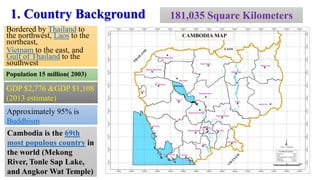
Cambodia is the 69th
most populous country in
the world (Mekong
River, Tonle Sap Lake,
and Angkor Wat Temple)
Bordered by Thailand to
the northwest, Laos to the
northeast,
Vietnam to the east, and
Gulf of Thailand to the
southwest
Population 15 million( 2003)
GDP $2,776 &GDP $1,108
(2013 estimate)
Approximately 95% is
Buddhism
1. Country Background 181,035 Square Kilometers
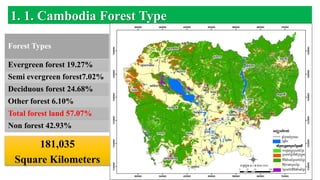
Forest Types
Evergreen forest 19.27%
Semi evergreen forest7.02%
Deciduous forest 24.68%
Other forest 6.10%
Total forest land 57.07%
Non forest 42.93%
1. 1. Cambodia Forest Type
181,035
Square Kilometers
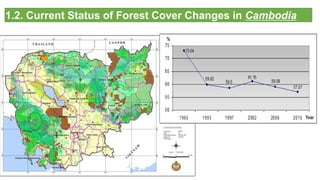
1.2. Current Status of Forest Cover Changes in Cambodia
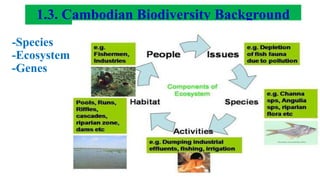
1.3. Cambodian Biodiversity Background
-Species
-Ecosystem
-Genes
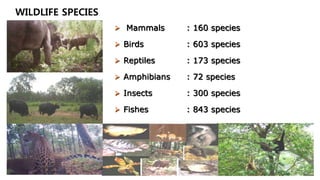
WILDLIFE SPECIES
 Mammals : 160 species
 Birds : 603 species
 Reptiles : 173 species
 Amphibians : 72 species
 Insects : 300 species
 Fishes : 843 species
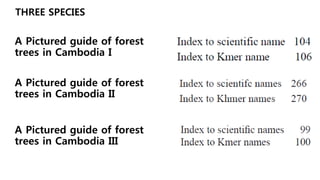
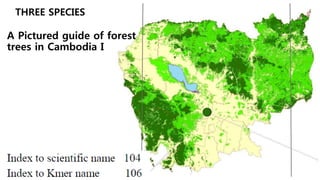
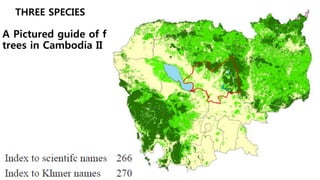
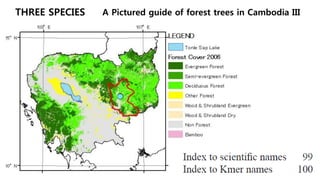
THREE SPECIES
A Pictured guide of forest
trees in Cambodia I
A Pictured guide of forest
trees in Cambodia II
A Pictured guide of forest
trees in Cambodia III
THREE SPECIES
A Pictured guide of forest
trees in Cambodia I
THREE SPECIES
A Pictured guide of forest
trees in Cambodia II
THREE SPECIES A Pictured guide of forest trees in Cambodia III
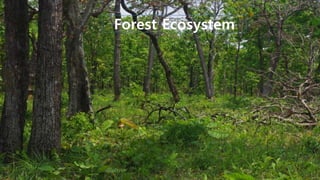
Forest Ecosystem
2-The Value of Cambodian Biodiversity
•Biodiversity and Ecosystem Services Values
•Direct Economic Values
•Ethical Values
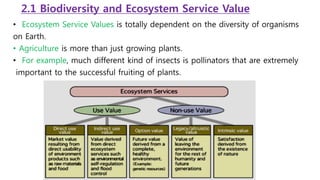
2.1 Biodiversity and Ecosystem Service Value
• Ecosystem Service Values is totally dependent on the diversity of organisms
on Earth.
• Agriculture is more than just growing plants.
• For example, much different kind of insects is pollinators that are extremely
important to the successful fruiting of plants.
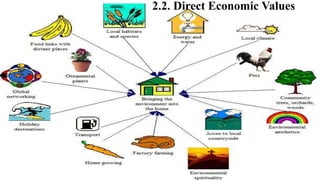
2.2. Direct Economic Values
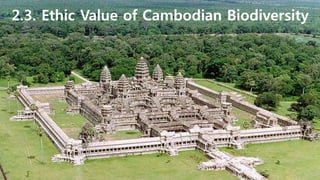
2.3. Ethic Value of Cambodian Biodiversity
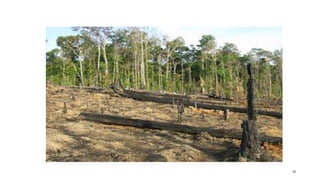
- Habitat Loss
- Overexploitation
- Introduction of exotic species
- Control of pest organisms
17
3.Threats to Cambodian Biodiversity
5. Cause of extinction
• Habitat alternation
• Commercial hunting
• Competition with introduce species (No)
• Pollution
• Killed because of superstition (No)
• Captured to serve as pets
• Hunted for food
• Pest control
19
0
5000
10000
15000
20000
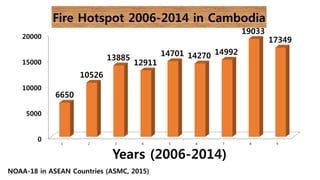
1 2 3 4 5 6 7 8 9
6650
10526
13885
12911
14701 14270 14992
19033
17349
Years (2006-2014)
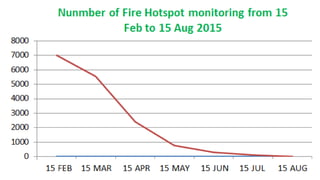
Fire Hotspot 2006-2014 in Cambodia
NOAA-18 in ASEAN Countries (ASMC, 2015)
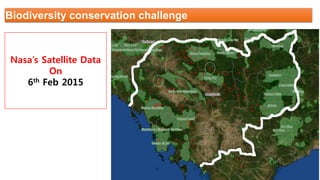
Biodiversity conservation challenge
Nasa’s Satellite Data
On
6th Feb 2015
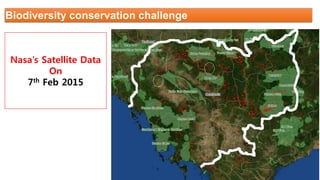
Biodiversity conservation challenge
Nasa’s Satellite Data
On
7th Feb 2015
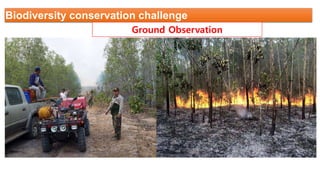
Biodiversity conservation challenge
Ground Observation
Legal Protection:
168 countries signed the Convention on Biological Diversity(CBD), commonly known as the internat
ional biodiversity treaty. The key components of the CBD are that the signatory countries will:
 Develop national strategies for the conservation and sustainable use of biological diversity.
 Identify components of biological diversity important for its conservation.
 Monitor biological diversity.
 Identify activities that have adverse impacts on the conservation and sustainable use of biological
diversity .
 Establish a system of protected areas.
 Rehabilitate and restore degraded ecosystems promote the recovery of threatened species.
25
6.What is being Done to Preserve Biodiversity?
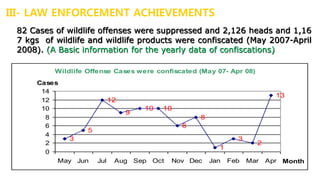
III- LAW ENFORCEMENT ACHIEVEMENTS
82 Cases of wildlife offenses were suppressed and 2,126 heads and 1,16
7 kgs of wildlife and wildlife products were confiscated (May 2007-April
2008). (A Basic information for the yearly data of confiscations)
Wildlife Offense Cases were confiscated (May 07- Apr 08)
3
5
12
9
10 10
6
8
1
3
2
13
0
2
4
6
8
10
12
14
May Jun Jul Aug Sep Oct Nov Dec Jan Feb Mar Apr Month
Cases
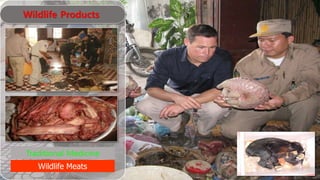
Traditional Medicine
Wildlife Meats
Wildlife Products
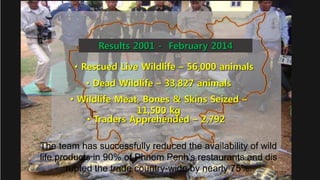
Results 2001 - February 2014
• Rescued Live Wildlife – 56,000 animals
• Dead Wildlife – 33,827 animals
• Wildlife Meat, Bones & Skins Seized –
11,500 kg
• Traders Apprehended – 2,792
The team has successfully reduced the availability of wild
life products in 90% of Phnom Penh’s restaurants and dis
rupted the trade country-wide by nearly 75%.
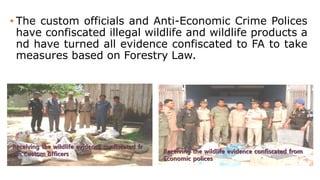
• The custom officials and Anti-Economic Crime Polices
have confiscated illegal wildlife and wildlife products a
nd have turned all evidence confiscated to FA to take
measures based on Forestry Law.
Receiving the wildlife evidence confiscated fr
om Custom officers Receiving the wildlife evidence confiscated from
Economic polices
7-CONCLUSION
The IUCN classifies species in danger of extinction into four
categories: ENDANGERED, VULNERABLE, RARE, AND INDETERMINATE.
Therefore Cambodian Forestry Administration are now working on
Developed national strategies is know as “National Forest Program
2009-2029” for the conservation and sustainable use of biological
diversity
 Monitoring biological diversity
 Established a system of protected areas
 Developed and maintain necessary legislation, forestry law and
memorandums for the protection of threatened species and populatio
ns and integrate consideration of the conservation and sustainable us
e of biological resources into national decision making.
Final cambodian biodiversity.pptx [autosaved]

Final cambodian biodiversity.pptx [autosaved]

  • 1.
    APFNet’s Workshop onBiodiversity Conservation Challenges in Asia-Pacific: The Trans-Boundary and Livelihood Dimension Chiang Mai, Thailand 1-13 November 2015
  • 2.
    1- Cambodian BiodiversityBackground 2- The Value of Biodiversity 3. Threats to Biodiversity 4. Biodiversity Loss and Extinction 5. Causes of extinction 6. What is being Done to Preserve Biodiversity?
  • 3.
    Cambodia is the69th most populous country in the world (Mekong River, Tonle Sap Lake, and Angkor Wat Temple) Bordered by Thailand to the northwest, Laos to the northeast, Vietnam to the east, and Gulf of Thailand to the southwest Population 15 million( 2003) GDP $2,776 &GDP $1,108 (2013 estimate) Approximately 95% is Buddhism 1. Country Background 181,035 Square Kilometers
  • 4.
    Forest Types Evergreen forest19.27% Semi evergreen forest7.02% Deciduous forest 24.68% Other forest 6.10% Total forest land 57.07% Non forest 42.93% 1. 1. Cambodia Forest Type 181,035 Square Kilometers
  • 5.
    1.2. Current Statusof Forest Cover Changes in Cambodia
  • 6.
    1.3. Cambodian BiodiversityBackground -Species -Ecosystem -Genes
  • 7.
    WILDLIFE SPECIES  Mammals: 160 species  Birds : 603 species  Reptiles : 173 species  Amphibians : 72 species  Insects : 300 species  Fishes : 843 species
  • 8.
    THREE SPECIES A Picturedguide of forest trees in Cambodia I A Pictured guide of forest trees in Cambodia II A Pictured guide of forest trees in Cambodia III
  • 9.
    THREE SPECIES A Picturedguide of forest trees in Cambodia I
  • 10.
    THREE SPECIES A Picturedguide of forest trees in Cambodia II
  • 11.
    THREE SPECIES APictured guide of forest trees in Cambodia III
  • 12.
  • 13.
    2-The Value ofCambodian Biodiversity •Biodiversity and Ecosystem Services Values •Direct Economic Values •Ethical Values
  • 14.
    2.1 Biodiversity andEcosystem Service Value • Ecosystem Service Values is totally dependent on the diversity of organisms on Earth. • Agriculture is more than just growing plants. • For example, much different kind of insects is pollinators that are extremely important to the successful fruiting of plants.
  • 15.
  • 16.
    2.3. Ethic Valueof Cambodian Biodiversity
  • 17.
    - Habitat Loss -Overexploitation - Introduction of exotic species - Control of pest organisms 17 3.Threats to Cambodian Biodiversity
  • 18.
    5. Cause ofextinction • Habitat alternation • Commercial hunting • Competition with introduce species (No) • Pollution • Killed because of superstition (No) • Captured to serve as pets • Hunted for food • Pest control
  • 19.
  • 20.
    0 5000 10000 15000 20000 1 2 34 5 6 7 8 9 6650 10526 13885 12911 14701 14270 14992 19033 17349 Years (2006-2014) Fire Hotspot 2006-2014 in Cambodia NOAA-18 in ASEAN Countries (ASMC, 2015)
  • 22.
    Biodiversity conservation challenge Nasa’sSatellite Data On 6th Feb 2015
  • 23.
    Biodiversity conservation challenge Nasa’sSatellite Data On 7th Feb 2015
  • 24.
  • 25.
    Legal Protection: 168 countriessigned the Convention on Biological Diversity(CBD), commonly known as the internat ional biodiversity treaty. The key components of the CBD are that the signatory countries will:  Develop national strategies for the conservation and sustainable use of biological diversity.  Identify components of biological diversity important for its conservation.  Monitor biological diversity.  Identify activities that have adverse impacts on the conservation and sustainable use of biological diversity .  Establish a system of protected areas.  Rehabilitate and restore degraded ecosystems promote the recovery of threatened species. 25 6.What is being Done to Preserve Biodiversity?
  • 28.
    III- LAW ENFORCEMENTACHIEVEMENTS 82 Cases of wildlife offenses were suppressed and 2,126 heads and 1,16 7 kgs of wildlife and wildlife products were confiscated (May 2007-April 2008). (A Basic information for the yearly data of confiscations) Wildlife Offense Cases were confiscated (May 07- Apr 08) 3 5 12 9 10 10 6 8 1 3 2 13 0 2 4 6 8 10 12 14 May Jun Jul Aug Sep Oct Nov Dec Jan Feb Mar Apr Month Cases
  • 29.
  • 30.
    Results 2001 -February 2014 • Rescued Live Wildlife – 56,000 animals • Dead Wildlife – 33,827 animals • Wildlife Meat, Bones & Skins Seized – 11,500 kg • Traders Apprehended – 2,792 The team has successfully reduced the availability of wild life products in 90% of Phnom Penh’s restaurants and dis rupted the trade country-wide by nearly 75%.
  • 31.
    • The customofficials and Anti-Economic Crime Polices have confiscated illegal wildlife and wildlife products a nd have turned all evidence confiscated to FA to take measures based on Forestry Law. Receiving the wildlife evidence confiscated fr om Custom officers Receiving the wildlife evidence confiscated from Economic polices
  • 32.
    7-CONCLUSION The IUCN classifiesspecies in danger of extinction into four categories: ENDANGERED, VULNERABLE, RARE, AND INDETERMINATE. Therefore Cambodian Forestry Administration are now working on Developed national strategies is know as “National Forest Program 2009-2029” for the conservation and sustainable use of biological diversity  Monitoring biological diversity  Established a system of protected areas  Developed and maintain necessary legislation, forestry law and memorandums for the protection of threatened species and populatio ns and integrate consideration of the conservation and sustainable us e of biological resources into national decision making.

Editor's Notes

  • #18 INTERNATIONAL UNION FOR THE CONSERVATION OF NATION= WORLD CONVERSATION UNION