Fighting
Different
Types of
Fires
Classes of Fires
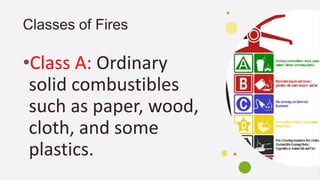
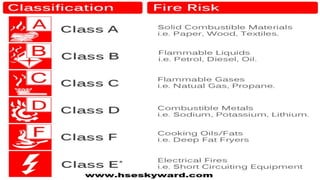
•Class A: Ordinary
solid combustibles
such as paper, wood,
cloth, and some
plastics.
Classes of Fires
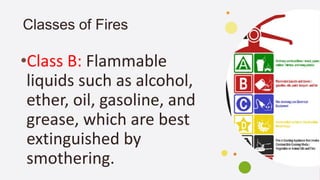
•Class B: Flammable
liquids such as alcohol,
ether, oil, gasoline, and
grease, which are best
extinguished by
smothering.
Classes of Fires
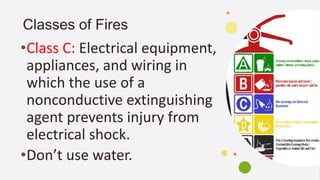
•Class C: Electrical equipment,
appliances, and wiring in
which the use of a
nonconductive extinguishing
agent prevents injury from
electrical shock.
•Don’t use water.
Classes of Fires
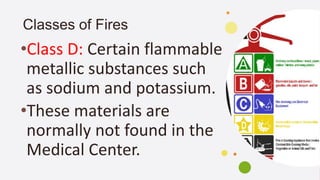
•Class D: Certain flammable
metallic substances such
as sodium and potassium.
•These materials are
normally not found in the
Medical Center.
Fire Extinguishers
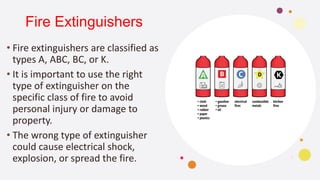
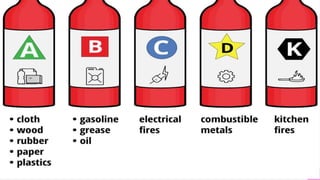
• Fire extinguishers are classified as
types A, ABC, BC, or K.
• It is important to use the right
type of extinguisher on the
specific class of fire to avoid
personal injury or damage to
property.
• The wrong type of extinguisher
could cause electrical shock,
explosion, or spread the fire.
Types of Fire
Extinguishers
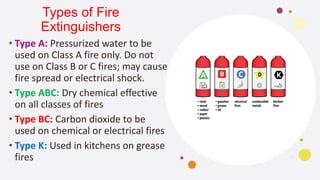
• Type A: Pressurized water to be
used on Class A fire only. Do not
use on Class B or C fires; may cause
fire spread or electrical shock.
• Type ABC: Dry chemical effective
on all classes of fires
• Type BC: Carbon dioxide to be
used on chemical or electrical fires
• Type K: Used in kitchens on grease
fires
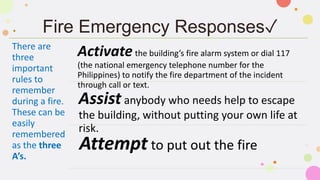
Fire Emergency Responses✓
There are
three
important
rules to
remember
during a fire.
These can be
easily
remembered
as the three
A’s.
Activatethe building’s fire alarm system or dial 117
(the national emergency telephone number for the
Philippines) to notify the fire department of the incident
through call or text.
Assist anybody who needs help to escape
the building, without putting your own life at
risk.
Attempt to put out the fire
1. Is it possible for the fire
incident to be prevented?
2. If yes, what are the measures
that could have been prevented
the fire? (Give at least 2 concrete
answers)

Fighting Different Types of Fires.pptx

  • 1.
  • 2.
    Classes of Fires •ClassA: Ordinary solid combustibles such as paper, wood, cloth, and some plastics.
  • 3.
    Classes of Fires •ClassB: Flammable liquids such as alcohol, ether, oil, gasoline, and grease, which are best extinguished by smothering.
  • 4.
    Classes of Fires •ClassC: Electrical equipment, appliances, and wiring in which the use of a nonconductive extinguishing agent prevents injury from electrical shock. •Don’t use water.
  • 5.
    Classes of Fires •ClassD: Certain flammable metallic substances such as sodium and potassium. •These materials are normally not found in the Medical Center.
  • 7.
    Fire Extinguishers • Fireextinguishers are classified as types A, ABC, BC, or K. • It is important to use the right type of extinguisher on the specific class of fire to avoid personal injury or damage to property. • The wrong type of extinguisher could cause electrical shock, explosion, or spread the fire.
  • 9.
    Types of Fire Extinguishers •Type A: Pressurized water to be used on Class A fire only. Do not use on Class B or C fires; may cause fire spread or electrical shock. • Type ABC: Dry chemical effective on all classes of fires • Type BC: Carbon dioxide to be used on chemical or electrical fires • Type K: Used in kitchens on grease fires
  • 13.
    Fire Emergency Responses✓ Thereare three important rules to remember during a fire. These can be easily remembered as the three A’s. Activatethe building’s fire alarm system or dial 117 (the national emergency telephone number for the Philippines) to notify the fire department of the incident through call or text. Assist anybody who needs help to escape the building, without putting your own life at risk. Attempt to put out the fire
  • 14.
    1. Is itpossible for the fire incident to be prevented? 2. If yes, what are the measures that could have been prevented the fire? (Give at least 2 concrete answers)