YOUR APPLICATIONS
Victor CHAI
HL7 Singapore
Set the context …
• Do we copy and paste the external content into our site page, or
we simply use URL link to reference the external content when we
build a web site?
• What’re the benefits?
– Prevent information proliferation, and avoid obsolete information
– There is no need to fetch all at one go, the requester can ‘follow’ the
path to navigate to the needed information, reduce the network
traffic and payload size
– Each app can focus on managing its own information, and relies on
reference to build up network of information
What is FHIR
• FHIR® – Fast Health Interoperable Resources
(hl7.org/fhir) – is a next generation standards
framework created by HL7
• FHIR solutions are built from a set of modular
components called “Resources”
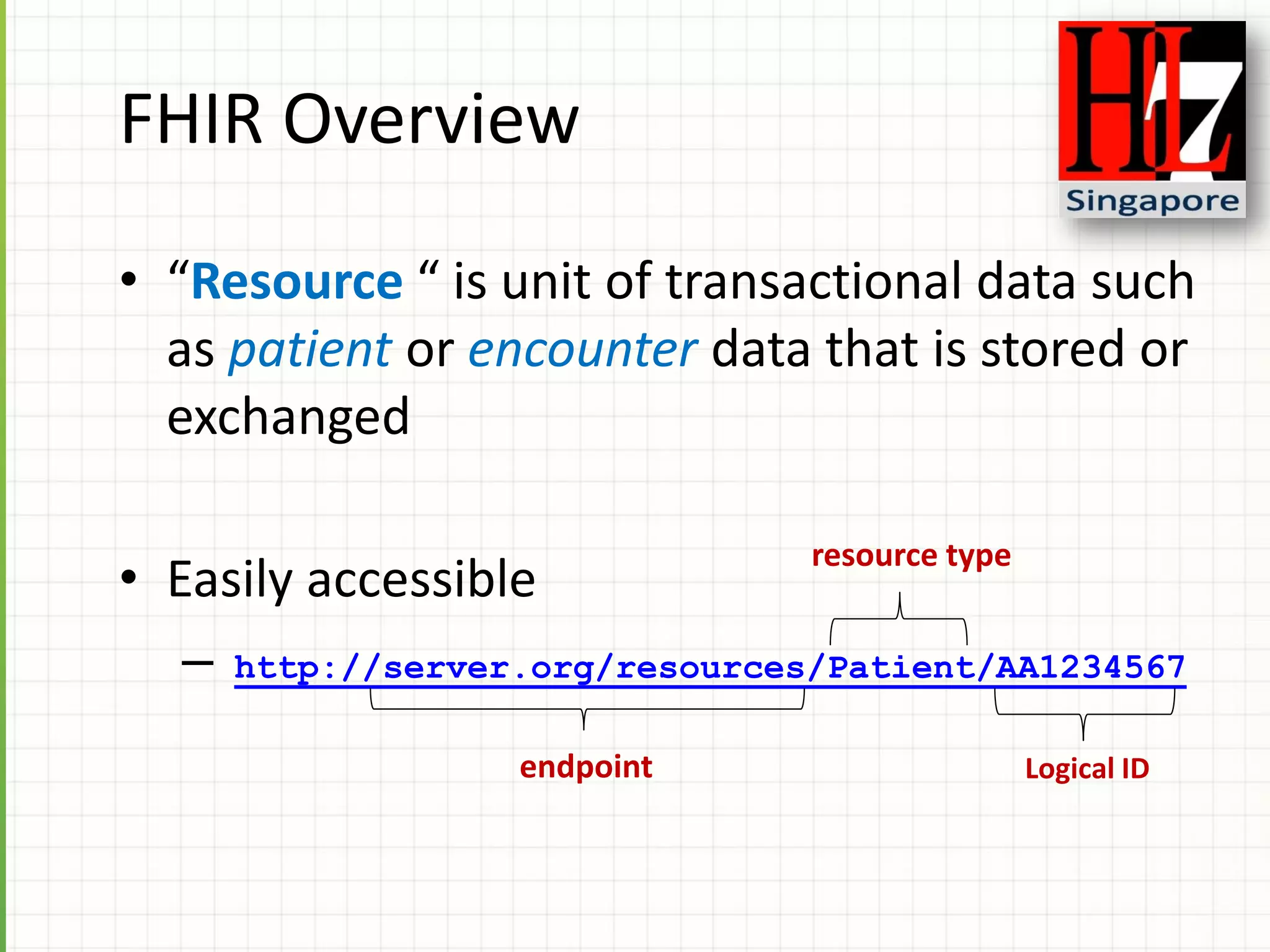
FHIR Overview
• “Resource “ is unit of transactional data such
as patient or encounter data that is stored or
exchanged
• Easily accessible
– http://server.org/resources/Patient/AA1234567
endpoint
resource type
Logical ID
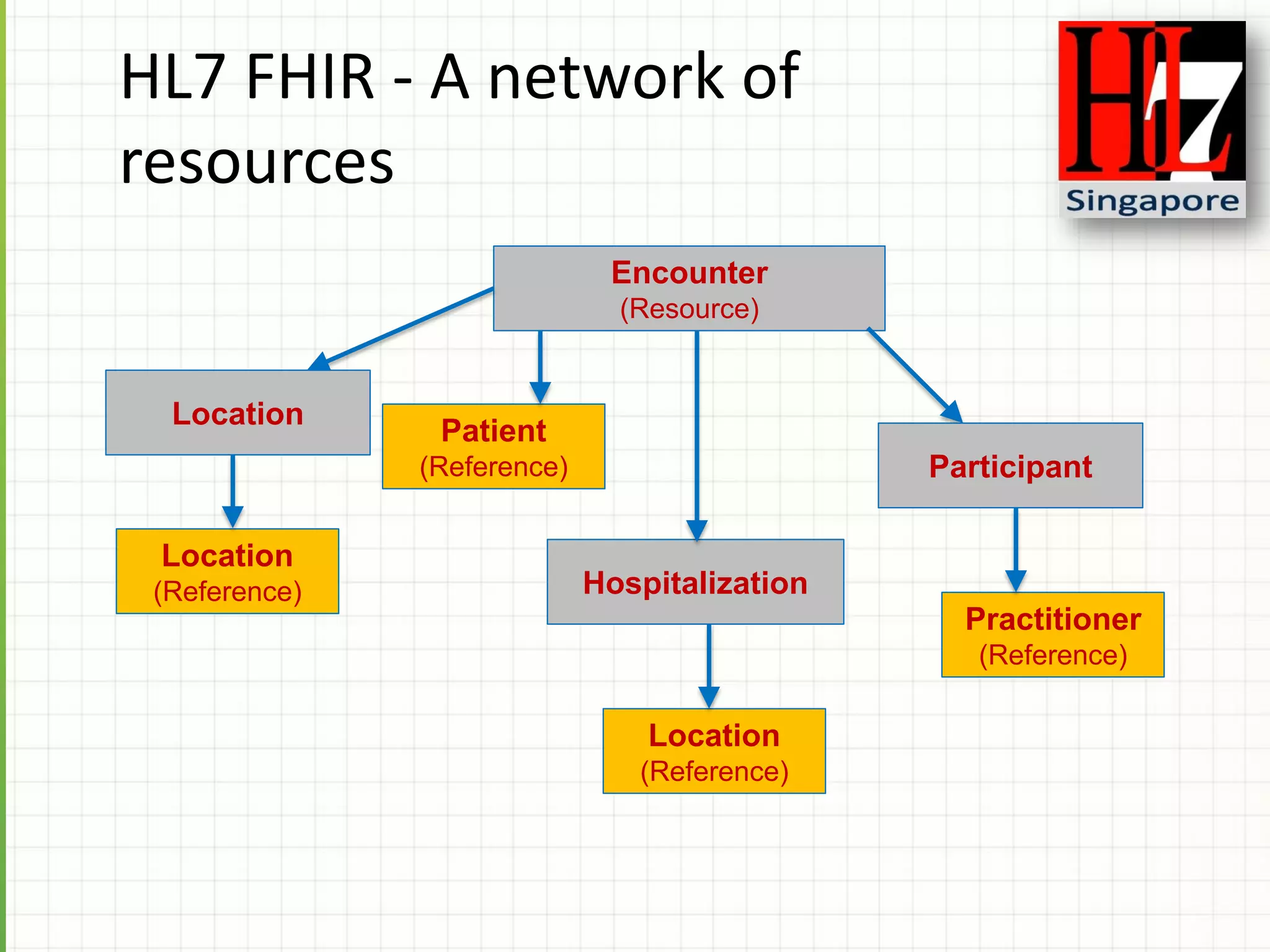
HL7 FHIR - A network of
resources
Encounter
(Resource)
Patient
(Reference)
Hospitalization
Practitioner
(Reference)
Location
(Reference)
Location
(Reference)
Participant
Location
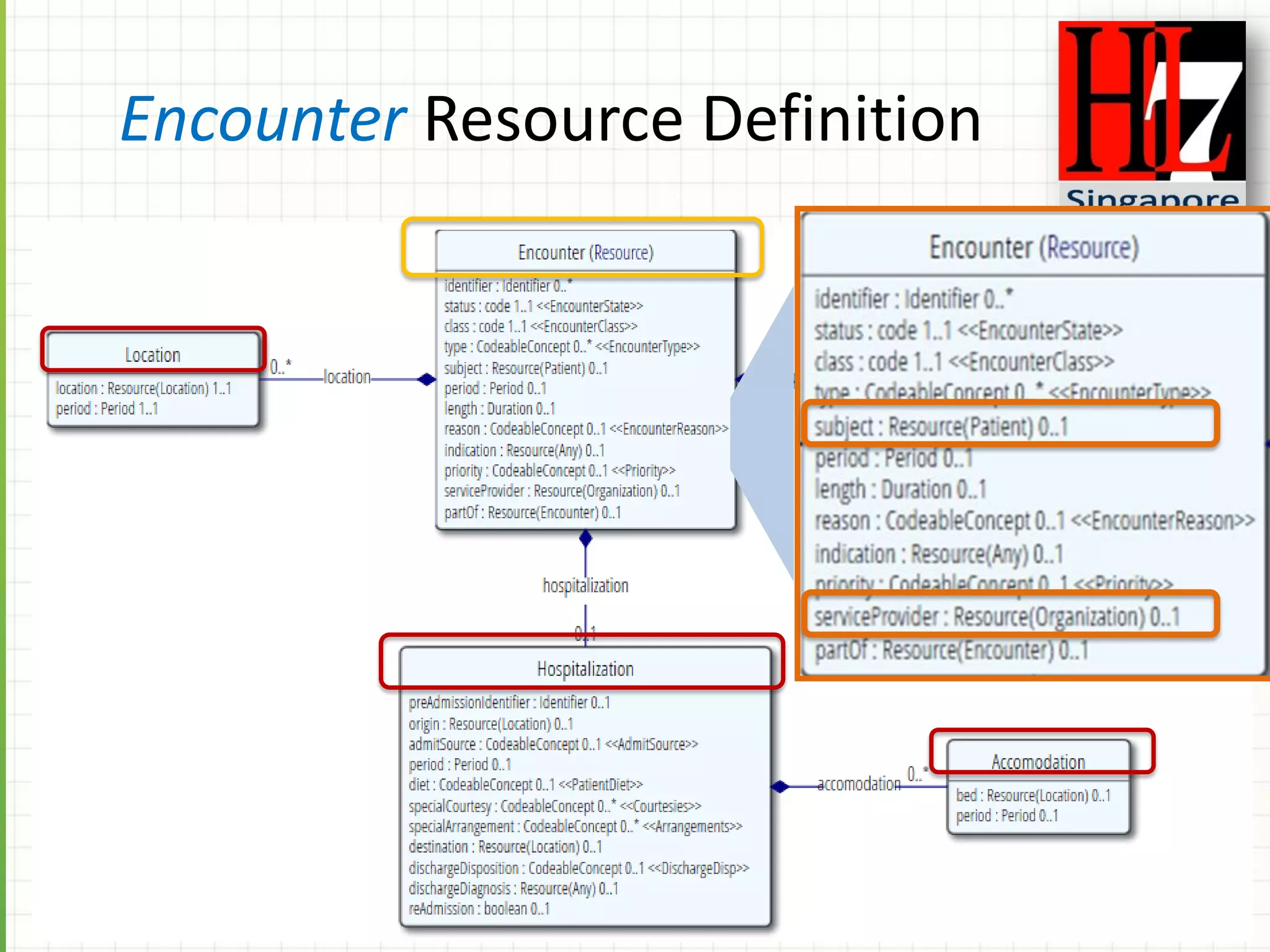
Encounter Resource Definition
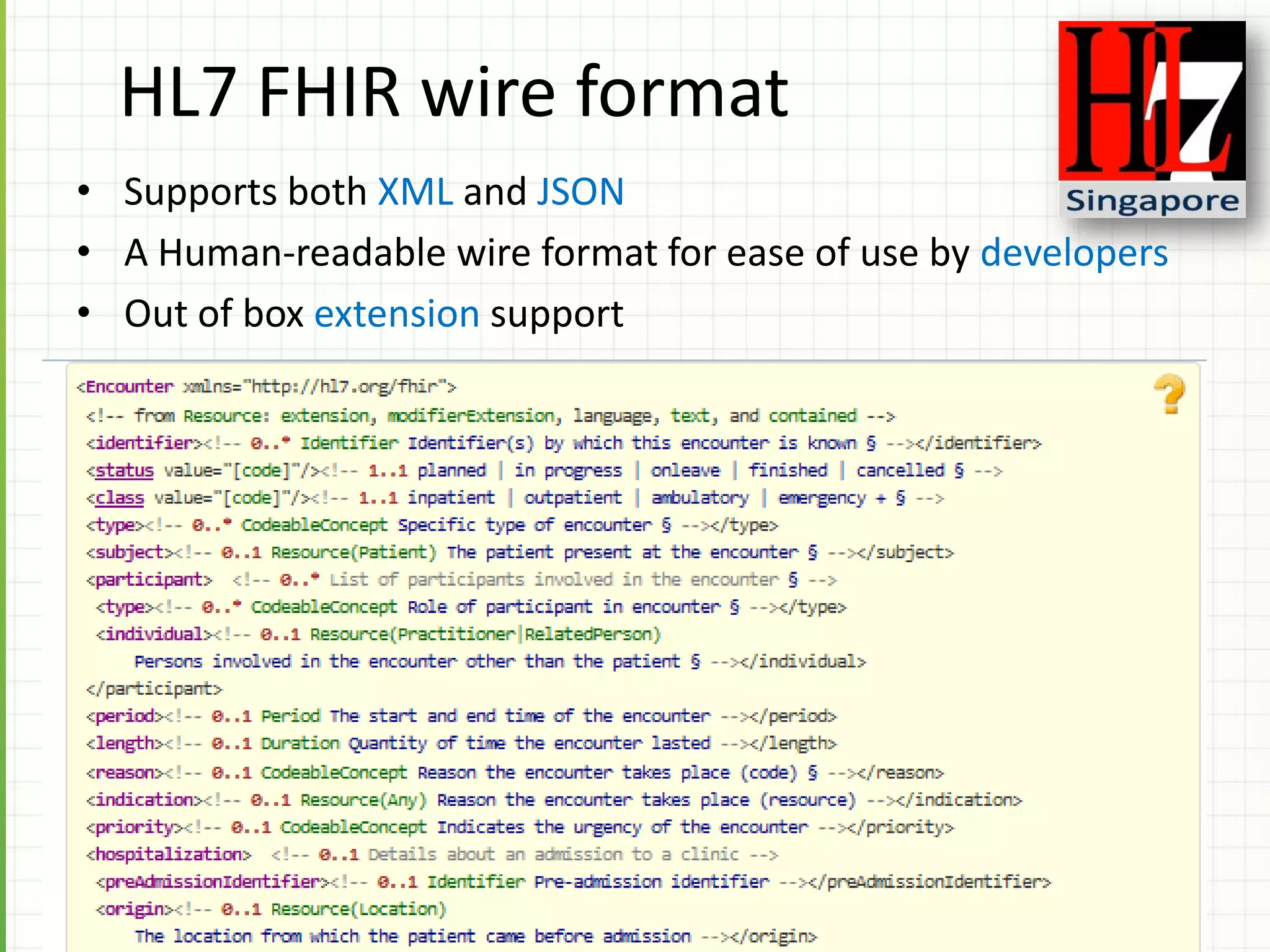
HL7 FHIR wire format
• Supports both XML and JSON
• A Human-readable wire format for ease of use by developers
• Out of box extension support
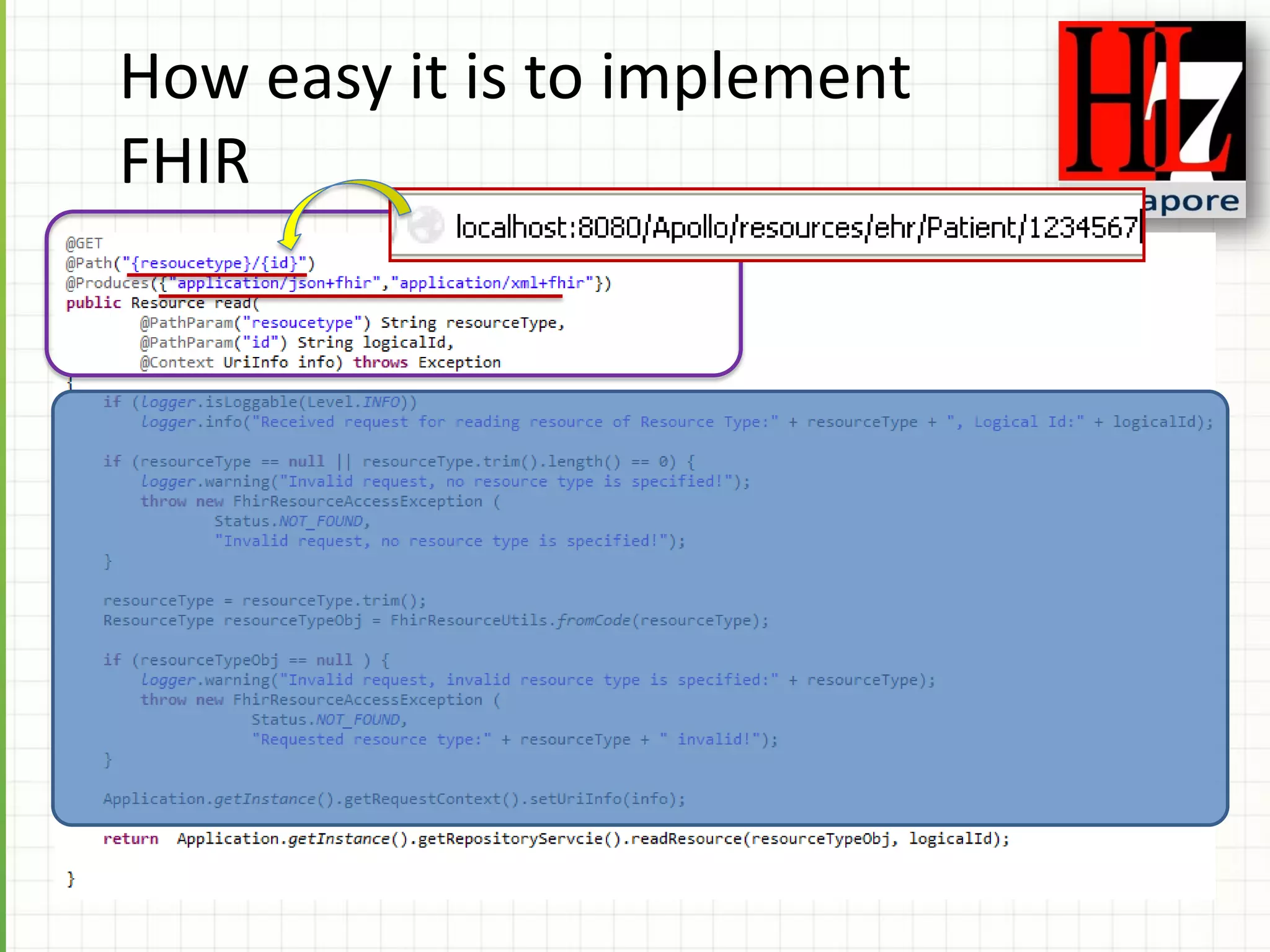
How easy it is to implement
FHIR
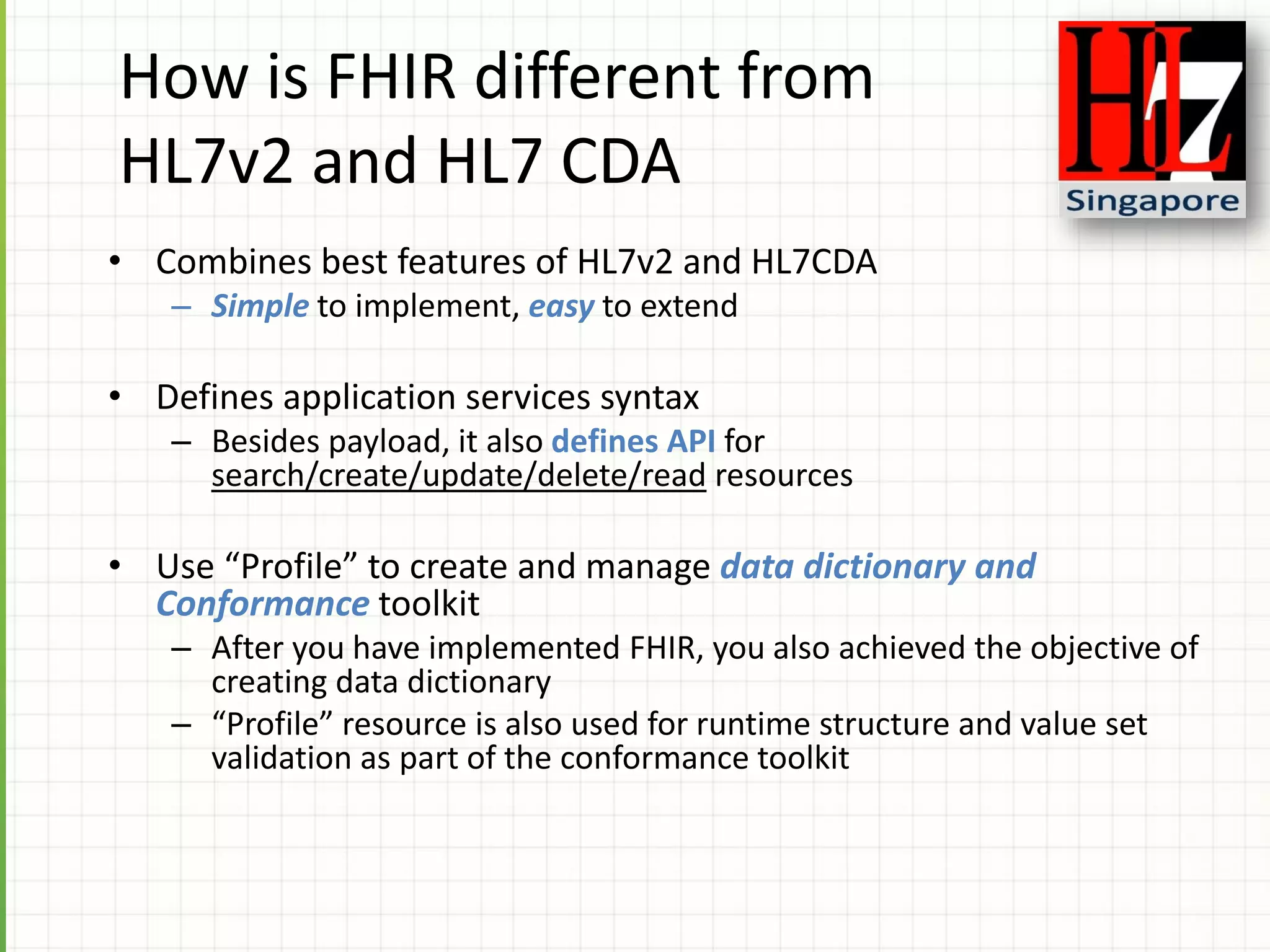
How is FHIR different from
HL7v2 and HL7 CDA
• Combines best features of HL7v2 and HL7CDA
– Simple to implement, easy to extend
• Defines application services syntax
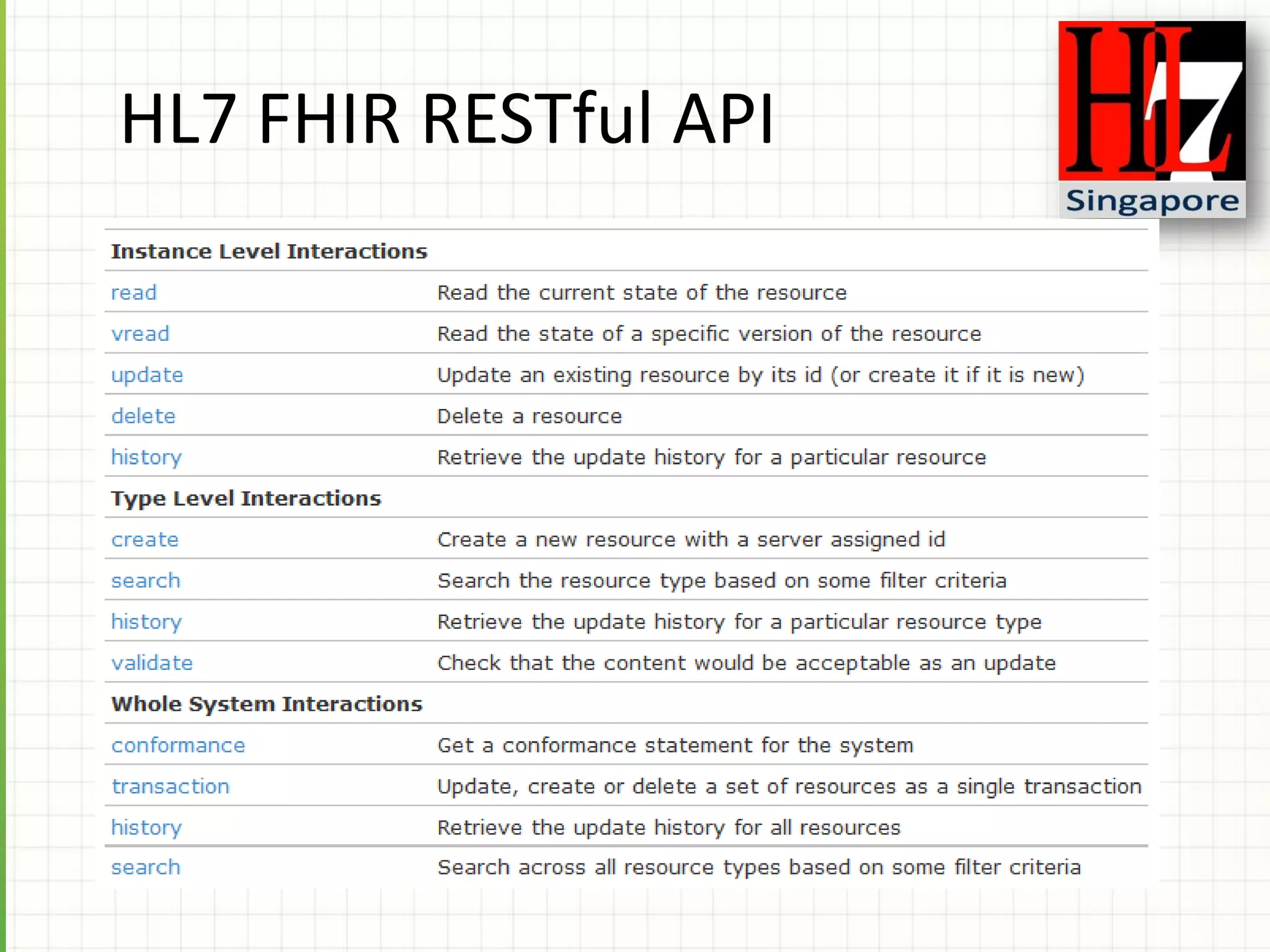
– Besides payload, it also defines API for
search/create/update/delete/read resources
• Use “Profile” to create and manage data dictionary and
Conformance toolkit
– After you have implemented FHIR, you also achieved the objective of
creating data dictionary
– “Profile” resource is also used for runtime structure and value set
validation as part of the conformance toolkit
HL7 FHIR RESTful API
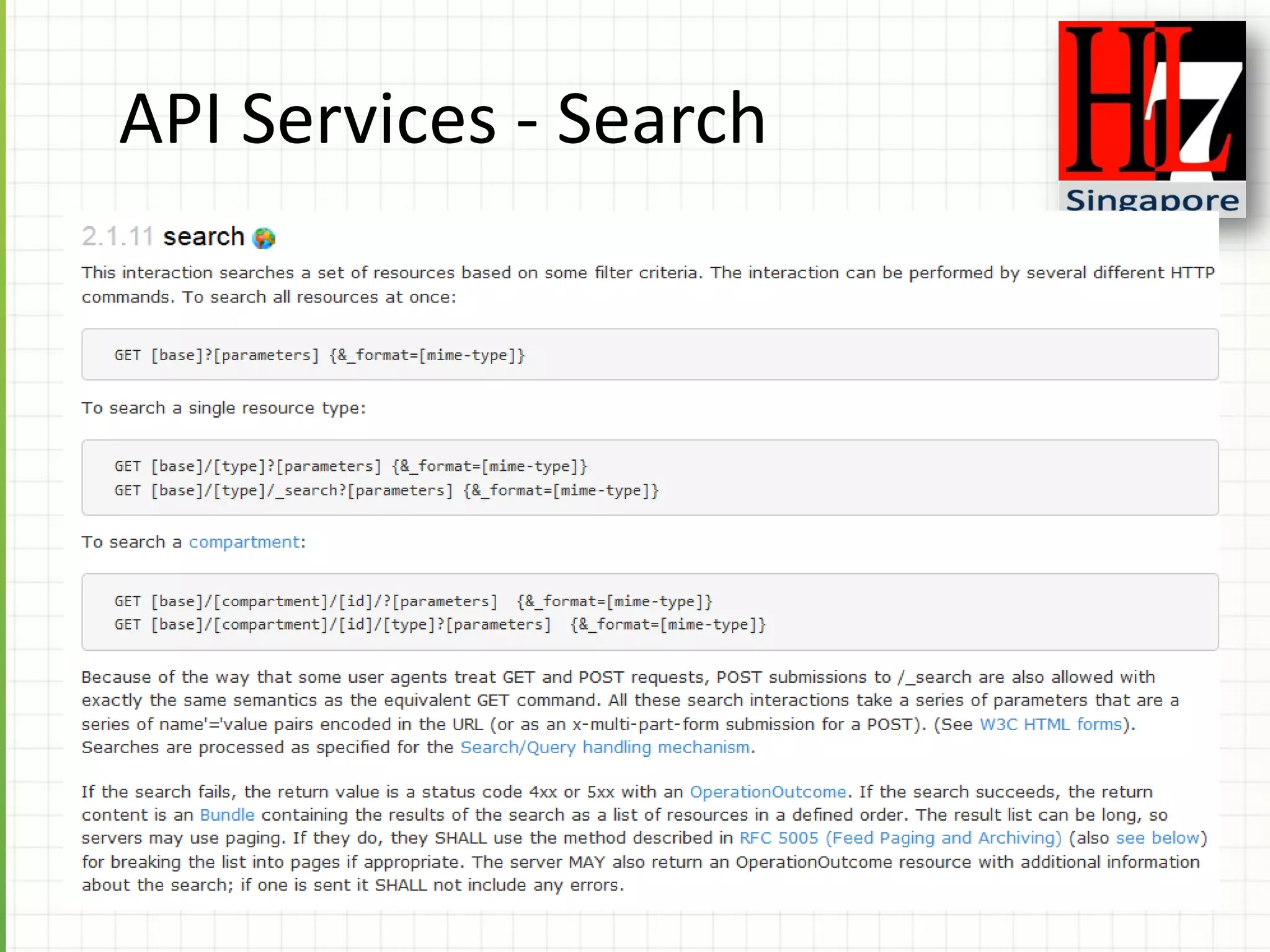
API Services - Search
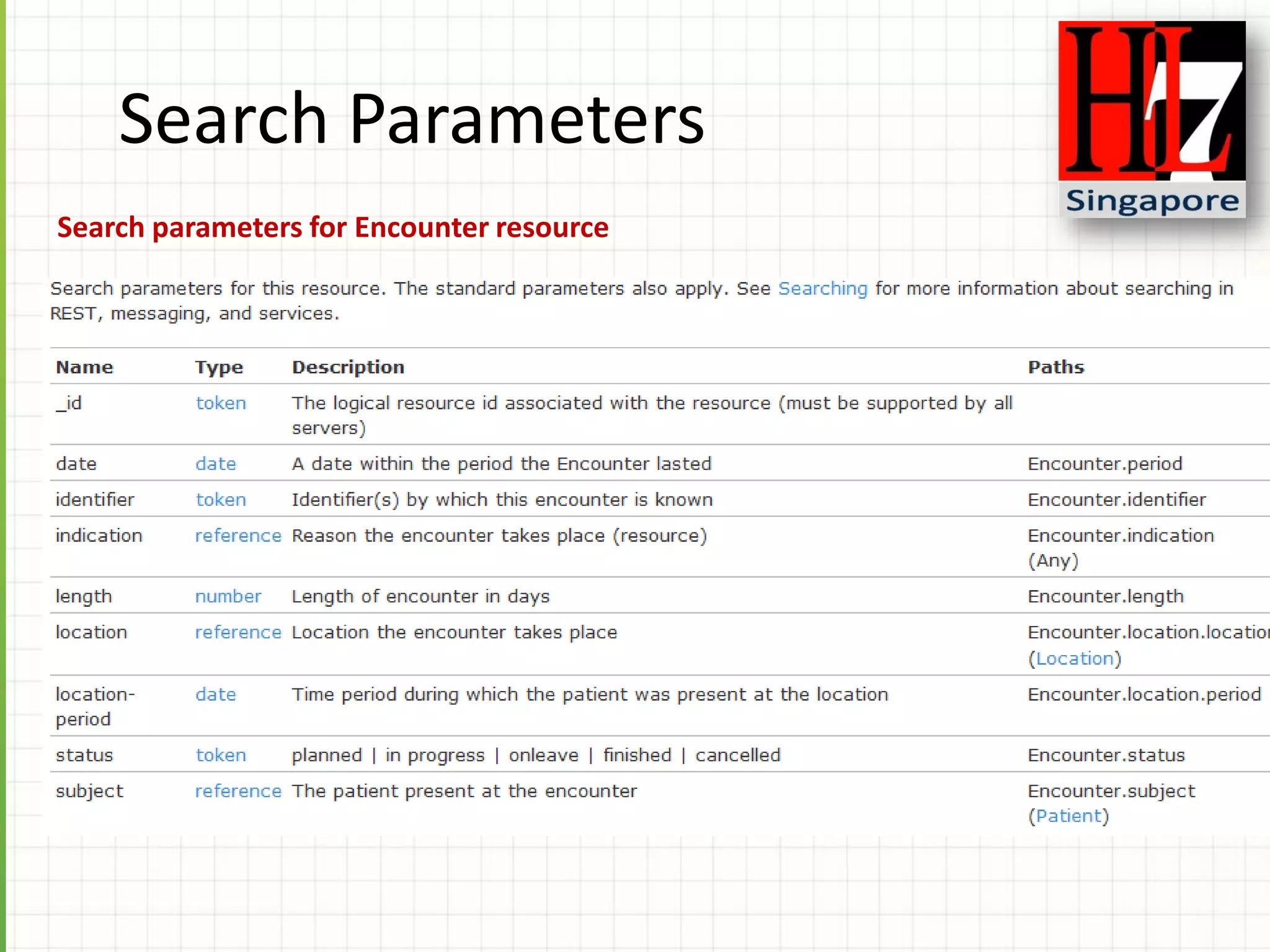
Search Parameters
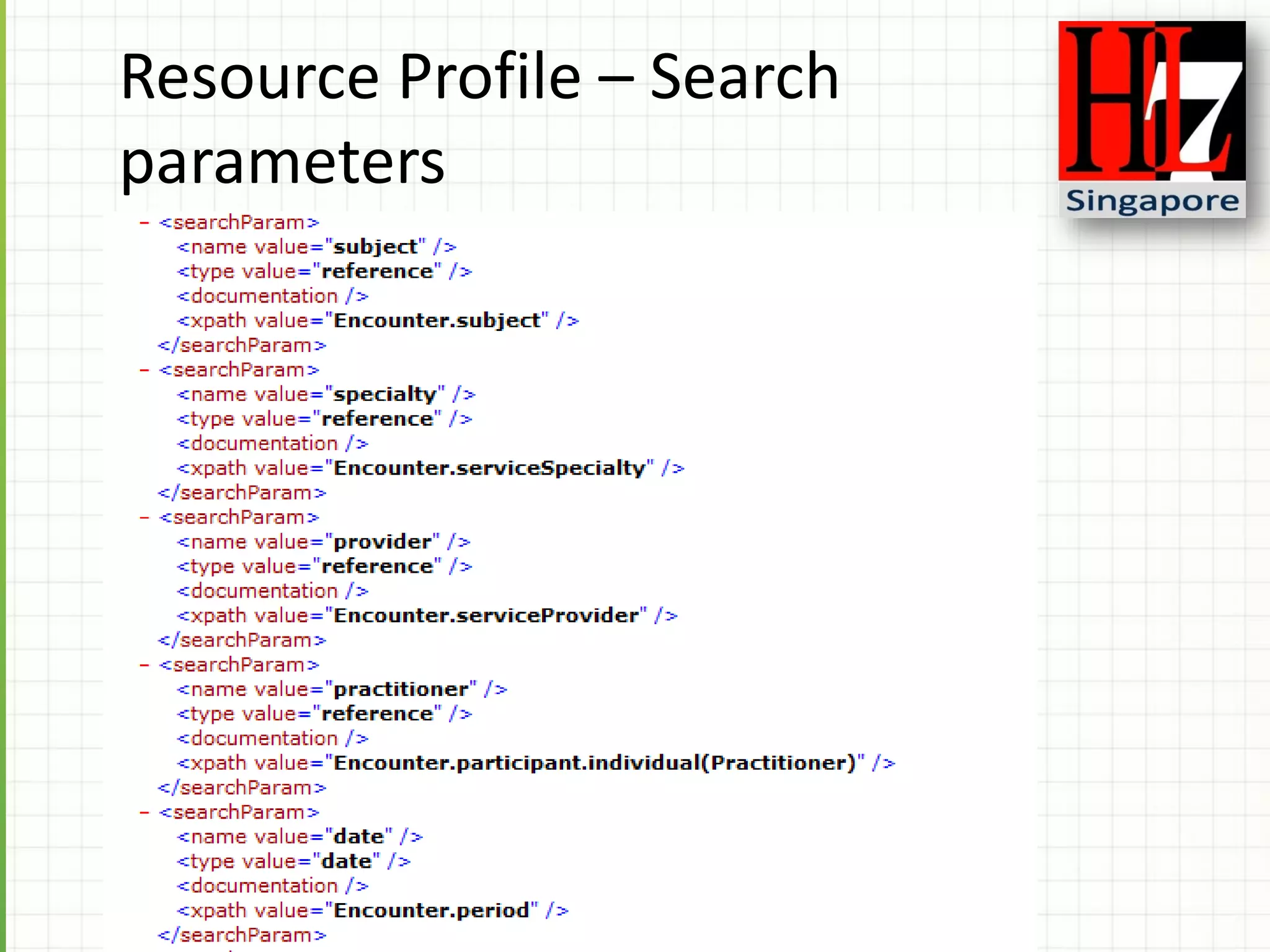
Search parameters for Encounter resource
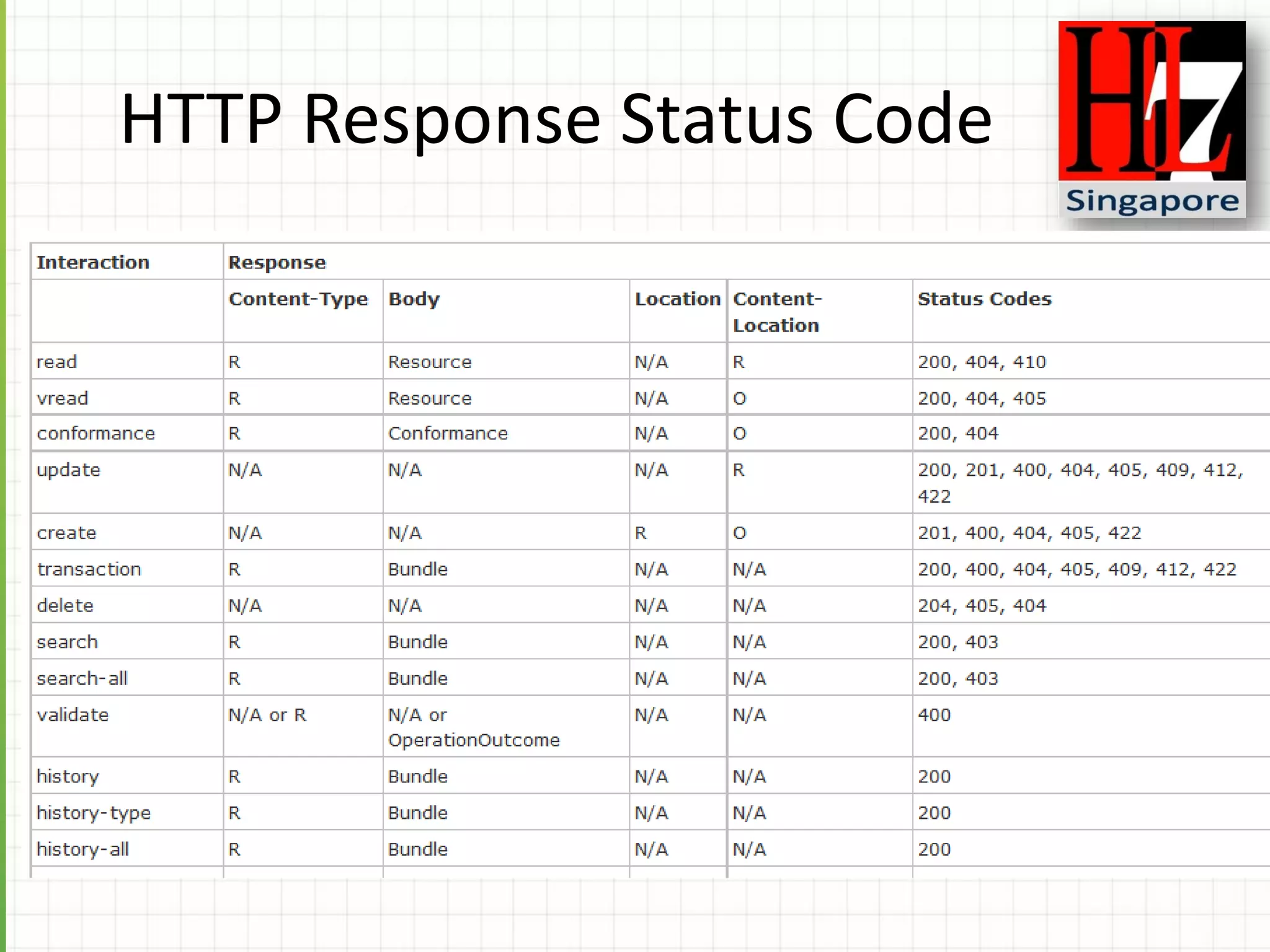
HTTP Response Status Code
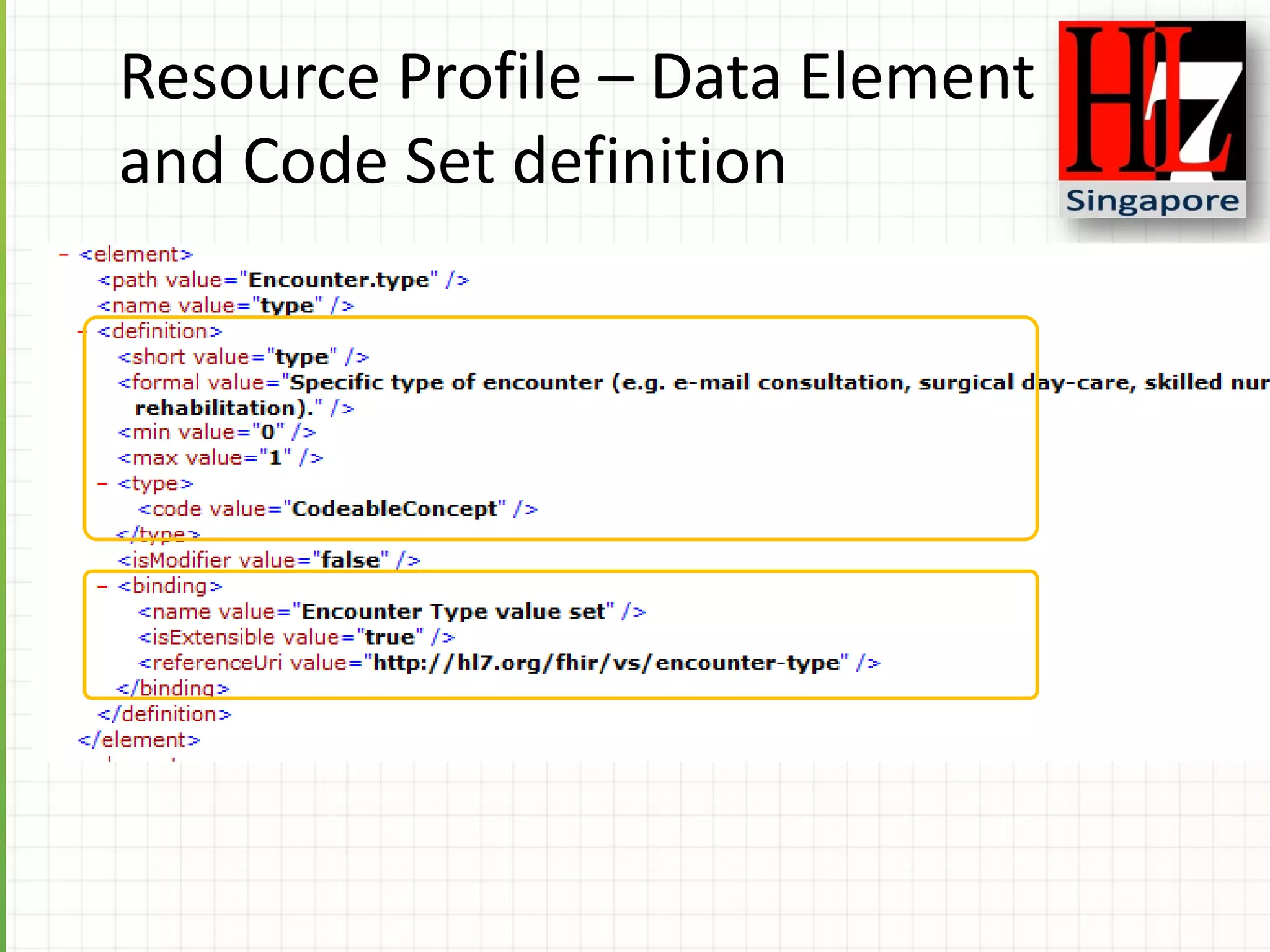
Resource Profile – Data Element
and Code Set definition
Resource Profile – Search
parameters
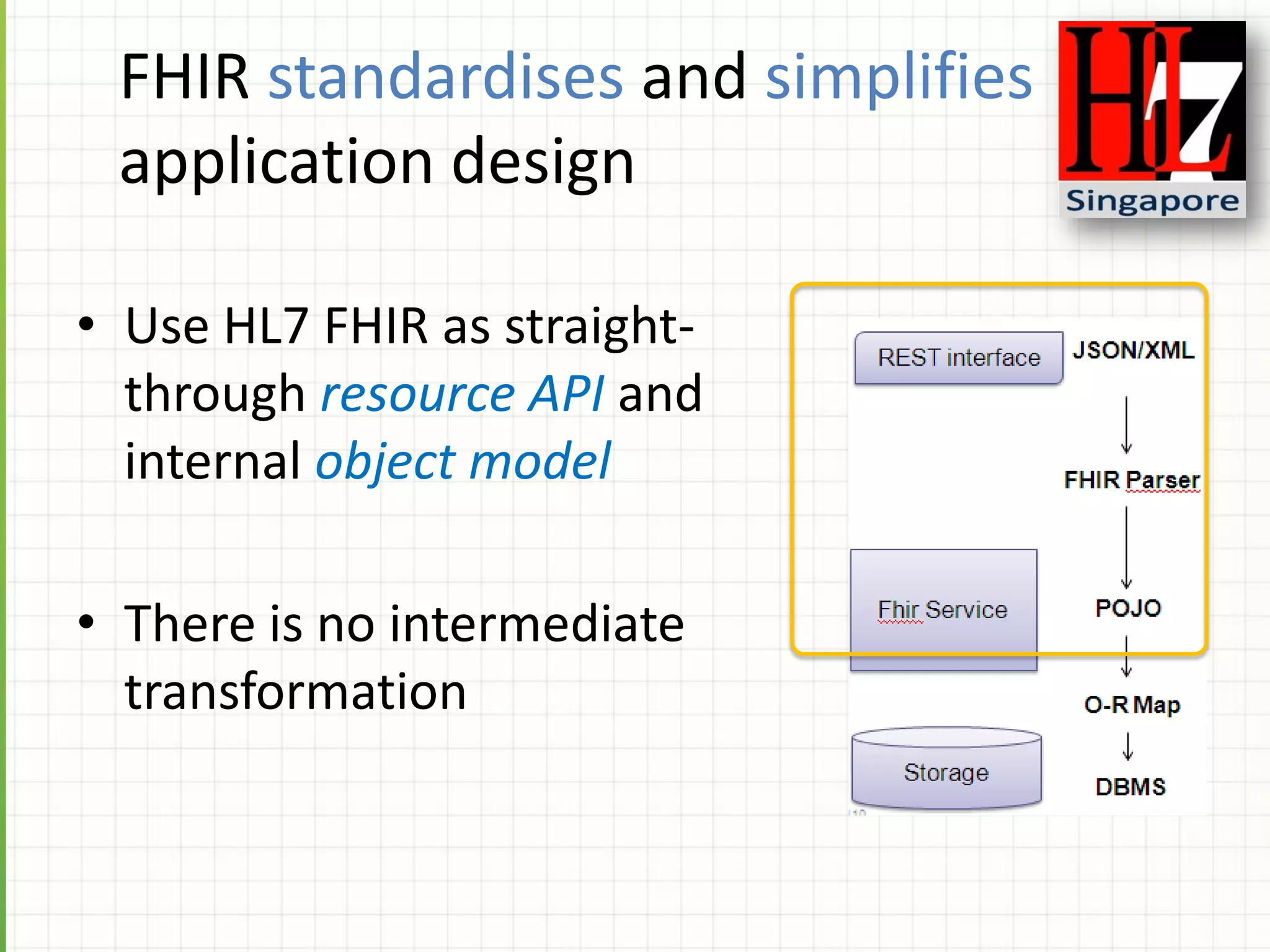
FHIR standardises and simplifies
application design
• Use HL7 FHIR as straight-
through resource API and
internal object model
• There is no intermediate
transformation
FHIR in Action
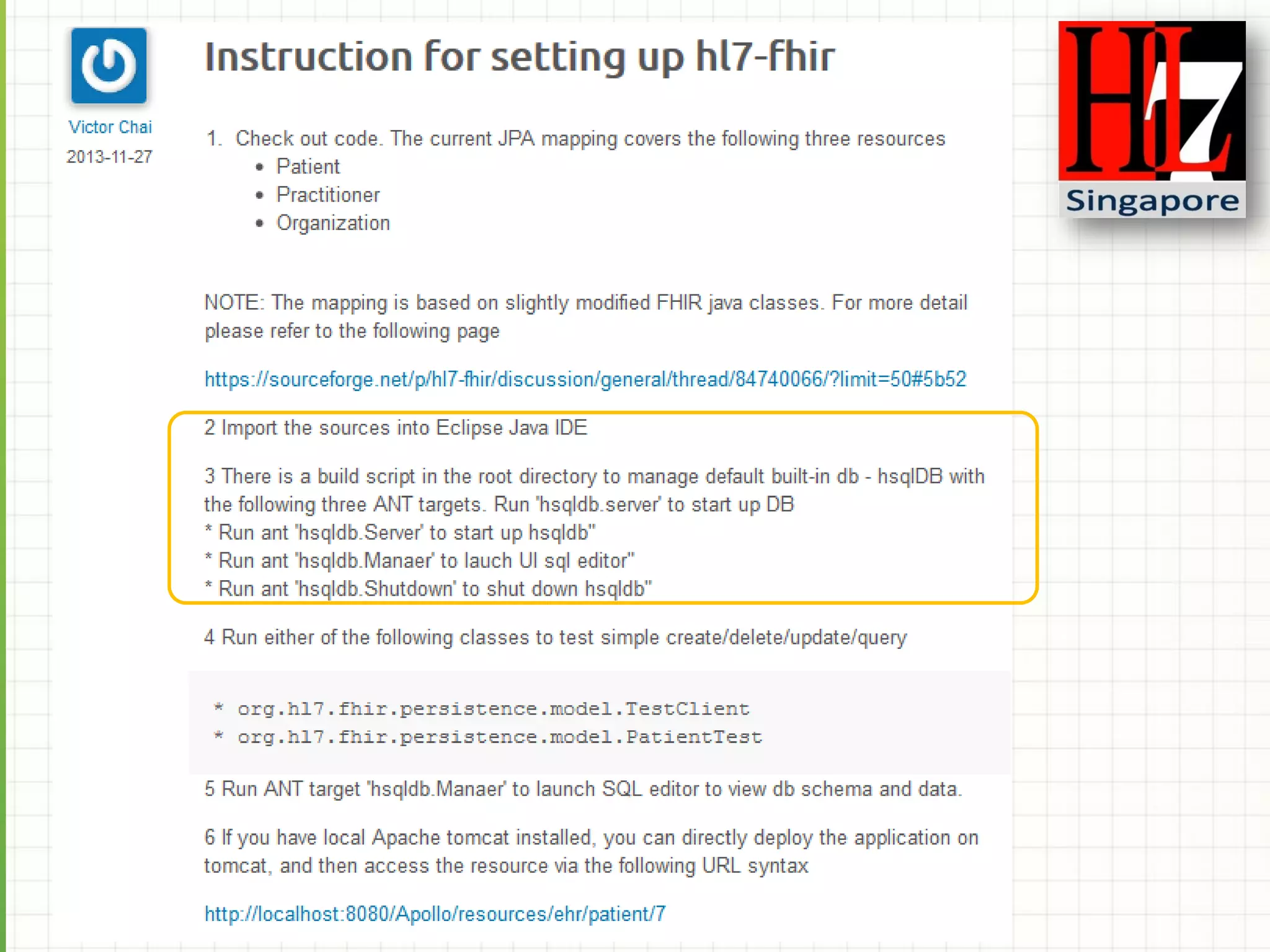
Setting up hl7-fhir project
Summary
• If you are keen, download the following
FHIR open source project
– http://sourceforge.net/projects/hl7-fhir/
– I am recruiting volunteer
• Learn from standards, adopt and adapt
instead of re-invent
– http://www.hl7.org/fhir
THANK YOU

Fhir your applications

  • 1.
  • 2.
    Set the context… • Do we copy and paste the external content into our site page, or we simply use URL link to reference the external content when we build a web site? • What’re the benefits? – Prevent information proliferation, and avoid obsolete information – There is no need to fetch all at one go, the requester can ‘follow’ the path to navigate to the needed information, reduce the network traffic and payload size – Each app can focus on managing its own information, and relies on reference to build up network of information
  • 3.
    What is FHIR •FHIR® – Fast Health Interoperable Resources (hl7.org/fhir) – is a next generation standards framework created by HL7 • FHIR solutions are built from a set of modular components called “Resources”
  • 4.
    FHIR Overview • “Resource“ is unit of transactional data such as patient or encounter data that is stored or exchanged • Easily accessible – http://server.org/resources/Patient/AA1234567 endpoint resource type Logical ID
  • 5.
    HL7 FHIR -A network of resources Encounter (Resource) Patient (Reference) Hospitalization Practitioner (Reference) Location (Reference) Location (Reference) Participant Location
  • 6.
  • 7.
    HL7 FHIR wireformat • Supports both XML and JSON • A Human-readable wire format for ease of use by developers • Out of box extension support
  • 8.
    How easy itis to implement FHIR
  • 9.
    How is FHIRdifferent from HL7v2 and HL7 CDA • Combines best features of HL7v2 and HL7CDA – Simple to implement, easy to extend • Defines application services syntax – Besides payload, it also defines API for search/create/update/delete/read resources • Use “Profile” to create and manage data dictionary and Conformance toolkit – After you have implemented FHIR, you also achieved the objective of creating data dictionary – “Profile” resource is also used for runtime structure and value set validation as part of the conformance toolkit
  • 10.
  • 11.
  • 12.
  • 13.
  • 14.
    Resource Profile –Data Element and Code Set definition
  • 15.
    Resource Profile –Search parameters
  • 16.
    FHIR standardises andsimplifies application design • Use HL7 FHIR as straight- through resource API and internal object model • There is no intermediate transformation
  • 17.
  • 18.
  • 19.
    Summary • If youare keen, download the following FHIR open source project – http://sourceforge.net/projects/hl7-fhir/ – I am recruiting volunteer • Learn from standards, adopt and adapt instead of re-invent – http://www.hl7.org/fhir
  • 20.