By-Arpana Mahapatra
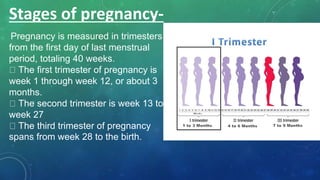
Pregnancy is measured in trimesters
from the first day of last menstrual
period, totaling 40 weeks.
The first trimester of pregnancy is
week 1 through week 12, or about 3
months.
The second trimester is week 13 to
week 27
The third trimester of pregnancy
spans from week 28 to the birth.
Stages of pregnancy-
Month 1
As the fertilized egg grows, a water-tight sac
forms around it, gradually filling with fluid. This is
called the amniotic sac, and it helps cushion the
growing embryo.
The placenta also develops. The placenta is a
round, flat organ that transfers nutrients from the
mother to the baby, and transfers wastes from
the baby.
A primitive face will take form with large dark
circles for eyes. The mouth, lower jaw, and throat
are developing. Blood cells are taking shape, and
circulation will begin. The tiny "heart" tube will
beat 65 times a minute by the end of the fourth
week. By the end of the first month, The baby is
about 1/4 inch long – smaller than a grain of rice!
Month 2
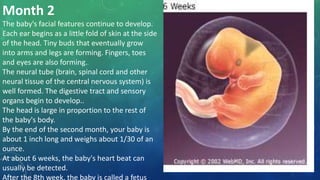
The baby's facial features continue to develop.
Each ear begins as a little fold of skin at the side
of the head. Tiny buds that eventually grow
into arms and legs are forming. Fingers, toes
and eyes are also forming.
The neural tube (brain, spinal cord and other
neural tissue of the central nervous system) is
well formed. The digestive tract and sensory
organs begin to develop..
The head is large in proportion to the rest of
the baby's body.
By the end of the second month, your baby is
about 1 inch long and weighs about 1/30 of an
ounce.
At about 6 weeks, the baby's heart beat can
usually be detected.
After the 8th week, the baby is called a fetus
Month 3
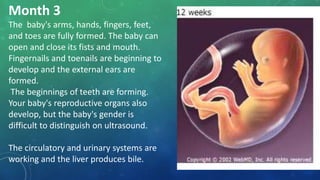
The baby's arms, hands, fingers, feet,
and toes are fully formed. The baby can
open and close its fists and mouth.
Fingernails and toenails are beginning to
develop and the external ears are
formed.
The beginnings of teeth are forming.
Your baby's reproductive organs also
develop, but the baby's gender is
difficult to distinguish on ultrasound.
The circulatory and urinary systems are
working and the liver produces bile.
Month 4
The baby's heartbeat may now be
audible through an instrument called a
doppler. The fingers and toes are well-
defined. Eyelids, eyebrows, eyelashes,
nails, and hair are formed. Teeth and
bones become denser.
The nervous system is starting to
function. The reproductive organs and
genitalia are now fully developed, and
your doctor can see on ultrasound if you
are having a boy or a girl.
Month 5
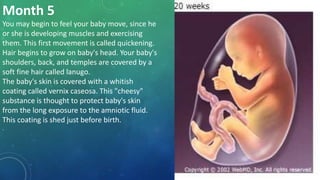
You may begin to feel your baby move, since he
or she is developing muscles and exercising
them. This first movement is called quickening.
Hair begins to grow on baby's head. Your baby's
shoulders, back, and temples are covered by a
soft fine hair called lanugo.
The baby's skin is covered with a whitish
coating called vernix caseosa. This "cheesy"
substance is thought to protect baby's skin
from the long exposure to the amniotic fluid.
This coating is shed just before birth.
.
Month 6
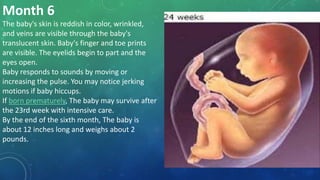
The baby's skin is reddish in color, wrinkled,
and veins are visible through the baby's
translucent skin. Baby's finger and toe prints
are visible. The eyelids begin to part and the
eyes open.
Baby responds to sounds by moving or
increasing the pulse. You may notice jerking
motions if baby hiccups.
If born prematurely, The baby may survive after
the 23rd week with intensive care.
By the end of the sixth month, The baby is
about 12 inches long and weighs about 2
pounds.
Month 7
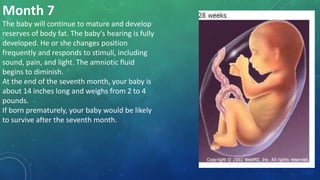
The baby will continue to mature and develop
reserves of body fat. The baby's hearing is fully
developed. He or she changes position
frequently and responds to stimuli, including
sound, pain, and light. The amniotic fluid
begins to diminish.
At the end of the seventh month, your baby is
about 14 inches long and weighs from 2 to 4
pounds.
If born prematurely, your baby would be likely
to survive after the seventh month.
Month 8
The baby will continue to mature. Baby's brain
is developing rapidly at this time, and baby can
see and hear. Most internal systems are well
developed, but the lungs may still be immature.
The baby is about 18 inches long and weighs as
much as 5 pounds.
Month 9
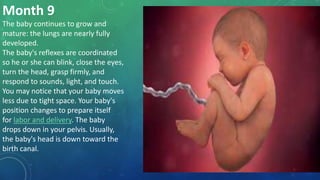
The baby continues to grow and
mature: the lungs are nearly fully
developed.
The baby's reflexes are coordinated
so he or she can blink, close the eyes,
turn the head, grasp firmly, and
respond to sounds, light, and touch.
You may notice that your baby moves
less due to tight space. Your baby's
position changes to prepare itself
for labor and delivery. The baby
drops down in your pelvis. Usually,
the baby's head is down toward the
birth canal.
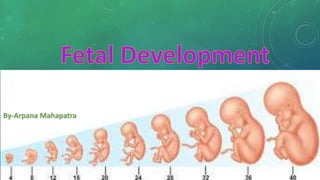
Fetal development

Fetal development

  • 1.
  • 2.
    Pregnancy is measuredin trimesters from the first day of last menstrual period, totaling 40 weeks. The first trimester of pregnancy is week 1 through week 12, or about 3 months. The second trimester is week 13 to week 27 The third trimester of pregnancy spans from week 28 to the birth. Stages of pregnancy-
  • 3.
    Month 1 As thefertilized egg grows, a water-tight sac forms around it, gradually filling with fluid. This is called the amniotic sac, and it helps cushion the growing embryo. The placenta also develops. The placenta is a round, flat organ that transfers nutrients from the mother to the baby, and transfers wastes from the baby. A primitive face will take form with large dark circles for eyes. The mouth, lower jaw, and throat are developing. Blood cells are taking shape, and circulation will begin. The tiny "heart" tube will beat 65 times a minute by the end of the fourth week. By the end of the first month, The baby is about 1/4 inch long – smaller than a grain of rice!
  • 4.
    Month 2 The baby'sfacial features continue to develop. Each ear begins as a little fold of skin at the side of the head. Tiny buds that eventually grow into arms and legs are forming. Fingers, toes and eyes are also forming. The neural tube (brain, spinal cord and other neural tissue of the central nervous system) is well formed. The digestive tract and sensory organs begin to develop.. The head is large in proportion to the rest of the baby's body. By the end of the second month, your baby is about 1 inch long and weighs about 1/30 of an ounce. At about 6 weeks, the baby's heart beat can usually be detected. After the 8th week, the baby is called a fetus
  • 5.
    Month 3 The baby'sarms, hands, fingers, feet, and toes are fully formed. The baby can open and close its fists and mouth. Fingernails and toenails are beginning to develop and the external ears are formed. The beginnings of teeth are forming. Your baby's reproductive organs also develop, but the baby's gender is difficult to distinguish on ultrasound. The circulatory and urinary systems are working and the liver produces bile.
  • 6.
    Month 4 The baby'sheartbeat may now be audible through an instrument called a doppler. The fingers and toes are well- defined. Eyelids, eyebrows, eyelashes, nails, and hair are formed. Teeth and bones become denser. The nervous system is starting to function. The reproductive organs and genitalia are now fully developed, and your doctor can see on ultrasound if you are having a boy or a girl.
  • 7.
    Month 5 You maybegin to feel your baby move, since he or she is developing muscles and exercising them. This first movement is called quickening. Hair begins to grow on baby's head. Your baby's shoulders, back, and temples are covered by a soft fine hair called lanugo. The baby's skin is covered with a whitish coating called vernix caseosa. This "cheesy" substance is thought to protect baby's skin from the long exposure to the amniotic fluid. This coating is shed just before birth. .
  • 8.
    Month 6 The baby'sskin is reddish in color, wrinkled, and veins are visible through the baby's translucent skin. Baby's finger and toe prints are visible. The eyelids begin to part and the eyes open. Baby responds to sounds by moving or increasing the pulse. You may notice jerking motions if baby hiccups. If born prematurely, The baby may survive after the 23rd week with intensive care. By the end of the sixth month, The baby is about 12 inches long and weighs about 2 pounds.
  • 9.
    Month 7 The babywill continue to mature and develop reserves of body fat. The baby's hearing is fully developed. He or she changes position frequently and responds to stimuli, including sound, pain, and light. The amniotic fluid begins to diminish. At the end of the seventh month, your baby is about 14 inches long and weighs from 2 to 4 pounds. If born prematurely, your baby would be likely to survive after the seventh month.
  • 10.
    Month 8 The babywill continue to mature. Baby's brain is developing rapidly at this time, and baby can see and hear. Most internal systems are well developed, but the lungs may still be immature. The baby is about 18 inches long and weighs as much as 5 pounds.
  • 11.
    Month 9 The babycontinues to grow and mature: the lungs are nearly fully developed. The baby's reflexes are coordinated so he or she can blink, close the eyes, turn the head, grasp firmly, and respond to sounds, light, and touch. You may notice that your baby moves less due to tight space. Your baby's position changes to prepare itself for labor and delivery. The baby drops down in your pelvis. Usually, the baby's head is down toward the birth canal.