Interviewing: purpose,
process, and preparation
February 4, 2016
CEO Session #4
Joe Bucher, Assistant Director
Agenda
• Purpose
• Process
• Preparation
• Navigating interview questions
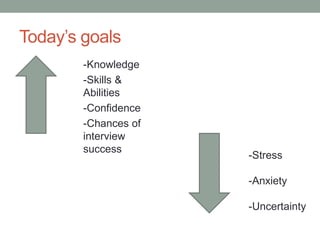
Today’s goals
-Knowledge
-Skills &
Abilities
-Confidence
-Chances of
interview
success
-Stress
-Anxiety
-Uncertainty
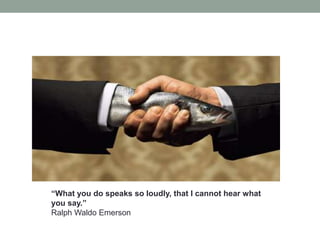
“What you do speaks so loudly, that I cannot hear what
you say.”
Ralph Waldo Emerson
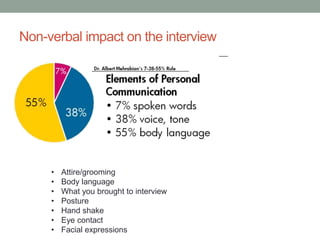
Non-verbal impact on the interview
• Attire/grooming
• Body language
• What you brought to interview
• Posture
• Hand shake
• Eye contact
• Facial expressions
Employer Purpose
Identify the match between
employer/team and the
candidate.
Meta-questions:
1. Why should we hire you?
(skills)
2. Why do you want to work
here? (interests)
3. How will you fit and
contribute? (values)
Potential Employee Purpose
Identify the match between you
and the team/organization.
Meta-questions:
1. Will I be satisfied by what I
am doing?
2. Will I enjoy how I do it?
3. Is there a match between the
demands of this job and my
values?
4. Does the style of the team
(supervisor) match with
my style?
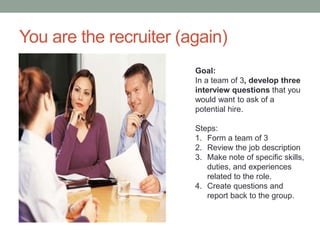
You are the recruiter (again)
Goal:
In a team of 3, develop three
interview questions that you
would want to ask of a
potential hire.
Steps:
1. Form a team of 3
2. Review the job description
3. Make note of specific skills,
duties, and experiences
related to the role.
4. Create questions and
report back to the group.
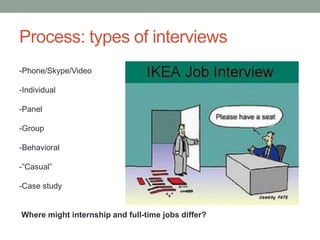
Process: types of interviews
-Phone/Skype/Video
-Individual
-Panel
-Group
-Behavioral
-”Casual”
-Case study
Where might internship and full-time jobs differ?
Preparation: Research them
• Glassdoor
• LinkedIn, Twitter, web site, blogs
(http://www.fiercebiotech.com/)
• Google alerts
• Informational Interviews
• Job Description
• Possible competitors or similar organizations
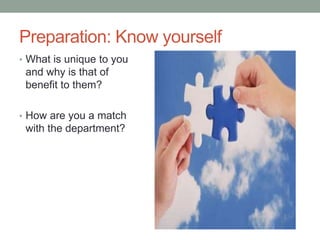
Preparation: Know yourself
• What is unique to you
and why is that of
benefit to them?
• How are you a match
with the department?
Preparation: Asking questions about the process
• How long will the interview be?
• Who will I be interviewing with?
• How many rounds will there be?
• Is there anything that you would like me to bring to the
interview?
Types of interview questions
• Tell me about yourself (resume screen, open-ended)
• Why haven’t you/You seem to lack…(stress)
• Highlight a specific time (behavioral)
• What would you do? (case/simulation)
• What is your #$#$##$? (abstract)
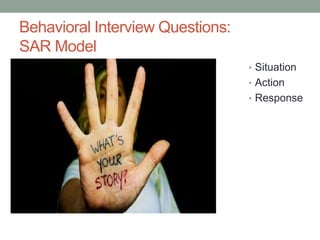
Behavioral Interview Questions:
SAR Model
• Situation
• Action
• Response
Tips
• Be prepared to answer with specific examples
• Focus on YOUR actions with examples that highlight your
thought process, experience, and skills
• Review common questions and think of stories
• Practice and get feedback
• Don't be selective in how you read job descriptions.
Your questions for them
Next Steps
• Examine potential interview questions and prepare
• Practice and receive feedback
• Develop a “bank” of responses for behavioral questions
• Appointment with the SoMCC for a mock interview
• Ask others about their interview experiences
• Create a shared doc of questions with others
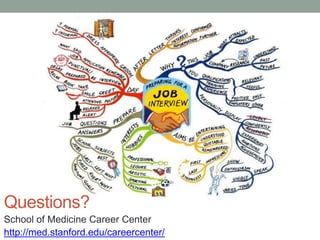
Questions?
School of Medicine Career Center
http://med.stanford.edu/careercenter/

Feb. 4, 2016

  • 1.
    Interviewing: purpose, process, andpreparation February 4, 2016 CEO Session #4 Joe Bucher, Assistant Director
  • 2.
    Agenda • Purpose • Process •Preparation • Navigating interview questions
  • 3.
    Today’s goals -Knowledge -Skills & Abilities -Confidence -Chancesof interview success -Stress -Anxiety -Uncertainty
  • 4.
    “What you dospeaks so loudly, that I cannot hear what you say.” Ralph Waldo Emerson
  • 5.
    Non-verbal impact onthe interview • Attire/grooming • Body language • What you brought to interview • Posture • Hand shake • Eye contact • Facial expressions
  • 6.
    Employer Purpose Identify thematch between employer/team and the candidate. Meta-questions: 1. Why should we hire you? (skills) 2. Why do you want to work here? (interests) 3. How will you fit and contribute? (values)
  • 7.
    Potential Employee Purpose Identifythe match between you and the team/organization. Meta-questions: 1. Will I be satisfied by what I am doing? 2. Will I enjoy how I do it? 3. Is there a match between the demands of this job and my values? 4. Does the style of the team (supervisor) match with my style?
  • 8.
    You are therecruiter (again) Goal: In a team of 3, develop three interview questions that you would want to ask of a potential hire. Steps: 1. Form a team of 3 2. Review the job description 3. Make note of specific skills, duties, and experiences related to the role. 4. Create questions and report back to the group.
  • 9.
    Process: types ofinterviews -Phone/Skype/Video -Individual -Panel -Group -Behavioral -”Casual” -Case study Where might internship and full-time jobs differ?
  • 10.
    Preparation: Research them •Glassdoor • LinkedIn, Twitter, web site, blogs (http://www.fiercebiotech.com/) • Google alerts • Informational Interviews • Job Description • Possible competitors or similar organizations
  • 11.
    Preparation: Know yourself •What is unique to you and why is that of benefit to them? • How are you a match with the department?
  • 12.
    Preparation: Asking questionsabout the process • How long will the interview be? • Who will I be interviewing with? • How many rounds will there be? • Is there anything that you would like me to bring to the interview?
  • 13.
    Types of interviewquestions • Tell me about yourself (resume screen, open-ended) • Why haven’t you/You seem to lack…(stress) • Highlight a specific time (behavioral) • What would you do? (case/simulation) • What is your #$#$##$? (abstract)
  • 14.
    Behavioral Interview Questions: SARModel • Situation • Action • Response
  • 15.
    Tips • Be preparedto answer with specific examples • Focus on YOUR actions with examples that highlight your thought process, experience, and skills • Review common questions and think of stories • Practice and get feedback • Don't be selective in how you read job descriptions.
  • 16.
  • 17.
    Next Steps • Examinepotential interview questions and prepare • Practice and receive feedback • Develop a “bank” of responses for behavioral questions • Appointment with the SoMCC for a mock interview • Ask others about their interview experiences • Create a shared doc of questions with others
  • 18.
    Questions? School of MedicineCareer Center http://med.stanford.edu/careercenter/

Editor's Notes

  • #2 Just like my intro slide, the cover letter is your chance for a first impression. The way that you frame yourself in relation to your audience is critical for the rest of your conversation going forward.
  • #17 -Get inside information about the job and organization -Help you gather information about the fit for the role/team/organization -Open up opportunity to highlight your skills -Highlight that you have done research on them -Convey your interest
  • #18 Proofread by self and others
  • #19 SFH start Q & A Talk about SoMCC services