Center for Tobacco Products
Inaugural Year and Looking Ahead


                   Presented by
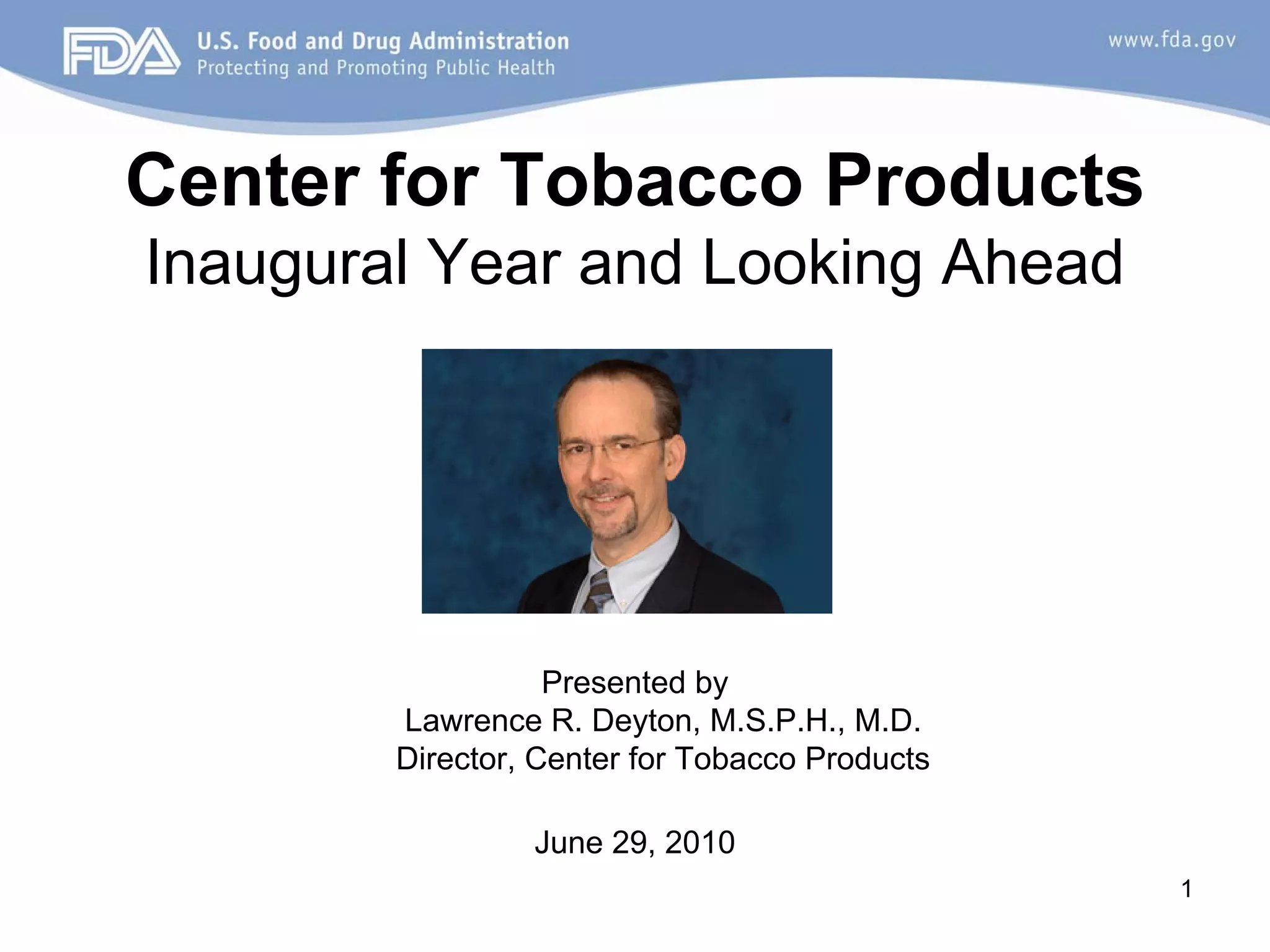
        Lawrence R. Deyton, M.S.P.H., M.D.
        Director, Center for Tobacco Products

                 June 29, 2010
                                                1
Overview
•   Public Health Imperative
•   Timeline – June 22, 2010
•   Timeline – Future
•   Center Contact Information


                                 2
FDA Tobacco Control Goals
• Prevent youth tobacco use
• Help adults who use tobacco to quit
• Promote public understanding of contents
  and consequences of use of tobacco
  products
• Develop science base and begin meaningful
  product regulation to reduce the toll of
  tobacco-related disease, disability, and death
                                               3
Tobacco Use in the United States
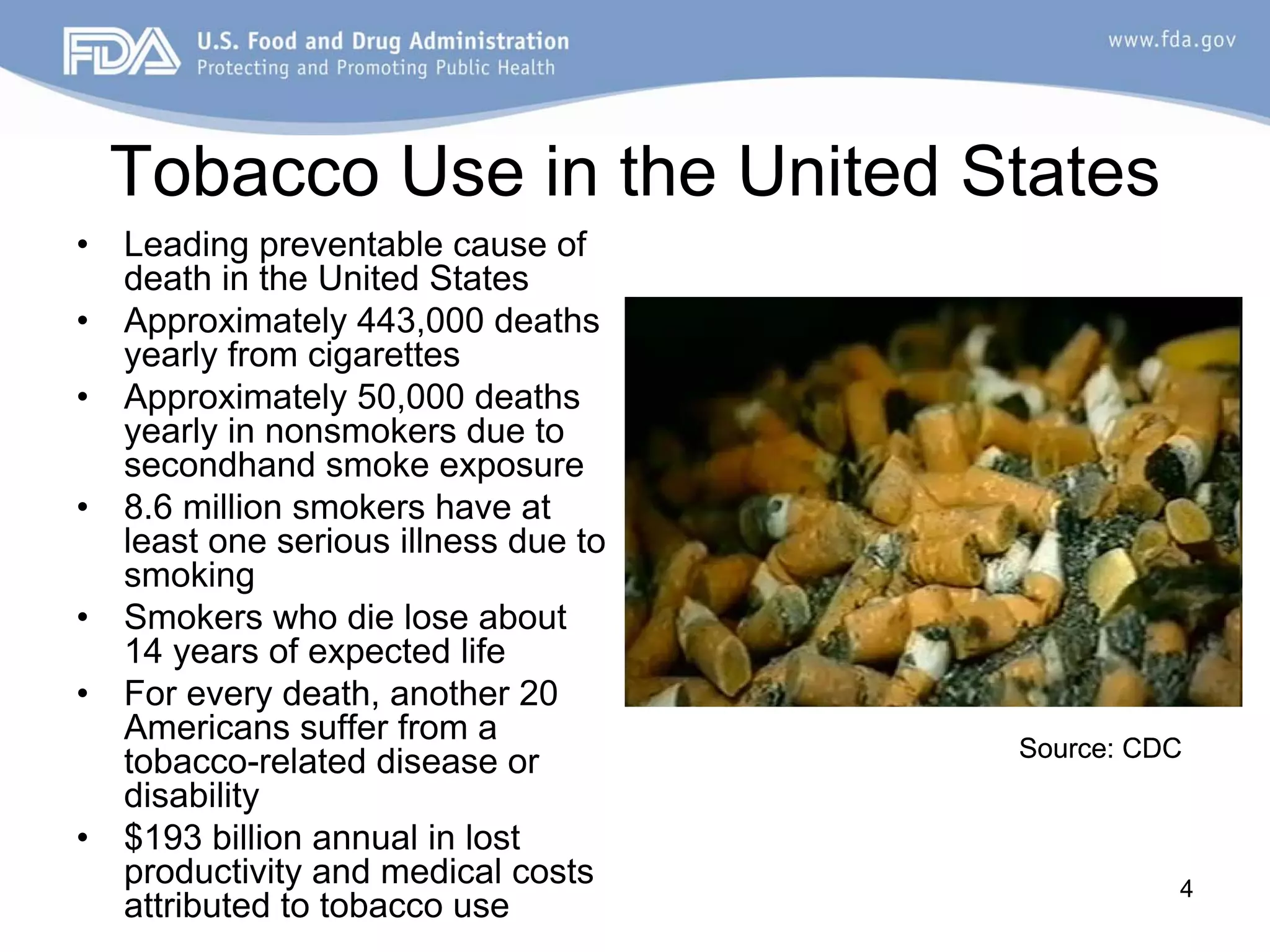
•   Leading preventable cause of
    death in the United States
•   Approximately 443,000 deaths
    yearly from cigarettes
•   Approximately 50,000 deaths
    yearly in nonsmokers due to
    secondhand smoke exposure
•   8.6 million smokers have at
    least one serious illness due to
    smoking
•   Smokers who die lose about
    14 years of expected life
•   For every death, another 20
    Americans suffer from a
                                       Source: CDC
    tobacco-related disease or
    disability
•   $193 billion annual in lost
    productivity and medical costs               4
    attributed to tobacco use
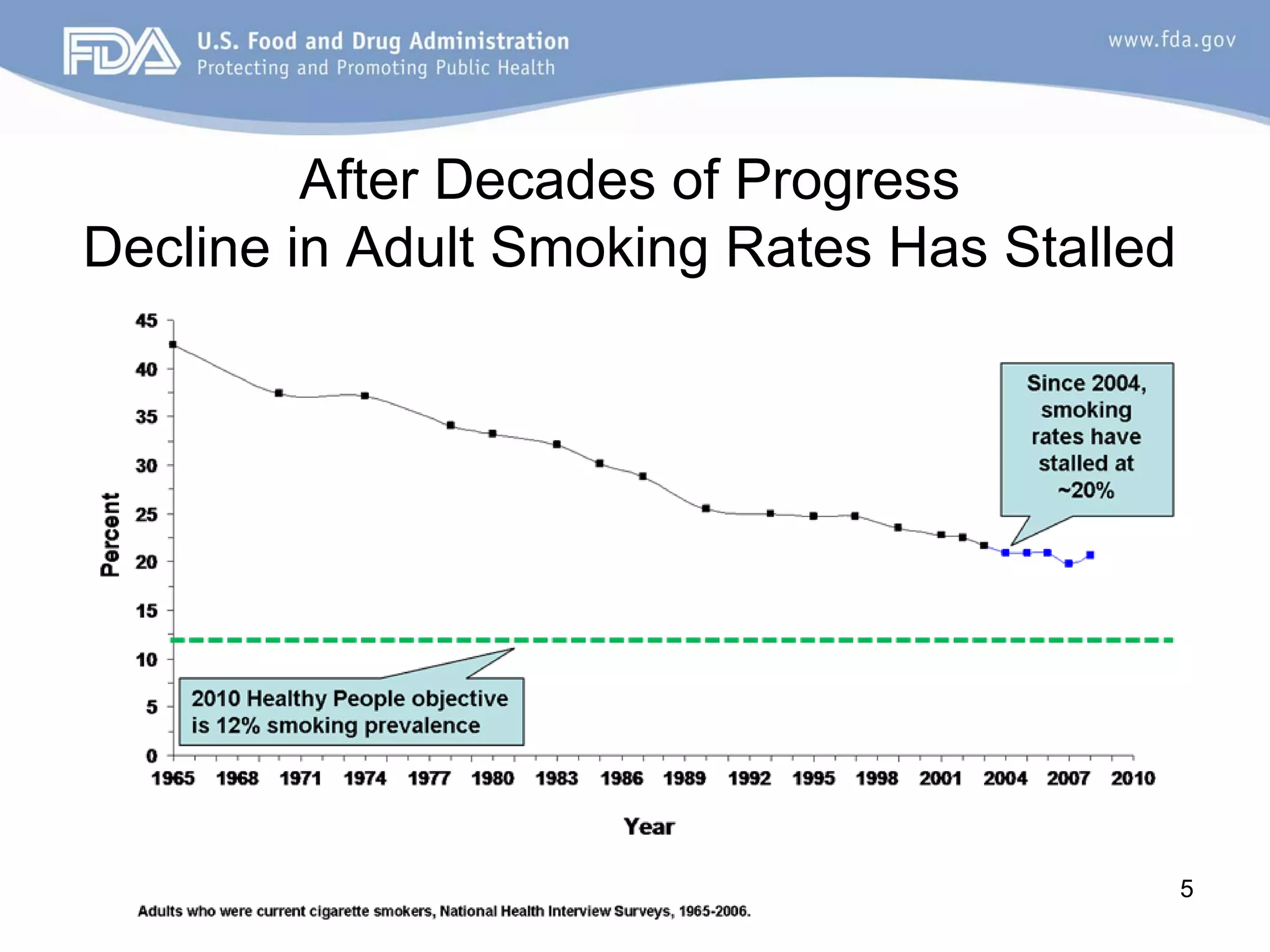
After Decades of Progress
Decline in Adult Smoking Rates Has Stalled


                                             5
Cigarette Smoking* Trends Among
                9th-12th Graders, U.S., 1991-2007
          60


          50                                                                  Since 2003,
                                                                             smoking rates
          40
                                                                             have stalled at
                                                                                 ~20%
Percent


          30


          20


          10   2010 Healthy People objective is
                  12% smoking prevalence
           0
               1991       1993        1995       1997   1999   2001   2003   2005    2007
                                                        Year
   * Smoking on 1 or more of the previous 30 days.
   Source: Youth Risk Behavior Surveillance Survey                                             6
Youth Tobacco Use is NOT Decreasing
• 20-25% of high school students report current use
• 4,000 kids start smoking and 1,000 kids become regular
  smokers every day
• 90% of adult smokers start tobacco use as a teen
• Many of these kids will become addicted before they are
  old enough to understand the risks and will ultimately die
  too young of tobacco-related disease
• Scientists have found that tobacco promotion leads to
  adolescent tobacco use

                                                               7
Effective June 22, 2010
• Rules that limit the sale, distribution, and marketing of
  cigarettes and smokeless tobacco to protect the health
  of children and adolescents become legally enforceable
• Provisions that prohibit the advertising or labeling of
  tobacco products with the descriptors “light,” “mild,” or
  “low” or similar descriptors without an FDA order
• Requirements that new, larger health warning labels for
  smokeless tobacco products begin to rotate on labels,
  labeling, and advertising and begin to be displayed on
  smokeless tobacco packaging

                                                              8
Upcoming – Modified Risk
• The light and low legacy
• The Act prohibits any advertising claims
  suggesting that a product poses a lower
  risk to users, unless the manufacturer can
  prove that the product will:
  – significantly reduce harm and the risk of
    tobacco-related disease to individual tobacco
    users AND
  – benefit the health of the population as a whole
                                                  9
Upcoming – Graphic Warning Labels
• Graphic warning labels required on all cigarette
  packages and ads by October 2012
• Warning and graphics to occupy top 50% of front
  and back display panels on pack
• Already required in the UK, Australia and
  Canada
• Research suggests that images with higher
  emotional impact are more strongly predictive of
  intention to quit
                                                10
Examples – Graphic Warning Labels


                               11
Looking Forward
• FDA continues implementation of the Tobacco
  Control Act
• Actions we are taking are grounded in science
  and are open and transparent with participation
  by various stakeholders
• FDA is committed to ensuring tobacco industry,
  retailers, state and local officials, public health
  advocates, and the public understand this law,
  the FDA’s actions, and how they are intended to
  protect the public health
                                                    12
Contact Us
•   Mailing Address: Center for Tobacco Products, 9200 Corporate Blvd,
    Rockville, MD 20850
•   Main Phone Number: 1-877-CTP-1373
•   For General Consumer Inquiries: AskCTP@fda.hhs.gov
•   For Media: 1-877.CTP.1373, option 2. Your call will be routed immediately
•   For Tobacco Industry Questions: TobaccoIndustryQuestions@fda.hhs.gov
       - For Small Business Industry Questions: smallbiz.tobacco@fda.hhs.gov
       - For Regulatory Submissions: Use the CTP mailing address but please
        put Attn: Document Control Center
•   For Formal Correspondence and Speech and Meeting Requests:
    ctpexecsec@fda.hhs.gov Also submit a proposed agenda and attendee list.
•   To contact the Ombudsman about complaints and disputes, please email
    Les.Weinstein@fda.hhs.gov or call 301-796-9239

                                                                           13

FDA Tobacco Slide Presentation

  • 1.
    Center for TobaccoProducts Inaugural Year and Looking Ahead Presented by Lawrence R. Deyton, M.S.P.H., M.D. Director, Center for Tobacco Products June 29, 2010 1
  • 2.
    Overview • Public Health Imperative • Timeline – June 22, 2010 • Timeline – Future • Center Contact Information 2
  • 3.
    FDA Tobacco ControlGoals • Prevent youth tobacco use • Help adults who use tobacco to quit • Promote public understanding of contents and consequences of use of tobacco products • Develop science base and begin meaningful product regulation to reduce the toll of tobacco-related disease, disability, and death 3
  • 4.
    Tobacco Use inthe United States • Leading preventable cause of death in the United States • Approximately 443,000 deaths yearly from cigarettes • Approximately 50,000 deaths yearly in nonsmokers due to secondhand smoke exposure • 8.6 million smokers have at least one serious illness due to smoking • Smokers who die lose about 14 years of expected life • For every death, another 20 Americans suffer from a Source: CDC tobacco-related disease or disability • $193 billion annual in lost productivity and medical costs 4 attributed to tobacco use
  • 5.
    After Decades ofProgress Decline in Adult Smoking Rates Has Stalled 5
  • 6.
    Cigarette Smoking* TrendsAmong 9th-12th Graders, U.S., 1991-2007 60 50 Since 2003, smoking rates 40 have stalled at ~20% Percent 30 20 10 2010 Healthy People objective is 12% smoking prevalence 0 1991 1993 1995 1997 1999 2001 2003 2005 2007 Year * Smoking on 1 or more of the previous 30 days. Source: Youth Risk Behavior Surveillance Survey 6
  • 7.
    Youth Tobacco Useis NOT Decreasing • 20-25% of high school students report current use • 4,000 kids start smoking and 1,000 kids become regular smokers every day • 90% of adult smokers start tobacco use as a teen • Many of these kids will become addicted before they are old enough to understand the risks and will ultimately die too young of tobacco-related disease • Scientists have found that tobacco promotion leads to adolescent tobacco use 7
  • 8.
    Effective June 22,2010 • Rules that limit the sale, distribution, and marketing of cigarettes and smokeless tobacco to protect the health of children and adolescents become legally enforceable • Provisions that prohibit the advertising or labeling of tobacco products with the descriptors “light,” “mild,” or “low” or similar descriptors without an FDA order • Requirements that new, larger health warning labels for smokeless tobacco products begin to rotate on labels, labeling, and advertising and begin to be displayed on smokeless tobacco packaging 8
  • 9.
    Upcoming – ModifiedRisk • The light and low legacy • The Act prohibits any advertising claims suggesting that a product poses a lower risk to users, unless the manufacturer can prove that the product will: – significantly reduce harm and the risk of tobacco-related disease to individual tobacco users AND – benefit the health of the population as a whole 9
  • 10.
    Upcoming – GraphicWarning Labels • Graphic warning labels required on all cigarette packages and ads by October 2012 • Warning and graphics to occupy top 50% of front and back display panels on pack • Already required in the UK, Australia and Canada • Research suggests that images with higher emotional impact are more strongly predictive of intention to quit 10
  • 11.
    Examples – GraphicWarning Labels 11
  • 12.
    Looking Forward • FDAcontinues implementation of the Tobacco Control Act • Actions we are taking are grounded in science and are open and transparent with participation by various stakeholders • FDA is committed to ensuring tobacco industry, retailers, state and local officials, public health advocates, and the public understand this law, the FDA’s actions, and how they are intended to protect the public health 12
  • 13.
    Contact Us • Mailing Address: Center for Tobacco Products, 9200 Corporate Blvd, Rockville, MD 20850 • Main Phone Number: 1-877-CTP-1373 • For General Consumer Inquiries: AskCTP@fda.hhs.gov • For Media: 1-877.CTP.1373, option 2. Your call will be routed immediately • For Tobacco Industry Questions: TobaccoIndustryQuestions@fda.hhs.gov - For Small Business Industry Questions: smallbiz.tobacco@fda.hhs.gov - For Regulatory Submissions: Use the CTP mailing address but please put Attn: Document Control Center • For Formal Correspondence and Speech and Meeting Requests: ctpexecsec@fda.hhs.gov Also submit a proposed agenda and attendee list. • To contact the Ombudsman about complaints and disputes, please email Les.Weinstein@fda.hhs.gov or call 301-796-9239 13