Semiotics and
Technology
Peircean Semiotics
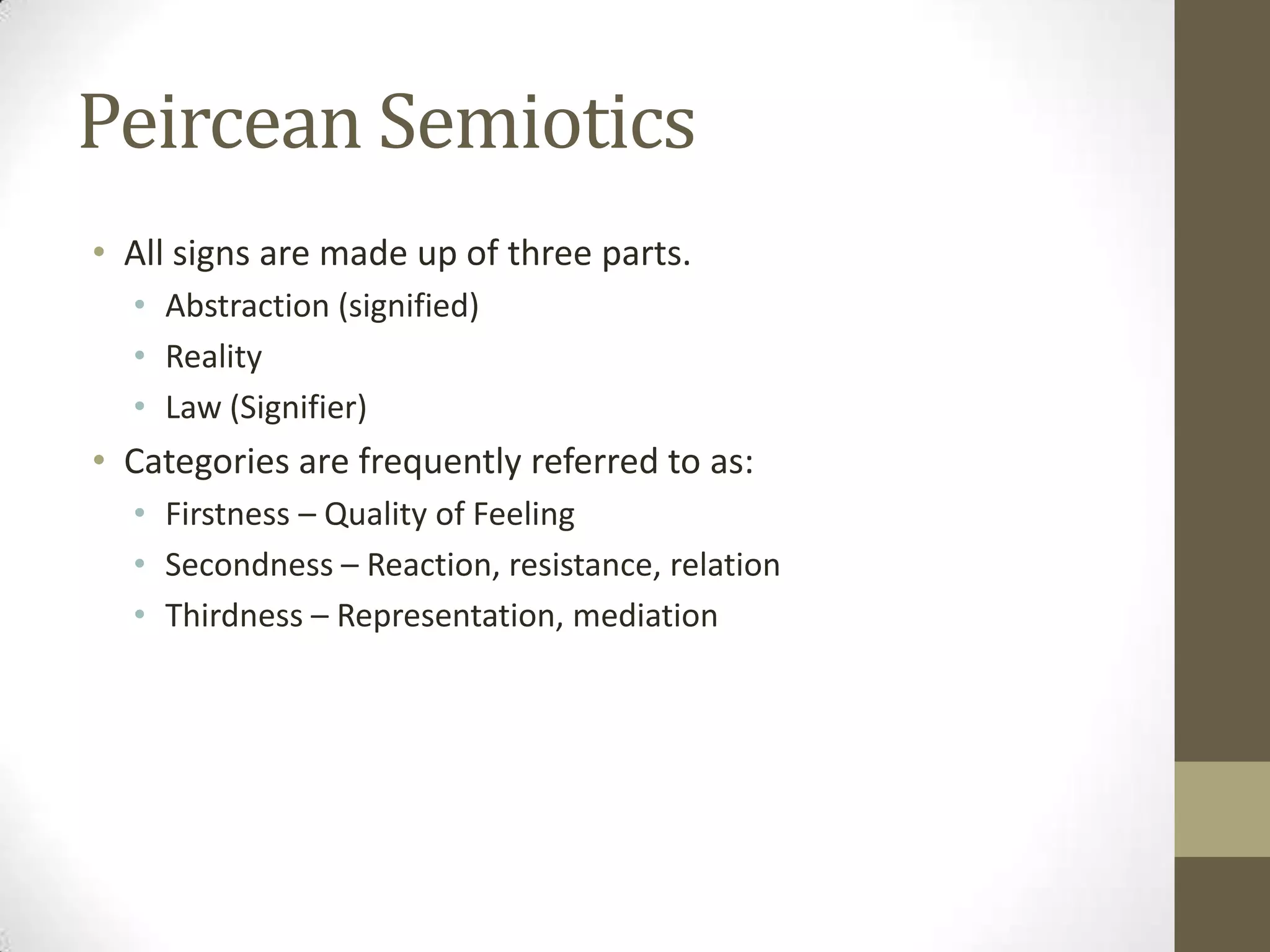
• All signs are made up of three parts.
  • Abstraction (signified)
  • Reality
  • Law (Signifier)
• Categories are frequently referred to as:
  • Firstness – Quality of Feeling
  • Secondness – Reaction, resistance, relation
  • Thirdness – Representation, mediation
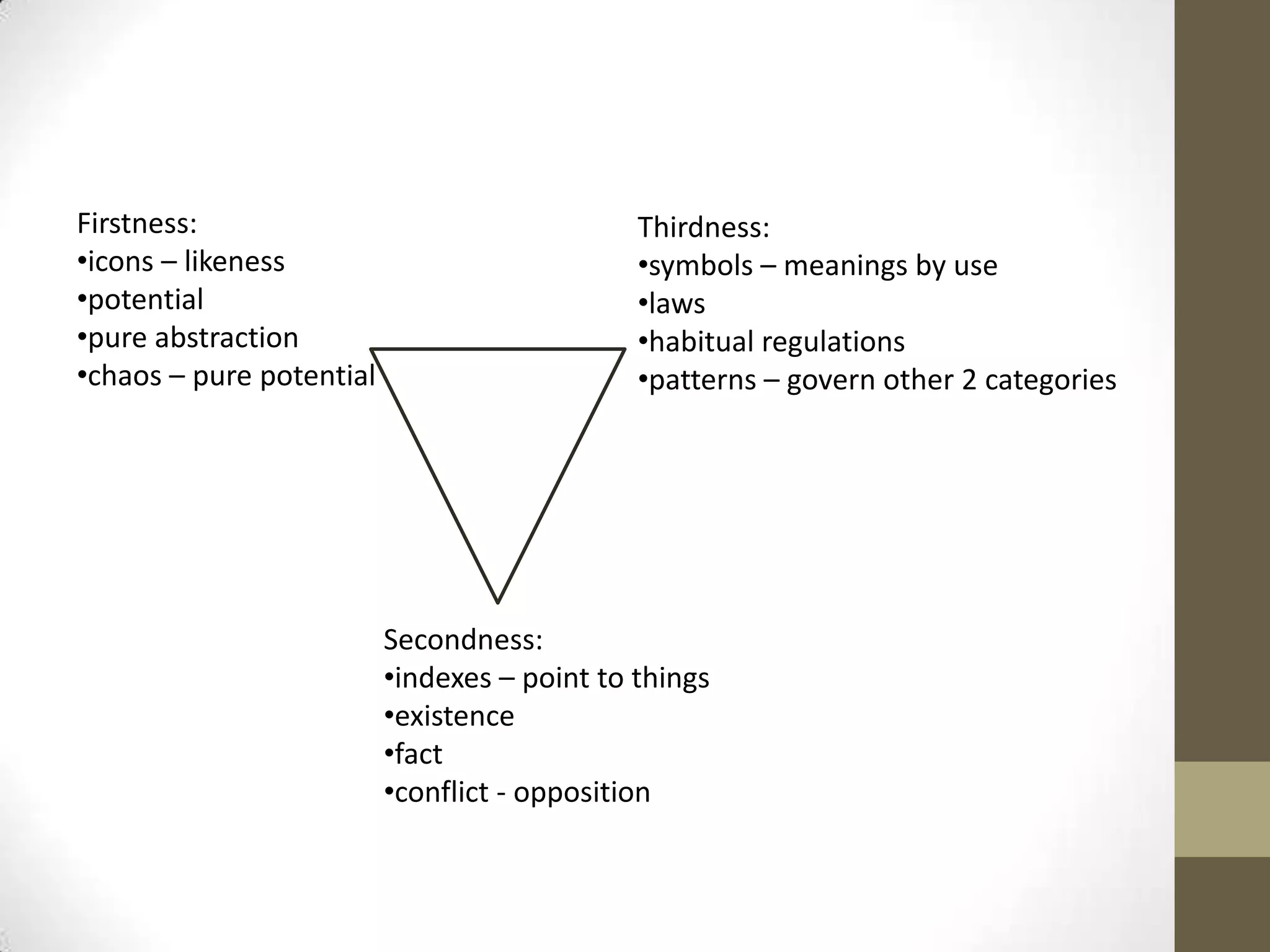
Firstness:                                    Thirdness:
•icons – likeness                             •symbols – meanings by use
•potential                                    •laws
•pure abstraction                             •habitual regulations
•chaos – pure potential                       •patterns – govern other 2 categories


                          Secondness:
                          •indexes – point to things
                          •existence
                          •fact
                          •conflict - opposition
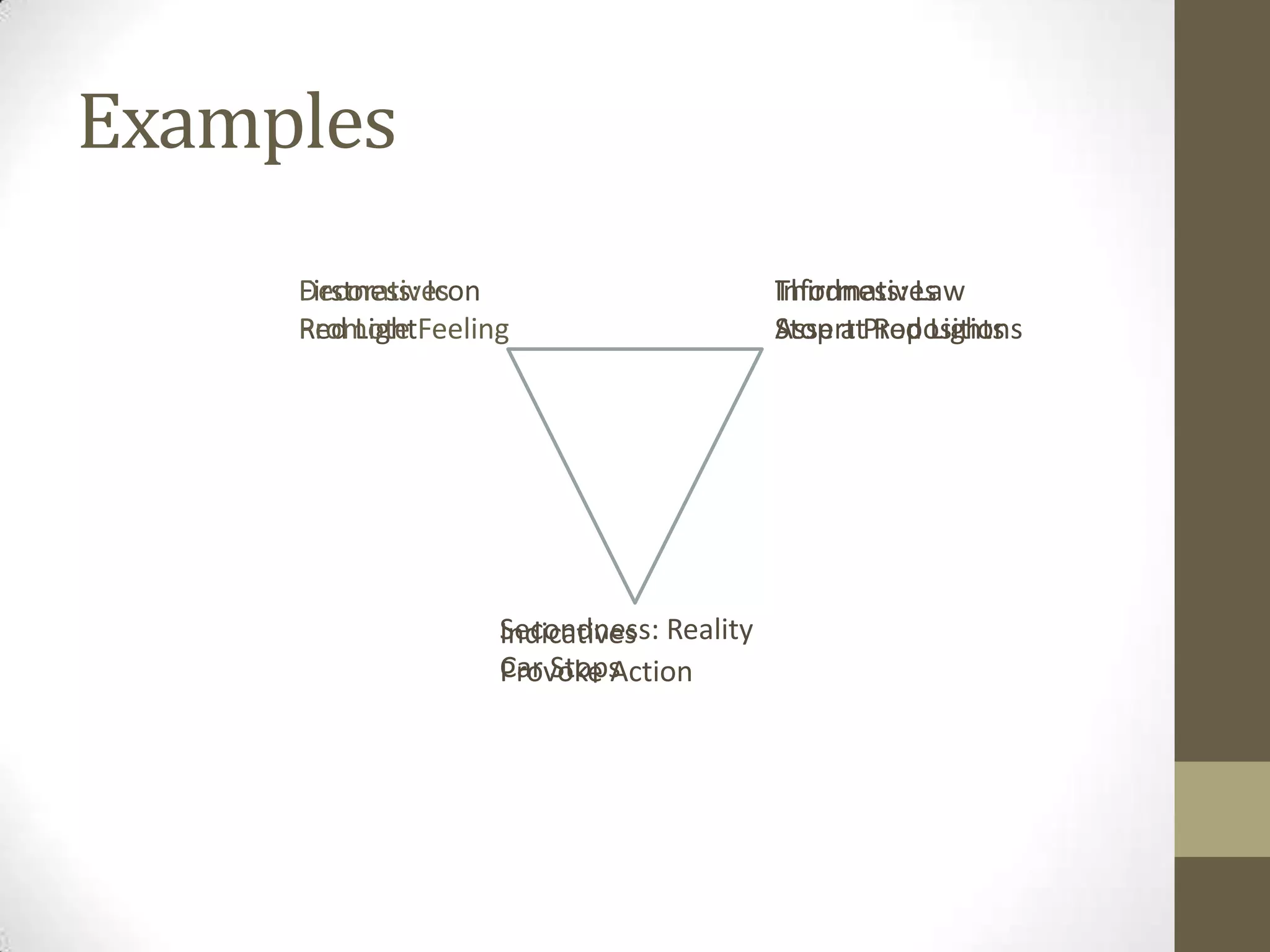
Examples
     Decoratives
     Firstness: Icon                      Informatives
                                          Thirdness: Law
     Promote
     Red LightFeeling                     Assert Red Lights
                                          Stop atPropositions


                    Secondness: Reality
                    Indicatives
                    Car Stops
                    Provoke Action
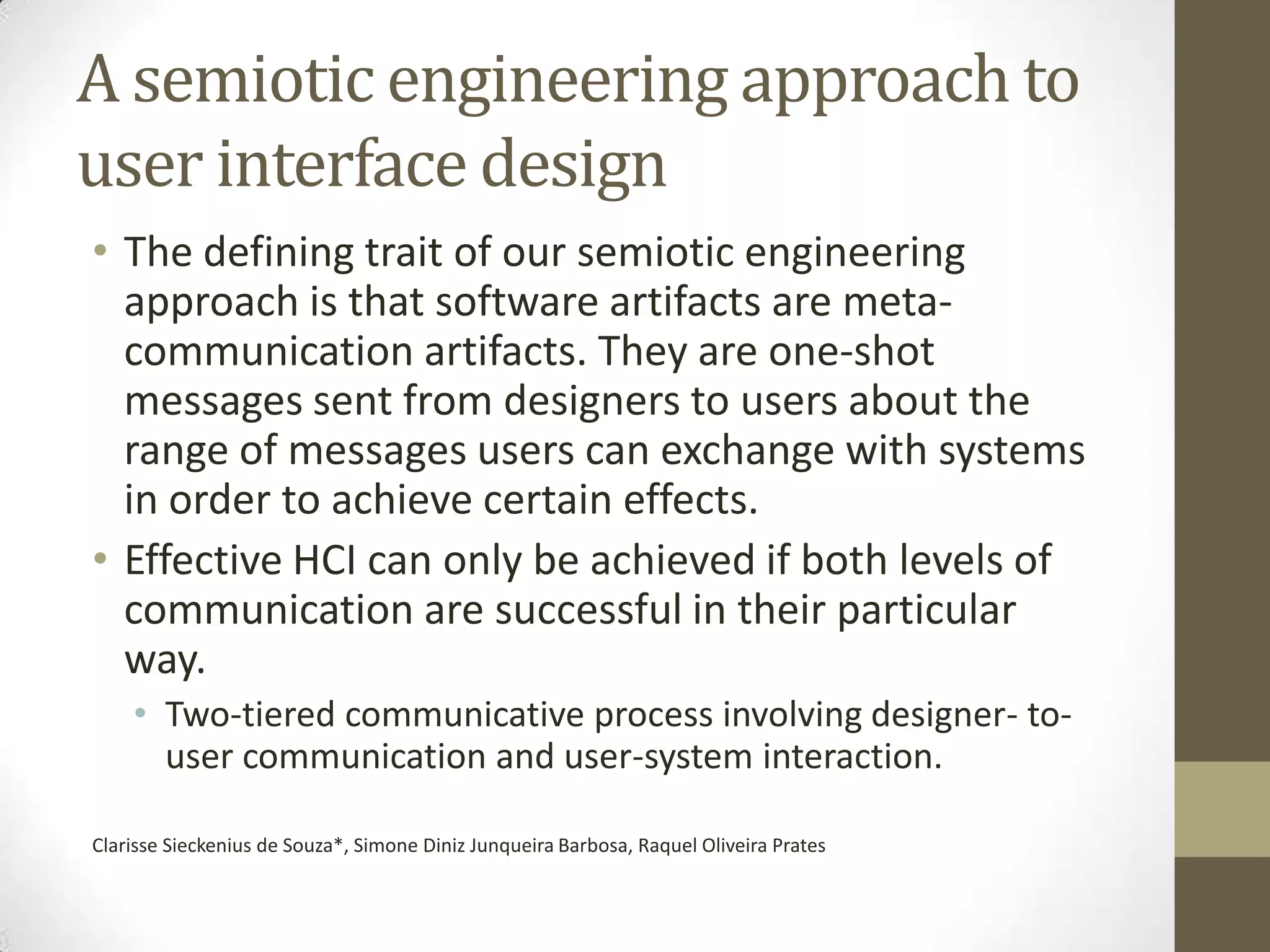
A semiotic engineering approach to
user interface design
• The defining trait of our semiotic engineering
  approach is that software artifacts are meta-
  communication artifacts. They are one-shot
  messages sent from designers to users about the
  range of messages users can exchange with systems
  in order to achieve certain effects.
• Effective HCI can only be achieved if both levels of
  communication are successful in their particular
  way.
    • Two-tiered communicative process involving designer- to-
      user communication and user-system interaction.

Clarisse Sieckenius de Souza*, Simone Diniz Junqueira Barbosa, Raquel Oliveira Prates
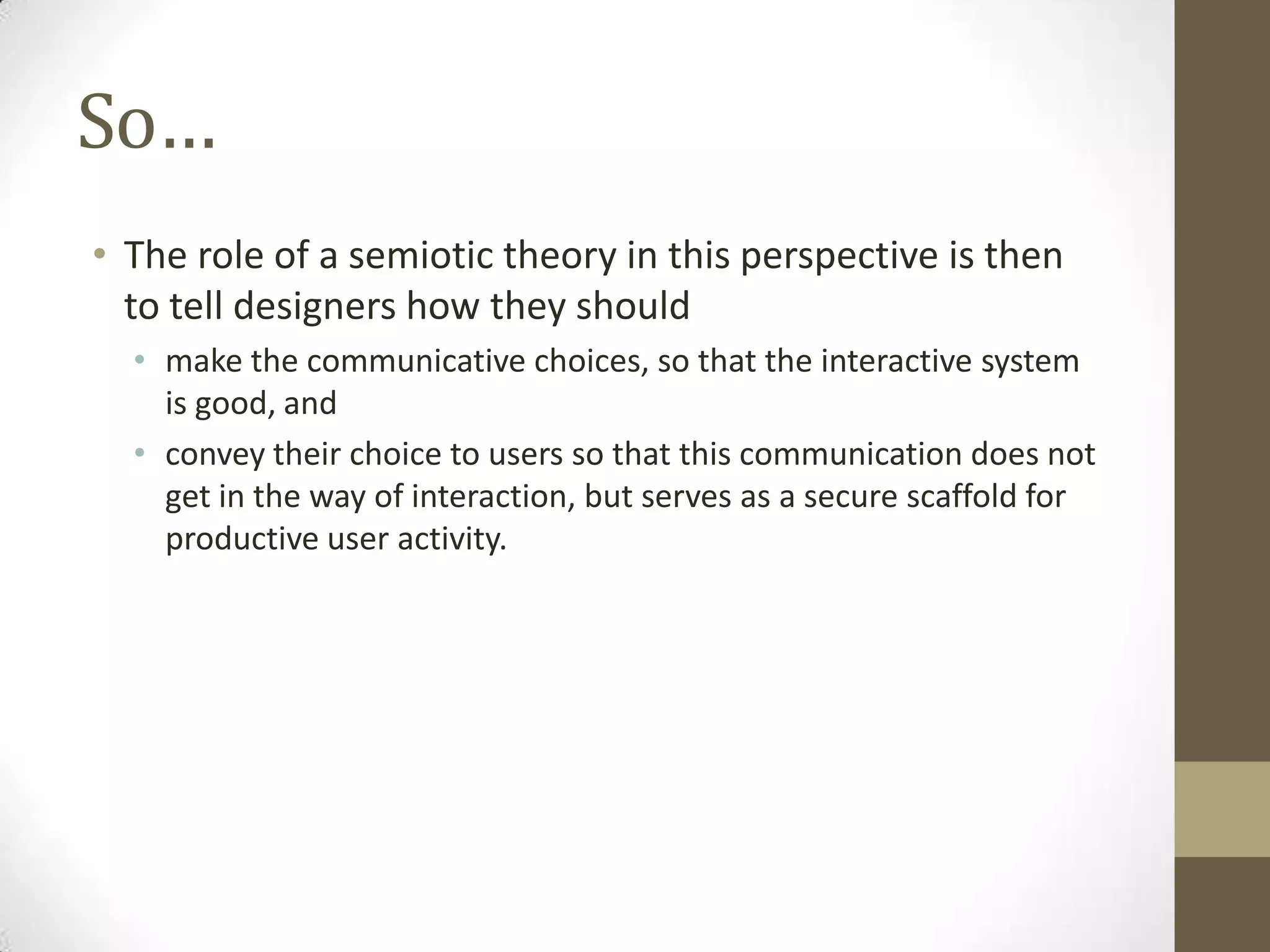
So…
• The role of a semiotic theory in this perspective is then
  to tell designers how they should
  • make the communicative choices, so that the interactive system
    is good, and
  • convey their choice to users so that this communication does not
    get in the way of interaction, but serves as a secure scaffold for
    productive user activity.
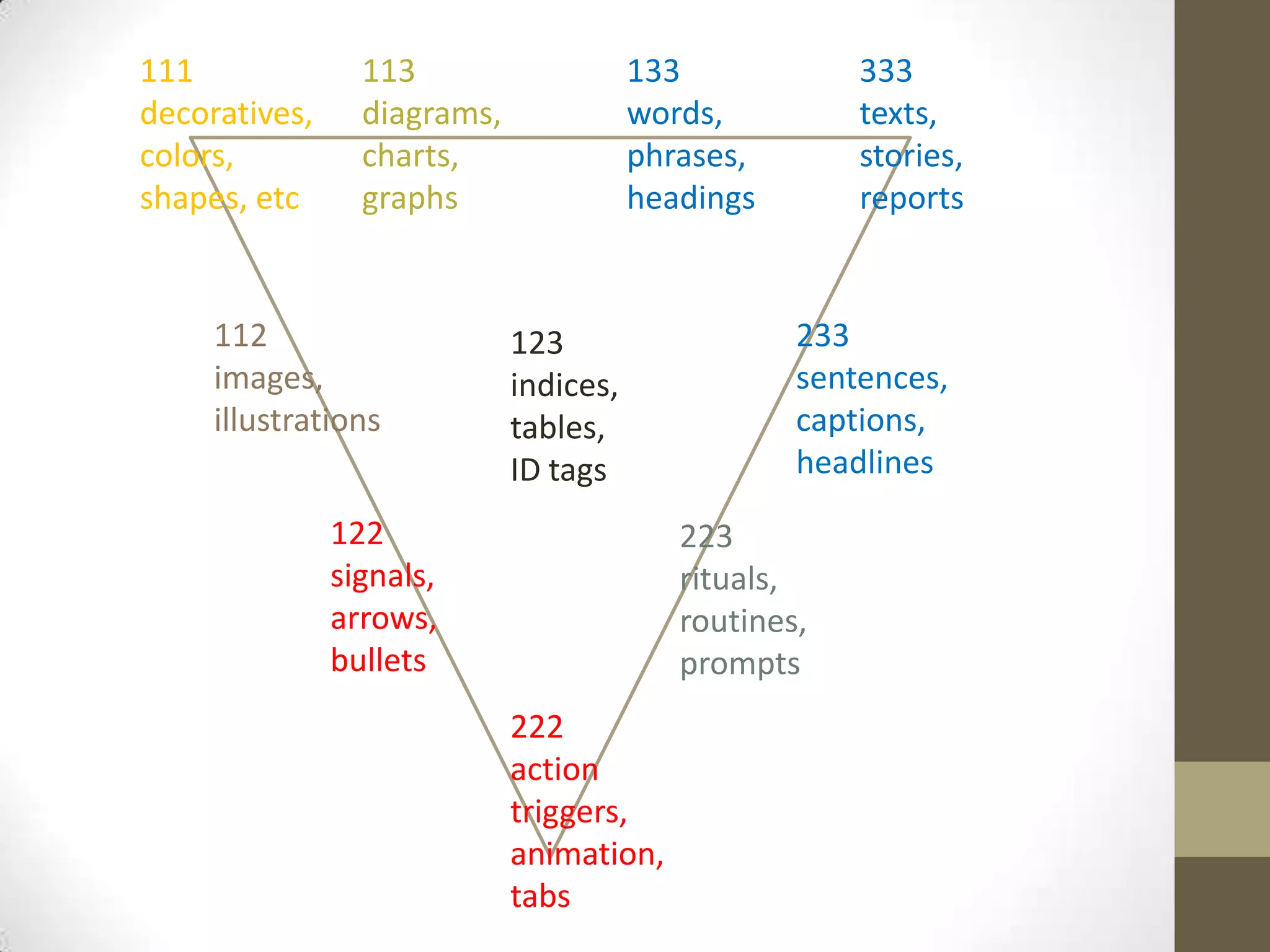
111              113                    133            333
decoratives,     diagrams,              words,         texts,
colors,          charts,                phrases,       stories,
shapes, etc      graphs                 headings       reports


     112                     123                   233
     images,                 indices,              sentences,
     illustrations           tables,               captions,
                             ID tags               headlines

               122                         223
               signals,                    rituals,
               arrows,                     routines,
               bullets                     prompts
                             222
                             action
                             triggers,
                             animation,
                             tabs

Fall 2012 information culture - technology

  • 1.
  • 2.
    Peircean Semiotics • Allsigns are made up of three parts. • Abstraction (signified) • Reality • Law (Signifier) • Categories are frequently referred to as: • Firstness – Quality of Feeling • Secondness – Reaction, resistance, relation • Thirdness – Representation, mediation
  • 3.
    Firstness: Thirdness: •icons – likeness •symbols – meanings by use •potential •laws •pure abstraction •habitual regulations •chaos – pure potential •patterns – govern other 2 categories Secondness: •indexes – point to things •existence •fact •conflict - opposition
  • 4.
    Examples Decoratives Firstness: Icon Informatives Thirdness: Law Promote Red LightFeeling Assert Red Lights Stop atPropositions Secondness: Reality Indicatives Car Stops Provoke Action
  • 5.
    A semiotic engineeringapproach to user interface design • The defining trait of our semiotic engineering approach is that software artifacts are meta- communication artifacts. They are one-shot messages sent from designers to users about the range of messages users can exchange with systems in order to achieve certain effects. • Effective HCI can only be achieved if both levels of communication are successful in their particular way. • Two-tiered communicative process involving designer- to- user communication and user-system interaction. Clarisse Sieckenius de Souza*, Simone Diniz Junqueira Barbosa, Raquel Oliveira Prates
  • 6.
    So… • The roleof a semiotic theory in this perspective is then to tell designers how they should • make the communicative choices, so that the interactive system is good, and • convey their choice to users so that this communication does not get in the way of interaction, but serves as a secure scaffold for productive user activity.
  • 8.
    111 113 133 333 decoratives, diagrams, words, texts, colors, charts, phrases, stories, shapes, etc graphs headings reports 112 123 233 images, indices, sentences, illustrations tables, captions, ID tags headlines 122 223 signals, rituals, arrows, routines, bullets prompts 222 action triggers, animation, tabs

Editor's Notes