Factory Design Pattern
By
Pabitra Dash
(pabitrad@yahoo.com)
What does a factory mean ?
• It is something which creates/manufactures
some products.
• Same is the job of factory design pattern. It is
responsible for instantiation/creation of
objects.
Factory Design Pattern
• Factory methods decide logically what
constructor to call.
• Instead of directly calling the constructor for a
class, we call a factory method to get the object.
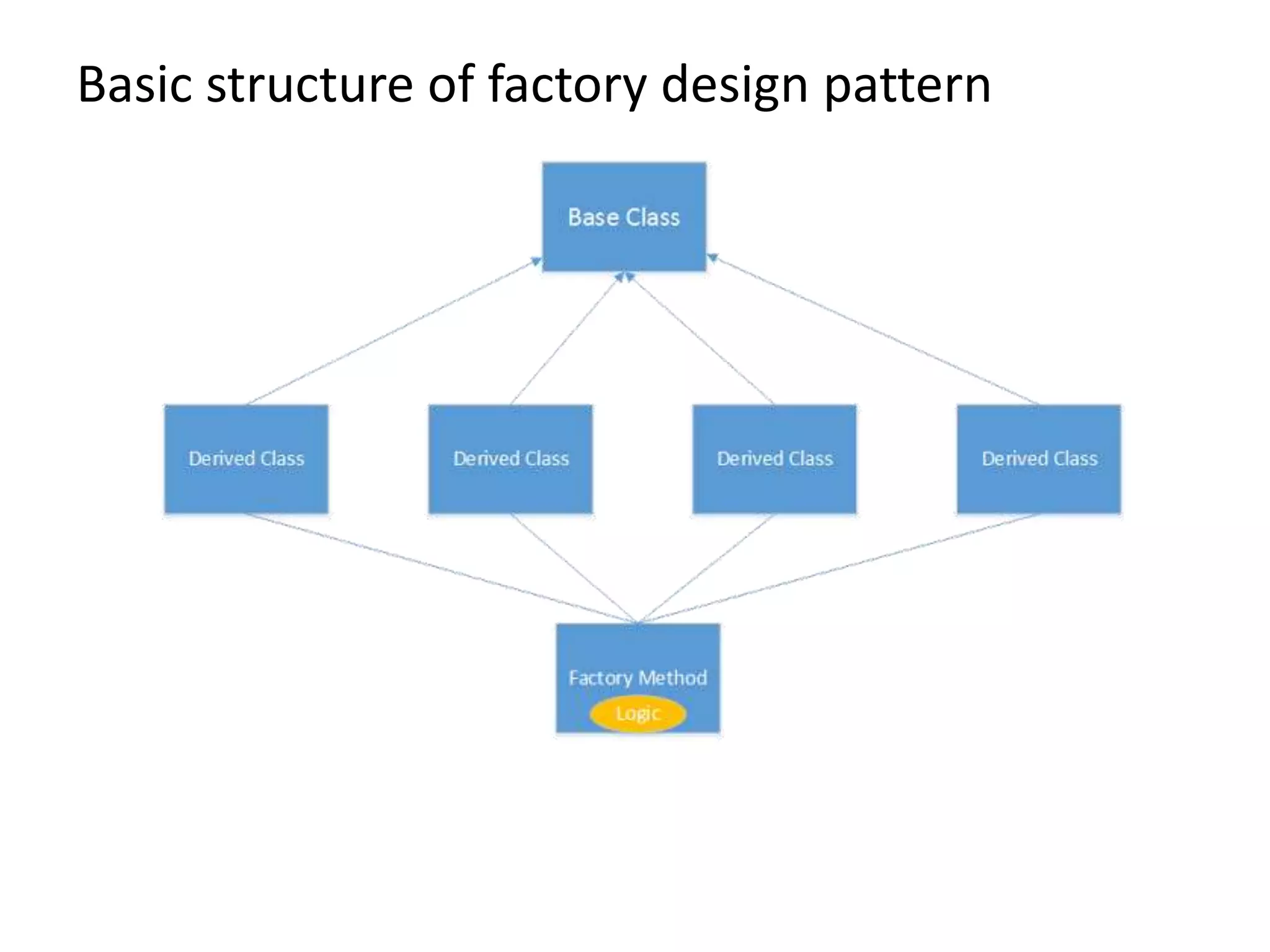
• There can be multiple derived classes from a base
class. The factory method instantiates the
appropriate sub-class based on the arguments
passed to it and returns the base class type.
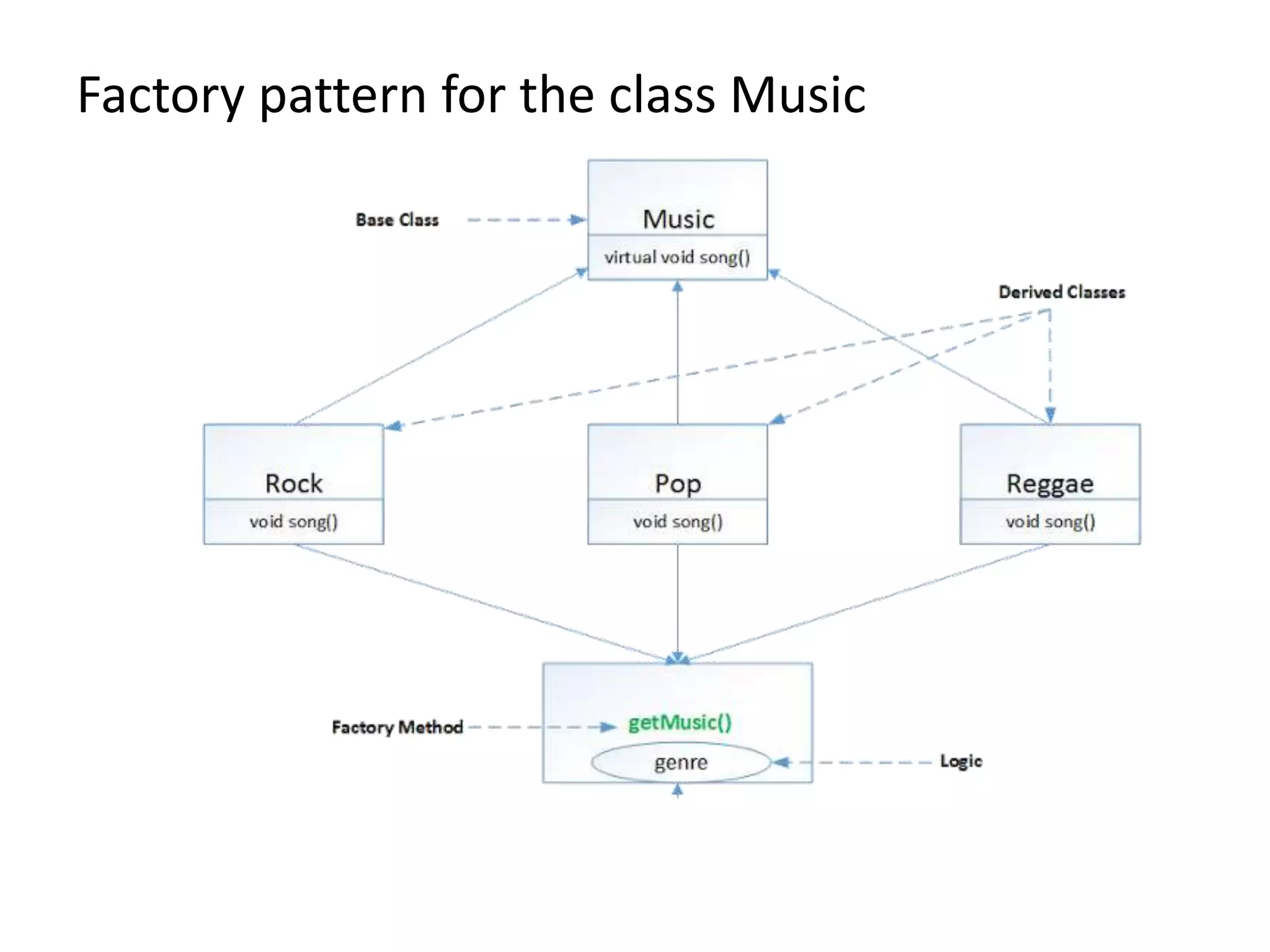
Basic structure of factory design pattern
Factory pattern for the class Music
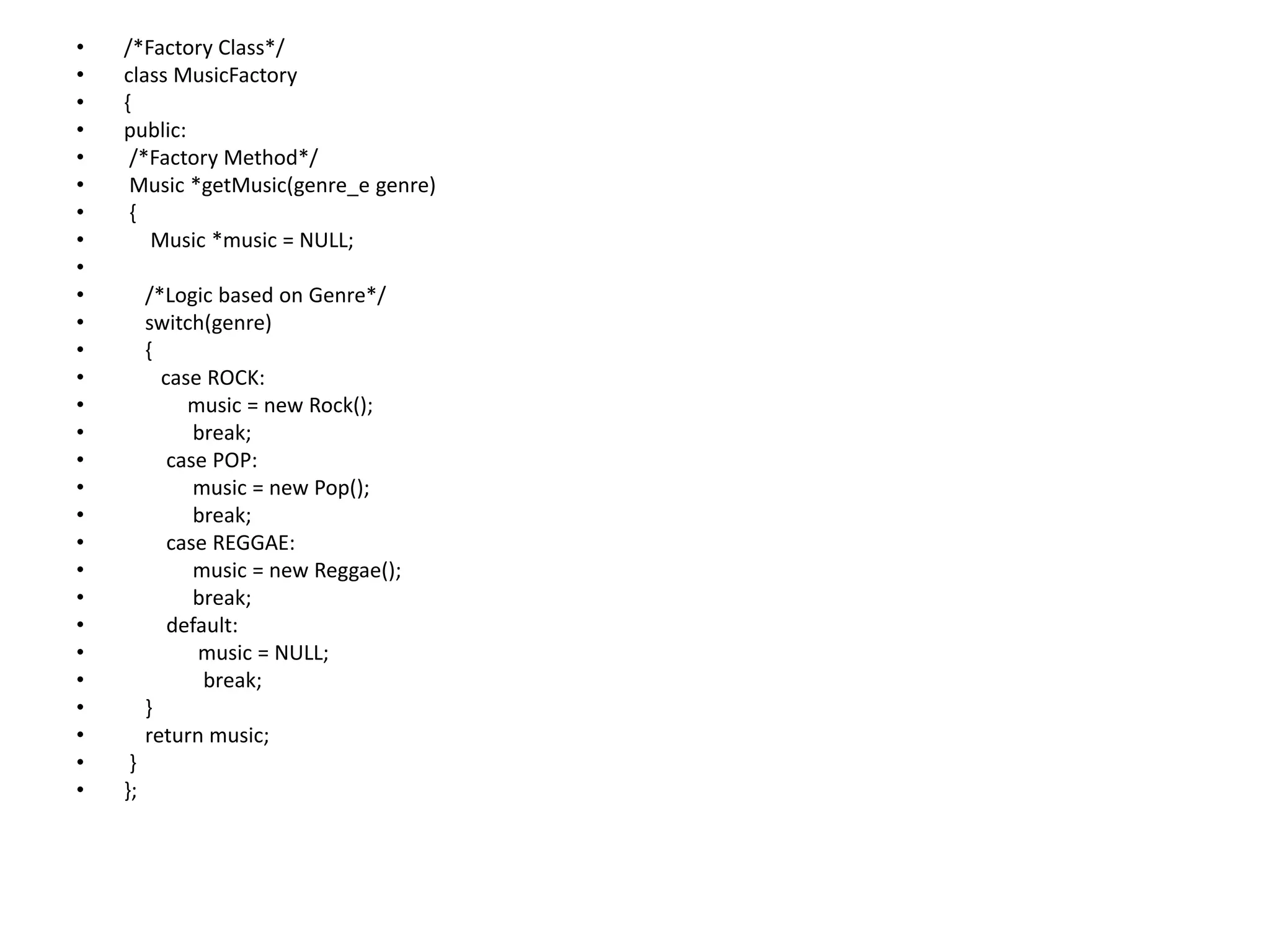
• /*Factory Class*/
• class MusicFactory
• {
• public:
• /*Factory Method*/
• Music *getMusic(genre_e genre)
• {
• Music *music = NULL;
•
• /*Logic based on Genre*/
• switch(genre)
• {
• case ROCK:
• music = new Rock();
• break;
• case POP:
• music = new Pop();
• break;
• case REGGAE:
• music = new Reggae();
• break;
• default:
• music = NULL;
• break;
• }
• return music;
• }
• };
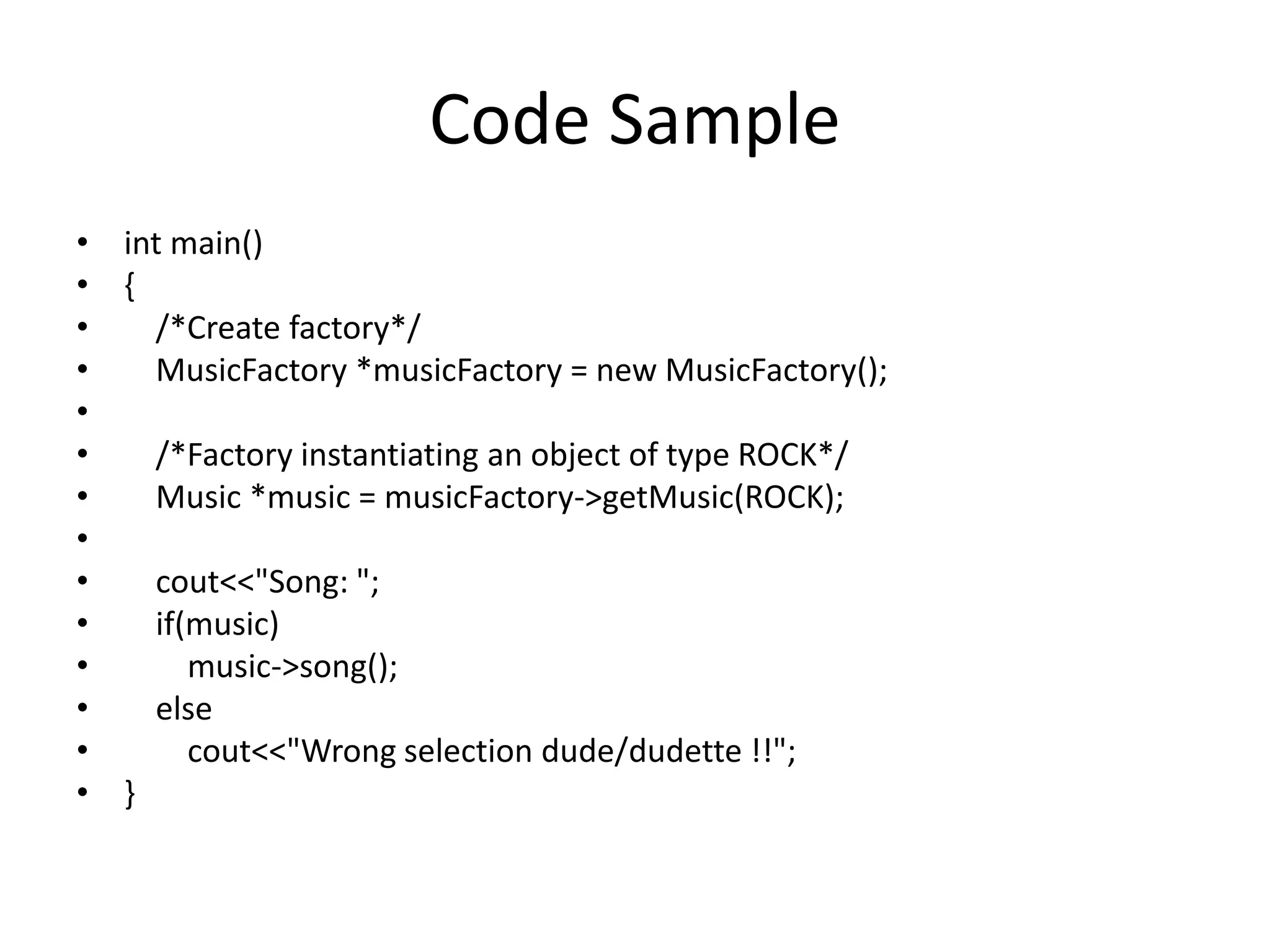
Code Sample
• int main()
• {
• /*Create factory*/
• MusicFactory *musicFactory = new MusicFactory();
•
• /*Factory instantiating an object of type ROCK*/
• Music *music = musicFactory->getMusic(ROCK);
•
• cout<<"Song: ";
• if(music)
• music->song();
• else
• cout<<"Wrong selection dude/dudette !!";
• }

Factory design pattern

  • 1.
    Factory Design Pattern By PabitraDash (pabitrad@yahoo.com)
  • 2.
    What does afactory mean ? • It is something which creates/manufactures some products. • Same is the job of factory design pattern. It is responsible for instantiation/creation of objects.
  • 3.
    Factory Design Pattern •Factory methods decide logically what constructor to call. • Instead of directly calling the constructor for a class, we call a factory method to get the object. • There can be multiple derived classes from a base class. The factory method instantiates the appropriate sub-class based on the arguments passed to it and returns the base class type.
  • 4.
    Basic structure offactory design pattern
  • 5.
    Factory pattern forthe class Music
  • 6.
    • /*Factory Class*/ •class MusicFactory • { • public: • /*Factory Method*/ • Music *getMusic(genre_e genre) • { • Music *music = NULL; • • /*Logic based on Genre*/ • switch(genre) • { • case ROCK: • music = new Rock(); • break; • case POP: • music = new Pop(); • break; • case REGGAE: • music = new Reggae(); • break; • default: • music = NULL; • break; • } • return music; • } • };
  • 7.
    Code Sample • intmain() • { • /*Create factory*/ • MusicFactory *musicFactory = new MusicFactory(); • • /*Factory instantiating an object of type ROCK*/ • Music *music = musicFactory->getMusic(ROCK); • • cout<<"Song: "; • if(music) • music->song(); • else • cout<<"Wrong selection dude/dudette !!"; • }

Editor's Notes

  • #3 Call to constructor indeed creates the object and that's exactly what a factory method does but with an additional feature of option of choosing between different constructors based on some logic.
  • #4 This base class object can be used to access the derived class members/methods.