F I G H T E R B O M B E R A I R C R A F T
F-4 Phantom, USA
Introduction
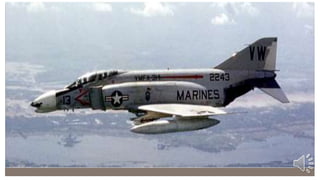
 The F-4 Phantom (previously called the F-4 Phantom II) is a fighter bomber developed
by McDonnell Douglas.
 The supersonic aircraft can travel at double the speed of sound (Mach 2.2).
 The F-4 has set 16 records for speed, altitude and time-to-climb. It established the world
altitude record at 98,556ft in 1959 and speed record at 1,604mph on a 15-mile circuit in
1961.
 The aircraft has been in service in 11 other countries including: Australia, Egypt,
Germany, Greece, Iran, Israel, Japan, South Korea, Spain, Turkey and the UK.
Design Features
 The F-4 Phantom runs on two 17,900lb-thrust J79-GE-17 jet engines manufactured by
General Electric.
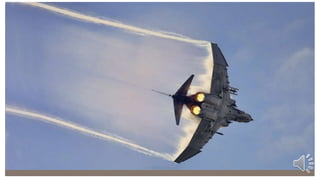
 The F-4 Phantom is a tandem-seat fighter-bomber designed as a carrier-
based interceptor to fill the U.S. Navy's fleet defense fighter role.
 Phantom production ran from 1958 to 1981, with a total of 5,195 built, making it the most
numerous American supersonic military aircraft.
 The all-weather aircraft can also be pressed into service for short training missions or
exercises in search of anti-aircraft defence systems.
Weapons
 The Phantom has nine external hard points with the capacity to carry up to 15,983lb
(7,250kg) of payload (weapons).
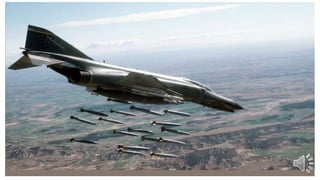
 The aircraft is equipped to carry air-to-air and air-to-ground missiles, as well as
unguided, guided and nuclear bombs.
 There is also an internal 20mm nose-mounted M-61 'Vulcan' cannon.
 The aircraft can also carry 6× AGM-65 Maverick , 4× AGM-62 Walleye , 4× AGM-45
Shrike, AGM-88 HARM, AGM-78 Standard ARM , 4× GBU-15 and 18× Mk.82, GBU-12.
Specifications
General characteristics
 Length: 63 ft 0 in (19.2 m)
 Wingspan: 38 ft 4.5 in (11.7 m)
 Height: 16 ft 6 in (5.0 m)
 Wing area: 530.0 ft² (49.2 m²)
 Empty weight: 30,328 lb (13,757 kg)
 Loaded weight: 41,500 lb (18,825 kg)
 Max. takeoff weight: 61,795 lb (28,030 kg)
Performance
 Maximum speed: Mach 2.23 (1,472 mph, 2,370 km/h) at 40,000 ft (12,190 m)
 Cruise speed: 506 kn (585 mph, 940 km/h)
 Combat radius: 367 nmi (422 mi, 680 km)
 Ferry range: 1,403 nmi (1,615 mi, 2,600 km) with 3 external fuel tanks
 Service ceiling: 60,000 ft (18,300 m)
 Rate of climb: 41,300 ft/min (210 m/s)
 Wing loading: 78 lb/ft² (383 kg/m²)
References
 http://en.wikipedia.org/wiki/McDonnell_Douglas_F-4_Phantom_II
 http://www.boeing.com/boeing/history/mdc/phantomII.page
 http://www.militaryfactory.com/aircraft/detail.asp?aircraft_id=24
 http://www.airforce-technology.com/projects/f-4-phantom-fighter-
bomber/
Thank You

F 4 phantom, usa - fighter bomber aircraft

  • 1.
    F I GH T E R B O M B E R A I R C R A F T F-4 Phantom, USA
  • 3.
    Introduction  The F-4Phantom (previously called the F-4 Phantom II) is a fighter bomber developed by McDonnell Douglas.  The supersonic aircraft can travel at double the speed of sound (Mach 2.2).  The F-4 has set 16 records for speed, altitude and time-to-climb. It established the world altitude record at 98,556ft in 1959 and speed record at 1,604mph on a 15-mile circuit in 1961.  The aircraft has been in service in 11 other countries including: Australia, Egypt, Germany, Greece, Iran, Israel, Japan, South Korea, Spain, Turkey and the UK.
  • 5.
    Design Features  TheF-4 Phantom runs on two 17,900lb-thrust J79-GE-17 jet engines manufactured by General Electric.  The F-4 Phantom is a tandem-seat fighter-bomber designed as a carrier- based interceptor to fill the U.S. Navy's fleet defense fighter role.  Phantom production ran from 1958 to 1981, with a total of 5,195 built, making it the most numerous American supersonic military aircraft.  The all-weather aircraft can also be pressed into service for short training missions or exercises in search of anti-aircraft defence systems.
  • 7.
    Weapons  The Phantomhas nine external hard points with the capacity to carry up to 15,983lb (7,250kg) of payload (weapons).  The aircraft is equipped to carry air-to-air and air-to-ground missiles, as well as unguided, guided and nuclear bombs.  There is also an internal 20mm nose-mounted M-61 'Vulcan' cannon.  The aircraft can also carry 6× AGM-65 Maverick , 4× AGM-62 Walleye , 4× AGM-45 Shrike, AGM-88 HARM, AGM-78 Standard ARM , 4× GBU-15 and 18× Mk.82, GBU-12.
  • 9.
    Specifications General characteristics  Length:63 ft 0 in (19.2 m)  Wingspan: 38 ft 4.5 in (11.7 m)  Height: 16 ft 6 in (5.0 m)  Wing area: 530.0 ft² (49.2 m²)  Empty weight: 30,328 lb (13,757 kg)  Loaded weight: 41,500 lb (18,825 kg)  Max. takeoff weight: 61,795 lb (28,030 kg) Performance  Maximum speed: Mach 2.23 (1,472 mph, 2,370 km/h) at 40,000 ft (12,190 m)  Cruise speed: 506 kn (585 mph, 940 km/h)  Combat radius: 367 nmi (422 mi, 680 km)  Ferry range: 1,403 nmi (1,615 mi, 2,600 km) with 3 external fuel tanks  Service ceiling: 60,000 ft (18,300 m)  Rate of climb: 41,300 ft/min (210 m/s)  Wing loading: 78 lb/ft² (383 kg/m²)
  • 10.
    References  http://en.wikipedia.org/wiki/McDonnell_Douglas_F-4_Phantom_II  http://www.boeing.com/boeing/history/mdc/phantomII.page http://www.militaryfactory.com/aircraft/detail.asp?aircraft_id=24  http://www.airforce-technology.com/projects/f-4-phantom-fighter- bomber/
  • 11.