Philadelphia AIMS:
   Autism Instructional Methods Study
                    +
         Extended School Year


                                Ayan Hussein
                             University of Georgia

                       Mentored by David Mandell, ScD

Penn Medicine, Dept. of Psychiatry
The Children's Hospital of Philadelphia Center for Autism Research
                                                                     1
Background
   What is the Extended School Year
    Program?

   What is Philly AIMS?


                                       2
Background
 What is Autism? A complex developmental
  disorder
 Prevalence of Autism:
    ◦ 1 in 110 children
    ◦ growing at a rate of 10-17 percent per year
    ◦ boy:girl 4:1
   Exhibit impairments in communication,
    social interaction, repetitive patterns of
    behavior, unusual responses to sensory
    experiences and resistance to change

                                                    3
Aim of Philly AIMS
   Implement evidence-based autism
    interventions
   Year 1:Structured Teaching vs. Strategies for Teaching based on
    Autism Research (STAR) Program
   Year 2: practice effects?
   Year 03: Sustainable?


   How? Work with existing K-2 grade
    autism support classrooms

                                                                      4
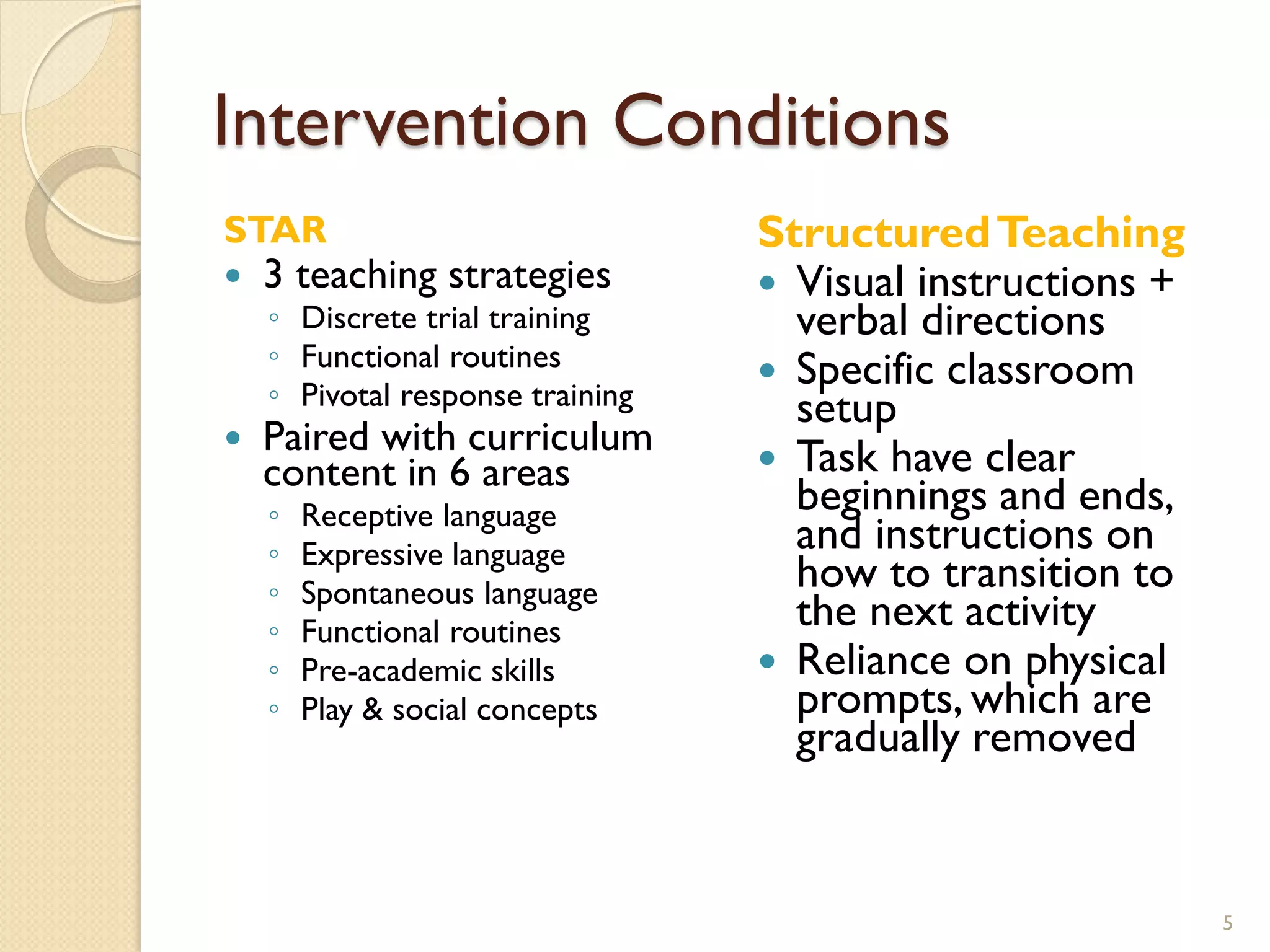
Intervention Conditions
STAR                              Structured Teaching
   3 teaching strategies          Visual instructions +
    ◦ Discrete trial training       verbal directions
    ◦ Functional routines          Specific classroom
    ◦ Pivotal response training     setup
   Paired with curriculum
    content in 6 areas             Task have clear
    ◦   Receptive language          beginnings and ends,
    ◦   Expressive language         and instructions on
    ◦   Spontaneous language
                                    how to transition to
    ◦   Functional routines
                                    the next activity
    ◦   Pre-academic skills        Reliance on physical
    ◦   Play & social concepts      prompts, which are
                                    gradually removed


                                                            5
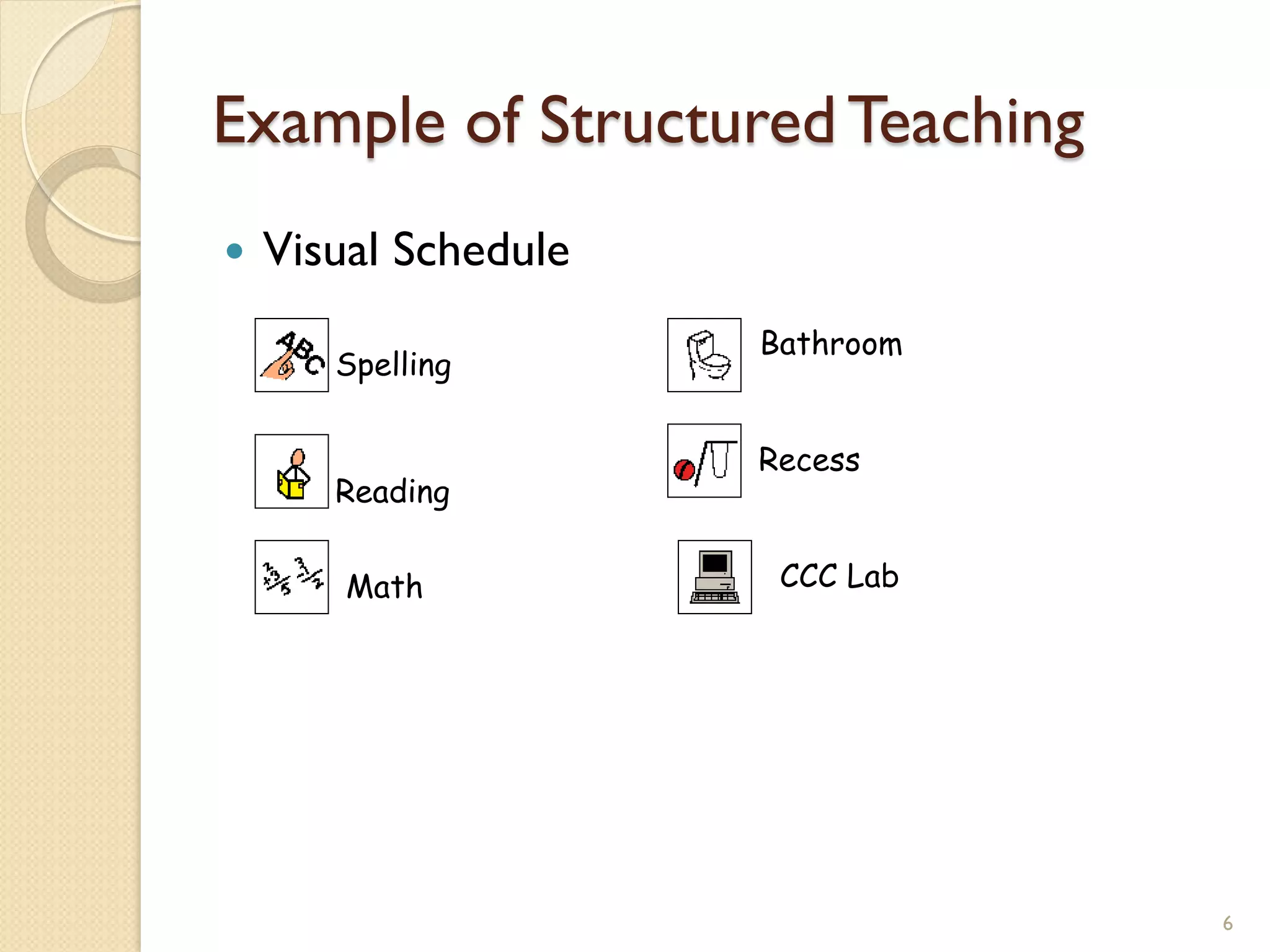
Example of Structured Teaching
   Visual Schedule
                      Bathroom
       Spelling

                      Recess
       Reading


        Math           CCC Lab


                                 6
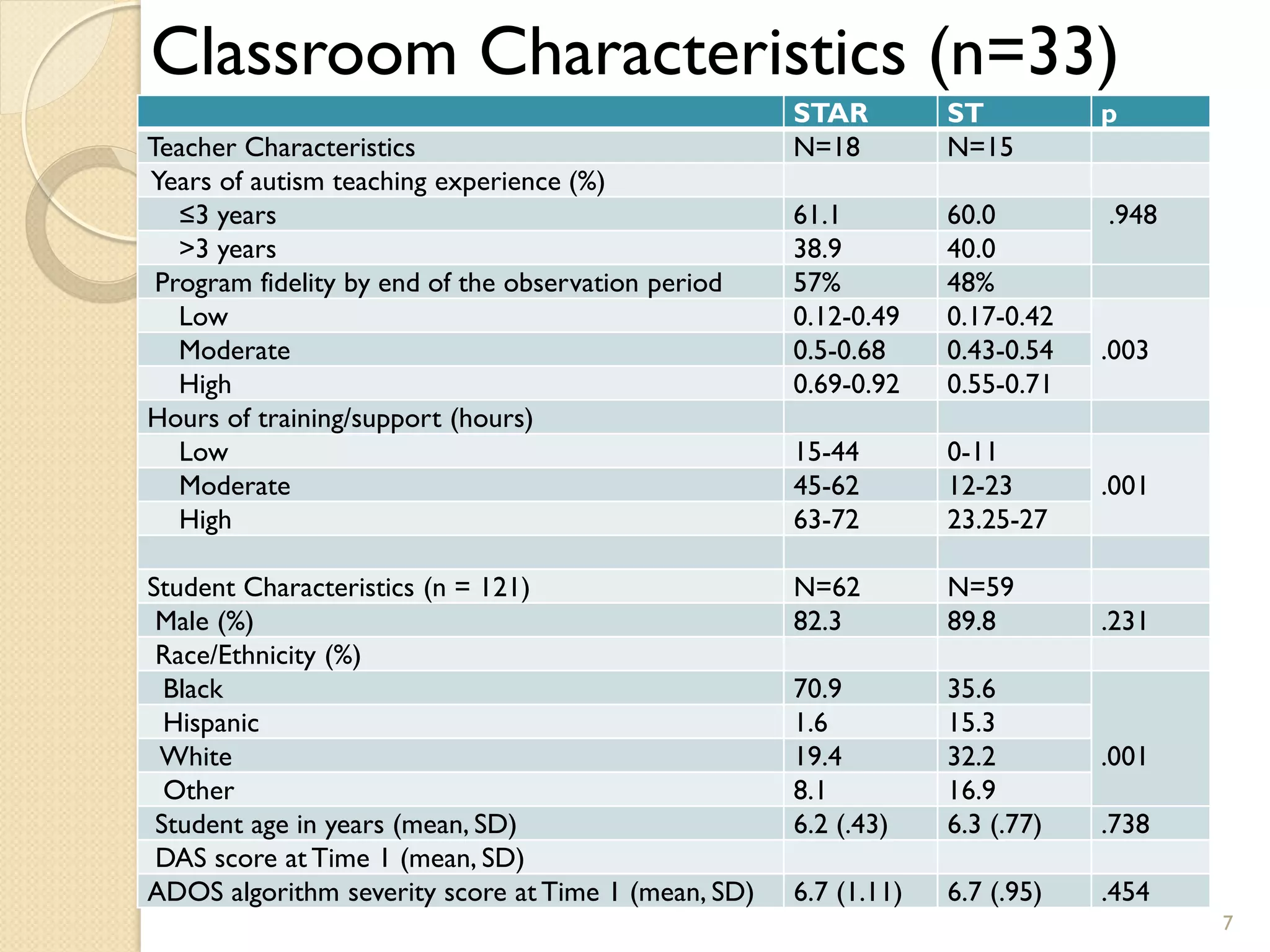
Classroom Characteristics (n=33)
                                                     STAR         ST          p
Teacher Characteristics                              N=18         N=15
Years of autism teaching experience (%)
   ≤3 years                                          61.1         60.0        .948
   >3 years                                          38.9         40.0
 Program fidelity by end of the observation period   57%          48%
   Low                                               0.12-0.49    0.17-0.42
   Moderate                                          0.5-0.68     0.43-0.54   .003
   High                                              0.69-0.92    0.55-0.71
Hours of training/support (hours)
   Low                                               15-44        0-11
   Moderate                                          45-62        12-23       .001
   High                                              63-72        23.25-27

Student Characteristics (n = 121)                    N=62         N=59
 Male (%)                                            82.3         89.8        .231
 Race/Ethnicity (%)
  Black                                              70.9         35.6
  Hispanic                                           1.6          15.3
 White                                               19.4         32.2        .001
  Other                                              8.1          16.9
 Student age in years (mean, SD)                     6.2 (.43)    6.3 (.77)   .738
 DAS score at Time 1 (mean, SD)
ADOS algorithm severity score at Time 1 (mean, SD)   6.7 (1.11)   6.7 (.95)   .454
                                                                                     7
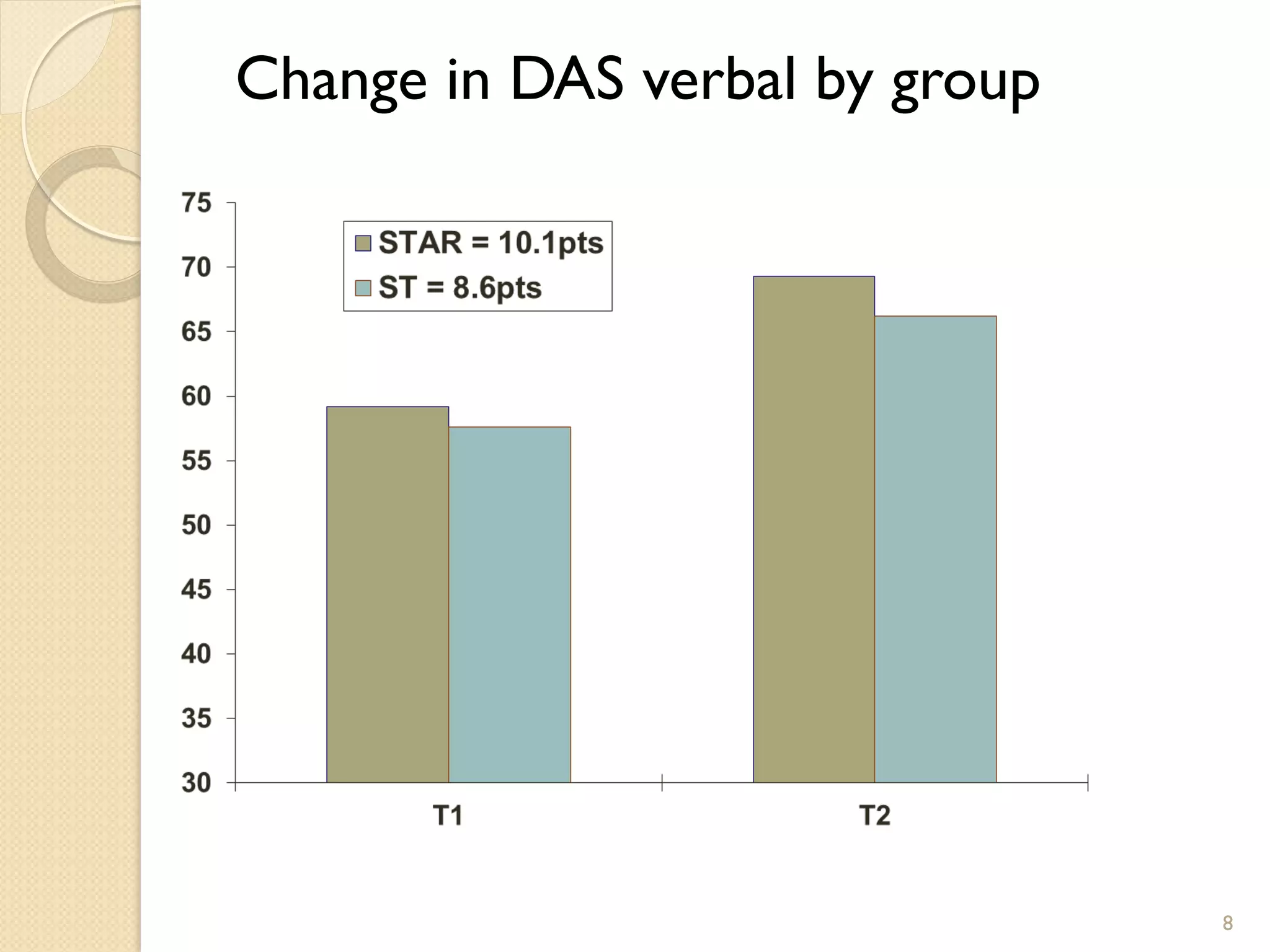
Change in DAS verbal by group


                                8
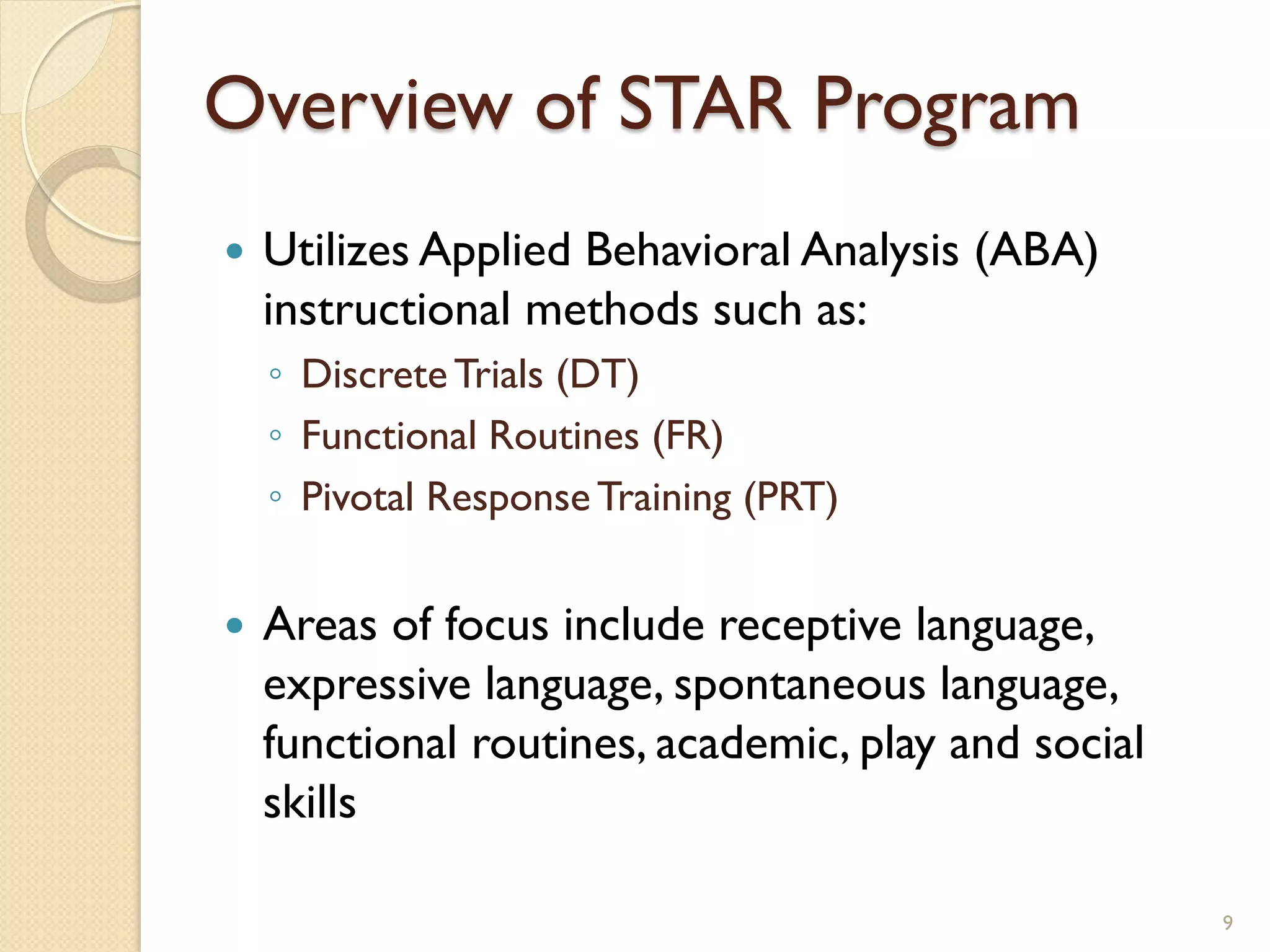
Overview of STAR Program
   Utilizes Applied Behavioral Analysis (ABA)
    instructional methods such as:
    ◦ Discrete Trials (DT)
    ◦ Functional Routines (FR)
    ◦ Pivotal Response Training (PRT)


   Areas of focus include receptive language,
    expressive language, spontaneous language,
    functional routines, academic, play and social
    skills

                                                     9
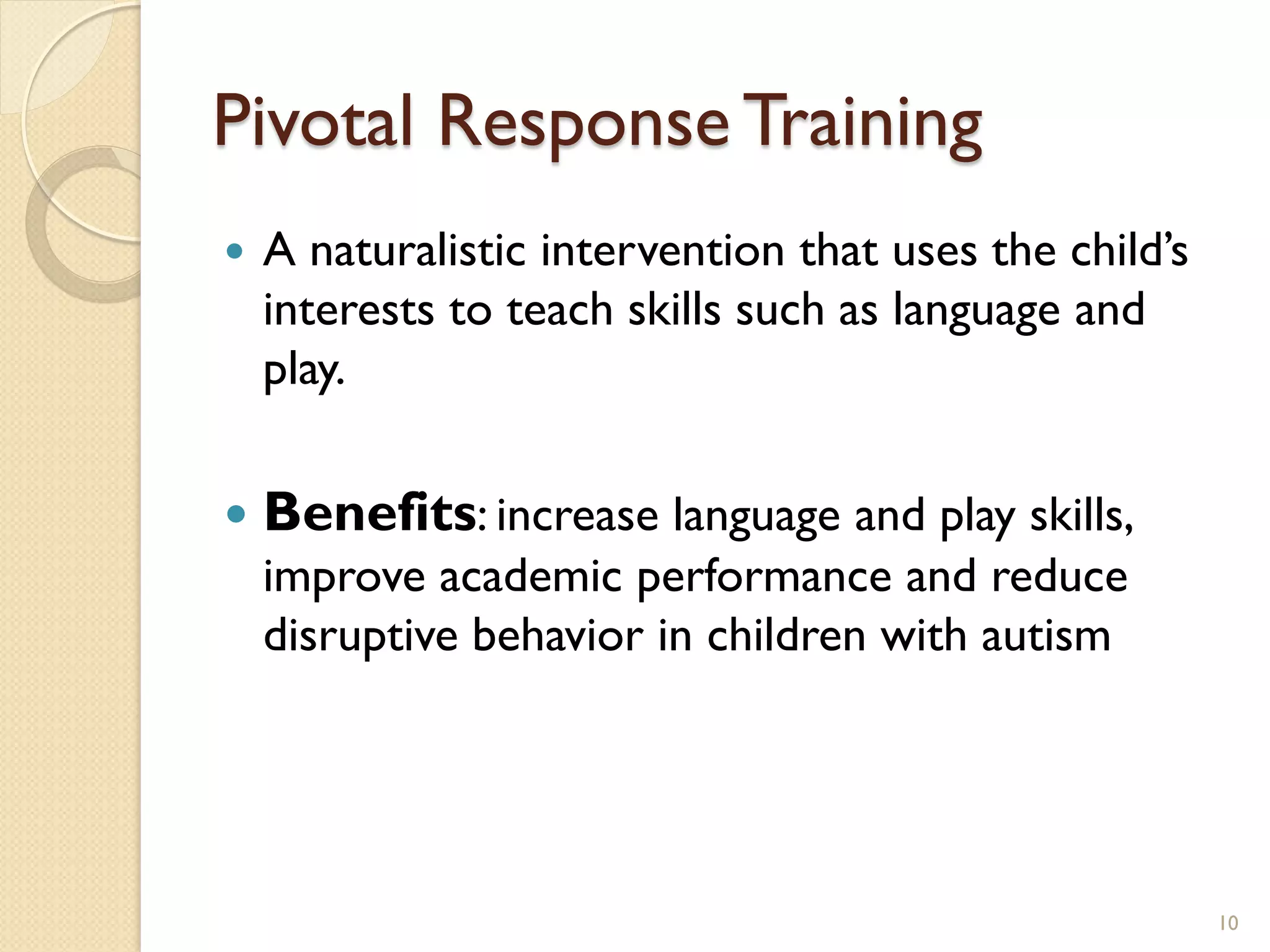
Pivotal Response Training
   A naturalistic intervention that uses the child’s
    interests to teach skills such as language and
    play.

   Benefits: increase language and play skills,
    improve academic performance and reduce
    disruptive behavior in children with autism


                                                        10
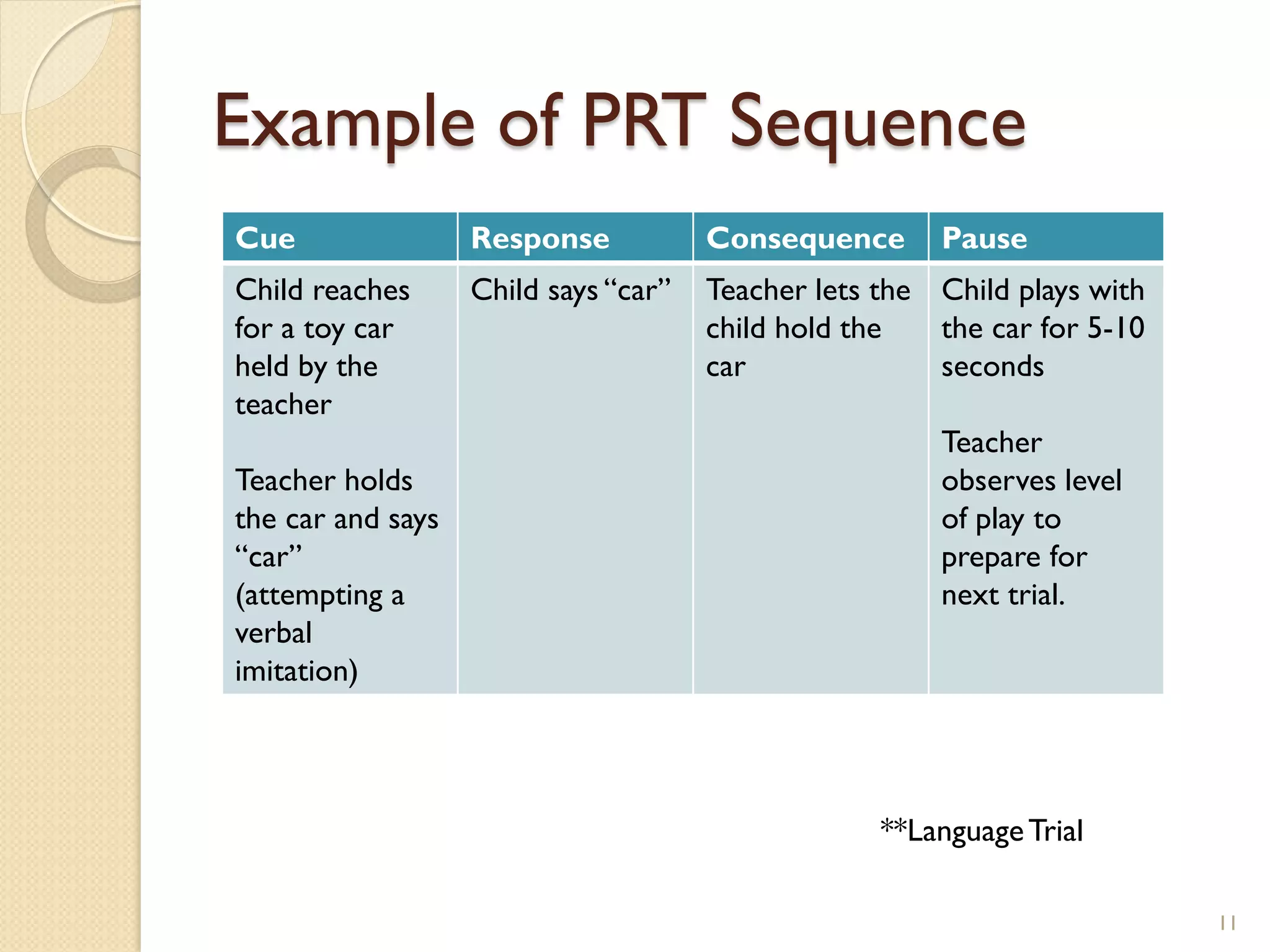
Example of PRT Sequence
Cue                Response           Consequence      Pause
Child reaches      Child says “car”   Teacher lets the Child plays with
for a toy car                         child hold the   the car for 5-10
held by the                           car              seconds
teacher
                                                       Teacher
Teacher holds                                          observes level
the car and says                                       of play to
“car”                                                  prepare for
(attempting a                                          next trial.
verbal
imitation)


                                                   **Language Trial

                                                                          11
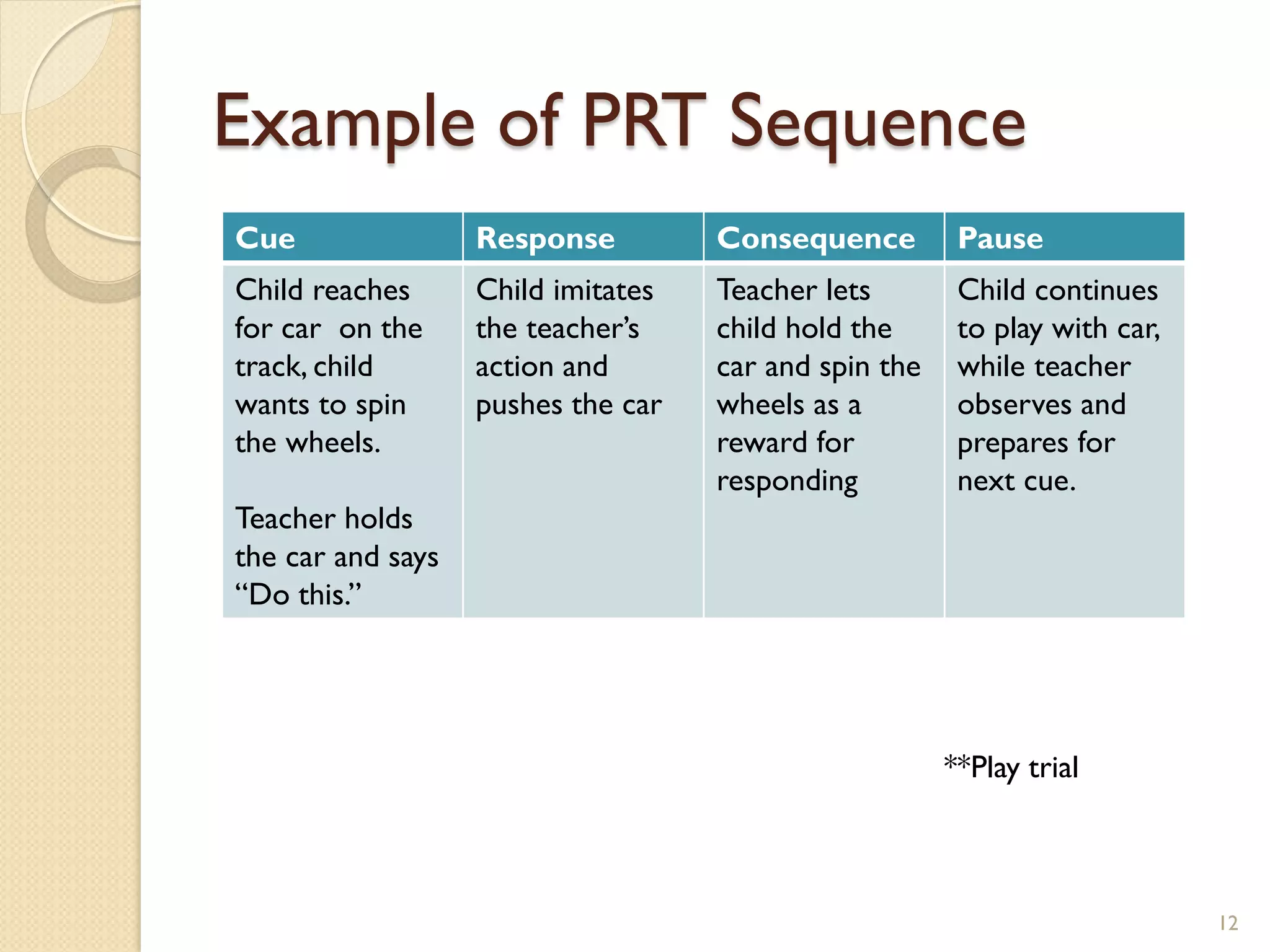
Example of PRT Sequence
Cue                Response         Consequence         Pause
Child reaches      Child imitates   Teacher lets        Child continues
for car on the     the teacher’s    child hold the      to play with car,
track, child       action and       car and spin the    while teacher
wants to spin      pushes the car   wheels as a         observes and
the wheels.                         reward for          prepares for
                                    responding          next cue.
Teacher holds
the car and says
“Do this.”


                                                       **Play trial


                                                                            12
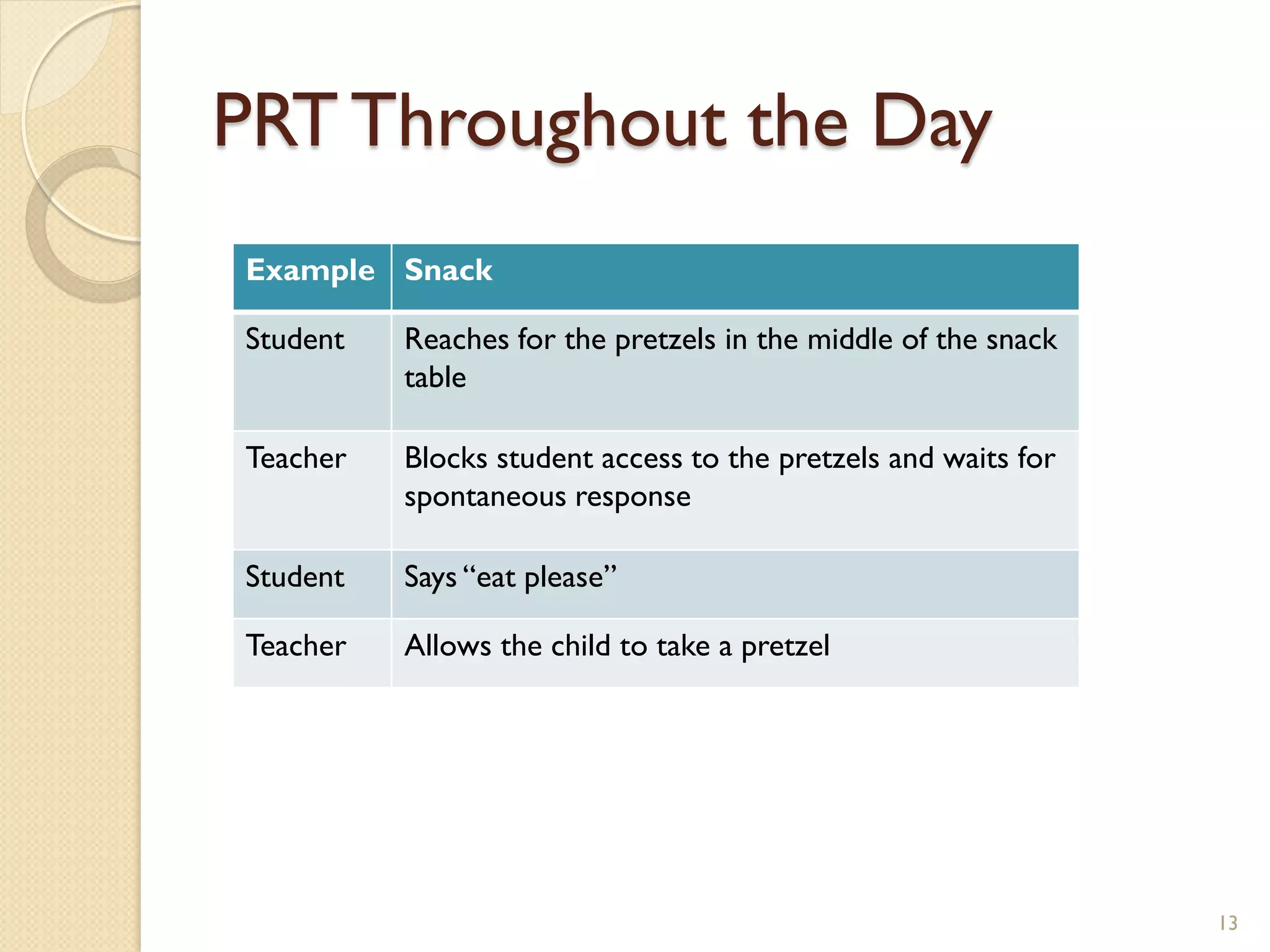
PRT Throughout the Day
Example Snack

Student   Reaches for the pretzels in the middle of the snack
          table

Teacher   Blocks student access to the pretzels and waits for
          spontaneous response

Student   Says “eat please”

Teacher   Allows the child to take a pretzel


                                                                13
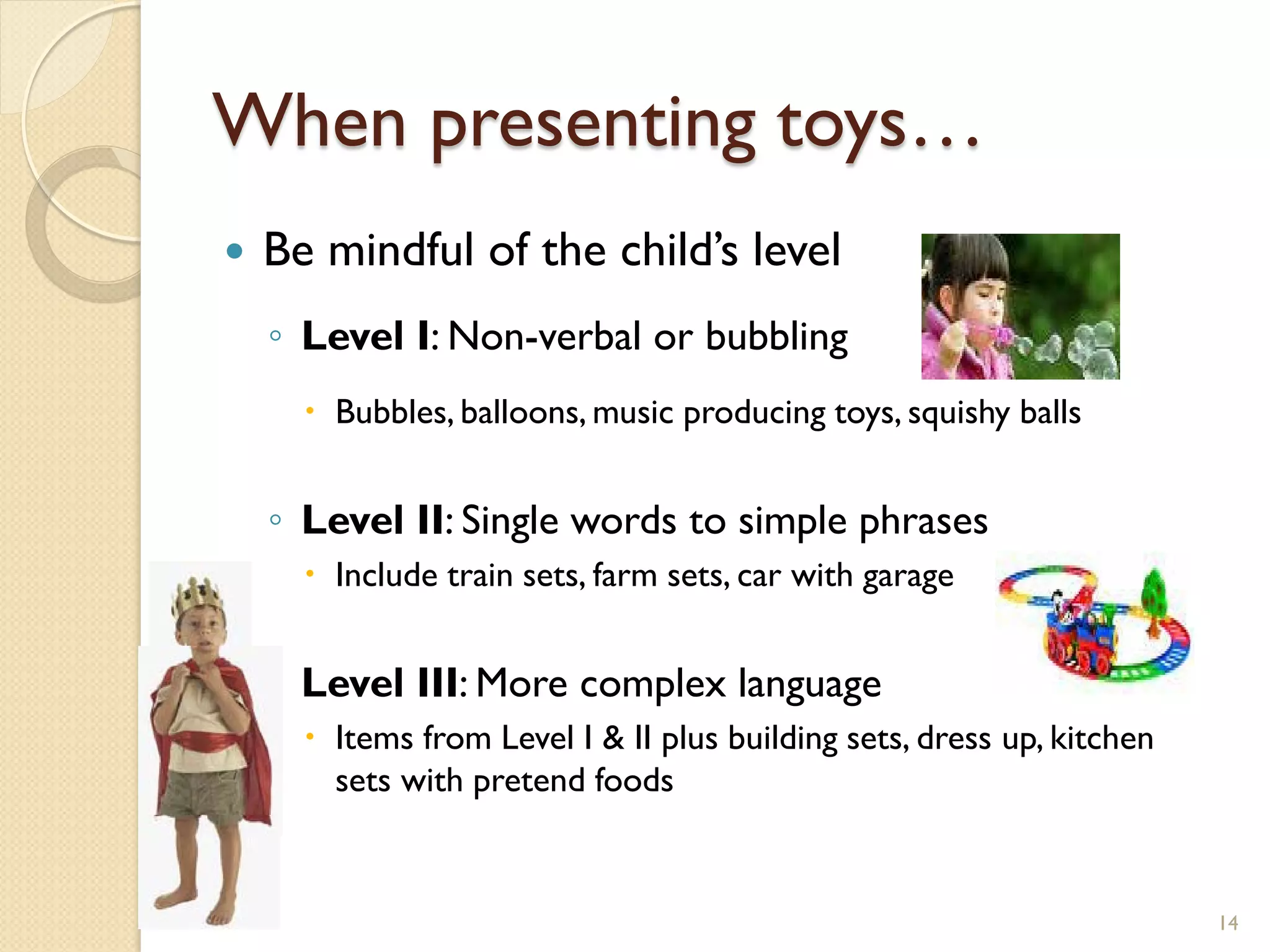
When presenting toys…
   Be mindful of the child’s level
    ◦ Level I: Non-verbal or bubbling
       Bubbles, balloons, music producing toys, squishy balls


    ◦ Level II: Single words to simple phrases
       Include train sets, farm sets, car with garage


    ◦ Level III: More complex language
       Items from Level I & II plus building sets, dress up, kitchen
        sets with pretend foods


                                                                        14
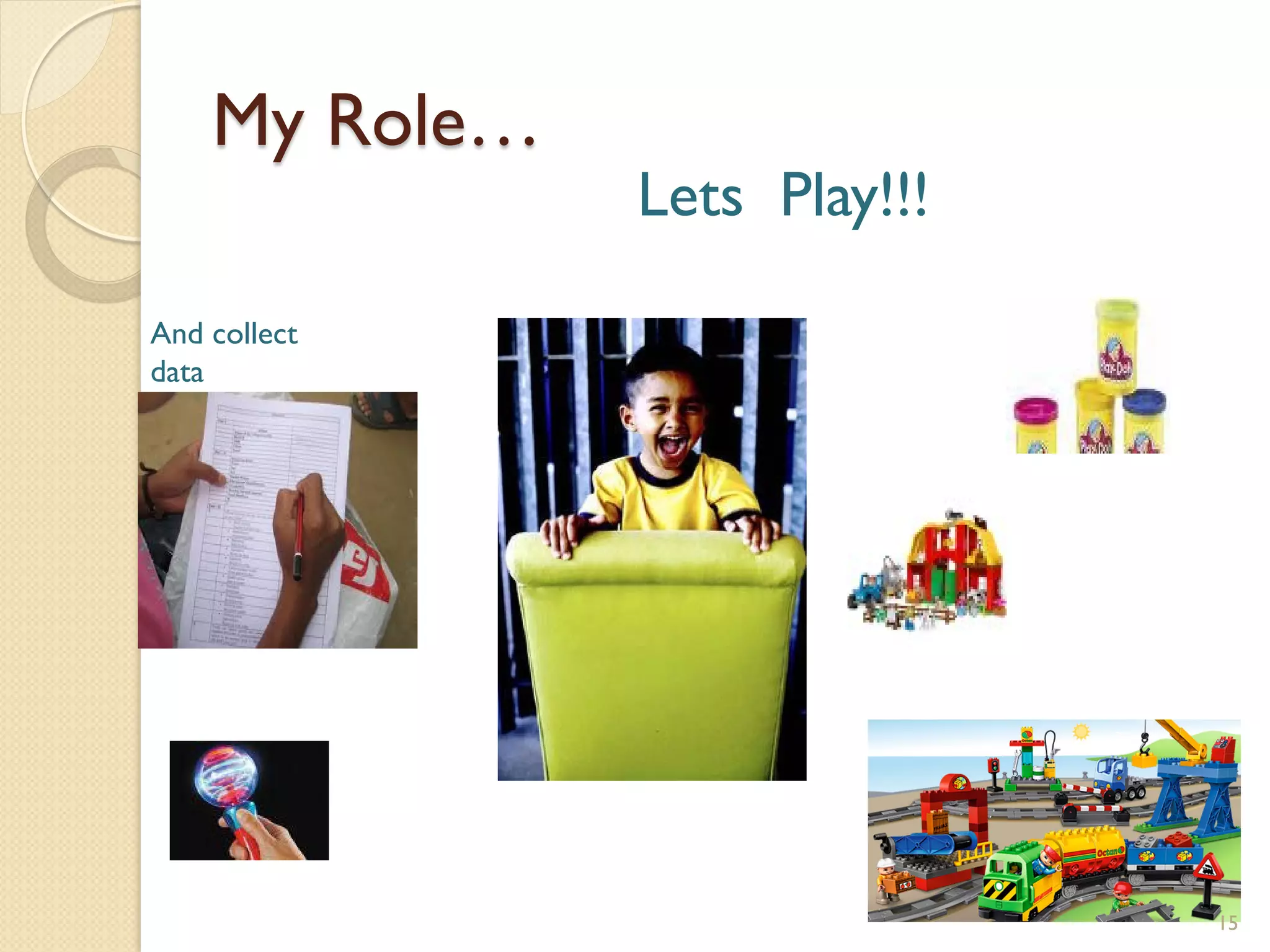
My Role…
               Lets Play!!!

And collect
data


                              15
WHAT’S NEXT FOR
    PHILLY AIMS?

Continue to implement peer-reviewed
interventions in the Great Philadelphia Area

Search for best ways to create partnership with
the Philadelphia School District

Find ways to sustain the program
   Aim of Year 3 of Philly AIMS


                                               16
Thank you!


             17

Extended School Year Program

  • 1.
    Philadelphia AIMS: Autism Instructional Methods Study + Extended School Year Ayan Hussein University of Georgia Mentored by David Mandell, ScD Penn Medicine, Dept. of Psychiatry The Children's Hospital of Philadelphia Center for Autism Research 1
  • 2.
    Background  What is the Extended School Year Program?  What is Philly AIMS? 2
  • 3.
    Background  What isAutism? A complex developmental disorder  Prevalence of Autism: ◦ 1 in 110 children ◦ growing at a rate of 10-17 percent per year ◦ boy:girl 4:1  Exhibit impairments in communication, social interaction, repetitive patterns of behavior, unusual responses to sensory experiences and resistance to change 3
  • 4.
    Aim of PhillyAIMS  Implement evidence-based autism interventions  Year 1:Structured Teaching vs. Strategies for Teaching based on Autism Research (STAR) Program  Year 2: practice effects?  Year 03: Sustainable?  How? Work with existing K-2 grade autism support classrooms 4
  • 5.
    Intervention Conditions STAR Structured Teaching  3 teaching strategies  Visual instructions + ◦ Discrete trial training verbal directions ◦ Functional routines  Specific classroom ◦ Pivotal response training setup  Paired with curriculum content in 6 areas  Task have clear ◦ Receptive language beginnings and ends, ◦ Expressive language and instructions on ◦ Spontaneous language how to transition to ◦ Functional routines the next activity ◦ Pre-academic skills  Reliance on physical ◦ Play & social concepts prompts, which are gradually removed 5
  • 6.
    Example of StructuredTeaching  Visual Schedule Bathroom Spelling Recess Reading Math CCC Lab 6
  • 7.
    Classroom Characteristics (n=33) STAR ST p Teacher Characteristics N=18 N=15 Years of autism teaching experience (%) ≤3 years 61.1 60.0 .948 >3 years 38.9 40.0 Program fidelity by end of the observation period 57% 48% Low 0.12-0.49 0.17-0.42 Moderate 0.5-0.68 0.43-0.54 .003 High 0.69-0.92 0.55-0.71 Hours of training/support (hours) Low 15-44 0-11 Moderate 45-62 12-23 .001 High 63-72 23.25-27 Student Characteristics (n = 121) N=62 N=59 Male (%) 82.3 89.8 .231 Race/Ethnicity (%) Black 70.9 35.6 Hispanic 1.6 15.3 White 19.4 32.2 .001 Other 8.1 16.9 Student age in years (mean, SD) 6.2 (.43) 6.3 (.77) .738 DAS score at Time 1 (mean, SD) ADOS algorithm severity score at Time 1 (mean, SD) 6.7 (1.11) 6.7 (.95) .454 7
  • 8.
    Change in DASverbal by group 8
  • 9.
    Overview of STARProgram  Utilizes Applied Behavioral Analysis (ABA) instructional methods such as: ◦ Discrete Trials (DT) ◦ Functional Routines (FR) ◦ Pivotal Response Training (PRT)  Areas of focus include receptive language, expressive language, spontaneous language, functional routines, academic, play and social skills 9
  • 10.
    Pivotal Response Training  A naturalistic intervention that uses the child’s interests to teach skills such as language and play.  Benefits: increase language and play skills, improve academic performance and reduce disruptive behavior in children with autism 10
  • 11.
    Example of PRTSequence Cue Response Consequence Pause Child reaches Child says “car” Teacher lets the Child plays with for a toy car child hold the the car for 5-10 held by the car seconds teacher Teacher Teacher holds observes level the car and says of play to “car” prepare for (attempting a next trial. verbal imitation) **Language Trial 11
  • 12.
    Example of PRTSequence Cue Response Consequence Pause Child reaches Child imitates Teacher lets Child continues for car on the the teacher’s child hold the to play with car, track, child action and car and spin the while teacher wants to spin pushes the car wheels as a observes and the wheels. reward for prepares for responding next cue. Teacher holds the car and says “Do this.” **Play trial 12
  • 13.
    PRT Throughout theDay Example Snack Student Reaches for the pretzels in the middle of the snack table Teacher Blocks student access to the pretzels and waits for spontaneous response Student Says “eat please” Teacher Allows the child to take a pretzel 13
  • 14.
    When presenting toys…  Be mindful of the child’s level ◦ Level I: Non-verbal or bubbling  Bubbles, balloons, music producing toys, squishy balls ◦ Level II: Single words to simple phrases  Include train sets, farm sets, car with garage ◦ Level III: More complex language  Items from Level I & II plus building sets, dress up, kitchen sets with pretend foods 14
  • 15.
    My Role… Lets Play!!! And collect data 15
  • 16.
    WHAT’S NEXT FOR PHILLY AIMS? Continue to implement peer-reviewed interventions in the Great Philadelphia Area Search for best ways to create partnership with the Philadelphia School District Find ways to sustain the program Aim of Year 3 of Philly AIMS 16
  • 17.