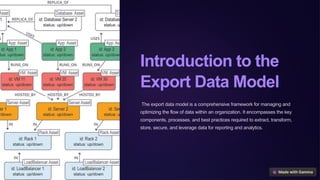
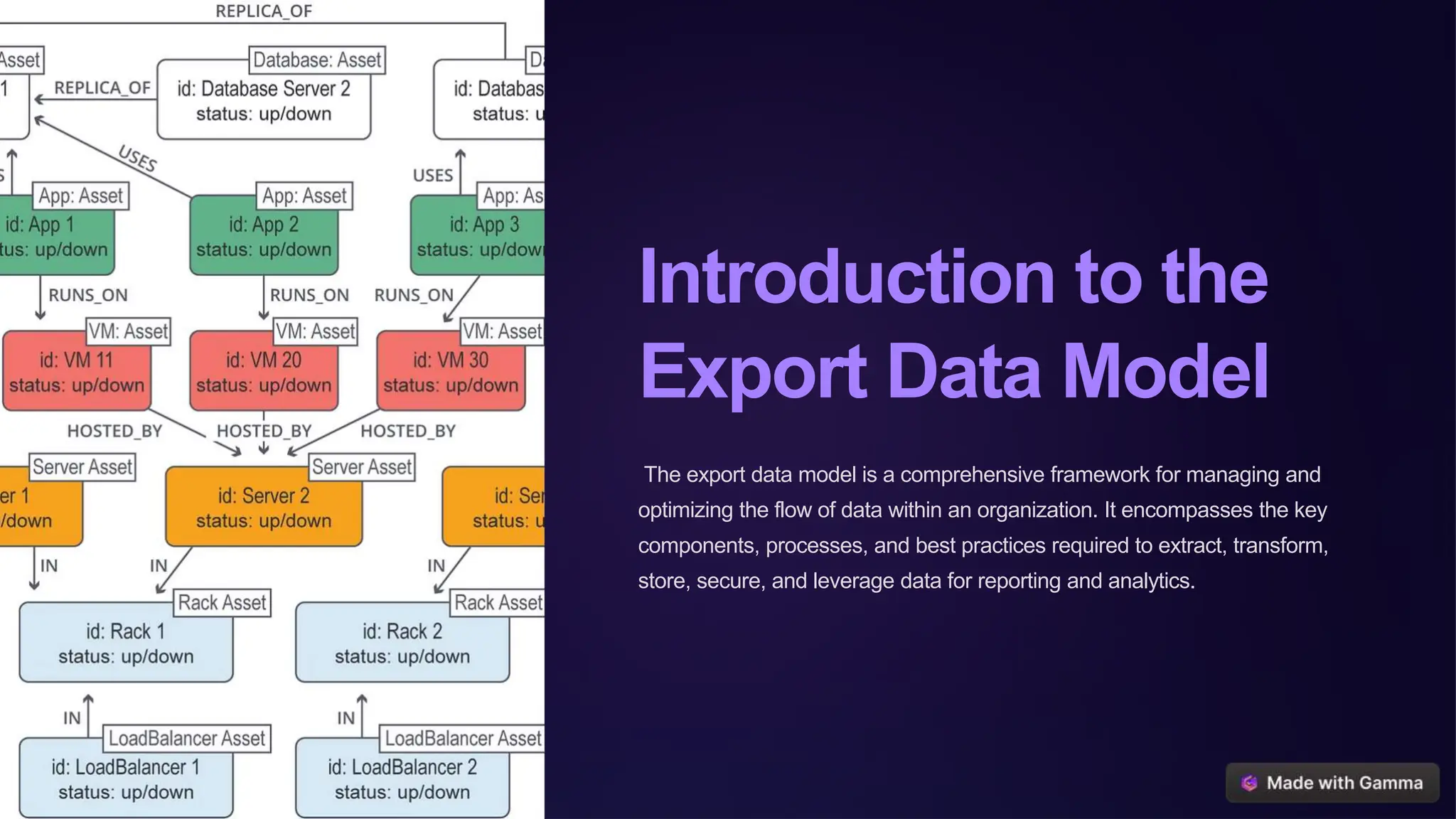
Introduction to the
Export Data Model
The export data model is a comprehensive framework for managing and
optimizing the flow of data within an organization. It encompasses the key
components, processes, and best practices required to extract, transform,
store, secure, and leverage data for reporting and analytics.
Key Components of the Data Model
Data Sources
Identifying and integrating
diverse data sources, both
internal and external, to create
a holistic view of the
organization's information.
Data Transformation
Developing efficient processes
to cleanse, normalize, and
enrich data to ensure
consistency and quality.
Data Storage
Implementing robust and
scalable data storage solutions
to meet the organization's
needs, such as data
warehouses or data lakes.
Data Extraction and Transformation
1 Extract
Securely retrieve data from various sources, including databases, applications,
and external providers.
2 Transform
Apply data cleansing, normalization, and enrichment processes to ensure data
quality and consistency.
3 Load
Transfer the transformed data into the appropriate storage solutions for further
analysis and reporting.
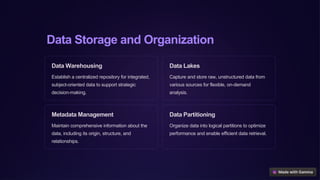
Data Storage and Organization
Data Warehousing
Establish a centralized repository for integrated,
subject-oriented data to support strategic
decision-making.
Data Lakes
Capture and store raw, unstructured data from
various sources for flexible, on-demand
analysis.
Metadata Management
Maintain comprehensive information about the
data, including its origin, structure, and
relationships.
Data Partitioning
Organize data into logical partitions to optimize
performance and enable efficient data retrieval.
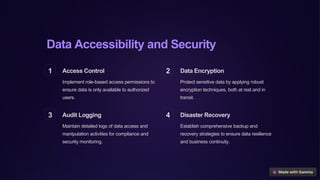
Data Accessibility and Security
1 Access Control
Implement role-based access permissions to
ensure data is only available to authorized
users.
2 Data Encryption
Protect sensitive data by applying robust
encryption techniques, both at rest and in
transit.
3 Audit Logging
Maintain detailed logs of data access and
manipulation activities for compliance and
security monitoring.
4 Disaster Recovery
Establish comprehensive backup and
recovery strategies to ensure data resilience
and business continuity.
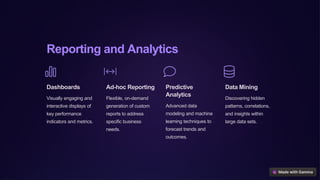
Reporting and Analytics
Dashboards
Visually engaging and
interactive displays of
key performance
indicators and metrics.
Ad-hoc Reporting
Flexible, on-demand
generation of custom
reports to address
specific business
needs.
Predictive
Analytics
Advanced data
modeling and machine
learning techniques to
forecast trends and
outcomes.
Data Mining
Discovering hidden
patterns, correlations,
and insights within
large data sets.
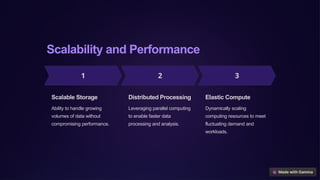
Scalability and Performance
Scalable Storage
Ability to handle growing
volumes of data without
compromising performance.
Distributed Processing
Leveraging parallel computing
to enable faster data
processing and analysis.
Elastic Compute
Dynamically scaling
computing resources to meet
fluctuating demand and
workloads.
Conclusion and Next Steps
The export data model provides a robust and comprehensive framework for
organizations to harness the power of their data. By implementing this model,
businesses can unlock valuable insights, drive informed decision-making,
and achieve sustainable growth and success.
The next steps involve evaluating your current data management practices,
identifying areas for improvement, and developing a strategic roadmap to
implement the key components of the export data model.
Visit us:- https://sqldbm.com/

Export Data Model | SQL Database Modeler

  • 1.
    Introduction to the ExportData Model The export data model is a comprehensive framework for managing and optimizing the flow of data within an organization. It encompasses the key components, processes, and best practices required to extract, transform, store, secure, and leverage data for reporting and analytics.
  • 2.
    Key Components ofthe Data Model Data Sources Identifying and integrating diverse data sources, both internal and external, to create a holistic view of the organization's information. Data Transformation Developing efficient processes to cleanse, normalize, and enrich data to ensure consistency and quality. Data Storage Implementing robust and scalable data storage solutions to meet the organization's needs, such as data warehouses or data lakes.
  • 3.
    Data Extraction andTransformation 1 Extract Securely retrieve data from various sources, including databases, applications, and external providers. 2 Transform Apply data cleansing, normalization, and enrichment processes to ensure data quality and consistency. 3 Load Transfer the transformed data into the appropriate storage solutions for further analysis and reporting.
  • 4.
    Data Storage andOrganization Data Warehousing Establish a centralized repository for integrated, subject-oriented data to support strategic decision-making. Data Lakes Capture and store raw, unstructured data from various sources for flexible, on-demand analysis. Metadata Management Maintain comprehensive information about the data, including its origin, structure, and relationships. Data Partitioning Organize data into logical partitions to optimize performance and enable efficient data retrieval.
  • 5.
    Data Accessibility andSecurity 1 Access Control Implement role-based access permissions to ensure data is only available to authorized users. 2 Data Encryption Protect sensitive data by applying robust encryption techniques, both at rest and in transit. 3 Audit Logging Maintain detailed logs of data access and manipulation activities for compliance and security monitoring. 4 Disaster Recovery Establish comprehensive backup and recovery strategies to ensure data resilience and business continuity.
  • 6.
    Reporting and Analytics Dashboards Visuallyengaging and interactive displays of key performance indicators and metrics. Ad-hoc Reporting Flexible, on-demand generation of custom reports to address specific business needs. Predictive Analytics Advanced data modeling and machine learning techniques to forecast trends and outcomes. Data Mining Discovering hidden patterns, correlations, and insights within large data sets.
  • 7.
    Scalability and Performance ScalableStorage Ability to handle growing volumes of data without compromising performance. Distributed Processing Leveraging parallel computing to enable faster data processing and analysis. Elastic Compute Dynamically scaling computing resources to meet fluctuating demand and workloads.
  • 8.
    Conclusion and NextSteps The export data model provides a robust and comprehensive framework for organizations to harness the power of their data. By implementing this model, businesses can unlock valuable insights, drive informed decision-making, and achieve sustainable growth and success. The next steps involve evaluating your current data management practices, identifying areas for improvement, and developing a strategic roadmap to implement the key components of the export data model. Visit us:- https://sqldbm.com/