www.complereinfosystem.com
Exploring the Pros and Cons:

Databrick vs. Traditional

Data Warehouses
In today's data-based world, businesses depend heavily on
data to make informed decisions. To manage and analyze this
data effectively, they require technologically advanced data
storage solutions. Two popular options for this purpose are
Databricks and traditional data warehouses. Each comes with
its unique set of features, benefits and drawbacks. So, let us
discuss the pros and cons of Databricks and traditional data
warehouses to help you decide which solution is the best fit for
your business.
Databricks is a cloud-based data platform that provides a
unified analytics solution. It was founded by the creators of
Apache Spark and offers a collaborative environment for data
engineers, data scientists, and business analysts. Databricks
allows users to perform large-scale data processing,
machine learning, and real-time analytics.
What is Databricks?
Pros and Cons of Databricks Vs Traditional Data
Warehouses
A traditional data warehouse is a centralized repository. It
stores structured data from different sources. It is designed to
support business intelligence activities, for example reporting,
analysis, and data mining. Traditional data warehouses
typically use a schema-on-write approach, where data is
structured before it is stored.
What is a Traditional Data Warehouse?
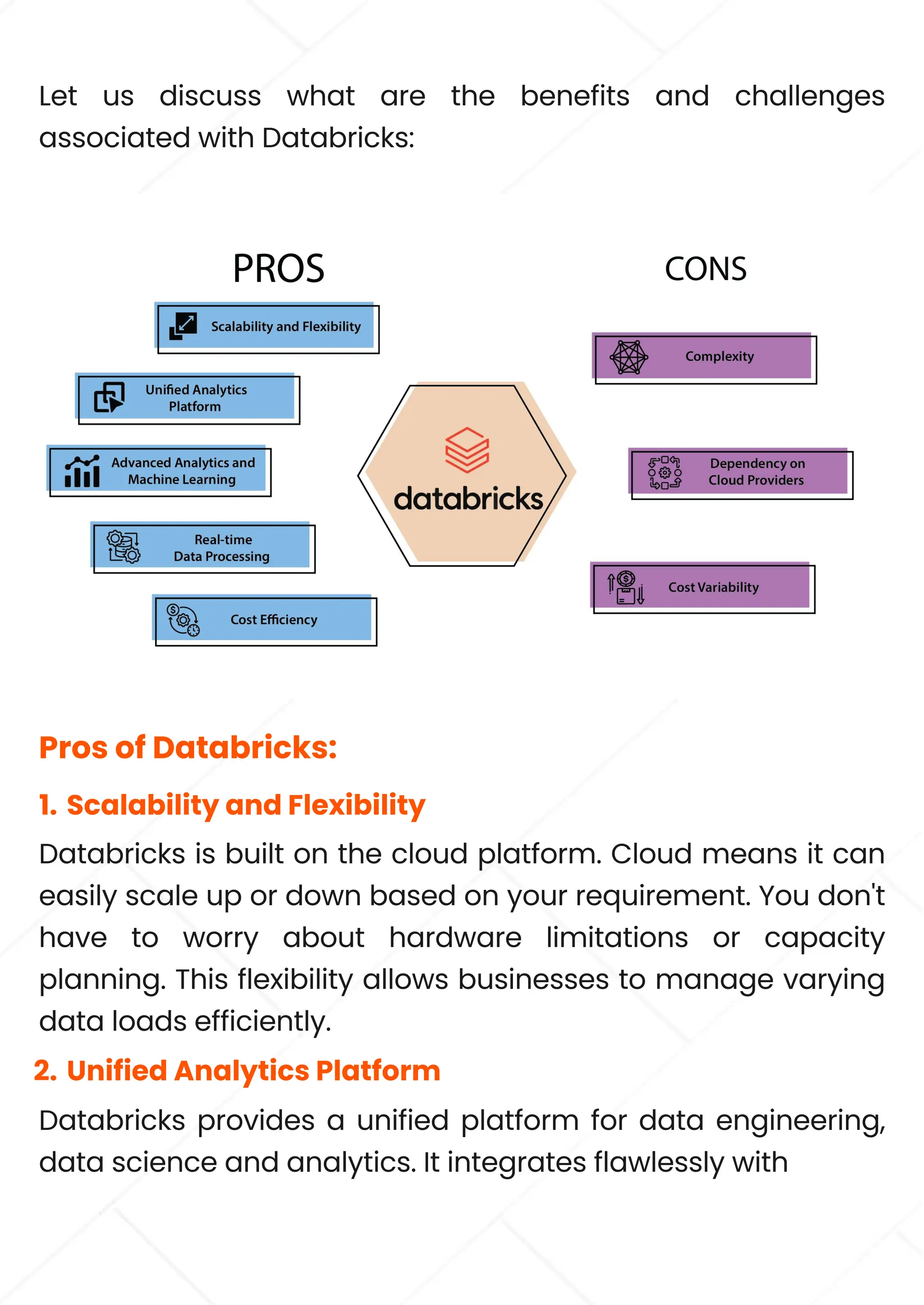
Let us discuss what are the benefits and challenges
associated with Databricks:
Pros of Databricks:
Databricks is built on the cloud platform. Cloud means it can
easily scale up or down based on your requirement. You don't
have to worry about hardware limitations or capacity
planning. This flexibility allows businesses to manage varying
data loads efficiently.
Scalability and Flexibility
Databricks provides a unified platform for data engineering,
data science and analytics. It integrates flawlessly with
Unified Analytics Platform
Databricks uses a pay-as-you-go pricing model, which
means you only pay for the resources you use. This can be
more cost-effective than traditional data warehouses. It
often requires significant upfront investments in hardware
and software.
Cost Efficiency
While Databricks provides an impactful and flexible
platform, it can be complicated to set up and manage,
especially for businesses without a strong technical
Complexity
Cons of Databricks:
Databricks supports real-time data processing, allows
businesses to analyze and work on data as it is generated.
This is particularly useful for applications that require
immediate information, for example fraud detection and
customer personalization.
Real-time Data Processing
different data sources and tools. This makes it easier to
collaborate and simplifies workflows.
With Databricks, you can use advanced analytics and
machine learning capabilities. The platform supports
popular machine learning libraries and frameworks. It allows
data scientists to build and deploy models quickly.
Advanced Analytics and Machine Learning
background. It may require specialized skills and training to
fully utilize its capabilities.
Databricks is a cloud-based solution. It means you are
dependent on cloud providers, for example AWS, Azure, or
Google Cloud. This can be a drawback if you have specific
compliance requirements or prefer on-premises solutions.
Dependency on Cloud Providers
Although the pay-as-you-go model can be cost-effective, it
can also affect unpredictable costs. Businesses require to
monitor usage closely to avoid unexpected expenses.
Cost Variability
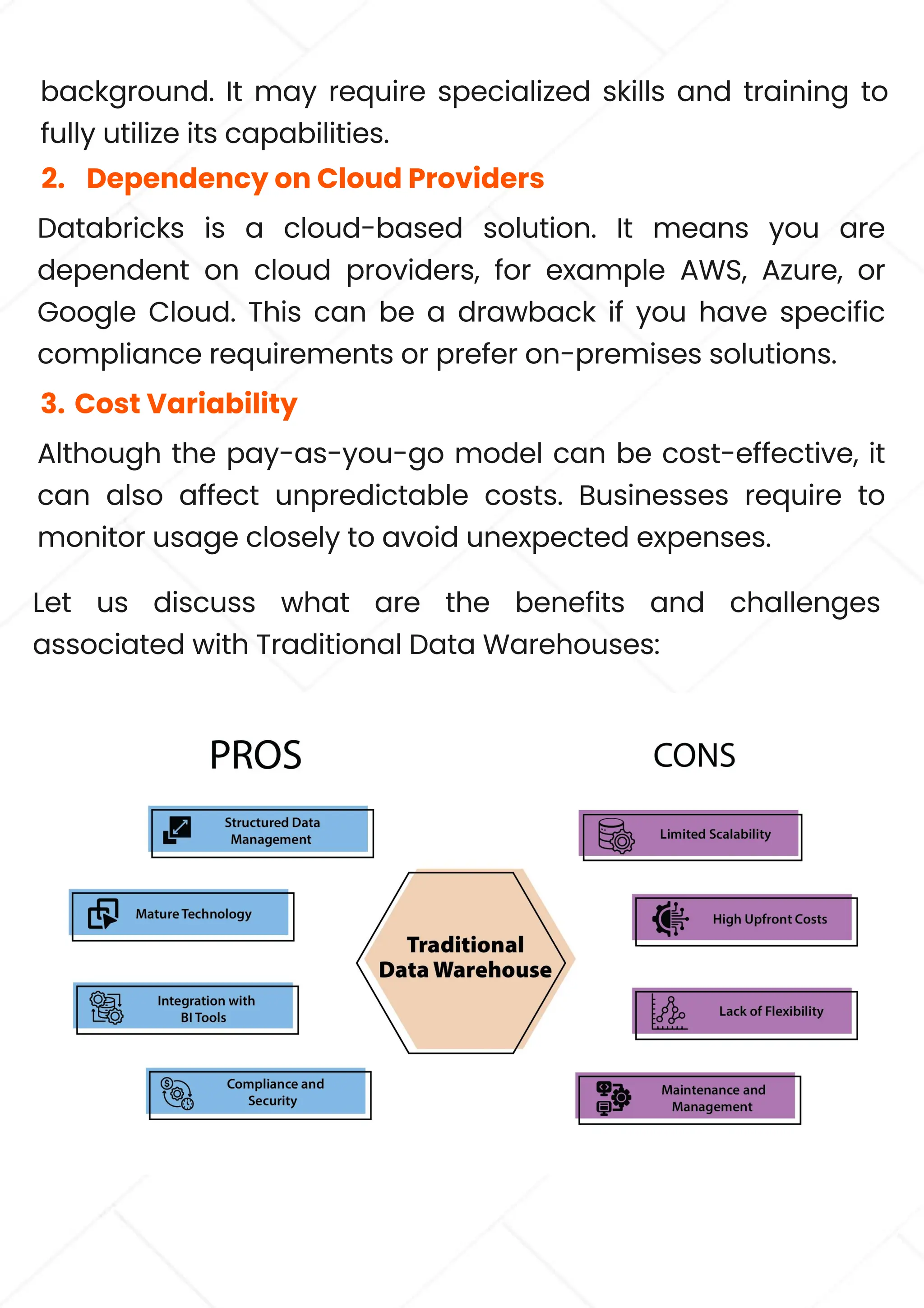
Let us discuss what are the benefits and challenges
associated with Traditional Data Warehouses:
Pros of Traditional Data Warehouses:
Traditional data warehouses are designed to manage
structured data efficiently. They use a schema-on-write
approach. This approach makes sure that your data is
organized and ready for analysis as soon as it is loaded.
Structured Data Management
Traditional data warehouses have been around for decades
and are built on proven technology. They provide advanced
performance, reliability, and security features.
Mature Technology
Traditional data warehouses are generally integrated with
business intelligence tools. This integration makes it easier
to generate reports, dashboards and visualizations. This can
help businesses to get predictable information and make
data-based decisions.
Integration with BI Tools
Many traditional data warehouses deliver advanced
security features and compliance certifications. These
benefits make them suitable for industries with strict
regulatory requirements.
Compliance and Security
Cons of Traditional Data Warehouses:
Traditional data warehouses are typically built on on-
Limited Scalability
Setting up a traditional data warehouse can be expensive
due to the cost of hardware, software and implementation
services. This can be a blocker or challenge for small and
medium-sized businesses.
High Upfront Costs
Traditional data warehouses are less flexible compared to
cloud-based solutions. They may create trouble in
managing unstructured or semi-structured data. This
situation is becoming increasingly common in today's data
landscape.
Lack of Flexibility
Managing and maintaining a traditional data warehouse
can be resource intensive. It requires ongoing monitoring,
updates and optimization to ensure optimal performance.
Maintenance and Management
premises hardware. This situation can limit their scalability.
Expanding capacity often requires significant investments in
hardware and infrastructure.
Databricks vs. Traditional Data Warehouses
Choosing between Databricks and traditional data
warehouses depends on your business requirement,
technical capabilities and budget. Below are some key
considerations to help you decide which is best to go ahead
for your purpose:
If your business deals with huge volumes of different types
of data, Databricks' scalability and flexibility make it an
attractive option. It can effortlessly manage structured,
semi-structured and unstructured data efficiently.
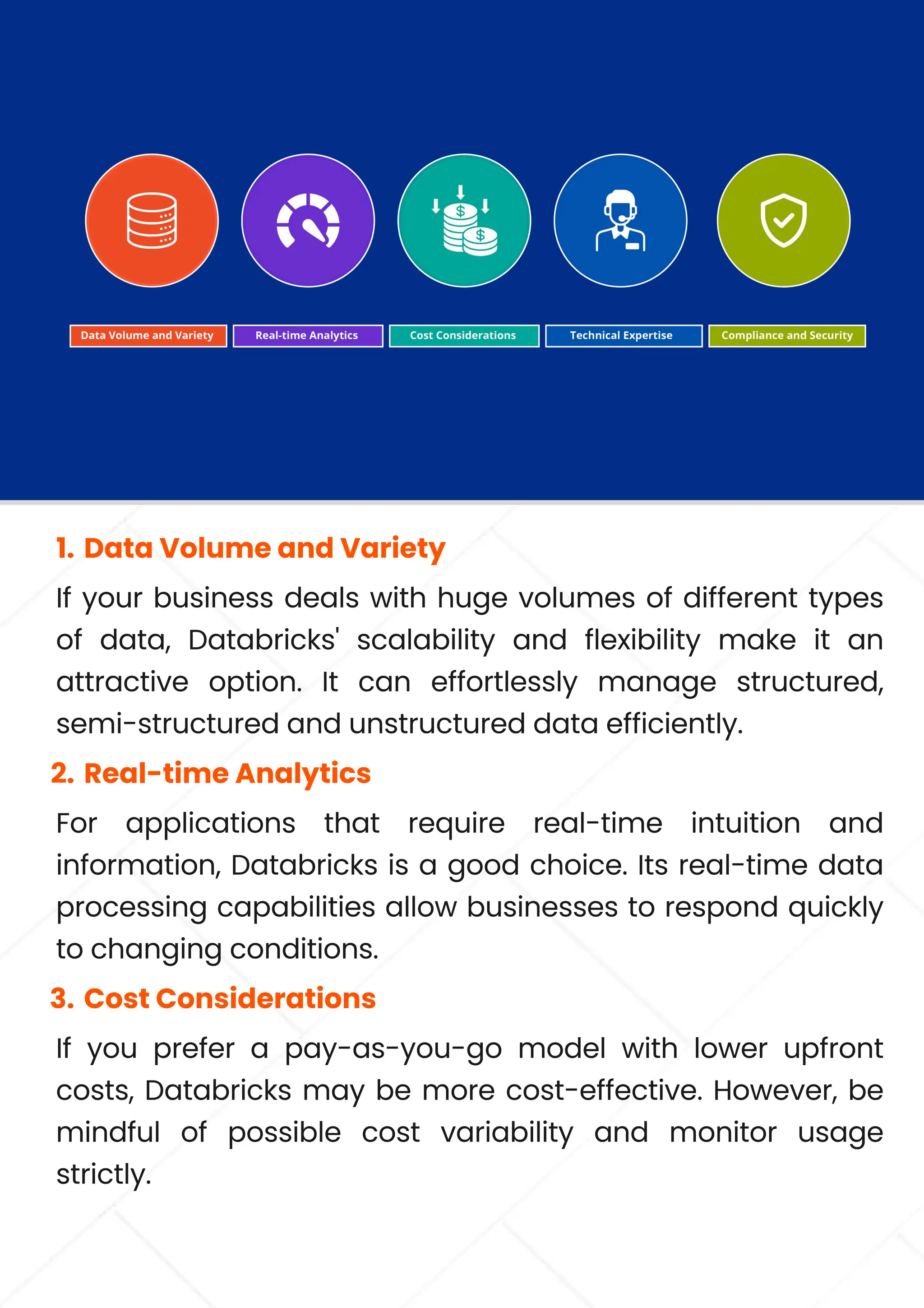
Data Volume and Variety
For applications that require real-time intuition and
information, Databricks is a good choice. Its real-time data
processing capabilities allow businesses to respond quickly
to changing conditions.
Real-time Analytics
If you prefer a pay-as-you-go model with lower upfront
costs, Databricks may be more cost-effective. However, be
mindful of possible cost variability and monitor usage
strictly.
Cost Considerations
10
www.complereinfosystem.com
Consider your team's technical expertise. Databricks can be
complicated to manage, so make sure that you have the
necessary skills or are willing to invest in training.
Technical Expertise
If compliance and security are top priorities, traditional data
warehouses may offer more advanced features. So, make
sure that the solution you choose matches effectively with
your regulatory requirements.
Compliance and Security
 

Both Databricks and traditional data
warehouses have their strengths and weaknesses. By
carefully identifying your business requirements and
considering the factors mentioned above, you can make an
informed decision that will help you maximize the value of
your data and achieve better business results.
Final Verdict:
Are you thinking of achieving the best data advantages with

excellent data management?

Contact us at isha.taneja@complereinfosystem.com or 

BDEAppDevTeam@complereinfosystem.com to get the most

professional assistance.

Exploring the Pros and Cons Databrick vs Traditional Data Warehouses

  • 1.
    www.complereinfosystem.com Exploring the Prosand Cons: Databrick vs. Traditional Data Warehouses In today's data-based world, businesses depend heavily on data to make informed decisions. To manage and analyze this data effectively, they require technologically advanced data storage solutions. Two popular options for this purpose are Databricks and traditional data warehouses. Each comes with its unique set of features, benefits and drawbacks. So, let us discuss the pros and cons of Databricks and traditional data warehouses to help you decide which solution is the best fit for your business.
  • 2.
    Databricks is acloud-based data platform that provides a unified analytics solution. It was founded by the creators of Apache Spark and offers a collaborative environment for data engineers, data scientists, and business analysts. Databricks allows users to perform large-scale data processing, machine learning, and real-time analytics. What is Databricks? Pros and Cons of Databricks Vs Traditional Data Warehouses A traditional data warehouse is a centralized repository. It stores structured data from different sources. It is designed to support business intelligence activities, for example reporting, analysis, and data mining. Traditional data warehouses typically use a schema-on-write approach, where data is structured before it is stored. What is a Traditional Data Warehouse?
  • 3.
    Let us discusswhat are the benefits and challenges associated with Databricks: Pros of Databricks: Databricks is built on the cloud platform. Cloud means it can easily scale up or down based on your requirement. You don't have to worry about hardware limitations or capacity planning. This flexibility allows businesses to manage varying data loads efficiently. Scalability and Flexibility Databricks provides a unified platform for data engineering, data science and analytics. It integrates flawlessly with Unified Analytics Platform
  • 4.
    Databricks uses apay-as-you-go pricing model, which means you only pay for the resources you use. This can be more cost-effective than traditional data warehouses. It often requires significant upfront investments in hardware and software. Cost Efficiency While Databricks provides an impactful and flexible platform, it can be complicated to set up and manage, especially for businesses without a strong technical Complexity Cons of Databricks: Databricks supports real-time data processing, allows businesses to analyze and work on data as it is generated. This is particularly useful for applications that require immediate information, for example fraud detection and customer personalization. Real-time Data Processing different data sources and tools. This makes it easier to collaborate and simplifies workflows. With Databricks, you can use advanced analytics and machine learning capabilities. The platform supports popular machine learning libraries and frameworks. It allows data scientists to build and deploy models quickly. Advanced Analytics and Machine Learning
  • 5.
    background. It mayrequire specialized skills and training to fully utilize its capabilities. Databricks is a cloud-based solution. It means you are dependent on cloud providers, for example AWS, Azure, or Google Cloud. This can be a drawback if you have specific compliance requirements or prefer on-premises solutions. Dependency on Cloud Providers Although the pay-as-you-go model can be cost-effective, it can also affect unpredictable costs. Businesses require to monitor usage closely to avoid unexpected expenses. Cost Variability Let us discuss what are the benefits and challenges associated with Traditional Data Warehouses:
  • 6.
    Pros of TraditionalData Warehouses: Traditional data warehouses are designed to manage structured data efficiently. They use a schema-on-write approach. This approach makes sure that your data is organized and ready for analysis as soon as it is loaded. Structured Data Management Traditional data warehouses have been around for decades and are built on proven technology. They provide advanced performance, reliability, and security features. Mature Technology Traditional data warehouses are generally integrated with business intelligence tools. This integration makes it easier to generate reports, dashboards and visualizations. This can help businesses to get predictable information and make data-based decisions. Integration with BI Tools Many traditional data warehouses deliver advanced security features and compliance certifications. These benefits make them suitable for industries with strict regulatory requirements. Compliance and Security Cons of Traditional Data Warehouses: Traditional data warehouses are typically built on on- Limited Scalability
  • 7.
    Setting up atraditional data warehouse can be expensive due to the cost of hardware, software and implementation services. This can be a blocker or challenge for small and medium-sized businesses. High Upfront Costs Traditional data warehouses are less flexible compared to cloud-based solutions. They may create trouble in managing unstructured or semi-structured data. This situation is becoming increasingly common in today's data landscape. Lack of Flexibility Managing and maintaining a traditional data warehouse can be resource intensive. It requires ongoing monitoring, updates and optimization to ensure optimal performance. Maintenance and Management premises hardware. This situation can limit their scalability. Expanding capacity often requires significant investments in hardware and infrastructure. Databricks vs. Traditional Data Warehouses Choosing between Databricks and traditional data warehouses depends on your business requirement, technical capabilities and budget. Below are some key considerations to help you decide which is best to go ahead for your purpose:
  • 8.
    If your businessdeals with huge volumes of different types of data, Databricks' scalability and flexibility make it an attractive option. It can effortlessly manage structured, semi-structured and unstructured data efficiently. Data Volume and Variety For applications that require real-time intuition and information, Databricks is a good choice. Its real-time data processing capabilities allow businesses to respond quickly to changing conditions. Real-time Analytics If you prefer a pay-as-you-go model with lower upfront costs, Databricks may be more cost-effective. However, be mindful of possible cost variability and monitor usage strictly. Cost Considerations
  • 9.
    10 www.complereinfosystem.com Consider your team'stechnical expertise. Databricks can be complicated to manage, so make sure that you have the necessary skills or are willing to invest in training. Technical Expertise If compliance and security are top priorities, traditional data warehouses may offer more advanced features. So, make sure that the solution you choose matches effectively with your regulatory requirements. Compliance and Security  
 Both Databricks and traditional data warehouses have their strengths and weaknesses. By carefully identifying your business requirements and considering the factors mentioned above, you can make an informed decision that will help you maximize the value of your data and achieve better business results. Final Verdict: Are you thinking of achieving the best data advantages with excellent data management? Contact us at isha.taneja@complereinfosystem.com or BDEAppDevTeam@complereinfosystem.com to get the most professional assistance.