Exploring Science in
Agriculture
Dr. D. Narasimha Reddy
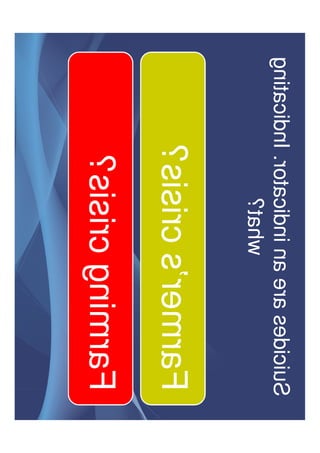
Suicides are an indicator. Indicating
what?
Farmer’s crisis?Farmer’s crisis?
Farming crisis?
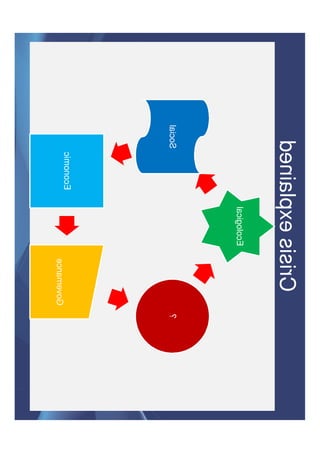
Crisis explained
Ecological
Social?
Economic
Governance
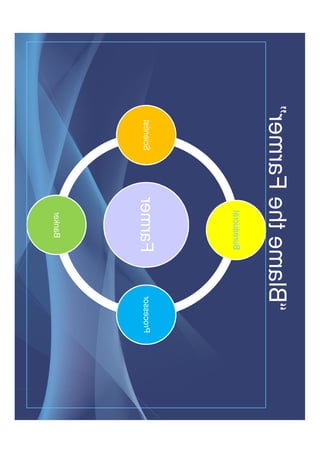
“Blame the Farmer”
Bureaucrat
Farmer Scientist
Banker
Processor
Wrong Priorities:
Bu-Bu Farmer
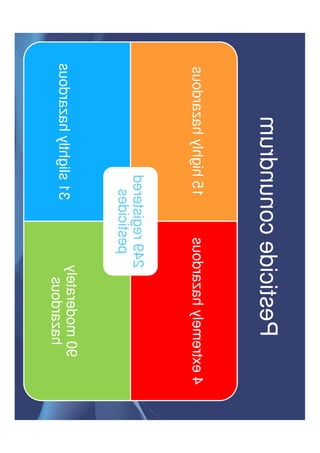
Pesticide conundrum
4 extremely hazardous 15 highly hazardous
90 moderately
hazardous
31 slightly hazardous
249 registered
pesticides
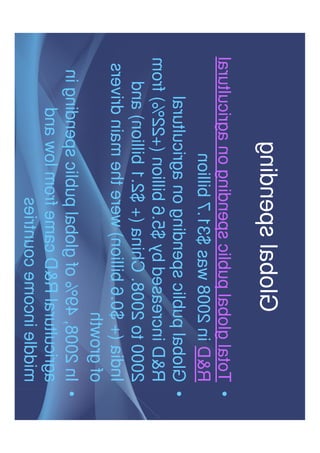
Global spending
• Total global public spending on agricultural
R&D in 2008 was $31.7 billion
• Global public spending on agricultural
R&D increased by $5.6 billion (+22%) fromR&D increased by $5.6 billion (+22%) from
2000 to 2008. China (+ $2.1 billion) and
India (+ $0.6 billion) were the main drivers
of growth
• In 2008, 49% of global public spending in
agricultural R&D came from low and
middle income countries
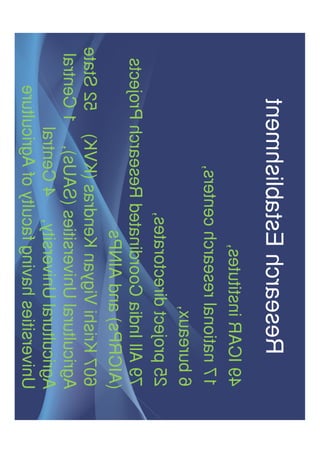
Research Establishment
49 ICAR institutes,
17 national research centers,
6 bureaux,
25 project directorates,25 project directorates,
79 All India Coordinated Research Projects
(AICRPs) and AINPs
607 Krishi Vigyan Kendras (KVK) 52 State
Agricultural Universities (SAUs), 1 Central
Agricultural University, 4 Central
Universities having faculty of Agriculture
Dichotomy
Yield
Price
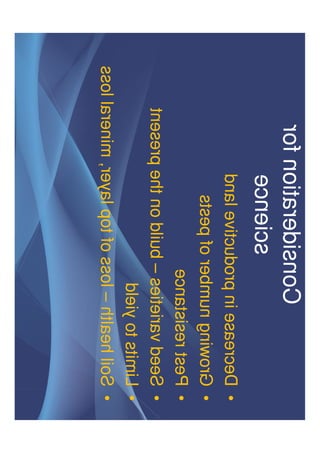
Consideration for
science
• Decrease in productive land
• Growing number of pests
• Pest resistance
• Seed varieties – build on the present• Seed varieties – build on the present
• Limits to yield
• Soil health – loss of top layer, mineral loss
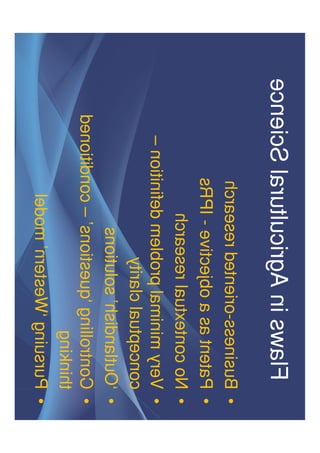
Flaws in Agricultural Science
• Business-oriented research
• Patent as a objective - IPRs
• No contextual research
• Very minimal problem definition –• Very minimal problem definition –
conceptual clarity
• ‘Outlandish’ solutions
• Controlling ‘questions’ – conditioned
thinking
• Pursuing ‘Western’ model
Flaws in Agricultural Science
• Ignoring agro-climatic zones
• Neglecting existing practices
• No follow-up research on ‘field’ releases of
knowledge or technologyknowledge or technology
• Serious problems with agricultural science,
scientists and establishment
• Wrong direction
• No output-oriented work
• No experimentation and observation
Commandments for ‘good’
science
• ‘Local’ agricultural field as a destination,
and not a conference
• ‘Fruit’ or ‘harvest’ as an outcome, than a
article in a journalarticle in a journal
• ‘Service orientation’ than job prescription
• ‘project’ as a vehicle, than a goal
• Insect-centric research, than ‘pest’ linked
pursuit
In summary
• Serious introspection, at individual and
institutional level
• More consideration for Indian ethos, and
centuries old practicescenturies old practices
• Shunning ‘Western’ models, and critically
reviewing ‘recommendations’
• Questioning oneself, and also
establishment
Thank you
NREDDY.DONTHI@GMAIL.COM

Exploring science in agriculture

  • 1.
  • 2.
    Suicides are anindicator. Indicating what? Farmer’s crisis?Farmer’s crisis? Farming crisis?
  • 3.
  • 4.
    “Blame the Farmer” Bureaucrat FarmerScientist Banker Processor
  • 5.
  • 6.
    Pesticide conundrum 4 extremelyhazardous 15 highly hazardous 90 moderately hazardous 31 slightly hazardous 249 registered pesticides
  • 7.
    Global spending • Totalglobal public spending on agricultural R&D in 2008 was $31.7 billion • Global public spending on agricultural R&D increased by $5.6 billion (+22%) fromR&D increased by $5.6 billion (+22%) from 2000 to 2008. China (+ $2.1 billion) and India (+ $0.6 billion) were the main drivers of growth • In 2008, 49% of global public spending in agricultural R&D came from low and middle income countries
  • 8.
    Research Establishment 49 ICARinstitutes, 17 national research centers, 6 bureaux, 25 project directorates,25 project directorates, 79 All India Coordinated Research Projects (AICRPs) and AINPs 607 Krishi Vigyan Kendras (KVK) 52 State Agricultural Universities (SAUs), 1 Central Agricultural University, 4 Central Universities having faculty of Agriculture
  • 9.
  • 10.
    Consideration for science • Decreasein productive land • Growing number of pests • Pest resistance • Seed varieties – build on the present• Seed varieties – build on the present • Limits to yield • Soil health – loss of top layer, mineral loss
  • 11.
    Flaws in AgriculturalScience • Business-oriented research • Patent as a objective - IPRs • No contextual research • Very minimal problem definition –• Very minimal problem definition – conceptual clarity • ‘Outlandish’ solutions • Controlling ‘questions’ – conditioned thinking • Pursuing ‘Western’ model
  • 12.
    Flaws in AgriculturalScience • Ignoring agro-climatic zones • Neglecting existing practices • No follow-up research on ‘field’ releases of knowledge or technologyknowledge or technology • Serious problems with agricultural science, scientists and establishment • Wrong direction • No output-oriented work • No experimentation and observation
  • 13.
    Commandments for ‘good’ science •‘Local’ agricultural field as a destination, and not a conference • ‘Fruit’ or ‘harvest’ as an outcome, than a article in a journalarticle in a journal • ‘Service orientation’ than job prescription • ‘project’ as a vehicle, than a goal • Insect-centric research, than ‘pest’ linked pursuit
  • 14.
    In summary • Seriousintrospection, at individual and institutional level • More consideration for Indian ethos, and centuries old practicescenturies old practices • Shunning ‘Western’ models, and critically reviewing ‘recommendations’ • Questioning oneself, and also establishment
  • 15.