Exploring 'Ode on a Grecian U....pdf by Faiz Ahmed and Badal Mangr
1.
Exploring 'Ode ona Grecian Urn' by
John Keats
'Ode on a Grecian Urn' is a lyrical poem by John Keats that contemplates the essence of beauty, art, and the human
experience. The poem delves into the contrast between the eternal nature symbolized by the Grecian urn and the
fleeting moments of human life. Through rich imagery and profound themes, Keats invites readers to reflect on how art
captures the eternal, allowing us to engage with beauty that transcends time.
2.
Poem Overview
This overviewexamines the structure, imagery, and tone of the poem,
highlighting its lyrical qualities and thematic depth.
Structure and Form
The poem consists of five stanzas with specific themes and uses
iambic pentameter.
Imagery
Rich visual imagery depicts nature, music, and love's eternal beauty.
Tone
The tone shifts from contemplative to celebratory throughout the
poem.
3.
Themes of thePoem
Eternal Beauty vs.
Transience
The urn symbolizes the timeless
nature of art, contrasting with
human life’s fleeting moments.
Truth and Art
The phrase 'Beauty is truth, truth
beauty' suggests a deep connection
between aesthetic experience and
reality.
Nature of Desire
The poem explores perpetual
yearning, highlighting the
difference between longing and
fulfillment.
4.
Characters in thePoem
The Grecian Urn
Embodies eternal beauty and
artistic expression.
The Poet/Speaker
Represents the observer
deciphering the urn's mysteries.
Figures on the Urn
Depict themes of love, longing,
and vibrant moments of art.
5.
Critical Analysis ofRomanticism in Poetry
Romanticism
A quintessential example
highlighting emotion, nature, and
imagination.
Symbolism
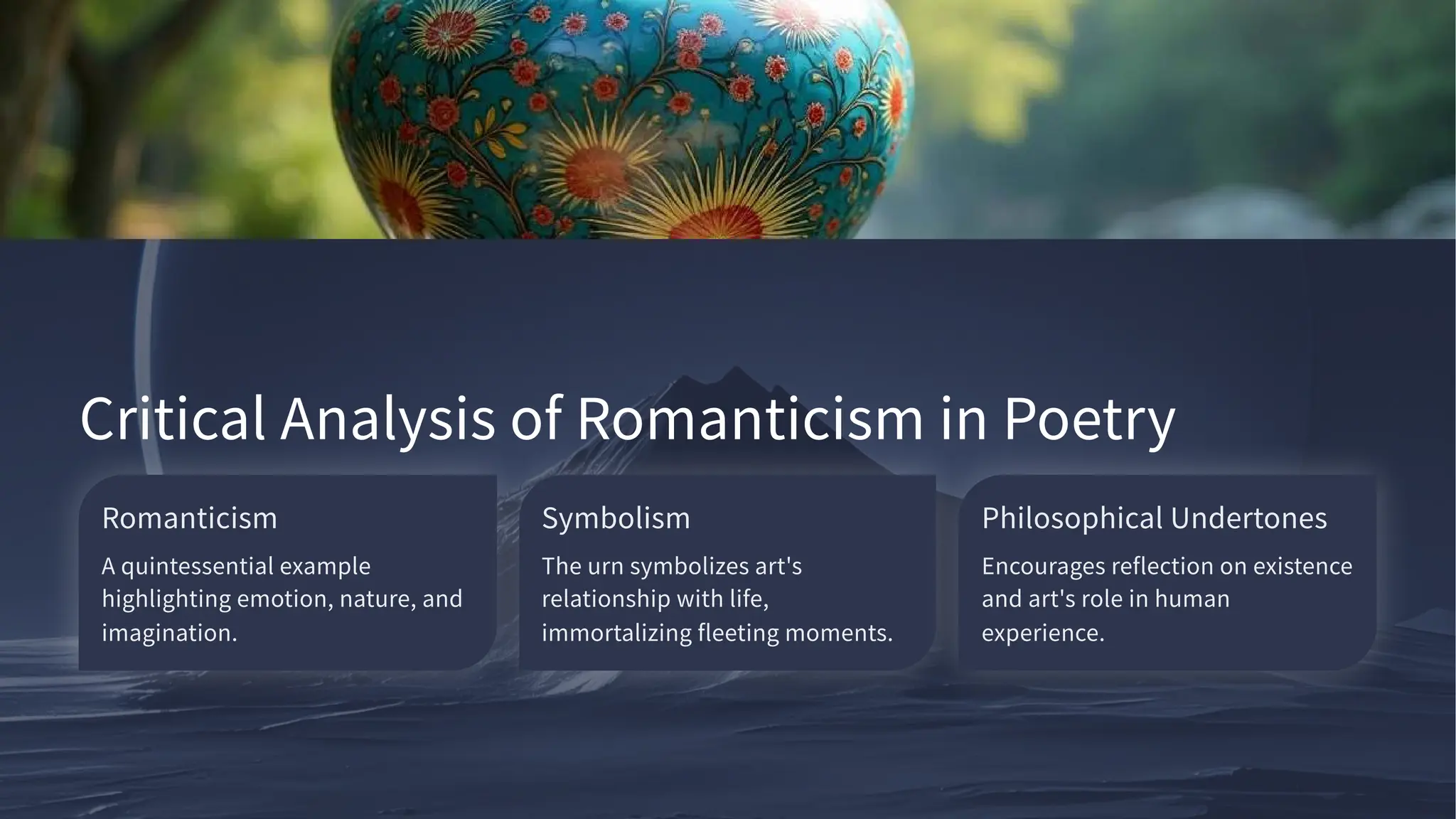
The urn symbolizes art's
relationship with life,
immortalizing fleeting moments.
Philosophical Undertones
Encourages reflection on existence
and art's role in human
experience.
6.
Significance of Odeon a Grecian Urn
Enduring Relevance
It explores universal themes
like beauty, desire, and the
fate of art in life.
Encouragement to Reflect
The poem promotes admiration
for art and introspection on the
human condition.
Artistic Legacy
Keats's work influences
contemporary poets and artists,
showcasing art's timeless
essence.
7.
Further Reading
John Keats’sLife
Understanding Keats’s biography provides insight into his
inspirations and struggles as a poet, particularly his experiences of
loss and love.
Context of the Poem
Exploring the historical and cultural context of the early th century
can enhance appreciation for the themes and significance of the
poem.
Comparative Analysis
Comparing 'Ode on a Grecian Urn' with other Romantic poetry, such
as works by Wordsworth or Shelley, reveals shared themes and
stylistic differences.