Claudia Chavez

                                                                                                             Math 301A, PDC

                                                                                                                    Explorations

                                                                                                               11 March 2011

                                Exploration: Difference Patterns (Page 147)

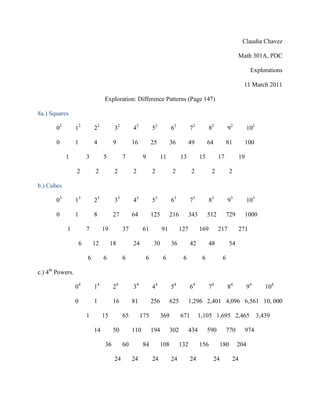
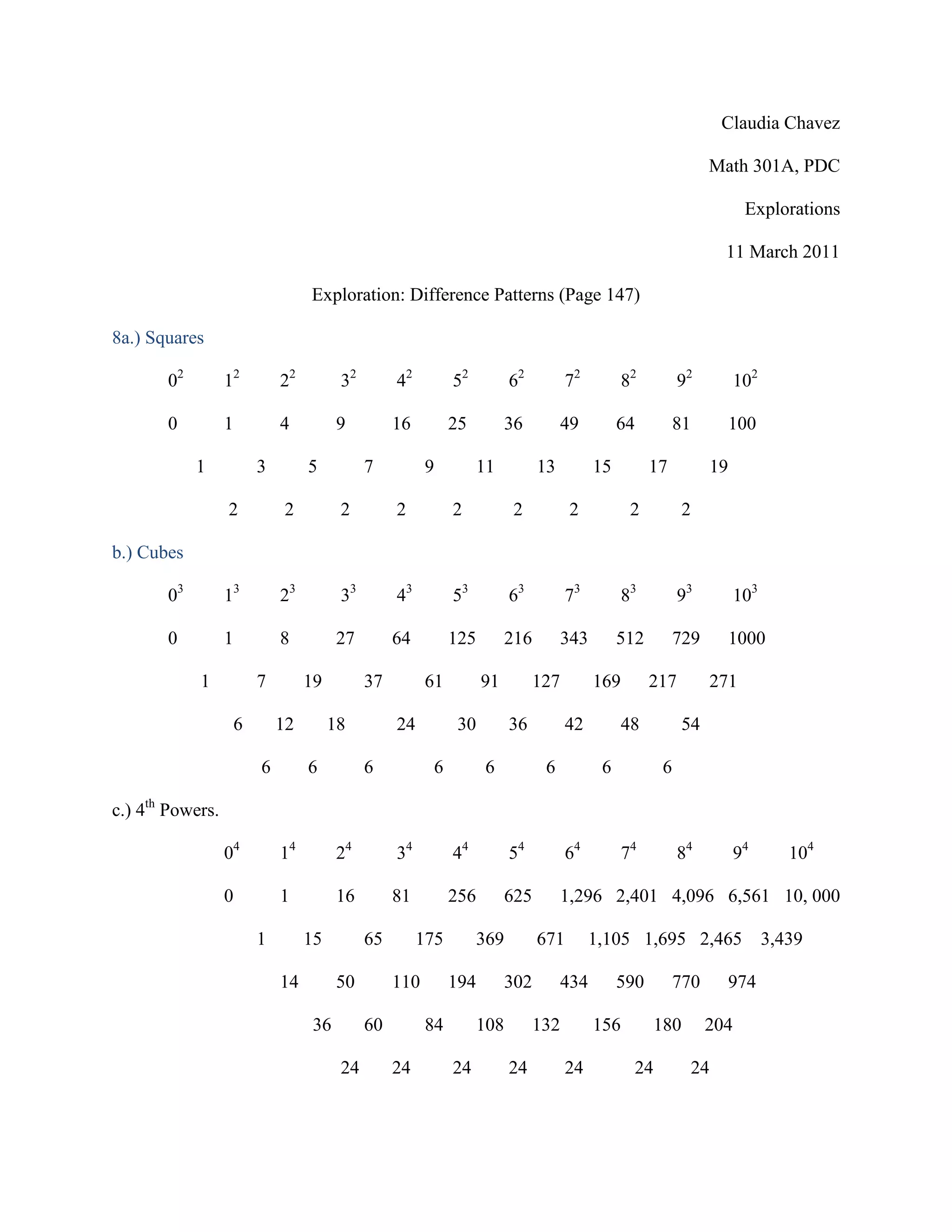
8a.) Squares

       02         12       22         32        42         52         62          72         82         92         102

       0          1        4          9         16         25         36         49         64         81         100

            1          3        5          7          9         11          13         15         17         19

                  2         2         2         2          2           2          2           2         2

b.) Cubes

       03         13       23         33        43         53         63          73         83         93         103

       0          1        8          27        64         125        216        343        512        729        1000

            1          7        19         37         61         91        127         169        217        271

                   6       12        18         24          30        36         42         48          54

                       6        6          6          6          6          6           6          6

c.) 4th Powers.

                  04       14         24        34         44         54          64         74         84         94       104

                  0        1          16        81         256        625        1,296 2,401 4,096 6,561 10, 000

                       1        15         65        175        369         671        1,105 1,695 2,465                 3,439

                           14         50        110        194        302        434        590        770        974

                                 36        60         84        108        132         156        180        204

                                      24        24         24         24          24          24         24
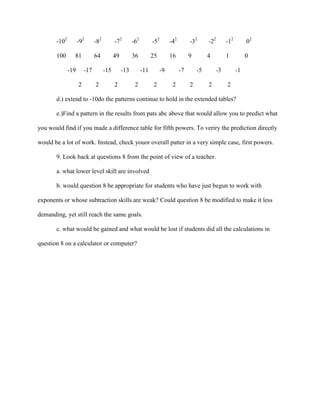
-102         -92       -82         -72        -62         -52       -42        -32      -22      -12        02

       100      81            64          49         36          25        16         9        4        1          0

              -19       -17         -15        -13         -11        -9         -7       -5       -3         -1

                    2         2           2           2           2         2         2        2        2

       d.) extend to -10do the patterns continue to hold in the extended tables?

       e.)Find a pattern in the results from pats abc above that would allow you to predict what

you would find if you made a difference table for fifth powers. To veriry the prediction directly

would be a lot of work. Instead, check youor overall patter in a very simple case, first powers.

       9. Look back at questions 8 from the point of view of a teacher.

       a. what lower level skill are involved

       b. would question 8 be appropriate for students who have just begun to work with

exponents or whose subtraction skills are weak? Could question 8 be modified to make it less

demanding, yet still reach the same goals.

       c. what would be gained and what would be lost if students did all the calculations in

question 8 on a calculator or computer?

Explorations difference powers

  • 1.
    Claudia Chavez Math 301A, PDC Explorations 11 March 2011 Exploration: Difference Patterns (Page 147) 8a.) Squares 02 12 22 32 42 52 62 72 82 92 102 0 1 4 9 16 25 36 49 64 81 100 1 3 5 7 9 11 13 15 17 19 2 2 2 2 2 2 2 2 2 b.) Cubes 03 13 23 33 43 53 63 73 83 93 103 0 1 8 27 64 125 216 343 512 729 1000 1 7 19 37 61 91 127 169 217 271 6 12 18 24 30 36 42 48 54 6 6 6 6 6 6 6 6 c.) 4th Powers. 04 14 24 34 44 54 64 74 84 94 104 0 1 16 81 256 625 1,296 2,401 4,096 6,561 10, 000 1 15 65 175 369 671 1,105 1,695 2,465 3,439 14 50 110 194 302 434 590 770 974 36 60 84 108 132 156 180 204 24 24 24 24 24 24 24
  • 2.
    -102 -92 -82 -72 -62 -52 -42 -32 -22 -12 02 100 81 64 49 36 25 16 9 4 1 0 -19 -17 -15 -13 -11 -9 -7 -5 -3 -1 2 2 2 2 2 2 2 2 2 d.) extend to -10do the patterns continue to hold in the extended tables? e.)Find a pattern in the results from pats abc above that would allow you to predict what you would find if you made a difference table for fifth powers. To veriry the prediction directly would be a lot of work. Instead, check youor overall patter in a very simple case, first powers. 9. Look back at questions 8 from the point of view of a teacher. a. what lower level skill are involved b. would question 8 be appropriate for students who have just begun to work with exponents or whose subtraction skills are weak? Could question 8 be modified to make it less demanding, yet still reach the same goals. c. what would be gained and what would be lost if students did all the calculations in question 8 on a calculator or computer?