EXERCISE PROGRESSION
AND REGRESSION
EXERCISE PROGRESSION AND
REGRESSION
1. Different methods of progression
and regression that you can use
2. When to progress and when to
regress
3. How progression and regressions fit
into a system
EXERCISE PROGRESSION AND
REGRESSION
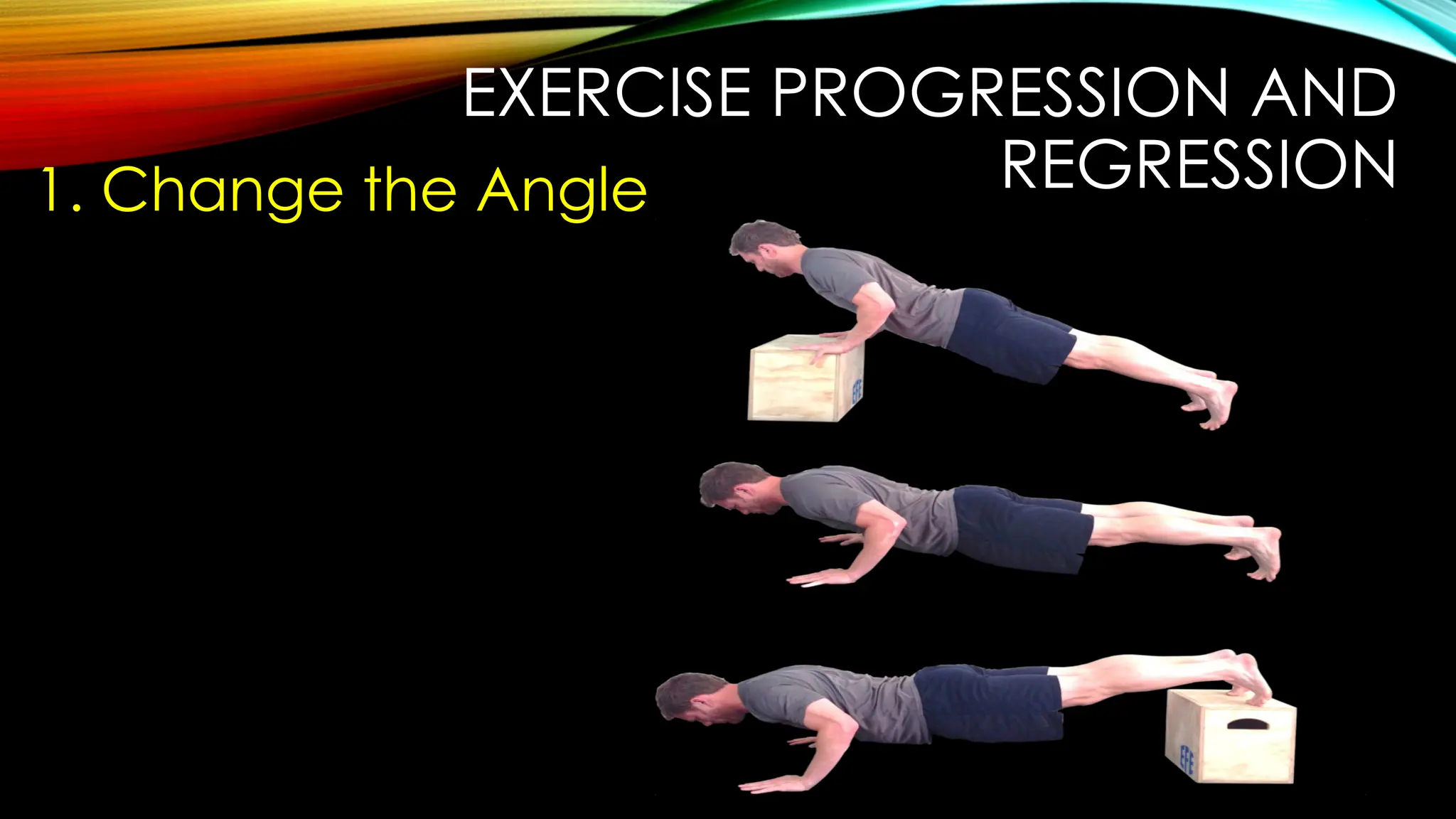
1. Change the Angle
A. Change the angle entails moving the
position of your hands or feet to make an
exercise more or less challenging.
B. This type of progression is limited to
mostly bodyweight based work.
EXERCISE PROGRESSION AND
REGRESSION
1. Change the Angle
Horizontal Pushing – Push-Ups
Horizontal Pulling – Bodyweight rows
Hinging – Bridging
EXERCISE PROGRESSION AND
REGRESSION
1. Change the Angle
EXERCISE PROGRESSION AND
REGRESSION
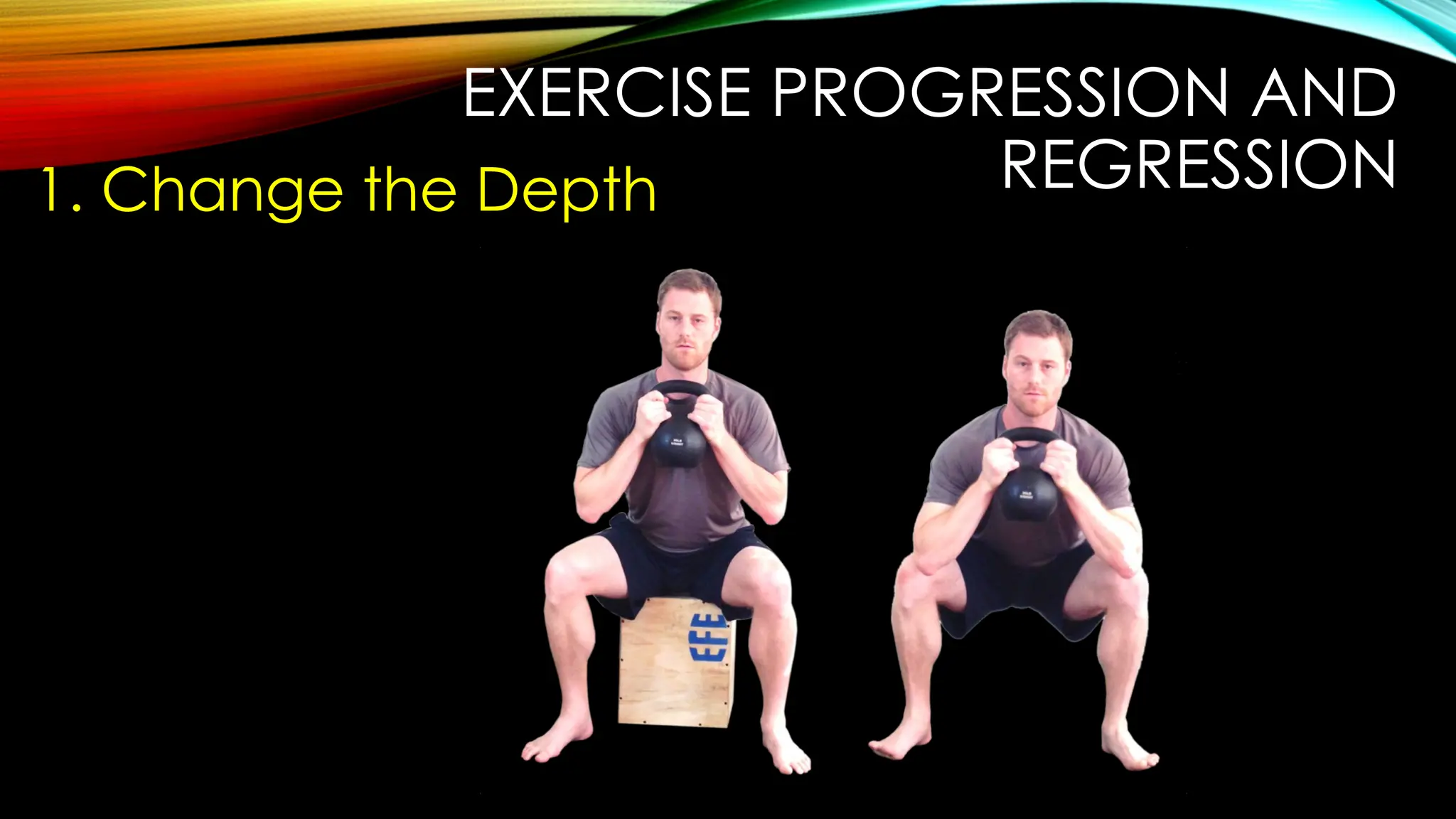
1. Change the Depth
Instead of taking an exercise through
its full range of motion or full depth,
you are limiting it.
EXERCISE PROGRESSION AND
REGRESSION
1. Change the Depth
Split Stance – Split Squat
Single Leg – Step Up
Squat – Squat
Hinge – RDL
EXERCISE PROGRESSION AND
REGRESSION
1. Change the Depth
EXERCISE PROGRESSION AND
REGRESSION
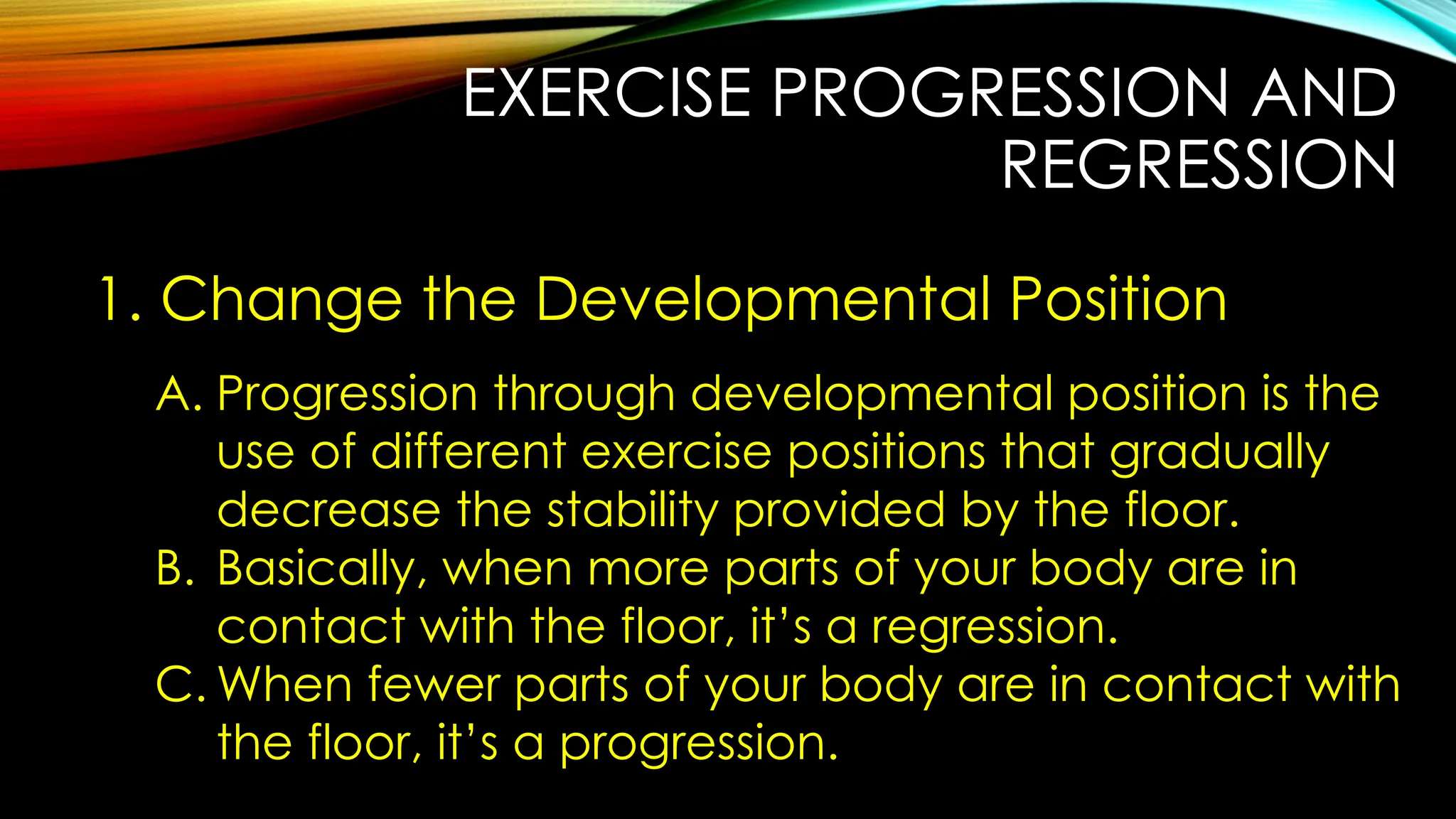
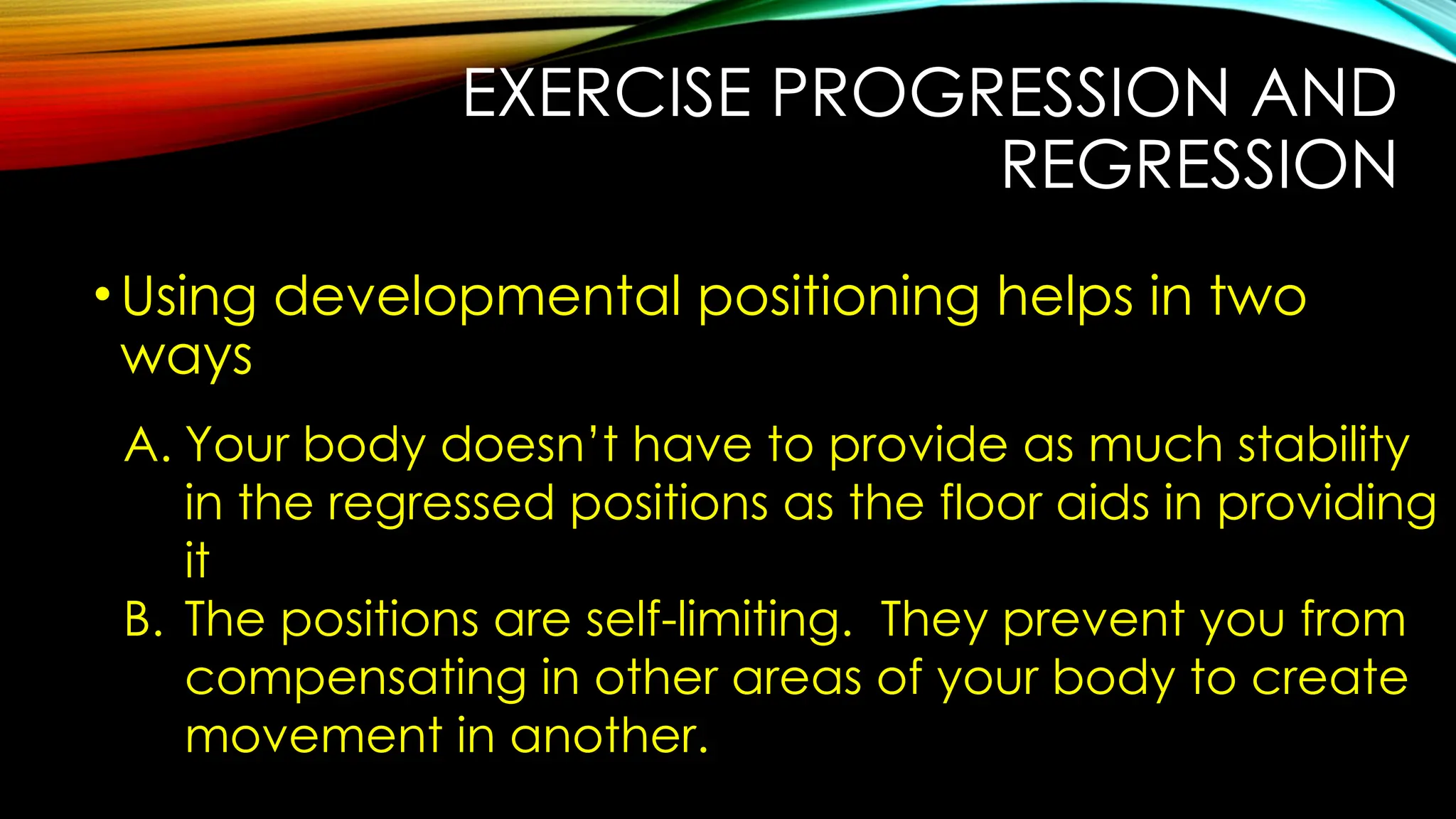
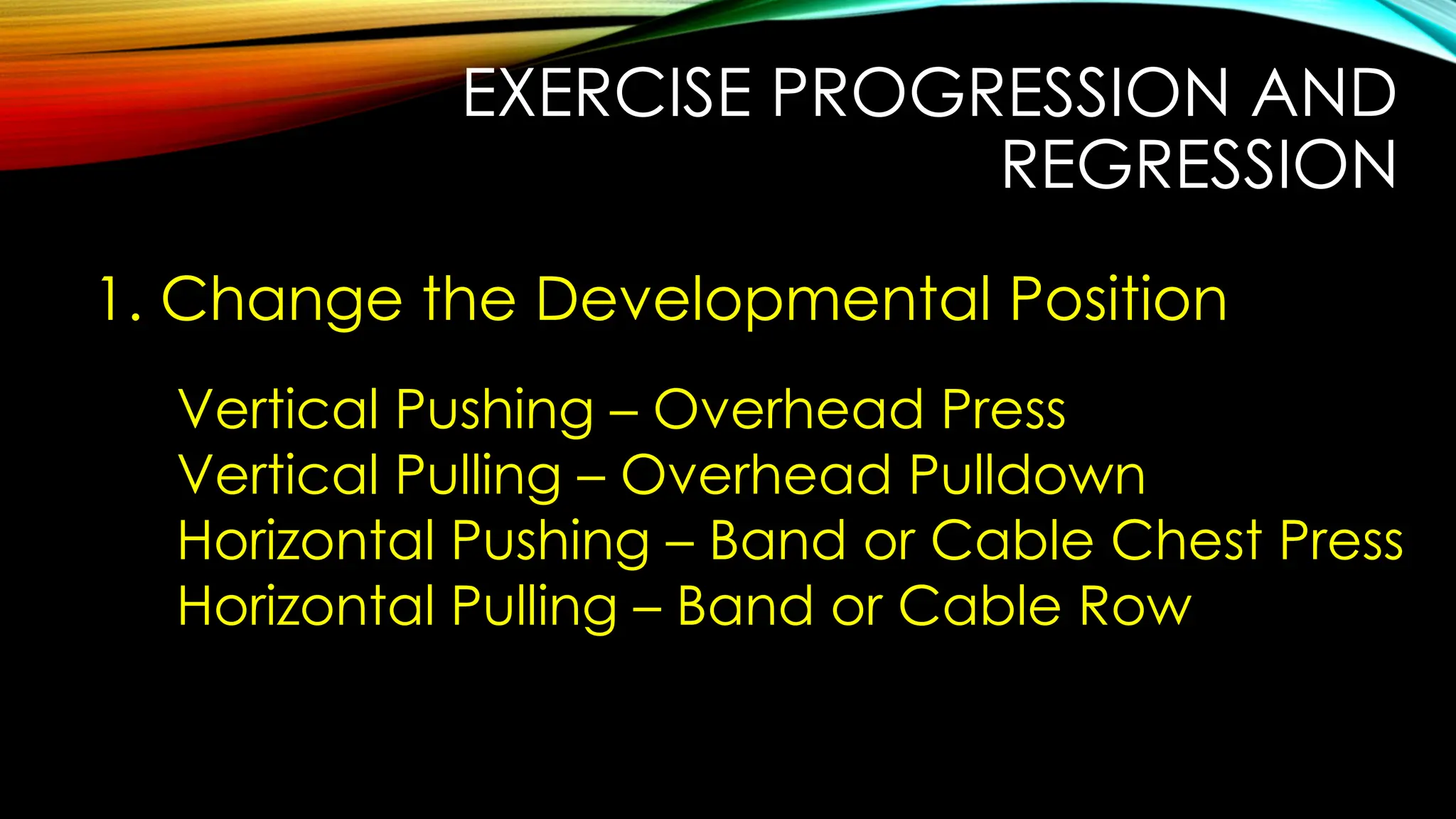
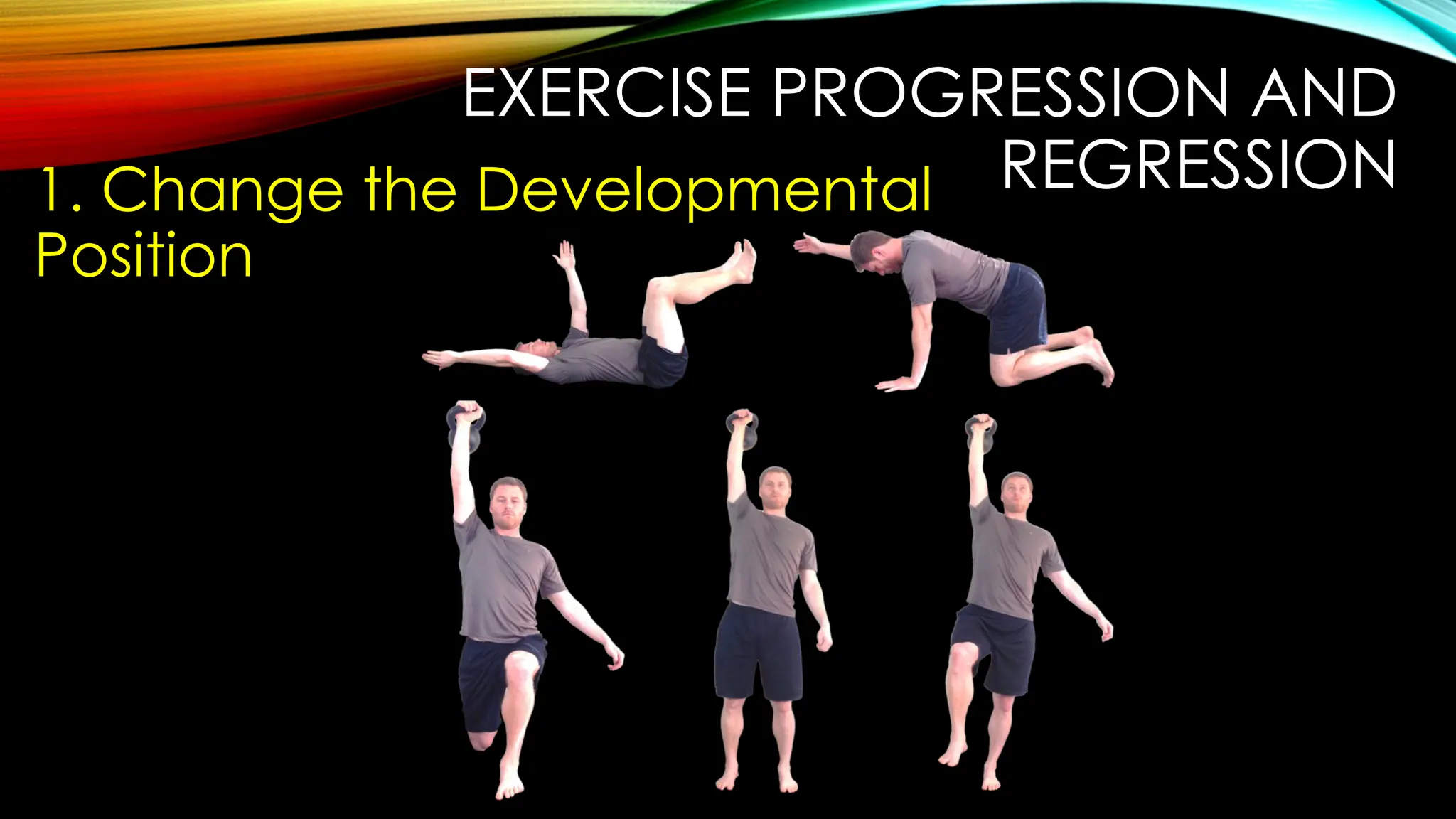
1. Change the Developmental Position
A. Progression through developmental position is the
use of different exercise positions that gradually
decrease the stability provided by the floor.
B. Basically, when more parts of your body are in
contact with the floor, it’s a regression.
C. When fewer parts of your body are in contact with
the floor, it’s a progression.
EXERCISE PROGRESSION AND
REGRESSION
•Using developmental positioning helps in two
ways
A. Your body doesn’t have to provide as much stability
in the regressed positions as the floor aids in providing
it
B. The positions are self-limiting. They prevent you from
compensating in other areas of your body to create
movement in another.
EXERCISE PROGRESSION AND
REGRESSION
1. Change the Developmental Position
Vertical Pushing – Overhead Press
Vertical Pulling – Overhead Pulldown
Horizontal Pushing – Band or Cable Chest Press
Horizontal Pulling – Band or Cable Row
EXERCISE PROGRESSION AND
REGRESSION
1. Change the Developmental
Position
EXERCISE PROGRESSION AND
REGRESSION
1. Change the Position of the Load
Changing the position of the load is adjusting
where the weight or resistance is placed in an
exercise to add or take away a stability
demand.
EXERCISE PROGRESSION AND
REGRESSION
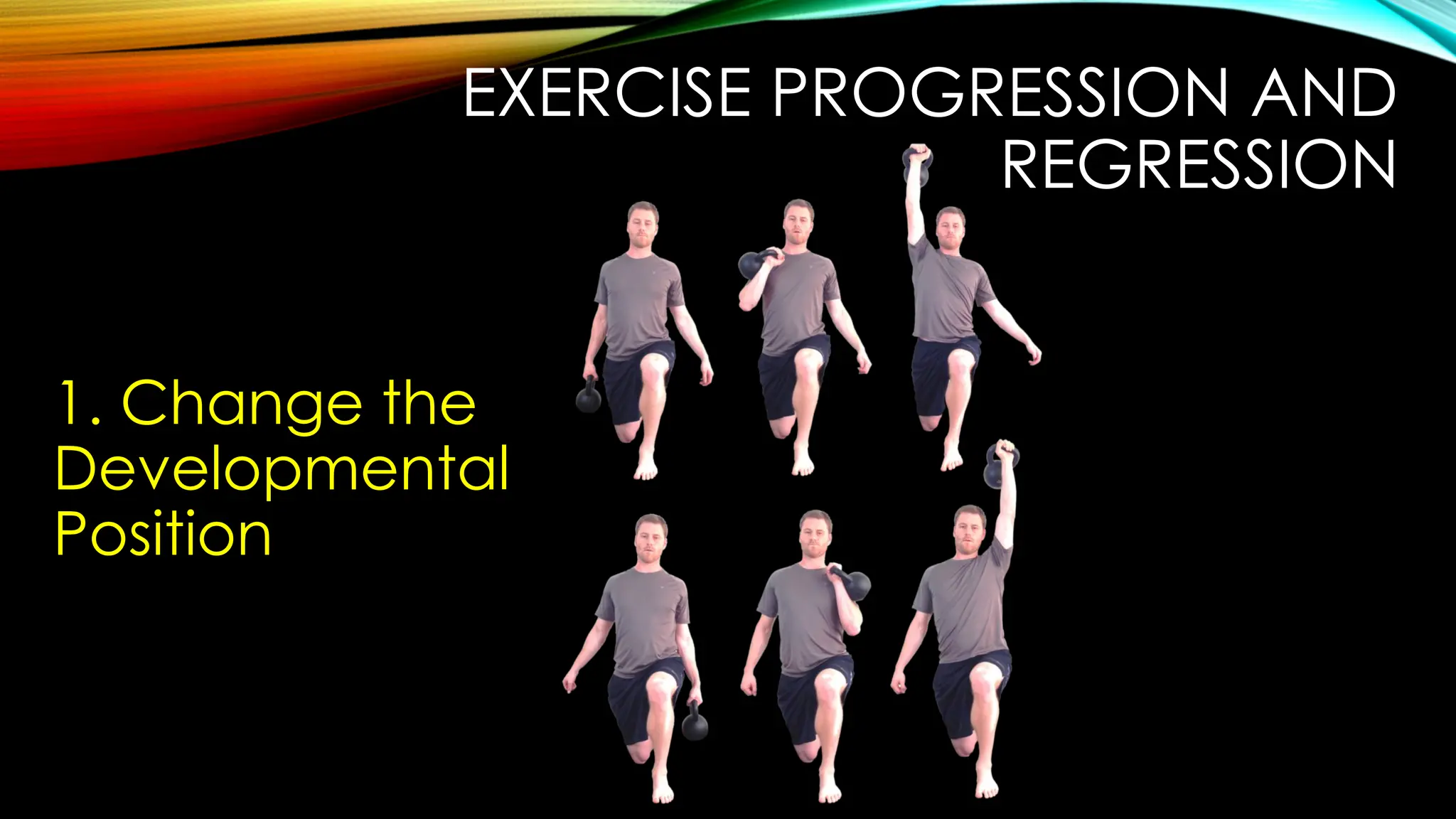
Taking things a step further, positioning
of load can also fall into 4 categories;
A. Ipsilateral is loading the same leg and arm.
B. Contralateral is loading the opposite leg and arm.
C. Homolateral is loading both legs and a single arm or loading
both arms and a single leg.
D. Bilateral is loading both legs and both arms, which we
commonly associate with barbell training.
EXERCISE PROGRESSION AND
REGRESSION
1. Change the Developmental Position
Split Stance – Split Squat
Vertical Pressing – Overhead Press
Single Leg – Single Leg RDL
EXERCISE PROGRESSION AND
REGRESSION
1. Change the
Developmental
Position

Exercise Progression and Regression.pptx