Introduction
This presentation coversthe key concepts of exception handling, its
types, and the importance of effectively managing exceptions in software
development.
What is an
Exception
Anexception is an event disrupting program flow, typically caused by
errors during execution. It requires special processing to maintain
software stability.
5.
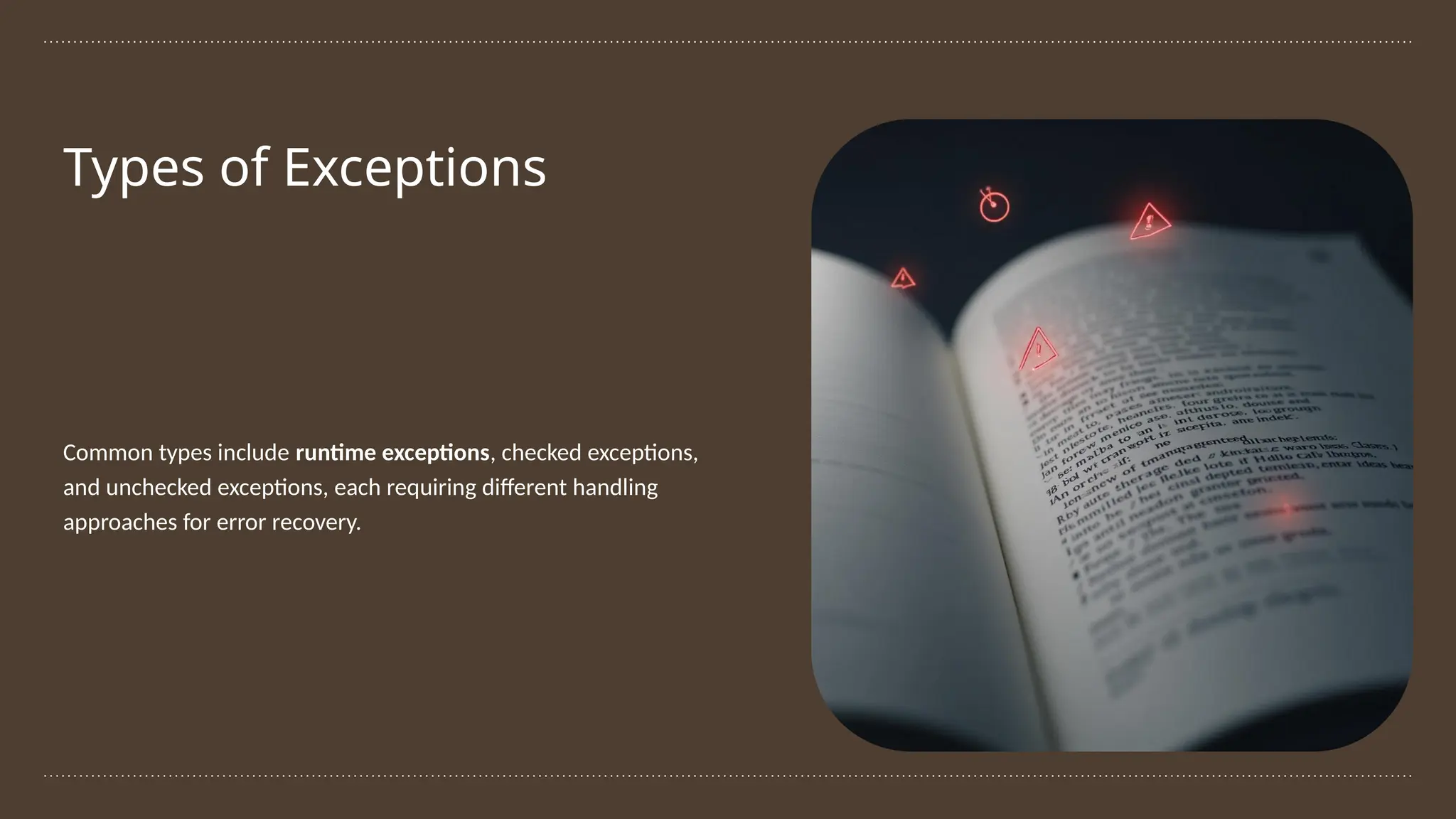
Types of Exceptions
Commontypes include runtime exceptions, checked exceptions,
and unchecked exceptions, each requiring different handling
approaches for error recovery.
6.
What is an
Error
Anerror is a serious issue in a program typically caused by external factors
or resource limitations. Unlike exceptions, errors are usually not
recoverable during normal execution.
Difference Between
Error and
Exception
Errorsrepresent severe problems outside a program’s control, while
exceptions are manageable events signaling unusual conditions requiring
specific handling.
9.
How to Handle
Exceptions
Exceptionhandling involves using constructs like try-catch blocks to detect
and resolve issues gracefully, ensuring program stability and continuity.
10.
Need for Handling
Exceptions
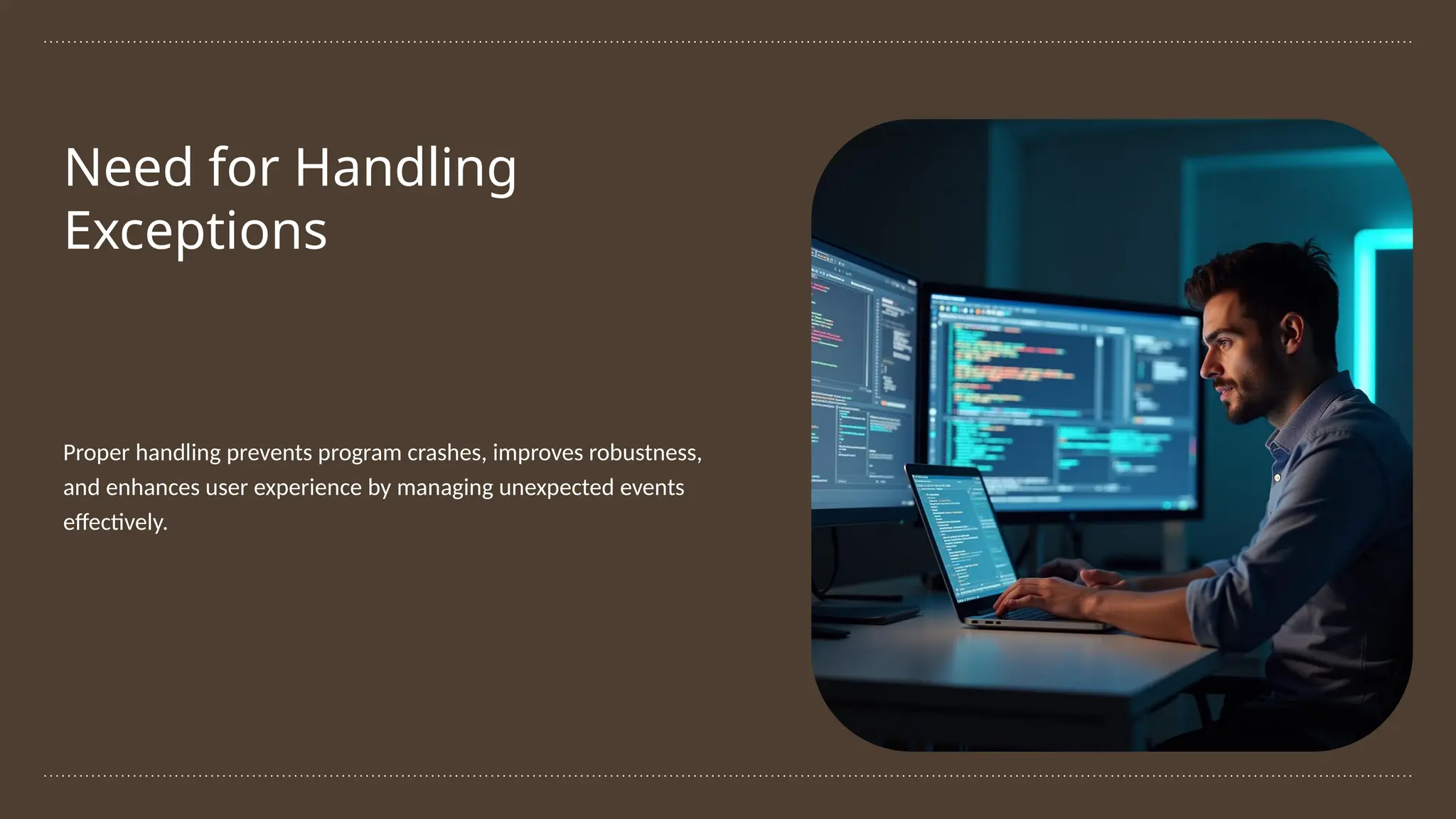
Properhandling prevents program crashes, improves robustness,
and enhances user experience by managing unexpected events
effectively.
11.
Conclusions
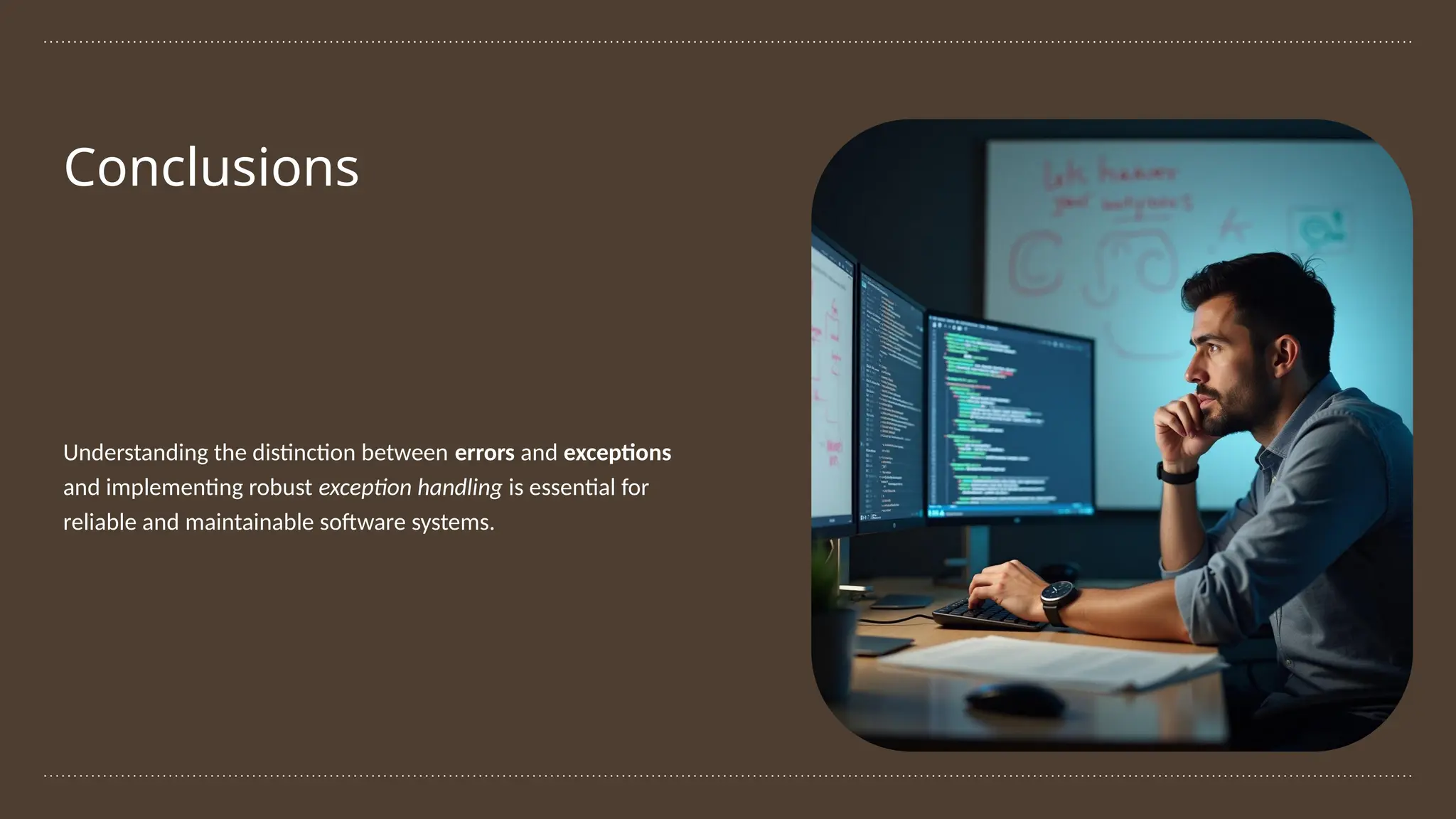
Understanding the distinctionbetween errors and exceptions
and implementing robust exception handling is essential for
reliable and maintainable software systems.
12.
CREDITS: This presentationtemplate was created by Slidesgo, and
includes icons, infographics & images by Freepik
THANK YOU
Do you have any questions?
youremail@freepik.com
+00 000 000 000
yourwebsite.com
Please keep this slide for attribution