ART 221 Exam Two Review
Here are a sample of slides from the second
portion of the course. Use these to help you
review the terms and concepts from class
discussion and the readings.

The format of the second exam will be similar
to the first, asking you to identify artworks by
culture and discuss them by type, function, or
materials.
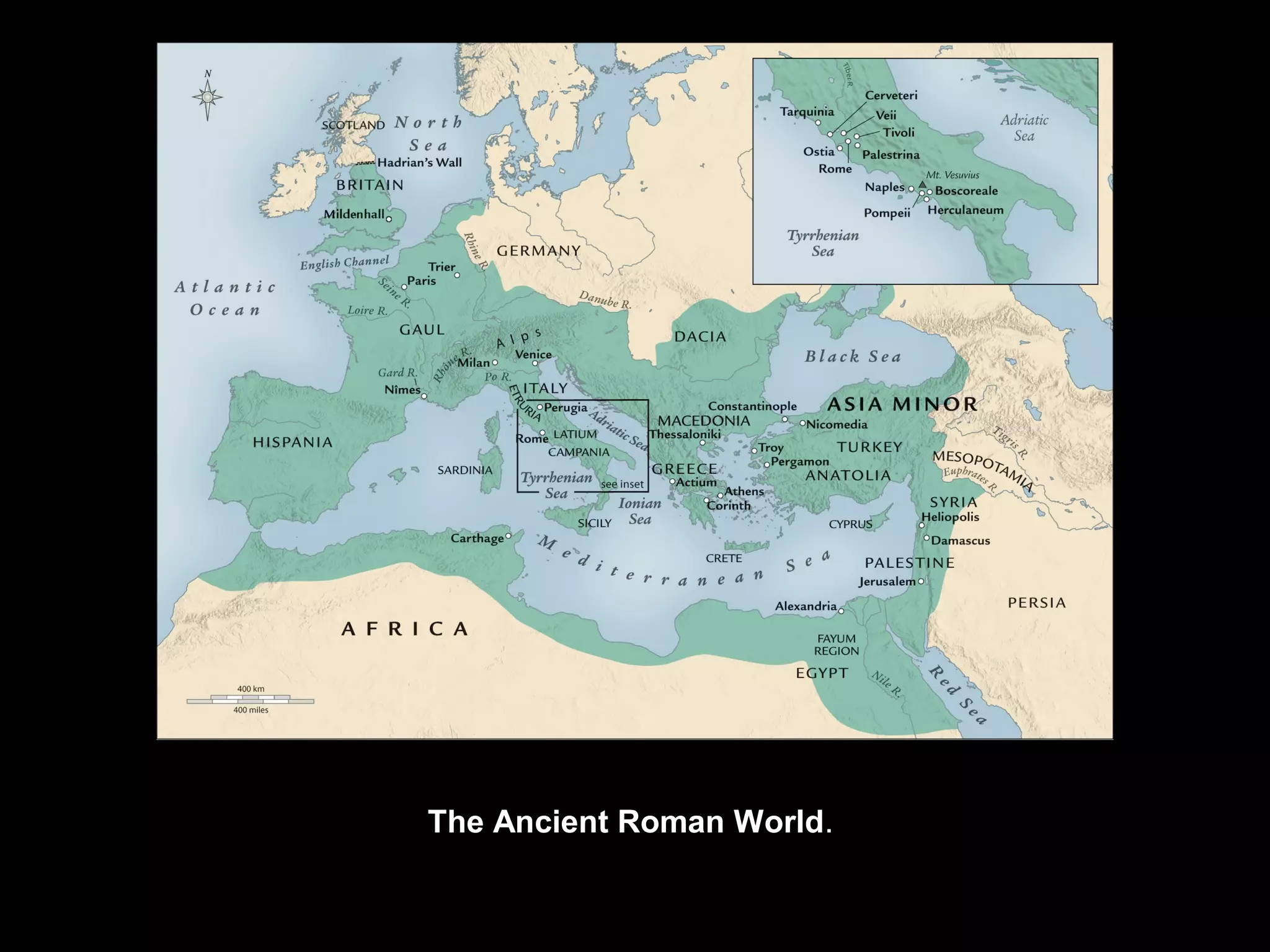
The Ancient Roman World.
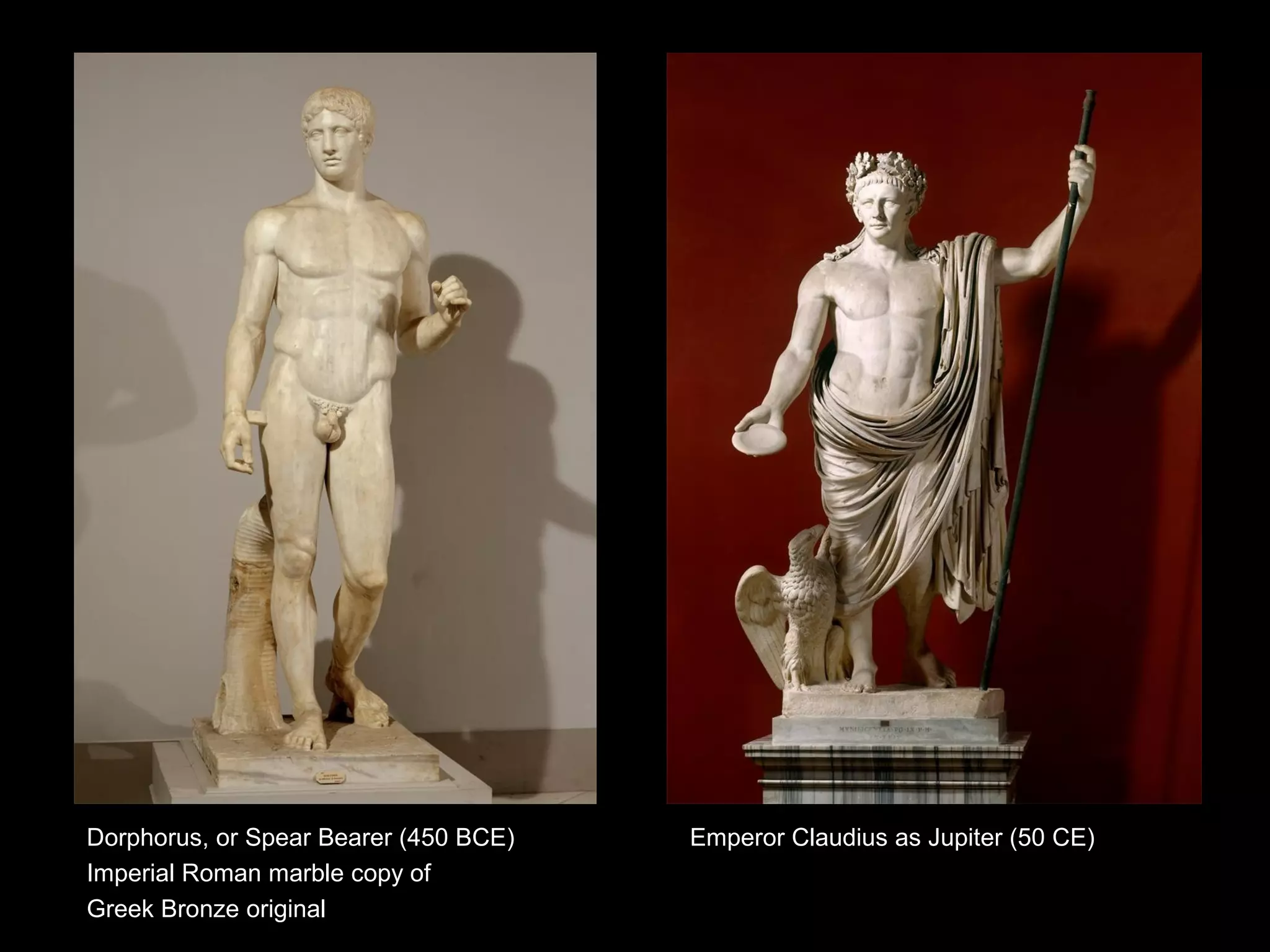
Dorphorus, or Spear Bearer (450 BCE)   Emperor Claudius as Jupiter (50 CE)
Imperial Roman marble copy of
Greek Bronze original
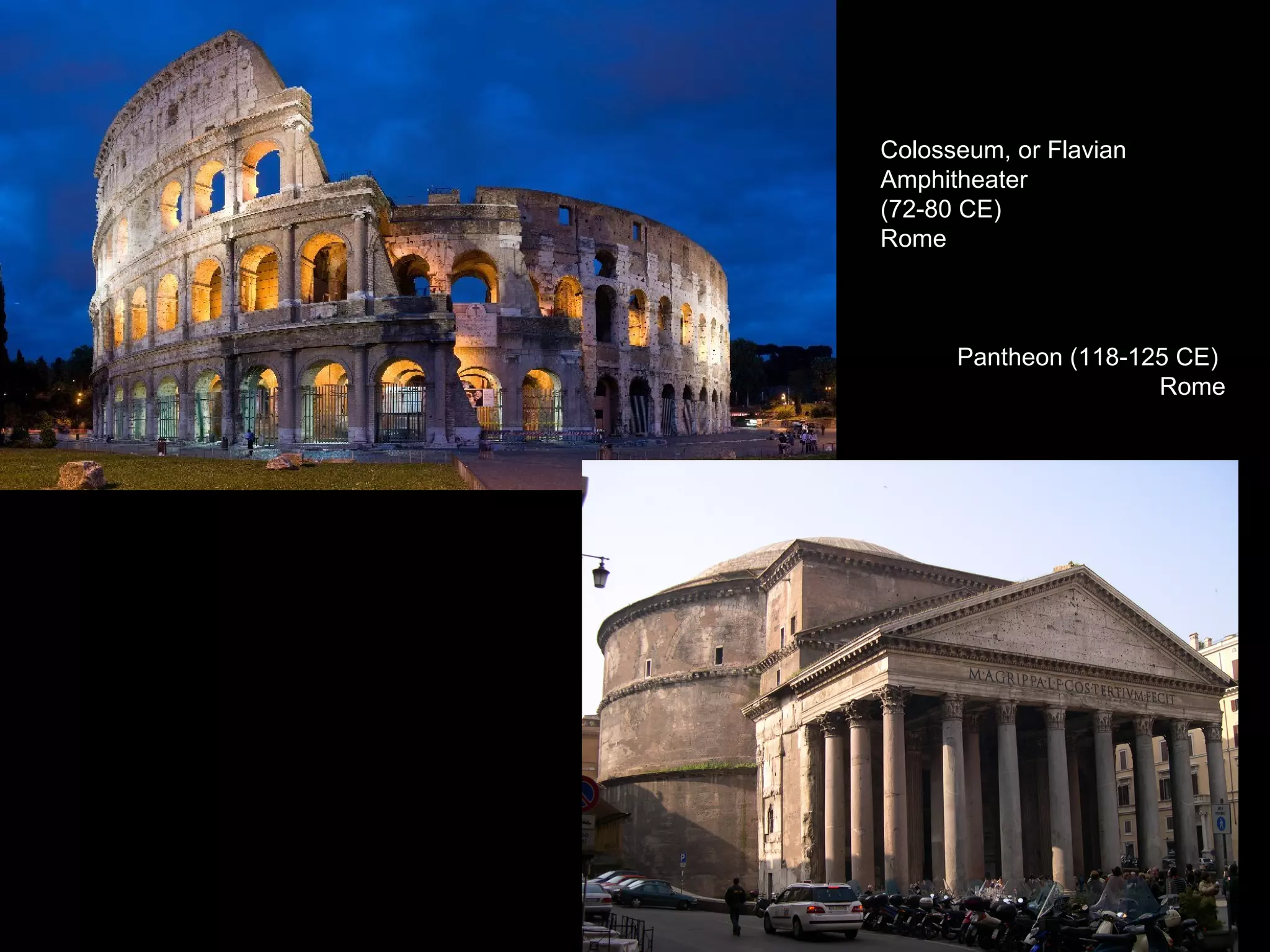
Colosseum, or Flavian
Amphitheater
(72-80 CE)
Rome


      Pantheon (118-125 CE)
                      Rome
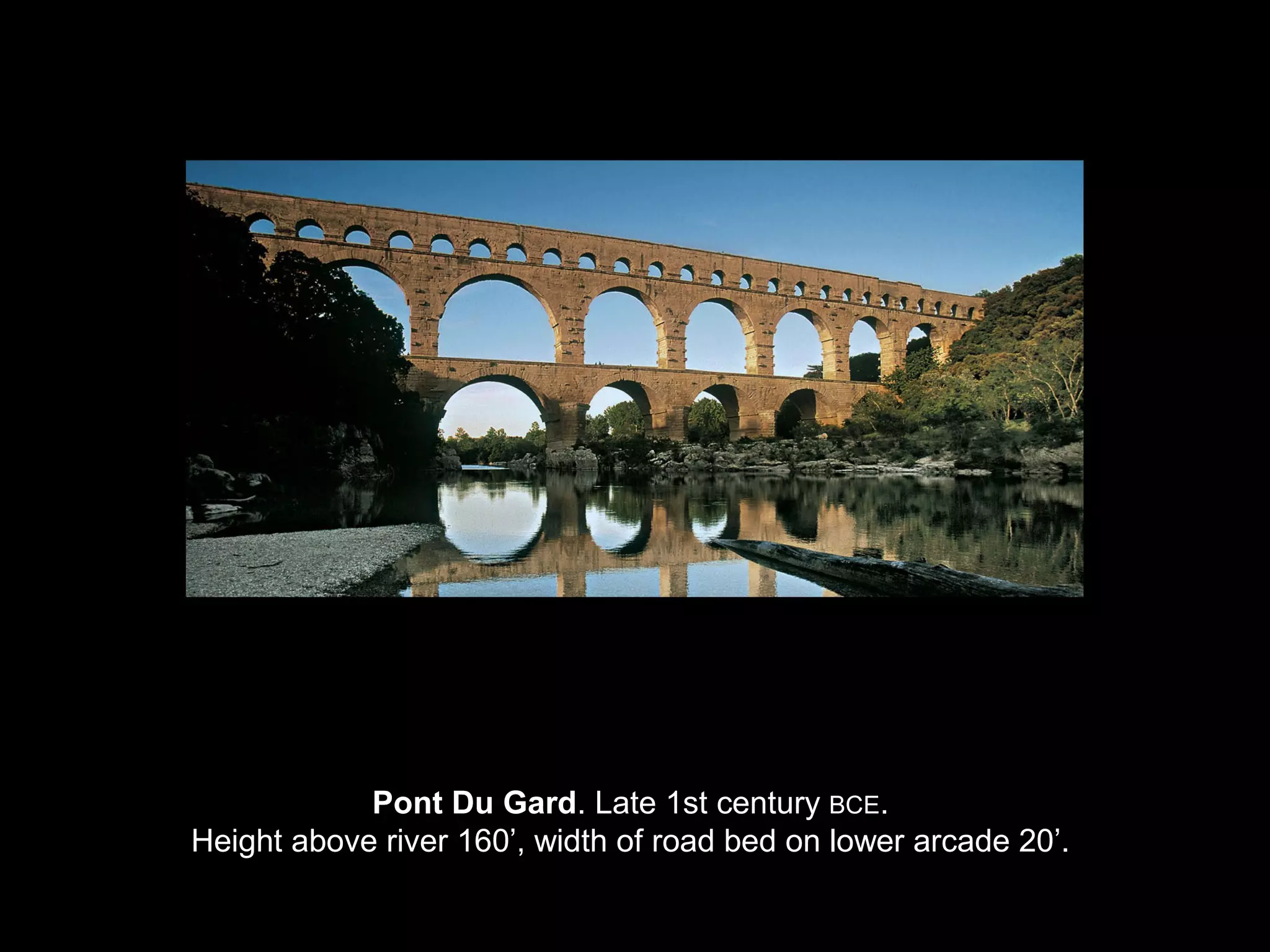
Pont Du Gard. Late 1st century BCE.
Height above river 160’, width of road bed on lower arcade 20’.
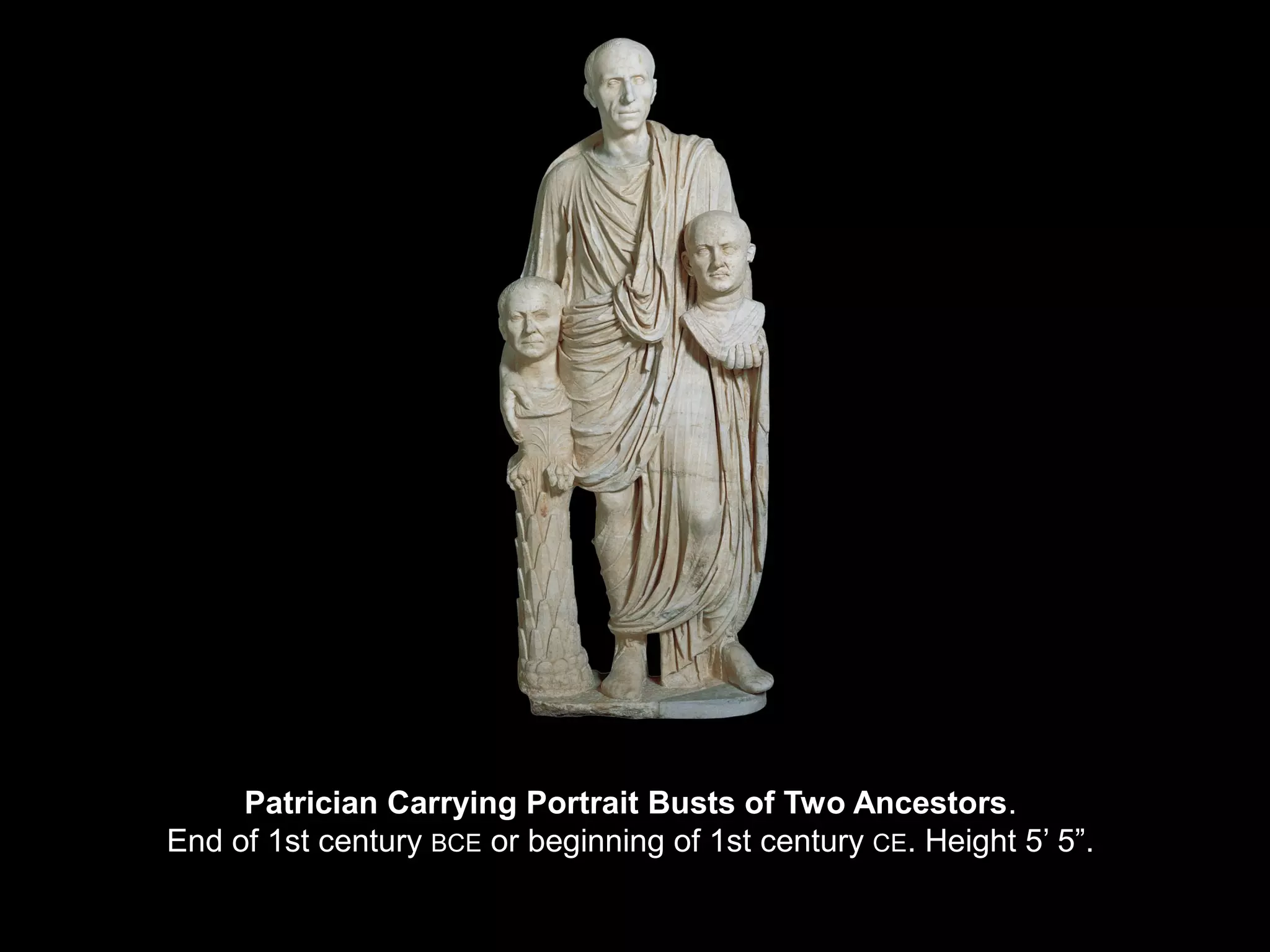
Patrician Carrying Portrait Busts of Two Ancestors.
End of 1st century BCE or beginning of 1st century CE. Height 5’ 5”.
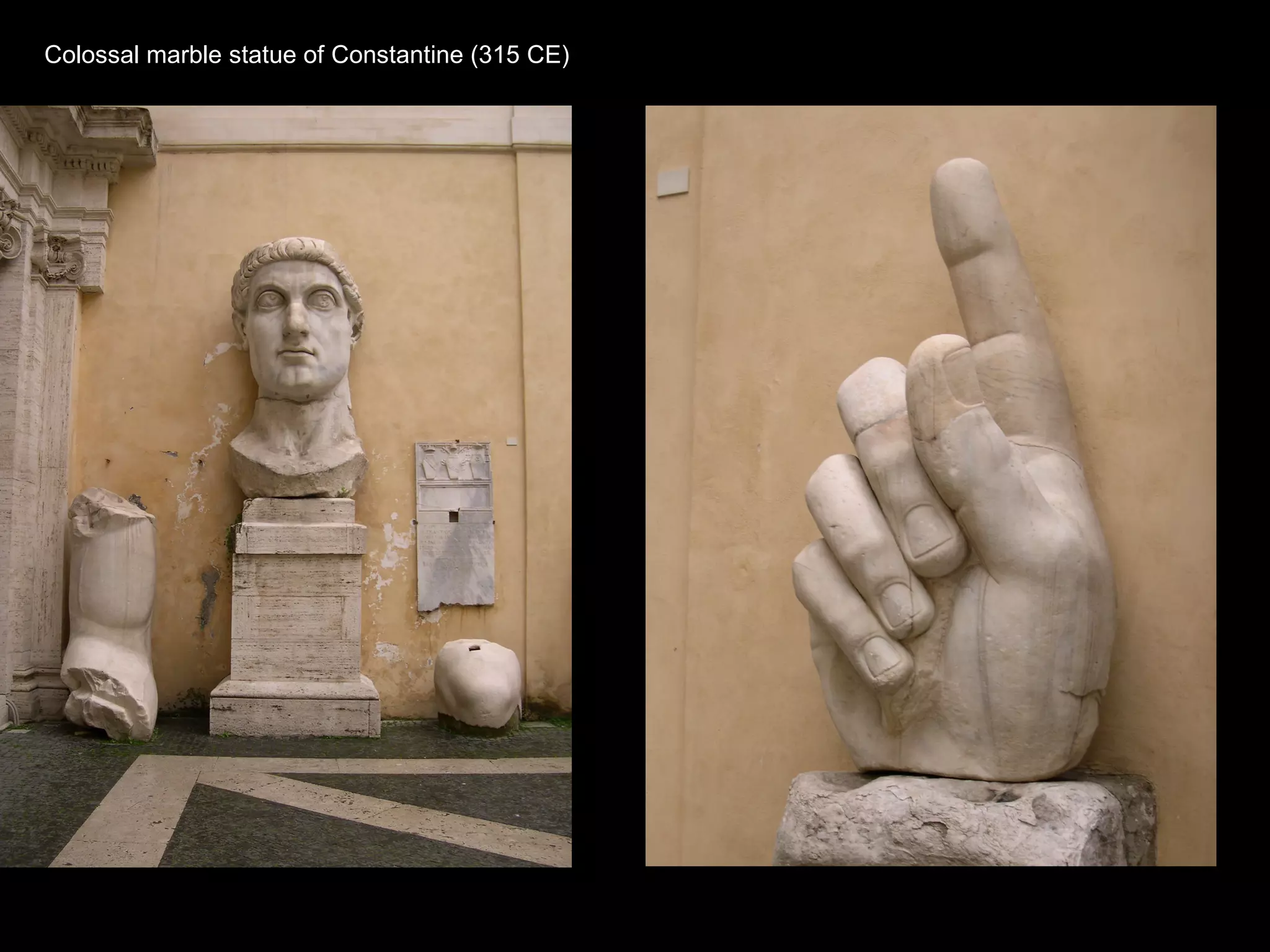
Colossal marble statue of Constantine (315 CE)
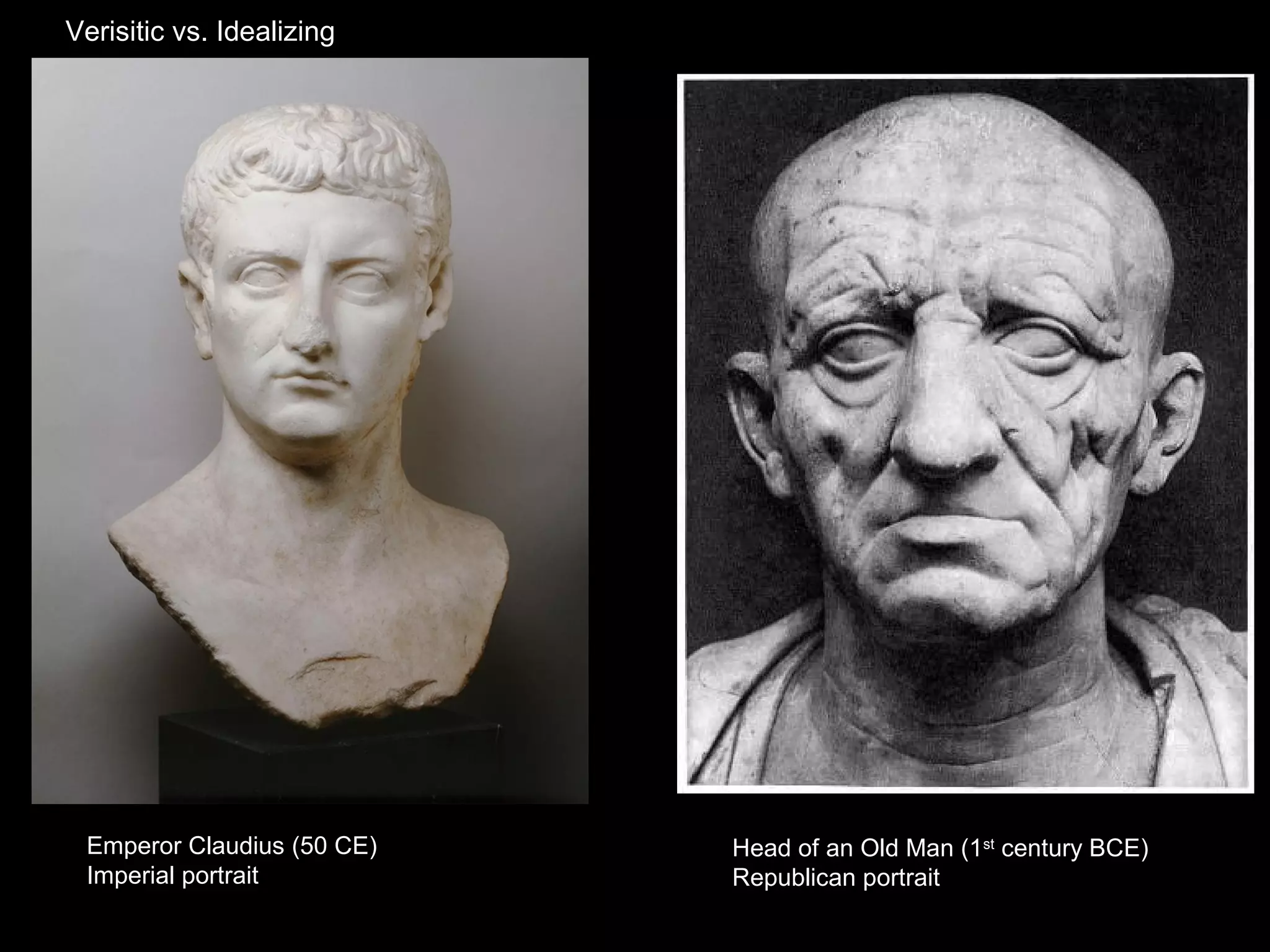
Verisitic vs. Idealizing


 Emperor Claudius (50 CE)   Head of an Old Man (1st century BCE)
 Imperial portrait          Republican portrait
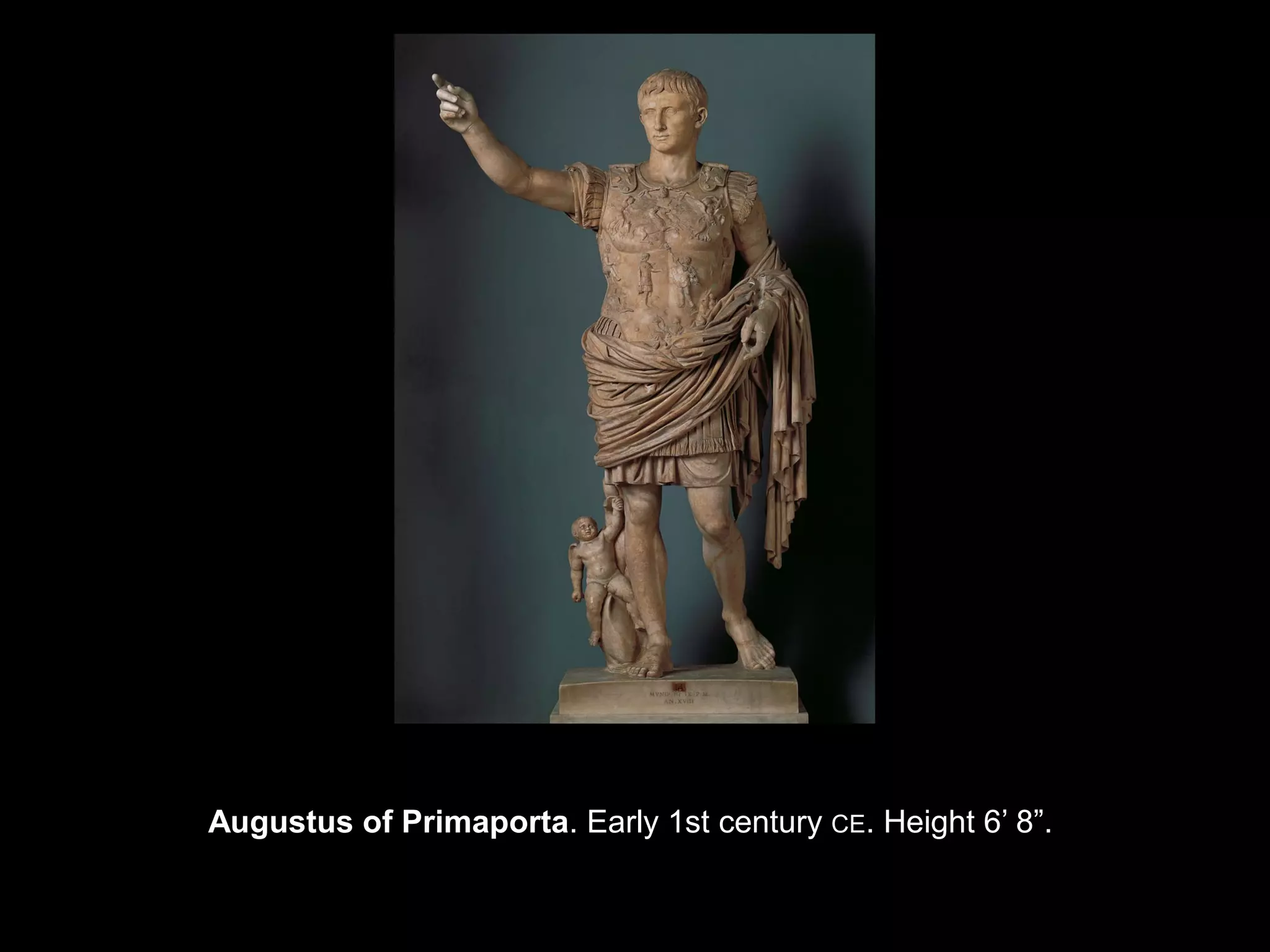
Augustus of Primaporta. Early 1st century CE. Height 6’ 8”.
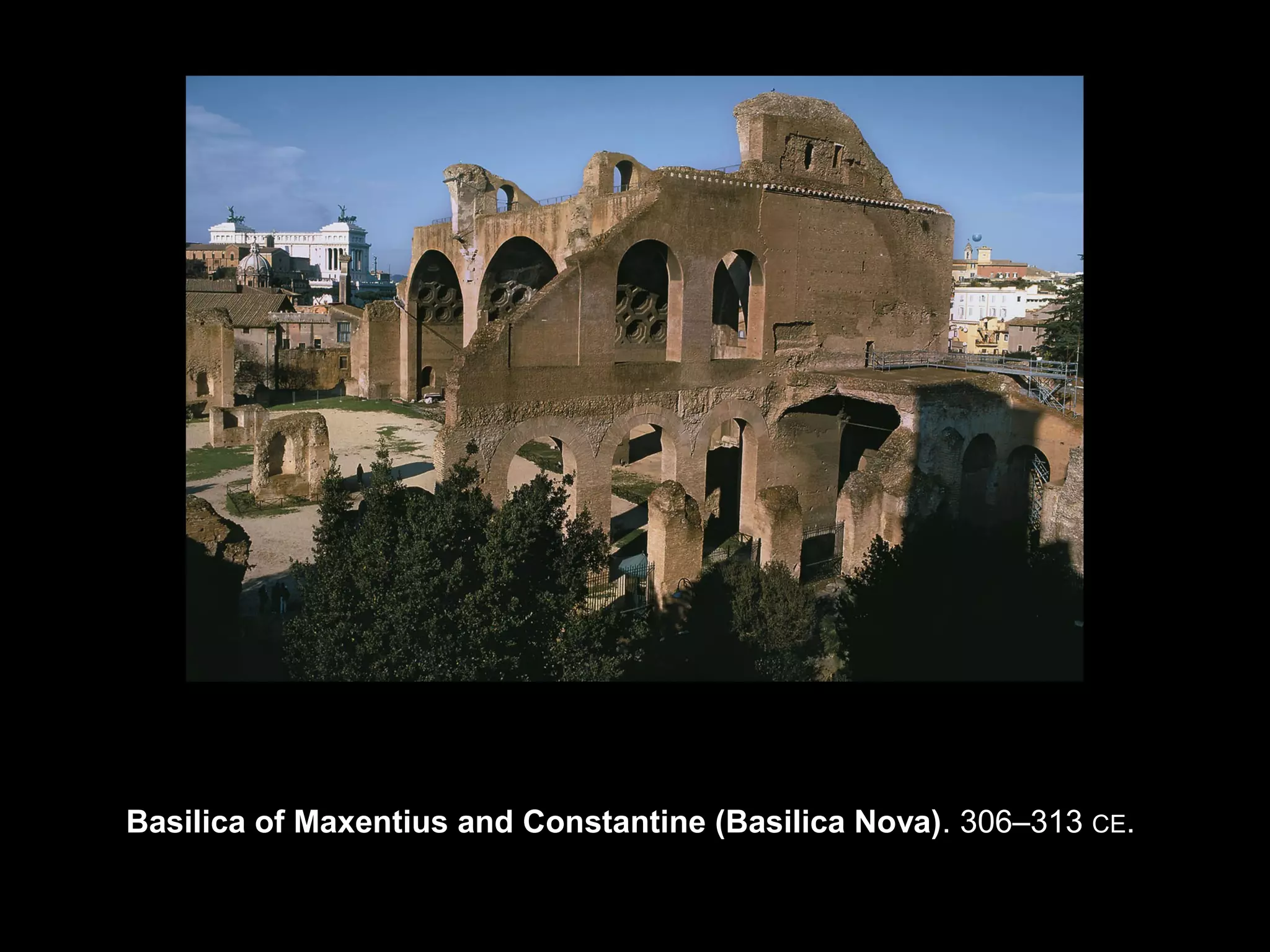
Basilica of Maxentius and Constantine (Basilica Nova). 306–313 CE.
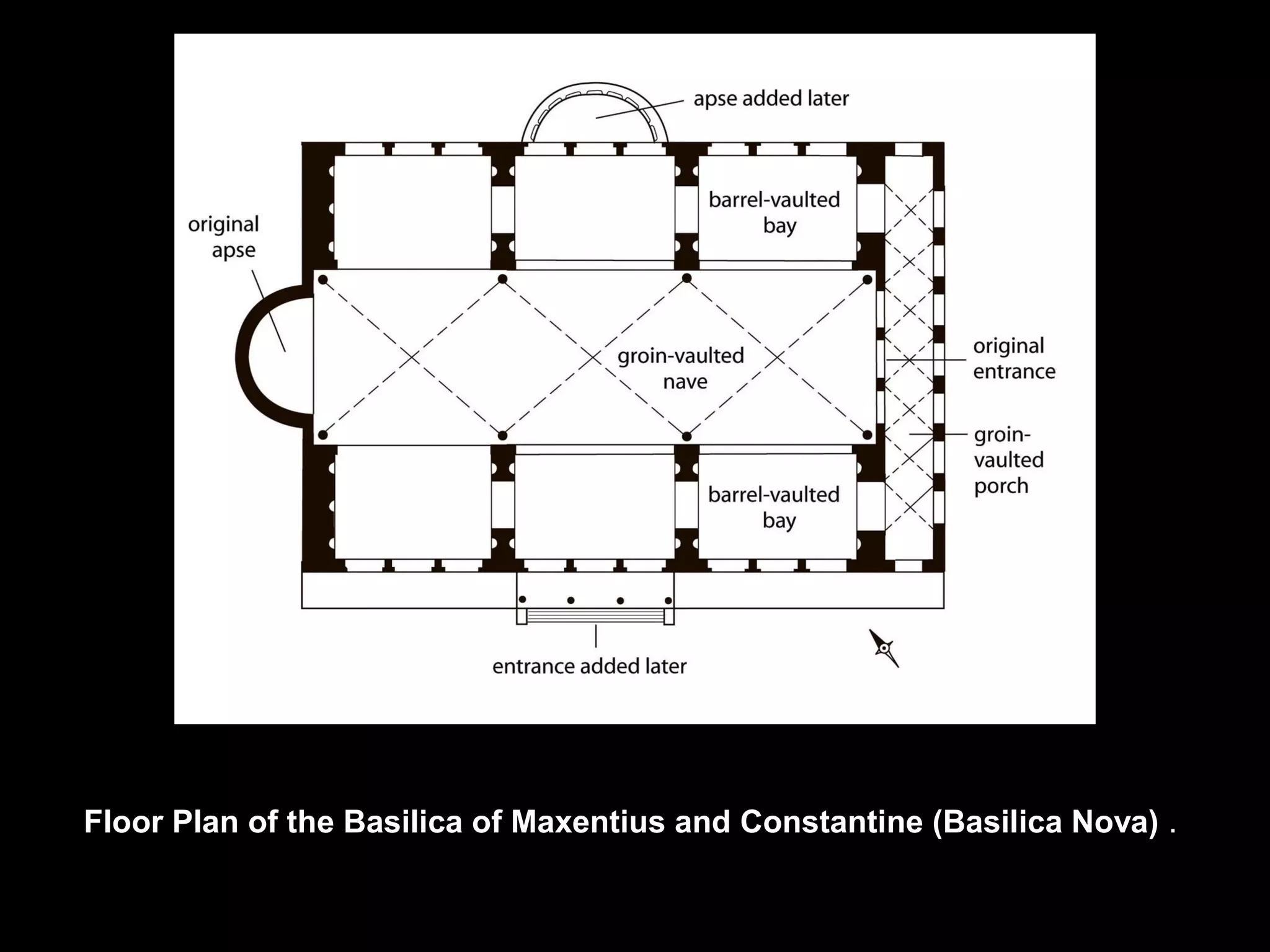
Floor Plan of the Basilica of Maxentius and Constantine (Basilica Nova) .
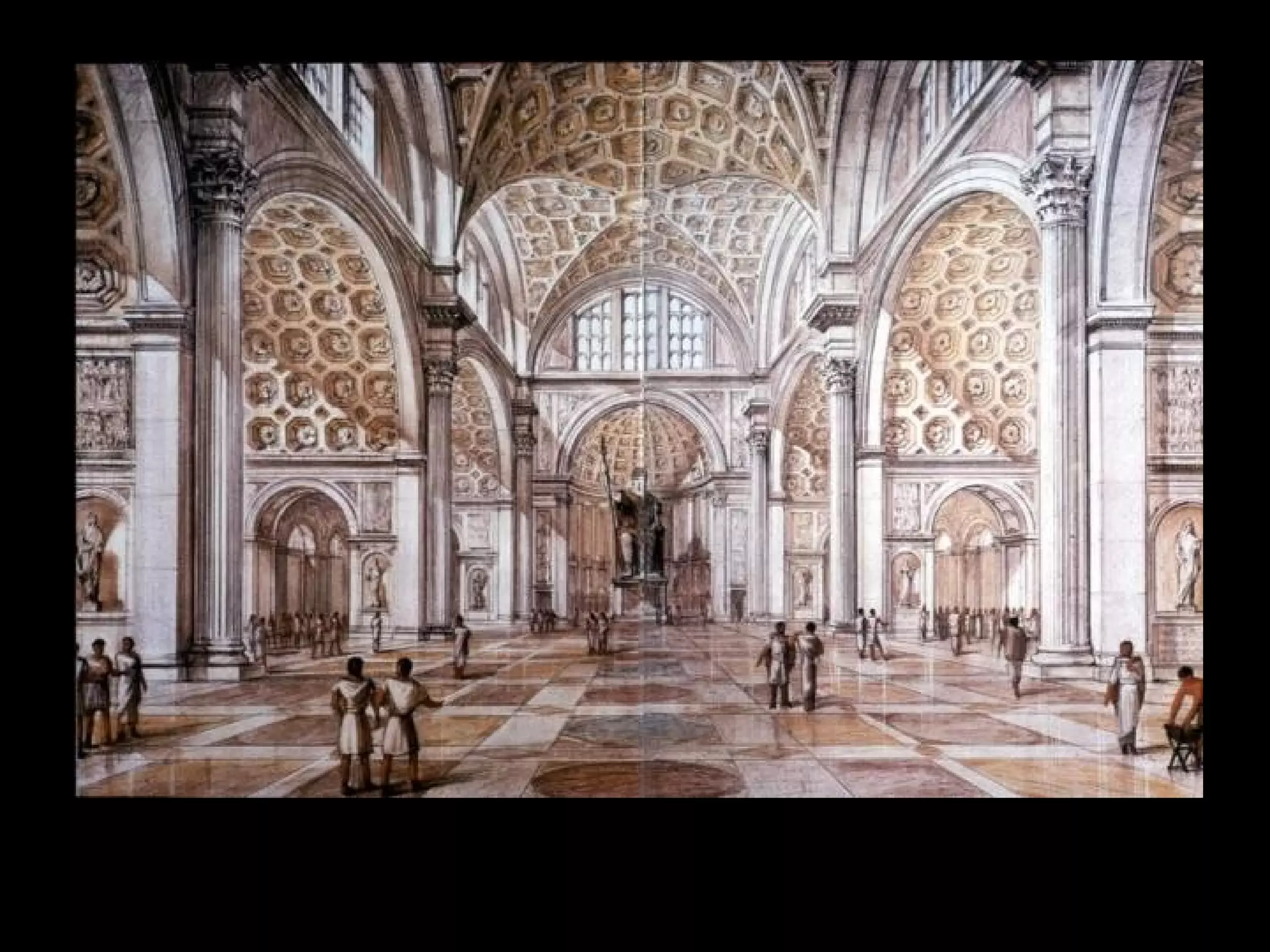
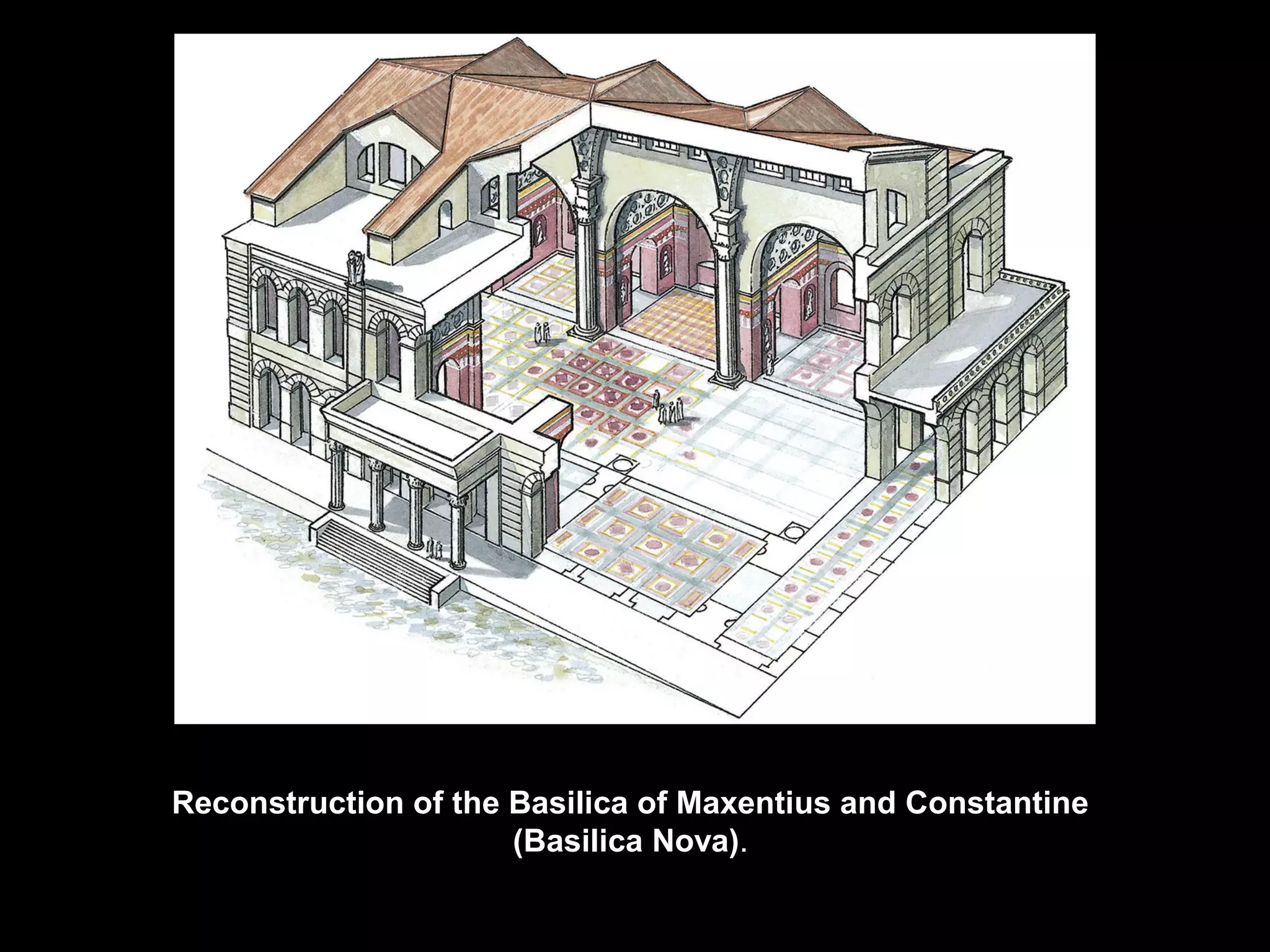
Reconstruction of the Basilica of Maxentius and Constantine
                      (Basilica Nova).
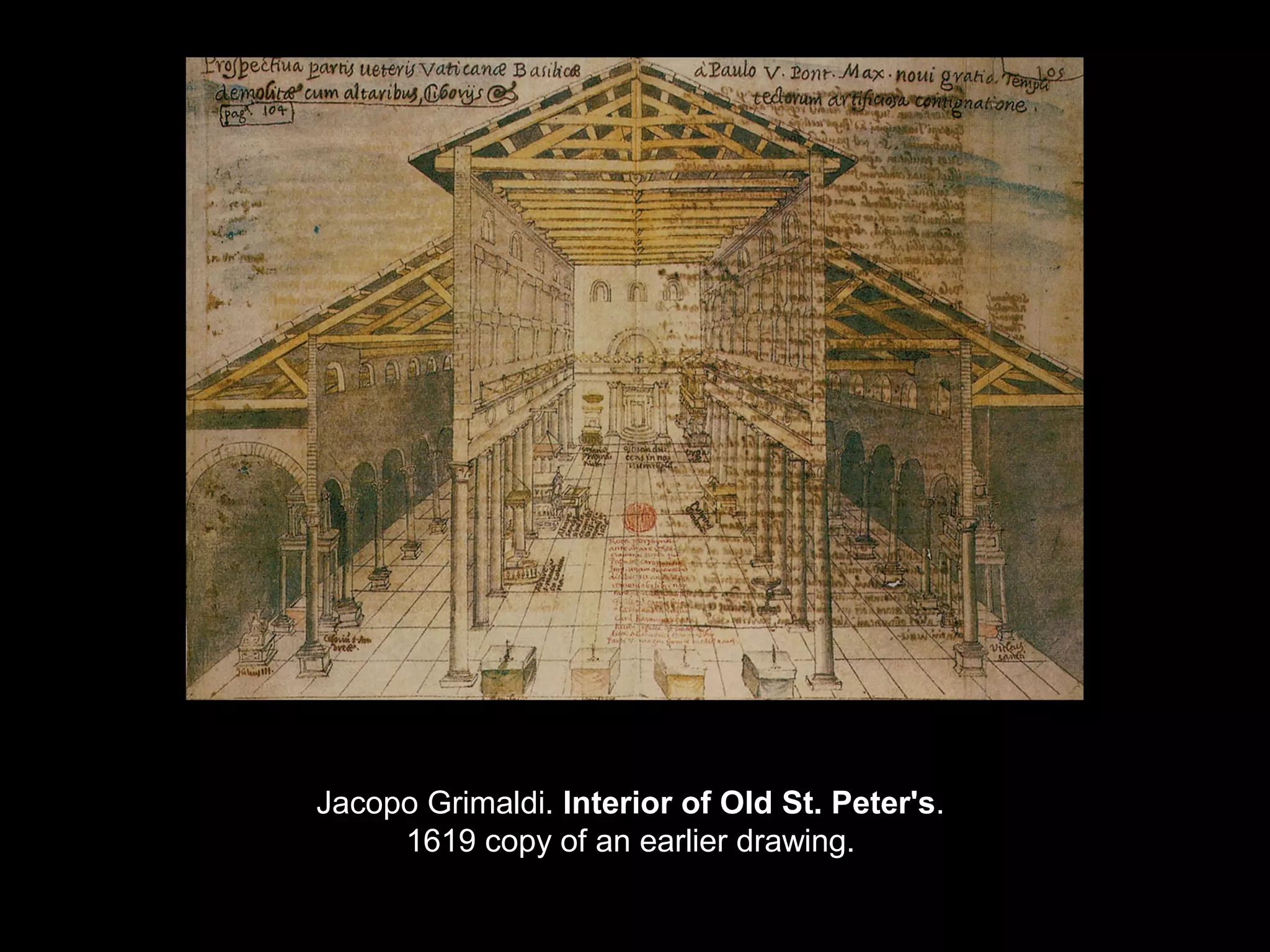
Jacopo Grimaldi. Interior of Old St. Peter's.
     1619 copy of an earlier drawing.
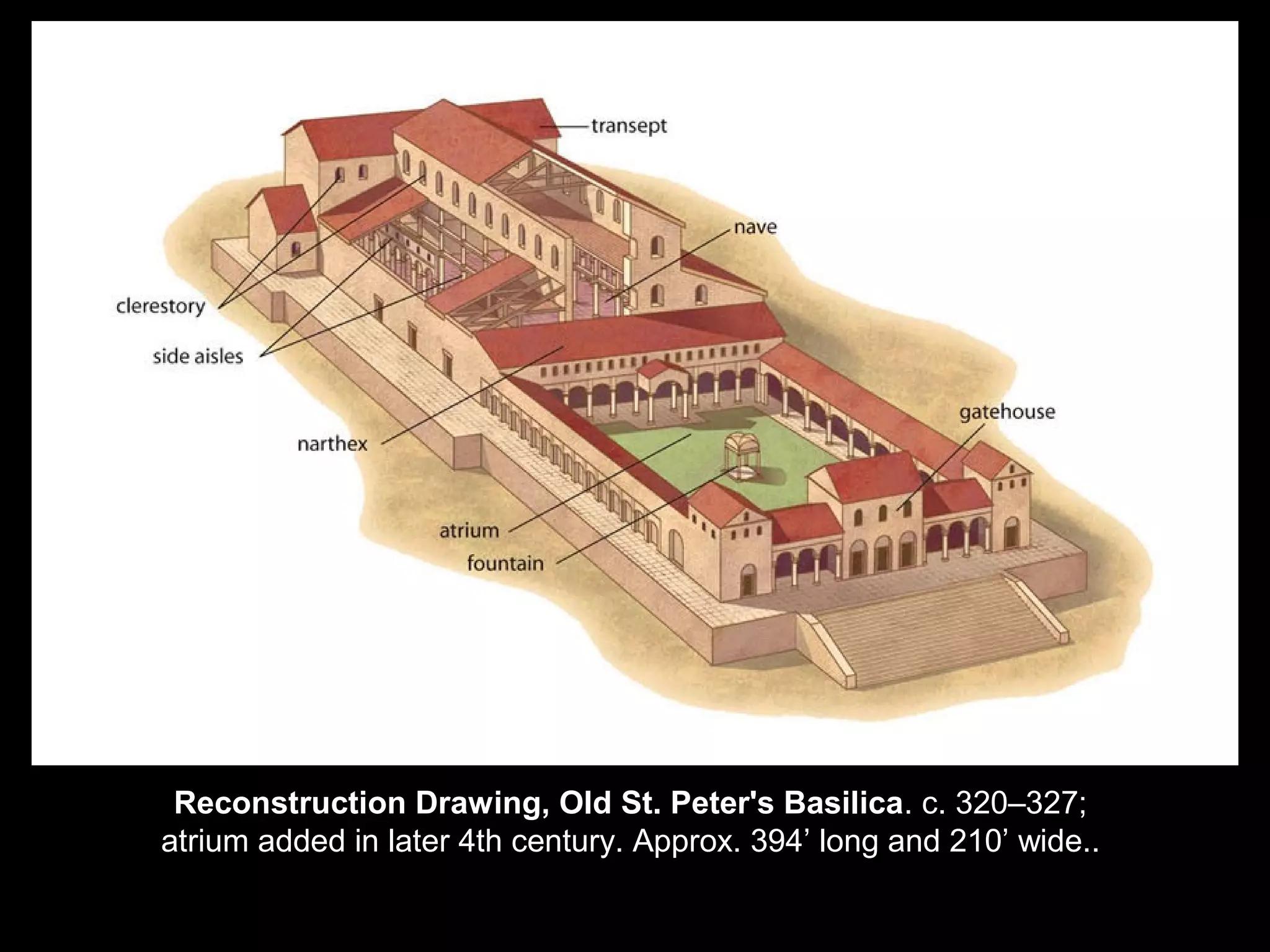
Reconstruction Drawing, Old St. Peter's Basilica. c. 320–327;
atrium added in later 4th century. Approx. 394’ long and 210’ wide..
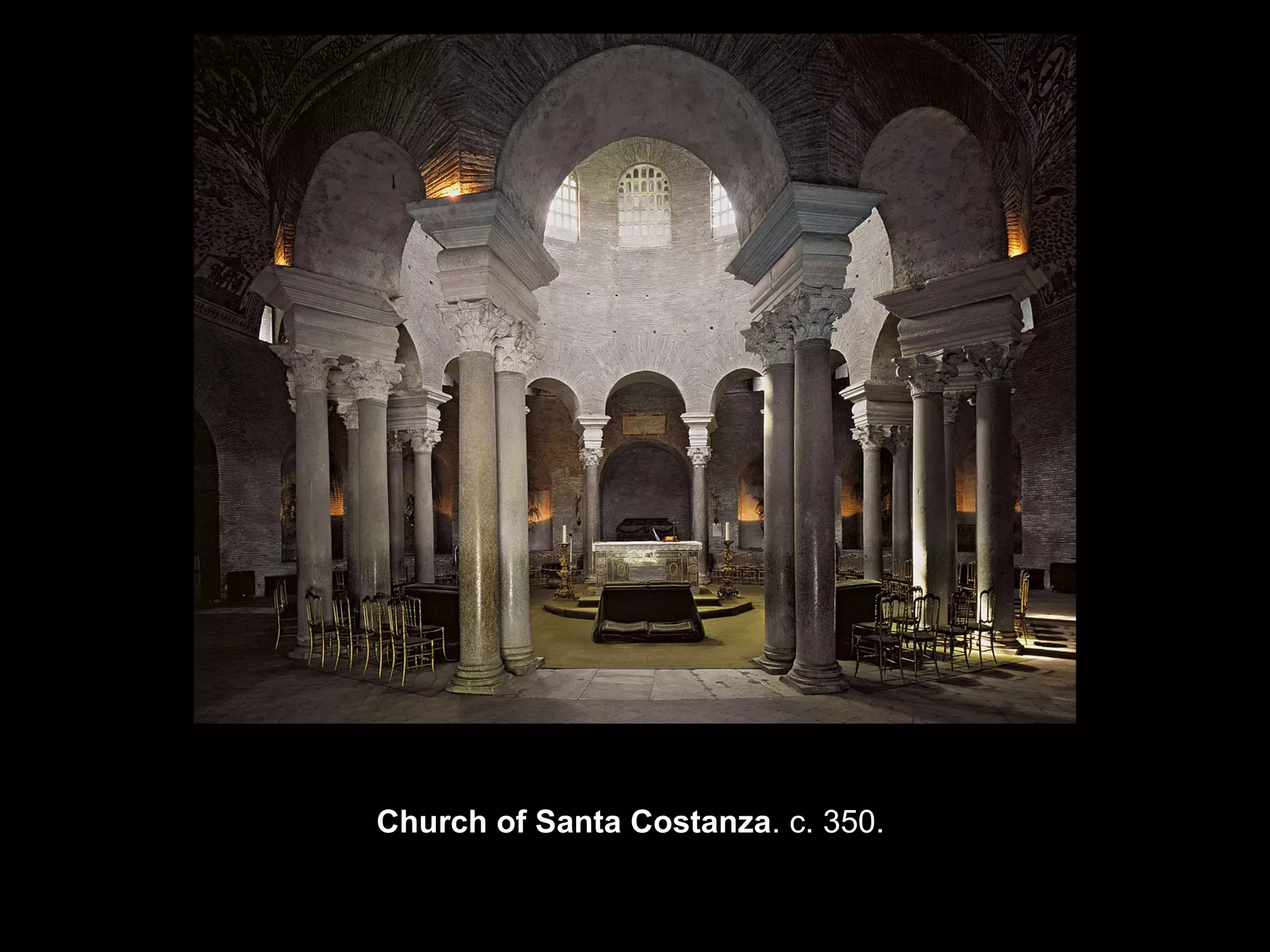
Church of Santa Costanza. c. 350.
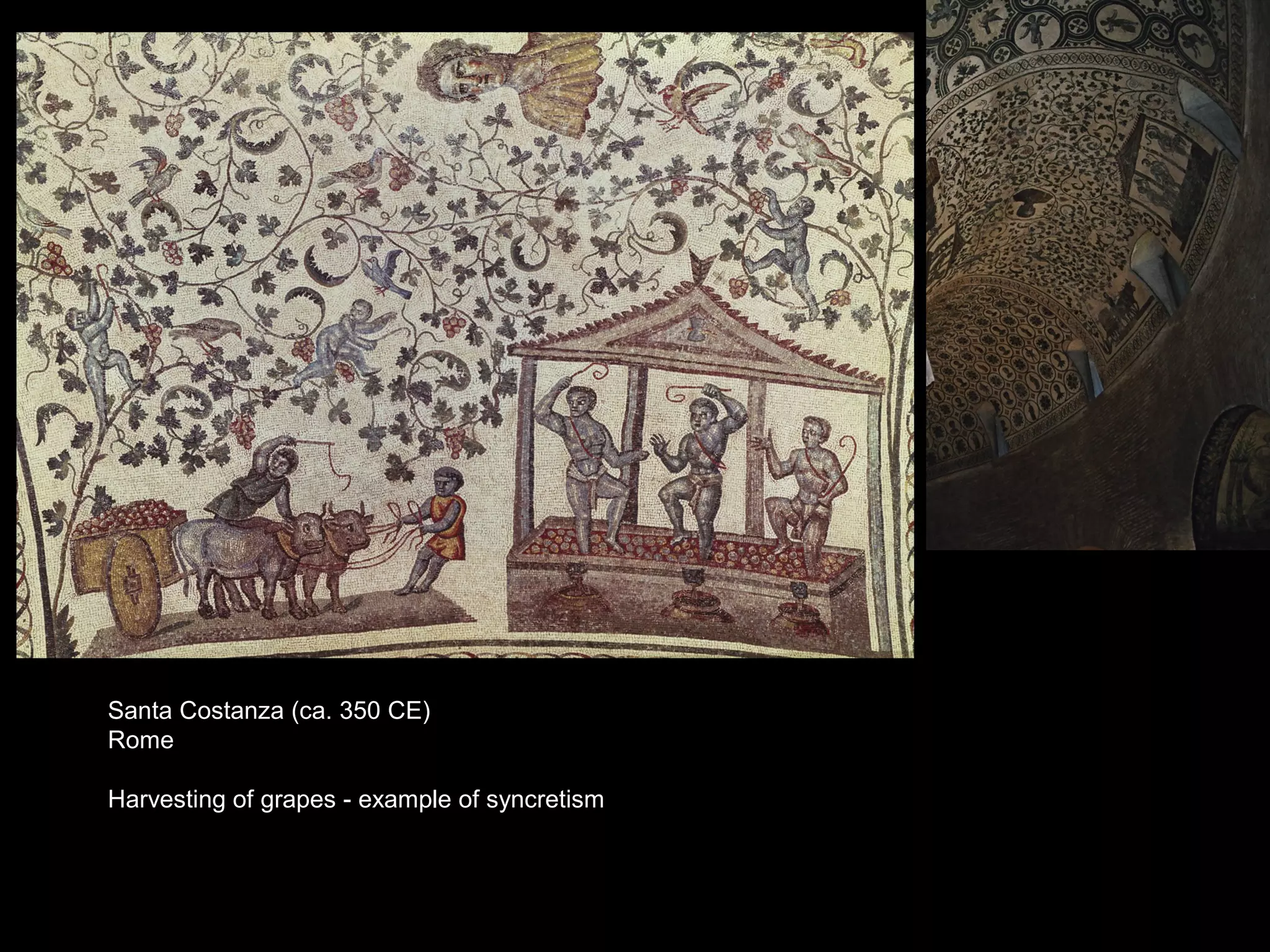
Santa Costanza (ca. 350 CE)
Rome

Harvesting of grapes - example of syncretism
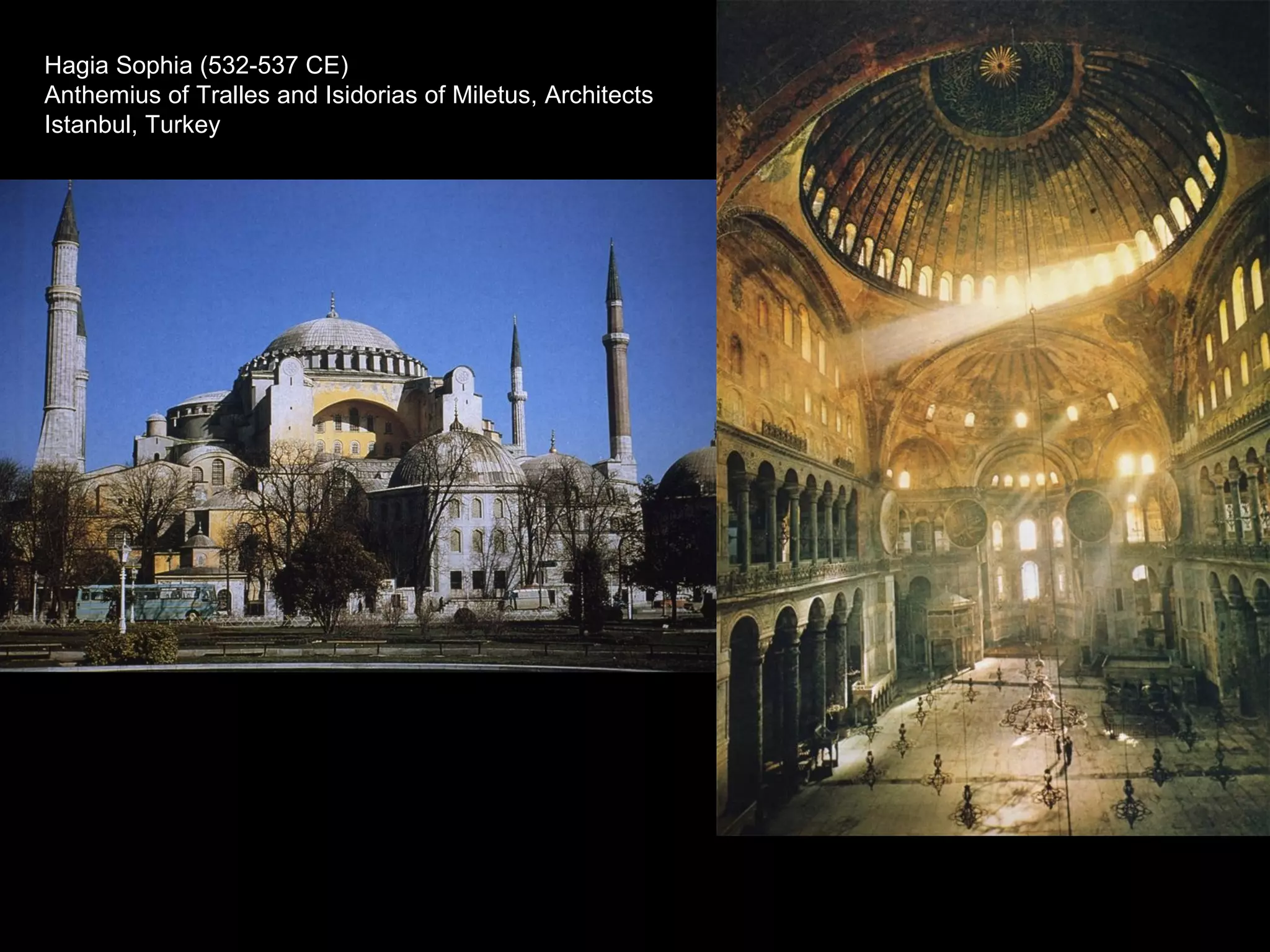
Hagia Sophia (532-537 CE)
Anthemius of Tralles and Isidorias of Miletus, Architects
Istanbul, Turkey
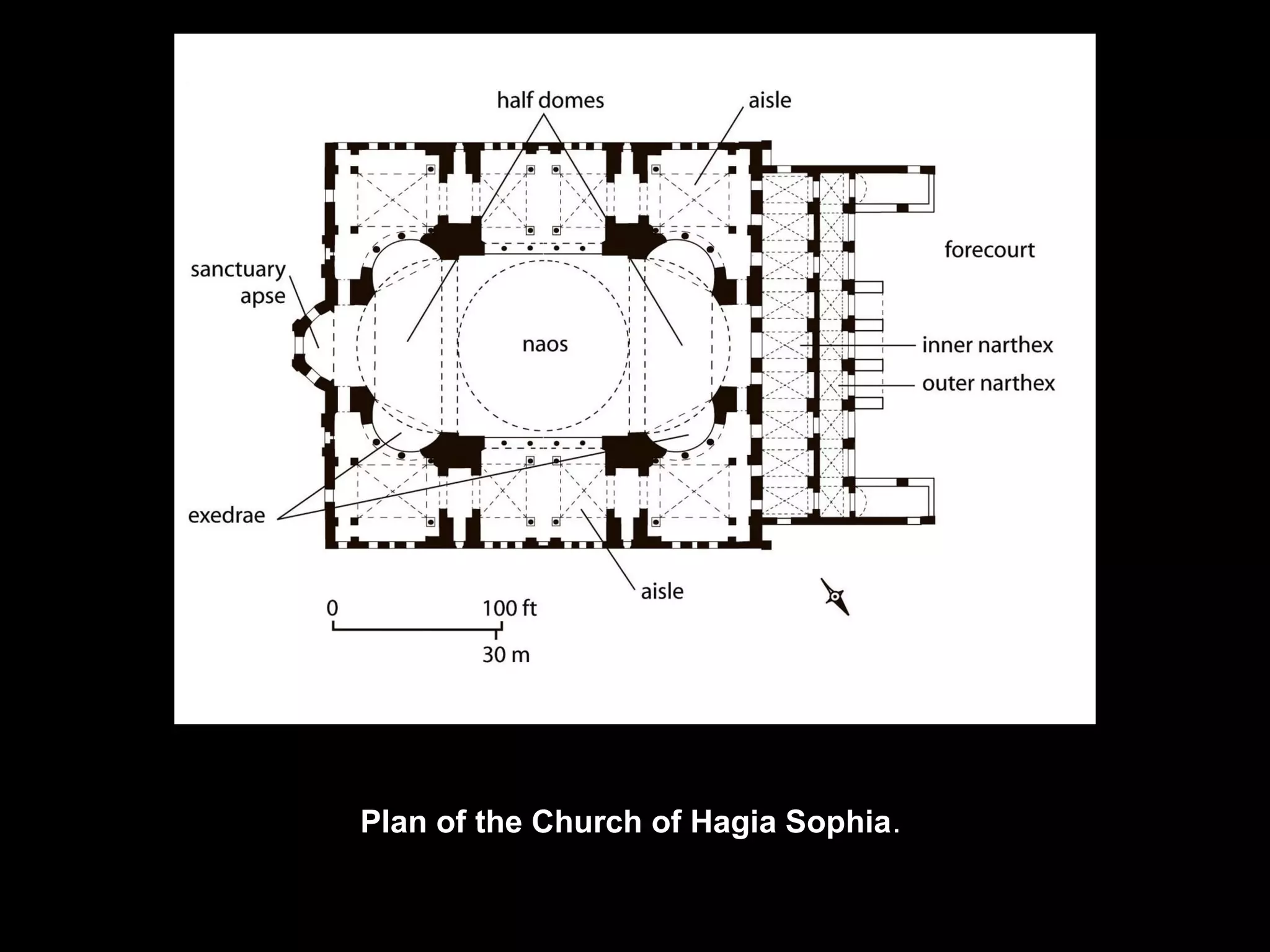
Plan of the Church of Hagia Sophia.
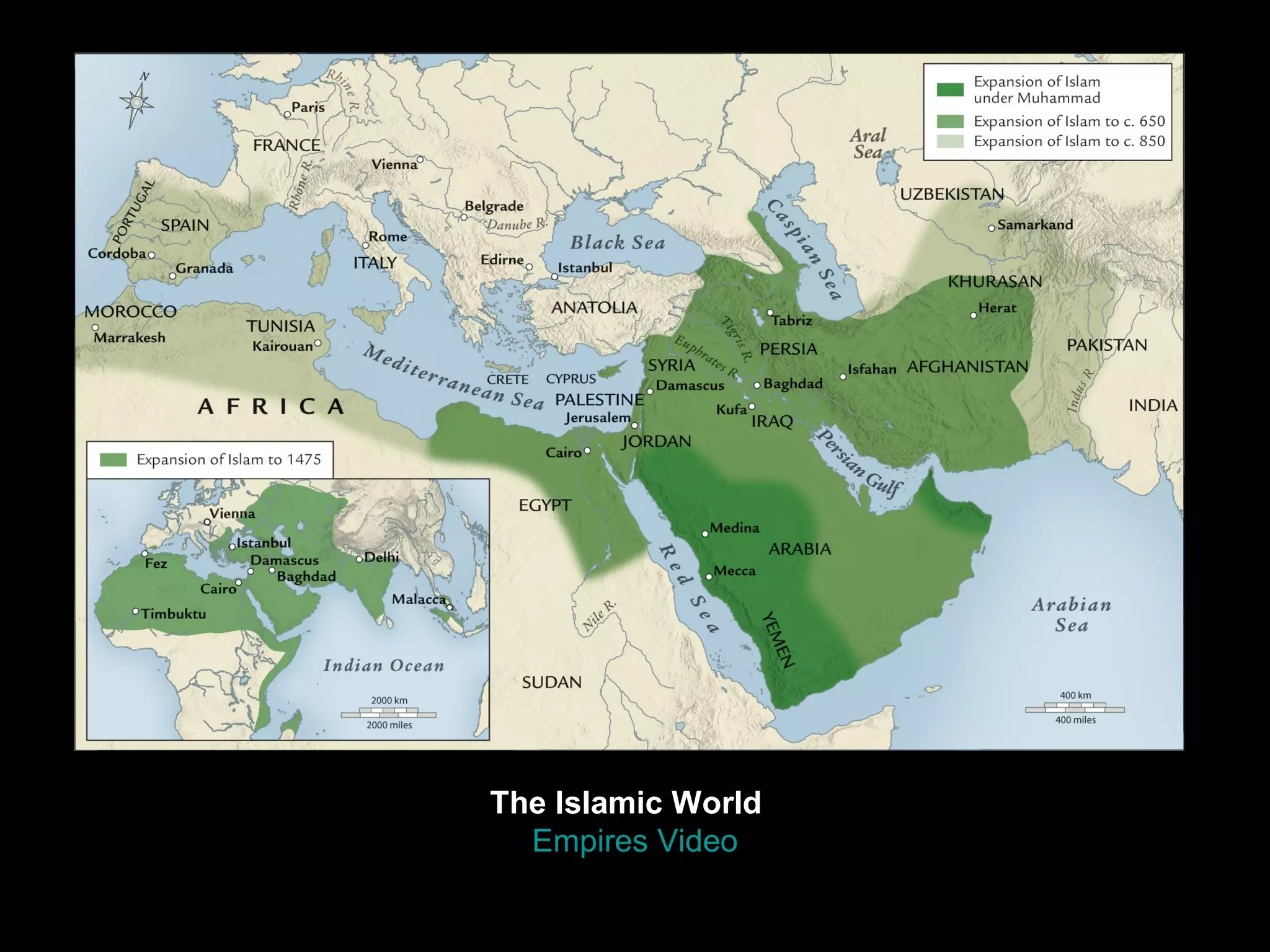
The Islamic World
  Empires Video
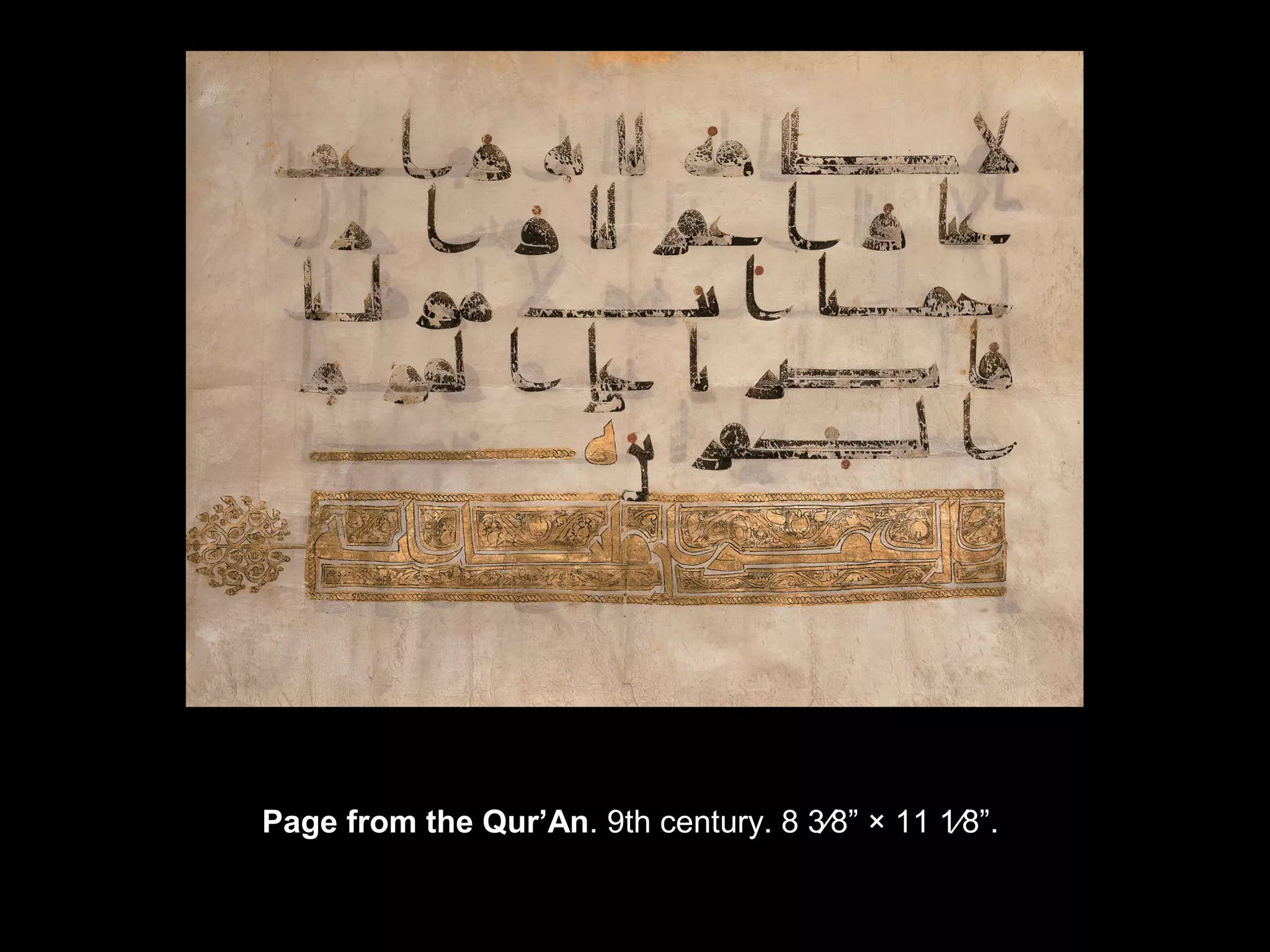
Page from the Qur’An. 9th century. 8 3⁄8” × 11 1⁄8”.
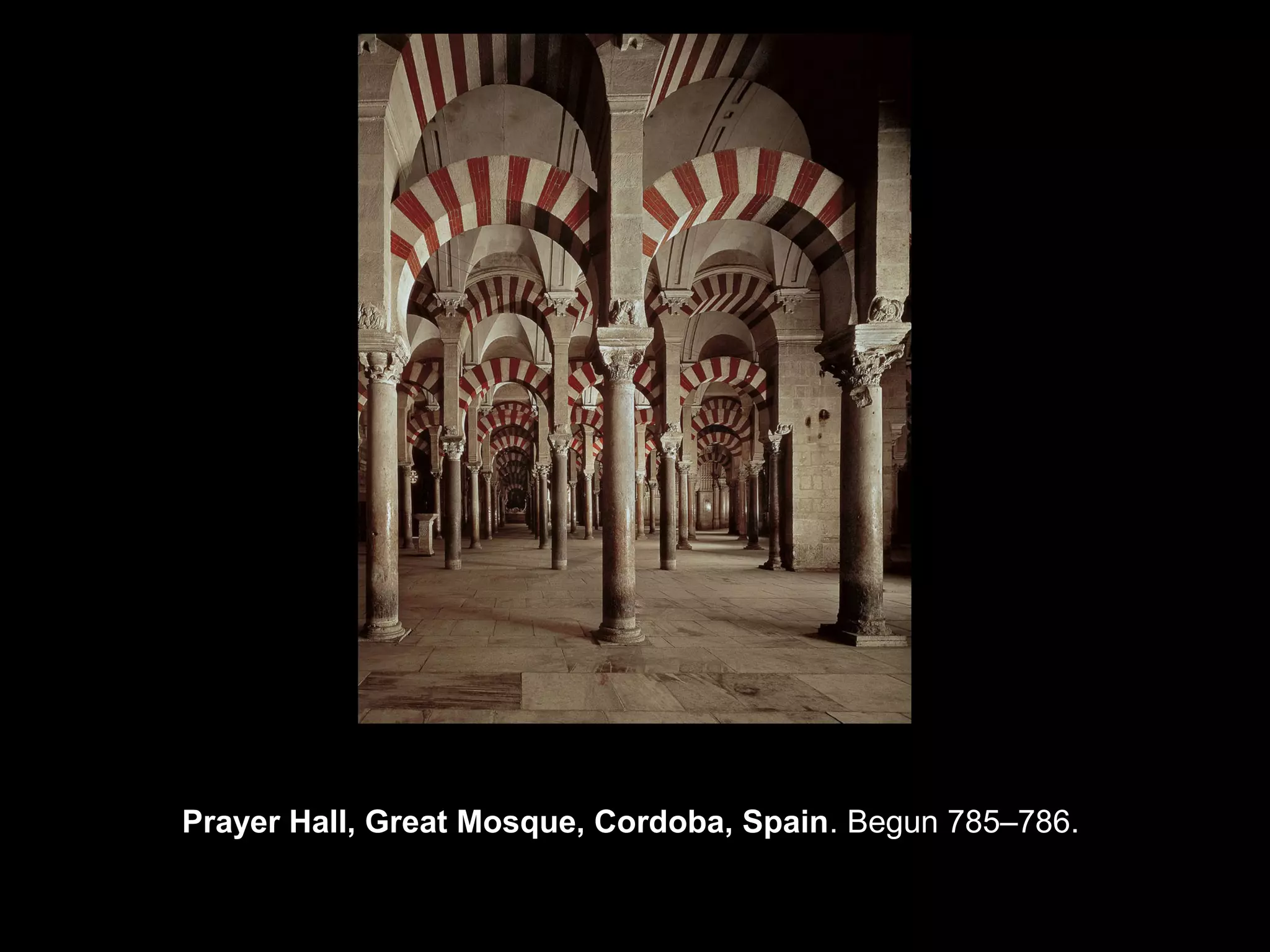
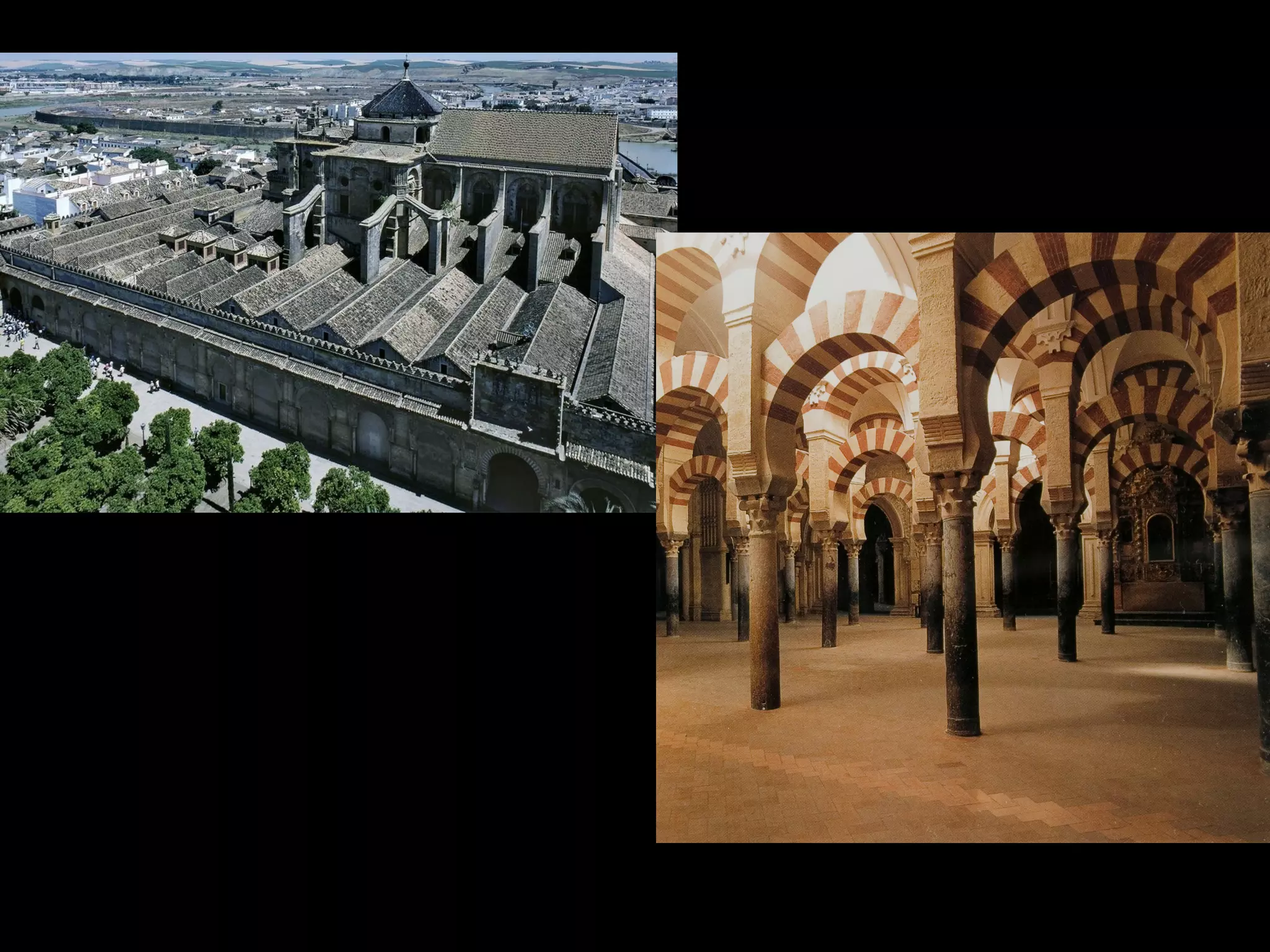
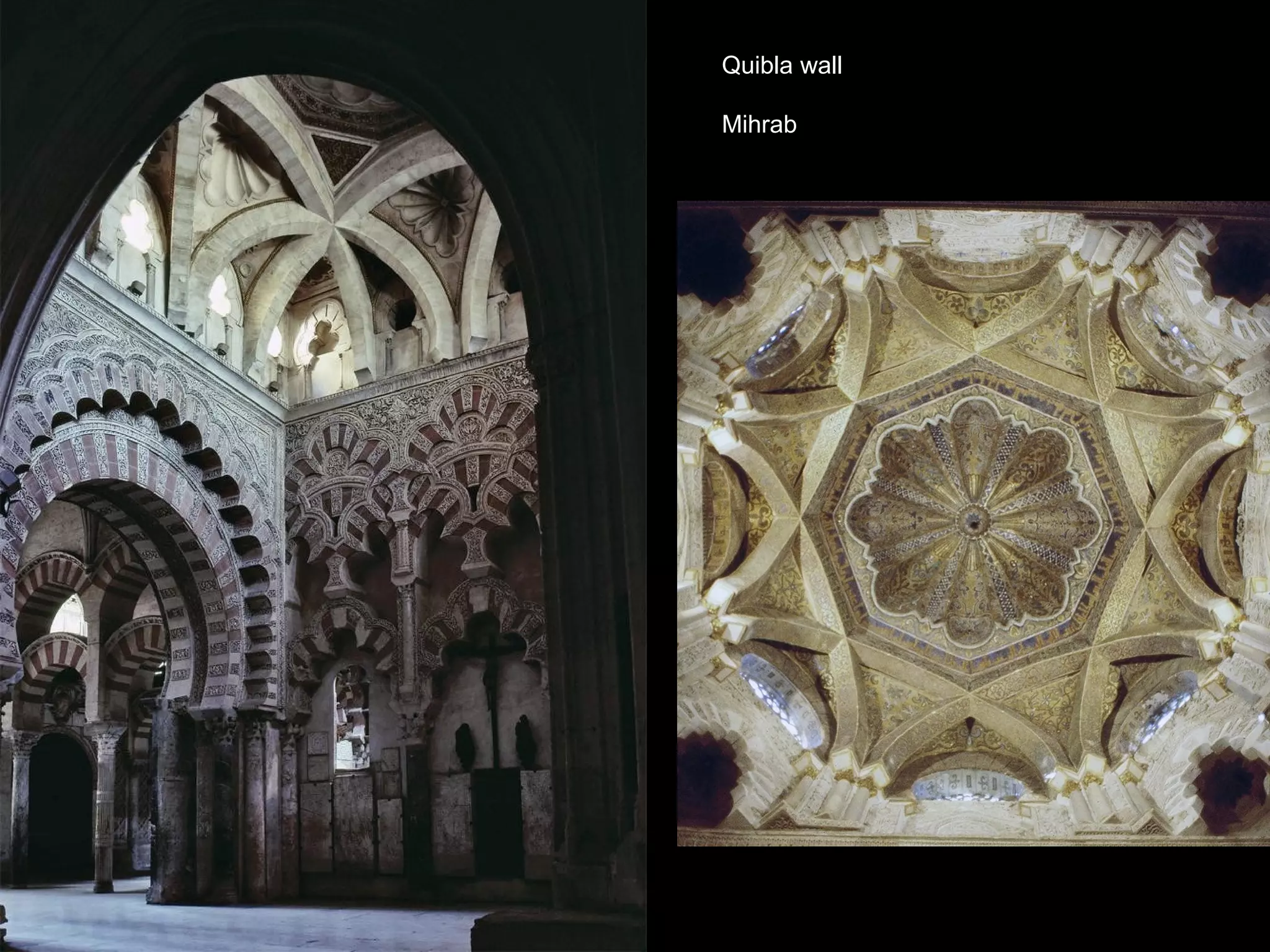
Prayer Hall, Great Mosque, Cordoba, Spain. Begun 785–786.
Quibla wall

Mihrab
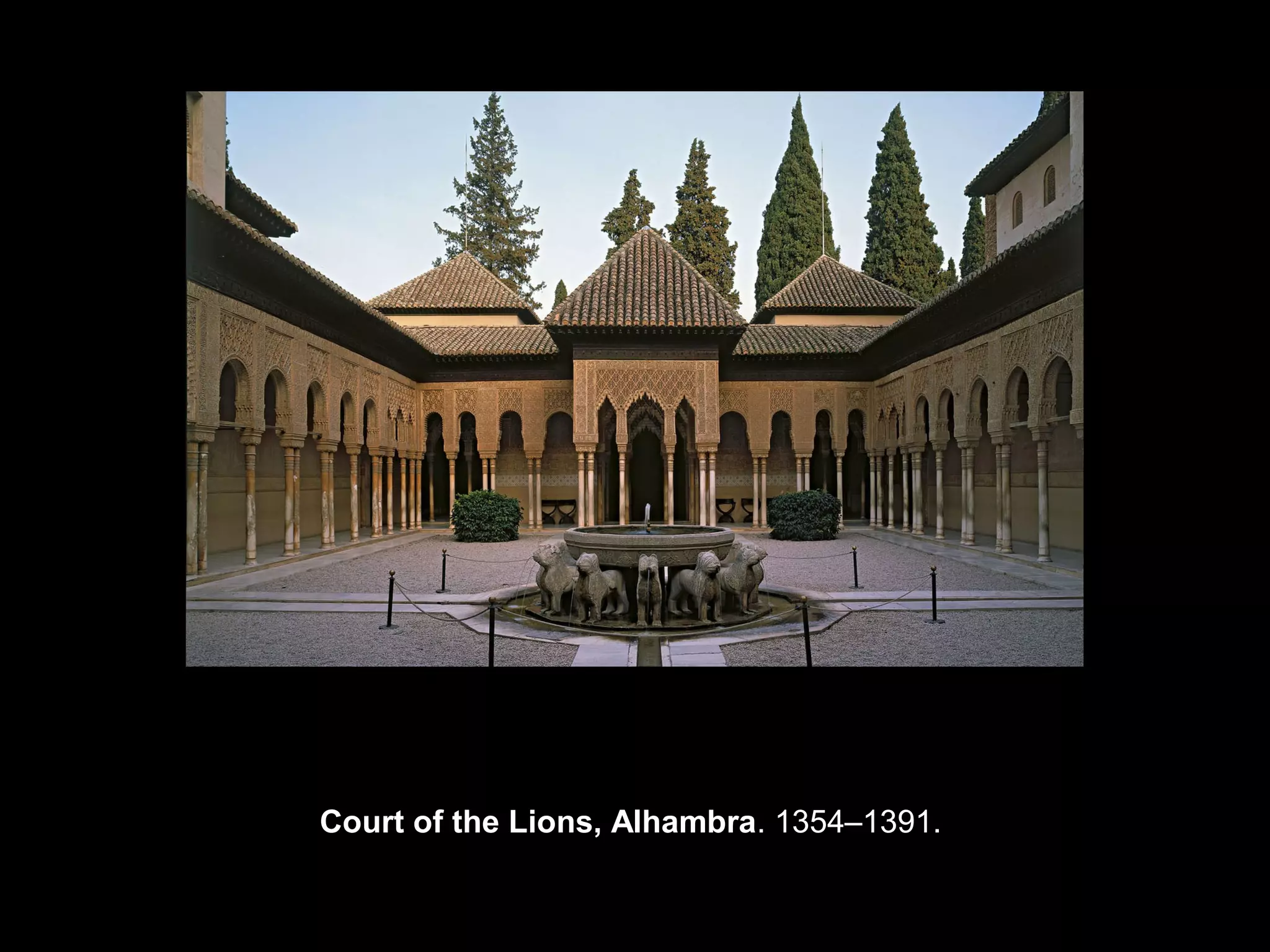
Court of the Lions, Alhambra. 1354–1391.
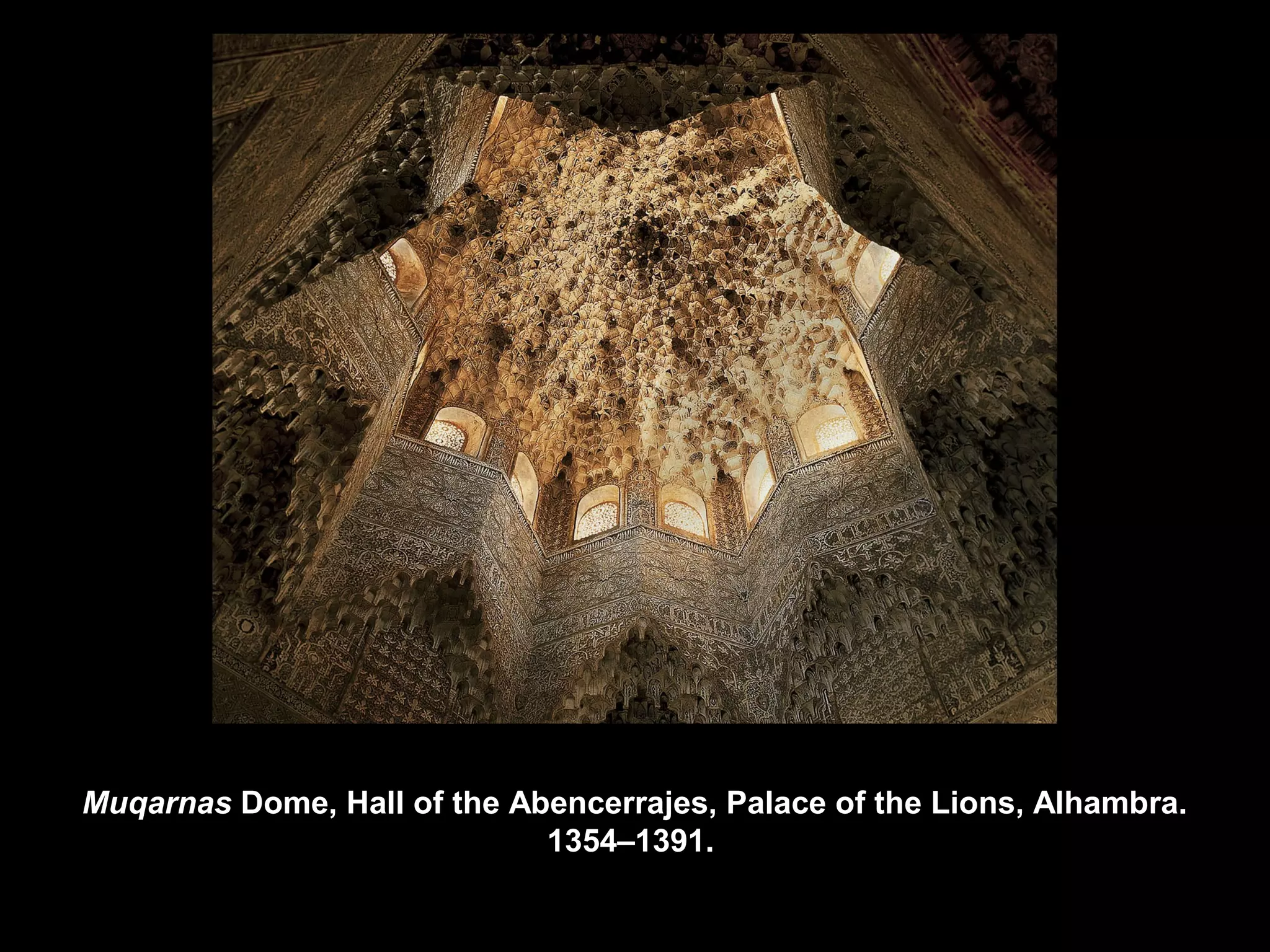
Muqarnas Dome, Hall of the Abencerrajes, Palace of the Lions, Alhambra.
                             1354–1391.
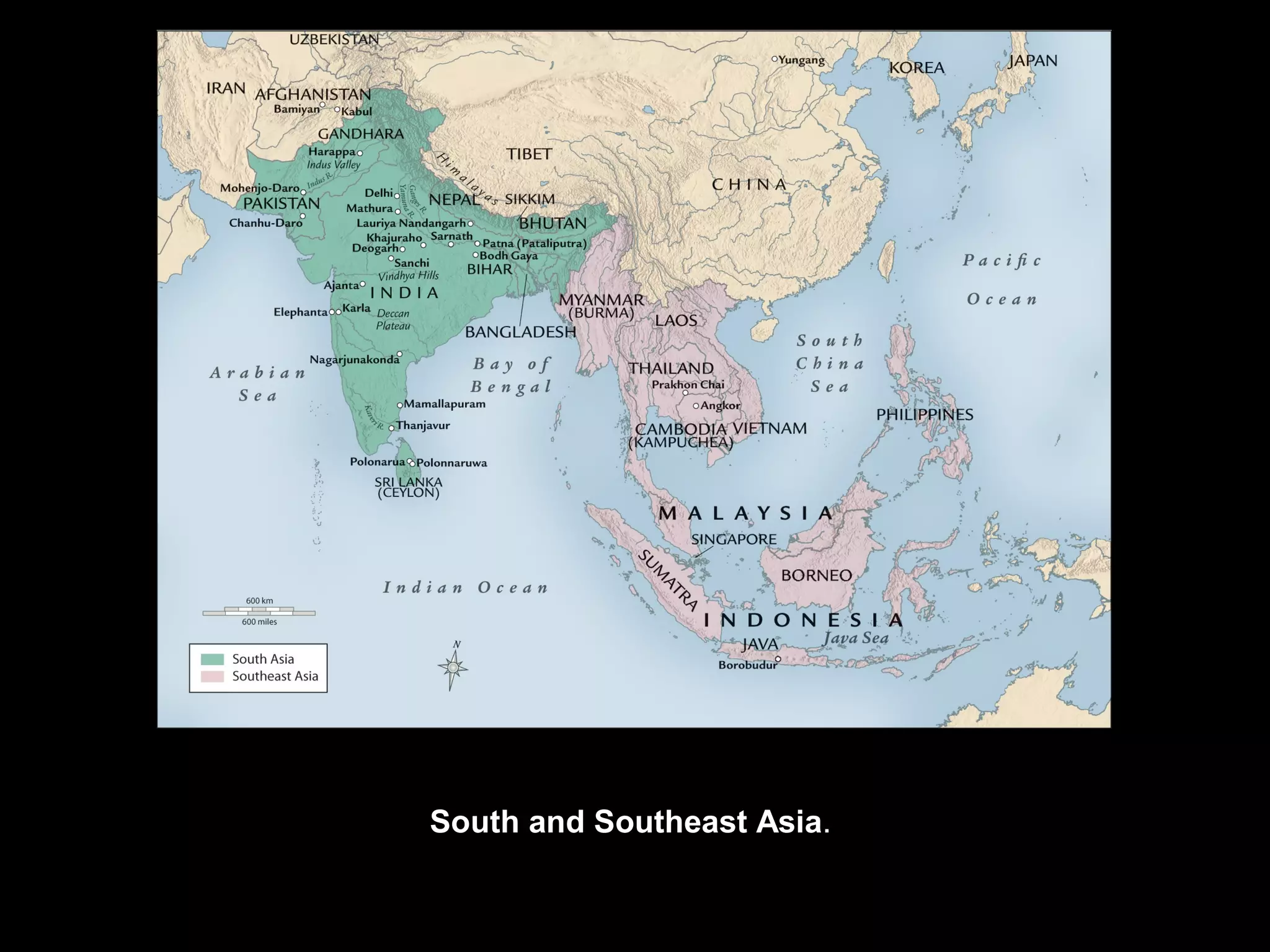
South and Southeast Asia.
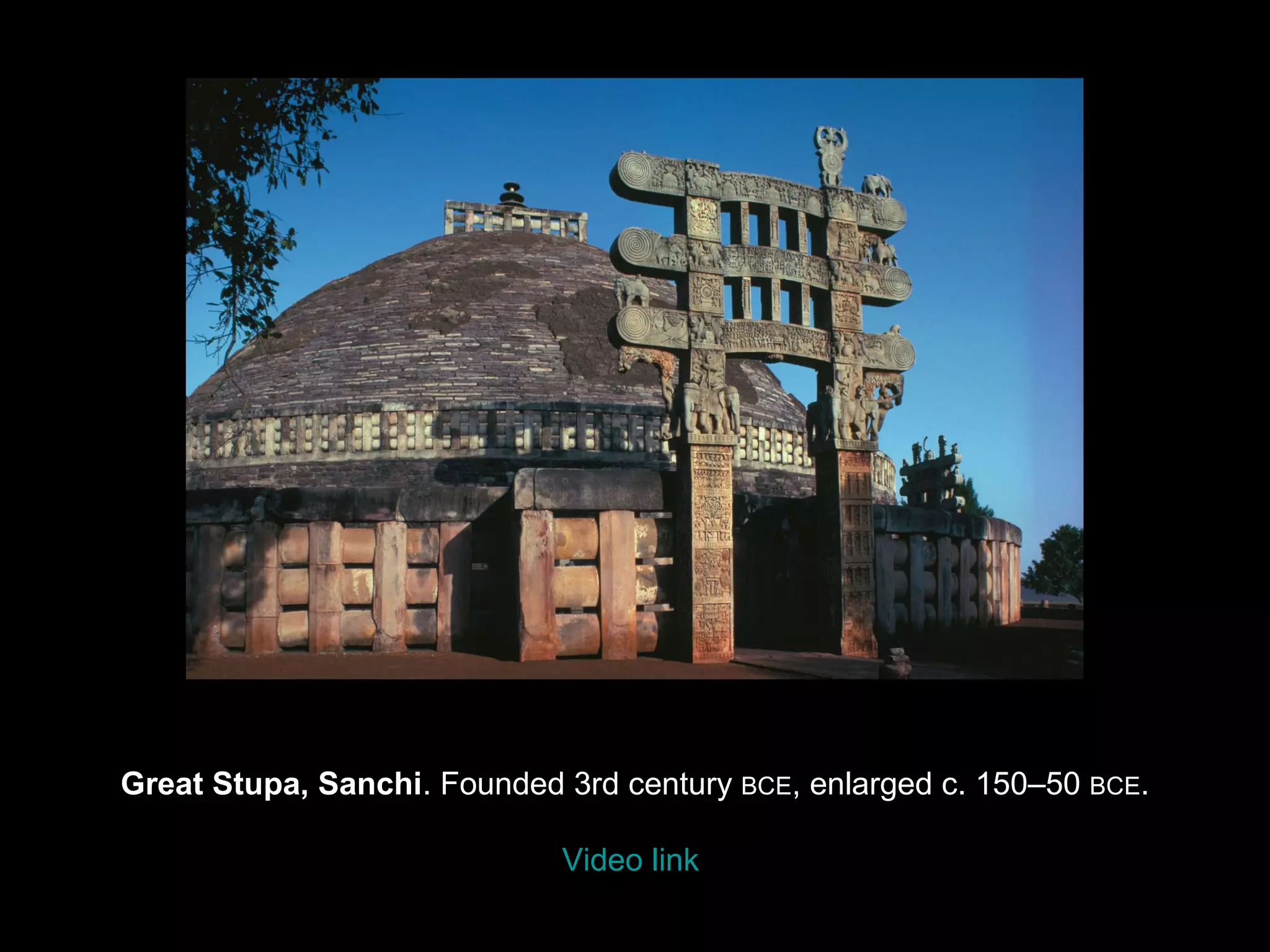
Great Stupa, Sanchi. Founded 3rd century BCE, enlarged c. 150–50 BCE.

                             Video link
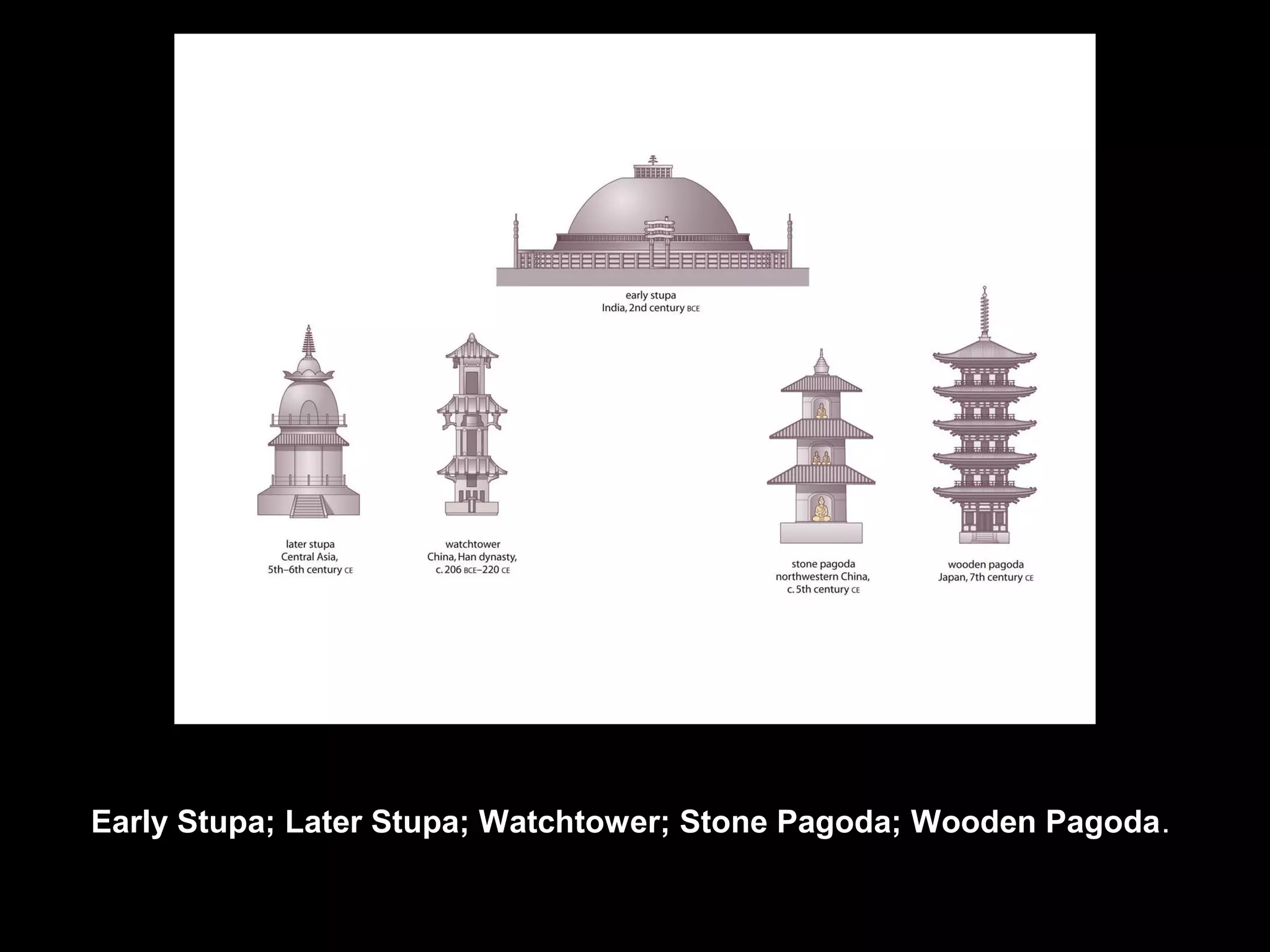
Early Stupa; Later Stupa; Watchtower; Stone Pagoda; Wooden Pagoda.
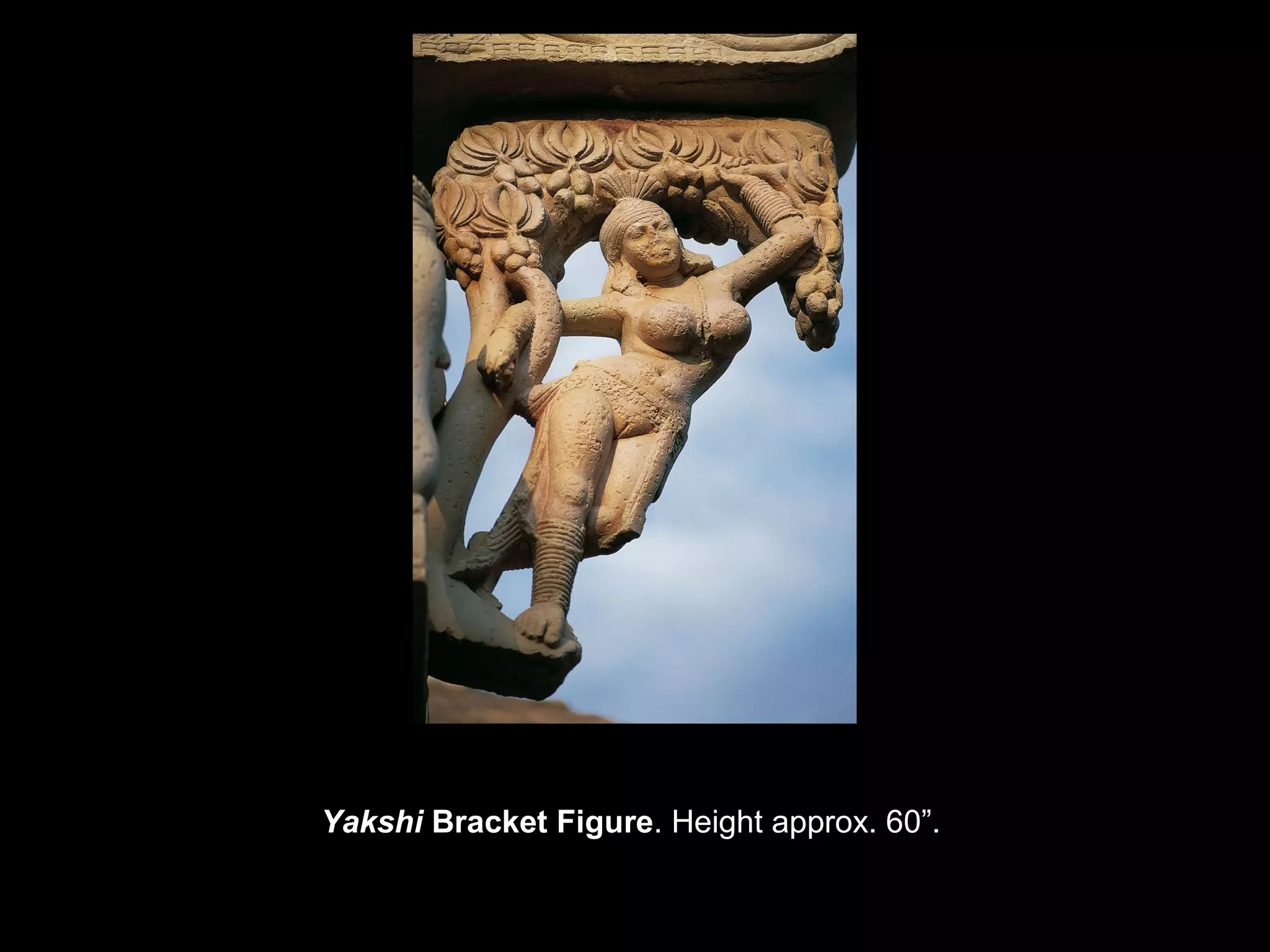
Yakshi Bracket Figure. Height approx. 60”.
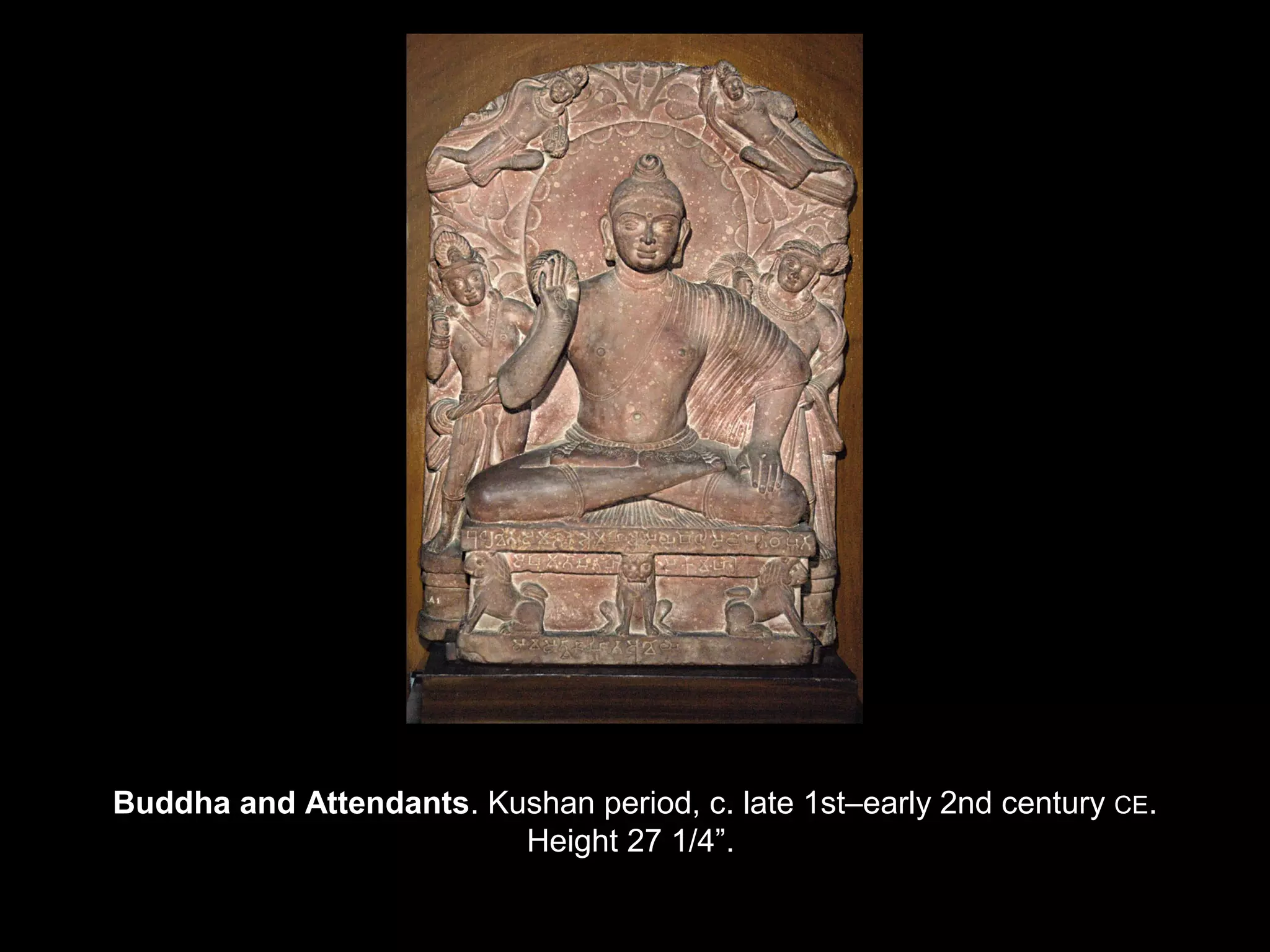
Buddha and Attendants. Kushan period, c. late 1st–early 2nd century CE.
                         Height 27 1/4”.
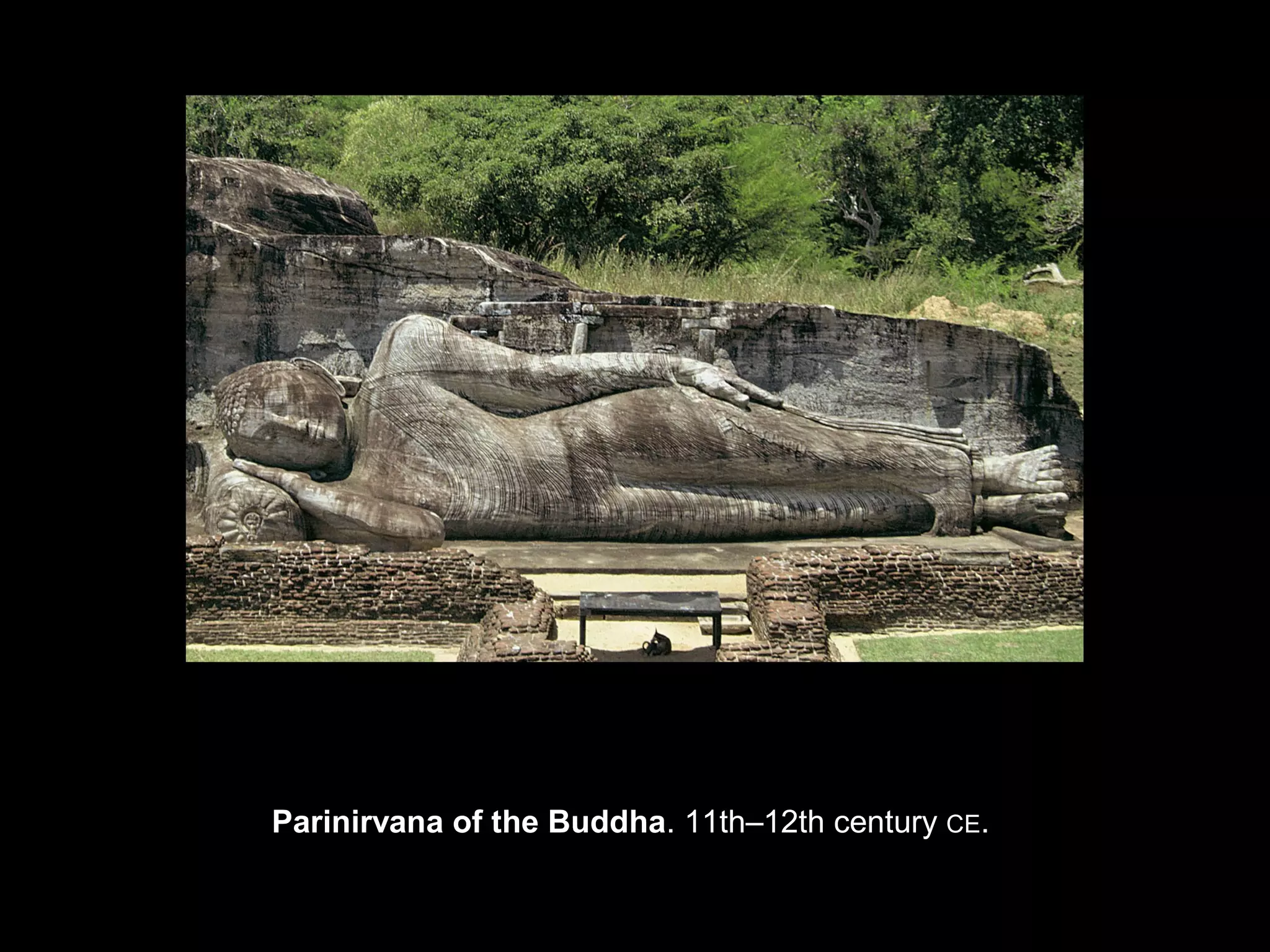
Parinirvana of the Buddha. 11th–12th century CE.
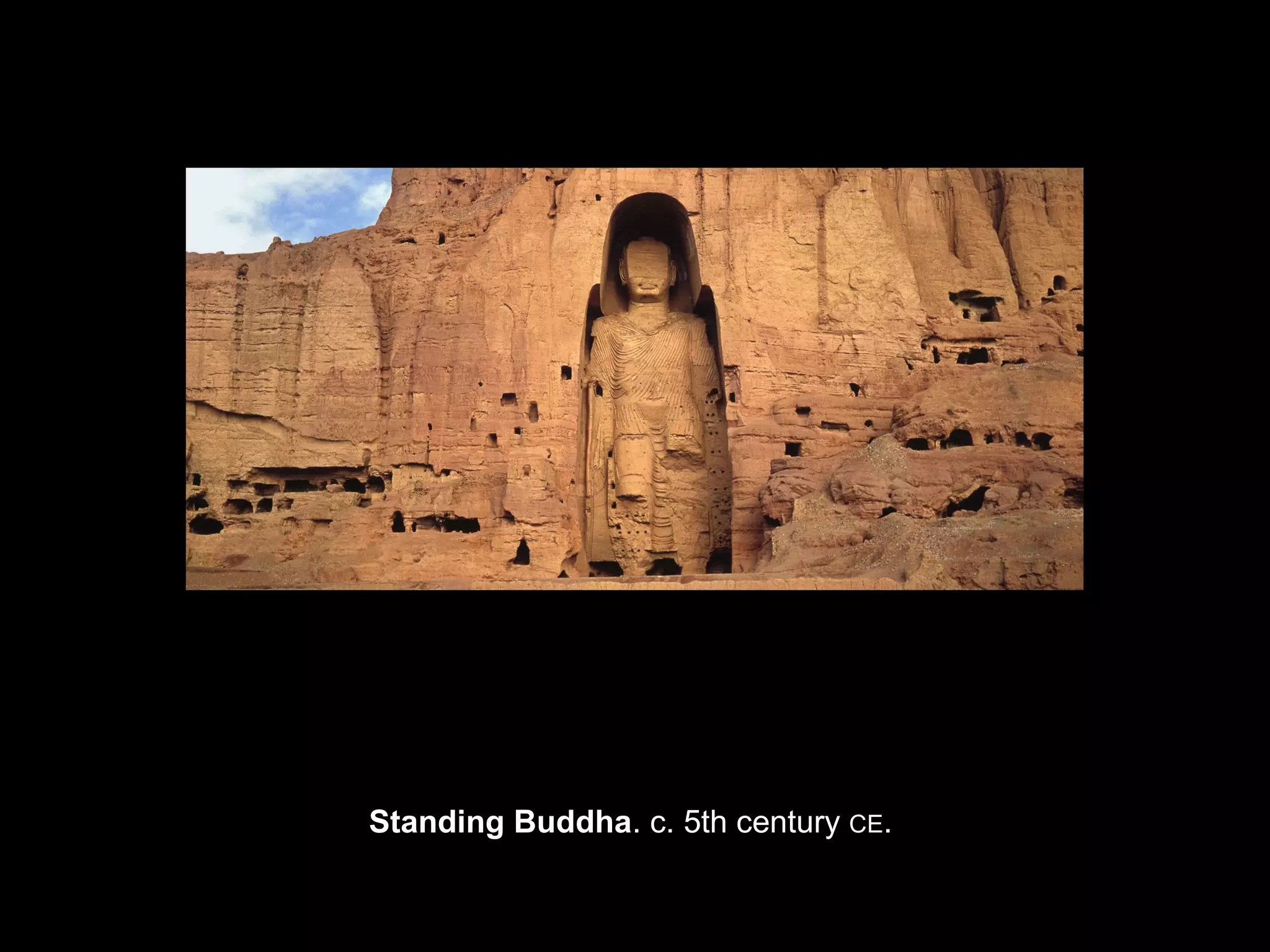
Standing Buddha. c. 5th century CE.
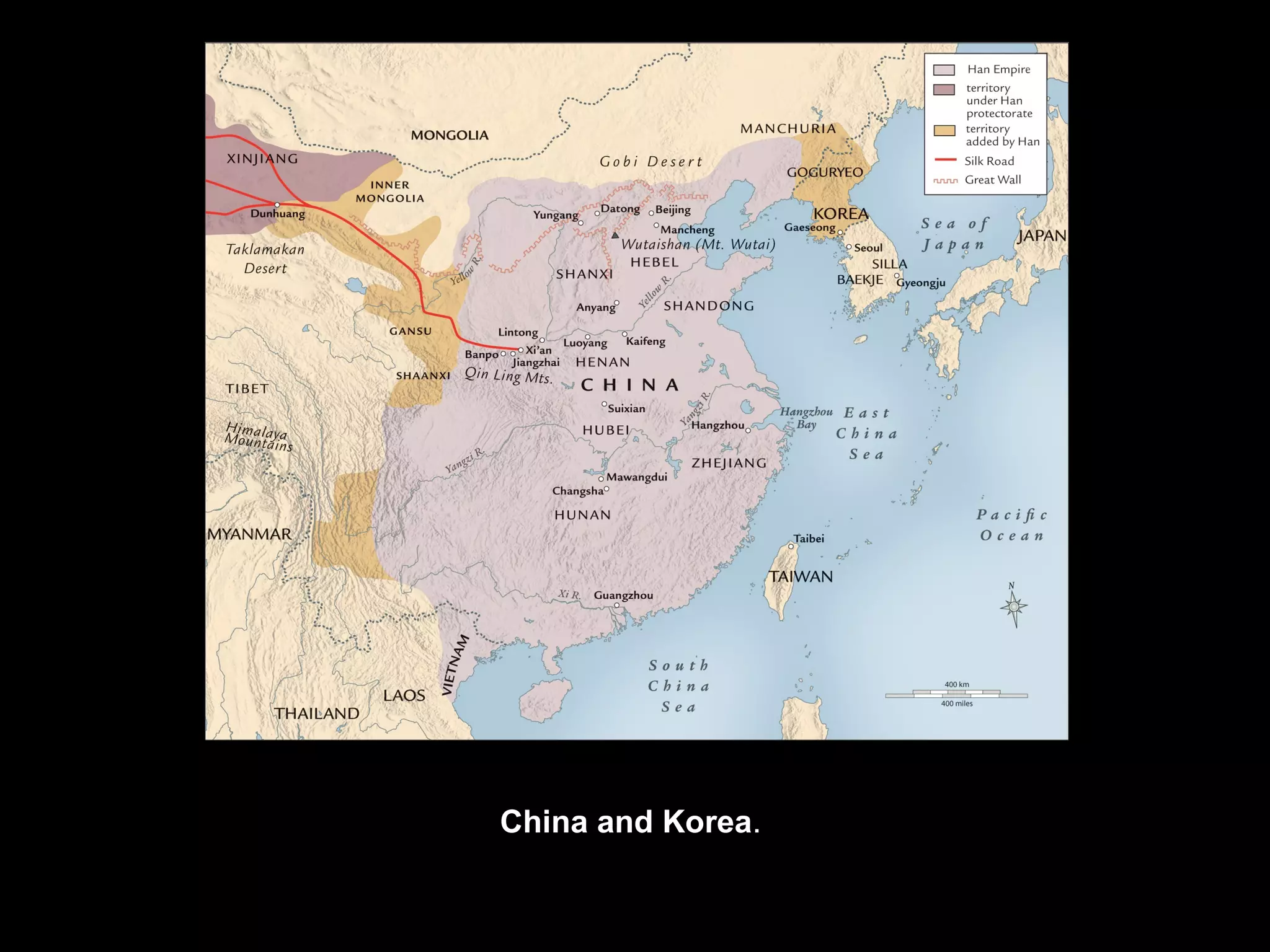
China and Korea.
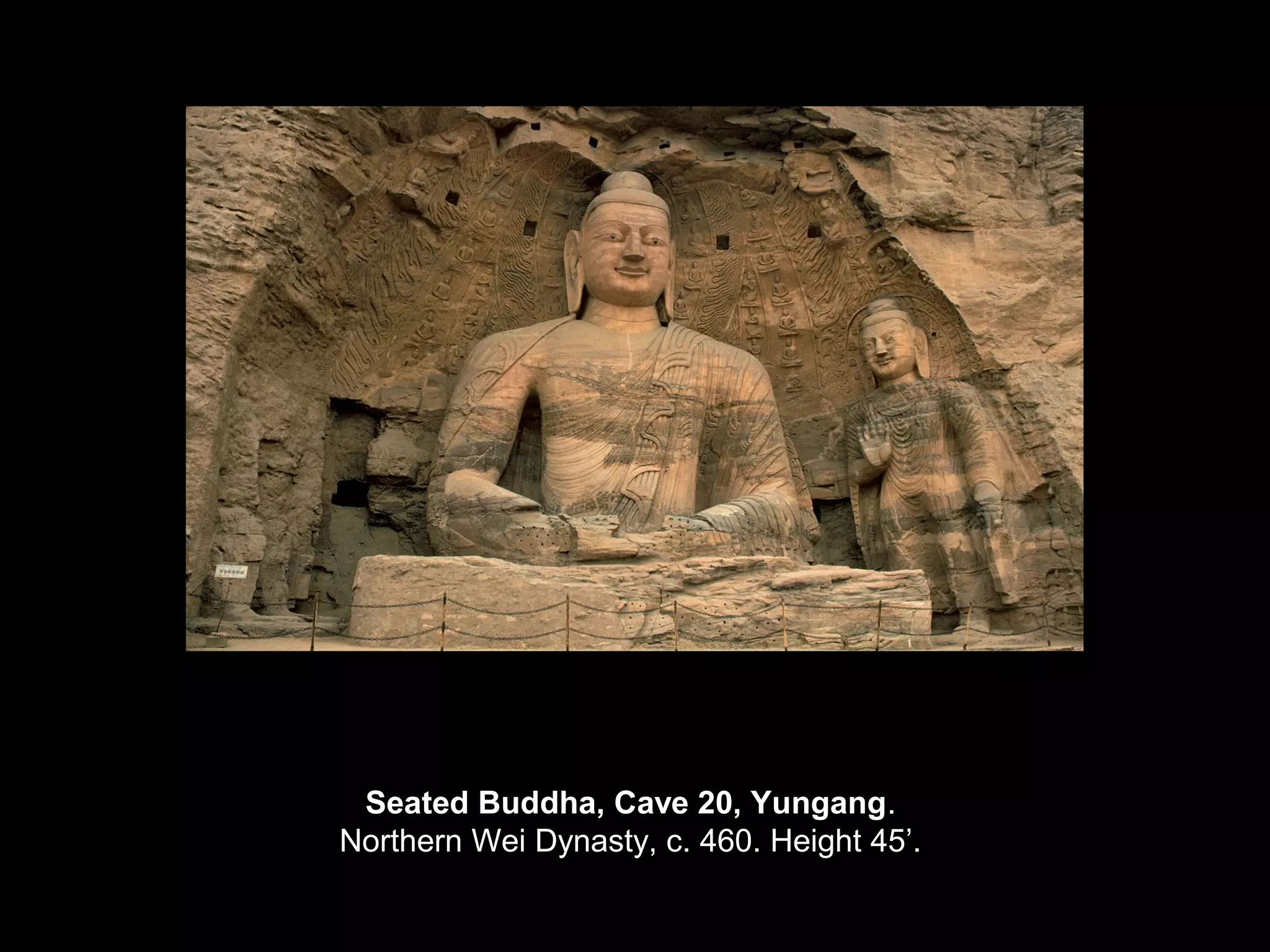
Seated Buddha, Cave 20, Yungang.
Northern Wei Dynasty, c. 460. Height 45’.
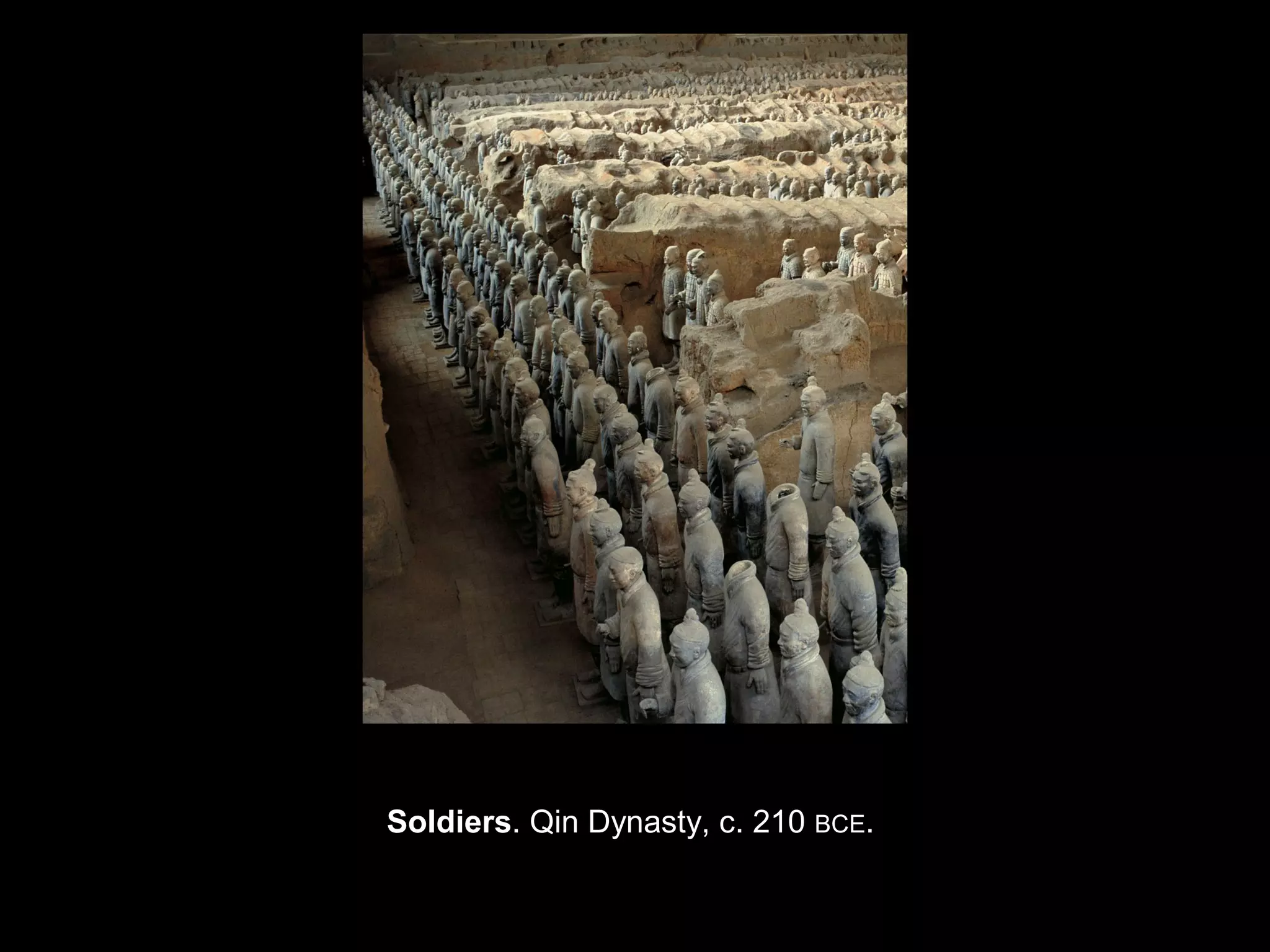
Soldiers. Qin Dynasty, c. 210 BCE.
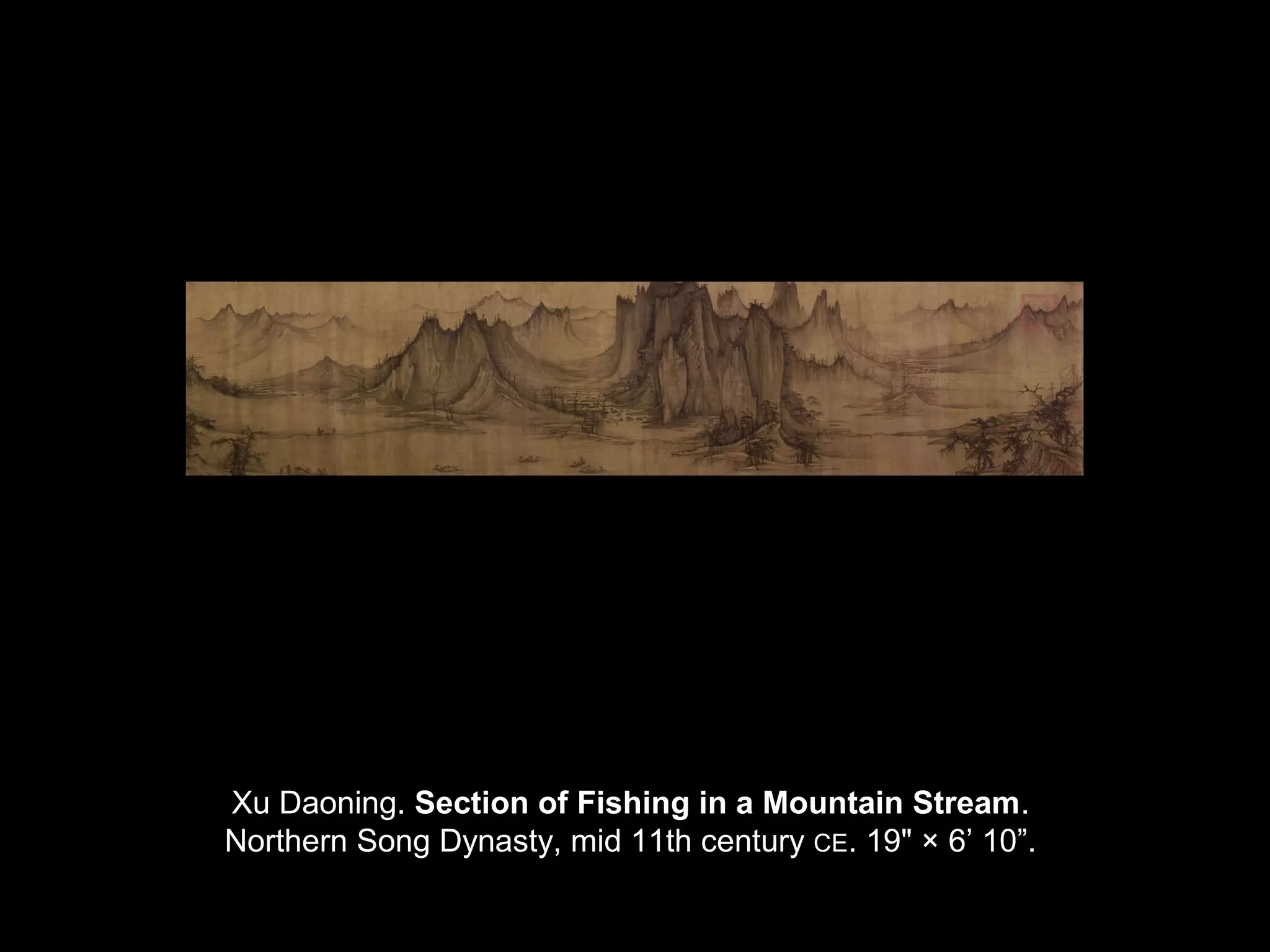
Xu Daoning. Section of Fishing in a Mountain Stream.
Northern Song Dynasty, mid 11th century CE. 19" × 6’ 10”.
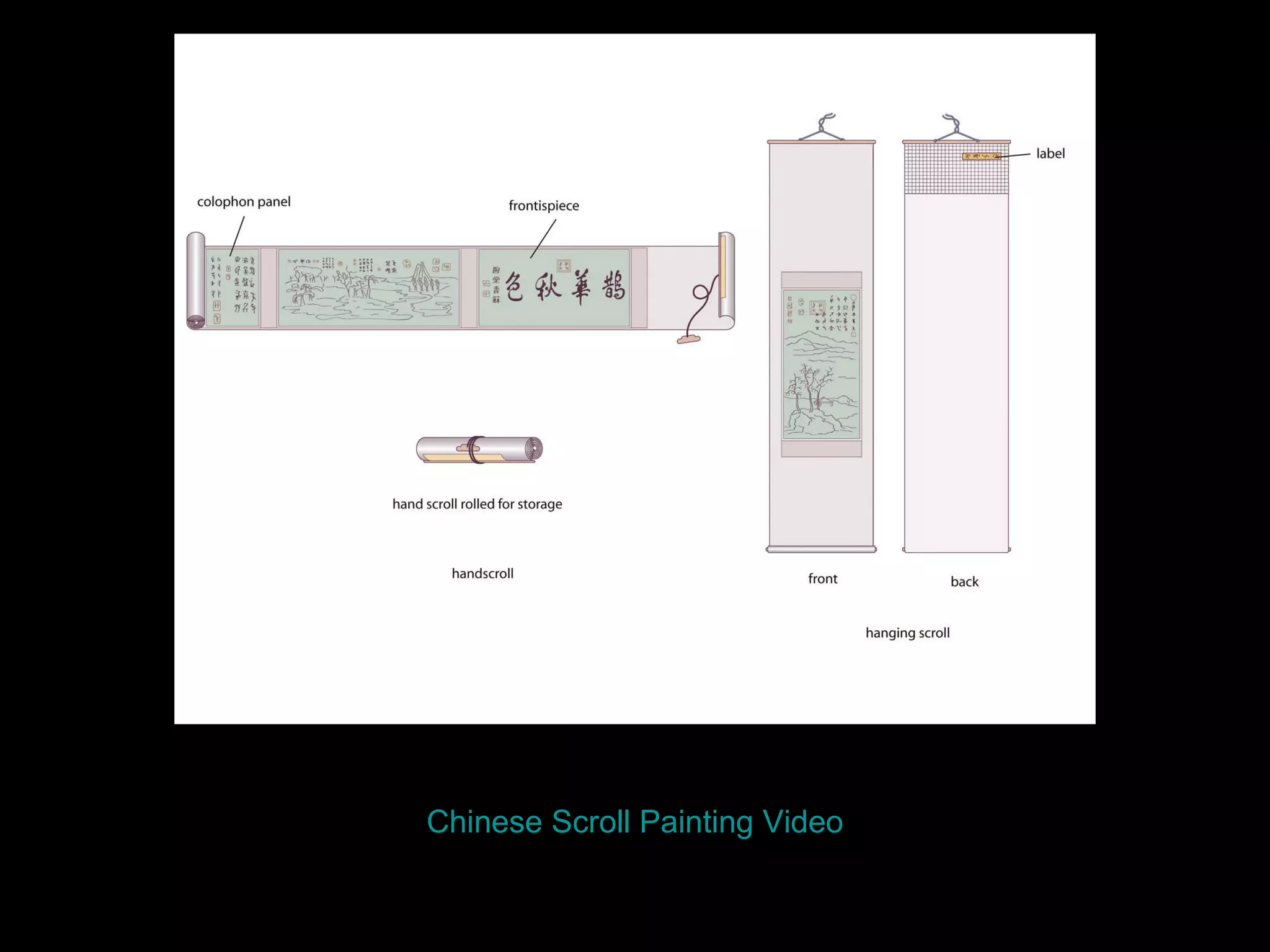
Chinese Scroll Painting Video
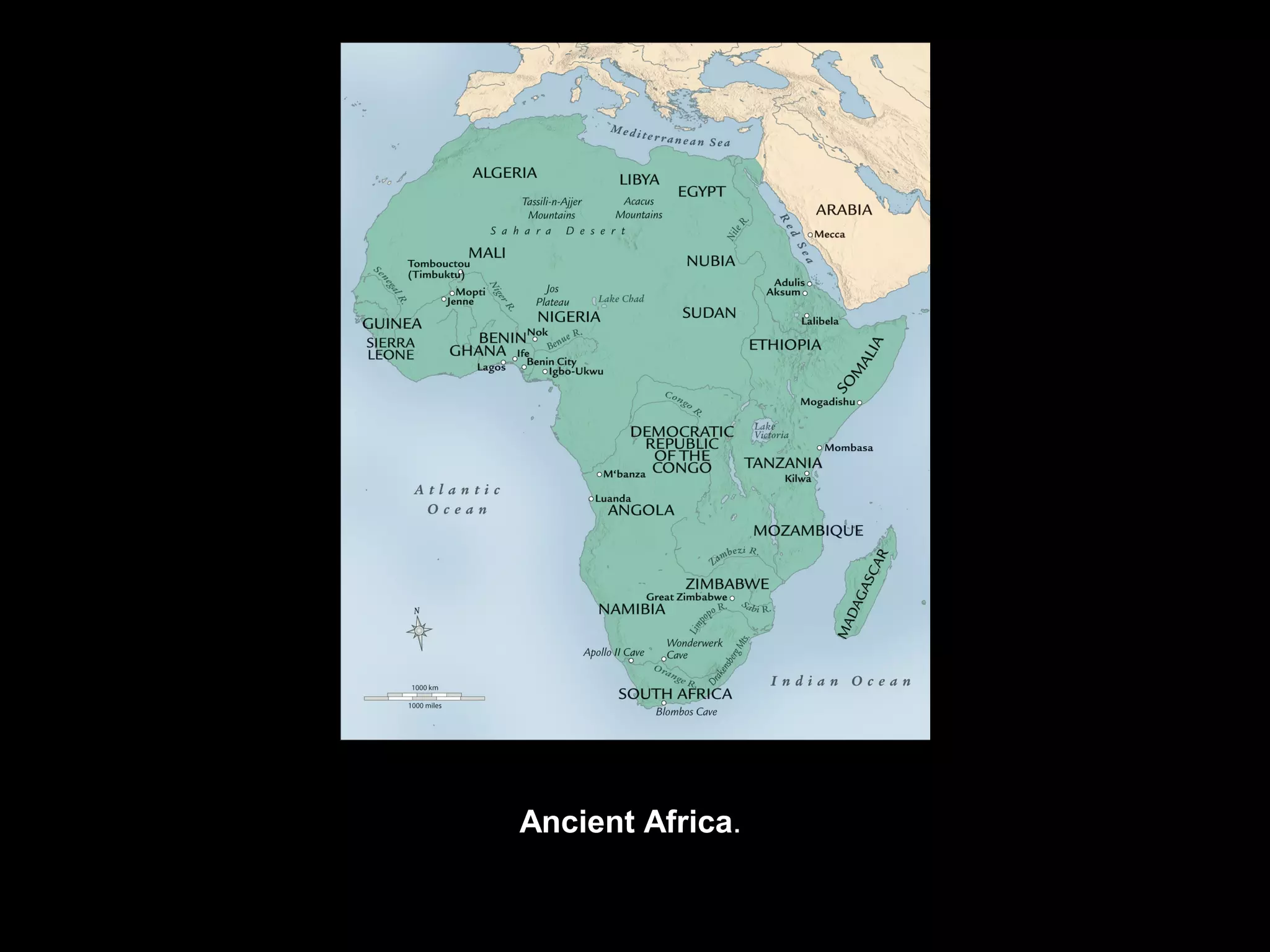
Ancient Africa.
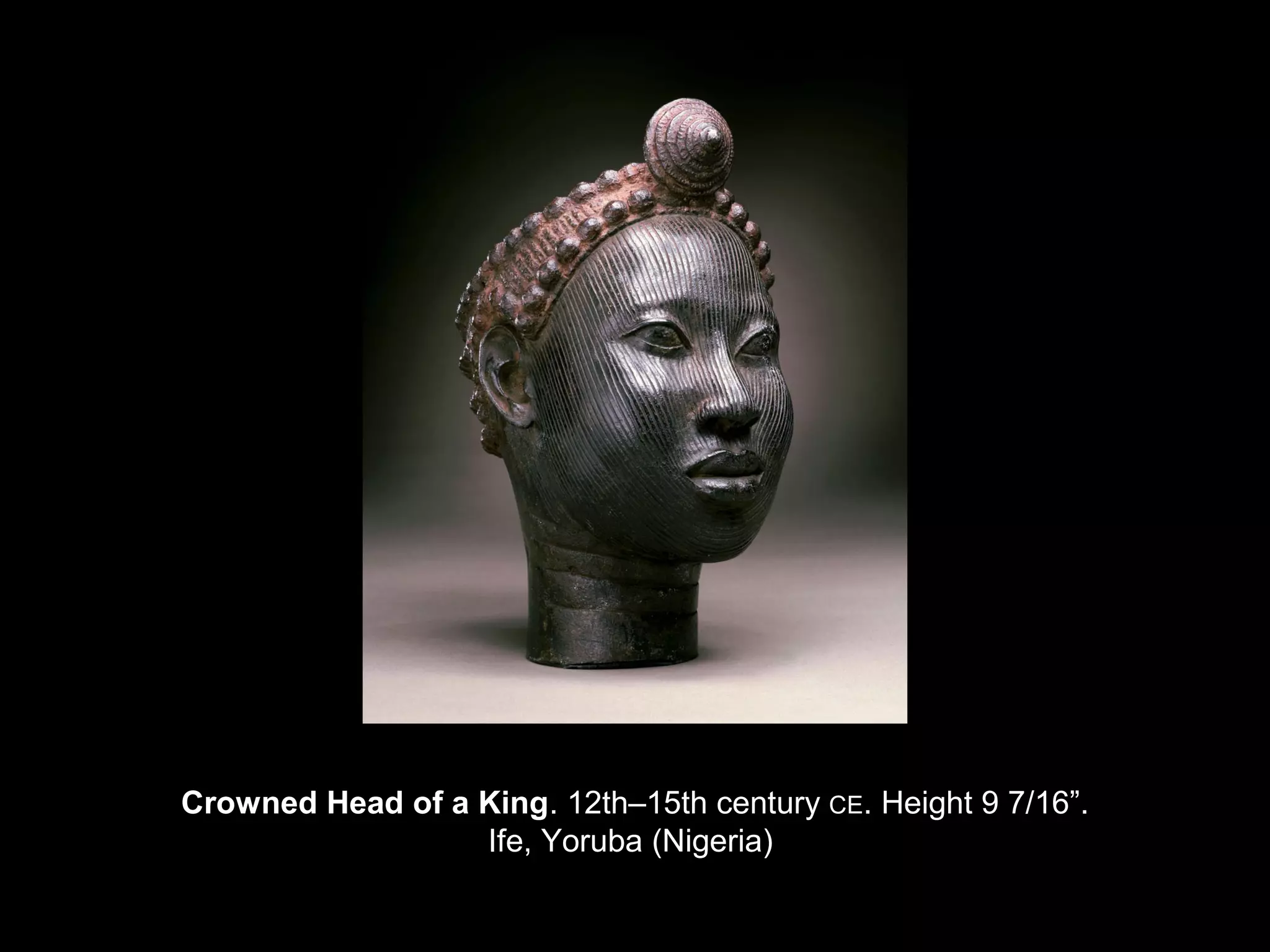
Crowned Head of a King. 12th–15th century CE. Height 9 7/16”.
                  Ife, Yoruba (Nigeria)
Lost-Wax Casting
   Video link
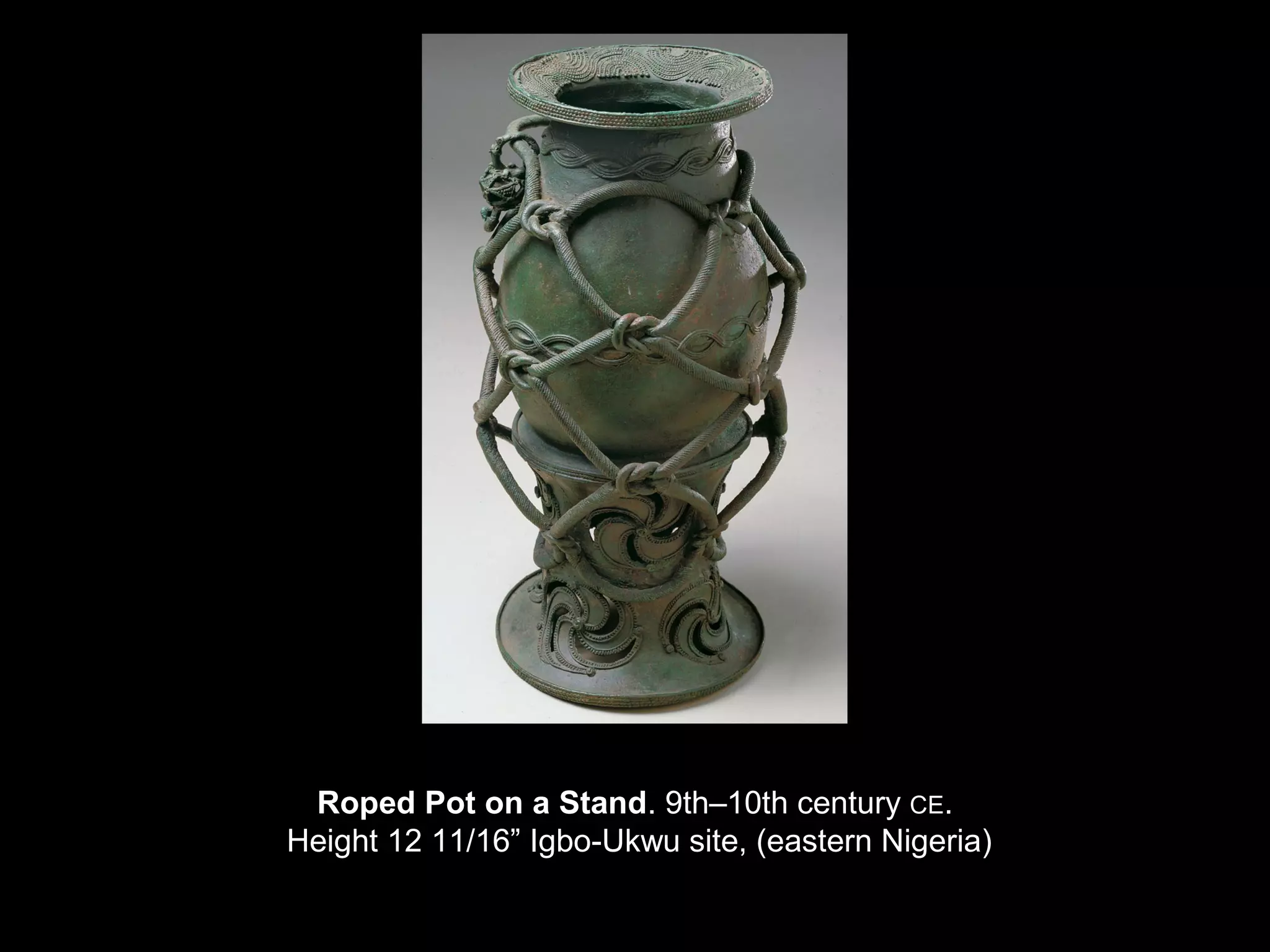
Roped Pot on a Stand. 9th–10th century CE.
Height 12 11/16” Igbo-Ukwu site, (eastern Nigeria)
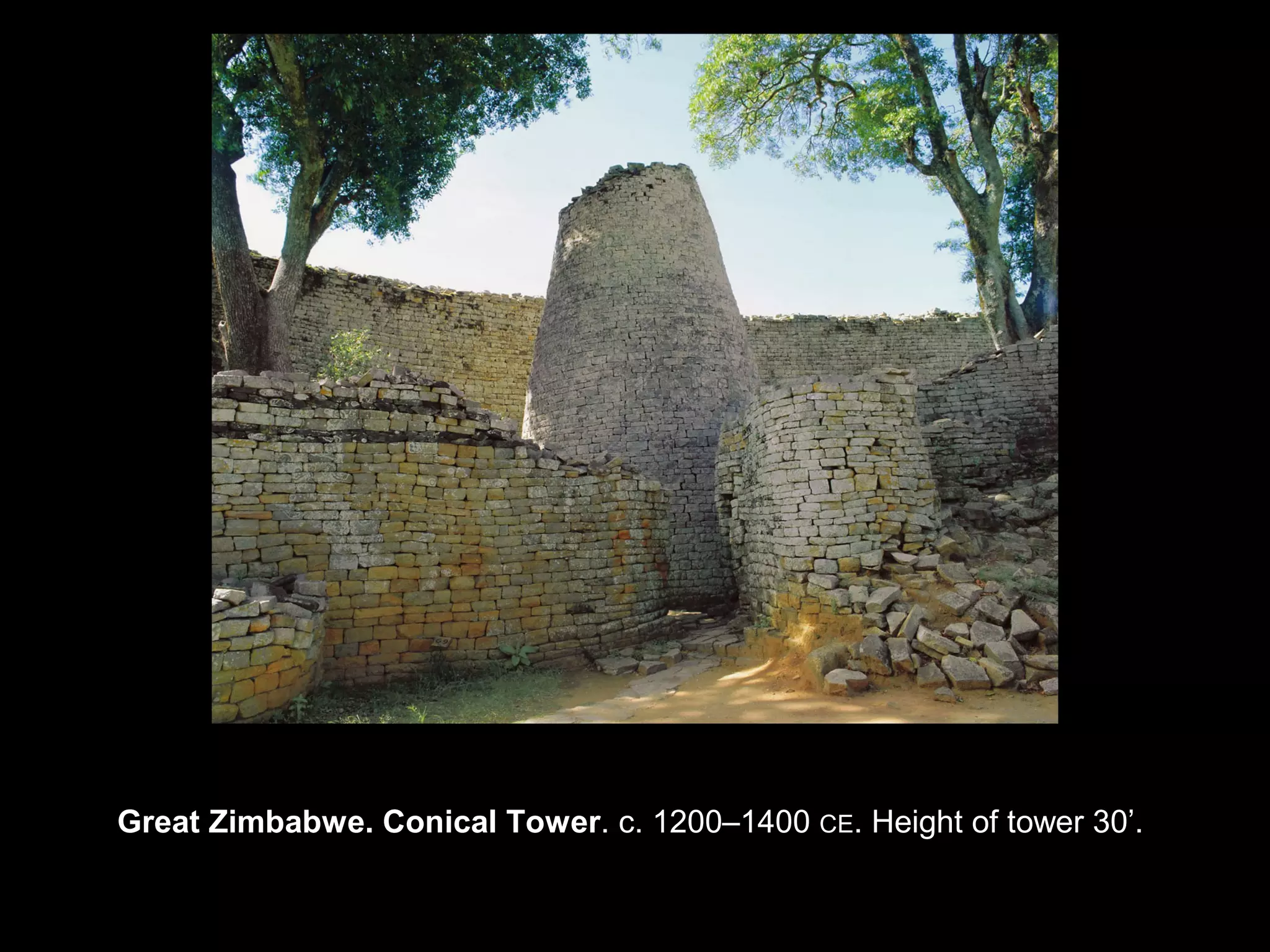
Great Zimbabwe. Conical Tower. c. 1200–1400 CE. Height of tower 30’.
Exam two review f12

Editor's Notes

  • #5 Colosseum and Pantheon as major examples