Evolving Technical Writing Skills for Excelling in Developer.pptx
Transitioning to Developer Docs has a steep learning curve. These PPT slide helps you how to smoothly transition to Developer Docs and skills required for Developer Docs
Evolving Technical Writing Skills for Excelling in Developer.pptx
1.
Evolving Technical WritingSkills for
Excelling in Developer Documentation
Presenter:
Raghuram Pandurangan
PayU India
2.
• Documentation Thenvs Now
• Core Technical Skills for Dev Docs
• Leveraging AI to Enhance Your Documentation Skills
• Career Paths & Specializations
AGENDA
3.
Traditional practices providedclear,
structured documentation for users.
Strength in Clarity
Limited use of visuals led to low
user engagement and
comprehension.
Integration of technology could
enhance interactivity and
accessibility.
Evolving user expectations risk
rendering traditional methods
ineffective.
Weakness in
Engagement
Opportunity for
Improvement
Threat of
Obsolescence
THEN: Traditional Technical Writing Practices
4.
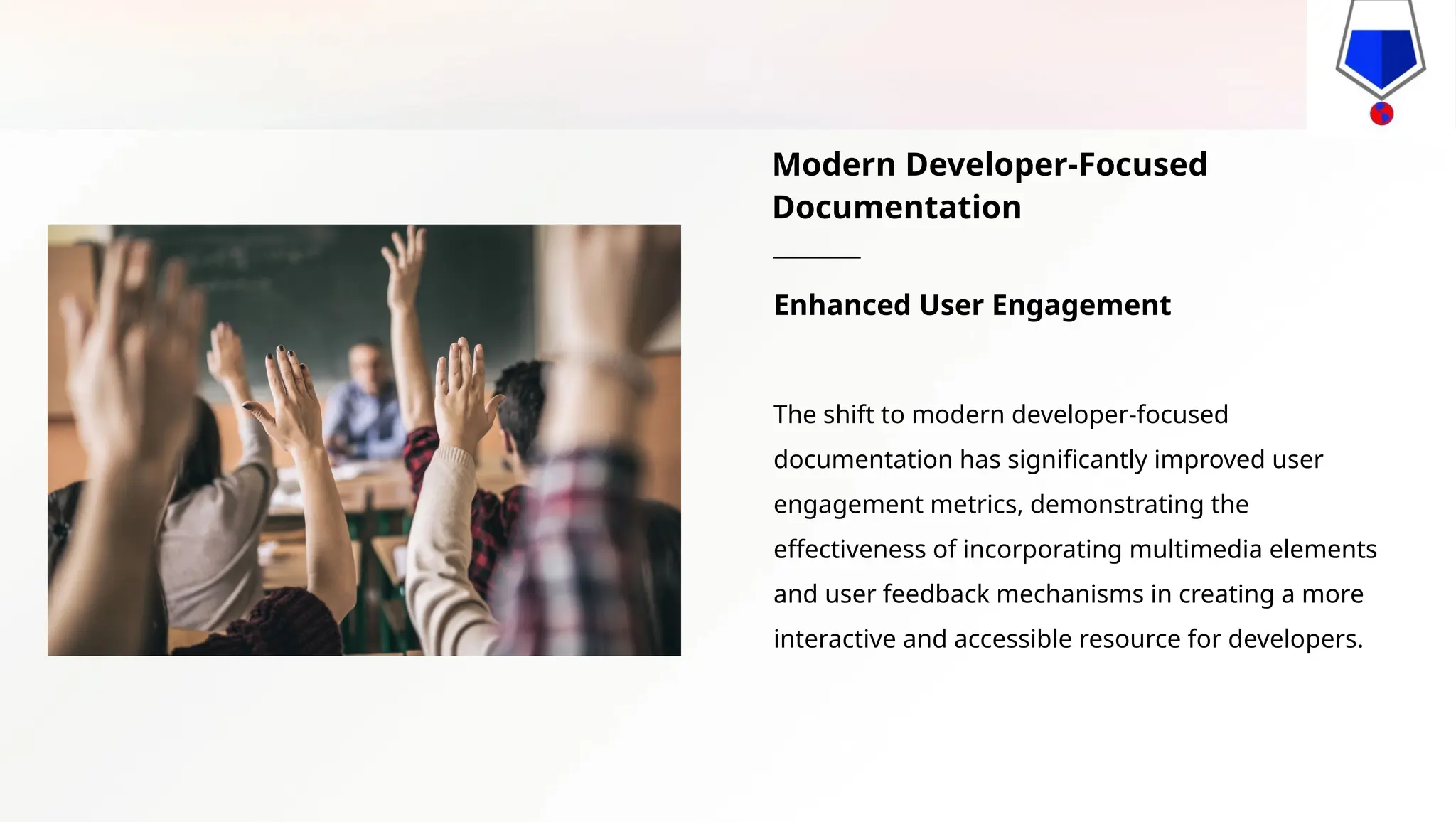
Modern Developer-Focused
Documentation
Enhanced UserEngagement
The shift to modern developer-focused
documentation has significantly improved user
engagement metrics, demonstrating the
effectiveness of incorporating multimedia elements
and user feedback mechanisms in creating a more
interactive and accessible resource for developers.
5.
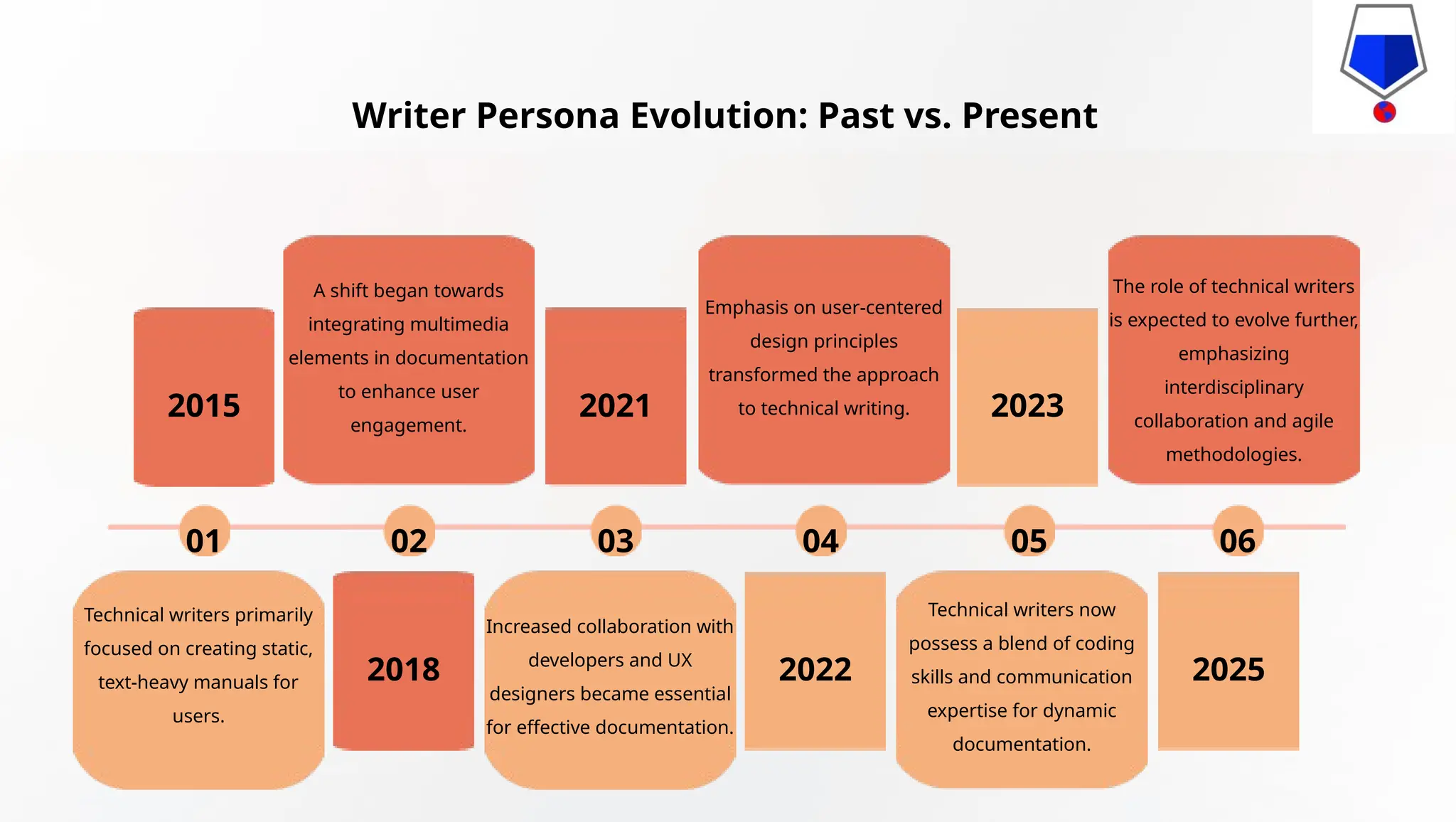
2015
2018
2021
2022
2023
2025
Technical writers primarily
focusedon creating static,
text-heavy manuals for
users.
A shift began towards
integrating multimedia
elements in documentation
to enhance user
engagement.
Increased collaboration with
developers and UX
designers became essential
for effective documentation.
Emphasis on user-centered
design principles
transformed the approach
to technical writing.
Technical writers now
possess a blend of coding
skills and communication
expertise for dynamic
documentation.
The role of technical writers
is expected to evolve further,
emphasizing
interdisciplinary
collaboration and agile
methodologies.
01 02 03 04 05 06
Writer Persona Evolution: Past vs. Present
6.
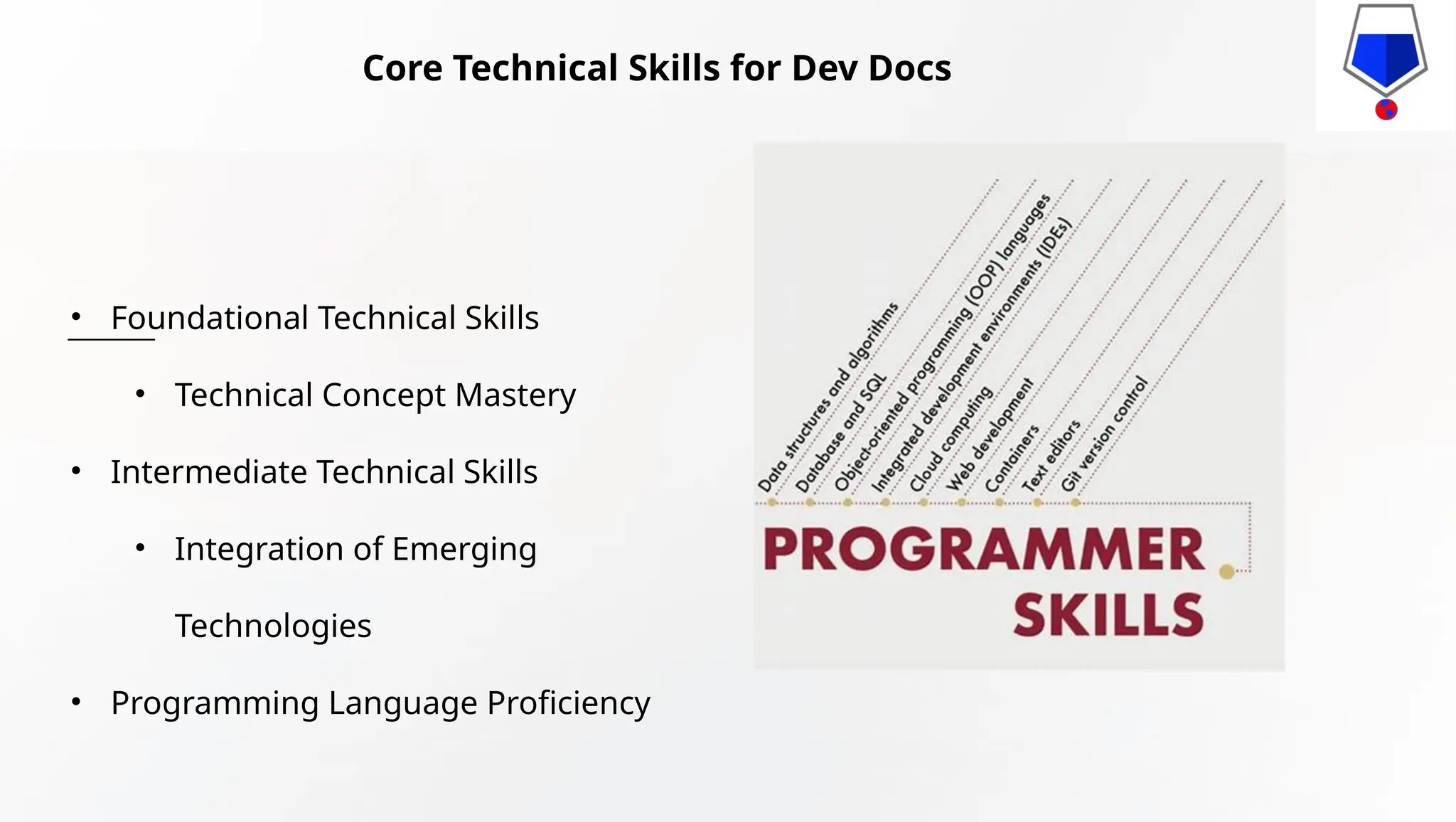
Core Technical Skillsfor Dev Docs
• Foundational Technical Skills
• Technical Concept Mastery
• Intermediate Technical Skills
• Integration of Emerging
Technologies
• Programming Language Proficiency
7.
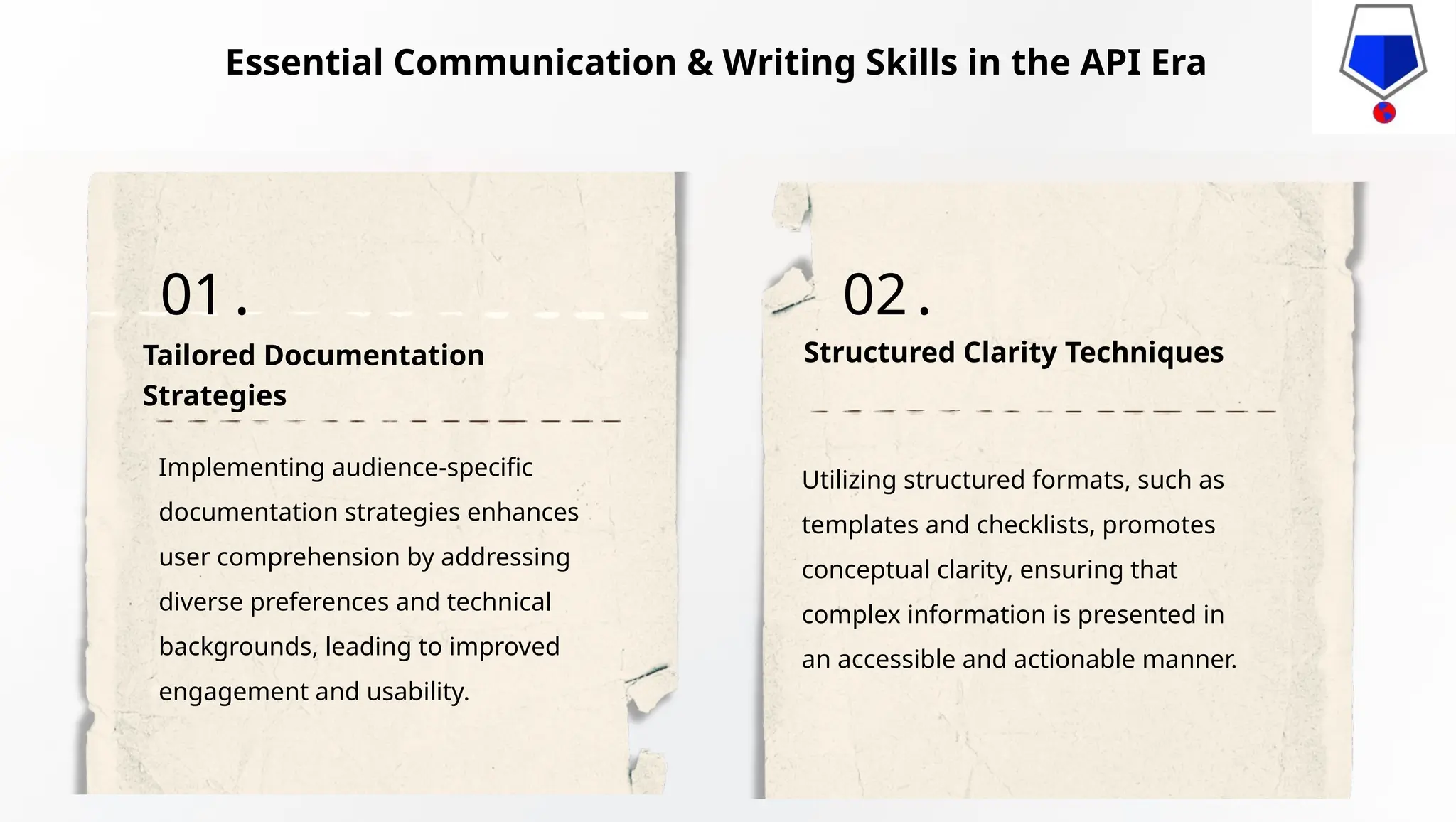
Implementing audience-specific
documentation strategiesenhances
user comprehension by addressing
diverse preferences and technical
backgrounds, leading to improved
engagement and usability.
Utilizing structured formats, such as
templates and checklists, promotes
conceptual clarity, ensuring that
complex information is presented in
an accessible and actionable manner.
Tailored Documentation
Strategies
Structured Clarity Techniques
01. 02.
Essential Communication & Writing Skills in the API Era
8.
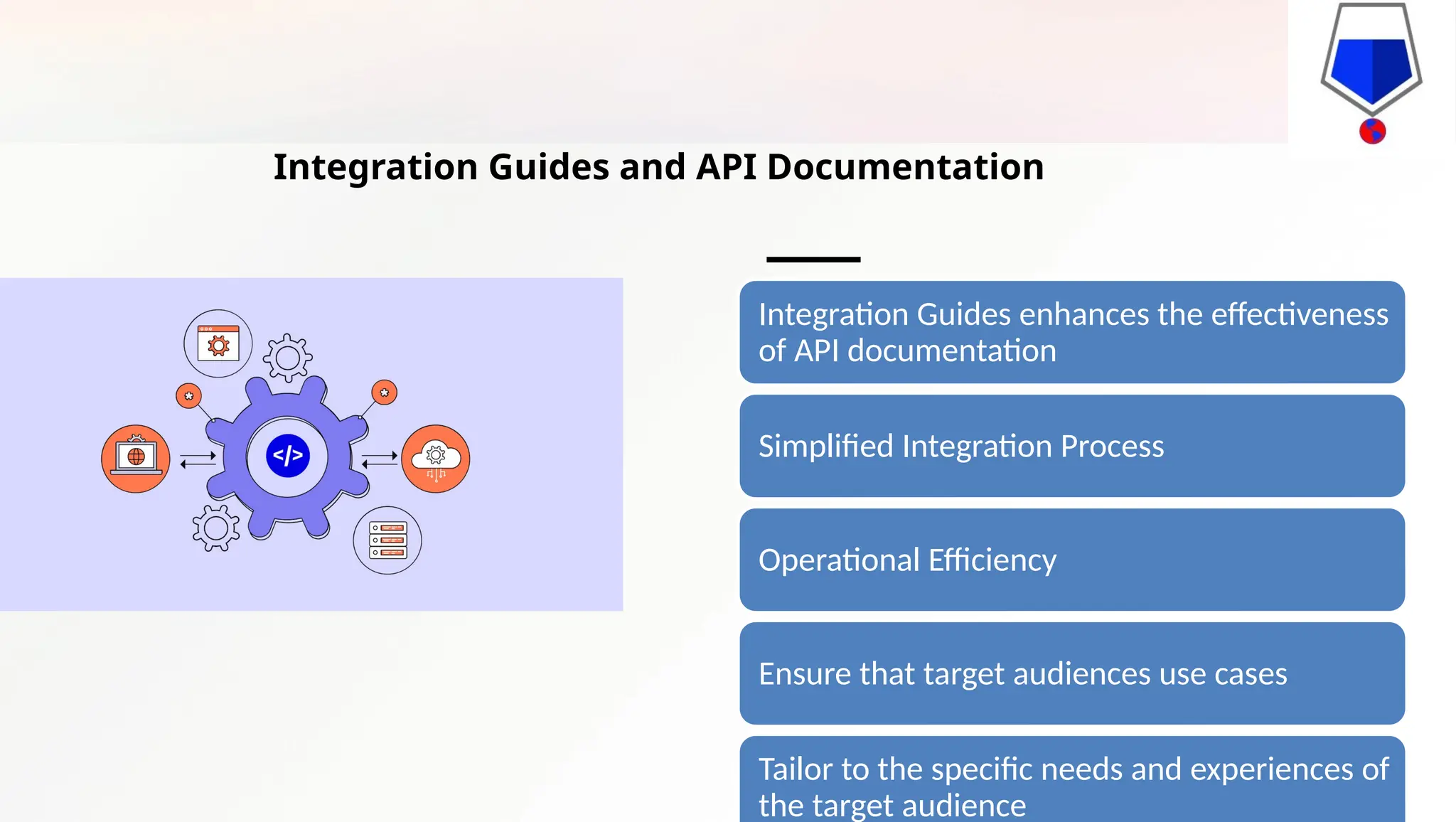
Integration Guides andAPI Documentation
Integration Guides enhances the effectiveness
of API documentation
Simplified Integration Process
Operational Efficiency
Ensure that target audiences use cases
Tailor to the specific needs and experiences of
the target audience
9.
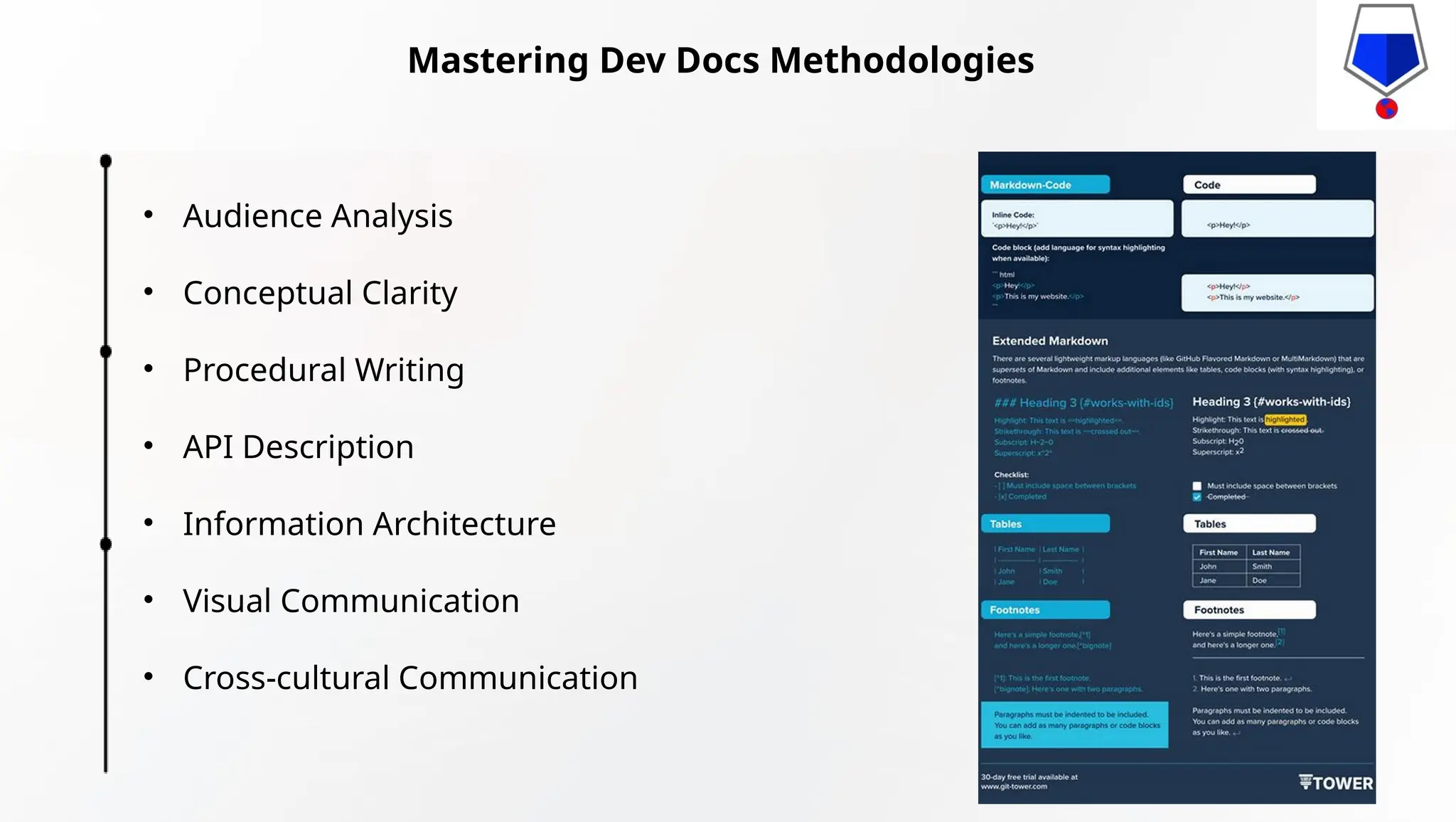
Mastering Dev DocsMethodologies
• Audience Analysis
• Conceptual Clarity
• Procedural Writing
• API Description
• Information Architecture
• Visual Communication
• Cross-cultural Communication
10.
Evolving Technical Writing:Developer Docs to Docs as Code
From Manuals to AI-Integrated
Docs
Technical writing has transitioned
from static print manuals to
dynamic, code-integrated, AI-
enhanced documentation
ecosystems.
Shift in Writer's Role
Modern technical writers are
expected to be part content
strategist, part developer, and
part UX researcher.
Need for Modern Tools
Mastery of tools like Git,
Markdown, CI/CD platforms, and
AI writing assistants is becoming
essential.
Mastery of AItools enhances documentation
quality by providing real-time suggestions and
improving overall writing efficiency.
Proficiency in AI Tools
Effective integration of AI into existing
workflows streamlines processes, allowing
writers to focus on creativity while
leveraging AI capabilities.
Workflow Integration Techniques
Data-Driven Content Strategies
Utilizing analytics from AI tools informs
content strategies, ensuring
documentation aligns with user
engagement and needs.
AI Collaboration Skills
13.
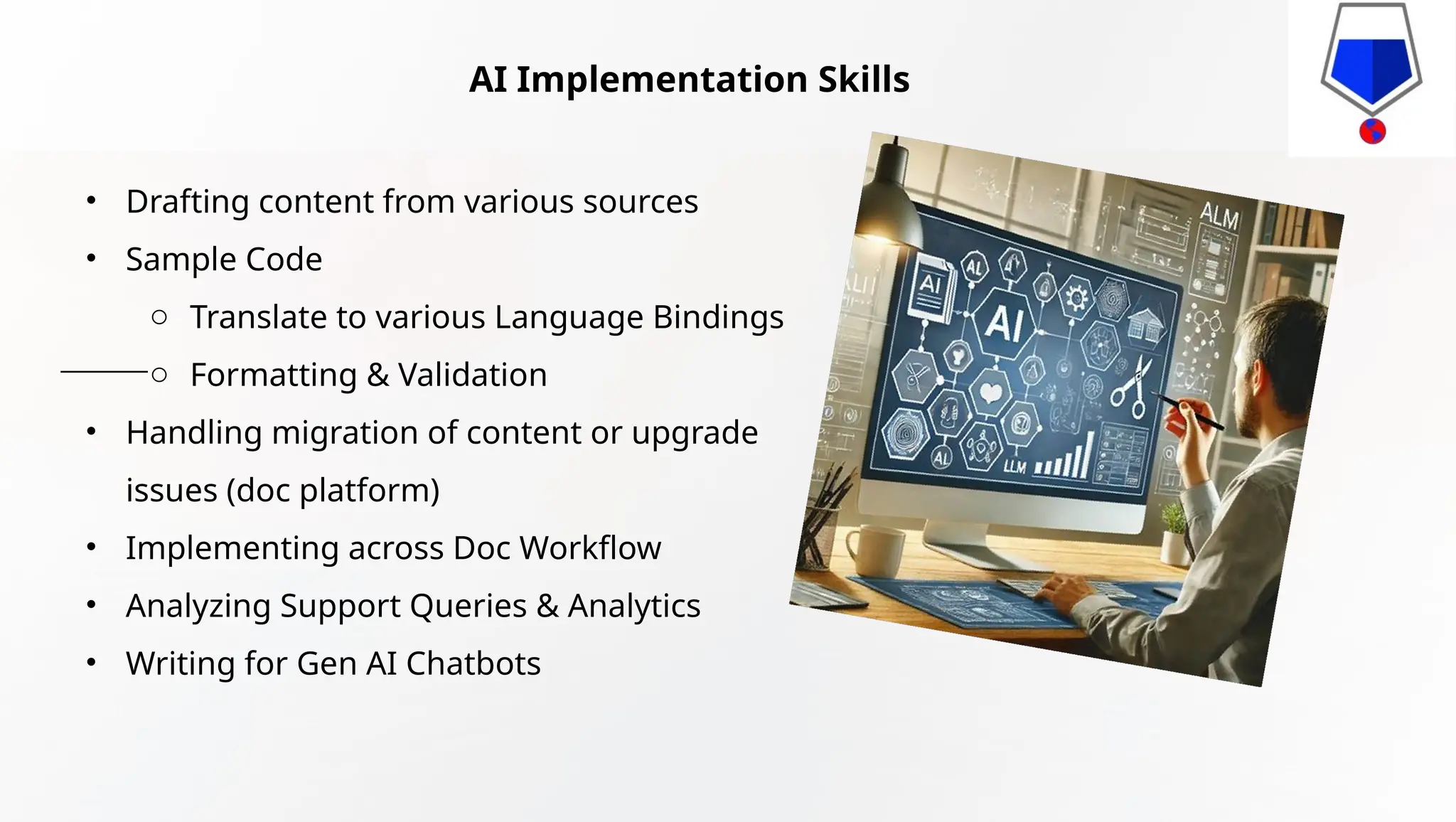
AI Implementation Skills
•Drafting content from various sources
• Sample Code
o Translate to various Language Bindings
o Formatting & Validation
• Handling migration of content or upgrade
issues (doc platform)
• Implementing across Doc Workflow
• Analyzing Support Queries & Analytics
• Writing for Gen AI Chatbots
14.
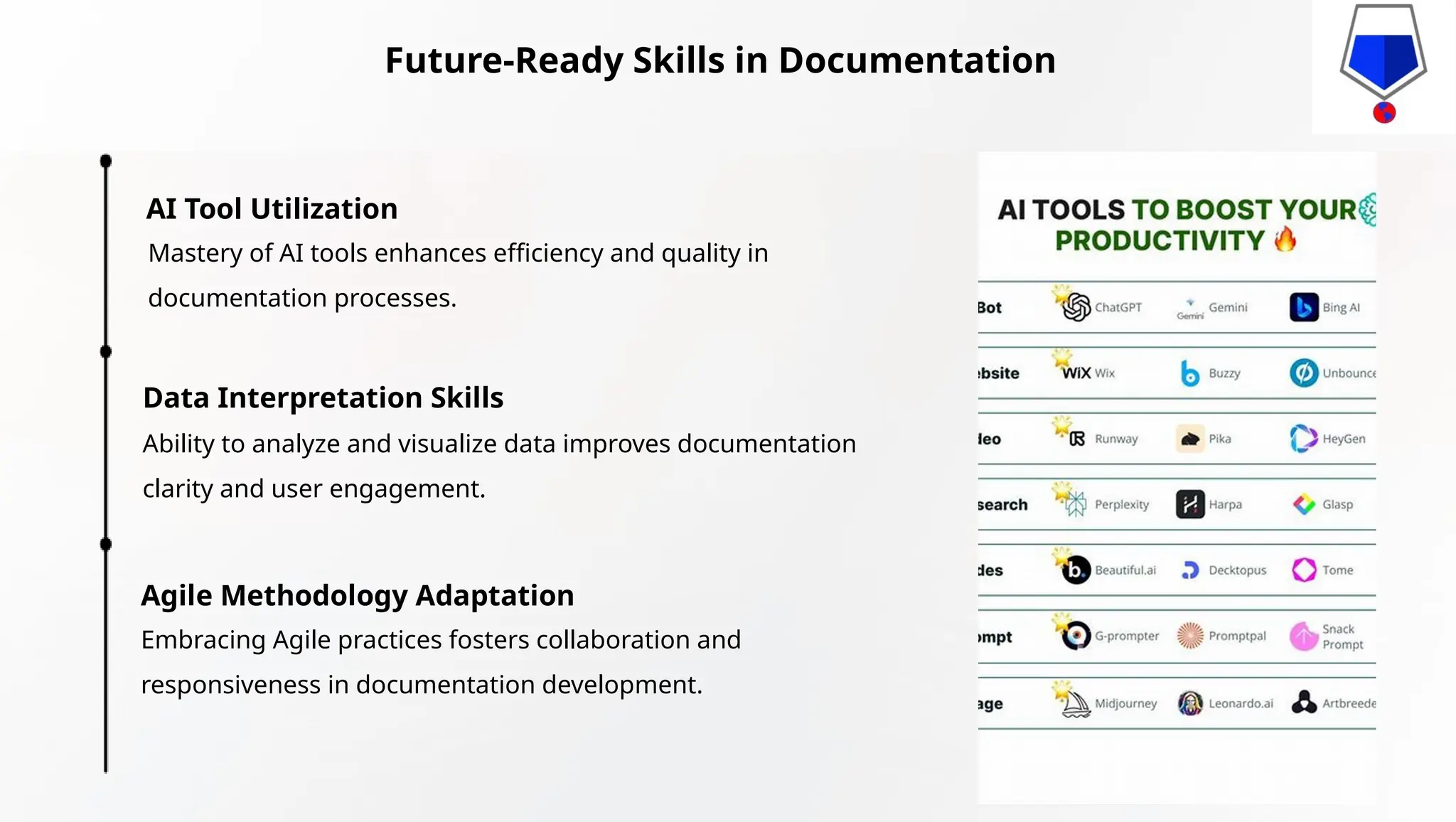
Future-Ready Skills inDocumentation
AI Tool Utilization
Mastery of AI tools enhances efficiency and quality in
documentation processes.
Data Interpretation Skills
Ability to analyze and visualize data improves documentation
clarity and user engagement.
Agile Methodology Adaptation
Embracing Agile practices fosters collaboration and
responsiveness in documentation development.
The rise ofintegrated technical writers and UX writers reflects
the need for collaboration and user-centered design in
modern documentation practices.
As documentation architects and content strategists gain
prominence, professionals must develop specialized skills to
meet evolving industry requirements and user expectations.
01
02
Emerging Roles in Documentation
Specialization and Skill Demand
Evolving Careers in Technical Documentation
17.
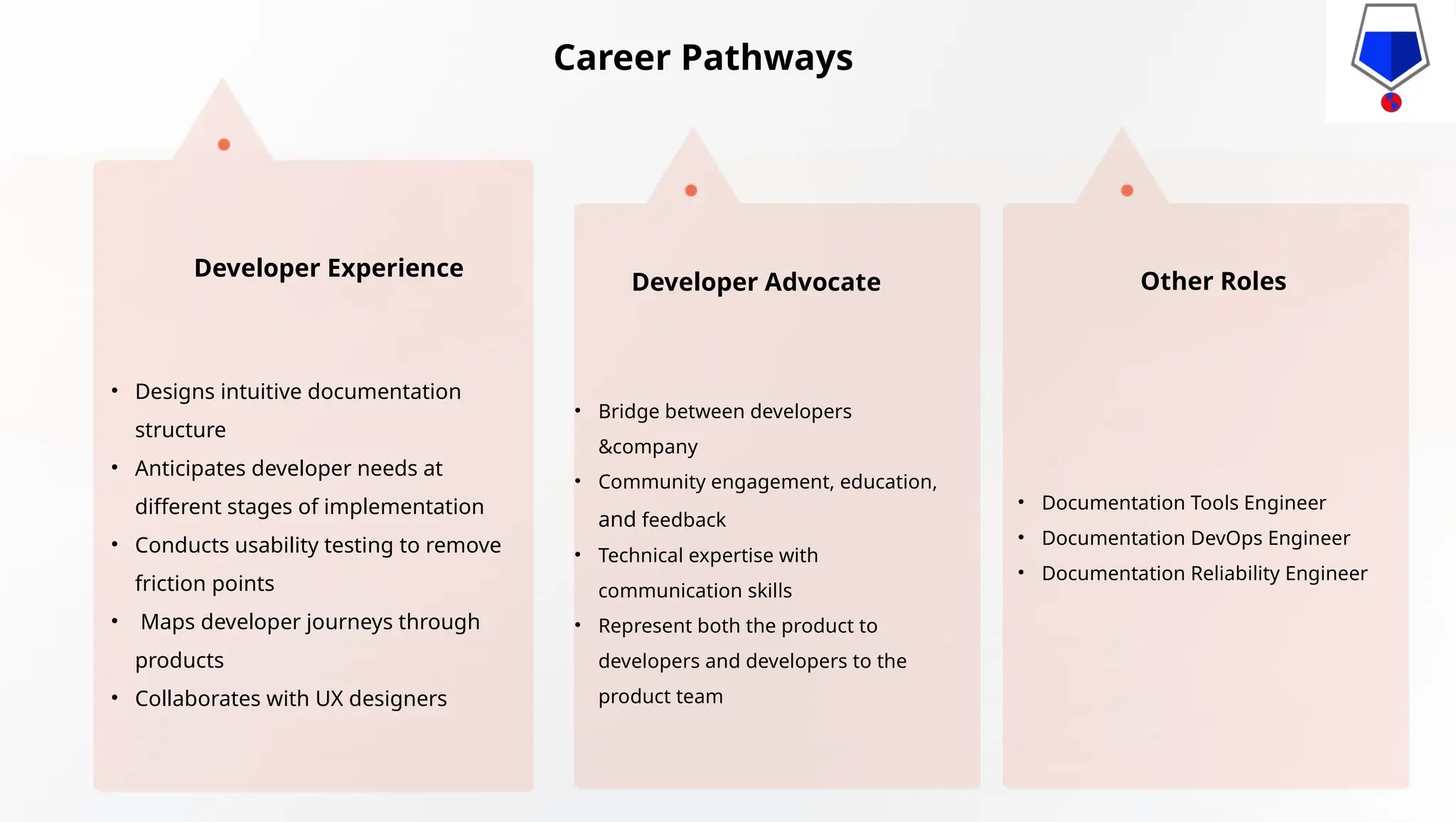
• Designs intuitivedocumentation
structure
• Anticipates developer needs at
different stages of implementation
• Conducts usability testing to remove
friction points
• Maps developer journeys through
products
• Collaborates with UX designers
Developer Experience
• Bridge between developers
&company
• Community engagement, education,
and feedback
• Technical expertise with
communication skills
• Represent both the product to
developers and developers to the
product team
Developer Advocate
Career Pathways
• Documentation Tools Engineer
• Documentation DevOps Engineer
• Documentation Reliability Engineer
Other Roles
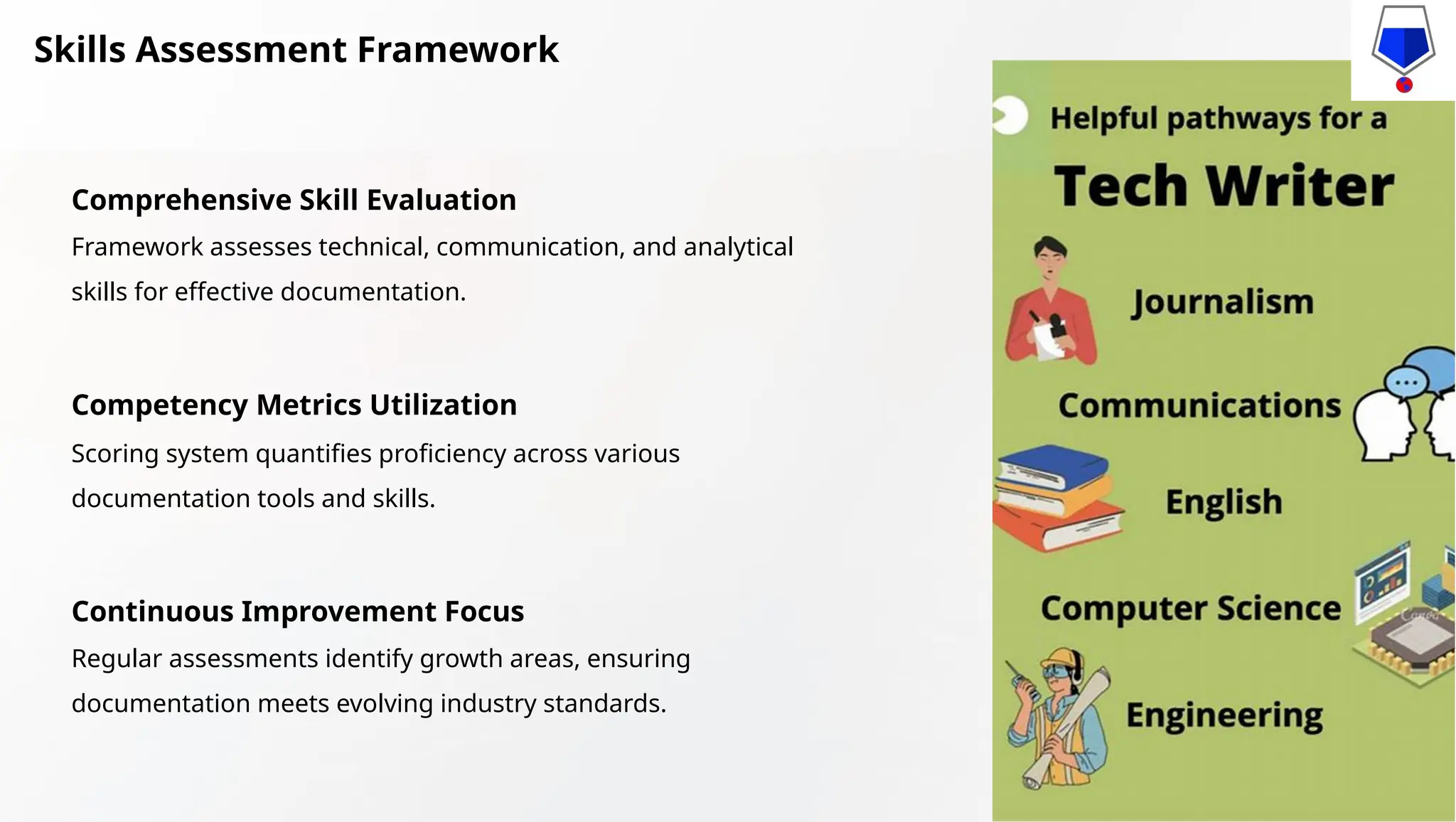
Comprehensive Skill Evaluation
CompetencyMetrics Utilization
Continuous Improvement Focus
Framework assesses technical, communication, and analytical
skills for effective documentation.
Scoring system quantifies proficiency across various
documentation tools and skills.
Regular assessments identify growth areas, ensuring
documentation meets evolving industry standards.
Skills Assessment Framework
20.
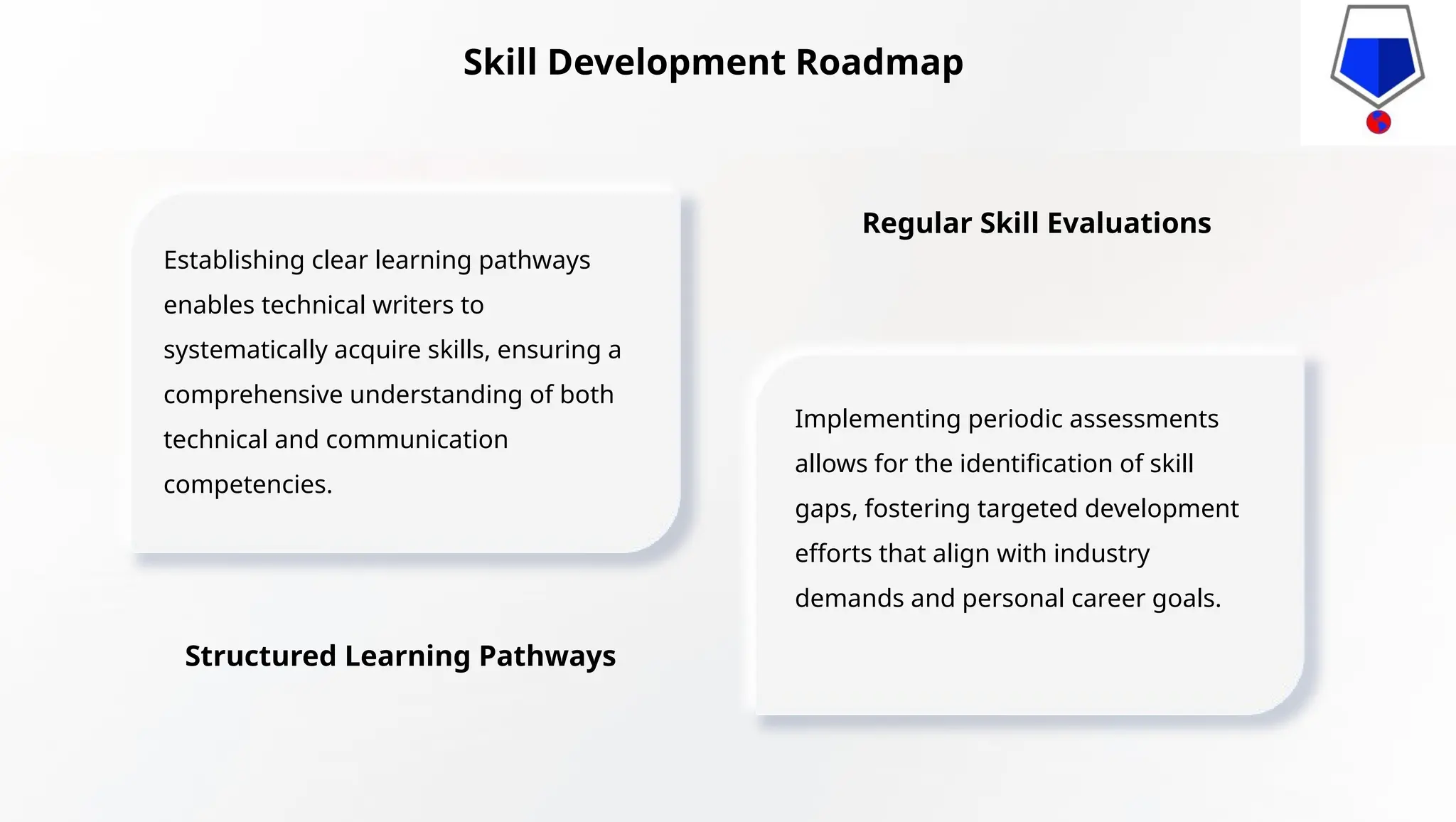
Establishing clear learningpathways
enables technical writers to
systematically acquire skills, ensuring a
comprehensive understanding of both
technical and communication
competencies.
Implementing periodic assessments
allows for the identification of skill
gaps, fostering targeted development
efforts that align with industry
demands and personal career goals.
Structured Learning Pathways
Regular Skill Evaluations
Skill Development Roadmap
21.
Continuous skill enhancementis vital for
technical writers to remain competitive,
adapting to new technologies and
methodologies in documentation practices.
Importance of Lifelong Learning
Implementing regular self-assessment metrics
allows writers to track progress, identify areas
for improvement, and align their skills with
industry demands effectively.
Structured Self-Assessment
01 02
Ongoing Skill Development Journey
22.
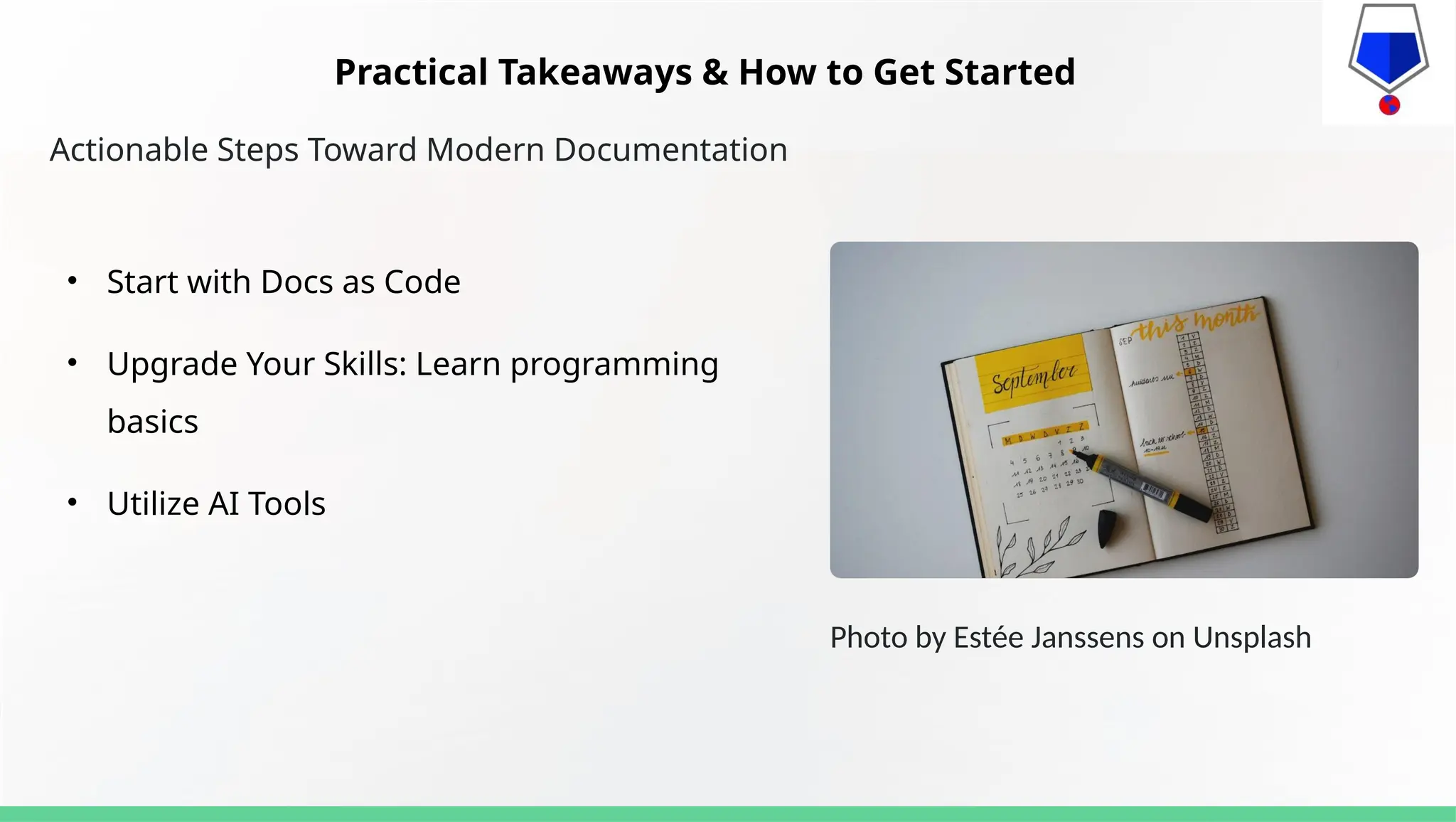
Actionable Steps TowardModern Documentation
• Start with Docs as Code
• Upgrade Your Skills: Learn programming
basics
• Utilize AI Tools
Photo by Estée Janssens on Unsplash
Practical Takeaways & How to Get Started
Transition from static
manualsto interactive,
collaborative
documentation enhances
user engagement and
accuracy in technical
writing.
Documentation Skill
Evolution
Mastery of coding and
software tools is essential
for modern technical
writers to effectively
communicate complex
information.
Technical Proficiency
Necessity
Integrating AI
technologies streamlines
documentation processes,
improving efficiency and
enabling adaptive content
tailored to user needs.
AI's Role in
Documentation
Page 8.1: Summary of Key Takeaways
25.
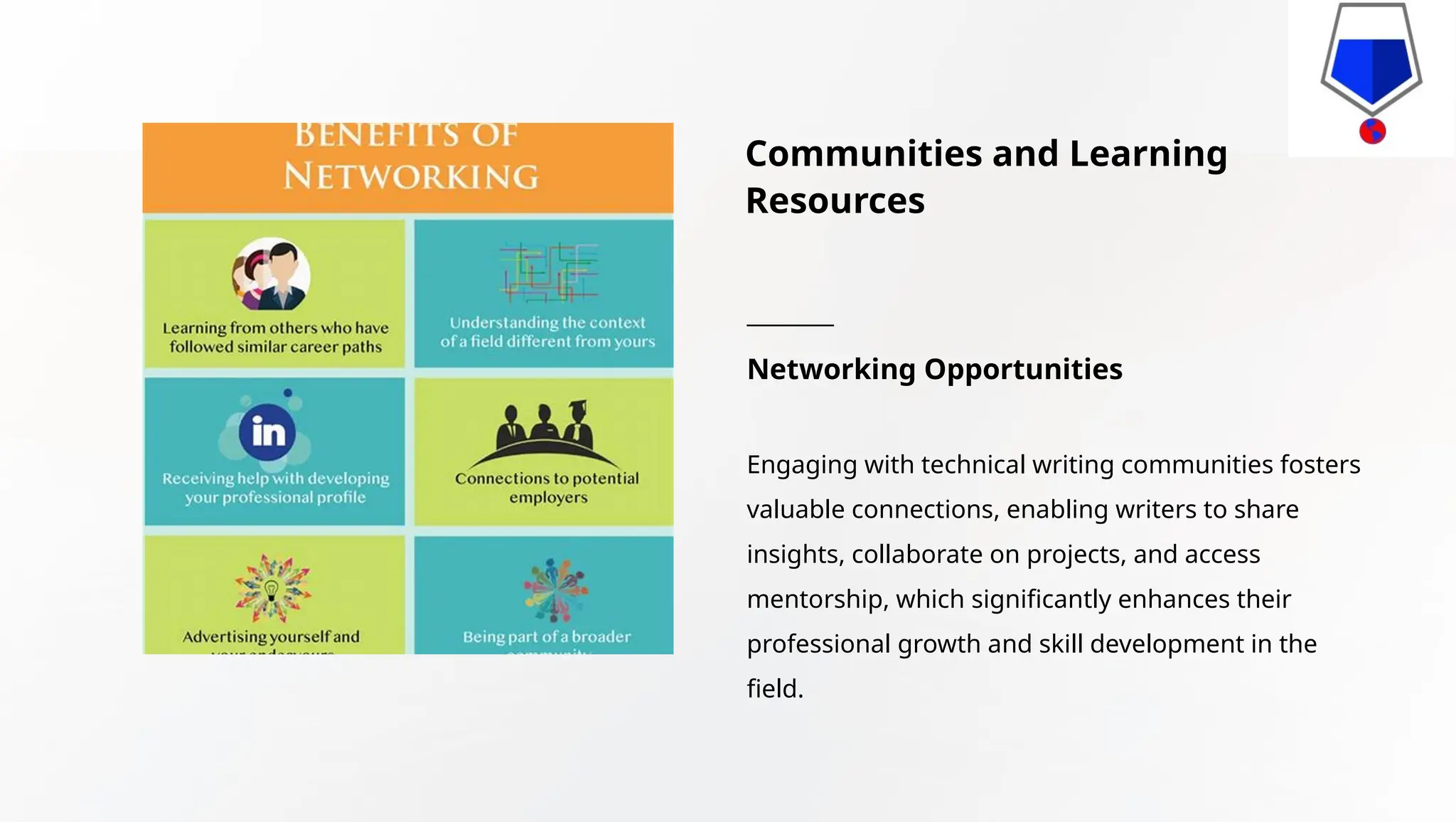
Networking Opportunities
Engaging withtechnical writing communities fosters
valuable connections, enabling writers to share
insights, collaborate on projects, and access
mentorship, which significantly enhances their
professional growth and skill development in the
field.
Communities and Learning
Resources
26.
Practice Opportunities forSkill Enhancement
Workshops for Practical Skills
Engage in hands-on workshops to refine technical writing
through real-world scenarios and expert guidance.
Collaborative Peer Feedback
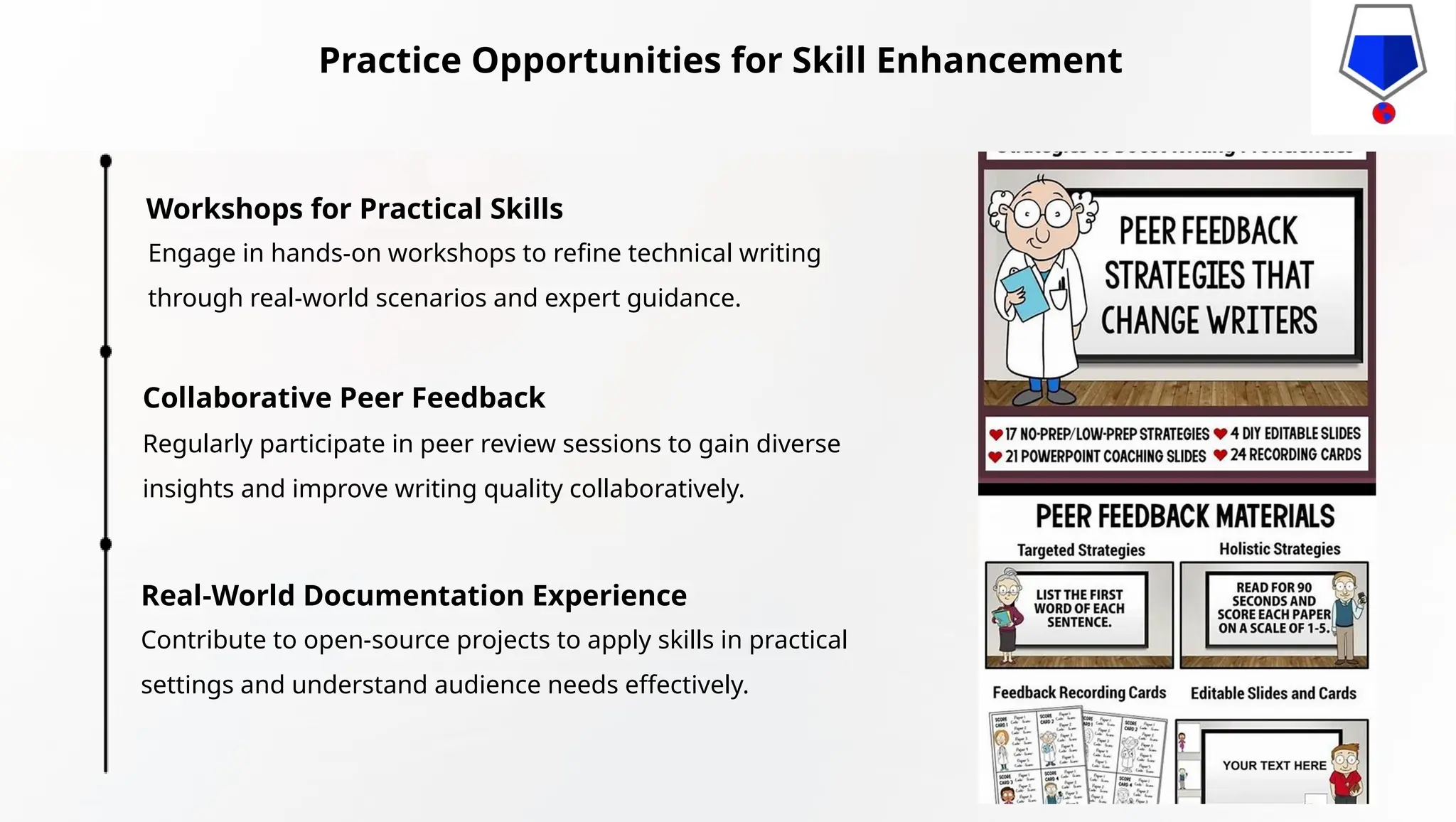
Regularly participate in peer review sessions to gain diverse
insights and improve writing quality collaboratively.
Real-World Documentation Experience
Contribute to open-source projects to apply skills in practical
settings and understand audience needs effectively.
Utilizing visual datarepresentations, like
infographics and charts, effectively
communicates user engagement trends,
making complex information more
accessible and understandable for the
audience.
Visual Data Representation
Implementing diverse feedback
mechanisms, such as interactive surveys
and user testing, allows for real-time
insights into user experiences,
enhancing documentation relevance
and usability.
Audience Feedback Mechanisms
01
02
Engaging with Audience Experiences
31.
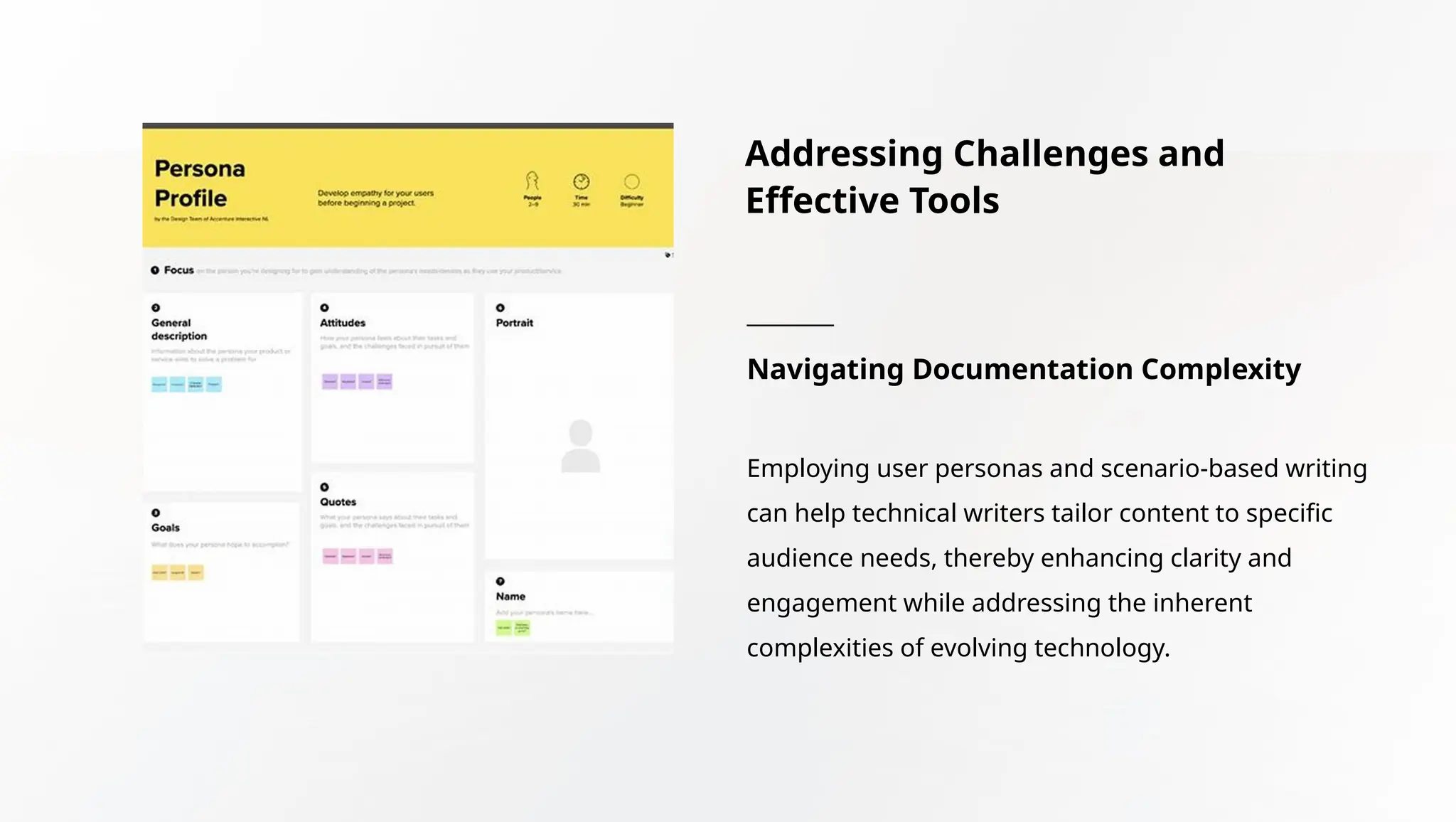
Navigating Documentation Complexity
Employinguser personas and scenario-based writing
can help technical writers tailor content to specific
audience needs, thereby enhancing clarity and
engagement while addressing the inherent
complexities of evolving technology.
Addressing Challenges and
Effective Tools
32.
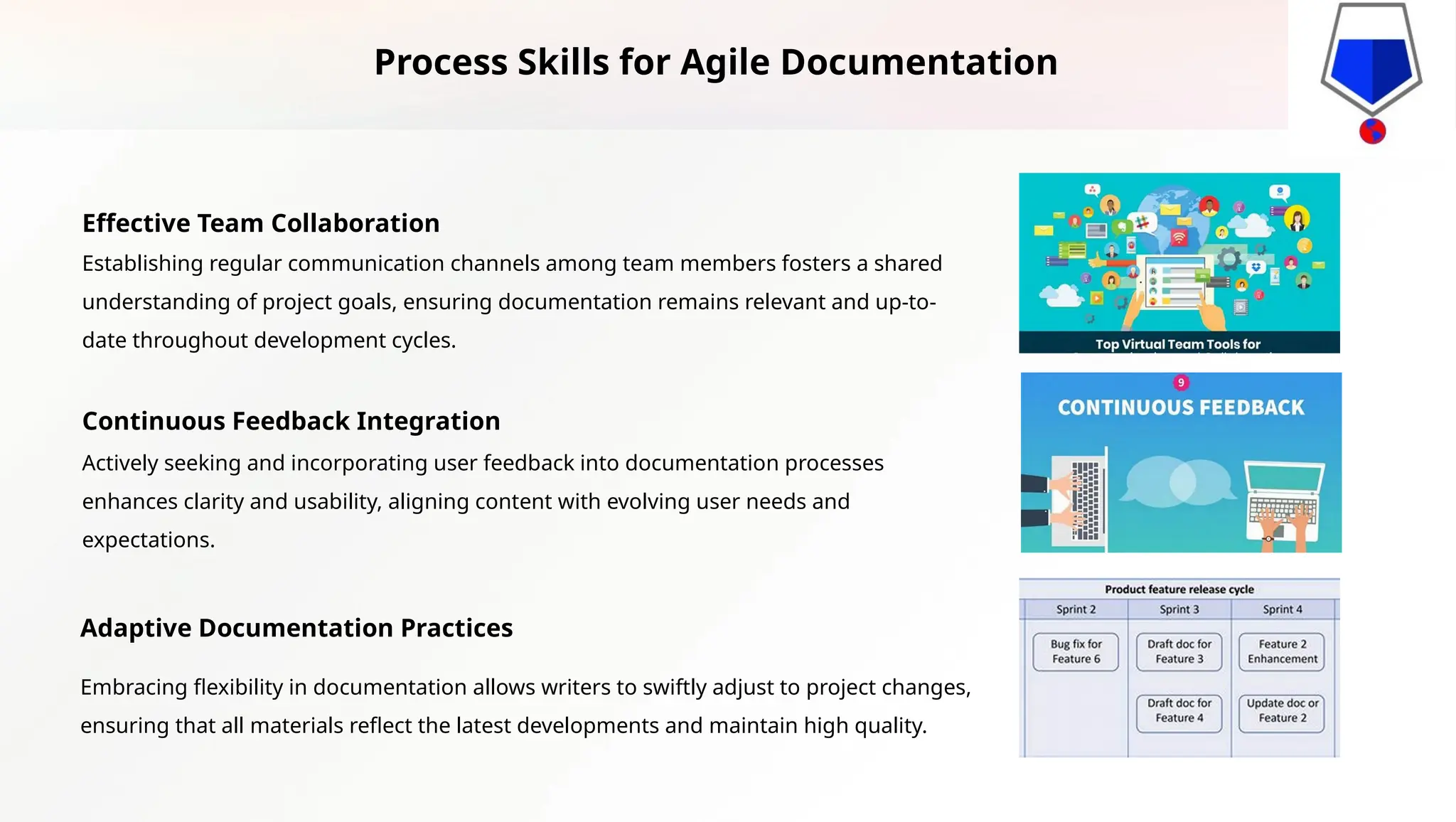
Effective Team Collaboration
Establishingregular communication channels among team members fosters a shared
understanding of project goals, ensuring documentation remains relevant and up-to-
date throughout development cycles.
Continuous Feedback Integration
Actively seeking and incorporating user feedback into documentation processes
enhances clarity and usability, aligning content with evolving user needs and
expectations.
Adaptive Documentation Practices
Embracing flexibility in documentation allows writers to swiftly adjust to project changes,
ensuring that all materials reflect the latest developments and maintain high quality.
Process Skills for Agile Documentation
33.
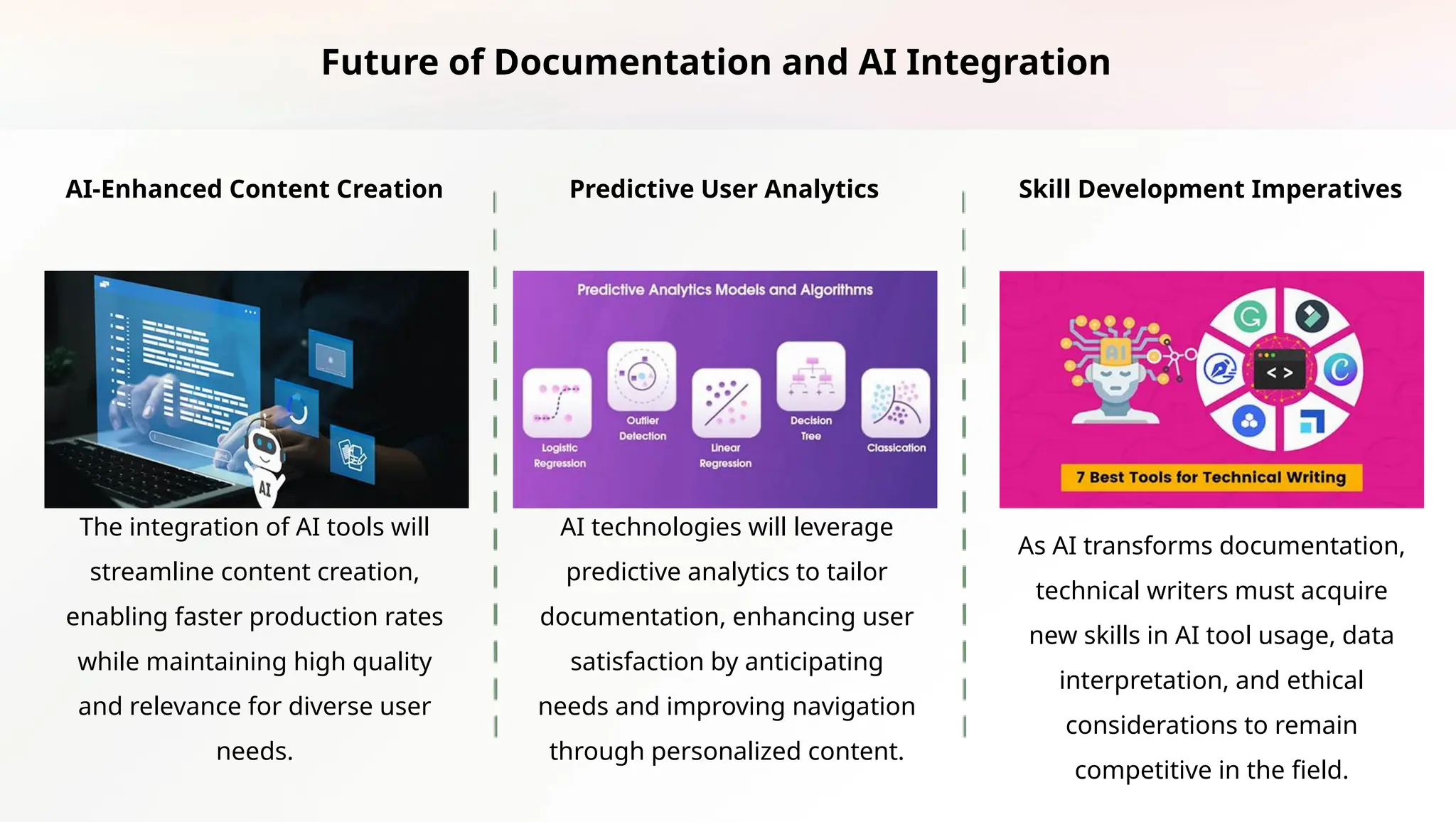
AI-Enhanced Content CreationPredictive User Analytics Skill Development Imperatives
The integration of AI tools will
streamline content creation,
enabling faster production rates
while maintaining high quality
and relevance for diverse user
needs.
AI technologies will leverage
predictive analytics to tailor
documentation, enhancing user
satisfaction by anticipating
needs and improving navigation
through personalized content.
As AI transforms documentation,
technical writers must acquire
new skills in AI tool usage, data
interpretation, and ethical
considerations to remain
competitive in the field.
Future of Documentation and AI Integration
Editor's Notes
#2 A well-rounded skill set in writing, technical knowledge, and tool proficiency is crucial for technical writers to produce high-quality documentation that meets user needs and industry standards.
Empathy in technical writing fosters a deeper connection with diverse audiences, enabling writers to create inclusive content that resonates across cultural boundaries, ultimately enhancing user engagement and comprehension of complex information.
#3 The incorporation of agile methodologies has transformed technical writing, requiring writers to collaborate closely with development teams, adapt documentation in real-time, and prioritize user feedback to enhance the relevance and usability of technical content.
The transition from static manuals to interactive digital content highlights the need for technical writers to adapt to evolving user expectations and technological advancements.
The rise of authoring software and collaborative platforms has revolutionized documentation processes, enabling writers to create more engaging and accessible content for diverse audiences.
Emphasizing user feedback and visual communication skills is essential for modern technical writers, ensuring that documentation meets the needs of end-users effectively.
The writer persona in technical documentation has evolved to encompass a broader range of skills, emphasizing the need for writers to not only convey technical information but also to engage with diverse audiences, integrate user feedback, and collaborate effectively with cross-functional teams to enhance the overall quality and accessibility of documentation.
#4 A well-rounded skill set in writing, technical knowledge, and tool proficiency is crucial for technical writers to produce high-quality documentation that meets user needs and industry standards.
Empathy in technical writing fosters a deeper connection with diverse audiences, enabling writers to create inclusive content that resonates across cultural boundaries, ultimately enhancing user engagement and comprehension of complex information.
#6 A comprehensive understanding of technical concepts, including programming languages and system architectures, is essential for technical writers to accurately convey complex information and enhance the clarity of documentation.
Advanced technical skills necessitate the ability to integrate emerging technologies such as artificial intelligence and machine learning into documentation practices, enabling the creation of adaptive content that responds to user interactions and enhances the overall user experience.
Mastery of programming languages such as Python, Java, and JavaScript is crucial for technical writers, enabling them to create accurate and relevant documentation that aligns with developers' needs and enhances user comprehension.
#9 While technical skills are increasingly important, effective communication remains at the heart of technical writing. Let’s examine the specific communication skills that matter most in developer documentation. - Audience analysis is perhaps the most fundamental skill—understanding who your developers are, their technical background, their goals, and how they’ll use your documentation. Different developer personas might include frontend developers, backend engineers, DevOps specialists, or data scientists, each with different needs and expectations.
Conceptual clarity is the ability to explain complex technical concepts in a way that’s accessible without oversimplification. This requires deep understanding of the subject matter and the ability to identify and explain the key concepts that developers need to understand.
Procedural writing—creating clear, step-by-step instructions—remains essential, but in developer documentation, this often requires understanding the development environment, potential errors, and alternative approaches.
API description is a specialized skill that involves precisely documenting parameters, returns, behaviors, and edge cases. This requires attention to detail and the ability to anticipate developer questions and needs. Error documentation is often overlooked but critically important—helping developers understand error messages, troubleshoot problems, and quickly find solutions when things go wrong.
Information architecture in developer documentation requires organizing content to support different use cases—from getting started to advanced troubleshooting—and ensuring that developers can quickly find what they need.
Visual communication—creating diagrams, flowcharts, and other visual elements—can significantly enhance understanding of complex systems, architectures, and workflows.
Cross-cultural communication has become increasingly important as development teams and audiences become more global. This includes writing clearly for non-native English speakers and being mindful of cultural differences in how information is processed. - These communication skills complement the technical skills we discussed earlier, creating a well-rounded skill set for effective developer documentation.
#13 Mastery of AI tools is crucial for documentation professionals, enabling them to enhance content quality through automated suggestions, streamline editing processes, and improve user engagement by tailoring documentation to audience needs effectively.
#17 Documentation Tools Engineer
• Builds and maintains documentation platforms and toolchains
• Develops automation for content generation and validation
• Creates custom extensions for documentation systems
• Implements CI/CD pipelines for documentation
• Enhances developer portal functionality
Documentation DevOps Engineer
A Documentation DevOps Engineer applies DevOps principles specifically to documentation systems and workflows in large documentation teams. This specialist:
• Builds automated documentation pipelines that integrate with code repositories to keep documentation synchronized with product development
• Implements CI/CD for documentation to automate testing, building, and deployment of documentation changes
• Manages documentation infrastructure including hosting environments, version control, and content delivery networks
• Creates monitoring systems to track documentation health, broken links, outdated content, and build failures
• Develops custom tooling for documentation-specific needs like screenshot automation, code sample validation, and API spec testing
• Maintains documentation platforms at scale across multiple products, versions, and languages
• Implements security and compliance controls for documentation systems containing sensitive technical information
Documentation Reliability Engineer
Similar to Site Reliability Engineers, but focused on documentation platforms:
• Ensures high availability of documentation platforms for both users and contributors
• Develops performance optimization strategies for documentation sites and search systems
• Creates disaster recovery plans for documentation assets
• Monitors system health of documentation infrastructure
• Implements load balancing for high-traffic documentation portals
#22 So, where do you begin on your journey toward modern, AI-driven documentation? Start with the basics: Git and Markdown. These tools are the foundation of Docs as Code. Begin by versioning your documents and gradually work toward integrating documentation into CI/CD pipelines.
Next, invest in your skills. A working knowledge of programming—just enough to understand code logic—and familiarity with API structures can drastically improve your writing effectiveness. Online courses and developer tools are widely available to support this.
Finally, start experimenting with AI. Use tools like ChatGPT to streamline your workflow. Leverage NLP for better search and integrate analytics to measure content effectiveness. These small steps can transform your role from a traditional writer into a documentation strategist aligned with modern development practices.




![Picture Archival and Communication System [PACS] - Overview](https://cdn.slidesharecdn.com/ss_thumbnails/picturearchivalandcommunicationsystem-overview-140111015852-phpapp01-thumbnail.jpg?width=640&height=640&fit=bounds)


