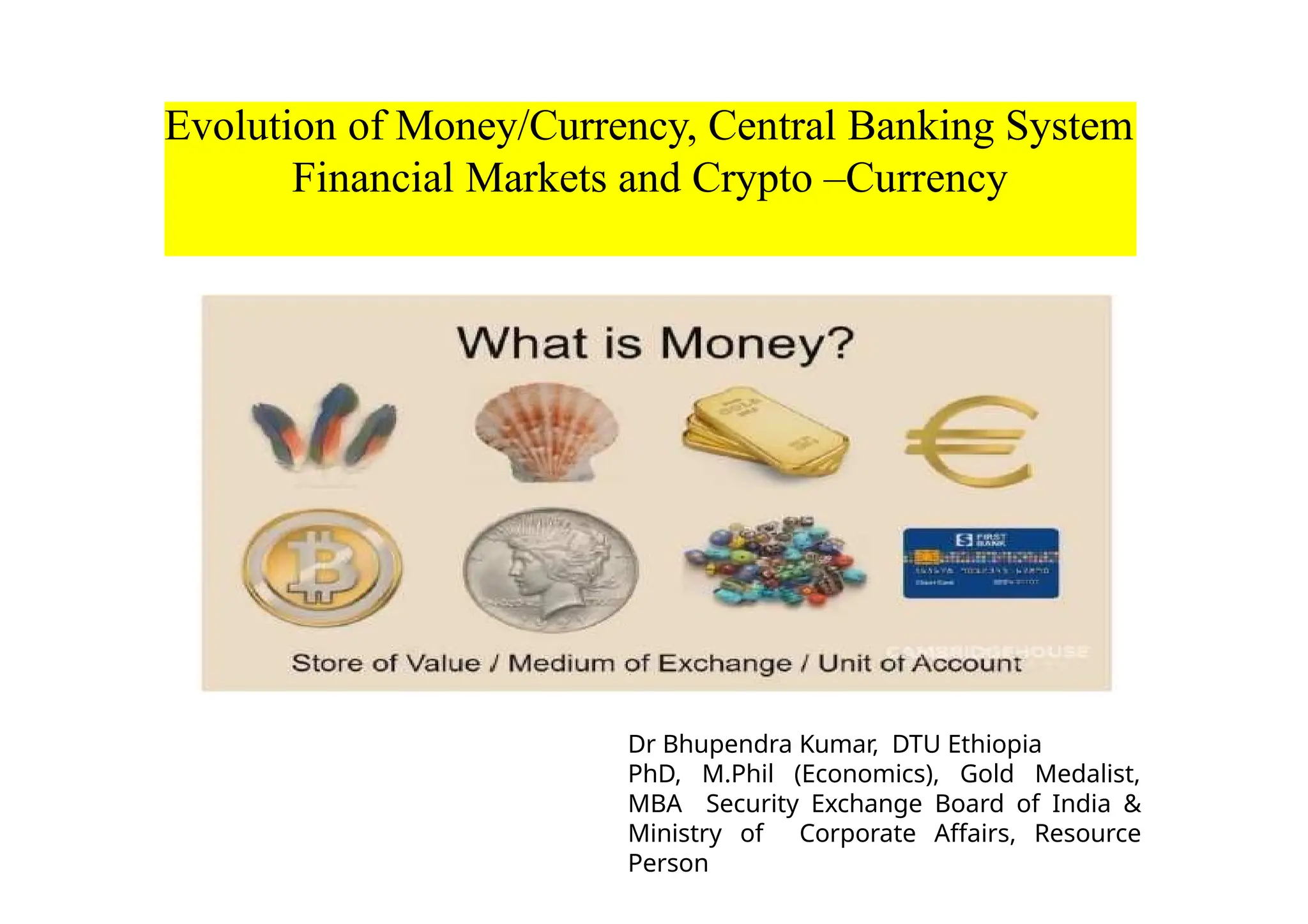
Evolution of Money/Currency, Central Banking System
Financial Markets and Crypto –Currency
Dr Bhupendra Kumar, DTU Ethiopia
PhD, M.Phil (Economics), Gold Medalist,
MBA Security Exchange Board of India &
Ministry of Corporate Affairs, Resource
Person
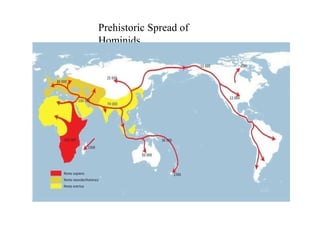
Prehistoric Spread of
Hominids
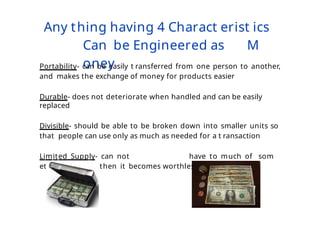
Any thing having 4 Charact erist ics
Can be Engineered as M
oney
Portability- can be easily t ransferred from one person to another,
and makes the exchange of money for products easier
Durable- does not deteriorate when handled and can be easily
replaced
Divisible- should be able to be broken down into smaller units so
that people can use only as much as needed for a t ransaction
Limited Supply- can not have to much of som
ething because then it becomes worthless
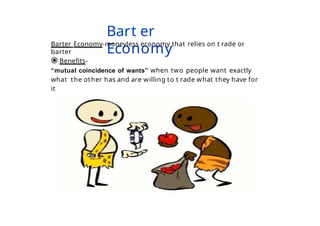
Bart er
Economy
Barter Economy-moneyless economy that relies on t rade or
barter
⦿ Benefits-
“mutual coincidence of wants” when two people want exactly
what the other has and are willing to t rade what they have for
it
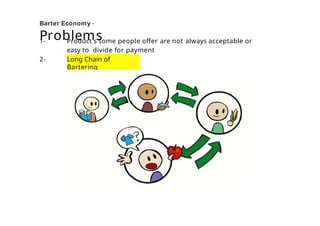
Barter Economy -
Problems
1- Product s some people offer are not always acceptable or
easy to divide for payment
2- Long Chain of
Bartering
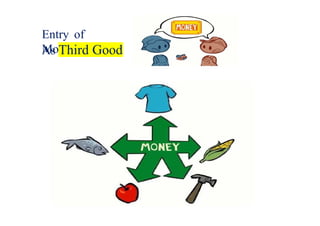
Entry of
Money-
As Third Good
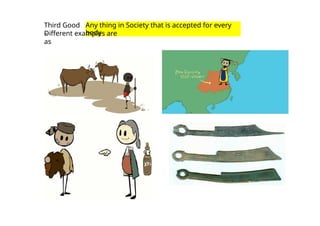
Third Good
–
Any thing in Society that is accepted for every
body
Different examples are
as
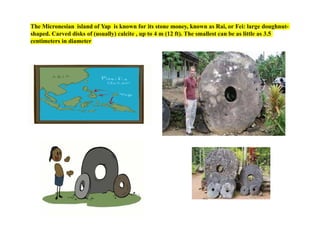
The Micronesian island of Yap is known for its stone money, known as Rai, or Fei: large doughnut-
shaped. Carved disks of (usually) calcite , up to 4 m (12 ft). The smallest can be as little as 3.5
centimeters in diameter
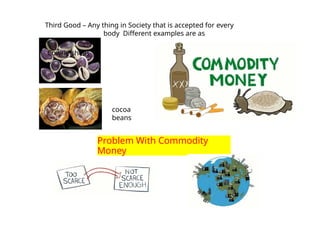
Problem With Commodity
Money
Third Good – Any thing in Society that is accepted for every
body Different examples are as
Cowrie shells
cocoa
beans
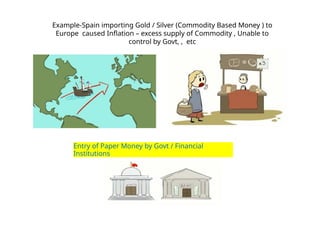
Example-Spain importing Gold / Silver (Commodity Based Money ) to
Europe caused Inflation – excess supply of Commodity , Unable to
control by Govt, , etc
Entry of Paper Money by Govt / Financial
Institutions
Barter Syst em and Gift Economy
David Graeber (anthropologist ) In his book Debt: The First 5,000
Years, argues against the suggest ion that money was invented to replace
barter .
Graeber proposes that money as a unit of account was invented the moment
when the unquant ifiable obligat ion " I owe you one" t ransformed into the
quant ifiable not ion of " I owe you one unit of something".
In this view, money emerged first as credit and only later acquired the
functions of a medium of exchange and a store of value.
Therefore Michell A. Innes in his 1913 pamphlet "What is money?" he
concludes that sales is not exchange of goods for some universal commodity,
but an exchange for credit- ---
In Politics Book 1:9 (c. 350 BC) the Greek philosopher Aristotle
contemplated the nature of money. He considered that every object
has two uses: the original purpose for which the object was
designed, and as an item to sell or barter
There are various social theories concerning gift economies. Som e consider
the gift s to be a form of reciprocal altruism . Another interpretation is
that implicit " I owe you " debt. This custom may reflect altruism , it may
be a form of informal insurance, or may bring with it social st atus or other
benefits.
After the domestication of cattle and the start of cultivation of crops in 9000–
6000 BC, livest ock and plant products were used as money.
In the earliest inst ances of t rade with money, the things with the greatest
utility and reliability in terms of re-use and re-trading (their marketability),
determined the nature of the objects chosen to exchange.
As more of the basic conditions of human existence were met, so the
division of labour increased to create new activities for the use of t ime to
address more advanced concerns. As people's needs became more refined,
indirect exchange became more likely, as the physical separat ion of skilled
labourers (suppliers) from their prospective clients (demand) required the use
of a medium common to all communities, to facilitate a wider market.
When the inhabitants of one country became more dependent on those of
another, and they imported what they needed, and exported what they had
too much of, money necessarily came into use.
Bronze Age (2000 BC to 500 BC: commodity
money, credit and debt
The M esopotamian civilizat ion developed a large-scale economy based on
commodity money. The shekel was the unit of weight and currency, first
recorded c. 3000 BC, referring to a specific weight of barley , and
equivalent amounts of silver, bronze, copper etc
The Babylonians and their neighboring city st ates later developed the
earliest syst em of economics as we t hink of it today, in terms of rules on
debt , legal contracts and law codes relating to business practices and
private property. M oney was not only an emergence, it was a necessity.
The Code of Hammurabi , the best -preserved ancient law code , was
created
c. 1760 BC (middle chronology ) in ancient Babylon . It was enacted by
the
sixth Babylonian king, Hammurabi
the code of Ur-Nammu , king of
Ur 1930 BC) and the code of Lipit-
Ishtar
. Earlier collections of laws include
(c. 2050 BC), the Code of Eshnunna (c.
of Isin (c. 1870 BC).
These law codes formalized the role of money in civil society . They set
amounts of interest on debt, fines for " wrongdoing", and compensation
in money for various infractions of formalized law
Bronze Age : commodity money, credit and
debt…Continued
It has long been assumed that metals, where available, were favored for
use as proto-money over such commodities as catt le, cowry shells, or
salt, because metals are at once durable, portable, and easily divisible.
The use of gold as proto-money has been t raced back to the
fourth millennium BC when the Egypt ians used gold bars of a set weight
as a medium of exchange, as had been done earlier in M esopotamia with
silver bars.
The first mention in the Bible of the use of money is in the Book of Genesis in
reference to criteria for the circumcision of a bought slave. Later, the Cave of
Machpelah is purchased (with silver ) by Abraham, some time after 1985 BC.
The currency was also in use amongst the Philistine people of the same period
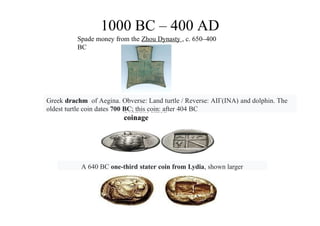
1000 BC – 400 AD
Spade money from the Zhou Dynasty , c. 650–400
BC
Standardized
coinage
Greek drachm of Aegina. Obverse: Land turtle / Reverse: ΑΙΓ(INA) and dolphin. The
oldest turtle coin dates 700 BC; this coin: after 404 BC
A 640 BC one-third stater coin from Lydia, shown larger
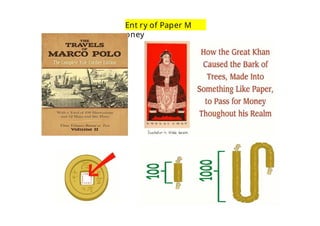
Ent ry of Paper M
oney
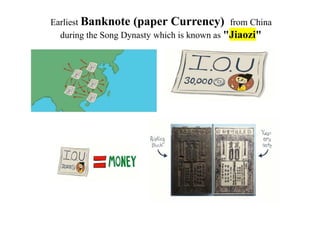
Earliest Banknote (paper Currency) from China
during the Song Dynasty which is known as "Jiaozi"
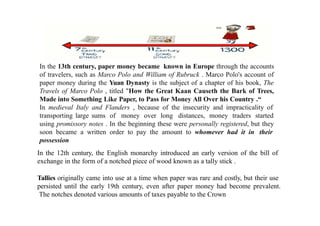
In the 13th century, paper money became known in Europe through the accounts
of travelers, such as Marco Polo and William of Rubruck . Marco Polo's account of
paper money during the Yuan Dynasty is the subject of a chapter of his book, The
Travels of Marco Polo , titled "How the Great Kaan Causeth the Bark of Trees,
Made into Something Like Paper, to Pass for Money All Over his Country .“
In medieval Italy and Flanders , because of the insecurity and impracticality of
transporting large sums of money over long distances, money traders started
using promissory notes . In the beginning these were personally registered, but they
soon became a written order to pay the amount to whomever had it in their
possession
In the 12th century, the English monarchy introduced an early version of the bill of
exchange in the form of a notched piece of wood known as a tally stick .
Tallies originally came into use at a time when paper was rare and costly, but their use
persisted until the early 19th century, even after paper money had become prevalent.
The notches denoted various amounts of taxes payable to the Crown
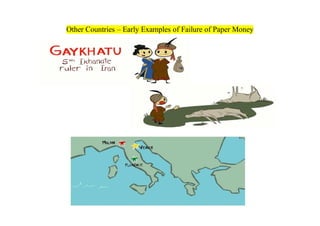
Other Countries – Early Examples of Failure of Paper Money
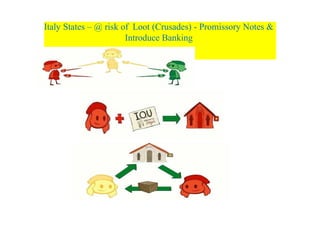
Italy States – @ risk of Loot (Crusades) - Promissory Notes &
Introduce Banking
1450-2008- Merchants & Goldsmith bankers
Goldsmiths in England had been craftsmen, bullion merchants, money
changers, and money lenders since the 16th century. But they were not the
first to act as financial intermediates ; in the early 17th
century, the scriveners were the first to keep deposits for the express
purpose of relending them.
Merchants and traders had amassed huge hoards of gold and entrusted
their wealth to the Royal Mint for storage. In 1640 King Charles I seized the
private gold stored in the mint as a forced loan (which was to be paid back
over time). Thereafter merchants preferred to store their gold with the
goldsmiths of London, who possessed private vaults, and charged a fee for
that service.
In exchange for each deposit of precious metal, the goldsmiths issued
receipts certifying the quantity and purity of the metal they held as a bailee (i.e.,
in trust). These receipts could not be assigned (only the original depositor
could collect the stored goods). Gradually the goldsmiths took over the
function of the scriveners of relending on behalf of a depositor and also
developed modern banking practices; promissory notes were issued for money
deposited which by custom and/or law was a loan to the goldsmith, i.e., the
depositor expressly allowed the goldsmith to use the money for any
purpose including advances to his customers.
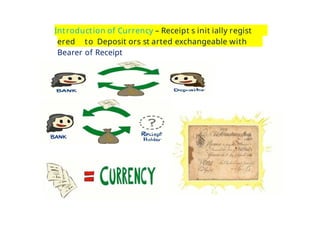
Introduction of Currency – Receipt s init ially regist
ered to Deposit ors st arted exchangeable with
Bearer of Receipt
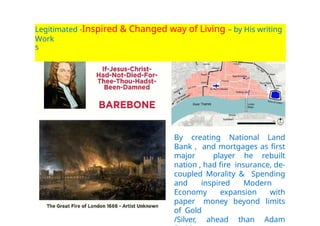
Legitimated -Inspired & Changed way of Living – by His writing
and
Work
s
By creating National Land
Bank , and mortgages as first
major player he rebuilt
nation , had fire insurance, de-
coupled Morality & Spending
and inspired Modern
Economy expansion with
paper money beyond limits
of Gold
/Silver, ahead than Adam
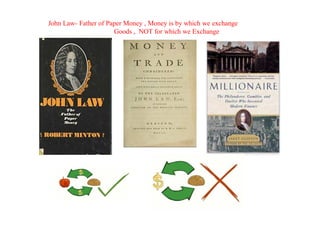
John Law – Advocate Paper Money and First Central Bank
John Law (21 April 1671 – 21 March 1729) was a Scottish economist who believed
that money was only a means of exchange that did not constitute wealth in itself and
that national wealth depended on trade. He was appointed Controller General of
Finances of France under the Duke of Orleans , who served as regent for the youthful
king, Louis XV .
In 1716 Law established the Banque Générale , a private bank, in France. Three-
quarters of the capital consisted of government bills and government-accepted notes,
effectively making it the First Central Bank of the nation. He was responsible for
the Mississippi Company bubble and a chaotic economic collapse in France, which
has been compared to the early-17th century tulip mania in Holland. The Mississippi
Bubble was contemporaneous with the South Sea Company bubble of England.
Law was a gambler and a brilliant mental calculator. He was known to win card games
by mentally calculating the odds. He originated economic ideas such as the scarcity
theory of value and the real bills doctrine . Law held that money creation will
stimulate the economy, that paper money is preferable to metallic
money, and that shares are a superior form of money since they pay dividends.
The term "millionaire " was coined specifically to describe John Law’s wealth. He
was the first person in history to be described as such.
John Law- Father of Paper Money , Money is by which we exchange
Goods , NOT for which we Exchange
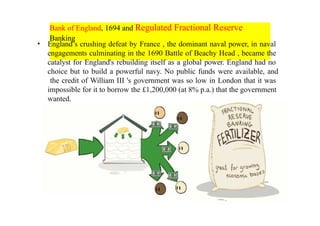
Bank of England, 1694 and Regulated Fractional Reserve
Banking
• England’s crushing defeat by France , the dominant naval power, in naval
engagements culminating in the 1690 Battle of Beachy Head , became the
catalyst for England's rebuilding itself as a global power. England had no
choice but to build a powerful navy. No public funds were available, and
the credit of William III 's government was so low in London that it was
impossible for it to borrow the £1,200,000 (at 8% p.a.) that the government
wanted.
Greenbacks- USA- 1862
Greenbacks were the bills printed as paper currency by the United
States government during the Civil War . They were given that name,
of course, because the bills were printed with green ink.
The printing of money by the government was seen as a wartime
necessity prompted by the great costs of the conflict. And it was
controversial.
The objection to paper money was that it wasn't backed by precious
metals, but rather by confidence in the issuing institution, the federal
government. (One version of origin of the name "greenbacks" is that
people said the money was only backed by the green ink on the paper.)
The first greenbacks were printed in 1862, after the passage of the
Legal Tender Act, which President Abraham Lincoln signed into law
on February 26, 1862. The law authorized the printing of $150 million
in paper currency.
A second Legal Tender Act, passed in 1863, authorized the issuing of
another $300 million in greenbacks.
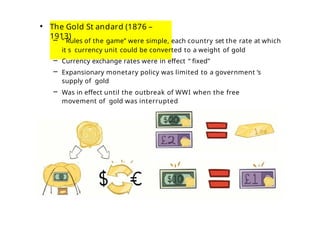
• The Gold St andard (1876 –
1913)
– “ Rules of the game” were simple, each country set the rate at which
it s currency unit could be converted to a weight of gold
– Currency exchange rates were in effect “ fixed”
– Expansionary monetary policy was limited to a government ’s
supply of gold
– Was in effect until the outbreak of WWI when the free
movement of gold was interrupted
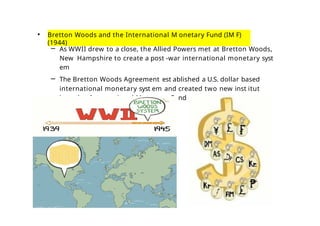
• Bretton Woods and the International M onetary Fund (IM F)
(1944)
– As WWII drew to a close, the Allied Powers met at Bretton Woods,
New Hampshire to create a post -war international monetary syst
em
– The Bretton Woods Agreement est ablished a U.S. dollar based
international monetary syst em and created two new inst itut
ions the International M onetary Fund (IM F) and the World
Bank
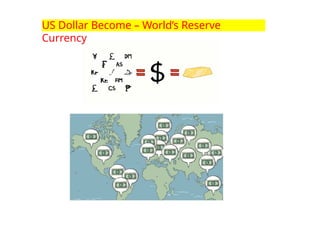
US Dollar Become – World’s Reserve
Currency
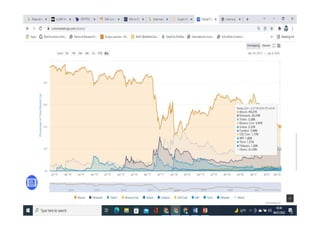
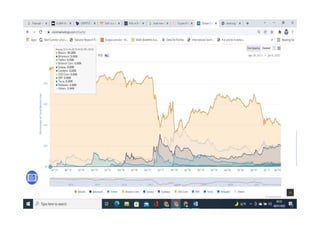
A cryptocurrency (or crypto currency) is a digital asset designed to
work as a medium of exchange that uses strong cryptography to secure financial
transactions, control the creation of additional units, and verify the
transfer
of
as opposed to centralized digital
assets. Cryptocurrencies use decentralized control
currency and central banking systems.
The decentralized control of each cryptocurrency works through distributed
ledger technology, typically a blockchain , that serves as a public financial transaction
database.
Bitcoin , first released as open-source software in 2009, is generally considered the first
decentralized cryptocurrency. Since the release of bitcoin, over 4,000 altcoins (alternative
variants of bitcoin, or other cryptocurrencies) have been created.
In 1983, the American cryptographer David Chaum conceived an anonymous
cryptographic electronic money called ecash . Later, in 1995, he implemented it
through Digicash , an early form of cryptographic electronic payments which required user
software in order to withdraw notes from a bank and designate specific encrypted keys
before it can be sent to a recipient.
The first decentralized cryptocurrency, bitcoin, was created in 2009
by pseudonymous developer Satoshi Nakamoto . It used SHA-256 , a cryptographic hash
function, as its proof-of-work scheme
The validity of each cryptocurrency‘ coins is provided by
a blockchain . A blockchain is a continuously growing list
of records , called blocks, which are linked and
secured
using cryptography. Each block typically contains a hash pointer
as a link to a previous block, a timestamp and transaction data.
Blockchain
By design, blockchains are inherently resistant to modification of the data. It is "an
open, distributed ledger that can record transactions between two parties efficiently and
in a verifiable and permanent way". For use as a distributed ledger, a blockchain is
typically managed by a peer-to-peer network collectively adhering to a protocol for
validating new blocks. Once recorded, the data in any given block cannot be altered
retroactively without the alteration of all subsequent blocks, which requires collusion of
the network majority.
Blockchains are secure by design and are an example of a distributed computing system
with high Byzantine fault tolerance .
And St ill Evolving
…
….
Dr. Bhupendra Kum
ar
bkradhe@gmail.co
m
+918058815411
(What sApp's Only)
1
1. Kumar Bhupendra (2016). Exchange traded fund in India - Performance analysis with mutual fund and global perspectives. International
Journal of M arketing & Financial M anagement, Volume 4, Issue 7, Oct-2016, pp 22-35, ISSN: 2348 –3954 (Online) ISSN: 2349 –2546 (Print)
2. Rajshree Sharm a, Shivani Gupta, Bhupendra Kumar (2016). Sat yam computer scam – pre and post diagnosis. International Journal of M
arketing & Financial M anagement, Volume 4, Issue 9, Dec-2016, pp 53-68 ,ISSN: 2348 –3954 (Online) ISSN: 2349 –2546 (Print)
3. Kumar B.(2020). Determinants of dividend payout ratio: empirical evidence from Et hiopian private banks. Palarch’s Journal of Archaeology
of Egypt / Egypt ology
4. Kumar B. (2019). The effect of remittance on economic growth of eastern African countries. International Journal of Social Science & M anagement St
udies Vol. - 6, No. – 1 Page-13-26
5. Rajesh Kum ar, Kumar Bhupendra (2018). St udy on role of banking institutions in rural development – an evaluation. International Journal of M
arketing & Financial M anagement, Volume 6, Issue 1, Jan -2018, pp 52-57 , ISSN: 2348 -3954 (Online) ISSN: 2349 - 2546 (Print)
6. Gupta Pram od , Kumar Bhupendra, Sharma M anoj (2013). Impact of LPG on human resource department a case study of Indian industries. Applied
Research And Development Institute Journal, ISSN : 2249-8346, 8(7) ; (P) 36-43
7. Kumar Bhupendra (2014). Special Econom ic Zones in India: Recent Developments and Future New Challenges. Contributing Sustainabilit y. Victorious
Publishers (India), ISBN No.: 978-93-84224-08-0, (P) 178-190
8. Neha Saini, Kum ar Bhupendra, et al. (2017). A Conceptual study of M icro Finance in India. International Journal of M arketing & Financial M
anagement, Vol. 5, pp. 75-82. ISSN: 2348 -3954 (Online) ISSN: 2349 - 2546 (Print).
9. Srivastava A.K., Kumar B. et al. (2014). Special Econom ic zones- Overview on Growth and Export performance. European Journal of Academic Essays
1(9): 15-19, 2014 ISSN (online): 2183-1904 ISSN (print): 2183-3818
10. G. B. Bezabh , Kumar B. (2020). The Effect of Remittance on Economic Growth of Eastern African Count ries. International Journal of Social
Science & M anagement St udies, ISSN : 2454 - 4655, Vol. - 6, No. – 1, Feb. 2020 Page-13-26
References

Evolution_of_money_Before_Barter_System.pptx

  • 1.
    Evolution of Money/Currency,Central Banking System Financial Markets and Crypto –Currency Dr Bhupendra Kumar, DTU Ethiopia PhD, M.Phil (Economics), Gold Medalist, MBA Security Exchange Board of India & Ministry of Corporate Affairs, Resource Person
  • 2.
  • 3.
    Any thing having4 Charact erist ics Can be Engineered as M oney Portability- can be easily t ransferred from one person to another, and makes the exchange of money for products easier Durable- does not deteriorate when handled and can be easily replaced Divisible- should be able to be broken down into smaller units so that people can use only as much as needed for a t ransaction Limited Supply- can not have to much of som ething because then it becomes worthless
  • 4.
    Bart er Economy Barter Economy-moneylesseconomy that relies on t rade or barter ⦿ Benefits- “mutual coincidence of wants” when two people want exactly what the other has and are willing to t rade what they have for it
  • 5.
    Barter Economy - Problems 1-Product s some people offer are not always acceptable or easy to divide for payment 2- Long Chain of Bartering
  • 6.
  • 7.
    Third Good – Any thingin Society that is accepted for every body Different examples are as
  • 8.
    The Micronesian islandof Yap is known for its stone money, known as Rai, or Fei: large doughnut- shaped. Carved disks of (usually) calcite , up to 4 m (12 ft). The smallest can be as little as 3.5 centimeters in diameter
  • 9.
    Problem With Commodity Money ThirdGood – Any thing in Society that is accepted for every body Different examples are as Cowrie shells cocoa beans
  • 10.
    Example-Spain importing Gold/ Silver (Commodity Based Money ) to Europe caused Inflation – excess supply of Commodity , Unable to control by Govt, , etc Entry of Paper Money by Govt / Financial Institutions
  • 11.
    Barter Syst emand Gift Economy David Graeber (anthropologist ) In his book Debt: The First 5,000 Years, argues against the suggest ion that money was invented to replace barter . Graeber proposes that money as a unit of account was invented the moment when the unquant ifiable obligat ion " I owe you one" t ransformed into the quant ifiable not ion of " I owe you one unit of something". In this view, money emerged first as credit and only later acquired the functions of a medium of exchange and a store of value. Therefore Michell A. Innes in his 1913 pamphlet "What is money?" he concludes that sales is not exchange of goods for some universal commodity, but an exchange for credit- --- In Politics Book 1:9 (c. 350 BC) the Greek philosopher Aristotle contemplated the nature of money. He considered that every object has two uses: the original purpose for which the object was designed, and as an item to sell or barter
  • 12.
    There are varioussocial theories concerning gift economies. Som e consider the gift s to be a form of reciprocal altruism . Another interpretation is that implicit " I owe you " debt. This custom may reflect altruism , it may be a form of informal insurance, or may bring with it social st atus or other benefits. After the domestication of cattle and the start of cultivation of crops in 9000– 6000 BC, livest ock and plant products were used as money. In the earliest inst ances of t rade with money, the things with the greatest utility and reliability in terms of re-use and re-trading (their marketability), determined the nature of the objects chosen to exchange. As more of the basic conditions of human existence were met, so the division of labour increased to create new activities for the use of t ime to address more advanced concerns. As people's needs became more refined, indirect exchange became more likely, as the physical separat ion of skilled labourers (suppliers) from their prospective clients (demand) required the use of a medium common to all communities, to facilitate a wider market. When the inhabitants of one country became more dependent on those of another, and they imported what they needed, and exported what they had too much of, money necessarily came into use.
  • 13.
    Bronze Age (2000BC to 500 BC: commodity money, credit and debt The M esopotamian civilizat ion developed a large-scale economy based on commodity money. The shekel was the unit of weight and currency, first recorded c. 3000 BC, referring to a specific weight of barley , and equivalent amounts of silver, bronze, copper etc The Babylonians and their neighboring city st ates later developed the earliest syst em of economics as we t hink of it today, in terms of rules on debt , legal contracts and law codes relating to business practices and private property. M oney was not only an emergence, it was a necessity. The Code of Hammurabi , the best -preserved ancient law code , was created c. 1760 BC (middle chronology ) in ancient Babylon . It was enacted by the sixth Babylonian king, Hammurabi the code of Ur-Nammu , king of Ur 1930 BC) and the code of Lipit- Ishtar . Earlier collections of laws include (c. 2050 BC), the Code of Eshnunna (c. of Isin (c. 1870 BC). These law codes formalized the role of money in civil society . They set amounts of interest on debt, fines for " wrongdoing", and compensation in money for various infractions of formalized law
  • 14.
    Bronze Age :commodity money, credit and debt…Continued It has long been assumed that metals, where available, were favored for use as proto-money over such commodities as catt le, cowry shells, or salt, because metals are at once durable, portable, and easily divisible. The use of gold as proto-money has been t raced back to the fourth millennium BC when the Egypt ians used gold bars of a set weight as a medium of exchange, as had been done earlier in M esopotamia with silver bars. The first mention in the Bible of the use of money is in the Book of Genesis in reference to criteria for the circumcision of a bought slave. Later, the Cave of Machpelah is purchased (with silver ) by Abraham, some time after 1985 BC. The currency was also in use amongst the Philistine people of the same period
  • 15.
    1000 BC –400 AD Spade money from the Zhou Dynasty , c. 650–400 BC Standardized coinage Greek drachm of Aegina. Obverse: Land turtle / Reverse: ΑΙΓ(INA) and dolphin. The oldest turtle coin dates 700 BC; this coin: after 404 BC A 640 BC one-third stater coin from Lydia, shown larger
  • 16.
    Ent ry ofPaper M oney
  • 17.
    Earliest Banknote (paperCurrency) from China during the Song Dynasty which is known as "Jiaozi"
  • 18.
    In the 13thcentury, paper money became known in Europe through the accounts of travelers, such as Marco Polo and William of Rubruck . Marco Polo's account of paper money during the Yuan Dynasty is the subject of a chapter of his book, The Travels of Marco Polo , titled "How the Great Kaan Causeth the Bark of Trees, Made into Something Like Paper, to Pass for Money All Over his Country .“ In medieval Italy and Flanders , because of the insecurity and impracticality of transporting large sums of money over long distances, money traders started using promissory notes . In the beginning these were personally registered, but they soon became a written order to pay the amount to whomever had it in their possession In the 12th century, the English monarchy introduced an early version of the bill of exchange in the form of a notched piece of wood known as a tally stick . Tallies originally came into use at a time when paper was rare and costly, but their use persisted until the early 19th century, even after paper money had become prevalent. The notches denoted various amounts of taxes payable to the Crown
  • 19.
    Other Countries –Early Examples of Failure of Paper Money
  • 20.
    Italy States –@ risk of Loot (Crusades) - Promissory Notes & Introduce Banking
  • 21.
    1450-2008- Merchants &Goldsmith bankers Goldsmiths in England had been craftsmen, bullion merchants, money changers, and money lenders since the 16th century. But they were not the first to act as financial intermediates ; in the early 17th century, the scriveners were the first to keep deposits for the express purpose of relending them. Merchants and traders had amassed huge hoards of gold and entrusted their wealth to the Royal Mint for storage. In 1640 King Charles I seized the private gold stored in the mint as a forced loan (which was to be paid back over time). Thereafter merchants preferred to store their gold with the goldsmiths of London, who possessed private vaults, and charged a fee for that service. In exchange for each deposit of precious metal, the goldsmiths issued receipts certifying the quantity and purity of the metal they held as a bailee (i.e., in trust). These receipts could not be assigned (only the original depositor could collect the stored goods). Gradually the goldsmiths took over the function of the scriveners of relending on behalf of a depositor and also developed modern banking practices; promissory notes were issued for money deposited which by custom and/or law was a loan to the goldsmith, i.e., the depositor expressly allowed the goldsmith to use the money for any purpose including advances to his customers.
  • 22.
    Introduction of Currency– Receipt s init ially regist ered to Deposit ors st arted exchangeable with Bearer of Receipt
  • 23.
    Legitimated -Inspired &Changed way of Living – by His writing and Work s By creating National Land Bank , and mortgages as first major player he rebuilt nation , had fire insurance, de- coupled Morality & Spending and inspired Modern Economy expansion with paper money beyond limits of Gold /Silver, ahead than Adam
  • 24.
    John Law –Advocate Paper Money and First Central Bank John Law (21 April 1671 – 21 March 1729) was a Scottish economist who believed that money was only a means of exchange that did not constitute wealth in itself and that national wealth depended on trade. He was appointed Controller General of Finances of France under the Duke of Orleans , who served as regent for the youthful king, Louis XV . In 1716 Law established the Banque Générale , a private bank, in France. Three- quarters of the capital consisted of government bills and government-accepted notes, effectively making it the First Central Bank of the nation. He was responsible for the Mississippi Company bubble and a chaotic economic collapse in France, which has been compared to the early-17th century tulip mania in Holland. The Mississippi Bubble was contemporaneous with the South Sea Company bubble of England. Law was a gambler and a brilliant mental calculator. He was known to win card games by mentally calculating the odds. He originated economic ideas such as the scarcity theory of value and the real bills doctrine . Law held that money creation will stimulate the economy, that paper money is preferable to metallic money, and that shares are a superior form of money since they pay dividends. The term "millionaire " was coined specifically to describe John Law’s wealth. He was the first person in history to be described as such.
  • 25.
    John Law- Fatherof Paper Money , Money is by which we exchange Goods , NOT for which we Exchange
  • 26.
    Bank of England,1694 and Regulated Fractional Reserve Banking • England’s crushing defeat by France , the dominant naval power, in naval engagements culminating in the 1690 Battle of Beachy Head , became the catalyst for England's rebuilding itself as a global power. England had no choice but to build a powerful navy. No public funds were available, and the credit of William III 's government was so low in London that it was impossible for it to borrow the £1,200,000 (at 8% p.a.) that the government wanted.
  • 27.
    Greenbacks- USA- 1862 Greenbackswere the bills printed as paper currency by the United States government during the Civil War . They were given that name, of course, because the bills were printed with green ink. The printing of money by the government was seen as a wartime necessity prompted by the great costs of the conflict. And it was controversial. The objection to paper money was that it wasn't backed by precious metals, but rather by confidence in the issuing institution, the federal government. (One version of origin of the name "greenbacks" is that people said the money was only backed by the green ink on the paper.) The first greenbacks were printed in 1862, after the passage of the Legal Tender Act, which President Abraham Lincoln signed into law on February 26, 1862. The law authorized the printing of $150 million in paper currency. A second Legal Tender Act, passed in 1863, authorized the issuing of another $300 million in greenbacks.
  • 28.
    • The GoldSt andard (1876 – 1913) – “ Rules of the game” were simple, each country set the rate at which it s currency unit could be converted to a weight of gold – Currency exchange rates were in effect “ fixed” – Expansionary monetary policy was limited to a government ’s supply of gold – Was in effect until the outbreak of WWI when the free movement of gold was interrupted
  • 29.
    • Bretton Woodsand the International M onetary Fund (IM F) (1944) – As WWII drew to a close, the Allied Powers met at Bretton Woods, New Hampshire to create a post -war international monetary syst em – The Bretton Woods Agreement est ablished a U.S. dollar based international monetary syst em and created two new inst itut ions the International M onetary Fund (IM F) and the World Bank
  • 30.
    US Dollar Become– World’s Reserve Currency
  • 34.
    A cryptocurrency (orcrypto currency) is a digital asset designed to work as a medium of exchange that uses strong cryptography to secure financial transactions, control the creation of additional units, and verify the transfer of as opposed to centralized digital assets. Cryptocurrencies use decentralized control currency and central banking systems. The decentralized control of each cryptocurrency works through distributed ledger technology, typically a blockchain , that serves as a public financial transaction database. Bitcoin , first released as open-source software in 2009, is generally considered the first decentralized cryptocurrency. Since the release of bitcoin, over 4,000 altcoins (alternative variants of bitcoin, or other cryptocurrencies) have been created. In 1983, the American cryptographer David Chaum conceived an anonymous cryptographic electronic money called ecash . Later, in 1995, he implemented it through Digicash , an early form of cryptographic electronic payments which required user software in order to withdraw notes from a bank and designate specific encrypted keys before it can be sent to a recipient. The first decentralized cryptocurrency, bitcoin, was created in 2009 by pseudonymous developer Satoshi Nakamoto . It used SHA-256 , a cryptographic hash function, as its proof-of-work scheme
  • 35.
    The validity ofeach cryptocurrency‘ coins is provided by a blockchain . A blockchain is a continuously growing list of records , called blocks, which are linked and secured using cryptography. Each block typically contains a hash pointer as a link to a previous block, a timestamp and transaction data. Blockchain By design, blockchains are inherently resistant to modification of the data. It is "an open, distributed ledger that can record transactions between two parties efficiently and in a verifiable and permanent way". For use as a distributed ledger, a blockchain is typically managed by a peer-to-peer network collectively adhering to a protocol for validating new blocks. Once recorded, the data in any given block cannot be altered retroactively without the alteration of all subsequent blocks, which requires collusion of the network majority. Blockchains are secure by design and are an example of a distributed computing system with high Byzantine fault tolerance .
  • 40.
    And St illEvolving … …. Dr. Bhupendra Kum ar bkradhe@gmail.co m +918058815411 (What sApp's Only)
  • 41.
    1 1. Kumar Bhupendra(2016). Exchange traded fund in India - Performance analysis with mutual fund and global perspectives. International Journal of M arketing & Financial M anagement, Volume 4, Issue 7, Oct-2016, pp 22-35, ISSN: 2348 –3954 (Online) ISSN: 2349 –2546 (Print) 2. Rajshree Sharm a, Shivani Gupta, Bhupendra Kumar (2016). Sat yam computer scam – pre and post diagnosis. International Journal of M arketing & Financial M anagement, Volume 4, Issue 9, Dec-2016, pp 53-68 ,ISSN: 2348 –3954 (Online) ISSN: 2349 –2546 (Print) 3. Kumar B.(2020). Determinants of dividend payout ratio: empirical evidence from Et hiopian private banks. Palarch’s Journal of Archaeology of Egypt / Egypt ology 4. Kumar B. (2019). The effect of remittance on economic growth of eastern African countries. International Journal of Social Science & M anagement St udies Vol. - 6, No. – 1 Page-13-26 5. Rajesh Kum ar, Kumar Bhupendra (2018). St udy on role of banking institutions in rural development – an evaluation. International Journal of M arketing & Financial M anagement, Volume 6, Issue 1, Jan -2018, pp 52-57 , ISSN: 2348 -3954 (Online) ISSN: 2349 - 2546 (Print) 6. Gupta Pram od , Kumar Bhupendra, Sharma M anoj (2013). Impact of LPG on human resource department a case study of Indian industries. Applied Research And Development Institute Journal, ISSN : 2249-8346, 8(7) ; (P) 36-43 7. Kumar Bhupendra (2014). Special Econom ic Zones in India: Recent Developments and Future New Challenges. Contributing Sustainabilit y. Victorious Publishers (India), ISBN No.: 978-93-84224-08-0, (P) 178-190 8. Neha Saini, Kum ar Bhupendra, et al. (2017). A Conceptual study of M icro Finance in India. International Journal of M arketing & Financial M anagement, Vol. 5, pp. 75-82. ISSN: 2348 -3954 (Online) ISSN: 2349 - 2546 (Print). 9. Srivastava A.K., Kumar B. et al. (2014). Special Econom ic zones- Overview on Growth and Export performance. European Journal of Academic Essays 1(9): 15-19, 2014 ISSN (online): 2183-1904 ISSN (print): 2183-3818 10. G. B. Bezabh , Kumar B. (2020). The Effect of Remittance on Economic Growth of Eastern African Count ries. International Journal of Social Science & M anagement St udies, ISSN : 2454 - 4655, Vol. - 6, No. – 1, Feb. 2020 Page-13-26 References