Evolution Of Music In The
           UK
Baroque Music
• Between the early music of the Medieval and Renaissance
  periods.


                  • Characterised by more elaborate musical
            ornamentation, changes in musical notation, new
   instrumental playing techniques and the rise of new genres
                                                such as opera.


• The Baroque era in British music can be seen as one of an
  interaction of national and international trends.
Classical music
      • Musical composition, performance and training in the
    United Kingdom inherited the European classical traditions
                                   of the eighteenth century.


• Romantic nationalism encouraged clear national identities
  and sensibilities.


 • Such composers as Arthur Sullivan, Gustav Holst, Edward
  Elgar, Hubert Parry, Ralph Vaughan Williams and Benjamin
                            Britten.
Folk music
• Each of the four countries of the United Kingdom has its
  own diverse and distinctive folk music forms.


• There are numerous distinct and semi-distinct folk traditions
  brought by immigrants.


• Folk music flourished until the era of industrialisation when
  it began to be replaced by new forms of popular music.
English folk music
  England has a long and diverse history of folk
   music dating back at least to the medieval
period and including many forms of music, song
and dance. Through two periods of revival from
    the late nineteenth century much of the
 tradition has been preserved and continues to
                  be practiced.
Northern Irish music
Ireland, including Northern Ireland, has vibrant
   folk traditions. The popularity of traditional
    instruments such as fiddles has remained
 throughout the centuries even as analogues in
Great Britain died out. Perhaps the most famous
     modern musician from Northern Ireland
  influenced by folk tradition is Van Morrison.
Scottish folk music
Scottish folk music includes many kinds of songs,
 including ballads and laments, sung by a single
singer with accompaniment by bagpipes, fiddles
   or harps. Traditional dances include waltzes,
 reels, strathspeys and jigs. Alongside the other
      areas of the United Kingdom, Scotland
      underwent a roots revival in the 1960s.
Welsh folk music
Wales is a Celtic country that features folk music
 played at twmpathau (communal dances) and
 gwyl werin (music festivals). Welsh music also
       includes male voice choirs and songs
    accompanied by a harp. Having long been
subordinate to English culture, Welsh musicians
   in the late 20th century had to reconstruct
 traditional music when a roots revival began.
Early British popular
                 music
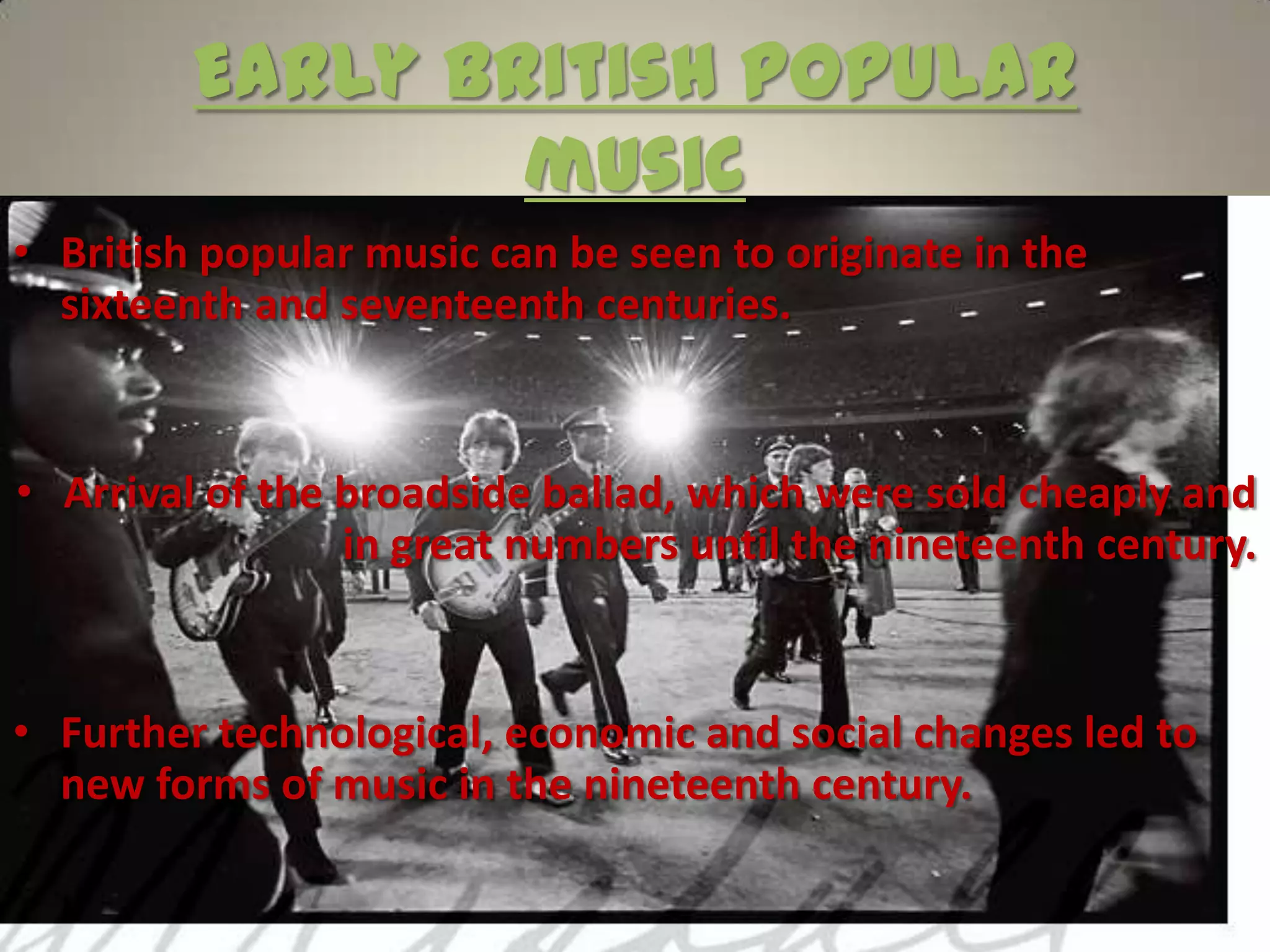
• British popular music can be seen to originate in the
  sixteenth and seventeenth centuries.


• Arrival of the broadside ballad, which were sold cheaply and
                 in great numbers until the nineteenth century.


• Further technological, economic and social changes led to
  new forms of music in the nineteenth century.
Modern British popular
               music
  • Forms of popular music, including folk music, jazz, pop and
    rock music, have particularly flourished in Britain since the
                                             twentieth century.


• Britain has had an impact on popular music
  disproportionate to its size, due to its linguistic and cultural
  links with many countries.


 • In the early-20th century, influences from the United States
         became most dominant in popular music, with young
         performers producing their own versions of American
                                                        music.
Timeline of music of the
 United Kingdom and its
    preceding states
THE END

Evolution of music in the UK

  • 1.
  • 2.
    Baroque Music • Betweenthe early music of the Medieval and Renaissance periods. • Characterised by more elaborate musical ornamentation, changes in musical notation, new instrumental playing techniques and the rise of new genres such as opera. • The Baroque era in British music can be seen as one of an interaction of national and international trends.
  • 3.
    Classical music • Musical composition, performance and training in the United Kingdom inherited the European classical traditions of the eighteenth century. • Romantic nationalism encouraged clear national identities and sensibilities. • Such composers as Arthur Sullivan, Gustav Holst, Edward Elgar, Hubert Parry, Ralph Vaughan Williams and Benjamin Britten.
  • 4.
    Folk music • Eachof the four countries of the United Kingdom has its own diverse and distinctive folk music forms. • There are numerous distinct and semi-distinct folk traditions brought by immigrants. • Folk music flourished until the era of industrialisation when it began to be replaced by new forms of popular music.
  • 5.
    English folk music England has a long and diverse history of folk music dating back at least to the medieval period and including many forms of music, song and dance. Through two periods of revival from the late nineteenth century much of the tradition has been preserved and continues to be practiced.
  • 6.
    Northern Irish music Ireland,including Northern Ireland, has vibrant folk traditions. The popularity of traditional instruments such as fiddles has remained throughout the centuries even as analogues in Great Britain died out. Perhaps the most famous modern musician from Northern Ireland influenced by folk tradition is Van Morrison.
  • 7.
    Scottish folk music Scottishfolk music includes many kinds of songs, including ballads and laments, sung by a single singer with accompaniment by bagpipes, fiddles or harps. Traditional dances include waltzes, reels, strathspeys and jigs. Alongside the other areas of the United Kingdom, Scotland underwent a roots revival in the 1960s.
  • 8.
    Welsh folk music Walesis a Celtic country that features folk music played at twmpathau (communal dances) and gwyl werin (music festivals). Welsh music also includes male voice choirs and songs accompanied by a harp. Having long been subordinate to English culture, Welsh musicians in the late 20th century had to reconstruct traditional music when a roots revival began.
  • 9.
    Early British popular music • British popular music can be seen to originate in the sixteenth and seventeenth centuries. • Arrival of the broadside ballad, which were sold cheaply and in great numbers until the nineteenth century. • Further technological, economic and social changes led to new forms of music in the nineteenth century.
  • 10.
    Modern British popular music • Forms of popular music, including folk music, jazz, pop and rock music, have particularly flourished in Britain since the twentieth century. • Britain has had an impact on popular music disproportionate to its size, due to its linguistic and cultural links with many countries. • In the early-20th century, influences from the United States became most dominant in popular music, with young performers producing their own versions of American music.
  • 11.
    Timeline of musicof the United Kingdom and its preceding states
  • 12.