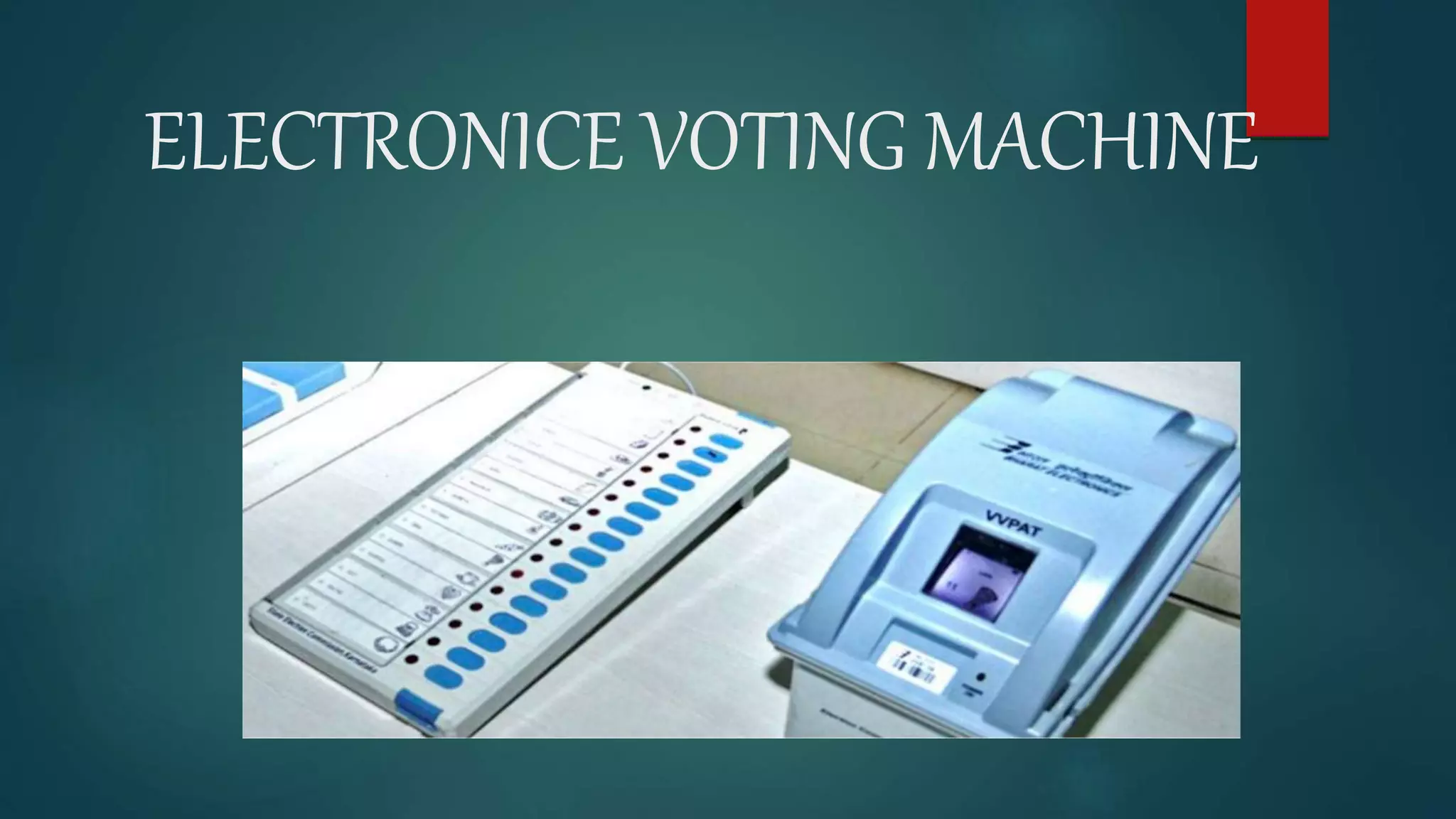
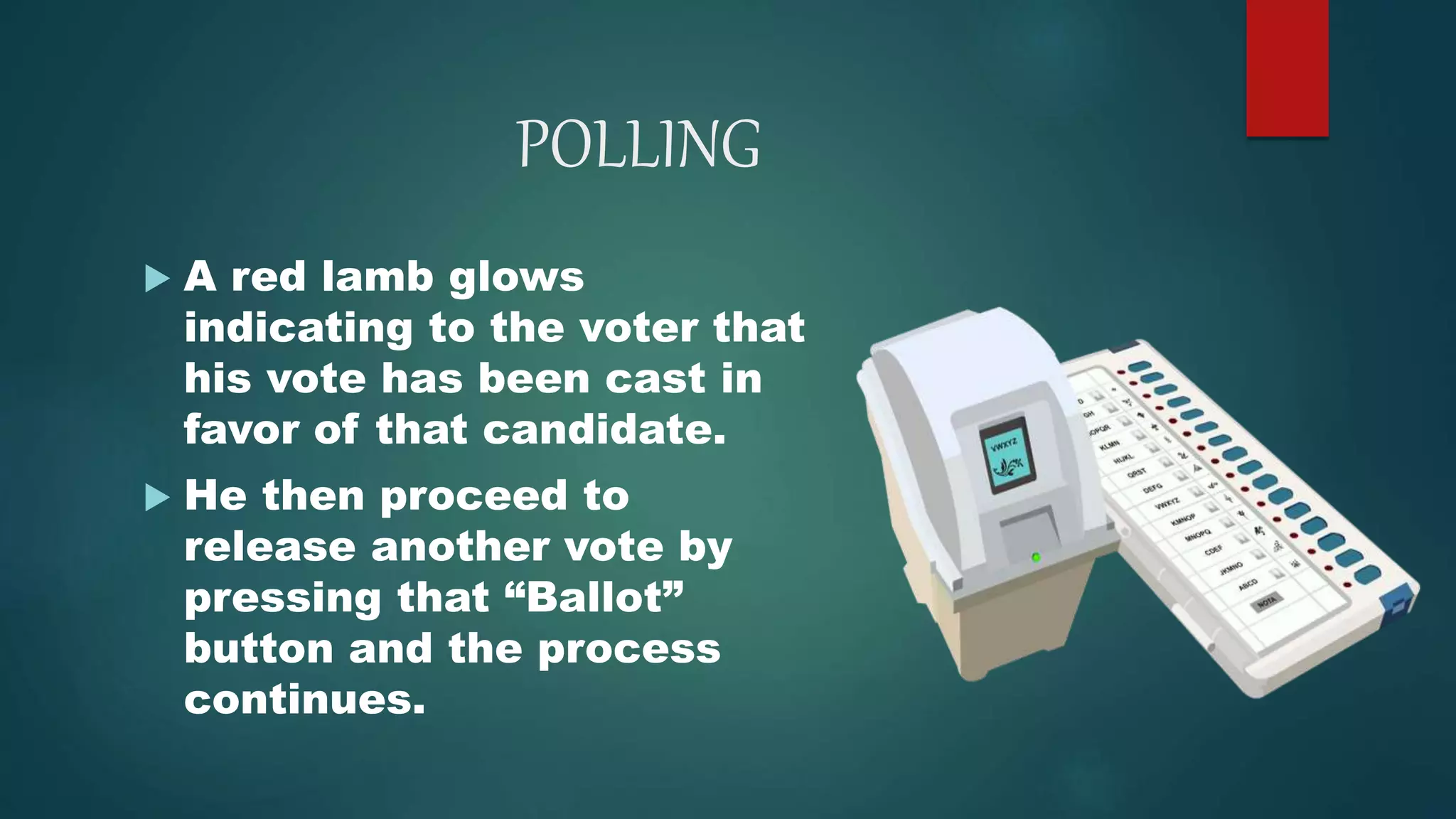
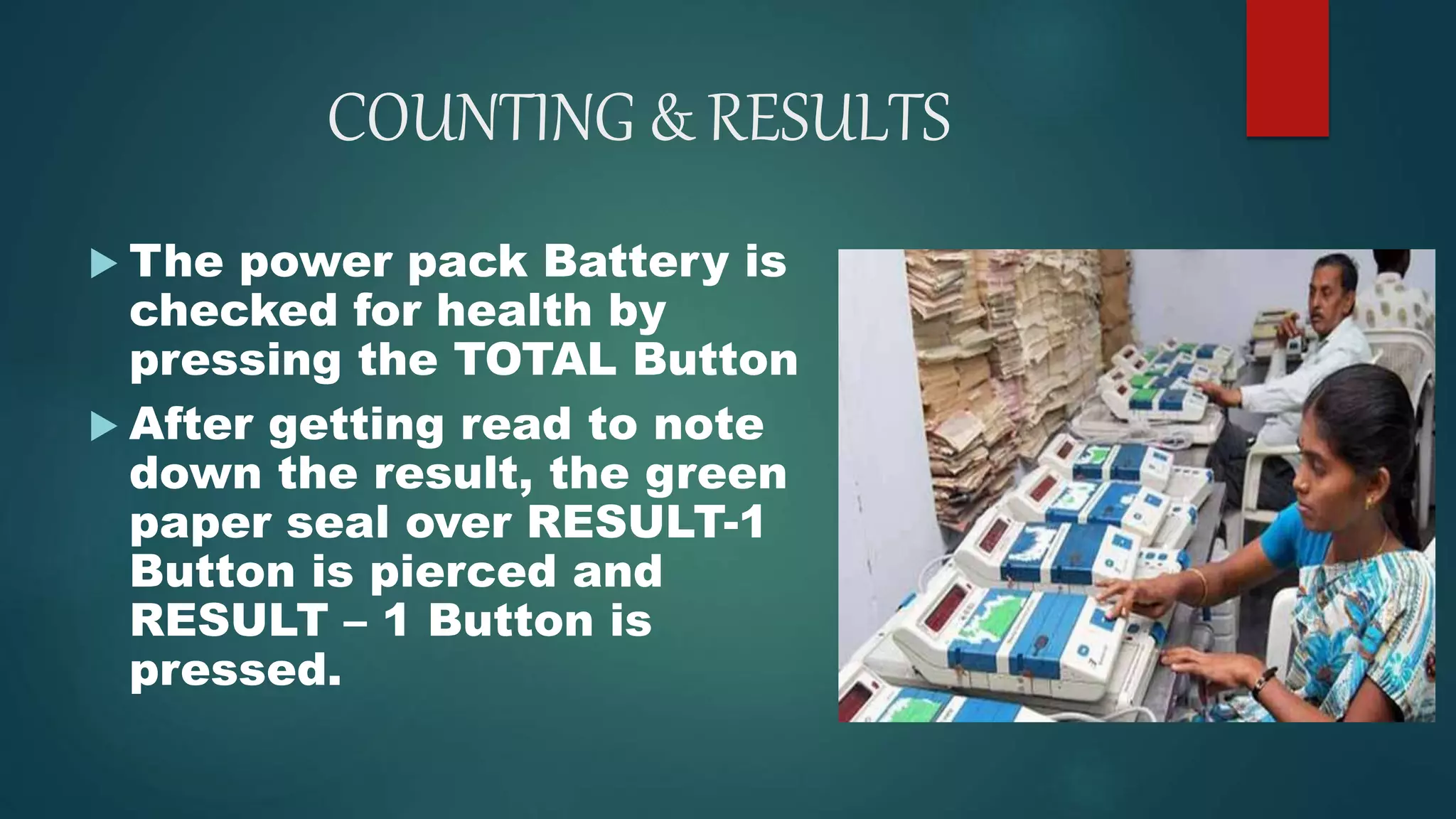
Electronic voting machines (EVMs) were developed and tested in India in the 1990s as a standard means of conducting elections. EVMs have reliable, robust software and use legacy machine codes to ensure security and integrity. Voters cast their votes by pressing buttons for candidates, which are recorded electronically. Results can then be tallied quickly by accessing counters on the machines. EVMs provide advantages like time savings, reduced workload, immediate information, secure data storage, and no invalid votes compared to paper ballots.



![Vibe Coding vs. Spec-Driven Development [Free Meetup]](https://cdn.slidesharecdn.com/ss_thumbnails/vibecodingvsspecdrivendevelopment-251209105622-43f455e7-thumbnail.jpg?width=640&height=640&fit=bounds)


