Q4: How did you use new media
technologies in the construction
and research, planning and
evaluation stages?
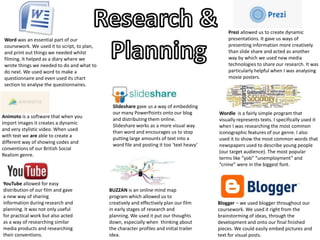
Word was an essential part of our
coursework. We used it to script, to plan,
and print out things we needed whilst
filming. It helped as a diary where we
wrote things we needed to do and what to
do next. We used word to make a
questionnaire and even used its chart
section to analyse the questionnaires.
Prezi allowed us to create dynamic
presentations. It gave us ways of
presenting information more creatively
than slide share and acted as another
way by which we used new media
technologies to share our research. It was
particularly helpful when I was analysing
movie posters.
BUZZAN is an online mind map
program which allowed us to
creatively and effectively plan our film
in early stages of research and
planning. We used it put our thoughts
down, especially when thinking about
the character profiles and initial trailer
idea.
Animoto is a software that when you
import images it creates a dynamic
and very stylistic video. When used
with text we are able to create a
different way of showing codes and
conventions of our British Social
Realism genre.
Slideshare gave us a way of embedding
our many PowerPoints onto our blog
and distributing them online.
Slideshare works as a more visual way
than word and encourages us to stop
putting large amounts of text into a
word file and posting it too ‘text heavy’
Wordle is a fairly simple program that
visually represents texts. I specifically used it
when I was researching the most common
iconographic features of our genre. I also
used it to show the most common words that
newspapers used to describe young people
(our target audience). The most popular
terms like “yob” “unemployment” and
“crime” were in the biggest font.
YouTube allowed for easy
distribution of our film and gave
a new way of sharing
information during research and
planning. It was not only useful
for practical work but also acted
as a way of researching similar
media products and researching
their conventions.
Blogger – we used blogger throughout our
coursework. We used it right from the
brainstorming of ideas, through the
development and onto our final finished
pieces. We could easily embed pictures and
text for visual posts.
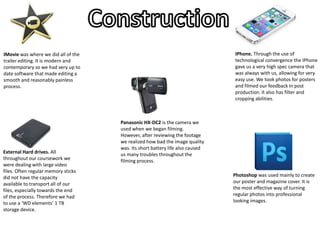
IMovie was where we did all of the
trailer editing. It is modern and
contemporary so we had very up to
date software that made editing a
smooth and reasonably painless
process.
IPhone. Through the use of
technological convergence the IPhone
gave us a very high spec camera that
was always with us, allowing for very
easy use. We took photos for posters
and filmed our feedback in post
production. It also has filter and
cropping abilities.
Photoshop was used mainly to create
our poster and magazine cover. It is
the most effective way of turning
regular photos into professional
looking images.
Panasonic HX-DC2 is the camera we
used when we began filming.
However, after reviewing the footage
we realized how bad the image quality
was. Its short battery life also caused
us many troubles throughout the
filming process.
External Hard drives. All
throughout our coursework we
were dealing with large video
files. Often regular memory sticks
did not have the capacity
available to transport all of our
files, especially towards the end
of the process. Therefore we had
to use a ‘WD elements’ 1 TB
storage device.

Evaluation Question 4

  • 1.
    Q4: How didyou use new media technologies in the construction and research, planning and evaluation stages?
  • 2.
    Word was anessential part of our coursework. We used it to script, to plan, and print out things we needed whilst filming. It helped as a diary where we wrote things we needed to do and what to do next. We used word to make a questionnaire and even used its chart section to analyse the questionnaires. Prezi allowed us to create dynamic presentations. It gave us ways of presenting information more creatively than slide share and acted as another way by which we used new media technologies to share our research. It was particularly helpful when I was analysing movie posters. BUZZAN is an online mind map program which allowed us to creatively and effectively plan our film in early stages of research and planning. We used it put our thoughts down, especially when thinking about the character profiles and initial trailer idea. Animoto is a software that when you import images it creates a dynamic and very stylistic video. When used with text we are able to create a different way of showing codes and conventions of our British Social Realism genre. Slideshare gave us a way of embedding our many PowerPoints onto our blog and distributing them online. Slideshare works as a more visual way than word and encourages us to stop putting large amounts of text into a word file and posting it too ‘text heavy’ Wordle is a fairly simple program that visually represents texts. I specifically used it when I was researching the most common iconographic features of our genre. I also used it to show the most common words that newspapers used to describe young people (our target audience). The most popular terms like “yob” “unemployment” and “crime” were in the biggest font. YouTube allowed for easy distribution of our film and gave a new way of sharing information during research and planning. It was not only useful for practical work but also acted as a way of researching similar media products and researching their conventions. Blogger – we used blogger throughout our coursework. We used it right from the brainstorming of ideas, through the development and onto our final finished pieces. We could easily embed pictures and text for visual posts.
  • 3.
    IMovie was wherewe did all of the trailer editing. It is modern and contemporary so we had very up to date software that made editing a smooth and reasonably painless process. IPhone. Through the use of technological convergence the IPhone gave us a very high spec camera that was always with us, allowing for very easy use. We took photos for posters and filmed our feedback in post production. It also has filter and cropping abilities. Photoshop was used mainly to create our poster and magazine cover. It is the most effective way of turning regular photos into professional looking images. Panasonic HX-DC2 is the camera we used when we began filming. However, after reviewing the footage we realized how bad the image quality was. Its short battery life also caused us many troubles throughout the filming process. External Hard drives. All throughout our coursework we were dealing with large video files. Often regular memory sticks did not have the capacity available to transport all of our files, especially towards the end of the process. Therefore we had to use a ‘WD elements’ 1 TB storage device.