Tip Sheet: Evaluation & Management Services updated 1-12-24
:::::::::EFFECTIVE JANUARY 1, 2024
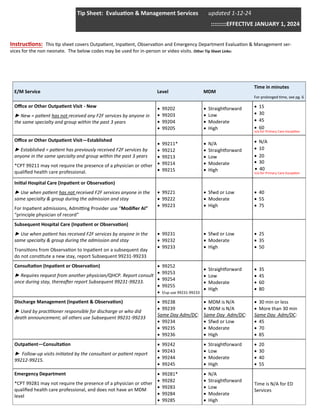
Instructions: This tip sheet covers Outpatient, Inpatient, Observation and Emergency Department Evaluation & Management ser-
vices for the non neonate. The below codes may be used for in-person or video visits. Other Tip Sheet Links:
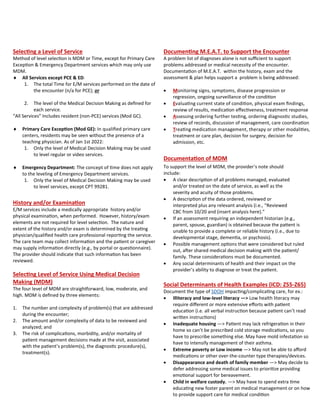
E/M Service Level
Time in minutes
For prolonged time, see pg. 6
MDM
Office or Other Outpatient Visit - New
► New = patient has not received any F2F services by anyone in
the same specialty and group within the past 3 years
 99202
 99203
 99204
 99205
 15
 30
 45
 60
n/a for Primary Care Exception
 Straightforward
 Low
 Moderate
 High
Office or Other Outpatient Visit—Established
► Established = patient has previously received F2F services by
anyone in the same specialty and group within the past 3 years
*CPT 99211 may not require the presence of a physician or other
qualified health care professional.
 99211*
 99212
 99213
 99214
 99215
 N/A
 10
 20
 30
 40
n/a for Primary Care Exception
 N/A
 Straightforward
 Low
 Moderate
 High
Initial Hospital Care (Inpatient or Observation)
► Use when patient has not received F2F services anyone in the
same specialty & group during the admission and stay
For Inpatient admissions, Admitting Provider use “Modifier AI”
“principle physician of record”
 99221
 99222
 99223
 Sfwd or Low
 Moderate
 High
 40
 55
 75
Subsequent Hospital Care (Inpatient or Observation)
► Use when patient has received F2F services by anyone in the
same specialty & group during the admission and stay
Transitions from Observation to Inpatient on a subsequent day
do not constitute a new stay, report Subsequent 99231-99233
 99231
 99232
 99233
 Sfwd or Low
 Moderate
 High
 25
 35
 50
Consultation (Inpatient or Observation)
► Requires request from another physician/QHCP. Report consult
once during stay, thereafter report Subsequent 99231-99233.
 99252


99253
99254
 99255
 f/up use 99231-99233
 Straightforward
 Low
 Moderate
 High
 35
 45
 60
 80
Discharge Management (Inpatient & Observation)
► Used by practitioner responsible for discharge or who did
death announcement; all others use Subsequent 99231-99233
 99238
 99239
Same Day Adm/DC:
 99234
 99235
 99236
 MDM is N/A
 MDM is N/A
Same Day Adm/DC:
 Sfwd or Low
 Moderate
 High
 30 min or less
 More than 30 min
Same Day Adm/DC:
 45
 70
 85
Outpatient—Consultation
► Follow-up visits initiated by the consultant or patient report
99212-99215.
 99242
 99243
 99244
 99245
 Straightforward
 Low
 Moderate
 High
 20
 30
 40
 55
Emergency Department
*CPT 99281 may not require the presence of a physician or other
qualified health care professional, and does not have an MDM
level
 99281*


99282
99283
 99284
 99285
 N/A
 Straightforward
 Low
 Moderate
 High
Time is N/A for ED
Services
Tip Sheet: Evaluation & Management Services updated 10-12-24
:::::::::EFFECTIVE JANUARY 1, 2024
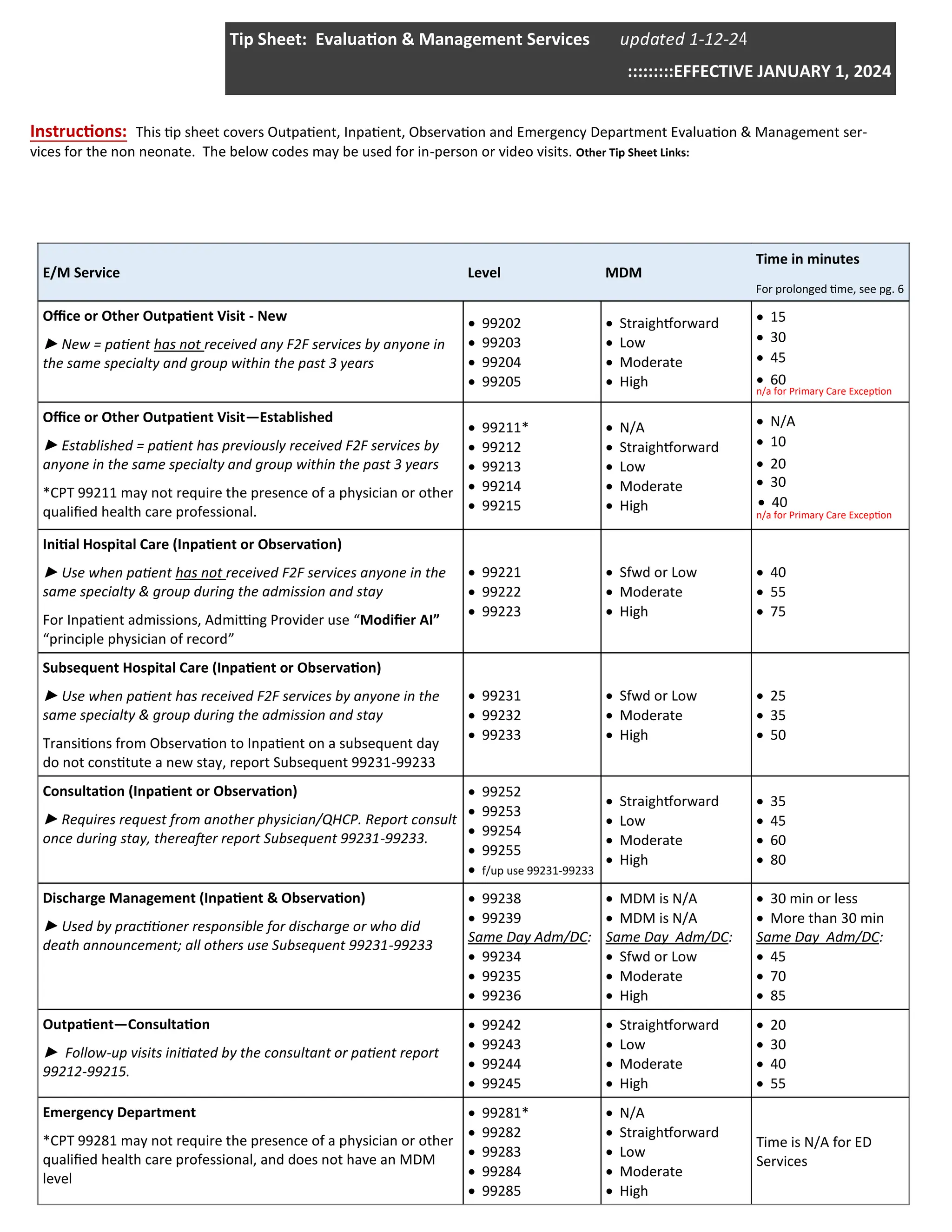
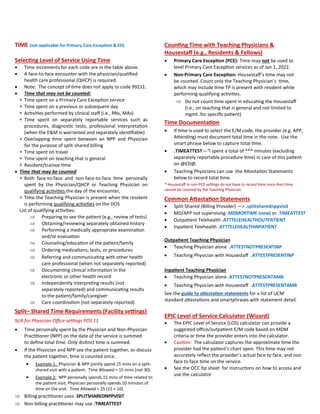
Step 1: Calculate Number and Complexity of Problems Addressed at the Encounter - Select all bulleted elements that apply. The furthest
right column in which an element is selected represents the final complexity . For example, if a patient has 1 stable chronic illness (Low) and 1
chronic illness with severe exacerbation and progression (High), the overall complexity level is High.
Element  1 self-
limited or
minor prob-
lem
(runs a definite or
prescribed
course, is transi-
ent in nature, and
is not likely to
permanently
alter health sta-
tus)
 2 or more self-limited or minor prob-
lems; or
 1 stable chronic illness (chronic illness
which is at treatment goal for the specific pa-
 1 acute, uncomplicated illness or injury
tient); or
(full recovery w/out functional impairment is
expected); or
 Stable, acute illness (treatment newly or
recently initiated, resolution may not be com-
plete, but condition stable); or
 Acute, uncomplicated illness or injury
requiring hospital inpatient or observa-
tion level care (little to no risk of mortality
with treatment, but treatment required is deliv-
ered in inpt or obs setting)
 1 or more chronic illnesses with ex-
acerbation, progression, or side
effects of treatment (requires supportive
care or attention to treatment for side effects);
or
 2 or more stable chronic illnesses; or
 1 undiagnosed new problem with
uncertain prognosis (likely to result in
high risk of morbidity w/out tx); or
 1 acute illness with systemic symp-
toms (illness that causes systemic symptoms
and has high risk of morbidity without treat-
ment); or
 1 acute complicated injury (eval of body
systems not part of injured organ, extensive
injury, or multiple tx options are multiple and/
or associated with risk of morbidity)
 1 or more chronic illness-
es with severe exacerba-
tion, progression, or side
effects of treatment
(significant risk of morbidity;
may require escalation in level
of care); or
 1 acute or chronic illness
or injury that poses a
threat to life or bodily
function (in the near term
without treatment e.g. AMI,
pulmonary embolus, severe
respiratory distress psychiatric
illness with potential threat to
self or others, peritonitis, acute
renal failure)
Complexity Minimal Low Moderate High
Calculating Medical Decision Making: Follow steps 1-4 to determine the level of MDM and CPT code.
(Note: definitions for key terms are listed here)
Step 2: Calculate Amount and/or Complexity of Data to be Reviewed and Analyzed—Select all of the elements that apply to the service. To
reach a certain complexity level, one must meet the required number of elements for the level as described below. Data includes medical
records, tests, and/or other information that must be obtained, ordered, reviewed, and analyzed for the encounter. This includes information
obtained from multiple sources, inter-professional communications, or interpretation of tests not separately reported.
ATTN: See NEW DATA TABLE (page 4) for appropriate usage
Complexity
Must meet category requirements specified here
Minimal
MINIMAL
Limited
MEET
CATEGORY 1
BELOW
Moderate
MEET 1 OF 3
CATEGORIES
BELOW
Extensive
MEET 2 OF 3
CATEGORIES
BELOW
CATEGORY 1
1. Review of prior external note(s) from each unique source (each
unique source)
2. Review of the result(s) of each unique test
3. Ordering of each unique test (includes review of result, do not count in #2)
4. Assessment requiring an Independent historian
Minimal or
No Data
Reviewed
Category 1:
Meet any
combination of
2 from items 1-3
Or
Meet item 4
(independent
historian)
Category 1:
Meet any
combination of 3
from items 1-4
Category 1:
Meet any
combination of 3
from items 1-4
CATEGORY 2: independent interpretation of tests performed by
another physician/other qualified healthcare professional (not
separately reported)
Do not count independent interpretation for a test billed or ordered by
colleague in same specialty
Category 2:
Independent
interpretation of
test
Category 2:
Independent
interpretation of
test
CATEGORY 3: Discussion of management or test interpretation—
with external physician/other qualified health care professional/
appropriate source (not separately reported)
Requires direct interactive exchange (not via intermediaries or notes)
Category 3:
Discussion mgmt.,
or test
interpretation
(external)
Category 3:
Discussion mgmt.,
or test
interpretation
(external)
:::::::::EFFECTIVE JANUARY 1, 2023
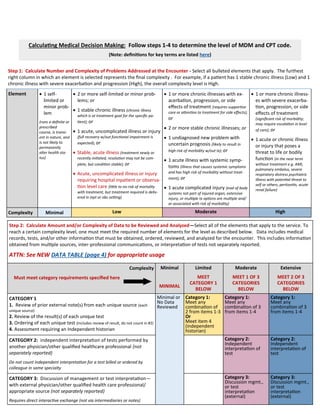
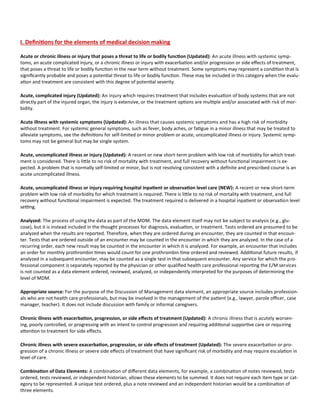
Step 3: Calculate Risk of Complications and/or Morbidity or Mortality of Patient Management Decisions Made at the Visit
(associated with diagnostic procedures and treatments) - Select the risk associated with the management decisions made by the
reporting physician/QHCP on the date of encounter. This risk is distinct from the risk associated with the condition alone. This in-
cludes the possible management options selected and those considered, but not selected, after shared medical decision making
with the patient and/or family. Risk also includes MDM related to the need to initiate or forego further testing, treatment, and/or
hospitalization.
The below examples are provided by AMA. Trained clinicians apply common language usage meanings to terms such as high, medi-
um, low, or minimal risk.
Description Minimal risk of
morbidity from
additional diagnos-
tic testing or treat-
ment
Examples only
 Rest
 Gargles
 Elastic bandages
 Superficial
dressings
Low risk of mor-
bidity from addi-
tional diagnostic
testing or treat-
ment
Examples only
 OTC drugs
 Minor surgery
w/no identified
risk factors
 Physical/Occ
therapy
Moderate risk of morbidity from
additional diagnostic testing or
treatment
Examples only




Prescription drug manage-
ment
Decision regarding minor sur-
gery with identified patient or
procedure risk factors
Decision regarding elective
major surgery without identi-
fied patient or procedure risk
factors
Diagnosis or treatment signifi-
cantly limited by social deter-
minants of health
High risk of morbidity from additional
diagnostic testing or treatment
Examples only






Parenteral controlled substances
(DEA controlled substance given by
route other than digestive tract)
Drug therapy requiring intensive
monitoring for toxicity
Decision regarding elective major
surgery with identified patient or
procedure risk factors
Decision regarding emergency ma-
jor surgery
Decision regarding hospitalization
or escalation of hospital level care
(i.e. transfer to ICU)
Decision not to resuscitate or to
deescalate care because of poor
prognosis
Complexity Minimal Low Moderate High
Step 4: Calculating Level of Medical Decision Making - Select the corresponding complexity level below that was calculated for
Elements 1-3. To qualify for a particular level of medical decision making, two of the three elements for that level of decision mak-
ing must be met or exceeded.
If a column has 2 or 3 selections, draw a line down the column and select the code. For example, Moderate Problems, Limited Da-
ta, Moderate Risk = MODERATE (2 of 3 met Moderate). Otherwise, draw a line down the column with the center selection and
select the code. For example, Moderate Problems, Limited Data, High Risk = MODERATE (the center column was Moderate).
ELEMENTS COMPLEXITY
1. Number and Complexity of Problems
Addressed
N/A Minimal Low Moderate High
2. Amount and/or Complexity of Data to
be Reviewed and Analyzed
N/A Minimal or None Limited Moderate Extensive
3. Risk of Complications and/or Morbid-
ity or Mortality of Patient Management
N/A Minimal Risk Low Risk Moderate Risk High Risk
LEVEL of MDM
→ See Table Page 1 for CPT codes
N/A STRAIGHTFORWARD
2 of 3 Minimal
LOW
2 of 3 Low
(or S,L,M)
MODERATE
2 of 3 Moderate
(or L,M,H)
HIGH
2 of 3 High
Tip Sheet: Evaluation & Management Services updated 10-12-23
:::::::::EFFECTIVE JANUARY 1, 2023
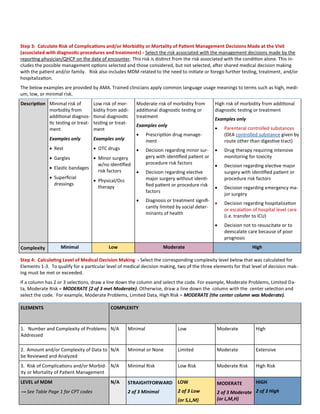
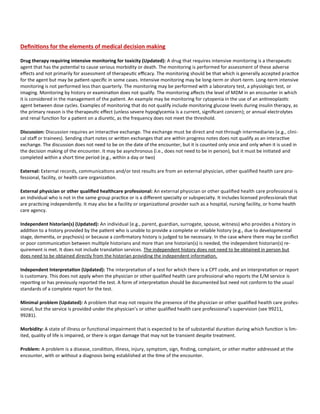
DATA TABLE APPROPRIATE USAGE
Data includes medical records, tests, and/or other information that must be obtained, ordered, reviewed, and analyzed for the en-
counter. Tests are imaging, laboratory, psychometric, or physiologic data. A clinical laboratory panel (e.g., basic metabolic panel
[80047]) is a single test. For the purpose of data reviewed and analyzed, pulse oximetry is not a test.
Category 1
Tests &
Documents
Review of Prior
External note(s)
from each unique
source
▪Review of notes from external source (count once each source, no matter how many notes re-
viewed)
▪Review of notes from another specialty or subspecialty (count ounce for each specialty, no
matter how many notes reviewed)
Note: noting simply “Old records reviewed” or “additional history obtained from family” without
elaboration is insufficient (MLN Medicare DG documentation guidelines).
Review of the
results of each
unique test
▪Review of each unique lab or diagnostic test (diagnostic test interpreted or billed by a different
specialty)
Note: you may get credit for the order or review of a single test, but not both
Ordering of each
unique test
(includes review)
▪Ordering of each unique lab or diagnostic test (includes review of test)
Note: Tests ordered include the eventual review of the result. Therefore, tests ordered during
an encounter are counted in that encounter. Additionally, per AMA: “Tests that are ordered out-
side of an encounter may be counted in the encounter in which they are analyzed. In the case of
a recurring order, each new result may be counted in the encounter in which it is analyzed.”
Independent
Historian
History taken from an independent historian (i.e. due to patient's developmental stage, psycho-
sis, dementia etc.)
Note: Translated history does not count as an independent history
Category 2
Independent
Interpretation
Independent In-
terpretation
Independent interpretation of a test/images performed by another physician or QHCP (not sepa-
rately reported)
Category 3
Discussion of
Management
Discussion of
management or
test interpreta-
tion (external)
Discussion of management or test interpretation with external physician/QHCP or appropriate
source (not separately reported)
▪ discussion with external physician, QHCP, or appropriate source (i.e. parole officer, teacher,
case manager)
▪ discussion with physician/QHCP of another specialty or subspecialty
Document who discussion was with, and discussion specific to patient, i.e. “Discussed with Dr.
Marks whether the patient is stable enough to operate given episode of low HBP yesterday, he
agreed it would be safe to proceed as planned”
Note: Requires direct interactive exchange. Discussion via chart notes or written exchanges, or
intermediaries (e.g. clinical staff or trainees) does not qualify. Discussion may occur within a
short time frame of the visit (e.g. a day or two).
Data Inappropriate to Count:
 Reviewing own prior notes
 Discussion with patient or family
 Discussion with own care team (including resident)
 Pulse Oximetry
 Independent interpretations for which a report is not customary
Tip Sheet: Evaluation & Management Services updated 10-12-23
:::::::::EFFECTIVE JANUARY 1, 2023
Selecting a Level of Service
Method of level selection is MDM or Time, except for Primary Care
Exception & Emergency Department services which may only use
MDM.
 All Services except PCE & ED:
1. The total Time for E/M services performed on the date of
the encounter (n/a for PCE); or
2. The level of the Medical Decision Making as defined for
each service.
“All Services” Includes resident (non-PCE) services (Mod GC).
 Primary Care Exception (Mod GE): In qualified primary care
centers, residents may be seen without the presence of a
teaching physician. As of Jan 1st 2022:
1. Only the level of Medical Decision Making may be used
to level regular or video services.
 Emergency Department: The concept of time does not apply
to the leveling of Emergency Department services.
1. Only the level of Medical Decision Making may be used
to level services, except CPT 99281.
History and/or Examination
E/M services include a medically appropriate history and/or
physical examination, when performed. However, history/exam
elements are not required for level selection. The nature and
extent of the history and/or exam is determined by the treating
physician/qualified health care professional reporting the service.
The care team may collect information and the patient or caregiver
may supply information directly (e.g., by portal or questionnaire).
The provider should indicate that such information has been
reviewed.
Selecting Level of Service Using Medical Decision
Making (MDM)
The four level of MDM are straightforward, low, moderate, and
high. MDM is defined by three elements:
1. The number and complexity of problem(s) that are addressed
during the encounter;
2. The amount and/or complexity of data to be reviewed and
analyzed; and
3. The risk of complications, morbidity, and/or mortality of
patient management decisions made at the visit, associated
with the patient’s problem(s), the diagnostic procedure(s),
treatment(s).
Documenting M.E.A.T. to Support the Encounter
A problem list of diagnoses alone is not sufficient to support
problems addressed or medical necessity of the encounter.
Documentation of M.E.A.T. within the history, exam and the
assessment & plan helps support a problem is being addressed:




Monitoring signs, symptoms, disease progression or
regression, ongoing surveillance of the condition
Evaluating current state of condition, physical exam findings,
review of results, medication effectiveness, treatment response
Assessing ordering further testing, ordering diagnostic studies,
review of records, discussion of management, care coordination
Treating medication management, therapy or other modalities,
treatment or care plan, decision for surgery, decision for
admission, etc.
Documentation of MDM
To support the level of MDM, the provider’s note should
include:





A clear description of all problems managed, evaluated
and/or treated on the date of service, as well as the
severity and acuity of those problems.
A description of the data ordered, reviewed or
interpreted plus any relevant analysis (i.e., “Reviewed
CBC from 10/20 and (insert analysis here).”
If an assessment requiring an independent historian (e.g.,
parent, spouse, guardian) is obtained because the patient is
unable to provide a complete or reliable history (i.e., due to
developmental stage, dementia, or psychosis).
Possible management options that were considered but ruled
out, after shared medical decision making with the patient/
family. These considerations must be documented.
Any social determinants of health and their impact on the
provider’s ability to diagnose or treat the patient.
Social Determinants of Health Examples (ICD: Z55-Z65)
Document the type of SDOH impacting/complicating care, for ex.:





Illiteracy and low-level literacy —> Low health literacy may
require different or more extensive efforts with patient
education (i.e. all verbal instruction because patient can’t read
written instructions)
Inadequate housing —> Patient may lack refrigeration in their
home so can’t be prescribed cold storage medications, so you
have to prescribe something else. May have mold infestation so
have to intensify management of their asthma.
Extreme poverty or Low income —> May not be able to afford
medications or other over-the-counter type therapies/devices.
Disappearance and death of family member —> May decide to
defer addressing some medical issues to prioritize providing
emotional support for bereavement.
Child in welfare custody. —> May have to spend extra time
educating new foster parent on medical management or on how
to provide support care for medical condition
Tip Sheet: Evaluation & Management Services updated 10-12-23
Version Date 10-12-2023
TIME (not applicable for Primary Care Exception & ED)
Selecting Level of Service Using Time
 Time increments for each code are in the table above.
 A face-to-face encounter with the physician/qualified
health care professional (QHCP) is required.
 Note: The concept of time does not apply to code 99211.
 Time that may not be counted:
 Time spent on a Primary Care Exception service
 Time spent on a previous or subsequent day
 Activities performed by clinical staff (i.e., RNs, MAs)
 Time spent on separately reportable services such as
procedures, diagnostic tests, professional interpretation
(when the E&M is warranted and separately identifiable)
 Overlapping time spent between an NPP and Physician
for the purpose of split-shared billing
 Time spent on travel
 Time spent on teaching that is general
 Resident/trainee time
 Time that may be counted
 Both face-to-face and non-face-to-face time personally
spent by the Physician/QHCP or Teaching Physician on
qualifying activities the day of the encounter,
 Time the Teaching Physician is present when the resident
is performing qualifying activities on the DOS
List of qualifying activities:
 Preparing to see the patient (e.g., review of tests)
 Obtaining/reviewing separately obtained history
 Performing a medically appropriate examination
and/or evaluation
 Counseling/education of the patient/family
 Ordering medications, tests, or procedures
 Referring and communicating with other health
care professional (when not separately reported)
 Documenting clinical information in the
electronic or other health record
 Independently interpreting results (not
separately reported) and communicating results
to the patient/family/caregiver
 Care coordination (not separately reported)
Split– Shared Time Requirements (Facility settings)
N/A for Physician Office settings POS 11
 Time personally spent by the Physician and Non-Physician
Practitioner (NPP) on the date of the service is summed
to define total time. Only distinct time is summed.
 If the Physician and NPP see the patient together, or discuss
the patient together, time is counted once.
 Example 1: Physician & NPP jointly spend 15 mins on a split-
shared visit with a patient. Time Allowed = 15 mins (not 30).
 Example 2: NPP personally spends 15 mins of time related to
the patient visit; Physician personally spends 10 minutes of
time on the visit. Time Allowed = 25 (15 + 10).
 Billing practitioner uses .SPLITSHAREDNPPVISIT
 Non-billing practitioner may use .TIMEATTEST
Counting Time with Teaching Physicians &
Housestaff (e.g., Residents & Fellows)
 Primary Care Exception (PCE): Time may not be used to
level Primary Care Exception services as of Jan 1, 2022.
 Non-Primary Care Exception: Housestaff’s time may not
be counted. Count only the Teaching Physician’s time,
which may include time TP is present with resident while
performing qualifying activities.
 Do not count time spent in educating the Housestaff
(i.e., on teaching that is general and not limited to
mgmt. for specific patient)
Time Documentation
 If time is used to select the E/M code, the provider (e.g. APP,
Attending) must document total time in the note. Use the
smart phrase below to capture total time.
 .TIMEATTEST—“I spent a total of *** minutes (excluding
separately reportable procedure time) in care of this patient
on @ED@.
 Teaching Physicians can use the Attestation Statements
below to record total time.
* Housestaff in non-PCE settings do not have to record time since their time
cannot be counted by the Teaching Physician.
Common Attestation Statements
 Split-Shared (Billing Provider) —> .splitsharednppvisit
 MD/APP not supervising .MDMORTIME (new) or .TIMEATTEST
 Outpatient Telehealth .ATTTELEHEALTHOUTPATIENT
 Inpatient Telehealth .ATTTELEHEALTHINPATIENT
Outpatient Teaching Physician
 Teaching Physician alone .ATTESTNOTPRESENTINP
 Teaching Physician with Housestaff .ATTESTPRESENTINP
Inpatient Teaching Physician
 Teaching Physician alone .ATTESTNOTPRESENTAMB
 Teaching Physician with Housestaff .ATTESTPRESENTAMB
See the guide to attestation statements for a list of UCM
standard attestations and smartphrases with statement detail.
EPIC Level of Service Calculator (Wizard)



The EPIC Level of Service (LOS) calculator can provide a
suggested office/outpatient E/M code based on MDM
criteria or time the provider enters into the calculator.
Caution: The calculator captures the approximate time the
provider had the patient’s chart open. This time may not
accurately reflect the provider’s actual face to face, and non
face to face time on the service.
See the OCC tip sheet for instructions on how to access and
use the calculator
Tip Sheet: Evaluatio & Management Services updated 10-12-23
:::::::::EFFECTIVE JANUARY 1, 2023
I. Definitions for the elements of medical decision making
Acute or chronic illness or injury that poses a threat to life or bodily function (Updated): An acute illness with systemic symp-
toms, an acute complicated injury, or a chronic illness or injury with exacerbation and/or progression or side effects of treatment,
that poses a threat to life or bodily function in the near term without treatment. Some symptoms may represent a condition that is
significantly probable and poses a potential threat to life or bodily function. These may be included in this category when the evalu-
ation and treatment are consistent with this degree of potential severity.
Acute, complicated injury (Updated): An injury which requires treatment that includes evaluation of body systems that are not
directly part of the injured organ, the injury is extensive, or the treatment options are multiple and/or associated with risk of mor-
bidity.
Acute illness with systemic symptoms (Updated): An illness that causes systemic symptoms and has a high risk of morbidity
without treatment. For systemic general symptoms, such as fever, body aches, or fatigue in a minor illness that may be treated to
alleviate symptoms, see the definitions for self-limited or minor problem or acute, uncomplicated illness or injury. Systemic symp-
toms may not be general but may be single system.
Acute, uncomplicated illness or injury (Updated): A recent or new short-term problem with low risk of morbidity for which treat-
ment is considered. There is little to no risk of mortality with treatment, and full recovery without functional impairment is ex-
pected. A problem that is normally self-limited or minor, but is not resolving consistent with a definite and prescribed course is an
acute uncomplicated illness.
Acute, uncomplicated illness or injury requiring hospital inpatient or observation level care (NEW): A recent or new short-term
problem with low risk of morbidity for which treatment is required. There is little to no risk of mortality with treatment, and full
recovery without functional impairment is expected. The treatment required is delivered in a hospital inpatient or observation level
setting.
Analyzed: The process of using the data as part of the MDM. The data element itself may not be subject to analysis (e.g., glu-
cose), but it is instead included in the thought processes for diagnosis, evaluation, or treatment. Tests ordered are presumed to be
analyzed when the results are reported. Therefore, when they are ordered during an encounter, they are counted in that encoun-
ter. Tests that are ordered outside of an encounter may be counted in the encounter in which they are analyzed. In the case of a
recurring order, each new result may be counted in the encounter in which it is analyzed. For example, an encounter that includes
an order for monthly prothrombin times would count for one prothrombin time ordered and reviewed. Additional future results, if
analyzed in a subsequent encounter, may be counted as a single test in that subsequent encounter. Any service for which the pro-
fessional component is separately reported by the physician or other qualified health care professional reporting the E/M services
is not counted as a data element ordered, reviewed, analyzed, or independently interpreted for the purposes of determining the
level of MDM.
Appropriate source: For the purpose of the Discussion of Management data element, an appropriate source includes profession-
als who are not health care professionals, but may be involved in the management of the patient (e.g., lawyer, parole officer, case
manager, teacher). It does not include discussion with family or informal caregivers.
Chronic illness with exacerbation, progression, or side effects of treatment (Updated): A chronic illness that is acutely worsen-
ing, poorly controlled, or progressing with an intent to control progression and requiring additional supportive care or requiring
attention to treatment for side effects.
Chronic illness with severe exacerbation, progression, or side effects of treatment (Updated): The severe exacerbation or pro-
gression of a chronic illness or severe side effects of treatment that have significant risk of morbidity and may require escalation in
level of care.
Combination of Data Elements: A combination of different data elements, for example, a combination of notes reviewed, tests
ordered, tests reviewed, or independent historian, allows these elements to be summed. It does not require each item type or cat-
egory to be represented. A unique test ordered, plus a note reviewed and an independent historian would be a combination of
three elements.
Tip Sheet: Evaluation & Management Services updated 10-12-23
:::::::::EFFECTIVE JANUARY 1, 2023
Definitions for the elements of medical decision making
Drug therapy requiring intensive monitoring for toxicity (Updated): A drug that requires intensive monitoring is a therapeutic
agent that has the potential to cause serious morbidity or death. The monitoring is performed for assessment of these adverse
effects and not primarily for assessment of therapeutic efficacy. The monitoring should be that which is generally accepted practice
for the agent but may be patient-specific in some cases. Intensive monitoring may be long-term or short-term. Long-term intensive
monitoring is not performed less than quarterly. The monitoring may be performed with a laboratory test, a physiologic test, or
imaging. Monitoring by history or examination does not qualify. The monitoring affects the level of MDM in an encounter in which
it is considered in the management of the patient. An example may be monitoring for cytopenia in the use of an antineoplastic
agent between dose cycles. Examples of monitoring that do not qualify include monitoring glucose levels during insulin therapy, as
the primary reason is the therapeutic effect (unless severe hypoglycemia is a current, significant concern); or annual electrolytes
and renal function for a patient on a diuretic, as the frequency does not meet the threshold.
Discussion: Discussion requires an interactive exchange. The exchange must be direct and not through intermediaries (e.g., clini-
cal staff or trainees). Sending chart notes or written exchanges that are within progress notes does not qualify as an interactive
exchange. The discussion does not need to be on the date of the encounter, but it is counted only once and only when it is used in
the decision making of the encounter. It may be asynchronous (i.e., does not need to be in person), but it must be initiated and
completed within a short time period (e.g., within a day or two)
External: External records, communications and/or test results are from an external physician, other qualified health care pro-
fessional, facility, or health care organization.
External physician or other qualified healthcare professional: An external physician or other qualified health care professional is
an individual who is not in the same group practice or is a different specialty or subspecialty. It includes licensed professionals that
are practicing independently. It may also be a facility or organizational provider such as a hospital, nursing facility, or home health
care agency.
Independent historian(s) (Updated): An individual (e.g., parent, guardian, surrogate, spouse, witness) who provides a history in
addition to a history provided by the patient who is unable to provide a complete or reliable history (e.g., due to developmental
stage, dementia, or psychosis) or because a confirmatory history is judged to be necessary. In the case where there may be conflict
or poor communication between multiple historians and more than one historian(s) is needed, the independent historian(s) re-
quirement is met. It does not include translation services. The independent history does not need to be obtained in person but
does need to be obtained directly from the historian providing the independent information.
Independent Interpretation (Updated): The interpretation of a test for which there is a CPT code, and an interpretation or report
is customary. This does not apply when the physician or other qualified health care professional who reports the E/M service is
reporting or has previously reported the test. A form of interpretation should be documented but need not conform to the usual
standards of a complete report for the test.
Minimal problem (Updated): A problem that may not require the presence of the physician or other qualified health care profes-
sional, but the service is provided under the physician’s or other qualified health care professional’s supervision (see 99211,
99281).
Morbidity: A state of illness or functional impairment that is expected to be of substantial duration during which function is lim-
ited, quality of life is impaired, or there is organ damage that may not be transient despite treatment.
Problem: A problem is a disease, condition, illness, injury, symptom, sign, finding, complaint, or other matter addressed at the
encounter, with or without a diagnosis being established at the time of the encounter.
Tip Sheet: Evaluation & Management Services updated 10-12-23
:::::::::EFFECTIVE JANUARY 1, 2023
Definitions for the elements of medical decision making
Problem addressed (Updated): A problem is addressed or managed when it is evaluated or treated at the encounter by the phy-
sician or other qualified health care professional reporting the service. This includes consideration of further testing or treatment
that may not be elected by virtue of risk/benefit analysis or patient/parent/guardian/surrogate choice. Notation in the patient’s
medical record that another professional is managing the problem without additional assessment or care coordination document-
ed does not qualify as being addressed or managed by the physician or other qualified health care professional reporting the ser-
vice. Referral without evaluation (by history, examination, or diagnostic study[ies]) or consideration of treatment does not qualify
as being addressed or managed by the physician or other qualified health care professional reporting the service. For hospital inpa-
tient and observation care services, the problem addressed is the problem status on the date of the encounter, which may be sig-
nificantly different than on admission. It is the problem being managed or co-managed by the reporting physician or other qualified
health care professional and may not be the cause of admission or continued stay.
One element used in selecting the level of service is the risk of complications and/or morbidity or mortality of patient manage-
ment at an encounter. This is distinct from the risk of the condition itself.
Risk (Updated): The probability and/or consequences of an event. The assessment of the level of risk is affected by the nature of
the event under consideration. For example, a low probability of death may be high risk, whereas a high chance of a minor, self-
limited adverse effect of treatment may be low risk. Definitions of risk are based upon the usual behavior and thought processes of
a physician or other qualified health care professional in the same specialty. Trained clinicians apply common language usage
meanings to terms such as high, medium, low, or minimal risk and do not require quantification for these definitions (though quan-
tification may be provided when evidence-based medicine has established probabilities). For the purpose of MDM, level of risk is
based upon consequences of the problem(s) addressed at the encounter when appropriately treated. Risk also includes MDM re-
lated to the need to initiate or forego further testing, treatment, and/or hospitalization. The risk of patient management criteria
applies to the patient management decisions made by the reporting physician or other qualified health care professional as part of
the reported encounter.
Self-limited or minor problem: A problem that runs a definite and prescribed course, is transient in nature, and is not likely to
permanently alter health status.
Social determinants of health: Economic and social conditions that influence the health of people and communities. Examples
may include food or housing insecurity.
Stable, acute illness (NEW): A problem that is new or recent for which treatment has been initiated. The patient is improved
and, while resolution may not be complete, is stable with respect to this condition
Stable, chronic illness (Updated): A problem with an expected duration of at least one year or until the death of the patient. For
the purpose of defining chronicity, conditions are treated as chronic whether or not stage or severity changes (e.g., uncontrolled
diabetes and controlled diabetes are a single chronic condition). "Stable" for the purposes of categorizing MDM is defined by the
specific treatment goals for an individual patient. A patient who is not at his or her treatment goal is not stable, even if the condi-
tion has not changed and there is no short-term threat to life or function. For example, a patient with persistently poorly controlled
blood pressure for whom better control is a goal is not stable, even if the pressures are not changing and the patient is asympto-
matic. The risk of morbidity without treatment is significant.
Surgery (minor or major, elective, emergency, procedure or patient risk):
Surgery–Minor or Major: The classification of surgery into minor or major is based on the common meaning of such terms
when used by trained clinicians, similar to the use of the term “risk.” These terms are not defined by a surgical package classi-
fication.
Surgery–Elective or Emergency: Elective procedures and emergent or urgent procedures describe the timing of a procedure
when the timing is related to the patient’s condition. An elective procedure is typically planned in advance (e.g., scheduled for
weeks later), while an emergent procedure is typically performed immediately or with minimal delay to allow for patient sta-
bilization. Both elective and emergent procedures may be minor or major procedures. Surgery definitions continued next
page...
Tip Sheet: Evaluation & Management Services updated 10-12-23
:::::::::EFFECTIVE JANUARY 1, 2023
Version Date 10-12-2023
Definitions for the elements of medical decision making
Surgery–Risk Factors, Patient or Procedure: Risk factors are those that are relevant to the patient and procedure. Evidence-
based risk calculators may be used, but are not required, in assessing patient and procedure risk.
Test: Tests are imaging, laboratory, psychometric, or physiologic data. A clinical laboratory panel (e.g., basic metabolic panel
[80047]) is a single test. The differentiation between single or multiple tests is defined in accordance with the CPT code set. For the
purposes of data reviewed and analyzed, pulse oximetry is not a test.
Undiagnosed new problem with uncertain prognosis (Updated): A problem in the differential diagnosis that represents a condi-
tion likely to result in a high risk of morbidity without treatment.
Unique: A unique test is defined by the CPT code set. When multiple results of the same unique test (e.g., serial blood glucose
values) are compared during an E/M service, count it as one unique test. Tests that have overlapping elements are not unique,
even if they are identified with distinct CPT codes. For example, a CBC with differential would incorporate the set of hemoglobin,
CBC without differential, and platelet count. A unique source is defined as a physician or qualified heath care professional in a dis-
tinct group or different specialty or subspecialty, or a unique entity. Review of all materials from any unique source counts as one
element toward MDM.
II. Resources

Evaluation &Management Services Tip Sheet.pdf

  • 1.
    Tip Sheet: Evaluation& Management Services updated 1-12-24 :::::::::EFFECTIVE JANUARY 1, 2024 Instructions: This tip sheet covers Outpatient, Inpatient, Observation and Emergency Department Evaluation & Management ser- vices for the non neonate. The below codes may be used for in-person or video visits. Other Tip Sheet Links: E/M Service Level Time in minutes For prolonged time, see pg. 6 MDM Office or Other Outpatient Visit - New ► New = patient has not received any F2F services by anyone in the same specialty and group within the past 3 years  99202  99203  99204  99205  15  30  45  60 n/a for Primary Care Exception  Straightforward  Low  Moderate  High Office or Other Outpatient Visit—Established ► Established = patient has previously received F2F services by anyone in the same specialty and group within the past 3 years *CPT 99211 may not require the presence of a physician or other qualified health care professional.  99211*  99212  99213  99214  99215  N/A  10  20  30  40 n/a for Primary Care Exception  N/A  Straightforward  Low  Moderate  High Initial Hospital Care (Inpatient or Observation) ► Use when patient has not received F2F services anyone in the same specialty & group during the admission and stay For Inpatient admissions, Admitting Provider use “Modifier AI” “principle physician of record”  99221  99222  99223  Sfwd or Low  Moderate  High  40  55  75 Subsequent Hospital Care (Inpatient or Observation) ► Use when patient has received F2F services by anyone in the same specialty & group during the admission and stay Transitions from Observation to Inpatient on a subsequent day do not constitute a new stay, report Subsequent 99231-99233  99231  99232  99233  Sfwd or Low  Moderate  High  25  35  50 Consultation (Inpatient or Observation) ► Requires request from another physician/QHCP. Report consult once during stay, thereafter report Subsequent 99231-99233.  99252   99253 99254  99255  f/up use 99231-99233  Straightforward  Low  Moderate  High  35  45  60  80 Discharge Management (Inpatient & Observation) ► Used by practitioner responsible for discharge or who did death announcement; all others use Subsequent 99231-99233  99238  99239 Same Day Adm/DC:  99234  99235  99236  MDM is N/A  MDM is N/A Same Day Adm/DC:  Sfwd or Low  Moderate  High  30 min or less  More than 30 min Same Day Adm/DC:  45  70  85 Outpatient—Consultation ► Follow-up visits initiated by the consultant or patient report 99212-99215.  99242  99243  99244  99245  Straightforward  Low  Moderate  High  20  30  40  55 Emergency Department *CPT 99281 may not require the presence of a physician or other qualified health care professional, and does not have an MDM level  99281*   99282 99283  99284  99285  N/A  Straightforward  Low  Moderate  High Time is N/A for ED Services
  • 2.
    Tip Sheet: Evaluation& Management Services updated 10-12-24 :::::::::EFFECTIVE JANUARY 1, 2024 Step 1: Calculate Number and Complexity of Problems Addressed at the Encounter - Select all bulleted elements that apply. The furthest right column in which an element is selected represents the final complexity . For example, if a patient has 1 stable chronic illness (Low) and 1 chronic illness with severe exacerbation and progression (High), the overall complexity level is High. Element  1 self- limited or minor prob- lem (runs a definite or prescribed course, is transi- ent in nature, and is not likely to permanently alter health sta- tus)  2 or more self-limited or minor prob- lems; or  1 stable chronic illness (chronic illness which is at treatment goal for the specific pa-  1 acute, uncomplicated illness or injury tient); or (full recovery w/out functional impairment is expected); or  Stable, acute illness (treatment newly or recently initiated, resolution may not be com- plete, but condition stable); or  Acute, uncomplicated illness or injury requiring hospital inpatient or observa- tion level care (little to no risk of mortality with treatment, but treatment required is deliv- ered in inpt or obs setting)  1 or more chronic illnesses with ex- acerbation, progression, or side effects of treatment (requires supportive care or attention to treatment for side effects); or  2 or more stable chronic illnesses; or  1 undiagnosed new problem with uncertain prognosis (likely to result in high risk of morbidity w/out tx); or  1 acute illness with systemic symp- toms (illness that causes systemic symptoms and has high risk of morbidity without treat- ment); or  1 acute complicated injury (eval of body systems not part of injured organ, extensive injury, or multiple tx options are multiple and/ or associated with risk of morbidity)  1 or more chronic illness- es with severe exacerba- tion, progression, or side effects of treatment (significant risk of morbidity; may require escalation in level of care); or  1 acute or chronic illness or injury that poses a threat to life or bodily function (in the near term without treatment e.g. AMI, pulmonary embolus, severe respiratory distress psychiatric illness with potential threat to self or others, peritonitis, acute renal failure) Complexity Minimal Low Moderate High Calculating Medical Decision Making: Follow steps 1-4 to determine the level of MDM and CPT code. (Note: definitions for key terms are listed here) Step 2: Calculate Amount and/or Complexity of Data to be Reviewed and Analyzed—Select all of the elements that apply to the service. To reach a certain complexity level, one must meet the required number of elements for the level as described below. Data includes medical records, tests, and/or other information that must be obtained, ordered, reviewed, and analyzed for the encounter. This includes information obtained from multiple sources, inter-professional communications, or interpretation of tests not separately reported. ATTN: See NEW DATA TABLE (page 4) for appropriate usage Complexity Must meet category requirements specified here Minimal MINIMAL Limited MEET CATEGORY 1 BELOW Moderate MEET 1 OF 3 CATEGORIES BELOW Extensive MEET 2 OF 3 CATEGORIES BELOW CATEGORY 1 1. Review of prior external note(s) from each unique source (each unique source) 2. Review of the result(s) of each unique test 3. Ordering of each unique test (includes review of result, do not count in #2) 4. Assessment requiring an Independent historian Minimal or No Data Reviewed Category 1: Meet any combination of 2 from items 1-3 Or Meet item 4 (independent historian) Category 1: Meet any combination of 3 from items 1-4 Category 1: Meet any combination of 3 from items 1-4 CATEGORY 2: independent interpretation of tests performed by another physician/other qualified healthcare professional (not separately reported) Do not count independent interpretation for a test billed or ordered by colleague in same specialty Category 2: Independent interpretation of test Category 2: Independent interpretation of test CATEGORY 3: Discussion of management or test interpretation— with external physician/other qualified health care professional/ appropriate source (not separately reported) Requires direct interactive exchange (not via intermediaries or notes) Category 3: Discussion mgmt., or test interpretation (external) Category 3: Discussion mgmt., or test interpretation (external)
  • 3.
    :::::::::EFFECTIVE JANUARY 1,2023 Step 3: Calculate Risk of Complications and/or Morbidity or Mortality of Patient Management Decisions Made at the Visit (associated with diagnostic procedures and treatments) - Select the risk associated with the management decisions made by the reporting physician/QHCP on the date of encounter. This risk is distinct from the risk associated with the condition alone. This in- cludes the possible management options selected and those considered, but not selected, after shared medical decision making with the patient and/or family. Risk also includes MDM related to the need to initiate or forego further testing, treatment, and/or hospitalization. The below examples are provided by AMA. Trained clinicians apply common language usage meanings to terms such as high, medi- um, low, or minimal risk. Description Minimal risk of morbidity from additional diagnos- tic testing or treat- ment Examples only  Rest  Gargles  Elastic bandages  Superficial dressings Low risk of mor- bidity from addi- tional diagnostic testing or treat- ment Examples only  OTC drugs  Minor surgery w/no identified risk factors  Physical/Occ therapy Moderate risk of morbidity from additional diagnostic testing or treatment Examples only     Prescription drug manage- ment Decision regarding minor sur- gery with identified patient or procedure risk factors Decision regarding elective major surgery without identi- fied patient or procedure risk factors Diagnosis or treatment signifi- cantly limited by social deter- minants of health High risk of morbidity from additional diagnostic testing or treatment Examples only       Parenteral controlled substances (DEA controlled substance given by route other than digestive tract) Drug therapy requiring intensive monitoring for toxicity Decision regarding elective major surgery with identified patient or procedure risk factors Decision regarding emergency ma- jor surgery Decision regarding hospitalization or escalation of hospital level care (i.e. transfer to ICU) Decision not to resuscitate or to deescalate care because of poor prognosis Complexity Minimal Low Moderate High Step 4: Calculating Level of Medical Decision Making - Select the corresponding complexity level below that was calculated for Elements 1-3. To qualify for a particular level of medical decision making, two of the three elements for that level of decision mak- ing must be met or exceeded. If a column has 2 or 3 selections, draw a line down the column and select the code. For example, Moderate Problems, Limited Da- ta, Moderate Risk = MODERATE (2 of 3 met Moderate). Otherwise, draw a line down the column with the center selection and select the code. For example, Moderate Problems, Limited Data, High Risk = MODERATE (the center column was Moderate). ELEMENTS COMPLEXITY 1. Number and Complexity of Problems Addressed N/A Minimal Low Moderate High 2. Amount and/or Complexity of Data to be Reviewed and Analyzed N/A Minimal or None Limited Moderate Extensive 3. Risk of Complications and/or Morbid- ity or Mortality of Patient Management N/A Minimal Risk Low Risk Moderate Risk High Risk LEVEL of MDM → See Table Page 1 for CPT codes N/A STRAIGHTFORWARD 2 of 3 Minimal LOW 2 of 3 Low (or S,L,M) MODERATE 2 of 3 Moderate (or L,M,H) HIGH 2 of 3 High
  • 4.
    Tip Sheet: Evaluation& Management Services updated 10-12-23 :::::::::EFFECTIVE JANUARY 1, 2023 DATA TABLE APPROPRIATE USAGE Data includes medical records, tests, and/or other information that must be obtained, ordered, reviewed, and analyzed for the en- counter. Tests are imaging, laboratory, psychometric, or physiologic data. A clinical laboratory panel (e.g., basic metabolic panel [80047]) is a single test. For the purpose of data reviewed and analyzed, pulse oximetry is not a test. Category 1 Tests & Documents Review of Prior External note(s) from each unique source ▪Review of notes from external source (count once each source, no matter how many notes re- viewed) ▪Review of notes from another specialty or subspecialty (count ounce for each specialty, no matter how many notes reviewed) Note: noting simply “Old records reviewed” or “additional history obtained from family” without elaboration is insufficient (MLN Medicare DG documentation guidelines). Review of the results of each unique test ▪Review of each unique lab or diagnostic test (diagnostic test interpreted or billed by a different specialty) Note: you may get credit for the order or review of a single test, but not both Ordering of each unique test (includes review) ▪Ordering of each unique lab or diagnostic test (includes review of test) Note: Tests ordered include the eventual review of the result. Therefore, tests ordered during an encounter are counted in that encounter. Additionally, per AMA: “Tests that are ordered out- side of an encounter may be counted in the encounter in which they are analyzed. In the case of a recurring order, each new result may be counted in the encounter in which it is analyzed.” Independent Historian History taken from an independent historian (i.e. due to patient's developmental stage, psycho- sis, dementia etc.) Note: Translated history does not count as an independent history Category 2 Independent Interpretation Independent In- terpretation Independent interpretation of a test/images performed by another physician or QHCP (not sepa- rately reported) Category 3 Discussion of Management Discussion of management or test interpreta- tion (external) Discussion of management or test interpretation with external physician/QHCP or appropriate source (not separately reported) ▪ discussion with external physician, QHCP, or appropriate source (i.e. parole officer, teacher, case manager) ▪ discussion with physician/QHCP of another specialty or subspecialty Document who discussion was with, and discussion specific to patient, i.e. “Discussed with Dr. Marks whether the patient is stable enough to operate given episode of low HBP yesterday, he agreed it would be safe to proceed as planned” Note: Requires direct interactive exchange. Discussion via chart notes or written exchanges, or intermediaries (e.g. clinical staff or trainees) does not qualify. Discussion may occur within a short time frame of the visit (e.g. a day or two). Data Inappropriate to Count:  Reviewing own prior notes  Discussion with patient or family  Discussion with own care team (including resident)  Pulse Oximetry  Independent interpretations for which a report is not customary
  • 5.
    Tip Sheet: Evaluation& Management Services updated 10-12-23 :::::::::EFFECTIVE JANUARY 1, 2023 Selecting a Level of Service Method of level selection is MDM or Time, except for Primary Care Exception & Emergency Department services which may only use MDM.  All Services except PCE & ED: 1. The total Time for E/M services performed on the date of the encounter (n/a for PCE); or 2. The level of the Medical Decision Making as defined for each service. “All Services” Includes resident (non-PCE) services (Mod GC).  Primary Care Exception (Mod GE): In qualified primary care centers, residents may be seen without the presence of a teaching physician. As of Jan 1st 2022: 1. Only the level of Medical Decision Making may be used to level regular or video services.  Emergency Department: The concept of time does not apply to the leveling of Emergency Department services. 1. Only the level of Medical Decision Making may be used to level services, except CPT 99281. History and/or Examination E/M services include a medically appropriate history and/or physical examination, when performed. However, history/exam elements are not required for level selection. The nature and extent of the history and/or exam is determined by the treating physician/qualified health care professional reporting the service. The care team may collect information and the patient or caregiver may supply information directly (e.g., by portal or questionnaire). The provider should indicate that such information has been reviewed. Selecting Level of Service Using Medical Decision Making (MDM) The four level of MDM are straightforward, low, moderate, and high. MDM is defined by three elements: 1. The number and complexity of problem(s) that are addressed during the encounter; 2. The amount and/or complexity of data to be reviewed and analyzed; and 3. The risk of complications, morbidity, and/or mortality of patient management decisions made at the visit, associated with the patient’s problem(s), the diagnostic procedure(s), treatment(s). Documenting M.E.A.T. to Support the Encounter A problem list of diagnoses alone is not sufficient to support problems addressed or medical necessity of the encounter. Documentation of M.E.A.T. within the history, exam and the assessment & plan helps support a problem is being addressed:     Monitoring signs, symptoms, disease progression or regression, ongoing surveillance of the condition Evaluating current state of condition, physical exam findings, review of results, medication effectiveness, treatment response Assessing ordering further testing, ordering diagnostic studies, review of records, discussion of management, care coordination Treating medication management, therapy or other modalities, treatment or care plan, decision for surgery, decision for admission, etc. Documentation of MDM To support the level of MDM, the provider’s note should include:      A clear description of all problems managed, evaluated and/or treated on the date of service, as well as the severity and acuity of those problems. A description of the data ordered, reviewed or interpreted plus any relevant analysis (i.e., “Reviewed CBC from 10/20 and (insert analysis here).” If an assessment requiring an independent historian (e.g., parent, spouse, guardian) is obtained because the patient is unable to provide a complete or reliable history (i.e., due to developmental stage, dementia, or psychosis). Possible management options that were considered but ruled out, after shared medical decision making with the patient/ family. These considerations must be documented. Any social determinants of health and their impact on the provider’s ability to diagnose or treat the patient. Social Determinants of Health Examples (ICD: Z55-Z65) Document the type of SDOH impacting/complicating care, for ex.:      Illiteracy and low-level literacy —> Low health literacy may require different or more extensive efforts with patient education (i.e. all verbal instruction because patient can’t read written instructions) Inadequate housing —> Patient may lack refrigeration in their home so can’t be prescribed cold storage medications, so you have to prescribe something else. May have mold infestation so have to intensify management of their asthma. Extreme poverty or Low income —> May not be able to afford medications or other over-the-counter type therapies/devices. Disappearance and death of family member —> May decide to defer addressing some medical issues to prioritize providing emotional support for bereavement. Child in welfare custody. —> May have to spend extra time educating new foster parent on medical management or on how to provide support care for medical condition
  • 6.
    Tip Sheet: Evaluation& Management Services updated 10-12-23 Version Date 10-12-2023 TIME (not applicable for Primary Care Exception & ED) Selecting Level of Service Using Time  Time increments for each code are in the table above.  A face-to-face encounter with the physician/qualified health care professional (QHCP) is required.  Note: The concept of time does not apply to code 99211.  Time that may not be counted:  Time spent on a Primary Care Exception service  Time spent on a previous or subsequent day  Activities performed by clinical staff (i.e., RNs, MAs)  Time spent on separately reportable services such as procedures, diagnostic tests, professional interpretation (when the E&M is warranted and separately identifiable)  Overlapping time spent between an NPP and Physician for the purpose of split-shared billing  Time spent on travel  Time spent on teaching that is general  Resident/trainee time  Time that may be counted  Both face-to-face and non-face-to-face time personally spent by the Physician/QHCP or Teaching Physician on qualifying activities the day of the encounter,  Time the Teaching Physician is present when the resident is performing qualifying activities on the DOS List of qualifying activities:  Preparing to see the patient (e.g., review of tests)  Obtaining/reviewing separately obtained history  Performing a medically appropriate examination and/or evaluation  Counseling/education of the patient/family  Ordering medications, tests, or procedures  Referring and communicating with other health care professional (when not separately reported)  Documenting clinical information in the electronic or other health record  Independently interpreting results (not separately reported) and communicating results to the patient/family/caregiver  Care coordination (not separately reported) Split– Shared Time Requirements (Facility settings) N/A for Physician Office settings POS 11  Time personally spent by the Physician and Non-Physician Practitioner (NPP) on the date of the service is summed to define total time. Only distinct time is summed.  If the Physician and NPP see the patient together, or discuss the patient together, time is counted once.  Example 1: Physician & NPP jointly spend 15 mins on a split- shared visit with a patient. Time Allowed = 15 mins (not 30).  Example 2: NPP personally spends 15 mins of time related to the patient visit; Physician personally spends 10 minutes of time on the visit. Time Allowed = 25 (15 + 10).  Billing practitioner uses .SPLITSHAREDNPPVISIT  Non-billing practitioner may use .TIMEATTEST Counting Time with Teaching Physicians & Housestaff (e.g., Residents & Fellows)  Primary Care Exception (PCE): Time may not be used to level Primary Care Exception services as of Jan 1, 2022.  Non-Primary Care Exception: Housestaff’s time may not be counted. Count only the Teaching Physician’s time, which may include time TP is present with resident while performing qualifying activities.  Do not count time spent in educating the Housestaff (i.e., on teaching that is general and not limited to mgmt. for specific patient) Time Documentation  If time is used to select the E/M code, the provider (e.g. APP, Attending) must document total time in the note. Use the smart phrase below to capture total time.  .TIMEATTEST—“I spent a total of *** minutes (excluding separately reportable procedure time) in care of this patient on @ED@.  Teaching Physicians can use the Attestation Statements below to record total time. * Housestaff in non-PCE settings do not have to record time since their time cannot be counted by the Teaching Physician. Common Attestation Statements  Split-Shared (Billing Provider) —> .splitsharednppvisit  MD/APP not supervising .MDMORTIME (new) or .TIMEATTEST  Outpatient Telehealth .ATTTELEHEALTHOUTPATIENT  Inpatient Telehealth .ATTTELEHEALTHINPATIENT Outpatient Teaching Physician  Teaching Physician alone .ATTESTNOTPRESENTINP  Teaching Physician with Housestaff .ATTESTPRESENTINP Inpatient Teaching Physician  Teaching Physician alone .ATTESTNOTPRESENTAMB  Teaching Physician with Housestaff .ATTESTPRESENTAMB See the guide to attestation statements for a list of UCM standard attestations and smartphrases with statement detail. EPIC Level of Service Calculator (Wizard)    The EPIC Level of Service (LOS) calculator can provide a suggested office/outpatient E/M code based on MDM criteria or time the provider enters into the calculator. Caution: The calculator captures the approximate time the provider had the patient’s chart open. This time may not accurately reflect the provider’s actual face to face, and non face to face time on the service. See the OCC tip sheet for instructions on how to access and use the calculator
  • 8.
    Tip Sheet: Evaluatio& Management Services updated 10-12-23 :::::::::EFFECTIVE JANUARY 1, 2023 I. Definitions for the elements of medical decision making Acute or chronic illness or injury that poses a threat to life or bodily function (Updated): An acute illness with systemic symp- toms, an acute complicated injury, or a chronic illness or injury with exacerbation and/or progression or side effects of treatment, that poses a threat to life or bodily function in the near term without treatment. Some symptoms may represent a condition that is significantly probable and poses a potential threat to life or bodily function. These may be included in this category when the evalu- ation and treatment are consistent with this degree of potential severity. Acute, complicated injury (Updated): An injury which requires treatment that includes evaluation of body systems that are not directly part of the injured organ, the injury is extensive, or the treatment options are multiple and/or associated with risk of mor- bidity. Acute illness with systemic symptoms (Updated): An illness that causes systemic symptoms and has a high risk of morbidity without treatment. For systemic general symptoms, such as fever, body aches, or fatigue in a minor illness that may be treated to alleviate symptoms, see the definitions for self-limited or minor problem or acute, uncomplicated illness or injury. Systemic symp- toms may not be general but may be single system. Acute, uncomplicated illness or injury (Updated): A recent or new short-term problem with low risk of morbidity for which treat- ment is considered. There is little to no risk of mortality with treatment, and full recovery without functional impairment is ex- pected. A problem that is normally self-limited or minor, but is not resolving consistent with a definite and prescribed course is an acute uncomplicated illness. Acute, uncomplicated illness or injury requiring hospital inpatient or observation level care (NEW): A recent or new short-term problem with low risk of morbidity for which treatment is required. There is little to no risk of mortality with treatment, and full recovery without functional impairment is expected. The treatment required is delivered in a hospital inpatient or observation level setting. Analyzed: The process of using the data as part of the MDM. The data element itself may not be subject to analysis (e.g., glu- cose), but it is instead included in the thought processes for diagnosis, evaluation, or treatment. Tests ordered are presumed to be analyzed when the results are reported. Therefore, when they are ordered during an encounter, they are counted in that encoun- ter. Tests that are ordered outside of an encounter may be counted in the encounter in which they are analyzed. In the case of a recurring order, each new result may be counted in the encounter in which it is analyzed. For example, an encounter that includes an order for monthly prothrombin times would count for one prothrombin time ordered and reviewed. Additional future results, if analyzed in a subsequent encounter, may be counted as a single test in that subsequent encounter. Any service for which the pro- fessional component is separately reported by the physician or other qualified health care professional reporting the E/M services is not counted as a data element ordered, reviewed, analyzed, or independently interpreted for the purposes of determining the level of MDM. Appropriate source: For the purpose of the Discussion of Management data element, an appropriate source includes profession- als who are not health care professionals, but may be involved in the management of the patient (e.g., lawyer, parole officer, case manager, teacher). It does not include discussion with family or informal caregivers. Chronic illness with exacerbation, progression, or side effects of treatment (Updated): A chronic illness that is acutely worsen- ing, poorly controlled, or progressing with an intent to control progression and requiring additional supportive care or requiring attention to treatment for side effects. Chronic illness with severe exacerbation, progression, or side effects of treatment (Updated): The severe exacerbation or pro- gression of a chronic illness or severe side effects of treatment that have significant risk of morbidity and may require escalation in level of care. Combination of Data Elements: A combination of different data elements, for example, a combination of notes reviewed, tests ordered, tests reviewed, or independent historian, allows these elements to be summed. It does not require each item type or cat- egory to be represented. A unique test ordered, plus a note reviewed and an independent historian would be a combination of three elements.
  • 9.
    Tip Sheet: Evaluation& Management Services updated 10-12-23 :::::::::EFFECTIVE JANUARY 1, 2023 Definitions for the elements of medical decision making Drug therapy requiring intensive monitoring for toxicity (Updated): A drug that requires intensive monitoring is a therapeutic agent that has the potential to cause serious morbidity or death. The monitoring is performed for assessment of these adverse effects and not primarily for assessment of therapeutic efficacy. The monitoring should be that which is generally accepted practice for the agent but may be patient-specific in some cases. Intensive monitoring may be long-term or short-term. Long-term intensive monitoring is not performed less than quarterly. The monitoring may be performed with a laboratory test, a physiologic test, or imaging. Monitoring by history or examination does not qualify. The monitoring affects the level of MDM in an encounter in which it is considered in the management of the patient. An example may be monitoring for cytopenia in the use of an antineoplastic agent between dose cycles. Examples of monitoring that do not qualify include monitoring glucose levels during insulin therapy, as the primary reason is the therapeutic effect (unless severe hypoglycemia is a current, significant concern); or annual electrolytes and renal function for a patient on a diuretic, as the frequency does not meet the threshold. Discussion: Discussion requires an interactive exchange. The exchange must be direct and not through intermediaries (e.g., clini- cal staff or trainees). Sending chart notes or written exchanges that are within progress notes does not qualify as an interactive exchange. The discussion does not need to be on the date of the encounter, but it is counted only once and only when it is used in the decision making of the encounter. It may be asynchronous (i.e., does not need to be in person), but it must be initiated and completed within a short time period (e.g., within a day or two) External: External records, communications and/or test results are from an external physician, other qualified health care pro- fessional, facility, or health care organization. External physician or other qualified healthcare professional: An external physician or other qualified health care professional is an individual who is not in the same group practice or is a different specialty or subspecialty. It includes licensed professionals that are practicing independently. It may also be a facility or organizational provider such as a hospital, nursing facility, or home health care agency. Independent historian(s) (Updated): An individual (e.g., parent, guardian, surrogate, spouse, witness) who provides a history in addition to a history provided by the patient who is unable to provide a complete or reliable history (e.g., due to developmental stage, dementia, or psychosis) or because a confirmatory history is judged to be necessary. In the case where there may be conflict or poor communication between multiple historians and more than one historian(s) is needed, the independent historian(s) re- quirement is met. It does not include translation services. The independent history does not need to be obtained in person but does need to be obtained directly from the historian providing the independent information. Independent Interpretation (Updated): The interpretation of a test for which there is a CPT code, and an interpretation or report is customary. This does not apply when the physician or other qualified health care professional who reports the E/M service is reporting or has previously reported the test. A form of interpretation should be documented but need not conform to the usual standards of a complete report for the test. Minimal problem (Updated): A problem that may not require the presence of the physician or other qualified health care profes- sional, but the service is provided under the physician’s or other qualified health care professional’s supervision (see 99211, 99281). Morbidity: A state of illness or functional impairment that is expected to be of substantial duration during which function is lim- ited, quality of life is impaired, or there is organ damage that may not be transient despite treatment. Problem: A problem is a disease, condition, illness, injury, symptom, sign, finding, complaint, or other matter addressed at the encounter, with or without a diagnosis being established at the time of the encounter.
  • 10.
    Tip Sheet: Evaluation& Management Services updated 10-12-23 :::::::::EFFECTIVE JANUARY 1, 2023 Definitions for the elements of medical decision making Problem addressed (Updated): A problem is addressed or managed when it is evaluated or treated at the encounter by the phy- sician or other qualified health care professional reporting the service. This includes consideration of further testing or treatment that may not be elected by virtue of risk/benefit analysis or patient/parent/guardian/surrogate choice. Notation in the patient’s medical record that another professional is managing the problem without additional assessment or care coordination document- ed does not qualify as being addressed or managed by the physician or other qualified health care professional reporting the ser- vice. Referral without evaluation (by history, examination, or diagnostic study[ies]) or consideration of treatment does not qualify as being addressed or managed by the physician or other qualified health care professional reporting the service. For hospital inpa- tient and observation care services, the problem addressed is the problem status on the date of the encounter, which may be sig- nificantly different than on admission. It is the problem being managed or co-managed by the reporting physician or other qualified health care professional and may not be the cause of admission or continued stay. One element used in selecting the level of service is the risk of complications and/or morbidity or mortality of patient manage- ment at an encounter. This is distinct from the risk of the condition itself. Risk (Updated): The probability and/or consequences of an event. The assessment of the level of risk is affected by the nature of the event under consideration. For example, a low probability of death may be high risk, whereas a high chance of a minor, self- limited adverse effect of treatment may be low risk. Definitions of risk are based upon the usual behavior and thought processes of a physician or other qualified health care professional in the same specialty. Trained clinicians apply common language usage meanings to terms such as high, medium, low, or minimal risk and do not require quantification for these definitions (though quan- tification may be provided when evidence-based medicine has established probabilities). For the purpose of MDM, level of risk is based upon consequences of the problem(s) addressed at the encounter when appropriately treated. Risk also includes MDM re- lated to the need to initiate or forego further testing, treatment, and/or hospitalization. The risk of patient management criteria applies to the patient management decisions made by the reporting physician or other qualified health care professional as part of the reported encounter. Self-limited or minor problem: A problem that runs a definite and prescribed course, is transient in nature, and is not likely to permanently alter health status. Social determinants of health: Economic and social conditions that influence the health of people and communities. Examples may include food or housing insecurity. Stable, acute illness (NEW): A problem that is new or recent for which treatment has been initiated. The patient is improved and, while resolution may not be complete, is stable with respect to this condition Stable, chronic illness (Updated): A problem with an expected duration of at least one year or until the death of the patient. For the purpose of defining chronicity, conditions are treated as chronic whether or not stage or severity changes (e.g., uncontrolled diabetes and controlled diabetes are a single chronic condition). "Stable" for the purposes of categorizing MDM is defined by the specific treatment goals for an individual patient. A patient who is not at his or her treatment goal is not stable, even if the condi- tion has not changed and there is no short-term threat to life or function. For example, a patient with persistently poorly controlled blood pressure for whom better control is a goal is not stable, even if the pressures are not changing and the patient is asympto- matic. The risk of morbidity without treatment is significant. Surgery (minor or major, elective, emergency, procedure or patient risk): Surgery–Minor or Major: The classification of surgery into minor or major is based on the common meaning of such terms when used by trained clinicians, similar to the use of the term “risk.” These terms are not defined by a surgical package classi- fication. Surgery–Elective or Emergency: Elective procedures and emergent or urgent procedures describe the timing of a procedure when the timing is related to the patient’s condition. An elective procedure is typically planned in advance (e.g., scheduled for weeks later), while an emergent procedure is typically performed immediately or with minimal delay to allow for patient sta- bilization. Both elective and emergent procedures may be minor or major procedures. Surgery definitions continued next page...
  • 11.
    Tip Sheet: Evaluation& Management Services updated 10-12-23 :::::::::EFFECTIVE JANUARY 1, 2023 Version Date 10-12-2023 Definitions for the elements of medical decision making Surgery–Risk Factors, Patient or Procedure: Risk factors are those that are relevant to the patient and procedure. Evidence- based risk calculators may be used, but are not required, in assessing patient and procedure risk. Test: Tests are imaging, laboratory, psychometric, or physiologic data. A clinical laboratory panel (e.g., basic metabolic panel [80047]) is a single test. The differentiation between single or multiple tests is defined in accordance with the CPT code set. For the purposes of data reviewed and analyzed, pulse oximetry is not a test. Undiagnosed new problem with uncertain prognosis (Updated): A problem in the differential diagnosis that represents a condi- tion likely to result in a high risk of morbidity without treatment. Unique: A unique test is defined by the CPT code set. When multiple results of the same unique test (e.g., serial blood glucose values) are compared during an E/M service, count it as one unique test. Tests that have overlapping elements are not unique, even if they are identified with distinct CPT codes. For example, a CBC with differential would incorporate the set of hemoglobin, CBC without differential, and platelet count. A unique source is defined as a physician or qualified heath care professional in a dis- tinct group or different specialty or subspecialty, or a unique entity. Review of all materials from any unique source counts as one element toward MDM. II. Resources