


BioTech BiblioBytes
           December 12, 2008
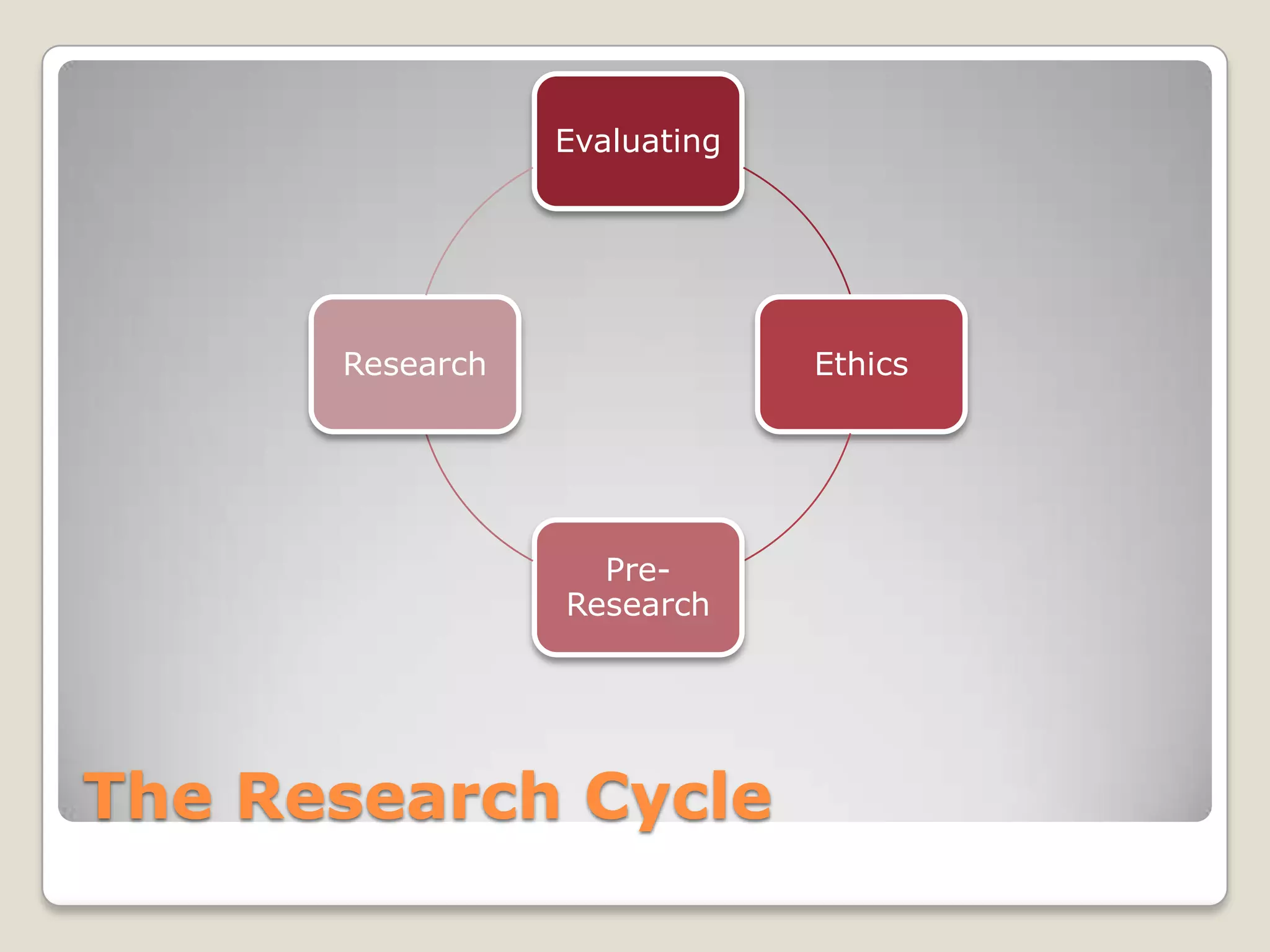
Evaluating


      Research                Ethics


                   Pre-
                 Research


The Research Cycle
Popular Articles
   Intended for wide audience (general population)
   Short articles that are not signed (no author)
   Non-technical, simple writing style
   Focus on current events, popular topics
   Usually published daily, weekly or monthly


Popular Articles
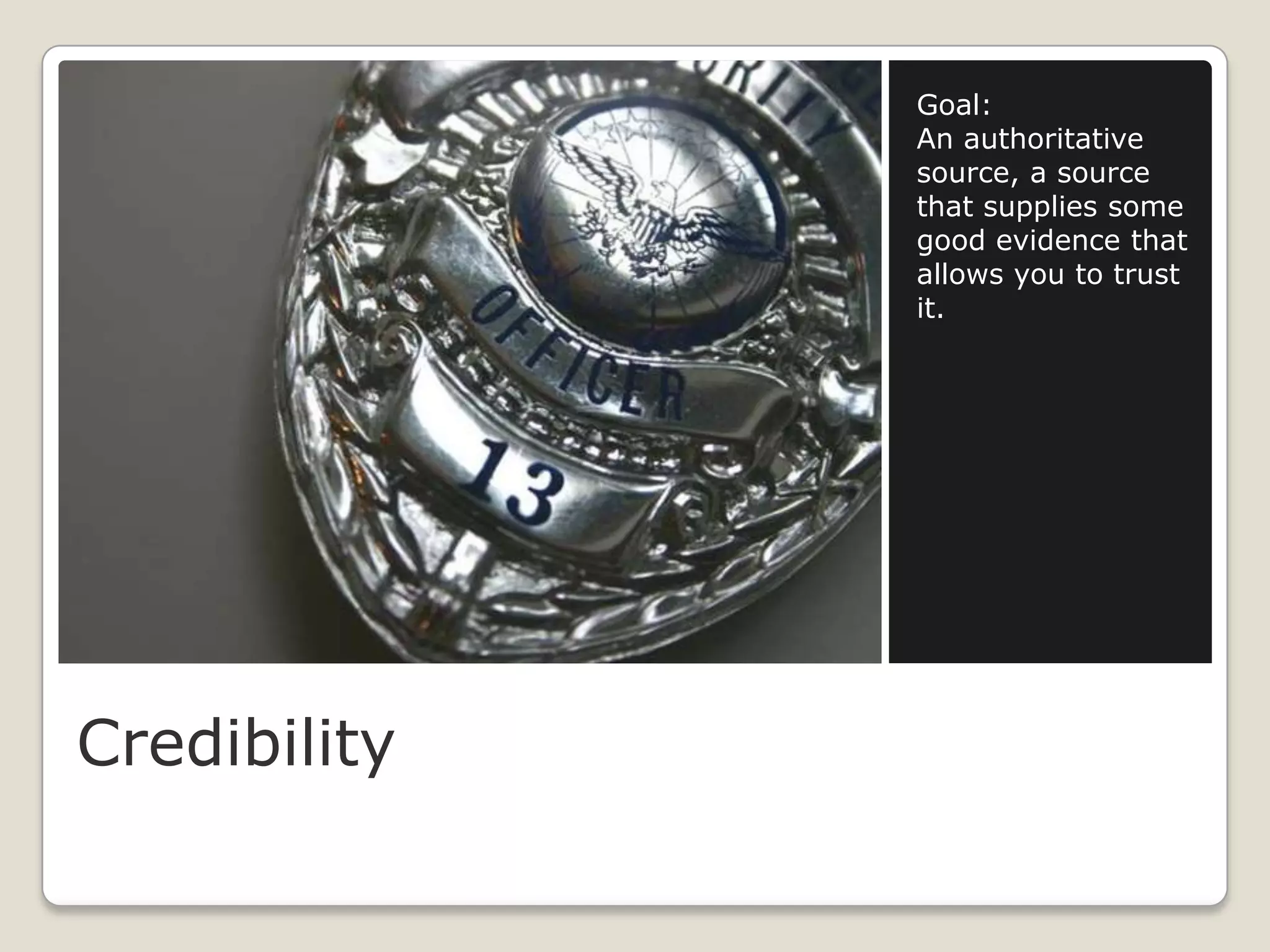
Goal:
              An authoritative
              source, a source
              that supplies some
              good evidence that
              allows you to trust
              it.


Credibility
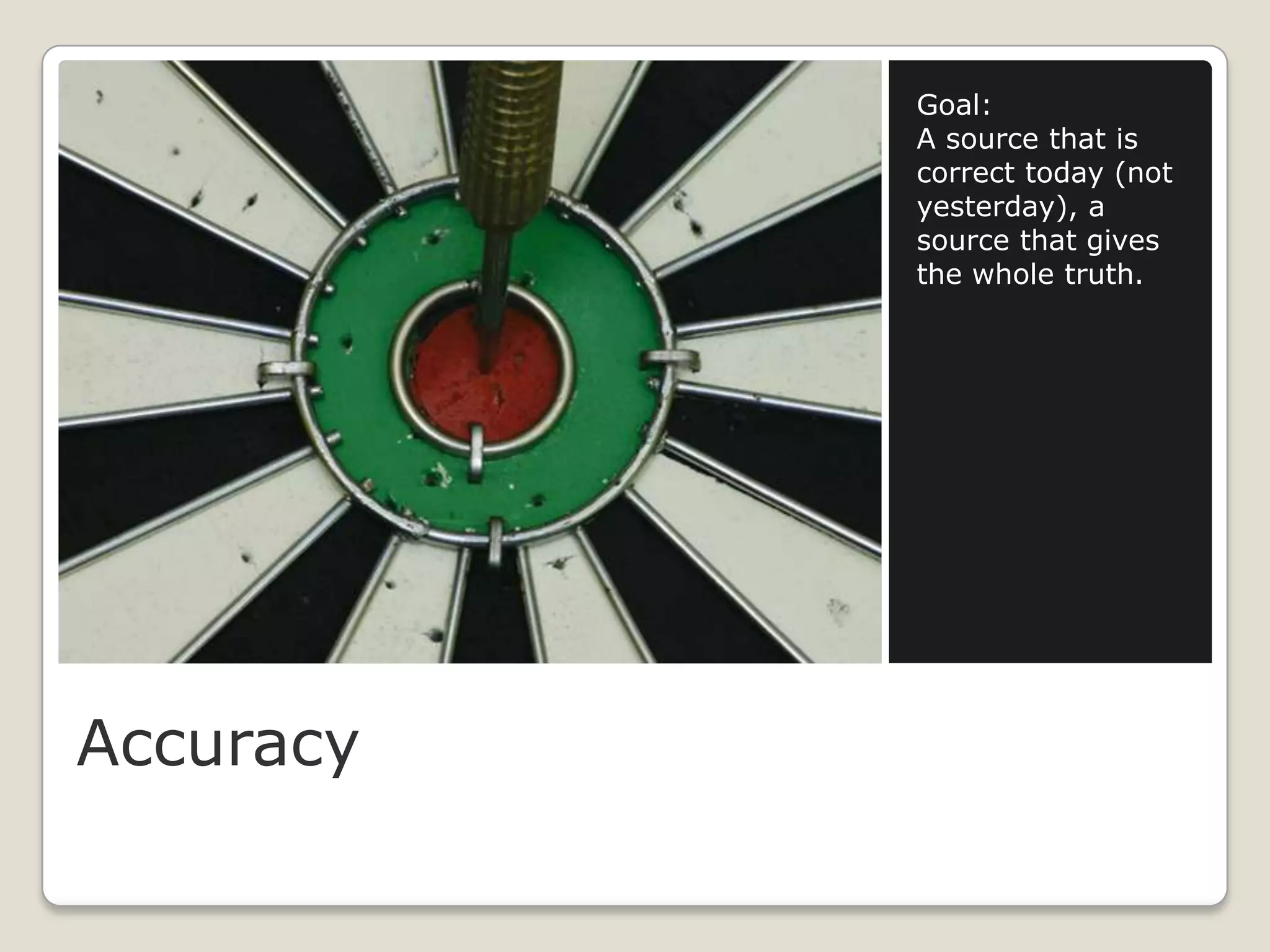
Goal:
           A source that is
           correct today (not
           yesterday), a
           source that gives
           the whole truth.


Accuracy
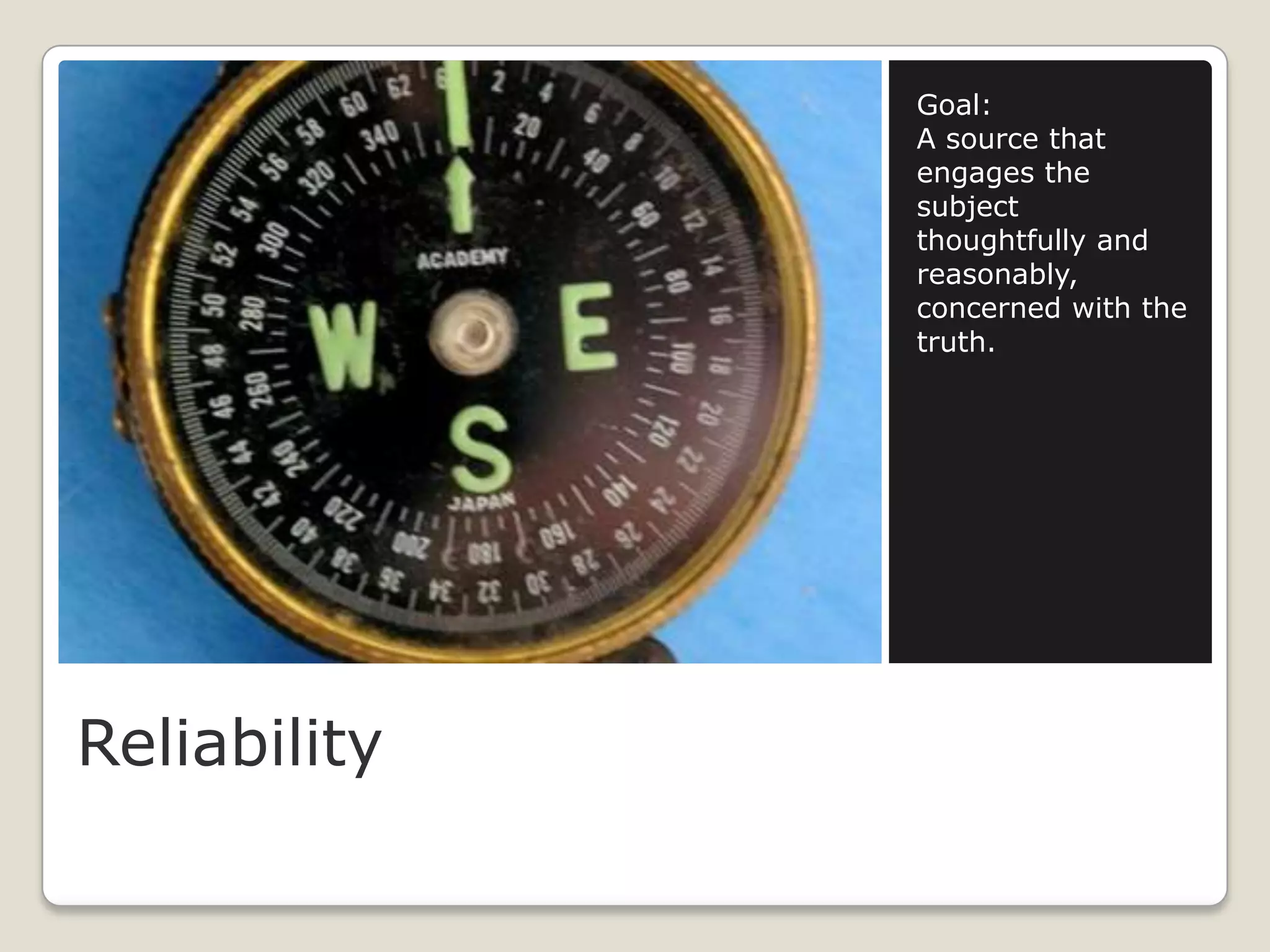
Goal:
              A source that
              engages the
              subject
              thoughtfully and
              reasonably,
              concerned with the
              truth.


Reliability
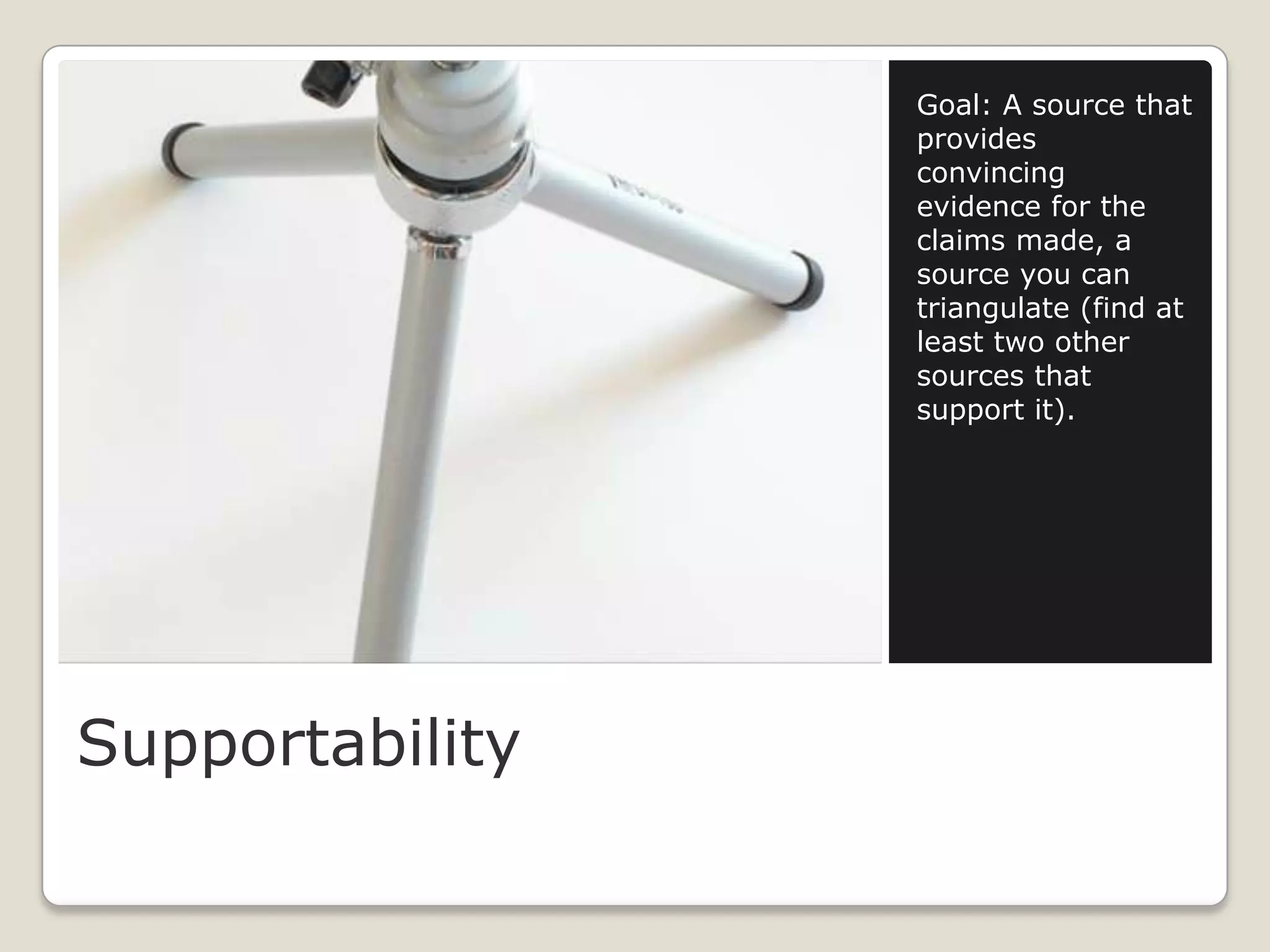
Goal: A source that
                 provides
                 convincing
                 evidence for the
                 claims made, a
                 source you can
                 triangulate (find at
                 least two other
                 sources that
                 support it).


Supportability
C.A.R.S.                       Credibility
Guidelines for
                               Accuracy
                               Reliability
evaluating sources.


                               Supportability


C.A.R.S. Source:
Harris, Robert. "Evaluating Internet Research Sources.“ VirtualSalt. 17
Nov. 1997. 17 Oct 2000 <http://www.virtualsalt.com/evalu8it.htm>.
Apply the smell
             test.


Final Step
1) Evaluate for:
        Credibility
        Accuracy
        Reliability
        Supportability
Scholarly Articles
   Intended for limited audience (academic audience)
   Written by scholars in the field and are usually signed
    articles (not anonymous)
   More complex writing style
   Main purpose is to report on original research
   Published bi-monthly, quarterly, semi-annually or
    annually


Scholarly Articles
 Is the article from a peer reviewed
  journal?
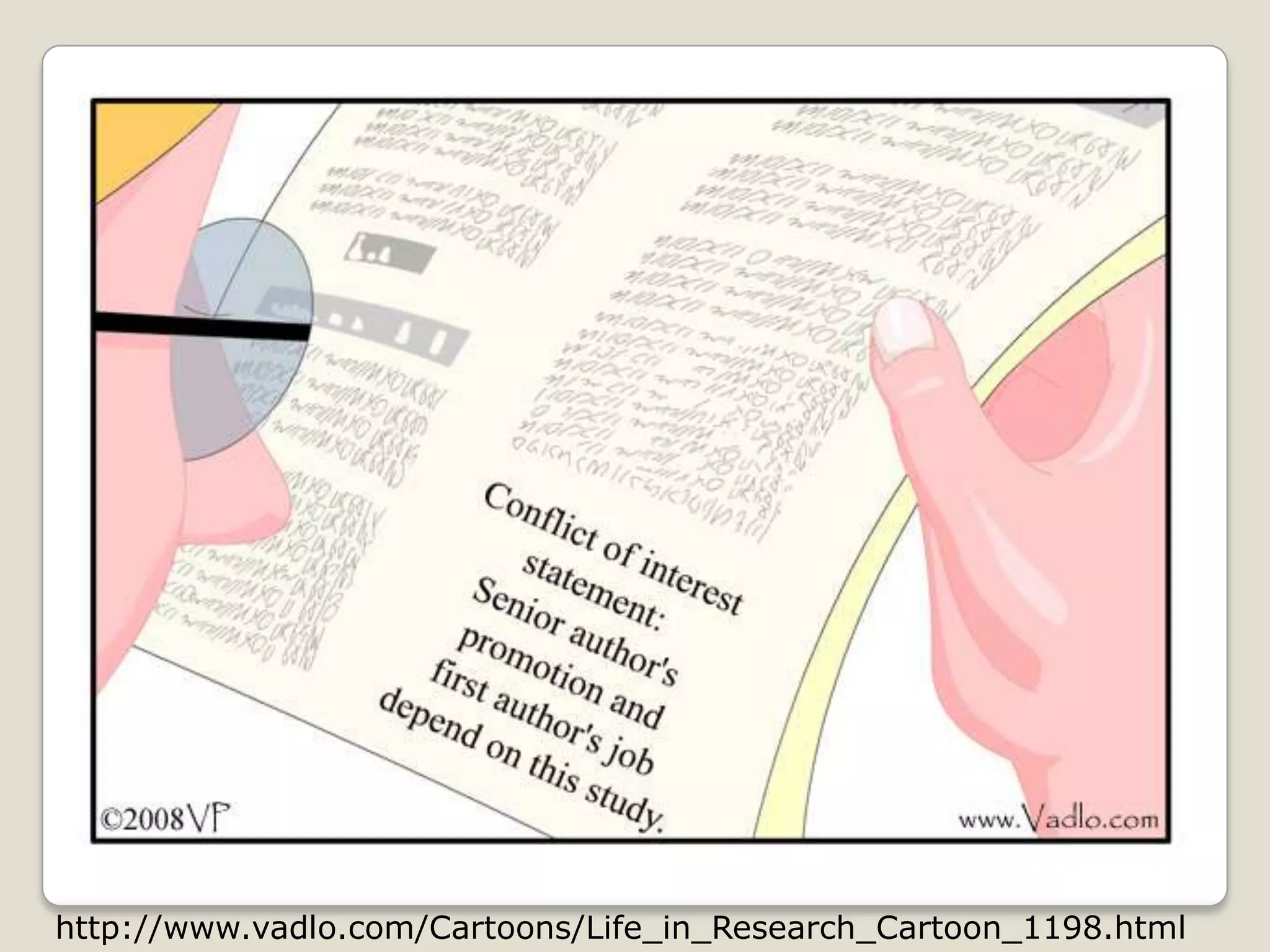
 Are any conflicts of interest stated?
 Is a reference list provided?


BioTech Criteria
http://www.vadlo.com/Cartoons/Life_in_Research_Cartoon_1198.html
1) Evaluate using the BioTech criteria:
    1) Is the article from a peer reviewed journal?
    2) Are any conflicts of interest stated?
    3) Is there a reference list and how complete is it?
2) Evaluate using an additional two questions from the whiteboard.

Evaluating Sources

  • 1.
    BioTech BiblioBytes December 12, 2008
  • 2.
    Evaluating Research Ethics Pre- Research The Research Cycle
  • 3.
  • 4.
    Intended for wide audience (general population)  Short articles that are not signed (no author)  Non-technical, simple writing style  Focus on current events, popular topics  Usually published daily, weekly or monthly Popular Articles
  • 5.
    Goal: An authoritative source, a source that supplies some good evidence that allows you to trust it. Credibility
  • 6.
    Goal: A source that is correct today (not yesterday), a source that gives the whole truth. Accuracy
  • 7.
    Goal: A source that engages the subject thoughtfully and reasonably, concerned with the truth. Reliability
  • 8.
    Goal: A sourcethat provides convincing evidence for the claims made, a source you can triangulate (find at least two other sources that support it). Supportability
  • 9.
    C.A.R.S. Credibility Guidelines for Accuracy Reliability evaluating sources. Supportability C.A.R.S. Source: Harris, Robert. "Evaluating Internet Research Sources.“ VirtualSalt. 17 Nov. 1997. 17 Oct 2000 <http://www.virtualsalt.com/evalu8it.htm>.
  • 10.
    Apply the smell test. Final Step
  • 11.
    1) Evaluate for: Credibility Accuracy Reliability Supportability
  • 12.
  • 13.
    Intended for limited audience (academic audience)  Written by scholars in the field and are usually signed articles (not anonymous)  More complex writing style  Main purpose is to report on original research  Published bi-monthly, quarterly, semi-annually or annually Scholarly Articles
  • 14.
     Is thearticle from a peer reviewed journal?  Are any conflicts of interest stated?  Is a reference list provided? BioTech Criteria
  • 15.
  • 16.
    1) Evaluate usingthe BioTech criteria: 1) Is the article from a peer reviewed journal? 2) Are any conflicts of interest stated? 3) Is there a reference list and how complete is it? 2) Evaluate using an additional two questions from the whiteboard.

Editor's Notes

  • #3 Pre-Research: preparing to do research activities. For example, brainstorming keywords words about the topic, writing out search strategiesResearch: Choosing where to search and searching. – PASSWORD SLIPSEvaluating: doing critical thinking about the articles you’ve discovered in your research.
  • #4 Yesterday we talked about briefly about different types of articles. What is a popular article.
  • #5 Characteristics of a popular article. Popular articles and scholarly articles are evaluated a little bit differently. We’ll look at some criteria for popular articles and then move on to scholarly.
  • #6 trustworthy source author’s credentials Is there an author? Is the page signed?Is the author qualified? An expert?Who is the sponsor?Is the sponsor of the page reputable? How reputable?Is there a link to information about the author or the sponsor?If the page includes neither a signature nor indicates a sponsor, is there any other way to determine its origin?evidence of quality control (grammar and spelling, editing)known or respected authority organizational support
  • #7 up to datefactual detailed, exact, comprehensiveaudience and purpose reflect intentions of completeness and accuracyIs the purpose for:Advocacy or “soapbox” (tries to persuade).Informational (often has multiple viewpoints and references).Business or marketing (tries to sell).Entertainment.
  • #8 fair balanced objectivereasonedno conflict of interestabsence of fallacies or slanted toneIs there any advertising on the page?**is the article attempting to stir to your emotions or your intellect?
  • #9 Does the author provide references that support the claim?
  • #10 What this all leads up to is CARS. A simple way of applying examining information.
  • #11 If all else fails, apply the smell test. If it smells bad, it probably is bad.
  • #12 Look at DHMO page, evaluate. – passes cars, fails smell testRead the article from KIRO about Monkeys and evaluate.
  • #13 What are scholarly articles? What are other names for them?
  • #14 Characteristics of a scholarly article.That brings usto your assignment. IN YOUR GROUPS:Share the 2-3 criteria you wrote after reading the homework about what you need to do to evaluate a scholarly article. Or brainstorm more. Pick 2 criteria to share with the class and write them on the board.
  • #15 Is the article from a peer reviewed journal? (WHAT IS A PR Journal and how do you find out?)Are any conflicts of interest stated? (WHERE DO YOU FIND THAT?)Is there a reference list and how complete is it? (HOW DO YOU KNOW IF IT IS COMPLETE?) Questions: Looking at the questions on the whiteboard and the three specific to Biotech, how long would it take to evaluate a paper? Is this step you should skimp on? Why not?
  • #17 Evaluate a scientific article using the three BioTech criteria. What happens when you use information from a scientific article without evaluating the article first?