European integration
1 www.ecb.europa.eu ©
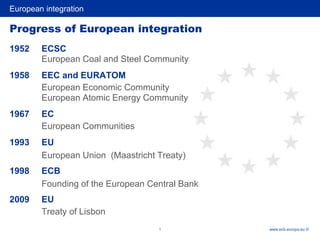
Progress of European integration
1952 ECSC
European Coal and Steel Community
1958 EEC and EURATOM
European Economic Community
European Atomic Energy Community
1967 EC
European Communities
1993 EU
European Union (Maastricht Treaty)
1998 ECB
Founding of the European Central Bank
2009 EU
Treaty of Lisbon
European integration
2 www.ecb.europa.eu ©
1952 Belgium
Germany
France
Italy
Luxembourg
Netherlands
1973 Denmark
Ireland
United Kingdom
1981 Greece
1986 Spain
Portugal
1995 Austria
Finland
Sweden
Enlargement of the European Union
2004 Czech Rep.
Estonia
Cyprus
Latvia
Lithuania
Hungary
Malta
Poland
Slovenia
Slovakia
2007 Bulgaria
Romania
2013 Croatia
FI
BE
LU
NL
DE
FR
ES
PT
GR
IT
AT
SL
MT
BG
RO
HU
PL
CZ
SK
EE
LV
LT
SE
DK
UK
IE
CY
HR
European integration
3 www.ecb.europa.eu ©
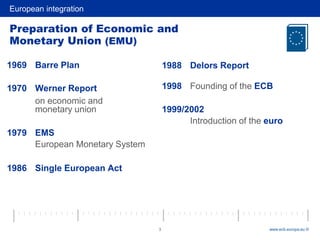
1969 Barre Plan
1970 Werner Report
on economic and
monetary union
1979 EMS
European Monetary System
1986 Single European Act
Preparation of Economic and
Monetary Union (EMU)
1988 Delors Report
1998 Founding of the ECB
1999/2002
Introduction of the euro
European integration
4 www.ecb.europa.eu ©
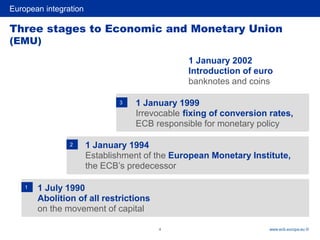
Three stages to Economic and Monetary Union
(EMU)
1 January 1999
Irrevocable fixing of conversion rates,
ECB responsible for monetary policy
1 January 1994
Establishment of the European Monetary Institute,
the ECB’s predecessor
1 July 1990
Abolition of all restrictions
on the movement of capital
1 January 2002
Introduction of euro
banknotes and coins
1
2
3
European integration
5 www.ecb.europa.eu ©
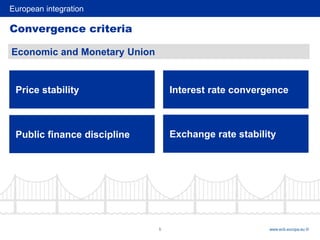
Convergence criteria
Economic and Monetary Union
Interest rate convergence
Price stability
Exchange rate stability
Public finance discipline
European integration
6 www.ecb.europa.eu ©
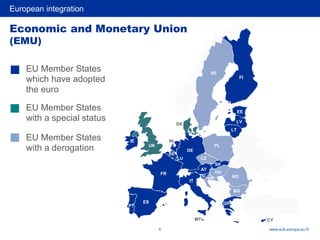
EU Member States
which have adopted
the euro
Economic and Monetary Union
(EMU)
EU Member States
with a special status
EU Member States
with a derogation
FI
BE
LU
NL
DE
FR
ES
PT
IT
AT
SL
MT
BG
RO
HU
PL
CZ
SK
EE
LV
LT
SE
DK
UK
IE
CY
GR
HR
European integration
7 www.ecb.europa.eu ©
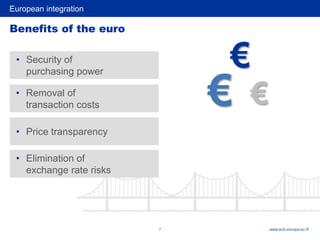
Benefits of the euro
• Removal of
transaction costs
• Security of
purchasing power
• Elimination of
exchange rate risks
• Price transparency
€ €
€
European integration
8 www.ecb.europa.eu ©
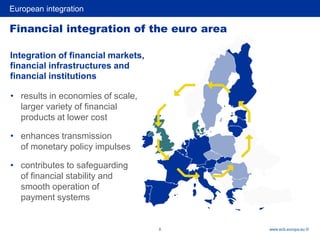
Integration of financial markets,
financial infrastructures and
financial institutions
Financial integration of the euro area
• results in economies of scale,
larger variety of financial
products at lower cost
• enhances transmission
of monetary policy impulses
• contributes to safeguarding
of financial stability and
smooth operation of
payment systems
European integration
9 www.ecb.europa.eu ©
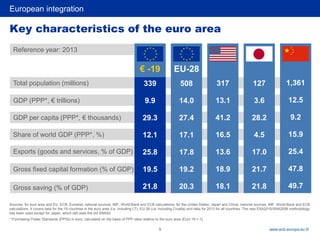
Key characteristics of the euro area
Sources: for euro area and EU: ECB, Eurostat, national sources, IMF, World Bank and ECB calculations; for the United States, Japan and China: national sources, IMF, World Bank and ECB
calculations. It covers data for the 19 countries in the euro area (i.e. including LT), EU-28 (i.e. including Croatia) and data for 2013 for all countries. The new ESA2010/SNA2008 methodology
has been used except for Japan, which still uses the old SNA93.
* Purchasing Power Standards (PPSs) in euro, calculated on the basis of PPP rates relative to the euro area (Euro 19 = 1).
Total population (millions)
GDP (PPP*, € trillions)
GDP per capita (PPP*, € thousands)
Share of world GDP (PPP*, %)
Exports (goods and services, % of GDP)
Gross fixed capital formation (% of GDP)
Gross saving (% of GDP)
Reference year: 2013
339
9.9
29.3
12.1
25.8
19.5
21.8
508
14.0
27.4
17.1
17.8
19.2
20.3
317
13.1
41.2
16.5
13.6
18.9
18.1
127
3.6
28.2
4.5
17.0
21.7
21.8
1,361
12.5
9.2
15.9
25.4
47.8
49.7
€ -19 EU-28

Eu template.ppt

  • 1.
    European integration 1 www.ecb.europa.eu© Progress of European integration 1952 ECSC European Coal and Steel Community 1958 EEC and EURATOM European Economic Community European Atomic Energy Community 1967 EC European Communities 1993 EU European Union (Maastricht Treaty) 1998 ECB Founding of the European Central Bank 2009 EU Treaty of Lisbon
  • 2.
    European integration 2 www.ecb.europa.eu© 1952 Belgium Germany France Italy Luxembourg Netherlands 1973 Denmark Ireland United Kingdom 1981 Greece 1986 Spain Portugal 1995 Austria Finland Sweden Enlargement of the European Union 2004 Czech Rep. Estonia Cyprus Latvia Lithuania Hungary Malta Poland Slovenia Slovakia 2007 Bulgaria Romania 2013 Croatia FI BE LU NL DE FR ES PT GR IT AT SL MT BG RO HU PL CZ SK EE LV LT SE DK UK IE CY HR
  • 3.
    European integration 3 www.ecb.europa.eu© 1969 Barre Plan 1970 Werner Report on economic and monetary union 1979 EMS European Monetary System 1986 Single European Act Preparation of Economic and Monetary Union (EMU) 1988 Delors Report 1998 Founding of the ECB 1999/2002 Introduction of the euro
  • 4.
    European integration 4 www.ecb.europa.eu© Three stages to Economic and Monetary Union (EMU) 1 January 1999 Irrevocable fixing of conversion rates, ECB responsible for monetary policy 1 January 1994 Establishment of the European Monetary Institute, the ECB’s predecessor 1 July 1990 Abolition of all restrictions on the movement of capital 1 January 2002 Introduction of euro banknotes and coins 1 2 3
  • 5.
    European integration 5 www.ecb.europa.eu© Convergence criteria Economic and Monetary Union Interest rate convergence Price stability Exchange rate stability Public finance discipline
  • 6.
    European integration 6 www.ecb.europa.eu© EU Member States which have adopted the euro Economic and Monetary Union (EMU) EU Member States with a special status EU Member States with a derogation FI BE LU NL DE FR ES PT IT AT SL MT BG RO HU PL CZ SK EE LV LT SE DK UK IE CY GR HR
  • 7.
    European integration 7 www.ecb.europa.eu© Benefits of the euro • Removal of transaction costs • Security of purchasing power • Elimination of exchange rate risks • Price transparency € € €
  • 8.
    European integration 8 www.ecb.europa.eu© Integration of financial markets, financial infrastructures and financial institutions Financial integration of the euro area • results in economies of scale, larger variety of financial products at lower cost • enhances transmission of monetary policy impulses • contributes to safeguarding of financial stability and smooth operation of payment systems
  • 9.
    European integration 9 www.ecb.europa.eu© Key characteristics of the euro area Sources: for euro area and EU: ECB, Eurostat, national sources, IMF, World Bank and ECB calculations; for the United States, Japan and China: national sources, IMF, World Bank and ECB calculations. It covers data for the 19 countries in the euro area (i.e. including LT), EU-28 (i.e. including Croatia) and data for 2013 for all countries. The new ESA2010/SNA2008 methodology has been used except for Japan, which still uses the old SNA93. * Purchasing Power Standards (PPSs) in euro, calculated on the basis of PPP rates relative to the euro area (Euro 19 = 1). Total population (millions) GDP (PPP*, € trillions) GDP per capita (PPP*, € thousands) Share of world GDP (PPP*, %) Exports (goods and services, % of GDP) Gross fixed capital formation (% of GDP) Gross saving (% of GDP) Reference year: 2013 339 9.9 29.3 12.1 25.8 19.5 21.8 508 14.0 27.4 17.1 17.8 19.2 20.3 317 13.1 41.2 16.5 13.6 18.9 18.1 127 3.6 28.2 4.5 17.0 21.7 21.8 1,361 12.5 9.2 15.9 25.4 47.8 49.7 € -19 EU-28