LEVEL OF ETP
PROCESS
BY- PEARL WATER TECHNOLOGIES
INTRODUCTION
ETP plant is specially designed
for treating the industrial
wastewater for its reuse or safe
disposal to the environment. With
the combination of evaporation &
drying method, centrifuging
technique, filtration technique and
incineration technique, our ETP
plant completely removes
effluents from the wastewater.
2
STAGES OF AN
EFFLUENT
TREATMENT
PLANT
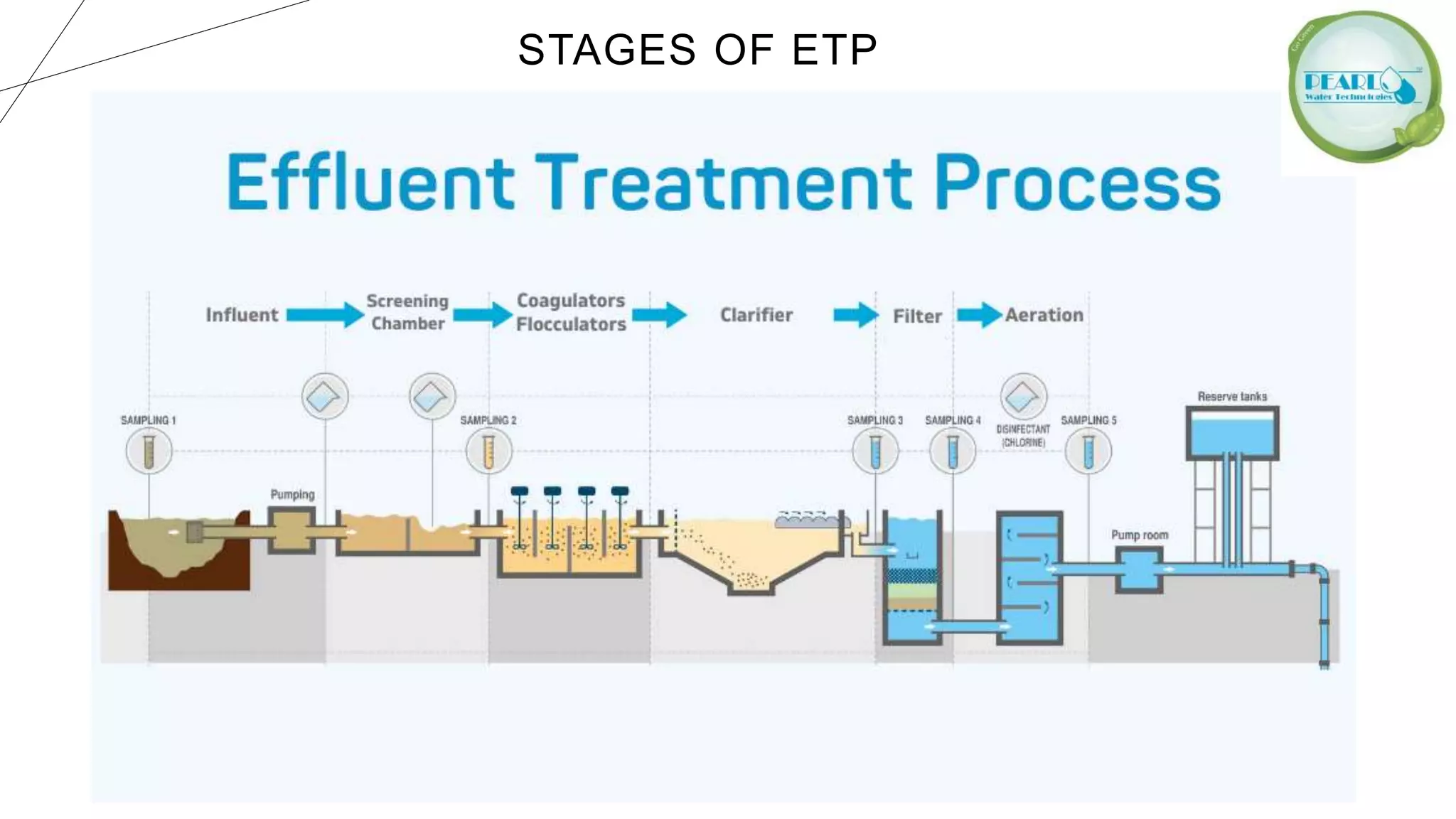
There are mainly 5 Stages or Levels of ETP
3
STAGES OF ETP
4
SCREENIN
G
As water enters a water treatment plant,
either from lakes, rivers, or the ground,
it passes through a screening. This
screening keeps large natural
contaminants out of the water. These
can be anything from wood to fish. With
ground water sources, it is not as
necessary to go through screening, as
its extraction from the ground acts, in
itself, as a natural screening process.
5
Coagulat
ion
During the coagulation phase, workers
at the treatment plant add chemicals to
the water that cause particles to form in
the water. The most common
coagulants are aluminum sulphate and
ferric sulphate. They are added to the
water at a point of high turbulence. The
particles formed by these chemicals are
sticky and called floc. Floc attracts dirt
particles, eventually getting heavy
enough to sink down to the bottom of
the storage tank it resides in
6
Sedimentat
ion
These particles of floc and dirt sinking
to the bottom of the storage tank are
what we call sediment. The sediment in
the water, as well as the water, flow into
a sedimentation basin during this
process. Sedimentation tanks are
designed to reduce the velocity of the
flow of water to better allow suspended
solids to settle. The heavy floc particles
settle, again, here to the bottom of this
basin, and remain there until they are
removed.
7
Filtration
The water being purified is then passed
through a layer of gravel and sand
(occasionally charcoal as well). The
gravel layer during this process is
typically about 1 foot deep and the sand
layer is 2.5 feet deep. Sometimes
pressure filters are also used to
maintain hydraulic head, and gravity
filters are commonly used to remove
floc. These filtration systems eliminate
out any other particles that remain after
the sedimentation process, such as
turbidity and algae. After this, the water
goes to a closed tank.
8
Disinfect
ion In this tank, chlorine and other
chemicals used for disinfecting are used
to kill any microorganisms and bacteria
in the water. This helps keep the water
clean until it is distributed to the
community. This is done through pipes
that bring it to homes and businesses.
Until then, it remains in the tank in order
to remain purified.
9
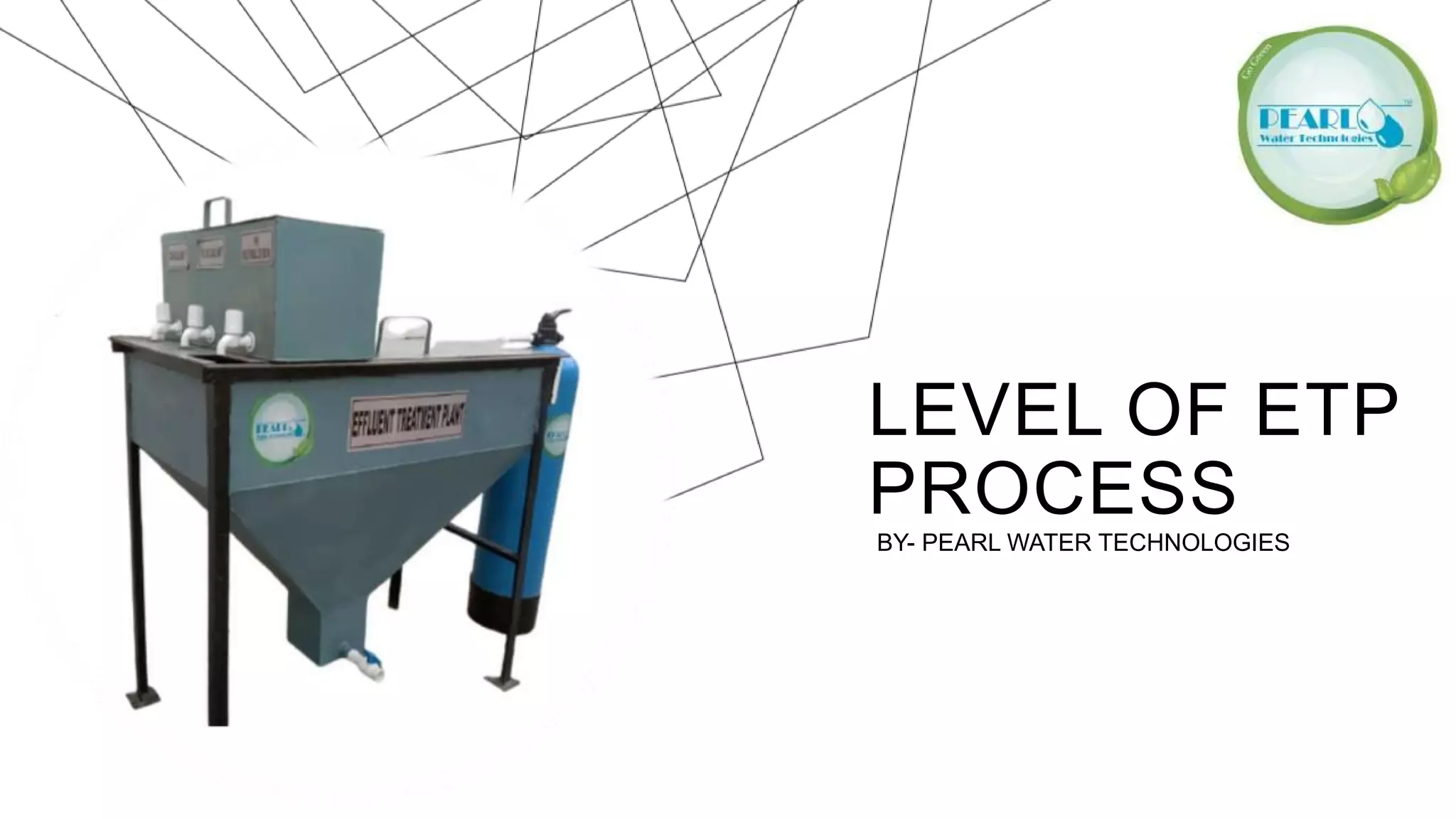
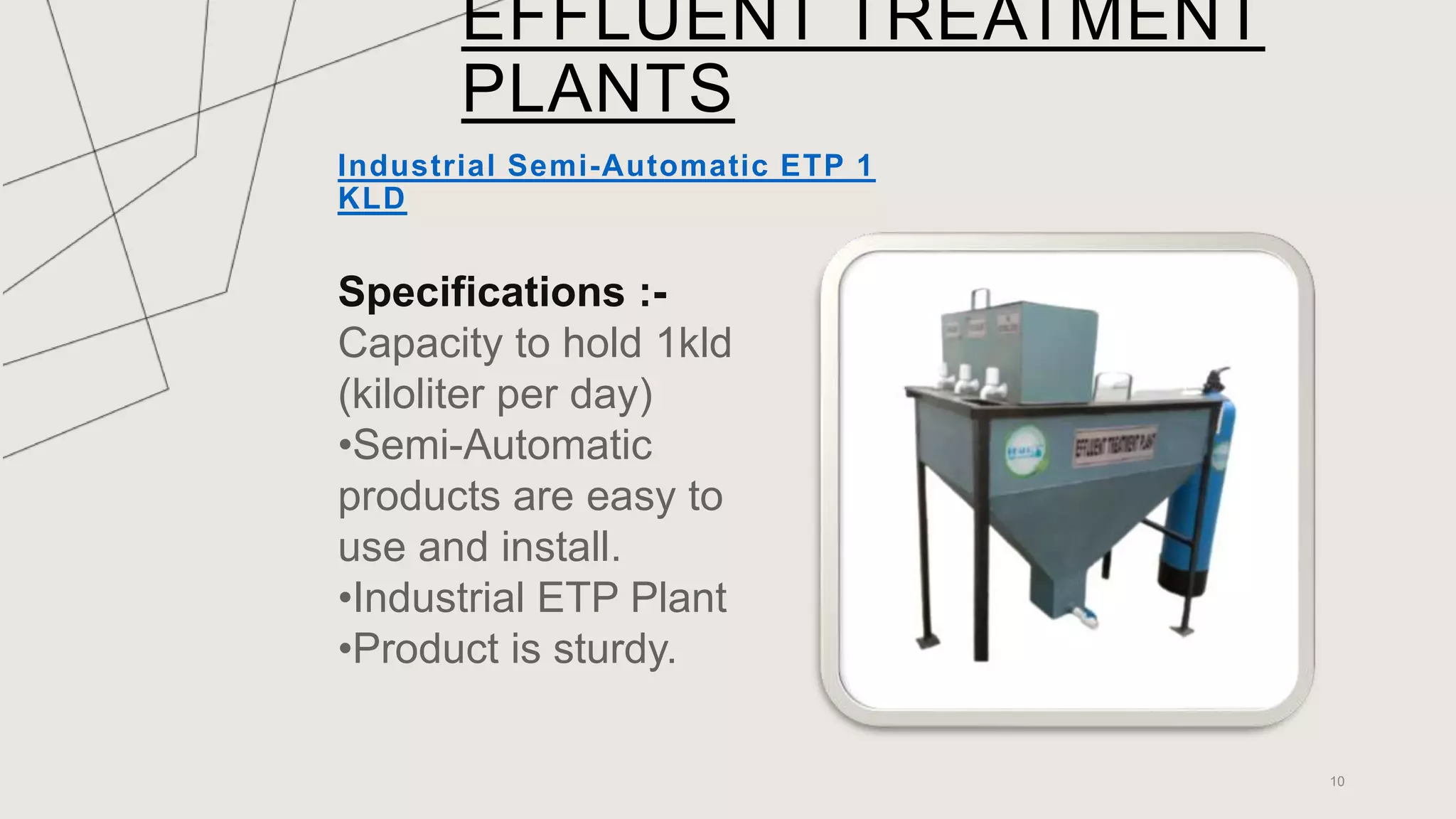
EFFLUENT TREATMENT
PLANTS
Industrial Semi-Automatic ETP 1
KLD
10
Specifications :-
Capacity to hold 1kld
(kiloliter per day)
•Semi-Automatic
products are easy to
use and install.
•Industrial ETP Plant
•Product is sturdy.
EFFLUENT TREATMENT
PLANTS
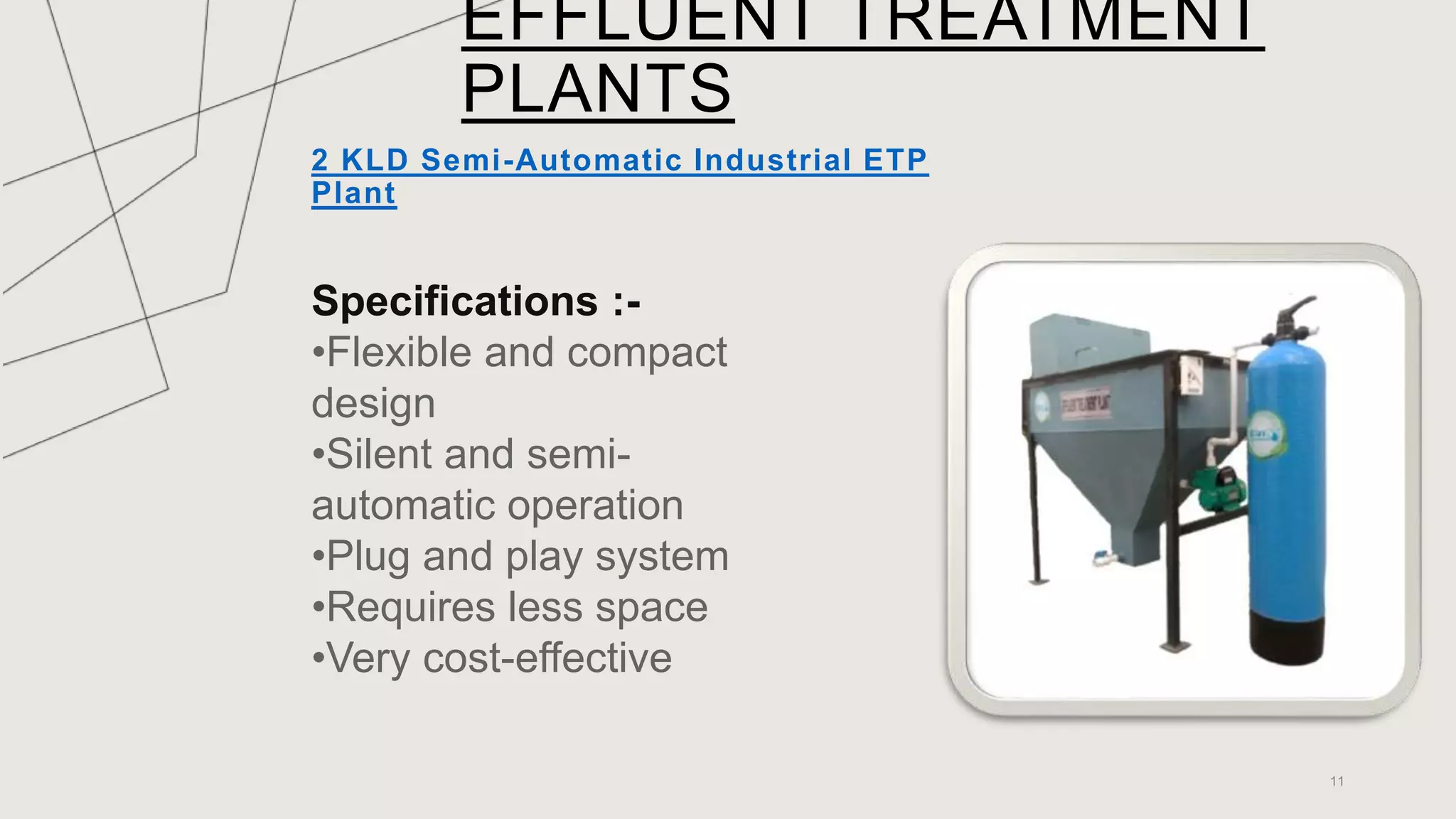
2 KLD Semi-Automatic Industrial ETP
Plant
11
Specifications :-
•Flexible and compact
design
•Silent and semi-
automatic operation
•Plug and play system
•Requires less space
•Very cost-effective
PEARL WATER TECHNOLOGIES
12
We are one of the leading brands dealing in water treatment systems including wastewater systems.
We have served you in this field for the last 13+ years to provide you with the best and premium
quality product.
Pearl Water offers an efficient range of Effluent Treatment Plants for the recycling of wastewater to
decrease water need. The overall treatment resolution functions at multiple levels and includes
several physical, chemical, biological, and membrane processes. Effluent treatment solutions for
different types of industrial wastewater.
Customized practices to suit the broad difference of effluents and to support competence are granted
to industries. These methods involve physical-chemical treatment, biological treatment, tertiary
treatment, and membrane parting process to accomplish the zero-discharge measures laid by lawful
authority. We present innovative and economically efficient systems for waste from industries like
chemicals, drugs, pharmaceuticals, refineries, dairy, ready mix plants & textile, etc.
ETP Process Pearl Water Technologies.pptx

ETP Process Pearl Water Technologies.pptx

  • 1.
    LEVEL OF ETP PROCESS BY-PEARL WATER TECHNOLOGIES
  • 2.
    INTRODUCTION ETP plant isspecially designed for treating the industrial wastewater for its reuse or safe disposal to the environment. With the combination of evaporation & drying method, centrifuging technique, filtration technique and incineration technique, our ETP plant completely removes effluents from the wastewater. 2
  • 3.
    STAGES OF AN EFFLUENT TREATMENT PLANT Thereare mainly 5 Stages or Levels of ETP 3
  • 4.
  • 5.
    SCREENIN G As water entersa water treatment plant, either from lakes, rivers, or the ground, it passes through a screening. This screening keeps large natural contaminants out of the water. These can be anything from wood to fish. With ground water sources, it is not as necessary to go through screening, as its extraction from the ground acts, in itself, as a natural screening process. 5
  • 6.
    Coagulat ion During the coagulationphase, workers at the treatment plant add chemicals to the water that cause particles to form in the water. The most common coagulants are aluminum sulphate and ferric sulphate. They are added to the water at a point of high turbulence. The particles formed by these chemicals are sticky and called floc. Floc attracts dirt particles, eventually getting heavy enough to sink down to the bottom of the storage tank it resides in 6
  • 7.
    Sedimentat ion These particles offloc and dirt sinking to the bottom of the storage tank are what we call sediment. The sediment in the water, as well as the water, flow into a sedimentation basin during this process. Sedimentation tanks are designed to reduce the velocity of the flow of water to better allow suspended solids to settle. The heavy floc particles settle, again, here to the bottom of this basin, and remain there until they are removed. 7
  • 8.
    Filtration The water beingpurified is then passed through a layer of gravel and sand (occasionally charcoal as well). The gravel layer during this process is typically about 1 foot deep and the sand layer is 2.5 feet deep. Sometimes pressure filters are also used to maintain hydraulic head, and gravity filters are commonly used to remove floc. These filtration systems eliminate out any other particles that remain after the sedimentation process, such as turbidity and algae. After this, the water goes to a closed tank. 8
  • 9.
    Disinfect ion In thistank, chlorine and other chemicals used for disinfecting are used to kill any microorganisms and bacteria in the water. This helps keep the water clean until it is distributed to the community. This is done through pipes that bring it to homes and businesses. Until then, it remains in the tank in order to remain purified. 9
  • 10.
    EFFLUENT TREATMENT PLANTS Industrial Semi-AutomaticETP 1 KLD 10 Specifications :- Capacity to hold 1kld (kiloliter per day) •Semi-Automatic products are easy to use and install. •Industrial ETP Plant •Product is sturdy.
  • 11.
    EFFLUENT TREATMENT PLANTS 2 KLDSemi-Automatic Industrial ETP Plant 11 Specifications :- •Flexible and compact design •Silent and semi- automatic operation •Plug and play system •Requires less space •Very cost-effective
  • 12.
    PEARL WATER TECHNOLOGIES 12 Weare one of the leading brands dealing in water treatment systems including wastewater systems. We have served you in this field for the last 13+ years to provide you with the best and premium quality product. Pearl Water offers an efficient range of Effluent Treatment Plants for the recycling of wastewater to decrease water need. The overall treatment resolution functions at multiple levels and includes several physical, chemical, biological, and membrane processes. Effluent treatment solutions for different types of industrial wastewater. Customized practices to suit the broad difference of effluents and to support competence are granted to industries. These methods involve physical-chemical treatment, biological treatment, tertiary treatment, and membrane parting process to accomplish the zero-discharge measures laid by lawful authority. We present innovative and economically efficient systems for waste from industries like chemicals, drugs, pharmaceuticals, refineries, dairy, ready mix plants & textile, etc.