What is the role of ethnography in design?


Julia Moisand Egéa
29 SEPT 2010
Role of ethnography in design. Designing with versus designing for people.   2


Contents

1. What is ethnography?
2. Are designers ethnographers?
3. Ethnography techniques are valuable for
   conducting design research
4. Designing with people
5. Designing for people
6. Conclusion
Role of ethnography in design. Designing with versus designing for people.                                               3


What is ethnography?
Ethnography, as a term coming from the social sciences and anthropology, is the study of foreign cultures, often
unknown communities, minorities or endangered cultures. The ethnographer observes the social structure,
relationships, interactions, vision of the world, relation to life, morals, ethics, rituals, artifacts. Some ethnographers are
also linguists and are especially interested in the dialects and languages spoken.
Role of ethnography in design. Designing with versus designing for people.                               4


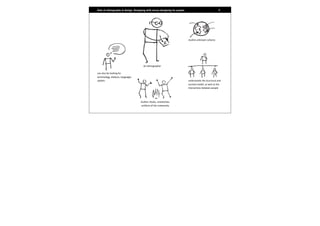
                                                                             studies unknown cultures


                                      An ethnographer

can also be looking for
terminology, dialects, languages
spoken.                                                                      understands the structural and
                                                                             societal model, as well as the
                                                                             interactions between people


                                    studies rituals, ceremonies,
                                     artifacts of the community
Role of ethnography in design. Designing with vs designing for people.                                    5


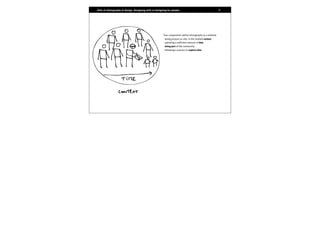
                                                        Four components define ethnography as a method:
                                                        - being present on site, in the studied context
                                                        - spending a sufficient amount of time
                                                        - being part of the community
                                                        - following a process to capture data
Role of ethnography in design. Designing with vs designing for people.                               6


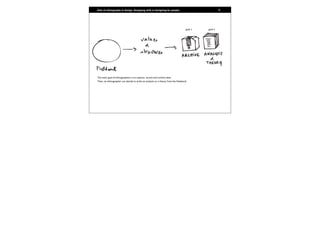
                                                                                   goal 1   goal 2


The main goal of ethnographers is to capture, record and archive data.
Then, an ethnographer can decide to write an analysis or a theory from the fieldwork.
Role of ethnography in design. Designing with vs designing for people.                                              7


Are designers ethnographers?
Designers (like Emily Pilloton, Chris Le Dantec) adapted methods from ethnography and anthropology in order to
conduct Design Research. They follow a similar process, researching in the studied context itself, spending time there,
being part of a community and capturing data.


So, are designers ethnographers?
Role of ethnography in design. Designing with vs designing for people.                                                  8


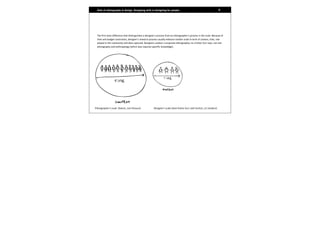
  The first main difference that distinguishes a designer’s process from an ethnographer’s process is the scale. Because of
  time and budget constraints, designer’s research process usually embrace smaller scale in term of context, time, role
  played in the community and data captured. Designers conduct «corporate ethnography» as J.Fulton Suri says, not real
  ethnography and anthropology (which also requires specific knowledge).


Ethnographer’s scale (Geertz, Levi-Strauss)             Designer’s scale (Jane Fulton Suri, Jodi Furlizzi, Liz Sanders)
Role of ethnography in design. Designing with vs designing for people.                                         9


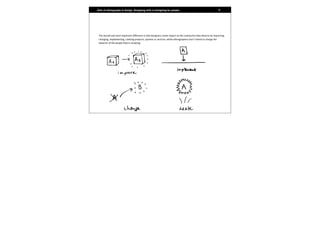
 The second and most important difference is that designers create impact on the community they observe by improving,
 changing, implementing, creating products, systems or services, while ethnographers don’t intend to change the
 behavior of the people they’re studying.
Role of ethnography in design. Designing with versus designing for people.                                       10


Ethnography techniques are valuable
for conducting design research
 Ethnography techniques are valuable to contextualize information and people in order to propose activities, services,
 products, that will be valuable, meaningful, helpful, and playful to people.

 Ethnographic techniques make design relevant. They help to structure the design process and it’s the way of collecting
 real data, on which improvement and innovation can be based. Ethnography techniques help designers to stay
 connected with their users, audiences, customers.

 Different ethnographic techniques can be chosen by the design team, using different level of empathy:
 - by using sympathy and facilitation methods (Pilloton, Le Dantec, Sanders)
 - by using empathy and synthesis methods (Fulton Suri, Forlizzi, Gaver)
Role of ethnography in design. Designing with versus designing for people.                              11


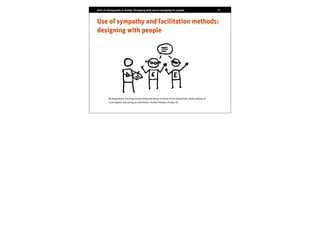
Use of sympathy and facilitation methods:
designing with people


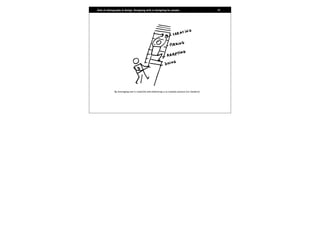
         By being there, focusing on one thing and being involved in the community, while looking for
         local experts and acting as a facilitator. (Emily Pilloton, Project H)
Role of ethnography in design. Designing with vs designing for people.                             12


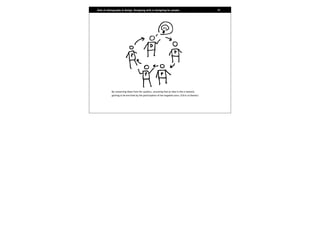
            By connecting ideas from the «public», assuming that an idea is like a network,
            gaining to be enriched by the participation of the targeted users. (Chris Le Dantec)
Role of ethnography in design. Designing with vs designing for people.                            13


              By leveraging user’s creativity and embracing a co-creation process (Liz Sanders)
Role of ethnography in design. Designing with vs designing for people.                                       14


Use of empathy and synthesis methods:
designing for people


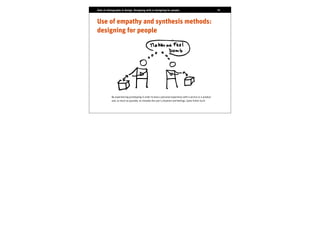
            By experiencing prototyping in order to have a personal experience with a service or a product
            and, as much as possible, to simulate the user’s situation and feelings. (Jane Fulton Suri)
Role of ethnography in design. Designing with vs designing for people.                                15


                                                                                             filter


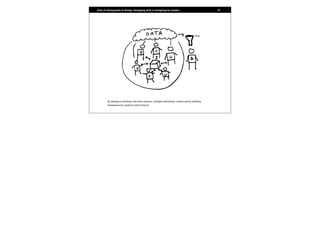
        By looking at attributes like time, distance, multiple individuals, context and by building
        frameworks for synthesis (Jodi Forlizzi).
Role of ethnography in design. Designing with vs designing for people.                     16


                  By finding inspiration in individual and subjective stories from users
                  (cultural probes, W. Gaver)
Role of ethnography in design. Designing with vs designing for people.                                18
                                                                                                      17


Use of ethnographic techniques to make
incremental changes on existing products


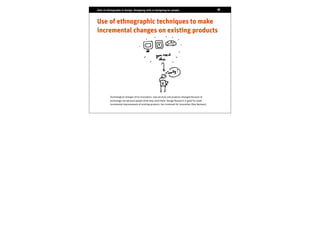
          Technological changes drive innovation, new services and products emerged because of
          technology not because people think they need them. Design Research is good for small
          incremental improvements of existing products but irrelevant for innovation (Don Norman).
Role of ethnography in design. Designing with vs designing for people.                                           18


Conclusion

Ethnography in design can be approached in two different ways:

- designing with people by helping them generate their own ideas and potential solutions.
  The fieldwork is creation itself.
  The designer acts as a facilitator and looks for the expertise among the users, community and publics.


- designing for people by collecting and synthesizing design research insights and/or technology requirements.
  The fieldwork is used for inspiration, experiences prototyping, iteration and testing.
  The designer creates the solutions, in partnership with the users but there is a distance between them.
Role of ethnography in design. Designing with vs designing for people.                                              19


 Conclusion


I don’t think there is necessarily an opposition between designing with versus for people.

Designers can be considered as generalist because they embrace a lot of information on different fields and domains
but I do think they reach a level of expertise in design process, methods, synthesis, communication over their career.
Because they have this expertise, they can make recommendations and design for people.


Designers design with people by including design research methods in their process and that’s how they stay connected
to their users and make sure they design solutions that make sense.


I relate to designers who design FOR people but WITH them, by using ethnographic research methods.
Jane Fulton Suri, Forlizzi and Gaver, for example, collect data and experience ideas from the field but there is a moment
in their design process where there is an official channel for synthesis, interpretation and therefore, subjectivity.

I think subjectivity happens anyway so I am comfortable with design processes that assume it.

Ethnography in-design

  • 1.
    What is therole of ethnography in design? Julia Moisand Egéa 29 SEPT 2010
  • 2.
    Role of ethnographyin design. Designing with versus designing for people. 2 Contents 1. What is ethnography? 2. Are designers ethnographers? 3. Ethnography techniques are valuable for conducting design research 4. Designing with people 5. Designing for people 6. Conclusion
  • 3.
    Role of ethnographyin design. Designing with versus designing for people. 3 What is ethnography? Ethnography, as a term coming from the social sciences and anthropology, is the study of foreign cultures, often unknown communities, minorities or endangered cultures. The ethnographer observes the social structure, relationships, interactions, vision of the world, relation to life, morals, ethics, rituals, artifacts. Some ethnographers are also linguists and are especially interested in the dialects and languages spoken.
  • 4.
    Role of ethnographyin design. Designing with versus designing for people. 4 studies unknown cultures An ethnographer can also be looking for terminology, dialects, languages spoken. understands the structural and societal model, as well as the interactions between people studies rituals, ceremonies, artifacts of the community
  • 5.
    Role of ethnographyin design. Designing with vs designing for people. 5 Four components define ethnography as a method: - being present on site, in the studied context - spending a sufficient amount of time - being part of the community - following a process to capture data
  • 6.
    Role of ethnographyin design. Designing with vs designing for people. 6 goal 1 goal 2 The main goal of ethnographers is to capture, record and archive data. Then, an ethnographer can decide to write an analysis or a theory from the fieldwork.
  • 7.
    Role of ethnographyin design. Designing with vs designing for people. 7 Are designers ethnographers? Designers (like Emily Pilloton, Chris Le Dantec) adapted methods from ethnography and anthropology in order to conduct Design Research. They follow a similar process, researching in the studied context itself, spending time there, being part of a community and capturing data. So, are designers ethnographers?
  • 8.
    Role of ethnographyin design. Designing with vs designing for people. 8 The first main difference that distinguishes a designer’s process from an ethnographer’s process is the scale. Because of time and budget constraints, designer’s research process usually embrace smaller scale in term of context, time, role played in the community and data captured. Designers conduct «corporate ethnography» as J.Fulton Suri says, not real ethnography and anthropology (which also requires specific knowledge). Ethnographer’s scale (Geertz, Levi-Strauss) Designer’s scale (Jane Fulton Suri, Jodi Furlizzi, Liz Sanders)
  • 9.
    Role of ethnographyin design. Designing with vs designing for people. 9 The second and most important difference is that designers create impact on the community they observe by improving, changing, implementing, creating products, systems or services, while ethnographers don’t intend to change the behavior of the people they’re studying.
  • 10.
    Role of ethnographyin design. Designing with versus designing for people. 10 Ethnography techniques are valuable for conducting design research Ethnography techniques are valuable to contextualize information and people in order to propose activities, services, products, that will be valuable, meaningful, helpful, and playful to people. Ethnographic techniques make design relevant. They help to structure the design process and it’s the way of collecting real data, on which improvement and innovation can be based. Ethnography techniques help designers to stay connected with their users, audiences, customers. Different ethnographic techniques can be chosen by the design team, using different level of empathy: - by using sympathy and facilitation methods (Pilloton, Le Dantec, Sanders) - by using empathy and synthesis methods (Fulton Suri, Forlizzi, Gaver)
  • 11.
    Role of ethnographyin design. Designing with versus designing for people. 11 Use of sympathy and facilitation methods: designing with people By being there, focusing on one thing and being involved in the community, while looking for local experts and acting as a facilitator. (Emily Pilloton, Project H)
  • 12.
    Role of ethnographyin design. Designing with vs designing for people. 12 By connecting ideas from the «public», assuming that an idea is like a network, gaining to be enriched by the participation of the targeted users. (Chris Le Dantec)
  • 13.
    Role of ethnographyin design. Designing with vs designing for people. 13 By leveraging user’s creativity and embracing a co-creation process (Liz Sanders)
  • 14.
    Role of ethnographyin design. Designing with vs designing for people. 14 Use of empathy and synthesis methods: designing for people By experiencing prototyping in order to have a personal experience with a service or a product and, as much as possible, to simulate the user’s situation and feelings. (Jane Fulton Suri)
  • 15.
    Role of ethnographyin design. Designing with vs designing for people. 15 filter By looking at attributes like time, distance, multiple individuals, context and by building frameworks for synthesis (Jodi Forlizzi).
  • 16.
    Role of ethnographyin design. Designing with vs designing for people. 16 By finding inspiration in individual and subjective stories from users (cultural probes, W. Gaver)
  • 17.
    Role of ethnographyin design. Designing with vs designing for people. 18 17 Use of ethnographic techniques to make incremental changes on existing products Technological changes drive innovation, new services and products emerged because of technology not because people think they need them. Design Research is good for small incremental improvements of existing products but irrelevant for innovation (Don Norman).
  • 18.
    Role of ethnographyin design. Designing with vs designing for people. 18 Conclusion Ethnography in design can be approached in two different ways: - designing with people by helping them generate their own ideas and potential solutions. The fieldwork is creation itself. The designer acts as a facilitator and looks for the expertise among the users, community and publics. - designing for people by collecting and synthesizing design research insights and/or technology requirements. The fieldwork is used for inspiration, experiences prototyping, iteration and testing. The designer creates the solutions, in partnership with the users but there is a distance between them.
  • 19.
    Role of ethnographyin design. Designing with vs designing for people. 19 Conclusion I don’t think there is necessarily an opposition between designing with versus for people. Designers can be considered as generalist because they embrace a lot of information on different fields and domains but I do think they reach a level of expertise in design process, methods, synthesis, communication over their career. Because they have this expertise, they can make recommendations and design for people. Designers design with people by including design research methods in their process and that’s how they stay connected to their users and make sure they design solutions that make sense. I relate to designers who design FOR people but WITH them, by using ethnographic research methods. Jane Fulton Suri, Forlizzi and Gaver, for example, collect data and experience ideas from the field but there is a moment in their design process where there is an official channel for synthesis, interpretation and therefore, subjectivity. I think subjectivity happens anyway so I am comfortable with design processes that assume it.