What is Ethnic Literature?
What does “ethnic” mean?

 “of or relating to large groups
 of people classed according to
 common racial, national,
 tribal, religious, linguistic, or
 cultural origin or background.”
 (Webster’s Dictionary)
Ethnic classifications

 Hispanics or Latinos are being
 classed according to language
 (Spanish) more so than “race.”
 African-Americans are being classed
 according to race.
 Asian-Americans are classed
 according to race, but often also
 according to national origin.
Ethnic classifications

 White Americans are usually
 considered ethnic only in terms of
 strong national or religious
 identifications i.e. Italian, Jewish
 Native Americans are usually
 classified by tribe, but sometimes by
 race as indigenous or native peoples
Ethnic Classifications

 There can also be regional
 identifications--New Yorkers,
 Californians, locals
 Both regional and national
 identifications can be strengthened by
 moving away from the group--when
 they are dominant they are often
 taken for granted.
Ethnic identifications

 Linguistic, and cultural identifications
 are weakened through exposure to a
 dominant alternative culture as
 members of ethnic groups become
 assimilated.
 The following poem by Pat Mora
 describes this process:
Immigrants

    Wrap their babies in the American flag,
    feed them mashed hot dogs and apple pie,
    name them Bill and Daisy,
    buy them blonde dolls that blink blue
    eyes or a football and tiny cleats
    before the baby can even walk,
    speak to them in thick English
           hallo, babee, hallo
Immigrants

    whisper in Spanish or Polish
    when the babies sleep, whisper
    in a dark parent bed, that dark
    parent fear, “Will they like
    our boy, our girl, our fine american
    boy, our fine american girl?”
What is Literature?
 Imaginative Writing
   Stories, novels
   Autobiography
   poems, song lyrics, chants
   plays
   Films
So what is ethnic literature?

 Literature in which the protagonists
 or, in the case of poetry, the
 speakers, are conscious of being
 members of a group of people
 sharing a common and distinctive
 racial, national, religious, linguistic, or
 cultural heritage.
 I define it by subject matter rather
 than the ethnic background of the
 author.
Who writes “ethnic” lit?

 Members of ethnic groups can write
 literature that is not “ethnic”
 People who are not part of a specific
 ethnic group can write ethnic
 literature about that group but this
 may raise difficult questions about
 authenticity.
 For the most part I try to chose works
 written by “insiders.”
Generic characteristics of ethnic
literature
 Recurrent themes (list      Consciousness of a
 follows)                    double audience-
 Hybridization               insiders from own
   mixture of styles and     culture and outsiders
   genres                    from dominant culture
   mixture of traditions     multi-lingual
   from different cultures
                             incorporation of
 Presence of a culture       visions, dreams or
 bearer-older character      other supernatural
 who passes on               elements
 traditions and wisdom
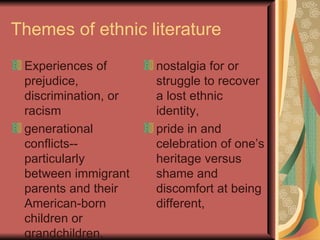
Themes of ethnic literature
 Experiences of       nostalgia for or
 prejudice,           struggle to recover
 discrimination, or   a lost ethnic
 racism               identity,
 generational         pride in and
 conflicts--          celebration of one’s
 particularly         heritage versus
 between immigrant    shame and
 parents and their    discomfort at being
 American-born        different,
 children or
 grandchildren,
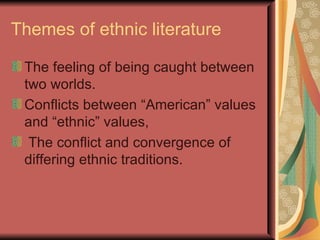
Themes of ethnic literature

 The feeling of being caught between
 two worlds.
 Conflicts between “American” values
 and “ethnic” values,
  The conflict and convergence of
 differing ethnic traditions.

Ethniclit2012

  • 1.
    What is EthnicLiterature?
  • 2.
    What does “ethnic”mean? “of or relating to large groups of people classed according to common racial, national, tribal, religious, linguistic, or cultural origin or background.” (Webster’s Dictionary)
  • 3.
    Ethnic classifications Hispanicsor Latinos are being classed according to language (Spanish) more so than “race.” African-Americans are being classed according to race. Asian-Americans are classed according to race, but often also according to national origin.
  • 4.
    Ethnic classifications WhiteAmericans are usually considered ethnic only in terms of strong national or religious identifications i.e. Italian, Jewish Native Americans are usually classified by tribe, but sometimes by race as indigenous or native peoples
  • 5.
    Ethnic Classifications Therecan also be regional identifications--New Yorkers, Californians, locals Both regional and national identifications can be strengthened by moving away from the group--when they are dominant they are often taken for granted.
  • 6.
    Ethnic identifications Linguistic,and cultural identifications are weakened through exposure to a dominant alternative culture as members of ethnic groups become assimilated. The following poem by Pat Mora describes this process:
  • 7.
    Immigrants Wrap their babies in the American flag, feed them mashed hot dogs and apple pie, name them Bill and Daisy, buy them blonde dolls that blink blue eyes or a football and tiny cleats before the baby can even walk, speak to them in thick English hallo, babee, hallo
  • 8.
    Immigrants whisper in Spanish or Polish when the babies sleep, whisper in a dark parent bed, that dark parent fear, “Will they like our boy, our girl, our fine american boy, our fine american girl?”
  • 9.
    What is Literature? Imaginative Writing Stories, novels Autobiography poems, song lyrics, chants plays Films
  • 10.
    So what isethnic literature? Literature in which the protagonists or, in the case of poetry, the speakers, are conscious of being members of a group of people sharing a common and distinctive racial, national, religious, linguistic, or cultural heritage. I define it by subject matter rather than the ethnic background of the author.
  • 11.
    Who writes “ethnic”lit? Members of ethnic groups can write literature that is not “ethnic” People who are not part of a specific ethnic group can write ethnic literature about that group but this may raise difficult questions about authenticity. For the most part I try to chose works written by “insiders.”
  • 12.
    Generic characteristics ofethnic literature Recurrent themes (list Consciousness of a follows) double audience- Hybridization insiders from own mixture of styles and culture and outsiders genres from dominant culture mixture of traditions multi-lingual from different cultures incorporation of Presence of a culture visions, dreams or bearer-older character other supernatural who passes on elements traditions and wisdom
  • 13.
    Themes of ethnicliterature Experiences of nostalgia for or prejudice, struggle to recover discrimination, or a lost ethnic racism identity, generational pride in and conflicts-- celebration of one’s particularly heritage versus between immigrant shame and parents and their discomfort at being American-born different, children or grandchildren,
  • 14.
    Themes of ethnicliterature The feeling of being caught between two worlds. Conflicts between “American” values and “ethnic” values, The conflict and convergence of differing ethnic traditions.