Ego
Psychology
Dan Andrei N. Bagao RPm
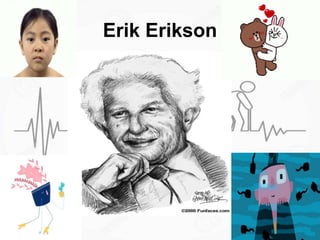
Erik Erikson
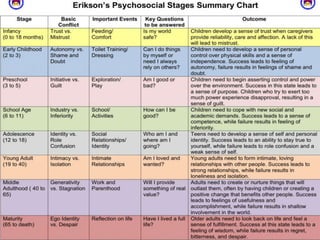
Ego psychology thus emphasizes the
integration of biological and psychosocial
forces in the determination of personality
functioning. It gives special attention to the
unique interpersonal, cultural, and historical
context within which people face a common
series of developmental crises.
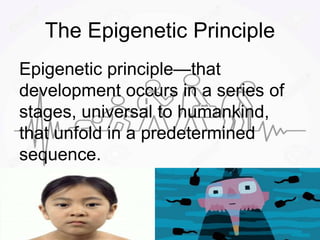
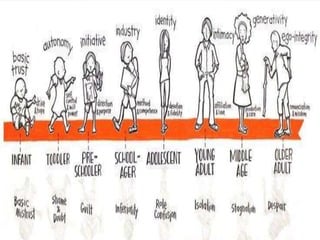
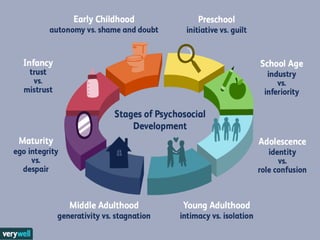
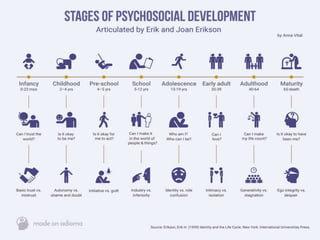
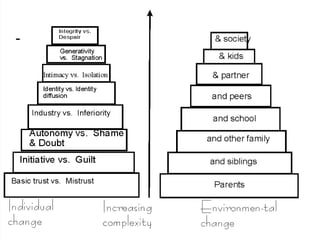
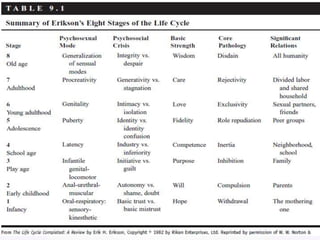
The Epigenetic Principle
Epigenetic principle—that
development occurs in a series of
stages, universal to humankind,
that unfold in a predetermined
sequence.
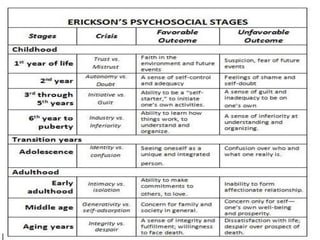
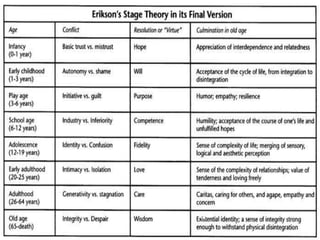
Crisis
Crisis or turning point—a crucial period
in which a decisive turn one way or
another is unavoidable (Erikson, 1964,
pp. 138–139). Crises are moments of
decision between progress or
regression in development.
Virtue
In describing ego strength, Erikson used the
term virtue, meaning “inherent strength or
active quality.” Virtues are human qualities
or strengths that emerge from successful
resolution of the crises associated with
various developmental stages (Erikson,
1964, p. 113).
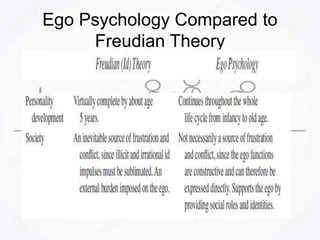
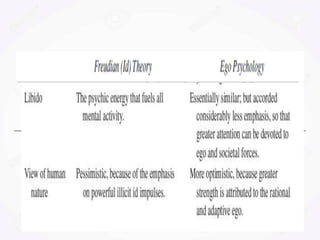
Ego Psychology Compared to
Freudian Theory
Identity
Identity is a multifaceted concept. At base,
however, it refers to a conscious sense of
uniqueness and direction, derived from a
variety of psychosocial experiences that are
integrated by the ego—including all our
previous identifications learned as a
participant in a variety of groups (family,
church, school, and peer) and all our self-
images
Identity
Identity consists, therefore, of the
things we are, the things we want to
become, and the things we are
supposed to become. It also consists of
the “things which we do not want to be
or which we know we are not supposed
to be” (Evans, 1967, p. 32).
Role confusion
Role confusion concerning who
they are and what they will
become.
Identity VS. Role Confusion
The most disturbing part of life
during this period, according to
Erikson, is youths’ inability to
decide on an occupational identity.
Totalism
The behavior of many young
people, according to Erikson, is
characterized by totalism—a
setting of absolute boundaries in
one’s values, beliefs, and
interpersonal relationships
(Erikson, 1964, p. 92).
Young Adulthood
Erikson pointed out that the establishment of
intimate relationships is not to be confused
with “intimacies” (Roazen, 1976, p. 103);
that is, the intimacies involved in sexual
intercourse are not to be mistaken for true
intimacy—the ability to establish close
relationships with others.
Intimacy vs. Isolation
Erikson believed that a truly intimate
relationship is possible only between
partners who have clearly established
identities and loyalties. Because
adolescents are still struggling to
establish their identities, it follows that
they cannot love (be intimate) in the truest
sense.
Intimacy vs. Isolation
Mature love, for the young adult,
involves “mutuality of mates and
partners in a shared identity, for the
mutual verification through an
experience of finding oneself . . . in
another”
(Erikson, 1964, p. 128).
Healthy intimate relationships are beneficial to both the
person and society. According to Erikson, such
relationships meet the following standards:
1. A mutuality of orgasm
2. with a loved partner
3. of the opposite sex
4. with whom one is able and willing to share a mutual trust
5. and with whom one is able and willing to regulate the
cycles of
a. work
b. procreation
c. recreation
6. so as to secure to the offspring, too, all the stages of a
satisfactory development (Erikson, 1963, p. 266).
At this point, it must be noted that when Erikson
referred to a healthy intimate relationship, he
meant one that is heterosexual and normative.
He thought that homosexuality was an aberration.
Today, there are various authority figures in
psychology who would disagree with Erikson.
They maintain that homosexuality is not an
aberration and that the adoption of a homosexual
sexual identity and the choice of a same-sex
partner can be a healthy one (Cross & Epting,
2005, pp. 53–63; Halbertal & Koren, 2006, p. 37).
Middle Adulthood
At this stage, generativity involves the
process of establishing or enhancing a
creative and productive career and of
being concerned with insuring the well-
being of the next generation.
Stagnation involves a lack of productivity,
boredom, and interpersonal
impoverishment (Erikson, 1968b, p. 138)
Generativity vs Stagnation
Although it is clear that generativity includes
having children as a means of ensuring the
survival of society, Erikson stressed that people
can be generative even if they do not have
children. Childless individuals can contribute to
the higher development of society through
productive work and through active
demonstration of concern with the betterment
of young people. Being teachers and mentors
to the young also shows a sense of concern
(McAdams, Hart, & Maruna, 1998, p. 10).
Critical Thinking Questions
Erikson emphasized the role of the
mother in creating a sense of basic
trust or mistrust in children. What is
the role of the father in child care?
Is it as important as the mother’s?
Is it different? If so, in what ways?
Critical Thinking Questions
In Erikson’s view, the ability to love
someone presupposes a strong
identity. Since many adolescents have
confused identities, they
cannot truly love anyone. Do you
agree or disagree with this
conclusion? Why?
Critical Thinking Questions
Since Erikson took the position that
healthy, intimate relationships involve
a mutuality of orgasm with a loved
partner of the opposite sex, what was
his view of homosexual relationships?
Do you agree or disagree with him?
Why or why not?
Critical Thinking Questions

Erik erikson

  • 1.
  • 2.
  • 5.
    Ego psychology thusemphasizes the integration of biological and psychosocial forces in the determination of personality functioning. It gives special attention to the unique interpersonal, cultural, and historical context within which people face a common series of developmental crises.
  • 6.
    The Epigenetic Principle Epigeneticprinciple—that development occurs in a series of stages, universal to humankind, that unfold in a predetermined sequence.
  • 7.
    Crisis Crisis or turningpoint—a crucial period in which a decisive turn one way or another is unavoidable (Erikson, 1964, pp. 138–139). Crises are moments of decision between progress or regression in development.
  • 8.
    Virtue In describing egostrength, Erikson used the term virtue, meaning “inherent strength or active quality.” Virtues are human qualities or strengths that emerge from successful resolution of the crises associated with various developmental stages (Erikson, 1964, p. 113).
  • 9.
    Ego Psychology Comparedto Freudian Theory
  • 17.
    Identity Identity is amultifaceted concept. At base, however, it refers to a conscious sense of uniqueness and direction, derived from a variety of psychosocial experiences that are integrated by the ego—including all our previous identifications learned as a participant in a variety of groups (family, church, school, and peer) and all our self- images
  • 18.
    Identity Identity consists, therefore,of the things we are, the things we want to become, and the things we are supposed to become. It also consists of the “things which we do not want to be or which we know we are not supposed to be” (Evans, 1967, p. 32).
  • 19.
    Role confusion Role confusionconcerning who they are and what they will become.
  • 20.
    Identity VS. RoleConfusion The most disturbing part of life during this period, according to Erikson, is youths’ inability to decide on an occupational identity.
  • 21.
    Totalism The behavior ofmany young people, according to Erikson, is characterized by totalism—a setting of absolute boundaries in one’s values, beliefs, and interpersonal relationships (Erikson, 1964, p. 92).
  • 22.
    Young Adulthood Erikson pointedout that the establishment of intimate relationships is not to be confused with “intimacies” (Roazen, 1976, p. 103); that is, the intimacies involved in sexual intercourse are not to be mistaken for true intimacy—the ability to establish close relationships with others.
  • 23.
    Intimacy vs. Isolation Eriksonbelieved that a truly intimate relationship is possible only between partners who have clearly established identities and loyalties. Because adolescents are still struggling to establish their identities, it follows that they cannot love (be intimate) in the truest sense.
  • 24.
    Intimacy vs. Isolation Maturelove, for the young adult, involves “mutuality of mates and partners in a shared identity, for the mutual verification through an experience of finding oneself . . . in another” (Erikson, 1964, p. 128).
  • 25.
    Healthy intimate relationshipsare beneficial to both the person and society. According to Erikson, such relationships meet the following standards: 1. A mutuality of orgasm 2. with a loved partner 3. of the opposite sex 4. with whom one is able and willing to share a mutual trust 5. and with whom one is able and willing to regulate the cycles of a. work b. procreation c. recreation 6. so as to secure to the offspring, too, all the stages of a satisfactory development (Erikson, 1963, p. 266).
  • 26.
    At this point,it must be noted that when Erikson referred to a healthy intimate relationship, he meant one that is heterosexual and normative. He thought that homosexuality was an aberration. Today, there are various authority figures in psychology who would disagree with Erikson. They maintain that homosexuality is not an aberration and that the adoption of a homosexual sexual identity and the choice of a same-sex partner can be a healthy one (Cross & Epting, 2005, pp. 53–63; Halbertal & Koren, 2006, p. 37).
  • 27.
    Middle Adulthood At thisstage, generativity involves the process of establishing or enhancing a creative and productive career and of being concerned with insuring the well- being of the next generation. Stagnation involves a lack of productivity, boredom, and interpersonal impoverishment (Erikson, 1968b, p. 138)
  • 28.
    Generativity vs Stagnation Althoughit is clear that generativity includes having children as a means of ensuring the survival of society, Erikson stressed that people can be generative even if they do not have children. Childless individuals can contribute to the higher development of society through productive work and through active demonstration of concern with the betterment of young people. Being teachers and mentors to the young also shows a sense of concern (McAdams, Hart, & Maruna, 1998, p. 10).
  • 32.
    Critical Thinking Questions Eriksonemphasized the role of the mother in creating a sense of basic trust or mistrust in children. What is the role of the father in child care? Is it as important as the mother’s? Is it different? If so, in what ways?
  • 33.
    Critical Thinking Questions InErikson’s view, the ability to love someone presupposes a strong identity. Since many adolescents have confused identities, they cannot truly love anyone. Do you agree or disagree with this conclusion? Why?
  • 34.
    Critical Thinking Questions SinceErikson took the position that healthy, intimate relationships involve a mutuality of orgasm with a loved partner of the opposite sex, what was his view of homosexual relationships? Do you agree or disagree with him? Why or why not?
  • 35.