NAME ABHISHEK KUMAR
ROLL NO. 19ME8093
REGISTRATION NO. 19U10417
TOPIC
ENVIROMENTAL EDUCATION FOR
QUALITY ENHANCEMENT OF
SUSTAINABLE DEVELOPMENT
1
ENVIROMENTAL
EDUCATION
Environmental education is a process
that allows individuals to explore
environmental issues, engage in
problem solving, and take action to
improve the environment. As a result,
individuals develop a deeper
understanding of environmental issues
and have the skills to make informed
and responsible decisions.
2
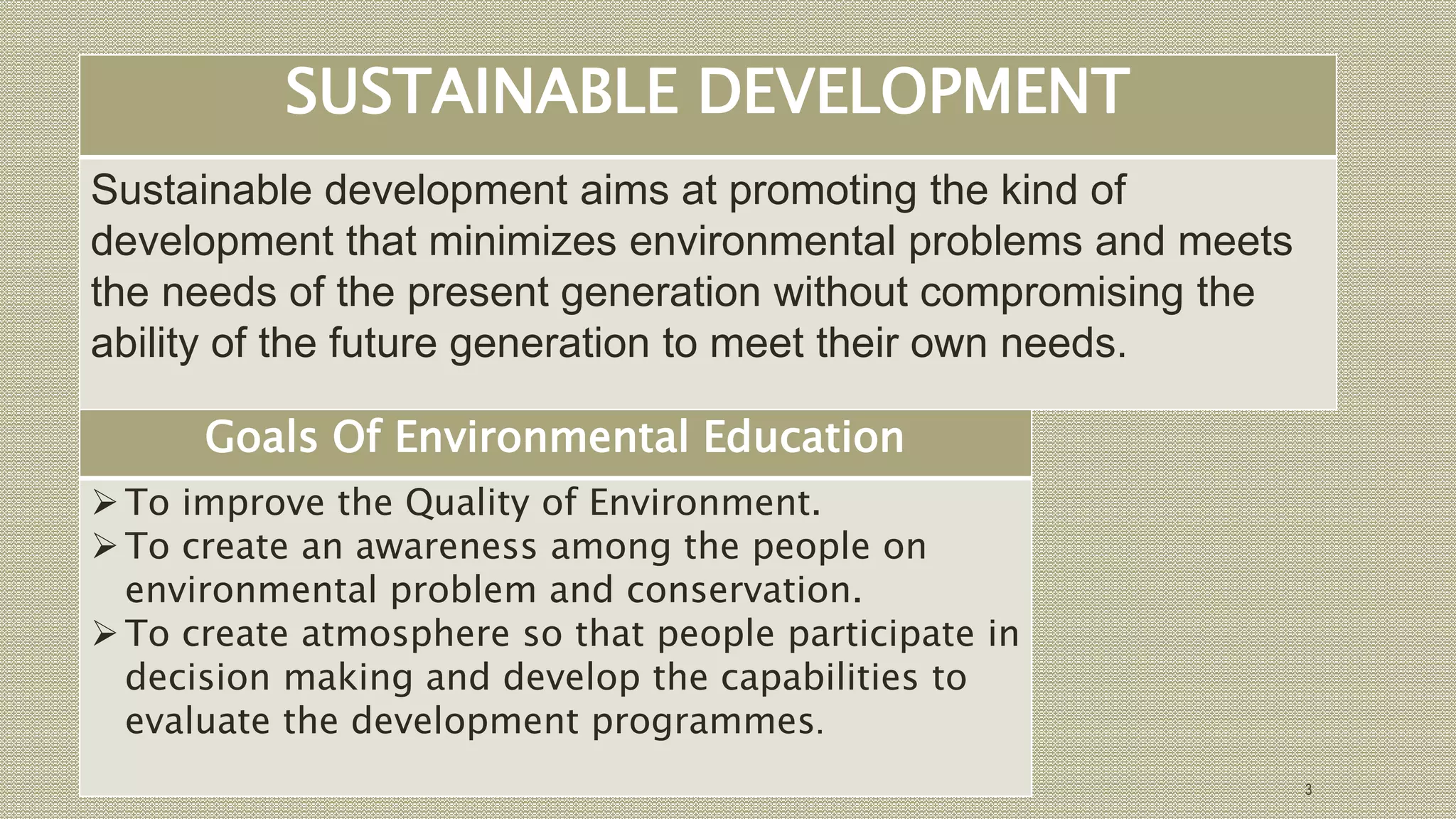
SUSTAINABLE DEVELOPMENT
Sustainable development aims at promoting the kind of
development that minimizes environmental problems and meets
the needs of the present generation without compromising the
ability of the future generation to meet their own needs.
Goals Of Environmental Education
To improve the Quality of Environment.
To create an awareness among the people on
environmental problem and conservation.
To create atmosphere so that people participate in
decision making and develop the capabilities to
evaluate the development programmes.
3
OBJECTIVES OF
ENVIRONMENTAL EDUCATION
i. Awareness
ii. Knowledge
iii. Attitudes
iv.Skills
v. Evaluation ability
vi.Participation
4
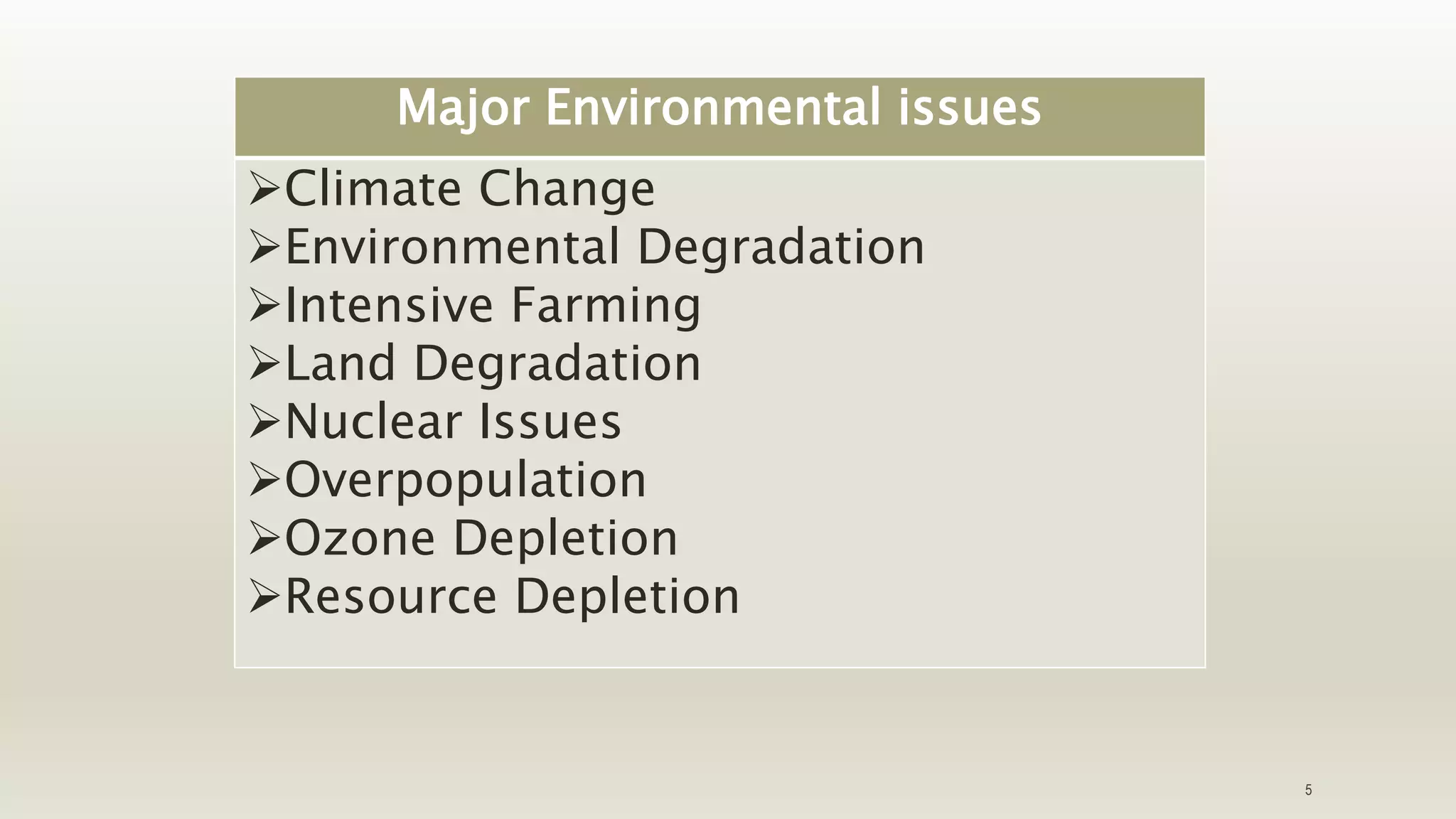
Major Environmental issues
Climate Change
Environmental Degradation
Intensive Farming
Land Degradation
Nuclear Issues
Overpopulation
Ozone Depletion
Resource Depletion
5
ENVIRONMENTAL AWARENESS IS ESSENTIAL
FOR
 Protection Of the Atmosphere
 Protection Of Land Resources
 Conservation Of Biological diversity
 Environmental sound management of biotechnology
and hazardous wastes
 Prevention of illegal traffic in toxic Products and
wastes
 Improvement in living and working conditions of the
poor by eradicating poverty and stopping
environmental degradation
6
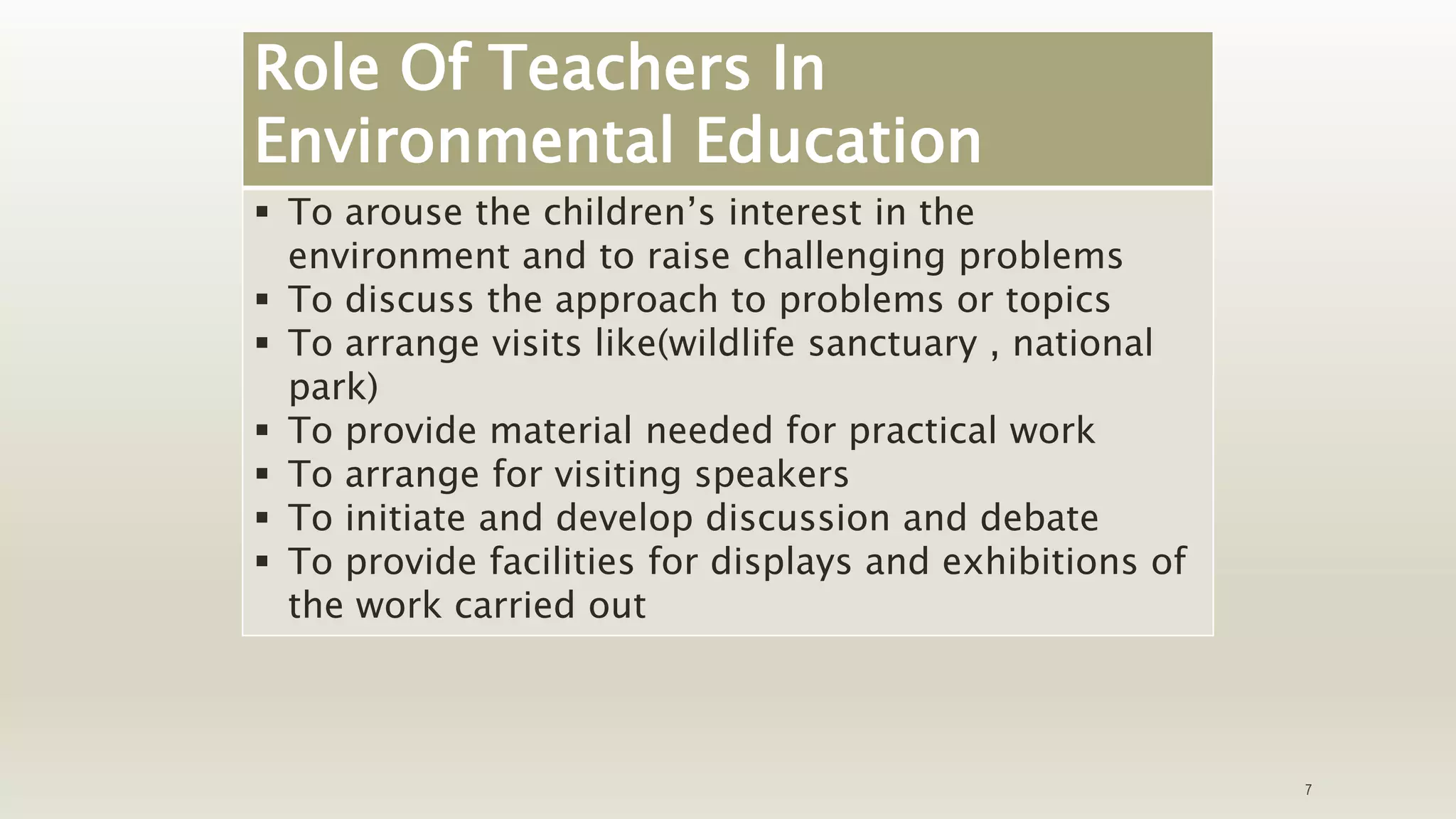
Role Of Teachers In
Environmental Education
 To arouse the children’s interest in the
environment and to raise challenging problems
 To discuss the approach to problems or topics
 To arrange visits like(wildlife sanctuary , national
park)
 To provide material needed for practical work
 To arrange for visiting speakers
 To initiate and develop discussion and debate
 To provide facilities for displays and exhibitions of
the work carried out
7
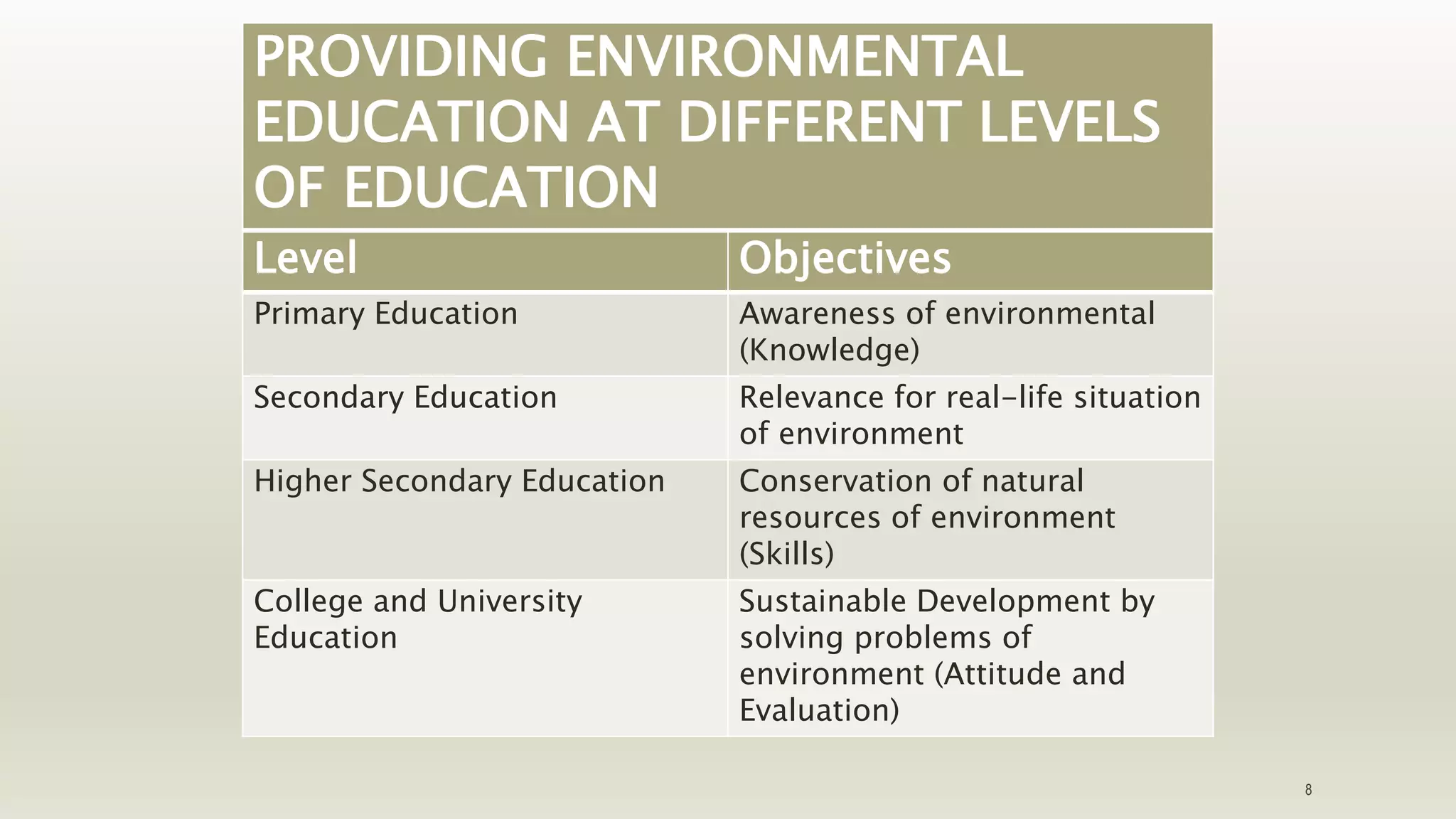
Level Objectives
Primary Education Awareness of environmental
(Knowledge)
Secondary Education Relevance for real-life situation
of environment
Higher Secondary Education Conservation of natural
resources of environment
(Skills)
College and University
Education
Sustainable Development by
solving problems of
environment (Attitude and
Evaluation)
PROVIDING ENVIRONMENTAL
EDUCATION AT DIFFERENT LEVELS
OF EDUCATION
8
The Three R’s Principle of the
Environment
Reduce, Reuse and Recycle
 Reducing the amount of waste you produce is the best way to help
the environment .
 Don’t throw out cloths, toys, furniture, and other things that you
don’t want anymore.
 Many of the things we use everyday like paper bags, soda cans
and milk cartons, are made out of materials that can be recycled.
 In addition to recycling the things you buy, you can help the
environment by buying products that contain recycled materials.
9
CONCLUSIONS
“If you plan for a year, plant rice ,
if you plan for the years, plant
trees, but if you plan for century
educate the people.”
Thank you 10

Environmental Education.pptx

  • 1.
    NAME ABHISHEK KUMAR ROLLNO. 19ME8093 REGISTRATION NO. 19U10417 TOPIC ENVIROMENTAL EDUCATION FOR QUALITY ENHANCEMENT OF SUSTAINABLE DEVELOPMENT 1
  • 2.
    ENVIROMENTAL EDUCATION Environmental education isa process that allows individuals to explore environmental issues, engage in problem solving, and take action to improve the environment. As a result, individuals develop a deeper understanding of environmental issues and have the skills to make informed and responsible decisions. 2
  • 3.
    SUSTAINABLE DEVELOPMENT Sustainable developmentaims at promoting the kind of development that minimizes environmental problems and meets the needs of the present generation without compromising the ability of the future generation to meet their own needs. Goals Of Environmental Education To improve the Quality of Environment. To create an awareness among the people on environmental problem and conservation. To create atmosphere so that people participate in decision making and develop the capabilities to evaluate the development programmes. 3
  • 4.
    OBJECTIVES OF ENVIRONMENTAL EDUCATION i.Awareness ii. Knowledge iii. Attitudes iv.Skills v. Evaluation ability vi.Participation 4
  • 5.
    Major Environmental issues ClimateChange Environmental Degradation Intensive Farming Land Degradation Nuclear Issues Overpopulation Ozone Depletion Resource Depletion 5
  • 6.
    ENVIRONMENTAL AWARENESS ISESSENTIAL FOR  Protection Of the Atmosphere  Protection Of Land Resources  Conservation Of Biological diversity  Environmental sound management of biotechnology and hazardous wastes  Prevention of illegal traffic in toxic Products and wastes  Improvement in living and working conditions of the poor by eradicating poverty and stopping environmental degradation 6
  • 7.
    Role Of TeachersIn Environmental Education  To arouse the children’s interest in the environment and to raise challenging problems  To discuss the approach to problems or topics  To arrange visits like(wildlife sanctuary , national park)  To provide material needed for practical work  To arrange for visiting speakers  To initiate and develop discussion and debate  To provide facilities for displays and exhibitions of the work carried out 7
  • 8.
    Level Objectives Primary EducationAwareness of environmental (Knowledge) Secondary Education Relevance for real-life situation of environment Higher Secondary Education Conservation of natural resources of environment (Skills) College and University Education Sustainable Development by solving problems of environment (Attitude and Evaluation) PROVIDING ENVIRONMENTAL EDUCATION AT DIFFERENT LEVELS OF EDUCATION 8
  • 9.
    The Three R’sPrinciple of the Environment Reduce, Reuse and Recycle  Reducing the amount of waste you produce is the best way to help the environment .  Don’t throw out cloths, toys, furniture, and other things that you don’t want anymore.  Many of the things we use everyday like paper bags, soda cans and milk cartons, are made out of materials that can be recycled.  In addition to recycling the things you buy, you can help the environment by buying products that contain recycled materials. 9
  • 10.
    CONCLUSIONS “If you planfor a year, plant rice , if you plan for the years, plant trees, but if you plan for century educate the people.” Thank you 10