Environment 
Natural disasters. Global warming.
Aim. 
• To introduce listeners with the global warming. 
• To help get outside of causes of global warming. 
• To train my English skill.
What does it mean? 
• Environment – 
it’s everything around us.
Natural disasters. 
• Global warming 
• Earthquakes 
• Tornadoes 
• Floods 
• Hurricanes
Global warming in Arctica. 
• Average temperatures in the Arctic region are rising twice as fast as they are 
elsewhere in the world. 
• Arctic sea ice has decreased 14% since the 1970s. 
• Will develop floods. 
http://www.youtube.com/watch?v=nGYEZ9H63zA
Aral sea. 
• Since 1960, the Aral Sea has: lost 50% of its surface area 
• Central Asia has: 
• lost its fishing industry and other supporting industries 
• had an increase in public health problems 
• decreased its agricultural production 
• experienced changes in climate 
(longer, colder winters and shorter, hotter summers)
Global warming. Causes. 
• several greenhouse gases 
• Most come from the combustion of fossil fuels in cars, factories and 
electricity production. 
• Some of them can even trap more heat than CO2.
Effects of global warming. 
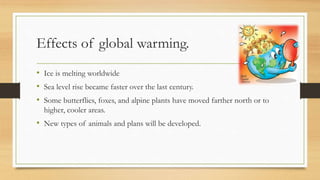
• Ice is melting worldwide 
• Sea level rise became faster over the last century. 
• Some butterflies, foxes, and alpine plants have moved farther north or to 
higher, cooler areas. 
• New types of animals and plans will be developed.
What can happen in future? 
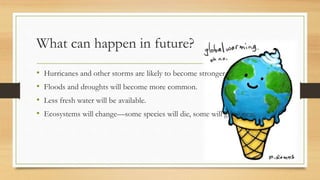
• Hurricanes and other storms are likely to become stronger. 
• Floods and droughts will become more common. 
• Less fresh water will be available. 
• Ecosystems will change—some species will die, some will grow new.
What Can We Do? 
• Use bio-machines 
• Cutting forests, to plant new one to restore oxygen in the air. 
BioFlex cars.

Environment

  • 1.
  • 2.
    Aim. • Tointroduce listeners with the global warming. • To help get outside of causes of global warming. • To train my English skill.
  • 3.
    What does itmean? • Environment – it’s everything around us.
  • 4.
    Natural disasters. •Global warming • Earthquakes • Tornadoes • Floods • Hurricanes
  • 5.
    Global warming inArctica. • Average temperatures in the Arctic region are rising twice as fast as they are elsewhere in the world. • Arctic sea ice has decreased 14% since the 1970s. • Will develop floods. http://www.youtube.com/watch?v=nGYEZ9H63zA
  • 6.
    Aral sea. •Since 1960, the Aral Sea has: lost 50% of its surface area • Central Asia has: • lost its fishing industry and other supporting industries • had an increase in public health problems • decreased its agricultural production • experienced changes in climate (longer, colder winters and shorter, hotter summers)
  • 7.
    Global warming. Causes. • several greenhouse gases • Most come from the combustion of fossil fuels in cars, factories and electricity production. • Some of them can even trap more heat than CO2.
  • 8.
    Effects of globalwarming. • Ice is melting worldwide • Sea level rise became faster over the last century. • Some butterflies, foxes, and alpine plants have moved farther north or to higher, cooler areas. • New types of animals and plans will be developed.
  • 9.
    What can happenin future? • Hurricanes and other storms are likely to become stronger. • Floods and droughts will become more common. • Less fresh water will be available. • Ecosystems will change—some species will die, some will grow new.
  • 10.
    What Can WeDo? • Use bio-machines • Cutting forests, to plant new one to restore oxygen in the air. BioFlex cars.