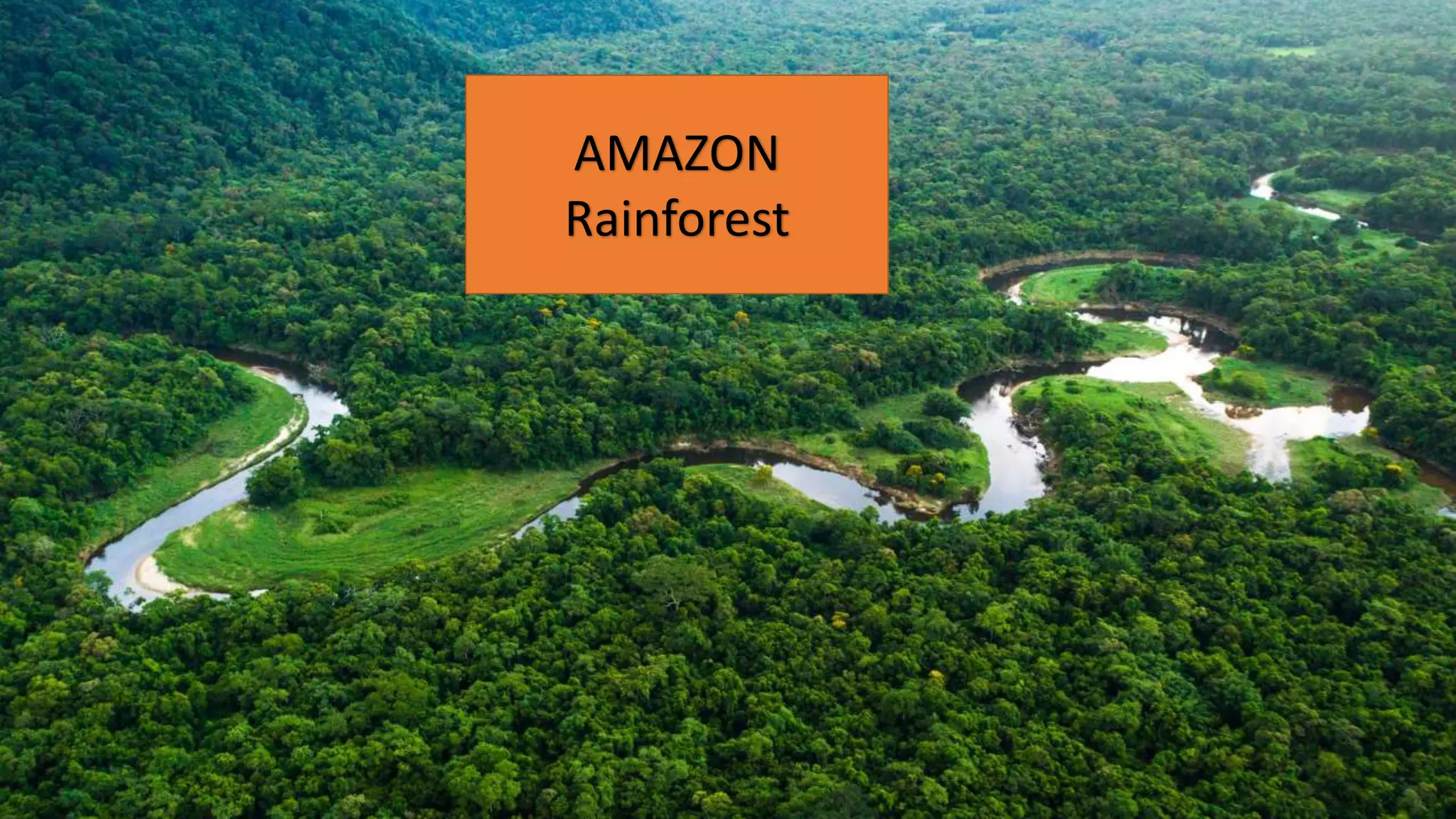
AMAZON
Rainforest
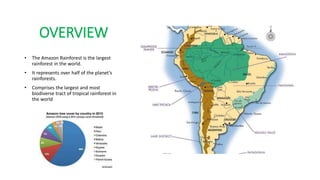
OVERVIEW
• The Amazon Rainforest is the largest
rainforest in the world.
• It represents over half of the planet’s
rainforests.
• Comprises the largest and most
biodiverse tract of tropical rainforest in
the world
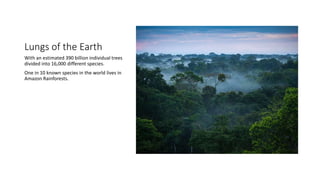
Lungs of the Earth
With an estimated 390 billion individual trees
divided into 16,000 different species.
One in 10 known species in the world lives in
Amazon Rainforests.
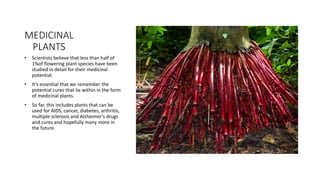
MEDICINAL
PLANTS
• Scientists believe that less than half of
1%of flowering plant species have been
studied in detail for their medicinal
potential.
• It’s essential that we remember the
potential cures that lie within in the form
of medicinal plants.
• So far, this includes plants that can be
used for AIDS, cancer, diabetes, arthritis,
multiple sclerosis and Alzheimer’s drugs
and cures and hopefully many more in
the future.
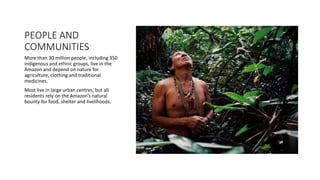
PEOPLE AND
COMMUNITIES
More than 30 million people, including 350
indigenous and ethnic groups, live in the
Amazon and depend on nature for
agriculture, clothing and traditional
medicines.
Most live in large urban centres, but all
residents rely on the Amazon’s natural
bounty for food, shelter and livelihoods.
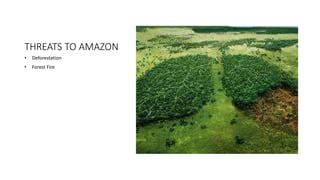
THREATS TO AMAZON
• Deforestation
• Forest Fire
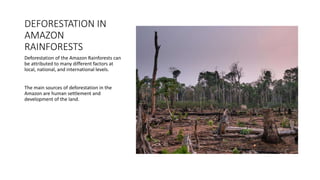
DEFORESTATION IN
AMAZON
RAINFORESTS
Deforestation of the Amazon Rainforests can
be attributed to many different factors at
local, national, and international levels.
The main sources of deforestation in the
Amazon are human settlement and
development of the land.
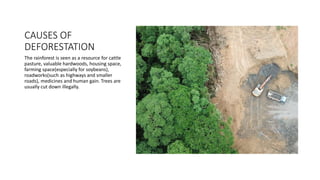
CAUSES OF
DEFORESTATION
The rainforest is seen as a resource for cattle
pasture, valuable hardwoods, housing space,
farming space(especially for soybeans),
roadworks(such as highways and smaller
roads), medicines and human gain. Trees are
usually cut down illegally.
Impact of
deforestation on water
supply
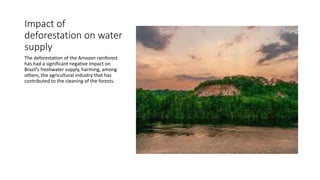
The deforestation of the Amazon rainforest
has had a significant negative impact on
Brazil’s freshwater supply, harming, among
others, the agricultural industry that has
contributed to the cleaning of the forests.
IMPACT OF
DEFORESTATION ON
LOCAL TEMPERATURE
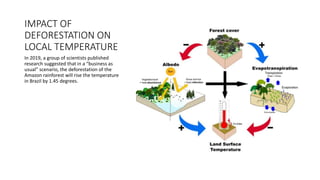
In 2019, a group of scientists published
research suggested that in a “business as
usual” scenario, the deforestation of the
Amazon rainforest will rise the temperature
in Brazil by 1.45 degrees.
IMPACT OF
DEFORESTATION ON
INDIGENOUS PEOPLE
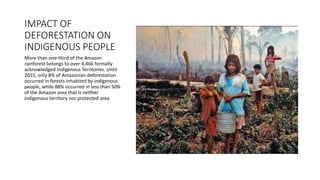
More than one-third of the Amazon
rainforest belongs to over 4,466 formally
acknowledged Indigenous Territories. Until
2015, only 8% of Amazonian deforestation
occurred in forests inhabited by indigenous
people, while 88% occurred in less than 50%
of the Amazon area that is neither
indigenous territory nor protected area.

Enviromental.pptx

  • 1.
  • 2.
    OVERVIEW • The AmazonRainforest is the largest rainforest in the world. • It represents over half of the planet’s rainforests. • Comprises the largest and most biodiverse tract of tropical rainforest in the world
  • 3.
    Lungs of theEarth With an estimated 390 billion individual trees divided into 16,000 different species. One in 10 known species in the world lives in Amazon Rainforests.
  • 4.
    MEDICINAL PLANTS • Scientists believethat less than half of 1%of flowering plant species have been studied in detail for their medicinal potential. • It’s essential that we remember the potential cures that lie within in the form of medicinal plants. • So far, this includes plants that can be used for AIDS, cancer, diabetes, arthritis, multiple sclerosis and Alzheimer’s drugs and cures and hopefully many more in the future.
  • 5.
    PEOPLE AND COMMUNITIES More than30 million people, including 350 indigenous and ethnic groups, live in the Amazon and depend on nature for agriculture, clothing and traditional medicines. Most live in large urban centres, but all residents rely on the Amazon’s natural bounty for food, shelter and livelihoods.
  • 6.
    THREATS TO AMAZON •Deforestation • Forest Fire
  • 7.
    DEFORESTATION IN AMAZON RAINFORESTS Deforestation ofthe Amazon Rainforests can be attributed to many different factors at local, national, and international levels. The main sources of deforestation in the Amazon are human settlement and development of the land.
  • 8.
    CAUSES OF DEFORESTATION The rainforestis seen as a resource for cattle pasture, valuable hardwoods, housing space, farming space(especially for soybeans), roadworks(such as highways and smaller roads), medicines and human gain. Trees are usually cut down illegally.
  • 9.
    Impact of deforestation onwater supply The deforestation of the Amazon rainforest has had a significant negative impact on Brazil’s freshwater supply, harming, among others, the agricultural industry that has contributed to the cleaning of the forests.
  • 10.
    IMPACT OF DEFORESTATION ON LOCALTEMPERATURE In 2019, a group of scientists published research suggested that in a “business as usual” scenario, the deforestation of the Amazon rainforest will rise the temperature in Brazil by 1.45 degrees.
  • 11.
    IMPACT OF DEFORESTATION ON INDIGENOUSPEOPLE More than one-third of the Amazon rainforest belongs to over 4,466 formally acknowledged Indigenous Territories. Until 2015, only 8% of Amazonian deforestation occurred in forests inhabited by indigenous people, while 88% occurred in less than 50% of the Amazon area that is neither indigenous territory nor protected area.