CONTENTS
 WHAT IS ENTREPRENEURSHIP DEVELOPMENT PROGRAMME (EDP)
 WHAT IS PHASES OF EDP
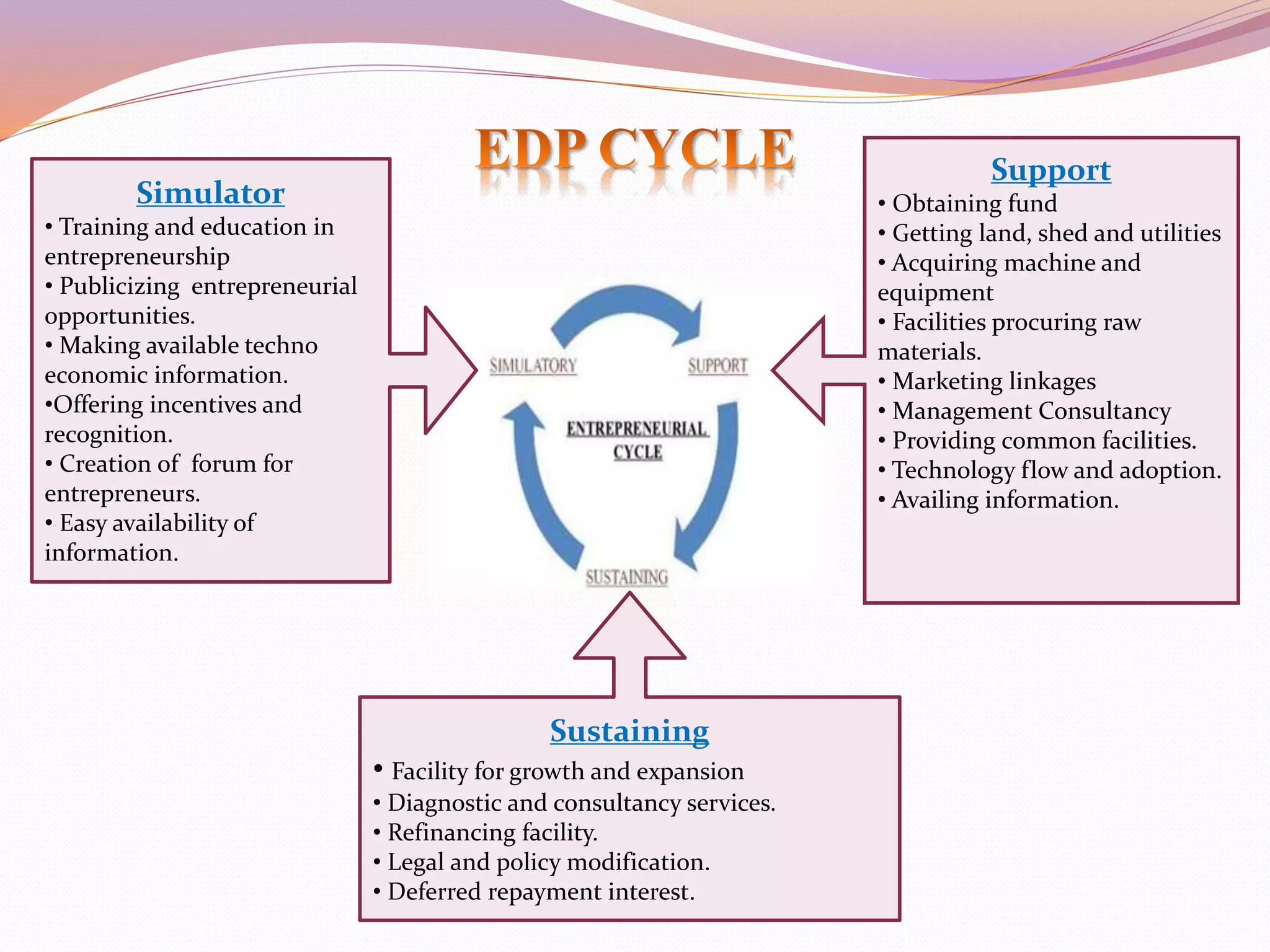
 EDP CYCLE
 TYPE OF ENTEREPRENEURSHIP
 4 GOVERNMENT SCHEMES HELEPING INDIAN STAT-UPS
 THE NEW TOP 10 START-UPS
 DATA ANALYSE
WHAT IS ENTERPRENEURSHIP DEVELOPMENT
PROGRAMME (EDP)?
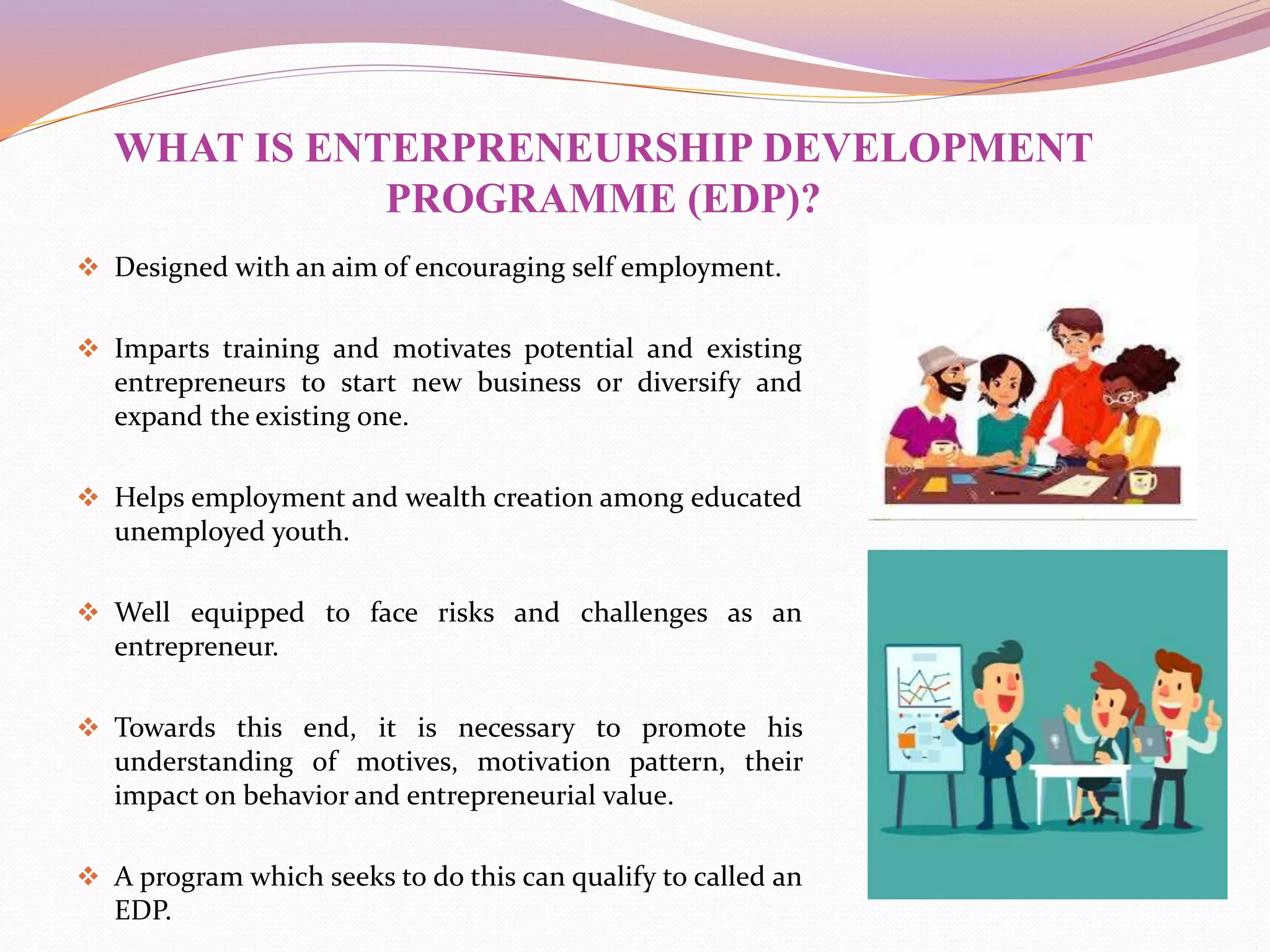
 Designed with an aim of encouraging self employment.
 Imparts training and motivates potential and existing
entrepreneurs to start new business or diversify and
expand the existing one.
 Helps employment and wealth creation among educated
unemployed youth.
 Well equipped to face risks and challenges as an
entrepreneur.
 Towards this end, it is necessary to promote his
understanding of motives, motivation pattern, their
impact on behavior and entrepreneurial value.
 A program which seeks to do this can qualify to called an
EDP.
WHAT IS PHASES OF EDP?
Initial or Pre-training Phase
Training or Development Phase
Post Training or Follow up Phase
 Designing course- curriculum of
training.
Selection by faculty
Advertisement
 Selection of potential or perspective
entrepreneur.
 Lecture Method
Written instruction method
Demonstration or practical method
Conferences
Meetings
Individual training
Group training.
 Was the programmed conducted as per
plan?
 If not what were the loopholes in the
plan?
 Taking corrective action to weaknesses
after identifying them?
Support
• Obtaining fund
• Getting land, shed and utilities
• Acquiring machine and
equipment
• Facilities procuring raw
materials.
• Marketing linkages
• Management Consultancy
• Providing common facilities.
• Technology flow and adoption.
• Availing information.
Simulator
• Training and education in
entrepreneurship
• Publicizing entrepreneurial
opportunities.
• Making available techno
economic information.
•Offering incentives and
recognition.
• Creation of forum for
entrepreneurs.
• Easy availability of
information.
Sustaining
• Facility for growth and expansion
• Diagnostic and consultancy services.
• Refinancing facility.
• Legal and policy modification.
• Deferred repayment interest.
LARGE COMPANY ENTREPRENEURSHIP
Companies with a limited life cycle display large company entrepreneurship. These companies sustain
because of creativity and innovation.
SOCIAL ENTREPRENEURSHIP
Non-government organizations (NGO) are the best social enterprise examples. In this type of
entrepreneurship entrepreneurs recognize a social problem and tailor their activities to create social
value.
SMALL BUSINESS ENTREPRENEURSHIP
Local small boutiques, milk booths, grocery shops, hairdressers, carpenters and plumbers are part of
the small business entrepreneurship.
INTERNATIONAL ENTREPRENEURSHIP
Typically, international entrepreneurs sell products in the Indian market until they reach the
maturity stage and then sell them in the overseas market to earn profits.
INNOVATIVE ENTREPRENEURSHIP
Innovative entrepreneurship is ambitious and requires significant investment to turn a new business
idea into a breakthrough product or service.
The Indian government actively promotes start- ups and entrepreneurs by developing variety of programmers and
efforts to each them as well as providing financial aid, technical support, subsidies, and other critical services
to help them flourish.
SAMRIDH Scheme
Its goal is to help business secure finance while also assisting them in putting together skill sets that will
enable them expand effectively.
NEWGEN IEDC
This is a five- year programmed offered through educational Institution. Up to 20 new initiatives will be
supported by the initiative. A cash grant of up to ₹ 25 lakh and a recurring expenditure of up to ₹ 10 lakh will
be awarded to the chosen institute.
Students will be encouraged to participate in innovative projects with the potential for
commercialization under this scheme.
DAIRY ENTREPRENEURSHIP DEVELOPMENT SCHEME ( DEDS )
DEDS is a project run by the department of Animal Husbandry, Fisheries, and Dairying to encourage people
to work for themselves in the dairy industry.
These opportunities would include operation, transportation, procurement, processing,
preservation, and marking by providing back-end funding for bankable projects worth 25% of the total
project cost for general applicants and 33.33 percent for SC/ ST farmers.
SINGLE-POINT REGISTRATION SCHEME
The National Small Industries Corporation introduced the SPRS in 2003. MSEs ( Micro and Small Enterprises
in India under SPRS ) are registered with NSIC in order to participate in government procurement.
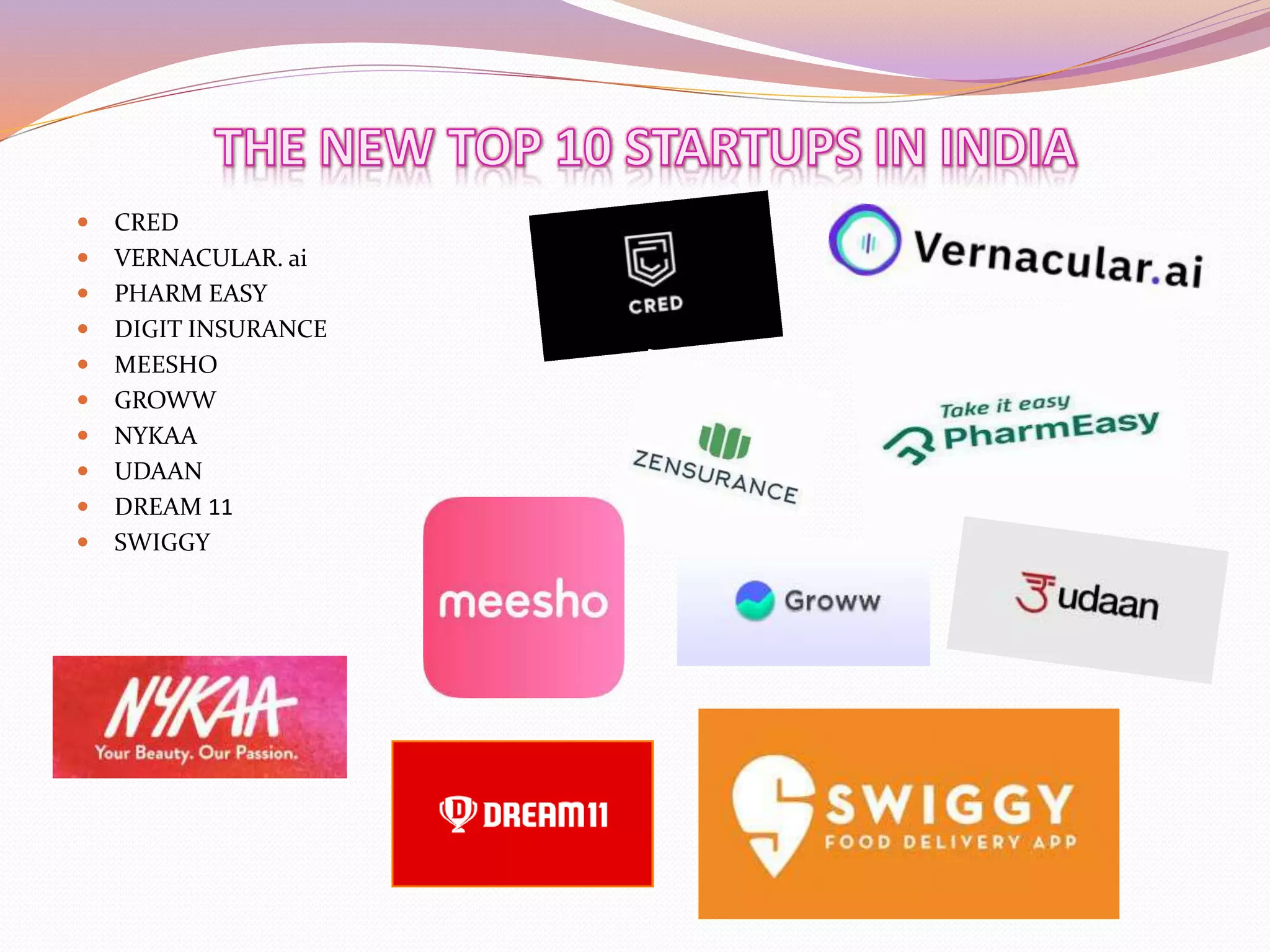
 CRED
 VERNACULAR. ai
 PHARM EASY
 DIGIT INSURANCE
 MEESHO
 GROWW
 NYKAA
 UDAAN
 DREAM 11
 SWIGGY
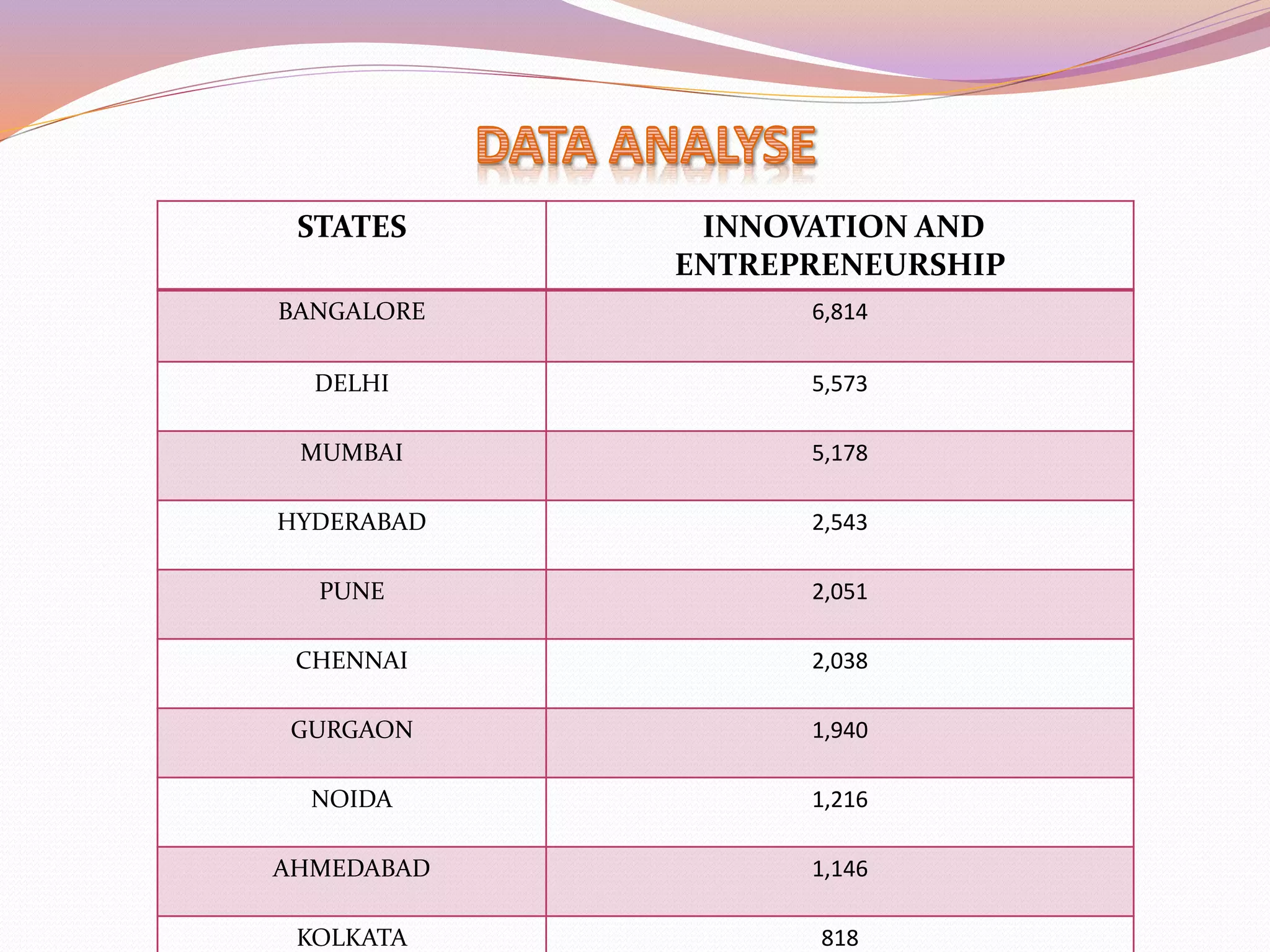
STATES INNOVATION AND
ENTREPRENEURSHIP
BANGALORE 6,814
DELHI 5,573
MUMBAI 5,178
HYDERABAD 2,543
PUNE 2,051
CHENNAI 2,038
GURGAON 1,940
NOIDA 1,216
AHMEDABAD 1,146
KOLKATA 818
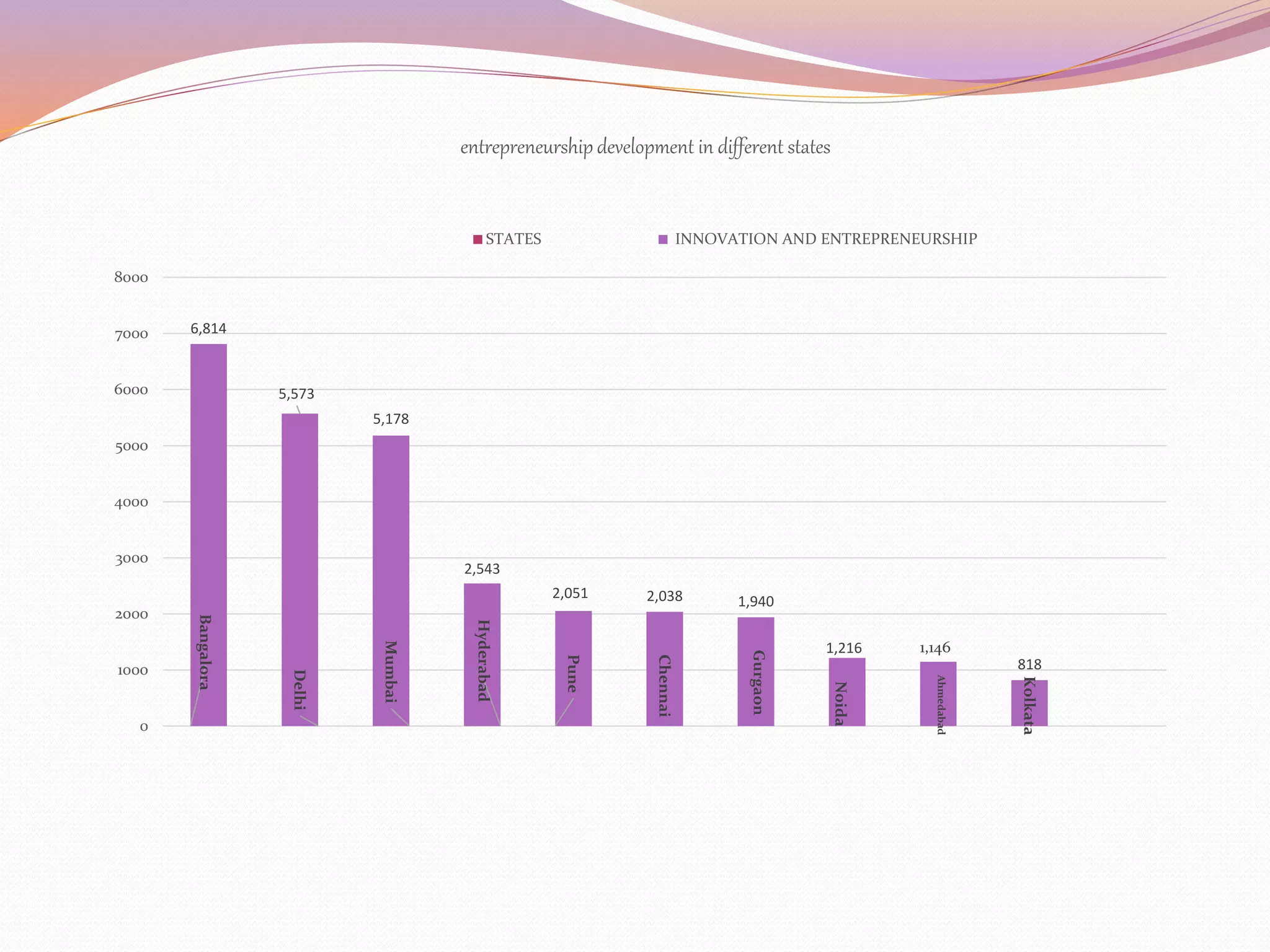
Bangalora
Delhi
Mumbai
Hyderabad
Pune
Chennai
Gurgaon
Noida
Ahmedabad
Kolkata
6,814
5,573
5,178
2,543
2,051 2,038 1,940
1,216 1,146
818
0
1000
2000
3000
4000
5000
6000
7000
8000
entrepreneurship development in different states
STATES INNOVATION AND ENTREPRENEURSHIP
By: piu biswas
mba(FM) Student

Entrepreneurship development programme in india.pptx

  • 2.
    CONTENTS  WHAT ISENTREPRENEURSHIP DEVELOPMENT PROGRAMME (EDP)  WHAT IS PHASES OF EDP  EDP CYCLE  TYPE OF ENTEREPRENEURSHIP  4 GOVERNMENT SCHEMES HELEPING INDIAN STAT-UPS  THE NEW TOP 10 START-UPS  DATA ANALYSE
  • 3.
    WHAT IS ENTERPRENEURSHIPDEVELOPMENT PROGRAMME (EDP)?  Designed with an aim of encouraging self employment.  Imparts training and motivates potential and existing entrepreneurs to start new business or diversify and expand the existing one.  Helps employment and wealth creation among educated unemployed youth.  Well equipped to face risks and challenges as an entrepreneur.  Towards this end, it is necessary to promote his understanding of motives, motivation pattern, their impact on behavior and entrepreneurial value.  A program which seeks to do this can qualify to called an EDP.
  • 4.
    WHAT IS PHASESOF EDP? Initial or Pre-training Phase Training or Development Phase Post Training or Follow up Phase  Designing course- curriculum of training. Selection by faculty Advertisement  Selection of potential or perspective entrepreneur.  Lecture Method Written instruction method Demonstration or practical method Conferences Meetings Individual training Group training.  Was the programmed conducted as per plan?  If not what were the loopholes in the plan?  Taking corrective action to weaknesses after identifying them?
  • 5.
    Support • Obtaining fund •Getting land, shed and utilities • Acquiring machine and equipment • Facilities procuring raw materials. • Marketing linkages • Management Consultancy • Providing common facilities. • Technology flow and adoption. • Availing information. Simulator • Training and education in entrepreneurship • Publicizing entrepreneurial opportunities. • Making available techno economic information. •Offering incentives and recognition. • Creation of forum for entrepreneurs. • Easy availability of information. Sustaining • Facility for growth and expansion • Diagnostic and consultancy services. • Refinancing facility. • Legal and policy modification. • Deferred repayment interest.
  • 6.
    LARGE COMPANY ENTREPRENEURSHIP Companieswith a limited life cycle display large company entrepreneurship. These companies sustain because of creativity and innovation. SOCIAL ENTREPRENEURSHIP Non-government organizations (NGO) are the best social enterprise examples. In this type of entrepreneurship entrepreneurs recognize a social problem and tailor their activities to create social value. SMALL BUSINESS ENTREPRENEURSHIP Local small boutiques, milk booths, grocery shops, hairdressers, carpenters and plumbers are part of the small business entrepreneurship. INTERNATIONAL ENTREPRENEURSHIP Typically, international entrepreneurs sell products in the Indian market until they reach the maturity stage and then sell them in the overseas market to earn profits. INNOVATIVE ENTREPRENEURSHIP Innovative entrepreneurship is ambitious and requires significant investment to turn a new business idea into a breakthrough product or service.
  • 7.
    The Indian governmentactively promotes start- ups and entrepreneurs by developing variety of programmers and efforts to each them as well as providing financial aid, technical support, subsidies, and other critical services to help them flourish. SAMRIDH Scheme Its goal is to help business secure finance while also assisting them in putting together skill sets that will enable them expand effectively. NEWGEN IEDC This is a five- year programmed offered through educational Institution. Up to 20 new initiatives will be supported by the initiative. A cash grant of up to ₹ 25 lakh and a recurring expenditure of up to ₹ 10 lakh will be awarded to the chosen institute. Students will be encouraged to participate in innovative projects with the potential for commercialization under this scheme. DAIRY ENTREPRENEURSHIP DEVELOPMENT SCHEME ( DEDS ) DEDS is a project run by the department of Animal Husbandry, Fisheries, and Dairying to encourage people to work for themselves in the dairy industry. These opportunities would include operation, transportation, procurement, processing, preservation, and marking by providing back-end funding for bankable projects worth 25% of the total project cost for general applicants and 33.33 percent for SC/ ST farmers. SINGLE-POINT REGISTRATION SCHEME The National Small Industries Corporation introduced the SPRS in 2003. MSEs ( Micro and Small Enterprises in India under SPRS ) are registered with NSIC in order to participate in government procurement.
  • 8.
     CRED  VERNACULAR.ai  PHARM EASY  DIGIT INSURANCE  MEESHO  GROWW  NYKAA  UDAAN  DREAM 11  SWIGGY
  • 9.
    STATES INNOVATION AND ENTREPRENEURSHIP BANGALORE6,814 DELHI 5,573 MUMBAI 5,178 HYDERABAD 2,543 PUNE 2,051 CHENNAI 2,038 GURGAON 1,940 NOIDA 1,216 AHMEDABAD 1,146 KOLKATA 818
  • 10.
    Bangalora Delhi Mumbai Hyderabad Pune Chennai Gurgaon Noida Ahmedabad Kolkata 6,814 5,573 5,178 2,543 2,051 2,038 1,940 1,2161,146 818 0 1000 2000 3000 4000 5000 6000 7000 8000 entrepreneurship development in different states STATES INNOVATION AND ENTREPRENEURSHIP
  • 11.