Downloaded 465 times
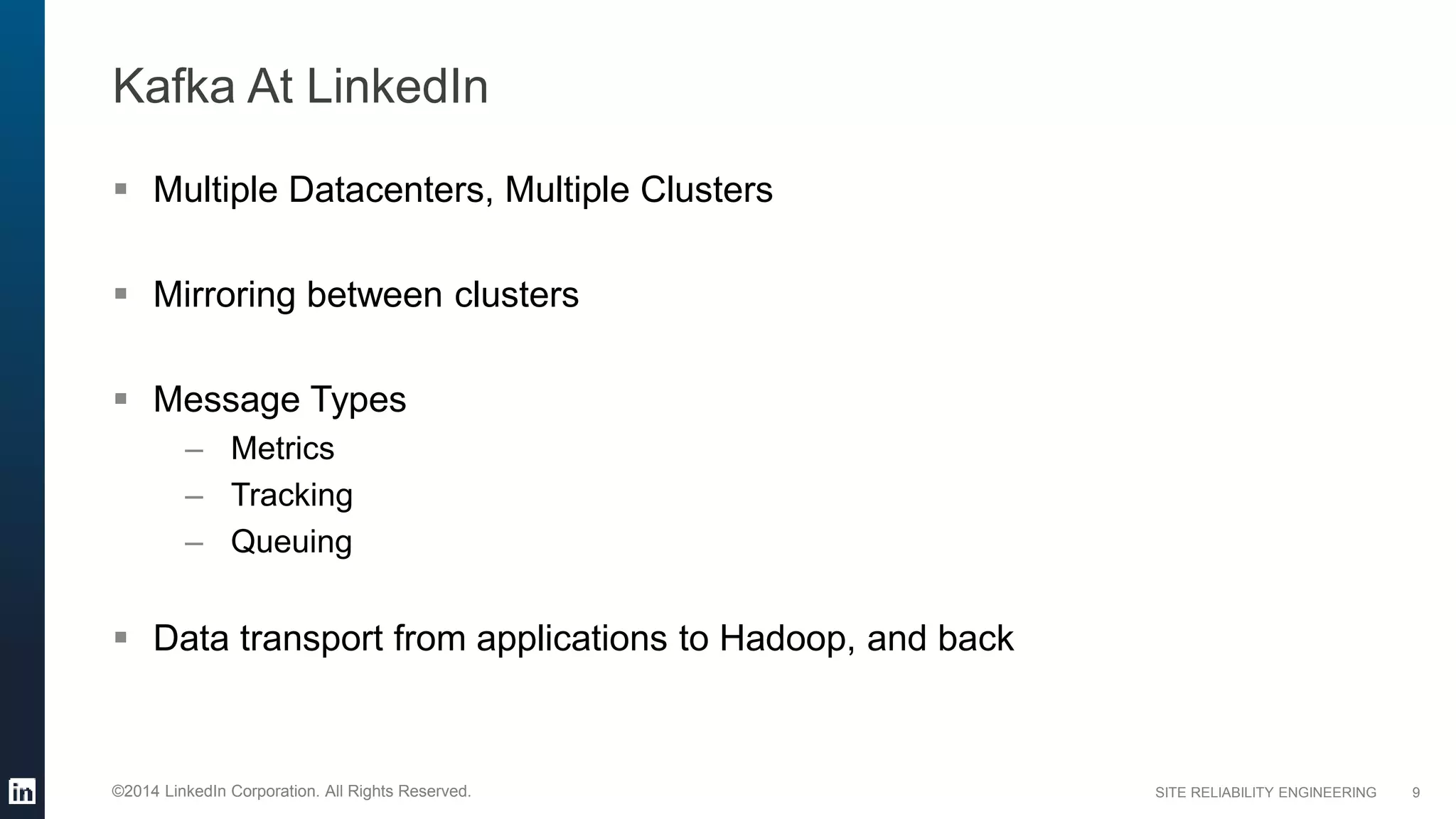
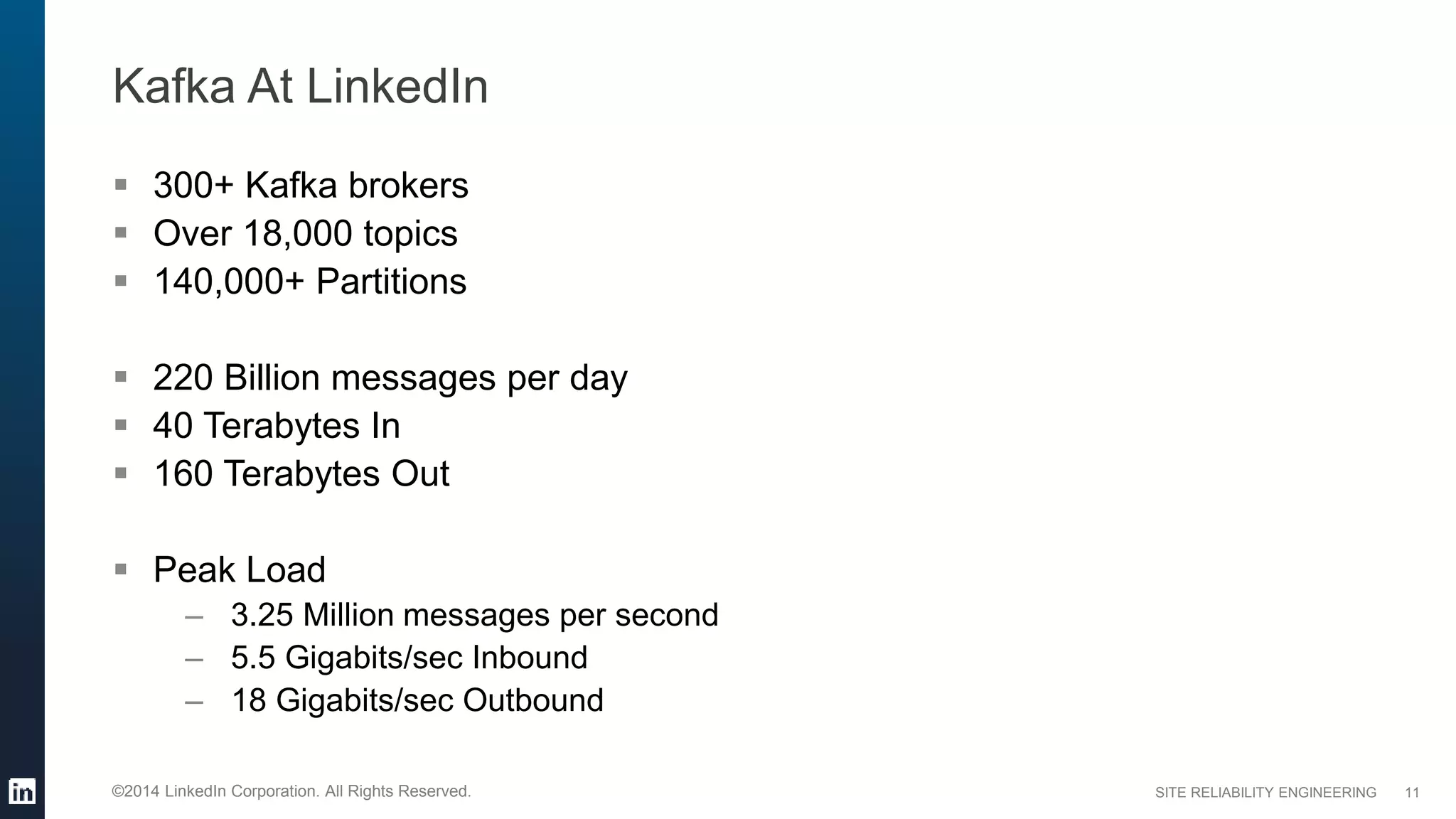


The document provides an overview of Kafka, a distributed messaging system used at LinkedIn, detailing its architecture, operational challenges, and performance metrics, such as handling over 220 billion messages a day. It discusses tools and strategies for managing Kafka clusters, deployments, and monitoring, particularly the integration of Zookeeper for consumer offset management. Additionally, the document outlines future developments in Kafka and ways for users to get involved in its community.
Overview of Kafka and its significance at LinkedIn; Introduction of speakers Clark Haskins and Todd Palino from the Kafka SRE team.
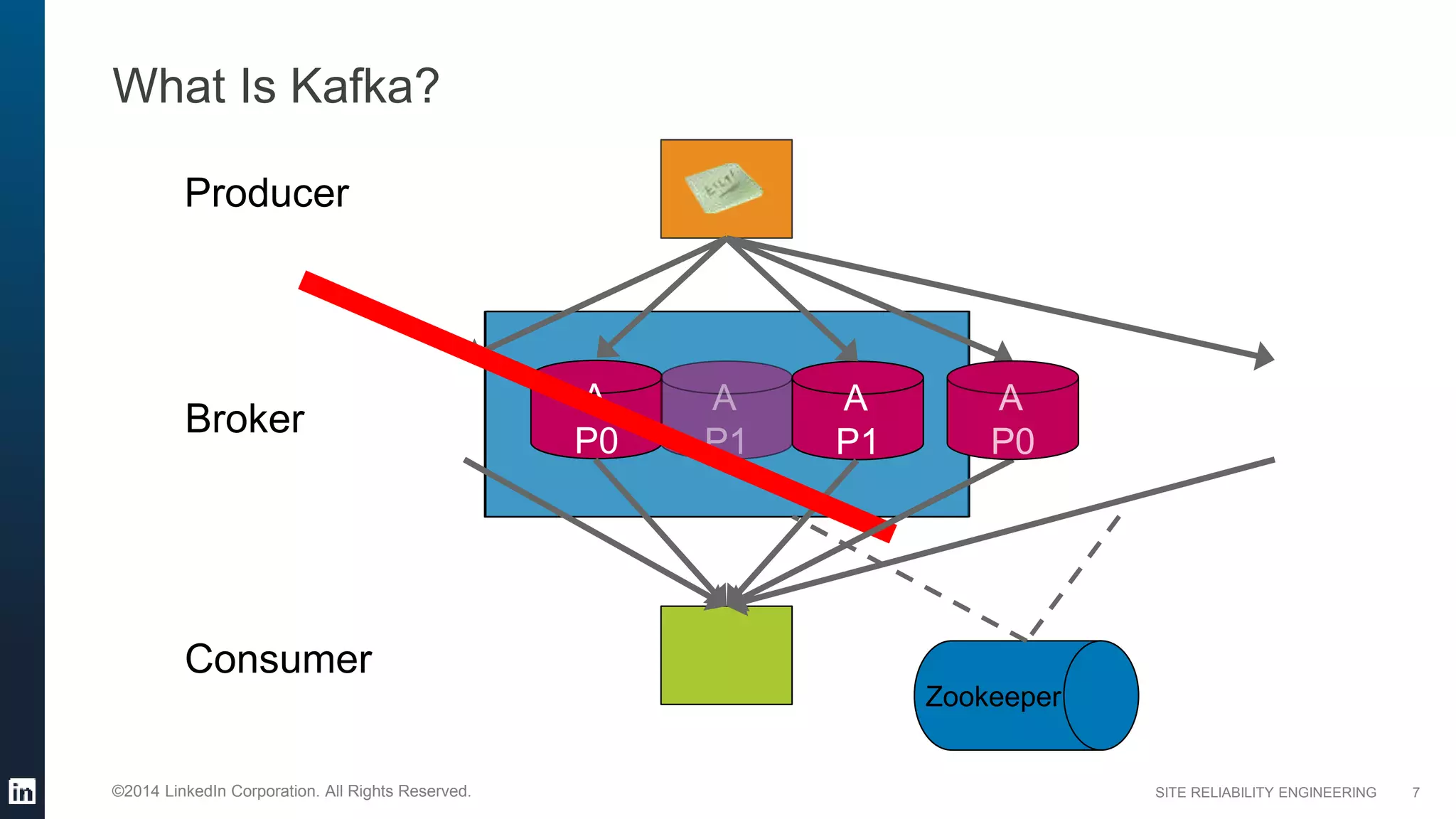
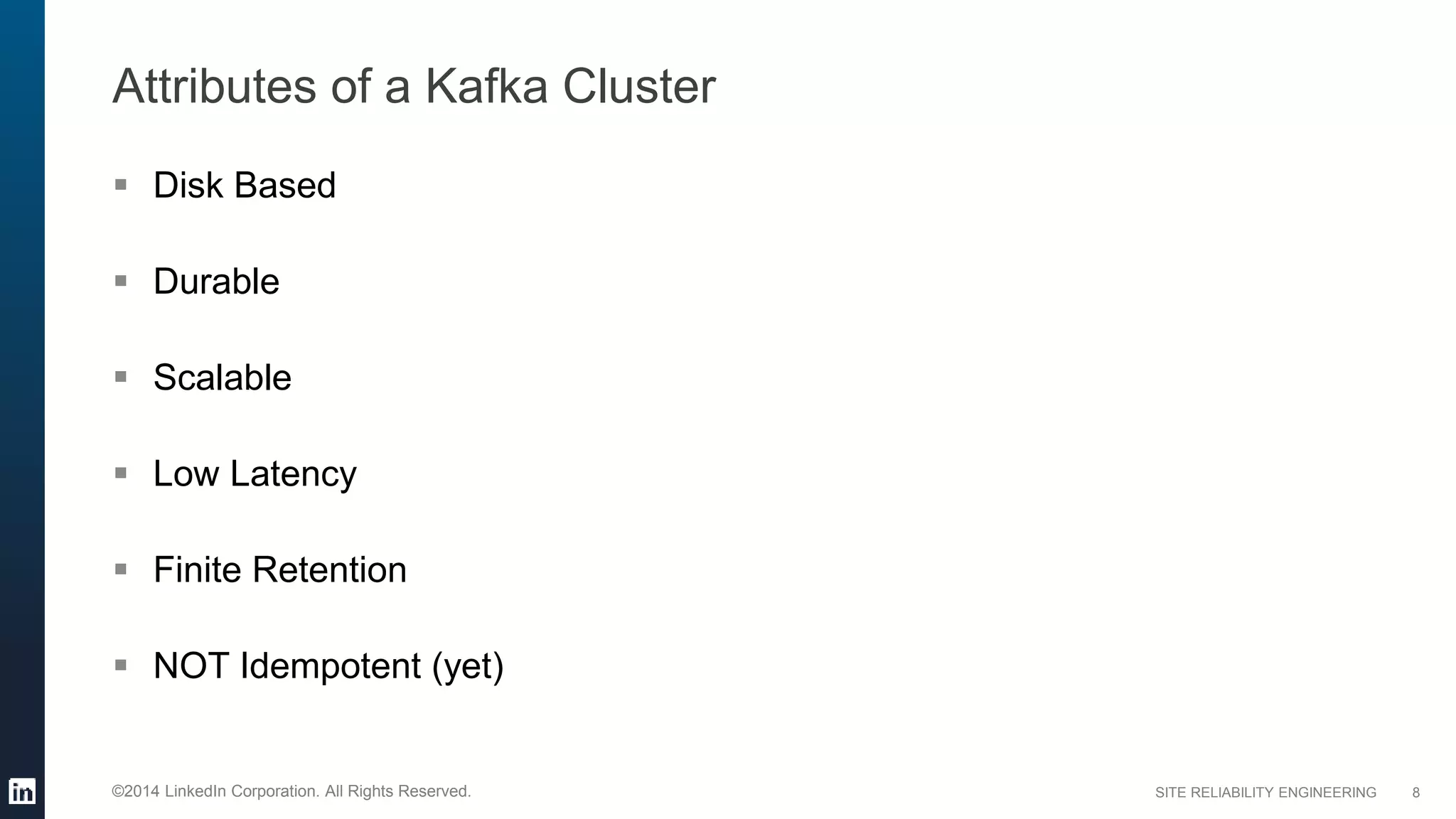
Definition and functioning of Kafka, its architecture with brokers, producers, consumers, and Zookeeper. Attributes include scalability and durability.
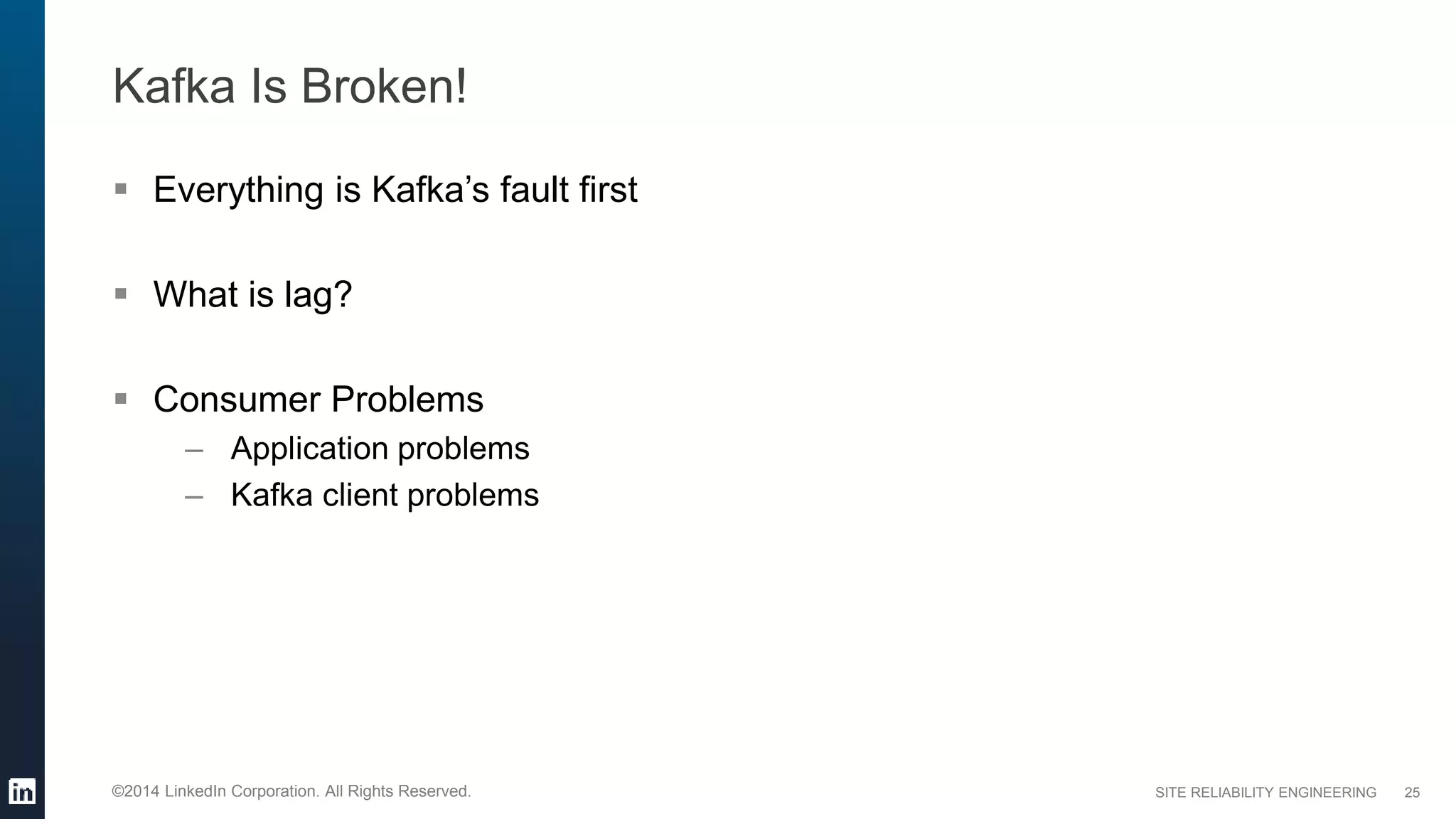
Overcoming operational challenges with Kafka and influencing its development for better performance enhancements.
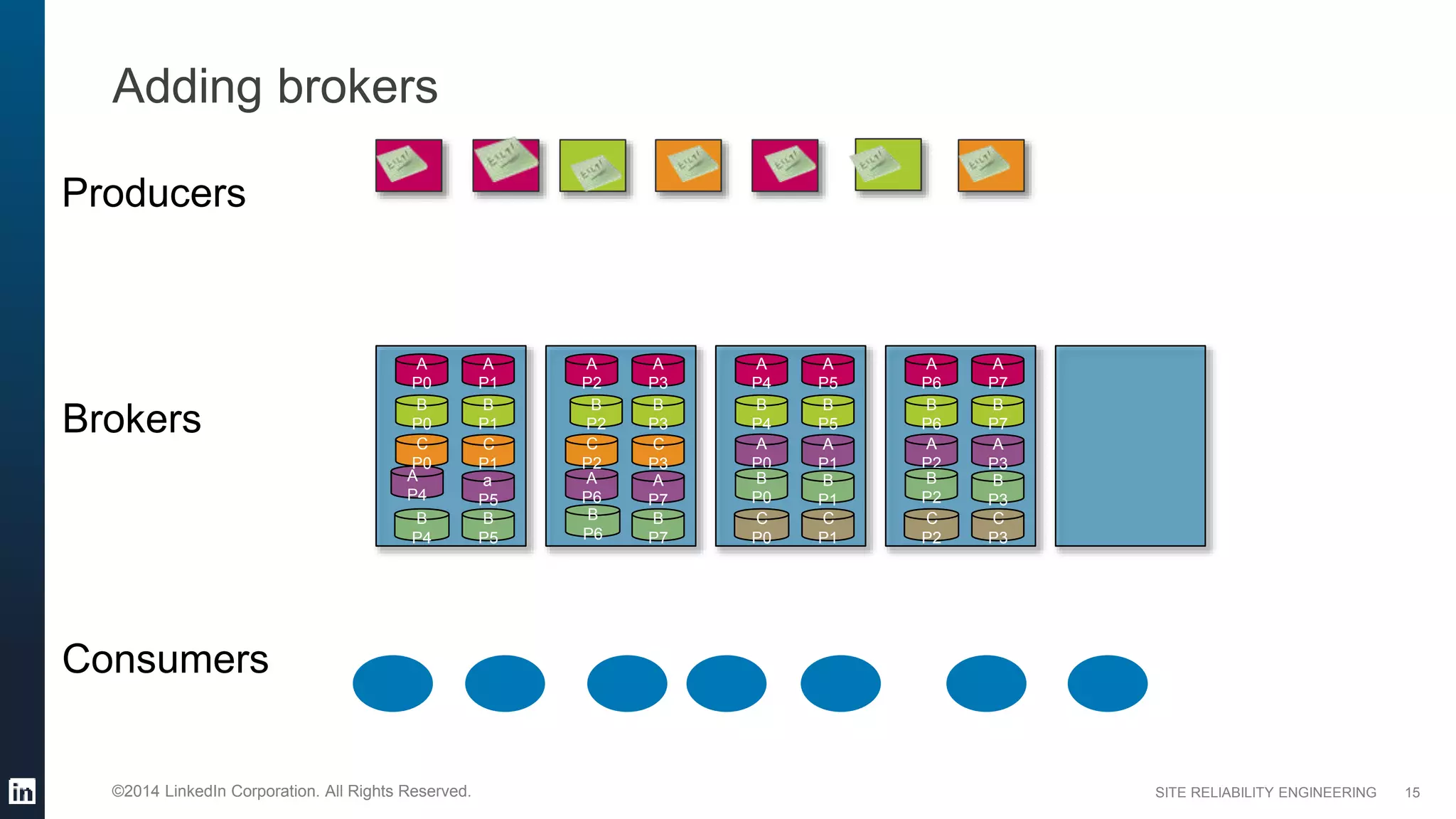
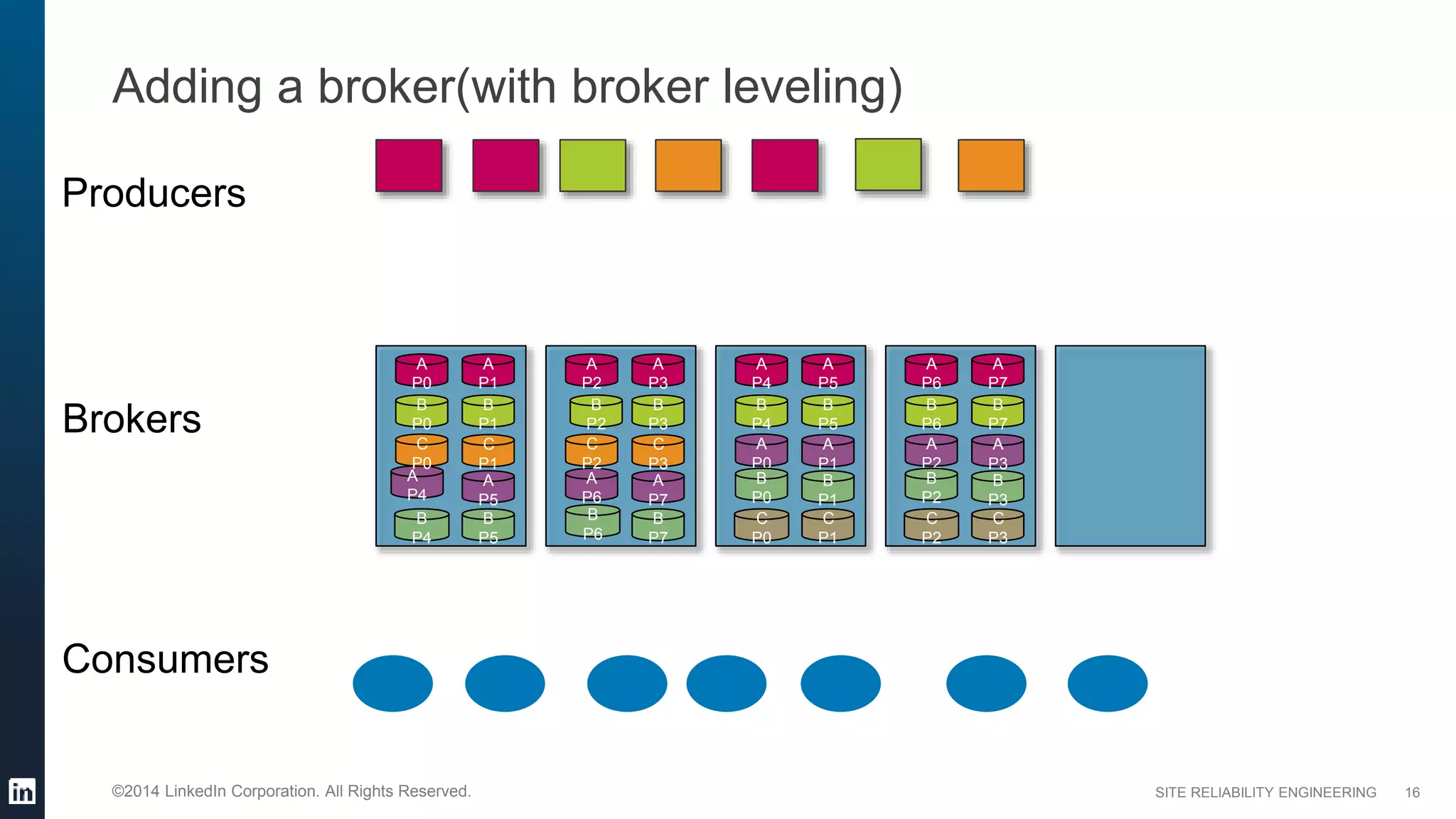
Need for expansion and balancing of Kafka clusters as site traffic increases, including adding brokers to enhance capacity.
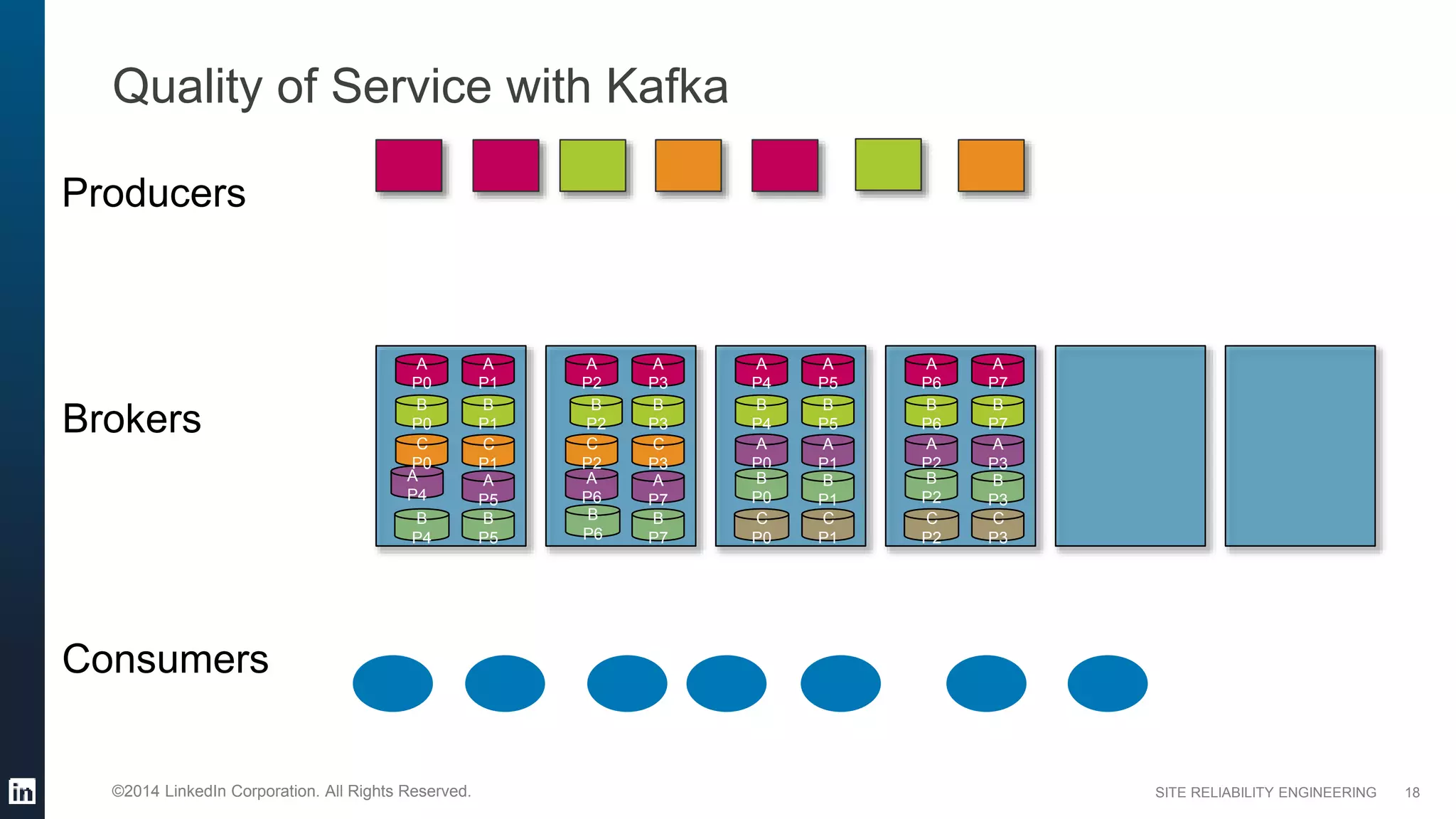
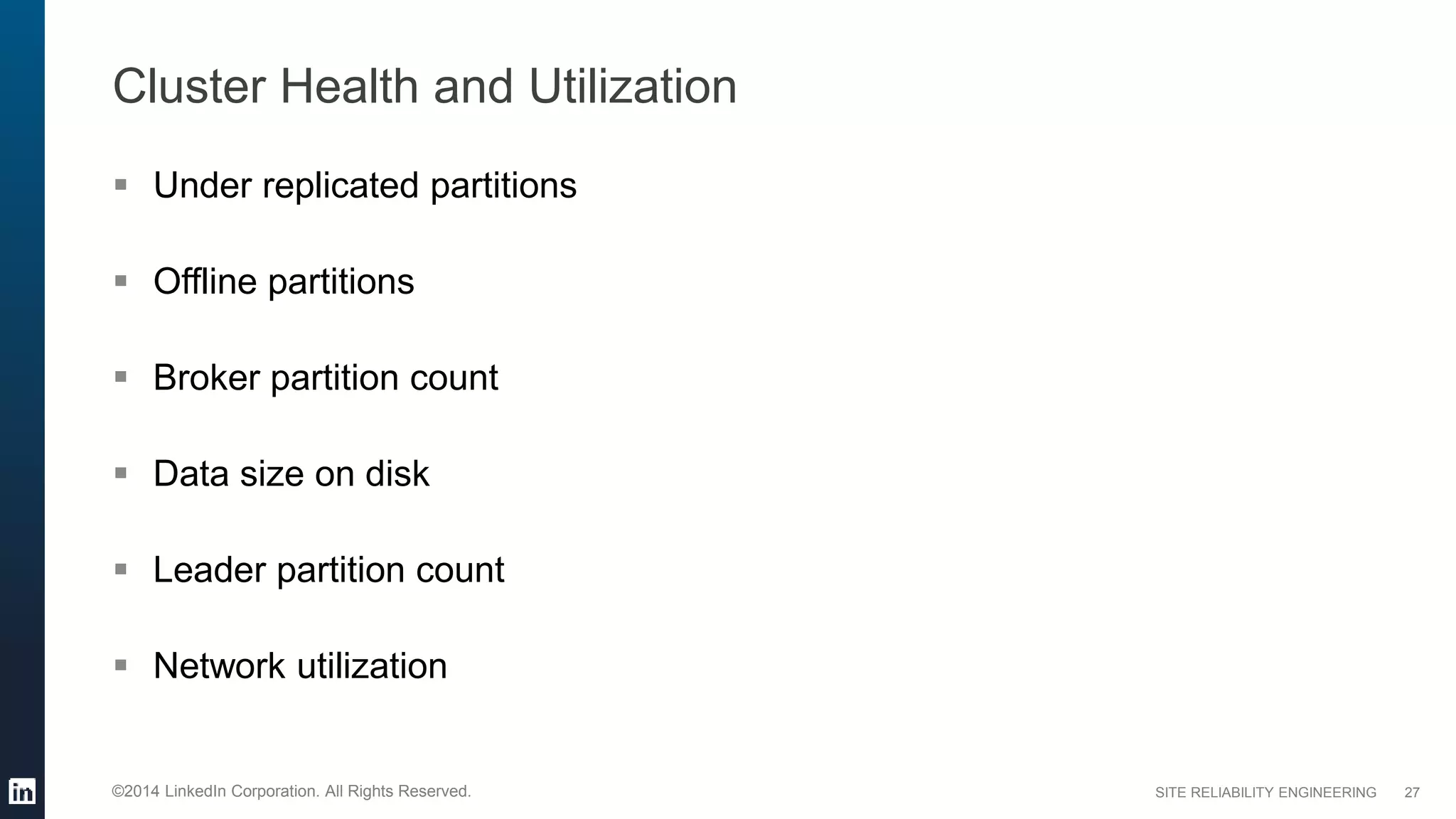
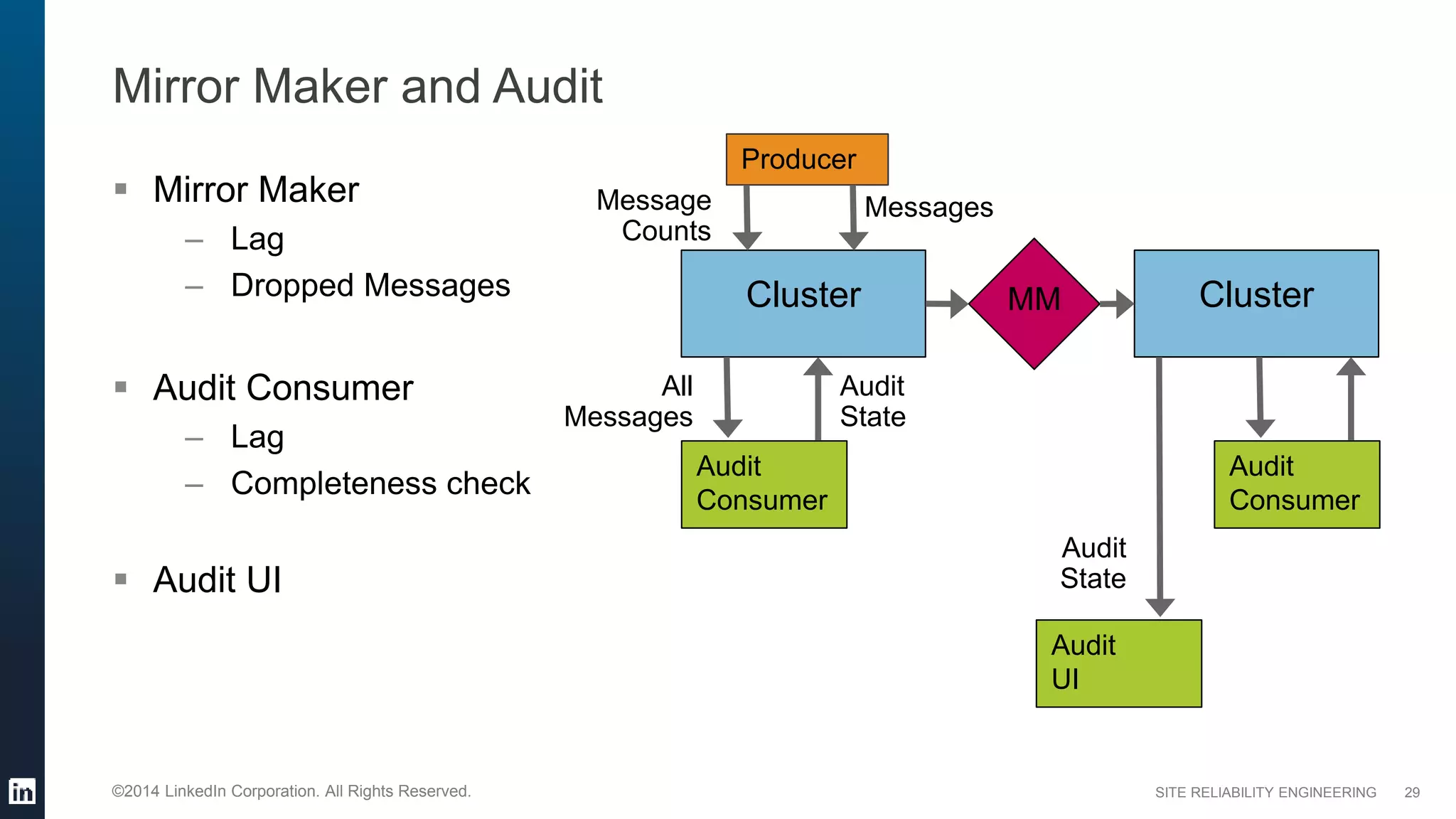
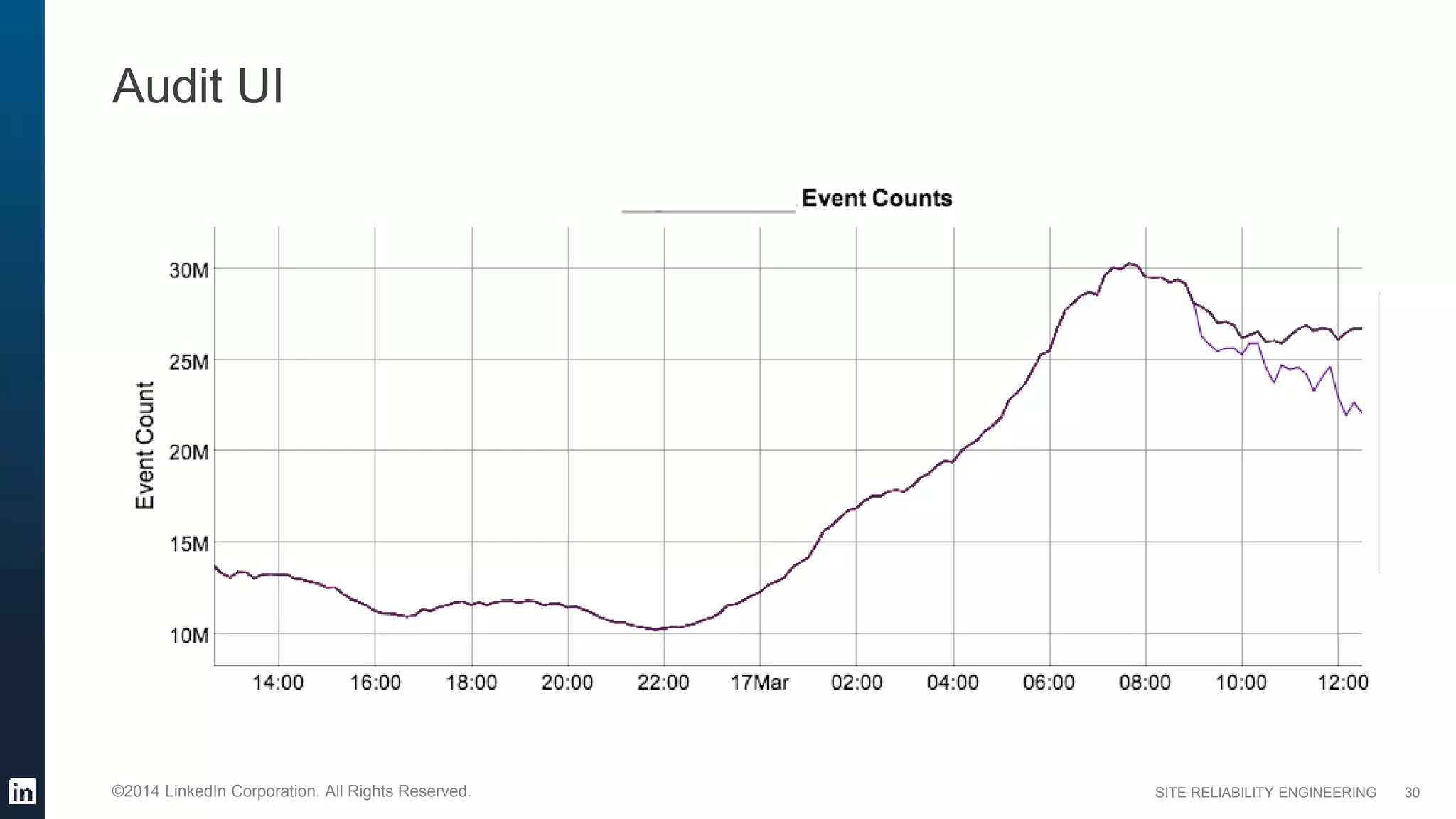
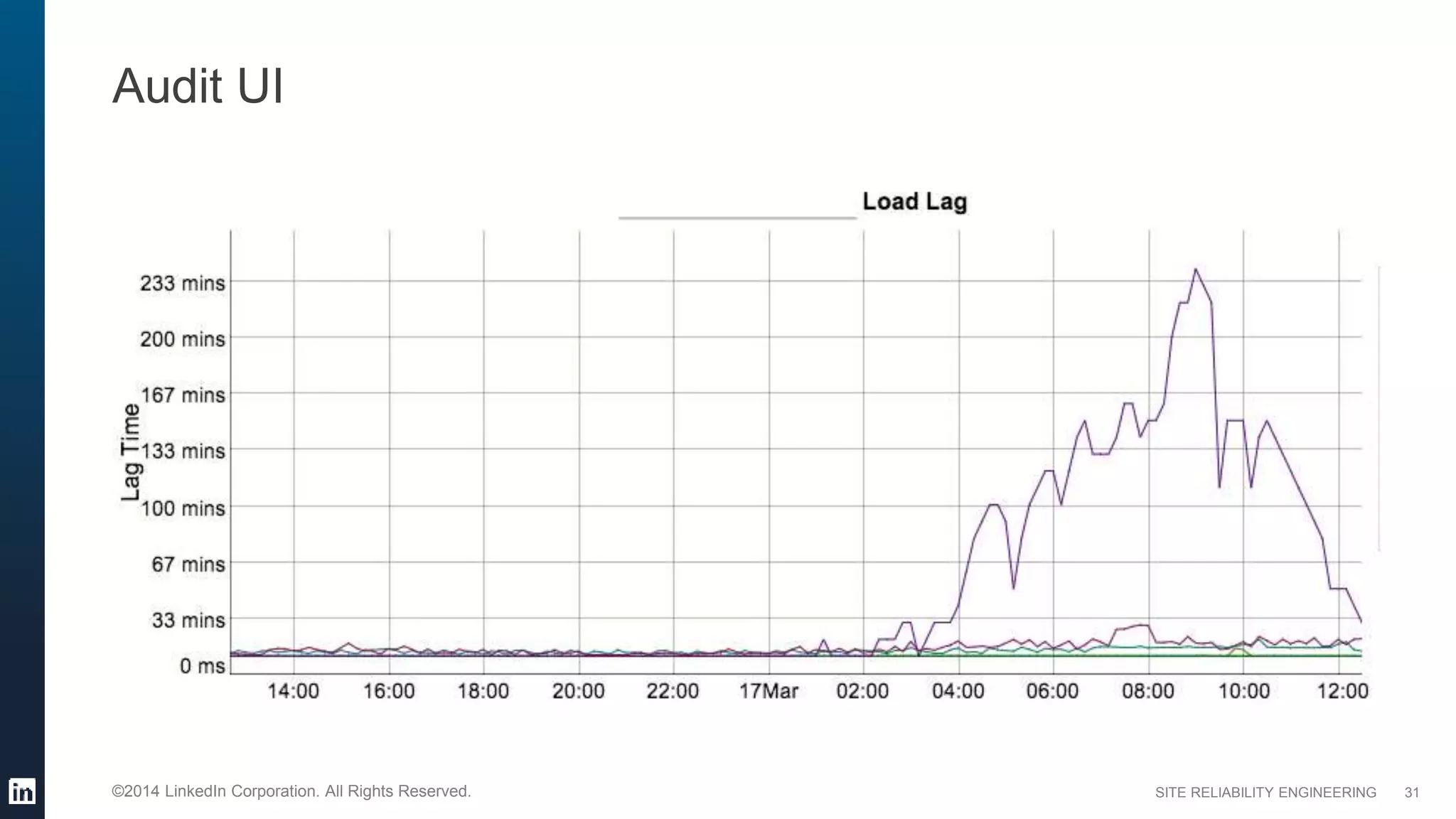
Importance of logging and monitoring for Kafka performance; managing quality of service with metrics.
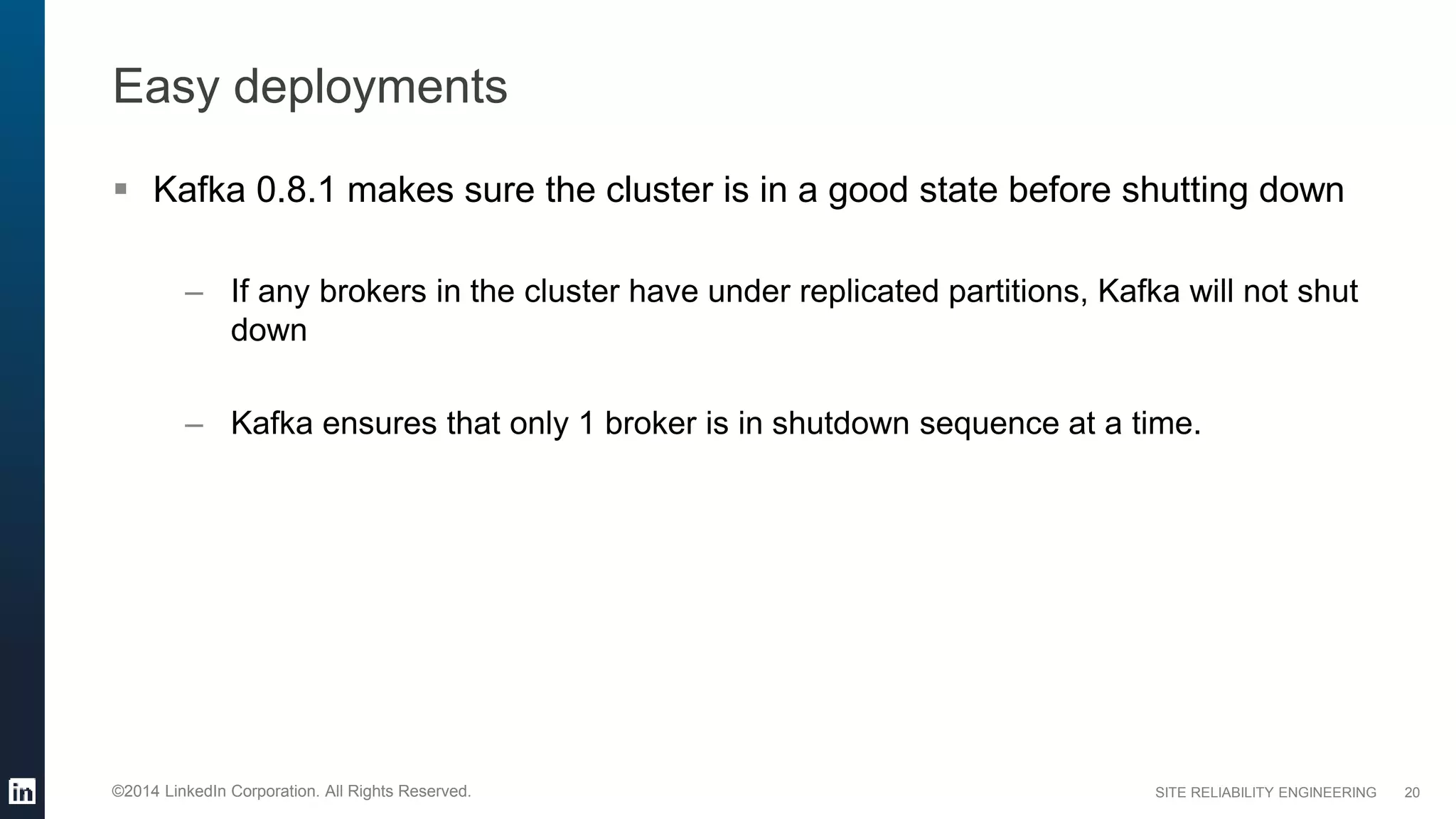
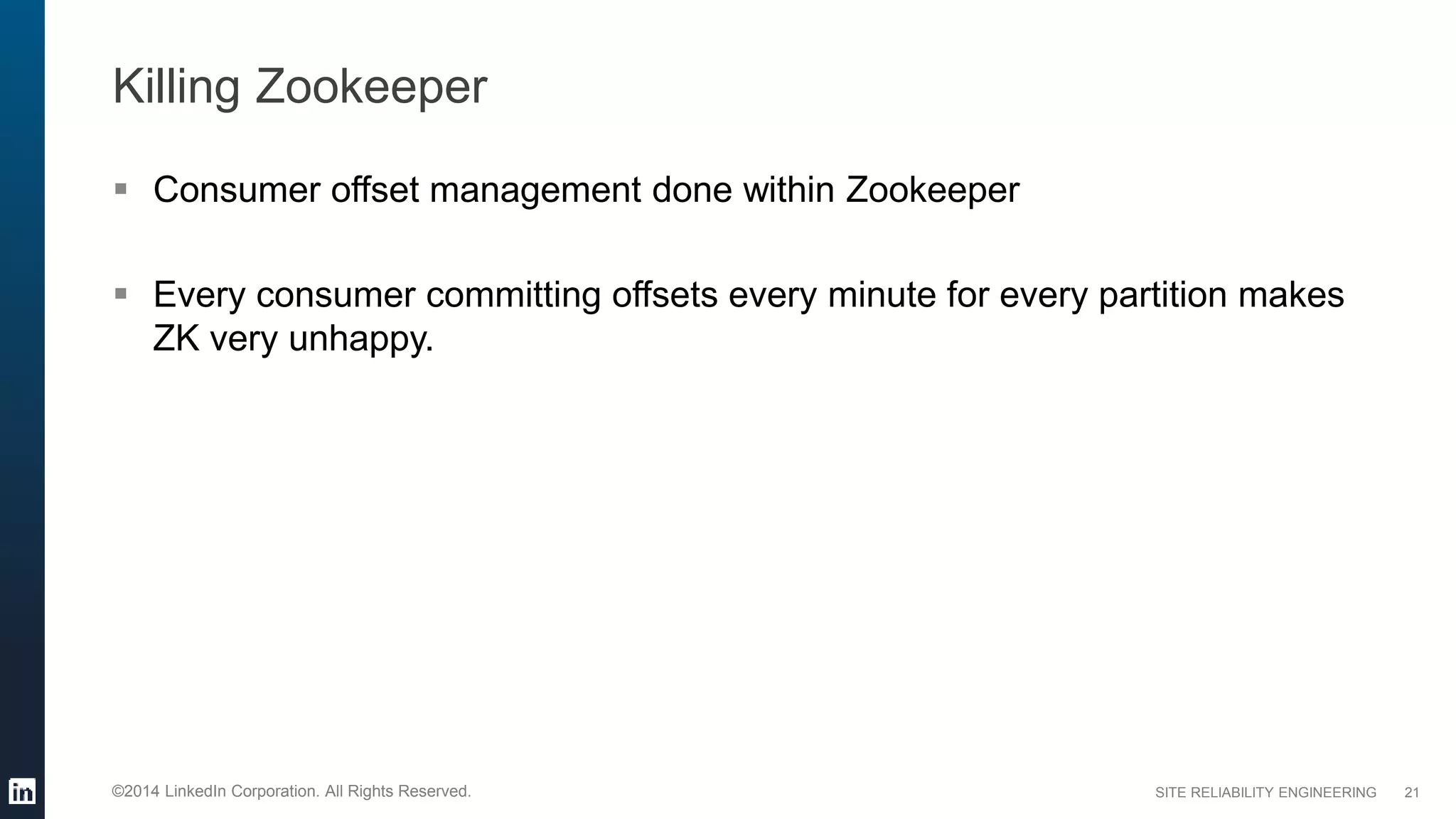
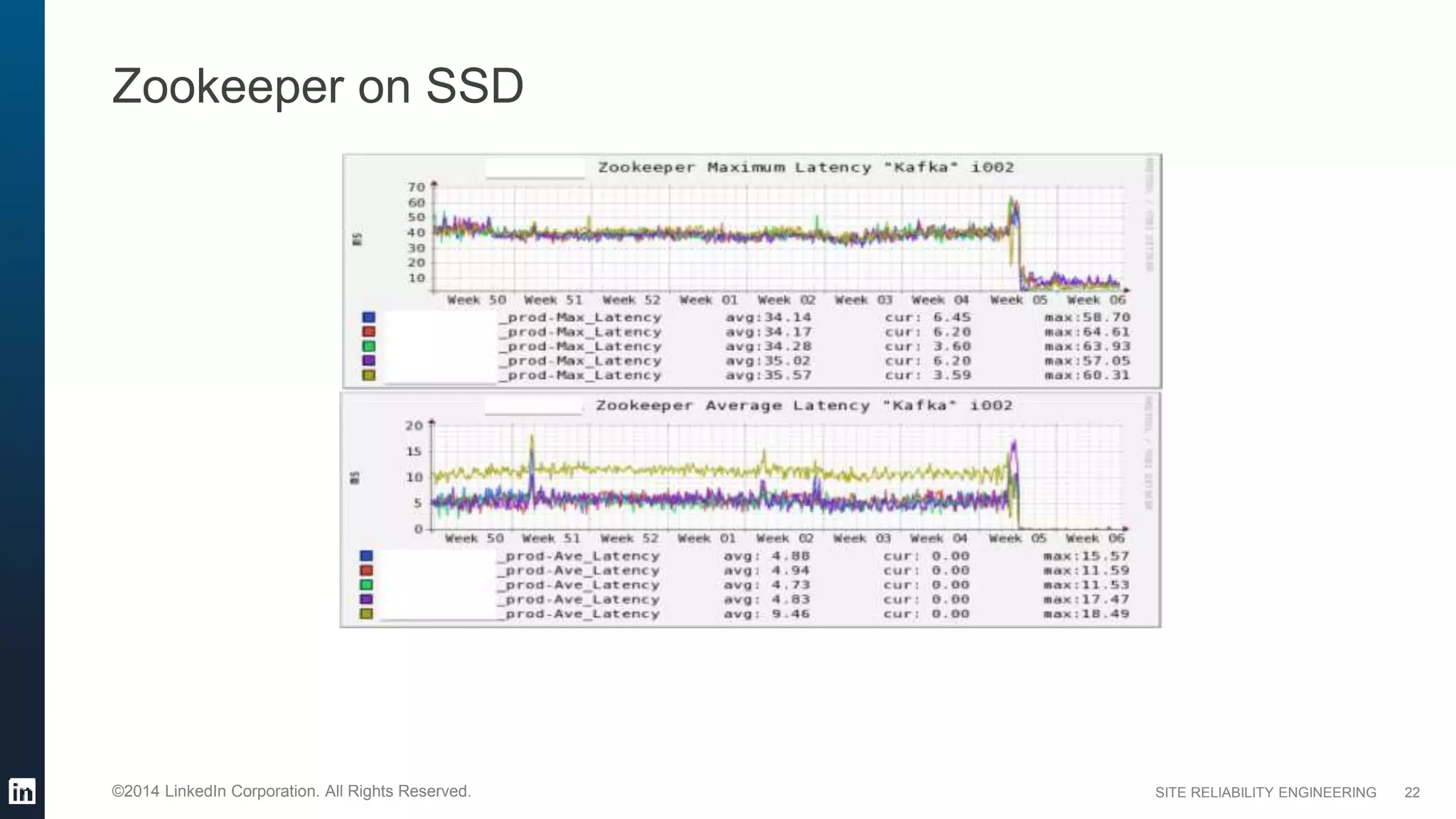
Issues faced during deployments, including managing Zookeeper for consumer offset management, and improvements made in versions.
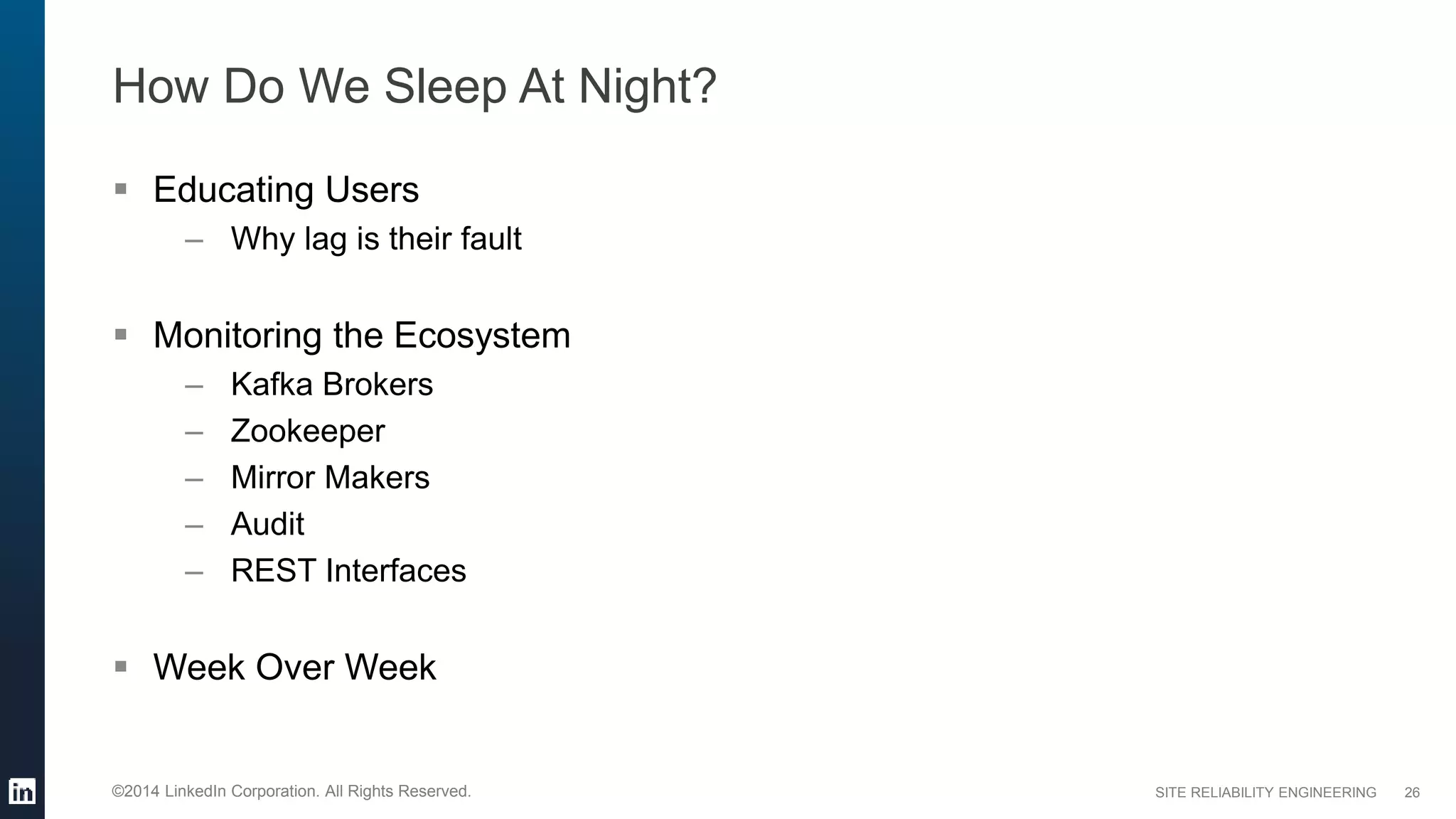
Strategies for monitoring Kafka ecosystem components like brokers and Zookeeper, ensuring performance and reliability.
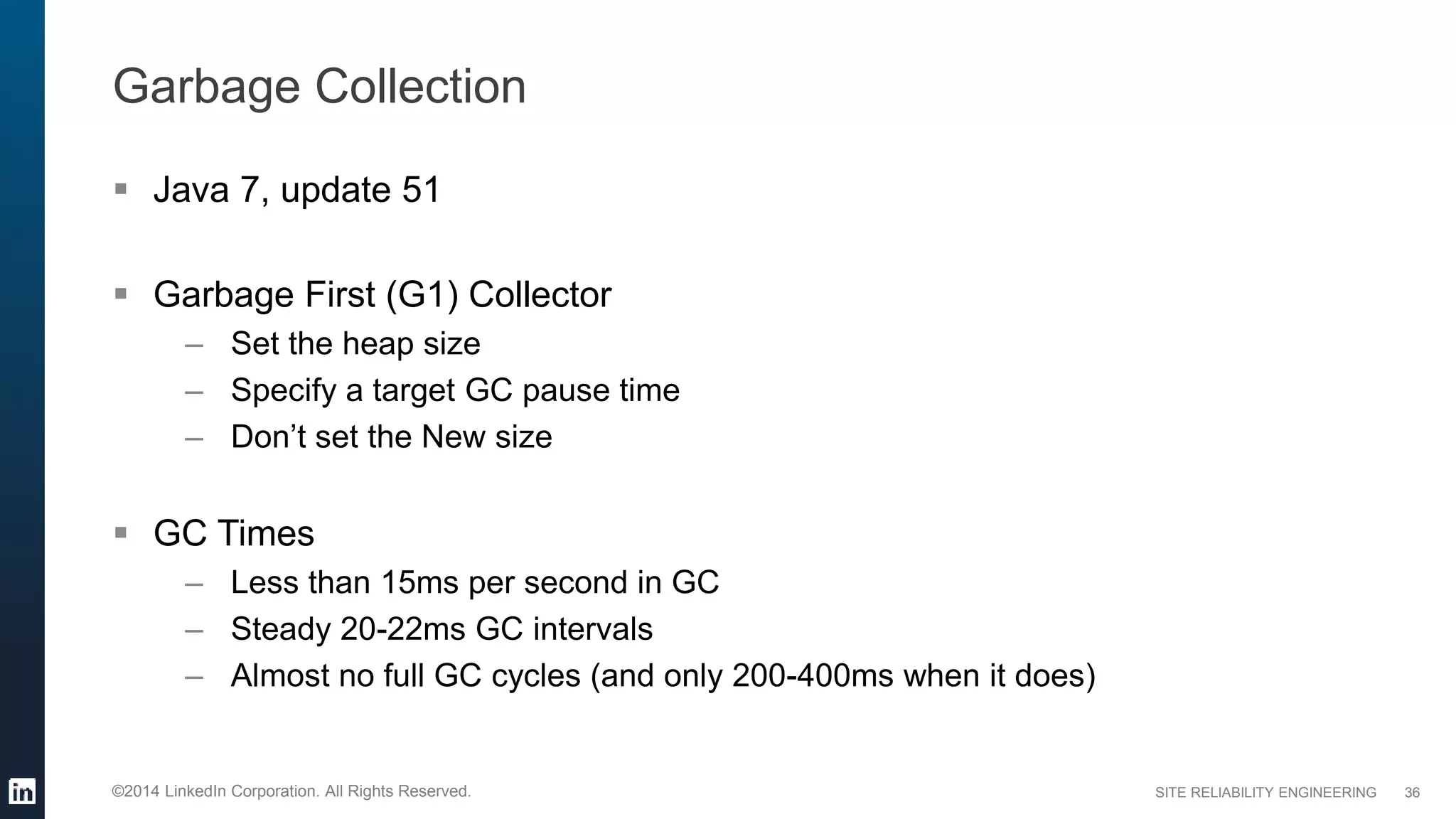
Tuning Kafka for optimal performance, including hardware and Java Virtual Machine settings for garbage collection.
Upcoming features in Kafka, operational work such as advanced monitoring, and community involvement opportunities.
Contact information for Kafka SREs and an invitation to engage with Kafka community; open floor for questions.


![[Webinar Slides] Programming the Network Dataplane in P4](https://cdn.slidesharecdn.com/ss_thumbnails/p4-webinar-intro-demo-oct2015-chang-151106220822-lva1-app6891-thumbnail.jpg?width=640&height=640&fit=bounds)


![[D14] MySQL 5.6時代のパフォーマンスチューニング *db tech showcase 2013 Tokyo](https://cdn.slidesharecdn.com/ss_thumbnails/20131110tuningonmysql5-131117180858-phpapp02-thumbnail.jpg?width=640&height=640&fit=bounds)


![[DSC Europe 25] Jim Sterne - Adopting Generative AI Capabilities Into the Ent...](https://cdn.slidesharecdn.com/ss_thumbnails/sxhpofuorcagxsaulkmt-3-251204082258-7e66bc48-thumbnail.jpg?width=640&height=640&fit=bounds)

![[DSC Europe 25] Vid Stimac - Policy Parsimony: Between Oversimplifying and Ov...](https://cdn.slidesharecdn.com/ss_thumbnails/eqlepagzqp2rhg3gbluh-dsc-stimac-251120-251205090438-059e7f54-thumbnail.jpg?width=640&height=640&fit=bounds)
![[DSC Europe 25] Dragan Vucic - Building the Learning Organization - How AI Tr...](https://cdn.slidesharecdn.com/ss_thumbnails/8brigo2sbu6qur6gxrra-7-251205085715-6ae07d24-thumbnail.jpg?width=640&height=640&fit=bounds)
![[DSC Europe 25] Dragana Ilic - AI for Big Data in Astronomy.pptx](https://cdn.slidesharecdn.com/ss_thumbnails/8palya86qaatvjhva1ms-2-dragana-ilic-ai-ilic-251208151906-652b819c-thumbnail.jpg?width=640&height=640&fit=bounds)


![[DSC Europe 25] Dusan Jovicic - AI Story: From on-prem to cloud and back agai...](https://cdn.slidesharecdn.com/ss_thumbnails/8kp49m6uq22ifnbwhfnk-2-251205085715-964d11a6-thumbnail.jpg?width=640&height=640&fit=bounds)
![[DSC Europe 25] Goran Obradovic - The Rise of Sovereign AI: Building the Regi...](https://cdn.slidesharecdn.com/ss_thumbnails/7nw2xxixrxqdxvrb5wca-6-251205085714-ab09a2ac-thumbnail.jpg?width=640&height=640&fit=bounds)

