English
painters
 Every artist dips his brush in his own soul,
and paints his own nature into his
pictures.
 Henry Ward Beecher
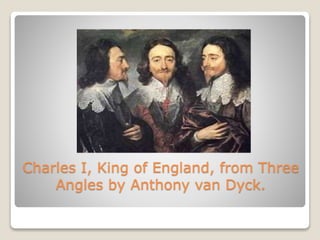
Charles I, King of England, from Three
Angles by Anthony van Dyck.
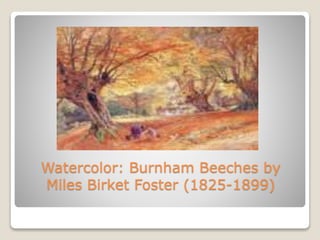
Watercolor: Burnham Beeches by
Miles Birket Foster (1825-1899)
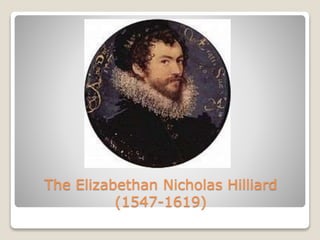
The Elizabethan Nicholas Hilliard
(1547-1619)
 The Elizabethan Nicholas Hilliard (1547-
1619), was the most celebrated of English
miniaturists. His reputation extended to
France. Hilliard was a follower of Hans
Holbein. He was also the author of a treatise
on miniature painting, "The Art of Limning".
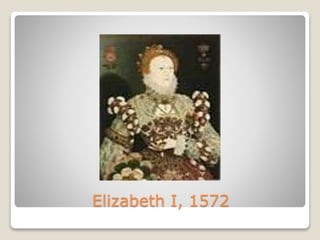
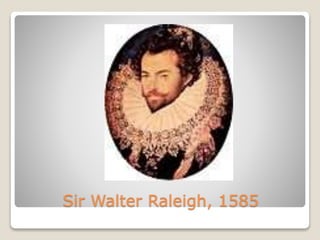
 Hilliard was the author of the miniatures of
Elizabeth I, 1572, Sir Walter Raleigh, 1585,
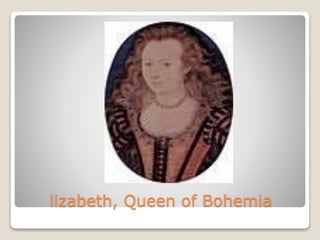
Elizabeth, Queen of Bohemia, and other
members of the courts of Elizabeth I and
James I of England.
Elizabeth I, 1572
Sir Walter Raleigh, 1585
lizabeth, Queen of Bohemia
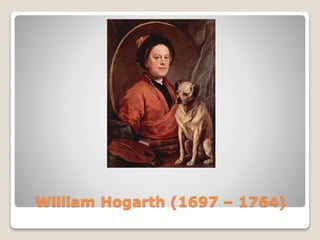
William Hogarth (1697 – 1764)
 William Hogarth (1697 – 1764) was one of
the greatest innovators in English art. He was
a professional rebel. He found English art
sycophantic, and determined to make it
independent. Instead of working for a few
rich patrons, he evolved the idea of making
his living out of popular engravings of his
pictures. He believed that the lack of a native
school of painting was largely due to the
fashions imposed on a credulous public by
connoisseurs and critics and he waged
continual war on taste and the Old Masters.
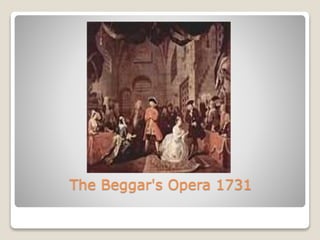
The Beggar's Opera 1731
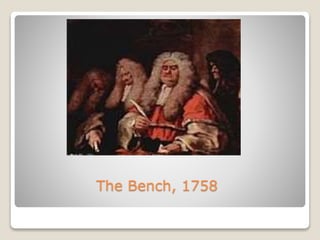
The Bench, 1758
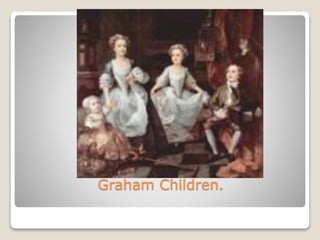
Graham Children.
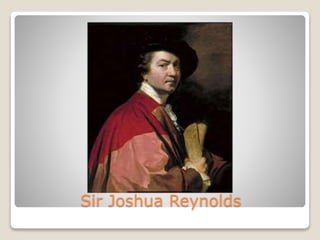
Sir Joshua Reynolds
 Sir Joshua Reynolds (Plympton, Devon 1723- London
1792) was an English Rococo Painter and distinguished
member of London's intellectual society. By 1760, Reynolds
had become the most popular portrait painter in London. In
1768, he founded with Thomas Gainsborough the Royal
Academy of Arts. In 1784, Reynolds was appointed
principal royal portrait painter. He was already been
knighted since 1769.
 Reynolds' works show an exceptional combination of
emotions and technique. Often portraiture with subjects
related to Greek and Roman deities, or men, children and
women in a wonderful colorist style. Creativity, diversity
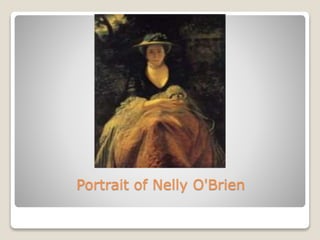
and originality is present in his painting. Portrait of Nelly
O’Brien (Wallace collection) is considered one of his
masterpieces.
 Since 1912, an statue of him is in the courtyard of the
Royal Academy.
Portrait of Nelly O'Brien
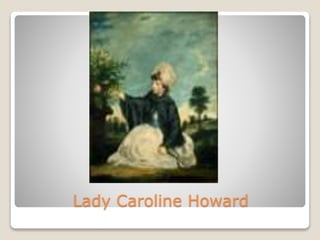
Lady Caroline Howard
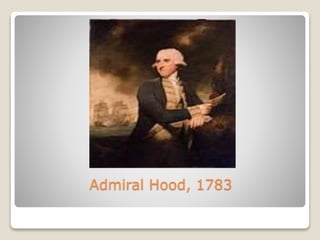
Admiral Hood, 1783
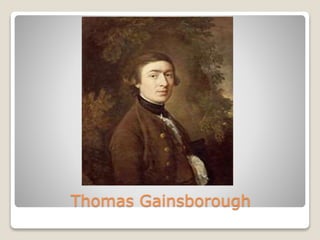
Thomas Gainsborough
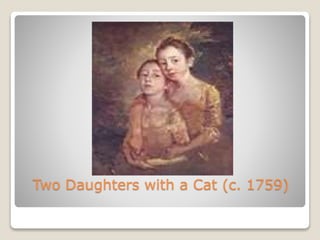
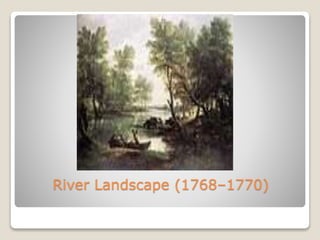
 Thomas Gainsborough (Sudbury, Suffolk, 1727 – London, 1788)
was a landscape and portrait painter, considered one of the great
English masters. In the aristocratic spa town of Bath and later in
London, he became well-known for portraits like Mrs. Philip
Thicknesse (1760), Mary, Countess Howe (about 1763-4), The
Blue Boy (exhibited R.A. 1770), and the landscape The Harvest
Wagon (exhibited S.A. 1767). In 1768 he became one of the
foundation members of the Royal Academy, at which he exhibited
annually until 1784.
 In 1780, Gainsborough painted the King George III and Queen
Charlotte, becoming the Royal Family's favorite painter. Before his
death in 1788, he turned from portraiture to pictorial
compositions, producing in all some 200 landscapes in addition to
his prolific output of about 800 portraits of the English
aristocracy. Gainsborough is the master of the English Rococo.
 Sir Joshua Reynolds, President of the Royal Academy, was in
painting his most important rival
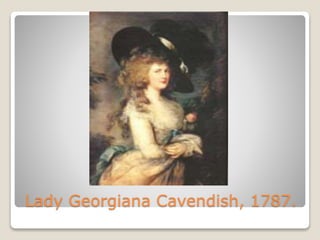
Lady Georgiana Cavendish, 1787.
Two Daughters with a Cat (c. 1759)
River Landscape (1768–1770)
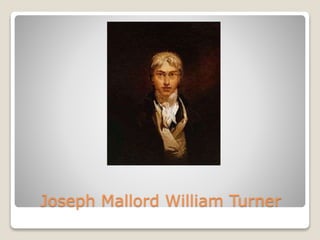
Joseph Mallord William Turner
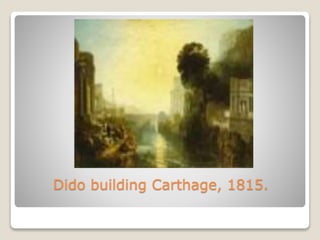
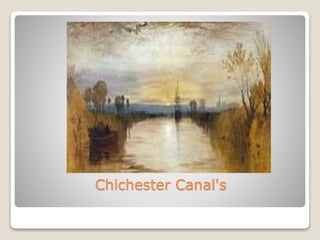
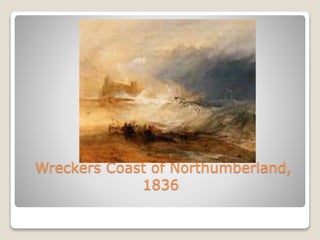
 Joseph Mallord William Turner (Covent Garden 1775 -
London 1851) was a British Romantic painter. In 1799, he
was elected to the Royal Academy where he exhibited
watercolors from 1790 to 1820.
 In satisfying the fashion for ruins, mountains and
waterfalls, he was pleasing and nourishing himself. Ruined
abbeys awoke his feelings of history and so charged his
mind with the fallacies of hope that this became the title of
a chaotic, illiterate epic from which, throughout his life, he
quoted mottoes for his pictures. (cf: Clark, Ibidem)
 After W. Turner’s death, in 1856, the "Turner Bequest" was
settled by a decree; this contains around 300 oil paintings
and nearly 30,000 sketches and watercolors by his own
hand, all found in his studio.
 It is said that Turner created landscape paintings that are
revolutionary even today.
Dido building Carthage, 1815.
Chichester Canal's
Wreckers Coast of Northumberland,
1836
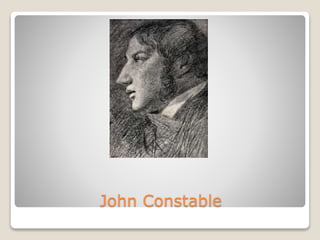
John Constable
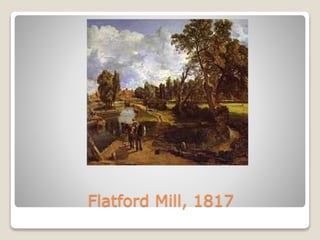
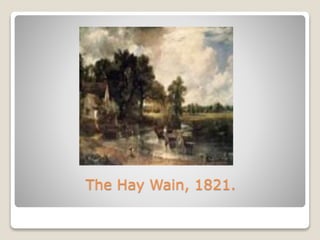
 John Constable is today recognised as the
major English landscape painter of the 19th
century, matched only by his contemporary,
J.M.W. Turner (1775-1851). But he was not
particularly successful during his lifetime.
 Constable, as the son of a prosperous miller,
was brought up in one of the most beautiful
parts of the English country. "These scenes,"
said Constable, "made me a painter--and I
am thankful". His life had always the intense
images of his childhood contemplation, trees,
horses, water, clouds. (cf: Clark, Ibidem)
Flatford Mill, 1817
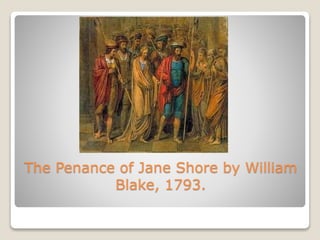
The Penance of Jane Shore by William
Blake, 1793.
The Hay Wain, 1821.
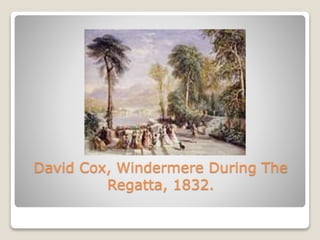
David Cox, Windermere During The
Regatta, 1832.
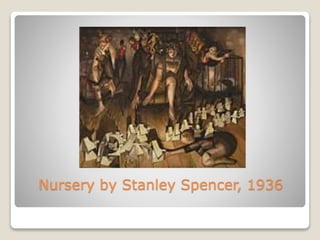
Nursery by Stanley Spencer, 1936

english painters.pptx

  • 1.
  • 2.
     Every artistdips his brush in his own soul, and paints his own nature into his pictures.  Henry Ward Beecher
  • 3.
    Charles I, Kingof England, from Three Angles by Anthony van Dyck.
  • 4.
    Watercolor: Burnham Beechesby Miles Birket Foster (1825-1899)
  • 5.
    The Elizabethan NicholasHilliard (1547-1619)
  • 6.
     The ElizabethanNicholas Hilliard (1547- 1619), was the most celebrated of English miniaturists. His reputation extended to France. Hilliard was a follower of Hans Holbein. He was also the author of a treatise on miniature painting, "The Art of Limning".  Hilliard was the author of the miniatures of Elizabeth I, 1572, Sir Walter Raleigh, 1585, Elizabeth, Queen of Bohemia, and other members of the courts of Elizabeth I and James I of England.
  • 7.
  • 8.
  • 9.
  • 12.
  • 13.
     William Hogarth(1697 – 1764) was one of the greatest innovators in English art. He was a professional rebel. He found English art sycophantic, and determined to make it independent. Instead of working for a few rich patrons, he evolved the idea of making his living out of popular engravings of his pictures. He believed that the lack of a native school of painting was largely due to the fashions imposed on a credulous public by connoisseurs and critics and he waged continual war on taste and the Old Masters.
  • 14.
  • 15.
  • 16.
  • 17.
  • 18.
     Sir JoshuaReynolds (Plympton, Devon 1723- London 1792) was an English Rococo Painter and distinguished member of London's intellectual society. By 1760, Reynolds had become the most popular portrait painter in London. In 1768, he founded with Thomas Gainsborough the Royal Academy of Arts. In 1784, Reynolds was appointed principal royal portrait painter. He was already been knighted since 1769.  Reynolds' works show an exceptional combination of emotions and technique. Often portraiture with subjects related to Greek and Roman deities, or men, children and women in a wonderful colorist style. Creativity, diversity and originality is present in his painting. Portrait of Nelly O’Brien (Wallace collection) is considered one of his masterpieces.  Since 1912, an statue of him is in the courtyard of the Royal Academy.
  • 19.
  • 20.
  • 21.
  • 22.
  • 23.
     Thomas Gainsborough(Sudbury, Suffolk, 1727 – London, 1788) was a landscape and portrait painter, considered one of the great English masters. In the aristocratic spa town of Bath and later in London, he became well-known for portraits like Mrs. Philip Thicknesse (1760), Mary, Countess Howe (about 1763-4), The Blue Boy (exhibited R.A. 1770), and the landscape The Harvest Wagon (exhibited S.A. 1767). In 1768 he became one of the foundation members of the Royal Academy, at which he exhibited annually until 1784.  In 1780, Gainsborough painted the King George III and Queen Charlotte, becoming the Royal Family's favorite painter. Before his death in 1788, he turned from portraiture to pictorial compositions, producing in all some 200 landscapes in addition to his prolific output of about 800 portraits of the English aristocracy. Gainsborough is the master of the English Rococo.  Sir Joshua Reynolds, President of the Royal Academy, was in painting his most important rival
  • 24.
  • 25.
    Two Daughters witha Cat (c. 1759)
  • 26.
  • 27.
  • 28.
     Joseph MallordWilliam Turner (Covent Garden 1775 - London 1851) was a British Romantic painter. In 1799, he was elected to the Royal Academy where he exhibited watercolors from 1790 to 1820.  In satisfying the fashion for ruins, mountains and waterfalls, he was pleasing and nourishing himself. Ruined abbeys awoke his feelings of history and so charged his mind with the fallacies of hope that this became the title of a chaotic, illiterate epic from which, throughout his life, he quoted mottoes for his pictures. (cf: Clark, Ibidem)  After W. Turner’s death, in 1856, the "Turner Bequest" was settled by a decree; this contains around 300 oil paintings and nearly 30,000 sketches and watercolors by his own hand, all found in his studio.  It is said that Turner created landscape paintings that are revolutionary even today.
  • 29.
  • 30.
  • 31.
    Wreckers Coast ofNorthumberland, 1836
  • 32.
  • 33.
     John Constableis today recognised as the major English landscape painter of the 19th century, matched only by his contemporary, J.M.W. Turner (1775-1851). But he was not particularly successful during his lifetime.  Constable, as the son of a prosperous miller, was brought up in one of the most beautiful parts of the English country. "These scenes," said Constable, "made me a painter--and I am thankful". His life had always the intense images of his childhood contemplation, trees, horses, water, clouds. (cf: Clark, Ibidem)
  • 34.
  • 35.
    The Penance ofJane Shore by William Blake, 1793.
  • 36.
  • 37.
    David Cox, WindermereDuring The Regatta, 1832.
  • 38.
    Nursery by StanleySpencer, 1936