Engineering Project Management 2nd Edition Nigel J Smith
1.
Engineering Project Management2nd Edition Nigel
J Smith download
https://ebookbell.com/product/engineering-project-management-2nd-
edition-nigel-j-smith-2137558
Explore and download more ebooks at ebookbell.com
2.
Here are somerecommended products that we believe you will be
interested in. You can click the link to download.
Engineering Project Management 1st Edition Neil G Siegel
https://ebookbell.com/product/engineering-project-management-1st-
edition-neil-g-siegel-49469194
Civil Engineering Project Management 4th A C Twort J Gordon Rees
https://ebookbell.com/product/civil-engineering-project-
management-4th-a-c-twort-j-gordon-rees-4346880
Global Engineering Project Management M Kemal Atesmen
https://ebookbell.com/product/global-engineering-project-management-m-
kemal-atesmen-4747864
Data Analytics Systems Engineering Cybersecurity Project Management
2021th Edition Christopher Greco
https://ebookbell.com/product/data-analytics-systems-engineering-
cybersecurity-project-management-2021th-edition-christopher-
greco-49977860
3.
International Project ManagementVolume Ii A Focus On Value
Engineering And Project Value Improvement Mohammadian
https://ebookbell.com/product/international-project-management-volume-
ii-a-focus-on-value-engineering-and-project-value-improvement-
mohammadian-36505336
The Organizational Engineering Approach To Project Management The
Revolution In Building And Managing Effective Teams 1st Edition Ralph
L Kliem Pmp
https://ebookbell.com/product/the-organizational-engineering-approach-
to-project-management-the-revolution-in-building-and-managing-
effective-teams-1st-edition-ralph-l-kliem-pmp-2250426
Effective Project Management Guidance And Checklists For Engineering
And Construction Ward
https://ebookbell.com/product/effective-project-management-guidance-
and-checklists-for-engineering-and-construction-ward-9980732
Project Management And Engineering Research Aeipro 2019 1st Ed Jos
Luis Ayuso Muoz
https://ebookbell.com/product/project-management-and-engineering-
research-aeipro-2019-1st-ed-jos-luis-ayuso-muoz-22502048
Project Management For Engineering Business And Technology 4th Edition
4th John M Nicholas
https://ebookbell.com/product/project-management-for-engineering-
business-and-technology-4th-edition-4th-john-m-nicholas-2348040
# 2002 byBlackwell Science Ltd,
a Blackwell Publishing Company
Editorial Offices:
Osney Mead, Oxford OX2 0EL, UK
Tel: +44 (0)1865 206206
Blackwell Science, Inc., 350 Main Street,
Malden, MA 02148-5018, USA
Tel: +1 781 388 8250
Iowa State Press, a Blackwell Publishing Company,
2121 State Avenue, Ames, Iowa 50014-8300, USA
Tel: +1 515 292 0140
Blackwell Publishing Asia Pty Ltd, 550 Swanston
Street, Carlton South, Melbourne, Victoria 3053,
Australia
Tel: +61 (0)3 9347 0300
Blackwell Wissenschafts Verlag, Kurfu
È rstendamm 57,
10707 Berlin, Germany
Tel: +49 (0)30 32 79 060
The right of the Author to be identified as the Author
of this Work has been asserted in accordance with the
Copyright, Designs and Patents Act 1988.
All rights reserved. No part of this publication may be
reproduced, stored in a retrieval system, or transmitted,
in any form or by any means, electronic, mechanical,
photocopying, recording or otherwise, except as
permitted by the UK Copyright, Designs and Patents
Act 1988, without the prior permission of the publisher.
First edition published 1995 by Blackwell Science Ltd
Reprinted 1996, 1998
Second edition published 2002 by Blackwell Science
Ltd
Library of Congress
Cataloging-in-Publication Data
Engineering project management/edited by Nigel J.
Smith.Ð2nd ed.
p. cm.
Includes bibliographical references and index.
ISBN 0-632-05737-8 (alk. paper)
1. EngineeringÐManagement. 2. Construction
industryÐManagement. I. Smith, Nigel J.
TA190 .E547 2002
658.4'04Ðdc21
2002074568
ISBN-0-632-05737-8
A catalogue record for this title is available from the
British Library
Set in 10/13pt Times
by DP Photosetting, Aylesbury, Bucks
Printed and bound in Great Britain by
TJ International, Padstow, Cornwall
For further information on
Blackwell Science, visit our website
www.blackwell-science.com
9.
Contents
Preface xi
List ofContributors xiii
Acknowledgements xv
List of Abbreviations xvi
1 Projects and Project Management 1
Denise Bower
1.1 The function of project management 1
1.2 Projects 2
1.3 Project management 3
1.4 Project initiation 5
1.5 Projects risks 7
1.6 Project objectives 9
1.7 Project success 11
2 Value Management 16
Tony Merna
2.1 Introduction 16
2.2 Definitions 16
2.3 Why and when to apply VM 20
2.4 How to apply VM 22
2.5 Reviews 23
2.6 Procedures and techniques 27
2.7 Benefits of value management 28
2.8 Summary 28
3 Project Appraisal and Risk Management 30
Nigel Smith
3.1 Initiation 30
3.2 Sanction 32
3.3 Project appraisal and selection 33
v
10.
3.4 Project evaluation37
3.5 Engineering risk 39
3.6 Risk management 39
3.7 Risk and uncertainty management 43
4 Project Management and Quality 44
Tony Merna
4.1 Definitions 44
4.2 Quality systems 46
4.3 Implementation 49
4.4 Quality-related costs 50
4.5 Quality circles 52
4.6 Quality plans 53
4.7 Total quality management (TQM) 53
4.8 Business process re-engineering (BPR) and TQM 55
5 Environmental Management 58
Ian Vickridge
5.1 Environmental impact 58
5.2 Environmental impact assessment (EIA) 60
5.3 Screening 62
5.4 Environmental legislation 63
5.5 Scoping 65
5.6 Base-line study 66
5.7 Impact prediction 67
5.8 Environmental impact statement 68
5.9 Presenting EIA information 69
5.10 Monitoring and auditing of environmental impacts 73
5.11 Environmental economics 75
5.12 Environmental management 80
6 Project Finance 86
Tony Merna
6.1 Funding for projects 86
6.2 Sources of finance 87
6.3 Project finance 88
6.4 Financial instruments 89
6.5 Financial engineering 91
6.6 Debt financing contract 92
6.7 Types of loans 93
6.8 Appraisal and validity of financing projects 98
6.9 Risks 100
vi Contents
11.
7 Cost Estimatingin Contracts and Projects 105
Nigel Smith
7.1 Cost estimating 105
7.2 Cost and price 107
7.3 Importance of the early estimates 109
7.4 Estimating techniques 112
7.5 Suitability of estimating techniques to project stages 119
7.6 Estimating for process plants 121
7.7 Information technology in estimating 123
7.8 Realism of estimates 124
8 Project Stakeholders 127
Kris Moodley
8.1 Stakeholders 127
8.2 Primary project stakeholders 127
8.3 Secondary project stakeholders 128
8.4 Understanding the interests and influences 129
8.5 Stakeholder management 131
8.6 Stakeholders and communication 134
8.7 Summary 135
9 Planning 137
Nigel Smith
9.1 Planning 137
9.2 Programming 138
9.3 Network analysis 139
9.4 Updating the network 145
9.5 Resource scheduling 146
9.6 Planning with uncertainty 146
9.7 Software and modelling 147
10 Project Control Using Earned Value Techniques 156
Denise Bower
10.1 Project control 156
10.2 Earned value definitions 157
10.3 The theory and development of earned value analysis 159
10.4 Relationship of project functions and earned value 161
10.5 Value of work done control 163
10.6 Earned value analysis techniques 164
10.7 Application of EVA 166
10.8 Examples of EVA 167
10.9 Summary 172
Contents vii
12.
11 Contract Strategyand the Contractor Selection Process 174
David Wright
11.1 Context 174
11.2 Factors affecting strategy 175
11.3 Contractual considerations 177
11.4 Contractor choice 179
11.5 Project objectives 180
11.6 Contract selection 182
11.7 Project organisation 186
11.8 Risk allocation 193
11.9 Terms of payment 194
11.10 Model or standard conditions of contract 201
11.11 Sub-contracts 204
12 Contract Policy and Documents 206
David Wright
12.1 Tendering procedures 206
12.2 Contracting policy 207
12.3 Contract planning 208
12.4 Contractor pre-qualification 211
12.5 Contract documents 212
12.6 Tender review 213
12.7 Tender evaluation 214
12.8 Typical promoter procedure 215
13 Project Organisation Design/Structure 222
Kris Moodley
13.1 Organisations 222
13.2 Building blocks of organisations 223
13.3 Organisation types 225
13.4 Internal and external projects 231
13.5 The human side of structure 232
13.6 Structure of collaborative relationships 233
13.7 Structure in the international context 234
13.8 Summary 236
14 Design Management 238
Peter Harpum
14.1 Role of designs 238
14.2 Understanding design 239
14.3 What design has to do 241
14.4 The role of design management 243
viii Contents
13.
14.5 Managing theproject triple constraints 247
14.6 Design liability 255
14.7 Briefing 257
14.8 Interface control 259
14.9 Design for manufacturing 261
15 Supply Chain Management 264
Steven Male
15.1 Background 264
15.2 Perspectives on terminology 265
15.3 Supply chain strategy 266
15.4 The nature of the organisation 269
15.5 World-class organisation in manufacturing 270
15.6 The project value chain 275
15.7 Procurement and the project value chain 277
15.8 Prime contracting 281
15.9 The operation of future construction supply chains 285
15.10 Summary 287
16 Team-Based Supply Chains and Partnering 290
Denise Bower
16.1 Background 290
16.2 Team working 291
16.3 Partnering 292
16.4 Establishing the relationship 298
16.5 Making the relationship work 300
16.6 Benefits of partnering 300
16.7 Constraints to partnering 303
16.8 Summary 305
17 Private Finance Initiative and Public±Private Partnerships 307
Tony Merna
17.1 Concession contracts 307
17.2 Definition of concession projects 308
17.3 Organisational and contractual structure 309
17.4 Concession agreements 311
17.5 Procurement of concession project strategies 311
17.6 Concession periods 313
17.7 Existing facilities 314
17.8 Classification of concession projects 315
17.9 Projects suitable for concession strategies 317
17.10 Risks fundamental to concession projects 317
Contents ix
14.
17.11 Concession packagestructure 319
17.12 Advantages and disadvantages of concession projects 321
17.13 The origins of PFI 323
17.14 The arguments for privately financed public services 323
17.15 PFI in the UK 325
17.16 Bidding and competition 326
17.17 Output specification 328
17.18 Financing public±private partnerships 329
18 Aspects of Implementing Industrial Projects 333
Nigel Smith
18.1 Multi-disciplinary projects 333
18.2 Industrial projects 335
18.3 Large engineering projects 336
18.4 UK off-shore projects 337
18.5 Legal systems in the EU countries 338
18.6 Innovation 339
19 Project Management in Developing Countries 341
Ian Vickridge
19.1 What makes developing countries different? 341
19.2 The construction industry in developing countries 345
19.3 Finance and funding 346
19.4 Appropriate technology 347
19.5 Labour-intensive construction 349
19.6 Community participation 351
19.7 Technology transfer 352
19.8 Corruption 353
19.9 Summary 355
20 The Future for Engineering Project Management 357
Nigel Smith
20.1 The role of the parties 358
20.2 Guidelines for project management 359
20.3 Project management ± the way ahead 362
Suggested Answers to Exercises in Chapter 9 364
Index 372
x Contents
15.
Preface
In many sectorsof industry the significance of good project management
in delivering projects in accordance with predetermined objectives has
been established. Industrialists and engineering institutions have called
for the inclusion of a significant proportion of project management in
higher-level degrees, something realised by Finniston in his review of the
future of engineering in 1980 (Engineering our Future. Report of the
Committee of Inquiry into the Engineering Profession, Chairman Sir
Montague Finniston, HMSO, 1980). Since the publication of the first
edition of this book in 1995, a number of significant developments have
taken place. A British Standard for Project Management, BS6079, has
been published, and the UK-based Association for Project Management
has produced a fundamental guide to processes and practice entitled
Body of Knowledge, and has drafted a standard contract for employing
project managers. There has also been a marked increase in the teaching
and delivery of university programmes and continuing professional
development (CPD) courses in project management.
Many organisations in the engineering, finance, business, process and
other sectors are appointing project managers. Some have a very narrow
brief and a precise role, whereas others have a more strategic, managerial
and multi-disciplinary function. This second edition builds upon the
success of the first edition in providing a clear picture of the aims of
project management based upon best practice. The improvements in this
edition have been driven by changes in the practice of project manage-
ment, and by the helpful comments made by book reviewers and readers
since 1995.
The original information on risk management is updated and
enhanced. The principle of uncertainty management is recognised by a
new chapter on value management to balance the effective management
of adverse risk and opportunity. Changes in the management of major
projects have resulted in more joint ventures, project partnering, special
project vehicles and other forms of collaborative working. The new
xi
16.
edition includes newchapters on supply and value chain management,
and on effective project partnering. The book is not aimed at any
particular sector of engineering, and relates to the management of any
major technical project.
Newly appointed project managers and students of project manage-
ment at the MEng, MBA and MSc level will find the enhanced text and
references beneficial. The book is concerned with the practice and theory
of project management, particularly in relation to multi-disciplinary
engineering projects, large and small, in the UK and overseas.
Nigel J. Smith
xii Preface
17.
List of Contributors
Editor:Professor Nigel J. Smith, BSc, MSc, CEng, FICE, MAPM, is
Professor of Construction Project Management in the School of Civil
Engineering, University of Leeds. After graduating from the University
of Birmingham he has spent fifteen years in the industry working mainly
on transportation infrastructure projects. His academic research inter-
ests include risk management and procurement of projects using private
finance. He has published fifteen books and numerous refereed papers.
He is currently Dean of the Faculty of Engineering.
Denise Bower, BEng, PhD, MASCE, is a Lecturer in Project Manage-
ment in the School of Civil Engineering at the University of Leeds. She
was formerly the Shell Lecturer in Project Management at UMIST. She
is a leading member of Engineering Management Partnership which
offers Diploma and Masters Degree level qualifications to engineers of
all disciplines. She was a member of Latham Working Group 12 and has
an extensive record of consultancy work with clients in construction,
process engineering and manufacturing.
Peter Harpum, after ten years managing major projects in the oil, ship-
ping and construction industries, Peter Harpum now works as a project
management consultant advising blue chip clients in various industrial
sectors. He has carried out a number of research projects with interna-
tional engineering and construction organisations, concentrating in
particular on the front-end of the project lifecycle. He has contributed to
the design, content, and delivery of a number of project management
courses at Masters level and continues to work as a visiting lecturer at
UMIST. Peter holds a Masters Degree in Project Management, and is
working on his doctoral thesis on design management theory.
Professor Steven Male, holds the Balfour Beatty Chair in Building
Engineering and Construction Management, School of Civil Engineer-
ing, University of Leeds. His research and teaching interests include
strategic management in construction, supply chain management, value
xiii
18.
management and valueengineering. He has led research projects under
the EPSRC IMI programme `Construction as a Manufacturing Process';
with the DETR; DTI; and, within the European Union 4th and 5th
Frameworks. He is a visiting Professor in the Department of Civil
Engineering, University of Chile. He works closely with industry and has
undertaken a range of research, training and consultancy studies with
construction corporations, construction consultancy firms, blue chip
and government clients.
Tony Merna, BA, MPhil, PhD, CEng, MICE, MAPM, MIQA, is the
senior partner of the Oriel Group Practice and is also a Lecturer in the
Department of Civil and Construction Engineering at UMIST. A
chartered engineer by profession, he has been involved at the design,
construction, operation and financing stages of many projects procured
in the UK and overseas.
Kris Moodley, BSc, MSc, AIArb, is a Lecturer in Construction Man-
agement in the School of Civil Engineering, University of Leeds. After
graduating from Natal University, his initial employment was with
Farrow Laing in Southern Africa, before his first academic appointment
at Heriot Watt University. He moved to Leeds four years later to pursue
research interests in strategic business relationships between organisa-
tions and their projects. He has contributed to many publications and is
co-author of the book Corporate Communications in Construction.
Ian Vickridge, BSc(Eng), MSc, CEng, MICE, MCIWEM, runs his own
civil engineering consultancy and is also a Visiting Senior Lecturer in
Civil Engineering at UMIST. He has over thirty years experience in the
construction industry gained in Canada, Hong Kong, Singapore, China,
and Saudi Arabia as well as the UK. He is the Executive Secretary of the
UK Society for Trenchless Technology and a reviewer of candidates for
Membership of the Institution of Civil Engineers. He has published
extensively on a variety of topics related to construction, environmental
management and project management.
David Wright, MA, CIChemE, ACIArb, left Oxford with a degree in
Jurisprudence and spent 30 years in industry. He gained experience in the
automotive industry, the electronic industry, the defence industry and
the chemical engineering and process industry. He was Commercial
Manager of Polibur Engineering Ltd and in the mechanical engineering
sector was European Legal Manager to the Mather & Platt Group. He is
now a consultant on matters of contract and commercial law. David is
also a Visiting Lecturer at UMIST and a Visiting Fellow in European
Business Law at Cranfield University.
xiv List of Contributors
19.
Acknowledgements
I am particularlygrateful to my co-authors and fellow contributors to
this book, especially those who have participated in both editions,
namely Dr Denise Bower, Dr Tony Merna and Mr Ian Vickridge. I am
also grateful to the new contributors Mr Pete Harpum, Professor Steve
Male, Mr Krisen Moodley and Mr David Wright. I would also like to
thank again the contributors to the first edition, particularly Professors
Peter Thompson and Steven Wearne; also Dr Kareem Yusuf of IBM for
his new contribution in software and modelling in Chapter 9.
The editor and authors would like to express their appreciation to
Sally Mortimer for managing the existing artwork from the first edition,
and new diagrams from the authors supplied in a wide variety of formats
for processing. I would also like to thank Sally for checking and revising
each of the many draft versions of every chapter. Nevertheless, the
responsibility for any errors remains entirely my own.
Nigel J. Smith
xv
20.
List of Abbreviations
ABSAssembly breakdown structure
ACWP Actual cost of work performed
ADB Asian Development Bank
ADR Alternative dispute resolution
AfDB African Development Bank
APM Association for Project Management
BAC Budget (baseline) at completion
BCWP Budgeted cost of work performed
BCWS Budgeted cost of work scheduled
BOD Build±operate±deliver
BOL Build±operate±lease
BOO Build±own±operate
BOOST Build±own±operate±subsidise±transfer
BOOT Build±own±operate±transfer
BoQ Bills of quantities
BOT Build±operate±transfer
BPR Business process re-engineering
BRT Build±rent±transfer
BTO Build±transfer±operate
CBA Cost±benefit analysis
CII Construction Industry Insitute (Texas)
CPD Continuing professional development
CPI Cost performance index
CV Cost variance
DBOM Design±build±operate±maintain
DBOT Design±build±operate±transfer
DCMF Design, construct, manage and finance
DEO Defence Estates Organisation
DETR Department of the Environment, Transport and the Regions
DFA Design for assembly
DfID Department for International Development
xvi
21.
DFM Design formanufacturing
DSM Dependency structure matrix
DTI Department of Trade and Industry
EBRD European Bank for Reconstruction and Development
ECC Engineering and construction contract
ECGD Export Credit Guarantee Department
ECI European Construction Institute
EIA Environmental impact assessment
EIB European Investment Bank
EIS Environmental impact statement
EMS Environmental management system
EPC Engineer±procure±construct
EPIC Engineer±procure±install±commission
EQI Environmental quality index
ERP Enterprise resource planning
EU European Union
EVA Earned value analysis
FBOOT Finance±build±own±operate±transfer
FIDIC Fe
 de
 ration Internationale des Inge
 nieurs Conseils
(Lausanne)
GUI Graphical user interface
HMPS Her Majesty's Prison Service
IFC International Finance Corporation
IPT Integrated project team
IRR Interest rate risk
MoD Ministry of Defence
NEPA National Environmental Protection Agency
NGO Non-governmental organisation
NIF Note issuance facility
NPV Net present value
OBS Organisational breakdown structure
OECD Organisation for Economic Cooperation and Development
PBS Product breakdown structure
PC Procure±construct
PEP Project execution plan
PERT Programme Evaluation and Review Technique
PFI Private finance initiative
PIC Procure±install±commission
PIM Personal information manager
PMI Project Management Institute
PSBR Public sector borrowing requirement
QA Quality assurance
List of Abbreviations xvii
22.
QC Quality control
QFDQuality function deployment
RUF Revolving underwriting facility
SCA Structured concession agreement
SCM Supply chain management
SPI Schedule performance index
SPV Special project vehicle
SV Schedule variance
TCM Travel cost method
TCN Third country nationals
TQM Total quality management
TUPE Transfer of undertaking from previous employer
USGF US Gulf factor
VA Value analysis
VE Value engineering
VM Value management
VP Value planning
VR Value reviewing
WBS Work breakdown structure
WMG Warwick Manufacturing Group
WTA Willingness to accept
WTP Willingness to pay
xviii List of Abbreviations
23.
Chapter 1
Projects andProject Management
This chapter describes the various aspects of project management from
what a project is, through its various stages, to the key requirements for
success.
1.1 The function of project management
Managing projects is one of the oldest and most respected accomplish-
ments of mankind. One stands in awe of the achievements of the builders
of the pyramids, the architects of ancient cities, the masons and crafts-
men of great cathedrals and mosques, and of the might of labour behind
the Great Wall of China and other wonders of the world. Today's
projects also command attention. People were riveted at the sight of the
Americans landing on the moon. As a new road or bridge is opened, as a
major building rises, as a new computer system comes online, or as a
spectacular entertainment unfolds, a new generation of observers is
inspired.
All of these endeavours are projects, like many thousands of
similar task-orientated activities, yet the skills employed in managing
projects, whether major ones such as those mentioned above or
more commonplace ones, are not well known other than to the
specialists concerned. The contribution that a knowledge of
managing projects can make to management at large is greatly
underrated and generally poorly known. For years, project manage-
ment was derided as a low-tech, low-value, questionable activity.
Only recently has it been recognised as a central management dis-
cipline. Major industrial companies now use project management as
their principal management style. `Management by projects' has
become a powerful way to integrate organisational functions and
motivate groups to achieve higher levels of performance and
productivity.
1
24.
1.2 Projects
A projectcan be any new structure, plant, process, system or software,
large or small, or the replacement, refurbishing, renewal or removal of an
existing one. It is a one-off investment. In recent times, project managers
have had to meet the demands of increasing complexity in terms of
technical challenge, product sophistication and organisational change.
One project may be much the same as a previous one, and differ from
it only in detail to suit a change in market or a new site. The differences
may extend to some novelty in the product, in the system of production,
or in the equipment and structures forming a system. Every new design
of car, aircraft, ship, refrigerator, computer, crane, steel mill, refinery,
production line, sewer, road, bridge, dock, dam, power station, control
system, building or software package is a project. So are many smaller
examples, and a package of work for any such project can in turn be a
subsidiary project.
Projects thus vary in scale and complexity from small improvements to
existing products to large capital investments. The common use of the
word `project' for all of these is logical because every one is:
o an investment of resources for an objective;
o a cause of irreversible change;
o novel to some degree;
o concerned with the future;
o related to an expected result.
A project is an investment of resources to produce goods or services; it
costs money. The normal criterion for investing in a proposed project is
therefore that the goods or services produced are more valuable than the
predicted cost of the project.
To get value from the investment, a project usually has a defined date
for completion. As a result, the work for a project is a period of intense
engineering and other activities, but is short in its duration relative to the
subsequent working life of the investment.
A number of definitions of the term `project' have been proposed, and
some are presented below.
o The Project Management Institute (PMI), USA, defines a project as
`a temporary endeavour undertaken to create a unique product or
service'.
o The UK Association for Project Management defines a project as `a
discrete undertaking with defined objectives often including time,
cost and quality (performance) goals'.
2 Engineering Project Management
25.
o The BritishStandards Institute (BS6079) defines a project as `a
unique set of coordinated activities, with definite starting and fin-
ishing points, undertaken by an individual or organisation to meet
specific objectives with defined schedule, cost and performance
parameters'.
From the above definitions, it may be concluded that a project has the
following characteristics:
o it is temporary, having a start and a finish;
o it is unique in some way;
o it has specific objectives;
o it is the cause and means of change;
o it involes risk and uncertainty;
o it involves the commitment of human, material and financial
resources.
1.3 Project management
The definition of project management stems from the definition of a
project, and implies some form of control over the planned process of
explicit change.
o The PMI defines project management as `the art of directing and
coordinating human and material resources through the life of a
project by using modern management techniques to achieve pre-
determined goals of scope, cost, time, quality and participant satis-
faction'.
o The UK Association for Project Management defines it as `the
planning, organisation, monitoring and control of all aspects of a
project and the motivation of all involved to achieve project objec-
tives safely and within agreed time, cost and performance criteria'.
o The British Standards Institute (BS 6079) defines it as `the planning,
monitoring and control of all aspects of a project and the motivation
of all those involved to achieve the project objectives on time and to
cost, quality and performance'.
The common theme is that project management is the management of
change, but explicitly planned change, such that from the initial concept,
the change is directed towards the unique creation of a functioning
system. In contrast, general or operations management also involves the
Projects and Project Management 3
26.
management of change,but their purpose is to minimise and control the
effects of change in an already constructed system. Therefore, project
management directs all the elements that are necessary to reach the
objective, as well as those that will hinder the development. It should not
be forgotten that projects are managed with and through people.
Project management must look ahead at the needs and risks, com-
municate the plans and priorities, anticipate problems, assess progress
and trends, get quality and value for money, and change the plans if
necessary to achieve the objectives.
The needs of project management are dependent upon the relative size,
complexity, urgency, importance and novelty of a project. The needs are
also greater where projects are interdependent, particularly those com-
peting for the same resources.
Each project has a beginning and an end, and hence it is said to have a
life-cycle. A typical life-cycle is defined by Wearne (1995) and shown in
Figure 1.1. The nature and scale of activity change at each stage. Each
stage marks a change in the nature, complexity and speed of the activities
and the resources employed as a project proceeds. Widely different
terminology for the various aspects of project management are used in
different industries, but they can all be related to this diagram.
The durations of the stages vary from project to project, and delays
sometimes occur between one stage and the next. Stages can also over-
lap. Figure 1.1 shows the sequence in which the stages should be started.
This is not meant to show that one must be completed before the next is
Figure 1.1 Project life cycle.
4 Engineering Project Management
27.
started, however. Theobjective of the sequence should be to produce a
useful result, so that the purpose of each stage should be to allow the next
to proceed.
1.4 Project initiation
As shown in Figure 1.1, a project is likely to be initiated when its
promoter predicts that there will be a demand for the goods or services
the project will produce. The planners of the project should then draw on
the records and experience of previous projects, and the results from
research indicating new possibilities. These three sources of information
ought to be brought together at this stage of a project.
At this stage, there will usually be alternative ideas or schemes which
all seem likely to meet the demand. Further progress requires the
promoter to authorise the use of some resources to investigate these ideas
and the potential demand for the project. The term `sanction feasibility
study' is used here to mean the decision to incur the cost of these
investigations. The next move is to appraise the ideas in order to com-
pare their predicted cost with their predicted value.
In emergencies, appraisal is omitted, or if a project is urgent there may
be no time to try to optimize the proposal. More commonly, alternative
proposals have to be evaluated in order to decide whether to proceed,
and then how best to do so in order to achieve the promoter's objectives.
Feasibility study
The appraisal stage is also known as the `feasibility study'. The outputs
from this phase can only be probabilistic, as they are based upon pre-
dictions of demand and costs whose reliability varies according to the
quality of the information used, the novelty of the proposals, and the
amount and quality of the resources available to investigate any risks
that could affect the project and its useful life. The key feature of this
phase is the decision as to whether or not the project is viable ± that is,
high risk levels do not necessarily mean that the project will not go
ahead, but rather that a higher rate of return is required.
After the first appraisal, a repetition of the work up to this point is
often needed as its results may show that better information is needed on
the possible demand, or the conclusions of the appraisal may be dis-
appointing and revised ideas are needed which are more likely to meet
the demand. In addition, more expenditure has to be sanctioned.
Repetition of the work may also be needed because the information used
Projects and Project Management 5
28.
to predict thedemand for the project has changed during the time taken
to complete the work. Feasibility studies may therefore have to be
repeated several times.
Concluding this work may take time, but its outcome will be quite
specific: the sanctioning or rejection of the proposed project. If a project
is selected, the activities change from assessing whether it should proceed
to deciding how best it should be realised and to specifying what needs to
be done.
Design, development and research
Design ideas are usually the start of possible projects, and alternatives
are investigated before estimating costs and evaluating whether to pro-
ceed any further. The main design stage of deciding how to use materials
to realise a project usually follows an evaluation and selection of those
materials, as indicated in Figure 1.1. The decisions made at the design
stage almost entirely determine the quality and cost, and therefore the
success, of a project. Scale and specialisation increase rapidly as the
design proceeds.
Development in the cycle involves both experimental and analytical
work to test the means of achieving a predicted performance. Research
ascertains the properties and potential performance of the materials
used. These two are distinct in their objectives. Design and development
share one objective, that of making ideas succeed. Their relationship is
therefore important, as indicated in Figure 1.1.
Usually, most of the design and the supporting development work for
a project follows the decision to proceed. This work may be undertaken
in sub-stages in order to investigate novel problems and review the
predictions of cost and value before continuing with a greater investment
of resources.
Project implementation
Then follows the largest scale of activities and the variety of physical
work needed to implement a project, particularly the manufacture of
equipment and the construction work necessary for its completion.
Most companies and public bodies who promote new capital expen-
diture projects employ contractors and sub-contractors from this stage
on to supply equipment or carry out construction. For internal projects
within firms there is an equivalent internal process of placing orders to
authorise expenditure on labour and materials.
The sections of a project can proceed at different speeds in the design
6 Engineering Project Management
29.
and subsequent stages,but all must come together to test and commis-
sion the resulting facility. The project has then reached its productive
stage, and should be meeting the specified objectives.
The problems encountered in meeting objectives vary from project to
project. They vary in content and in the extent to which experience can
be adapted from previous projects in order to avoid novel problems. The
criteria for appraisal also vary from industry to industry, but common to
all projects is the need to achieve a sequence of decisions and activities, as
indicated in Figure 1.1.
Figure 1.1 is a model of what may be typical of the sequence of work
for one project. Projects are rarely carried out in isolation from others.
At the start, alternative projects may be under consideration, and in the
appraisal stage these compete for selection. Those selected are then likely
to share design resources with others which may be otherwise uncon-
nected, because of the potential advantages of sharing expertise and
other resources, but would therefore be in competition with them for the
use of these resources. This sharing will be similar through all the sub-
sequent stages in the cycle.
A project is thus likely to be cross-linked with others at every stage
shown in Figure 1.1. These links enable people and firms to specialise in
one stage or sub-stage of the work for many projects. The consequence is
often that any one project depends upon the work of several departments
or firms, each of which is likely to be engaged on a variety of projects for
a variety of customers. In all of these organisations there may therefore
be conflicts in utilising resources to meet the competing needs of a
number of projects, and each promoter investing a project may have
problems in achieving the sequence of activities which best suits his
interests.
1.5 Project risks
Projects are investments of resources, with a distinct increase in the level
of investment as the project passes from concept to implementation. This
is demonstrated by the `typical investment curve' shown in Figure 1.2.
From this graph, deviations from the base investment profile (i.e. risks)
can be identified. Line A indicates increased income, e.g. better than
expected sales price/volume, or lower operational costs. Line B indicates
completion, e.g. the project is completed late, but the net revenue is then
as forecast. Line C indicates reduced net revenue, e.g. worse sales price/
volume, or higher operational costs.
All projects are subject to risk and uncertainty. When you purchase
Projects and Project Management 7
goods from aretailer, you are able to view them before purchase to
ensure that they meet your requirements. In other words, you are able to
view the finished product prior to making your investment. Unfortu-
nately, this situation is not possible in projects where the promoter is
required to make an investment prior to receipt of the product.
Accordingly, projects are subject to uncertainty and consequent risk
during the project delivery process. Such risks may be generated from
factors external to the project (e.g. political change, market demand,
etc.), or internally from the activities of the project (e.g. delays due to the
weather or unforeseen conditions, etc.). The nature of risk is that it can
have both positive and negative effects on the project, in other words,
there are said to be upside and downside risks.
1.6 Project objectives
It is at the front end of the project cycle that the greatest opportunity
exists for influencing the project outcome. This principle is illustrated in
Figure 1.3. The curves indicate that it is during the definition and con-
cept stages that the greatest opportunity exists to reduce cost or to add
value to the project. This opportunity diminishes as the project passes
through sanction to implementation because as more decisions are
taken, the project becomes more closely defined. Conversely, the costs of
introducing change are magnified, and hence the best time to explore
Possible
added
value
Pre-project Project Operation
Decide
what you
want
Design
and
construction
Earning
Opportunity
Cost
of late
change
Figure 1.3 Opportunity to add value.
Projects and Project Management 9
32.
options and makechanges is at the concept stage and certainly not
during implementation.
Projects are implemented to meet the objectives of the promoter and
the project stakeholders. The term stakeholders is being used here to
mean those groups or individuals who have a vested interest in the
project, but may or may not be investors in it. Accordingly, it is
important that the project's objectives are clearly defined at the outset,
and the relative importance of these objectives is clearly established.
Primary objectives are usually measured in terms of time, cost and
quality, and their inter-relationship is shown in Figure 1.4. The use of an
equilateral triangle in this context is significant, since whilst it may be
possible to meet one or two of the primary objectives, meeting all three is
almost impossible. The positioning of the project in relation to the
primary objectives is a matter of preference; where early completion is
required, then time is dominant, as might be the case with the launch of a
new product where it is necessary to obtain market penetration first.
That is not to say that the project can be completed at any cost, and nor
does it mean that the quality can be compromised, but time is of the
essence. Where minimum cost development is required, such as for a
community housing project, quality and time may have to be `sacrificed'.
Figure 1.4 The triangle of project objectives (adapted from Barnes and Wearne,
1993).
10 Engineering Project Management
33.
Where ultimate qualityis required, as, for example, in high-technology
projects, then cost and time may be secondary issues.
The relative importance of each objective must be given careful con-
sideration because decisions throughout the project will be based on the
balance between them. Inadequate definitions and the poor
communication of objectives are common causes of failure in projects.
An alignment meeting should be held with all key staff to ensure that all
decisions are optimised in terms of the project objective.
1.7 Project success
The evidence indicates that the success of projects now and in the future
may depend upon the factors listed below.
Definition of project objectives
The greatest lesson of project management is that the first task is to
establish, define and communicate clear objectives for every project.
Risks
To succeed, the promoter's team should then assess the uncertainties of
meeting the project objectives. If the risks are not identified, success
cannot be achieved. The volume of events taking the team by surprise
will be just too great for them to have any chance of meeting the
objectives.
Early decisions
Many project successes demonstrate the value of completing much of
the design and agreeing a project execution plan before commitment to
the costly work of manufacturing hardware or constructing anything
on-site.
Project planning
The form and amount of planning have to be just right. Not enough and
the project is doomed to collapse from unexpected events. However,
plans which are too detailed will quickly become out-of-date and will be
ignored.
Time and money
Planning when to do work, and estimating the cost of the resources
required for it, must be considered together, except in emergencies.
Projects and Project Management 11
34.
Emergencies and urgency
Aproject is urgent if the value of completing it faster than normal is
greater than the extra cost involved. The designation `emergency' should
be limited to work where the cost is no restraint on using any resources
available to work as fast as is physically possible, e.g. in rescue
operations to save life. A real emergency is rare.
A committed project team
Dispersed project teams tend to correlate with failure; concentrated teams
tend to correlate with success. The committed project team should be
located where the main risks have to be managed. The separation of people
causes a misunderstanding of objectives, communication errors and poor
use of expertise and ideas. All people contributing to a project, whether
part-time or full-time, should feel that they are committed to a team.
The team should be assembled in time to assess and plan their work
and their system of communications. Consultants, suppliers, contractors
and others who are to provide goods and services should likewise be
appointed in time to mobilize their resources, train and brief staff, and
assess and plan their work.
Representation in decisions
Success requires the downstream parties to be involved in deciding how
to achieve the objectives of a project, and sometimes in setting the
objectives themselves. Human systems do not work well if the people
who make the initial decisions do not involve those who will be affected
later.
Communications
The nature of the work on a project changes month by month, and so do
the communications needed. The volume and importance of commu-
nication can be huge.
Many projects have failed because the communications were poorly
organized. A system of communication needs to be planned and mon-
itored, otherwise information comes too late, or goes to the wrong place
for decisions to be made. The information then becomes a mere record,
and is of little value. These records are then used to allocate blame for
problems, rather than to stimulate decisions which will control the
problems. The results of informal communications also need to be
known and checked, as bad news often travels inaccurately.
The promoter and the leader
Every project, large or small, needs a real promoter, a project champion
12 Engineering Project Management
35.
who is committedto its success. Power over the resources needed to
deliver a project must be given to one person who is expected to use it to
avoid, as well as to manage, problems. In the rest of this book, this
person is called `the project manager'. The project manager may have
other jobs, depending upon the size and remoteness of the project. In
turn, every sub-project should have its leader with power over the
resources it needs.
Delegation of authority
Inadequate delegation of authority has caused the failure of many
projects, particularly where decisions have been restrained by the
requirement for approval by people remote from a problem. This has
delayed actions and so caused crises, extra costs, and loss of respect and
confidence in management.
Many projects have failed because the authority for parts of a large
project was delegated to people who did not have the ability and
experience to make the necessary decisions. Good delegation requires
prior checking that the recipients of delegated authority are equipped to
make the decisions delegated to them, and subsequent monitoring of
how effectively they are making those decisions. This does not mean
making their decisions for them.
Changes to responsibilities, project scope and plans
Some crises resulting in quick changes to plans are unavoidable during
many projects. Drive in solving problems is then very valuable, but
failure to think through the decisions made can cause greater problems
and loss of confidence in project leaders.
Control
If the plan for a project is good, the circumstances it assumes materialise
and the plan is well communicated, few control decisions and actions are
required. Much more is needed if circumstances do change, or if people
do not know the plan, or do not understand and accept it.
Control is no substitute for planning. It can waste potentially productive
time in reporting and explaining events too late to influence them.
Reasons for decisions
In project management, every decision leads to the next one and depends
upon the one before. The reasons for decisions have to be understood
above, below, before and after in order to guide the subsequent deci-
sions. Without this, divergence from the objectives is almost inevitable,
and failure is its other name.
Projects and Project Management 13
36.
Failure to givereasons for decisions and to check that they are
accurately understood by their recipients can cause divergent and
inconsistent actions. Skill and patience in communication are particu-
larly needed in the rapidly changing relationships typical of the final
stages of large projects.
Using past experience
Success is more likely if technical and project experience from previous
projects is drawn upon deliberately and from wherever it is available.
Perhaps the frequent failure to do this is another consequence of projects
appearing to be unique. It is often easier to say `this one is different' than
to take the trouble to draw experience from previous ones. All projects
have similarities and differences. The ability to transfer experience for-
ward by making the appropriate comparisons is one of the hallmarks of
a mature applied science.
Contract strategy
Contract terms should be designed to motivate all parties to try to
achieve the objectives of the project and to provide a basis for project
management. Contract responsibilities and communications must be
clear, and not antagonistic. The terms of the contracts should allocate
the risks appropriately between customers, suppliers, contractors and
sub-contractors.
Adapting to external changes
Market conditions, customer's wishes and other circumstances change,
and technical problems appear as a project proceeds. Project managers
have to be adaptable to these changes, yet able to foresee those which are
avoidable and act appropriately.
Induction, team building and counselling
Success in projects requires people to be brought into a team effectively
and rapidly using a deliberate process of induction. Success requires
team work to be developed and sustained professionally. It requires
people to counsel each other across levels of the organisation, to review
performance, to improve, to move sideways when circumstances require,
and to respond to difficulties.
Training
Project management demands intelligence, judgement, energy and per-
sistence. Training cannot create these qualities or substitute for them,
but it can greatly help people to learn from their own and other people's
14 Engineering Project Management
37.
experience. After completion,a large project may require retraining of
the general management so that they understand, and obtain the full
benefit of, its effect on corporate operations.
Towards perfect projects
The chapters in this book describe the techniques and systems which can
be used to apply the lessons of experience. All of them should be con-
sidered, but some will be chosen as priorities depending upon the
situation and its problems.
All improvements cost effort and money. Cost is often given as a
reason not to make a change. In such a situation, the organization
should also estimate the cost of not removing a problem.
References
Wearne, S.H. (1995) Engineering Project Management, 1st edn, (Ed. N.J. Smith)
Blackwell Science, Oxford.
Further reading
APM (1998) Body of Knowledge, 4th edn, Association of Project Managers,
Coventry.
BS 6079 (2000) Guide to Project Management, British Standards Institute,
London.
Morris, P.W.G. (1997) The Management of Projects, 2nd edn, Thomas Telford,
London.
O'Connell, F. (1996) How to Run Successful Projects, 2nd edn, Prentice Hall,
London.
PMI (2000) A Guide to the Project Management Body of Knowledge, Project
Management Institute, Upper Darby, PA.
Smith, N.J. (1998) Managing Risk in Construction Projects, Blackwell Science,
London.
Turner, R. (2000) The Handbook of Project-Based Management, 3rd edn, Gower,
London.
UNIDO (1994) Manual for the Preparation of Industrial Feasibility Studies,
revised edn, United Nations Industrial Development Organization, New
York.
Wearne, S.H., Thompson, P.A. and Barnes, N.M.L. et al. (1989) Control of
Engineering Projects, 2nd edn, Thomas Telford, London.
Projects and Project Management 15
38.
Chapter 2
Value Management
Thischapter includes the basic terminology and procedures associated
with value management. It then considers the role of value management
within the context of a project.
2.1 Introduction
Over the past decade, there has been a trend towards applying value
techniques at ever earlier stages in a project's life-cycle. The term `value
management' (VM) has become a blanket term that covers all value
techniques whether they entail value planning (VP), value engineering
(VE) or value analysis (VA).
VM is used by electronics, general engineering, aerospace,
automotive and construction industries, and increasingly by service
industries. VM techniques have also been successfully applied on all
types of construction from buildings to offshore oil and gas platforms,
and for all types of clients from private industry to governmental
organisations.
2.2 Definitions
There are no universally accepted definitions, and a number of different
definitions have arisen to describe the same approach or stage of
application.
According to the Institution of Civil Engineers (1996):
Value management addresses the value process during the concept,
definition, implementation and operation phases of a project. It
encompasses a set of systematic and logical procedures and techniques
to enhance project value through the life of the facility.
16
39.
Value management (VM)is the title given to the full range of value
techniques available, which include those listed below.
Value planning (VP) is the title given to value techniques applied
during the concept or `planning' phases of a project. VP is used during
the development of the brief to ensure that value is planned into the
whole project from its inception. This is achieved by addressing and
ranking stakeholders' requirements in order of importance.
Value engineering (VE) is the title given to value techniques applied
during the design or `engineering' phases of a project. VE investigates,
analyses, compares and selects amongst the various options available
those that will meet the value requirements of the stakeholders.
Value analysis (VA), or value reviewing (VR), is the title given to value
techniques applied retrospectively to completed projects to `analyse' or
to audit the project's performance, and to compare a completed, or
nearly completed, design or project against predetermined expectations.
VA studies are those conducted during the post-construction period and
may be part of a post-occupancy evaluation exercise. In addition, the
term VA may be applied to the analysis of non-construction-related
procedures and processes, such as studies of organisational structure or
procurement procedures.
The typical terms for VM studies at different stages of a project,
including the various studies which are undertaken, are illustrated in
Figure 2.1. VP and VE are applied mainly in the concept and definition
phases, and generally end when the design is complete and the con-
struction has started. However, VE can also be applied very effectively
during construction to address any problems or opportunities which
may arise. The latter typically derive from feedback from the site relating
to specific conditions, performance and methods.
Maximum value is obtained from a required level of quality as the least
cost, the highest level of quality for a given cost, or an optimum com-
promise between the two. Therefore, VM is the management of a process
to obtain maximum value on a scale determined by the client. VM is
about enhancing value, and not only about cutting cost (which is often a
by-product). The philosophy of VM centres on the identification of the
requirements.
Value management involves functional analysis, life-cycle costing,
operating in multi-disciplinary groups using the job plan and
creativity techniques, and establishing comparative costs in relation
to function.
Functional analysis is a technique designed to help the appraisal of
value by a careful analysis of function (i.e. the fundamental reason why
the project element or component exists or is being designed). It explores
Value Management 17
function by askingthe initial question `what does it do?', and then
examining how these functions are achieved.
The process is designed to identify alternative, more valuable and/or
cost-effective ways to achieve the key functional requirements. Func-
tional analysis is more applicable to the detailed design of specific
components (or elements) of a project. Because the function cannot be
defined so clearly in the project identification stage, functional analysis is
less applicable to this stage.
A job plan is a logical and sequential approach to problem solving
which involves the identification and appraisal of a range of options,
broken down into their constituent steps and used as the basis of the
value management approach. The requirement is defined, different
options for resolving the requirement are identified, these options are
evaluated and the option(s) with the greatest potential is selected (HM
Treasury, Central Unit on Procurement, 1996).
The seven key steps of a job plan are given below.
(1) Orientation: the identification of what has to be achieved and
the key project requirements, priorities and desirable character-
istics
(2) Information: the gathering of relevant data about needs, wants,
values, costs, risks, time scale and other project constraints.
(3) Speculation: the generation of alternative options for the
achievement of client needs within stated requirements.
(4) Evaluation: the evaluation of the alternative options identified in
the speculation stage.
(5) Development: the development of the most promising options and
their more detailed appraisal.
(6) Recommendation for action.
(7) Implementation and feedback: an examination of how the
recommendations were implemented in order to provide lessons
for future projects.
As speculation is crucial in the job plan, the quality of ideas generated
determine the worth of the approach. Workshops are held where people
work together to identify alternative options using idea generating
techniques such as brainstorming.
Life-cycle costing is an essential part of value management. It is a
structured approach used to address all elements of the cost of ownership
based on the anticipated life-span of a project.
In the case of a building, some broad categories which can be used for
life-cycle costing are given below.
Value Management 19
42.
o Investment costs:site costs, design fees (architect, quantity surveyor,
engineer), legal fees, building costs, tax allowances (capital equip-
ment allowances, capital gains, corporation tax) and development
grants.
o Energy costs: heating, lighting, air conditioning, lifts, etc.
o Non-energy operation and maintenance costs: these include letting
fees, maintenance (cleaning and servicing), repair (unplanned repla-
cement of components), caretaker, security and doormen, and
insurance rates.
o Replacement of components (i.e. planned replacement of
components).
o Residual or terminal credits. It is necessary to separate the value of
the building from the value of the land when determining these credits
in the context of a building. Generally, buildings depreciate until they
become economically or structurally redundant, whereas land
appreciates in value.
A value management plan is drawn up which should be flexible, reg-
ularly reviewed and updated as the project progresses. This plan should
establish:
o a series of meetings and interviews;
o a series of reviews;
o who should attend;
o the purpose and timing of the reviews.
2.3 Why and when to apply VM
Projects suffer from poor definition because inadequate time and
thought are given to them at the earliest stages. This results in cost and
time overruns, claims, long-term user dissatisfaction or excessive oper-
ating costs. In addition, any project should be initiated only after a
careful analysis of need. Therefore, one of the major tasks of stake-
holders is to identify at the earliest possible stage the need for, and scope
of, any project.
Another basic reason to use VM is because there are almost always
elements involved in a project which contribute to poor value. Some of
these are:
o inadequate time available
o habitual thinking/tradition
20 Engineering Project Management
43.
o conservatism andinertia
o attitudes and influences of stakeholders
o lack of or poor communications
o lack of coordination between the designer and the operator
o lack of a relationship between design and construction methods
o outdated standards or specifications
o absence of state-of-the-art technology
o honest false beliefs/honest misconceptions
o prejudicial thinking
o lack of the necessary experts
o lack of ideas
o unnecessarily restrictive design criteria
o restricted design fee
o temporary decisions that become permanent
o scope of changes for missing items
o lack of essential information
VM is primarily about enhancing value, and not just about cutting
cost (although this is often a by-product). VM aims to maximise project
value within time and cost constraints without detriment to function,
performance, reliability and quality. However, it should be recognised
that improving project value sometimes requires extra initial expendi-
ture. The key differences between VM and cost-reduction are that the
former is positive, is focused on value rather than cost, is seeking to
achieve an optimal balance between time, cost and quality, is structured,
auditable and accountable, and is multi-disciplinary. It seeks to max-
imise the creative potential of all departmental and project participants
working together.
When properly organised and executed, VM will help stakeholders to
achieve value for money (the desired balance between cost and function
which delivers the optimum solution for the stakeholders) for their
projects by ensuring that:
o the need for a project is always verified and supported by data;
o project objectives are openly discussed and clearly identified;
o key decisions are rational, explicit and accountable;
o the design evolves within an agreed framework of project objectives;
o alternative options are always considered;
o outline design proposals are carefully evaluated and selected on the
basis of defined performance criteria.
Indeed, VM depends fundamentally on whether or not stakeholders can
agree on the project objectives from the start.
Value Management 21
44.
The key toVM is to involve all the appropriate stakeholders in
structured team thinking so that the needs of the four main parties to a
project can be accommodated where possible. (HM Treasury, 1996)
The single most critical element in a VM programme is top-level
support. (Norton and McElligott 1995)
VM can also provide other important benefits:
o improved communication and teamworking;
o a shared understanding among key participants;
o better quality project definition;
o increased innovation;
o the elimination of unnecessary cost.
It is apparent that all stakeholders should participate in the process.
The only differences are connected with the level and stage of the
involvement, and with the party responsible for holding the procedures.
It is paramount that all stakeholders (investors, end-users and others
with a real interest in the project outcome, such as the project team,
owner, constructors, designers, specialist suppliers) must be involved in
the process, especially during the VP and VE stages. In addition, while
on larger or more complex projects an independent/external value
manager is needed, as well as an external team with the relevant design
and technical expertise, on smaller ones VM might be undertaken by the
project sponsor's professional adviser, project manager or construction
manager. In some cases an external professional must undertake this
role. However, when establishing a structure for dealing with value for
money on projects, there may be a need for expert assistance, particu-
larly at the `review' stages.
2.4 How to apply VM
There is no single correct approach to VM, but although projects vary,
there are a number of stages which are common to all of them. Some of
these stages may overlap depending on the type of project. The project
sponsor should ensure that a value management plan is drawn up and
incorporated into an early draft of the project execution plan (PEP). This
plan should establish:
o a series of meetings and interviews;
o a series of reviews;
22 Engineering Project Management
45.
o who shouldattend;
o the purpose and timing of the reviews.
It should not be a rigid schedule but a flexible plan, regularly reviewed
and updated as the project progresses. It is essential that the project
sponsor and the value manager prepare for reviews by deciding on the
objectives and outputs required, the key participants, and what will be
required of them at different stages.
The precise format and timing of reviews will vary according to the
particular circumstances and timetable. Too many and the process may
be disrupted and delayed, especially at the feasibility stage. Too few and
opportunities for improving definition and the effectiveness of the pro-
posals may be lost. Each of these reviews also provide an opportunity to
undertake concurrent risk assessments. To exploit the benefits of VM
while avoiding unnecessary disruption, there are at least seven obvious
`opportunity points' for reviews which arise on the majority of projects.
These are:
o during the concept stage, to help identify the need for a project, its
key objectives and its constraints;
o during the pre-feasibility stage, to evaluate the broad project
approach/outline design;
o during the scheme design (feasibility stage), to evaluate developing
design proposals;
o during the detailed design (appraisal stage), to review and evaluate
key design decisions;
o during construction/implementation, to reduce costs or improve
buildability or functionality;
o during commissioning/operation, to remedy possible malfunctions or
deficiencies;
o during decommissioning/end of assets, to learn lessons for future
projects.
2.5 Reviews
All reviews should be structured to follow the job plan. Issues of
buildability, safety, operation and maintenance should be considered
during all VM reviews and evaluation options.
The first review should cover the items listed below.
(1) List all objectives identified by stakeholders.
(2) Establish a hierarchy of objectives by ranking them in order of
Value Management 23
46.
priority. It isimportant to stress that the aim is to produce a
priority listing, not simply to drop lesser priorities. Reducing the list
runs the risk of having to reintroduce priorities at a later stage, with
all the associated detrimental impacts on cost, time and quality.
VM aims to eradicate the need for late changes, it should not
encourage them.
(3) Identify broad approaches to achieving objectives by brain-
storming.
(4) Appraise the feasibility of options (reject/abandon, delay/post-
pone).
(5) Identify potentially valuable options.
(6) Consider, and preferably recommend, the most promising option
for further development.
The first review should show the following results.
(1) Confirmation that the project is needed.
(2) A description of the project, i.e. what has to be done to satisfy the
objectives and priorities.
(3) A statement of the primary objective.
(4) A `hierarchy' of project priorities.
(5) A favoured option(s) for further development.
(6) A decision to proceed.
(7) A decision to reject/abandon or postpone/delay, if necessary.
This balanced statement of needs, objectives and priorities, agreed by all
stakeholders, helps the project sponsor to produce the project brief.
The second review should cover the items listed below.
(1) Review the validity of the hierarchy of objectives with stakeholders
and agree modifications.
(2) Evaluate the feasibility of the options identified.
(3) Examine the most promising option to see if it can be improved
further.
(4) Develop an agreed recommendation about the most valuable
option which can form the basis of an agreed project brief.
(5) Produce a programme for developing the project.
The second review should show the following results.
(1) A clear statement of the processes to be provided and/or accom-
modated.
24 Engineering Project Management
47.
(2) A preferredoutline design proposal.
(3) The basis of a case for the continuation of design development.
During the third phase/feasibility stage, some 10±30% of the design
work will be completed. That is why VE techniques are also part of this
stage which should cover the following points.
(1) Review the project requirements and the hierarchy of objectives
agreed at the last review.
(2) Check that the key design decisions taken since the last review
remain relevant to the hierarchy of objectives and priorities.
(3) Review key decisions against the project brief by brainstorming to
identify ways of improving the design proposals outlined to date
and to identify options.
(4) Evaluate options in order to identify the most valuable one.
(5) Develop the most valuable option to enhance value, focusing on
and resolving any perceived problems.
(6) Agree on a statement of the option to be taken forward, and agree
on a plan for the continued development of the design.
The third review should show the following results.
(1) A thorough evaluation of the sketch design.
(2) Clear recommendations for the finalisation of the sketch design.
(3) The basis of a submission for final approval to implement, abandon
or postpone the project.
VE is aimed at finding the engineering, architectural and technical
solutions to help translate the design scheme selected by VP into a
detailed design which provides the best value, by analysing, evaluating
and recommending the proposals of the constructor and addressing
problems that may emerge during construction.
By reviewing design proposals in this way, the value team will seek
answers to the following questions to help determine value and
function.
o What is it (i.e. the purpose of the project or element)?
o What does it do?
o What does it cost?
o How valuable is it?
o What else could do the job?
o What will that cost?
Value Management 25
48.
The fourth reviewshould show the following results.
(1) Promotion of a continuous VM approach throughout the design
process.
(2) Finalisation of the original and proposed designs and the basis for
the changes, according to the findings of the previous review.
(3) A description of the value proposals, and an explanation of the
advantages and disadvantages of each in terms of estimated sav-
ings, capital, operating and life-cycle costs, and improvements in
reliability, maintenance or operation.
(4) A prediction of the potential costs and savings, the redesign fee and
the time associated with the recommended changes.
(5) A timetable for decisions of the owner, implementation costs,
procedures and any problems (such as delays) which may reduce
benefits.
The fifth review should show the following results.
(1) Promotion of a continuous VM approach throughout the con-
struction process.
(2) An assessment and evaluation of the contractors' proposed chan-
ges.
(3) An investigation and verification of the feasibility of significant
changes and the cost savings claimed, as well as the implications of
including them in the programme.
(4) Some forward-looking, practical recommendations for improve-
ments which can be implemented immediately.
(5) Check that any risks to the project are being managed.
The sixth review should show the following results.
(1) A measure of the success of the project in achieving its planned
objectives.
(2) Identification of the reasons for any problems that have arisen.
(3) A decision on what remedial actions should be taken.
(4) An assessment of whether the objectives of the users/customers
have been met. If those objectives changed, or were expected to
change during the course of the project, to assess whether those
changes were accommodated.
(5) A check that any outstanding work, including defects, have been
remedied.
(6) A record of the lessons which have been learnt which could improve
performance on subsequent or continuing projects.
26 Engineering Project Management
49.
Practitioners and usersof VM must obtain feedback on its success, since
feedback influences the results by raising the following questions.
o Have good ideas emerged?
o Were any adopted?
o Were they implemented?
o Did the expected value improvement result?
o If not, why not?
Factors which will be assessed include the judgement, involvement,
support, application, dedication, foot-dragging, approval process, sys-
tems appropriateness, use, effectiveness and management of the change
process of the stakeholders.
Actions that can emerge from the feedback include:
o a change of personnel;
o a change of approach;
o a change of system;
o a rerun of the exercise.
2.6 Procedures and techniques
There are many procedures and techniques available within VM for the
value team to use as they see fit, whether applied former or intuitively.
Typical techniques and procedures include:
o information gathering
o cost analysis
o life-cycle costing
o Pareto's law
o basic and secondary functions
o cost and worth
o FAST diagramming (function analysis)
o creative thinking and brainstorming
o criteria weighting
o value tree
o checklists/attribute listing
o analysis and ranking of alternatives
Value Management 27
50.
2.7 Benefits ofvalue management
Properly organised and executed VM provides a structured basis for
both the appraisal and development of a project, and results in many
benefits to that project. There follows a very brief list of such benefits.
o Provides a forum for all concerned parties in a project development.
o Develops a shared understanding among key participants.
o Provides an authoritative review of the entire project, not just a few
elements.
o Identifies project constraints, issues and problems which might not
otherwise have been identified.
o Identifies and prioritises the key objectives of a project.
o Improves the quality of definition.
o Identifies and evaluates the means of meeting needs and objectives.
o Deals with the life cycle, not just initial costs.
o Usually results in remedying project deficiencies and omissions, and
superfluous items.
o Ensures all aspects of the design are the most effective for their
purpose.
o Identifies and eliminates unnecessary costs.
o Provides a means to identify and incorporate project enhancements.
o Provides a priority framework against which future potential changes
can be judged.
o Crystallises an organisation's brief priorities.
o Maintains a strategic focus on the organisation's needs during the
development and implementation of a project.
o Provides management with the information it needs to make
informed decisions.
o Permits a large return on a minimal investment.
o Promotes innovation.
2.8 Summary
The key features of the value process and the application of VM to it
have been described, and the importance of value planning, teamwork
and perseverance emphasised. The incentives and benefits to all stake-
holders have been identified and discussed. These are underpinned by
three particular aspects: the independence of the value manager clearly
to establish the stakeholders' value criteria; the planned application of
team brainstorming; the inclusion of appropriate enabling clauses in
contracts and agreements.
28 Engineering Project Management
51.
The factors neededto ensure success of VM include:
o a systematic approach;
o an integrated team environment;
o the establishment of value criteria;
o focusing on the function;
o the facilitation of creativity as a separate stage;
o consideration of a project on a life-cycle cost basis;
o a collaborative and non-confrontational working environment;
o the generation of records and an audit trail.
VM must have comprehensive top management understanding and
support, and an enthusiastic, sustained and innovative approach.
References
HM Treasury (1996) Central Unit on Procurement Guidance Note 54, Value
Management, HMSO, London.
Institution of Civil Engineers (1996) Creating Value in Engineering Projects,
Thomas Telford, London.
Norton, B.R. and McElligott, W.C. (1995) Value Management in Construction,
Macmillan, London.
Further reading
Connaughton, J.N. and Green, S.D. (1996) Value Management in Construction:
A Client's Guide, CIRIA, London.
Webb, A. (1994) Managing Innovative Projects, Chapman & Hall, London.
Value Management 29
52.
Chapter3
Project Appraisal andRisk
Management
Project appraisal, sometimes referred to as feasibility study, is an
important stage in the evolution of a project. It is important to consider
alternatives, and identify and assess risks at a time when data is uncertain
or unavailable. This chapter outlines the stages of a project, and
describes risk management techniques in detail.
3.1 Initiation
An individual project, however significant and potentially beneficial to
the promoting organisation, will only constitute part of a corporate
business. It is also likely that, in the early stages of the project cycle,
several alternative projects will be competing for the available resources,
particularly finance. The progress of any project will therefore be subject
to investment decisions by the parent organisation before the project is
allowed to proceed.
In most engineering projects, the rate of expenditure changes dra-
matically as the project moves from the early stages of studies and
evaluations, which consume mainly human expertise and analytical
skills, to the design, manufacture and construction of a physical facility.
A typical investment curve is shown in Figure 3.1, and indicates that
considerable cost will be incurred before any benefit accrues to the
promoter from use of the completed project (or asset).
When considering the investment curve, the life-cycle of the project
can be divided into three major phases: the appraisal and implementa-
tion of the project, followed by the operation of the completed facility.
The precise shape of the curve will be influenced by the nature of the
project, by external factors such as statutory approvals, and also by the
project's objectives. In the public sector, appraisal may extend over
many years and be subjected to several intermediate decisions to
proceed. In a commercial situation, the need for early entry into a
competitive market may outweigh all other considerations.
30
Two important factorsemerge when studying the investment curve:
o That interest payments compounded over the entire period when the
project account is in deficit (below the axis in Figure 3.1) will form a
significant element of project costs.
o That the investor will not derive any benefit until the project is
completed and in use.
It is likely that at least two independent and formal investment deci-
sions will be necessary; they are labelled `initiation' or `viability', and
`sanction' in Figure 3.1. The first signifies that the ill-defined idea
evolved from research and studies of demand is perceived to offer suf-
ficient potential benefit to warrant the allocation of a specific project
budget for further studies, and the development of the project concept.
The subsequent sanction decision signifies acceptance or rejection of
these detailed proposals. If the decision is positive, the organisation will
then proceed with the major part of the investment in the expectation of
deriving some predicted benefit when the project is completed.
All these estimates and predications, which frequently extend over a
period of many years, will generate different degrees of uncertainty. The
sanction decision therefore implies that the investor is prepared to take
the risk.
3.2 Sanction
When a project is sanctioned, the investing organisation is committing
itself to major expenditure and is assuming the associated risks. This is
the key decision in the life-cycle of the project. In order to make a well-
researched decision, the promoter will require information under the
headings listed below.
(1) Clear objectives. The promoter's objectives in pursuing this
investment must be clearly stated and agreed by senior management
early in the appraisal phase, for all that follows is directed at
achieving these objectives in the most effective manner. The
primary objectives of quality, time and cost may well conflict, and it
is particularly important that the project team know whether a
minimum time for completion or minimum cost is the priority.
These are rarely compatible, and this requirement will greatly
influence both the appraisal and the implementation of the project.
(2) Market intelligence. This relates to the commercial environment in
32 Engineering Project Management
[145]
until today, andnow I send this belated word, with an
apology for my tardiness. The pistol is safe in my
possession, and I will hold it pending your advices. Shall
I send it to you,—and how? Or shall I turn it over to the
Boston police? My knowledge of the whole matter
begins and ends with the finding of the pistol, which
after all, may have nothing to do with the crime. But I
found it at three o’clock, or a very few minutes after, if
that interests you. I shall be here, at The Touraine, for
another week, and will cheerfully allow myself to be
interviewed at your convenience, but, as I said, I have
no further information to give than that I have here set
forth.
Very truly yours,
Nicholas Lusk.
The letter was dated from Boston, on Saturday evening,
two days before. Truly, Friend Lusk had delayed his
statement, but as he said, that was human nature, in
matters not important to oneself.
The Chief was furiously angry at the lateness of the
information, and had already dispatched a messenger to
get the weapon and to interview the Boston man.
“It’s all straight on the face of it,” declared Chief Martin;
“only an honest, cheerful booby would write like that!
He picks up a pistol, forgets all about it, and then, when
he learns it’s evidence,—or may be,—he calmly waits
forty-eight hours before he pipes up!”
“Is it the pistol?” I asked, quietly.
“How do I know?” blustered Martin. “Likely it is. I don’t
suppose half a dozen people sowed pistols around that
57.
[146]
building at justthree o’clock last Wednesday afternoon!”
“How do you fit it in?”
“Well, this way,—if you want to know. Miss—well, that
is,—whoever did do the shooting, ran out of the third
room, just as Jenny described, and ran downstairs,—it
doesn’t matter whether all the way down or not, but at
least to the tenth—two floors below, and there dropped
the pistol, either by accident or by design, and
proceeded to descend, as I said, either by the stairs or
by taking an elevator at some intervening floor. Now, we
want that pistol. To be sure, it may not incriminate
anybody,—and yet, there’s lots of individuality in
firearms!”
“In detective stories the owner’s initials are on all well-
conducted pistols,” I remarked, casually.
“Not in real life, though. There’s a number on them, of
course, but that seldom helps. And yet, I’ve got a hunch
that that pistol will tell its own story, and my fingers itch
to get a hold of it!”
“When do you expect it?”
“I’ve sent young Scanlon after it. He’s a live wire, and
he’ll get back soon’s anybody could. See here, this is the
way I dope it out. If a woman did the shooting, she’d be
more’n likely to throw away a pistol,—or to drop it
unintentional like, in her nervousness, but a man—nixy!”
I had foreseen this. And the statement was, in a way,
true. A man, having committed murder, does not drop
his pistol,—unless, and I divulged this thought to
Martin, unless he wants to throw suspicion on someone
else.
58.
[147]
“Nothin’ doin’,” washis curt response. “Nobody on that
floor possible to suspect, ’ceptin’ it’s Rodman,—and
small chance of him.”
“Rodman!” I cried; “why, he got on the elevator at the
seventh floor, just after the shooting.”
“He did!” the Chief straightened up; “how do you
know?”
“Saw him. I was going down,—in Minny’s elevator, you
know,—to look for Jenny——”
“When was this?”
“About ten minutes after the shooting—and of course I
got on at the twelfth floor, and there were no other
passengers at first, so I talked to Minny. But at the
seventh Rodman got on, and so we stopped talking.”
“His office is on the tenth,” mused Martin; “s’posin’—just
s’posin’ he’d—er—he was implicated, and that he ran
downstairs afterward, to his own floor, you know,—and
then, later, walked to seven, and took a car there——”
“Purposely leaving his pistol on his own floor!”
“Shucks, no! Dropped it accidentally.”
“But you said male criminals don’t do that!”
“Oh, pshaw! I say lots of things,—and you would, too, if
you were as bothered as I am!”
“That’s so, Chief,” I agreed, “and there is certainly
something to be looked into,—I should say, without
waiting for a report from Boston.”
59.
[148]
“You bet thereis! I’m going to send Hudson right up
there. He’s as good a sleuth as we’ve got, and he’ll deal
with the Rodman matter in a right and proper way. If
there’s nothing to find out, Rodman will never know he
looked.”
Hudson was duly dispatched, and I returned to the
Puritan Building. It was queer, but Rodman had been in
the back of my head all along,—and yet, I had no real
reason to think him implicated. I did not know whether
he knew Mr. Gately or not, but I, too, had confidence in
Foxy Jim Hudson’s discretion, and I was pretty positive
he’d find out something,—if there were anything worth
finding out.
And there was!
Rodman, by good luck, was out and his offices locked.
Hudson gently persuaded the locks to let go their grip,
and, for he let me go with him, we went in.
The first thing that hit me in the eyes, was a big war
map on the wall. Moreover, though not a duplicate of
Mr. Gately’s map, it was similar, and it hung in a similar
position. That is, as Rodman’s offices were directly
under those of the bank president, two floors below, the
rooms matched, and in the “third room” as we called it
in Mr. Gately’s case, Rodman also had his map hung.
There was but one conclusion, and Hudson and I sprang
to it at once.
Together, we pulled aside the map, and sure enough,
there was a door exactly like the door in Mr. Gately’s
room, a small, flush door, usually hidden by the map.
60.
[149]
“To the secretelevator, of course,” I whispered to
Hudson, for walls have ears, and these walls were in
many ways peculiar.
“By golly, it is!” he returned; “let’s open her up!”
He forced the door open, and assured himself that it did
indeed lead into the private elevator shaft, and there
were the necessary buttons to cause it to stop, if
properly used. But now, the car being down on the
ground floor, where it had stayed ever since the day of
the murder, of course, the buttons could not be
manipulated.
“Now,” said Hudson, his brow furrowed, “to see where
else this bloomin’ rogue trap lets ’em off! There’s
somethin’ mighty queer goin’ on that we ain’t caught on
to yet!”
He carefully closed the door, readjusted the map, and
making sure we had left no traces of our visit, he
motioned me out and we went away.
He asked me to return to my office, and promised to
see me there later.
When he returned, he told me that he had visited every
other office in the building through whose rooms the
elevator shaft descended and in no other instance was
there an opening into the shaft.
“Which proves,” he summed up, “that Mr. Gately and Mr.
Rodman was somehow in cahoots, else why would
Rodman have access to that secret elevator? Answer me
that!”
61.
[150]
[151]
There were severalpossible answers. Rodman might
have taken his offices after the elevator was built, and
might never have used it at all. His map might have
hung over it merely to cover the useless door.
Or, Rodman might have been a personal friend of Mr.
Gately’s and used the little car for informal visits.
Again,—though I hated myself for the thought,—Mr.
Gately might have had guests whom he didn’t wish to
be seen entering his rooms, and he might have had an
arrangement with Rodman whereby the visitors could
go in and out through his rooms, and take the private
elevator between the tenth and twelfth floors.
I distrusted Rodman; without any definite reason, but
all the same I did distrust him, and I have frequently
found my intuitions regarding strangers hit pretty nearly
right.
It was unnecessary, however, to answer Foxy Jim’s
question, for he answered it himself.
“There’s something about Mr. Gately,” he said, and he
spoke seriously, almost solemnly, “that hasn’t come to
light yet, but it’s bound to. Yes, sir, it’s bound to! And it’s
on the way. Now, if we can hook up that Boston pistol
with Mr. George Rodman, well and good; if we can’t,
Rodman’s got to be put through the grill anyhow. He’s in
it for keeps—that elevator door isn’t easily explained
away.”
“Does Mr. Rodman,” it was Norah who spoke, and as
before, Hudson turned to her almost expectantly—he
seemed to depend on her for suggestions, or at least,
he always listened to them—“I wonder, Mr. Brice,” she
62.
[152]
went on slowly,“does Mr. Rodman look at all like the
figure you saw in the shadow?”
I thought back.
“Yes,” I said, decidedly, “he does! Now, hold on,
Hudson, it’s only a memory, you know, and I may easily
be mistaken. But it seems to me I can remember a real
resemblance between that shadowed head and the
head of George Rodman.”
“It’s worth an experiment,” returned the foxy detective,
and on the strength of his decision he waited in my
office until George Rodman returned to his.
I didn’t know, at the time, what argument Hudson used
to get Rodman to do it, but his foxiness prevailed and,
obeying orders, I found myself watching the shadow of
George Rodman’s head on Amos Gately’s glass door, as
Hudson engaged his suspect in animated conversation.
Of course, the scene of the crime was not re-enacted,
there was merely the shadowed picture of the two men,
but Hudson managed to have Rodman conspicuously
shadowed in various positions and postures.
And after it was over, and Hudson, back in my office,
asked me for my verdict, I was obliged to say:
“Mr. Hudson, if that is not the man I saw quarreling with
Mr. Gately, it is his exact counterpart! Were it a less
grave occasion, I should not hesitate to swear that it is
the same man.”
“That’s enough, Mr. Brice,” and Foxy Jim Hudson went
back to Headquarters with his report.
CHAPTER X
Penny Wiseand Zizi
And so it was at this stage of affairs that Pennington
Wise got into the game. He willingly agreed to take up
the case, for the mystery of it appealed to him strongly,
and by a stroke of good luck he was not otherwise
engaged.
He had promised to call at Miss Raynor’s, and as she
had asked me to be present also, I went up there,
reaching the house before Wise did.
“What’s he like?” Olive inquired of me.
“Good-looking sort of chap, without being handsome,” I
told her. “You’ll like his personality, I’m sure, whether he
helps us out of our troubles or not.”
“I don’t care a fig for his personality,” she returned, “but
I do want him to solve our two mysteries. I suppose
you’ll think I’m dreadful,—but I’d rather Mr. Wise would
find Amory Manning for me, than to discover Uncle
Amos’ murderer.”
“I don’t blame you at all for that. Of course, we want to
find the criminal, but even more, I too, want to find Mr.
Manning for you.”
65.
[154]
“And, anyway, Isuppose the police think now that Mr.
Rodman did it.”
“They don’t go so far as to say that, but they’re hunting
up evidence, and they’ve got hold of some pretty
damaging information. It seems Rodman was mixed up
in some wrongdoing, and it begins to look as if Mr.
Gately was in some way connected with it,—at least, to
a degree.”
“If he was, then he didn’t know it was wrong.” Olive
spoke with deep conviction, and I didn’t try to disabuse
her mind.
And then Pennington Wise was announced.
As he entered the room his manner showed no trace of
self-consciousness, and as I had anticipated, Olive was
greatly pleased with her first glimpse of him. But to her
surprise, and mine also, he was accompanied, or rather
followed, by a young woman, a mere slip of a girl, who
paused and stood quietly by.
As Olive smiled at her inquiringly, Wise said:
“That’s Zizi. She’s part of my working paraphernalia, and
will just sit and listen while we talk.”
The girl was fascinating to look at. Slight of build, she
had a lithe suppleness that made her every motion a
gesture of grace, and her pretty smile was appreciative
and responsive. She had black hair and very black eyes,
which sparkled and danced as she took in her
surroundings. But she said no word, acknowledging her
brief introduction only by a slight bow, and accepting
the chair that Olive offered, she sat quietly, her small
gloved hands resting in her lap.
66.
[155]
[156]
She wore ablack suit with a fine set of black fox furs.
Unfastening the fur collar, she disclosed a black blouse
of soft, thin material which fell away from her slender
white throat in becoming fashion.
Her manner was correct in every particular, and she sat
in an unembarrassed silence as Wise proceeded to talk.
“I know all that has been in the papers,” he said,
somewhat abruptly, “now, I’d like you to tell me the
rest. I can’t help feeling there must be more in the way
of evidence or clews than has been made public. First of
all, do you think Mr. Rodman the guilty man?”
He addressed himself mainly to Olive, though including
me in his inquiring glance.
“I’m sure I don’t know,” Olive returned; “I won’t believe,
however, that Amos Gately was involved in any sort of
wrong. His honor and integrity were of the highest type,
—I knew him intimately enough to certify to that.”
“What sort of wrongdoing is this Rodman accused of?”
asked Wise.
“Nobody seems willing to tell that,” I answered, as Olive
shook her head. “I’ve inquired of the police, and they
decline to reveal just what they do suspect him of. But I
think it’s something pretty serious, and they’re tracking
it down as fast as they can.”
“You see,” Olive put in, “if Mr. Rodman is such a bad
man, he may have hoodwinked Mr. Gately and made
him believe something was all right when it was all
wrong.”
67.
[157]
“Of course hemight,” said Wise, sympathetically. “Did
people come here to the house to see Mr. Gately on
business?”
“No; never. Uncle had few visitors, but they were always
just his friends, not business callers.”
“Then most of our search must be in his offices. You
noticed nothing there, Mr. Brice, that seemed
indicative?”
Then I told him about the hatpin and the carriage
check; and I also related how Norah had found and kept
the “powder-paper” that she picked out of the waste
basket.
Zizi’s eyes flashed at this, and she said, “Has she traced
it?”
It was the first time the girl had spoken, and I was
charmed with her voice. Low and soft, it had also a bell-
like quality, and seemed to leave a ringing echo in the
air after she ceased speaking.
“Yes; to the shop where it was bought,” I replied. “As
Norah guessed, it came from a very high-class
perfumer’s on Fifth Avenue. But of course he could not
tell us to whom he had sold that particular paper.”
“I’d like to see it,” said Zizi, simply, and again relapsed
into silence.
“Norah must be a bright girl,” observed Wise, “and she
has made a good start by finding the shop. Perhaps we
can carry the trail further. It wasn’t yours, Miss Raynor?”
68.
[158]
“No; I usea paler tint. This one, I have seen it, is quite
a deep pink.”
“Indicating a brunette possibly. Now, it’s not likely it
belonged to that old Mrs. Driggs, so we must assume
another woman in the office that day. And we must
discover who she is.”
“There is the hatpin, you know,” said Olive. “I have it
here, if you care to see it. But the police decided it
meant nothing.”
“Nothing means nothing,” said Zizi, with a funny little
smile. “Please let us see the hatpin.”
Olive took it from a desk drawer and handed it to the
girl, who immediately passed it over to Penny Wise.
He looked at it with interest, for a silent minute.
“There couldn’t be a better portrait parlé!” he
exclaimed. “This pin belongs to a lady with dark,
straight hair,—coarse, and lots of it. She has good teeth,
and she is proud of them. Her tastes incline to the
flashy, and she is fond of strong perfumes. She is of
somewhat untidy habits and given to sentiment. She is
intellectual and efficient and, if not wealthy, she has at
least a competence.”
“For gracious goodness sake!” gasped Olive; “and I’ve
studied that hatpin for hours and never could deduce a
thing!”
“What I have read from it may be of no use to us,” said
Wise, indifferently; “I think it will be a sufficient
indication of which way to look to find the lady in
69.
[159]
question, but thatdoesn’t necessarily mean the finding
of her will do any good.”
“But she may know something to tell us that will do
good,” Olive suggested; “at any rate, let’s find her. How
will you go about it?”
“Why, I think it will be a good plan to ask the
stenographer, Jenny Boyd, if she ever saw anyone there
who fits our description.”
“She’s the lady of the powder-paper, maybe,” murmured
Zizi, and Penny Wise said, “Of course,” in a preoccupied
way, and went on:
“That Jenny person must be further grilled. She hasn’t
told all she knows. She was in Mr. Gately’s employ but a
short time and yet she picked up a lot of information.
But she hasn’t divulged it all, not by a long shot!”
“How do you know all this?” asked Olive, wonderingly.
“I’ve read the papers. I have an unbreakable habit of
reading between the lines, and I think Miss Jenny has
been persuaded by somebody to suppress certain
interesting bits of evidence that would fit right into our
picture puzzle.”
“May I come in?” said a gentle voice, and Mrs. Vail
appeared in the doorway.
As we rose to greet her, Olive presented Mr. Wise, and
then Mrs. Vail permitted herself the luxury of a stare of
genuine curiosity.
His whimsical smile charmed her, and she was most
cordial of speech and manner. Indeed, so absorbed was
70.
[160]
she in thisnew acquaintance that she didn’t even see
Zizi, who sat, as always, back and in the shadow.
“Don’t let me interrupt,” said Mrs. Vail, fluttering into a
chair. “Just go on as if I were not here. I’m so
interested, just let me listen! I won’t say a word. Oh,
Olive dear, did you show Mr. Wise the letter?”
“No; it’s unimportant,” replied the girl.
“But I don’t think it is, my dear,” Mrs. Vail persisted.
“You know it might be a—what do they call it?—a clew.
Why, I knew a lady once——”
“A letter is always important,” said Zizi from her corner,
and Mrs. Vail jumped and gave a startled exclamation.
“Who’s that?” she cried, peering through her lorgnon in
the direction of the voice.
“Show yourself, Zizi,” directed Wise. “This is my
assistant, Mrs. Vail. She is in our council but not of it. I
can’t explain her exactly, but you’ll come to understand
her.”
Zizi leaned forward and gave Mrs. Vail a pleasant if
indifferent smile, then sank back to her usual obscurity.
The girl was, Wise had said, a negligible personality,
and yet whenever she spoke she said something!
Mrs. Vail looked bewildered, but apparently she was
prepared to accept anything, however strange, in
connection with detective work.
“Well,” she observed, “as that pretty little thing says, a
letter is always important, and I think you ought to
71.
[161]
show it, Olive.I had a letter once that changed the
whole current of my life!”
“What is this letter, Miss Raynor?” asked Wise, in a
matter-of-fact way.
“One I received in this morning’s mail,” Olive replied; “I
paid no attention to it, because it was anonymous.
Uncle Amos told me once never to notice an anonymous
letter,—always to burn and forget it.”
“Good enough advice, in general,” said Wise; “but in
such serious matters as we have before us any letter is
of interest.”
“Is the letter written by a woman, and signed ‘A
Friend’?” asked Zizi in her soft voice.
“Did you write it?” cried Olive, turning to the wraith-like
girl who sat so quietly behind her.
“Oh, no, no, no! I didn’t write it,” and the demure little
face showed a fleeting smile.
“Then how did you know? For it is signed ‘A Friend,’ but
I don’t know whether it was a woman who wrote it or
not.”
“It was,” and Zizi nodded her sleek little black head. She
had removed her hat and placed it on a nearby chair,
and as she nestled into her furs which formed a dark
background, her small white face looked more eerie
than ever. “Ninety per cent. of all anonymous letters are
written by women, and ninety per cent. of these are
signed ‘A Friend.’ Though usually that is a
misstatement.”
72.
“May I seethe letter?” asked Wise.
“Sure; I’ll get it.”
It was Zizi who spoke! And rising, she went swiftly
across the room, to a desk, and from a pigeonhole took
an opened letter, which she carried to Wise, and then
dropped back into her seat again.
Mrs. Vail gave a surprised gasp, and Olive looked her
amazement.
“How did you know where to find that?” she exclaimed,
her great brown eyes wide with wonder.
“Dead easy,” said Zizi, nonchalantly; “you’ve scarcely
taken your eyes off that spot, Miss Raynor, since the
letter was mentioned!”
“But even though I looked at the desk, how could you
pick out the very letter, at once?”
“Oh, I looked at the desk, too. And I saw your morning’s
mail, pretty well sorted out. There’s a pile of bills, a pile
of what are unmistakably social notes, and, up above in
a pigeonhole, all by itself, was this letter. You glanced at
it a dozen times or more, so I couldn’t help knowing.”
Olive laughed. One couldn’t help liking the strange girl
whose expression was so earnest, even while her black
eyes were dancing.
Meanwhile, Penny Wise examined the missive.
“I’ll read it aloud?” and he glanced at Olive, who
acquiesced by a nod.
73.
[162]
[163]
“Miss Raynor:
“Quit lookingfor slayer of A.G. or you’ll be railroaded in
yourself. This is straight goods. Call off all Tecs, or
beware consequences. Will not warn twice!
“A Friend.”
“A woman,” Pennington Wise said in a musing voice,
after he read it.
“A business woman,” added Zizi from her corner.
“A stenographer maybe,” Wise went on, and Olive cried:
“Do you mean Jenny?”
“Oh, no; this is written by a woman with more brains
than Jenny ever dreamed of. A very clever woman in
fact.”
“Who?” breathed Olive, her eager face flushing in her
interest and anxious to know more.
“I don’t know that, Miss Raynor, but——”
“Oh, Mr. Wise,” broke in Mrs. Vail; “you are so
wonderful! Won’t you explain how you do it, as you go
along?”
She spoke as if he were a conjurer.
“Anything to oblige,” Wise assented. “Well, here’s how it
looks to me. The writer of this letter is a business
woman, not only because she uses this large, single
sheet of bond paper, but because she knows how to use
it. She is a stenographer,—by that I do not necessarily
74.
[164]
mean that isher business,—she may have a knowledge
of stenography, and be in some much more important
line of work. But she is an accomplished typist and a
rapid one. This, I know, of course, from the neat and
uniform typing. She is clever, because she has used this
non-committal paper, which is in no way especial or
individual. She is a business woman, again, because she
uses such expressions as ‘quit,’ railroaded,’ ‘Tecs,’
‘straight goods,’——”
“Which she might do by way of being misleading——”
murmured Zizi.
“Too many of ’em, and too casually used, Ziz. A society
girl trying to pose as a business woman never would
have rolled those words in so easily. I should have said
a newspaper woman but for a certain peculiarity of style
which indicates,—what, Zizi?”
“You’ve got it; a telegraph operator.”
“Exactly. Do you know any telegrapher, Miss Raynor?”
“No, indeed!” and Olive looked astounded at the
suggestion that she should number such among her
acquaintances. “Are you sure?”
“Looks mighty like it. The short sentences and the
elimination of personal pronouns seem to me to denote
a telegraph girl’s diction. And she is very clever! She has
sent the carbon copy of the letter and not the outside
typing.”
“Why?” I asked.
“To make it less traceable. You know, typewriting is very
nearly as individual as pen-writing. The differentiations
75.
[165]
of the machineas well as of the user’s technique, are
almost invariably so pronounced as to make the writing
recognizable. Now these peculiarities, while often clear
on the first paper, are blurred more or less on the
carbon copy. So ‘A Friend,’ thinking to be very canny,
has sent the carbon. This is a new trick, though I’ve
seen it done several times of late. But it isn’t so
misleading as it is thought to be. For all the individual
peculiarities of the typewriter,—I mean, the machine,
are almost as visible on this as on the other. I’ve noticed
them in this case, easily. And moreover, this would-be
clever writer has overreached herself! For a carbon copy
smudges so easily that it is almost impossible to touch
it, even to fold the sheet, without leaving a telltale
thumb or finger print! And this correspondent has most
obligingly done so!”
“Really!” breathed Zizi, with a note of satisfaction in her
low voice.
“And the peculiarities,—what are they?” asked Olive.
“The one that jumps out and hits me first is the
elevated s. Look,—and you have to look closely, Miss
Raynor,—in every instance the letter s is a tiny speck
higher than the other letters.”
“Why, so it is,” and Olive examined the letter with deep
interest; “but how can you find a machine with an
elevated s?”
“It isn’t a sign-board, it’s a proof. When we think we
have the right machine, the s will prove it,—not lead us
to it.”
“Let me see,” begged Mrs. Vail, reaching for the paper.
“A friend of mine is a stenographer; maybe she——”
76.
[166]
“Excuse me,” andPenny Wise folded the letter most
carefully. “We can’t get any more finger prints on this
paper, or we shall render it useless. Now, Miss Raynor,
I’m going. I’ll take the letter, and I’ve little doubt it will
be a great help to me in my work. I will report to you
from time to time, but it may be a few days before I
learn anything of importance. Zizi?”
“Yes; I’ll stay here,” and the girl sat quietly in her chair.
“That means she’ll take up her abode with you for the
present, Miss Raynor,” and Wise smiled at Olive.
“Live here?”
“Yes, please. It is necessary, or she wouldn’t do it.”
“Oh, let her stay!” cried Mrs. Vail; “she’s so interesting—
and queer!”
The object of her comment gave her an engaging smile,
but said nothing, and beckoning me to go with him,
Wise rose to take leave.
But I wanted to have a little further talk with Olive on
several matters and I told Wise I’d join him a little later.
“Be goody-girl, Zizi,” he adjured as he went off, and she
nodded her head, but with a saucy grimace at the
detective.
“My room?” she said, inquiringly, with a pretty, shy
glance at Olive. “I’m no trouble,—not a bit. Any little old
room, you know.”
“You shall have it in a few moments,” and Olive went
away to see the housemaids about it.
77.
[167]
Mrs. Vail snatchedat a chance to talk uninterruptedly to
the strange girl.
“What is your work?” she inquired; “do you help Mr.
Wise? Isn’t he wonderful! How you must admire him. I
knew a detective once,—or, at least, a man who was
going to be a detective, but—— Oh, do tell me what
your part of the work is!”
“I sit by,” returned Zizi, with a dear little grin that took
off all edge of curtness.
“Sit by! Is that some technical term? I don’t quite
understand.”
“I don’t always understand myself,” and the girl shook
her head slowly; “but I just remain silent until Mr. Wise
wants me to speak,—to tell him something, you know.
Then I tell him.”
“But how do you know it?” I put in, fascinated by this
strange child, for she looked little more than a child.
“Ooh!” Zizi shuddered, and drew her small self together,
her black eyes round and uncanny-looking; “ooh! I
donno how I know! I guess the bogie man tells me!”
Mrs. Vail shuddered too, and gave a little shriek.
“You’re a witch,” she cried; “own up, now, aren’t you a
witch?”
“Yes, lady, lady! I am a witch,—a poor little witch girl!”
and Zizi laughed outright at her own little joke.
If her smile had been charming, her laugh was more so.
It was not only of a silvery trill, but it was infectious,
78.
[168]
and Mrs. Vailand I laughed in sympathy.
“What are you all laughing at?” said Olive, reappearing.
“At me,” and Zizi spoke humbly now; “I made ’em laugh.
Sorry!”
“Come along with me, you funny child,” and Olive led
her away, leaving me to be the victim of Mrs. Vail’s
incessant stream of chatter.
The good lady volubly discussed the detective and his
assistant and detailed many accounts of people she had
known. Her acquaintance was seemingly a wide one!
At last Olive returned, smiling.
“I never saw anything like her!” she exclaimed; “I gave
her a pretty little room, not far from mine. I don’t know,
I’m sure, why she’s staying here, but I like to have her.
Well, in about two minutes she had the furniture all
changed about. Not the heavy pieces, of course, but
she moved a small table and all the chairs, and finally
unscrewed an electric light bulb from one place and put
it on another, and then, after looking all about, she said,
‘Just one thing more!’ and if she didn’t spring up on to a
table with one jump and take down quite a large
picture! ‘There,’ she said, and she set it out in the hall;
‘I can’t bear that thing! Now this is a lovely room, and I
thank you, Miss Raynor. The pink one we passed is
yours, isn’t it?’
“‘Yes; how did you know?’ I asked her. And she said, ‘I
saw a photograph of Mr. Manning on your bureau.’ Little
rascal! I can’t help liking her!”
79.
[169]
CHAPTER XI
Case Rivers
Soabsorbed was I in the new interests that had come
into my life, so anxious to be of assistance to Olive
Raynor, and so curious to watch the procedure of
Pennington Wise, that I confess I forgot all about the
poor chap I had seen at Bellevue Hospital,—the man
who “fell through the earth”! And I’m not sure I should
ever have thought of him again, save as a fleeting
memory, if I hadn’t received a letter from him.
My dear Brice [he wrote]: I’ve no right to pilfer
your time, but if you have a few minutes to
squander, I wish you’d give them to me. I’m about
to be discharged from the hospital, with a clean bill
of health,—but with no hint or clew as to my
cherished identity. The doctors—drat ’em!—say that
some day my memory will spring, full-armed, back
at me, but meanwhile, I must just sit tight and
wait. Not being of a patient disposition, I’m going
to get busy at acquiring a new identity, then, if the
old one ever does spring a come-back, I’ll have
two,—and can lead a double life! No, I’m not
flippant, I’m philosophical. Well, if your offer didn’t
have a string tied to it come in to see me,—please.
80.
[170]
[171]
Sincerely yours,
Case Rivers.
P.S.—Thedoctors look upon me as a very important
and interesting case,—hence my name.
I smiled at the note, and as I had taken a liking to the
man from the start, I went at once to see him.
“No,” I assured him, after receiving his cordial welcome,
“my offer had no string attached. I’m more than ready
to help in any way I can, to find a niche for you in this
old town and fit you into it. It doesn’t matter where you
hail from, or how you got here; New York is an all-
comers’ race, and the devil take the hindmost.”
“He won’t get me, then,” and Rivers nodded his head
determinedly; “I may not be in the van, just at first, but
give me half a chance, and I’ll make good!”
This was not bumptiousness or braggadocio, I could
see, but an earnest determination. The man was sincere
and he had a certain doggedness of purpose, which was
evident in his looks and manner as well as in his words.
Rivers was up and dressed now, and I saw he was a
good-looking chap. His light-brown hair was carefully
parted and brushed; his smooth-shaven face was thin
and pale, but showed strong lines of character. He had
been fitted with glasses,—a pince-nez, held by a tiny
gold chain over one ear,—and this corrected the vacant
look in his eyes. His clothes were inexpensive and quite
unmistakably ready-made.
He was apologetic. “I’d rather have better duds,” he
said, “but as I had to borrow money to clothe myself at
81.
Welcome to ourwebsite – the perfect destination for book lovers and
knowledge seekers. We believe that every book holds a new world,
offering opportunities for learning, discovery, and personal growth.
That’s why we are dedicated to bringing you a diverse collection of
books, ranging from classic literature and specialized publications to
self-development guides and children's books.
More than just a book-buying platform, we strive to be a bridge
connecting you with timeless cultural and intellectual values. With an
elegant, user-friendly interface and a smart search system, you can
quickly find the books that best suit your interests. Additionally,
our special promotions and home delivery services help you save time
and fully enjoy the joy of reading.
Join us on a journey of knowledge exploration, passion nurturing, and
personal growth every day!
ebookbell.com


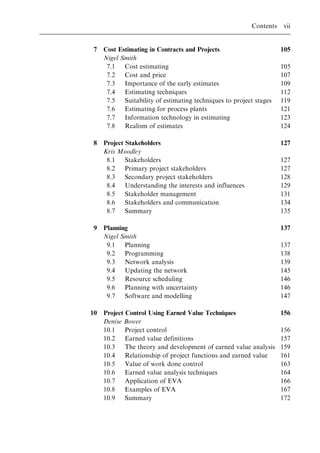
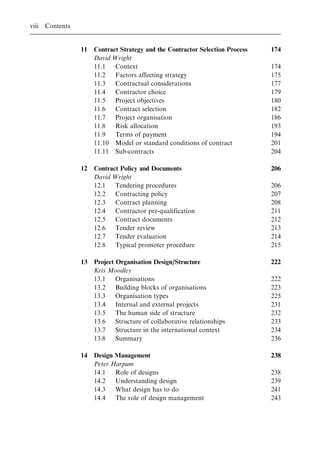
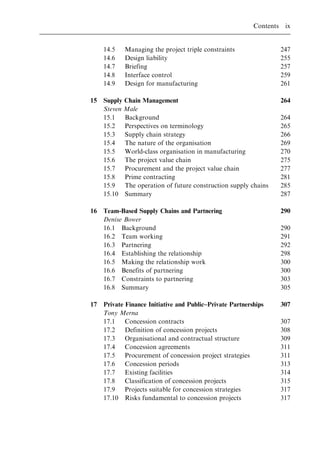
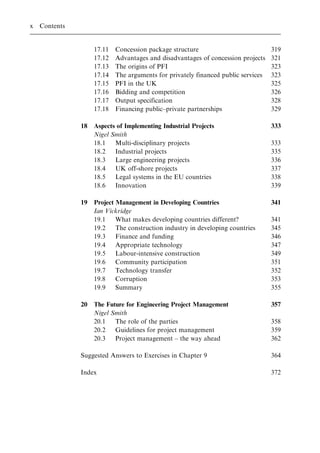
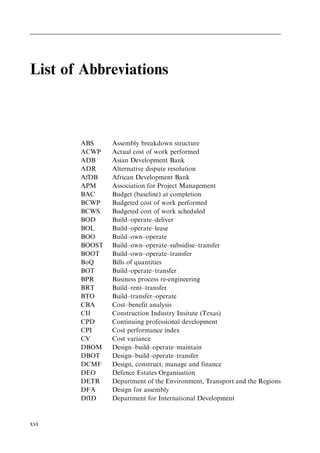
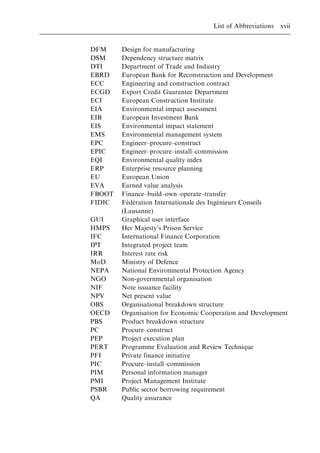
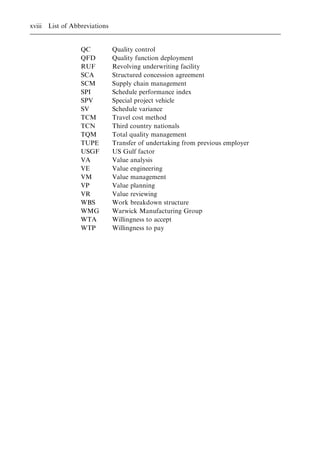
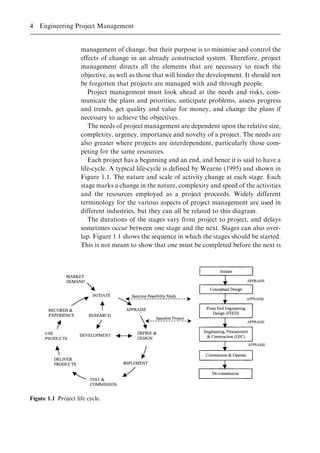
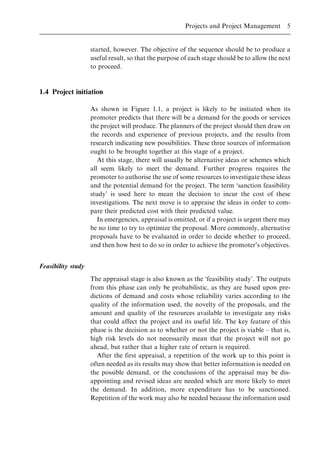
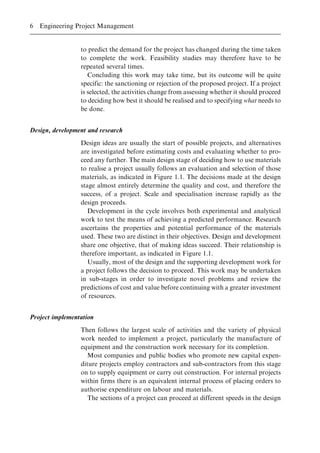
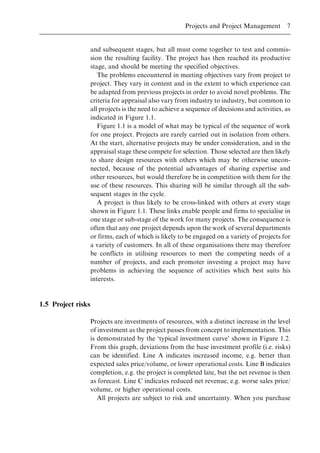
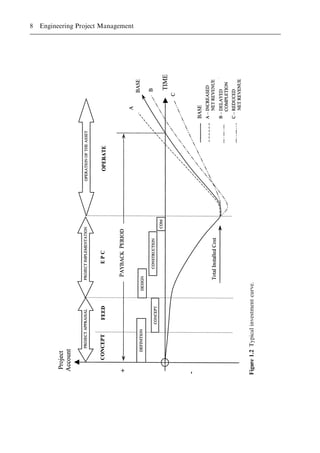
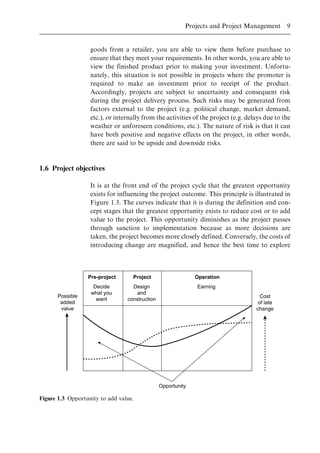
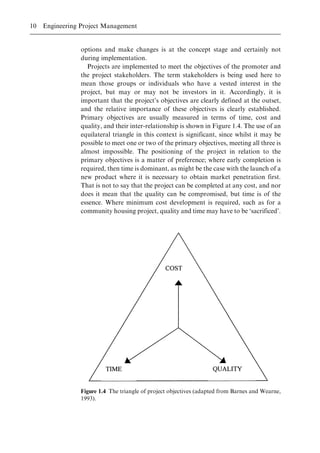
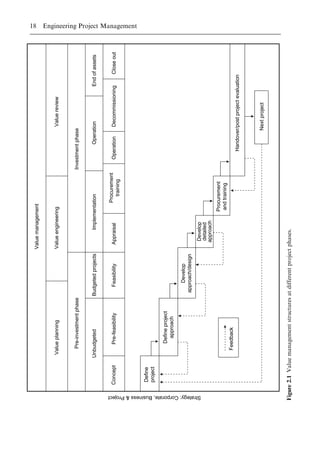
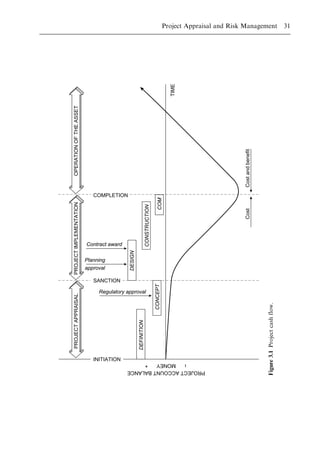
![[145]
until today, and now I send this belated word, with an
apology for my tardiness. The pistol is safe in my
possession, and I will hold it pending your advices. Shall
I send it to you,—and how? Or shall I turn it over to the
Boston police? My knowledge of the whole matter
begins and ends with the finding of the pistol, which
after all, may have nothing to do with the crime. But I
found it at three o’clock, or a very few minutes after, if
that interests you. I shall be here, at The Touraine, for
another week, and will cheerfully allow myself to be
interviewed at your convenience, but, as I said, I have
no further information to give than that I have here set
forth.
Very truly yours,
Nicholas Lusk.
The letter was dated from Boston, on Saturday evening,
two days before. Truly, Friend Lusk had delayed his
statement, but as he said, that was human nature, in
matters not important to oneself.
The Chief was furiously angry at the lateness of the
information, and had already dispatched a messenger to
get the weapon and to interview the Boston man.
“It’s all straight on the face of it,” declared Chief Martin;
“only an honest, cheerful booby would write like that!
He picks up a pistol, forgets all about it, and then, when
he learns it’s evidence,—or may be,—he calmly waits
forty-eight hours before he pipes up!”
“Is it the pistol?” I asked, quietly.
“How do I know?” blustered Martin. “Likely it is. I don’t
suppose half a dozen people sowed pistols around that](https://image.slidesharecdn.com/1068779-250601165124-1f1ba4c4/85/Engineering-Project-Management-2nd-Edition-Nigel-J-Smith-56-320.jpg)
![[146]
building at just three o’clock last Wednesday afternoon!”
“How do you fit it in?”
“Well, this way,—if you want to know. Miss—well, that
is,—whoever did do the shooting, ran out of the third
room, just as Jenny described, and ran downstairs,—it
doesn’t matter whether all the way down or not, but at
least to the tenth—two floors below, and there dropped
the pistol, either by accident or by design, and
proceeded to descend, as I said, either by the stairs or
by taking an elevator at some intervening floor. Now, we
want that pistol. To be sure, it may not incriminate
anybody,—and yet, there’s lots of individuality in
firearms!”
“In detective stories the owner’s initials are on all well-
conducted pistols,” I remarked, casually.
“Not in real life, though. There’s a number on them, of
course, but that seldom helps. And yet, I’ve got a hunch
that that pistol will tell its own story, and my fingers itch
to get a hold of it!”
“When do you expect it?”
“I’ve sent young Scanlon after it. He’s a live wire, and
he’ll get back soon’s anybody could. See here, this is the
way I dope it out. If a woman did the shooting, she’d be
more’n likely to throw away a pistol,—or to drop it
unintentional like, in her nervousness, but a man—nixy!”
I had foreseen this. And the statement was, in a way,
true. A man, having committed murder, does not drop
his pistol,—unless, and I divulged this thought to
Martin, unless he wants to throw suspicion on someone
else.](https://image.slidesharecdn.com/1068779-250601165124-1f1ba4c4/85/Engineering-Project-Management-2nd-Edition-Nigel-J-Smith-57-320.jpg)
![[147]
“Nothin’ doin’,” was his curt response. “Nobody on that
floor possible to suspect, ’ceptin’ it’s Rodman,—and
small chance of him.”
“Rodman!” I cried; “why, he got on the elevator at the
seventh floor, just after the shooting.”
“He did!” the Chief straightened up; “how do you
know?”
“Saw him. I was going down,—in Minny’s elevator, you
know,—to look for Jenny——”
“When was this?”
“About ten minutes after the shooting—and of course I
got on at the twelfth floor, and there were no other
passengers at first, so I talked to Minny. But at the
seventh Rodman got on, and so we stopped talking.”
“His office is on the tenth,” mused Martin; “s’posin’—just
s’posin’ he’d—er—he was implicated, and that he ran
downstairs afterward, to his own floor, you know,—and
then, later, walked to seven, and took a car there——”
“Purposely leaving his pistol on his own floor!”
“Shucks, no! Dropped it accidentally.”
“But you said male criminals don’t do that!”
“Oh, pshaw! I say lots of things,—and you would, too, if
you were as bothered as I am!”
“That’s so, Chief,” I agreed, “and there is certainly
something to be looked into,—I should say, without
waiting for a report from Boston.”](https://image.slidesharecdn.com/1068779-250601165124-1f1ba4c4/85/Engineering-Project-Management-2nd-Edition-Nigel-J-Smith-58-320.jpg)
![[148]
“You bet there is! I’m going to send Hudson right up
there. He’s as good a sleuth as we’ve got, and he’ll deal
with the Rodman matter in a right and proper way. If
there’s nothing to find out, Rodman will never know he
looked.”
Hudson was duly dispatched, and I returned to the
Puritan Building. It was queer, but Rodman had been in
the back of my head all along,—and yet, I had no real
reason to think him implicated. I did not know whether
he knew Mr. Gately or not, but I, too, had confidence in
Foxy Jim Hudson’s discretion, and I was pretty positive
he’d find out something,—if there were anything worth
finding out.
And there was!
Rodman, by good luck, was out and his offices locked.
Hudson gently persuaded the locks to let go their grip,
and, for he let me go with him, we went in.
The first thing that hit me in the eyes, was a big war
map on the wall. Moreover, though not a duplicate of
Mr. Gately’s map, it was similar, and it hung in a similar
position. That is, as Rodman’s offices were directly
under those of the bank president, two floors below, the
rooms matched, and in the “third room” as we called it
in Mr. Gately’s case, Rodman also had his map hung.
There was but one conclusion, and Hudson and I sprang
to it at once.
Together, we pulled aside the map, and sure enough,
there was a door exactly like the door in Mr. Gately’s
room, a small, flush door, usually hidden by the map.](https://image.slidesharecdn.com/1068779-250601165124-1f1ba4c4/85/Engineering-Project-Management-2nd-Edition-Nigel-J-Smith-59-320.jpg)
![[149]
“To the secret elevator, of course,” I whispered to
Hudson, for walls have ears, and these walls were in
many ways peculiar.
“By golly, it is!” he returned; “let’s open her up!”
He forced the door open, and assured himself that it did
indeed lead into the private elevator shaft, and there
were the necessary buttons to cause it to stop, if
properly used. But now, the car being down on the
ground floor, where it had stayed ever since the day of
the murder, of course, the buttons could not be
manipulated.
“Now,” said Hudson, his brow furrowed, “to see where
else this bloomin’ rogue trap lets ’em off! There’s
somethin’ mighty queer goin’ on that we ain’t caught on
to yet!”
He carefully closed the door, readjusted the map, and
making sure we had left no traces of our visit, he
motioned me out and we went away.
He asked me to return to my office, and promised to
see me there later.
When he returned, he told me that he had visited every
other office in the building through whose rooms the
elevator shaft descended and in no other instance was
there an opening into the shaft.
“Which proves,” he summed up, “that Mr. Gately and Mr.
Rodman was somehow in cahoots, else why would
Rodman have access to that secret elevator? Answer me
that!”](https://image.slidesharecdn.com/1068779-250601165124-1f1ba4c4/85/Engineering-Project-Management-2nd-Edition-Nigel-J-Smith-60-320.jpg)
![[150]
[151]
There were several possible answers. Rodman might
have taken his offices after the elevator was built, and
might never have used it at all. His map might have
hung over it merely to cover the useless door.
Or, Rodman might have been a personal friend of Mr.
Gately’s and used the little car for informal visits.
Again,—though I hated myself for the thought,—Mr.
Gately might have had guests whom he didn’t wish to
be seen entering his rooms, and he might have had an
arrangement with Rodman whereby the visitors could
go in and out through his rooms, and take the private
elevator between the tenth and twelfth floors.
I distrusted Rodman; without any definite reason, but
all the same I did distrust him, and I have frequently
found my intuitions regarding strangers hit pretty nearly
right.
It was unnecessary, however, to answer Foxy Jim’s
question, for he answered it himself.
“There’s something about Mr. Gately,” he said, and he
spoke seriously, almost solemnly, “that hasn’t come to
light yet, but it’s bound to. Yes, sir, it’s bound to! And it’s
on the way. Now, if we can hook up that Boston pistol
with Mr. George Rodman, well and good; if we can’t,
Rodman’s got to be put through the grill anyhow. He’s in
it for keeps—that elevator door isn’t easily explained
away.”
“Does Mr. Rodman,” it was Norah who spoke, and as
before, Hudson turned to her almost expectantly—he
seemed to depend on her for suggestions, or at least,
he always listened to them—“I wonder, Mr. Brice,” she](https://image.slidesharecdn.com/1068779-250601165124-1f1ba4c4/85/Engineering-Project-Management-2nd-Edition-Nigel-J-Smith-61-320.jpg)
![[152]
went on slowly, “does Mr. Rodman look at all like the
figure you saw in the shadow?”
I thought back.
“Yes,” I said, decidedly, “he does! Now, hold on,
Hudson, it’s only a memory, you know, and I may easily
be mistaken. But it seems to me I can remember a real
resemblance between that shadowed head and the
head of George Rodman.”
“It’s worth an experiment,” returned the foxy detective,
and on the strength of his decision he waited in my
office until George Rodman returned to his.
I didn’t know, at the time, what argument Hudson used
to get Rodman to do it, but his foxiness prevailed and,
obeying orders, I found myself watching the shadow of
George Rodman’s head on Amos Gately’s glass door, as
Hudson engaged his suspect in animated conversation.
Of course, the scene of the crime was not re-enacted,
there was merely the shadowed picture of the two men,
but Hudson managed to have Rodman conspicuously
shadowed in various positions and postures.
And after it was over, and Hudson, back in my office,
asked me for my verdict, I was obliged to say:
“Mr. Hudson, if that is not the man I saw quarreling with
Mr. Gately, it is his exact counterpart! Were it a less
grave occasion, I should not hesitate to swear that it is
the same man.”
“That’s enough, Mr. Brice,” and Foxy Jim Hudson went
back to Headquarters with his report.](https://image.slidesharecdn.com/1068779-250601165124-1f1ba4c4/85/Engineering-Project-Management-2nd-Edition-Nigel-J-Smith-62-320.jpg)
![[153]](https://image.slidesharecdn.com/1068779-250601165124-1f1ba4c4/85/Engineering-Project-Management-2nd-Edition-Nigel-J-Smith-63-320.jpg)
![[154]
“And, anyway, I suppose the police think now that Mr.
Rodman did it.”
“They don’t go so far as to say that, but they’re hunting
up evidence, and they’ve got hold of some pretty
damaging information. It seems Rodman was mixed up
in some wrongdoing, and it begins to look as if Mr.
Gately was in some way connected with it,—at least, to
a degree.”
“If he was, then he didn’t know it was wrong.” Olive
spoke with deep conviction, and I didn’t try to disabuse
her mind.
And then Pennington Wise was announced.
As he entered the room his manner showed no trace of
self-consciousness, and as I had anticipated, Olive was
greatly pleased with her first glimpse of him. But to her
surprise, and mine also, he was accompanied, or rather
followed, by a young woman, a mere slip of a girl, who
paused and stood quietly by.
As Olive smiled at her inquiringly, Wise said:
“That’s Zizi. She’s part of my working paraphernalia, and
will just sit and listen while we talk.”
The girl was fascinating to look at. Slight of build, she
had a lithe suppleness that made her every motion a
gesture of grace, and her pretty smile was appreciative
and responsive. She had black hair and very black eyes,
which sparkled and danced as she took in her
surroundings. But she said no word, acknowledging her
brief introduction only by a slight bow, and accepting
the chair that Olive offered, she sat quietly, her small
gloved hands resting in her lap.](https://image.slidesharecdn.com/1068779-250601165124-1f1ba4c4/85/Engineering-Project-Management-2nd-Edition-Nigel-J-Smith-65-320.jpg)
![[155]
[156]
She wore a black suit with a fine set of black fox furs.
Unfastening the fur collar, she disclosed a black blouse
of soft, thin material which fell away from her slender
white throat in becoming fashion.
Her manner was correct in every particular, and she sat
in an unembarrassed silence as Wise proceeded to talk.
“I know all that has been in the papers,” he said,
somewhat abruptly, “now, I’d like you to tell me the
rest. I can’t help feeling there must be more in the way
of evidence or clews than has been made public. First of
all, do you think Mr. Rodman the guilty man?”
He addressed himself mainly to Olive, though including
me in his inquiring glance.
“I’m sure I don’t know,” Olive returned; “I won’t believe,
however, that Amos Gately was involved in any sort of
wrong. His honor and integrity were of the highest type,
—I knew him intimately enough to certify to that.”
“What sort of wrongdoing is this Rodman accused of?”
asked Wise.
“Nobody seems willing to tell that,” I answered, as Olive
shook her head. “I’ve inquired of the police, and they
decline to reveal just what they do suspect him of. But I
think it’s something pretty serious, and they’re tracking
it down as fast as they can.”
“You see,” Olive put in, “if Mr. Rodman is such a bad
man, he may have hoodwinked Mr. Gately and made
him believe something was all right when it was all
wrong.”](https://image.slidesharecdn.com/1068779-250601165124-1f1ba4c4/85/Engineering-Project-Management-2nd-Edition-Nigel-J-Smith-66-320.jpg)
![[157]
“Of course he might,” said Wise, sympathetically. “Did
people come here to the house to see Mr. Gately on
business?”
“No; never. Uncle had few visitors, but they were always
just his friends, not business callers.”
“Then most of our search must be in his offices. You
noticed nothing there, Mr. Brice, that seemed
indicative?”
Then I told him about the hatpin and the carriage
check; and I also related how Norah had found and kept
the “powder-paper” that she picked out of the waste
basket.
Zizi’s eyes flashed at this, and she said, “Has she traced
it?”
It was the first time the girl had spoken, and I was
charmed with her voice. Low and soft, it had also a bell-
like quality, and seemed to leave a ringing echo in the
air after she ceased speaking.
“Yes; to the shop where it was bought,” I replied. “As
Norah guessed, it came from a very high-class
perfumer’s on Fifth Avenue. But of course he could not
tell us to whom he had sold that particular paper.”
“I’d like to see it,” said Zizi, simply, and again relapsed
into silence.
“Norah must be a bright girl,” observed Wise, “and she
has made a good start by finding the shop. Perhaps we
can carry the trail further. It wasn’t yours, Miss Raynor?”](https://image.slidesharecdn.com/1068779-250601165124-1f1ba4c4/85/Engineering-Project-Management-2nd-Edition-Nigel-J-Smith-67-320.jpg)
![[158]
“No; I use a paler tint. This one, I have seen it, is quite
a deep pink.”
“Indicating a brunette possibly. Now, it’s not likely it
belonged to that old Mrs. Driggs, so we must assume
another woman in the office that day. And we must
discover who she is.”
“There is the hatpin, you know,” said Olive. “I have it
here, if you care to see it. But the police decided it
meant nothing.”
“Nothing means nothing,” said Zizi, with a funny little
smile. “Please let us see the hatpin.”
Olive took it from a desk drawer and handed it to the
girl, who immediately passed it over to Penny Wise.
He looked at it with interest, for a silent minute.
“There couldn’t be a better portrait parlé!” he
exclaimed. “This pin belongs to a lady with dark,
straight hair,—coarse, and lots of it. She has good teeth,
and she is proud of them. Her tastes incline to the
flashy, and she is fond of strong perfumes. She is of
somewhat untidy habits and given to sentiment. She is
intellectual and efficient and, if not wealthy, she has at
least a competence.”
“For gracious goodness sake!” gasped Olive; “and I’ve
studied that hatpin for hours and never could deduce a
thing!”
“What I have read from it may be of no use to us,” said
Wise, indifferently; “I think it will be a sufficient
indication of which way to look to find the lady in](https://image.slidesharecdn.com/1068779-250601165124-1f1ba4c4/85/Engineering-Project-Management-2nd-Edition-Nigel-J-Smith-68-320.jpg)
![[159]
question, but that doesn’t necessarily mean the finding
of her will do any good.”
“But she may know something to tell us that will do
good,” Olive suggested; “at any rate, let’s find her. How
will you go about it?”
“Why, I think it will be a good plan to ask the
stenographer, Jenny Boyd, if she ever saw anyone there
who fits our description.”
“She’s the lady of the powder-paper, maybe,” murmured
Zizi, and Penny Wise said, “Of course,” in a preoccupied
way, and went on:
“That Jenny person must be further grilled. She hasn’t
told all she knows. She was in Mr. Gately’s employ but a
short time and yet she picked up a lot of information.
But she hasn’t divulged it all, not by a long shot!”
“How do you know all this?” asked Olive, wonderingly.
“I’ve read the papers. I have an unbreakable habit of
reading between the lines, and I think Miss Jenny has
been persuaded by somebody to suppress certain
interesting bits of evidence that would fit right into our
picture puzzle.”
“May I come in?” said a gentle voice, and Mrs. Vail
appeared in the doorway.
As we rose to greet her, Olive presented Mr. Wise, and
then Mrs. Vail permitted herself the luxury of a stare of
genuine curiosity.
His whimsical smile charmed her, and she was most
cordial of speech and manner. Indeed, so absorbed was](https://image.slidesharecdn.com/1068779-250601165124-1f1ba4c4/85/Engineering-Project-Management-2nd-Edition-Nigel-J-Smith-69-320.jpg)
![[160]
she in this new acquaintance that she didn’t even see
Zizi, who sat, as always, back and in the shadow.
“Don’t let me interrupt,” said Mrs. Vail, fluttering into a
chair. “Just go on as if I were not here. I’m so
interested, just let me listen! I won’t say a word. Oh,
Olive dear, did you show Mr. Wise the letter?”
“No; it’s unimportant,” replied the girl.
“But I don’t think it is, my dear,” Mrs. Vail persisted.
“You know it might be a—what do they call it?—a clew.
Why, I knew a lady once——”
“A letter is always important,” said Zizi from her corner,
and Mrs. Vail jumped and gave a startled exclamation.
“Who’s that?” she cried, peering through her lorgnon in
the direction of the voice.
“Show yourself, Zizi,” directed Wise. “This is my
assistant, Mrs. Vail. She is in our council but not of it. I
can’t explain her exactly, but you’ll come to understand
her.”
Zizi leaned forward and gave Mrs. Vail a pleasant if
indifferent smile, then sank back to her usual obscurity.
The girl was, Wise had said, a negligible personality,
and yet whenever she spoke she said something!
Mrs. Vail looked bewildered, but apparently she was
prepared to accept anything, however strange, in
connection with detective work.
“Well,” she observed, “as that pretty little thing says, a
letter is always important, and I think you ought to](https://image.slidesharecdn.com/1068779-250601165124-1f1ba4c4/85/Engineering-Project-Management-2nd-Edition-Nigel-J-Smith-70-320.jpg)
![[161]
show it, Olive. I had a letter once that changed the
whole current of my life!”
“What is this letter, Miss Raynor?” asked Wise, in a
matter-of-fact way.
“One I received in this morning’s mail,” Olive replied; “I
paid no attention to it, because it was anonymous.
Uncle Amos told me once never to notice an anonymous
letter,—always to burn and forget it.”
“Good enough advice, in general,” said Wise; “but in
such serious matters as we have before us any letter is
of interest.”
“Is the letter written by a woman, and signed ‘A
Friend’?” asked Zizi in her soft voice.
“Did you write it?” cried Olive, turning to the wraith-like
girl who sat so quietly behind her.
“Oh, no, no, no! I didn’t write it,” and the demure little
face showed a fleeting smile.
“Then how did you know? For it is signed ‘A Friend,’ but
I don’t know whether it was a woman who wrote it or
not.”
“It was,” and Zizi nodded her sleek little black head. She
had removed her hat and placed it on a nearby chair,
and as she nestled into her furs which formed a dark
background, her small white face looked more eerie
than ever. “Ninety per cent. of all anonymous letters are
written by women, and ninety per cent. of these are
signed ‘A Friend.’ Though usually that is a
misstatement.”](https://image.slidesharecdn.com/1068779-250601165124-1f1ba4c4/85/Engineering-Project-Management-2nd-Edition-Nigel-J-Smith-71-320.jpg)
![[162]
[163]
“Miss Raynor:
“Quit looking for slayer of A.G. or you’ll be railroaded in
yourself. This is straight goods. Call off all Tecs, or
beware consequences. Will not warn twice!
“A Friend.”
“A woman,” Pennington Wise said in a musing voice,
after he read it.
“A business woman,” added Zizi from her corner.
“A stenographer maybe,” Wise went on, and Olive cried:
“Do you mean Jenny?”
“Oh, no; this is written by a woman with more brains
than Jenny ever dreamed of. A very clever woman in
fact.”
“Who?” breathed Olive, her eager face flushing in her
interest and anxious to know more.
“I don’t know that, Miss Raynor, but——”
“Oh, Mr. Wise,” broke in Mrs. Vail; “you are so
wonderful! Won’t you explain how you do it, as you go
along?”
She spoke as if he were a conjurer.
“Anything to oblige,” Wise assented. “Well, here’s how it
looks to me. The writer of this letter is a business
woman, not only because she uses this large, single
sheet of bond paper, but because she knows how to use
it. She is a stenographer,—by that I do not necessarily](https://image.slidesharecdn.com/1068779-250601165124-1f1ba4c4/85/Engineering-Project-Management-2nd-Edition-Nigel-J-Smith-73-320.jpg)
![[164]
mean that is her business,—she may have a knowledge
of stenography, and be in some much more important
line of work. But she is an accomplished typist and a
rapid one. This, I know, of course, from the neat and
uniform typing. She is clever, because she has used this
non-committal paper, which is in no way especial or
individual. She is a business woman, again, because she
uses such expressions as ‘quit,’ railroaded,’ ‘Tecs,’
‘straight goods,’——”
“Which she might do by way of being misleading——”
murmured Zizi.
“Too many of ’em, and too casually used, Ziz. A society
girl trying to pose as a business woman never would
have rolled those words in so easily. I should have said
a newspaper woman but for a certain peculiarity of style
which indicates,—what, Zizi?”
“You’ve got it; a telegraph operator.”
“Exactly. Do you know any telegrapher, Miss Raynor?”
“No, indeed!” and Olive looked astounded at the
suggestion that she should number such among her
acquaintances. “Are you sure?”
“Looks mighty like it. The short sentences and the
elimination of personal pronouns seem to me to denote
a telegraph girl’s diction. And she is very clever! She has
sent the carbon copy of the letter and not the outside
typing.”
“Why?” I asked.
“To make it less traceable. You know, typewriting is very
nearly as individual as pen-writing. The differentiations](https://image.slidesharecdn.com/1068779-250601165124-1f1ba4c4/85/Engineering-Project-Management-2nd-Edition-Nigel-J-Smith-74-320.jpg)
![[165]
of the machine as well as of the user’s technique, are
almost invariably so pronounced as to make the writing
recognizable. Now these peculiarities, while often clear
on the first paper, are blurred more or less on the
carbon copy. So ‘A Friend,’ thinking to be very canny,
has sent the carbon. This is a new trick, though I’ve
seen it done several times of late. But it isn’t so
misleading as it is thought to be. For all the individual
peculiarities of the typewriter,—I mean, the machine,
are almost as visible on this as on the other. I’ve noticed
them in this case, easily. And moreover, this would-be
clever writer has overreached herself! For a carbon copy
smudges so easily that it is almost impossible to touch
it, even to fold the sheet, without leaving a telltale
thumb or finger print! And this correspondent has most
obligingly done so!”
“Really!” breathed Zizi, with a note of satisfaction in her
low voice.
“And the peculiarities,—what are they?” asked Olive.
“The one that jumps out and hits me first is the
elevated s. Look,—and you have to look closely, Miss
Raynor,—in every instance the letter s is a tiny speck
higher than the other letters.”
“Why, so it is,” and Olive examined the letter with deep
interest; “but how can you find a machine with an
elevated s?”
“It isn’t a sign-board, it’s a proof. When we think we
have the right machine, the s will prove it,—not lead us
to it.”
“Let me see,” begged Mrs. Vail, reaching for the paper.
“A friend of mine is a stenographer; maybe she——”](https://image.slidesharecdn.com/1068779-250601165124-1f1ba4c4/85/Engineering-Project-Management-2nd-Edition-Nigel-J-Smith-75-320.jpg)
![[166]
“Excuse me,” and Penny Wise folded the letter most
carefully. “We can’t get any more finger prints on this
paper, or we shall render it useless. Now, Miss Raynor,
I’m going. I’ll take the letter, and I’ve little doubt it will
be a great help to me in my work. I will report to you
from time to time, but it may be a few days before I
learn anything of importance. Zizi?”
“Yes; I’ll stay here,” and the girl sat quietly in her chair.
“That means she’ll take up her abode with you for the
present, Miss Raynor,” and Wise smiled at Olive.
“Live here?”
“Yes, please. It is necessary, or she wouldn’t do it.”
“Oh, let her stay!” cried Mrs. Vail; “she’s so interesting—
and queer!”
The object of her comment gave her an engaging smile,
but said nothing, and beckoning me to go with him,
Wise rose to take leave.
But I wanted to have a little further talk with Olive on
several matters and I told Wise I’d join him a little later.
“Be goody-girl, Zizi,” he adjured as he went off, and she
nodded her head, but with a saucy grimace at the
detective.
“My room?” she said, inquiringly, with a pretty, shy
glance at Olive. “I’m no trouble,—not a bit. Any little old
room, you know.”
“You shall have it in a few moments,” and Olive went
away to see the housemaids about it.](https://image.slidesharecdn.com/1068779-250601165124-1f1ba4c4/85/Engineering-Project-Management-2nd-Edition-Nigel-J-Smith-76-320.jpg)
![[167]
Mrs. Vail snatched at a chance to talk uninterruptedly to
the strange girl.
“What is your work?” she inquired; “do you help Mr.
Wise? Isn’t he wonderful! How you must admire him. I
knew a detective once,—or, at least, a man who was
going to be a detective, but—— Oh, do tell me what
your part of the work is!”
“I sit by,” returned Zizi, with a dear little grin that took
off all edge of curtness.
“Sit by! Is that some technical term? I don’t quite
understand.”
“I don’t always understand myself,” and the girl shook
her head slowly; “but I just remain silent until Mr. Wise
wants me to speak,—to tell him something, you know.
Then I tell him.”
“But how do you know it?” I put in, fascinated by this
strange child, for she looked little more than a child.
“Ooh!” Zizi shuddered, and drew her small self together,
her black eyes round and uncanny-looking; “ooh! I
donno how I know! I guess the bogie man tells me!”
Mrs. Vail shuddered too, and gave a little shriek.
“You’re a witch,” she cried; “own up, now, aren’t you a
witch?”
“Yes, lady, lady! I am a witch,—a poor little witch girl!”
and Zizi laughed outright at her own little joke.
If her smile had been charming, her laugh was more so.
It was not only of a silvery trill, but it was infectious,](https://image.slidesharecdn.com/1068779-250601165124-1f1ba4c4/85/Engineering-Project-Management-2nd-Edition-Nigel-J-Smith-77-320.jpg)
![[168]
and Mrs. Vail and I laughed in sympathy.
“What are you all laughing at?” said Olive, reappearing.
“At me,” and Zizi spoke humbly now; “I made ’em laugh.
Sorry!”
“Come along with me, you funny child,” and Olive led
her away, leaving me to be the victim of Mrs. Vail’s
incessant stream of chatter.
The good lady volubly discussed the detective and his
assistant and detailed many accounts of people she had
known. Her acquaintance was seemingly a wide one!
At last Olive returned, smiling.
“I never saw anything like her!” she exclaimed; “I gave
her a pretty little room, not far from mine. I don’t know,
I’m sure, why she’s staying here, but I like to have her.
Well, in about two minutes she had the furniture all
changed about. Not the heavy pieces, of course, but
she moved a small table and all the chairs, and finally
unscrewed an electric light bulb from one place and put
it on another, and then, after looking all about, she said,
‘Just one thing more!’ and if she didn’t spring up on to a
table with one jump and take down quite a large
picture! ‘There,’ she said, and she set it out in the hall;
‘I can’t bear that thing! Now this is a lovely room, and I
thank you, Miss Raynor. The pink one we passed is
yours, isn’t it?’
“‘Yes; how did you know?’ I asked her. And she said, ‘I
saw a photograph of Mr. Manning on your bureau.’ Little
rascal! I can’t help liking her!”](https://image.slidesharecdn.com/1068779-250601165124-1f1ba4c4/85/Engineering-Project-Management-2nd-Edition-Nigel-J-Smith-78-320.jpg)
![[169]
CHAPTER XI
Case Rivers
So absorbed was I in the new interests that had come
into my life, so anxious to be of assistance to Olive
Raynor, and so curious to watch the procedure of
Pennington Wise, that I confess I forgot all about the
poor chap I had seen at Bellevue Hospital,—the man
who “fell through the earth”! And I’m not sure I should
ever have thought of him again, save as a fleeting
memory, if I hadn’t received a letter from him.
My dear Brice [he wrote]: I’ve no right to pilfer
your time, but if you have a few minutes to
squander, I wish you’d give them to me. I’m about
to be discharged from the hospital, with a clean bill
of health,—but with no hint or clew as to my
cherished identity. The doctors—drat ’em!—say that
some day my memory will spring, full-armed, back
at me, but meanwhile, I must just sit tight and
wait. Not being of a patient disposition, I’m going
to get busy at acquiring a new identity, then, if the
old one ever does spring a come-back, I’ll have
two,—and can lead a double life! No, I’m not
flippant, I’m philosophical. Well, if your offer didn’t
have a string tied to it come in to see me,—please.](https://image.slidesharecdn.com/1068779-250601165124-1f1ba4c4/85/Engineering-Project-Management-2nd-Edition-Nigel-J-Smith-79-320.jpg)
![[170]
[171]
Sincerely yours,
Case Rivers.
P.S.—The doctors look upon me as a very important
and interesting case,—hence my name.
I smiled at the note, and as I had taken a liking to the
man from the start, I went at once to see him.
“No,” I assured him, after receiving his cordial welcome,
“my offer had no string attached. I’m more than ready
to help in any way I can, to find a niche for you in this
old town and fit you into it. It doesn’t matter where you
hail from, or how you got here; New York is an all-
comers’ race, and the devil take the hindmost.”
“He won’t get me, then,” and Rivers nodded his head
determinedly; “I may not be in the van, just at first, but
give me half a chance, and I’ll make good!”
This was not bumptiousness or braggadocio, I could
see, but an earnest determination. The man was sincere
and he had a certain doggedness of purpose, which was
evident in his looks and manner as well as in his words.
Rivers was up and dressed now, and I saw he was a
good-looking chap. His light-brown hair was carefully
parted and brushed; his smooth-shaven face was thin
and pale, but showed strong lines of character. He had
been fitted with glasses,—a pince-nez, held by a tiny
gold chain over one ear,—and this corrected the vacant
look in his eyes. His clothes were inexpensive and quite
unmistakably ready-made.
He was apologetic. “I’d rather have better duds,” he
said, “but as I had to borrow money to clothe myself at](https://image.slidesharecdn.com/1068779-250601165124-1f1ba4c4/85/Engineering-Project-Management-2nd-Edition-Nigel-J-Smith-80-320.jpg)