Best Value inConstruction 1st Edition John
Kelly pdf download
https://ebookgate.com/product/best-value-in-construction-1st-
edition-john-kelly/
Get Instant Ebook Downloads – Browse at https://ebookgate.com
2.
Get Your DigitalFiles Instantly: PDF, ePub, MOBI and More
Quick Digital Downloads: PDF, ePub, MOBI and Other Formats
How a Second Home Can Be Your Best Investment 1st
Edition Tom Kelly
https://ebookgate.com/product/how-a-second-home-can-be-your-best-
investment-1st-edition-tom-kelly/
Anthropology and Global Counterinsurgency 1st Edition
John D. Kelly
https://ebookgate.com/product/anthropology-and-global-
counterinsurgency-1st-edition-john-d-kelly/
Construction Adjudication 2nd Edition John Riches
https://ebookgate.com/product/construction-adjudication-2nd-
edition-john-riches/
Total Quality in the Construction Supply Chain 1st
Edition John S Oakland
https://ebookgate.com/product/total-quality-in-the-construction-
supply-chain-1st-edition-john-s-oakland/
3.
Corporate Boards thatCreate Value 1st Edition John
Carver
https://ebookgate.com/product/corporate-boards-that-create-
value-1st-edition-john-carver/
International Contracting Contract Management in
Complex Construction Projects 1st Edition John Van Der
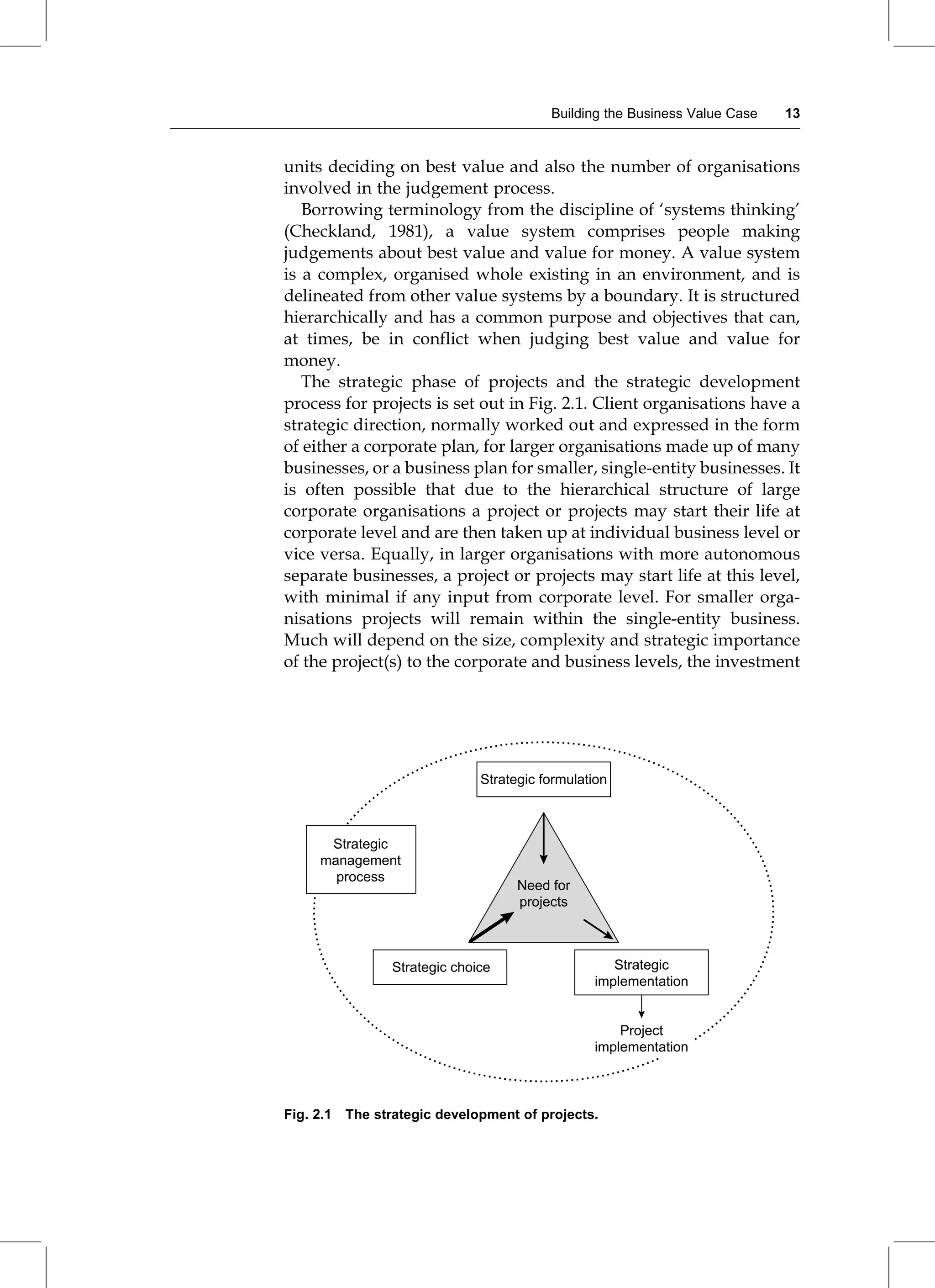
Puil
https://ebookgate.com/product/international-contracting-contract-
management-in-complex-construction-projects-1st-edition-john-van-
der-puil/
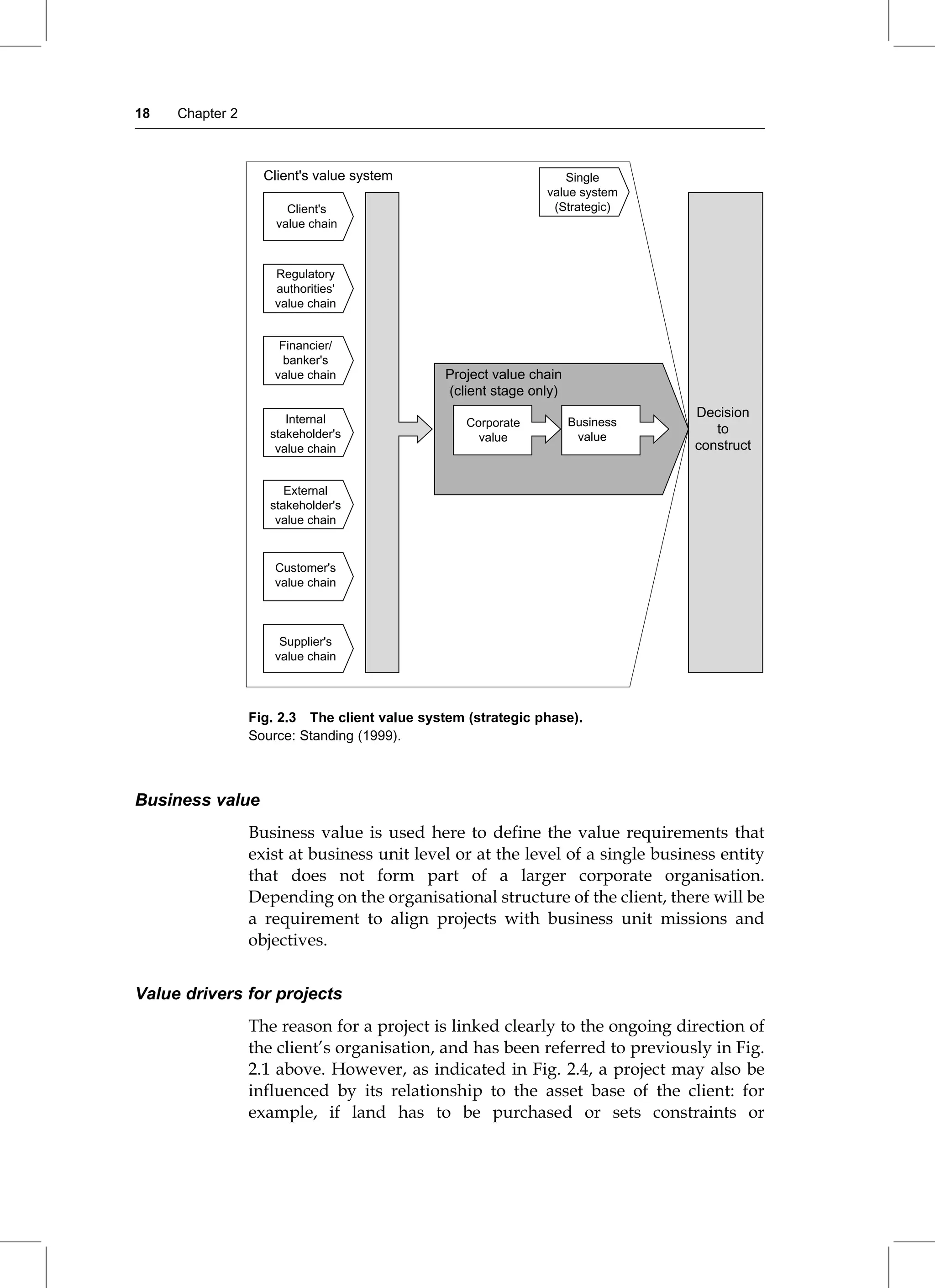
Construction contract law the essentials 2nd Edition
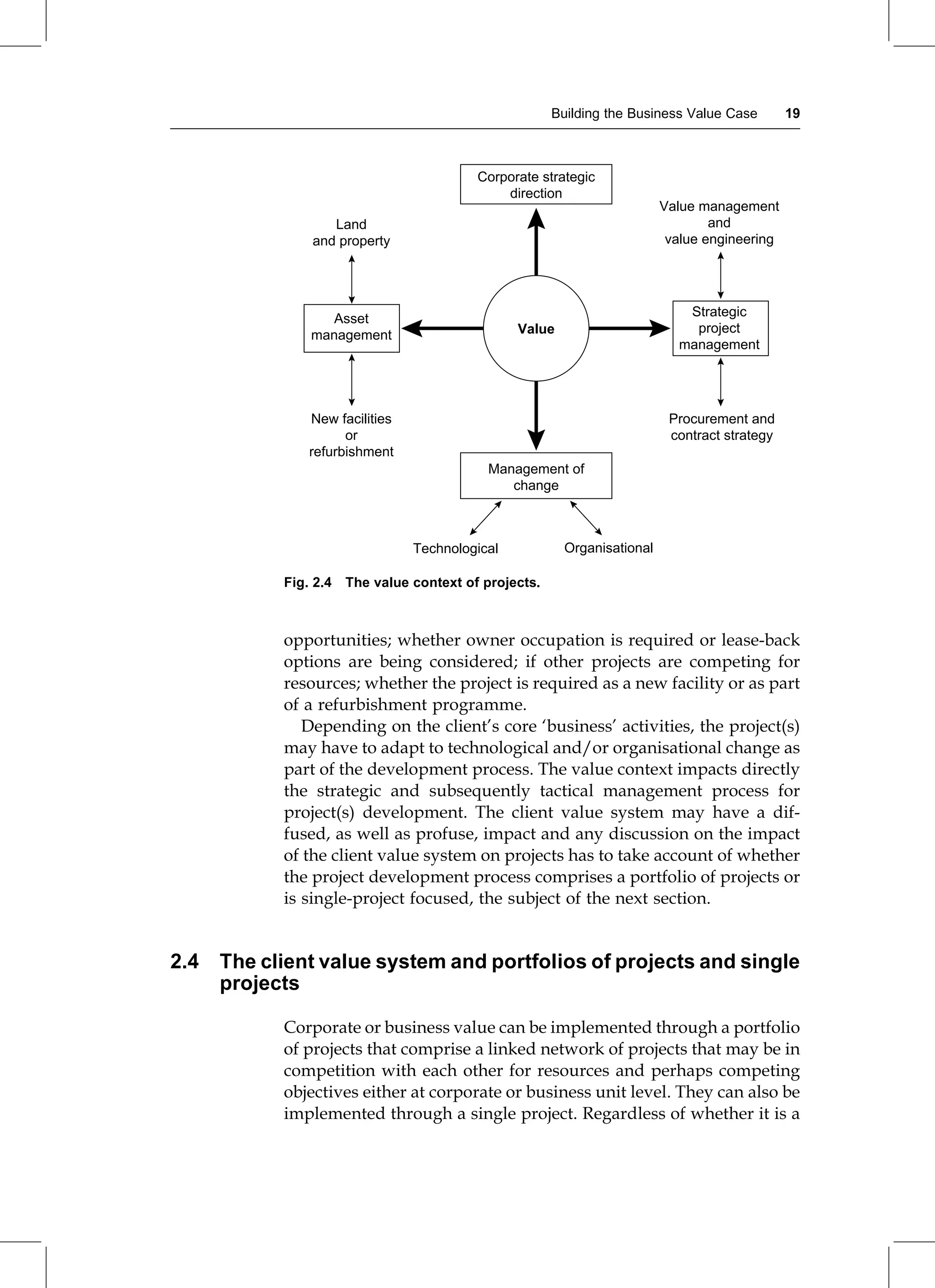
John Adriaanse
https://ebookgate.com/product/construction-contract-law-the-
essentials-2nd-edition-john-adriaanse/
Construction Contracts Law and Management 4th Edition
John Murdoch
https://ebookgate.com/product/construction-contracts-law-and-
management-4th-edition-john-murdoch/
Niche Construction The Neglected Process in Evolution
MPB 37 F. John Odling-Smee
https://ebookgate.com/product/niche-construction-the-neglected-
process-in-evolution-mpb-37-f-john-odling-smee/
# RICS Foundation2002
Blackwell Science Ltd, a Blackwell Publishing
Company
Editorial Offices:
Osney Mead, Oxford OX2 0EL, UK
Tel: +44 (0) 1865 206206
Blackwell Science, Inc., 350 Main Street,
Malden, MA 02148-5018, USA
Tel: +1 781 388 8250
Iowa State Press, a Blackwell Publishing
Company, 2121 State Avenue, Ames, Iowa
50014-8300, USA
Tel: +1 515 292 0140
Blackwell Science Asia Pty, 54 University Street,
Carlton, Victoria 3053, Australia
Tel: +61 (0)3 9347 0300
Blackwell Wissenschafts Verlag,
Kurfu
Èrstendamm 57, 10707 Berlin, Germany
Tel: +49 (0)30 32 79 060
The right of the Author to be identified as the
Author of this Work has been asserted in
accordance with the Copyright, Designs and
Patents Act 1988.
All rights reserved. No part of this publication
may be reproduced, stored in a retrieval system, or
transmitted, in any form or by any means,
electronic, mechanical, photocopying, recording
or otherwise, except as permitted by the UK
Copyright, Designs and Patents Act 1988, without
the prior permission of the publisher.
First published 2002 by Blackwell Science Ltd
Library of Congress
Cataloging-in-Publication Data
is available
ISBN 0-632-05611-8
A catalogue record for this title is available from
the British Library
Set in 10/12.5pt Palatino
by DP Photosetting, Aylesbury, Bucks
Printed and bound in Great Britain by
MPG Books Ltd, Bodmin, Cornwall
For further information on
Blackwell Science, visit our website:
www.blackwell-science.com
6.
Contents
Foreword ix
Preface x
Biographiesxi
1 Best value in construction 1
John Kelly, Roy Morledge and Sara Wilkinson
1.1 Introduction 1
1.2 Building the value case 4
1.3 Briefing 5
1.4 Benchmarking 5
1.5 Value management 5
1.6 Risk management 6
1.7 Building project price forecasting 6
1.8 Life-cycle/whole-life costing 7
1.9 Environmental management 7
1.10 Procurement strategies 7
1.11 Supply chain management: a construction
industry perspective 8
1.12 The management of a project 9
1.13 Facilities management: assessing the strategic value 9
1.14 Post-occupancy evaluation 10
1.15 Sustainable building maintenance: challenges for
property managers 11
References 11
2 Building the business value case 12
Steven Male
2.1 Introduction 12
2.2 Client requirements and the client value system 14
2.3 Client value system 15
2.4 The client value system and portfolios of projects
and single projects 19
2.5 The project value chain 20
7.
2.6 Portfolios ofproject: the value thread and the
impact of lean construction thinking 23
2.7 Single projects ± the impact of paradigms and
perspectives on the value thread and multi-value
system 25
2.8 Procurement and the project value chain 28
2.9 Creating value opportunities: value management
(VM) and value engineering (VE) 34
2.10 Conclusions 36
References 37
3 Construction project briefing/architectural programming 38
John Kelly and Donna Duerk
3.1 Introduction 38
3.2 Definition of briefing 38
3.3 Current briefing practice 39
3.4 Hazards associated with poor decision-making 39
3.5 Characteristic hazards in briefing 40
3.6 Improvements to the briefing process 42
3.7 The parties involved in the briefing process 42
3.8 The project goals 43
3.9 The client's value system ± a parti 45
3.10 Briefing issues 45
3.11 To investigate or facilitate? 47
3.12 A structured approach to strategic briefing 47
3.13 The client's value system 51
3.14 The definition of project mission or goals 51
3.15 The decision to build 52
3.16 An example of strategic project briefing 52
3.17 A structure approach to project briefing:
description and example 54
3.18 Flowcharting and space identification 55
3.19 Adjacency 56
3.20 Performance specification of space 57
3.21 Characteristic of the final document 58
References 58
4 Benchmarking 59
David Eaton
4.1 Introduction 59
4.2 Benchmarking ± helping yourself to be better 59
4.3 The origins 61
4.4 Benchmarking: a definition 62
4.5 Prerequisites of benchmarking 63
4.6 Benchmarking processes 63
iv Contents
8.
4.7 Appropriate benchmarkingtechniques 65
4.8 Benchmarking methodology 66
4.9 The uses of benchmarking: performance
measurement 67
4.10 Responses to the benchmarking process 71
4.11 Benefits of benchmarking 71
4.12 Implications of benchmarking 72
4.13 Benchmarking case study 72
4.14 Other current research initiatives 75
4.15 Conclusions 75
References 76
5 Value management 77
John Kelly and Steven Male
5.1 Introduction 77
5.2 The development of value management 77
5.3 An outline of value management 79
5.4 The lever of quality 81
5.5 The international benchmarking of
value management 81
5.6 The VM process in detail 83
5.7 Workshop types 87
5.8 Example 94
5.9 Conclusion 98
References 99
6 Risk management 100
Nigel Smith
6.1 Introduction 100
6.2 Risk management over the project life cycle 101
6.3 Design and construction 107
6.4 Operation and maintenance 109
6.5 The case study 109
6.6 Risk management guidance 114
6.7 Conclusion 115
7 Building project price forecasting 116
Chris Fortune and David Weight
7.1 Introduction 116
7.2 The process of building project price forecasting 117
7.3 Identification of potential models in use 120
7.4 Emergent issues 121
7.5 Case study ± Live Options software 123
7.6 The way forward 127
References 128
Contents v
9.
8 Life-cycle/whole-life costing129
Christine Pasquire and Lisa Swaffield
8.1 Introduction 129
8.2 Key concepts 131
8.3 Techniques available for LCC/WLC 132
8.4 Barriers to successful implementation of
LCC/WLC techniques 136
8.5 LCC/WLC for PFI projects 139
8.6 Research and the future 147
8.7 Value for money 149
References 151
9 Environmental management 152
Jon Robinson
9.1 Introduction 152
9.2 Issues 154
9.3 Resources, waste and recycling 156
9.4 Pollution and hazardous materials and substances 158
9.5 Internal environment of buildings 159
9.6 Planning, land use and conservation,
including heritage 162
9.7 Case study 164
9.8 Conclusion 169
9.9 Acknowledgements 170
References 170
10 Procurement strategies 172
Roy Morledge
10.1 Introduction 172
10.2 Procurement strategy 172
10.3 Client risk in construction projects 175
10.4 Selecting a procurement strategy 177
10.5 Procurement strategy selection checklists 181
10.6 Procurement options 185
10.7 Constructing improvement in procurement strategy 194
10.8 Case studies 198
10.9 Conclusion 200
References 200
11 Supply chain management 201
Norman Fisher and Roy Morledge
11.1 An introduction 201
11.2 Some general definitions 202
11.3 Background and overview 203
11.4 Supply chain management and construction 204
vi Contents
10.
11.5 Construction ±supply chain management
and partnering 209
11.6 Established procurement systems and supply
chain management 213
11.7 A case study ± supply chain management and the
construction process 215
11.8 Conclusion 218
References 219
12 The management of a project 222
Margaret Greenwood
12.1 Introduction 222
12.2 The project plan and the implementation policy 223
12.3 Setting up the project and mobilising resources 224
12.4 Managing the project ± an overview 227
12.5 Specific aspects of managing the project 228
12.6 Quality control overview 234
12.7 Change control overview 235
12.8 Commissioning 237
12.9 Occupation and take-over 237
12.10 Conclusion 238
References 238
13 Facilities management 240
John Hinks
13.1 Introduction 240
13.2 Contemporary approaches to assessing
FM performance 241
13.3 Issues in contemporary FM performance
assessment 242
13.4 Assessing the integrative nature of
FM performance 245
13.5 Defining FM and the nature of its contribution 248
13.6 Issues for benchmarking FM performance 250
13.7 The complexity of measuring the usefulness of FM 250
13.8 Moving from measuring FM outputs to evaluating
business outcomes 252
13.9 The challenge of attuning FM evaluation to
changing business circumstances 256
13.10 Conclusion 258
References 259
14 Post-occupancy evaluation (POE) 261
Danny Shiem-Shin Then
14.1 Introduction 261
Contents vii
11.
14.2 The buildingprocurement process and POE 262
14.3 Developments in POE techniques and research 264
14.4 POE and building performance 265
14.5 Developments in POE methodology 269
14.6 POE process models 272
14.7 Applications of POE 275
14.8 Conclusions 277
References 278
15 Sustainable building maintenance 280
Keith Jones
15.1 Introduction 280
15.2 The theoretical basis for maintenance
and refurbishment 280
15.3 Maintenance and refurbishment strategy 283
15.4 The role of maintenance and refurbishment
within an organisation 285
15.5 Performance measures for buildings in use 286
15.6 Approaches to maintenance and
refurbishment works 288
15.7 Procuring maintenance and refurbishment works 289
15.8 Maintenance and refurbishment costs 292
15.9 Monitoring and performance evaluation 293
15.10 Maintenance planning 293
15.11 The challenges facing maintenance and
refurbishment professionals 295
15.12 A sustainable built environment 296
15.13 Sustainability and foresight 297
15.14 Housing and construction need 297
15.15 Whole-life thinking 298
15.16 New technologies and improved processes 299
15.17 Conclusion 299
References 300
Further reading 301
Web addresses 302
Index 303
viii Contents
12.
Foreword
It is alwaysencouraging when a profession is looking for continuous
improvement and sustains this attitude over a number of years.
Identifying new directions is part of this process. This book follows
on from the very successful previous volume (Quantity Surveying
Techniques: New Directions) which I had the honour of editing. It uses
the same format and addresses many of the key issues facing con-
struction professionals today including the techniques by which
their advice can be enhanced. I believe it will make a major con-
tribution to the advancement of the methods by which construction
professionals provide a service to their clients.
Peter Brandon
13.
Preface
In 1990 BlackwellScience published Quantity Surveying Techniques:
New Directions in association with the Royal Institution of Chartered
Surveyors. This represented a distillation of knowledge of the
techniques used in the quantity surveying profession at that time.
Time has moved on and it now seems appropriate to re-visit this,
to assess what approaches we should be adopting to seek to achieve
best value for the client. If there is one factor that characterises the
change that has taken place between now and then, it is the focus
that is now being placed on the needs of the client and how to
interpret these in the most effective fashion. No longer do we
assume that the aim is simply to keep costs under control: we now
seek to take a far wider view of what we are aiming to achieve.
This book from the RICS Foundation seeks to look at the entire life
cycle of buildings, from initial inception, right through to their use
and development, and analyses how we can provide best value to
the client through the effective application of leading edge techni-
ques and processes.
Buildings play a fundamental role in all our lives and, properly
managed, can enhance the quality of life for all of us. This book
provides the essential tools to deliver this.
Stephen Brown
Director of Research
RICS Foundation
14.
Biographies
Editor Biographies
John Kelly,BSc, MPhil, MRICS John is the Morrison Professor of Con-
struction Innovation at Glasgow Caledonian University. Having trained
and practised as a quantity surveyor before becoming an academic, he has
worked in the field of value management for 20 years, the majority of that
time with Professor Steven Male. Together they have published widely,
conducted considerable funded research and undertaken value-related
consultancy across a wide spectrum of clients and projects. John's major
interest lies in the investigation of value strategies at the inception of pro-
jects and includes partnering and project briefing.
Roy Morledge, MSc, FRICS Roy is Professor of Construction Procure-
ment at The Nottingham Trent University. Roy joined the university after 14
years in contracting, latterly as chief surveyor for a regional construction
company. He is managing editor of the international Journal of Construction
Procurement and has published widely through professional and academic
journals. He is currently Director of the Graduate School in the Faculty of
Construction and the Environment and undertakes procurement-related
consultancy work mainly for national organisations on behalf of the Uni-
versity.
Sara J. Wilkinson, BSc, MPhil, FRICS Sara is a Principal Lecturer and
Course Leader in Building Surveying at Sheffield Hallam University. She is
responsible for encouraging and developing building surveying research at
Sheffield Hallam. Her MPhil research examined the conceptual under-
standing of sustainable building in the construction industry. Sara was
awarded the Jones Lang Lasalle Education Trust Scholarship to research
international refurbishment practice in office property. She is a member of
the RICS Research Foundation Advisory Panel, and a referee for the RICS
COBRA conference. She is a reviewer for the International Journal of Quality
and Reliability Management. Sara has completed a number of funded research
projects and made numerous presentations at national and international
research conferences. A number of her research projects have involved
international comparisons of surveying and construction practices. Her
research interests relate mostly to commercial property and a number of
issues such as levels of specification, refurbishment practice, obsolescence
and energy issues. She has recently published an RICS research paper
entitled Barriers to Energy Efficiency in the Private Rented Sector. Currently she
has a Teaching Fellowship at Sheffield Hallam University to develop best
practice in undergraduate dissertation. Sara's teaching materials are used as
15.
examples of bestpractice in linking research and teaching and available on
the FDTL website.
Author Biographies
Donna Duerk, BArch, BA Psych, MArch AS Donna has been a professor
at California Polytechnic State University at San Luis Obispo, California, for
20 years. She teaches architectural programming, universal design, and
design studios. She was registered as an architect in Texas in 1973 and has
been a member of the Environment Design Research Association since 1972.
Her undergraduate degrees were from North Carolina State University and
she holds a Masters in Architecture in Advanced Studies from Massachu-
setts Institute of Technology. Her text, Architectural Programming: Information
Management for Design, was published in 1993.
David Eaton, PhD, MSc, BSc, ARICS David is a senior lecturer in the
School of Construction and Property Management at the University of
Salford. As a quantity surveyor he gained industrial experience with the
Property Services Agency of the Department of the Environment of the UK
Government, and with Gleeds Chartered Surveyors. As an academic he has
completed research and publications associated with quality management,
lean construction, zero defects, benchmarking, process modelling and
professional culture and ethics. Current research centres on sources of
competitive advantage, fuzzy systems, chaos and complexity applications
within the construction industry with particular attention to PFI and PPP.
Norman Fisher, PhD Norman is Professor of Project Management in the
School of Construction Management and Engineering at The University of
Reading, UK. Between 1992 and 1997 he was the BAA Professor of Project
Management. He is also director of Advanced Construction Technology
Reading (ACT), a project management process research group. His current
research interests include international business and project strategy, mar-
keting processes, project management ± design and project process man-
agement systems, visualisation and electronic proto-typing/digital mock-
up technology, advanced manufacturing systems for construction, auto-
mated/lean construction, knowledge based engineering, construction as a
manufacturing process, the indentification of user needs for developing
design briefs and the wider design process. He is author of a number of
publications, including refereed papers, book chapters and four books, with
another in progress.
Chris Fortune, BSc, MSc, PhD, FRICS, MCIOB Chris is a former RICS
teaching fellow who gained his bachelor's degree in quantity surveying
from the former Bristol Polytechnic, his master's degree from the University
of Salford for research into professional competencies in quantity surveying
and his doctorate from Heriot-Watt University for research into the building
project price forecasting processes. He has held a university research fel-
lowship and he has undertaken a number of RICS Education Trust research
xii Biographies
16.
projects. Chris isa member of the Association of Researchers in Construc-
tion Management (ARCOM) and currently serves as its secretary. Chris is
Senior Lecturer in the Department of Building Engineering and Surveying
at Heriot-Watt University.
Margaret Greenwood, BSc(Hons), DMS, MSc Margaret is Senior Lec-
turer at the Bristol Business School at the University of the West of England.
Prior to this appointment, her 20-plus years of working experience and
consultancy activities were mainly in construction with a focus on project
and risk management. She has degrees in civil engineering, management
studies and construction management. Her academic activities centre on
lecturing and research in business systems and their management; this
includes operations, people, projects and risk. Margaret is currently the
Chairman of the Association for Project Management.
John Hinks, BSc(Hons), MA, PhD John is Director of the Centre for
Advanced Built Environment Research (CABER), the virtual research
organisation involving the Building Research Establishment, Glasgow
Caledonian University and the University of Strathclyde. His present
Facilities Management research interests address the strategic nature and
assessment of the FM management process. He co-authored the RICS report
Perceptions and Strategic Priorities of Chartered Surveyors with John Kelly and
Gavin McDougall. John has been guest editor of the international journal
Facilities and is a member of the BIFM Research Committee.
Keith Jones, BSc(Hons), PhD Keith Jones is a Principal Lecturer in the
School of Land and Construction Management at the University of Green-
wich and leader of the Sustainable Buildings Research Group. He has been
actively involved in building maintenance consultancy and research since
the mid-1980s, developing a number of computerised maintenance man-
agement systems and authoring numerous academic papers on the subject.
He is currently joint coordinator of the CIB W70 International Research Task
Group on building maintenance and property management.
Steven Male, BSc, MSc, PhD Steven is Balfour Beatty Professor of
Building Engineering and Construction Management in the School of Civil
Engineering at the University of Leeds. Steven has worked extensively with
client and construction industry supply chain members in the area of value
management. Together with John Kelly he has jointly researched, devel-
oped, benchmarked and implemented a value management methodology
for the UK construction industry.
Christine Pasquire, BSc, PhD, FRICS, MACostE Christine is a quantity
surveyor and lecturer in the Department of Civil and Building Engineering at
Loughborough University where she teaches Construction Economics. She is
the Director of the MSc programme in Mechanical & Electrical Project
Management and manages several UK Research Council and industry-
funded projects investigating aspects of M&E Project Management including
whole-life costing, evaluating client benefit, preassembly and early costing.
Biographies xiii
17.
Jon Robinson, BArch,BSc, MBldg, MLandEc, FRICS, FAPI, FRAIA, FAIB,
FAIQS Jon was appointed to the Chair of Building in the Faculty of
Architecture Building and Planning at the University of Melbourne during
1996. Prior to this appointment, he was for many years a senior consultant
with AT Cocks Consulting, an independent firm of property advisers and
management consultants. His expertise is in accommodation studies,
property investment analysis, life-cycle costing, valuation and appraisal and
development feasibility studies. In addition he has qualifications in archi-
tecture and quantity surveying. Jon has written Property Valuation and
Investment Analysis: a Cash Flow Approach as well as numerous papers in the
field of property including applications in facilities planning and manage-
ment. He has recently presented papers at international conferences in
Helsinki, Amsterdam, Dublin, Reading, Leicester and Singapore. He serves
on the Editorial Boards of the Journal of Property Valuation and Investment
(United Kingdom), Property Management (UK) and Real Estate Valuation and
Investment (Lithuania).
Nigel J. Smith, PhD, CEng, FICE, MAPM Nigel is Professor of Con-
struction Project Management in the School of Civil Engineering, University
of Leeds. Nigel has conducted extensive research into aspects of construc-
tion risk and project management and has published widely, particularly in
the management of risk in privately financed infrastructure projects.
Lisa Swaffield, BSc(Hons), PhD Lisa is a Research Associate in the
Department of Civil and Building Engineering, Loughborough University.
She gained her PhD at Loughborough, studying early costing of M&E ser-
vices and has ongoing research interests in the briefing process and front-
end costing activities including whole-life costing.
Danny Shiem-Shin Then, BSc, PhD Danny is Associate Professor at the
Hong Kong Polytechnic University. Danny's research and consultancy
interests lie primarily in the area of strategic space management. He is co-
author of the textbook Facilities Management and the Business of Space.
David Weight, BSc ARICS David is the cost data manager for Currie and
Brown International and is responsible for the development of their `Live
Options' building project price forecasting tool. David worked as an
architectural technician and as an engineering technician before reading for
his bachelor's degree in quantity surveying as a mature student at the for-
mer Bristol Polytechnic. He has worked for differing types of organisations
within the construction industry and qualified as a member of the Royal
Institution of Chartered Surveyors in 1996. David was actively involved
with the development of spreadsheet applications for energy-efficient cost
planning in the mid-1980s which was published by the Society of Chief
Quantity Surveyors and led him to co-author a text on feasibility studies in
construction with Stephen Gruneberg which was first published in 1990.
xiv Biographies
18.
1 Best Valuein Construction
John Kelly, Roy Morledge and Sara Wilkinson
1.1 Introduction
This book is aimed at construction clients and construction practi-
tioners seeking advice and debate on issues central to the provision
of Best Value in construction. This is achieved through commen-
taries on good practice and the collation of recent research work into
construction processes. The book is also structured to provide a
pivotal reference for undergraduate and graduate students of
construction.
This book gives insights into an understanding of the client value
criteria and discusses this in the context of clear strategic and project
briefing. The book outlines a range of techniques for managing the
project from inception to completion and includes an extensive
section on the management of the asset for the benefit of the client.
Recent research has evaluated techniques for doing business better
such as benchmarking and doing business in a more controlled
manner using value and risk management, price prediction and
whole-life costing. This book also reflects a changing attitude
towards the environment in a chapter on the factors to be considered
in environmental management. Recent developments in procure-
ment management, supply chain management and the management
of the project are recorded, reflecting a change in the more profes-
sional approach to construction by constructors. Facilities manage-
ment, post-occupancy evaluation and maintenance management,
whilst always thought of as important by clients, are now
considered vital by all members of the design and construction
team. This, particularly as the management of the asset, becomes the
financial responsibility of consortia including the design and
construction team under procurement systems such as the private
finance initiative (PFI).
During the latter part of the 1990s a spate of UK construction
reports appeared. Latham was published in July 1994, Technology
Foresight a year later, the twelve CIB reports during 1996 and 1997
(see CIB, 1996a±g, 1997a±e) and Egan in 1998.
19.
The UK constructionindustry has also undergone significant
change in reaction to PFI, prime contracting and similar public
sector procurement initiatives aimed at satisfying recent HM
Treasury directives on value for money and best value. In parallel
contractors are undertaking more work against a guaranteed max-
imum price in which an overt understanding of risk and value
becomes vital. Strategic partnering programmes are seen by many
contractors as the prime method of offering clients the best service
against a background of more certain overhead and profit returns.
Involvement of the design and construction team with the client at
the earliest stage in the project's life cycle is perceived as being
conducive to maximising innovation potential.
Over the same period facilities management and sustainability
have emerged as areas of growing importance to the construction
industry. In the UK a number of construction companies have
rebranded themselves as service providers within the facilities
management market ± a market with a multibillion pound latent
worth.
This presents a rich background for construction research of the
type illustrated in this volume. The Latham report Constructing the
Team published in 1994 set the agenda by stating that improvement
begins with clients and particularly with government committing
itself to being a best-practice client and promoting excellence in
design. This can only occur if a clear and relevant brief prompts a
responsible approach to design, particularly in the building services
engineering field. Further, the endless refining of existing conditions
of contract will not solve old adversarial problems and therefore a
set of basic principles is required on which modern contracts can be
based and in which adjudication is the normal method of dispute
resolution. Building users insurance against latent defects is
recommended as being compulsory for new commercial industrial
and retail building work. The role and duties of the project manager
need clearer definition and in government-sponsored projects,
project sponsors should have sufficient expertise to fulfil their roles.
Latham recommended a joint code of practice for the selection of
contractors, which includes commitments to short tender lists, clear
tendering procedures and teamwork on site. Clients should evaluate
tenders on quality as well as price. A productivity target of 30% real
cost reduction by the year 2000 is probably the best remembered
recommendation. The Latham report spawned the Construction
Industry Board, the creation of 12 working groups and the pro-
duction of 12 documents during 1996 and 1997, all aimed at
improving construction efficiency by responding to the Latham
directives.
The Technology Foresight report Progress Through Partnership,
2 Chapter 1
20.
Number Two, Construction,published by HMSO in 1995 stated that
the vision for construction is one which sustains high levels of
productivity, profitability and responsibility. This was seen to be
achievable through the production of world-class products and
services for markets at home and abroad and through making major
and successive productivity improvements within a new innovative
culture stimulated jointly by government and the industry.
Technology Foresight identified five engines of change:
(1) The provision of more appropriate education and training to
meet the needs of a modern construction industry, incorpor-
ating learning networks to foster greater collaboration across
industry and supplier boundaries.
(2) The exploitation of the information revolution to aid commu-
nication.
(3) Fiscal changes to facilitate a long-term view and a corre-
sponding increase in the volume of construction.
(4) The creation of a culture of innovation based on the belief that
sustained profitability flows from innovation in both process
and technology.
(5) The key opportunities which will lead directly to lower cost
and greater profitability through the use of standard compo-
nents to produce customised solutions.
The Egan Report Rethinking Construction, published by the Depart-
ment of the Environment, Transport and the Regions in 1998, stated
that the UK construction industry is underachieving, has low
profitability and invests too little capital in training, research and
development. Many of the industry's clients are dissatisfied with its
overall performance. There are five key drivers of change which
need to set the agenda for the construction industry at large:
(1) Committed leadership
(2) Focus on the customer
(3) Integrated processes and teams
(4) A quality-driven agenda
(5) Commitment to people
Egan further set the following measurable objectives of an annual
reduction of 10% in construction cost and construction time, and a
reduction of defects in projects by 20% per year. Achievement of
these targets is thought only possible if the industry makes radical
changes to the processes through which it delivers its products. The
industry should create an integrated project process, which is
explicit and transparent to all in the industry and its clients, around
the four key elements of:
Best Value in Construction 3
21.
(1) Product development
(2)Product implementation
(3) Partnering the supply chain
(4) Production of components
Egan's view is that competitive tendering must be replaced with
long-term relationships based on clear measurement of performance
and sustained improvements in quality and efficiency.
Encouraged by these reports and the announcements made by
HM Treasury there has been a move away from the procurement of
projects based on the lowest price for a given specification to a more
integrated team-based approach to achieving best value. In addi-
tion, teams are being required by clients not only to understand the
value system of the client organisation but also to design and
construct a facility in accordance with the client's value system and
often to take responsibility for the running of that facility during its
operational life. These issues are addressed in the following
chapters.
1.2 Building the value case
Chapter 2 describes the components of the client value system in the
context of understanding the corporate value, the business value,
and the value drivers for construction projects. The chapter intro-
duces the number and complexity of components of the client's
value criteria, particularly within multi-headed organisations in
which each department is competing for scarce resources within the
corporate whole. The chapter reviews recent research at doctorate
level that uncovers the paradigms and perspectives of complex
client organisations and identifies the existence of a value thread,
which extends through the client organisation and into the project. It
is vital for the success of the project that this fragile value thread is
not broken during the exchange of information and the passing of
information through the complex communication networks that
typify a construction project. The chapter also describes the exis-
tence of the value chain, a much more robust vehicle for the trans-
mission of information within the various supply chains that exist to
progress the project to completion. Supply chains are also discussed
in detail in Chapter 11. A view is put forward that the breaking of
the value thread is threatened by the procurement route adopted.
This theme is further developed in Chapter 10.
4 Chapter 1
22.
1.3 Briefing
Chapter 3defines and describes the briefing process, giving a review
of current approaches, noting the most frequent impediments, and
discusses the issues associated with good briefing. Having outlined
the hazards to good briefing practice, the chapter highlights the
importance of recognising the difference between the strategic brief
and the project brief. In order to begin briefing it is necessary to
recognise the purpose of the briefing documents, the responsibilities
being taken by various members of the construction team, the
change management regime, the constraints, the drivers and the
language to be used to ensure complete understanding by all
members of the team whether construction professionals or lay cli-
ent members. The chapter discusses the approach to briefing
through investigation or facilitation, illustrating many of the points
through an example. The chapter concludes by stating that the brief
is a document that will contain the project mission and goal
descriptions from the strategic brief along with the performance
specification requirements of the project brief. The full design and
construction team should easily understand each of the require-
ments in terms that answer the client's needs and desires in the
appropriate manner to meet the client value criteria. The brief
becomes the primary audit document.
1.4 Benchmarking
Chapter 4 continues the theme begun in Chapter 3 in debating a
practical approach to improving performance by describing
benchmarking as the application of the skill of comparison. The
chapter describes the techniques primarily used in the manu-
facturing sector and discusses the extent that those techniques can
be transferred to construction. A useful checklist of factors to con-
sider precedes a description of prerequisites, processes and meth-
odologies. A discussion of the concept of performance improvement
leads into the benchmarking case study, which uses the Movement
for Innovation (M4I) industry average performance table of metrics
comprising the ten key indicators of construction industry perfor-
mance.
1.5 Value management
Chapter 5 outlines the background to the introduction of value
management to UK construction based on many of the
Best Value in Construction 5
23.
methodologies adopted byUS manufacturing organisations. The
four generic stages in the development of any project, where the
definition of the project is the investment of resource for return, are
described in detail with reference to the relative impact of action at
each of the four stages on the measure of quality that can be
achieved in the final project. A brief review of the international
benchmarking of value management precedes a description of the
activities undertaken characteristically at various stages during the
development of a construction project. The derivation of the func-
tion logic diagram, considered by many to be the fundamental
aspect of value management, is described in detail. The chapter
concludes by stating that value management has reached a level of
maturity within manufacturing and construction whereby the style
and content of the various workshops is reasonably predictable.
However, it recognises that considerable further research work is
required into methods of measurement of the client's value system
in a form which would be suitable for auditing under the public
sector requirements of the various value for money initiatives.
1.6 Risk management
Chapter 6 commences by defining uncertainty and risk. Uncertainty
is defined as the term used to reflect genuine unknowns that could
have positive or negative effects on a project. Risk on the other hand
relates to an event, the time and cost consequences of which together
with the probability of the event occurring can be estimated. Risk
has a negative effect only. In a construction context it is therefore
risk that needs to be identified and managed. Chapter 6 describes
risk management over the project life cycle from project viability
through feasibility and design and construction operation and
maintenance. Techniques to be used and the stages to be recognised
are highlighted and the chapter concludes with a case study of a
Defences Estates prime contract in which all of the risks are
described in detail. A feature of the risk management methodologies
described in Chapter 6 is that they bear a relationship with value
management described in Chapter 5.
1.7 Building project price forecasting
Chapter 7 outlines building project price forecasting in terms of
current theory and practice. Through an extensive survey of tech-
niques in use it has been established that many of those described in
detail in cost planning textbooks have fallen out of use. The chapter
6 Chapter 1
24.
encouragingly reports thatnewer techniques relying on computer-
based modelling are emerging, typically those associated with life-
cycle costing and risk analysis. A detailed case study reviews the
`Live Options' software package and its characteristic ability to be
integrated into the work of the design and construction team.
1.8 Life-cycle/whole-life costing
Chapter 8 describes the principles and traditional techniques of life-
cycle/whole-life costing and illustrates these with reference to PFI-
type projects. The difference between life-cycle costing and whole-
life costing is described as being that the latter takes account both of
expenditure and a revenue stream. The key concepts of life-cycle
costing are described with reference to the time value of money, the
life of the building and the period of time the investor has an interest
in the facility. The barriers to the successful implementation of life-
cycle costing are considered in detail. All techniques are illustrated
by reference to PFI methodology. A review of the future is given by
reference to current funded research projects.
1.9 Environmental management
In Chapter 9 environmental management is defined and discussed
in the context of property and construction. The main issues con-
sidered are energy use and global warming, natural resources and
waste and recycling, pollution and hazardous materials, internal
environment and indoor air quality and planning and land use. The
issues are discussed in terms of the decisions required to minimise
the impact of the property on the environment. The issues are then
related to a case study of a property development proposal for a
sustainable building in Melbourne, Australia. Some of the broad
building configuration and specification parameters required for an
environmentally sustainable building are discussed. It is concluded
that by adopting a paradigm of environmental design and con-
struction, the property and construction industry can both play a
useful part in the improvement of the environment and reduce
humankind's environmental impact.
1.10 Procurement strategies
Procurement facilitates the formal configuration and realisation of a
project, where a project is defined as the investment of resources for
Best Value in Construction 7
25.
return. In thecontext of construction, procurement is the outcome of
a complex matrix of decision-taking by or on behalf of the con-
struction client. Earlier chapters have highlighted the importance of
understanding the client's business case. Chapter 10 addresses the
development of a procurement strategy by analysing the client's
business case and client need, prioritising objectives, making overt
the client's attitude to risk and assessing the ability of the client and
the construction industry in general, to resource the project.
Experienced construction clients adopt a procurement approach
which has worked previously or is considered suitable, taking into
account their prioritised objectives and attitude to risk. Thus a
number of different procurement strategies are recognised and
formalised. These procurement strategies are described together
with a methodology for the selection of an appropriate procurement
approach. The dysfunction that can occur between those involved
with the development of the business case and those involved with
project delivery is discussed in the context of a correctly considered
and recorded approach to procurement. Formal and correct proce-
dures will ensure that the construction industry's approach to
construction project procurement is routine and a true reflection of
the client's business objectives.
1.11 Supply chain management: a construction industry
perspective
Chapter 11 explains that supply chain may be described as the
procedures and activities which take a product or service from raw
components to something of value to a client or customer. Supply
chain management is therefore a structured approach to the orga-
nisation and running of the supply chain to maximise competitive
advantage. This definition implies that the structure or `map' of the
supply chain is understood, that information is capable of being fed
up and down the chain, such that the appropriate members of the
chain have the correct knowledge at any particular point in time.
Additionally, supply chain management anticipates feedback and
learning within the chain that leads to continuous improvement.
Within the supply chain there is an assumption of logistical effi-
ciency leading to zero waste, zero defects and zero inventory.
Although the science of logistics is rooted in manufacturing, the art
of logistics is very much the preserve of the construction industry.
Partnering is recognised as a key facet of efficient supply chain
management, particularly in the multi-organisational context of
construction project activity. However, the cultural barriers of inter-
organisational trust are a major deterrent to effective supply chain
8 Chapter 1
26.
management unless effectivelyovercome as in the case of the
Defence Estates' Building Down Barriers project, the case study to
this chapter.
Partnering within supply chain management is an effective part of
the toolkit of a modern construction industry in satisfying clients
that they are demonstrably receiving best value.
1.12 The management of a project
The efficient management of a construction project is intrinsically
linked to the organisational structures set up for its management.
Chapter 12 focusses on the role of the project manager, whether the
client, an employee of the client or an external consultant to the
client organisation. Efficiently planning and implementing the
procurement strategy is described in the context of resource
planning, organisational structure and contractual arrangements.
Systems and controls are discussed in the context of time, cost and
quality. The chapter brings together the essence of an effective
project execution plan.
1.13 Facilities management: assessing the strategic value
The complexities of measuring the value of the facilities manage-
ment contribution to a client's business is discussed in Chapter 13 by
critiquing the limitations of current approaches to measuring facil-
ities management performance. A review of the facilities manage-
ment literature indicates that much of the current emphasis on
performance measurement is driven by a general comparability of
indicators, which are facilities-orientated rather than business-
orientated. To date most of the published indicators use quantitative
assessments of distinguishable and measurable dimensions of the
facilities or the facilities function. The chapter discusses the sig-
nificance of facilities management decisions on overall business
success and the dangers of being unaware of this significance. This
implies that if the business view of facilities management is to
develop then this may have to be led by a corresponding broadening
of what facilitator managers view as their consultancy service to
clients.
The chapter emphasises that if the performance assessment of
facilities management is to expose the usefulness of facilities man-
agement to the business, then there needs to be a more overt
recognition of the relevance of the business environment to the role
of facilities management. The question of the variability in
Best Value in Construction 9
27.
organisational capability toproperly exploit the potential of facilities
management has rarely been discussed. This chapter addresses this
issue by looking at five example scenarios.
The benefit of facilities management, in terms of business value,
may reside in its usefulness when applied strategically for compe-
titive advantage. Therefore, the key performance indicators should
be directed towards business outcomes, for example agility,
flexibility, business continuity and/or transition management.
However, the nearer facilities management comes to achieving
strategic usefulness, the more complex the method of measurement,
and herein lies the dilemma.
1.14 Post-occupancy evaluation
The growth of the facilities management market over the last two
decades has given credence to the need for organisations to strate-
gically plan their facilities' or workplace requirements. Chapter 14
quotes a definition of post-occupancy evaluation as being the
process of evaluating buildings, occupied for some time, in a
systematic and rigorous manner. Post-occupancy evaluation focu-
ses on the building, its occupants and their needs and thus pro-
vides insights into the consequences of past design decisions and
resulting building performance. This knowledge forms a sound
basis for creating better buildings in the future. The issue is whe-
ther post-occupancy evaluation is only used as a recording tool for
informing future decision-making or as a tool for recording the
status quo and highlighting opportunities for building perfor-
mance improvements.
Buildings provide the infrastructure for some aspect of social or
commercial human activity and, as physical assets, are durable
products that require life-cycle management. Ultimately, the effec-
tive management of buildings is about the fit between the facility
and its users. In the context of a commercial activity it is recognised
that buildings have a much longer life than most assets in business.
The building's value is represented by its effectiveness as a sup-
porting resource in the overall value chain of an organisation's
productive process. Chapter 14 describes the assets of the business
environment as being: financial performance, physical performance,
functional performance and service quality performance. Post-
occupancy evaluation, as a tool, has evolved to measure these with
the aim of gaining a better understanding between form, functions,
work spaces, tasks, organisational subculture and the working
environment.
10 Chapter 1
28.
1.15 Sustainable buildingmaintenance: challenges for property
managers
Chapter 15 quotes both the British Standard and Chartered Institute
of Building definitions of maintenance and refurbishment which
have a common thread in terms of the management of a facility in
such a way that it is retained in an acceptable condition conducive
with the activity of the occupier. As in the facilities management
chapter this implies an understanding of the activity of the occupier
and, in a business context, the strategic demands that they will make
on the building. In this respect the built asset becomes a strategic
resource that has to be managed within the broader context of the
organisation's strategic plan. Performance measures of buildings in
use are required and are described as financial benchmarks, per-
formance benchmarks and disruption benchmarks. The chapter
concludes by emphasising the need for a strategic fit between the
organisation and the long-term planning of maintenance and
refurbishment.
References
CIB (1996a) Constructing a Better Image. Thomas Telford.
CIB (1996b) Educating the Professional Team. Thomas Telford.
CIB (1996c) Liability Law and Latent Defects Insurance. Thomas Telford.
CIB (1996d) Tomorrow's Team: Women and Men in Construction. Thomas
Telford.
CIB (1996e) Selecting Consultants for the Team: Balancing Quality and Price.
Thomas Telford.
CIB (1996f) Towards a 307. Productivity Improvement in construction. Thomas
Telford.
CIB (1996g) Training the Team Thomas Telford.
CIB (1997a) Briefing the Team. Thomas Telford.
CIB (1997b) Code of Practice for the Selection of Subcontractors. Thomas Telford.
CIB (1997c) Constructing Success. Thomas Telford.
CIB (1997d) Framework for a National Register for Consultants. Thomas Telford.
CIB (1997e) Framework for a National Register for Contractors. Thomas Telford.
Latham, Sir Michael (1994) Constructing the Team (the Latham Report).
HMSO.
Technology Foresight (1995) The Technology Foresight Report. Progress
through Partnership, Number Two, Construction. HMSO.
Egan, Sir John (1998) Rethinking Construction (the Egan Report). Department
of the Environment, Transport and the Regions, HMSO.
Best Value in Construction 11
29.
2 Building theBusiness
Value Case
Steven Male
2.1 Introduction
The aim of this chapter is to explore issues surrounding the devel-
opment of value options and opportunities on projects. In order to
achieve this, a number of key terms are presented initially that will
be used throughout this chapter. The chapter draws together work
on the strategic phase of projects and the project value chain (Male &
Kelly, 1992); the recognition of a two-stage briefing process (Latham,
1994), and collaborative work with a number of researchers from
industry (Bell, 1994; Standing, 1999; Graham, 2001) and from
academia (Moussa, 19999; Woodhead, 1999). The chapter also draws
on an extensive action research programme of studies by Male and
Kelly that has been under way since the early 1990s, encompassing
value management and value engineering studies, procurement
studies that have involved PFI, prime contracting, partnering and
other procurement routes, and, finally, organisational/business
development projects.
Bell (1994) discussed in some detail the concept of value. His-
torically it has been presented within an economic perspective in
terms of the ratio of costs to benefits and where the primary
mechanism to communicate the impact of value decisions has been
in monetary terms. However, other authors have presented value in
terms of use qualities, esteem features linked to ownership char-
acteristics; exchange properties; cost characteristics, normally the
sum of labour, material and other costs. Value can be looked at from
the producer's or consumer's/user's side and it has also been rela-
ted to functional aspects of use. Value has a utility dimension. Bell
(1994) captured the essence of this range of factors when she defined
value as the intrinsic property to satisfy. In this context it is linked to
individuals or groups of individuals and therefore introduces a
further issue ± that of complexity. Value is therefore dependent on
the complexity of perceptions involved, the context within which
judgements about value are made, the number of interfaces that
exist between individuals, groups of individuals, or organisational
30.
units deciding onbest value and also the number of organisations
involved in the judgement process.
Borrowing terminology from the discipline of `systems thinking'
(Checkland, 1981), a value system comprises people making
judgements about best value and value for money. A value system
is a complex, organised whole existing in an environment, and is
delineated from other value systems by a boundary. It is structured
hierarchically and has a common purpose and objectives that can,
at times, be in conflict when judging best value and value for
money.
The strategic phase of projects and the strategic development
process for projects is set out in Fig. 2.1. Client organisations have a
strategic direction, normally worked out and expressed in the form
of either a corporate plan, for larger organisations made up of many
businesses, or a business plan for smaller, single-entity businesses. It
is often possible that due to the hierarchical structure of large
corporate organisations a project or projects may start their life at
corporate level and are then taken up at individual business level or
vice versa. Equally, in larger organisations with more autonomous
separate businesses, a project or projects may start life at this level,
with minimal if any input from corporate level. For smaller orga-
nisations projects will remain within the single-entity business.
Much will depend on the size, complexity and strategic importance
of the project(s) to the corporate and business levels, the investment
Strategic formulation
Strategic
management
process
Strategic choice
Need for
projects
Strategic
implementation
Project
implementation
Fig. 2.1 The strategic development of projects.
Building the Business Value Case 13
31.
required and thepolicy and operating procedures for handling such
projects. This sets the parameters for the project development
process and the strategic phase of projects.
Recent work by Graham (2001) has indicated clearly that there
is a difference between the start of the strategic phase of a pro-
ject and the start of the project. For privately financed interna-
tional water infrastructure projects Graham indicated that the
gestation of projects during the strategic phase could take many
years. Hillebrandt (1984) reported a range of time periods for pro-
jects to emerge into the construction industry and Woodhead
(1999), in his recent research, indicated that time spans for the
projects that he studied varied between six months and three
years, depending on the type of client. Often projects will have
gone through a variety of changes within the client organisation
before they emerge as projects with a clear momentum ready
for the industry to commence its work. They will have a history
that they bring into the present and that may also influence the
future. The strategic phase of the project development process is
therefore often messy, fuzzy or ill-defined and can be difficult
to pin down in terms of a clear start date for a particular pro-
ject. The next section looks at client requirements and the client
value system as part of the strategic phase of projects.
2.2 Client requirements and the client value system
Large, regular-procuring clients of the construction industry are
increasingly pursuing innovative approaches to the way in which
their projects are planned, designed and delivered to facilitate their
business strategies. They are looking for a structured method to
manage their project process within the context of their organisa-
tional business strategy, and also work closely with the supply chain
to maximise value and achieve continuous improvement in con-
struction performance.
As a result, the construction industry is currently going through
major change, much of that driven by regular-procuring clients and
also through initiatives such as the Latham Report (1994), the Egan
Report (1998), The Movement for Innovation (M4I) and the
Construction Best Practice Programmes. There is a clear determi-
nation by policy-makers at all levels in the industry that things have
to change. Regular-procuring clients are already pressurising the
industry for a `one-stop shop' service, coupled with cost and time
certainty in the delivery and they are very vociferous in their
demands of the industry to meet their expectations as customers.
Newer procurement routes such as the private finance initiative
14 Chapter 2
32.
(PFI) and primecontracting, as well as more integrated, team-based
routes such as management contracting, construction management
and partnering are attempts at drawing together design and con-
struction interfaces and responsibilities. PFI and prime contracting
also incorporate the operational phase. Taking a cross-cultural
perspective, an analysis undertaken by Moussa (1999) of the
requirements of regular-procuring clients in the European and
North American airport industries, indicated that the North
American airport clients she had investigated had experienced
significant changes with project delivery during the past three to
five years. Figure 2.2 sets out the lessons learnt from North
American clients, whilst Table 2.1 indicates the stated needs of
European airport clients and how their North American counter-
parts have responded. Clients in the UK construction industry are
now implementing many of the solutions adopted by North
American clients.
Client requirements for projects, the industry within which they
operate, or, for example, within a market sector, such as airports
infrastructure development, coupled with the client organisation's
culture, history, strategic and tactical management systems and
procedures will all combine to create a client `value system' that will
impinge directly on, and influence, the project development and
delivery process. The client value system is discussed in more detail
below.
2.3 Client value system
The client's value system comprises a number of interacting parts
derived from the structure and strategic management process
operated by the client organisation itself. The discussion on the
client value system will differentiate between corporate and
business value, as indicated in Fig. 2.3 and is the subject of the next
two sections.
Corporate value
Corporate value is used here to define the value requirements that
exist at corporate level within a client organisation that has a diverse
organisational structure. This may often reflect, therefore, require-
ments that stem from across a number of discrete business units or
across a number of high-profile corporate projects. At this level, the
key requirements will be to align projects with corporate and/or
business unit missions and objectives.
Building the Business Value Case 15
Table 2.1 NorthAmerican airport clients' solutions to the needs of European airports.
Need for shortening of project time-
scale
Innovative procurement routes which allow the involvement of
construction firms in the design stage leading to the
overlapping of design and construction. Use of packages and
fast-track approaches. Greater focus on efficient operations
on site.
Need for link between projects and
strategy
Strong emphasis on pre-project planning. Strong links
between the project development process and development
planning. Development managers spending time with
business managers to establish project objectives.
Need to address whole life-cycle
issues
Emphasis on cost v. value v. return. Involvement of
operations, maintenance representatives and other
stakeholders as members of the project team.
Need for products to contribute to
client's business
Emphasis on pre-project planning, and on the production of a
comprehensive brief. Client value criteria communicated to
whole supply chain. Understanding of end-users' and
business partners' needs.
Need for non-adversarial relations Creation of teams and focus on team building and teamwork.
Dispelling of lack of trust and encouraging mutual respect
between all team participants.
Need to build capabilities and
capture best practice
Benchmarking of performance indicators. Development of key
performance indicators. Development of libraries of
information, and project databases. Development of product
design standards. Development of progressive improvement
initiatives.
Need for long-term supply chain
partnering
Use of innovative procurement methods which allow teams to
work together over a series of projects.
Need for integration strategies for the
whole supply chain
Open book, visible value chain. Development of common
objectives. Co-location of team members. Sharing of
resources and information technology. Face-to-face
communication.
Need for cost reductions Use of simple designs made up of standard components. Use
of modular designs and on-site assembly. Sharing of
equipment. Better documentation and design information to
minimise excess charges.
Need for early supplier involvement Greater use of pre-qualification and two-stage tendering
procedures which allow for the input of suppliers at an early
stage.
Need for simplified processes to
eliminate waste and achieve
continuous improvements
Process mapping, to make process explicit and reduce
variation. Agreed targets for improvement.
Need for improved information
transfer
Compatibility of software between supply chain members.
Stipulation of software use by clients. Comprehensive project
databases and information centres accessible by whole
supply chain.
Source: Moussa (1999).
Building the Business Value Case 17
35.
Business value
Business valueis used here to define the value requirements that
exist at business unit level or at the level of a single business entity
that does not form part of a larger corporate organisation.
Depending on the organisational structure of the client, there will be
a requirement to align projects with business unit missions and
objectives.
Value drivers for projects
The reason for a project is linked clearly to the ongoing direction of
the client's organisation, and has been referred to previously in Fig.
2.1 above. However, as indicated in Fig. 2.4, a project may also be
influenced by its relationship to the asset base of the client: for
example, if land has to be purchased or sets constraints or
Client's value system Single
value system
(Strategic)
Decision
to
construct
Project value chain
(client stage only)
Client's
value chain
Financier/
banker's
value chain
Internal
stakeholder's
value chain
Corporate
value
Business
value
Customer's
value chain
External
stakeholder's
value chain
Regulatory
authorities'
value chain
Supplier's
value chain
Fig. 2.3 The client value system (strategic phase).
Source: Standing (1999).
18 Chapter 2
36.
opportunities; whether owneroccupation is required or lease-back
options are being considered; if other projects are competing for
resources; whether the project is required as a new facility or as part
of a refurbishment programme.
Depending on the client's core `business' activities, the project(s)
may have to adapt to technological and/or organisational change as
part of the development process. The value context impacts directly
the strategic and subsequently tactical management process for
project(s) development. The client value system may have a dif-
fused, as well as profuse, impact and any discussion on the impact
of the client value system on projects has to take account of whether
the project development process comprises a portfolio of projects or
is single-project focused, the subject of the next section.
2.4 The client value system and portfolios of projects and single
projects
Corporate or business value can be implemented through a portfolio
of projects that comprise a linked network of projects that may be in
competition with each other for resources and perhaps competing
objectives either at corporate or business unit level. They can also be
implemented through a single project. Regardless of whether it is a
Corporate strategic
direction
Value management
and
value engineering
Strategic
project
management
Procurement and
contract strategy
Value
Management of
change
Land
and property
Asset
management
New facilities
or
refurbishment
Technological Organisational
Fig. 2.4 The value context of projects.
Building the Business Value Case 19
37.
portfolio of projectsor a single project, Bell (1994) coined the term
the `value thread' that must be maintained either through the project
network or a single project to ensure value for money is obtained
from the formulation and implementation process. When looking
from a portfolio perspective, the strategic phase will encompass all
competing networked projects. From the portfolio perspective,
single-project delivery is a tactical issue. Also, single projects, either
delivered within a portfolio or on their own, will have a strategic
and tactical phase. Bell (1994) also postulated that there is a value
hierarchy within a portfolio perspective, with projects at different
stages of their own life cycles. Within an individual project there will
also be a hierarchy of value transitions from concept through to use.
Thus a hierarchy of values exists between and within a portfolio of
projects or within a single project.
Figure 2.5 also mentions the idea of a project value chain, the
subject of the next section.
2.5 The project value chain
Porter (1985) asserts that an organisation comprises a series of
internal and external strategically important activities that, when
combined, provide it with an advantage over competitors. He
Tactical
Corporate value chain
Project value chain
Project
portfolio
Strategic
Decision making process
Corporate
value
Business
value
Project
value
Project-life
cycle value
Product-life
cycle value
Customer
group
Fig. 2.5 The corporate and project value chain.
Source: Bell (1994).
20 Chapter 2
38.
termed this the`value chain'. Therefore, value chain activities are the
basic building blocks from which an organisation creates value for
the customers of products or services. To date, the concept of the
value chain has been applied to an organisation or company's
activities but can equally be applied to a project. Male and Kelly
(1992) put forward the concept of the `project as a value chain'
within a value management framework for understanding a client
organisation's requirements at the strategic and tactical stages of a
project. The concept was developed further by Bell (1994) to analyse
projects from a large, volume procuring, owner-occupier client
perspective involved in project management. The project value
chain concept was extended much further by Standing (1999) to look
at a project holistically, including the impact of procurement
systems.
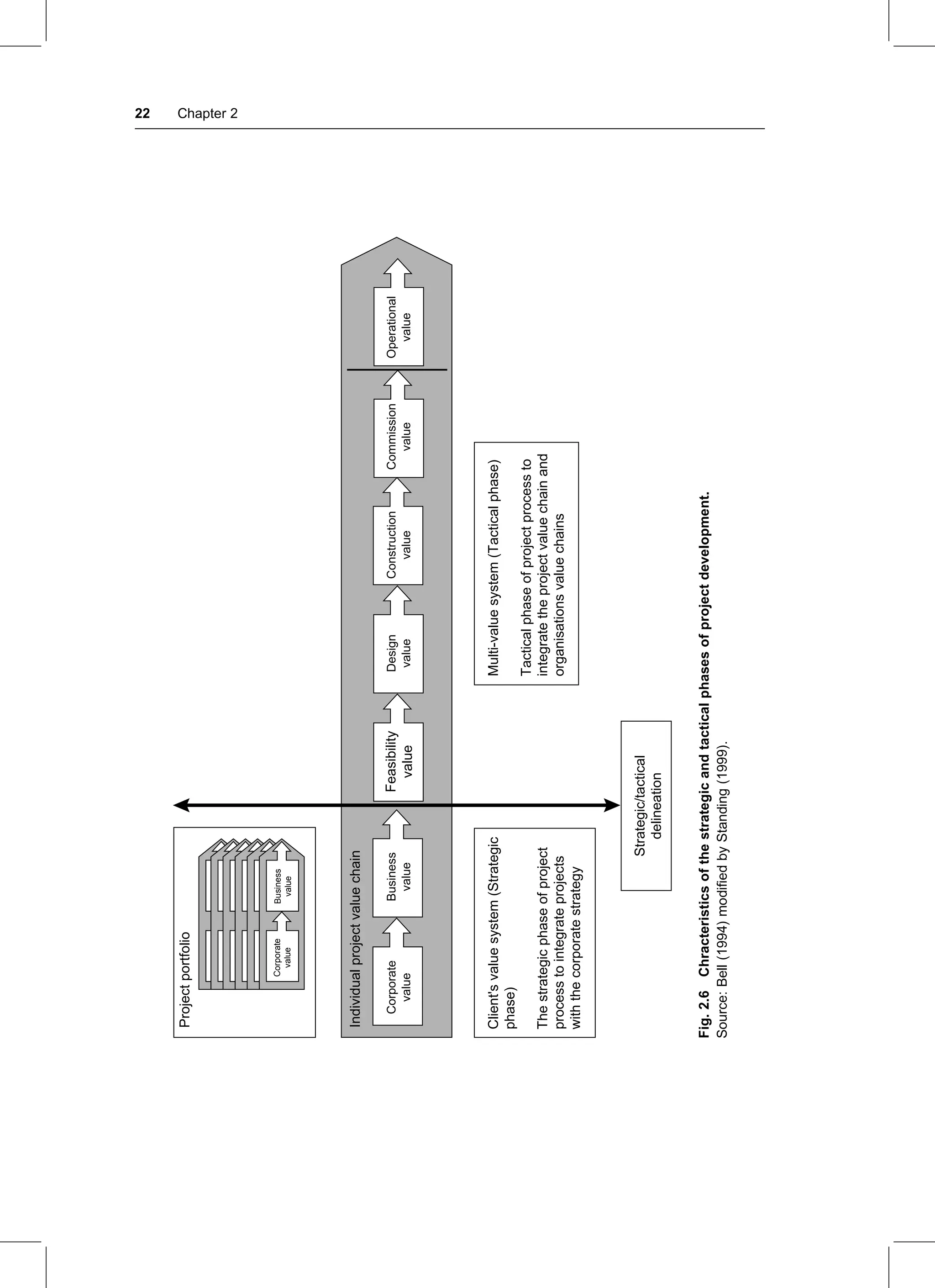
Standing has argued that the project value chain comprises three
distinct major value systems: the client value system, the multi-
value system and the user value system. These reflect major value
transition points in any project. The project value chain is detailed in
Fig. 2.6, which may consist of the portfolio network, where applic-
able, and/or the individual project with value transitions points of:
. Corporate value within a diverse organisational structure.
. Business value ± within a business unit as part of a corporation or
as single business entity.
. Feasibility value ± where options are generated and a chosen
option meets the client value criteria to proceed further.
. Design value ± where the designers translate their ideas to
deliver value to the client through the design process.
. Construction value ± where contractors build the design as
briefed and detailed.
. Commissioning value ± testing and getting ready for use.
. Operational value ± users take over the completed facility and it
becomes operational and hopefully functionally fit-for-purpose.
The idea of the project value chain is a useful concept for viewing:
. A network of projects as a series of strategically linked activities
that must add value in order for the delivery process to meet the
initial strategic requirements of the client.
. Strategically linked activities within a single project delivery
process.
This necessitates best value being considered from multiple- or
single-project perspectives and sometimes both. Bell (1994),
Standing (1999) and Moussa (1999), in particular, have argued that
Building the Business Value Case 21
procurement systems needto take account of the portfolio and
single-project value chains.
Procurement and contract strategies are key strategic decisions
that may maintain the alignment of the project value chain or create
barriers or discontinuities within it. Equally, as a project goes
through each of its phases of development, other value transition
points occur, for example at feasibility stage, design stage, con-
struction stage, etc. The issue of value and procurement will be
discussed later in this chapter.
The decision to construct is an important strategic value point for
the client and the project is effectively outsourced (Mitrovic, 1999).
The decision to construct is a business commitment that a project is
the right solution and capital funding is being made available for
further investigation. Other value systems ± the multi-value system
± then begin to impinge on the project delivery process. The impact
of the multi-value system has been investigated by both Moussa
(1999) for project portfolios and by Woodhead (1999) for single
projects. Both will be discussed in outline.
2.6 Portfolios of project: the value thread and the impact of lean
construction thinking
Moussa (1999), focusing initially on airport infrastructure projects,
has set out a series of issues that are beginning to be taken up
through the use of the newer procurement routes such as prime
contracting. Moussa (1999) investigated requirements across a range
of regular-procuring European airport clients and also North
American airport clients and the potential for lean thinking for the
delivery of projects. She defined lean thinking in construction as `a
holistic approach to project delivery focused on maximising value
for money to the client through the use of innovative approaches to
design, supply, and construction activities'. Implementation of a
number of basic building blocks is required to form a coherent
whole in order for it to succeed and these are set out in Fig. 2.7.
The application of lean thinking identifies a number of underlying
principles:
. Large, regular-procuring clients who have an ongoing
programme of capital investment can more easily drive the
process. They can provide the continuity of work and the
stability required to integrate the supply chain, and practise lean
thinking.
. The link between the project portfolio development cycle and the
single-project development process makes the formation of long-
Building the Business Value Case 23
41.
term relationships betweenclients and the supply chain much
easier. This allows a multi-disciplinary approach to projects to
occur, since all project participants can be present during the
very early stages.
. Embedding single-project processes within a portfolio process
provides a more strategic view of single projects, which can
provide a process perspective focusing on the repetitive aspects.
This permits continuous improvements.
. The presence of a product development stage that commences
standard designs prior to the design processes taking place at the
single-project level permits standardisation of products and
continuous improvement of design solutions, facilitates design
for constructability and manufacturability, and allows for the
reduction of variability and waste.
. The merging of separate design and construction stages into a
single technical project delivery process covering integrated
design and production reflects the migration towards concurrent
engineering and lean thinking. It also allows for a move towards
prefabrication, modularisation and preassembly, which mini-
mise waste and reduce time spent on site.
. The focus on benchmarking and performance measures initiated
at the portfolio strategy stage, which are assessed and fed back to
the process throughout its life cycle, as well as the specific
emphasis on learning and the building of a client knowledge
Fig. 2.7 Lean construction and portfolios of projects.
Source: Moussa (1999).
24 Chapter 2
42.
base, reflects thefocus on process thinking and not simply on
single projects.
. The explicit focus on knowledge management reflected in the
last stage of the project, and the establishment of entities
dedicated to documenting process and product information
promotes the waste reduction, and continuous improvement
ethos of lean thinking.
. The focus on setting up the strategy and performance targets,
establishing relationships with the supply chain, and product
development reflects the added emphasis on front-end planning.
The project development process proposed by Moussa (1999)
addresses six stages at two different levels, the single and the multi-
project levels. Between them these stages reflect the changes
required to achieve a lean approach to project delivery.
. Stage 1. Creating a multi-project process that will provide
direction to the process, define and select a set of productivity
and performance measurements.
. Stage 2. Integrating and coordinating the supply chain involved
in project development activities.
. Stage 3. Defining projects, investigating their viability and
undertaking pre-planning activities.
. Stage 4. Managing the design efforts so they converge to achieve
business purposes as effectively and efficiently as possible.
. Stage 5. Managing the delivery process to achieve the standards
of performance required.
. Stage 6. Creating and improving the capabilities needed to
continuously improve the process over time.
Figure 2.8 sets out these stages sequentially for presentation
purposes. The following section explores the single-project
perspective.
2.7 Single projects ± the impact of paradigms and perspectives
on the value thread and multi-value system
Woodhead (1999), building on the work of Billelo (1993), undertook
an in-depth analysis of the decision to construct and uncovered an
array of different influences that impact the process. He termed
these influences paradigms and perspectives. Paradigms are the
rules, expectations, values and codes of practice, which are either
explicitly or implicitly a part of the professions that play a part
within the decision-to-construct process (Fig. 2.9). Perspectives refer
Building the Business Value Case 25
to a particularview that can exist within any given paradigm.
Woodhead (1999) argued that paradigms and perspectives are often
reinforced by the professional chartered institutions, which codify
standards and expectations, or through vocational degrees at uni-
versities that propagate professional values and paradigms, as well
as teach a number of perspectives, or alternative views within each
paradigm.
Woodhead (1999) identified the following paradigms and
perspectives at play in the decision-to-construct process:
. The capital investment paradigm
. The cost±benefit analysis paradigm
. The financial paradigm
. The strategic paradigm
. The marketing paradigm
. Organisational perspectives
. Management perspectives
. The property development paradigm
. The planning permission paradigm
. The preliminary design paradigm
Fig. 2.9 The decision to construct and involvement of the professions.
Source: Woodhead (1999).
Building the Business Value Case 27
45.
In addition, heidentified that paradigms and perspectives can
influence the decision-to-construct process in different ways:
. Those that influence the process of the decision to build
. Those that influence the content of the decision-to-build process
. Those that intrude or are imposed on the decision-to-build
process by external agents
During the decision to construct, some paradigms and perspectives
will be more dominant than others and conflict can stem from the
influence of competing paradigms and perspectives. Thus para-
digms and perspectives structure the process of the decision to
construct and dictate the content.
Standing (1999) provides a useful diagram that summarises the
different value systems ± or paradigms and perspectives ± that can
influence the project delivery process (see Fig. 2.10).
Woodhead (1999) concluded from studying a range of paradigms
and perspectives that the decision to construct progresses through a
series of stages, each impacted by a series of different decision roles.
He identified four categories of decision roles: the formal decision
functions of decision approving, taking and shaping, and finally,
that of decision influencing. The impact of their roles is identified in
Fig. 2.11 as part of the project screening process. Project screening
involves, at some stage, the choice of procurement route, which is
the subject of the next section.
2.8 Procurement and the project value chain
The choice of procurement route is intrinsically and strategically
linked with best value and value for money. Procurement strategy
and contract strategy are not tactical choices within projects. They
are inherently associated with the management and legal frame-
works set up for risk, the delivery of functionality in the design and
construction stages and the relationship between time, cost and
quality. These value criteria are set out in Fig. 2.12.
The client and design team generate the major cost commitment
for most projects. However, they are only responsible for approxi-
mately 15% of the client's expenditure, primarily through design
team fees. The contractor is responsible for the major element of
expenditure, some 85% of the project cost and yet, depending on the
procurement route adopted, may be removed from a direct influ-
ence on client and design team thinking and their commitment of
cost and arriving at best value in the early stages of projects. Hence,
when looking at a project from a best value perspective for the client,
28 Chapter 2
certain procurement routespreclude the contractor's knowledge
and expertise from being accessed to the benefit of the project and
potentially adding value much earlier in the project process.
Providing the project value chain remains in alignment it is a
series of inputs and outputs that create value for the client. As
indicated earlier, each value transition should be adding value until
the complete project forms an asset for the client's organisation to
meet a corporate need. Complexity is added to the project value
chain when other value systems impart skills and knowledge into it
or create barriers to its effective operation as an integrated system on
behalf of the client. One of the most important strategic decisions
that impact the project value chain is the choice of procurement
route, which can act as either an enhancer or barrier to value
creation and improvement.
Figure 2.13 provides a schematic overlay comparing some of the
Cost
?
Time
?
Quality
?
Construction
functionality
Risk management
by value engineering
Project
functionality
Fig. 2.12 Value criteria ± managing time, cost, quality, risk and project func-
tionality.
Source: Standing (1999).
Building the Business Value Case 31
Transcriber’s Notes
Copyright noticeprovided as in the original—this e-
text is public domain in the country of publication.
In the text versions, delimited italics text in
_underscores_ (the HTML version reproduces the
font form of the printed book.)
Silently corrected palpable typos; left non-standard
spellings and dialect unchanged.
51.
*** END OFTHE PROJECT GUTENBERG EBOOK WILLIAM PENN ***
Updated editions will replace the previous one—the old editions will
be renamed.
Creating the works from print editions not protected by U.S.
copyright law means that no one owns a United States copyright in
these works, so the Foundation (and you!) can copy and distribute it
in the United States without permission and without paying
copyright royalties. Special rules, set forth in the General Terms of
Use part of this license, apply to copying and distributing Project
Gutenberg™ electronic works to protect the PROJECT GUTENBERG™
concept and trademark. Project Gutenberg is a registered trademark,
and may not be used if you charge for an eBook, except by following
the terms of the trademark license, including paying royalties for use
of the Project Gutenberg trademark. If you do not charge anything
for copies of this eBook, complying with the trademark license is
very easy. You may use this eBook for nearly any purpose such as
creation of derivative works, reports, performances and research.
Project Gutenberg eBooks may be modified and printed and given
away—you may do practically ANYTHING in the United States with
eBooks not protected by U.S. copyright law. Redistribution is subject
to the trademark license, especially commercial redistribution.
START: FULL LICENSE
PLEASE READ THISBEFORE YOU DISTRIBUTE OR USE THIS WORK
To protect the Project Gutenberg™ mission of promoting the free
distribution of electronic works, by using or distributing this work (or
any other work associated in any way with the phrase “Project
Gutenberg”), you agree to comply with all the terms of the Full
Project Gutenberg™ License available with this file or online at
www.gutenberg.org/license.
Section 1. General Terms of Use and
Redistributing Project Gutenberg™
electronic works
1.A. By reading or using any part of this Project Gutenberg™
electronic work, you indicate that you have read, understand, agree
to and accept all the terms of this license and intellectual property
(trademark/copyright) agreement. If you do not agree to abide by all
the terms of this agreement, you must cease using and return or
destroy all copies of Project Gutenberg™ electronic works in your
possession. If you paid a fee for obtaining a copy of or access to a
Project Gutenberg™ electronic work and you do not agree to be
bound by the terms of this agreement, you may obtain a refund
from the person or entity to whom you paid the fee as set forth in
paragraph 1.E.8.
1.B. “Project Gutenberg” is a registered trademark. It may only be
used on or associated in any way with an electronic work by people
who agree to be bound by the terms of this agreement. There are a
few things that you can do with most Project Gutenberg™ electronic
works even without complying with the full terms of this agreement.
See paragraph 1.C below. There are a lot of things you can do with
Project Gutenberg™ electronic works if you follow the terms of this
agreement and help preserve free future access to Project
Gutenberg™ electronic works. See paragraph 1.E below.
54.
1.C. The ProjectGutenberg Literary Archive Foundation (“the
Foundation” or PGLAF), owns a compilation copyright in the
collection of Project Gutenberg™ electronic works. Nearly all the
individual works in the collection are in the public domain in the
United States. If an individual work is unprotected by copyright law
in the United States and you are located in the United States, we do
not claim a right to prevent you from copying, distributing,
performing, displaying or creating derivative works based on the
work as long as all references to Project Gutenberg are removed. Of
course, we hope that you will support the Project Gutenberg™
mission of promoting free access to electronic works by freely
sharing Project Gutenberg™ works in compliance with the terms of
this agreement for keeping the Project Gutenberg™ name associated
with the work. You can easily comply with the terms of this
agreement by keeping this work in the same format with its attached
full Project Gutenberg™ License when you share it without charge
with others.
1.D. The copyright laws of the place where you are located also
govern what you can do with this work. Copyright laws in most
countries are in a constant state of change. If you are outside the
United States, check the laws of your country in addition to the
terms of this agreement before downloading, copying, displaying,
performing, distributing or creating derivative works based on this
work or any other Project Gutenberg™ work. The Foundation makes
no representations concerning the copyright status of any work in
any country other than the United States.
1.E. Unless you have removed all references to Project Gutenberg:
1.E.1. The following sentence, with active links to, or other
immediate access to, the full Project Gutenberg™ License must
appear prominently whenever any copy of a Project Gutenberg™
work (any work on which the phrase “Project Gutenberg” appears,
or with which the phrase “Project Gutenberg” is associated) is
accessed, displayed, performed, viewed, copied or distributed:
55.
This eBook isfor the use of anyone anywhere in
the United States and most other parts of the world
at no cost and with almost no restrictions
whatsoever. You may copy it, give it away or re-use
it under the terms of the Project Gutenberg License
included with this eBook or online at
www.gutenberg.org. If you are not located in the
United States, you will have to check the laws of
the country where you are located before using this
eBook.
1.E.2. If an individual Project Gutenberg™ electronic work is derived
from texts not protected by U.S. copyright law (does not contain a
notice indicating that it is posted with permission of the copyright
holder), the work can be copied and distributed to anyone in the
United States without paying any fees or charges. If you are
redistributing or providing access to a work with the phrase “Project
Gutenberg” associated with or appearing on the work, you must
comply either with the requirements of paragraphs 1.E.1 through
1.E.7 or obtain permission for the use of the work and the Project
Gutenberg™ trademark as set forth in paragraphs 1.E.8 or 1.E.9.
1.E.3. If an individual Project Gutenberg™ electronic work is posted
with the permission of the copyright holder, your use and distribution
must comply with both paragraphs 1.E.1 through 1.E.7 and any
additional terms imposed by the copyright holder. Additional terms
will be linked to the Project Gutenberg™ License for all works posted
with the permission of the copyright holder found at the beginning
of this work.
1.E.4. Do not unlink or detach or remove the full Project
Gutenberg™ License terms from this work, or any files containing a
part of this work or any other work associated with Project
Gutenberg™.
56.
1.E.5. Do notcopy, display, perform, distribute or redistribute this
electronic work, or any part of this electronic work, without
prominently displaying the sentence set forth in paragraph 1.E.1
with active links or immediate access to the full terms of the Project
Gutenberg™ License.
1.E.6. You may convert to and distribute this work in any binary,
compressed, marked up, nonproprietary or proprietary form,
including any word processing or hypertext form. However, if you
provide access to or distribute copies of a Project Gutenberg™ work
in a format other than “Plain Vanilla ASCII” or other format used in
the official version posted on the official Project Gutenberg™ website
(www.gutenberg.org), you must, at no additional cost, fee or
expense to the user, provide a copy, a means of exporting a copy, or
a means of obtaining a copy upon request, of the work in its original
“Plain Vanilla ASCII” or other form. Any alternate format must
include the full Project Gutenberg™ License as specified in
paragraph 1.E.1.
1.E.7. Do not charge a fee for access to, viewing, displaying,
performing, copying or distributing any Project Gutenberg™ works
unless you comply with paragraph 1.E.8 or 1.E.9.
1.E.8. You may charge a reasonable fee for copies of or providing
access to or distributing Project Gutenberg™ electronic works
provided that:
• You pay a royalty fee of 20% of the gross profits
you derive from the use of Project Gutenberg™
works calculated using the method you already use
to calculate your applicable taxes. The fee is owed
to the owner of the Project Gutenberg™ trademark,
but he has agreed to donate royalties under this
paragraph to the Project Gutenberg Literary Archive
Foundation. Royalty payments must be paid within
60 days following each date on which you prepare
57.
(or are legallyrequired to prepare) your periodic
tax returns. Royalty payments should be clearly
marked as such and sent to the Project Gutenberg
Literary Archive Foundation at the address specified
in Section 4, “Information about donations to the
Project Gutenberg Literary Archive Foundation.”
• You provide a full refund of any money paid by a
user who notifies you in writing (or by e-mail)
within 30 days of receipt that s/he does not agree
to the terms of the full Project Gutenberg™
License. You must require such a user to return or
destroy all copies of the works possessed in a
physical medium and discontinue all use of and all
access to other copies of Project Gutenberg™
works.
• You provide, in accordance with paragraph 1.F.3, a
full refund of any money paid for a work or a
replacement copy, if a defect in the electronic work
is discovered and reported to you within 90 days of
receipt of the work.
• You comply with all other terms of this agreement
for free distribution of Project Gutenberg™ works.
1.E.9. If you wish to charge a fee or distribute a Project Gutenberg™
electronic work or group of works on different terms than are set
forth in this agreement, you must obtain permission in writing from
the Project Gutenberg Literary Archive Foundation, the manager of
the Project Gutenberg™ trademark. Contact the Foundation as set
forth in Section 3 below.
1.F.
1.F.1. Project Gutenberg volunteers and employees expend
considerable effort to identify, do copyright research on, transcribe
58.
and proofread worksnot protected by U.S. copyright law in creating
the Project Gutenberg™ collection. Despite these efforts, Project
Gutenberg™ electronic works, and the medium on which they may
be stored, may contain “Defects,” such as, but not limited to,
incomplete, inaccurate or corrupt data, transcription errors, a
copyright or other intellectual property infringement, a defective or
damaged disk or other medium, a computer virus, or computer
codes that damage or cannot be read by your equipment.
1.F.2. LIMITED WARRANTY, DISCLAIMER OF DAMAGES - Except for
the “Right of Replacement or Refund” described in paragraph 1.F.3,
the Project Gutenberg Literary Archive Foundation, the owner of the
Project Gutenberg™ trademark, and any other party distributing a
Project Gutenberg™ electronic work under this agreement, disclaim
all liability to you for damages, costs and expenses, including legal
fees. YOU AGREE THAT YOU HAVE NO REMEDIES FOR
NEGLIGENCE, STRICT LIABILITY, BREACH OF WARRANTY OR
BREACH OF CONTRACT EXCEPT THOSE PROVIDED IN PARAGRAPH
1.F.3. YOU AGREE THAT THE FOUNDATION, THE TRADEMARK
OWNER, AND ANY DISTRIBUTOR UNDER THIS AGREEMENT WILL
NOT BE LIABLE TO YOU FOR ACTUAL, DIRECT, INDIRECT,
CONSEQUENTIAL, PUNITIVE OR INCIDENTAL DAMAGES EVEN IF
YOU GIVE NOTICE OF THE POSSIBILITY OF SUCH DAMAGE.
1.F.3. LIMITED RIGHT OF REPLACEMENT OR REFUND - If you
discover a defect in this electronic work within 90 days of receiving
it, you can receive a refund of the money (if any) you paid for it by
sending a written explanation to the person you received the work
from. If you received the work on a physical medium, you must
return the medium with your written explanation. The person or
entity that provided you with the defective work may elect to provide
a replacement copy in lieu of a refund. If you received the work
electronically, the person or entity providing it to you may choose to
give you a second opportunity to receive the work electronically in
lieu of a refund. If the second copy is also defective, you may
59.
demand a refundin writing without further opportunities to fix the
problem.
1.F.4. Except for the limited right of replacement or refund set forth
in paragraph 1.F.3, this work is provided to you ‘AS-IS’, WITH NO
OTHER WARRANTIES OF ANY KIND, EXPRESS OR IMPLIED,
INCLUDING BUT NOT LIMITED TO WARRANTIES OF
MERCHANTABILITY OR FITNESS FOR ANY PURPOSE.
1.F.5. Some states do not allow disclaimers of certain implied
warranties or the exclusion or limitation of certain types of damages.
If any disclaimer or limitation set forth in this agreement violates the
law of the state applicable to this agreement, the agreement shall be
interpreted to make the maximum disclaimer or limitation permitted
by the applicable state law. The invalidity or unenforceability of any
provision of this agreement shall not void the remaining provisions.
1.F.6. INDEMNITY - You agree to indemnify and hold the Foundation,
the trademark owner, any agent or employee of the Foundation,
anyone providing copies of Project Gutenberg™ electronic works in
accordance with this agreement, and any volunteers associated with
the production, promotion and distribution of Project Gutenberg™
electronic works, harmless from all liability, costs and expenses,
including legal fees, that arise directly or indirectly from any of the
following which you do or cause to occur: (a) distribution of this or
any Project Gutenberg™ work, (b) alteration, modification, or
additions or deletions to any Project Gutenberg™ work, and (c) any
Defect you cause.
Section 2. Information about the Mission
of Project Gutenberg™
Project Gutenberg™ is synonymous with the free distribution of
electronic works in formats readable by the widest variety of
computers including obsolete, old, middle-aged and new computers.
60.
It exists becauseof the efforts of hundreds of volunteers and
donations from people in all walks of life.
Volunteers and financial support to provide volunteers with the
assistance they need are critical to reaching Project Gutenberg™’s
goals and ensuring that the Project Gutenberg™ collection will
remain freely available for generations to come. In 2001, the Project
Gutenberg Literary Archive Foundation was created to provide a
secure and permanent future for Project Gutenberg™ and future
generations. To learn more about the Project Gutenberg Literary
Archive Foundation and how your efforts and donations can help,
see Sections 3 and 4 and the Foundation information page at
www.gutenberg.org.
Section 3. Information about the Project
Gutenberg Literary Archive Foundation
The Project Gutenberg Literary Archive Foundation is a non-profit
501(c)(3) educational corporation organized under the laws of the
state of Mississippi and granted tax exempt status by the Internal
Revenue Service. The Foundation’s EIN or federal tax identification
number is 64-6221541. Contributions to the Project Gutenberg
Literary Archive Foundation are tax deductible to the full extent
permitted by U.S. federal laws and your state’s laws.
The Foundation’s business office is located at 809 North 1500 West,
Salt Lake City, UT 84116, (801) 596-1887. Email contact links and up
to date contact information can be found at the Foundation’s website
and official page at www.gutenberg.org/contact
Section 4. Information about Donations to
the Project Gutenberg Literary Archive
Foundation
61.
Project Gutenberg™ dependsupon and cannot survive without
widespread public support and donations to carry out its mission of
increasing the number of public domain and licensed works that can
be freely distributed in machine-readable form accessible by the
widest array of equipment including outdated equipment. Many
small donations ($1 to $5,000) are particularly important to
maintaining tax exempt status with the IRS.
The Foundation is committed to complying with the laws regulating
charities and charitable donations in all 50 states of the United
States. Compliance requirements are not uniform and it takes a
considerable effort, much paperwork and many fees to meet and
keep up with these requirements. We do not solicit donations in
locations where we have not received written confirmation of
compliance. To SEND DONATIONS or determine the status of
compliance for any particular state visit www.gutenberg.org/donate.
While we cannot and do not solicit contributions from states where
we have not met the solicitation requirements, we know of no
prohibition against accepting unsolicited donations from donors in
such states who approach us with offers to donate.
International donations are gratefully accepted, but we cannot make
any statements concerning tax treatment of donations received from
outside the United States. U.S. laws alone swamp our small staff.
Please check the Project Gutenberg web pages for current donation
methods and addresses. Donations are accepted in a number of
other ways including checks, online payments and credit card
donations. To donate, please visit: www.gutenberg.org/donate.
Section 5. General Information About
Project Gutenberg™ electronic works
62.
Professor Michael S.Hart was the originator of the Project
Gutenberg™ concept of a library of electronic works that could be
freely shared with anyone. For forty years, he produced and
distributed Project Gutenberg™ eBooks with only a loose network of
volunteer support.
Project Gutenberg™ eBooks are often created from several printed
editions, all of which are confirmed as not protected by copyright in
the U.S. unless a copyright notice is included. Thus, we do not
necessarily keep eBooks in compliance with any particular paper
edition.
Most people start at our website which has the main PG search
facility: www.gutenberg.org.
This website includes information about Project Gutenberg™,
including how to make donations to the Project Gutenberg Literary
Archive Foundation, how to help produce our new eBooks, and how
to subscribe to our email newsletter to hear about new eBooks.
63.
Welcome to OurBookstore - The Ultimate Destination for Book Lovers
Are you passionate about books and eager to explore new worlds of
knowledge? At our website, we offer a vast collection of books that
cater to every interest and age group. From classic literature to
specialized publications, self-help books, and children’s stories, we
have it all! Each book is a gateway to new adventures, helping you
expand your knowledge and nourish your soul
Experience Convenient and Enjoyable Book Shopping Our website is more
than just an online bookstore—it’s a bridge connecting readers to the
timeless values of culture and wisdom. With a sleek and user-friendly
interface and a smart search system, you can find your favorite books
quickly and easily. Enjoy special promotions, fast home delivery, and
a seamless shopping experience that saves you time and enhances your
love for reading.
Let us accompany you on the journey of exploring knowledge and
personal growth!
ebookgate.com