6/29/2015
1
ALPHABET OF LINES
- s
DIFFERENT TYPES OF LINES
 It is a thick full line. It is used to represent all visible
edges of an object.
VISIBLE / OBJECT LINE
- s
DIFFERENT TYPES OF LINES
 It is a medium short dash lines approximately 1/8
inches in length and spaced 1/32 inches between the
lines.
 It is used to represent hidden or unseen edges of an
object.
INVISIBLE / HIDDEN LINE
- s
DIFFERENT TYPES OF LINES
 It is a thin, fine, dark, and solid line with arrowheads on
both ends.
 It indicate the direction and the length of an object
DIMENSION LINE
10 m
- s
DIFFERENT TYPES OF LINES
 It is also called projection or witness line.
 It is a thin, dark and solid line that extends from a point
on the drawing to which a dimension refers.
 A gap of about 1/16 inches should be left where the
extension would join the object line.
EXTENSION LINE
6/29/2015
2
- s
DIFFERENT TYPES OF LINES
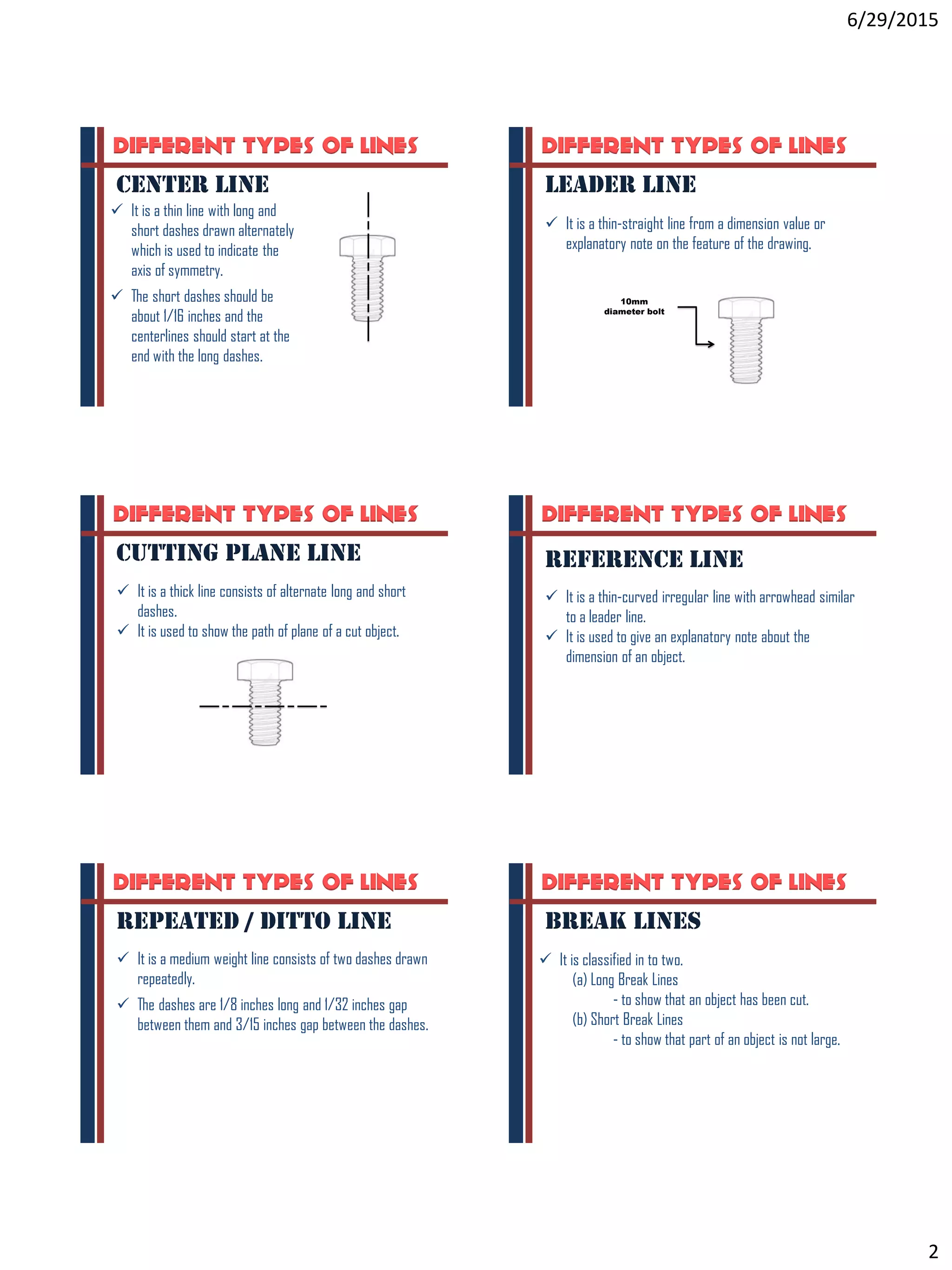
 It is a thin line with long and
short dashes drawn alternately
which is used to indicate the
axis of symmetry.
 The short dashes should be
about 1/16 inches and the
centerlines should start at the
end with the long dashes.
CENTER LINE
- s
DIFFERENT TYPES OF LINES
 It is a thin-straight line from a dimension value or
explanatory note on the feature of the drawing.
LEADER LINE
10mm
diameter bolt
- s
DIFFERENT TYPES OF LINES
 It is a thick line consists of alternate long and short
dashes.
 It is used to show the path of plane of a cut object.
CUTTING PLANE LINE
- s
DIFFERENT TYPES OF LINES
 It is a thin-curved irregular line with arrowhead similar
to a leader line.
 It is used to give an explanatory note about the
dimension of an object.
REFERENCE LINE
- s
DIFFERENT TYPES OF LINES
 It is a medium weight line consists of two dashes drawn
repeatedly.
 The dashes are 1/8 inches long and 1/32 inches gap
between them and 3/15 inches gap between the dashes.
Repeated / ditto line
- s
DIFFERENT TYPES OF LINES
 It is classified in to two.
(a) Long Break Lines
- to show that an object has been cut.
(b) Short Break Lines
- to show that part of an object is not large.
BREAK LINES
6/29/2015
3
- s
DIFFERENT TYPES OF LINES
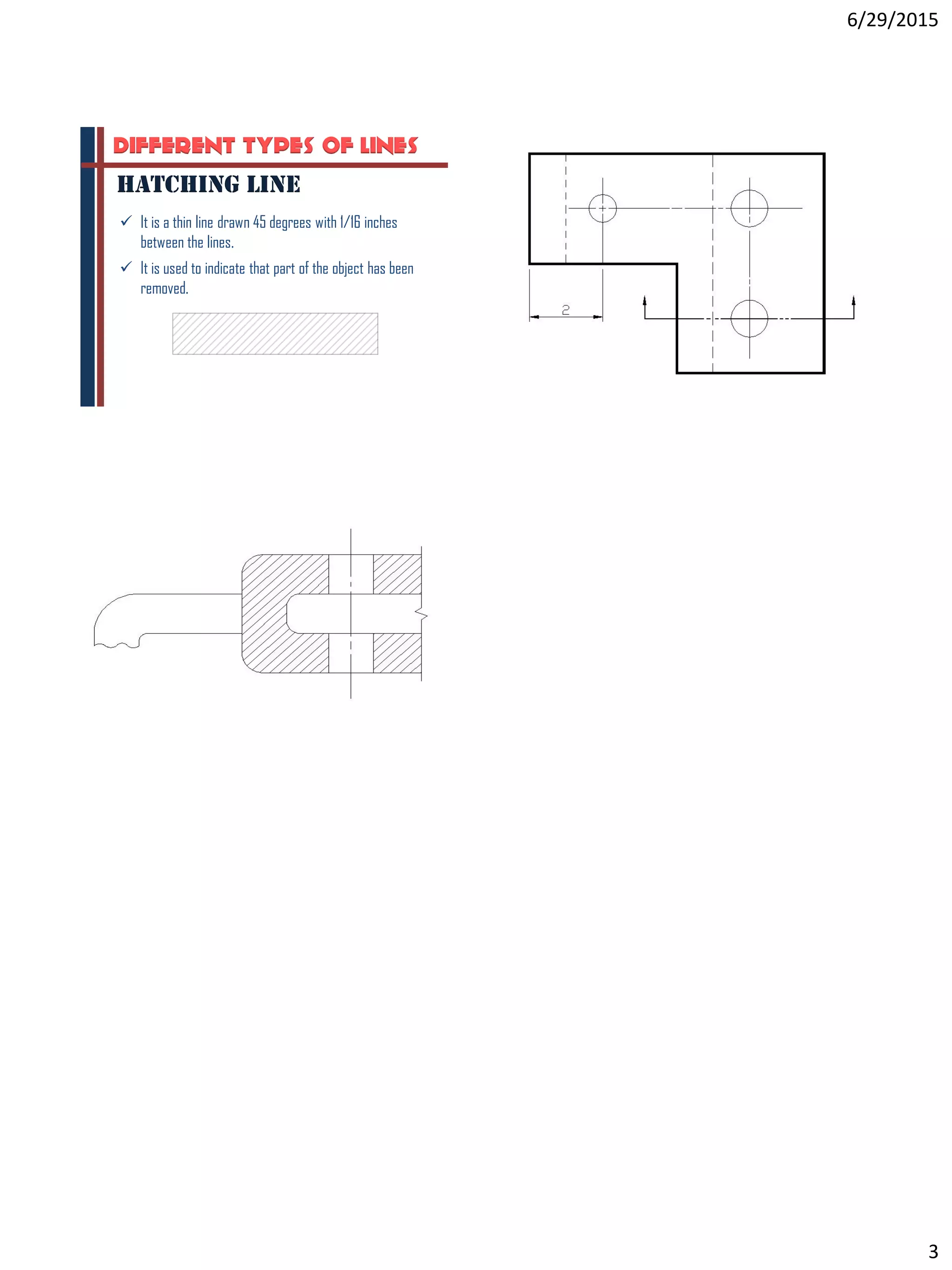
 It is a thin line drawn 45 degrees with 1/16 inches
between the lines.
 It is used to indicate that part of the object has been
removed.
HATCHING LINE

engineering drawing 101(b)

  • 1.
    6/29/2015 1 ALPHABET OF LINES -s DIFFERENT TYPES OF LINES  It is a thick full line. It is used to represent all visible edges of an object. VISIBLE / OBJECT LINE - s DIFFERENT TYPES OF LINES  It is a medium short dash lines approximately 1/8 inches in length and spaced 1/32 inches between the lines.  It is used to represent hidden or unseen edges of an object. INVISIBLE / HIDDEN LINE - s DIFFERENT TYPES OF LINES  It is a thin, fine, dark, and solid line with arrowheads on both ends.  It indicate the direction and the length of an object DIMENSION LINE 10 m - s DIFFERENT TYPES OF LINES  It is also called projection or witness line.  It is a thin, dark and solid line that extends from a point on the drawing to which a dimension refers.  A gap of about 1/16 inches should be left where the extension would join the object line. EXTENSION LINE
  • 2.
    6/29/2015 2 - s DIFFERENT TYPESOF LINES  It is a thin line with long and short dashes drawn alternately which is used to indicate the axis of symmetry.  The short dashes should be about 1/16 inches and the centerlines should start at the end with the long dashes. CENTER LINE - s DIFFERENT TYPES OF LINES  It is a thin-straight line from a dimension value or explanatory note on the feature of the drawing. LEADER LINE 10mm diameter bolt - s DIFFERENT TYPES OF LINES  It is a thick line consists of alternate long and short dashes.  It is used to show the path of plane of a cut object. CUTTING PLANE LINE - s DIFFERENT TYPES OF LINES  It is a thin-curved irregular line with arrowhead similar to a leader line.  It is used to give an explanatory note about the dimension of an object. REFERENCE LINE - s DIFFERENT TYPES OF LINES  It is a medium weight line consists of two dashes drawn repeatedly.  The dashes are 1/8 inches long and 1/32 inches gap between them and 3/15 inches gap between the dashes. Repeated / ditto line - s DIFFERENT TYPES OF LINES  It is classified in to two. (a) Long Break Lines - to show that an object has been cut. (b) Short Break Lines - to show that part of an object is not large. BREAK LINES
  • 3.
    6/29/2015 3 - s DIFFERENT TYPESOF LINES  It is a thin line drawn 45 degrees with 1/16 inches between the lines.  It is used to indicate that part of the object has been removed. HATCHING LINE