The Importance of Lifelong Learning
for Engineers
The engineering profession has long been linked to creativity, advancement, and
problem-solving. From building awe-inspiring skyscrapers to developing life-saving
medical devices, engineers play a pivotal role in shaping our world. However, the world
of engineering is evolving at an unprecedented pace. In this fast-moving environment,
the concept of lifelong learning has become not just important but essential for
engineers to thrive and excel in their careers. In this blog, we will explore why lifelong
learning is crucial for engineers.
The Ever-Evolving Technological Landscape
One of the most compelling reasons for engineers to embrace lifelong learning is the
rapid advancement of technology. New tools, techniques, and technologies are
constantly emerging. Whether it's in the field of artificial intelligence, renewable
energy, or biotechnology, engineers need to stay current with these developments to
remain effective. Lifelong learning allows engineers to adapt to and leverage the latest
technological advancements.
Adapting to Industry Changes
Industries and markets are not static. Regulation changes, environmental concerns,
and economic trends all have an impact on them. Engineers must be capable of
adapting to these shifts. For example, the growing emphasis on sustainable practices
and environmental regulations is changing the way engineering projects are designed
and executed. Engineers who continue to learn and embrace these changes will find
themselves better positioned in the job market and more valuable to their employers.
Enhancing Problem-Solving Skills
By nature, engineers are problem solvers. Lifelong learning provides them with a
steady stream of new challenges and fresh perspectives. Through ongoing education
and training, engineers can enhance their problem-solving abilities, becoming more
adept at tackling complex issues that arise in their work.
Fostering Creativity and Innovation
Innovation is at the heart of engineering. New solutions and breakthroughs drive
progress in the field. Lifelong learning exposes engineers to new ideas, cutting-edge
research, and diverse approaches to problem-solving. This exposure fosters creativity
and fuels innovation, allowing engineers to develop novel solutions and make
significant contributions to their industries.
Staying Competitive in a Global Market
The world is more interconnected than ever, and the job market for engineers is global.
Lifelong learning is essential to remaining competitive on a global scale. Engineers
who continually expand their knowledge and skills are better equipped to work on
international projects, collaborate with colleagues from diverse backgrounds, and
navigate the complexities of a globalized economy.
Career Advancement
Lifelong learning is not only about staying current but also about career advancement.
Many engineering roles require specific certifications or licenses, and keeping these
credentials often involves ongoing education. Additionally, engineers who invest in
their professional development and education are more likely to receive promotions
and access better job opportunities.
Interdisciplinary Skills
Today's engineering projects often require interdisciplinary collaboration. Engineers
need to work closely with professionals from other fields, such as business, marketing,
and data science. Lifelong learning helps engineers develop the skills needed to
communicate effectively and collaborate with experts from diverse disciplines,
facilitating successful cross-functional teamwork.
Upholding Ethical and Professional Standards
To protect public safety and welfare, the engineering profession is subject to a set of
moral and professional requirements. Lifelong learning can reinforce these standards
by keeping engineers informed about the latest codes of ethics and best practices. It
helps engineers remain committed to the integrity of their profession.
Personal Fulfillment
Engineering is more than just a job; it's often a passion. Lifelong learning can provide a
deep sense of personal fulfillment. Many engineers are passionate about their work,
and learning more about it can be a source of personal satisfaction and pride. It allows
them to continually strive for excellence and make a positive impact on the world.
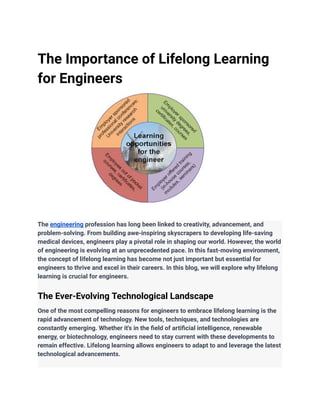
In conclusion, the importance of lifelong learning for engineers cannot be overstated.
To excel in an ever-evolving field, engineers must be committed to continuous
education and skill development. Whether through formal education, online courses,
workshops, or self-study, embracing lifelong learning is not just a career choice; it's a
commitment to personal and professional growth. It's a journey that allows engineers
to adapt to change, drive innovation, and make a lasting impact on the world through
their work. So, if you're an engineer, embrace the opportunities for lifelong learning
and let your knowledge propel you to new heights in your career.

Engineer for Tomorrow

  • 1.
    The Importance ofLifelong Learning for Engineers The engineering profession has long been linked to creativity, advancement, and problem-solving. From building awe-inspiring skyscrapers to developing life-saving medical devices, engineers play a pivotal role in shaping our world. However, the world of engineering is evolving at an unprecedented pace. In this fast-moving environment, the concept of lifelong learning has become not just important but essential for engineers to thrive and excel in their careers. In this blog, we will explore why lifelong learning is crucial for engineers. The Ever-Evolving Technological Landscape One of the most compelling reasons for engineers to embrace lifelong learning is the rapid advancement of technology. New tools, techniques, and technologies are constantly emerging. Whether it's in the field of artificial intelligence, renewable energy, or biotechnology, engineers need to stay current with these developments to remain effective. Lifelong learning allows engineers to adapt to and leverage the latest technological advancements.
  • 2.
    Adapting to IndustryChanges Industries and markets are not static. Regulation changes, environmental concerns, and economic trends all have an impact on them. Engineers must be capable of adapting to these shifts. For example, the growing emphasis on sustainable practices and environmental regulations is changing the way engineering projects are designed and executed. Engineers who continue to learn and embrace these changes will find themselves better positioned in the job market and more valuable to their employers. Enhancing Problem-Solving Skills By nature, engineers are problem solvers. Lifelong learning provides them with a steady stream of new challenges and fresh perspectives. Through ongoing education and training, engineers can enhance their problem-solving abilities, becoming more adept at tackling complex issues that arise in their work. Fostering Creativity and Innovation Innovation is at the heart of engineering. New solutions and breakthroughs drive progress in the field. Lifelong learning exposes engineers to new ideas, cutting-edge research, and diverse approaches to problem-solving. This exposure fosters creativity and fuels innovation, allowing engineers to develop novel solutions and make significant contributions to their industries. Staying Competitive in a Global Market
  • 3.
    The world ismore interconnected than ever, and the job market for engineers is global. Lifelong learning is essential to remaining competitive on a global scale. Engineers who continually expand their knowledge and skills are better equipped to work on international projects, collaborate with colleagues from diverse backgrounds, and navigate the complexities of a globalized economy. Career Advancement Lifelong learning is not only about staying current but also about career advancement. Many engineering roles require specific certifications or licenses, and keeping these credentials often involves ongoing education. Additionally, engineers who invest in their professional development and education are more likely to receive promotions and access better job opportunities. Interdisciplinary Skills
  • 4.
    Today's engineering projectsoften require interdisciplinary collaboration. Engineers need to work closely with professionals from other fields, such as business, marketing, and data science. Lifelong learning helps engineers develop the skills needed to communicate effectively and collaborate with experts from diverse disciplines, facilitating successful cross-functional teamwork. Upholding Ethical and Professional Standards To protect public safety and welfare, the engineering profession is subject to a set of moral and professional requirements. Lifelong learning can reinforce these standards by keeping engineers informed about the latest codes of ethics and best practices. It helps engineers remain committed to the integrity of their profession. Personal Fulfillment Engineering is more than just a job; it's often a passion. Lifelong learning can provide a deep sense of personal fulfillment. Many engineers are passionate about their work, and learning more about it can be a source of personal satisfaction and pride. It allows them to continually strive for excellence and make a positive impact on the world.
  • 5.
    In conclusion, theimportance of lifelong learning for engineers cannot be overstated. To excel in an ever-evolving field, engineers must be committed to continuous education and skill development. Whether through formal education, online courses, workshops, or self-study, embracing lifelong learning is not just a career choice; it's a commitment to personal and professional growth. It's a journey that allows engineers to adapt to change, drive innovation, and make a lasting impact on the world through their work. So, if you're an engineer, embrace the opportunities for lifelong learning and let your knowledge propel you to new heights in your career.