Energy System
Optimization
for Safe and
Improved
Performance
ENERGY
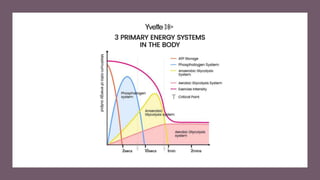
THREE ENERGY SYSTEMS
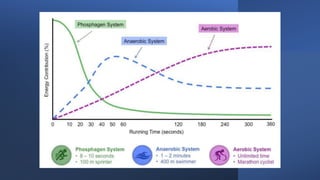
Anaerobic A-Lactic
Anaerobic Lactic
Aerobic
1. Anaerobic A-Lactic
(ATP-CP) Energy System
Adenosine
triphosphate (ATP)
is the source of
energy for use and
storage at the cellular
level.
Anaerobic A-lactic or ATP-CP is a
dominant source of muscle
energy for high intensity physical
activities. It provides high bursts
of startup energy that lasts
around ten seconds or less.
Many activities have a high dependence on the phosphagen system.
Success in team sports, weightlifting, field events (e.g., shot put and
discus throwing, jumping events), swimming, tennis, and so forth.
All require short-term singular or a limited number of repeated
intense muscle contractions. It has long been theorized that during
the initial 10–15 seconds of exercise that creatine phosphate was
solely responsible for ATP regeneration
2. Anaerobic Lactic
(Glycolytic) Energy System
Same as with ATP-CP,
the anaerobic lactic
system does not require
oxygen but is capable of
supplying energy for
high intensity activities.
Anaerobic lactic is also known as
the glycolytic energy system, an
energy system that supplies
energy for medium to high
intensity physical activities.
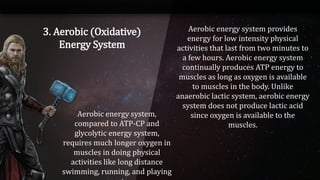
3. Aerobic (Oxidative)
Energy System
Aerobic energy system,
compared to ATP-CP and
glycolytic energy system,
requires much longer oxygen in
muscles in doing physical
activities like long distance
swimming, running, and playing
Aerobic energy system provides
energy for low intensity physical
activities that last from two minutes to
a few hours. Aerobic energy system
continually produces ATP energy to
muscles as long as oxygen is available
to muscles in the body. Unlike
anaerobic lactic system, aerobic energy
system does not produce lactic acid
since oxygen is available to the
muscles.
THANK YOU…
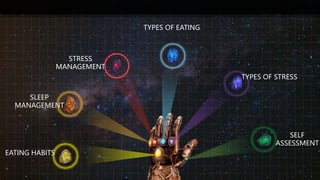
EATING HABITS
SLEEP
MANAGEMENT
STRESS
MANAGEMENT
TYPES OF EATING
TYPES OF STRESS
SELF
ASSESSMENT

ENERGY SYSTEM

  • 1.
    Energy System Optimization for Safeand Improved Performance
  • 2.
  • 5.
    THREE ENERGY SYSTEMS AnaerobicA-Lactic Anaerobic Lactic Aerobic
  • 6.
    1. Anaerobic A-Lactic (ATP-CP)Energy System Adenosine triphosphate (ATP) is the source of energy for use and storage at the cellular level. Anaerobic A-lactic or ATP-CP is a dominant source of muscle energy for high intensity physical activities. It provides high bursts of startup energy that lasts around ten seconds or less.
  • 7.
    Many activities havea high dependence on the phosphagen system. Success in team sports, weightlifting, field events (e.g., shot put and discus throwing, jumping events), swimming, tennis, and so forth. All require short-term singular or a limited number of repeated intense muscle contractions. It has long been theorized that during the initial 10–15 seconds of exercise that creatine phosphate was solely responsible for ATP regeneration
  • 9.
    2. Anaerobic Lactic (Glycolytic)Energy System Same as with ATP-CP, the anaerobic lactic system does not require oxygen but is capable of supplying energy for high intensity activities. Anaerobic lactic is also known as the glycolytic energy system, an energy system that supplies energy for medium to high intensity physical activities.
  • 12.
    3. Aerobic (Oxidative) EnergySystem Aerobic energy system, compared to ATP-CP and glycolytic energy system, requires much longer oxygen in muscles in doing physical activities like long distance swimming, running, and playing Aerobic energy system provides energy for low intensity physical activities that last from two minutes to a few hours. Aerobic energy system continually produces ATP energy to muscles as long as oxygen is available to muscles in the body. Unlike anaerobic lactic system, aerobic energy system does not produce lactic acid since oxygen is available to the muscles.
  • 14.
  • 15.
    EATING HABITS SLEEP MANAGEMENT STRESS MANAGEMENT TYPES OFEATING TYPES OF STRESS SELF ASSESSMENT