Energy Flow in Ecosystems
Overview: Ecosystems
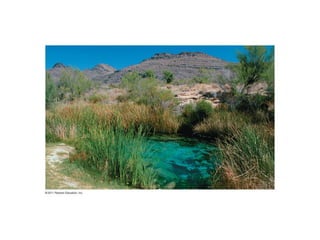
• An ecosystem consists of all the organisms living
in a community, as well as the abiotic (non-living)
factors with which they interact
• Ecosystems range from a small, such as an
aquarium, to a large, such as a lake or forest
• Ecosystem dynamics involve two main processes:
energy flow and chemical cycling
• Energy flows through ecosystems
• Matter cycles within them
• Physical laws govern energy flow and
chemical cycling in ecosystems
– Conservation of Energy (first law of thermodynamics)
– Energy enters from solar radiation and is lost as heat
– Conservation of matter - Chemical elements are
continually recycled within ecosystems
• Ecosystems are open systems, absorbing energy
and mass and releasing heat and waste products
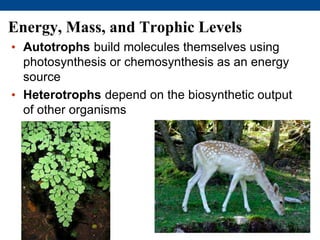
Energy, Mass, and Trophic Levels
• Autotrophs build molecules themselves using
photosynthesis or chemosynthesis as an energy
source
• Heterotrophs depend on the biosynthetic output
of other organisms
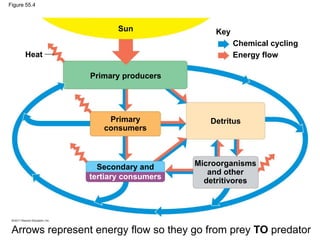
Key
Chemical cycling
Energy flow
Sun
Heat
Primary producers
Primary
consumers
Secondary and
tertiary consumers
Detritus
Microorganisms
and other
detritivores
Figure 55.4
Arrows represent energy flow so they go from prey TO predator
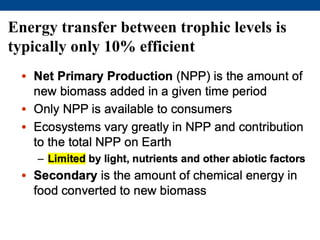
Energy transfer between trophic levels is
typically only 10% efficient
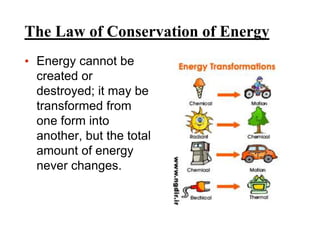
The Law of Conservation of Energy
• Energy cannot be
created or
destroyed; it may be
transformed from
one form into
another, but the total
amount of energy
never changes.
What is energy?
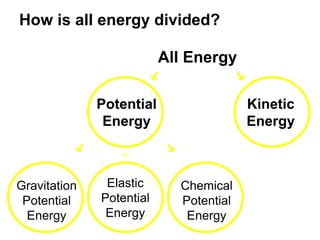
How is all energy divided?
Potential
Energy
Kinetic
Energy
All Energy
Gravitation
Potential
Energy
Elastic
Potential
Energy
Chemical
Potential
Energy
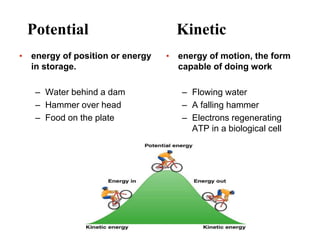
Potential Kinetic
• energy of position or energy
in storage.
– Water behind a dam
– Hammer over head
– Food on the plate
• energy of motion, the form
capable of doing work
– Flowing water
– A falling hammer
– Electrons regenerating
ATP in a biological cell
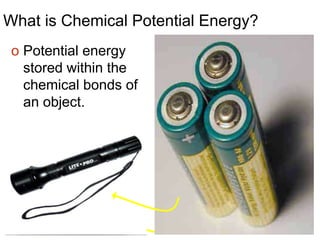
What is Chemical Potential Energy?
o Potential energy
stored within the
chemical bonds of
an object.
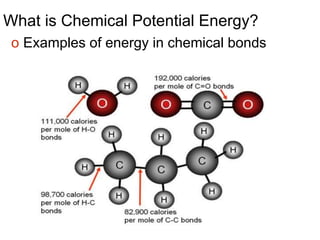
What is Chemical Potential Energy?
o Examples of energy in chemical bonds
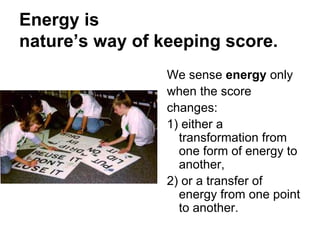
Energy is
nature’s way of keeping score.
We sense energy only
when the score
changes:
1) either a
transformation from
one form of energy to
another,
2) or a transfer of
energy from one point
to another.
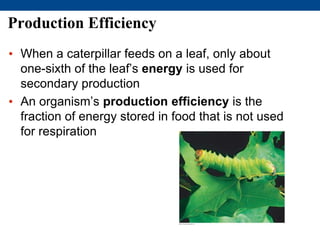
Production Efficiency
• When a caterpillar feeds on a leaf, only about
one-sixth of the leaf’s energy is used for
secondary production
• An organism’s production efficiency is the
fraction of energy stored in food that is not used
for respiration
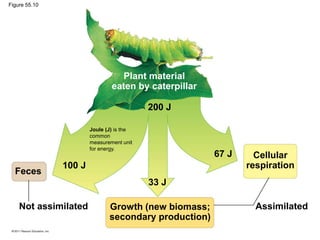
Plant material
eaten by caterpillar
Growth (new biomass;
secondary production)
Cellular
respiration
Assimilated
Feces
Not assimilated
100 J
33 J
67 J
200 J
Figure 55.10
Joule (J) is the
common
measurement unit
for energy.
• Birds and mammals have efficiencies in the
range of 13% because of the high cost of
endothermy. (Endotherms can regulate their
body temperatures by producing heat within the
body.)
• Fishes have production efficiencies of around
10%.
• Insects and microorganisms have efficiencies of
40% or more.
Interesting Energy production facts:
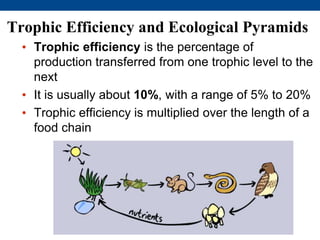
Trophic Efficiency and Ecological Pyramids
• Trophic efficiency is the percentage of
production transferred from one trophic level to the
next
• It is usually about 10%, with a range of 5% to 20%
• Trophic efficiency is multiplied over the length of a
food chain
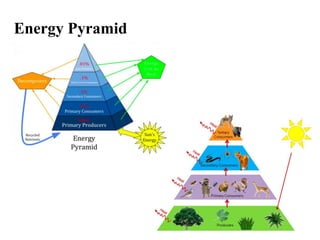
Energy Pyramid
• Approximately 0.1% of chemical energy fixed by
photosynthesis reaches a tertiary consumer
• A pyramid of net production represents the loss of
energy at each level
Tertiary
consumers
Secondary
consumers
Primary
producers
Primary
consumers
1,000,000 J of sunlight
10,000 J
1,000 J
100 J
10 J
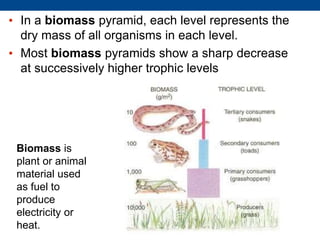
• In a biomass pyramid, each level represents the
dry mass of all organisms in each level.
• Most biomass pyramids show a sharp decrease
at successively higher trophic levels
Biomass is
plant or animal
material used
as fuel to
produce
electricity or
heat.
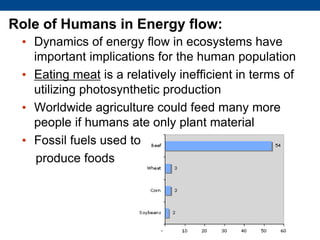
• Dynamics of energy flow in ecosystems have
important implications for the human population
• Eating meat is a relatively inefficient in terms of
utilizing photosynthetic production
• Worldwide agriculture could feed many more
people if humans ate only plant material
• Fossil fuels used to
produce foods
Role of Humans in Energy flow:
ENERGETICS
• Energetics is the study of how energy
gets from something like the sun into
the organisms.
– Photosynthesis - Chemosynthesis
– Cellular Respiration
• Watch the following video to review
what we have learned:
Energy Flow in Ecosystems

energy flow in ecosystems

  • 1.
    Energy Flow inEcosystems
  • 2.
    Overview: Ecosystems • Anecosystem consists of all the organisms living in a community, as well as the abiotic (non-living) factors with which they interact • Ecosystems range from a small, such as an aquarium, to a large, such as a lake or forest
  • 4.
    • Ecosystem dynamicsinvolve two main processes: energy flow and chemical cycling • Energy flows through ecosystems • Matter cycles within them • Physical laws govern energy flow and chemical cycling in ecosystems – Conservation of Energy (first law of thermodynamics) – Energy enters from solar radiation and is lost as heat – Conservation of matter - Chemical elements are continually recycled within ecosystems • Ecosystems are open systems, absorbing energy and mass and releasing heat and waste products
  • 5.
    Energy, Mass, andTrophic Levels • Autotrophs build molecules themselves using photosynthesis or chemosynthesis as an energy source • Heterotrophs depend on the biosynthetic output of other organisms
  • 7.
    Key Chemical cycling Energy flow Sun Heat Primaryproducers Primary consumers Secondary and tertiary consumers Detritus Microorganisms and other detritivores Figure 55.4 Arrows represent energy flow so they go from prey TO predator
  • 8.
    Energy transfer betweentrophic levels is typically only 10% efficient
  • 9.
    The Law ofConservation of Energy • Energy cannot be created or destroyed; it may be transformed from one form into another, but the total amount of energy never changes.
  • 10.
  • 12.
    How is allenergy divided? Potential Energy Kinetic Energy All Energy Gravitation Potential Energy Elastic Potential Energy Chemical Potential Energy
  • 13.
    Potential Kinetic • energyof position or energy in storage. – Water behind a dam – Hammer over head – Food on the plate • energy of motion, the form capable of doing work – Flowing water – A falling hammer – Electrons regenerating ATP in a biological cell
  • 14.
    What is ChemicalPotential Energy? o Potential energy stored within the chemical bonds of an object.
  • 15.
    What is ChemicalPotential Energy? o Examples of energy in chemical bonds
  • 16.
    Energy is nature’s wayof keeping score. We sense energy only when the score changes: 1) either a transformation from one form of energy to another, 2) or a transfer of energy from one point to another.
  • 17.
    Production Efficiency • Whena caterpillar feeds on a leaf, only about one-sixth of the leaf’s energy is used for secondary production • An organism’s production efficiency is the fraction of energy stored in food that is not used for respiration
  • 18.
    Plant material eaten bycaterpillar Growth (new biomass; secondary production) Cellular respiration Assimilated Feces Not assimilated 100 J 33 J 67 J 200 J Figure 55.10 Joule (J) is the common measurement unit for energy.
  • 19.
    • Birds andmammals have efficiencies in the range of 13% because of the high cost of endothermy. (Endotherms can regulate their body temperatures by producing heat within the body.) • Fishes have production efficiencies of around 10%. • Insects and microorganisms have efficiencies of 40% or more. Interesting Energy production facts:
  • 20.
    Trophic Efficiency andEcological Pyramids • Trophic efficiency is the percentage of production transferred from one trophic level to the next • It is usually about 10%, with a range of 5% to 20% • Trophic efficiency is multiplied over the length of a food chain
  • 21.
  • 22.
    • Approximately 0.1%of chemical energy fixed by photosynthesis reaches a tertiary consumer • A pyramid of net production represents the loss of energy at each level Tertiary consumers Secondary consumers Primary producers Primary consumers 1,000,000 J of sunlight 10,000 J 1,000 J 100 J 10 J
  • 23.
    • In abiomass pyramid, each level represents the dry mass of all organisms in each level. • Most biomass pyramids show a sharp decrease at successively higher trophic levels Biomass is plant or animal material used as fuel to produce electricity or heat.
  • 24.
    • Dynamics ofenergy flow in ecosystems have important implications for the human population • Eating meat is a relatively inefficient in terms of utilizing photosynthetic production • Worldwide agriculture could feed many more people if humans ate only plant material • Fossil fuels used to produce foods Role of Humans in Energy flow:
  • 25.
    ENERGETICS • Energetics isthe study of how energy gets from something like the sun into the organisms. – Photosynthesis - Chemosynthesis – Cellular Respiration • Watch the following video to review what we have learned: Energy Flow in Ecosystems