ENDOGENETIC MOVEMENTS-3
GEOGRAPHY CHAP-2
SUDDEN MOVEMENTS
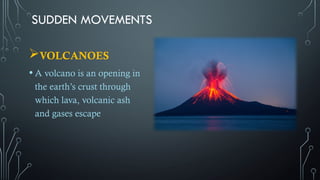
VOLCANOES
• A volcano is an opening in
the earth’s crust through
which lava, volcanic ash
and gases escape
WHAT IS VOLCANIC ERUPTION?
• Volcanic eruption is a process through which hot solid, liquid, and
gaseous material are thrown out from the mantle on the surface of the
earth.
• Lava (hot molten magma),various types of inflammable gases, water
vapour, ash, etc. are thrown out during eruption.
• On the basis of types of eruption, it is divided into following types:
1. Central-type or conical volcano
2. Fissure-type volcanoes
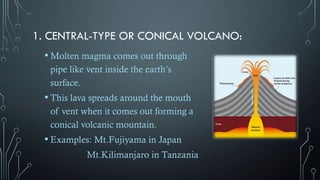
1. CENTRAL-TYPE OR CONICAL VOLCANO:
• Molten magma comes out through
pipe like vent inside the earth’s
surface.
• This lava spreads around the mouth
of vent when it comes out forming a
conical volcanic mountain.
• Examples: Mt.Fujiyama in Japan
Mt.Kilimanjaro in Tanzania
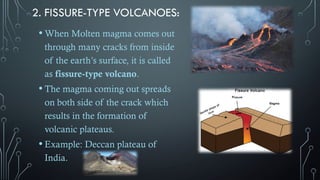
2. FISSURE-TYPE VOLCANOES:
• When Molten magma comes out
through many cracks from inside
of the earth’s surface, it is called
as fissure-type volcano.
• The magma coming out spreads
on both side of the crack which
results in the formation of
volcanic plateaus.
• Example: Deccan plateau of
India.
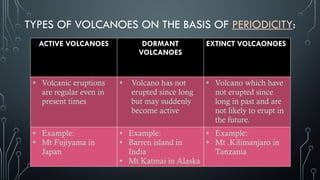
TYPES OF VOLCANOES ON THE BASIS OF PERIODICITY:
ACTIVE VOLCANOES DORMANT
VOLCANOES
EXTINCT VOLCAONOES
• Volcanic eruptions
are regular even in
present times
• Volcano has not
erupted since long
but may suddenly
become active
• Volcano which have
not erupted since
long in past and are
not likely to erupt in
the future.
• Example:
• Mt Fujiyama in
Japan
• Example:
• Barren island in
India
• Mt Katmai in Alaska
• Example:
• Mt .Kilimanjaro in
Tanzania
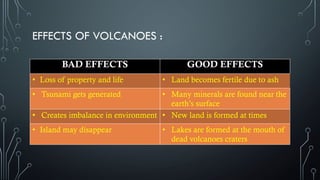
EFFECTS OF VOLCANOES :
BAD EFFECTS GOOD EFFECTS
• Loss of property and life • Land becomes fertile due to ash
• Tsunami gets generated • Many minerals are found near the
earth’s surface
• Creates imbalance in environment • New land is formed at times
• Island may disappear • Lakes are formed at the mouth of
dead volcanoes craters
THANK YOU

endogenetic movements-3 claasss 9thhhhh.pptx

  • 1.
  • 2.
    SUDDEN MOVEMENTS VOLCANOES • Avolcano is an opening in the earth’s crust through which lava, volcanic ash and gases escape
  • 3.
    WHAT IS VOLCANICERUPTION? • Volcanic eruption is a process through which hot solid, liquid, and gaseous material are thrown out from the mantle on the surface of the earth. • Lava (hot molten magma),various types of inflammable gases, water vapour, ash, etc. are thrown out during eruption. • On the basis of types of eruption, it is divided into following types: 1. Central-type or conical volcano 2. Fissure-type volcanoes
  • 4.
    1. CENTRAL-TYPE ORCONICAL VOLCANO: • Molten magma comes out through pipe like vent inside the earth’s surface. • This lava spreads around the mouth of vent when it comes out forming a conical volcanic mountain. • Examples: Mt.Fujiyama in Japan Mt.Kilimanjaro in Tanzania
  • 5.
    2. FISSURE-TYPE VOLCANOES: •When Molten magma comes out through many cracks from inside of the earth’s surface, it is called as fissure-type volcano. • The magma coming out spreads on both side of the crack which results in the formation of volcanic plateaus. • Example: Deccan plateau of India.
  • 6.
    TYPES OF VOLCANOESON THE BASIS OF PERIODICITY: ACTIVE VOLCANOES DORMANT VOLCANOES EXTINCT VOLCAONOES • Volcanic eruptions are regular even in present times • Volcano has not erupted since long but may suddenly become active • Volcano which have not erupted since long in past and are not likely to erupt in the future. • Example: • Mt Fujiyama in Japan • Example: • Barren island in India • Mt Katmai in Alaska • Example: • Mt .Kilimanjaro in Tanzania
  • 8.
    EFFECTS OF VOLCANOES: BAD EFFECTS GOOD EFFECTS • Loss of property and life • Land becomes fertile due to ash • Tsunami gets generated • Many minerals are found near the earth’s surface • Creates imbalance in environment • New land is formed at times • Island may disappear • Lakes are formed at the mouth of dead volcanoes craters
  • 9.