

Endocrinal disorders in
CKD & HD
Mohamed Mohsen Elshayeb, Msc
Nephrology specialist
Urology & Nephrology Center,
Mansoura University
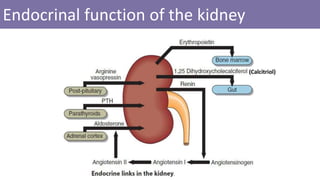
Endocrinal function of the kidney
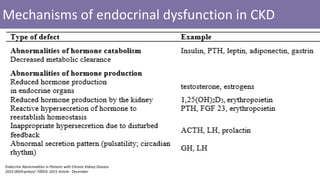
Mechanisms of endocrinal dysfunction in CKD
Endocrine Abnormalities in Patients with Chronic Kidney Disease
Article · DecemberDOI: 201510-/prilozi-2015-0059
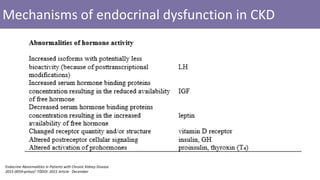
Mechanisms of endocrinal dysfunction in CKD
Endocrine Abnormalities in Patients with Chronic Kidney Disease
Article · DecemberDOI: 201510-/prilozi-2015-0059
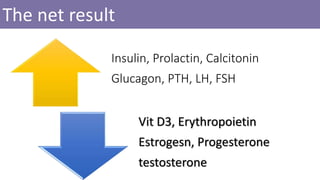
The net result
Insulin, Prolactin, Calcitonin
Glucagon, PTH, LH, FSH
Vit D3, Erythropoietin
Estrogesn, Progesterone
testosterone
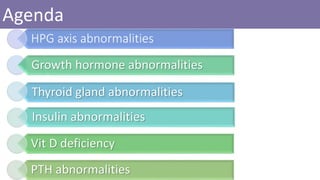
Agenda
HPG axis abnormalities
Thyroid gland abnormalities
Insulin abnormalities
Growth hormone abnormalities
Vit D deficiency
PTH abnormalities
HPG axis abnormalities
In men
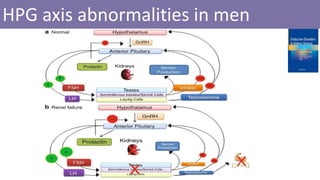
HPG axis abnormalities in men
Testosterone Deficiency and Other Testicular Disorders in Kidney Disease
Lab findings
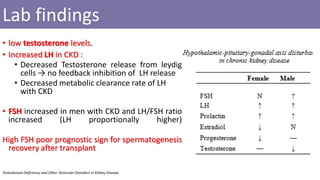
• low testosterone levels.
• Increased LH in CKD :
• Decreased Testosterone release from leydig
cells → no feedback inhibition of LH release
• Decreased metabolic clearance rate of LH
with CKD
• FSH increased in men with CKD and LH/FSH ratio
increased (LH proportionally higher)
High FSH poor prognostic sign for spermatogenesis
recovery after transplant
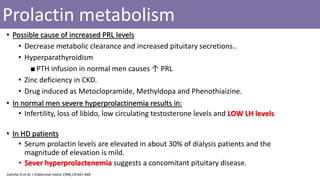
Prolactin metabolism
• Possible cause of increased PRL levels
• Decrease metabolic clearance and increased pituitary secretions..
• Hyperparathyroidism
■PTH infusion in normal men causes ↑ PRL
• Zinc deficiency in CKD.
• Drug induced as Metoclopramide, Methyldopa and Phenothiaizine.
• In normal men severe hyperprolactinemia results in:
• Infertility, loss of libido, low circulating testosterone levels and LOW LH levels
• In HD patients
• Serum prolactin levels are elevated in about 30% of dialysis patients and the
magnitude of elevation is mild.
• Sever hyperprolactenemia suggests a concomitant pituitary disease.
Caticha O et al. J Endocrinol Invest 1996;19:441-448
Clinical issues
Erectile dysfunction:
• Seen in up to 40–80% of hemodialysis patients.
• Erectile dysfunction in CKD is multifactorial and includes
Decreased arterial blood flow, venous leakage due to shunts, altered penile smooth
muscle function, hormonal disturbances, side effect of medications, and neurogenic
dysfunction.
• Although psychological factor plays an important role, effective renal replacement
therapy improves fitness, libido, and potency.
An optimal therapy for erectile dysfunction in hemodialysis pt should
be able to manage all the above-mentioned factors
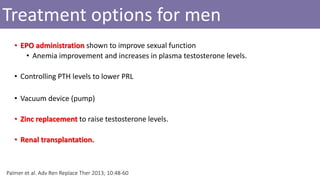
Treatment options for men
• Efficient hemodialysis
• 6 Weeks HD carries improvement and increase testosterone levels.
• One study showed sexual dysfunction improve from 29%-80% after 3 months of
hemodialysis.
• In patient with hyperprolactinemia, dopaminergic agonists such as bromocriptine
lower prolactin and raise testosterone levels.
• Clomiphene to increase LH and FSH
• Testosterone.
• Sildenafil (60-80% response rate).
Treatment options for men
• EPO administration shown to improve sexual function
• Anemia improvement and increases in plasma testosterone levels.
• Controlling PTH levels to lower PRL
• Vacuum device (pump)
• Zinc replacement to raise testosterone levels.
• Renal transplantation.
Palmer et al. Adv Ren Replace Ther 2013; 10:48-60
HPG axis abnormalities
In women
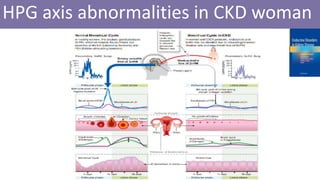
HPG axis abnormalities in CKD woman
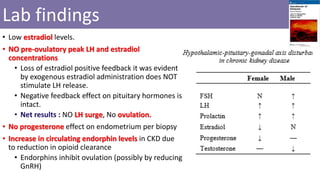
Lab findings
• Low estradiol levels.
• NO pre-ovulatory peak LH and estradiol
concentrations
• Loss of estradiol positive feedback it was evident
by exogenous estradiol administration does NOT
stimulate LH release.
• Negative feedback effect on pituitary hormones is
intact.
• Net results : NO LH surge, No ovulation.
• No progesterone effect on endometrium per biopsy
• Increase in circulating endorphin levels in CKD due
to reduction in opioid clearance
• Endorphins inhibit ovulation (possibly by reducing
GnRH)
Prolactin abnormalities in CKD woman
•In CKD, women (like men) have increased PRL levels
• Hypersecretion autonomous like men
• Increased PRL levels impair hypothalamus and pituitary function → contribute
to sexual dysfunction and galactorrhea.
• Note:
• Non CKD women with PRL producing tumors present with:
• Amenorrhea, galactorrhea, and low gonadotropins
• BUT…
• CKD women treated with bromocriptine STILL have amenorrhea and galactorrhea
despite NL prolactin
• …so hyperprolactinemia only one piece of the puzzle (just like in men)
• Menstrual irregularities in CKD patients include amenorrhea (most common)
and premature menopause, oligomenorrhea, polymenorrhea, and menorrhagia.
• Amenorrhea is seen in 50–100% of patients with CKD-5.
• Increase in ovarian cyst formation can occur in uremic patients and it needs to
be distinguished from polycystic ovarian syndrome and other androgen
producing tumors.
Clinical issues
Continued…
• Female CKD patients have decreased libido, difficulty in achieving
orgasm, lack of vaginal lubrication, pain during intercourse.
• Female patients on dialysis have low plasma estrogen levels (due to
hyperprolactinemia) resulting in:-
atrophic vaginitis, decreased pubic hair, and pruritus.
• Although infertility is common, conception can take place especially in
well dialyzed and well-nourished patients.
Treatment options
• General: Maximize dialysis, correct anemia
• In patient with hyperprolactinemia, dopaminergic agonists such as
Bromocriptine lower prolactin.
• Estrogen replacement may improve sexual function in women with
low circulating estradiol levels
• Restoring fertility in ESRD women discouraged due to complications
• BUT successful pregnancy in renal transplant
Treatment options
• Decreased libido: No good studies;
• Bromocriptine (for hyper PRL)
• Estrogen replacement (if low levels)
• Gold standard: renal transplantation
Growth hormone
abnormalities
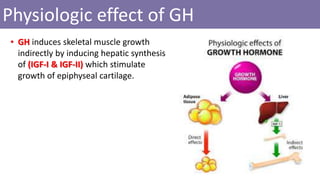
Physiologic effect of GH
• GH induces skeletal muscle growth
indirectly by inducing hepatic synthesis
of (IGF-I & IGF-II) which stimulate
growth of epiphyseal cartilage.
GH abnormalities in CKD patients
• CKD patients have elevated levels of fasting growth hormone which is not
suppressible following glucose infusion.
• The high serum level is due to a combination of decreased degradation and increased
secretion.
• Generally, in children and adult CKD patients, serum GH concentration is normal or
elevated depending on the extent of the GFR impairment.
• Despite elevated GH concentration in patients with CKD, among children with CKD
growth disorders may be observed, why ??
Growth hormone resistance
Causes of Growth hormone resistance
• Decreased density of GH receptors in the target organs which is reflected by the
serum growth hormone binding protein (GHBP) concentration is decreased in
children and adults with CKD proportionally to the decrease in glomerular filtration.
• Decreased bioactivity of IGF-I due to an excess of circulating IGF-binding proteins
(IGFBPs) .
• Metabolic acidosis.
• Inflammation.
• Hyperparathyroidism.
Clinical issues
• Structural growth is impaired in children with
renal insufficiency.
• Height age is usually more retarded than bone
age.
• Delayed bone age and delayed puberty are
beneficial because the opportunity for structural
growth is prolonged.
Treatment options
• rhGH is safe and effective in children with renal failure to achieve the normal final
adult hight.
• rhGH can be used in adult dialysis patients with protein-energy malnutrition due to
its favorable effect on protein anabolism and bone turnover.
• After commencing dialysis therapy, GH concentration decreases and HD treatment
leads to the increase of IGF-1 activity.
• Administration of recombined human erythropoietin in the course of dialysis also
leads to a decrease of basic growth hormone concentration.
• After kidney transplantation, normalization of GH metabolism is obtained.
Abnormalities in the thyroid gland
and hypothalamic-pituitary-
thyroid axis
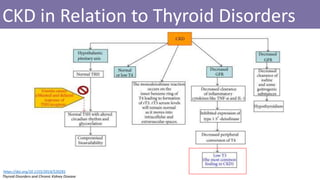
CKD in Relation to Thyroid Disorders
https://doi.org/10.1155/2014/520281
Thyroid Disorders and Chronic Kidney Disease
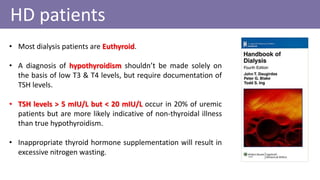
• Most dialysis patients are Euthyroid.
• A diagnosis of hypothyroidism shouldn’t be made solely on
the basis of low T3 & T4 levels, but require documentation of
TSH levels.
• TSH levels > 5 mIU/L but < 20 mIU/L occur in 20% of uremic
patients but are more likely indicative of non-thyroidal illness
than true hypothyroidism.
• Inappropriate thyroid hormone supplementation will result in
excessive nitrogen wasting.
HD patients
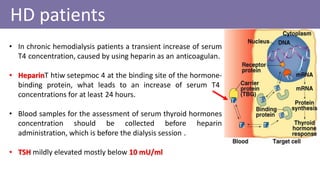
• In chronic hemodialysis patients a transient increase of serum
T4 concentration, caused by using heparin as an anticoagulan.
• Heparin setepmochtiwT 4 at the binding site of the hormone-
binding protein, what leads to an increase of serum T4
concentrations for at least 24 hours.
• Blood samples for the assessment of serum thyroid hormones
concentration should be collected before heparin
administration, which is before the dialysis session .
• TSH mildly elevated mostly below 10 mU/ml
HD patients
Goiter in CKD
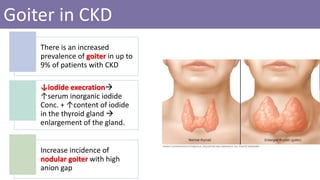
There is an increased
prevalence of goiter in up to
9% of patients with CKD
↓iodide execration
↑serum inorganic iodide
Conc. + ↑content of iodide
in the thyroid gland 
enlargement of the gland.
Increase incidence of
nodular goiter with high
anion gap
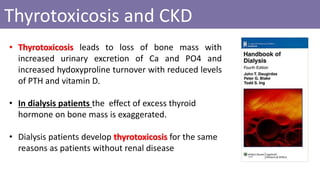
• Thyrotoxicosis leads to loss of bone mass with
increased urinary excretion of Ca and PO4 and
increased hydoxyproline turnover with reduced levels
of PTH and vitamin D.
• In dialysis patients the effect of excess thyroid
hormone on bone mass is exaggerated.
• Dialysis patients develop thyrotoxicosis for the same
reasons as patients without renal disease
Thyrotoxicosis and CKD
Abnormalities in
insulin
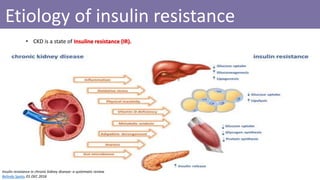
Etiology of insulin resistance
Insulin resistance in chronic kidney disease: a systematic review
Belinda Spoto, 01 DEC 2016
• CKD is a state of Insuline resistance (IR).
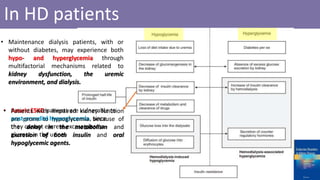
In HD patients
• Maintenance dialysis patients, with or
without diabetes, may experience both
hypo- and hyperglycemia through
multifactorial mechanisms related to
kidney dysfunction, the uremic
environment, and dialysis.
• Anuric ESKD patients are vulnerable to
post-prandial hyperglycemia, since
they cannot excrete excess plasma
glucose in the urine.
• Patients with impaired kidney function
are prone to hypoglycemia because of
the delay in the metabolism and
excretion of both insulin and oral
hypoglycemic agents.
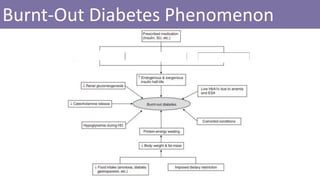
Burnt-Out Diabetes Phenomenon
In diabetic dialysis patients with a presumptive diagnosis of diabetic
nephropathy, glycemic control improves spontaneously with:
1. Progression of CKD
2. loss of residual kidney function, and the initiation of dialysis
therapy.
leading to normal to-low levels of glycated hemoglobin (HbA1c) and
glucose irrespective of treatment.
Burnt-Out Diabetes Phenomenon
Clinical conclusions
• Insulin resistance is higher dna ,stnetiap denotiirtunlam ni leads to metabolic
syndrome and serious CVS complications.
• The most important factor for a decrease of insulin resistance in patients with CRF is
efficient and productive HAEMODIALYSIS.
• EPO treatment and anaemia noticerroc connected to a decrease of insulin
resistance.
• Diabetic patient on hemodialysis should be carefully monitored for the risk of
hypoglycemia.
Abnormalities in the
vitamin D metabolism
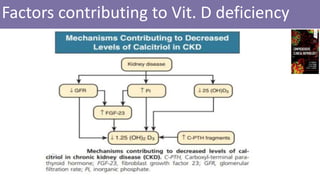
Factors contributing to Vit. D deficiency
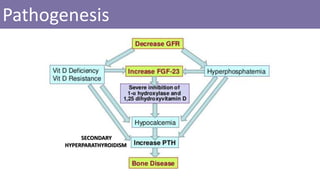
Pathogenesis
SECONDARY
HYPERPARATHYROIDISM
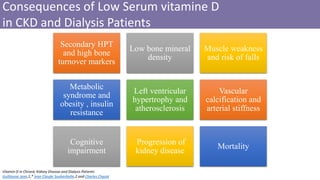
Consequences of Low Serum vitamine D
in CKD and Dialysis Patients
Secondary HPT
and high bone
turnover markers
Low bone mineral
density
Muscle weakness
and risk of falls
Metabolic
syndrome and
obesity , insulin
resistance
Left ventricular
hypertrophy and
atherosclerosis
Vascular
calcification and
arterial stiffness
Cognitive
impairment
Progression of
kidney disease
Mortality
Vitamin D in Chronic Kidney Disease and Dialysis Patients
Guillaume Jean,1,* Jean Claude Souberbielle,2 and Charles Chazot
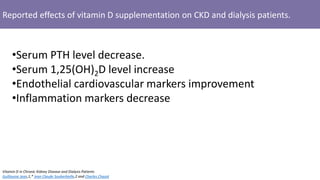
Reported effects of vitamin D supplementation on CKD and dialysis patients.
•Serum PTH level decrease.
•Serum 1,25(OH)2D level increase
•Endothelial cardiovascular markers improvement
•Inflammation markers decrease
Vitamin D in Chronic Kidney Disease and Dialysis Patients
Guillaume Jean,1,* Jean Claude Souberbielle,2 and Charles Chazot
PTH abnormalities
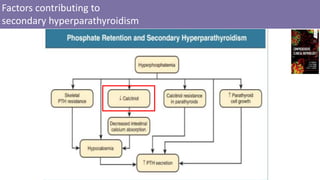
Factors contributing to
secondary hyperparathyroidism
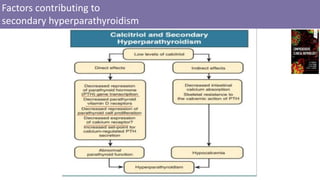
Factors contributing to
secondary hyperparathyroidism
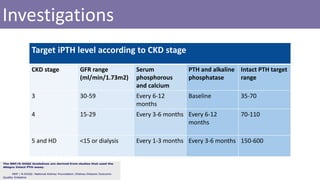
Investigations
Target iPTH level according to CKD stage
Intact PTH target
range
PTH and alkaline
phosphatase
Serum
phosphorous
and calcium
GFR range
(ml/min/1.73m2)
CKD stage
35-70BaselineEvery 6-12
months
30-593
70-110Every 6-12
months
Every 3-6 months15-294
150-600Every 3-6 monthsEvery 1-3 months<15 or dialysis5 and HD
• The kidneys play an important role in hormonal
management. Endocrine disorders are one of the
most crucial elements of ‘uraemic syndrome ’
which is underestimated.
• In the treatment of disorders ,it is very important
to treat malnutrition, improve the general health
state, optimize renal replacement therapy, and only
in exceptional cases use hormonal replacement
therapy .
Endocrine disorders in CKD

Endocrine disorders in CKD

  • 1.
    Endocrinal disorders in CKD& HD Mohamed Mohsen Elshayeb, Msc Nephrology specialist Urology & Nephrology Center, Mansoura University
  • 2.
  • 3.
    Mechanisms of endocrinaldysfunction in CKD Endocrine Abnormalities in Patients with Chronic Kidney Disease Article · DecemberDOI: 201510-/prilozi-2015-0059
  • 4.
    Mechanisms of endocrinaldysfunction in CKD Endocrine Abnormalities in Patients with Chronic Kidney Disease Article · DecemberDOI: 201510-/prilozi-2015-0059
  • 5.
    The net result Insulin,Prolactin, Calcitonin Glucagon, PTH, LH, FSH Vit D3, Erythropoietin Estrogesn, Progesterone testosterone
  • 6.
    Agenda HPG axis abnormalities Thyroidgland abnormalities Insulin abnormalities Growth hormone abnormalities Vit D deficiency PTH abnormalities
  • 7.
  • 8.
  • 9.
    Testosterone Deficiency andOther Testicular Disorders in Kidney Disease Lab findings • low testosterone levels. • Increased LH in CKD : • Decreased Testosterone release from leydig cells → no feedback inhibition of LH release • Decreased metabolic clearance rate of LH with CKD • FSH increased in men with CKD and LH/FSH ratio increased (LH proportionally higher) High FSH poor prognostic sign for spermatogenesis recovery after transplant
  • 10.
    Prolactin metabolism • Possiblecause of increased PRL levels • Decrease metabolic clearance and increased pituitary secretions.. • Hyperparathyroidism ■PTH infusion in normal men causes ↑ PRL • Zinc deficiency in CKD. • Drug induced as Metoclopramide, Methyldopa and Phenothiaizine. • In normal men severe hyperprolactinemia results in: • Infertility, loss of libido, low circulating testosterone levels and LOW LH levels • In HD patients • Serum prolactin levels are elevated in about 30% of dialysis patients and the magnitude of elevation is mild. • Sever hyperprolactenemia suggests a concomitant pituitary disease. Caticha O et al. J Endocrinol Invest 1996;19:441-448
  • 11.
    Clinical issues Erectile dysfunction: •Seen in up to 40–80% of hemodialysis patients. • Erectile dysfunction in CKD is multifactorial and includes Decreased arterial blood flow, venous leakage due to shunts, altered penile smooth muscle function, hormonal disturbances, side effect of medications, and neurogenic dysfunction. • Although psychological factor plays an important role, effective renal replacement therapy improves fitness, libido, and potency. An optimal therapy for erectile dysfunction in hemodialysis pt should be able to manage all the above-mentioned factors
  • 12.
    Treatment options formen • Efficient hemodialysis • 6 Weeks HD carries improvement and increase testosterone levels. • One study showed sexual dysfunction improve from 29%-80% after 3 months of hemodialysis. • In patient with hyperprolactinemia, dopaminergic agonists such as bromocriptine lower prolactin and raise testosterone levels. • Clomiphene to increase LH and FSH • Testosterone. • Sildenafil (60-80% response rate).
  • 13.
    Treatment options formen • EPO administration shown to improve sexual function • Anemia improvement and increases in plasma testosterone levels. • Controlling PTH levels to lower PRL • Vacuum device (pump) • Zinc replacement to raise testosterone levels. • Renal transplantation. Palmer et al. Adv Ren Replace Ther 2013; 10:48-60
  • 14.
  • 15.
  • 16.
    Lab findings • Lowestradiol levels. • NO pre-ovulatory peak LH and estradiol concentrations • Loss of estradiol positive feedback it was evident by exogenous estradiol administration does NOT stimulate LH release. • Negative feedback effect on pituitary hormones is intact. • Net results : NO LH surge, No ovulation. • No progesterone effect on endometrium per biopsy • Increase in circulating endorphin levels in CKD due to reduction in opioid clearance • Endorphins inhibit ovulation (possibly by reducing GnRH)
  • 17.
    Prolactin abnormalities inCKD woman •In CKD, women (like men) have increased PRL levels • Hypersecretion autonomous like men • Increased PRL levels impair hypothalamus and pituitary function → contribute to sexual dysfunction and galactorrhea. • Note: • Non CKD women with PRL producing tumors present with: • Amenorrhea, galactorrhea, and low gonadotropins • BUT… • CKD women treated with bromocriptine STILL have amenorrhea and galactorrhea despite NL prolactin • …so hyperprolactinemia only one piece of the puzzle (just like in men)
  • 18.
    • Menstrual irregularitiesin CKD patients include amenorrhea (most common) and premature menopause, oligomenorrhea, polymenorrhea, and menorrhagia. • Amenorrhea is seen in 50–100% of patients with CKD-5. • Increase in ovarian cyst formation can occur in uremic patients and it needs to be distinguished from polycystic ovarian syndrome and other androgen producing tumors. Clinical issues
  • 19.
    Continued… • Female CKDpatients have decreased libido, difficulty in achieving orgasm, lack of vaginal lubrication, pain during intercourse. • Female patients on dialysis have low plasma estrogen levels (due to hyperprolactinemia) resulting in:- atrophic vaginitis, decreased pubic hair, and pruritus. • Although infertility is common, conception can take place especially in well dialyzed and well-nourished patients.
  • 20.
    Treatment options • General:Maximize dialysis, correct anemia • In patient with hyperprolactinemia, dopaminergic agonists such as Bromocriptine lower prolactin. • Estrogen replacement may improve sexual function in women with low circulating estradiol levels • Restoring fertility in ESRD women discouraged due to complications • BUT successful pregnancy in renal transplant
  • 21.
    Treatment options • Decreasedlibido: No good studies; • Bromocriptine (for hyper PRL) • Estrogen replacement (if low levels) • Gold standard: renal transplantation
  • 22.
  • 23.
    Physiologic effect ofGH • GH induces skeletal muscle growth indirectly by inducing hepatic synthesis of (IGF-I & IGF-II) which stimulate growth of epiphyseal cartilage.
  • 24.
    GH abnormalities inCKD patients • CKD patients have elevated levels of fasting growth hormone which is not suppressible following glucose infusion. • The high serum level is due to a combination of decreased degradation and increased secretion. • Generally, in children and adult CKD patients, serum GH concentration is normal or elevated depending on the extent of the GFR impairment. • Despite elevated GH concentration in patients with CKD, among children with CKD growth disorders may be observed, why ?? Growth hormone resistance
  • 25.
    Causes of Growthhormone resistance • Decreased density of GH receptors in the target organs which is reflected by the serum growth hormone binding protein (GHBP) concentration is decreased in children and adults with CKD proportionally to the decrease in glomerular filtration. • Decreased bioactivity of IGF-I due to an excess of circulating IGF-binding proteins (IGFBPs) . • Metabolic acidosis. • Inflammation. • Hyperparathyroidism.
  • 26.
    Clinical issues • Structuralgrowth is impaired in children with renal insufficiency. • Height age is usually more retarded than bone age. • Delayed bone age and delayed puberty are beneficial because the opportunity for structural growth is prolonged.
  • 27.
    Treatment options • rhGHis safe and effective in children with renal failure to achieve the normal final adult hight. • rhGH can be used in adult dialysis patients with protein-energy malnutrition due to its favorable effect on protein anabolism and bone turnover. • After commencing dialysis therapy, GH concentration decreases and HD treatment leads to the increase of IGF-1 activity. • Administration of recombined human erythropoietin in the course of dialysis also leads to a decrease of basic growth hormone concentration. • After kidney transplantation, normalization of GH metabolism is obtained.
  • 28.
    Abnormalities in thethyroid gland and hypothalamic-pituitary- thyroid axis
  • 29.
    CKD in Relationto Thyroid Disorders https://doi.org/10.1155/2014/520281 Thyroid Disorders and Chronic Kidney Disease
  • 30.
    • Most dialysispatients are Euthyroid. • A diagnosis of hypothyroidism shouldn’t be made solely on the basis of low T3 & T4 levels, but require documentation of TSH levels. • TSH levels > 5 mIU/L but < 20 mIU/L occur in 20% of uremic patients but are more likely indicative of non-thyroidal illness than true hypothyroidism. • Inappropriate thyroid hormone supplementation will result in excessive nitrogen wasting. HD patients
  • 31.
    • In chronichemodialysis patients a transient increase of serum T4 concentration, caused by using heparin as an anticoagulan. • Heparin setepmochtiwT 4 at the binding site of the hormone- binding protein, what leads to an increase of serum T4 concentrations for at least 24 hours. • Blood samples for the assessment of serum thyroid hormones concentration should be collected before heparin administration, which is before the dialysis session . • TSH mildly elevated mostly below 10 mU/ml HD patients
  • 32.
    Goiter in CKD Thereis an increased prevalence of goiter in up to 9% of patients with CKD ↓iodide execration ↑serum inorganic iodide Conc. + ↑content of iodide in the thyroid gland  enlargement of the gland. Increase incidence of nodular goiter with high anion gap
  • 33.
    • Thyrotoxicosis leadsto loss of bone mass with increased urinary excretion of Ca and PO4 and increased hydoxyproline turnover with reduced levels of PTH and vitamin D. • In dialysis patients the effect of excess thyroid hormone on bone mass is exaggerated. • Dialysis patients develop thyrotoxicosis for the same reasons as patients without renal disease Thyrotoxicosis and CKD
  • 34.
  • 35.
    Etiology of insulinresistance Insulin resistance in chronic kidney disease: a systematic review Belinda Spoto, 01 DEC 2016 • CKD is a state of Insuline resistance (IR).
  • 36.
    In HD patients •Maintenance dialysis patients, with or without diabetes, may experience both hypo- and hyperglycemia through multifactorial mechanisms related to kidney dysfunction, the uremic environment, and dialysis. • Anuric ESKD patients are vulnerable to post-prandial hyperglycemia, since they cannot excrete excess plasma glucose in the urine. • Patients with impaired kidney function are prone to hypoglycemia because of the delay in the metabolism and excretion of both insulin and oral hypoglycemic agents.
  • 37.
    Burnt-Out Diabetes Phenomenon Indiabetic dialysis patients with a presumptive diagnosis of diabetic nephropathy, glycemic control improves spontaneously with: 1. Progression of CKD 2. loss of residual kidney function, and the initiation of dialysis therapy. leading to normal to-low levels of glycated hemoglobin (HbA1c) and glucose irrespective of treatment.
  • 38.
  • 39.
    Clinical conclusions • Insulinresistance is higher dna ,stnetiap denotiirtunlam ni leads to metabolic syndrome and serious CVS complications. • The most important factor for a decrease of insulin resistance in patients with CRF is efficient and productive HAEMODIALYSIS. • EPO treatment and anaemia noticerroc connected to a decrease of insulin resistance. • Diabetic patient on hemodialysis should be carefully monitored for the risk of hypoglycemia.
  • 40.
  • 41.
    Factors contributing toVit. D deficiency
  • 42.
  • 43.
    Consequences of LowSerum vitamine D in CKD and Dialysis Patients Secondary HPT and high bone turnover markers Low bone mineral density Muscle weakness and risk of falls Metabolic syndrome and obesity , insulin resistance Left ventricular hypertrophy and atherosclerosis Vascular calcification and arterial stiffness Cognitive impairment Progression of kidney disease Mortality Vitamin D in Chronic Kidney Disease and Dialysis Patients Guillaume Jean,1,* Jean Claude Souberbielle,2 and Charles Chazot
  • 44.
    Reported effects ofvitamin D supplementation on CKD and dialysis patients. •Serum PTH level decrease. •Serum 1,25(OH)2D level increase •Endothelial cardiovascular markers improvement •Inflammation markers decrease Vitamin D in Chronic Kidney Disease and Dialysis Patients Guillaume Jean,1,* Jean Claude Souberbielle,2 and Charles Chazot
  • 45.
  • 46.
  • 47.
  • 48.
    Investigations Target iPTH levelaccording to CKD stage Intact PTH target range PTH and alkaline phosphatase Serum phosphorous and calcium GFR range (ml/min/1.73m2) CKD stage 35-70BaselineEvery 6-12 months 30-593 70-110Every 6-12 months Every 3-6 months15-294 150-600Every 3-6 monthsEvery 1-3 months<15 or dialysis5 and HD
  • 49.
    • The kidneysplay an important role in hormonal management. Endocrine disorders are one of the most crucial elements of ‘uraemic syndrome ’ which is underestimated.
  • 50.
    • In thetreatment of disorders ,it is very important to treat malnutrition, improve the general health state, optimize renal replacement therapy, and only in exceptional cases use hormonal replacement therapy .

Editor's Notes